
Archive
Book Review: Rage by Jackie Morse Kessler (Series, #2)
 Summary:
Melissa Miller is your typical 16 year old–mom, dad, annoying sister, a jerk of an ex-boyfriend–with one small difference. She deals with her emotions by cutting herself. She keeps a razor in a locked box in her closet and pulls it out when she gets overwhelmed. One night she accidentally cuts too deep, and Death shows up with an option. Either die now or become one of the Horsemen of the Apocalypse–War. Missy chooses the latter option, and as she gets to know the other Horsemen and her job as War, she starts to realize she needs to face the rage inside her.
Review:
Speaking as someone who knows a lot about mental illness, self-injury is one of the illnesses that people who don’t have it have the most difficulty understanding. It seems bizarre to those who don’t self-injure, even as for the self-injurer those moments of cutting or burning or whatever chosen method are the best coping mechanism they can come up with. It’s not easy for those who don’t self-injure to understand, which is why I am so impressed at how well Morse Kessler has grasped the inner workings of the self-injurer in order to write such a well-rounded, sympathetic character as Missy.
Missy is simultaneously relatable as a typical teenager, for instance she gets horribly embarrassed at a party one night, but she also has this deep, dark, misunderstood secret. Gradually other teens find out and are either concerned or lash out at her due to their fear and lack of understanding, but Missy feels that she can’t confide in even the sympathetic ones. In perhaps one of the most powerful passages, the reader gets to see exactly why Missy cuts, while she simultaneously explains why she can’t explain it to her sister.
She could tell her that she turned to the blade because she wanted to live and sometimes pain was the only thing that kept her alive. She could tell her that she was terrified of things she couldn’t even begin to name, that friends could be fickle and lovers could be false. She could try to explain all of that and more, and maybe her sister would understand. But trust was as fragile and cutting as a crystal sword. (page 100)
That is perhaps the most clear, succinct explanation of self-injury I’ve seen outside of nonfiction clinical books. Missy’s reasons for cutting are clear, even as it becomes more and more evident to the reader that this coping mechanism is not truly addressing Missy’s real problems.
Of course, the fantasy element comes to play here again, and it works perhaps even better this time around. Giving the fantasy personas for Missy to talk to and express herself to gives her a safe space to think out her emotions instead of cutting them out. There are also a few cameos from Famine, which is fun to see after reading the first book. The fantasy also works here because it helps give the book a distance that makes it less triggering. There are intense emotional moments, but then Death shows up with a humorous quip to lighten the situation. It addresses the real problems without getting bogged down in over-emotionality.
This book will give self-injuring teens a way to see themselves reflected in literature and accepted and loved for who they are. It will give them a chance to maybe address their own emotions and issues. Similarly, non-self-injuring teens will hopefully become more empathetic to their peers who struggle with it. It’s a book that is simultaneously enlightening but not preachy. I highly recommend it to teens and those who work in mental health or with teenagers.
5 out of 5 stars
Source: Amazon

Previous Books in Series:
Hunger, review
Counts For:

Friday Fun! (NAMI Walk and Best Friend)
Hello my lovely readers! Sorry we were a bit short on reviews this week. I just finished up a chunkster (758 pages) that will be reviewed on Monday. It slowed me down a wee bit!
Last weekend I participated in the NAMI walk with my hospital. Thanks to generous contributions from friends and twitter followers, I raised $100 for the National Alliance on Mental Illness. Yet I felt of more value than the money raised by all the participants was the walk itself. Mental illness is still so stigmatized and here were people living with mental illnesses, people who routinely treat it, people who love people with it, gathered together and being loud and proud in the middle of Boston. My absolutely favorite team tshirt I saw was “Stamp Out Stigma” followed by “Stigma Stings.” People are people, and it is hard enough for those with a mental illness to live with it and attempt recovery without facing stigma from society. I am so glad out of all the walks in Boston I chose to participate in this one. It was very moving.
Also this week, I had to say goodbye to my best friend who’s moving from Boston back home to Colorado. I fully support her decision and know it’s the right one for her, but I will miss her dearly. We are still working together on a secret project from a distance though. The internet is amazing like that. Also, I hope to be able to save up to visit her sometime next winter. It’s still sad though. Nothing is the same as getting to see your best friend every week, you know?
So it’s been a bit of a rollercoaster emotional week for me, but I at least have a three day weekend this weekend for Memorial Day. Happy weekends!
Friday Fun! (MIA Reading Challenge Update)
Hello my lovely readers! Since we have just one week left of April, I thought I’d provide an MIA Reading Challenge update! I’m so pleased with the enthusiasm for the challenge shown by the participants, particularly since this is its first year existing.
By far our most prolific participant so far is Karen. Her reads have covered everything from OCD to Antisocial Personality Disorder. So far she has read and reviewed (links to her reviews): Saving CeeCee Honeycutt, Devil in the Details: Scenes from an Obsessive Girlhood, An Unquiet Mind, Cut, The Bell Jar, Darkly Dreaming Dexter, Dearly Devoted Dexter, Dexter in the Dark, Missing, House Rules, and I Don’t Want to Be Crazy. She’s only one book away from completing the highest level of the challenge. Go Karen!
Jules is keeping up a nice, steady pace so far, having read two books (links to her reviews): The Bell Jar (Depression) and Alias Grace (Dissociative Identity Disorder). Keep it up, Jules!
Jessica also has finished two books (links to her reviews): The Silver Linings Play Book (recovery from mental break-down) and The Madonnas of Leningrad (Alzheimer’s). Excellent pace for the level you signed up for, Jessica!
I’ve also completed two books that fit into the challenge description (links to my reviews): American Psycho (Antisocial Personality Disorder) and Hunger (Anorexia Nervosa).
Thank you everyone for your participation so far this year and for raising awareness on mental illnesses. We may be a small group so far, but hopefully each year will grow!
If you’ve read books for the challenge and I did not list you, please comment and let us all know! Unfortunately with the way my blog is, you commenting and telling me is the easiest way for me to keep up with what everyone has read.
It’s not too late to sign up for the challenge if you’re interested! Check out the MIA Reading Challenge page to find out more.
Happy weekends all!
Mental Illness Advocacy (MIA) Reading Challenge 2011
 About the Challenge:
I decided to start hosting the Mental Illness Advocacy (MIA) Reading Challenge in 2011 in an effort to raise awareness, knowledge, and acceptance of mental illness. Reading, both fiction and nonfiction, is an excellent way to broaden one’s horizons and expose one to new ideas and ways of thinking and being. Many reading challenges already exist in the book blogging community to address racism, sexism, and homophobia, but I could not find any to address the stigma faced by those suffering from mental illness. In spite of mental illnesses being recognized by the scientific community as diseases just like physical ones, many still think those suffering from one are at fault for their own suffering. I hope reading and reviewing books featuring characters struggling to deal with mental illness, whether their own or another person’s, will help remove the stigma faced on a daily basis by those with a mental illness. They already have to struggle with an illness; they shouldn’t have to face a stigma too.
Challenge Levels:
Acquainted–4 books
Aware–8 books
Advocate–12 books
Rules:
- Books read for the challenge must address mental illness in some way. If it’s fiction, a character has a mental illness. It can also be non-fiction ranging from self-help books to academic books on the topic.
- No book read for the challenge may demonize the mentally ill. They certainly can be presented as 3-dimensional, flawed characters, but absolutely not demonized or presented as “crazy” etc… That goes against the purpose of this challenge.
- Books you read for this challenge can be counted for other challenges as well.
- Be sure to point out what mental illness or illnesses are addressed in the book in your review of the book. If you use LibraryThing or GoodReads in lieu of blogging, please just note it in the tags on the book or in the comment stating you’ve completed the book.
Reading Suggestions and Review Links:
Check out the official MIA Reading Challenge page to find reading suggestions. Also use the comments section on that page to post links to your reviews.
Sign Up:
Sign up by commenting in the comments section below with a link to your official sign-up post! If you don’t blog but use LibraryThing or GoodReads, you can still participate! Just note that in your comment.
Spread the Word:
Help get the word out on the challenge! Blog, tweet, facebook, email, whatever you can think of to do about it! Please feel free to grab the image above to post on your blog as well. This is a fun way to address an important cause. :-)
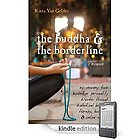
Book Review: The Buddha and the Borderline: My Recovery from Borderline Personality Disorder through Dialectical Behavior Therapy, Buddhism, and Online Dating by Kiera Van Gelder
 Summary:
Kiera here recounts her struggle with mental illness, first undiagnosed and indescribable, marked by episodes of self-harming, frantic attempts to avoid abandonment (such as writing a boy a letter in her own blood), alcohol and narcotic abuse, among other things. Then she recounts how she was finally diagnosed with Borderline Personality Disorder (definition) and her struggles to recover from this difficult mental illness usually caused by a combination of brain chemistry and trauma in childhood. Kiera recounts her experience with the most effective treatment for BPD–Dialectical Behavior Therapy (DBT). She honestly discusses her struggles to encounter and interact with the world and establish relationships, often utilizing online dating websites. Finally she brings us to her final step in the recovery process, her embracing of Buddhism, which much of DBT’s therapy techniques are based upon.
Review:
Many memoirs talk about events in a person’s life, but the thing about mental illness, is the person writing the memoir must somehow be able to show her audience what it is to be inside that head. Inside that person who perceives the world in her own unique, albeit messed-up,way. It takes a certain level of brutal honesty with yourself to be able to do so. Kiera achieves this with flying colors here.
BPD is an illness that, unless you have encountered it in your own life either by having it yourself or caring deeply for someone who does, is often difficult to clearly describe in a sympathetic manner. Popular culture wants us to believe that these, by and large female, sufferers are akin to the femme fatale or the main character in Fatal Attraction. But people with BPD aren’t bunny boilers. They are individuals who experience emotions much more extremely than everyday people do. A visual Kiera uses throughout the book that I believe is quite apt is that a person with BPD is like a person with third degree burns all over their body. A touch that wouldn’t hurt a non-injured person makes the burned person cry. That’s what emotions are like for people with BPD.
Kiera depicts what it feels to suffer from BPD with eloquent passages such as these:
I am always on the verge of drowning, no matter how hard I work to keep myself afloat. (Location 236-240)
In an instant, I shift from a woman to a wild-haired girl kicking furniture to a balled-up weeping child on the bed, begging for a touch. (Location 258-263)
Similarly Kiera addresses topics that non-mentally ill people have a difficult time understanding at all, such as self-injury, with simultaneously beautiful and frightening passages.
I grew more mindful as the slow rhythm of bloodletting rinsed me with clarity. It wasn’t dramatic; it was familiar and reassuring. I was all business, making sure not to press too deep. (Location 779-783)
But of course it isn’t all dark and full of despair. If it was, this wouldn’t be the beautiful memoir that it is. Kiera’s writing not only brings understanding to those who don’t have BPD and a familiar voice to those who do, but also a sense of hope. I cheerleader who made it and is now rooting for you. Kiera speaks directly to fellow Borderlines in the book, and as she proceeds throug her recovery, she repeatedly stops and offers a hand back to those who are behind her, still in the depths of despair. Having BPD isn’t all bad. People with BPD are highly artistic, have a great capacity for love.
I become determined to fight–for my survival, and for my borderline brothers and sisters. We do not deserve to be trapped in hell. It isn’t our fault. (Location 1672-1676)
So while it’s undeniable that BPD destroys people, it can also open us to an entirely new way of relating to ourselves and the world–both for those of us who have it, and for those who know us. (Location 5030-5033)
Ironically, the word “borderline” has become the most perfect expression of my experience–the experience of being in two places at once: disordered and perfect. The Buddha and the borderline are not separate–without one, the other could not emerge. (Location 5051-5060)
Combine the insight for people without BPD to have into BPD with the sense of connection and relating for people with BPD reading this memoir, and it becomes abundantly clear how powerful it is. Add in the intensely loving encouragement Kiera speaks to her fellow Borderlines, and it enters the category of amazing. I rarely cry in books. I cried throughout this one, but particularly in the final chapter.
This is without a doubt the best memoir I have read. I highly recommend it to everyone, but particularly to anyone who has BPD, knows someone with BPD, or works with the mentally ill. It humanizes and empathizes a mental illness that is far too often demonized.
5 out of 5 stars
Read my fiction novella starring a main character with BPD. I read this book partially as research for it.
Source: Amazon

Book Review: 600 Hours of Edward by Craig Lancaster
 Summary:
Edward likes facts and order, and his life revolves around them. Every morning when he gets up he records the weather in his town of Billings, Montana, as well as the time of his awakening. Every night at 10pm he watches a taped episode of Dragnet. He buys the same groceries every week on Tuesday and does his best to avoid left-hand turns when driving. Edward does not work. He has a hard time interacting with people. He can’t seem to understand them, and they have a hard time understanding him. But 600 hours of his life are about to happen and change everything, daring him to open back up to the world and give it a chance. Daring him to step outside of his comfort zone to make his life more than he ever dreamed it could be.
Review:
This is an extraordinary look into the mind of someone with Asperger’s syndrome. Asperger’s syndrome is an autism spectrum disorder that causes great difficulties in social interaction, odd language use, and repetitive behavior commonly compared to obsessive-compulsive disorder. In lieu of presenting us with an odd neighbor who we later discover has the illness, Lancaster brings us into the mind of the person with Asperger’s syndrome and shows us how the world looks to him. Edward finds the world to be a rather confusing, disorderly place. He can see when his behavior upsets people, but he doesn’t understand why. His attempts to make sense of the world via rituals are heart-wrenching to read. Yet the narrative also does an excellent job of demonstrating the good intentions of someone with Asperger’s who doesn’t realize his behavior is frightening or abnormal.
Edward’s life may be full of rituals, but it also is full of people–his parents, his therapist, his neighbors, his old high school workshop teacher. The commonality between them all is that they see the good in Edward and are willing to work with him and be patient in order to keep him in their lives. They see him for the good man struggling with an illness that he is. Of course, Edward is not left with a free ride. The people around him expect him to do what he can to function better from taking his Fluoxetine every day to faithfully attending his appointments with Dr. Buckley and pushing his own boundaries. It is a message of the hope that is possible when everyone involved works to overcome a mental illness.
There were two draw-backs to the book, however. One was that the repeated summaries of Dragnet episodes every chapter were quite dull. I think after a couple, the reader would still have gotten the point of ritual by saying “then I watched Dragnet” without actually summarizing the episodes. It was a lot of narrative space taken up to make a point that was already made with the much shorter recording of the weather and waking times every morning. This is minor and easily skimmed over though. My other issue is actually that I think the book ended too soon. I think the point at which it ended was chosen for some sense of supposed literary quality rather than telling the whole story. I would like to have seen at least a bit more of Edward’s transformation. It felt a bit short-lived.
Overall this book helped me understand people with Asperger’s syndrome better than I ever had before. I highly recommend it to fans of contemporary fiction, fans of memoirs as it reads like one, and people seeking to understand Asperger’s syndrome better.
4 out of 5 stars
Source: free copy from the author via the LibraryThing Member Giveaway program

Friday Fun (The Hill)
I’ve mentioned previously that in spite of an intense desire to be athletic, I am not, nor have I ever been. I’m not talking about fit or in shape; I’m talking about that ability to just run up a hill or jump into a basketball game and not get hurt or…well, you get the picture. Even at my most fit, when I routinely biked at least 15 miles a day and had rock-hard abs, I still got hit in the face with the ball playing backyard volleyball. Heck, even when I would go running I certainly didn’t look good doing it. When it comes to fitness, I am not gracefully athletic. I am awkward.
Anyway, as part of my bid to get back in shape and relieve my anxiety and do good things for the planet, I’ve been biking to work. Well, not all the way to work. I can’t make it that far yet. It takes two city buses to get to my job, so I’ve been biking to the bus connection, which luckily is just about half-way to work. I live partway down one side of a very large hill. In the mornings, I have a nice, gradual slope up for a couple of blocks followed by around five blocks of downhill easy awesomeness. I’m sure you can see where this is going.
In the evenings, I hit the hill at the end of my ride. It’s like a giant middle finger taunting me about how much easier this all would have been if I’d just taken that second bus today. I’ll be riding along, feeling pretty fit and great, passing all the cars stuck in stand-still traffic and happy in the knowledge that I’ve cut my commute time nearly in half. Then the landmarks start popping up to remind me that the evil hill is nearly upon me. Now this hill is not just a hill. The top of it also happens to consist of a bridge, and bridges in Boston for some unearthly reason are narrower than the roads, which means cars that used to be arms-length away are suddenly at your elbow. And this isn’t a pretty bridge over a river or a gully or anything. No, no, it’s over the lovely commuter traffic on the Pike (translation: interstate, highway, Autobahn with a speed limit).
So, I’m at the end of my ride, tired, hungry, sweaty, and there’s the hill. I dutifully switch down a gear, but something’s fucked up in my bike’s gears and it won’t catch when I go down from 6 to 5. I have to go 6 to 5 to 4 then back up to 5 for it to catch. This makes me wobble for a moment in a way that makes the cars near me worry that I’m about to tip over into them. (This is a fair concern as I did tip over into a car once when I was in highschool, but that’s another story). Anyway, so after the wobbling, I try to regain my speed, generally to no avail. And there I am, moving at a pace that eventually becomes so slow that pedestrians are passing me and giving me that “Why don’t you just get off and walk the bike?” look. No matter how many gears I’ve moved up since starting this project (5, thank-you-very-much). No matter how much faster I get. No matter what, this hill is always just as difficult, and I always reach a near stand-still at the top of it.
It just refuses to get any easier. It refuses to stop making me look like an out-of-shape loser. In a way, this hill reminds me a lot of my anxiety. I want to just breeze through the day perfectly happy and not conjuring up new things to worry about and not get stuck in a loop of obsessive thoughts. I want to get up that hill looking powerful and athletic. But no matter what I do, no matter how I start the day, no matter how many times I tell myself this is going to be an awesome day and I’m going to do the right things and I’m going to treat the people I care about with the peaceful trust and respect they deserve, I still wind up sitting at home or in my cubicle at work with a racing heart and panicky thoughts powerhousing through my head.
My anxiety is just like that hill. It makes me look like an idiot and makes me feel real shitty about myself, but nothing I do seems to make me able to conquer it. And yet, I get up each day and say “today is going to be the day I beat that goddammed hill.” And that’s what I say every day about my anxiety too. Someday I am going to power through the ride and realize at the end of it that that hill felt non-existent, and someday I’ll be at the end of the day and realize that my anxiety is non-existent too.
Book Review: I Am Not a Serial Killer by Dan Wells
 Summary:
Fifteen year old John Wayne Cleaver has an odd fascination with the bodies he helps cremate in the family mortuary. He also has difficulty feeling any emotions. He even has been studying serial killers for years. He is not one, however. At least, not yet. His therapist believes John may have Antisocial Personality Disorder, but both he and John hope John can learn to control his illness, an illness John refers to as Mr. Monster. However, when bodies start appearing on the streets of the town gruesomely murdered, John wonders how long he can keep Mr. Monster in check.
Review:
I originally had high expectations for this book. Then I had to wait for it so long that they waned, and I felt that it was probably just going to be a watered down YA version of Dexter. Then I grabbed it for my camping trip because I am insane and love to terrify myself when sleeping in the middle of nowhere in the woods with strange men with hatchets I don’t know a mere campsite away. It didn’t turn out to be a watered down Dexter. It also isn’t terrifying. The best word I can think to describe this book is relatable.
Dan Wells chose to write a YA book about mental illness and couch it with some supernatural features and a premise that will appeal to any teens, not just those struggling with a mental illness themselves. These were both smart moves as it makes I Am Not a Serial Killer more widely appealing. However, he not only chose to depict a mental illness, he chose to depict one of the ones that is the most difficult for healthy people to sympathize with and relate to–antisocial personality disorder. John Cleaver has no empathy, and this baffles those who naturally feel it.
Yet Wells manages to not only depict what makes John scary to those around him, but also how it feels to be John. He simultaneously depicts the scary parts of having a mental illness with the painful parts for the one struggling with it. John makes up rules for himself to try to control his behavior. He has to think things through every time he interacts with people or he will do or say the wrong thing. John is fully aware that he doesn’t fit in, but he wants to. He wants to be healthy and normal, but he also wants to be himself, which at this point in time includes the behavior that is his illness.
Of course, this is a book about a serial killer, and it delivers there. The death scenes hold just the right level of gruesomeness without going over the top. Anyone with a love of the macabre will also enjoy the mortuary scenes, which depict the right combination of science and John’s morbid fascination. There also is a tentatively forming teen dating relationship that is simultaneously sweet and bit nerve-wracking.
I feel I would be amiss not to mention that there is some self-harm in this book. It is very brief and is clearly shown as a part of John’s illness. In fact for the first time in reading about it in any book I can say the author handled it quite well, depicting the self-injurer and his reasons for doing so sympathetically and correctly, but without making it seem like something the reader should copy.
Overall this book delivers the thrills and chills it promises, but does so without demonizing John Cleaver. It depicts what it feels like to have a mental illness in a powerful, relatable manner while still managing to be a fast-paced YA thriller. I highly recommend it to anyone who enjoys YA, books dealing with mental illness, or thrillers.
5 out of 5 stars
Source: PaperBackSwap

Book Review: Woman on the Edge of Time by Marge Piercy
 Summary:
Connie, a 30-something Chicana of the 1970s who has led a rough life, enjoys the time she spends in 2137 at Mattapoisett with Luciente. She believes she is a catcher and Luciente a receiver, which allows her to time travel in her mind. Luciente tells her there are two possible futures, and they need her and all the downtrodden to fight and not give up or the utopian future of Mattapoisett will be lost. Connie’s family and friends, however, believe she is schizophrenic and in need of their help. Who is right?
Review:
I almost gave up on this in the first chapter when we discover that Connie’s daughter has been taken away from her due to child abuse. Connie blames everything bad in her life on other people–the police, social workers, white people, her brother, etc… She takes no responsibility for anything. I was concerned that Connie’s opinions were the author’s opinions as well–blame society for everything and take no individual responsibility. I was wrong about that, though, and I am very glad I didn’t stop reading.
Marge Piercy’s writing is astounding. She sets up a complex social situation and leaves it open-ended for the reader to decide who is right, what the problems really are, who is to blame, how things can be fixed. Unlike most books regarding time travel or mental illness, it is not obvious that Connie is actually time traveling or that she is schizophrenic. This fact makes this a book that actually makes you think and ponder big questions.
The future world of Mattapoisett is of course the reason this book is considered a classic of feminist literature. In this society it has been decided that all of the bad dualities of have and have not originate from the original division of male and female, so they have done everything they can to make gender a moot point. The pronouns he and she are not used, replaced with “per,” which is short for “person.” Women no longer bear children, instead they are scientifically made in a “breeder,” and then assigned three people to mother it. These people can be men or women; they are all called mother. In the future of Mattapoisett, women are allowed to be strong; men to be gentle, and that is just the tip of the iceberg of the interesting, thought-provoking elements of Mattapoisett.
At first I was concerned that this book is anti-psychiatry, but really it is just pro-compassion. The reader is forced to observe the world from multiple atypical perspectives that force a questioning of world view. More importantly though it helps the reader to put herself into another person’s perspective, which is something that it is easy to forget to do. To me the key scene in the book (which doesn’t give away any spoilers) is when two people in Mattapoisett dislike each other and are not getting along. The township gets them together and holds a council attempting to help each person see the situation from the other’s perspective, as well as to see the good in the other person.
What I’ve said barely touches the surface of the wonderful elements of this book. I absolutely loved it, and it is a book I will keep and re-read multiple times. I highly recommend it to all.
5 out of 5 stars
Source: PaperBackSwap

Movie Review: Choke (2008)
I promised you guys more than just book reviews, but what can I say, I read more books than I finish movies and definitely videogames. I play them a lot, but it takes me forever to finish. Anyway, I’m finally keeping that by-line promise. Here be my first movie review! (They will be much shorter than the book reviews).
 Summary:
Vincent had to drop out of medical school to get a full-time job as a colonial reenactor in order to pay the bills to keep his Alzheimer’s mother in a good home for people with mental illness. To help boost the bank account, he sometimes pretends to choke in fancy restaurants, then sues his rescuers. Of course, that’s what he goes to meetings for. He goes to meetings because he’s a sex addict. When he meets his mother’s new doctor, he starts to question who he really is when he discovers that he might sort of actually like her.
Review:
I admit it. I have a weakness for movies about legitimately crazy people finding their way through life. Particularly when finding their way involves falling in love. Although the title implies that Vincent’s scam is the focus of the movie, in fact it is about how his random childhood with his mother and foster families made him who he is today.
For a movie based on a Chuck Palahniuk book, this isn’t very graphic. Clearly since Vincent’s a sex addict, there are some moderately graphic sex scenes, but there is little violence and the sex is pretty normal. I’ve seen more disturbing scenes on Entourage.
The acting is good. It’s nothing mind-blowing, but it’s not bad either. Setting of the scenes is done quite well. It feels like the everyday world cranked up a notch.
What makes Choke interesting isn’t the violence shock factor that Fight Club had going for it. Choke modestly proposes that it’s ok to be a bit crazy–in moderation. It also dares to suggest that we can be who we decide to be instead of what society says we are as long as we’re aware enough to make that conscious decision.
If you want gratuitous sex from the author who brought us the violence of Fight Club, don’t bother with Choke. However, if you enjoy movies about the mind and what makes us who we are, give Choke a shot.
3.5 out of 5 stars
Source: Netflix

 Support my work with a tip or browse my shop for curated book club guides, how to guides, cross-stitch patterns, and more!


This work by Amanda Nevius is licensed under a Creative Commons Attribution-Noncommercial-No Derivative Works 3.0 United States License.
 Opinions of a Wolf