
Archive
Book Review: I Am Hutterite by Mary Ann Kirkby
 Summary:
Mary Ann Kirkby recounts her unique childhood in her memoir. She was born into a Hutterite family. The Hutterites are a religious sect similar to the Amish only they believe that living communally is a mandate for Christians. Mary Ann recounts her childhood both in the religious sect (her particular group was located in western Canada), as well as the journey and culture shock she went through when her parents left the Hutterites when she was nine years old.
Review:
I actually read this memoir because of the situation in which I first ran into Hutterites and have been fascinated with them ever since. For a couple of years, my father and brother lived in Montana. I went to visit them and was shopping in Victoria’s Secret at the mall and rounded the corner to discover traditionally-garbed Hutterite women buying thongs. I had no idea what a Hutterite was, but instantly hunted down my brother elsewhere in the mall to find out who these people were. All that the “English” seemed to know about them was that they lived in a commune, dressed kind of like the Amish but different, traveled all together to town in a few big vans, and the Hutterite women were always buying thongs at Victoria’s Secret. Hutterites are rather quiet about their lifestyle though, so when I stumbled across this on a new releases list, I knew I needed to read it to find out more about the community.
This is a completely fascinating memoir that I devoured in one day. Mary Ann is able to see both the faults and the beauty of various experiences in her childhood with the clear eye of an adult. Yet simultaneously she harbors no ill-well toward either the Hutterites or her parents or any of those who made her transition from a Hutterite girl to an “English” woman more difficult. Kirkby writes with a sympathetic ear to all those she encountered in her life, which is a refreshing change in the memoir genre.
Additionally Kirkby’s writing offers an immersion into the fascinating world of communal living with a religious belief system to hold it all in place. Kirkby recounts a childhood where no homes were kept locked, everyone was always welcome in everyone else’s home, and most meals of the day were eaten communally with your age-mates. In fact, one of the biggest changes for Kirkby when her family left the Hutterites was suddenly needing to interact with her siblings on a regular basis instead of her same-age female friends. She also had trouble understanding the English need for privacy in the home or the relative silence with which meals were eaten.
Another point of interest is that Kirkby’s father was from a Russian family that was persecuted in Europe and had to run to Canada to escape the Nazis. His father sought refuge and a sense of safety in the community of the Hutterites. Conversely, her father who grew up in this safety found himself craving more freedom than the strict rules and constructs of the commune would allow for. The book thus not only recounts a unique girlhood and insight into the Hutterite way of life, but also addresses the age-old question of freedom versus security.
Anyone interested in the Hutterite communities or unique childhoods will absolutely enjoy this memoir. It is well-written, intriguing, and contains not a trace of bitterness. I highly recommend it.
5 out of 5 stars
Source: Amazon

Book Review: Heinrich Himmler: The Sinister Life of the Head of the S.S. and Gestapo by Roger Manvell and Heinrich Fraenkel
 Summary:
Manvell and Fraenkel conducted years of meticulous research both with primary documents and those who actually knew Himmler to bring about a biography of the man infamous for being in charge of the S.S., Gestapo, and concentration camps that made the terror of Hitler’s reign possible. They seek to provide a well-rounded look at Himmler’s entire life for those with some familiarity with the events of World War II.
Review:
This was a fascinating and difficult book to read, not because of the writing style or the atrocities recounted, but because the authors succeeded in putting a human face on Heinrich Himmler. In the intro to the book, the authors state:
The Nazi leaders cannot be voided from human society simply because it is pleasanter or more convenient to regard them now as outside the pale of humanity. (location 31)
In other words, the easy thing to do is pretend the Nazi leaders or anyone who commits atrocities is something other than human. That they are monsters. When in fact, they really are still people like you and me, and that should frighten us far more than any monster story. What leads people to do horrible things to other people? What makes them bury their conscience and humanity and commit acts of evil? This biography thus does not say “here is a monster,” but instead says, “Here is this young boy who became a man who committed himself to a cause and proceeded to order acts of evil upon others. What forces came together to mold him into someone who would do these things?”
One of the more fascinating things brought to light in this book is that Himmler was never actually fit into the ideal of a top-notch Aryan male he himself advocated. In fact throughout his life he was sickly, pale, and scholarly. He tried in school to fit in with the athletic boys but never succeeded in anything for any length of time except fencing. Instead of accepting who he was, he continually pushed his sickly body past its limits throughout his life, trying to force it to fit into his ideals of what it should be. He actually enlisted his own personal healer, a masseuse trained by a talented Chinese doctor, throughout the war. This masseuse, Kersten, was working as a spy for the Allies and was instrumental in convincing Himmler to release various people from concentration camps throughout the war. His sickly body then not only opened him up to the Allies for a convenient spy, but also was key in how he related to the world. He projected his own insecurities about the ideal body onto everyone else.
Himmler’s anxiety to destroy the Jews and Slavs and place himself at the head of a Nordic Europe brash with health was a compensation for the weakly body, the sloping shoulders, the poor sight and the knock-knees to which he was tied. (location 2189)
This physical weakness and obsession does not mean he was a weak man, however. He was profoundly intelligent and detail-oriented. He easily became obsessed with ideas he came up with and would search for proof of them excluding any and all evidence to the contrary. Those of us who went to liberal, private colleges where we were taught to adjust our worldview for new, challenging ideas may be surprised to learn that Himmler read obsessively. The fact though is that Himmler sought out in his reading sources that would simply support his previously established, prejudicial worldview.
Like Hitler, he [Himmler] used books only to confirm and develop his particular prejudices. Reading was for him a narrowing, not a widening experience. (location 2547)
Thus we cannot depend on reading alone to prevent close-mindedness.
As the Nazi regime continued on, Himmler grew more and more committed to his obsessions. Those who knew him well described the frenzy and meticulousness with which he worked over every detail toward his final goal of the “Aryan race” being in control of Europe.
Himmler’s need to rid himself of the Jews became an obsession. The ghosts of those still living haunted him more than the ghosts of those now dead; there were Jews everywhere around him, in the north, in the west, in the south, in the areas where his power to reach them was at its weakest. (location 2074)
The information on Himmler at this time period certainly sound like a man suffering from intense paranoia. Think of John Nash in A Beautiful Mind and how he firmly believed government agents were all around him persecuting him. The difference is that this physically weak, close-minded, paranoid man was given immense power over the lives of millions instead of simply being a professor. It is easy after reading this book to see how Himmler could easily have been that crazy neighbor worried that the people across the street were watching him all the time instead of the engineer behind genocide. All it took was placing near total power and trust in his hands to turn him into the organizer of a genocide.
There will always exist human beings who, once they are given a similar power over others and have similar convictions of superiority, may be tempted to act as he [Himmler] did. (location 592)
The lesson the authors send home repeatedly then is that Himmler was just a man overcompensating for a physically weak body who grasped onto the idea that he was actually superior to others simply because of his ancestors with a tendency toward paranoia who was given a dangerous amount of power. It is easy to imagine how the entire situation could have worked out differently if some sort of intervention had happened earlier in his life. If he was taught that everyone was valuable for different reasons that have nothing to do with their physical abilities or ancestry. If he had initially read books that weren’t racist and xenophobic. If he was never swept into the Nazi Party mania in the 1930s. If he had been maintained as an office worker in the Nazi party instead of being given so much power. It’s a lot of if’s, I know, but it’s important to think about all the ways to prevent something like this from ever happening again. Although the authors’ primary point is “be careful who you allow to have power,” I would also add “intervene when they are young to prevent the development of a xenophobic, paranoid personality to start with.” With both precautions in place, perhaps we humans as a group can avoid such atrocities in the future.
Readers should note that this book is written by Europeans and not “translated” into American English. Additionally, periodically the authors sway from the strict chronological method of a biography to follow one thought or event through to its conclusion then back-track. This was a bit distracting, but absolutely did not prevent me from learning much about Himmler, WWII, and the Holocaust that I did not previously know.
Overall, I highly recommend this to those with an interest in WWII in particular, but also to anyone interested in the prevention of future genocides. It offers great insight into how these atrocities came to be.
4 out of 5 stars
Source: Amazon

Bloggers’ Alliance of Nonfiction Devotees (BAND): July Discussion: Favorite Type of Nonfiction
Hi guys! So the lovely Amy (of Amy Reads) let me know of a new organization of bloggers who love to read nonfiction–Bloggers’ Alliance of Nonfiction Devotees. The group has a tumblr, and basically the various members will post links to their reviews of nonfiction books as well as participate in themed discussions once a month. You all know that I definitely partake in nonfiction periodically, so I couldn’t pass up the opportunity to be involved!
This month’s topic is our favorite type of nonfiction. I’d be hard-pressed to choose just one, so I’m going to cheat a bit and talk about, well, three of them.
First, the type of nonfiction that I continued to read even when working full-time and attending grad school at night was memoirs. Memoirs hold a special allure for me. Nothing connects me to people from different walks of life than mine quite like reading their first-hand account of their own life. I especially love memoirs by people who suffer from mental illnesses or have survived abusive situations. Memoirs simply never fail to touch me, even if I disagree with the author on a lot of points. It is truly astounding how different and yet the same we all are.
Second, I love books on health for the layman, particularly books on vegetarianism and veganism. I have a whole pile of tbr books just waiting for me about the health crisis in the US, such as Diet for a New America

Finally, I was a history major in undergrad, and history books still appeal to me. Currently I am reading a biography on Heinrich Himmler
So that’s the types of nonfiction I love! What about you, my lovely readers?
Book Review: Naturally Clean: The Seventh Generation Guide to Safe and Healthy, Non-Toxic Cleaning by Jeffrey Hollender
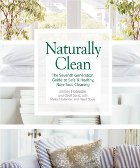 Summary:
An introduction to the green concept of natural cleaning, this book gives an overview of why chemical cleaners are bad for people and the environment. Summaries of the scientific evidence are followed by introductory advice on all-natural cleaning and keeping your home as unpolluted as possible.
Review:
Although the concept of cleaners polluting the home seems at first glance like a non-issue, the scientific evidence presented in this book clearly demonstrates that it is an issue. For example:
“Ordinary household products such as cleansers, cosmetics, and paints are now the Los Angeles region’s second-leading source of air pollution, after auto tailpipe emissions, air quality officials say.” Location 182
Ok, but we don’t want to live in dirty squalor, right? The book goes on to clearly point out various natural, safe cleaners that work just as well as regular cleaners, although perhaps requiring a bit more elbow grease.
Although at first I was concerned that the fact that the book was written by the founder of the Seventh Generation cleaning company would lead it to bias or to essentially be an ad for their products, neither was the case. Where products are listed, natural cleaning competitors are included. Further, instructions are given on cleaning your house with products as cheap as vinegar and hydrogen peroxide.
Be cautioned, though, that this is definitely an introductory book. It reads more as a pamphlet to get you headed in the right direction than as a change your entire life guide. As such, I recommend it to those who’ve never considered the benefits of cleaning with natural products before.
3.5 out of 5 stars
Source: Amazon

Book Review: How to Be a Hepburn in a Hilton World: The Art of Living with Style, Class, and Grace by Jordan Christy
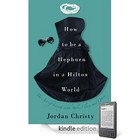 Summary:
This book is a call to action for intelligent American women to start addressing our current image problem. Increasingly, women are willing to give away all the self-respect our suffragette fore-mothers fought for in return for their quick 15 minutes of fame or even 15 minutes of attention from that one dude. Christy calls on women to appreciate the relatively recent freedom we now have as a gender by pursuing knowledge, class, and dignity in lieu of late-night dancing on stripper poles at clubs. The book serves not only as a call to action, but also as a how to guide, featuring chapters on classy dress for every personality, good friends, dating, body image, and more.
Review:
I admit that I largely bought this book because the women of classic cinema–from Audrey Hepburn to Katherine Hepburn–are my heroes. They exuded femininity and strength simultaneously. What’s more attractive than that? Overall, though, I think this book is a bit behind where I am in my personal growth as a woman, although that doesn’t make the message any less important.
For instance, I really didn’t need Christy to tell me to love and accept my body and eat healthily. I already do both those things. On the other hand, I know some women who would really need that chapter, so I certainly didn’t mind it being in the book. Similarly, I’m a nerd. I don’t need to be told not to be a Stupid Girl (as those hoo-ha flashing reality tv stars are often called). I suppose if I was a bit younger or raised a bit differently though I might be intrigued by this book if for no other reason than the idea that class and intelligence are actually more attractive than that kind of behavior.
The two chapters on style were actually quite useful. Fashion sense that’s practical and attractive simultaneously while reflecting my personality is something I struggle with. I found the quizzes to help you determine your style and colors that work best for you to be truly enlightening. Christy offers up sample core items for the various personality types, and I immediately wanted to acquire the ones that suited my own. It was worth reading the book for the fashion sense alone.
Overall, I appreciate a book calling on women to respect themselves and behave like intelligent human beings. To pursue the goals and passions or fore-mothers fought so hard for. I definitely think those who would benefit the most from this book might be the ones least likely to read it–like oh think of the Jersey Shore female cast members. On the other hand, everyone has moments when they get tired of the partying lifestyle. Having a book like this out there for them to grasp onto with such an attractive cover to boot is definitely a good thing. I’d recommend giving it a go if you’re an intelligent woman seeking for encouragement in your pursuit of class and goals or if you’re a partier thinking about changing your lifestyle.
3.5 out of 5 stars
Source: Amazon

Book Review: Lunch in Paris: A Love Story, With Recipes by Elizabeth Bard
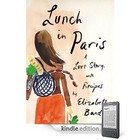 Summary:
Elizabeth has always been drawn to museums and the Old World, so when she’s doing her graduate work in London and meets Gwendal, a Frenchman, she jumps right into dating him. Gradually she falls for not just Gwendal, but Paris in general, especially the food. This memoir tells about her falling in love and the process of becoming an expat in France through the lens of food.
Review:
This memoir starts out strong. Who doesn’t enjoy a good real life love story? Paris sounds incredibly romantic and appealing to anyone who enjoys open food markets, museums, and the big city charm of small spaces. Two things held me back from really enjoying the book though.
First, as a vegetarian, I really didn’t appreciate the incredibly long and frequent sections describing eating meat, cooking meat, how awesome meat is, etc… Where Elizabeth describes her future husband, Gwendal, telling her “I love you” for the first time over a piece of bloody meat, I was thoroughly distracted by the poor, dead, bleeding animal. I could not identify with Elizabeth at all in these frequent sections. How can she claim to be a romantic at heart yet have so much of her life revolve around eating innocent creatures? I wound up skimming a lot.
Granted, I know readers who enjoy eating meat themselves won’t be bothered by these passages, but I am fairly certain they’ll be irritated by the change of tone of voice partway through the narrative. From telling us about how lucky she is to be living this life in Paris, Elizabeth suddenly changes into a bit of a pity party. Poor Elizabeth, living in Paris with a man who loves her, cooking food for him every day, giving tours of the Louvre. This isn’t how she imagined her life would work out. Um….ok. I’d suggest Elizabeth try reading some memoirs of true struggles such as The Glass Castle and get back to us.
Overall, the scenes of real Paris life are interesting and enjoyable, but the frequent scenes featuring bloody meat and Elizabeth’s pity party really detract from the book. If you are a meat eater yourself and a foodie, you’ll probably enjoy this memoir anyway. I’d advise others to stay away.
3 out of 5 stars
Source: Amazon

Book Review: The Buddha and the Borderline: My Recovery from Borderline Personality Disorder through Dialectical Behavior Therapy, Buddhism, and Online Dating by Kiera Van Gelder
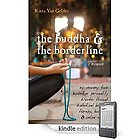 Summary:
Kiera here recounts her struggle with mental illness, first undiagnosed and indescribable, marked by episodes of self-harming, frantic attempts to avoid abandonment (such as writing a boy a letter in her own blood), alcohol and narcotic abuse, among other things. Then she recounts how she was finally diagnosed with Borderline Personality Disorder (definition) and her struggles to recover from this difficult mental illness usually caused by a combination of brain chemistry and trauma in childhood. Kiera recounts her experience with the most effective treatment for BPD–Dialectical Behavior Therapy (DBT). She honestly discusses her struggles to encounter and interact with the world and establish relationships, often utilizing online dating websites. Finally she brings us to her final step in the recovery process, her embracing of Buddhism, which much of DBT’s therapy techniques are based upon.
Review:
Many memoirs talk about events in a person’s life, but the thing about mental illness, is the person writing the memoir must somehow be able to show her audience what it is to be inside that head. Inside that person who perceives the world in her own unique, albeit messed-up,way. It takes a certain level of brutal honesty with yourself to be able to do so. Kiera achieves this with flying colors here.
BPD is an illness that, unless you have encountered it in your own life either by having it yourself or caring deeply for someone who does, is often difficult to clearly describe in a sympathetic manner. Popular culture wants us to believe that these, by and large female, sufferers are akin to the femme fatale or the main character in Fatal Attraction. But people with BPD aren’t bunny boilers. They are individuals who experience emotions much more extremely than everyday people do. A visual Kiera uses throughout the book that I believe is quite apt is that a person with BPD is like a person with third degree burns all over their body. A touch that wouldn’t hurt a non-injured person makes the burned person cry. That’s what emotions are like for people with BPD.
Kiera depicts what it feels to suffer from BPD with eloquent passages such as these:
I am always on the verge of drowning, no matter how hard I work to keep myself afloat. (Location 236-240)
In an instant, I shift from a woman to a wild-haired girl kicking furniture to a balled-up weeping child on the bed, begging for a touch. (Location 258-263)
Similarly Kiera addresses topics that non-mentally ill people have a difficult time understanding at all, such as self-injury, with simultaneously beautiful and frightening passages.
I grew more mindful as the slow rhythm of bloodletting rinsed me with clarity. It wasn’t dramatic; it was familiar and reassuring. I was all business, making sure not to press too deep. (Location 779-783)
But of course it isn’t all dark and full of despair. If it was, this wouldn’t be the beautiful memoir that it is. Kiera’s writing not only brings understanding to those who don’t have BPD and a familiar voice to those who do, but also a sense of hope. I cheerleader who made it and is now rooting for you. Kiera speaks directly to fellow Borderlines in the book, and as she proceeds throug her recovery, she repeatedly stops and offers a hand back to those who are behind her, still in the depths of despair. Having BPD isn’t all bad. People with BPD are highly artistic, have a great capacity for love.
I become determined to fight–for my survival, and for my borderline brothers and sisters. We do not deserve to be trapped in hell. It isn’t our fault. (Location 1672-1676)
So while it’s undeniable that BPD destroys people, it can also open us to an entirely new way of relating to ourselves and the world–both for those of us who have it, and for those who know us. (Location 5030-5033)
Ironically, the word “borderline” has become the most perfect expression of my experience–the experience of being in two places at once: disordered and perfect. The Buddha and the borderline are not separate–without one, the other could not emerge. (Location 5051-5060)
Combine the insight for people without BPD to have into BPD with the sense of connection and relating for people with BPD reading this memoir, and it becomes abundantly clear how powerful it is. Add in the intensely loving encouragement Kiera speaks to her fellow Borderlines, and it enters the category of amazing. I rarely cry in books. I cried throughout this one, but particularly in the final chapter.
This is without a doubt the best memoir I have read. I highly recommend it to everyone, but particularly to anyone who has BPD, knows someone with BPD, or works with the mentally ill. It humanizes and empathizes a mental illness that is far too often demonized.
5 out of 5 stars
Read my fiction novella starring a main character with BPD. I read this book partially as research for it.
Source: Amazon

Book Review: A Million Miles in a Thousand Years by Donald Miller
 Summary:
In this memoir Donald Miller recalls how turning his previous memoir into a movie impacted his life. When working on the script, Donald learned what makes a good story and started applying it to his current life. He went from sitting on the couch all day watching tv to biking across the country to raise money for clean water in Africa.
Review:
This book could have been brilliant. It contains various clear information on what makes a good story that is quite useful to writers. It also is inspirational in asking us to stop watching characters live stories and live our own. Unfortuantely, Miller persists in plopping in his spiritual ideas, which tend toward the mainstream Christian variety. I don’t mind skimming over a few praise God’s. I do, however, get profoundly irritated when a writer goes from saying something meaningful like life is about what we learn and not about achieving something in particular to saying that the people with the worst lives have it the best because they’ll appreciate heaven more. Um, excuse me, what the hell?! It’s such an odd mental position to take. Can you imagine saying that to someone with AIDs or a starving child or someone who’s being abused? Then, to take the mental oddness further, he goes on to seek to help people better their lives. That’s great that he does that, but it seems that based on his theory that a rough life leads to a better after-life that he’s just stealing a good after-life from these people. My brain hurts just thinking about that mind-fuck.
I guess what made the book such a frustrating read for me is that I can see Miller being so close to a humanist view but then ruining his current life by pining for the after-life. He talks a lot about what makes a good story but I bet even he could see that a movie wouldn’t be any fun if a character spends the whole film pining for something that he isn’t sure is actually going to happen to the extent that he misses things happening right now.
That said, the book is well-written and does contain some memorable scenes and people. Actually, I wish the book had been about some of the people featured in it in lieu of Miller, such as the family that went around interviewing world leaders with their children or the man who went from a childhood in the ghetto to running a law firm to running a mentoring program. At least we get to hear a bit about them though.
On the other hand, Miller’s view of the world tends to rip you from the story and make you want to smack him upside the head. Like when he tells the story of how a man stole his ex-girlfriend’s cat and then told her on the phone he was going to hurt it if she didn’t come back to him then proceeded to squeeze the cat until it cried. Miller called this “depravingly charming” (219). Um, no, it’s awful! And Miller finds this story inspiring because the man “found Jesus” and “changed.”
It basically reads almost as if two different people wrote the memoir. One who recognizes we have one life to live and it’s better to live it doing things than sitting on the couch. The other spends his time with his head in the clouds hoping for the after-life and believing in the power of a dead man. If you can handle the cognitive dissonance in those two stances, you’ll enjoy the book as it is written well. If you find it as troubling as I do, though, you should skip it.
2.5. out of 5 stars
Source: Won from Minski of okay, peanut

Reading Goals for 2010
I don’t want to over-plan my reading for 2010, but I do want to give it a loose structure and maybe broaden my horizons a bit. I also want to be practical about my reading, for instance the fact that I rarely have time to go to the library (erm, the public one, not the one I work at 5 days a week). Anywho, with that in mind, my loosely-defined goals for 2010 are:
- Read the books I bought for undergrad classes but didn’t have time to read then. Seeing as how my two majors are topics I actually like (History and English and American Literature), I actually do want to read these old “assignments.” Expect to see a bit of ancient literature, Chekhov, and noir.
- Read a bit more nonfiction in areas I want to be more educated in, preferably science. Seeing as how I work in a medical library, this should be pretty easy to pull off cheaply.
- Utilize Swaptree to get rid of books I weeded from my collection at the end of the year and in turn get books I want to read. Since I’m doing an exact 1:1 exchange, this should keep my book collection on the smaller side.
- Courtesy of a challenge from @shaindelr over on Twitter who gasped about my not having read any poetry in 2009–read one book of poetry. However, I’m not making any promises that it won’t be of the ancient variety. ;-)
- Finally, watching Japanese movies got me pretty into the stories their culture has to offer. That along with seeing some graphic novels in friends’ houses made me want to give the genre an official shot, so I’ll be reading at least 3 graphic novels/manga in 2010. I’m super-excited to read my first Battle Royale, which I wanted to read after seeing and loving the movie.
Book Review: The Unlikely Disciple By Kevin Roose
 Summary:
The Unlikely Disciple: A Sinner’s Semester at America’s Holiest University chronicles Kevin Roose’s “take it to the streets” approach to the conservative/liberal culture divide in America. At the time a student at Brown, Roose decided to spend his semester abroad at infamous Liberty University, one of the best-known Christian fundamentalist colleges in the United States. He wanted an insider’s view, so for that semester he presented himself as a recent Sinner’s Prayer convert, and sought to blend in with Liberty students, doing what they would do.
Review:
You would expect a book like this to come from an Anthropology major, but Roose is actually a Journalism major, and it quite honestly shows. Roose seeks to honestly present his experiences, peppered with periodic facts about the Bible, Christianity, and the history of Liberty. While I didn’t need these explanations, I’m sure many readers would, so they are useful. However, Roose repeatedly fails to truly analyze in any sort of a detached manner the fundamentalist community. This causes the book to fall short of being academic and reading much more like a short memoir.
While Roose’s writing is surprisingly quite good, his experiment has a few fundamental flaws. I get it that Roose had to seek to blend in in order to get an insider’s view of the fundamentalist community. However, he repeatedly fails to encounter the very real experience of not fitting in among fundamentalists. Kids who are raised in the community didn’t choose to embrace this way of living the way Roose did. They are born into it; it’s drilled into their heads their whole lifetime; and they often must face the very real possibility that if they leave it they lose their families. Roose wasn’t raised believing in hell as a a real place. He never spent nights up worrying and crying over good family members who just aren’t “saved.” It truly frustrated me when I saw three possibilities in the book for him to have investigated what it’s like for people raised in the faith.
First, he goes to a meeting of a support group for men struggling with homosexual tendencies, but he went once and he didn’t then seek out anybody from this group to talk to him about what it’s like to be gay and a fundamentalist. What was he thinking? This was the perfect opportunity!
Second, Roose dates a girl, Anna, who states to him that she’s a more liberal Christian than Liberty would want. He never extensively talks with her what it’s like for women in fundamentalism. In fact, he never really seeks out the women at Liberty much at all. He goes on a few dates to help maintain his facade, but he doesn’t seem to have truly sought to befriend the women at all.
Third, he overhears some of his friends discussing how much it pains them to think of good unsaved people going to hell and worse saved people going to heaven. This is a classic issue for people raised in fundamentalist Christianity, and Roose simply comments on it in about one paragraph. You would think he would have sought to address the very real psychological pain contained in that conversation he overheard, yet he didn’t.
What bothered me most about Roose’s experience is he comes away saying that fundamentalist Christianity isn’t all that bad. The people in it are by-and-large nice folk, and we shouldn’t let a little political disagreement interfere with more cross-cultural understanding. Well, that’s easy enough for a straight, white male to say. Of course he found it mostly tolerable! His two greatest struggles were no sex for a semester and trying not to swear. He isn’t a person who believes hell is a real place struggling to combat his homosexuality. He isn’t a woman being repeatedly told she must submit to her husband and that it is unbiblical for her to teach men. I know that Roose can’t help it that he isn’t any of those people, yet he could have sought to tell their stories too. The fundamentalist kids at Liberty were nice to him because they thought he belonged, and after that because they knew about the book and wanted to look good.
In the end, The Unlikely Disciple grants the reader a view of what it’s like to be fundamentalist if you fit right in and believe it. It fails to bring up the very real dangers for people raised in the faith who don’t just naturally fit right in.
I’m concerned that it will make fundamentalist Christianity look far too safe to those who don’t encounter it much in their day to day life. Although the writing is good, this concern leads me to give it:
3 out of 5 stars
Source: Library

 Support my work with a tip or browse my shop for curated book club guides, how to guides, cross-stitch patterns, and more!


This work by Amanda Nevius is licensed under a Creative Commons Attribution-Noncommercial-No Derivative Works 3.0 United States License.
 Opinions of a Wolf