
Archive
Book Review: In the Flesh by Portia Da Costa (Series, #5)
 Summary:
Beatrice Weatherly is a virginal member of the Ladies Sewing Circle that so loves scandalous talk but now her reputation in Victorian English society has been soiled by scandalous nude photos that an ex-fiance sold on the black market. Since she’s already considered a scarlet woman, Bea decides to enter into a courtesan-style relationship with the fierce businessman and mysteriously secretive Edward Ellsworth Richie. Meanwhile their servants and Bea’s brothers get up to their own scandalous scenarios.
Review:
Yet again I requested an ARC that was surprisingly part of a series. Thankfully, the style of this series makes it completely possible to read them out of order with no confusion. Each book or novella is about one member of the circle, so I was not lost at all.
Let me be crystal clear here. I would not, by any stretch of the imagination, call this a romance. This is erotica. In fact, one of my GoodReads updates states that I’ve never seen this much sex in a book before, and I do read erotica from time to time. Generally one would find this a positive in an erotica, but personally the reason I like them is that they don’t fade out of scenes that happen in real life BUT THERE IS STILL PLOT MOVING AT A GOOD RATE. The plot here is minimal and is frequently dropped, hurried, or pushed aside in favor of yet another sex scene. And as for the sex scenes, they could have been more redundant, what with Bea being a virgin and all, but they still kinda are super redundant. She’s a virgin, she’s worried, will it hurt? But oh she can see his hard-on through his pants and she wants him to fuck her but no he won’t because he’s bringing her virginal self into it slowly and missionary position and oh my goodness orgasms and he won’t sleep in bed with her. Over and over again. Oh except she rides him once. I don’t know about you, but there’s only so much virgin I can take in my erotica, and this crosses the line.
Meanwhile, the main plot is incredibly bare bones and rushed. Everything happens in the span of a month from meeting to engagement. Plus there’s the super annoying mad first wife in the attic trope of Vicorian lit. Maybe. Mayyyybe the author meant this to be a sort of parody of Jane Eyre? I don’t know. But it doesn’t work really. It’s kind of insulting, actually, especially for a book that supposedly is pro women’s rights but then we have a first wife who went mad after being basically raped by her husband but it’s not his fault because he couldn’t stop himself.
o_O
Yeah, so, there is that. What saves this book from two stars is actually the subplot involving Bea’s brother and the male and female servant. They end up establishing a three-way relationship that is healthy for all of them and then move to the countryside to carry it on in peace. Now this is a fascinating little situation and leaves the door wide-open for all sorts of fun sex scenes, but we only get one with all three of them.
Le sigh.
My advice to the author would be next time to focus on the unique storyline instead of the one that’s sort of a rip-off from old Victorian lit.
And also not to make the main dude a rapist.
Overall if you’re open to lots of types of sex scenes in your erotica and have a certain affinity for Victorian clothes and virgin sex, then you’ll enjoy this read and certainly get the bang for your buck. (haha) All others should steer clear.
3 out of 5 stars
Source: NetGalley

Previous Books in Series
A Gentlewoman’s Predicament
A Gentlewoman’s Ravishment
A Gentlewoman’s Pleasure
A Gentlewoman’s Dalliance


Book Review: The Penelopiad by Margaret Atwood
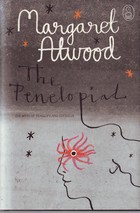 Summary:
Hopefully anyone who’s read The Odyssey
Review:
I’ve taken to loading an audiobook on my ipod for those frequent times when I either have to walk from a T stop or am crammed onto a train with literally no elbow-room to hold onto my kindle. I was excited to see this on the shelf at my library, since I had decided rather spur of the moment to pick one up, and I do love Atwood. Plus, this is only three discs long, which is good for my audiobook attention span.
For me the story ultimately fails, although I don’t blame Atwood for that. The thing is, Penelope, to a modern woman, is kind of pathetic. It’s not easy to make her into a heroine we can root for, the way we can root for Odysseus. Ok, so he’s a womanizer and a liar, but he’s also brilliant and hilarious. The kind of guy you want to be friends with, but don’t want to date. Yet Penelope not only is married to him, but has never stood up to him. Even when he’s been gone for years and years fighting in a war. Atwood is a great writer, but that’s just not a situation you can fix. I completely get Atwood’s fascination with Penelope’s story, not to mention the 12 maids. I don’t think any woman can read The Odyssey
Penelope comes across as a woman who lived in tough times to be a woman, yes, but who never does anything really to fight the status quo. She can’t even bring herself to stand up to the elderly maid who takes the run of her household. Plus, she willingly puts her maids into situations where they are likely to get raped (indeed, do get raped) and then doesn’t stand up for them when her wayward husband finally comes home. Is it within character? Sure. Is it something that holds up as the main focus of a story? Nope.
I did enjoy Atwood’s modern take on the Greek chorus using the dead 12 maids. I appreciate her choice to include a chorus in the book, as well as how she played with different ancient and modern music styles. It even left me wishing the maids were the focus of the book instead of Penelope! Of course, interspersing music between chapters is something I’ve seen Atwood do before in The Year of the Flood
So what does this all ultimately mean? Atwood’s writing style is creative and pleasant as always, but the topic of the book just isn’t. I think the constraints of who Penelope is from such an ancient story placed a sour note on Atwood’s work that normally isn’t there. It’s an interesting exercise, but not one I found particularly enjoyable to read. I was more interested in it as an academic exercise. If you’re a fan of retellings of the classics, you’ll be intrigued by it.
3 out of 5 stars
Source: Public Library

Book Review: The Walking Dead: Rise of the Governor by Robert Kirkman and Jay Bonansinga (Series, #1)
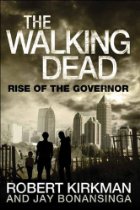 Summary:
The first in a prequel trilogy that relates how the baddest villain of The Walking Dead’s zombie apocalypse came to be–not just how he came to rule Woodbury, but how he became an evil sociopath.
Review:
Wow. Just wow. If I could be a good book blogger and just say that I would, but I can’t so I suppose I must attempt to put my love for this book into words.
First of all, it’s important to know that this is sort of a prequel to The Walking Dead graphic novels. It’s the origin story of The Governor (aka one of the most evil comic book villains ever). Only instead of sticking to his graphic novel format, Kirkman, with the assistance of Bonansinga, went with the written word. Now, I was offered this book as an audiobook, and I have to say this really affected my reading of it. The reader, Fred Berman, does an absolutely amazing job. He has a natural standard American accent, but seamlessly slips into a Southern drawl when the characters speak. Beyond this though he is able to bring the anguish and tensity to the survival scenes that is necessary without seeming melodramatic. It reminded me of being read to by my own father when I was a little girl. I found myself choosing to curl up with the audiobook over many other activities. So. I’m not sure if the experience is the same reading it yourself. I do know that listening to the audiobook is a remarkable experience.
Now, this is a zombie apocalypse horror novel about an evil man. It gets uncomfortable. Kirkman and Bonansinga bring us inside the minds of men warped by situations and psychiatric problems alike. It’s not pretty. It makes you squirm. But it’s supposed to. Some reviewers have accused this book of being misogynistic because bad things seem to happen an awful lot to the female characters. I have a couple of things to say about that. First of all, hello, do you live in this world? Because women have to survive a lot of bad shit. Second, this is an apocalypse. Think of it as a war zone. Do women get molested, raped, murdered, treated as less strong and unequal? Absolutely. The book isn’t misogynistic. It’s realistic about how a south torn apart by zombies would treat women. The way to determine if a book in this sort of situation is misogynistic is to look at how the author treats the women. Does he present them as hysterical, over-reacting? Do they refuse to stand up for themselves? I can unequivocally say that although horrible things happen to the women in this book, they fight for themselves. It is therefore not misogynistic, but realistic.
Now one thing that probably a lot of people wonder is is the story predictable? We already know who The Governor is and that he keeps his zombie daughter as a pet. That would seem to remove the ability for the authors to surprise us at all. I am happy to say that in spite of knowing the end result, this story kept me on the edge of my seat. Some readers didn’t like all of the surprises and twists. Personally, I feel that they brought the novel up a notch in both talent and enjoyability.
Overall, this is a wonderful addition to The Walking Dead canon. Fans of the graphic novel series will not be disappointed, although fans of the tv show seem to be taken aback by it. All I can say is that the books don’t pull any punches and are not for the squeamish. If you don’t want to be challenged, stick to tv. Everyone else should scoop this up as soon as possible.
5 out of 5 stars
Source: Copy from the publisher in exchange for my honest review and a giveaway

Book Review: Blanche on the Lam by Barbara Neely (Series, #1) (The Real Help Reading Project)
 Summary:
Blanche’s employers failed to pay her on time, and now she has some bad checks. She had no idea that bouncing a few checks would land her with a 30 day jail sentence, though, so when she gets the chance, Blanche goes on the lam. She decides to take a temporary job she had originally decided against as a way to hide out. She’s going to be the help for a family on a week-long vacation in the countryside. Naturally, things can never be simple, and Blanche starts to suspect one of the family members is a murderer.
Review:
It’s hard to believe Amy and I are on our penultimate book for the project, not to mention the final fiction book on the list. And what a book! If I had to pick one of the fiction books we read to hand to fans of The Help to get a much more real representation of black women in domestic service, this is definitely the book I would hand them.
Somehow this tiny mystery novel (called a Kriminalroman in German, which I think sounds much better) manages to cover pretty much every aspect of black female domestic workers’ lives that we’ve discussed throughout the project. Blanche faces: police and criminal justice prejudice, stinginess on the part of wealthy employers, rape at the hands of a white male employer, classism, employers’ racist attempts to control her body, non-traditional family structure, and much much more. Yet facing all of those odds, Blanche remains determined and strong. She is not someone who needs OR wants a white woman (or man) to come along and rescue her. I think Blanche’s personality is best summed-up here:
She always returned to domestic work. For all the chatelaine fantasies of some of the women for whom she worked, she was really her own boss, and her clients knew it. She was the expert. She ordered her employers’ lives, not the other way around. She told them when they had to be out of the way, when she would work, and when she wouldn’t. (page 86)
That’s one of the wonderful things about this book. It turns the whole white woman saving the help thing from The Help on its head. Blanche is the one who saves the white family in this book, and then she refuses to accept help from them in return, beyond clearing up her ridiculously unfair legal troubles. Instead of taking a cushy job with them, she leaves, because she is her own woman.
Now, all of that said, I was personally a bit distracted from the race and class issues in this book due to the presence of the character Mumsfield. Mumsfield is the cousin of the sinister family members, and he has Down’s Syndrome. I don’t think all of my readers know this, but my niece has Down’s, so I certainly am a bit sensitive to the portrayal of it in literature. Knowing and loving a person with Down’s removes a lot of the misperceptions of it that exist in the world. At first, I was concerned that Neely had fallen for these things. Mumsfield at first seems too trusting, too caring, a real simpleton. But by the end of the book, Blanche realizes that she hadn’t really listened to what Mumsfield was actually saying earlier in the week. If she had, she would have realized that while Mumsfield is kind and giving, he’s not stupid. Knowing Mumsfield also helps Blanche see that her experiences as a black woman in America have made her racist against white people, when not all of them are bad. Thus, I am pleased to report that Mumsfield is actually an accurate and positive portrayal of people with Down’s.
Now, I will say, personally I’m not generally into the typical mystery novel. I like to get my genre reading from urban fantasy, pnr, and cozies. I am well aware, though, that a lot of people love this kind of book, and it is definitely well-done. It has all of the well-loved aspects of the genre, plus manages to address race, class, and even Down’s Syndrome. It is absolutely a worthwhile read.
3 out of 5 stars
Length: 215 pages – average but on the shorter side
Source: Library
Buy It (Amazon or Bookshop.org)
Discussion Questions:
- How do you feel about Blanche’s initial jail sentence and her decision to go on the lam?
- Blanche sees Mumsfield as an exception to the rule when it comes to white people, aka it’s unusual for them to be kind. Do you think this is an unfair assessment?
- Blanche assesses her caring for Mumsfield as a symptom of “Darkies Disease” aka when the help start acting like the idealized Mammies. What do you think of this assessment?
If you found this review helpful, please consider tipping me on ko-fi, checking out my digital items available in my ko-fi shop, buying one of my publications, or using one of my referral/coupon codes. Thank you for your support!
Book Review: The Walking Dead, Book Three by Robert Kirkman (Series, #3) (Graphic Novel)
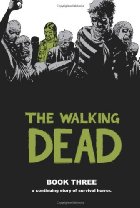 Summary:
The rag-tag band of survivors have adjusted to living in the prison. One day they spot a helicopter go down in flames. Rick, Michonne, and Glenn head out to check on it and end up finding another group of survivors whose leader is known as The Governor. Unfortunately for them, not everyone has maintained their humanity amid the walking dead.
Review:
This entry in the series puts the graphic in graphic novel. We’re talking mutilation, torture, and rape. Also the usual murders and zombies. It is not a book for those disturbed by those things or who find them gratuitous. However, for those of us who love violence all up in our literature, it’s a squee-inducing violence fest. Although you may not want to read it in public just in case someone glances over your shoulder during the rape and/or torture scenes.
The addition of another group of survivors where everything is not hunky dory and evil has arisen was exactly what this series needed. It shows the very dark possibilities that the group we’ve been following have thus far managed to avoid. It puts things like Tyreese and Rick’s fight in the previous book into perspective. Woodbury and The Governor also demonstrate how key Rick has been to the group’s survival and maintenance of a healthy community. All it takes is one bad apple wanting the power for a bad culture to spring up. It’s a good lesson that’s taught here in a subtle way.
I thought long and hard about how I feel about Michonne’s rape. At first I was angry about it with reactions ranging from, “she’s so strong; it doesn’t make sense” to “oh sure, rape the only black woman *eye-roll*.” But the more I thought about it I realized I was being unfair. In a world gone to hell and full of evil rape is going to happen. Rape happens every day now let alone in a post-apocalyptic world, and Kirkman manages to show it in a graphic novel in a way that is respectful to the victim, which I am sure was not easy to do. The concept of what is happening is clear, but at the same time, the drawings focus in on the victim’s emotions and reactions. Similarly, Michonne is the logical choice because she is the most adventurous of the women. She does not stay at home with the kids while the men run out and do things. She’s a strong woman, yes, but being strong doesn’t stop bad things from happening to you. That said, if you are a person who finds rape scene triggering, you should definitely skip this entry in the series and get someone to sum it up for you.
Overall, this is a strong entry that keeps the series fresh and introduces more drama into the post-apocalyptic world. Fans of the first two books will not be disappointed by this one. Highly recommended.
4 out of 5 stars
Source: Public Library

Previous Books in Series:
The Walking Dead, Book One
The Walking Dead, Book Two
Book Review: A Stolen Life by Jaycee Dugard
 Summary:
On June 10, 1991, eleven year old Jaycee Lee Dugard was abducted from her school bus stop by Phillip and Nancy Garrido with the aid of a stun-gun. Jaycee was locked up in a backyard compound and repeatedly raped and abused by Phillip in a bid to satisfy his pedophilia. Over the course of her 18 year captivity, Jaycee gave birth to two daughters in the compound. Eventually with her increasing age, the sexual assaults stopped, but she was still held captive. Finally, on August 26, 2009, Phillip brought Jaycee and her daughters with him to the parole office in an attempt to explain away why he was spotted in public with the two girls. Jaycee, who hadn’t been allowed to speak her name for 18 years, was able to write it down for the police. This is the memoir of her experience and gradual recovery from the captivity.
Review:
Jaycee wrote this memoir without the assistance of a ghost writer, something very uncommon in memoirs by victims of abduction. She states in the beginning that her way of remembering things is a bit off because of the trauma, but that her way of telling her story will provide a genuine experience for the reader to truly see how the abduction affected her. She is correct that the memoir is not set up in a traditional way, but this tends to make for stronger books when discussing something as painful as this. It reminds me a bit of the very non-traditional story-telling methods used in another memoir When Rabbit Howls. Eliminating the ghost writer and letting the victim speak grants us, the readers, the opportunity to truly connect with a survivor. I humbly thank Jaycee for her bravery in this.
Most of the chapters start with Jaycee remembering the events from the perspective of her younger self. This absolutely makes scenes such as her first molestation by Phillip incredibly haunting. She then ends each chapter with a reflection from her adult, free perspective on the past. This structure is unique, but it provides an interesting perspective, showing both Jaycee the victim and Jaycee the survivor. Toward the end of the book this structure is lost a bit as we suddenly are shown many pages from the journal Jaycee carefully kept in captivity, as well as talking in a more present manner about the therapy she’s been going through. Her therapist sounds truly remarkable. She uses horses to help the survivors deal with problems, which seems to work incredibly well for Jaycee who often only had animals around to talk to during her 18 year ordeal.
Although Jaycee does recount her abuse and manipulation at the hands of Phillip, that is not at all what stands out in this memoir. What comes across is what a strong, sensitive, caring woman Jaycee is. She is not lost in woe is me. She does not even think she has it the worst of anyone in the world. The one thing she repeatedly states she’s learned is that she was not assertive enough as a little girl, and that personality trait backfired on her repeatedly throughout the ordeal. She states that she sees this as the reason abuse of all kinds are able to go on, because people don’t speak up.
There are moments in which all of us need to have a backbone and feel that we have the right to say no to adults if we believe they are doing the wrong thing. You must find your voice and not be afraid to speak up. (page 143)
This message of “speak up” is stated repeatedly throughout the book and leaves the reader feeling empowered rather than downtrodden at such a tale. If Jaycee could live through such a situation and come out of it stronger and as an advocate for victims and survivors of abuse to speak up, how can any of us do any less?
I recommend this book to those who enjoy memoirs and survival stories and can handle scenes of a disturbing nature.
4 out of 5 stars
Source: Amazon

Movie Review: Original vs. Remake Comparison: The Last House on the Left (1972 vs. 2009)
 Summary:
1972:
Mary is a sweet-tempered, girl-next-door that every boy in the neighborhood has the hots for, but she has a best friend from the wrong side of the tracks. They frolic in the woods together and drink alcohol kept cool in the river. Mary’s parents do not approve. Mary and her friend go to NYC for a concert, but when her friend tries to score some weed, their night goes horribly awry. Suddenly they find themselves at the mercy of two escape convicts, a son of one of the convicts who does their beck and call for his heroin hits, and a malicious, nympho woman.
2009:
Mary is vacationing in the lakes with her doctor father and lovely mother. She goes into town to hang out with her old friend, and the two of them go back to a hotel room to get high with a teenage boy. But that boy’s father, uncle, and the uncle’s girlfriend come back, and the dad is an escaped con. He decides he can’t let the girls go and kidnaps them, finishing them off in the woods. They wind up car-wrecked and must seek help at a nearby cabin that just so happens to be Mary’s parents’. When they figure out the mystery, all hell breaks loose.
Review:
1972:
This is a classically 70s film featuring everything from feathered hair to 70s music to background music oddly upbeat for the dark tone. The opening shot is essentially of Mary’s 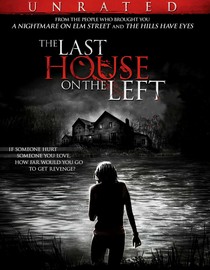 boobs. This was the era of really stretching the boundaries. Everything semi-pornographic and disgusting that they could get away with, they did get away with. There is one, rather controversial, scene in which Mary and her friend are forced to have sex with each other–and need I remind you her friend is female? There is a lot of rape, a lot of blood, and these killers really do kill just for fun. Not to make it sound like this is slasher porn, though. There’s nothing at all remotely sexy about the violence. It’s meant to be disturbing, and it is. There’s one scene in particular that will have all male viewers crossing their legs and quivering in their boots. All that said, this movie definitely reads as campy due to some unfortunate scenes featuring upbeat music and bumbling policemen that feel like they belong more in an episode of Andy Griffith than a horror movie. I’m really not sure what Craven was thinking sticking those scenes in there. There of course also is the enduring problem of the victims being truly, incredibly stupid. Horror is the most horrifying when it feels as if the victims did everything smart, but still got caught. The element of unsuspected revenge is what saves the movie, though.
2009:
This movie is quite creative for a modern horror. It takes a fairly sympathetic main character and has her a make a rather impulsive, but not completely stupid decision. Mary and her friend take far more agency trying to get away. They are far more modern female victims. They fight back physically and not with words and pleading. The cinematography is dark and intense. The convict’s son becomes a far more sympathetic character, and Mary’s parents much more believable as a vindictive pair. The whole plot moves at the perfect pace, and the ending is surprising.
1972 vs. 2009:
I have to say, 2009 wins for horror movie quality. It is put together more smoothly without the odd side-story of the police with the humorous background music. The story is more cohesive. However, surprisingly, 1972 is far more gory and feels more like a slasher. The violence, both sexual and physical, is surprising, and the villains are far more evil. If you’re out for the chills of a good horror, movie, go with the 2009 version. If you’re after sheer blood and violence, go for the 1972 version.
1972: 3.5 out of 5 stars
2009: 4 out of 5 stars
Source: Netflix
1972: Buy It

2009: Buy It

 Support my work with a tip or browse my shop for curated book club guides, how to guides, cross-stitch patterns, and more!


This work by Amanda Nevius is licensed under a Creative Commons Attribution-Noncommercial-No Derivative Works 3.0 United States License.
 Opinions of a Wolf