
Archive
Book Review: To Say Nothing of the Dog by Connie Willis
 Summary:
Ned Henry is a time-traveling historian at Oxford, who has unfortunately been assigned to Lady Shrapnell’s quest to recreate an historic church. For the last…god knows how long, he’s been searching for the bishop’s bird stump in the 1940s. He finds himself suffering from time-lag and is promised a vacation in Victorian England where Lady Shrapnell can’t find him. Of course, the Oxford historians need him to take care of one teeny tiny little incongruity caused by fellow time-traveling historian, Verity, who just so happens to be as beautiful as a naiad. Of course, that could just be the time-lag talking.
Review:
Wow. Wow. I literally hugged this book multiple times as I was reading it. I love it that much. You know that old Looney Tunes cartoon with the abominable snowman who finds Bugs Bunny and then scoops him up and rocks him saying, “I will hug him and love him and squeeze him and call him George” ? If I was the abominable snowman, this book would be my Bugs Bunny.
It is incredibly witty in that highly intelligent manner that expects you to be educated to get the joke. Multiple references to classic literature, historic events, and more tossed around as quips and comparisons to events characters are currently going through. It also features the put-upon hero, Ned, who maintains a good sense of humor about the whole thing in that lovely self-deprecating way that makes me wish the character could pop out of the book and be my best friend.
Additionally, I love history as long-time readers of this blog know. History was one of my two majors in university. I was the 7 year old girl who sat around watching war movies and PBS documentaries. I also love scifi. Hence, the entire concept of time-travel is one of my all-time favorite things, and Willis handles it so intelligently and beautifully! I love that time travel is something only the academics do since everyone else finds it dull once it’s discovered they can’t loot from the past. It makes so much sense! I love the implication that non-academics are quite happy with shopping malls while Ned and Verity go traipsing around through the past navigating a world distantly related to our own. One of my favorite moments is when Ned discovers that Victorians actually used exclamations like “pshaw” that are found in Victorian novels. It’s a historian’s dream come true!
Finally, a significant portion of the storyline revolves around cats. Adding an extra layer of awesome to this is the fact that cats are extinct in the future, so Ned has never encountered one before. He makes the initial mistake of thinking cats are like dogs. Any cat lovers, I’m sure, can envision the hilarity that ensues from this little thought process. Also, seriously, Willis clearly understands animals perfectly. The mannerisms of the cats and the bull dog, Cyril, are written to a T.
Put together humor, time travel, history, and animals, and this is the perfect read. If you enjoy any one of those things, but definitely if you enjoy more than one of them, you absolutely must give this book a chance. I haven’t loved a book this much in years, and I just….I just want to spread the love. I also want to go re-read it right now.
5 out of 5 stars
Source: PaperBackSwap

Book Review: How To Be An American Housewife by Margaret Dilloway
 Summary:
Shoko dealt with the consequences of her decision to acquiesce to her father’s wishes and marry an occupying American soldier and return with him to America in the 1940s. She did her best to hold onto the best parts of being a Japanese woman and meet the expectations of being an American housewife. But now she is sick from an enlarged heart, possibly the result of radiation from the bombs dropped on Nagasaki, and the consequences of her multiple decisions made in the war and occupation years are coming back to haunt her. Although her relationship with her biracial daughter, Suiko, is strained, Suiko still does her best to assist her mother, and in the process, learns something about herself.
Review:
I came into this book expecting it to be your typical book about an immigrant adapting herself to the surrounding culture. That’s really not what this book is about, and that actually is a good thing. It subtly addresses how complex not only family can be but inter-cultural relations as well. The world no longer consists of the simple, straight-forward rules that Shoko grew up with. Since the world is a smaller place, the concepts of what one should or should not do slowly change throughout her life.
Of course, I find everything about Japan completely fascinating, so I enjoyed getting to see it not only through Shoko’s eyes, but through her daughter Suiko’s as well. Japan truly has changed drastically in the last 70 or so years, and showing the difference in experience simply from Grandmother Shoko to graddaughter Helena is astounding. Often in America we only think about how our own nation has changed, but this is true for others as well. Reading about it is a mind-broadening experience.
Dilloway also handles the delicate situation of dealing not only with your parents’ immortality but also their fallibility and essential humanness in a gentle manner. It is there, but it is not preachy. It simply reflects the experience of realizing as an adult that your parents are people too, and they’ve had their own life experiences that they regret or have dealt with in their own way.
Still, although I found the story enjoyable to read, it fell short of being deeply moving or memorable. It felt as if it ended too soon, or we didn’t find out enough about everyone’s stories. In particular although I understood and felt for Shoko at the beginning of the story, by the end I felt distanced from her, wheras I was still rooting for Suiko. I think some of the choices Dilloway made for Shoko did not fit with the tone of the rest of the story.
Overall, I recommend this enjoyable read to fans of contemporary or historical realistic fiction with themes of inter-generational and inter-cultural conflicts.
4 out of 5 stars
Source: Amazon

Book Review: A Tale of Two Demon Slayers by Angie Fox (Series, #3)
 Summary:
Lizzie is ready for a vacation what with having spent the last month first saving her grandmother from the second level of hell and then saving Las Vegas from a hoard of succubi. Plus lying around on the beach in Greece with her hunky Griffin boyfriend, Dimitri, sounds like quite the treat. Of course, nothing in Lizzie’s new life ever goes as smoothly as planned. Their arrival in Greece leads to the discovery that someone has stolen something from Dimitri. Something intertwined with Lizzie and that has put the whole Helios Griffin clan in danger.
Review:
Due to the title and the various repercussions so far to Lizzie sharing her demon slayer nature with Dimitri, I expected this book to deal with that. Actually, the story it told was far more engaging and interesting. Can Dimitri with his classical European family of tradition work in a relationship with Lizzie and her globe-trotting work and crazy motorcycle gang witch family?
Although the situations surrounding this romance are highly paranormal, the relationship itself is very normal. Lizzie struggles to trust in Dimitri’s love for her, let alone allow him to love her. Dimitri struggles to find balance between his life and family and Lizzie. It gives a heart to the overall action and story that was missing in the other volumes.
The paranormal aspects are stronger this time around too. The paranormal world seems to mesh together in a better way. The addition of more animals besides Pirate make for a more entertaining menagerie. Dimitri in particular is more fleshed out now that we see his family and where he comes from. New characters too are well-drawn, particularly Lizzie’s new teacher.
Fox manages to avoid common paranormal romance cliches this time around, although at first the reader thinks she is falling into them. This combined with drastically improved sex scenes, the better characterization, and the addition of a real world heart to the story makes for a far better tale overall. I’m glad the humor in the previous two books kept me around for this one.
Overall, this is an excellent example of everything paranormal romance should be–colorful characters, believable paranormal circumstances, the heart of the story relatable to real world circumstances, good sex scenes, and plot twists that manage to avoid cliches. It is thoroughly entertaining, and I highly recommend it to all paranormal romance lovers.
5 out of 5 stars
Source: Amazon

Previous Books in Series:
The Accidental Demon Slayer, review
The Dangerous Book for Demon Slayers, review
Review: Victoria’s Secret Fashion Show 2010
Every year I mark the start of the holiday season with the Victoria’s Secret Fashion Show. The lights! The music! The lingerie! The half-clad back-up dancers! The holiday-themed VS commercials played during the Fashion Show that is essentially one long commercial.
Anyway, this year’s was a bit disappointing compared to what I refer to as The Year of the Tartan Themed Line, but. It was still the VS Fashion Show. So, let’s take a look at it, shall we?
The night started off with a bang with the Tough Love line. This line is supposed to appeal to women who like to be feminine and tough. Yes, please, thank you.

Hot stuff.
Also, notice the gold glitter runway? I’m not sure how they did that. The glitter didn’t seem to move around, but it’s way cool.
The next line, however, was one of the weirdest things I’ve seen in a while from VS. They call it the Country Girl line. I call it the Grandma I’d Like to Fuck line. GILF for short. This line featured tons of lace (barf) and, I shit you not, quilts. Quilts covering the model’s asses. Wtf, VS. Wtf.

What has been seen cannot be unseen.
Now the next line, Game On, was fun for multiple reasons. First, the shirtless back-up dancers doing various upper-body strength moves. Which I cannot find a picture of, because clearly the internet does not have its priorities in order. This line was clearly about the designers showing off their artistic skills far more than designing many things a woman would actually wear in the bedroom. The outfits were still all cool to look at though. Well, and there was one outfit that was totally wearable.
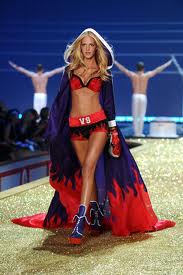
Would I wear this? Hells yes.
They followed this up with a very stereotypical jungle/wild animals/bla bla bla oh ladies, don’t you feel like a wild thing? The best part of this line, by far, were the shirtless male back-up dancers doing tribal dances. Now this whole jungle thing isn’t exactly my cup of tea, but I get some women like it, so whatever. Unfortunately, something possessed one of the designers, and they thought it would be brilliant to design a bra and panty set that are attached to each other.
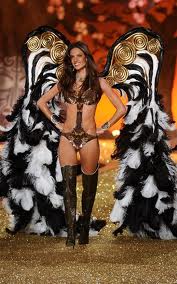
Yes, VS. Because clearly I want my lingerie to look like I made some very bad decisions in the swimsuit aisle.
Yeah, I have no idea what they were thinking. There was also a line that I think was supposed to be angels. There were a lot of wings and Akon rambling, er *cough*, singing on about how women are angels.
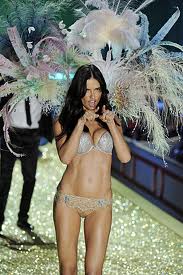
There were a lot of really boring outfits like this one and Akon looking like he was having a seizure in the background.
Let’s move on, shall we?
Naturally that just left the Pink collection, which I always find fun and amusing. There was one year where they were all toy soldiers or something like that, anyone remember that? That was fun. Well this year appeared to be the year of putting the pride rainbow into all of the outfits. This was awesome. I love that VS did this, and it also led to one of my favorite angel wing outfits that I’ve seen in the fashion shows so far.

Thigh highs? Yes. Clear plastic pride flag wings? Hells yes.
Yeah, um, I kind of want that outfit, and I’m not even gay. So pretty!
That pretty much wrapped up the evening. The models came out and did their prancing/bowing to the camera thing.
Random Thoughts:
- Yes, I know Katy Perry “sang.” Twice. Her new album is nowhere near as good as her first one, and she looked like she was going into labor every time she came anywhere near a high C.
- I know that the straight guys (and possibly the lesbians) watching the show probably enjoy the interviews with the models, but is it really necessary to try to convince us that their job is hard? We know it’s not. Stop messing with us, VS.
- Quote of the evening: “I fantasize more about wings than I ever would about my wedding.” Clearly this model has her priorities in order. Also, I can never imagine my life goal being to wear VS wings, but….whatever floats your boat? Also, anyone have any idea what she’ll do now that she’s achieved her highest dream in her early 20s?
- Dear cameraman: You could be a *bit* more subtle at the zoom in on the boobs shots. Just saying.
Book Review: Eva by Peter Dickinson
 Summary:
Eva wakes up from a car accident to discover that her scientist, chimp researcher parents have allowed for her to be part of a new experiment. Her brain patterns have been implanted into a chimp’s brain. She is a human brain trapped in a chimp’s body. What will this mean for Eva? For the chimps? For the world?
Review:
This a truly horrifying concept. What would it be like to wake up from a car accident in a body that is not your own? There is much potential for exploration here, but the direction Dickinson took it in fell flat for me.
The setting is a near future in which the world is vastly overpopulated and nearly all animal species have died out except for chimps, who are all kept in captivity. It’s odd in a world that is so overpopulated that the vast majority of people never leave their apartments that scientists have made such an ethically questionable move to save human lives. As Eva herself points out, not only is there the problem of what it means to be a human in a chimp’s body, but also there’s the fact that the chimp essentially had to die for Eva to live. How is that right or fair?
I appreciate that Dickinson has Eva start to identify with the animals and fight for animal rights, yet I simultaneously did not appreciate his depiction of the inner workings of animals and their social groups. In spite of Eva being one of and among them, Dickinson persists in presenting them from a largely disconnected human perspective. I’ve read more sympathetic passages on the inner workings of animal groups on vegetarian websites than I got from Eva’s perspective as, essentially, one of the chimps herself.
*spoiler warning* Some readers will also be disturbed by the fact that Eva goes on to mate with one of the chimps. Although this is not shown, it is shown that a male is interested in Eva when she is in estrus, and it is later shown that she has had multiple chimp babies. Although I am highly sympathetic to animal rights, this is far too close to beastiality for my own comfort. Perhaps if Dickinson had addressed the issue and made it a thought-provoking issue instead of glossing over it I would feel differently. But he truly just makes it happen and tries to skip over the issue. I found this disturbing and was disappointed that this overshadowed the more interesting questions of animal rights versus human welfare. *end spoiler*
Overall, the book is well-written and thought-provoking, but falls far short of what it could have been. I’m sure there must be better YA books out there that address the issue of animal rights in a clearer, less disturbing manner.
2 out of 5 stars
Source: Swap.com

Movie Review: Soylent Green (1973)
 Summary:
In the then moderately distant future of 2022, the world has turned to being a congested chaos due to overpopulation and global warming. People survive on various colors of food-like paste sold by Soylent, the favorite of which is Soylent Green. When a police man is called in to investigate the murder of an unusually wealthy man, he realizes it all has to do with the Soylent Corporation and makes a sinister discovery.
Review:
Obviously I came at this movie knowing the “spoiler” that Soylent Green is people. What scifi nerd hasn’t heard that quote? Still, even coming in knowing the big secret, I was expecting more from this film. By far the most enjoyable portion takes place in the wealthy man’s condo where we learn women have come to be attached to condo’s as part of the “furniture” and are passed along with the condo from owner to owner. In return for being the lady of the house, they get safety, security, and food. A whole other story could be told with what is essentially a return to the caveman way of doing things. Unfortunately, this gets glossed over for the supposedly more interesting plot line.
The story is told like a 1970s futuristic version of a film noir. We have the detective fighting all odds to get to the nitty gritty truth of the story. Of course, this is the 1970s version of a future dystopia. As such, the wealthy dwellings look straight out of a 1970s porno, and the unfortunate dystopic surroundings of the poor look eerily similar to a hot and sweaty version of communist Russia. It’s an odd dichotomy that doesn’t quite work.
I was waiting for the film to move from setting up the dystopia to slowly building the horror up, but it never happened. Honestly, given the intensely overpopulated surroundings these people live in and severe lack of food, I actually came away thinking that recycling the dead almost seemed logical, and being a vegetarian, that’s quite the leap for me to make! Clearly the film missed its mark somehow. When the policeman rants about the humans being treated as cattle, all I could think was how earlier in the film both he and a friend drooled over a slab of beef. Why should I be horrified that he feels as if he’s being treated like cattle when he would willingly treat cattle exactly the same way? I was left with no sympathy for him, only for the women who get passed along as furniture with the condo’s in this future.
Overall, Soylent Green had the potential to tell an interesting story of a future where women revert back to their old subservient roles as a survival tactic. Instead, it unfortunately veers off toward a storyline I find unsympathetic and that rings as falsely horrifying given the general set-up of the movie. There are far better 1970s horror films out there, as well as better dystopias.
2 out of 5 stars
Source: Netflix

Book Review: S by John Updike
 Summary:
Letters, both hand-written and recorded onto tapes, tell the story of Sarah, a North Shore housewife of a wealthy Massachusetts General Hospital doctor who one day in 1986 decides to go and join a commune in the Arizona desert. Gradually through the letters both her past and her experiences in the commune are revealed.
Review:
I was intrigued by this book for multiple reasons. I’ve always enjoyed epistolary novels. I found Updike’s more famous novel, The Three Witches of Eastwick, endlessly entertaining. Also, I’ve always been fascinated by communes and cults. This book certainly contains all three elements. Sarah’s letters compel the reader to get through them as quickly as possible. Whether she’s discussing the commune or her past life on the North Shore, the letters are truly fascinating. Perhaps this is partly because there’s a Stepford-wife like quality to Sarah’s past life, and her current life is so over the top from anything most modern Americans experience. It provides a fascinating contrast.
The book therefore starts out strong, but falters more and more the further toward the end it gets. The more about Sarah is revealed, the less sympathetic she becomes. Additionally, due to the nature of the epistolary novel, some of her actions are not entirely revealed, thus leaving the ending a bit confusing. Frankly, the ending simultaneously surprised and disappointed me. I was left wondering what on earth Updike’s point had been. Was it a feminist stance? Was it misogynistic? Was it just a portrait of a person? The great variety between all these possibilities should demonstrate how confusing the ending is.
It’s interesting to note that Sarah is depicted as a descendant of Hester Prynne of The Scarlet Letter. I’m sure this plays into the interpretation of the book a great deal, although personally, I am not sure how.
Overall, this epistolary novel starts out strong and engaging, but the ending leaves the reader a bit confused and let down. If you’re a big Updike or epistolary novel fan, you will still enjoy the book enough to make it worth your while to read, but all others should probably give it a pass.
3 out of 5 stars
Source: Swap.com

Movie Review: Original vs. Remake Comparison: The Last House on the Left (1972 vs. 2009)
 Summary:
1972:
Mary is a sweet-tempered, girl-next-door that every boy in the neighborhood has the hots for, but she has a best friend from the wrong side of the tracks. They frolic in the woods together and drink alcohol kept cool in the river. Mary’s parents do not approve. Mary and her friend go to NYC for a concert, but when her friend tries to score some weed, their night goes horribly awry. Suddenly they find themselves at the mercy of two escape convicts, a son of one of the convicts who does their beck and call for his heroin hits, and a malicious, nympho woman.
2009:
Mary is vacationing in the lakes with her doctor father and lovely mother. She goes into town to hang out with her old friend, and the two of them go back to a hotel room to get high with a teenage boy. But that boy’s father, uncle, and the uncle’s girlfriend come back, and the dad is an escaped con. He decides he can’t let the girls go and kidnaps them, finishing them off in the woods. They wind up car-wrecked and must seek help at a nearby cabin that just so happens to be Mary’s parents’. When they figure out the mystery, all hell breaks loose.
Review:
1972:
This is a classically 70s film featuring everything from feathered hair to 70s music to background music oddly upbeat for the dark tone. The opening shot is essentially of Mary’s 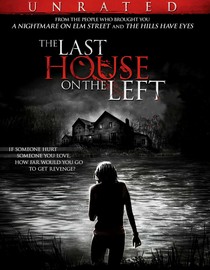 boobs. This was the era of really stretching the boundaries. Everything semi-pornographic and disgusting that they could get away with, they did get away with. There is one, rather controversial, scene in which Mary and her friend are forced to have sex with each other–and need I remind you her friend is female? There is a lot of rape, a lot of blood, and these killers really do kill just for fun. Not to make it sound like this is slasher porn, though. There’s nothing at all remotely sexy about the violence. It’s meant to be disturbing, and it is. There’s one scene in particular that will have all male viewers crossing their legs and quivering in their boots. All that said, this movie definitely reads as campy due to some unfortunate scenes featuring upbeat music and bumbling policemen that feel like they belong more in an episode of Andy Griffith than a horror movie. I’m really not sure what Craven was thinking sticking those scenes in there. There of course also is the enduring problem of the victims being truly, incredibly stupid. Horror is the most horrifying when it feels as if the victims did everything smart, but still got caught. The element of unsuspected revenge is what saves the movie, though.
2009:
This movie is quite creative for a modern horror. It takes a fairly sympathetic main character and has her a make a rather impulsive, but not completely stupid decision. Mary and her friend take far more agency trying to get away. They are far more modern female victims. They fight back physically and not with words and pleading. The cinematography is dark and intense. The convict’s son becomes a far more sympathetic character, and Mary’s parents much more believable as a vindictive pair. The whole plot moves at the perfect pace, and the ending is surprising.
1972 vs. 2009:
I have to say, 2009 wins for horror movie quality. It is put together more smoothly without the odd side-story of the police with the humorous background music. The story is more cohesive. However, surprisingly, 1972 is far more gory and feels more like a slasher. The violence, both sexual and physical, is surprising, and the villains are far more evil. If you’re out for the chills of a good horror, movie, go with the 2009 version. If you’re after sheer blood and violence, go for the 1972 version.
1972: 3.5 out of 5 stars
2009: 4 out of 5 stars
Source: Netflix
1972: Buy It

2009: Buy It

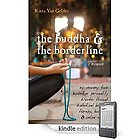
Book Review: The Buddha and the Borderline: My Recovery from Borderline Personality Disorder through Dialectical Behavior Therapy, Buddhism, and Online Dating by Kiera Van Gelder
 Summary:
Kiera here recounts her struggle with mental illness, first undiagnosed and indescribable, marked by episodes of self-harming, frantic attempts to avoid abandonment (such as writing a boy a letter in her own blood), alcohol and narcotic abuse, among other things. Then she recounts how she was finally diagnosed with Borderline Personality Disorder (definition) and her struggles to recover from this difficult mental illness usually caused by a combination of brain chemistry and trauma in childhood. Kiera recounts her experience with the most effective treatment for BPD–Dialectical Behavior Therapy (DBT). She honestly discusses her struggles to encounter and interact with the world and establish relationships, often utilizing online dating websites. Finally she brings us to her final step in the recovery process, her embracing of Buddhism, which much of DBT’s therapy techniques are based upon.
Review:
Many memoirs talk about events in a person’s life, but the thing about mental illness, is the person writing the memoir must somehow be able to show her audience what it is to be inside that head. Inside that person who perceives the world in her own unique, albeit messed-up,way. It takes a certain level of brutal honesty with yourself to be able to do so. Kiera achieves this with flying colors here.
BPD is an illness that, unless you have encountered it in your own life either by having it yourself or caring deeply for someone who does, is often difficult to clearly describe in a sympathetic manner. Popular culture wants us to believe that these, by and large female, sufferers are akin to the femme fatale or the main character in Fatal Attraction. But people with BPD aren’t bunny boilers. They are individuals who experience emotions much more extremely than everyday people do. A visual Kiera uses throughout the book that I believe is quite apt is that a person with BPD is like a person with third degree burns all over their body. A touch that wouldn’t hurt a non-injured person makes the burned person cry. That’s what emotions are like for people with BPD.
Kiera depicts what it feels to suffer from BPD with eloquent passages such as these:
I am always on the verge of drowning, no matter how hard I work to keep myself afloat. (Location 236-240)
In an instant, I shift from a woman to a wild-haired girl kicking furniture to a balled-up weeping child on the bed, begging for a touch. (Location 258-263)
Similarly Kiera addresses topics that non-mentally ill people have a difficult time understanding at all, such as self-injury, with simultaneously beautiful and frightening passages.
I grew more mindful as the slow rhythm of bloodletting rinsed me with clarity. It wasn’t dramatic; it was familiar and reassuring. I was all business, making sure not to press too deep. (Location 779-783)
But of course it isn’t all dark and full of despair. If it was, this wouldn’t be the beautiful memoir that it is. Kiera’s writing not only brings understanding to those who don’t have BPD and a familiar voice to those who do, but also a sense of hope. I cheerleader who made it and is now rooting for you. Kiera speaks directly to fellow Borderlines in the book, and as she proceeds throug her recovery, she repeatedly stops and offers a hand back to those who are behind her, still in the depths of despair. Having BPD isn’t all bad. People with BPD are highly artistic, have a great capacity for love.
I become determined to fight–for my survival, and for my borderline brothers and sisters. We do not deserve to be trapped in hell. It isn’t our fault. (Location 1672-1676)
So while it’s undeniable that BPD destroys people, it can also open us to an entirely new way of relating to ourselves and the world–both for those of us who have it, and for those who know us. (Location 5030-5033)
Ironically, the word “borderline” has become the most perfect expression of my experience–the experience of being in two places at once: disordered and perfect. The Buddha and the borderline are not separate–without one, the other could not emerge. (Location 5051-5060)
Combine the insight for people without BPD to have into BPD with the sense of connection and relating for people with BPD reading this memoir, and it becomes abundantly clear how powerful it is. Add in the intensely loving encouragement Kiera speaks to her fellow Borderlines, and it enters the category of amazing. I rarely cry in books. I cried throughout this one, but particularly in the final chapter.
This is without a doubt the best memoir I have read. I highly recommend it to everyone, but particularly to anyone who has BPD, knows someone with BPD, or works with the mentally ill. It humanizes and empathizes a mental illness that is far too often demonized.
5 out of 5 stars
Read my fiction novella starring a main character with BPD. I read this book partially as research for it.
Source: Amazon

Book Review: The Android’s Dream by John Scalzi
 Summary:
People think Harry Creed is squandering his talents, but he actually quite enjoys his job working for the UNE breaking bad news to various sentient alien races residing on Earth. Still, he doesn’t mind doing a favor for his old friend, Ben Javna, who calls up saying the lizard race, the Nidu, need a specific breed of sheep for the coronation ceremony, and it’s vital in keeping the peace between the two planets that Earth help provide one. Creed doesn’t think this will be much of a challenge, but he soon finds up he’s signed up for more than he bargained for, running into everything from The Church of the Evolved Lamb, to a Nagch who digests his victims alive, to other computer geniuses, to scandal within the UNE.
Review:
This is one of those scifi political intrigue books crossed with Douglas Adams style humor. I don’t usually do political intrigue in scifi, since I avoid politics like the plague in real life, but the Douglas Adam style humor manages to make it all actually interesting and intriguing.
It’s impossible not to enjoy all of the very strongly developed characters, whether they’re a villain or not. Frankly, that’s a good thing, as it’s rather hard to tell half the time who’s the villain and who isn’t (with the exception of Creek of course). The alien sentient species imagined are rather traditional in appearance, but not so much in behavior, which keeps them interesting. For instance, the Nidu are able to communicate through smell in addition to speech, and this tends to lead to problems on Earth. Even very minor characters who are only in the story for a few pages are so crisply described, that it is impossible not to imagine them as clearly as if it was a film. In fact, the whole book reads rather like a scifi action film in the style of The Fifth Element.
The action sequences are universally stunning. There is one shoot-out scene in a mall, in particular, that also incorporates equipment from a futuristic game, reminiscent of Ender’s Game that left me grinning with joy at the sheer awesomeness of it. The social commentary in the form of The Church of the Evolved Lamb is also fun. This is a religion that knows that its founder was a fraud, but has decided to attempt to make his prophecies come true anyway. It makes for some really wild moments.
That said, sometimes the political intrigue itself was a bit hard to follow. I’m still rather confused as to what exactly was going on, politically, in the middle of the book. I think I’d have to re-read it to figure that out, exactly. I think the fact that I didn’t get confused at all in The Dark Tower series, but did here says something. Still though, the humor and action sequences kept the plot moving enough that the political intrigue didn’t really matter that much anyway.
Overall, if you enjoy humorous scifi in the style of Douglas Adams, you will definitely enjoy this book.
4 out of 5 stars
Source: Harvard Coop

 Support my work with a tip or browse my shop for curated book club guides, how to guides, cross-stitch patterns, and more!


This work by Amanda Nevius is licensed under a Creative Commons Attribution-Noncommercial-No Derivative Works 3.0 United States License.
 Opinions of a Wolf