
Archive
Book Review: Jesus Land by Julia Scheeres
 Summary:
In this memoir, Julia recalls growing up in a conservative Calvinist family in Indiana with her two adopted black brothers and the parental abuse and general racism they faced. The last part of the memoir recalls her time spent in the Dominican Republic at a fundamentalist Christian reform school–Escuela Caribe–and the further abuse inflicted upon herself and David there.
Review:
I heard about this memoir due to the section on Escuela Caribe. A cousin of mine was sent there by her parents in the 2000s and when googling it, I came across all the controversy surrounding the school with this memoir frequently cited. I therefore expected this book to predominantly be about a vicious reform school. In fact, it is a stunning exploration of race and racism in the United States.
Julia was four when her parents adopted David, and they immediately bonded. Julia frequently expresses feeling as if David, who is only a few months younger than herself, is her twin brother. They are happy siblings and oblivious to the racism around them until their parents adopt another boy a year older than them, Jerome, so that David can “have one of his own kind around.” Jerome is violent, steals, slacks at school, and molests Julia. Julia eventually comes to wonder why her parents beat Jerome and David when they sin but simply send her to her room. This combined with Jerome’s continued attempts to convince David to side with him against “the whiteys” is confusing and painful to Julia. Julia and David feel as if they are truly brother and sister, why doesn’t anyone else treat them that way? Julia beautifully depicts her own struggles against imitating racist actions and words as well as her brother David’s struggles against internalizing the racism they are surrounded with.
The other element strong in the memoir is a bracing look at the violence, anger, and fear often found in fundamentalist Christian homes. Children are guided with anger and violence instead of love due to the Bible verse “spare the rod, spoil the child.” Julia’s parents believed in this, and Escuela Caribe clearly firmly believes it as well. They believe the children are horrible people and the sin must be beaten out of them, whether with belts, boxing gloves, over-exercising, humiliation, or excruciating physical labor. This is important for people to know about, and Julia paints a clear picture in an unbiased voice. Indeed, this is the least biased narrative voice I’ve ever read in a memoir, which makes it all that much more believable and painful to read.
Julia’s writing talent is strong, and she weaves a painful narrative that is difficult to put down and forces the reader to confront racism and abuse in American culture. I recommend it to anyone who enjoys memoirs or has an interest in race relations or fundamentalist Christianity.
4 out of 5 stars
Source: Swaptree

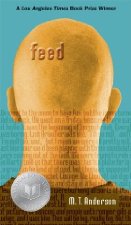
Book Review: Feed by M. T. Anderson
 Summary:
Titus is your typical teenager of future America. He lives in a suburb where his parents program the weather. He drives an upcar. He’s got a feed–a microchip in his brain that allows him to chat silently with people, shop, look up anything he wants to know more about, etc… He’s also got a lesion, but a lot of people have those now. He is quite ordinary. But he meets a girl on a trip to the moon who is anything but ordinary. A girl who got the feed late and dares to question it.
Review:
This book has a great concept, essentially exploring what the world would be like if twitter was implanted into our brains. This is rather extraordinary given that twitter didn’t even exist yet when Anderson wrote it. It explores losing our individuality to machines and consumerism. Ceasing to care about important information due to being bombarded by inane information at all hours of the day. I just wish Anderson had taken this concept a different direction.
I immediately connected with Violet, the girl Titus meets on the moon. She’s quirky, is homeschooled, and really is a bit of a nerd who just wants a chance to try out hanging out with the popular kids and doing what they do. Titus is a complete and total asshole to her. I suppose I could forgive him for that if he showed that he learned anything from coming into contact with a person as powerful as Violet, but he doesn’t. He ditches her when she needs him most because she’s making him uncomfortable. He wants to stay in the cocoon of his feed-driven life, and nothing she does or says can change that. He clearly goes from girl to girl, using them up like paper towels or tissues, and then on to the next one. Maybe that was Anderson’s point–that the feed has dehumanized the people who have it–but it made for a less powerful book than if Titus had learned something. Anything.
Similarly some questions just aren’t answered simply because Titus doesn’t care, so we aren’t allowed to know. In particular the lesions are set up as some sinister mystery, but then we never find out why they are occurring. Nobody even really speculates as to why they’re showing up. They’re just there. I seriously doubt there’d be zero speculation over such a phenomenon, even in a future where people are obsessed with consumerism.
Overall, the concept and writing on a sentence level are good, but the story as a whole left me feeling empty and disappointed. There’s telling a bleak story, and then there’s telling a story that’s sympathetic to a jerkwad. This is the latter. If that type of story is something you enjoy, you will enjoy this book. Everyone else should look elsewhere, perhaps to The Hunger Games if you’re looking for a YA dystopia.
3 out of 5 stars
Source: Swaptree

Movie Review: Terminator 2: Judgment Day (1991) (Series, #2)
 Summary:
The machines didn’t just send one terminator back in time; they sent two. The second is a T1000 made of molten metal that can morph into the shape of anything it touches. It’s out to get Sarah’s son, John, who is extra vulnerable since his mother is locked up in a mental institution.
Review:
This is a fan favorite, and people tended to be floored when they found out I hadn’t seen it yet, so I finally got around to watching it. It is deliciously 90s, and when I found out the special effects are phenomenal for the time period. In fact, I wouldn’t be too disappointed to see a movie made today with this level of special effects. The T1000 looks believable, and the fight scenes are dramatic and powerful.
I enjoyed the twist and new approach to Arnold Schwarzenegger’s character. His accent is perfect for playing a robot, and this was truly great casting.
Anyone who knows me won’t be surprised that I disliked the mental hospital part of the plot. It presents a very false example of what mental institutions were like in the 90s and demonizes the doctors and other mental health workers. Obviously mental health workers aren’t going to go around believing people who claim to be visited by time traveling robots, but they will and do treat them kindly. Other scifi stories have handled similar plot lines much better, and I was disappointed to see such harsh treatment of a helping institution.
Also, the voice overs by Sarah Connor were completely unnecessary, overly dramatic, and full of cringe-inducing dialogue. It kind of reminded me of the voice over in Blade Runner. Blech.
These two negative elements did not take up much of the screen time, however. That mostly consisted of John Connor and Arnold Schwarzenegger both of whom were quite pleasurable to watch. If you enjoy action movies, you will definitely enjoy this film.
3.5 out of 5 stars
Source: Netflix
Previous Movies in Series:
Terminator

Book Review: Mostly Harmless by Douglas Adams (Series, #5)
 Summary:
Arthur Dent thought his zany days earth-less days were over. The whole Earth-being-blown-up was undone, and he found a woman to love. But when they’re traveling through the universe together, she suddenly disappears and Arthur finds himself in a parallel universe where the exact Earth he once knew doesn’t exist. Meanwhile, Ford Prefect pays a visit to the Guide offices and finds that something just isn’t quite right.
Review:
Thank goodness I didn’t let the flop of the fourth book So Long, and Thanks for All the Fish deter me from finishing the series. Adams returns to his strengths in this entry–outerspace adventures of Ford and Arthur, not to mention zany robots and odd cultures on other planets that manage to reflect the oddities of our own. Plus, the storyline actually moves the original plot of the Earth being destroyed by the Vogons forward.
Some of the jokes rank right up there with The Restaurant at the End of the Universe. One that sticks out in my mind is when Ford messes with a robot’s circuitry making it endlessly joyful. It was a delightful flipping of the endlessly miserable robot, Marvin, featured earlier in the series. It was quite enjoyable to see how hilarious both extremes are. Also of note is the village religious man on a planet Arthur winds up on, who is quite clearly making the village’s religion up as he goes along, and the villagers are semi-aware of this, but shrug and let him. That said, at least half of the jokes, while they tickled my funny-bone in a pleasant way, didn’t have me actually laughing like the first couple of books did. It was a pleasant read, but not uproariously funny.
Entire essays and theses could be written (and probably have been) on the themes in the Hitchhiker series. Excuse me. Trilogy. From belonging to homelessness to the purpose of life, Adams’ work has it all, which is what makes it good humor, actually. It’s humor pointing out the most basic questions of life in a setting that removes it from our own experiences enough to make us see it in a different light.
Some readers will probably be unhappy with the ending. I enjoyed it and saw the humor in it, in spite of it being rather dark. I know that Adams expressed some discontent with it and was in the middle of writing a sequel, The Salmon of Doubt, when he died, which has now been posthumously published, as well as a sixth entry written by Adams’ widow and Eoin Colfer. I don’t cotton to posthumously published works assembled by people who are not the author, nor continuations based on what people “think the author would have wanted.” For all we know, Adams could have changed his mind yet again. I prefer to view Mostly Harmless as the end of the series, as it was the last book truly finished by Adams.
Mostly Harmless is a wonderful closing chapter to the series that contains delightful meta jokes, as well as new territory, and neatly ties up the experiences of the characters. Fans of the series won’t be disappointed with this entry, which is a delightful jump up from the fourth book, but they may be left a bit sad to see the end.
4 out of 5 stars
Source: Raven Used Books
Previous Books in Series:
The Hitchhiker’s Guide to the Galaxy
The Restaurant at the End of the Universe
Life, the Universe, and Everything
So Long, and Thanks for All the Fish, review

Movie Review: Up (2009)
 Summary:
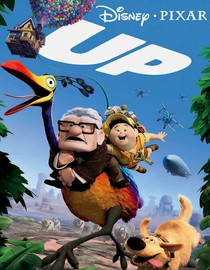
Carl’s wife Ellie has died, and now he’s sitting in the house they shared biding the time until he can join her. An unfortunate conflict with the developers building all around him leads the court to order that he be sent to a nursing home. Defiant, Carl decides to take the trip to South America he and Ellie always meant to take by flying there–with his house. An 8 year old stowaway, a mysterious bird, and dogs with collars that allow them to talk all make for an interesting adventure.
Review:
I know, I know. How had I not seen this already? I admit, I thought the premise sounded dumb at the time it came out, and was surprised at how into it everyone got. I don’t entirely blame myself for this. The advertising ignored everything that makes this movie wonderful and instead focused on the balloon house.
This story showcases the problems faced as an elderly person. Other stories do this, but this is a cartoon, generally aimed at children, and it is frankly a delightful pairing. It’s an old wive’s tale that there’s an innate connection between the elderly and the very young, and this movie decidedly backs that up. Russell, the 8 year old, is lonely due to his absentee father, but in his youth is still full of energy and optimism. Carl, in spite of living a good life, is depressed and lonely without Ellie. There is no one who bothers to care for him. They only see a crotchety old man, which granted is the way he’s behaving, but maybe it’s for a reason? Kevin respects Carl, and this gradually opens him up to connecting with another human being even at this late stage in life.
In addition to the wonderful themes, the scenes are beautifully drawn. The colors are just the perfect mix of cartoony and realistic to make for a visual feast. Additionally, the comic relief of the talking dogs and the mysterious birds are handled with an expert ease that hits the funny button at just the right moments, but are still creative enough to be delightful.
If you happen to have still not seen Up, I highly recommend it. It’s not your average animated movie plot, and it is visually gratifying.
5 out of 5 stars
Source: Netflix

BBAW Links for Judging
To my usual readers: This post is a list of links for the judges of Book Blogger Appreciation Week to use in judging my blog. A regular post will be up later today! If you’re also a book blogger and would like to participate, you may register here.
Niche–Eclectic
- Book Review: Woman on the Edge of Time by Marge Piercy
- Book Review: Love Among the Chickens by P. G. Wodehouse
- Book Review: Battle Royale Ultimate Edition Volume 1 by Koushun Takami (Manga) (Series, #1)
- Book Review: The Gunslinger by Stephen King (Series, #1)
- Book Review: Ethan: Site 39 by Otis V. Goodwin
Best Written
Book Review: From Dead to Worse by Charlaine Harris (Series, #8)
 Summary:
Hurricane Katrina and the bombing of the vampire assembly at Rhodes have left the Louisiana supernatural community reeling and disjointed. This naturally creates the perfect atmosphere for attempted violent takeovers in both the were and vampire communities. Sookie finds herself smack in the middle, as usual, both due to her telepathic abilities and her desire to help her friends. Of course her telepathic abilities can’t tell her where her boyfriend, Quinn, has disappeared to. In the middle of all this, she also finds out some interesting family secrets.
Review:
Not only is Sookie’s character developing and changing, but the series is as well, and that’s what’s keeping it interesting this many books in. If you’ve stuck it out this long, then you’re clearly enjoying something that Harris is doing; however, I would say that the previous book and this one mark a stark change in the style of the series away from paranormal romance to just paranormal fiction. I’m actually not sure what exactly one would call this genre, but From Dead to Worse definitely reads like modern-day fiction just with supernatural characters tossed in. I really enjoy this partly because Harris’ sex scenes are cringe-inducing anyway, but also because it allows for that modern day connection but with problems that I will never have. This makes it a relaxing read.
Unlike some paranormal series, the main character of Sookie has gone through significant character developments. She went from a naive girl desperate to fit in to sadder but wiser woman who enjoys being different. In the first book, we see Sookie being cared for by her grandmother; in this one, we see Sookie caring for not only the witch, Amelia, but also an elderly woman, Octavia. It’s not just this that’s changing, however. Sookie’s experiences leave her wondering if she’s a good person or not, and frankly the reader is left trying to figure that out as well.
Some readers will be thrown by the absence of sex in this book. However, I enjoyed the various types of sexual and romantic interest tension Sookie has with the various men in her life. It is evident that she’s attempting to figure out which direction she wants to go in her life before settling on a man. Racking up this tension throughout one book is a great set-up for the next one.
My only gripes with this entry in the series are two-fold. First, I really don’t like the Jason/Hotshot storyline. Jason could be a very interesting character, as we know from the direction they’ve taken him in True Blood. He’s not used well in the books, though, and I hope Harris fixes this soon. I’m tired of cringing over the Hotshot scenes. Also, this book yet again features a northern woman who yet again is an evil bitch in Sookie’s eyes. This is obviously Harris’ own prejudice coming through as Sookie has been established as a person who is staunchly not prejudiced against anyone. What is with this hating on northern women? It says a lot about Harris that this prejudice seeps into her writing even when writing a character who is not prejudiced. I’m sick of seeing it, and it stings as a northern female fan of the series.
However, in spite of these short-comings, the series is still enjoyable. This book marks a distinct change in the writing from paranormal romance to simply paranormal. Readers who’ve stuck it out this far will either enjoy this change as I do or give up on the series due to its lack of romance. If you’re reading it for the characters and the world Harris has created, you will enjoy this entry into the series. If you’re reading it for paranormal romance, you’ll probably want to look elsewhere.
4 out of 5 stars
Source: PaperBackSwap

Previous Books in Series:
Dead Until Dark
Living Dead in Dallas
Club Dead
Dead To The World
Dead as a Doornail
Definitely Dead
All Together Dead
Book Review: A Million Miles in a Thousand Years by Donald Miller
 Summary:
In this memoir Donald Miller recalls how turning his previous memoir into a movie impacted his life. When working on the script, Donald learned what makes a good story and started applying it to his current life. He went from sitting on the couch all day watching tv to biking across the country to raise money for clean water in Africa.
Review:
This book could have been brilliant. It contains various clear information on what makes a good story that is quite useful to writers. It also is inspirational in asking us to stop watching characters live stories and live our own. Unfortuantely, Miller persists in plopping in his spiritual ideas, which tend toward the mainstream Christian variety. I don’t mind skimming over a few praise God’s. I do, however, get profoundly irritated when a writer goes from saying something meaningful like life is about what we learn and not about achieving something in particular to saying that the people with the worst lives have it the best because they’ll appreciate heaven more. Um, excuse me, what the hell?! It’s such an odd mental position to take. Can you imagine saying that to someone with AIDs or a starving child or someone who’s being abused? Then, to take the mental oddness further, he goes on to seek to help people better their lives. That’s great that he does that, but it seems that based on his theory that a rough life leads to a better after-life that he’s just stealing a good after-life from these people. My brain hurts just thinking about that mind-fuck.
I guess what made the book such a frustrating read for me is that I can see Miller being so close to a humanist view but then ruining his current life by pining for the after-life. He talks a lot about what makes a good story but I bet even he could see that a movie wouldn’t be any fun if a character spends the whole film pining for something that he isn’t sure is actually going to happen to the extent that he misses things happening right now.
That said, the book is well-written and does contain some memorable scenes and people. Actually, I wish the book had been about some of the people featured in it in lieu of Miller, such as the family that went around interviewing world leaders with their children or the man who went from a childhood in the ghetto to running a law firm to running a mentoring program. At least we get to hear a bit about them though.
On the other hand, Miller’s view of the world tends to rip you from the story and make you want to smack him upside the head. Like when he tells the story of how a man stole his ex-girlfriend’s cat and then told her on the phone he was going to hurt it if she didn’t come back to him then proceeded to squeeze the cat until it cried. Miller called this “depravingly charming” (219). Um, no, it’s awful! And Miller finds this story inspiring because the man “found Jesus” and “changed.”
It basically reads almost as if two different people wrote the memoir. One who recognizes we have one life to live and it’s better to live it doing things than sitting on the couch. The other spends his time with his head in the clouds hoping for the after-life and believing in the power of a dead man. If you can handle the cognitive dissonance in those two stances, you’ll enjoy the book as it is written well. If you find it as troubling as I do, though, you should skip it.
2.5. out of 5 stars
Source: Won from Minski of okay, peanut

Movie Review: Sherlock Holmes (2009)
 Summary:
Detective Sherlock Holmes’ faithful companion, Dr. Watson, is retiring from solving cases to settle down with his soon-to-be fiancee, Mary. He just needs to finish up one last case. Lord Blackwell murdered five young women in occult ceremonies. Watson pronounces him dead at his hanging, but then he seems to come back to life. Watson and Holmes spring into action to solve the case, but things become more complicated when Holmes’ ex-girlfriend, Irene, shows up.
Review:
I’d be hard-pressed to not enjoy a movie Robert Downey Jr. is in, particularly one in which he does a bunch of fist-fighting. Toss in Jude Law, and you’d have to do an awful lot wrong for me to not enjoy sitting through the movie. When the mystery first came up, I found myself rolling my eyes at yet another Illuminati plot point. However, the resolution of the mystery made the entire story worth-while. It was actually a surprise and yet all still managed to make sense.
The feel of the movie reminded me a bit of Moulin Rouge, minus the music parts. So if you enjoy that sort of tongue-in-cheek period piece, you’ll enjoy the feel of this movie.
The only part of the film I really didn’t enjoy was the bit about Irene. It wasn’t explained well at all. I couldn’t understand her character’s motivation or really exactly what was going on with her at all. I like Rachel McAdams, but I felt that her appearance in this story was simply jarring.
That said, Sherlock Holmes is an enjoyable period piece romp with a brain-tingling mystery attached. If you enjoy mystery or period pieces with wit, you will enjoy this film.
4 out of 5 stars
Source: Netflix

Book Review: The Dangerous Book for Demon Slayers by Angie Fox (Series, #2)
 Summary:
It’s only been a couple weeks since Lizzie found out she’s a demon slayer, and she’s already been to hell and back–literally. You’d think she could get a vacation to Greece with her hunk of a griffin boyfriend, Dmitri, but her fairy godfather, Uncle Phil, has got himself tangled up with a succubus. Lizzie, accompanied by the geriatric biker gang, the Red Skulls, and Dmitri run off to Las Vegas to save him. They discover an unusual amount of demonic activity in Vegas, however, which points to a possible demon invasion from hell.
Review:
This was definitely a step up from the first book in the series. The action is tighter, characters more well-rounded, and the impetuses for decisions are more believable. The demon invasion winds up being a secondary plot point to Lizzie’s attempt to figure out what exactly the slayer truth “sacrifice yourself” means. I also enjoyed the fact that Fox gave the talking terrier, Pirate, more to do besides be excited when Lizzie shows up. The fact that she’s paying attention to animal characterization makes me happy.
One of my main complaints with the previous book was the romance story-line, in particular the sex scene, and I can’t say that that’s improved here. Although by the end of the book I found Lizzie’s affection for Dmitri believable, for most of the book I was baffled by it. He just doesn’t do it for me as a romantic hero, and I’m not sure exactly why. Similarly, the sex scenes were again cringe-inducing, not sexy. I mean, he rips her leather skirt up the middle, and she finds this endearing? The fact that the man seems to lack the knowledge that you can push a skirt up makes me seriously doubt his abilities in the sack. It’s odd, because Fox’s other scenes are generally well-done. The two sex scenes are so decidedly cringe-worthy that I sort of forgot this is supposed to be a paranormal romance. It read as a paranormal fiction featuring an odd choice for a boyfriend and thank goodness he’s not talked about too much.
In general though most of the book isn’t about Dmitri or his relationship with Lizzie. It’s about Lizzie’s experience figuring out what exactly it means to be a demon slayer. Thank goodness for that, because that combined with Lizzie’s crazy family and witty dog make for a good story. I recommend it to those with a taste for the paranormal and romance lovers who aren’t fans of sex scenes in romance to start with.
4 out of 5 stars
Source: PaperBackSwap
Previous Books in Series:
The Accidental Demon Slayer, review

 Support my work with a tip or browse my shop for curated book club guides, how to guides, cross-stitch patterns, and more!


This work by Amanda Nevius is licensed under a Creative Commons Attribution-Noncommercial-No Derivative Works 3.0 United States License.
 Opinions of a Wolf