
Archive
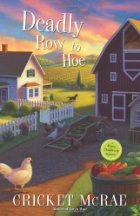
Book Review: Deadly Row to Hoe by Cricket McRae (Series, #6)
 Summary:
Sophie Mae and her best friend decided to join a CSA (Community Supported Agriculture) as soon as the opportunity popped up in their small town. One day when they’re volunteering at the farm, a dead body is found in the compost heap. Sophie Mae is determined not to get involved this time, after all, she’s got enough on her plate with her soap making business and trying to make a baby with her husband, Detective Barr. But Barr’s boss asks her to help identify the body by talking to the folks in the community , and she just can’t say no.
Review:
Cozy mysteries consist of a mystery (that’s not too explicit or bloody) paired with an unlikely investigator, some sort of crafting, a good dose of humor, and a punny title. In other words, they were basically made for me. (Some even come with recipes!) So when this one popped up on NetGalley, I snatched it up, and I’m so glad I did! McRae successfully pulls together everything that makes a cozy great.
The plot is excellent. The murder mystery isn’t too gory, but is also realistic. The body is found in a compost heap, yes, but it’s just a dead body. There aren’t slashed off heads hanging out in tea kettles or something. Everyone is appropriately disturbed by the finding. There’s no ho-hum just another day element at play. Although I admit I had figured out whodunit before the end, the why and when were still a mystery. Plus I never felt that Sophie Mae was being stupid and just missing something. Why it was taking her a bit to see whodunit made total sense. I also really appreciate that GLBTQ people are included in the plot without a big deal being made out of it. They are just another character, which is just how I like my diversity in genre literature.
The characters are fairly three-dimensional for a cozy. Everyone had something I liked and didn’t like about their personality, even the heroine, which is key to characters seeming realistic. There were also a wide variety of people present from Sophie Mae’s best friend’s daughter to an elderly friend of the family. This range is something that is often missing in literature, and I liked seeing it here.
What I really come to cozies for, though, I admit, is the integration of crafting. In this case the theme is participating in a CSA, so parts of the book are devoted to how a CSA works from acquiring your weekly allotment to figuring out how to use it to cooking with it. I really appreciated the quips about having so much of a certain produce that they’re coming out your ears. I also really enjoyed the scenes that discussed taking real time out to cook dinner and what that feels like, such as talking about how garlic smells when you first throw it into a hot pan. I know not all readers enjoy this, but honestly that’s part of the point of a cozy. Taking the time to linger on crafts and talents that take time to cultivate but are well worth it, and McRae incorporated this element very smoothly into the book. I do wish some recipes or CSA tips had been included, but it’s possible I just didn’t see them since I had an advanced copy.
Overall this book has a dash of everything enjoyable about a cozy mystery. Recommended to cozy fans, particularly those in or considering a CSA.
4 out of 5 stars
Source: NetGalley

Previous Books in Series:
Lye in Wait
Heaven Preserve Us
Spin a Wicked Web
Something Borrowed, Something Bleu
Wined and Died


Book Review: Soulless by Gail Carriger (Series, #1) (Bottom of TBR Pile Challenge)
 Summary:
Alexia Tarabotti isn’t just suffering from being half-Italian in Victorian England, she also is soulless. Unlike vampires, werewolves, and other supernaturals who successfully changed thanks to an excess of soul, or even having just enough soul like day dwellers, she simply has none. Plus as a preternatural she turns the supernaturals human when she touches them. Obviously they aren’t a fan of that. Except for one particularly persnickety werewolf, Lord Maccon, who is Scottish to boot. And to top it all off a mysterious wax-faced man suddenly seems very interested in kidnapping her. None of this seems particularly civilized.
Review:
The Parasol Protectorate series was all the rage when this book made it onto my tbr pile back in 2010. That was kind of the beginning of the steampunk craze, before you could find gears on everything in the costume shop. I can see why this series is popular, but it’s just not my cup of tea.
The world building is wonderful and is what kept me reading. A good steampunk blends history, science, and fashion to make for a semi-familiar but deliciously unique world that’s delightful for history and science geeks alike to play around in. Carriger pulls this off beautifully. The fashion is Victorian with a steampunk edge. The politics are recognizable but with the supernatural and steampowered sciences taking a role. A great example of how well this world works is that in England the supernatural came out and became part of society, whereas America was the result of the Puritans condemning the acceptance of the supernatural who they believe sold their souls to the devil. This is a great blend of reality and alternate history.
The plot wasn’t a huge mystery, which is kind of sad given the complexity of the world building. What really bothered me though was the romantic plot, which suffered badly from a case of instalove. Although we hear of delightful prior encounters between Alexia and Lord Maccon, we didn’t see them. We mostly see him going from hating her to loving her and demanding her hand in marriage. It just felt lazy compared to the other elements of the book. I get it that Carriger could be poking fun at Victorian era romances, but I think that would have worked better if it didn’t have such a Victorian ending. Plus, I didn’t pick up this book to read a romance. I wanted a steampunk mystery with a strong female lead. I didn’t like how quickly the romance took over the whole plot.
Potential readers should take a glance at the first chapter and see if Carriger’s humor works for them. I can see how if I was laughing through the whole book I’d have enjoyed it more, but the…decidedly British humor just did not work for me. It didn’t bother me; I just didn’t find it funny. I mostly sat there going, “Oh, she thinks she’s being funny…..” Humor is highly personal, so I’m not saying it’s bad. It just isn’t my style. It might be yours.
Overall this is a creatively complex steampunk world with an unfortunately average plot overtaken by instaromance and seeped in dry, British humor. It is recommended to steampunk fans who find that style of humor amusing and don’t mind some instalove all up in their story. That does not describe this reader, so I won’t be continuing on with the series.
3.5 out of 5 stars
Source: PaperBackSwap

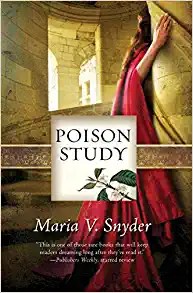
Book Review: Poison Study by Maria V. Snyder (Series, #1) (Bottom of TBR Pile Challenge)
Summary:
Yelena is on death row for killing a man in the military state of Ixia but on the day of her execution she faces a choice. Become the Commander’s food taster and face possible death by poison every day or be hanged as planned. Being a smart person, Yelena chooses the former. Now that she has admittance to the inner circle of the military state, she quickly comes to see that not everything is quite as it seems….not even her own personal history or her heart.
Review:
*sighs* You guys. I have got to stop letting people convince me to pick up books using the phrase, “I know you don’t like [blank] but!” That is how this book wound up on my tbr pile. “I know you don’t like fantasy, but!” and also “I know you don’t like YA, but!” oh and “I know you don’t like romance in YA, but!” A reader knows her own taste. And I don’t like any of those. I still came at it with hope, though, since I did like one fantasy book I read this year (Acacia). There’s a big difference in how they wound up on my pile though. I chose Acacia myself because its reviews intrigued me. Poison Study was foisted upon me by well-meaning friends. So, don’t get my review wrong. This book isn’t bad. It’s just what I would call average YA fantasy. Nothing made it stand-out to me, and it felt very predictable.
The world of Ixia felt similar to basically every other fantasy world I’ve seen drawn out, including ones friends and I wrote up in highschool. Everyone has to wear a color-coded uniform that makes them easily identifiable. There are vague similarities to the middle ages (like Rennaisance-style fairs). There are people in absolute control. There is magic and magicians who are either revered or loathed. There are all the things that are moderately similar to our world but are called something slightly different like how fall is “the cooling season.” Some readers really like this stuff. I just never have. I need something really unique in the fantasy world to grab me, like how in the Fairies of Dreamdark series the characters are tinkerbell-sized sprites in the woods who ride crows. That is fun and unique. This is just….average.
Yelena’s history, I’m sorry, is totally predictable. I knew why she had killed Reyad long before we ever find out. I suspected early on how she truly came to be at General Brazell’s castle. I didn’t know the exact reason he had for collecting these people, but I got the gist.
And now I’m going to say something that I think might piss some readers off, but it’s just true. What the hell is it with YA romance and exploitative, abusive douchebags? This may be a bit of a spoiler, but I think any astute reader can predict it from the first chapter who the love interest is, but consider yourself warned that it’s about to be discussed. Yelena’s love interest is Valek, the dude who is the Commander’s right-hand man and also who offers her the poison taster position and trains her for it. He manipulates her throughout the book, something that Yelena herself is completely aware of. There are three things that he does that are just flat-out abusive. First, he tricks her into thinking that she must come to see him every two days for an antidote or die a horrible death of poisoning. (Controlling much?) Second, he sets her up in a false situation that she thinks is entirely real to test her loyalty to him. (Manipulative and obsessive much?) Finally, and this is a bit of a spoiler, even after professing his love for her, he asserts that he would kill her if the Commander verbally ordered it because his first loyalty is to him. What the WHAT?! Even the scene wherein he professes his love for Yelena he does it in such a way that even she states that he makes her sound like a poison. There’s a healthy start to a relationship. *eye-roll* All of this would be ok if Yelena ultimately rejects him, asserting she deserves better. But she doesn’t. No. She instead has happy fun sex times with him in the woods when she’s in the midst of having to run away because Valek’s Commander has an order out to kill her. This is not the right message to be sending YA readers, and yet it’s the message YA authors persist in writing. I could go into a whole diatribe on the ethics of positively depicting abusive relationships in literature, especially in YA literature, but that should be its own post. Suffice to say, whereas the rest of the book just felt average to me, the romance soured the whole book. It is disappointing.
Ultimately then, the book is an average piece of YA fantasy that I am sure will appeal to fantasy fans. I would recommend it to them, but I feel that I cannot given the positively depicted unhealthy romantic relationship the main character engages in.
2 out of 5 stars
Source: PaperBackSwap

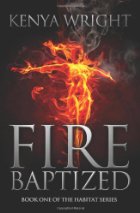
Book Review: Fire Baptized by Kenya Wright (Series, #1)
 Summary:
The humans won the supe-human war, and now all supernaturals are confined to caged cities whose bars are made up of every metal that is harmful to supes. They also all have a brand on their forehead letting everyone now immediately what type of supernatural they are–crescent moon for shifter, full moon for vampire, wings for fairy, X for mixbreed, which is what Lanore just happens to be. Lanore is hoping to be the first mixie to graduate from the caged city’s university, and she also works on the side with another mixie, Zulu, to run a mixie civil rights group. The purebloods by and large hate mixies. As if her life wasn’t already complicated enough, one night Lanore witnesses a murder, and the murderer turns out to be a serial killer. Now Lanore is on his list.
Review:
I am so glad I accepted this review copy. The branding of supes and caged cities was enough to show me that this is a unique urban fantasy series, but I wasn’t aware that it’s also a heavily African-American culture influenced series, and that just makes it even more unique and fun.
It’s not new to parallel supe civil rights issues with those of minorities, but they often flounder. Wright’s book depicts the complexities eloquently. Making a group within the supes that the supes hate makes it more closely parallel the real world. The addition of the brands on the foreheads also makes the supernatural race immediately identifiable just as race is in the real world by skin color. The caged cities are also a great analogy of inner city life and how much of a trap it can feel like. The fact that Lanore accidentally witnesses a murder on her way home from school is something that can and does happen in the real world.
The other element that I really enjoyed is how Wright brings the African-American religion of Santeria into the mix. She provides multiple perspectives on the religion naturally through the different characters. Lanore doesn’t believe in any religion. MeShack, her ex-boyfriend and roommate, does, and it helps him in his life. And of course the serial killer also believes in Santeria but is going about it the wrong way, as Lanore eventually learns. The book naturally teaches the reader a few things about Santeria, which is often maligned and misunderstood in America. But it does it within the course of the story without ever feeling preachy.
The sex scenes (we all know we partially read urban fantasy for those) were hot and incorporated shifter abilities without ever tipping too far into creepy beastiality land. They were so well-written, I actually found myself blushing a bit to be reading them on the bus (and hoped no one would peak over my shoulder at that moment).
The plot itself is strong through most of the book. The serial killer is genuinely scary, and Lanore doesn’t suddenly morph into some superhero overnight. She maintains her everywoman quality throughout. I wasn’t totally happy with the climax. I didn’t dislike it, but I also think the rest of the book was so well-done that I was expecting something a bit more earth-shattering.
There are two things in the book that knocked it down from loved it to really liked it for me. They both have to do with Zulu. Zulu is a white guy, but his beast form is a black dude with silver wings. I am really not sure what Wright is trying to say with this characterization and plot point. It wasn’t clear when it first happens, and I was still baffled by the choice by the end of the book. In a book that so clearly talks about race, with an author so attuned to the issues innate in race relations, it is clear that this was a conscious choice on her part. But I am still unclear as to why. Hopefully the rest of the books in the series will clear this up for me. My other issue is with how possessive Zulu is of Lanore. He essentially tells her that she’s his whether she likes it or not, and she goes along with it. Why must this theme come up over and over again in urban fantasy and paranormal romance? A man can have supernatural powers and not use them as an excuse to be an abusive douche. I’m just saying. But. This is part of a series, so perhaps these two issues will be addressed in the next book. But for right now, I’m kinda sad that Lanore chose Zulu.
Overall, this is a unique piece of urban fantasy. The tables are turned on the supes with them in caged cities, and the creative use of forehead brands and the existence of mixed-breed supernaturals are used intelligently as a commentary on race relations in the United States. I highly recommend it to urban fantasy fans and am eagerly anticipating reading the next entry in the series myself.
4 out of 5 stars
Source: Kindle copy from author in exchange for my honest review

Book Review: Addicted by S. A. Archer and S. Ravynheart (Series, #2)
 Summary:
If a human is touched once by a Sidhe, they become addicted….heroin addict level addicted. Since London’s Sidhe died, she now has to periodically put her private investigator for paranormal clientele job aside in order to seek out more Sidhe for a fix. This time, a bunch of young vampires say they know where she can have a changeling teleport her to an enslaved Sidhe….for a price.
Review:
Series of fast-paced novellas are becoming more popular in urban fantasy and paranormal romance. I know I enjoy them as a kind of single-serving of ice cream. Fun and delicious and able to get through in those 40 minutes your bread is in the oven or something. I read the first book in the Touched series, and since I enjoyed it, Archer, one of the authors, was kind enough to send along the next entry in exchange for my honest review. It was still fun, but not quite as well-written as the first.
The world of the paranormal in the UK and Ireland that Archer has created continues to be creative and engaging. While some of her paranormal creatures are typical (such as the vampires) others are more unique, like the changelings and fairies. For instance, having a changeling run the whole come party and suck the blood or touch a Sidhe thing was pretty unique! In other series, that would definitely be the sort of thing run by vampires.
Unfortunately, I didn’t find the characterizations as good this time around. London comes off as a bit flat, as do the vampires around her. Most distressing to me, though, as an American reader is her American character she put in. London meets a guy when doing a job for the changelings. She can tell he is American because, I kid you not, he is wearing a flannel shirt and a cowboy hat. Erm, ok. More annoying though is the fact that this American dude twice says, “shite.” Americans don’t say “shite,” except perhaps for some 20-something hipsters who are trying to be ironic. This 40-something mercenary is definitely not a hipster. He would say “shit.” If you are going to have a character from a country besides your own, you really need to fact-check how they speak, and especially how they swear. He’s not a major character, and I probably would have noticed it less if this was a book and not a novella. He was a lot more noticeable since he was present for most of the novella.
Overall, then, the world is interesting but the characters could use a bit of work. If you’re just looking for some light, quick urban fantasy to brighten up your day, though, it might be worth your 99 cents. Personally, though, I won’t be continuing on with the series.
3.5 out of 5 stars
Source: Kindle copy from author in exchange for my honest review

 (
(Book Review: The Bound Soul by Joseph Robert Lewis (Series, #3)
 Summary:
The group from the first two Halcyon adventures are resting up in Marrakesh, albeit in their own separate mini-groups, when a mysterious assailant with a fiery sword shows up and manages to kill Don Lorenzo. Immediately bent upon revenge, Qhora takes Mirari and an old enemy with an interest in the famous seireiken (flaming swords) on a new airship piloted by Taziri on a chase not just to avenge the Don’s death but also to free his soul from the aetherium.
Review:
I discovered the hidden gem in the steampunk world that is Joseph Robert Lewis’s indie series The Other Earth back when he offered me the first copy in the series for review. The series consists of two trilogies and a set of companion novels. He sent me one of the trilogies for review, and I picked up the fourth book in the series (first in the second trilogy) on one of his frequent 100% off coupon code/giveaway days he has on his site (which you should definitely follow if you’re into the series and want a chance to flesh it out without buying them all at once). All of which is to say, I clearly am a fan of the series. I would certainly hope so. I can’t imagine reading a series beyond book 1 or 2 if you didn’t like it.
In any case, I’ve come to expect two things from Lewis’s writing that make me enjoy it so much: strong world-building and editing and creative stereotype-defining characters. Alas, these weren’t quite so strong in this entry. I think perhaps the book suffers from the classic third book in the trilogy problem that is seen in many many trilogies. Don’t get me wrong, I still enjoyed it. I simply found the earlier books to be better.
Part of what I enjoyed about the earlier books was the unique marriages going on, particularly Qhora and Lorenzo’s. They had just finished sorting out their differences, so killing off Enzo felt a bit like an odd choice to me. While I enjoyed the plot of the seireikens and discovering more of the East in this reimagining of the world, I wish that we hadn’t lost the unique pairing of a religious, pacifistish Caucasian man with a fiery, independent Incan woman. I know characters die, but it still took that unique aspect out of the book that I had so enjoyed. In fact, we now verged a bit too close to stereotype, what with a terrorist-style Aegyptian and a revenge-seeking Native.
Similarly, I don’t feel that Aegypt was as creatively built as the other alternate history areas of Marrakesh and Espani. Espani keeps some semblance of its Catholicism with its more conservative culture and following the “three-faced god,” but it still is creative with its vastly different climate of ice and culture that creates. In contrast, Aegypt is still a desert. It is full of undesirables and criminal culture from everywhere. People wear what appears to be the same clothing as one would expect in Egypt today, and women are still oppressed. If we’re imagining an alternate vision of Earth, why couldn’t we have a progressive Middle East? Maybe one where the women wear scarves for a practical reason (such as to keep dust out of their hair) but hold positions of power within the culture and city. That’s the sort of thing I was expecting from Lewis, so I was a bit disappointed to see such a stereotypical portrayal of the Middle East. Remember. This is an alternate history series. The whole idea is how things might be different if a few aspects of history were changed, such as weather and disease transmission. He’s not tied to reality, which leaves room for a lot more creativity than is seen in this reimagining of Egypt.
In contrast, the fantastical and scientific concepts are still strong. The idea of the seireiken–a sword made from aetherium that steals the soul of those it touches–is a great addition to the world Lewis has built. Similarly, Taziri’s new airship is yet again surprising, in spite of seeing two airships from her before. Another element of fantasy enters that I won’t reveal, because that would ruin the surprise and flair, but that I felt fit in well with the world and was a nice touch. Similarly, the fight scenes are well-written with neither too much description nor too little. Also, although more new characters are added, it never feels overwhelming or hard to keep track of them. Readers with an interest in having differently abled people represented will be pleased to know that one of these new characters is a well-written Little Person.
One other thought, I have to say that I was disappointed in this cover. Qhora does not look like a Native Incan woman to me. She struck me as Caucasian. In fact, it wasn’t until I was reading the book and realized that Turi (the eagle) only rests on Qhora’s arm that I realized this woman is supposed to be her. (Google Image Search “Incan woman” to see what I mean).
Overall then, although this book is not as impressive or thought-provoking as the first two in the series, it still tells an engaging story with lots of action. I’m hopeful that Lewis’s ability demonstrated in the first two books to see multiple possibilities for various cultures and peoples will return to its previous strength in the next books in the series.
3.5 out of 5 stars
Source: Kindle copy from author in exchange for my honest review

Previous Books in Series:
The Burning Sky
The Broken Sword
Book Review: The Walking Dead Volume 15 by Robert Kirkman (Series, #8) (Graphic Novel)
 Summary:
Everyone’s world was rocked when the zombies got through the community’s fence. Will they respond by banding together or falling apart?
Review:
Ok, before I review, the numberings need a bit of explanation. Comic books are issued very similarly to academic journals. So there are skinny issues that come out every few weeks (generally). A few of these bound together make a volume. A bunch of these bound together make a book (what we call in academia a “bound journal.”) I *was* reading the books of The Walking Dead but then I caught up to the author. I decided I didn’t want to buy issues, because they’re flimsy and you read through them very quickly, so I’m now reading the volumes. I hope that makes some semblance of sense. This will probably be the case throughout the rest of the series, because you have to wait a long time for the books, and I just am too impatient for that. My reviews will then be much shorter, because a book contains a few volumes, and I am now reviewing one volume at a time. Moving right along to the review!
This volume is basically cleaning up the mess from the action of the previous one and prepping for the action of the next one. Classic in-between chapter. What this volume really reminded me of is the infamous “Live together or die alone” speech by Jack in Lost. In fact, this volume sees Rick basically trying to turn into Jack and failing miserably. Long-time readers know I’ve never liked the guy, so personally I got a lot of schadenfreude out of seeing him be so pathetic in this volume.
That said, the survivors are definitely going for a new strategy, which will lend itself well to future fresh storylines, which any long-running series needs.
Fans of the sex will be quite happy with the developments in that area. Drama! Intrigue! Changes of partners!
Overall, it’s an enjoyable entry, if not mind-blowing, that perfectly sets things up for the next volume. Fans won’t be disappointed!
4 out of 5 stars
Source: Newbury Comics

Previous Books in Series:
The Walking Dead, Book One
The Walking Dead, Book Two
The Walking Dead, Book Three
The Walking Dead, Book Four
The Walking Dead, Book Five
The Walking Dead, Book Six
The Walking Dead, Book Seven
Book Review: Thieftaker by D. B. Jackson (Series, #1)
 Summary:
After spending over a decade serving hard labor in the Caribbean for mutiny and conjuring, Ethan has finally made it back to Boston. He now makes his living as a thieftaker, essentially a private investigator who hunts down stolen items, using his conjuring where necessary to help him out. But the year is 1767 and trouble is starting to brew in Boston. The Stamp Tax has been enacted, and the people don’t like it. There are even riots in the street. Against this back-drop, Ethan is asked to find a brooch that was stolen–from the body of a dead girl. He doesn’t usually take on cases involving murder, but this one is different.
Review:
It’s probably hard to tell from this blog, because they’re hard to find, but I am a real sucker for a good Boston during the American Revolution story. So when this title showed up I snapped it up. I’m glad I did because it’s an interesting take on the Stamp Act Riots.
This is an interesting piece of historic fiction, because it’s more like urban fantasy historic fiction. Is that a genre? Can it be? What on earth would we call it? In any case, I was in heaven, because I love BOTH urban fantasy and history so having both in one book was heaven. I mean first it’s breeches and three corner hats then it’s look at this illusion of a creepy little girl. Brilliant.
I struggled a bit with Ethan, which in retrospect wasn’t a bad thing. That shows he’s a realistic, well-rounded character. But let’s be honest. I’m more of a Sam Adams revolutionary type. Ethan served in the British Navy and is all “oh these hooligans.” This bothered me a lot! Especially when I got suspicious that the book as a whole would lean Tory. But! This all ends up being part of the character development, which in the end is what makes the book stronger. Ethan isn’t sure about protesting and fighting the aristocracy at first. But he changes his mind with time. This makes for a great plot-line. I like it. I do hope in the sequel we will get less of this hemming and hawing about owing things to the crown and yadda yadda. DOWN WITH THE KING. Ahem.
As a Bostonian, can I just say, I haven’t seen a book so intent on giving actual street names and buildings before, but it worked. They are totally accurate. I could completely visualize not just the streets but the entire routes Ethan was walking along. Granted, it was as if through a looking glass, since when I walk them they’re a bit different than in 1767, but still. It was very cool. I also really appreciated the depiction of the South Enders, since I spend quite a bit of time in Southie. Seeing the historical versions was really fun.
The magic portion of the book was also unique. Ethan has to cut himself to get blood to work the more powerful spells. The less powerful ones he can work with surrounding grasses, plants, etc… This makes the interesting problem that people struggle in fist-fighting him because if he bleeds he just uses it to work spells. It’s a nice touch.
So with all this glowing, why not five stars? Well, honestly, Ethan bugged me so much for the first 2/3 of the book that I kept almost stopping in spite of all the good things. He’s just such a…a…Tory. For most of the book. Instead of being angry at the man for putting him in prison for conjuring, he blames himself. Instead of being angry that the rich just keep getting richer while he struggles to pay his rent, he blames himself. You get the picture. Being irritated almost constantly by Ethan kind of pulled me out of the world and the story, which I wish hadn’t happened, because it really is such a cool world. I get what Jackson was trying to do, character development wise, but the payoff in the end was almost missed because I kept stopping reading due to being irritated with Ethan. Perhaps if his change of heart had started to show up a bit sooner it would have worked better for me.
Overall, though, this is well-researched and thought out version of Boston during the Stamp Act Riots. Fans of historic fiction and urban fantasy will get a kick out of seeing the latter glamoring up the former.
4 out of 5 stars
Source: NetGalley

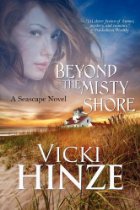
Book Review: Beyond the Misty Shore by Vicki Hinze (Series, #1)
 Summary:
Maggie Wright comes to the cozy Maine bed and breakfast, Seascape, not for a vacation, but to investigate the mysterious death of her cousin, Carolyn. Carolyn’s artist fiancee, TJ MacGregor, just so happens to be staying at Seascape, but a mysterious force is preventing him from leaving. Despite the tragedy standing between them, they start to fall for each other.
Review:
This is obviously a romance with a dash of mystery and a touch of ghosts. Maine is a wonderful setting, particularly for a paranormal romance. This one just didn’t work for me, although I can clearly see how it will be able to find an audience.
I found the writing, particularly the romance, to ring a bit….old-fashioned and conservative. The characters all seem to speak in the same speaking style as the elderly woman who manages the inn. That works for her, and she is definitely my favorite character in the book, but it doesn’t work so well for TJ and Maggie who are both young and from New Orleans. I’m sure some readers would find the clean, conservative manner in which they talk a bit of fresh air, but to me it was dull and felt like a book my grandma gave me to get started out in romances when I was in middle school.
Similarly, the way the entire town is willing to appease the local pastor when it comes to things like alcohol and condoms kind of enraged me. For instance, the convenience store will only sell condoms to married couples upon the request of the pastor. I mean WHAT?! That is just not even LEGAL. But. As a book reviewer, I can definitely see that a more conservative crowd would appreciate the idea of a town where that sort of understanding could exist.
So, ignoring the fact that this book is far too conservative for me, there is one other issue that bothered me. I found the mystery of Carolyn’s death entirely confusing. At first I thought that Maggie came to Seascape to investigate the death because Carolyn died up there, but toward the end of the book, it sounds like she died in New Orleans. Which was it? And if she did die in New Orleans, then why did Maggie go to Seascape in the first place? Also, people think the car crash was mysterious because the painting she had with her was undamaged, but then toward the end of the book they say no the undamaged painting wasn’t found at the car, it’s just that it had disappeared and reappeared. Or something. I’m still very confused about everything about Carolyn, which is problematic given that this is the central conflict keeping our romantic couple apart. The mystery should be mysterious but not illogical.
Overall, this is a romance novel that was not for me, but will appeal to more conservative romance readers. People looking for an old-timey style romance with a touch of ghosts will appreciate it.
3 out of 5 stars
Source: Netgalley

Book Review: Sisterhood Everlasting by Ann Brashares (Series, #5)
 Summary:
The Septembers are all 29 years old now and spread out all over the globe. Bee is expending her energy biking up and down the hills of San Francisco while Eric works as a lawyer. Carmen has a recurring role on a tv show filming in NYC and is engaged to Jones, an ABC producer. Lena teaches art at RISD and lives a quiet life in her studio apartment, except for the one day a week she practices Greek with an elderly woman. Tibby took off to Australia with Brian months ago, and everyone else is in limbo waiting for her to get back. They all feel a bit disconnected until Tibby sends Bee, Carmen, and Lena tickets to come to Greece for a reunion. What they find when they arrive is not what anyone expected.
Review:
You guys. You guys. This book shattered me. I am not a crier, and I actually had tears fall while reading this book. I read it in one day. I could not put it down. As someone who grew up with The Sisterhood of the Traveling Pants, I found the sudden jump forward in age (we used to be about the same age, and now they are older than me) a bit disconcerting and unexpected, but nowhere near as unexpected as the rest of the book.
I complained to anyone who would listen at the beginning that I hated it. That I hated what Brashares was doing, and omg why would she do this. But as the story progressed, she swept me along, and suddenly I realized that yes this is tougher by far than the earlier books. It’s not the light girl power read the first or even the second one was. But it shouldn’t be. They’re 29. They’re older. Their problems should be bigger and more adult, and the lessons here hurt more to read because they’re tougher ones to learn. It’s precisely the direction the books should have taken. The girls change and, dare I say it, actually grow the fuck up unlike a certain other foursome that have a tv show.
I won’t tell you what made the book so powerful, because that’d spoil it. But I will tell you, my fellow fans, to push past the first quarter of the book where you’re angry and want to throw it across the room in a Carmen-like rage. Give Brashares the chance she earned with the first three to gradually show you what she’s doing. It’s an emotional journey that’s well worth taken. Fans might be frustrated at first, but those who stick it out and love the series for what it really is will love this entry. I don’t doubt it at all. Plus, Brashares hinted that there might be still more to come.
5 out of 5 stars
Source: Netgalley

Previous Books in Series
Sisterhood of the Traveling Pants
The Second Summer of the Sisterhood
Girls in Pants: The Third Summer of the Sisterhood
Forever in Blue: The Fourth Summer of the Sisterhood


 Support my work with a tip or browse my shop for curated book club guides, how to guides, cross-stitch patterns, and more!


This work by Amanda Nevius is licensed under a Creative Commons Attribution-Noncommercial-No Derivative Works 3.0 United States License.
 Opinions of a Wolf