
Archive
Friday Fun! (In Which I Ramble About Health)
Hello my lovely readers! I hope you all had great weeks. Today I’m going to be talking about a new-found passion of mine that I believe you all are aware of–health and fitness.
I joined the gym back in January for a lot of reasons, but predominantly because I had high blood pressure at age 24, and I was not ready to start being sick at such a young age. I’ve made a lot of progress since then and gradually have come to love to see what my body can do. Recently I set a goal for myself of joining a local MMA club by next January. I love having a strong body, and frankly the stress-relief that comes in doing something so extremely physical is incredibly appealing to me. Plus it’s good to have a goal that’s a *fitness* one and not a *weight* one. I’ve never claimed my new passion for working out and old passion for healthy eating were about weight. It’s all about having a healthy body to me.
In any case, I decided it was high time to challenge myself with something to the next level, so last Friday I went to my first ever kickboxing class at my gym. Allow me to explain that my weak point is absolutely cardio fitness, so a 45 minute long cardio-intense class was going to be very challenging for me, and I knew it. When I first joined the gym I could barely run for 10 minutes without collapsing over and heaving for breath. So I knew this was going to be challenging. I was determined to make it through it though.
Since this was a Friday evening class, it was fairly small. There were about 7 of us ladies there. And lo and behold the very first thing we had to do was jump rope for 2 minutes to “warm up.” To me this was not a warm-up. This was jumping in with both feet (haha, pun intended). Anyway, we basically mixed jumping rope with kickboxing sequences and jumping jacks, and I thought I was doing fairly well until I glanced at the clock and saw only 15 minutes had gone by. Egads.
Let me tell you. Around the fourth time the lovely teacher told us to jump rope, I wanted to give up. I was definitely the least cardio fit of everyone in the class, and part of me wondered why the hell I was doing this to myself. And now I’m going to admit something very nerdy to you. I thought of the zombie apocalypse. Seriously.
What’s the first rule of the zombie apocalypse? Cardio. Was I going to let the zombies get me, a young strong woman? Hell no. So I picked up the jump-rope, and I continued on. I continued on through the evil suicide and push-up drills too. I fought my way through the whole class, and I have to tell you guys, it was crazy empowering. There is no way in hell I could have done that class 6 months ago, and yes it was hard, but I did it. I also went home and collapsed into bed at about 9pm on a Friday night in sheer exhaustion, but I did it.
My body is strong, and it is fit, and the more I challenge it the more it rises to the occasion. Nothing feels so good as waking up and feeling alert and feeling my muscles in my belly and arms. Nothing is as cool as knowing I can sprint 5 blocks to catch the bus no sweat. The more my body can do the happier I am and the younger I feel. I never want to fall into the trap of unhealthy living again.
I know some people really hate the saying “Nothing tastes as good as skinny feels,” and I agree. But you know what is a much better and true saying? “Nothing feels as good as healthy feels.” And to the extent I have control over my health, I’m determined to do so.
I think that’s why I’m such a big advocate for a healthy America. I want people to enjoy the happiness and thrill of having a healthy body that maybe they never had because of poverty or because of a lack of healthy education or what have you. You don’t realize what you were missing until suddenly, almost overnight, you can survive a 45 minute kickboxing class and feel the adrenaline afterwards.
Happy weekends all!
Book Review: A Stolen Life by Jaycee Dugard
 Summary:
On June 10, 1991, eleven year old Jaycee Lee Dugard was abducted from her school bus stop by Phillip and Nancy Garrido with the aid of a stun-gun. Jaycee was locked up in a backyard compound and repeatedly raped and abused by Phillip in a bid to satisfy his pedophilia. Over the course of her 18 year captivity, Jaycee gave birth to two daughters in the compound. Eventually with her increasing age, the sexual assaults stopped, but she was still held captive. Finally, on August 26, 2009, Phillip brought Jaycee and her daughters with him to the parole office in an attempt to explain away why he was spotted in public with the two girls. Jaycee, who hadn’t been allowed to speak her name for 18 years, was able to write it down for the police. This is the memoir of her experience and gradual recovery from the captivity.
Review:
Jaycee wrote this memoir without the assistance of a ghost writer, something very uncommon in memoirs by victims of abduction. She states in the beginning that her way of remembering things is a bit off because of the trauma, but that her way of telling her story will provide a genuine experience for the reader to truly see how the abduction affected her. She is correct that the memoir is not set up in a traditional way, but this tends to make for stronger books when discussing something as painful as this. It reminds me a bit of the very non-traditional story-telling methods used in another memoir When Rabbit Howls. Eliminating the ghost writer and letting the victim speak grants us, the readers, the opportunity to truly connect with a survivor. I humbly thank Jaycee for her bravery in this.
Most of the chapters start with Jaycee remembering the events from the perspective of her younger self. This absolutely makes scenes such as her first molestation by Phillip incredibly haunting. She then ends each chapter with a reflection from her adult, free perspective on the past. This structure is unique, but it provides an interesting perspective, showing both Jaycee the victim and Jaycee the survivor. Toward the end of the book this structure is lost a bit as we suddenly are shown many pages from the journal Jaycee carefully kept in captivity, as well as talking in a more present manner about the therapy she’s been going through. Her therapist sounds truly remarkable. She uses horses to help the survivors deal with problems, which seems to work incredibly well for Jaycee who often only had animals around to talk to during her 18 year ordeal.
Although Jaycee does recount her abuse and manipulation at the hands of Phillip, that is not at all what stands out in this memoir. What comes across is what a strong, sensitive, caring woman Jaycee is. She is not lost in woe is me. She does not even think she has it the worst of anyone in the world. The one thing she repeatedly states she’s learned is that she was not assertive enough as a little girl, and that personality trait backfired on her repeatedly throughout the ordeal. She states that she sees this as the reason abuse of all kinds are able to go on, because people don’t speak up.
There are moments in which all of us need to have a backbone and feel that we have the right to say no to adults if we believe they are doing the wrong thing. You must find your voice and not be afraid to speak up. (page 143)
This message of “speak up” is stated repeatedly throughout the book and leaves the reader feeling empowered rather than downtrodden at such a tale. If Jaycee could live through such a situation and come out of it stronger and as an advocate for victims and survivors of abuse to speak up, how can any of us do any less?
I recommend this book to those who enjoy memoirs and survival stories and can handle scenes of a disturbing nature.
4 out of 5 stars
Source: Amazon

Book Review: Daughter of the Blood by Anne Bishop (series, #1)
 Summary:
In this fantasy matriarchal land, people are ranked by their power based on what color jewels they are mystically assigned to wear when they come of age. The darker the jewel, the better. The women all have some sort of witchcraft power, but none have had the power of The Witch in hundreds of years. Corrupt women have messed with the structure of society turning it from harmony to darkly using the men and women to their own advantage. Men in particular are used by controlling them via a ring of obedience (placed around their penis). Into this messed-up society the much waited for Witch is born, but most do not recognize her. Lucky for her, the demon dead Saetan and his two living sons, Daemon and Lucivar, do.
Review:
This is what I would call high fantasy. The only thing missing really is knights in shining armor. A friend gave me this trilogy for my birthday as it is one of her favorite series, and she thought I would like it. I can see why she thought I would like it. It’s dark, graphically violent and sexual, and the choice to depict a messed-up matriarchy instead of patriarchy is unique. Unfortunately I just couldn’t get into it.
First there’s the whole jewels and traveling on webs and wind and speaking on a soundwave that only people with that jewel can hear thing. None of these things are ever particularly explained. They just are. Ok, so that probably works for fantasy fans, but I’m a logical, scifi reading lady. I want explanations for things. Also, how society fell apart is kind of massively unclear to me. I’m not sure how things went from good to bad or what the properly functioning society is supposed to look like. It’s all very confusing, and frankly, I can’t remember the order of the ranks of the jewels. I just remember that gray is second-strongest and black is strongest. But then later in the book some people say they’ve worked their way up to stronger jewels than their birthright. Um, what? When did that happen? How can that happen? If you can do that then why does your birthright jewel matter at all? None of this makes any sense. Agh.
Then there’s the ring of obedience. So they put this on violent males who are now sex slaves, apparently. They serve witches. The ring makes it so they can’t get a hard-on without pain. But they don’t take the ring off for sex, which means these women are using sex slaves but never actually having intercourse. Who would want that?! How does that make sense? Also, Daemon can apparently pleasure women and tie them up just with his mind. He can do this but he can’t get a ring off his dick? This feels like badly-organized erotica. Which would be fine if it was erotica, but it’s fantasy, so wtf Bishop.
So then we have Jaenelle, The Witch. She’s eleven or twelve, I can’t remember exactly which. Her family thinks she’s crazy because she’s super-powerful and travels around meeting mystical creatures and told them about it, which was a bad move. She got sent to an asylum then brought home, and she’s been all Miss Mysterious Dark Eyes That Are Actually Gorgeous and Sapphire ever since. This is the main mystery of the book. That and the manly threesome trying to protect her from the big bad queen witches who want her dead. So Daemon is working in her house and basically falls in love with her. He’s never felt sexual desire for a witch before, but now he does. He feels horrible that he feels it for one so young and vows to wait until she’s grown up enough to be with him, but he still feels it.
Then we *spoiler alert* find out the asylum is just a cover-up for pedophiles, and of course Jaenelle gets raped, and a good witch saves her, and Daemon and Saetan work together to try to save her, and in her mind she tells Daemon that he just wants her body just like everyone else, and he basically makes out with her in her mind to show her he wants to be her lover not hurt her. This makes her come back to her body and heal it. Then she escapes to Saetan and Daemon escapes off to a brothel.
Can we just HOLD THE PHONE for a minute. I am not at all against a pedophilia storyline or plot device. These things happen in real life, so it’s ok for them to be in a story. I do have a problem with the “good guy” having sexual feelings for an eleven or twelve year old when he’s literally centuries old. He himself admits this is bad, but instead of going away from her, he makes out with her in her mind (when she’s in half-horse form no less). I just….what. What the what. What am I supposed to think about this? How am I supposed to feel about a book written by a woman in which the matriarchy basically abuses everyone and yet the men still wind up with most of the power (the manly threesome) over this young girl who is supposed to become the awesome ruler one day, and one of the guys has pedophilic feelings for her. WTF.*end spoilers*
I suppose it’s possible that Daemon is an anti-hero, and we’ll find that out later in the series. That Jaenelle will triumph and prevail over everyone and fix everything. We can only hope. I do suspect that part of my issue with the book is just point-blank never feeling comfortable in the fantasy world Bishop lays out. I just don’t do high fantasy. When will I learn this?
That said, it does seem well-written, and I think if a fantasy fan can handle very dark and graphic violence, sex, and themes, they will probably enjoy this trilogy.
2.5 out of 5 stars
Source: Gift

Book Review: The Last Manchu: The Autobiography of Henry Pu Yi, Last Emperor of China by Henry Pu Yi, translated by Paul Kramer
 Summary:
Henry Pu Yi became the last emperor of China when he was almost three years old. During the chaos of a post-WWI China fighting between republics and war lords, he would periodically rule, be a figurehead, or be in hiding on foreign-held embassy land. Working with the Japanese in WWII he sought to refind his throne by ruling as the figure-head of the Japanese-held Manchuria region. He then was held prisoner by the Soviets for five years before being turned over to the communist Chinese for thought reform.
Review:
Although the translator states that Henry Pu Yi’s life is an excellent way to examine how China survived so many upheavals in the early 20th century, after reading the autobiography I simply cannot agree. Henry Pu Yi’s life was incredibly unique and absolutely not a reflection of what was really going on in China at the time. If anything, he seemed to operate from an oblivious perspective up until the communists kind of smacked him in the face with reality. For instance, during the time of chaos, civil wars, and famine in China prior to WWII, he states:
Just as food was cooked in huge quantities and not eaten, so was a vast amount of clothing made which was never worn. (location 544)
When reflecting on his past perspectives, it is evident that his past self did not understand why such wastefulness would infuriate China’s poor or make them push for a republic via Chiang Kai-shek. Of course, one cannot entirely blame Henry Pu Yi for this short-sightedness. He was raised from a young age being treated as a god by all those around him, being told it was his destiny to be the holy emperor. That would mess with anyone’s mind. However, as he became older he did have teachers and advisors who tried to enlighten him, he just refused to listen.
Eventually, Henry Pu Yi reached this odd mental compromise where he believed everything Western was good, except for their ruling system.
I also became far more convinced than I had ever been in the days when Johnston was with me that everything foreign was good and everything Chinese, except the Imperial System, was bad. (location 2184)
His selfish mindset saw everything good he himself could garner from the west, but didn’t seek out anything positive to change or do for his people. This self-centeredness in a ruler is disturbing at best.
This is even more evident during the time of his life when Pu Yi was puppet ruling for Japan in Manchukuo (Manchuria). Pu Yi increasingly came to fear more and more for his life as it became more evident that Japan would lose the war. The more afraid he was, the more he beat members of his household and staff. Yet he simultaneously claimed to be a good Buddhist who would not even harm a fly. It seems the only thing Pu Yi excelled at was compartmentalizing his actions. A former servant of Pu Yi summed up his personality quite eloquently during one of the criticism sessions of the communist thought reform:
Pu Yi is both cruel and afraid of death. He is suspicious, tricky and a hypocrite. When he beat or scolded his servants, it was not for mistakes they committed, but due to his own mood at the time. (location 4020)
Pu Yi, for most of his life, was incredibly selfish. He was obsessed with his own death and life and with maintaining his emperor status. He cared little to nothing for those around him or for the people of China. One must wonder how things may have been different if a strong, selfless man had been made emperor during the same time period.
Thus for most of the autobiography, we’re reading about a most unsympathetic man from his own perspective. That can become a bit tough to endure. The light of the autobiography comes in the last quarter of the book, though, when he recounts his time in thought reform.
The translator refers to this time period as Pu Yi being brainwashed. I can’t say that it appeared that way to me at all. Pu Yi was not tortured, made to starve, or beaten. He was simply placed in prison and reformed. Frankly, I think his time in communist prison did him a world of good. Suddenly he was having to fend for himself. Where before he never even had to open a door or mend a button, suddenly he did. Slowly the communists gave him more and more responsibilities so that eventually he was on the same cleaning and work rotation as the other men in the prison. Pu Yi says himself that he came to realize how truly useless he was at doing anything worthwhile. Although at first he blames those who raised him, he comes to acknowledge his own bad character eventually, being ashamed for how he behaved. When he is eventually deemed reformed by the communists, he enters society as an equal and works hard to do his fair part. Personally I think if American prison systems could have this kind of excellent 180 result, we would soon see a much smaller inmate population. For isn’t the purpose of prison supposed to be reform? And one cannot deny that Pu Yi came out a better man than he went in, even if communist China has made many other mistakes, it is evident with Pu Yi things were handled quite well. A man was reformed and made useful in society instead of senselessly killed off.
It is a bit of a wait to get to the interesting thought reform portion of the book, however. Pretty much everything before that makes you want to attack Pu Yi through the pages. His style is a bit rambling, although the translator claims that’s partly just Chinese culture versus Western culture. It is an interesting read, but I do think it will only really hold the attention of those with a strong interest in China.
3.5 out of 5 stars
Source: Amazon

Friday Fun! (Kindle Cover, TRX, Karaoke)
Hello my lovely readers! There’s not too terribly much to report this week. Last weekend Boston suffered a torrential downpour that destroyed my ipod. Sad day. I’m a bit poor right now, so I ended up bidding for a used one on ebay and winning. Here’s hoping it actually works when it gets here. *knocks on wood*
My kindle cover also broke this week. The doohickey that holds the kindle in place got bent out of shape (no, I have no idea how). I called Amazon, and they overnight shipped me a new one for free! Awesome. Sauce. I will say, I think my kindle cover got a lot more use in its six months of life than the designers perhaps anticipated, lol.
Last weekend I tried out a new recipe–walnut-encrusted baked tofu with spinach l’orange. It was….a bit more time-consuming than I was anticipating, but also delicious and filling. I got three meals out of it (one dinner and two lunches). Not too shabby for the relative cheapness of the ingredients.
My trainer had me try out TRX this week. There are these straps hanging from the ceiling that you use to help you work out your muscles using your own weight and gravity as resistance. It was super-duper fun to do push-ups and such in the air, I have to say. I really loved it. I’m half-tempted to join one of the gym’s TRX teams now.
I also went out to karaoke with my friend Jill this week. It was tons of fun, as karaoke generally is. Although this single lady did not see a single guy she was interested in, the crowd was a good karaoke crowd. Everyone was good-natured, supportive, and well, tipsy. Plus there were plenty of people buying drinks for us, which is always a plus. ;-)
Happy weekends all!
Bloggers’ Alliance of Non-fiction Devotees (BAND): August Discussion: How Did You Get Into Non-fiction?
Hi guys! It’s hard to believe a month has gone by already since our very first non-fiction discussion in July. This month Amy is hosting, and she asks us how did we get into non-fiction?
I actually found myself baffled by this question. Um, I don’t remember not reading non-fiction? I was raised very religious, although I’m now agnostic, as most of you know. Anyway, because my parents were religious, I was encouraged (strongly) to read my Bible every day. That combined with the kid versions of the Bible were probably my earliest forays into what is technically considered non-fiction. *coughs, coughs*
My earliest memories of non-fiction reading that wasn’t connected to religion is a toss-up between cats, airplanes, and westward expansion. I was fascinated with all three, although cats probably won. I had an ongoing campaign from when I could speak until the age of seven to get a cat when my parents finally caved. I used to wreak havoc in the non-fiction section of the library taking out every single book on whatever topic fascinated me at the moment.
My love of non-fiction definitely played into my first choice of major in undergrad–History with a focus on US History. These classes consisted almost entirely of reading primary documents, and I loved it. I was also finally surrounded by other people my age who felt the same excitement at reading non-fiction as I did. So you see, I never really “got into” non-fiction. I was born that way. Haha.
Check out the non-fiction books I’ve reviewed and discussed since the July discussion:
Book Review: The Craigslist Murders by Brenda Cullerton
 Summary:
Charlotte works as an interior designer to the wealthiest of the wealthy in NYC. She thus has a window into their world and attends their parties, but is not actually a part of it. The wealthy women annoy the crap out of Charlotte as they remind her entirely too much of her cruel, social ladder climbing mother, yet she simultaneously needs the income to stay afloat in notoriously expensive NYC. One day when attempting to purchase a designer item cheap off of craigslist, she finds the solution to her pent-up rage. Periodic murders of the wealthy elite women via responding to craigslist ads.
Review:
I view Charlotte as the female and decidedly less insane version of Patrick Bateman in American Psycho. Both characters are a part of the wealthy, elite world that they simultaneously hate. Both obviously have antisocial personality disorder. Both murder people to deal with it. The similarities end there, though, as Charlotte is decidedly less far gone than Patrick so there are no chapters of non-sensical rants. Also this book is far less violent. Charlotte murders by whapping women in the back of the head with a fire poker. Her murders are about killing the women, not torturing them.
Honestly, this book reads as delicious fantasy to anyone who has ever lived in a city and bumped elbows with the craziness that is the world of the 1% (the wealthy elite). Charlotte’s rage is our rage, and she deals with it in a way no civilized person would, but as Charlotte herself says when discussing the news of a murdered wealthy woman:
She’d been killed by her own personal assistant, news that Charlotte believed had come as a terrible shock to everyone in the city except the thousands of other personal assistants who dreamed, daily, of doing the same thing. (location 1101)
Yes, exactly. This book rages against the privileged in a way most of us can only dream of doing. And it works.
Charlotte is more than a murderer, though. She’s a well-rounded character. The reasons behind her murders and state of mental health are gradually revealed in a skilled manner throughout the book. First we know Charlotte as a frustrated worker. Then we see her murder. Then we gradually start to see the real Charlotte beneath the facade. A woman who was a little girl whose spirit was broken by her mother. No one in her world, not even her therapist, offers her any real help, so Charlotte deals with her issues the only way she knows how. It’s an excellent commentary on why quality mental health care and loving communities are so necessary.
The one issue I had with the book itself is the ending. I won’t spoil it, but basically I’m not sure exactly why Cullerton went there with this narrative. I can’t help but wonder if she’s planning a sequel. I sort of wish she would write one to address some lingering questions I have, but perhaps that’s her point. Perhaps she chose that ending to make the reader continue to think about the situation even after finishing the book. If so, then it definitely worked.
I also find the cover infuriating, because the weapon the woman is holding looks nothing like the weapon used in the book, and that sort of thing that is mentioned repeatedly in the story shouldn’t be messed up on the cover. Obviously that’s not the author’s fault, though.
Overall this contemporary fiction with a twist is a delightful read. If American Psycho intrigued you but the graphic violence and sex turned you off, definitely give this book a read. It features similar themes with less violence and more well-rounded characters.
4 out of 5 stars
Source: Amazon

Counts For:

Book Review: Hungry For You by A. M. Harte

Summary:
A collection of zombie-themed short stories and poetry with the twist that they all have to do with romantic relationships in some way, shape, or form.
Review:
This is a solid collection of short stories and poetry that can be enjoyed one at a time or inhaled in one sitting. I went for the one sitting option.
In some stories Harte sticks to zombie tropes but in not all. The ones where she varies or surprises the reader in some way are definitely the stronger ones. She has an ability to imagine multiple different possible zombie apocalypses that are all, if not equally believable, still believable. Her dialogue is a definite strength, reading as incredibly realistic in the midst of fantastical happenings.
Where she excels though, and where I would encourage her to focus future horror writings, is when she uses the zombies and zombie apocalypse as a metaphor or an instigator for something in a relationship from women’s perspective. My three favorite stories from the collection–“Dead Man’s Rose,” “Seven Birds,” and “Alive”–all feature this element. In “Dead Man’s Rose,” the zombie is a metaphor for an abusive lover who refuses to grant the woman her freedom. In “Seven Birds” the surprise of the zombie apocalypse coincides nicely with an unexpected break-up (I particularly enjoyed that female character’s reaction to both). In “Alive” the female character must deal both with the zombie apocalypse and the emotional fall-out after a one-night stand with a co-worker. These are all three things modern women face in relationships and getting to see them take place in a world infested with zombies (one of my favorite kinds) was such a welcome change! Too often, especially in zombie movies, we see the apocalypse from a man’s perspective and not from a woman’s. I found myself saying to Harte in my head, “Ignore the male perspective and switch to just writing from the female perspective, because you do it so well!” For instance, it’s not every day in a female zombie fiction fan’s life that you come across a resonant passage like this:
When I am lonely for boys what I miss is their bodies. The smell of their skin, its saltiness. The rough whisper of stubble against my cheek. The strong firm hands, the way they rest on the curve of my back. (location 1206)
Never have I come across a passage in zombie fiction that so struck at the heart of what it is to be a modern straight woman, and to have that followed up by oh no zombies was just awesome.
There are a few shortcomings though. A couple of the stories simply felt too short, and a couple of them–“A Prayer to Garlic” and “Arkady, Kain, & Zombies”–just didn’t make much sense to me. I think the former would have benefited from being a bit longer with more explanation, whereas the latter actually felt too long and had a couple of plot holes that I couldn’t wrap my mind around. This collection is periodically more British than at other times. One short story revolves around tea to an extent that I’m afraid a Boston gal like myself just couldn’t quite relate to. I know that those more British stories will definitely appeal to the type who love Doctor Who for instance, though. I also really wish it included a table of contents. That would be super-helpful in revisiting those stories readers would like to revisit.
Overall this book is definitely worth the add to any zombie fan’s collection, but particularly to female zombie fans. It’s different and fun simultaneously.
If you found this review helpful, please consider tipping me on ko-fi, checking out my digital items available in my ko-fi shop, buying one of my publications, or using one of my referral/coupon codes. Thank you for your support!
4 out of 5 stars
Length: 122 pages – novella
Source: Smashwords copy from the author in exchange for my honest review
Buy It (Amazon. Not available on Bookshop.org)
Friday Fun! (Birthday BBQ)
Hello my lovely readers! One thing this summer has shown me is that your summer is as fun as you make it, and that largely has to do with who you surround yourself with. Now that I’ve been living in Boston for a longer period of time, I’ve come to have a wonderful circle of friends who just make everything more fun.
Last weekend was my party for my birthday. I held it at the end of the month partly so I could have a Cowboys and Aliens theme, but also partly because no one ever seems to be around on my actual birthday since it falls right next to a big national holiday. A friend treated me to the matinee of Cowboys and Aliens, and you guys it was AWESOME. I don’t think anything could make this wild west and scifi loving lady happier than wild west meets aliens. Well, the addition of Daniel Craig’s very fine ass didn’t hurt matters at all either. This is a movie I would go to see in theaters again, and I never do that.
After the movie, the same friend helped me prep for my bbq. I made homemade veggie burgers, which were completely a smash hit. We also made pasta salad from a cookbook my dad gave me that featured an olive oil/lemon vinaigrette instead of mayonnaise. That was also a huge success. There was also grilled corn on the cob, strawberries, PBR, and goldschlagger. All in all an excellent bbq. After some friends departed, others arrived, and we went out to a local pub for drinks. My friends enthusiastically got me some of my favorite drinks (white russians and cosmos). It was such a chill party full of lots of girl talk and ending with some fun flirting. It’s things like that that make being in your 20s really fun.
I already announced my plan to throw a party in the fall with a Japanese theme, largely influenced by my recent acquisition of a vegetarian sushi cookbook. Given the percentage of otaku geeks among my friends, the excitement at the idea was pretty high. ;-) What can I say. I love hostessing and party planning. It makes me happy.
This week also saw me finally able to return to the gym after being laid low by first a summer cold and then a sprained ankle. I managed to only gain 1 pound in my week and a half out. *phew* The first workout back was hard, but fun, and I’m glad to be getting back into the swing of it.
I haven’t fully decided what’s on the plate for this weekend, but I know it’ll be fun, because it’s the weekend after all. Happy weekends all!
Book Review: Hybrid by Brian O’Grady
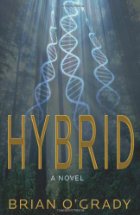 Summary:
Amanda Flynn’s life changed forever when her Red Cross relief team was exposed to a deadly virus in the Honduras, leaving her the sole survivor. Seven years later, when she thinks most of the horror is over, the virus resurfaces in Colorado Springs, Colorado, and she finds herself forced to team up with various government officials, a priest, and a coroner, in a fight against a deadly terrorist plot.
Review:
I admit that I bought this book in a haze that I call “Kindle Sale Fever.” Periodically Amazon has sales of Kindle books where they suddenly cost 99 cents to $2.99, and I tend to impulse buy. Oops. (I mean, if you’d told 7 year old me such a thing would even be possible one day, I probably would have curled up and died in pure bliss). In any case, the Amazon blurb led me to think this was more in the transhumanist/zombie genre than evil terrorist plot thriller, which I tend to avoid. It’s nothing against the genre; I just don’t do politics in my happy fun reading time. So, this book was already facing a challenge to satisfy someone who doesn’t tend to like that kind of story.
At first, it definitely was working for me. The plot of Amanda Flynn mysteriously surviving the illness and escaping the CDC to avoid being treated like a guinea pig was engrossing for the sheer humanity of it. The initial break-out in Colorado Springs was also intriguing with the virus killing some people but healing others from serious illnesses like childhood leukemia. At a certain point though it started to feel like O’Grady was trying to do too much. The book was trying to straddle multiple genres and plot-lines that didn’t quite mesh. Among the things going on: new general trying to prove himself, survivors who turn psychic, Amanda dealing with her guilt, new African-American head detective dealing with being head detective in a largely white city, priest having crisis of faith, little girl miraculously healed of leukemia, coroner who might be a sociopath, definitely evil dude who hallucinates (or might not be hallucinating) some random Russian guy, head of the CDC trying to figure out the spy in his office, and Arab dude who may or may not be defecting from the terrorists to the Americans. See what I mean? This would be totally fine if they all somehow tied up in the end, but the main issue in the book of these survivors with psychic powers is just kind of dropped. We get far more information on the foiled terrorist plot than on the effects of the virus on the survivors, and that is by far the more interesting part of the story.
It’s also bothersome that the main character, Amanda Flynn, is the least well-rounded and likeable. The priest and the coroner are far more interesting and well-rounded, showing that O’Grady can write characters well, but Amanda simply rings false. Perhaps part of this is that we see the priest and the coroner before they become infected and are still entirely human. The story of Amanda and her survival in the Honduras is simply never fully told, and I think that would have helped a lot, even if addressed only in a flashback.
Overall, although the story itself is not for me, it does suffer from some characterization/plotting issues. Thus, I would recommend it to huge fans of terrorist thrillers, who would probably still enjoy it.
2.5 out of 5 stars
Source: Amazon

 Support my work with a tip or browse my shop for curated book club guides, how to guides, cross-stitch patterns, and more!


This work by Amanda Nevius is licensed under a Creative Commons Attribution-Noncommercial-No Derivative Works 3.0 United States License.
 Opinions of a Wolf