
Archive
Bloggers’ Alliance of Nonfiction Devotees (BAND): December Discussion: Truth in Nonfiction
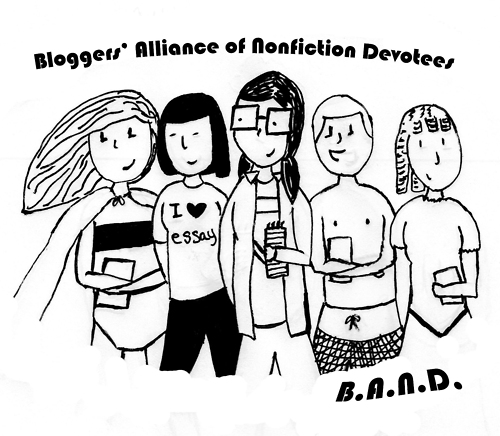 BAND is a monthly discussion group of book bloggers who love nonfiction! If you’d like to join us, check out our tumblr page.
This month Erin of Erin Reads asks us: How do you determine truth in nonfiction?
I feel like the quest for truth has been one of my primary activities since I was a very young child. I’ve never been the type to just believe something because someone in authority tells me it’s so or because it’s the widely accepted belief or….well, you get the picture.
Everything I’ve pursued in my career and education has gone to back up this aspect of my personality. My first chosen major in undergrad was History, which is largely focused on determining the truth and not just the accepted cultural myths. Lessons I learned from my wonderful, intelligent professors stick with me to this day in reading nonfiction:
- Are there multiple accounts or scientific studies that come to the same conclusion or provide the same information?
- Does the conclusion the document or observer draw make sense based on known facts about the world?
- Does the document address opposing viewpoints and provide valid, factual rebuttals to them? A piece of nonfiction that ignores opposing viewpoints is generally one that cannot be trusted.
So those are the basics I use when I investigate a belief system and proceed to draw my conclusions. It was this method that I learned in undergrad that led to me deconverting from the religion I was raised in. (I’m currently an agnostic). It was this same method that proved to me that eating meat is wrong, so I don’t do it anymore.
Now that I’m older and have a few firm beliefs that I’ve vetted with research, the first question I ask when approaching a piece of nonfiction is: Does this go against what I know to be true? If it does, I may read it anyway just to help me understand where someone with a different viewpoint is coming from. But I take everything in it “with a grain of salt.” These books usually take me a while to finish since anything I can’t disprove immediately, I go out and do research on. Sometimes this leads to me adjusting my viewpoint, but generally not for things I’ve already researched.
If the nonfiction work I am reading is about something I just really haven’t researched much before then I approach it differently. I look to see how well-documented and carefully researched the book is. Did the author cite primary sources in her bibliography? Are these primary sources from well-respected journals or archives or scientific studies? I am going to trust a book with 10 pages of bibliography much more than one with 2. If the author is saying something that doesn’t make sense to me, then I hunt down what she’s cited and read it for myself. I think through the facts, consider the author’s possible biases (her own race, gender, economic group, educational background), and consider my own known biases before drawing conclusions from the material presented. If it’s something I can try out for myself like a new recipe, a budgeting system, or an exercise move, I try it and see if it works!
I know that probably all sounds like a lot of work, and IT IS. Being an educated citizen of the world is really hard work. But that’s our job. We’re supposed to constantly be educating ourselves, questioning ourselves, seeking to understand the world and those around us. How can we ever expect to improve things if we just take everything at face value as handed down to us? And once you’ve studied something once you can’t just stop studying it. Science has shown us that. New evidence comes into play, and we need to reevaluate. There’s nothing wrong with saying I once thought this was so but now I know I was wrong. That’s all a part of growing and learning, a part that is, unfortunately, not as encouraged in the American education system as it should be. It’s part of why I became a librarian. I want everyone to do this throughout their life. Because it’s not just truth in nonfiction that we need to question and determine for ourselves. It’s truth about the world around us.
Check out the nonfiction books I’ve read and reviewed since the October discussion:
- The Sum of My Parts
by Olga Trujillo, JD (review)
- From This Moment On
by Shania Twain (review)
- Born Wild
by Tony Fitzjohn (review)
- Out of the House of Bondage
by Thavolia Glymph (review)
Book Review: Buddha Volume Three Devadatta by Osamu Tezuka (Series, #3) (Graphic Novel)
 Summary:
Siddhartha is now a young monk pursuing knowledge and education. He runs into a one-eyed monk who attempts to educate him on the concept of ordeals–essentially punishments for the body designed to help attain enlightenment. The childhood of Devadatta is also depicted. He is bullied and becomes a killer at a young age, thrown out to the wolves who then raise him. Thus his hatred of humanity is explored.
Review:
I am consistently finding this series to be decidedly meh, yet I persist in reading it. I think the art is a large piece of why. It’s almost immediately relaxing to look at, so much so that it doesn’t really matter too much to me what the story is that’s going along with it.
I was intrigued to see a “raised by wolves” myth in another culture. It’s interesting that instead of turning Devadatta into a great warrior, though, it makes him hate humans. A great section is where the wolf mother tells Devadatta that humans are the only animals who kill when they are not hungry. The kindness of and lessons to be learned from the animal world is a persistent theme throughout the series that I enjoy.
Siddhartha’s journey here though does not read at all the way I read it in Siddhartha in college. I appreciate that we’re seeing how no one seems to have answers that ring true for him. For instance, he does not agree with choosing physical punishment purely to suffer an ordeal for no apparent reason. It’s interesting to see his nature depicted as one that just happens to be able to sniff out falseness. It’s a different perspective on the Buddha that I value seeing.
It is odd though for a graphic novel series on an important topic like the Buddha’s life to feel as if it is best read by those already educated on the Buddha. I assumed it would read like an easy introduction, but instead it is so subtle and leaves out so many key details that it is actually best read by those already well educated on Buddhism and the Buddha’s life.
3 out of 5 stars
Source: Public Library

Previous Books in Series:
Buddha, Volume 1: Kapilavastu
Buddha, Volume 2: The Four Encounters
Giveaway Winner: Emotional Geology by Linda Gillard (International)
 The winner of a paperback copy of Emotional Geology courtesy of the wonderful author, Linda Gillard, and determined by random.org is…….
Comment #2 Diane Jolly!
Diane will be contacted for her shipping information today, which will be sent on to Linda Gillard who is mailing the copy. Thank you all for entering!
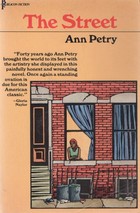
Book Review: The Street by Ann Petry (The Real Help Reading Project)
 Summary:
In 1944 Lutie Johnson believes that all it takes is hard work to succeed, so when she finds an apartment in Harlem that she can move into with her son, Bub, she sees it as a step up. Get him away from her dad’s gin-drinking girlfriend and all the roomers packed in the house. But it seems as though her hard work does nothing against the street and the walls that the white people build around the colored people brick by brick.
Discussion:
It’s hard to believe that Amy and I only have three books left after this in our project. Although we rather arbitrarily assigned the order of the books, I’m glad this one came toward the end. I doubt I would have understood the events in it or valued its perspective as much without the nonfiction reading we did prior.
The book is exquisite in the way it demonstrates how a racist society tears families apart. Hearing about black men being unable to find work in our nonfiction readings felt so cold and stark; I was left unable to understand why that would cause a man to leave his family. But through Lutie I came to understand. At first she doesn’t understand how her husband could cheat on her and be so fine with them breaking up, but eventually she does understand. He couldn’t find work in the city as a black man. She finds work as a maid in a white family’s house. She’s gone most of the time. He feels emasculated. Now, I know my feminist followers will object to this, but I remind you, this was not a choice on black families’ parts back then. It was forced upon them. Anything that is forced upon you can cause real self-esteem problems. As Lutie says, how can one manage a family in conditions like that?
Petry also clearly demonstrates how this break up of the home then leads to a generation of lost children. with Lutie working all day, her son, Bub, comes home to an empty, dank apartment. He takes up with the wrong crowds, because it’s scary to be in the apartment alone. He’s only eight. It’s easy to understand how he makes bad judgment calls, especially when his mother is constantly worrying about money around him. Seeing it spelled out with “real” people makes it all more understandable than the numbers and statistics found in Labor of Love, Labor of Sorrow. In Lutie’s case, her family fell apart twice before she even really realized it was happening.
The other strong element in this book was the hopelessness of the capitalistic American Dream. Not just the hopelessness of it, but the harmfulness of it. Lutie herself realizes that she never thought of anything but keeping her family afloat until going to work for the wealthy white family in Connecticut where she “learned” that all it takes is hard work and perseverance to become wealthy. What a false lesson. What a horrible thing to believe at face value. Yet, Lutie does, and it influences almost every single decision she makes for herself and Bub that leads to their ultimate downfall. Yes, part of their downfall is absolutely brought about by racism, but part is brought about by her believing in the system and not rebelling against it.
For instance, instead of spending what little time she does have outside of work with Bub teaching him and helping him, Lutie spends it pursuing a singing career. After being gone working in civil services all day, she leaves Bub alone at night yet again. Similarly, she penny-pinches and yells at Bub so much that Bub starts to believe that they are desperate for money, when in fact his mother is just attempting to save up to move to a better neighborhood. I get the value of a better neighborhood, but I think Lutie underestimates the value of her own impact on her son. She studies angrily at night instead of making the studying a bonding thing. She tells him he can’t stay up and read because of the cost of the electricity, which just blew my mind because you would think she would want him to read. It all adds up until Bub is not only almost constantly alone but also worrying about money at the age of eight. I can’t help but think if Lutie had just focused on making their home the best she could and making Bub feel happy and safe that it might have come out better. I’m not judging Lutie. It’s so incredibly easy to get caught up in the capitalistic belief system, especially when you’ve been scrambling your whole life and see money as a way to combat racism. I found myself constantly wishing and hoping that Lutie would stumble across some sort of progressive society that would help her fight for justice. Of course, in the real world, that doesn’t often happen, and Petry does an amazing job depicting real life in the real Harlem of the 1940s.
Of course, Lutie and her family are not the only ones unhappy. Although she only works for them for a few chapters in the book, the white family from Connecticut is profoundly unhappy, and Lutie sees it. The husband and wife ignore each other. The husband is raging with alcoholism. The wife is so focused on affairs that she ignores her son. The son just wants attention and can only get it from the maid. The brother-in-law kills himself on Christmas morning.
Why do I bother pointing this out? Well, it’s just further evidence the constant theme throughout our reading project. Racism and inequality hurt everyone in the society. Some more than others, yes, but it hurts everyone. The true values of life–love, time, companionship, laughter–they’re lost amidst the fight to maintain inequality and acquire money. And that’s largely what slavery was all about, wasn’t it? Establishing a plantation to become filthy rich instead of a farm where you make ends meet. And the perceived need for a plantation leads to a desire for cheap labor which leads to slavery which leads to maintaining racism in your head to justify it. And after Emancipation, the desire to hold onto your filthy wealth leads you to judge others as below you when they’re not. And racism is an “easy” way to do that.
But where does that leave those caught in the system? For Lutie, it leaves her a truly lost cause and her son yet another black boy with a record. Revolution and change takes time, effort, bravery. Even in the simple day to day decision to choose quality time over money. To choose to go against the American, consumer grain and just try to make a quality life for yourself. It’s fascinating and appalling how deeply entrenched in our culture the perception of wealth equaling quality of life is, yet it’s there. I think, to me, that is what is most appalling in the idea of “The Help.” Most people do not need a maid. Unless you are in a wheelchair or missing limbs or blind or have some other physical limitation, you do not need a maid. And yet some classes of society view it as necessary to make someone else clean up after them in their own home. Nobody is above cleaning up the filth from themselves and their own family. Nobody. And in the meantime, those that they hire to clean it up must do double-duty and clean up two homes and are left without enough energy for quality time with their own family. It honestly disgusts me.
Source: Public Library

Please head over to Amy’s post to discuss this book!
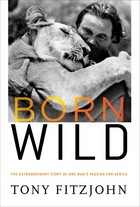
Book Review: Born Wild by Tony Fitzjohn
 Summary:
Tony Fitzjohn never quite fit in in England or the middle class existence he was adopted into at a young age. By his early 20s, he was roaming around Africa, and eventually found a job with George–the elderly Englishman famous for his belief in reintroducing lions into the wild whose efforts were chronicled in Born Free. In his biography, Tony accounts the steps in his life that led up to his assistantship with George, the two decades he spent learning from him in Kenya, and the efforts he himself has made in Tanzania’s parks.
Review:
This autobiography (memoir?) is an example of how you can not particularly like a person but still admire and respect the work they do. I know I would never in a million years get along with Tony. He’s hard-headed, stubborn, a womanizer (prior to getting married in his 40s), matured very late in his life, and can be remarkably short-sighted in how his actions affect others. And yet.
And yet he has an incredible passion for animals and the environment. He’s faced down poachers, corrupt government employees, and charging rhinos with frankly, balls of iron. All for the love of not just the big cats like lions and leopards, but rhinos and wild dogs as well. I find it fascinating how his love of adventure gradually showed him that animals are not ours to use and abuse. I wish I had had the time to copy the quote exactly from the book before I had to return it to the library, but essentially he says that we are meant to be stewards of the land that all the rest of the non-human animals need to survive and do what they’re meant to do. He talks at length about how rhinos often don’t get as much attention because they don’t form a bond, really, with their caretakers the way orphaned big cats do, but that’s not who they are! Rhinos are aggressive, love fighting each other. They fight and they mate and that’s what they do and that’s beautiful because that’s who they are. Letting animals be who they are and do what they do–that’s our real role as humans.
Of course, the animal rights message doesn’t really come out until the end of the memoir. The beginning is Tony reflecting on his childhood and early years in Africa. He traveled all over the continent a lot, never really sticking to one country until he met George and stayed put in Kenya for quite a while at the Kora reserve. At times the writing when he’s recounting his life can be a bit dull. He seems more focused on naming everyone he ever came across than in telling a story. This holds true up until the trust sends him to AA and after that he meets his now-wife Lucy. From then on it is as if a haze is lifted and his passion for everyone around him, the animals, and his family comes through. I have no doubt that this is at least in part due to his no longer drinking. It is clear that there are swaths of the prior years that he does not recall. He even recounts one story that a friend told him when staging his intervention of him getting into a bar fight that he doesn’t even remember happening. All this is to say, the first half or so of the book is fun bits of lions mixed in between rather dull sections of him just getting the information through to the reader that will be important later.
But the elements with the lions that hold us over in the meantime are absolutely worth it. It is evident that through all of Tony’s flaws, he has a natural ability to work with big cats and an innate understanding and love of them. He does not doubt their ability to feel emotions or communicate with people.
Sheba [lioness] had been so fond of her brother that when he died, she had led George to the spot, watched him bury Suleiman [her brother], and then sat on the grave for days, refusing to leave him alone. (page 112)
He also has an understanding of human society and mores and how they affect the animal world that comes through abundantly clearly:
By pushing up the price of oil, Sheikh Yamani and his cohorts had multiplied the Yemeni GDP sevenfold. A rhino-horn dagger is a symbol of manhood in Yemen, so an entire species was all but wiped out in order that a load of newly oil-rich Yemenis could have fancy dagger handles. (page 76)
When he writes of the poachers and big game hunters fighting with the environmentalists for control of the land, I was aghast at the methods both groups used. They often would kill a big cat, cut off its head and paws, then skin it and leave it right in the environmentalists’ path. This level of cold-heartedness and cruelty baffles me. Although one could possibly argue that the poachers saw this atrocity as the only way out of poverty, there is zero excuse for the wealthy, white big game hunters who just callously view it as sport.
I suppose some people may see Tony’s and other western people’s work in Africa for the animals as neocolonialist. I don’t see it that way at all. Tony by nature of his upbringing had the wealthy connections needed to fund projects working with the animals. When Kenya and Tanzania were caught up in civil wars and reestablishing their nations, even wealthy Africans would most likely donate that money toward people, not animals. Plus, Tony’s work has provided stable employment to Tanzanians and Kenyans for over 20 years, as well as bringing in more tourism. Tony himself points out that a lot of the big animals were gone due to colonial big game hunters, and he views his work as a sort of retribution for the colonial period. I perhaps wouldn’t take it that far, but I do see his point.
One thing I will say, though, is I do view it very hypocritical that Tony sends his own children away to a wealthy boarding school in Kenya rather then sending them to the school located in the park in Tanzania that his trust set up and runs. If it’s good enough for the Tanzanian kids, why isn’t it good enough for his own? That stung of elitism to me.
Although the book can be slow-moving at times, the good bits make up for it. Tony and his work for animal rights are inspirational. His life shows how much one person can accomplish by taking it one step at a time.
I pulled myself together and thought about what George would do. Of course I knew already. George would put his head down and keep going, one step at a time. It was the way he approached everything. (page 184)
Overall, I recommend this memoir to nonfiction lovers with a passion for Africa, environmentalism, or animal rights.
4 out of 5 stars
Source: Public Library
Book Review: Out of the House of Bondage: The Transformation of the Plantation Household by Thavolia Glymph (The Real Help Reading Project)
 Summary:
Thavolia Glymph analyzes the power relations between black and white southern women within the plantation household in the antebellum, Civil War, and immediately post-Civil War American South utilizing primarily slave narratives/interviews and the diaries and letters of white mistresses.
Review:
I am chagrined to admit that not only is this the first time I was late on the schedule of The Real Help Reading Project I am co-hosting with Amy, but I was exactly a week late! The lesson I have learned? Never schedule a timely thing for a holiday weekend. I apologize to Amy and everyone following along for making you wait, but at least it was Amy’s turn to host! Moving right along….
Whereas Labor of Love, Labor of Sorrow was extraordinarily all-encompassing, here Glymph narrows her focus severely to only relationships between black and white women in traditional plantation households in the American South. She, alas, stops her analysis around the turn of the 20th century, only venturing into the unique relations within the domestic work realm depicted in The Help in the epilogue. However, this book is quite valuable in that it analyzes the relationships that led up to that odd dynamic of the 1950s and 1960s.
This book covers a lot of information, but what sticks out the most to me in retrospect was how much work and effort it took to maintain a racist, unequal society. The white mistresses had this odd, completely illogical dichotomy of viewing black women both as inferior and needing their guidance and as naturally suited to hard labor. My eyes practically bugged out of my head when reading of white women teaching black women to do chores that supposedly white women were too weak to do….and yet they were perfectly capable of doing them well enough to show the black women what they wanted done. Um….what? That is the sort of illogical situation that only someone entirely committed to a belief system, no matter how wrong, will be able to come to terms with.
Similarly, the former mistresses predicted the imminent downfall of their former house slaves only to find themselves hired by these same freedwomen to sew fine dresses for them with the money they earned by working the plantation. Yet, the former mistresses persisted in believing in the racial inferiority of the freedwomen. Perhaps the most mind-boggling to me was the story of one former mistress who wound up teaching at a freed black school, yet even though she was with these children daily, she still believed in white supremacy. Why this persistent need to believe you’re better than someone else? Personally, it seems to me that the white men were so constantly judgmental of the white women that they reacted by taking it out on those society deemed inferior to them. If black free women rose to their same status, then who would they take their frustrations out on? This logic doesn’t free the white women of the guilt that they definitely deserve, but it does help to make sense of their ability to take on completely illogical stances.
I feel that I am repeating myself a bit with this project, but the books repeatedly demonstrate how inequality on any level acts as a poison to the whole society. I hope that is something that we modern readers will bare in mind in our own daily lives.
3 out of 5 stars
Length: 296 pages – average but on the shorter side
Source: BookU
Buy It (Amazon or Bookshop.org)
Please head over to Amy’s post to discuss this book!
If you found this review helpful, please consider tipping me on ko-fi, checking out my digital items available in my ko-fi shop, buying one of my publications, or using one of my referral/coupon codes. Thank you for your support!
Friday Fun! (Thanksgiving, Cooking)
Hello my lovely readers! I hope those of you who celebrate had a wonderful Thanksgiving. I had a great time with my dad. We ordered in Thai food, which he’d never had before. (I believe it was a hit). I showed him one of my favorite indie bookstores. He took me grocery shopping! (Which has been wonderful for me, I can tell you). We spoiled my kitty rotten and went to a couple of my favorite pubs. It was a wonderful weekend, and I hope to get to see him again very soon!
This week I got to see my friend Nina for the first time in around a month. We went for a super long walk together in the random Indian summer weather we had at the beginning of the week and made this stir-fry out of baby bok choy, onions, pepper, garlic, parsnips, carrots, and fake steak tips (they were soy). Oh, and sesame seeds!
Those of you book bloggers who are looking for projects and/or challenges for 2012, please be sure to check out my Diet for a New America page and my Mental Illness Advocacy 2012 page. Even if you don’t choose to participate in them, any mentions on your blogs, facebook, and twitter are most welcome! These types of things are always more fun the more people participate!
Also, if you missed it, I have an international giveaway currently running thanks to the author. Be sure to check that out too!
This weekend I’ll be training in the gym, going to a tree trimming party, and editing zombies. Also hopefully cooking something up in the slow-cooker to freeze into single servings for lunches. Busy busy!
Happy weekends all!
Announcement: Mental Illness Advocacy Reading Challenge 2012!
 I am pleased to announce that I will again by hosting the Mental Illness Advocacy (MIA) Reading Challenge for 2012! Just what is the MIA Reading Challenge? I’m glad you asked!
I started the MIA Reading Challenge in December 2010 in an effort to raise awareness, knowledge, and acceptance of mental illness. Reading, both fiction and nonfiction, is an excellent way to broaden one’s horizons and expose one to new ideas and ways of thinking and being. Many reading challenges already exist in the book blogging community to address racism, sexism, and homophobia, but I could not find any to address the stigma faced by those suffering from mental illness. In spite of mental illnesses being recognized by the scientific community as diseases just like physical ones, many still think those suffering from one are at fault for their own suffering. I hope reading and reviewing books featuring characters struggling to deal with mental illness, whether their own or another person’s, will help remove the stigma faced on a daily basis by those with a mental illness. They already have to struggle with an illness; they shouldn’t have to face a stigma too.
Challenge Levels:
Acquainted–4 books
Aware–8 books
Advocate–12 books
I think in the world of book blog reading challenges this is a fairly unique one for a good cause, and I hope you will consider signing up for it!
Just head on over to the challenge’s main page to sign up by commenting with a link to your announcement of participation and feel free to grab the 2012 button for your blog. The challenge page also contains a list of suggested books sorted by illness that 2011’s participants found to be very helpful.
Rock on, advocates!
Book Review: Y: The Last Man: Cycles by Brian K. Vaughan (Series, #2) (Graphic Novel)
 Summary:
Yorick and his monkey, Ampersand, (the last males on Earth) continue their reluctant quest to help the government find a way to fix the disease that killed all the other men or at least to clone new men. Their train trip from Boston to California is caught up in Ohio, though, where they stumble upon an oddly utopian town of women. Meanwhile, Yorick’s sister, Hero, and the Amazons continue their quest to rid the Earth of the last man. Plus there’s a mysterious Russian woman who keeps insisting a spaceship with men on it is going to land.
Review:
Now that the premise of the post-apocalyptic world is set up, Vaughan’s story really picks up speed. There is much less explaining and far more action this time around. There are now multiple plot lines and mysteries beyond Yorick’s main one going as well, which helped, because let’s be honest, Yorick isn’t that likeable.
About 1/3 of this entry is set in Boston, primarily around Fenway and the train station. I think having the Amazons duke it out in front of Fenway Park was a pretty nice touch too.
I don’t recall laughing with the first entry, but this one had me laughing out loud on the bus then having to explain to my companions around me what was so funny. The line?
Killing’s easy. Like….like doing laundry!
It is a random, quirky sense of humor that I really enjoy, although I do expect that it might not strike some people as humorous.
The artwork continues to be bright and easy to follow. I really appreciated the preliminary sketches featured in the back of the book. It was most surprising to see that agent 355 originally was white and gradually was changed to black. I’m glad Vaughan made the move, but I do wonder what brought it on!
Overall, if you like a post-apocalyptic graphic world with biting wit and gender commentary, you’re going to enjoy this book.
5 out of 5 stars
Source: Public Library

Previous Books in Series:
Y: The Last Man: Unmanned
Giveaway: Emotional Geology by Linda Gillard (International!)
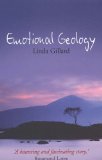 I am super-excited to get to offer up my second giveaway here at Opinions of a Wolf, and this time it is INTERNATIONAL.
There is one paperback copy of Emotional Geology by Linda Gillard up for grabs, courtesy of the lovely author herself. Since she lives in Scotland, she said she is fine with shipping internationally. That made me very happy, because I know I have a lot of followers from outside the States.
What You’ll Win: One paperback copy of Emotional Geology by Linda Gillard.
How to Enter: Leave a comment on this post with your email address or twitter name so I can contact the winner for his/her mailing address. ALSO please note if you took part in the MIA Reading Challenge this year. Those who did get a second entry, since this is relevant to the challenge.
Who Can Enter: Anyone! International! Yay!
Contest Ends: December 13th. Two weeks from today!
This giveaway is now over! Thank you all for entering!
 Support my work with a tip or browse my shop for curated book club guides, how to guides, cross-stitch patterns, and more!


This work by Amanda Nevius is licensed under a Creative Commons Attribution-Noncommercial-No Derivative Works 3.0 United States License.
 Opinions of a Wolf