
Archive
Book Review: Ceremony by Leslie Marmon Silko
Summary:
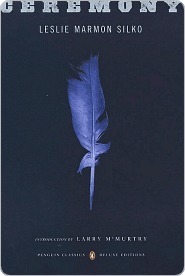
Tayo, an Indigenous Laguna man, returns from being a prisoner of war of the Japanese in WWII without his cousin. Cousin is the technically accurate word, but since Tayo grew up in his cousin’s household after his mother left him there brother felt more accurate. Tayo is half-white and has always felt estranged, but this feeling is only heightened after the war. He is suffering from shell-shock and feels emptiness in the alcohol and violence the other veterans take solace in. When his grandmother sets him up with a ceremony with a shaman with unusual ways, things start to change.
Review:
He wanted to walk until he recognized himself again.
61% location
After years of reading many books about alcoholism – both its ravages and quitting it – I’ve started having to actively seek out the stories that are a bit less well-known. Now, this book is well-known in Indigenous lit circles, but I’ve only rarely heard it mentioned in quit lit circles. I was immediately intrigued both due to its Indigenous perspective (this is own voices by an Indigenous female author) and due to its age (first published in 1986). Told non-linearly and without chapters, this book was a challenge to me, but by the end I was swept into its storytelling methods and unquestionably moved.
He was not crazy; he had never been crazy. He had only seen and heard the world as it always was: no boundaries, only transitions through all distances and time.
95% location
This book is so beautiful in ways that are difficult to describe. Its perspective on why things are broken and how one man can potentially be healed (and maybe all of us can be healed if we just listen) was so meaningful to me. I’m glad I stepped out of my comfort zone to read it.
We all have been waiting for help a long time. But it never has been easy. The people must do it. You must do it.
51% location
I really enjoyed how clear this book makes it that any care for addiction delivered needs to be culturally competent to truly serve the person who needs help. It also does not shy away from the very specific pain of being an Indigenous person in the US, and how addiction both seeks to quell that pain and rebel against the oppressive society.
It’s rare for me to re-read a book, but I anticipate this being a book I re-read over the course of time. I expect each reading will reveal new things. For those who already know they enjoy this type of storytelling, I encourage you to pick this up. Its perspective on WWII’s impact on Indigenous peoples and alcoholism is wonderful. For those who don’t usually read this type of story, I encourage you to try out something new. Make the decision to just embrace this way of telling a story and dive right into it. Especially if you usually read quit lit or post-WWII fiction.
4 out of 5 stars
Length: 270 pages – average but on the shorter side
Source: Library
Buy It (Amazon or Bookshop.org)
If you found this review helpful, please consider tipping me on ko-fi, checking out my digital items available in my ko-fi shop, buying one of my publications, or using one of my referral/coupon codes. Thank you for your support!
Book Review: An Indigenous People’s History of the United States by Roxanne Dunbar-Ortiz

Summary:
From the Revisioning History series, this explores United States history with a focus on the Indigenous peoples. History is explored in 11 short to medium length chapters in chronological order.
Review:
I majored in US History and took a full-length course on the Indigenous peoples of the US. I also previously was interested in the American Indian Movement of the 1970s, so read a few books about and by the people of that movement. I was kind of expecting, since this is a short book targeted to a mainstream audience, that I would not encounter too much that was new, but I was pleased to discover my expectations were incorrect.
This book was published in 2014 and thus took a more modern perspective than even my course late in the first decade of the 2000s took. It ensures a perspective not of we’re studying these ancient lost peoples but rather we’re studying the history of people who exist now in modern society and how genocide was enacted against them. The exploration of colonization and how it impacted Indigenous peoples is much more nuanced than the simple guns, germs, and steel history I’d studied in college. What I learned through this book is that colonization was strategic. It wasn’t just a happenstance of how germs worked out when the nations met and greater firepower. Of course, my coursework did acknowledge colonization, but not to the extent it was delineated in this book.
Through economic penetration of Indigenous societies, the European and Euro-American colonial powers created economic dependency and imbalance of trade, then incorporated the Indigenous nations into spheres of influence and controlled them indirectly or as protectorates, with indispensable use of Christian missionaries and alcohol….a colonizing regime institutionalizes violence.
4%-5%
To me an interesting aspect of this book was its discussion of Indigenous peoples and alcohol. Growing up, I definitely heard the myth that Indigenous peoples are more genetically prone to alcoholism. In recent years, I heard the theory that rates of addiction are higher in oppressed peoples, which makes sense as alcohol and other addictive substances can provide temporary relief from trauma. This book pushed my understanding two steps further. First, alcohol being used as an intentional weapon of colonization, calling it a “weapon of war” (21%), and noting that it wasn’t just introduced, it was also promoted (13%). This book also drew my attention to the idea that, for at least some Indigenous peoples, acting the part of the “drunk Indian” can be a form of protest. I read the article the author cites as the origin of this theory, and reading fiction work by Indigenous peoples seems to support this theory as well, for at least some instances. (See the book Ceremony, I’ll be reviewing it soon).
After covering the American Indian Movement, the book wraps up with a discussion of the expanding US imperialism and modern day colonization by historic colonizers (the US and the UK are specifically discussed). Through this, I learned of a potential connection between the Monroe Doctrine and overpowered policing forces. I also learned about the modern forced removal of the Chagossian people from Diego Garcia, an island in the Indian Ocean, which is now used by the US for a military based (rented from the UK). This is just one example of many given in the chapter, but it’s the one that stuck out the most to me, partially because I didn’t know the US even had a military base in the Indian Ocean but also because the book describes the forced removal including murdering every single pet dog on the island. While of course the forced removal alone is terrible there was just something about the added insult of murdering beloved pets that ground the whole event into my brain.
I have covered just a small snippet of what I learned in this book. It is well-written. The chapters are short to medium length and filled with information. There’s nothing extraneous here. It gets right to the point, which I appreciate. The chronological order is helpful as well for leaving the book and coming back to it as you have time. Highly recommended. I’ve already added several of the other books in this series to my wishlist.
4 out of 5 stars
Length: 218 pages – average but on the shorter side
Source: Amazon
Buy It (Amazon or Bookshop.org)
If you found this review helpful, please consider tipping me on ko-fi, checking out my digital items available in my ko-fi shop, buying one of my publications, or using one of my referral/coupon codes. Thank you for your support!
Publication Announcement: Monologue: “One Glass of Wine with Dinner”
I am thrilled to say that a monologue I wrote – “One Glass of Wine with Dinner” – was produced by De Frente Productions as part of their Monologue Marathon on December 5th with a lovely performance by Casey Marie Ecker.
View the monologue here for free.
Be sure to check out my Publications Page for my other work.
Liked my piece? Then….
If you found this review helpful, please consider tipping me on ko-fi, checking out my digital items available in my ko-fi shop, buying one of my publications, or using one of my referral/coupon codes. Thank you for your support!
Book Review: Free Cyntoia: My Search for Redemption in the American Prison System by Cyntoia Brown-Long and Bethany Mauger
 Summary:
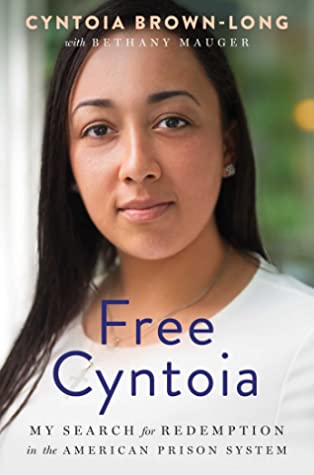
Cyntoia Brown was sentenced to life in prison for a murder she committed at the age of sixteen. Her case became national news when celebrities and activists made the hashtag #FreeCyntoia go viral in 2017. She was granted full clemency after having served fifteen years, walking out a free woman on August 7, 2019.
This is her story, in her own words.
Review:
I think how people will respond to this memoir will depend a lot on what they believe justice to be. Do certain levels of crime deserve never-ending punishment? Can people change or be redeemed? Then there’s another level of do teenagers, people who are still growing and whose brains have not fully developed (brains do not complete developing until approximately age 25), deserve to spend the rest of their lives being punished for an act committed at this age? This memoir aims to be proof that people can be redeemed and, indeed, if we want people to change, they need to have hope that an end could be in sight for them.
The fact of the matter is that no one but Cyntoia, God, and Johnny Michael Allen know what truly happened that night. Cyntoia has never denied killing Johnny but has maintained it was in self-defense. The only facts that we know are that she, a sixteen-year-old who had been being sold for sex by her pimp, was picked up by Johnny Allen, a 43-year-old, and brought home with him, and they were alone in his bedroom together. Both potential stories told by each side are possible. It’s possible he brought her home for sex, like Cyntoia says. It’s possible he brought her home in an attempt to take care of a teenager he found living on the street, like Johnny Allen’s family says. Regardless, Cyntoia ended up killing him. The memoir dances around exactly what happened, with Cyntoia describing him picking her up and bringing her home but then describing the night as a red haze with no details. Was that to protect a guilty conscience or to protect details that would hurt Johnny Allens’ family that no one really needs to know? It’s very hard to say. But in a way I think this is appropriate because Cyntoia admits that she killed him, and the true point of the story is first, how did this girl end up here and second, can she be redeemed?
How she got here contains two of the more interesting aspects of the memoir. First, the school to prison pipeline is painfully obvious in Cyntoia’s story. She originally was placed in a gifted class, acted up some (didn’t get along with the teacher) and was downgraded. She started to be told over and over again she was bad. It was all downhill from there with her hanging out with the crowd of kids who were always in trouble and being constantly told she was bad and not listened to. The police were even called on her at school for her not wanting to give the teacher her purse in detention. If we want our children to rise to their potential, having school tied to prison in the way that it is is not the solution, and treating children like they’re “bad” when they’re just children who mess up sometimes is sending them a clear message that many children will just accept or fail to.
The other issue that came up during one of Cyntoia’s trials is that her birth mother admits to drinking alcohol while she was pregnant, and some doctors have diagnosed her as having fetal alcohol spectrum disorder. This is relevant, because fetal alcohol spectrum disorder can cause poor judgment, hyperactivity, poor reasoning, and problems in school. It seems, given both doctors’ testimonies her birth mother’s admission, and Cyntoia’s own perspective that this sad tale is likely, therefore, partially entwined with alcohol abuse. Cyntoia herself states multiple times that she doesn’t know why she has tended to act so impulsively. This could partially help explain it and be another of the many tentacles of how alcohol impacts our society with poor outcomes and violence.
Cyntoia ultimately chooses to have faith that she could possibly be redeemed and decides, even if she can’t be, she doesn’t want to waste her life. She goes to a unique program available in her prison that allows her to go to college. She pursues self-improvement and mentorship of others, and she works to help young girls who have also been trafficked like she was. (It is not a question that Cyntoia was trafficked as she was underage and had a pimp). Cyntoia attests much of her self-improvement to her new-found faith that she solidified after meeting her now-husband via letters in jail. (He felt called to write to her). A spiritual practice is important for anyone to have a well-rounded recovery, and I think it is also significant that the school that offered the college program inside the prison was also a religious school. I am glad for her that she has found comfort and faith, but I also hope it’s not too entwined with her husband and is her own source of strength. While healthy relationships are important, and it’s nice to share a faith, it’s also important for that strength to come from oneself and not from relying upon another fallible human being.
Overall, I think this shows a personal look at the school to prison pipeline, the potential impact of alcohol on a child’s life, and how redemption could look. It’s important to come into this book with an open mind and a willingness to not crave more than Cyntoia is willing to share, nor to think that this book will reveal all the truth or all the answers.
4 out of 5 stars
Length: 320 pages – average but on the longer side
Source: Purchased
Buy It (Amazon or Bookshop.org)

Book Review: The Shape of Night by Tess Gerritsen
First, a note….
I hope all of my readers are as safe and well as possible in these difficult times we are living in. A few people have asked me what I recommend reading to get through things. My advice is what my advice always is – read what most entertains you. Read what distracts you. Feel no guilt for what you enjoy reading. Read whatever it is you most enjoy. I think now more than ever it’s important for all of us to get a respite from the world around us and visit another world, whether that’s fiction or nonfiction, romance or thrills. In the spirit of this, I’m just going to keep reviewing the books I’ve most enjoyed recently.
 Summary:
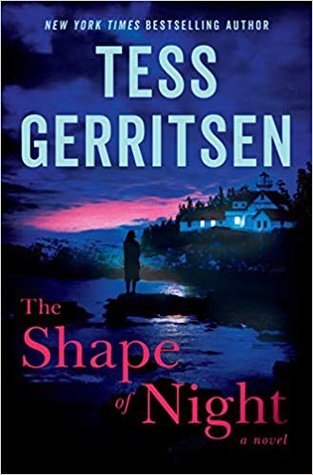
Ava is writing a cookbook of what Maine fisherman communities ate during the 1800s. She’s hit a bit of a writer’s block, so she rents a summer home on the coast of Maine for inspiration – and maybe to run away from the tragedy that is haunting her. But when she arrives at the home in Maine she starts to think it might actually be haunted. She also discovers the previous renter mysteriously disappeared.
Review:
I love house-sitting or house-renting thrillers. There is something decidedly spooky about short-term rentals, and I love how this type of thriller just goes there. It reminded me of the Victoria Holt books I would borrow from my grandmother in middle school only set in modern day Maine.
What I wasn’t expecting from this book or its summary was its deft handling of alcohol addiction. Ava’s alcohol addiction isn’t her entire personality – far from it. She is very well-rounded. We get to know her incredible talent at both cooking and researching then recreating historic recipes. She is intelligent and caring. She loves her sister. But she has definitely made a giant mistake that is haunting her, and I would argue it’s a mistake that was rooted in her alcohol problem although before it became as serious as it is in Maine.
There are no easy answers in this book – not for the “ghost” of Captain Brodie. Not for the disappearances. Not for how small towns handle things. Not for Ava straightening her life back up. The lack of neat ends makes it all feel more real which really works for a book with a creepy ghost.
There were many aspects of this book that kept me staying up too late reading it: the mystery, Ava’s addiction, the ambience, is there really a ghost, what happened in Ava’s past. I also just liked visiting the house and waterfront, which was well described and realistic. It had just the right amount of twists and turns and well-rounded characters.
5 out of 5 stars
Length: 288 pages – average but on the shorter side
Source: Library
Buy It (Amazon or Bookshop.org)
If you found this review helpful, please consider tipping me on ko-fi, checking out my digital items available in my ko-fi shop, buying one of my publications, or using one of my referral/coupon codes. Thank you for your support!
Book Review: The Five: The Untold Lives of the Women Killed by Jack the Ripper by Hallie Rubenhold
First, a note….
If you’ve subscribed to this blog, bless you for still being around. I hadn’t posted since July 2018! I’ve still been actively discussing books but mostly on my Instagram where I’ve been enjoying the bookstagram community. However, I have missed having a more permanent, long-form place to talk about books. I wasn’t enjoying the monthly round-ups I was doing but I also simply cannot devote the time to blog post about every book I read. So I’ve decided to aim for reviewing one book a month – the book I found most meaningful to read in some way in the month prior. Maybe sometimes I’ll review more, maybe less, but no longer take this blog to be a record of every single book I read. Moving right along.
 Summary:
You’ve heard of Jack the Ripper – the serial killer who murdered five women in London in 1888. Most people know the name Jack the Ripper but what about the names of his victims? Here, meet the women whose lives were cut short by Jack the Ripper – Polly, Annie, Elizabeth, Catherine and Mary. Get to know their world, their personal struggles, and come to see them as people rather than simply victims.
Review:
I learned so much reading this book, and none of it was dry. It was entirely fascinating. I liked the structure very much – Rubenhold goes through the intricacies of the lives of each of the women in the order they were murdered. She also doesn’t just stop at the moment they died – she follows through with who identified the body, who grieved for them (and every single one had someone grieving for them).
A large misconception is that all five of the women murdered by Jack the Ripper were homeless prostitutes. Of course even if that were the case it wouldn’t make the murders less tragic. However, it is simply not true of these women. Four of the five were not prostitutes but rather were simply sleeping on the street because they were homeless. The fifth (Mary Jane) was a prostitute but had a home and was murdered in it.
I found it very interesting how different all of their lives began and yet how most of them ended up on the street regardless. In a way this is really the story of how society failed these women long before it failed to find their killer by allowing them to end up living on the streets to begin with.
I personally found Annie’s story to be the most meaningful, but I think everyone will connect with a different woman in a different way. Annie ended up on the street due to a failed battle with alcoholism. She had a loving family, had climbed up to the middle class, and even did a stint in rehab. But she still lost the battle with her addiction.
Interestingly, her sisters chose the sobriety movement and prospered from it. I found this to be a meaningful passage:
The complete rejection of alcohol resonated with those who found themselves balanced precariously on the edge of middle-class life. By eschewing drink, a hardworking man or woman could save money and build a better life for themself and their family. Annie’s sisters not only adhered to this creed but prospered by it financially. (27% location)
Although her sisters were able to give up the drink, Annie was not. Her brother also still drank alcohol at the time of her murder. Even though she was on the street, he would still see her sometimes and imbibe with her. After her murder, he left the UK for Texas and achieved sobriety.
This hit me hard:
What her murderer claimed on that night was simply all that remained of what drink had left behind. (33% location)
To me, Annie’s full life story was sorrowful, although some beauty did come out of it in that her brother’s life was saved by observing her downfall. I still reflect on her story sometimes. I hope through Rubenhold’s work, Annie’s unfortunate downfall will come to affect change in more people than solely Annie’s brother’s.
I’ve spoken at length about the woman’s story I found the most personally moving and meaningful, but there is also a story of an immigrant, a woman scorned by her husband, a prostitute and the man she loved, and a working class woman who worked in a tin factory and ran from an abusive husband. I am sure you will find one that connects with you and that you will find meaningful.
Those who are disturbed by the gruesome will be pleased to note that there are not gruesome details in this book. The focus is on the women’s lives, not their deaths.
If you found this review helpful, please consider tipping me on ko-fi, checking out my digital items available in my ko-fi shop, buying one of my publications, or using one of my referral/coupon codes. Thank you for your support!
5 out of 5 stars
Length: 336 pages – average but on the longer side
Source: Library
February 2018 Book Reviews – The Lakota Way (#nonfiction), The Empty Room (#alcoholism), Before We Were Yours (#historic), The Gravity Between Us (#newadult), The Nonborn King (#fantasy)

Some breakfast reading at my in-laws’ in Michigan. For more shots check out my bookstagram
Hello my lovely readers! I’m a bit behind in my book reviews (as usual) because life just keeps happening. But I’ve still been finding time to read (obviously). Looking back on it, I’m kind of amazed I got so much reading done in February seeing as I had the flu and also took a trip to Michigan to see my in-laws and had a very busy work month. (When I’m busy at work I often find myself too brain tired to do much reading). But obviously I did get a lot of reading done! Let’s take a look at what I read.
The Lakota Way: Stories and Lessons for Living by Joseph M. Marshall III was a gift from my husband when we were first dating. I had been trying to read it mindfully and slowly a chapter at a time but clearly I kept forgetting about it instead. This happens to me when I read digital books sometimes. So I decided this month to just pick it up and finish it off. The author of this nonfiction is a member of the Lakota nation, and here he shares the wisdom of his people for us all to benefit from. I am honored and humbled by the fact that he chooses to do so when so much was wrested away from the Lakota by colonization. Reading this book was like sitting down with a wise older uncle who tells stories that may seem disconnected at first but ultimately all revolve around a theme (like love). The stories are also connected with the history of the Lakota people (before and during colonization). I found the entire collection to be moving, and I would recommend it to anyone with an interest in the Native Peoples of the Americas.
(4 out of 5 stars, buy it)
(Source: gift)
Next, I tore through my first 5 star read of the year – The Empty Room by Lauren B. Davis. This is a fictional telling of one day in the life of a woman with alcoholism. Davis is in recovery herself, and her first-hand experience is obvious here. I tore through this in just one day. It’s the most realistic depiction of alcoholism in women I’ve seen. Gritty and dark yet compassionate and hopeful.
She was always 5 minutes away from being the person she wanted to be.
(location 14%)Alcohol, the man said, had first given him wings then taken away the sky.
(location 55%)
Just writing about it now makes me want to pick it up and read it again. If you’ve ever struggled with alcohol yourself or struggled to understand someone who does, give this read a chance.
(5 out of 5 stars, buy it)
(Source: Amazon)
Throughout the month I was working on my audiobook – Before We Were Yours by Lisa Wingate. I call this a historic fiction but really it’s one of those dual setting books with a narrator both in the present and in the past. If you’ve been on book blogs at all in the past year you’ve heard of it. This book looks at a dark history of adoption in the United States, with children being snatched from their families under the guise of the law in the name of eugenics (in this case, the idea that beautiful children are better raised by the rich). I very much appreciate the importance of this history being presented and how well-researched it is, but I must admit that both of the main characters rubbed me the wrong way, which wasn’t something I was able to get past.
(3 out of 5 stars, buy it)
(Source: Audible)
Next I picked up The Gravity Between Us by Kristen Zimmer. This book was at the disadvantage of being my first read after having my soul touched by The Empty Room. I often find that after a read that touching I struggle to enjoy my next read, so keep that in mind when considering my thoughts. This new adult romance looks at two best friends who fall in love with each other but struggle to admit it to each other. Complicating factors include they’re both women, in their late teens, and have just moved to LA. Oh and one is a break-out movie star. It’s a great premise but the execution didn’t work for me. Alternating chapters between the two main character’s perspectives took a lot of the tension out and sometimes left me confused about who was feeling what and who was talking. I also felt like both Kendall and Payton really mistreated their friends around them (a straight guy and a bisexual gal who help them keep the relationship under wraps) and while people make mistakes they never really apologize for this or make up for it to them.
(3 out of 5 stars, buy it)
(Source: Amazon)
Finally I wrapped up the month by finishing my print read of the month: The Nonborn King by Julian May. This is the last in a fantasy trilogy with four disparate plots that ultimately come together in the end of course. I wasn’t into half of them, so that made it a bit of a slog. I also had read the previous two books in audiobook format with multiple narrators, and I wonder how much of my feeling of this being a slog was that it wasn’t being performed at me. I hadn’t realized how much the performance enhanced the books. I still very much enjoy the world of The Pliocene Exile but the direction it went here was puzzling.
(3 out of 5 stars, buy it)
(Source: PaperBackSwap I think?)
It looks like the month started strong then went mediocre. Since I got the flu at the end of the month, I wonder how much of that vibe was just a bad flu mood? Hard to say! Regardless, I know I’ll be readingThe Empty Room again.
My total for the month of February 2018:
- 5 books
- 4 fiction; 1 nonfiction
- 4 female authors; 1 male author
- 3 ebooks; 1 print book; 1 audiobook
If you found this helpful, please consider tipping me on ko-fi, checking out my digital items available in my ko-fi shop, buying one of my publications, or using one of my referral/coupon codes. Thank you for your support!
August 2017 Reads – #nonfiction, #scifi, #thriller

For more shots check out my bookstagram
August saw me picking back up some nonfiction (yay!) as well as a thriller and a scifi.
The first nonfiction actually wasn’t on purpose. I logged onto my library’s website and they have a collection of “rarely available” which basically means there’s currently a copy available which is unusual because this book is usually checked out. I checked out the nonfiction Marie Kondo’s The Life-Changing Magic of Tidying Up for amusement but guys…it actually has affected my life. I think of myself as being a pretty organized person but something about her method helped me take it to the next level. I reviewed this read in haiku format here.
(4 out of 5 stars, buy it)
(source: library)
Next I saw a book had come out by one an author I like – John Twelve Hawks. It’s the scifi Spark. This follows the agent in a secret special services section of a multinational corporation who also just so happens to have Cotard’s Syndrome – he believes he is dead. The themes are similar to those of author of Twelve Hawks’s works (beware of The Man, no matter who is currently in control) but the focus is on one main character instead of many/the whole world.
(4 out of 5 stars, buy it)
(source: library)
Throughout the month I read a thriller in audiobook format called Don’t Close Your Eyes by Holly Seddon. This book follows twin sisters who haven’t spoken in years. One lives as a shut-in and the other has been kicked out by her husband and denied access to her young daughter. My enjoyment of this book was hurt by the audio recording. The two sisters were read by two different performers and while one was excellent the other was very stale and boring to listen to. It kept me from getting too wrapped up in the story. That said, I thought the thriller had some unnecessary red herrings, took a bit too long to get where it was going, and I honestly thought the ending was too kind to a particular villain.
(3 out of 5 stars, buy it)
(source: Audible)
I finished up the month with In the Realm of Hungry Ghosts: Close Encounters with Addiction by Gabor Mate. In this work, Dr. Mate examines addiction in the context of his longtime work with the addicts living in Vancouver’s notorious Downtown Eastside. The perspective of someone working so closely with victims of addiction is an important one to have. Dr. Mate sees the realities day in and day out. He’s also honest about how sometimes he is able to feel compassion and how other times he gets frustrated. Woven in with his recollections of particular patients are discussions of the science of addiction and Dr. Mate’s own take on it. I did feel that Dr. Mate sometimes got a bit too wrapped up in himself. I found his attempts to compare his music cd buying issues with drug and alcohol addiction to be a bit ill-tasting in my mouth and revisited too often. I also felt it muddied the waters of the people whose stories he was telling and the science he was presenting. The academic in me also wondered how he went about getting permission to include certain people in the book (for instance, those who have passed away). However, regardless this was an important read for anyone interested in the current addiction crisis.
(4 out of 5 stars, buy it)
(source: library)
My total for the month of August 2017:
- 5 books
- 2 fiction; 2 nonfiction
- 2 female authors; 2 male authors
- 3 ebooks; 0 print books; 1 audiobook
If you found this helpful, please consider tipping me on ko-fi, checking out my digital items available in my ko-fi shop, buying one of my publications, or using one of my referral/coupon codes. Thank you for your support!
July 2017 Reads – #fantasy, #thriller

For more shots check out my bookstagram
July saw me seeking out a bunch of thrillers – 3 in fact, plus 2 dark fantasies.
I started the month with the much talked about Irish lit The Accident Season by Moira Fowley-Doyle. This book is somewhere between fantasy and mystery with an unreliable narrator leaving the reader uncertain if the fantastical things are really happening or just in the main character’s head. I was quite disappointed by this book in multiple areas. First, I felt queer-baited by this book as it was buzzed about having great queer content but in actual fact all of the queer characters are secondary characters with little “screentime.” It also has pacing issues. It starts really slowly and most of the action happens in the last 25% of the book. I also didn’t feel the fantasy elements added to the book at all; they just made it more confusing.
(2 out of 5 stars, buy it)
(source: Audible)
Next I read another much talked-about book The Girl on the Train a thriller by Paula Hawkins. If you haven’t heard much about this one, it’s about a woman who commutes on a train and watches a couple in their backyard when she goes by every day but then she sees something shocking and finds herself getting involved in their lives. I loved this book and felt it totally lived up to the hype. For me there was something just delightful about listening to this woman’s train commuter life and problems while also commuting on a train. Similarly, I really enjoyed how Rachel’s alcoholism isn’t the point of the story but the problems it causes (or issues it makes worse) are also acknowledged. This is a book I would read again even knowing the ending. (Indeed, I did watch the movie, although I must say moving the setting from London to NYC removes a lot of interesting plot points).
(4 out of 5 stars, buy it)
(source: Audible)
Next I decided to finally get around to reading a Richelle Mead series I hadn’t started. I love her Succubus series so I thought this would be a great bet. I picked up Gameboard of the Gods, the start of another of her fantasy series, but unfortunately this one didn’t do it for me. The plot is almost too complicated to explain quickly. Suffice to say, there’s a future world with competing large governments, one of which has outlawed many religions. An exile is brought back in to investigate supernatural claims. My issues with this book mostly boil down to it being way too much set-up and not enough plot. It feels like the set-up to an epic series but it’s setting up a society I didn’t enjoy about learning about or visiting, which is problematic. I learned after reading this that the series is held up as it was dropped by the publishers due to low sales so I’m also not sure it’s worth investing the effort into reading this much set-up only to never get resolution.
(3 out of 5 stars, buy it)
(source: library)
Up next was another thriller What Was Mine by Helen Klein Ross. This covers one of my favorite thriller plots – the abduction of a child. In this case, it’s the snatching of a baby from a distracted mother in a supercenter (that is clearly meant to be Ikea). What happens when the child grows up and figures out that her mother is not her mother? I absolutely loved this book right up until the ending. The ending was awful. I had to go back the next day and re-read it to ensure I hadn’t misread it. Let’s just say, the ending felt very out of touch with reality to me.
(3 out of 5 stars, buy it)
(source: library)
I wrapped up the month with one final thriller, Her Every Fear by Peter Swanson. I read Swanson’s first book and really liked it – he sets most of his thrillers in the Boston area and New England and since I live here, I find it even more thrilling to see the areas I know rendered so well and having such thrilling things occurring in them. This thriller revolves around another of my favorite plot devices – the house swap. Kate swaps houses with her distant cousin in Boston and while she enjoys his posh Beacon Hill residence she soon starts to suspect not everything is as it seems. Kate suffers from PTSD and high anxiety and I loved seeing her as a heroine sometimes in spite of and sometimes because of these things (her anxiety makes her more attuned to certain things in the house). While I did know whodunit early on, there were enough plot twists that I wasn’t expecting to keep me entertained.
(4 out of 5 stars, buy it)
(source: library)
My total for the month of July 2017:
- 5 books
- 5 fiction; 0 nonfiction
- 4 female authors; 1 male author
- 3 ebooks; 0 print books; 2 audiobooks
If you found this helpful, please consider tipping me on ko-fi, checking out my digital items available in my ko-fi shop, buying one of my publications, or using one of my referral/coupon codes. Thank you for your support!
A Trio of #chicklit Reviewed in #Haiku

Valley of the Dolls
By: Jacqueline Susann
Summary:
The 1960s classic about four women and how fame and drugs destroyed them.
Haiku Review:
My dolls! My dolls! But
Hard to compete with modern
Opioid crisis.
4 out of 5 stars
Source: Gift
Buy It

The Runaway Princess
By: Hester Browne
Summary:
Amy Wilde’s new boyfriend has a secret….he’s a prince! Can she fit into his world without losing herself in the process?
Haiku Review:
The Prince and Me but
British with saving the bees
Left me wanting more
4 out of 5 stars
Source: Library
Buy It

Cocktails for Three
By: Madeleine Wickham
Summary:
Three friends meet for cocktails every month but life events and secrets start to pull them apart.
Haiku Review:
If you can manage
To laugh at alcoholism
Then you might like it
3 out of 5 stars
Source: Library
Buy It
If you found this helpful, please consider tipping me on ko-fi, checking out my digital items available in my ko-fi shop, buying one of my publications, or using one of my referral/coupon codes. Thank you for your support!
 Support my work with a tip or browse my shop for curated book club guides, how to guides, cross-stitch patterns, and more!


This work by Amanda Nevius is licensed under a Creative Commons Attribution-Noncommercial-No Derivative Works 3.0 United States License.
 Opinions of a Wolf