
Archive
Book Review: A Long Way Down by Nick Hornby (Bottom of TBR Pile Challenge)
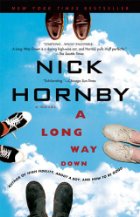 Summary:
On New Year’s Eve, four incredibly different strangers accidentally meet on Topper’s House a popular local spot for suicides. Somehow running into each other leads to them taking the long way down that night instead of the quick one. What happens after is a continuance of their life stories that no one could have predicted.
Review:
I distinctly remember that this book made it into my tbr pile because of the suicide theme. What makes these four different people want to kill themselves, and what makes them not do it. Clearly this is a book about depression and suicidality. But it is not a depressing book. Not by far.
Without revealing too much, since the revelations are part of the fun of the read, I will just say that the four suicidal people span different generations, reasons, and nations of origin. Different levels of conservatism and liberalism. But what makes them come to understand each other is their universal depression and suicidal thoughts. This fact that someone out there gets them….well oftentimes that can help get a profoundly depressed or mentally unwell person over the hump. Feeling less alone.
Her past was in the past, but our past, I don’t know…Our past was still all over the place. We could see it every day when we woke up. (page 253)
In spite of this being a book about depressed people bonding over their depression, it doesn’t read as such. I was reading it on an airplane and found myself literally laughing out loud at sections. Because these people are brilliant. They have a great understanding of the world. Of art. Of relationships. Even of themselves.
I had that terrible feeling you get when you realize that you’re stuck with who you are, and there’s nothing you can do about it. (page 208)
That is, after all, frequently what depression can be all about. A profoundly clear understanding of how royally fucked up you are or your life is. What’s hard is seeing past that moment. The book is kind of a snapshot of the process of them learning to do that. And that’s what makes it so eloquent and poignant. Nothing is done melodramatically. Things are just presented as they are. Even down to the four being able to laugh together periodically (and make you laugh in the process). Depression isn’t just oh everything sucks nonstop. There are moments of laughter. It’s just that those moments are outweighed by the weight of the depression. Getting rid of that weight is a cleansing, uplifting process, and that’s how it feels to read this book. You bond and you laugh and you maybe even cry (if you have more susceptible tear ducts than this reader). And in the end you come to an understanding of that suicidal dark place without being abandoned in it.
Overall this book manages to eloquently present depression without being a depressing book. It is compelling to any reader who has ever struggled with a depressed period of life. Highly recommended to the depressed and the sympathetic. Both will be left feeling lighter and less alone.
4 out of 5 stars
Source: PaperBackSwap

Counts For:
Book Review: Barefoot Season by Susan Mallery (Series, #1)
 Summary:
Michelle ran away from mistakes made at home to the army, and now she’s coming home from three tours of duty to Blackberry Island in the Pacific Northwest. Her father abandoned the family when she was a teenager, but left his historic inn in trust to her. Her mother was running it until she died, and now Michelle is back to reclaim her inheritance. Only it seems that her mother may have not so much been running the inn as running it into the ground. Meanwhile, Michelle’s once best friend, Carly, thought she was working toward owning part of the inn only to be side-swiped by the fact that Michelle’s mother lied to her….not to mention the bad blood between her and Michelle. It’s a lot for anyone to deal with, but toss in Michelle’s PTSD and Carly’s single motherhood, and it seems impossible for either of them to ever truly get their lives in order.
Review:
I am not usually a chick lit person, but this one slipped in under my radar thanks to Harlequin’s new MIRA line (which is chick lit with some sex scenes). I’m glad it did, because I found the story relatable, heart-warming, and a welcome escape.
The plot is complex, which I think is evident from my plot summary. There is a lot going on. But it never feels forced or like too much. It simply feels like real life. Michelle and Carly both have a *lot* of shit to deal with and watching them deal with it imperfectly but understandably is an enjoyable experience.
Although both Michelle and Carly have their own romance plot lines, the story is really about healing their broken friendship, as well as their wounds from their individual painful pasts. I enjoyed this because the story shows healing happening alongside real life. Too often books either ignore the tough things or focus on them to the exclusion of real life.
Of course, being the mental illness advocate that I am, I was incredibly pleased to see Michelle’s PTSD come up and be dealt with in such a true to life manner. Michelle at first is mentally wounded and won’t truly admit it.
While she wasn’t a big believer in PTSD, she’d been told she suffered from it. So she’d listened to the counselors when they’d talked about avoiding stress and staying rested and eating well. (location 207)
Perhaps the most true-to-life part of the whole book is that Michelle takes a while to admit that she is not ok, even while those around her who love her are expressing their concerns to her. A lot of people have difficulty acknowledging a problem, particularly if they view themselves as strong and independent. Seeing Michelle realize that reaching out for help is stronger than suffering alone is honestly the best part of the whole book.
Although we do have a couple of sex scenes, I did feel that the romance was a bit….quick and forced for both women. However, this is the first book in a series, so perhaps their romantic relationships will be explored more in future books.
I also have to say that the title makes zero sense to me. It brings to mind summer, but that’s about all the relation I can see between it and the story.
Overall, this is a piece of chick lit with an intelligent perspective on PTSD in female soldiers and a dash of romance. Recommended to fans of the genre as well as those who enjoy a contemporary tale and want to dip their toe into the chick lit world.
4 out of 5 stars
Source: NetGalley

Counts For:
Book Review: The Child Who by Simon Lelic
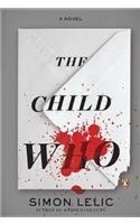 Summary:
A gruesome murder has thrown a British county up-in-arms, and Leo Curtice finds himself the attorney randomly assigned to defend the murderer–a 12 year old boy who killed and sexually assaulted an 11 year old girl. He finds himself seeking to understand what would make a 12 year old kill and finding more empathy for the boy than those around him think is allowable. Meanwhile, threats start coming in against his own family, including his 15 year old daughter.
Review:
This is a ripped from the headlines style novel that falls far short of others in its genre. Apparently, Britain has a real problem with child murderers. The thing is, though, when you’re writing a ripped from the headlines type story, your fictional version needs to bring something to the table that the real life stories and newspaper articles can’t or don’t. 
It’s also problematic when you google about child murderers in Britain and the stories that come up are far more fascinating than the novel you just read. Stories like Robert Thompson and Jon Venables, two ten year olds who tortured and murdered a two year old. Or Mary Bell an eleven year old who killed and tortured other children without remorse. In contrast our story here is about a twelve year old boy who hits on an eleven year old, is rebuffed, and proceeds to knock her down, bludgeon her, and assault her with a stick. Horrible? Yes. But with far more motive than two ten year olds abducting and killing a two year old. See the difference? The true to life stories push us to question and understand human development and behavior. The fake one seems rather easily written off as a vicious twelve year old who can’t handle the word no from a girl he likes. It’s as if the author was trying to play off of a phenomenon in Britain but missed the crux of what makes it so fascinating. Twelve is hardly a youth in the way that ten is.
Then there is the whole side-plot about Curtice’s daughter. From the beginning of the book you think she was murdered eventually somehow in some connection with the case. Wanting to find out how this occurred is what keeps the reader interested and the plot moving in spite of the problems addressed earlier. This, though, is ultimately a red herring of a plot point. The daughter was a runaway. Yes, the father didn’t know it at first, but she just ran away because of all the stress from the case. That’s it. As a reader, it felt like Lelic played a dirty trick on me, and I really didn’t like that.
Ultimately, Lelic tried to write a ripped from the headlines style story akin to Room
2 out of 5 stars
Source: Netgalley

Book Review: The Baker’s Daughter by Sarah McCoy
 Summary:
It’s 2007, and Reba is a journalist living in El Paso, Texas, with her fiance, border patrol guard, Riki. She hasn’t been able to bring herself to be fully honest with him about her dark childhood overshadowed by her Vietnam Vet father’s struggle with depression and PTSD. Christmas is coming up, and she is interviewing Elsie, the owner of the local German bakery. Elsie has some intense secrets of her own that show it’s not always easy to know what’s right when your country and family go wrong.
Review:
I have an intense love for WWII stories, and I immediately was drawn to the idea of intergenerational similarities and learning from an older generation innate in this book’s plot. It is a complex tale that McCoy expertly weaves, managing to show how people are the same, yet different, across race, time, and gender.
Reba’s and Elsie’s tales are about two very different kinds of bravery. Reba has a wounded soul that she must be brave enough to reveal to the man she loves. She lives in fear of turning into her father or losing herself entirely in the love for another, the way her mother did. She faces a struggle that I have heard voiced by many in my generation–do I risk myself and my career for love or do I continue on alone? To this end, then, the most memorable parts of Reba’s story, for me, are when Elsie advises her on love in real life, as opposed to the love you see in movies and fairy tales.
I’ve never been fooled by the romantic, grand gestures. Love is all about the little things, the everyday considerations, kindnesses, and pardons. (location 482)
The truth is, everyone has a dark side. If you can see and forgive his dark side and he can see and forgive yours, then you have something. (location 844)
One issue I had with the book, though, is that although we see Elsie’s two relationships before her husband in stark clarity and reality, we never really see what it is that made her ultimately choose her own husband. We see their meeting and first “date,” yes, but that’s kind of it. I felt the book was building up to what ultimately made Elsie choose her American husband and move to Texas, but we only see snippets of this, whereas we see a lot of Elsie’s interactions with her prior two boyfriends. That was a big disappointment to me, because I wanted to know how Elsie knew he was the one, and how she herself was brave enough to take the leap she encourages Reba to make.
I am sure most people will most intensely react to the story of Elsie’s actions to attempt to save a Jewish boy during WWII and may even wish that was the only real story told. Elsie’s life during wartime Germany. It is definitely the stronger of the two stories, but I so enjoyed the lesson in valuing and listening to those older than you that we see through Reba meeting and learning from Elsie that I must say I like the book just the way it is. Is it different? Yes. But that’s part of what makes it stand out in a slew of WWII fiction. Elsie did this brave thing, and her whole life she never knew if it really made much of a difference. She just lived her life, married, had a daughter, was kind to a journalist. In a sense, it makes her story seem more realistic. Less like something from “The Greatest Generation” and more like something possible to accomplish for anyone with a strong will and willingness to make up her own mind.
One critique I have that slowed the book down for me and made it less enjoyable are the insertion of letters between Elsie and her sister, Hazel, who is in the Lebensborn program. Compared to the rest of the book, the letters were slow-moving and only moderately interesting. I can’t help but feel shorter letters would have gotten the same message across without slowing down the story quite so much. Yes, the inclusion of the sister was necessary to the story, but I feel like she got too much stage time, as it were.
I also have to say that I really hate the cover. It reflects none of the spirit or warmth of the book itself. The story is wrapped in warm ovens, scents of cinnamon, and bravery, and yet we get the back of a woman’s head with an inexplicable gingham strip at the bottom? Yeesh.
Overall, this is a life-affirming story that teaches the value of connecting with the older generations and cautions against thoughtless nationalism. I highly recommend it to fans of literary and WWII fiction alike.
4 out of 5 stars
Source: NetGalley

Book Review: Fourth Degree Freedom by Libby Heily
 Summary:
A collection of five widely varied short stories.
“Thank You For Calling”–A day in the life of a woman working for a call center during the Recession.
“The Event”–A dystopian future where once a year male teens and young adults go out and shoot the elderly.
“Fourth Degree Freedom”–A post nuclear war future where some children are born as different degrees of “monsters.”
“The Last Six Miles”–A woman gets over her divorce by becoming a runner.
“She Floats”–A woman wakes up in a tank with limited oxygen left and a man observing.
Review:
It’s difficult to talk about this collection as a whole, since the stories range so vastly, not only over different genres, but also in quality of writing. Thus, I must address them individually.
“Thank You For Calling”
I don’t usually do contemporary literary, but this one made me smile and sad almost simultaneously. The main character is struggling during the recession, but she also must listen to other people’s problems all day. A bit of a typical storyline? Yes. But still relatable and well-written. 3 stars
“The Event”
The best story in the collection. I recommend to Heily that she turn this one into a novel. A future with no violence and thus overpopulation is typical is dystopian fiction, but Heily takes it in a fun direction. The final scene leaves the reader doubting that the main character knows the truth about his own society. There were also no obvious flaws in the writing itself. 5 stars
“Fourth Degree Freedom”
This personally didn’t hit any of my own hot buttons, but it is well written. The idea of chemicals from war affecting different pregnancies in different ways is an interesting one. Having a sibling see the humanity in the monster child where others do not is rather typical, but still touching. 4 stars
“The Last Six Miles”
Being the fitness nut that I am, I really enjoyed seeing the main character go from a depressed over-eater to a marathon runner. The content of this story is uplifting, even if the ending is a bit predictable. 4 stars
“She Floats”
I was so incredibly disappointed in this one. I had the feeling from the first few sentences that this was basically going to be a Saw rip-off, and it was. There’s nothing wrong with having a psycho kidnap a person and put them in a trap to get out of, but it must have something else in it that makes it different from the well-known series. 1 star
Overall, this collection starts out average, strengthens, then crashes at the end. I also believe Heily may have trouble finding an audience due to the variance from literary to dystopian and then to horror. I would advise her to take the two strong dystopian stories and either make them into novels or write more scifi short stories and repackage them together. Similarly, the literary fiction I believe would strongly appeal to many modern women during this current recession. If she adds more literary stories to these two and packages it as a type of collection for the modern woman, she could have great success with them. The last story must be re-done or trashed, however. It sours the rest.
Essentially, if any of the short stories above appeals to you, I would encourage you to get this book. It is only 99cents, and a good short story is definitely worth that.
3 out of 5 stars
Source: Kindle copy from the author in exchange for my honest review

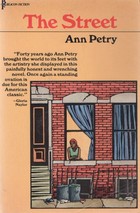
Book Review: The Street by Ann Petry (The Real Help Reading Project)
 Summary:
In 1944 Lutie Johnson believes that all it takes is hard work to succeed, so when she finds an apartment in Harlem that she can move into with her son, Bub, she sees it as a step up. Get him away from her dad’s gin-drinking girlfriend and all the roomers packed in the house. But it seems as though her hard work does nothing against the street and the walls that the white people build around the colored people brick by brick.
Discussion:
It’s hard to believe that Amy and I only have three books left after this in our project. Although we rather arbitrarily assigned the order of the books, I’m glad this one came toward the end. I doubt I would have understood the events in it or valued its perspective as much without the nonfiction reading we did prior.
The book is exquisite in the way it demonstrates how a racist society tears families apart. Hearing about black men being unable to find work in our nonfiction readings felt so cold and stark; I was left unable to understand why that would cause a man to leave his family. But through Lutie I came to understand. At first she doesn’t understand how her husband could cheat on her and be so fine with them breaking up, but eventually she does understand. He couldn’t find work in the city as a black man. She finds work as a maid in a white family’s house. She’s gone most of the time. He feels emasculated. Now, I know my feminist followers will object to this, but I remind you, this was not a choice on black families’ parts back then. It was forced upon them. Anything that is forced upon you can cause real self-esteem problems. As Lutie says, how can one manage a family in conditions like that?
Petry also clearly demonstrates how this break up of the home then leads to a generation of lost children. with Lutie working all day, her son, Bub, comes home to an empty, dank apartment. He takes up with the wrong crowds, because it’s scary to be in the apartment alone. He’s only eight. It’s easy to understand how he makes bad judgment calls, especially when his mother is constantly worrying about money around him. Seeing it spelled out with “real” people makes it all more understandable than the numbers and statistics found in Labor of Love, Labor of Sorrow. In Lutie’s case, her family fell apart twice before she even really realized it was happening.
The other strong element in this book was the hopelessness of the capitalistic American Dream. Not just the hopelessness of it, but the harmfulness of it. Lutie herself realizes that she never thought of anything but keeping her family afloat until going to work for the wealthy white family in Connecticut where she “learned” that all it takes is hard work and perseverance to become wealthy. What a false lesson. What a horrible thing to believe at face value. Yet, Lutie does, and it influences almost every single decision she makes for herself and Bub that leads to their ultimate downfall. Yes, part of their downfall is absolutely brought about by racism, but part is brought about by her believing in the system and not rebelling against it.
For instance, instead of spending what little time she does have outside of work with Bub teaching him and helping him, Lutie spends it pursuing a singing career. After being gone working in civil services all day, she leaves Bub alone at night yet again. Similarly, she penny-pinches and yells at Bub so much that Bub starts to believe that they are desperate for money, when in fact his mother is just attempting to save up to move to a better neighborhood. I get the value of a better neighborhood, but I think Lutie underestimates the value of her own impact on her son. She studies angrily at night instead of making the studying a bonding thing. She tells him he can’t stay up and read because of the cost of the electricity, which just blew my mind because you would think she would want him to read. It all adds up until Bub is not only almost constantly alone but also worrying about money at the age of eight. I can’t help but think if Lutie had just focused on making their home the best she could and making Bub feel happy and safe that it might have come out better. I’m not judging Lutie. It’s so incredibly easy to get caught up in the capitalistic belief system, especially when you’ve been scrambling your whole life and see money as a way to combat racism. I found myself constantly wishing and hoping that Lutie would stumble across some sort of progressive society that would help her fight for justice. Of course, in the real world, that doesn’t often happen, and Petry does an amazing job depicting real life in the real Harlem of the 1940s.
Of course, Lutie and her family are not the only ones unhappy. Although she only works for them for a few chapters in the book, the white family from Connecticut is profoundly unhappy, and Lutie sees it. The husband and wife ignore each other. The husband is raging with alcoholism. The wife is so focused on affairs that she ignores her son. The son just wants attention and can only get it from the maid. The brother-in-law kills himself on Christmas morning.
Why do I bother pointing this out? Well, it’s just further evidence the constant theme throughout our reading project. Racism and inequality hurt everyone in the society. Some more than others, yes, but it hurts everyone. The true values of life–love, time, companionship, laughter–they’re lost amidst the fight to maintain inequality and acquire money. And that’s largely what slavery was all about, wasn’t it? Establishing a plantation to become filthy rich instead of a farm where you make ends meet. And the perceived need for a plantation leads to a desire for cheap labor which leads to slavery which leads to maintaining racism in your head to justify it. And after Emancipation, the desire to hold onto your filthy wealth leads you to judge others as below you when they’re not. And racism is an “easy” way to do that.
But where does that leave those caught in the system? For Lutie, it leaves her a truly lost cause and her son yet another black boy with a record. Revolution and change takes time, effort, bravery. Even in the simple day to day decision to choose quality time over money. To choose to go against the American, consumer grain and just try to make a quality life for yourself. It’s fascinating and appalling how deeply entrenched in our culture the perception of wealth equaling quality of life is, yet it’s there. I think, to me, that is what is most appalling in the idea of “The Help.” Most people do not need a maid. Unless you are in a wheelchair or missing limbs or blind or have some other physical limitation, you do not need a maid. And yet some classes of society view it as necessary to make someone else clean up after them in their own home. Nobody is above cleaning up the filth from themselves and their own family. Nobody. And in the meantime, those that they hire to clean it up must do double-duty and clean up two homes and are left without enough energy for quality time with their own family. It honestly disgusts me.
Source: Public Library

Please head over to Amy’s post to discuss this book!
Book Review: Emotional Geology by Linda Gillard
 Summary:
Rose is a textile artist with bipolar disorder who for years found her medication dulled her ability to work. After a stunning betrayal that landed her in a mental hospital, she has moved to a quiet, extraordinarily rural island in Scotland in an attempt to control her illness with as little medication as possible so she may still create her art. Her life isn’t quite as quiet as she imagined it would be, though, with a warm neighbor, Shona, who introduces her to her brother, a teacher and poet.
Review:
A rural island setting combined with art, romance, and mental illness–I knew this book and I would be fast friends before I even started reading it. What I discovered was a book that addresses multiple universal issues–grief, betrayal, loss, family ties–in a glorious setting that left me dying to visit Scotland, if only to discover what peat smoke smells like.
The style of this book is unique. Gillard easily transitions between perspectives, points in the time-line of Rose’s life, and even poetry versus prose. I was astounded to discover that I enjoyed the poetry portions creeping up in the book. They tend to happen at points of high emotion and exquisitely express the high highs and low lows someone with bipolar disorder goes through. The changing of perspectives and time-lines could sometimes feel a bit jarring; that could have been smoother done, but I appreciate the style and vibe Gillard is going for. It almost mimics the jarring highs and lows of bipolar disorder.
More importantly, though, the book exquisitely, gently shows that people with mental illness are just people like everyone else. They may feel things slightly more strongly or need to work harder to stay balanced, but the mentally healthy have emotions too. The mentally healthy can be thrown just as badly by life’s experiences. If I could sum up the book’s point, it would be that we all have scars.
So you see, Rose, if you would just step outside your own fucking head for a few moments, you’d see you’re not the only one with scars. In any case the worst ones, the most disfiguring are never visible to the naked eye.” He zips up his fly. “I can probably live with yours. Can you live with mine?” (location 3816)
This is an emotional, challenging, touching book to read. I recommend it to fans of contemporary fiction with a heart.
4 out of 5 stars
Source: Kindle copy from author in exchange for my honest review

Counts For:
Book Review: Purple Hibiscus by Chimamanda Ngozi Adichie (Nigerian Independence Day Reading/Reviewing Project)
 Summary:
Kambili’s father, Eugene, is a wealthy businessman and newspaperman focused on telling the truth of the upheaval in Nigeria, but even more focused on his fanatical version of Catholicism. Kambili, her brother Jaja, and their mother all live on edge, walking on eggshells, never knowing when he might snap. In contrast, Eugene’s sister, Kambili’s Aunty Ifeoma, is a university professor and a widow, cheerfully raising her children to be independent. One winter vacation Aunty Ifeoma convinces Eugene to allow Kambili and Jaja to visit. A visit that will change their worlds forever.
Review:
You all know by now that I’m good friends with Amy, so when she asked me to participate in her one-shot project, I couldn’t say no. Although, I was completely at a loss as to what to read. I’ve never read a Nigerian book before. So I asked Amy to help me figure out a book to get my hands on, and she recommended this title to me.
Adichie instantly swept me into a world that is starkly different from, yet surprisingly similar to, my own. The excessive religion and fear of god was something I was raised with myself, so I found myself instantly connecting to Kambili. Indeed, it’s nearly impossible not to connect to her. She is intelligent yet vulnerable. Strong yet terrified. Wise yet naive. She is an ideal main character, because she is so essentially human yet impossible not to root for.
Kambili’s father is an abuser; there is zero doubt about that, yet the perspective of the abused is so eloquently depicted by Adichie. Kambili truly loves her father. She is afraid of him and hurt by him, yet she knows there are good things too. She wants nothing more than to please him. She lives for his kind words. Indeed, even the reader sees that there are good aspects to Eugene in spite of the fact that he’s a horrible abuser. He routinely donates money to the needy in Nigeria, for instance. This is what makes it so powerful and realistic. Abusers aren’t monsters from a fairy tale. They are deeply flawed people who hurt those closest to them.
In contrast to Eugene is Aunty Ifeoma. Aunty Ifeoma is the kind of woman that I believe most modern, strong, educated women want to be. She tries so damn hard to help her kids be strong, to be a good mom, to help save her sister-in-law and niece and nephew from an abusive situation. She tries hard at everything, yet sometimes the civil unrest at the university and the constant struggle to feed her family gets to her, and she snaps a bit. Aunty Ifeoma is the perfect comparison to Eugene. She sometimes snaps at her kids a bit when she’s tired or frustrated from the extreme situations going on around her Nigeria, but she never harms them. Since stress is one of the excuses many abusers use, it is excellent to see this comparison within the story.
Adichie eloquently describes Nigeria as well. I’ve never been to any part of Africa, but I felt myself swept into the hot, dry air. I could almost smell the food they ate and the cashews and oranges on the ground outside. Although Adichie shows the political unrest and civil strife, she also clearly displays the beauty of Nigeria, which is something I’ve never encountered before.
With all this beauty and realism, then, I must say I was a bit thrown by the ending. It almost felt as if it was from a different story. Whereas most of the book was reserved and eloquent in its simple depictions, the ending felt larger than life. I think I was hoping for something more from the ending. Some type of realistic understanding of a tough situation instead of a….deus ex machina style ending.
That said, I am incredibly glad I read this book. I’m glad Amy helped me broaden my horizons to reading from a style of lit outside of my normal comfort zone. This book is incredibly accessible, and I highly recommend it to anyone who is a fan of contemporary, literary stories.
4 out of 5 stars
Source: Public Library
Buy It

Book Review: The Egyptian by Layton Green (Series, #2)
 Summary:
Dominic Grey, previously a government worker and before that a champion jiu-jitsu fighter, is now working for Professor Viktor Radek on private detective cases frequently involving religious mysteries and the occult. His first case seems straight-forward enough–retrieve a vial stolen from a biomedical company in Egypt. But there’s more to this biomedical company than meets the eye, and Dominic soon finds himself racing around the globe from New Jersey to Bulgaria to Cairo in an attempt to unravel a mystery involving what just might be the elixir of life.
Review:
This follow-up to The Summoner (review) lives up to the excitement and global noir feel of the original without retracing the same steps. This holds promise for the series as a whole as one issue in writing serial detective novels is keeping everything fresh for the reader.
Green has either traveled the world extensively or done a ton of research, as his writing shows an intimate knowledge of the various areas of the world Dominic’s work takes him that is only evidenced by those who have been there. It is easy to tell when a writer intimately knows the setting they are speaking of, and this is clear in Green’s work. This lends an extra edge of excitement to the work.
Dominic’s character develops at a believable rate in this entry of the series. Who he is at the core is still the same, but his work and his encounters with a variety of people lead him to question himself, his life, and his intentions. I also appreciated that instead of pulling a 007 and moving on to the next woman without thinking much of his love interest from the first book, Nya, Dominic struggles with his emotions about the women he sleeps with. He is certainly no saint when it comes to the opposite sex, but the way he deals with women strikes a believable middle.
Unfortunately, Viktor does not feature as prominently this time around, and he also appears to be on a bit of a downward slope in his fondness for absinthe. I hope his character will be addressed more fully in the next entry in the series.
Two of the new characters added this time around are particularly enjoyable–Veronica (the love interest) and Jax (an international mercenary). I actually fell for Jax much harder than I’ve fallen for Dominic. He is from small town America with no ties to family, completely confident in the most rural corners of the world. He’s brassy, witty, and clearly has a bit of a good streak buried in him somewhere. I think both the ladies and the men reading the series will enjoy his presence, and I hope he’ll pop up in later entries (or even get his own spin-off series). Veronica is enjoyable for different reasons. She’s a career woman starting to question where her life is heading and falls for the guy she can’t have. It may seem cliche, but that sort of thing happens all the time in real life. She’s sympathetic without being pathetic. Also, personally, I found her a lot more enjoyable than Nya. She’s more assertive with Dominic; let’s just leave it at that. ;-)
The writing style itself still struggles in places on the sentence level. Sometimes Green tries too hard to sound philosophical, and it comes across as forced. Similarly, some paragraphs lean a bit too heavily on showing, not telling. The instances of this occurring are fewer than in the previous book, though, and it is obvious that Green is working hard on improving his craft. Personally, I did not find that these instances distracted me from the exciting plot at all.
Overall, The Egyptian is a fast-paced, unpredictable detective mystery, perfect for those looking for a light-weight, page-turner for their evenings or the beach.
4 out of 5 stars
Source: Free kindle copy from the author in exchange for review
Buy It
Note: The Egyptian and The Summoner are on sale for 99 cents for this release weekend only (August 27th and 28th)

Previous Books in Series:
The Summoner, review
Book Review: The Craigslist Murders by Brenda Cullerton
 Summary:
Charlotte works as an interior designer to the wealthiest of the wealthy in NYC. She thus has a window into their world and attends their parties, but is not actually a part of it. The wealthy women annoy the crap out of Charlotte as they remind her entirely too much of her cruel, social ladder climbing mother, yet she simultaneously needs the income to stay afloat in notoriously expensive NYC. One day when attempting to purchase a designer item cheap off of craigslist, she finds the solution to her pent-up rage. Periodic murders of the wealthy elite women via responding to craigslist ads.
Review:
I view Charlotte as the female and decidedly less insane version of Patrick Bateman in American Psycho. Both characters are a part of the wealthy, elite world that they simultaneously hate. Both obviously have antisocial personality disorder. Both murder people to deal with it. The similarities end there, though, as Charlotte is decidedly less far gone than Patrick so there are no chapters of non-sensical rants. Also this book is far less violent. Charlotte murders by whapping women in the back of the head with a fire poker. Her murders are about killing the women, not torturing them.
Honestly, this book reads as delicious fantasy to anyone who has ever lived in a city and bumped elbows with the craziness that is the world of the 1% (the wealthy elite). Charlotte’s rage is our rage, and she deals with it in a way no civilized person would, but as Charlotte herself says when discussing the news of a murdered wealthy woman:
She’d been killed by her own personal assistant, news that Charlotte believed had come as a terrible shock to everyone in the city except the thousands of other personal assistants who dreamed, daily, of doing the same thing. (location 1101)
Yes, exactly. This book rages against the privileged in a way most of us can only dream of doing. And it works.
Charlotte is more than a murderer, though. She’s a well-rounded character. The reasons behind her murders and state of mental health are gradually revealed in a skilled manner throughout the book. First we know Charlotte as a frustrated worker. Then we see her murder. Then we gradually start to see the real Charlotte beneath the facade. A woman who was a little girl whose spirit was broken by her mother. No one in her world, not even her therapist, offers her any real help, so Charlotte deals with her issues the only way she knows how. It’s an excellent commentary on why quality mental health care and loving communities are so necessary.
The one issue I had with the book itself is the ending. I won’t spoil it, but basically I’m not sure exactly why Cullerton went there with this narrative. I can’t help but wonder if she’s planning a sequel. I sort of wish she would write one to address some lingering questions I have, but perhaps that’s her point. Perhaps she chose that ending to make the reader continue to think about the situation even after finishing the book. If so, then it definitely worked.
I also find the cover infuriating, because the weapon the woman is holding looks nothing like the weapon used in the book, and that sort of thing that is mentioned repeatedly in the story shouldn’t be messed up on the cover. Obviously that’s not the author’s fault, though.
Overall this contemporary fiction with a twist is a delightful read. If American Psycho intrigued you but the graphic violence and sex turned you off, definitely give this book a read. It features similar themes with less violence and more well-rounded characters.
4 out of 5 stars
Source: Amazon

Counts For:

 Support my work with a tip or browse my shop for curated book club guides, how to guides, cross-stitch patterns, and more!


This work by Amanda Nevius is licensed under a Creative Commons Attribution-Noncommercial-No Derivative Works 3.0 United States License.
 Opinions of a Wolf