
Archive
Thumbing Through Thoreau: A Book of Quotations by Henry David Thoreau compiled by: Kenny Luck illustrated by: Jay Luke and Ren Adams
 Summary:
This nonfiction work is a collection of Thoreau quotes. The quotes are divided into sections: society and government, spirituality and nature, and love. Each page features one quote printed in an artistic font and a black and white illustration of some element of nature.
Review:
This is one of those coffee table books that most people will know right away whether it’s up their alley or not, and there honestly isn’t that much to say about it in a review. If you really enjoy Thoreau, then an illustrated book of his quotes will probably be something you’ll like. However, personally, much as I like Thoreau, the illustrations don’t particularly strike my fancy, so I feel that this book fails to impress. That may be partly due to the fact that I’m a local and have been to Walden Pond multiple times myself, and I find that black and white line drawings tend to, in general, fail to live up to photography of nature. Art is definitely relative though, so you might quite enjoy the illustrations. You can check out galleries of sample illustrations here and here and decide for yourself.
Overall, I’d recommend a print copy of this book to fans of Thoreau who also enjoy the illustrations. It’s not for me, but I’m sure it will strike the fancy of some people quite well.
3 out of 5 stars
Source: free eBook from the publisher, Tribute Books

Book Review: Cold Comfort Farm by Stella Gibbons
 Summary:
In an alternate future as envisioned in the 1930s, Flora Poste loses both her parents and finds herself living on 100 pounds a year. In lieu of getting a job and an apartment in London as suggested by her friend Mrs. Smiling, she decides to live with relatives in order to tidy things up about them. She decides upon her farming cousins the Starkadders who are all under the whims of Great Aunt Ada Doom who saw something nasty in the woodshed when she was a child. Flora may have bit off more than she can chew between crazy Aunt Judith, cousin Seth who has more sultry appeal than he can handle, cousin Elfine who flits about the fields and writes poetry, hell-fire preaching Uncle Amos, and sundry other cousins, not to mention the sad bull in the barn.
Review:
Between the general more British style of writing and the accents of some of the relatives, it took me a bit to get into this book. Once I did though, I found myself lost in the delightful world Gibbons created and wishing the etiquette books Flora religiously uses as her references for life actually existed.
Reading of what was a near future for Gibbons, but actually an alternate past sometime in the 1940s or 1950s for modern readers gave the book a deliciously steampunk quality. People talk on videophones but they still must run to town to use a pay phone. Almost everyone seems to have their own airplane that are used for jaunts to London and Paris. On the other hand, the clothes and hairstyle call to mind the roaring 20s as do the social mores. This is an alternate history that saw no conservative backlash and yet one that also maintained marriage, beautiful clothing, and fancy parties as the norm. How could you not want to visit this world?
Each character is well-drawn and easily decipherable from each other, which is a significant achievement given the relatively short length of the book. Pretty much every character has some flaw, but they aren’t demonized for it. They simply learn to deal with their shortcomings either by embracing them and making them work for them or re-routing their energies into more worthwhile pursuits. I can’t recall the last time I saw a bunch of characters with so many short-comings and yet portrayed in such a sympathetic light.
What made me love the book the most though, I must admit, was the main character of Flora Poste. For the first time I loved a main character who is pretty much the exact opposite of my own personality. She is calm, even-minded, focused, and gentle, whereas I, I must admit, am much more like one of the Starkadders who she seeks to help. The Starkadders are the dramatic, emotional type, and Flora, while sympathetic to actual underlying issues, won’t put up with any overdramatizing. She doesn’t expect them to change the essence of who they are; she just expects them to tidy up a bit and be a bit more reasonable about everything. The whole concept of being reasonable about things is such a new idea to the Starkadders that it leads to some truly hilarious scenes.
Of course Flora is not without her own faults, which is good. Otherwise, the book would read as quite judgmental on the poetic types. Flora can be too quick to get herself in over her head and she can be a bit quick to judge people she’s just met, but these are just her own flaws and she does her best and really that’s all any person can ever really do.
Overall, I absolutely loved this book. It’s a world that is a pure delight to get lost in, and I foresee myself returning to it again and again as a comfort read. I highly recommend it to everyone. Between the character building, the steampunky feel, and the humorous slapstick scenes, there’s something for everyone to enjoy.
5 out of 5 stars
Source: PaperBackSwap

Book Review: World War Z by Max Brooks
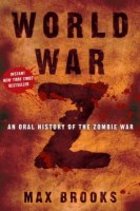 Summary:
The world has survived the first zombie war, and the government sends out a young man to interview people in order to find statistics on the war. When he returns, he finds out they only want the cold, hard facts. This disappoints him, as he wants to show the world the human, emotional side of the war, so he prints the interviews, so we all can read and connect with them. What follows is the harrowing tale of how a virus starting in the countryside of China spreads via refugees and a general human refusal to believe that bodies are reanimating. All of this leads to the Great Panic, which brings humanity to the very brink of extinction.
Review:
Since I was a US History major in undergrad, I came at this book with a lot of experience wading through pages and pages of boring and irrelevant text in primary documents to find the hidden gems. The gems made it all worth it. I’ll never forget going through Samuel Sewall’s diary, which was largely a collection of his farming statistics, only to suddenly start seeing glimpses into the Salem Witch Trials. It was awesome. It is not, however, an experience that I think a fiction writer should attempt to replicate. Reading World War Z felt far too much like reading through actual primary historical documents. There was too much wading and not enough awesomeness.
The thing is, even though I’m suspending my disbelief enough to be in the future after a zombie war, I still know that I’m reading a fiction book, and I tend to get a bit irritated when the characters relating their experiences spend pages on useless dribble. I don’t want to hear about how you miss your father; I want to hear about the zombies climbing all over your submarine on the bottom of the ocean! Even in the fictional world of the book, there’s still an editor who collected these stories. Why didn’t he edit the ramblings out? Is that the human factor I was supposed to connect with? Because I didn’t.
However, when you get past the dull bits, there are some truly awesome scenes. Scenes such as a woman standing on the roof of a car and taking out over 100 zombies by herself. Or American soldiers reverting back to the Revolutionary-era tactic of two lines of soldiers facing the enemy with just rifles. Or a nun protecting her Sunday school class from a horde of zombies with just a 6 foot silver candlestick. These scenes, and many more, are fun to read because they are done so well. Brooks displays an innate understanding of not only how zombies should work, but how humans would respond to their presence on an individual basis.
Although I personally wouldn’t like a zombie war to be met with so much government and political power, the way Brooks lays it out, it actually is believable. What is quite possibly the most scary about the zombie war future he proposes isn’t the zombies, but is the fact that most of the governments of the world survive and come out with more power over the people than before. If freaking zombies can’t wrest the power from the government’s hands and give it back to the people, then I don’t know what could.
Overall, I’m glad I read World War Z for the epic scenes and condensed picture of the war I now have in my head. I’d recommend it to fans of zombies primarily, but also to people who enjoy analyzing global politics and military strategy. Be warned that it’s not your typical fast-paced horror read. You have to earn the scenes with zombies.
4 out of 5 stars
Source: Harvard Book Store (used books basement)

Book Review: Song of Susannah by Stephen King (Series, #6)
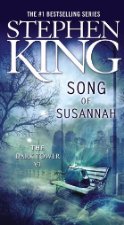 Summary:
The ka-tet faces three challenges: keep the chap from the Crimson King, save Susannah, and get Tower to sell them the rose. With the help of the Manni, they get the door to open two final times, and it sends Eddie and Roland to Maine to see Tower and Jake, Pere, and Oy to NYC in a final desperate attempt to save Susannah and the chap. Meanwhile, Susannah must face not only the foreign woman inside her, Mia, but also the figurative demons of her past and her personality in her mind.
Review:
There are elements of this book that are beautiful and quite literary, primarily everything to do with the title. There are of course two songs about Susannah. One is immediately evident. Each chapter ends with a stanza of a song, remarkably like the commala songs sung in the previous book, but of course the content of the stanza references what happened in that chapter. There’s also a song from Susannah’s past that winds up showing more about who she is and what her life has been than anything else in the books has done. What makes that beautiful is that it’s just a traditional folk song and wasn’t written by King for her at all.
Of course I’d consider this book a failure if all it did was develop Susannah’s character. The Dark Tower is about characters and the quest equally. Thankfully, this entry in the series addresses both. Various mysteries are addressed such as what the Low Men are, who Mia is, how Pere wound up in a book from another one of the worlds, and more. Plus a few new mysteries are added. But in the end the main questions remain: will the ka-tet make it to the Dark Tower and will the Dark Tower fall?
In spite of the well-written action sequences and character development, there is one aspect of this book that rubbed me the wrong way. King writes himself in as a character, but not just any character. He is the Crimson King’s opposite. In other words, he’s the essential good guy. For some reason when he writes his stories they have an impact on the worlds, so he must stay alive and keep writing the Dark Tower series if the ka-tet is to have any hope. The whole thing just reads as egotistical. Plus it forced me out of the story. I can suspend my disbelief for other worlds, but to suspend it enough to believe that the author is not only vaguely aware of these worlds but also his writing impacts them, well, it leaves you going “huh?” and kind of takes the escapism out of it. So I skimmed over the parts featuring King and tried to just focus on the ka-tet. It wasn’t that hard to do, so the King bits definitely didn’t ruin my experience; they just dulled it a bit.
Overall, this is a very good entry into the series. The characters and the plot move forward, and there are some wonderfully memorable scenes that will stick with you for a long time. If you’ve stuck with the series and enjoyed it this far, you’ll definitely enjoy this book.
4 out of 5 stars
Source: Borrowed
Previous Books in Series:
The Gunslinger, review
The Drawing of the Three, review
The Waste Lands, review
Wizard and Glass, review
Wolves of the Calla, review

Book Review: The Turn of the Screw by Henry James
 Summary:
Late at night at a party, a gentleman offers to read a ghost story. He claims this story occurred to a woman he knows personally. The narrative then switches to the governess’s voice, and she tells of going to work at her first job as a governess caring for an absent uncle’s nephew and niece. Upon arriving there, she discovers that the property is haunted by the ghosts of the former governess and her lover….or is it?
Review:
I loved the prologue about the party. It’s full of clearly intelligent and world-wise people, which is rare of the Victorian era. I was then disappointed when it switched to the governess’s voice. She is painfully innocent and frankly annoying. She frequently waxes lyrical about how simply delightful and angelic the children are to an extent that it made me sick to my stomach. I frankly would have given up on the story if it wasn’t for the fact that it was my audiobook download, the reader had a pleasant voice, and it’s very short, so I figured, why not finish it? I now am glad I did.
Upon arriving at the end, I found myself wondering if I’d missed something, as I was a bit confused about what happened, and my mind does wander sometimes when listening to an audiobook. Since it’s a classic, I decided to look a bit at the literature guides online just as I would have gone into lecture in university excited to hear what a professor had to say about a work that I found confusing. Well, lo and behold, apparently critics have had two distinct opinions on what exactly happens in the story pretty much since the day it was published. I don’t think it’s a plot spoiler to say that James intentionally wrote it as ambiguous as to whether the ghosts actually exist or the governess is insane. It can either be read as a straight-up ghost story with some sexual innuendos or as a commentary on the ill effects of the tight-laced Victorian culture on women. That’s kind of cool, and for the record, I prefer the insane governess reading of the story, as I think that’s actually more creepy than the ghosts.
After reading the commentary and about James’ opinions in general, I realized that James probably found the governess as annoying as I did. I enjoyed the prologue, and the prologue was a reflection of James and his friends. This makes so much sense now! I am certain if I had approached this book with the knowledge of James’ criticisms of Victorian society that I would have enjoyed it much more than I did approaching it as a straight-up traditional ghost story.
Overall, this is a story that will be best enjoyed by readers who thrill to the challenge of ambiguous tales and who are critical of Victorian era mores and norms. It is not exactly the right fit for readers looking for a traditional ghost story, however. I also feel it necessary to add that I believe this story is not ideally suited to being an audiobook. Due to the ambiguity, certain passages lend themselves to a desire to be re-read that is not so easily pulled-off when being listened to.
3.5 out of 5 stars
Source: Librivox recording via the Audiobooks app for the iTouch, iPhone, and iPad

Book Review: Parable of the Sower by Octavia E. Butler
 Summary:
Lauren is an empath. She feels other people’s pain as intensely as they do. She lives near Los Angeles in the near future in a walled community. The gap between rich and poor has increased to an extent that being street poor is the norm. Lauren’s community is one of the few “middle-class” ones left. In the confines of the walls, this preacher’s daughter starts to come up with her own religion that she calls Earthseed. She gets the chance to put it to the test when their walled community is destroyed, and she a few survivors strike north, hoping to find better land and jobs.
Review:
A lot of dystopian novels clearly establish a believable dystopian society, but struggle with characterization. This was interesting in that it was the opposite. Butler establishes multiple, easily distinguished characters, both sympathetic and non-sympathetic. Lauren in particular is believable and understandable in spite of the fact that she’s essentially starting a cult. Lauren’s inner life is eloquently drawn out in such a way that her actions are almost entirely understandable to the reader, even when they aren’t to the people around her.
On the other hand, the dystopian society was not well drawn-out. In spite of the fact that the older generations were all around when the shit hit the fan in American society, not a single one of them even attempts to explain why everything started to go wrong. We get one glimpse of the world between the early 1990s and the US 30 years later in which the book takes place, and that isn’t really enough to establish how the dystopia occurred. The how isn’t necessarily necessary for stories that take place far into the future, but 30 years isn’t very far off. It’s reasonable to expect a bit of an explanation for how society fell so drastically apart.
The sections where Lauren discusses her Earthseed beliefs are pleasant to read, but there’s nothing earth-shattering about them. They’re basically The Secret mixed with Buddhism mixed with Deism. There was nothing that made me stop and think about my own world-view. A character does address a similar criticism to Lauren about Earthseed, but she only admits to being “influenced” by eastern philosophy. Similarly, she won’t admit to creating her own religion. She insists she just found it. Whether Butler sides with the critical character or Lauren, I still would rather that the reader saw something appealing in Earthseed, since so many characters do end up clinging to it. It makes the whole situation a bit less believable.
There is a relationship in the book between a teenage girl and a man old enough to be her father. It is presented as a bit odd, yet positive. Honestly, the whole thing made me squeamish. It might not have if I hadn’t found the older male character creepy from the instant he was introduced. I’m really not sure why Butler chose to go there. It certainly has no point in this book, although it might in the sequel, Parable of the Talents
Overall, Parable of the Sower is a pleasant read, but not one that makes much of an impact. If character studies are more up your alley, and you don’t mind dystopian settings, you’ll probably enjoy this book. If you want a solidly established dystopia, you should look elsewhere, such as Brave New World
3 out of 5 stars
Source: SwapTree

Book Review: Undead and Unwed by MaryJanice Davidson (Series, #1)
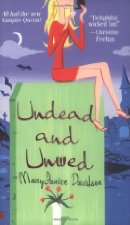 Summary:
Betsy was a 30 year old secretary (previously a model, previously a college drop-out) living in Minneapolis, and she was quite content with her life. Oh, a good date would have been nice, but at least she got to drool over the hot detective assigned to figure out who assaulted her a few weeks ago outside an Italian restaurant. Everything was fine. Until she got hit by a car one slippery night in front of her house and woke up undead in the morgue the next day. Even that would have been fine, but the local vampires keep insisting she get involved in vampire politics. True, a lot of the vampire rules don’t seem to apply to her. For instance, holy water only makes her sneeze, but why should she bother with vampire politics when she could be doing more important things like getting her designer shoes back from her stepmother?
Review:
This is not paranormal romance. I repeat. This is not paranormal romance! It is, however, what I have chosen to dub paranormal chick lit. Undead and Unwed reads like a Sophie Kinsella novel if it was set in the frigid midwest and had a pleasant back-drop of vampires.
Betsy is one of those main characters who you really think you would hate in real life. In fact, I hated her so much in the first bit of the book that I almost stopped reading it. Statuesque blonde who used to be a model who was too good for college and is illogically obsessed with designer shoes? Blergh. The thing is, though, when she gets turned into a vampire we see the happy-go-lucky, humorous, good souled person underneath. What a flip from typical vampire books, eh? But it works. Betsy is a flawed main character. What a nice change of pace! But she isn’t so flawed that we can’t sympathize with her and enjoy her presence.
Choosing to make Betsy a prophesied mighty vampire puts an interesting twist on the typical paranormal trope. She’s not a non-vampire with interesting powers who shakes up the vampire community, and she’s also not some regular newbie vamp learning the ropes. She’s a vampire who the typical rules don’t apply to, but on top of that, she calls it like she sees it. She laughs at the ridiculous names, pomp, and circumstance the vampires in the area have chosen to burden themselves with. She’s a breath of fresh air, if you will. These combine to make a truly amusing read.
Of course, there is sex, and it’s not badly written at all. The vampire elements are played up more here than they are in series like the Sookie Stackhouse series. Additionally, some readers might be turned off by the revelation that when a vampire feeds on a human, they must also have sex with them so the human gets a similar release. I found this to be a call-back to the grittier vampires such as the type Anne Rice wrote, but I get it that some readers might be a bit skeeved out by that.
Overall, Undead and Unwed is a delightful northern piece of paranormal chick lit that will have you laughing or at least smiling in a wittily bemused fashion. I recommend it to lovers of paranormal and chick lit alike, and I plan on reading the rest of the series.
4 out of 5 stars
Source: PaperBackSwap

Book Review: Scott Pilgrim’s Finest Hour by Bryan Lee O’Malley (Graphic Novel) (Series, #6)
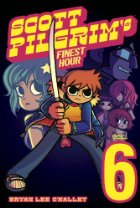 Summary:
Ramona Flowers disappeared,and Scott Pilgrim has spent the last four months of his life wallowing in depression in an apartment his parents paid for playing videogames and avoiding fighting the last evil ex, Gideon. His friends have got on with their lives, and they finally get around to trying to get Scott to face up to his past. Will he fight Gideon? Will he have casual sex with any of his exes? Will Ramona show back up?
Review:
I loved this book so much. It’s one of those endings to a series that makes you like the previous entries in the series even more. I’m going to have a hard time writing this review without devolving into a bunch of random squeeing, so please bare with me.
O’Malley successfully ties up all the ends without being too cute. The answer to what the subspace is makes sense and fits in with the story well. It also doesn’t talk down to the reader’s intelligence at all. Similarly, why Scott likes Ramona so much gets answered. Them dating just makes a lot more sense after reading this book.
The action and the gaming and pop culture shout-outs that fans loved in the first five books are still present here. I’m particularly fond of O’Malley’s choice to use 8-bit type drawing to depict characters’ overly idealistic memories of past relationships. All of the other gaming references are still there as well, such as where characters get their weapons from.
O’Malley’s drawing has noticeably improved this time around. My main complaint in previous books of the female characters being hard to tell apart has been addressed. I had no issue telling them apart this time around. Plus, O’Malley still pays attention to background details that make it worth looking closely at the scenes, such as setting one scene in a bookstore that’s going out of business with signs that say “Please Help Oh God” in the background.
I know some people won’t like how little attention is paid to secondary characters in this volume. That didn’t bother me, because I was so caught up in Scott’s storyline, and it is called Scott Pilgrim after all. It’s not like the secondary characters aren’t there. It’s just that their personal storylines get tied up quickly. It didn’t bother me, but it might bother some.
The only thing that bothered me at all was that there is one section of the book where the pages go blank for a bit. I’ve always felt that’s a trite story-telling mechanism, and I don’t like the message it sends. However, I just flipped past them and continued on my way instead of taking the dramatic pause I assume we are supposed to take.
These are really minor flaws when it comes to a series like this. It could have easily fallen apart or failed to tie up the important questions in the end. Instead, O’Malley addresses what is a common issue for a lot of 20-somethings in a creative manner, fleshed out with gaming and pop culture references and humor that makes it entertaining while simultaneously being touching. I highly recommend the entire series to 20-something lovers of graphic novels or older graphic novel enthusiasts who can still relate to what it is to be in your 20s.
5 out of 5 stars
Source: Amazon

Previous Books in Series:
Volume 1: Scott Pilgrim’s Precious Little Life
Volume 2: Scott Pilgrim vs. the World
Volume 3: Scott Pilgrim and the Infinite Sadness
Volume 4: Scott Pilgrim Gets It Together
Volume 5: Scott Pilgrim vs. the Universe
Review of first 5 books
Book Review: The Forest of Hands and Teeth by Carrie Ryan (Series, #1)
 Summary:
Mary’s world is tightly controlled by the Sisters and the Guardians. The Sisters show the village how to find favor with God via the yearly and daily rituals. The Guardians check and maintain the fence that keeps the Unconsecrated out. The Sisters says the Unconsecrated came with the Return as a punishment to the people. This is why they must maintain God’s favor. But Mary dreams of the tales of the ocean and tall buildings her mother told her about, and her mother’s mother for generations back. She will need those dreams when her world is turned upside down with a breach of the fence. They’ve happened before, but never like this.
Review:
This is an interesting take on the traditional zombie tale. In lieu of starting with the outbreak or just after the outbreak, Ryan envisions what life would be like for the descendants of the few who’ve managed to survive. Of course the sheer number of zombies in the world means it’s impossible for the few survivors left to kill them all, so they must live with constant vigilance. In the case of Mary’s village, they’ve turned to religion to maintain the level of control required to keep them all safe. This is the strongest portion of the book as it leads to interesting questions. The threat outside the fence is indeed real. Mary’s questions are making it difficult for the Sisters to maintain the control needed and prevent panic in the village. On the other hand, the Sisters aren’t exactly being honest with the population or giving them a happy life. They’re just giving them a life.
Where the action supposedly picks up with the breach of the fence is where the book sort of left me behind. The fact of the matter is, I wound up caring more about the village than Mary, and I don’t think I was supposed to. Where I was supposed to be rooting for Mary, I found myself rooting for the community, the group of survivors. Mary’s individualism rings as starkly selfish to me in light of the very real threat around them. This is odd because generally I’m in favor of people being themselves and not necessarily following the group, but that’s different when a crisis is being faced. I found myself wishing it had read more like Elizabeth Gaskell’s classic Cranford, which is a study of a town and not an individual.
Of course, that’s not the type of book Ryan set out to write. She set out to write a book about a girl in a future where zombies are a fact of life. She writes beautifully, with exquisite sentences that read more like an 18th century novel than a 21st century one. I also am certain that the teenage audience this YA book is aimed at will be rooting for Mary in her quest to find herself and her dreams.
If you are a teen or a teen at heart looking for an adventure tale with a touch of romance, you will enjoy this book. If traditional zombies are what you are after, however, you should look elsewhere.
3.5 out of 5 stars
Source: PaperBackSwap

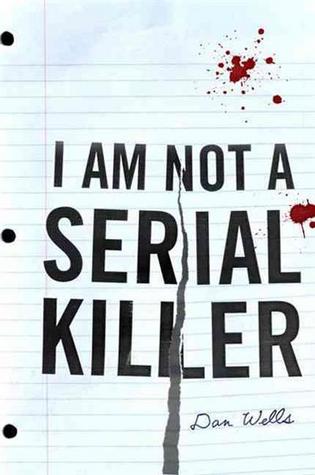
Book Review: I Am Not a Serial Killer by Dan Wells
 Summary:
Fifteen year old John Wayne Cleaver has an odd fascination with the bodies he helps cremate in the family mortuary. He also has difficulty feeling any emotions. He even has been studying serial killers for years. He is not one, however. At least, not yet. His therapist believes John may have Antisocial Personality Disorder, but both he and John hope John can learn to control his illness, an illness John refers to as Mr. Monster. However, when bodies start appearing on the streets of the town gruesomely murdered, John wonders how long he can keep Mr. Monster in check.
Review:
I originally had high expectations for this book. Then I had to wait for it so long that they waned, and I felt that it was probably just going to be a watered down YA version of Dexter. Then I grabbed it for my camping trip because I am insane and love to terrify myself when sleeping in the middle of nowhere in the woods with strange men with hatchets I don’t know a mere campsite away. It didn’t turn out to be a watered down Dexter. It also isn’t terrifying. The best word I can think to describe this book is relatable.
Dan Wells chose to write a YA book about mental illness and couch it with some supernatural features and a premise that will appeal to any teens, not just those struggling with a mental illness themselves. These were both smart moves as it makes I Am Not a Serial Killer more widely appealing. However, he not only chose to depict a mental illness, he chose to depict one of the ones that is the most difficult for healthy people to sympathize with and relate to–antisocial personality disorder. John Cleaver has no empathy, and this baffles those who naturally feel it.
Yet Wells manages to not only depict what makes John scary to those around him, but also how it feels to be John. He simultaneously depicts the scary parts of having a mental illness with the painful parts for the one struggling with it. John makes up rules for himself to try to control his behavior. He has to think things through every time he interacts with people or he will do or say the wrong thing. John is fully aware that he doesn’t fit in, but he wants to. He wants to be healthy and normal, but he also wants to be himself, which at this point in time includes the behavior that is his illness.
Of course, this is a book about a serial killer, and it delivers there. The death scenes hold just the right level of gruesomeness without going over the top. Anyone with a love of the macabre will also enjoy the mortuary scenes, which depict the right combination of science and John’s morbid fascination. There also is a tentatively forming teen dating relationship that is simultaneously sweet and bit nerve-wracking.
I feel I would be amiss not to mention that there is some self-harm in this book. It is very brief and is clearly shown as a part of John’s illness. In fact for the first time in reading about it in any book I can say the author handled it quite well, depicting the self-injurer and his reasons for doing so sympathetically and correctly, but without making it seem like something the reader should copy.
Overall this book delivers the thrills and chills it promises, but does so without demonizing John Cleaver. It depicts what it feels like to have a mental illness in a powerful, relatable manner while still managing to be a fast-paced YA thriller. I highly recommend it to anyone who enjoys YA, books dealing with mental illness, or thrillers.
5 out of 5 stars
Source: PaperBackSwap

 Support my work with a tip or browse my shop for curated book club guides, how to guides, cross-stitch patterns, and more!


This work by Amanda Nevius is licensed under a Creative Commons Attribution-Noncommercial-No Derivative Works 3.0 United States License.
 Opinions of a Wolf