
Archive
Book Review: Living Dead in Dallas By Charlaine Harris (Series, #2)
I generally lean a bit more toward stand-alone books and trilogies, but every once in a while I get caught up in a series. Currently, I’m caught up in two–Sookie Stackhouse Series and Dark Tower Series. Anyway, I decided I should warn you guys if a book is in the middle of a series by placing (series, #number) in the title. So be warned that means there will be spoilers for books preceding that book, but probably not for that book itself. Got it? Good! There are currently 9 books in the Sookie Stackhouse Series and 7 in the Dark Tower Series, so don’t despair! Stand-alones and trilogies will be back shortly. Now, on to the review!
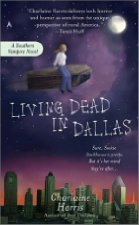 Summary:
Sookie discovers yet another murder in Bon Temps when she finds Merlotte’s cook, Lafayette, dead in the bar’s parking lot. She doesn’t have much time to even think about the murder, though, because Eric has called upon her to fulfill her duty to the vampires. She’s been hired by a vampire nest in Dallas to investigate the disappearance of one of their brothers. Sookie discovers there’s more to the supernatural world–and the natural one–than she ever bargained for.
Review:
Maybe it’s because I have yet to see the second season of True Blood and thus don’t have the awesomeness that is that tv show to compare to, but I found myself liking this entry into Sookie’s escapades far more than Dead Until Dark. The first book is much more about the murders than the supernatural world Sookie finds herself on the edge of. Here, she is forced to confront the fact that, yes, she is dating someone from an entirely different world than hers.
This key plot element is what drives the story in a two-pronged fashion. First, Sookie encounters far more supernatural beings than she has before–shapeshifters, werewolves, vampires, a maenad, and another telepath. The supernatural world is far bigger and more complex than she ever imagined. Vampires weren’t one lonely group separated from everyone. They’re a group in an underground world that is straddling both worlds and neither seems too happy about it. This makes the whole idea of vampires coming out of the coffin more interesting, because the other supernatural creatures have one thing in common with the humans: they aren’t happy with the vampires for coming out.
Second, Sookie finally has to deal with the fact that, much as she loves Bill, he has his faults just like anyone does. His just run a bit more shocking to her, because he is in fact a member of the undead. Bill tells her at one point that he hasn’t been human far longer than he was human, and he often forgets what it is like to feel human. There is definitely an element of Bill that is a monster, and Sookie sees that. Bill may be trying to control it, but it’s there. Sookie moves past the honeymoon phase of the relationship and has to decide if her and Bill really are a good match. If the pleasure of loving him is worth the difficulties and struggles.
All the strong features and weaknesses of Dead Until Dark are found here. The conversations are again, excellent. I particularly enjoyed when a werewolf calls Sookie “little milkbone.” On the other hand, the multiple storylines of many characters found in True Blood are again absent here. I think, however, as the series progresses, it will be easier to see this as Sookie’s story and True Blood as Bon Temps’ story, and Sookie is enough of a three-dimensional character to keep it interesting.
4 out of 5 stars
Source: Bought on Amazon

Previous Books in Series:
Dead Until Dark
Book Review: Dead Until Dark By Charlaine Harris
Since I watched the first season of True Blood and loved it, I decided to read the book the first season is based on. This was an interesting reversal for me, since usually I’ve read a book then seen the tv show/movie that is made from it. Anyway, this review naturally contains comparisons between the two, so be warned there are spoilers for both Dead Until Dark and the first season of True Blood.
 Summary:
Sookie Stackhouse, a waitress in a bar in a small town in Louisiana, has been wanting to meet a vampire ever since they came out of the coffin a few years ago. She gets her chance when Bill Compton, a vampire who was made right after the Civil War, moves to her town of Bon Temps. Bill is in turn intrigued by Sookie, because she is different from other humans–she can read minds. They start dating, but it’s not always easy to date a vampire–especially when local women known to hook-up with them are being murdered by an unknown killer.
Review:
Charlaine Harris’s strength as a romance novelist is definitely witty conversations between our heroine and the various male characters in the books. They are witty and come across remarkably real considering the paranormalness of the plot. She also sets scenes well. I’ve never been to Louisiana, but I could just feel the humidity in the air as Sookie partook in various night adventures.
Something that bothered me when watching True Blood was I just couldn’t understand what Sookie found appealing in Bill. I find him dull, boring, and ugly. In the book, though, it is abundantly clear that what is so appealing about Bill is that Sookie can relax around him since she can’t read his mind. The amount she relaxes in scenes with just him is palpable. I therefore understand why she chooses to overlook his various faults.
The book is written in first-person, and I think this was an unfortunate choice. It limits our ability to see everything that is going on in Sookie’s world. Most notably missing is Jason’s storyline. In True Blood vampire blood is sold as a drug, V, and Jason becomes addicted to it. Thus, his odd behavior with Sookie is understandable. In the book though we only hear hints of V being used by anyone and certainly not by Jason. Jason is just a douchebag. This limits the levels of story in the book, and I missed the multiple storylines.
*spoiler warning*
The end of Dead Until Dark almost makes up for this though. In True Blood the murderer comes for Sookie, and she is saved by Bill and her boss, Sam. In the book though Sookie is left entirely on her own and saves herself. She finds the faces the murderer alone and defeats him. She finds her inner strength and just keeps fighting back. The murderer even says that the Stackhouse women were the only ones to fight back (he also killed her grandmother). They didn’t just lay back and let it happen. That’s what makes Sookie such a great romance heroine–she is strong and independent. She doesn’t need her relationship with Bill, but she does want it. This makes their romance much more fun.
*end spoiler*
Finally, if you’re a romance novel reader, you might be wondering about the quality of the sex scenes. Well, they do exist, and they are not corny. However, they also just aren’t that exciting. Harris keeps them short and to the point. No witty, fun double entendres are used, either, which is one of my personal favorite aspects of romance novels. This book isn’t one to read for the sex scenes; it’s one to read for the storyline.
If you could mash up the best parts of Dead Until Dark with the best parts of True Blood, you would have a truly amazing story. Unfortunately, both versions have flaws that hold them back from excellence. Dead Until Dark is worth reading if you enjoy paranormal romance. If you just want to read the books because you like True Blood for anything but the main Sookie storyline, though, don’t bother reading the books.
3.5 out of 5 stars
Sources: I bought Dead Until Dark and Netflixed True Blood.

Book Review: Breathers By S. G. Browne

Summary:
Billing itself as a rom-zom-com (romantic zombie comedy), Breathers looks to get into the psyche of those reanimated corpses out to eat your brains, not to mention deep-fry your fingers. Andy is in his 30s and living in his parents’ basement after reanimating from a car crash that left his wife permanently dead. Andy is depressed and slowly decaying, but all that changes when he starts attending Undead Anonymous weekly meetings. There he meets Rita, and together with other members, they stumble upon southern zombie Ray who gives them jars of his venison that tastes remarkably good to Andy and has some interesting affects on him.
Review [spoiler warning]:
Breathers starts out with a bang. Nothing sucks you in quite like a main character waking up from an alcohol-induced blackout to discover he’s killed his parents and stuffed their dismembered bodies in the fridge and freezer. Browne’s dark humor serves the storyline well. It’s not easy to take a repulsive, cannibalistic, walking corpse and make him a sympathetic character instead of the terrifying other, and Browne achieves this…..to a certain extent.
At first Andy and the reader don’t know that the “venison” he’s eating is actually people. Both the reader and Andy see the positive effects of eating humans before they fully realize that’s what he’s eating. (Although, come on, I had my definite suspicions, even in a world where vampires are “vegetarians” and have Tru Blood.) Andy stops decaying and starts protesting for his civil rights to be reinstated, for zombies to be recognized as equal and valid. This is a popular, obvious analogy for various human rights fights going on around the globe. Awesome. It’s great for people who aren’t ordinarily treated as an other to get a first-person account of what that’s like.
This analogy though is why I have a bit of a problem with the twist toward the end whereby we see that eating humans leads to cravings for more humans and eventually we have a full-out blood bash eating a house full of frat boys. Aesthetically, as a horror fan, I love the blood bash. Nothing quite like reading a first-person account of what it’s like to eat another human being alive. However, the lesson learned here is that while the other may seem cute and cuddly, all your suspicions about them are true. Don’t trust them for a minute or they’ll turn full evil on you.
Browne doesn’t seem to have an issue demonizing select groups. The whole frat boys stealing limbs from zombies as pledges followed by the zombies eating the frat boys and their various one-night stands and girlfriends reeks of a weak, geeky boy’s wet dream. Revenge of the nerds zombie-style.
It’s unfortunate that Browne lets his bitterness undermine his enjoyable writing style–a wonderful mix of humor and horror. Hopefully his next effort leaves the personal grudges behind and just gives us the humorous horror we want.
If you found this review helpful, please consider tipping me on ko-fi, checking out my digital items available in my ko-fi shop, buying one of my publications, or using one of my referral/coupon codes. Thank you for your support!
3.5 out of 5 stars
Length: 310 pages – average but on the longer side
Source: Library
Buy It (Amazon or Bookshop.org)
Book Review: The Carousel Painter By Judith Miller (ARC)
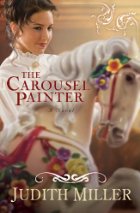 I was quite excited to be the recipient of my first ARC (Advanced Reading Copy). I hadn’t realized when I put myself on the list that The Carousel Painter was published by Bethany House, a Christian publishing group. I actually read a lot of Bethany House books when I was growing up, so I am quite familiar with the genre, but since deconverting from Christianity at 20, let’s just say, Christian fiction isn’t my first reading choice. However, I’d made a promise to the publisher, so I decided to give it a fair shot. Not to mention, this would be a great exercise in being a fair critic.
Summary:
After her father dies, leaving her without family, Carrington Brouwer moves from France to Ohio to stay with her friend Augusta Galloway while looking for work in the late 1800s. Augusta’s father owns a carousel factory, and Carrie sees an opportunity to put her painting skills to good use. At the pressure of the women of the family, Mr. Galloway hires her, even though she will be the only woman working in the factory. Carrie must deal with the prejudices and fears of the men and their wives, as well as of the community, while addressing her own problems with pride and God. She also must deal with Augusta’s suitor, Tyson, who makes inappropriate moves on her and attempts to pin the theft of Mrs. Galloway’s jewels on her.
Review:
Miller possesses writing talent on the sentence level, for sure. The sentences flow well, and the dialogue is relatively believable. She shows forward-thinking for her genre by giving Carrie an independent spirit and not condemning it. At first I was excited that she seemed to be offering a relatively unique storyline to her genre.
However, the addition about half-way through of the plot-line of Carrie being a suspect in the theft of Mrs. Galloway’s jewels is a widely used one. The good Christian must suffer and have faith her innocence will be proven in the end. It was incredibly predictable. Plus it simply felt out of place and jarring given the beginning of the story.
I was also bothered by Carrie’s quirk of giggling when she’s nervous or upset. It’s such a misogynistic stereotype–the giggling female, and it simply did not fit with the rest of Carrie’s character.
I did appreciate, and I think fans of the genre will too, that Carrie’s faith and God were not the focus of nearly every single the page. Carrie growing in faith is part of her life and is addressed as such, but it is not the focus of the story. It’s simply a fact about her that comes up periodically. I know when I was into Christian lit as a teen, I would often wish they’d just tell me the story for once instead of preaching all the time. Yet I also know that fans of Christian lit will expect at least a little bit about God in the story. I think Miller struck this balance well.
Overall, it’s a step in the right direction for the genre, but Miller could have done a much better job writing a believable, unpredictable storyline while pushing the envelope against misogyny.
2.5 out of 5 stars
Source: ARC from publisher via LibraryThing‘s Early Reviewers program.

 Support my work with a tip or browse my shop for curated book club guides, how to guides, cross-stitch patterns, and more!


This work by Amanda Nevius is licensed under a Creative Commons Attribution-Noncommercial-No Derivative Works 3.0 United States License.
 Opinions of a Wolf