
Archive
Book Review: Flex by Ferrett Steinmetz (Series, #1)
 Summary:
‘Mancy (magic) is illegal in this parallel world where people find their obsessions turn into magical powers. Paul Tsabo has spent his life fighting to keep ‘mancers off the street and instead brainwashed into a military force. See, the universe hates magic, and if you use it too much, it will retaliate. By doing things like destroying Europe. So the brainwashing is safer. The only problem is that Paul has found himself obsessed with bureaucracy and has developed into a bureaucromancer. A series of unfortunate events leads him into agreeing to make Flex–magic distilled into crystal form for the non-magical to get high on. Paul has officially turned into what he once hunted.
Review:
This is a pretty cool concept. It sounds like it’ll be Breaking Bad: Urban Fantasy Style. Unfortunately, a lack of world building and a lack of focus in the plot made the book fall flat.
Let’s start with what I liked. The concept of how magic comes to be is pretty neat. I like the social commentary that magic is outlawed and the only magical people are the ones with an abnormal level of obsession with things. Using the urban fantasy magic element really highlights how different can be both beautiful and dangerous.
A key part of the plot revolves around Paul, who is recently divorced, and his wife trying to figure out how to co-parent. Paul is a majorly invested father. He doesn’t just walk away after the divorce. That’s nice to see. Also, it’s an inter-racial family. Paul is white, his ex-wife is black, and their daughter is obviously bi-racial.
Romance is really not a part of this plot. I thought at first it might be when a new character is introduced but it actually turns out that she’s introduced to develop a friendship with Paul. How often do we get to see genuine friendships between men and women in literature? Not often.
Unfortunately these positives were hurt by other aspects of the book. The worst is that the book reads like it’s one book for the first half then completely changes course halfway through. Essentially, the first half of the book is about drugs and is basically Breaking Bad. The second half of the book that plot is totally dropped and instead the characters are pursuing a Big Bad Buffy the Vampire Slayer style. It’s jarring and makes it feel like you’re reading a draft rather than a final version of the book. Plus, the book is heavily marketed as the drug book, when in fact the drugs are just dropped in the middle of the book, which is disappointing if that’s what you were reading the book for.
The world also isn’t built enough. For instance, we know Europe disappeared but we don’t know precisely how or when. This is a parallel universe to our own. You’d think that something like Europe disappearing would lead to some major changes in the world, but no. It reads like New York City is precisely like how it is in our world just with added ‘mancers. This is illogical. It can’t be both ways. It can’t both be a world with major changes like no more Europe but also simultaneously exactly like our own.
The book reads like the author has an agenda that comes through too clearly at times. How much that will bother the reader will depend upon if the reader agrees with the agenda or not, I’d imagine. I didn’t so it bugged me more than it might bother others. I also felt that some of the descriptive writing was weak or lazy, leading to a two-dimensionality that veers dangerously toward being offensive.
Overall, this is a good idea that was poorly executed. There are some individually cool scenes, particularly if you like seeing an interplay between our world, magic, and videogames. Recommended, then, to readers who seek out scenes like that and don’t mind the other weaknesses laid out in this review.
If you found this review helpful, please consider tipping me on ko-fi, checking out my digital items available in my ko-fi shop, buying one of my publications, or using one of my referral/coupon codes. Thank you for your support!
3 out of 5 stars
Length: 429 pages – average but on the longer side
Source: Netgalley
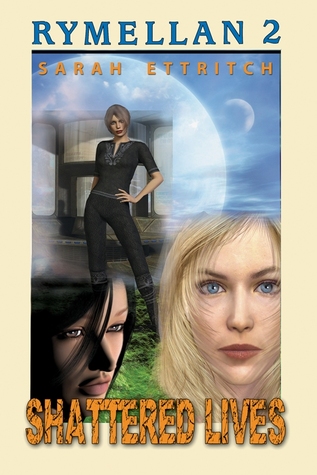
Book Review: Rymellan 2: Shattered Lives by Sarah Ettritch (Series, #2)
 Summary:
Mo and Lesley, girlfriends since they were teenagers, have spent the last two years apart awaiting their Chosen papers. Meanwhile they both continue to pursue their careers. Mo as a pilot and Lesley as a member of the Interior, ensuring Rymellans continue to follow the Way. When their Chosen papers finally arrive, they think the uncertainty is finally over. But what they reveal is just another form of it.
Review:
I enjoyed the first book in this series so much that I picked up the second immediately. The first book ends on a cliffhanger, and I just had to find out what happened with Mo and Lesley next. Would they be each other’s Chosen? Would they defy the Way to be together? Was a giant revolt coming? The answer was definitely not what I was expecting, and it certainly keeps the series unique.
While I continued to be deeply invested in Lesley and Mo’s relationship (on pause as it was during much of the book), I was disappointed to find that this book doesn’t explore deeper into any of the questions I had in the first book. I feel that the second book, particularly with its context of Lesley and Mo waiting for papers and both of them in adult jobs with more power and access to information, lends itself perfectly to explaining more about Rymel. Yet this exploration and information reveal never happens.
My questions in the first book revolving around where Rymel comes from, why it’s so not diverse, and the origin of the Way were only added onto. Who is this enemy Rymel is always preparing for? What about the bisexuals? If Rymellans aren’t actually related to us (Earth humans) at all, that’s fine. They might just only have monosexual identities. But if they are related to us, the lack of the Chosen Way dealing with bisexual/pansexual attractions is frustrating. For that matter, what about trans* people and gender non-conforming people? How exactly are children handled in the same-sex couples? People keep mentioning same-sex female couples having daughters but no one talks about how. And what about same-sex male couples? It’s such a fascinating world, and I found myself like a thirsty person a desert wanting to know more about it and how it works.
The plot goes a direction I really was not expecting. That’s not a bad thing. It surprised me and kept me engaged. There are two aspects of the plot that were unexpected. One isn’t a spoiler so I’ll talk about that first. It’s fairly clear early on in this book that Mo and Lesley aren’t the rebelling sort. They’re going to kowtow to this dystopian regime, and they believe that’s the right thing to do. It’s a different perspective to get. Usually there’s rebellion. But that doesn’t always work out for people in the real world. A lot of people choose to live their lives in safety obeying the state to stay safe, and it’s interesting to see that reflected in literature.
*spoiler*
The Chosen Council puts Mo and Lesley together, but in a Triad. A third person, Jane, is Joined with them. Triads historically haven’t succeeded, and they are extremely rare. But they do exist because sometimes the perfect match actually goes three ways. The Triad is extra complicated because Jane’s parents were famous for committing a Chosen crime (they committed adultery). They were killed and Jane was orphaned young due to this fact. Many Rymellans believe the apple won’t fall far from the tree, so Mo and Lesley being matched with her is controversial. On top of that, there’s an allowance where if two of the three believe the third will cause the Triad to commit a Chosen violation then they can say so and have the third member killed before the Joining Ceremony. That puts interesting added pressure on the group. None of this was a plot I was expecting, but also the acknowledgment of non-monogamous people was something I could see a lot of readers enjoying seeing represented in literature. Plus, it’s a good conflict to add!
*end spoiler*
Ultimately, I was still happy I read this because I was desperate to find out what happened to Lesley and Mo (and continued to be at the end of this book), but I was disappointed not to find out more about Rymel and its history here. Readers primarily interested in the romance who don’t mind the world-building being pushed to the side a bit will most enjoy the direction this series is going.
If you found this review helpful, please consider tipping me on ko-fi, checking out my digital items available in my ko-fi shop, buying one of my publications, or using one of my referral/coupon codes. Thank you for your support!
3 out of 5 stars
Length: 368 pages – average but on the longer side
Source: Amazon
Previous Books in Series:
Rymellan 1: Disobedience Means Death, review
Book Review: American Jezebel: The Uncommon Life of Anne Hutchinson, the Woman Who Defied the Puritans by Eve LaPlante
 Summary:
Anne Hutchinson, a forty-six- year-old midwife who was pregnant with her sixteenth child, stood before forty male judges of the Massachusetts General Court, charged with heresy and sedition. In a time when women could not vote, hold public office, or teach outside the home, the charismatic Hutchinson wielded remarkable political power. Her unconventional ideas had attracted a following of prominent citizens eager for social reform. Hutchinson defended herself brilliantly, but the judges, faced with a perceived threat to public order, banished her for behaving in a manner “not comely for [her] sex.”
Review:
I love US History. I have a degree in it, and I particularly enjoy reading about women in US History. I remembered studying a bit about Anne Hutchinson in some of my coursework, so when I saw this book going more in-depth into her life in a used book basement, I picked it up. I ultimately was disappointed to find a book that somehow managed to make reading about a woman with such an interesting life boring.
Anne Hutchinson was what I like to think of as a quiet rebel. She did things like hide the birth of a grotesquely malformed stillborn so that the mother wouldn’t be judged by the community as somehow entangled with Satan or being punished by God. She led Bible studies/prayer meetings in her home, and these groups she led didn’t consist of just women. Men sought her out for advice and knowledge in these groups in a culture where women were only supposed to advise other women. Most fascinating to me was the dynamic between her and her husband. He clearly loved her and gave her basically the reins over their lives. He was known as a quiet person and happily stepped back and let her make the noise. When she was banished, instead of complaining, he just packed up and moved with her to Rhode Island. It’s not that I think that’s the ideal marriage but I do think it went directly against the gender norms of the time, and they were both brave for being true to themselves and what worked best for their own relationship.
However, the writing in this book somehow managed to take such an interesting woman and bore me to tears. I dreaded picking up this book. I eagerly anticipated when the author would quote primary texts because they were exponentially more interesting than her own. The other issue I had with the book was that the author is a descendant of Hutchinson and clearly lets this bias her own perception of Hutchinson the historic situation. On top of this, there’s a lot of talk about genealogy (far too much for my taste), and sections read like someone writing a family history for their own family, not for public consumption. I understand being interested in someone you are descended from, but who you are descended from doesn’t automatically make you a cooler person. People who are proud of themselves because of who they happen to be descended from infuriate me to no end. Do something worthy of being proud of yourself. Don’t rest on your ancestor’s laurels.
Overall, while the historic facts are accurate and Anne Hutchinson herself is an interesting historical figure who deserves to be talked about, the writing of this book is boring and it is colored by the author’s obsession with being descended from Hutchinson. Readers interested in Hutchinson should consider looking elsewhere, perhaps starting with Unafraid: A Life of Anne Hutchinson, which is available in its entirety thanks to Hathi Trust Digital Library.
If you found this review helpful, please consider tipping me on ko-fi, checking out my digital items available in my ko-fi shop, buying one of my publications, or using one of my referral/coupon codes. Thank you for your support!
3 out of 5 stars
Length: 312 pages – average but on the longer side
Source: Brookline Booksmith
Buy It (Amazon or Bookshop.org)
Counts For:
Bottom of TBR Pile Challenge
Book Review: Dark Places by Gillian Flynn (Audiobook narrated by Rebecca Lowman, Cassandra Campbell, Mark Deakins, and Robertson Dean)
 Summary:
Libby Day testified that her brother murdered her mother and sisters as part of a Satanic cult ritual when she was just 7 years old. Twenty-five years later, running out of money, she agrees to help a group known as The Kill Club investigate the murder. Their members disagree on how actually killed her mother and sisters, and with her connections they think she can help them crack the case. Libby is sure her brother Ben did it, but money is money, and it sure beats a regular job.
Review:
This is my third Gillian Flynn novel, and I must admit it was the one I liked least. I was actually suspicious it was a first novel, as it had that feel–a lot of what works in her other novels is present but it’s less well-executed. However, it actually was published after Sharp Objects (review), so who knows what happened here. Regardless, while I found the mystery intriguing and I definitely listened to the audiobook every chance I got, the plot is not as tightly told nor is the central mystery as believable as it is in her other works.
What worked the best for me was Libby, a childhood survivor of a gruesome murder, as some sort of modern day noiresque private investigator. A woman PI with a personal connection to the murders was just delicious to read. I’d love to see more of that in literature. I also liked seeing a thriller that included a queer person (her aunt is a lesbian) without that being used as a way of othering someone strange or being attached to a perpetrator. Her aunt is a bystander in every sense of the word. She is never a suspect, she provides Libby with a home environment after the murders, and her sexual orientation is just a part of who she is, not a plot point. I also liked the changing perspectives among Libby present, Libby past, her mother, and her brother. I thought it added to the mystery since seeing these other perspectives did not immediately reveal precisely what was going on. I also thought it made it harder to judge her mother than it might be if the reader hadn’t had her perspective.
However, this was the first time that I was both sure who the perpetrator was quite early in a Flynn novel and also that I was disappointed by who the murderer is. I thought there was nothing creative or exciting about it, and honestly it kind of bugged me a little bit. There is also one trope that shows up here that bothered me. It could be a bit spoilery (not too bad) so skip the next paragraph if you’re concerned about that.
*spoilers*
Libby at the end of the book ends up in a scenario that is very similar to the first murders that she survived. It’s basically a trauma survivor finding that all their fears were right by improbably having almost the same scenario happen a second time. I think it was supposed to be scary, but it just irritated me.
*end spoilers*
I also must say that I felt the whole Satanic scare thing was very dated. Yes, I get it that was a huge thing in the 80s and this is a story about murders that happened 25 years ago but something about it just made the whole book feel dated to me. I couldn’t get into it partly because I was certain that the book would ultimately reveal Satanism had nothing to do with it, since that’s just the way that plot point always goes. I suppose you could sum up most of my issues with this book as the plot was too predictable to be much fun.
Overall, if you’re a big Gillian Flynn fan and just want to experience some thrills, this book will provide some of them with the dash of strong female characters you’ve come to expect. However, do expect to be a bit disappointed by a more predictable plot and twist that isn’t all that twisty.
If you found this review helpful, please consider tipping me on ko-fi, checking out my digital items available in my ko-fi shop, buying one of my publications, or using one of my referral/coupon codes. Thank you for your support!
3 out of 5 stars
Length: 349 pages – average but on the longer side
Source: Audible
Book Review and Giveaway: Rymellan 1: Disobedience Means Death by Sarah Ettritch
 Summary:
Lesley and Mo can’t imagine life without each other. If it were up to them, they’d settle down, raise daughters, and lead happy, fulfilled lives. But they live on the planet Rymel, in a strict society that selects life-mates for its citizens and executes those who violate their life-bonds. Girlfriends since their teens, Lesley and Mo know they should break up but can’t let each other go. They dread the day the state summons them to meet their selected mates.
Review:
This type of book is exactly the reason I collect review requests year-round from indie authors and publishers and then select a few to review the next year. It gives me a bookstore style shelf of indie books to browse through, letting me find unique books that i might otherwise have missed. This read like feel-good chick lit, only set on another planet in a strict society with a female/female main romance, and the ending left me clamoring for the next book in the series.
One thing that really stuck out to me in the book was that the central issue coming between Mo and Lesley isn’t that their (let’s face it, totalitarian) culture is against same-sex relationships. Same-sex relationships are endorsed and seem to have been part of the culture for quite some time. Potentially forever. No, what is coming between our main couple has nothing to do with homophobia, but instead everything to do with marriages arranged by the state. It’s not that Mo and Lesley can’t be with a woman. It’s that they can’t be with a woman the state hasn’t chosen for them. While plots about homophobia keeping people in love apart are valuable and needed, we also need plots like this that have nothing to do with the sexual orientation. People in same-sex relationships deserve to see themselves in a crazy scifi world where their problems come from the scifi world and not their orientation.
The book starts with Lesley and Mo in high school and falling in love. In their culture, at the age of 18 people receive notification of whether or not they are a Chosen. When they get older (sometime in their 20s….I can’t recall the precise age), from a certain age onward they could receive their Chosen Papers at any point. So basically, everyone expects Lesley and Mo to break up at that age or sooner to be fully prepared for their Chosen. Obeying this law is just one of several ways in which Rymellans follow The Way. The Way is supposed to protect Rymellan culture and make the society the strongest it can be. There isn’t just pressure to conform to The Way. Those that don’t, as the subtitle of the book suggests, will be executed. This is a totalitarian regime after all.
Beyond the relationship and world set up, I also liked how the book follows Lesley and Mo through their young adult choosing of career paths. This transition from high school to career preparation felt very new adult in a good way. Plus, Lesley and Mo both end up choosing career paths that I feel aren’t often represented in literature, and I liked seeing that career path both shown and respected.
Throughout the book I felt compelled to keep reading for two reasons. I was really rooting for Lesley and Mo to be together, and I wanted to know more about this society. Why is The Way such a thing? Will they end up fighting it? What is the big enemy that Rymel is so afraid of and lives constantly preparing for fighting? Are Rymellans related to people from Earth? Are they humanoid aliens?
Readers should be aware that this is what would be considered a clean romance. The feelings the characters have for each other are central and no sex is shown, although it is assumed that people have it and kissing is seen.
Part of these questions were driven by a lack of racial and cultural diversity in the book. I can’t recall there ever being a non-white character or a non-European last name. It made me wonder if this planet was colonized by a small group of white Europeans exclusively, and if so, why? The lack of diversity on such a large planet and in locations with what one would presume is a cross-section of Rymellans did bother me but I also assumed that there was a world-building answer for it. Additionally, the Rymellan culture struck me as so evil and awful that of course the lack of diversity would later come up as one of the many awful things that The Way had enforced, and I eagerly anticipated (in an oh gosh that’s going to be an awful scene way) seeing the answer to this question.
Of course, the book ended with no answers to these questions, which didn’t surprise me since it’s the first in the series. In fact, I would say it ends on a cliffhanger and left with me with even more questions, but of course I then just felt compelled to immediately pick up the next book in the series.
Readers looking for a female/female clean romance with a scifi setting and something keeping the characters apart that isn’t homophobia should pick up a copy right away. If there was some way to send out a bat signal to precisely that demographic, I would, because I know people looking for that often struggle to find it in among the many options of f/f books. So, if that at all describes you, pick up the book! And if it describes the reading preferences of a friend, tell them about it. I’m sure they’d be grateful to you. And the author.
If you found this review helpful, please consider tipping me on ko-fi, checking out my digital items available in my ko-fi shop, buying one of my publications, or using one of my referral/coupon codes. Thank you for your support!
4 out of 5 stars
Length: 392 pages – average but on the longer side
Source: Kindle copy from author in exchange for my honest review
Giveaway!
This giveaway is now over. Congrats to our winner!
There were 3 entries, all via twitter. Random.org selected entry 1 as the winner, and the first to tweet the giveaway was @helenadamop. Congrats to Helen!


Thanks to the generosity of the author, one lucky Opinions of a Wolf reader can win a copy of this ebook.
How to Enter:
- Leave a comment on this post stating if you would trust Rymel to pick a spouse for you.
- Copy/paste the following and tweet it from your public twitter. Retweets do not count:
Enter to win RYMELLAN 1 by @SarahEttritch, hosted by @McNeilAuthor http://buff.ly/1rnSyjP #ff #scifi #romance #lesfic
The blog comment gets you one entry. Each tweet gets you one entry. You may tweet once per day.
Who Can Enter: International
Contest Ends: May 18th at midnight
Disclaimer: The winner will have their book sent to them by the author. The blogger is not responsible for sending the book. Void where prohibited by law.
Book Review: American Gun: A History of the U.S. in Ten Firearms by Chris Kyle and William Doyle (Audiobook narrated by John Pruden)
 Summary:
Chris Kyle, the Navy SEAL responsible for the book American Sniper, was working on a labor of love at the time of his death–this book. His wife and co-author worked together to complete the book (his wife providing an introduction of context). Kyle loved America and guns, and here he combines the two together to present the history of the US through the lens of guns.
Review:
The idea of this book is nothing new. I certainly studied a lot of guns/weapons and their impact while working on my History BA (concentration in US History). But as both a US History and gun lover, I was excited by the idea of a short book that would let me revisit both topics. I do wish I had paid more attention to the fact that this book is a co-authorship between a Navy SEAL and a Fulbright Scholar though, since I personally tend to find books written from this type of partnership to be a bit frustrating. I certainly found that this book lands in that category.
The book starts with an introduction by Chris Kyle’s wife, Taya, providing context of why he wanted to write this book and how far along he was on it. I wound up pausing to look up his death, because I honestly didn’t realize the American Sniper had died. I wish this book had mentioned, at least simply, how he died.
The guns covered in the book are: American Long Rifle, Spencer Repeater, Colt Single-Action Army Revolver, Winchester 1873 Rifle, M1903 Springfield, M1911 Pistol, Thompson Submachine Gun, M1 Garand, .38 Special Police Revolver, and M16 Rifle. Kyle clearly knows and understands how guns work. I found the descriptions of these guns to be the best-written portions of the books. In particular his explanation of shotguns (single-action or repeating) was the first I’ve heard that had me really grasping how they work.
The quality of the history writing comes and goes, though, and I think that’s evidence of places Doyle had a stronger hand on the writing. Some of the historical episodes are presented clearly, factually, and without obvious bias. Others, though, beg for an editing pass either for removal or acknowledgement of bias or to tighten up the focus or provide a better story arc. Historical nonfiction can still have a story arc, something that Kyle clearly understands, but he tends to go off on rants about certain parts of the story that he finds most interesting leaving the reader a bit lost or frustrated. The passage that I found most frustrating was when Kyle chose to focus on a soldier in the Revolutionary War era because he descended from him. Sure, that soldier used the gun being focused upon, but so did practically everyone else at the time. It read a bit like your uncle doing the family genealogy, rather than a serious historical nonfiction. What I found most jarring though was the rapid switching between this style of writing and more typical mainstream serious historical nonfiction.
I felt the audiobook narrator did a good job embodying Kyle’s voice, and was easy to listen to.
Overall, readers looking for greater quick knowledge of the guns used at pivotal points in US History would be the most likely to benefit from this read. Those looking for more serious historical analysis or typical historical writing should look elsewhere.
If you found this review helpful, please consider tipping me on ko-fi, checking out my digital items available in my ko-fi shop, buying one of my publications, or using one of my referral/coupon codes. Thank you for your support!
3 out of 5 stars
Length: 302 pages – average but on the longer side
Source: Audible
Book Review: Twenties Girl by Sophie Kinsella
 Summary:
Lara Lington’s boyfriend – the one she’s sure is The One – just broke up with her. But that’s ok. She’ll soldier on. He’ll realize his mistake soon enough. And her business partner (in her small business of three people – the two of them plus one secretary) ran off on holiday and just isn’t coming back, but she just needs to keep the place afloat until she gets back. Everything is going to be just fine. That is…it would be if the ghost of her great-aunt Sadie hadn’t decided to start haunting her at her funeral. Now she just won’t leave her alone until Lara finds her precious dragonfly necklace. How exactly is she supposed to do that, keep her business going, win back her boyfriend, and not let anyone think she’s lost her mind?
Review:
I know this may seem like it was an odd read to pick up in the month following my father’s passing. (Yes, I read this eons ago…in December). I was in the mood for a light-hearted chick lit. Something to cheer me up. I knew I liked Sophie Kinsella, and honestly the thought of a loved one haunting you in ghost form sounded kind of nice to me for once. So I picked it up, and I’m glad I did. I think this might be my new favorite Sophie Kinsella.
There’s a lot here that makes this different among chick lit. First there’s the focus on a relationship with the member of a far-flung previous generation of your family. Chick lit often focuses on the heroine’s children, parents, or friends, but a great-aunt is a new one. (For me anyway). Things start out awkward and funny. Lara feels weird being at the funeral for a great-aunt she didn’t really know, and when Sadie shows up, it’s as herself in her 20s in the 1920s…how she continued to imagine herself even in her old age. Since Lara hadn’t previously had a relationship with her, she gets to know her basically as just another 20-something in ghost form. But she also has to inform her of how she’s passed on, and Sadie has to start to come to terms with what her life was.
The ghost looking for her missing necklace plot very quickly turns into a romcom mystery. There’s more to Lara’s family than meets the eye! And while I had my suspicions, how things ultimately work out was still enough of a surprise that I enjoyed seeing how we got there.
There of course also is a love interest and a love triangle that for one didn’t drive me batty (probably because it’s hard to be a real love triangle when one of the sides is a ghost). The book was humorous, the romance fun, and the plot engaging. But what shot it up to 5 stars for me was two themes.
First there’s Sadie coming to terms with what her life was, and Lara realizing that there’s more to the elderly than originally meets the eye. The book says a lot of good stuff about both how we treat the elderly in Western cultures and the process of aging and living your life to its fullest. It also touches upon taking the time to listen to your elders and learn from their success and mistakes. Lara’s life improves once she treats Sadie as a person, rather than just an elderly relic. And Sadie learns to let go once she comes to terms with how she lived her life.
The book also fights against the trope of a heroine being certain that someone is The One and then being proved she is right when she wins him back. Sadie teaches Lara a lot about being brave enough to be on your own. About the value of learning to be alone before finding someone. About how important it is to know who you are before you can find the right match for yourself. It’s only when Lara grows as a person (and a career woman) and actualizes more into who she really is that she’s able to find true romance, and I really liked seeing that theme in a chick lit.
Overall, if you want some gut laughs watching a 1920s-era ghost with her great-grand-niece cavorting around England, you won’t be disappointed in this book. But be prepared to find yourself fighting back tears to as you watch the inter-generational relationship blossom and everyone learn a little more about being true to themselves.
If you found this review helpful, please consider tipping me on ko-fi, checking out my digital items available in my ko-fi shop, buying one of my publications, or using one of my referral/coupon codes. Thank you for your support!
5 out of 5 stars
Length: 448 pages – average but on the longer side
Source: Library
Book Review: The Last to Know by Melissa Hill
 Summary:
Eve has been patient with Liam. They’ve been together nine years and have two children but he has yet to marry her and gets defensive anytime the topic comes up. Her sister, Sam, has never liked Liam and has become suspicious about all his business trips outside of Ireland, particularly the ones to Australia.
On the other side of the world in Australia, Brook is dating an Irishman who’s frustratingly periodically unavailable, in spite of what she thinks are their strong feelings for each other. She tries to distract herself reading a new manuscript that’s been left for her, but the manuscript might be less about a book deal and more about making sure she’s not the last to know something….
Review:
If you have ever seen Futurama, you’ll be aware of the utterly campy and ridiculous robot soap opera named “All My Circuits.” It’s known within the world of Futurama in particular for its over-the-top plot twists and yet somehow still being something entertaining that you can’t stop watching. When I read a book that goes a bit off the rails, I refer to it as being very All My Circuits. That is this book. If you love campy soap opera plots and ridiculous situations and twists that make you audibly gasp, you’re going to love this book.
I was suspicious of at least one upcoming twist from the very beginning from the description and set-up alone. The narration alternates between Brook’s life and the manuscript that’s been submitted to her for a while. At a certain point, it moves to include some thoughts from the person (or people) who wrote the manuscript. Brook is likeable. Eve and Sam are likeable. They’re all three well-rounded women with very different goals in life and life situations. Any reader of chick lit will be able to relate to one of them. I think that’s really all that a potential reader who doesn’t want spoilers needs to know about the book. If you are intrigued and don’t want spoilers, go on and pick it up! Those interested in the delicious ridiculousness of the twists should read further.
*spoilers*
It completely seems in both the description and the beginning of the book that the twist is going to be that Brook’s boyfriend is Eve’s baby daddy, and Eve’s author sister Sam is revealing this as gently as possible to Brook via the manuscript. HOLD UP THOUGH. Partway through the book, you find out that Liam has a thing for Eve’s best friend who is in a relationship with Liam’s best friend. I can’t for the life of me remember these characters’ names, so I’m going to call them EBF (Eve’s Best Friend) and LBF (Liam’s Best Friend). EBF is considering leaving LBF but then she finds out she’s pregnant and decides to stay and have a family with him. They have a baby girl. Then Liam DIES IN A CAR ACCIDENT ALONG WITH BOTH OF EVE’S CHILDREN. At this point the reader is like hold the fucking phone, Brook’s boyfriend isn’t dead so wtf. Wtf is the connection with Brook?
Eve finds out about the feels between EBF and Liam and in her grief becomes convinced that EBF’s baby is actually fathered by Liam and not LBF. For some unearthly reason, LBF and EBF ask her to babysit while they go to a wedding, and when they get back she and the baby are gone. Eve decided in her grief that she deserved this baby, so she absconds to Australia. So Brook is EBF’s baby. And she was raised by Eve. If you’re wondering how they pulled this off, the explanation is that the manuscript has been taking place decades ago so it was easier to run off with a baby then. Especially around the world.
Guys, I gasped audibly when I figured out where this story was going. Seriously. whoa I just really did not see those plot twists coming! Really did not. I was irritated at myself for never figuring out that the Ireland in the manuscript was from decades ago and not present-day. (I did keep wondering why it was such a big deal for women not to be single moms and why no one seemed to have a cell phone but I brushed over it). I thought that Brook dating an Irish guy was a bit too cute for the red herring, but I’m willing to let it slide. I wasn’t looking for great literature here. I was looking for All My Circuits. And oh man did I get it!
*end spoilers*
Overall, if you’re looking for a light-hearted yet drama-llama read full of plot twists that just might make you gasp out loud, this is the read for you. A few plot devices are a bit convenient and might make the reader eye-roll but not enough to detract from the enjoyment.
If you found this review helpful, please consider tipping me on ko-fi, checking out my digital items available in my ko-fi shop, buying one of my publications, or using one of my referral/coupon codes. Thank you for your support!
4 out of 5 stars
Length: 392 pages – average but on the longer side
Source: Won in a giveaway
Book Review: Dreamsnake by Vonda N. McIntyre (Audiobook narrated by Anna Fields)
 Summary:
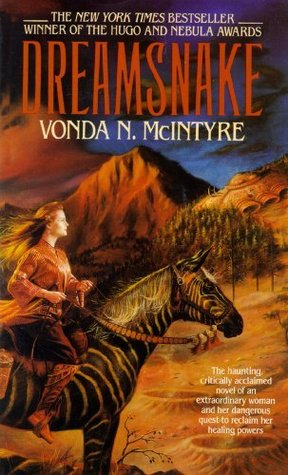
On a far future Earth destroyed by nuclear warfare, most people have reverted to tribal living on the desert. These people rely on roaming healers armed with three snakes whose venom help provide healing relief. Snake is on her first year of bringing roving healing, but when a misunderstanding ends in the death of her dreamsnake, she is determined not to return home to the healers until she finds a way to replace him. It is almost impossible to breed dreamsnakes, but maybe the city will be able to help. The city that keeps the tribes mostly locked out and communicates with the people who live in outer space.
Review:
This book made it onto my tbr for three reasons. It’s 1970s scifi by a woman author, known for being feminist, and is supposed to be able to change your mind about snakes. I was surprised to find it on Audible but elated, especially when I heard the sample of the narrator’s voice. She speaks at the perfect speed and tone for my listening taste. What I found, upon listening, was a book that brought everything I had been promised in a unique plot that I still find myself thinking about periodically. It is just so different, and different is good in my scifi.
You can’t talk about this book without talking about the snakes. I have a gut negative reaction to snakes; one that most likely was learned before I have memories, I’m sure. Both my husband and a close friend think snakes are super cute, so I was hoping this book might change my perception to at least be less negative. Interestingly, a key part of the plot revolves around a person minsinterpreting a snake as dangerous and reacting violently to it. Snakes are not seen as not dangerous, just that only certain snakes have truly dangerous venom, and people are encouraged to get immunized against this venom and to be cautious in areas where they might frighten a snake into striking. I came to care about Snake’s snakes and by the end of the book, where there is a scene that normally would have haunted my dreams (it involves someone in a pit full of snakes), I actually was able to react rationally to the situation and be more concerned about the evil of the person who threw the person in the pit and whether the person would be able to get out of the pit eventually than really be concerned about the snakes themselves. The book presents snakes much like other animals. They’re a living creature that can be dangerous or harmless or some mixture of both, and it’s about building your own knowledge so you know how to handle them more so than just being gut afraid of them. If that was all this book gave me, I would have been impressed, but it gave me so much more.
The plot leads through multiple different tribes and cultures, and all are imagined creatively and differently from each other. Cultural understanding is valued but only to the point where the culture is not actively harming innocents. As mentioned earlier, the whole book centers around a cultural misunderstading, and everyone on both sides of it takes responsibility for the situation. There’s a love interest for Snake who seeks to help her but she also helps herself (along with others). There’s a positive representation of adoption, as well as multiple sexualities and women and men both being responsible for birth control. Without giving anything away, the ultimate conclusion is about how changing your viewpoint can bring a solution, which is kind of the other side of the coin of the original cultural misunderstanding. It’s a smart book, largely about how different people interact and how humility and willingness to listen can move everyone forward.
Overall, this is a unique piece of scifi with an engaging plot that will change your mind about snakes. It left me wishing there was a sequel so I could revisit this world.
If you found this review helpful, please consider tipping me on ko-fi, checking out my digital items available in my ko-fi shop, buying one of my publications, or using one of my referral/coupon codes. Thank you for your support!
5 out of 5 stars
Length: 312 pages – average but on the longer side
Source: Audible

Trigger Warning:
Readers who are sensitive to discussions of rape of a child should be aware it is discussed as something that occurred in the past to a character, although not depicted, and the victim is ultimately empowered.
Book Review: Polly’s Wild Dance: A Life Serialized in Sporadic Spurts by Sydnee Elliot
 Summary:
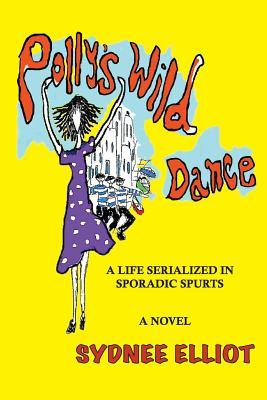
Now that Polly’s daughter has left home, she finally decides to follow her long-time dream of living on the Greek islands and moves there. But she finds even moving to another country can’t help her escape the memories of her ex-lovers (or, in the case of her daughter’s father, their actual presence). As she ruminates on her life and deals with the difficulties of aging, she wonders if her life has brought her the fulfillment she was after.
Review:
I picked this up during one of Smashwords’ annual summer/winter sales because the premise vaguely reminded me of Under the Tuscan Sun, a movie I’ve always enjoyed. What I got was an older heroine with a more honest mouth and a dirtier past. It wasn’t exactly what I was expecting and I wouldn’t choose to live my life the way the main character lived hers, but I certainly enjoyed it.
The author clearly has either lived in Boston or has done a lot of research. Polly grows up in New England and then lives in either Cambridge or Boston for the early parts of her life. Everything written about Cambridge/Boston is quite accurate, although definitely not always flattering. Since this is the case for the setting of Cambridge/Boston, I came to trust the narrator regarding her experiences in California, Las Vegas, and finally the Greek islands.
Polly is unapologetically crass. Given that this is a fiction book written in the style of an older person’s memoir, I can see how this may be jarring to some readers anticipating a more…grandmotherly style story. Personally, I enjoy the brutal honesty Polly brings to everything. She paints neither herself nor her family nor her lovers in a positive light. She verges on the side of pessimism. But there’s something I like about that level of honesty.
The edge of his tallis, the prayer shawl worn by Jewish men [Polly is Jewish and raised in a religious home], was folded back over his shoulder, so it wouldn’t touch me. Women aren’t allowed to touch this sacred garment because we’re considered unclean. The folded eight inches of fabric reminded me of one of the reasons why I couldn’t believe in this religion, or any religion. I wanted to crush the tallis with my hands, rub it over my face, arms, along my naked body and against my genitals. (loc 970)
If that passage offends you, the book will most likely offend you. If you enjoy the visceral passion Polly shows in rejecting the religion of her childhood, you will most likely enjoy the book.
The plot mainly revolves around Polly adapting to life in Greece and being haunted by visions of her ex-lovers. Basically, she will think she sees one of her ex-lovers and then tell the story of her time with him. The overarching plot is she is wondering if seeing these hauntings means her life is almost over. Also scattered throughout this plot is Polly coming to terms with being older, her body failing her, the fact that she doesn’t have a constant true love, and accepting that she is nearing the end of her life. Polly has many lovers throughout her life, and it’s clear that sometimes she was seeking one out to use him. Similarly, she is the other woman at least once and not in an accidental way. In a I hope you’ll leave your wife for me way. Polly admits she was bad at love but is also unapologetic about it. She seems lost as to how she could have done better, even right up to choosing her most recent lover.
I wanted to love Andreas. I needed to love him; I needed to love someone, anyone, and he happened to be available. (loc 5985)
While I appreciated Polly’s voice and passion, I also felt extremely sad for her. She never seems to have figured out how to be both passionate about her beliefs and also willing to listen to others. She never seems to have grown beyond the first rebellion stage into self-actualization. In a way, then, while the book has amusing scenes, overall, I found it to be a sad, cautionary tale about how failing to work on yourself, simply letting yourself muddle along, can lead to a wasted life.
Overall, this is an interesting book that features a plot I haven’t seen before. Readers interested in reading something featuring an older person who failed to actualize or even really realize their mistakes late in life should definitely pick this up. It is well-done.
If you found this review helpful, please consider tipping me on ko-fi, checking out my digital items available in my ko-fi shop, buying one of my publications, or using one of my referral/coupon codes. Thank you for your support!
4 out of 5 stars
Length: 334 pages – average but on the longer side
Source: Smashwords
 Support my work with a tip or browse my shop for curated book club guides, how to guides, cross-stitch patterns, and more!


This work by Amanda Nevius is licensed under a Creative Commons Attribution-Noncommercial-No Derivative Works 3.0 United States License.
 Opinions of a Wolf