
Archive
Book Review: Grown by Tiffany D. Jackson
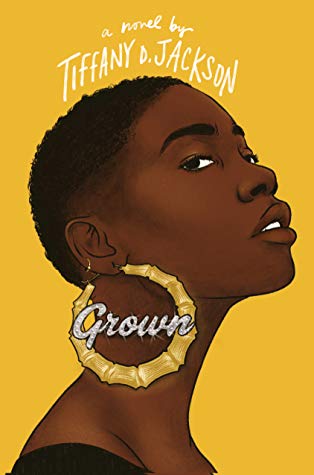
Summary:
17-year-old Enchanted Jones has been making it work at her new highschool in the suburbs where she’s the only Black girl. She has a good reputation on the swim team, and she takes care of her little siblings after school while her mom and dad work to afford their kids’ private schooling and their new house. But what Enchanted really wants to do is sing – an idea her parents aren’t too fond of. When she goes to a reality tv show audition, she meets R&B singer Korey Fields. He takes a shine to her, but that might not be the good thing she thinks it is.
Review:
I read this book in less than 24 hours because I simply could not stop thinking about Enchanted and needed to find out what happened in her world. This book both manages to be about important issues but also doesn’t feel like it’s an “issues” book. It’s Enchanted’s story, and that happens to involve today’s issues because today’s issues are real.
This book is about a lot of things, but many of the things it’s about come right back around to how society treats Black girls. How we treat them like they are grown up, when they are still children. This book beautifully depicts how truly adolescent Enchanted is – something that many of our adolescents are not allowed to be but Black girls especially. Enchanted is interested in boys and has feelings about them but she also loves Disney movie night with her little siblings. She has big dreams of stardom but she also just misses seeing her grandmother and swimming with her in the ocean. She has typical adolescent breakthrough moments of realizing what you saw and thought was beautiful as a child might actually be something else. This book asks us to believe girls, but to believe Black girls especially, because so many others will just look at them and say “oh they knew what they were doing, they were grown.”
The book is also about how wealthy abusers groom girls and take advantage of their wealth and power to separate girls from their families. The abuse depicted in this book is realistic and depicts emotional, sexual, and physical abuse and could be a trigger, so please do note that. That said, the author depicts just enough abuse for us to know what’s going on, but it never feels gratuitous or unnecessary.
While this is YA, it has important content for adults too, especially if you regularly come into contact with adolescents. Highly recommended.
5 out of 5 stars
Length: 384 pages – average but on the longer side
Source: Library
Buy It (Amazon or Bookshop.org)
If you found this review helpful, please consider tipping me on ko-fi, checking out my digital items available in my ko-fi shop, buying one of my publications, or using one of my referral/coupon codes. Thank you for your support!
Book Review: The Girl from Widow Hills by Megan Miranda
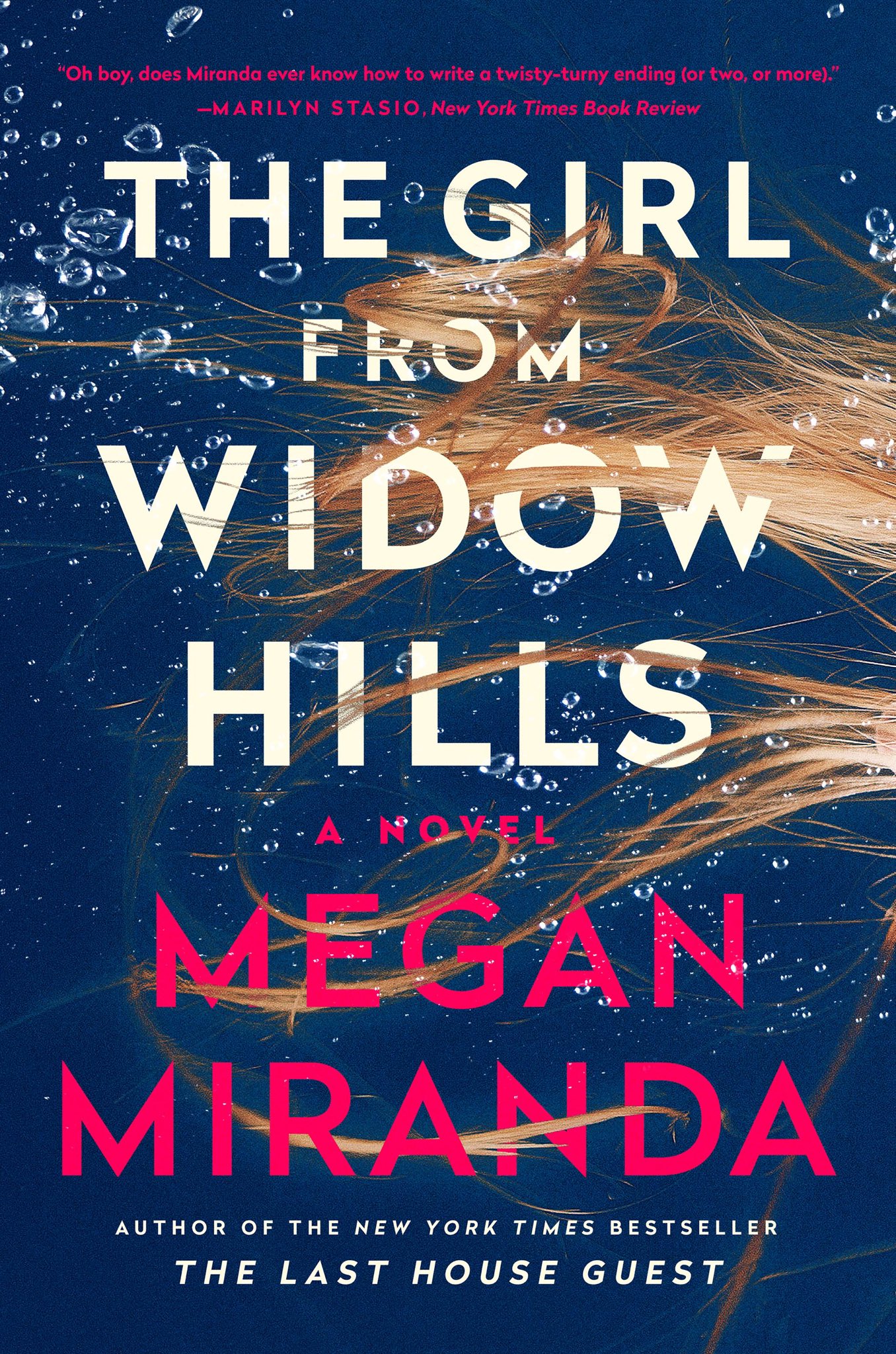
Summary:
Olivia just wants to live a quiet, simple life as an administrator at a new rural hospital in the American south. She changed her name to leave behind her childhood notoriety as the little girl who was swept away by flood water when she was sleepwalking and was found days later in a drainage pipe. But when she resumes sleepwalking again and literally stumbles over a dead body outside her home, her past starts to come back to haunt her.
Review:
Those of us who grew up in the 90s were consistently regaled with the stories of the little girl Jessica who fell down a well and underwent a dramatic televised rescue in the 80s. I feel like this must be inspired by that story but with a lot of “what-if” questions tossed in. (Jessica herself has lived a very quiet life since the hullaballoo).
Olivia (the woman formerly known as Arden) is likeable yet has realistic flaws. She’s a well-rounded, real character. I especially enjoyed how she decides (early in the book) to buy a home away from the cookie cutter housing built for the hospital workers. The elderly man who sold it to her is also her neighbor, and they have an adorable relationship where they mutually care for one another. Her relationships with her coworkers at the hospital are also a realistic depiction of how she’s sort of part of the club of health care workers but not exactly one, as a staff in administration.
But what about the plot? I really enjoy how right away Olivia is an unreliable narrator to herself through no fault of her own – her sleepwalking. It’s easy to understand why she’s loathe to admit to the circumstances of how she finds the body on her land, and she also has some intense and legitimate questions about how much she can trust herself.
I can’t say too much about why I like this book so much without giving the twists away. However, suffice to say I found the twists interesting. The plot before the twists makes sense with the twist but also didn’t point so directly to it that I guessed it. While the twists solve the mystery, they also leave us with a main character who is still herself – flawed and yet likeable.
Recommended to thriller fans who like a flawed main character and would enjoy an adult (fictional) take on a little girl whose rescue gripped America.
5 out of 5 stars
Length: 325 pages – average but on the longer side
Source: Library
Buy It (Amazon or Bookshop.org)
If you found this review helpful, please consider tipping me on ko-fi, checking out my digital items available in my ko-fi shop, buying one of my publications, or using one of my referral/coupon codes. Thank you for your support!
Book Review: And Now She’s Gone by Rachel Howzell Hall

Summary:
Grayson Sikes is a new private investigator and is taking on one of her first cases, but it’s looking for a man’s ex-girlfriend who doesn’t seem to want to be found. She’s not too keen on trying to find a woman who wants to be gone.
Review:
Do you love black-and-white film noir but wish there was a story with a woman PI? How about a Black woman PI written by an own voices author? How about we get some actual backstory on the PI to find out just why she’s so hard-boiled anyway? And how about a femme fatale is also a Black woman? Then this, my friend, is the book for you.
I was utterly delighted to have a noir with, for once, a different case of characters but that still fits the genre’s markers. There’s even an excellent scene of Grayson pensively taking in the LA skyline with a note that its rich colors are the result of wildfires. I am here for this!
On that note, Grayson is not shy from telling it like it is. She’ll call out the wildfires. She’ll wonder if a witness is describing someone as disagreeable because she’s actually disagreeable or because that’s how Black women can be unfairly perceived. She’ll wonder if an ex-boyfriend really just wants his dog back or if it’s about control. She’ll wonder if the elderly neighbor lady is actually helpful or a busybody. Grayson’s questions are part of what makes her a good PI.
I do want to give a content warning that part of Grayson’s backstory includes both domestic violence and miscarriage [not a plot spoiler], so do please be aware if you prefer to avoid those topics.
Overall, as a fan of noir, I was delighted by finally getting some representation in this story. It both was fun to see and also made the story less predictable and more unique. More variety is a good thing! Pick this up if you love noir and want more or if you’ve never thought it was your jam because of the dripping masculinity. This twists expectations about gender in noir on its head.
4 out of 5 stars
Length: 395 pages – average but on the longer side
Source: Netgalley
Buy It (Amazon or Bookshop.org)
If you found this review helpful, please consider tipping me on ko-fi, checking out my digital items available in my ko-fi shop, buying one of my publications, or using one of my referral/coupon codes. Thank you for your support!
Book Review: Braiding Sweetgrass: Indigenous Wisdom, Scientific Knowledge, and the Teachings of Plants by Robin Wall Kimmerer
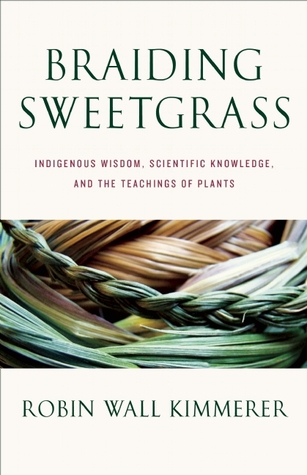
Summary:
Member of the Potawatomi Nation and botanist Robin Wall Kimmerer presents a series of essays on plants of North America, incorporating some memoirs from her life and her daughter’s recollections as well.
Review:
It’s difficult to describe how meaningful this book is. The description sounds so simple and yet, to me, it is a collection of scientific and Indigenous knowledge intertwined as near poetry. As an urban gardener who grew up rural among farms, I think of myself as plant knowledgeable, but I was humbled by this book. I also teach, and I found her ruminations on teaching and balancing teaching other people’s children versus your own to be beautifully honest. This book takes time to get through but because of the rich meaning in each essay. You find yourself wanting to savor it.
As a person who feels both spiritually and scientifically minded, this book spoke to me on a mind and soul level simultaneously in ways I cannot fully describe. I wish there was greater focus on teaching this way. I wish the two were not divorced from each other in our society. I think it would be healing to us all and to nature as well if they were not.
Allow me to try to pull out a few meaningful quotes to me by theme.
On morality, contentment, and consumerism:
Refusal to participate is a moral choice.
Transformation is not accomplished by tentative wading at the edge.
Balance is not a passive resting place.
In a consumer society, contentment is a radical proposition.
The consumption-driven mind-set masquerades as “quality of life” but eats us from within.
On teaching and being taught:
The professor made me doubt where I came from, what I knew, and claimed that his was the right way to think.
Teach any who will come.
I’d left my baby girls at home with their dad in order to introduce other people’s children to something they cared little about.
Facts about plants that fascinated me, include that a 3 sisters garden [growing corn, beans, and squash together the Indigenous way] yields more food than if you grew each alone, polycultures are less susceptible to pest outbreaks than monocultures, breathing in the smell of humus (the dirt, not the food) releases oxcytocin, and lichens are actually two beings together (a fungus and an alga). I also learned:
Sweetgrass thrives where it is used and disappears elsewhere.
Plantain is not indigenous but naturalized. It’s so prevalent and well-integrated that we think it’s native.
Estuaries can have the highest biodiversity and productivity of any method.
Forest ecologists estimate that the window of opportunity for cedars to get started occurs perhaps only twice a century.
I hope I have made you intrigued by this book. I loved it so much that I bought myself a copy after starting off with a digital library copy.
5 out of 5 stars
Length: 391 pages – average but on the longer side
Source: Purchased
Buy It (Amazon or Bookshop.org)

Book Review: Free Cyntoia: My Search for Redemption in the American Prison System by Cyntoia Brown-Long and Bethany Mauger
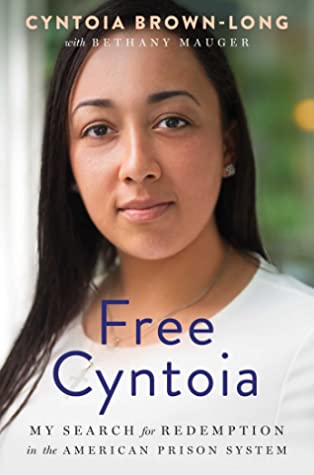 Summary:
Cyntoia Brown was sentenced to life in prison for a murder she committed at the age of sixteen. Her case became national news when celebrities and activists made the hashtag #FreeCyntoia go viral in 2017. She was granted full clemency after having served fifteen years, walking out a free woman on August 7, 2019.
This is her story, in her own words.
Review:
I think how people will respond to this memoir will depend a lot on what they believe justice to be. Do certain levels of crime deserve never-ending punishment? Can people change or be redeemed? Then there’s another level of do teenagers, people who are still growing and whose brains have not fully developed (brains do not complete developing until approximately age 25), deserve to spend the rest of their lives being punished for an act committed at this age? This memoir aims to be proof that people can be redeemed and, indeed, if we want people to change, they need to have hope that an end could be in sight for them.
The fact of the matter is that no one but Cyntoia, God, and Johnny Michael Allen know what truly happened that night. Cyntoia has never denied killing Johnny but has maintained it was in self-defense. The only facts that we know are that she, a sixteen-year-old who had been being sold for sex by her pimp, was picked up by Johnny Allen, a 43-year-old, and brought home with him, and they were alone in his bedroom together. Both potential stories told by each side are possible. It’s possible he brought her home for sex, like Cyntoia says. It’s possible he brought her home in an attempt to take care of a teenager he found living on the street, like Johnny Allen’s family says. Regardless, Cyntoia ended up killing him. The memoir dances around exactly what happened, with Cyntoia describing him picking her up and bringing her home but then describing the night as a red haze with no details. Was that to protect a guilty conscience or to protect details that would hurt Johnny Allens’ family that no one really needs to know? It’s very hard to say. But in a way I think this is appropriate because Cyntoia admits that she killed him, and the true point of the story is first, how did this girl end up here and second, can she be redeemed?
How she got here contains two of the more interesting aspects of the memoir. First, the school to prison pipeline is painfully obvious in Cyntoia’s story. She originally was placed in a gifted class, acted up some (didn’t get along with the teacher) and was downgraded. She started to be told over and over again she was bad. It was all downhill from there with her hanging out with the crowd of kids who were always in trouble and being constantly told she was bad and not listened to. The police were even called on her at school for her not wanting to give the teacher her purse in detention. If we want our children to rise to their potential, having school tied to prison in the way that it is is not the solution, and treating children like they’re “bad” when they’re just children who mess up sometimes is sending them a clear message that many children will just accept or fail to.
The other issue that came up during one of Cyntoia’s trials is that her birth mother admits to drinking alcohol while she was pregnant, and some doctors have diagnosed her as having fetal alcohol spectrum disorder. This is relevant, because fetal alcohol spectrum disorder can cause poor judgment, hyperactivity, poor reasoning, and problems in school. It seems, given both doctors’ testimonies her birth mother’s admission, and Cyntoia’s own perspective that this sad tale is likely, therefore, partially entwined with alcohol abuse. Cyntoia herself states multiple times that she doesn’t know why she has tended to act so impulsively. This could partially help explain it and be another of the many tentacles of how alcohol impacts our society with poor outcomes and violence.
Cyntoia ultimately chooses to have faith that she could possibly be redeemed and decides, even if she can’t be, she doesn’t want to waste her life. She goes to a unique program available in her prison that allows her to go to college. She pursues self-improvement and mentorship of others, and she works to help young girls who have also been trafficked like she was. (It is not a question that Cyntoia was trafficked as she was underage and had a pimp). Cyntoia attests much of her self-improvement to her new-found faith that she solidified after meeting her now-husband via letters in jail. (He felt called to write to her). A spiritual practice is important for anyone to have a well-rounded recovery, and I think it is also significant that the school that offered the college program inside the prison was also a religious school. I am glad for her that she has found comfort and faith, but I also hope it’s not too entwined with her husband and is her own source of strength. While healthy relationships are important, and it’s nice to share a faith, it’s also important for that strength to come from oneself and not from relying upon another fallible human being.
Overall, I think this shows a personal look at the school to prison pipeline, the potential impact of alcohol on a child’s life, and how redemption could look. It’s important to come into this book with an open mind and a willingness to not crave more than Cyntoia is willing to share, nor to think that this book will reveal all the truth or all the answers.
4 out of 5 stars
Length: 320 pages – average but on the longer side
Source: Purchased
Buy It (Amazon or Bookshop.org)
Book Review: An Unkindness of Ghosts by Rivers Solomon
 Summary:
Aster lives in the low-deck slums of the HSS Matilda, a space vessel organized much like the antebellum South. For generations, the Matilda has ferried the last of humanity to a mythical Promised Land. On its way, the ship’s leaders have imposed harsh moral restrictions and deep indignities on dark-skinned sharecroppers like Aster, who they consider to be less than human.
When the autopsy of Matilda‘s sovereign reveals a surprising link between his death and her mother’s suicide some quarter-century before, Aster retraces her mother’s footsteps. Embroiled in a grudge with a brutal overseer and sowing the seeds of civil war, Aster learns there may be a way off the ship if she’s willing to fight for it.
Review:
I went into this book hearing it was a space opera take on the American antebellum south with queer characters, written by a Black American author. That was an apt description, but what I didn’t know was that Aster is neurodiverse, and that was the finishing touch that really sent me over the moon about this book. So let’s talk about Aster first.
Aster is clearly autistic. (I am using this language, rather than person-first based on the wishes of the overall autistic community). Being autistic is just a part of who she is at her core of her being. It’s not perceived as something to be overcome or a superpower. There are parts of her autism that are strengths and parts that are weaknesses. Her ability to learn in-depth about plants and their healing powers is a strength and her tendency to take people literally and miss the point is a weakness, but only in situations where others aren’t considerate of how she perceives the world. When they are considerate and think about how to frame what they say in a way Aster will understand, it is totally fine. I loved everything about Aster. I want more books starring people like her with the representation handles so smoothly.
Other representations that exist in the book in beautiful ways include, but are not limited to: asexual, bisexual, trans*, lesbian, and a wide variety of abilities and disabilities.
The intermingling of spaceship and Antebellum American south was heartbreaking. Imagine everything about how Starship Enterprise is largely a utopia and turn that on its head, and you have the Matilda. It’s not that systemic inequality is not already clear to me, but I do think depicting it on the confines of a spaceship heightens the awareness of it seeps throughout everything.
The mourning of a child’s murder is not one of my moods, so please do not dismiss it thus.
[location 71%]
Although I think it should be obvious from the fact this is telling a story of the Antebellum south in outerspace, I do want to give trigger warnings for rape, abuse, violence, executions, and torture (all things that of course happened in the Antebellum south and anyplace with systemic inequality).
Everything about this was simultaneously richly imagined and depicting the diverse world we really do live in. I thought this was gorgeous and hope to meet Aster again (or someone like her) in future worlds by Rivers Solomon.
5 out of 5 stars
Length: 351 pages – average but on the longer side
Source: Library
Buy It (Amazon or Bookshop.org)
If you found this review helpful, please consider tipping me on ko-fi, checking out my digital items available in my ko-fi shop, buying one of my publications, or using one of my referral/coupon codes. Thank you for your support!
Book Review: White Ivy by Susie Yang
 Summary:
Ivy Lin isn’t sure of much of what she wants and never has been except for one thing – she wants Gideon Speyer. She fondly remembers his birthday party when she was 14 that she sneaked out to attend. Her parents pulled her away, sent her to China to visit relatives, and had moved to New Jersey by the time she got back. As an adult first grade teacher in Boston, Ivy runs into Gideon’s sister once again, and while she’s uncertain about what she wants most of the time, she immediately begins the work to get to be around and date Gideon. But does she really want only Gideon?
Review:
I went into this thinking it was a thriller based on the blurb that I saw – I wrote a different one for you that I think more accurately reflects the book. I would call it a contemporary story of the dark directions life can go when facing systemic and internalized issues. I would call it most comparable to Valley of the Dolls only featuring only one main character instead of many.
This is a strong own voices book. The issues Ivy faces as someone who immigrated at a very young age (and also spent some time being raised by her Grandmother in China waiting for her parents to send for her) were touching and felt real. The representation of systemic racism Ivy faced was subtle but woven throughout her life in such a way its insidiousness came across.
The author is also unafraid of pointing to the issues in the Chinese immigrant culture as well, particularly at the negative response to mental illness. This of course is not an issue limited to Chinese immigrant culture – I struggle to think of a culture that handles it well. However, I mention it as a way to say that the author did not present Ivy’s Chinese immigrant family as perfect. Rather, the problems in that family and in the broader culture as a whole twisted together to lead her down her path.
I don’t think this book is getting as much buzz as it should be. It’s a fun, different take that also brings diversity to the genre of contemporary women’s fiction. (I dislike calling it that but also there’s not a better term I’m aware of the communicates the genre I mean).
If you like reading contemporary women’s fiction with a twist of thrills (but not too many thrills), give this a chance. Especially if you’re looking to diversify your reading list or simply to find a Chinese-American leading character.
4 out of 5 stars
Length: 368 pages – average but on the longer side
Source: NetGalley
Buy It (Amazon or Bookshop.org)
If you found this review helpful, please consider tipping me on ko-fi, checking out my digital items available in my ko-fi shop, buying one of my publications, or using one of my referral/coupon codes. Thank you for your support!
Book Review: The Five: The Untold Lives of the Women Killed by Jack the Ripper by Hallie Rubenhold
First, a note….
If you’ve subscribed to this blog, bless you for still being around. I hadn’t posted since July 2018! I’ve still been actively discussing books but mostly on my Instagram where I’ve been enjoying the bookstagram community. However, I have missed having a more permanent, long-form place to talk about books. I wasn’t enjoying the monthly round-ups I was doing but I also simply cannot devote the time to blog post about every book I read. So I’ve decided to aim for reviewing one book a month – the book I found most meaningful to read in some way in the month prior. Maybe sometimes I’ll review more, maybe less, but no longer take this blog to be a record of every single book I read. Moving right along.
 Summary:
You’ve heard of Jack the Ripper – the serial killer who murdered five women in London in 1888. Most people know the name Jack the Ripper but what about the names of his victims? Here, meet the women whose lives were cut short by Jack the Ripper – Polly, Annie, Elizabeth, Catherine and Mary. Get to know their world, their personal struggles, and come to see them as people rather than simply victims.
Review:
I learned so much reading this book, and none of it was dry. It was entirely fascinating. I liked the structure very much – Rubenhold goes through the intricacies of the lives of each of the women in the order they were murdered. She also doesn’t just stop at the moment they died – she follows through with who identified the body, who grieved for them (and every single one had someone grieving for them).
A large misconception is that all five of the women murdered by Jack the Ripper were homeless prostitutes. Of course even if that were the case it wouldn’t make the murders less tragic. However, it is simply not true of these women. Four of the five were not prostitutes but rather were simply sleeping on the street because they were homeless. The fifth (Mary Jane) was a prostitute but had a home and was murdered in it.
I found it very interesting how different all of their lives began and yet how most of them ended up on the street regardless. In a way this is really the story of how society failed these women long before it failed to find their killer by allowing them to end up living on the streets to begin with.
I personally found Annie’s story to be the most meaningful, but I think everyone will connect with a different woman in a different way. Annie ended up on the street due to a failed battle with alcoholism. She had a loving family, had climbed up to the middle class, and even did a stint in rehab. But she still lost the battle with her addiction.
Interestingly, her sisters chose the sobriety movement and prospered from it. I found this to be a meaningful passage:
The complete rejection of alcohol resonated with those who found themselves balanced precariously on the edge of middle-class life. By eschewing drink, a hardworking man or woman could save money and build a better life for themself and their family. Annie’s sisters not only adhered to this creed but prospered by it financially. (27% location)
Although her sisters were able to give up the drink, Annie was not. Her brother also still drank alcohol at the time of her murder. Even though she was on the street, he would still see her sometimes and imbibe with her. After her murder, he left the UK for Texas and achieved sobriety.
This hit me hard:
What her murderer claimed on that night was simply all that remained of what drink had left behind. (33% location)
To me, Annie’s full life story was sorrowful, although some beauty did come out of it in that her brother’s life was saved by observing her downfall. I still reflect on her story sometimes. I hope through Rubenhold’s work, Annie’s unfortunate downfall will come to affect change in more people than solely Annie’s brother’s.
I’ve spoken at length about the woman’s story I found the most personally moving and meaningful, but there is also a story of an immigrant, a woman scorned by her husband, a prostitute and the man she loved, and a working class woman who worked in a tin factory and ran from an abusive husband. I am sure you will find one that connects with you and that you will find meaningful.
Those who are disturbed by the gruesome will be pleased to note that there are not gruesome details in this book. The focus is on the women’s lives, not their deaths.
If you found this review helpful, please consider tipping me on ko-fi, checking out my digital items available in my ko-fi shop, buying one of my publications, or using one of my referral/coupon codes. Thank you for your support!
5 out of 5 stars
Length: 336 pages – average but on the longer side
Source: Library
Book Review: He, She and It by Marge Piercy
 Summary:
In the middle of the twenty-first century, life as we know it has changed for all time. Shira Shipman’s marriage has broken up, and her young son has been taken from her by the corporation that runs her zone, so she has returned to Tikva, the Jewish free town where she grew up. There, she is welcomed by Malkah, the brilliant grandmother who raised her, and meets an extraordinary man who is not a man at all, but a unique cyborg implanted with intelligence, emotions–and the ability to kill….
Review:
I picked this up because of how incredibly moved I was by Woman on the Edge of Time (review) by the same author. While I found this interesting and unique, it didn’t move me in quite the same way. I imagine it would probably move a reader more if they are Jewish or a mother.
The book is richly steeped in Jewish culture and history. All of Earth is either a slum or run by corporations in basically corporate states except for a few free towns which manage to exist due to their value in trade. Tikva is one of these, and it’s made clear this is partially so because the founders were concerned about maintaining Jewish culture in a world being overcome by just a few corporations. The corporation Shira works at before returning to Tikva judges her in her performance reviews for staying too attached to her home culture, including things like naming her son a traditionally Jewish name. So there is this very interesting thread about how minority cultures can maintain themselves in the face of economic threat and assimilation. When Shira gets a divorce, the corporation grants majority custody to her ex-husband and ultimately essentially full custody when he is sent to work off-world. Overcome with grief, Shira moves home to Tikva. Here we learn that Shira’s grandmother Malkah raised her and see how differently her own mother approaches motherhood than Shira does. This is one of the key threads of the book.
The other key thread is personhood and what makes us human. One of the residents of Tikva has succeeded in making an illegal cyborg. There are periodic chapters where Malkah is telling him the story of the Jewish myth of the Golem (a human-like beast made of clay to protect the Jewish people from persecution. More info). Very clear lines are drawn between the golem and the modern-day cyborg, who was made to protect Tikva and keep it free. Of course people start to have mixed feelings about the cyborg and asking not just what makes him human but also if he can be Jewish? (He himself identifies as Jewish and attends synagogue). I particularly enjoyed that Malkah isn’t just the story teller to the cyborb but she’s also one of the most important and most intelligent programmers in Tikva. The programmers essentially are what keep Tikva free, and an elderly woman is one of the most important ones.
Even though it’s a topic I’ve read a lot in scifi, I always enjoy the exploration of what makes us human and at what point does intelligent technology gain personhood, and the way it was explored here was different from what I’ve seen elsewhere. In particular, I thought the not just female but female Jewish lens was new and great. But I will admit that I had trouble relating to Shira and her struggle with motherhood and types of motherhood. I think motherhood can sometimes be overly thought about and held up on a pedestal in our culture and in feminism too. While mothers who choose to mother differently are acknowledged in the book, women who choose not to mother are not. It’s as if mothering is a natural part of womanhood, and that was not something I felt I could connect to in the book.
Overall, though, this was a wonderfully different take on the scifi exploration of cyborgs and artificial intelligence. Recommended to scifi readers, but particularly to those seeking a Jewish lens or an exploration of motherhood in addition to cyborgs.
If you found this review helpful, please consider tipping me on ko-fi, checking out my digital items available in my ko-fi shop, buying one of my publications, or using one of my referral/coupon codes. Thank you for your support!
4 out of 5 stars
Length: 448 pages – average but on the longer side
Source: Paperbackswap
Buy It (Amazon or Bookshop.org)
Book Review: Mambo in Chinatown by Jean Kwok (Audiobook narrated by Angela Lin)
 Summary:
Twenty-two-year-old Charlie Wong grew up in New York’s Chinatown, the older daughter of a Beijing ballerina and a noodle maker. Though an ABC (America-born Chinese), Charlie’s entire world has been limited to this small area. Now grown, she lives in the same tiny apartment with her widower father and her eleven-year-old sister, and works—miserably—as a dishwasher.
But when she lands a job as a receptionist at a ballroom dance studio, Charlie gains access to a world she hardly knew existed, and everything she once took to be certain turns upside down. Gradually, at the dance studio, awkward Charlie’s natural talents begin to emerge. With them, her perspective, expectations, and sense of self are transformed—something she must take great pains to hide from her father and his suspicion of all things Western. As Charlie blossoms, though, her sister becomes chronically ill. As Pa insists on treating his ailing child exclusively with Eastern practices to no avail, Charlie is forced to try to reconcile her two selves and her two worlds—Eastern and Western, old world and new—to rescue her little sister without sacrificing her newfound confidence and identity.
Review:
There is so much that is wonderful about this book. The incredibly depicted settings of both Chinatown and ballroom dancing. The finely nuanced and richly complicated relationships. The new adult struggles of finding and being true to yourself while still relating to your family of birth. You don’t have to be first-generation American to relate to Charlie’s struggles to reconcile her childhood world with the world she knows now. In some ways I found this to be a Chinese-American version of Dirty Dancing, and that’s a big complement since Dirty Dancing is one of my favorite movies. I also particularly enjoyed seeing a single father realistically deal with his two daughters. He sometimes does wonderfully and sometimes fails them, and their fights are realistic and full of honesty.
If you’re curious about the audiobook version, Angela Lin does an incredible job. Every single character has their own voice and her accents are full of nothing but realism and respect. It was like a well-produced radio program.The praise this book is getting is well-deserved, and if you want to immerse yourself in Chinatown, dance, and new adult issues, you don’t even need to read my review further. Just go get yourself a copy. But I do need to talk about what didn’t work for me.
*spoilers*
Charlie is dyslexic, and her father never allowed her school to officially diagnose and treat her, which led her to have poor grades and struggle with many typical entry level white collar jobs such as being an administrative assistant. Lisa in contrast is an excellent student who works after school at their uncle’s Traditional Chinese Medicine (TCM) clinic. Partway through the book, Lisa starts to have nightmares and wet the bed. She’s also been selected to apply for entry and scholarship to a highly selective private school, though, so Charlie thinks it’s probably related to that. I think the vast majority of readers will be able to quickly figure out that Lisa is being molested at the clinic. There are just way too many hints. Lisa doesn’t want to go to the clinic anymore after being good-natured about it. She starts getting jealous of Charlie whereas before she only wished for good things for her sister. And honestly bed wetting and nightmares are extremely typical symptoms of molestation.
But I don’t dislike this plot because of how obvious it was to me. I also fully acknowledge these terrible things can and do happen in otherwise average families, and I’m not against these stories being told. However, I do think it was a poor fit for the tone otherwise of the book. It felt like the idea was that there wouldn’t be enough conflict between Charlie and her family without this extra problem. Like Charlie wouldn’t have been at all worried about her sister or about leaving her family behind somehow without this other problem. I think that’s underestimating Charlie and underestimating how hard it can be to grow and change and become different from your family of origin. The rest of the book is so full of beauty and energy, whether it’s in Chinatown or in the ballroom dance rooms. Then this plot comes in and it just feels like it doesn’t belong. While I feel incredible empathy for people in Lisa’s situation, I came to resent her presence in the story because she felt kind of like olives being stuffed into a delicious lasagna. It’s not that olives are bad; it’s just that they don’t belong. I think that these were really two separate stories, and they should have been told separately.
*end spoilers*
In spite of these feelings about the dual plots, I still really enjoyed the read and would happily read another book by Kwok in the future. I also think this is a great example of a new adult read that’s mostly about the emotional experiences of your early 20s. Recommended to anyone looking to get immersed in Chinatown and ballroom.
If you found this review helpful, please consider tipping me on ko-fi, checking out my digital items available in my ko-fi shop, buying one of my publications, or using one of my referral/coupon codes. Thank you for your support!
4 out of 5 stars
Length: 384 pages – average but on the longer side
Source: Audible
 Support my work with a tip or browse my shop for curated book club guides, how to guides, cross-stitch patterns, and more!


This work by Amanda Nevius is licensed under a Creative Commons Attribution-Noncommercial-No Derivative Works 3.0 United States License.
 Opinions of a Wolf