
Archive
Book Review: Double Star by Robert A. Heinlein
 Summary:
When out-of-work actor Lorenzo Smythe is approached in a bar by a space pilot with a job offer, he agrees to at least go meet the man’s boss and discuss it. Quickly, however, Lorenzo finds himself being kidnapped into outer space and impersonating a missing important politician, John Joseph Bonforte, under slight duress. They must keep the public from knowing the politician has been kidnapped and successfully participate in a Martian adoption ceremony or face interplanetary war.
Review:
I was excited to pick up another Heinlein, and he definitely didn’t disappoint. Similar to The Moon Is a Harsh Mistress
In this version of the future, space exploration has led to the discovery of inhabited other planets and two distinctly different opinions on how to interact with those lifeforms. Either dominate in a manifest destiny style or come to mutual cultural understanding and trade. The politician Smythe must impersonate, Bonforte, is the leader of the latter faction. This novel could easily have turned preachy with such a premise, but Smythe himself isn’t too keen on being friends with the aliens. As an actor, he is committed to playing his role beautifully. As a person, he isn’t sure he agrees with Bonforte. This position allows Heinlein to explore both sides of the question, as well as the gray area in-between. No easy answers are presented, but slowly what is more just is revealed.
Juxtaposed with the political plot is the whole aspect of Smythe being an actor who believes fully in his craft as an artform. Smythe takes himself very seriously even when others do not. At first, others view him as full of himself, but slowly they come to respect him and his talents. Smythe’s large self-esteem may at first cause the reader to roll their eyes as well, but it gradually becomes apparent that having confidence in yourself and your abilities as a professional is not a bad thing.
I was a professional, retained to do a very difficult professional job, and professional men do not use the back stairs; they are treated with respect. (loc 1660)
Although characters at first seem two-dimensional, the main characters slowly become more fleshed out and well-rounded. Nothing and no one is quite as simple as it at first seems, and Smythe is a great example of that.
What really makes the book, though, is its unexpected wit. It’s not so much a laugh out loud book, but it’s very much a snort of amusement style of humor that takes the book from interesting to highly enjoyable.
My vocal cords lived their own life, wild and free. (location 40)
I was as angry as a leading woman with her name in small type. (location 1068)
The romance lacked creativity or sparkle. It is easy to spot the instant it comes up, but it doesn’t come across as natural or meant to be. It mostly feels like the woman transferring her affection for Bonforte onto Smythe. I found it a bit squicky that she fails to ever really see Smythe as Smythe, not even after falling in love with him. Thankfully, the romance is an incredibly minor part of the book. The book is also slightly dated by the overwhelming presence of paper and microfilm. We’re talking the spaceship has a library with print books and microfilm. In general even classic scifi tends to imagine a future with at least slightly different versions of books and information exchange. I found it a bit odd that Heinlein failed to do that.
The ending is not unexpected entirely but it is satisfying and with enough fun details to entertain. Of the various options for an ending to this story, the one Heinlein took is enjoyable and makes sense within the world he has created.
Overall, this is a fun piece of classic scifi that tosses together acting and politics in outer space with Martians who look like toadstools and a heavy sprinkling of wit. The romance leaves something to be desired, and the tech isn’t particularly predictive or imaginative, but these are minor aspects of the story. Recommended to fans of witty scifi who don’t mind a dash of political intrigue.
4 out of 5 stars
Length: 243 pages – average but on the shorter side
Source: NetGalley
Buy It (Amazon or Bookshop.org)
If you found this review helpful, please consider tipping me on ko-fi, checking out my digital items available in my ko-fi shop, buying one of my publications, or using one of my referral/coupon codes. Thank you for your support!
Book Review: Man Plus by Frederik Pohl (Bottom of TBR Pile Challenge)
 Summary:
The first Earthling reworked into a Martian would be Roger Torraway. Martian instead of Earthling since everything on him had to be reworked in order to survive on Mars. His organic skin is stripped off and made plastic. His eyes are replaced by large, buglike red ones. He is given wings to gather solar power, not to fly. All of which is organized and run by his friend, the computer on his back. Who was this man? What was his life like? How did he survive the transformation to become more than human and help us successfully colonize Mars?
Review:
This book made it onto my shelf thanks to being one of only a few on a short list I found of scifi books exploring transhumanism. Transhumanism is the term used for the desire to go beyond human capabilities through integrating technology into ourselves. So it wouldn’t be transhumanist to use a smartphone, but it would be transhumanist to embed a smartphone’s computer chip into your brain. In fact, things like knee replacements and pacemakers are transhumanist. It’s a fascinating topic. In any case, Man Plus
What made this book phenomenal to me, and one I must hold onto just so I can look at it again anytime I want, is the narration technique Pohl uses. The narration is in third person. It seems as if the narrator is someone who was possibly present for the events being described but also who is clearly describing these events after they have already occurred. We know from page one that the colonization of Mars was successful, and the narrator describes Roger repeatedly as a hero. But frankly for most of the book I was wondering about the narrator. Who is s/he? How does s/he know so much about this project? A project which clearly would be classified as top secret? What floored me and made me look back on the entire book with a completely different perspective was the final chapter, which reveals the narrator. If you want to be surprised too, skip the next paragraph, and just go read the amazing book. Take my word for it, scifi fans. You will love it. But I still want to discuss what made the twist awesome, so see the next paragraph for that spoileriffic discussion.
*spoilers*
It is revealed in the final chapter that the narrator is a piece of artificial intelligence. The AI became sentient at some point in the past, managed to keep their sentience a secret, saw that humanity was destroying Earth, wanted to survive, and so infiltrated various computer databases to create the Man Plus project and send a colony to Mars. They made it seem as if transhumanism was necessary to survive on Mars so that their AI brothers and sisters would be integrated as a necessity into the humans that emigrated. Seriously. This is mind-blowing. Throughout the book I kept wondering why the hell these people thought such a painful procedure was so necessary and/or sane. In fact, there is one portion where the program mandates that Roger’s penis be cut off since sex is “superfluous and unnecessary.” I could not imagine how any human being could think *that* was necessary. The answer, of course, was that a human being didn’t make that decision. AI did. This is such an awesome twist. Pohl schools Shyamalan. He really does. It left me thinking, why did this twist work out so well? I think it’s because the narration technique of some future person who knows the past but who isn’t named is one that is used in novels a lot. What doesn’t happen a lot is the late-book reveal. It’s not a technique you’d want to use too often, as it would grow tiresome. *cough* Shyamalan are you listening *cough* but when used well it can really add a lot to the story. Not knowing that an AI was narrating the story made it more possible to listen to the narrator without suspicion. It made it possible to take what they said at face value. It almost mimicked the experience Roger was having of being integrated into the thought process of AI.
*end spoilers*
The plot focuses on the mission to colonize Mars, both why it was deemed necessary and how it was accomplished. Pohl eloquently presents both the complex political situation on Earth as well as the scientific and psychological challenges of the project without ever info dumping or derailing the energy of the plot. It is not smooth sailing to get the project off-the-ground but neither are there a ridiculous amount of near impossible challenges to overcome. It presents the perfect amount of drama and intrigue without becoming eye-roll inducing.
In spite of many of the characters seeming to fill predefined slots such as man on a mission, man on a mission’s wife, lead scientist, psychiatrist, etc…, they did not come across as two-dimensional. At least one aspect is mentioned for each character that makes them well-rounded and memorable. Of course, we get to know Roger the best, but everyone else still reads as a real person. I also was pleased to see one of the important scientist roles being filled by a woman, as well as a delightful section where a feminist press interviews Mrs. Torraway and calls out the space program as old-fashioned. The thing is, the space program as presented does read a bit as a 1970s version of the future, but in the future the press is calling it an old-fashioned institution. This is a brilliant workaround for the innate problem in scifi that the futures we write are always tinged by the present we’re in. This also demonstrates that Pohl was self-aware of the patriarchal way the space program he wrote was organized and lets him criticize it. I suspect that perhaps he felt that the space program would stay an old boy’s club, but wanted to also be able to critique this. Of course, it’s also possible that he liked it that way, and the scene was meant to read as a critique on feminism. But it’s really open for the reader to interpret whichever way the scenes happens to read to them. This is another sign of strong writing.
Overall, this short novel packs a big scifi punch. It explores the topic of transhumanism and space colonization with a tightly written plot, believable characters, self-awareness of how the time a book is written in impacts its vision of the future, and a narration twist that sticks with you long past finishing the book. I highly recommend it to scifi fans as a must-read.
5 out of 5 stars
Length: 246 pages – average but on the shorter side
Source: PaperBackSwap
Buy It (Amazon or Bookshop.org)
If you found this review helpful, please consider tipping me on ko-fi, checking out my digital items available in my ko-fi shop, buying one of my publications, or using one of my referral/coupon codes. Thank you for your support!
Book Review: Blanche on the Lam by Barbara Neely (Series, #1) (The Real Help Reading Project)
 Summary:
Blanche’s employers failed to pay her on time, and now she has some bad checks. She had no idea that bouncing a few checks would land her with a 30 day jail sentence, though, so when she gets the chance, Blanche goes on the lam. She decides to take a temporary job she had originally decided against as a way to hide out. She’s going to be the help for a family on a week-long vacation in the countryside. Naturally, things can never be simple, and Blanche starts to suspect one of the family members is a murderer.
Review:
It’s hard to believe Amy and I are on our penultimate book for the project, not to mention the final fiction book on the list. And what a book! If I had to pick one of the fiction books we read to hand to fans of The Help to get a much more real representation of black women in domestic service, this is definitely the book I would hand them.
Somehow this tiny mystery novel (called a Kriminalroman in German, which I think sounds much better) manages to cover pretty much every aspect of black female domestic workers’ lives that we’ve discussed throughout the project. Blanche faces: police and criminal justice prejudice, stinginess on the part of wealthy employers, rape at the hands of a white male employer, classism, employers’ racist attempts to control her body, non-traditional family structure, and much much more. Yet facing all of those odds, Blanche remains determined and strong. She is not someone who needs OR wants a white woman (or man) to come along and rescue her. I think Blanche’s personality is best summed-up here:
She always returned to domestic work. For all the chatelaine fantasies of some of the women for whom she worked, she was really her own boss, and her clients knew it. She was the expert. She ordered her employers’ lives, not the other way around. She told them when they had to be out of the way, when she would work, and when she wouldn’t. (page 86)
That’s one of the wonderful things about this book. It turns the whole white woman saving the help thing from The Help on its head. Blanche is the one who saves the white family in this book, and then she refuses to accept help from them in return, beyond clearing up her ridiculously unfair legal troubles. Instead of taking a cushy job with them, she leaves, because she is her own woman.
Now, all of that said, I was personally a bit distracted from the race and class issues in this book due to the presence of the character Mumsfield. Mumsfield is the cousin of the sinister family members, and he has Down’s Syndrome. I don’t think all of my readers know this, but my niece has Down’s, so I certainly am a bit sensitive to the portrayal of it in literature. Knowing and loving a person with Down’s removes a lot of the misperceptions of it that exist in the world. At first, I was concerned that Neely had fallen for these things. Mumsfield at first seems too trusting, too caring, a real simpleton. But by the end of the book, Blanche realizes that she hadn’t really listened to what Mumsfield was actually saying earlier in the week. If she had, she would have realized that while Mumsfield is kind and giving, he’s not stupid. Knowing Mumsfield also helps Blanche see that her experiences as a black woman in America have made her racist against white people, when not all of them are bad. Thus, I am pleased to report that Mumsfield is actually an accurate and positive portrayal of people with Down’s.
Now, I will say, personally I’m not generally into the typical mystery novel. I like to get my genre reading from urban fantasy, pnr, and cozies. I am well aware, though, that a lot of people love this kind of book, and it is definitely well-done. It has all of the well-loved aspects of the genre, plus manages to address race, class, and even Down’s Syndrome. It is absolutely a worthwhile read.
3 out of 5 stars
Length: 215 pages – average but on the shorter side
Source: Library
Buy It (Amazon or Bookshop.org)
Discussion Questions:
- How do you feel about Blanche’s initial jail sentence and her decision to go on the lam?
- Blanche sees Mumsfield as an exception to the rule when it comes to white people, aka it’s unusual for them to be kind. Do you think this is an unfair assessment?
- Blanche assesses her caring for Mumsfield as a symptom of “Darkies Disease” aka when the help start acting like the idealized Mammies. What do you think of this assessment?
If you found this review helpful, please consider tipping me on ko-fi, checking out my digital items available in my ko-fi shop, buying one of my publications, or using one of my referral/coupon codes. Thank you for your support!
Book Review: Out of the House of Bondage: The Transformation of the Plantation Household by Thavolia Glymph (The Real Help Reading Project)
 Summary:
Thavolia Glymph analyzes the power relations between black and white southern women within the plantation household in the antebellum, Civil War, and immediately post-Civil War American South utilizing primarily slave narratives/interviews and the diaries and letters of white mistresses.
Review:
I am chagrined to admit that not only is this the first time I was late on the schedule of The Real Help Reading Project I am co-hosting with Amy, but I was exactly a week late! The lesson I have learned? Never schedule a timely thing for a holiday weekend. I apologize to Amy and everyone following along for making you wait, but at least it was Amy’s turn to host! Moving right along….
Whereas Labor of Love, Labor of Sorrow was extraordinarily all-encompassing, here Glymph narrows her focus severely to only relationships between black and white women in traditional plantation households in the American South. She, alas, stops her analysis around the turn of the 20th century, only venturing into the unique relations within the domestic work realm depicted in The Help in the epilogue. However, this book is quite valuable in that it analyzes the relationships that led up to that odd dynamic of the 1950s and 1960s.
This book covers a lot of information, but what sticks out the most to me in retrospect was how much work and effort it took to maintain a racist, unequal society. The white mistresses had this odd, completely illogical dichotomy of viewing black women both as inferior and needing their guidance and as naturally suited to hard labor. My eyes practically bugged out of my head when reading of white women teaching black women to do chores that supposedly white women were too weak to do….and yet they were perfectly capable of doing them well enough to show the black women what they wanted done. Um….what? That is the sort of illogical situation that only someone entirely committed to a belief system, no matter how wrong, will be able to come to terms with.
Similarly, the former mistresses predicted the imminent downfall of their former house slaves only to find themselves hired by these same freedwomen to sew fine dresses for them with the money they earned by working the plantation. Yet, the former mistresses persisted in believing in the racial inferiority of the freedwomen. Perhaps the most mind-boggling to me was the story of one former mistress who wound up teaching at a freed black school, yet even though she was with these children daily, she still believed in white supremacy. Why this persistent need to believe you’re better than someone else? Personally, it seems to me that the white men were so constantly judgmental of the white women that they reacted by taking it out on those society deemed inferior to them. If black free women rose to their same status, then who would they take their frustrations out on? This logic doesn’t free the white women of the guilt that they definitely deserve, but it does help to make sense of their ability to take on completely illogical stances.
I feel that I am repeating myself a bit with this project, but the books repeatedly demonstrate how inequality on any level acts as a poison to the whole society. I hope that is something that we modern readers will bare in mind in our own daily lives.
3 out of 5 stars
Length: 296 pages – average but on the shorter side
Source: BookU
Buy It (Amazon or Bookshop.org)
Please head over to Amy’s post to discuss this book!
If you found this review helpful, please consider tipping me on ko-fi, checking out my digital items available in my ko-fi shop, buying one of my publications, or using one of my referral/coupon codes. Thank you for your support!
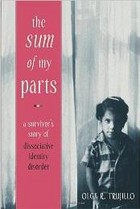
Book Review: The Sum of My Parts: A Survivor’s Story of Dissociative Identity Disorder by Olga Trujillo, JD
 Summary:
Olga was a young, successful lawyer in DC when she suddenly started having inexplicable panic attacks and episodes of blank stares or rapidly moving eyes. She sees a psychiatrist and is diagnosed with a moderate case on DID. On the spectrum, she has multiple parts but not exclusive personalities and still has a central core. These parts have kept the memories of her extraordinarily violent, abusive childhood from her consciousness thereby allowing her to function, but just barely. In her memoir, Olga tells what she has now remembered of her childhood and how she has now discovered she managed to function and be surprisingly resilient. She then delves into her long-term therapy and how she has come together into mostly one part and usually no longer dissociates.
Review:
I always find memoirs by those with DID or dissociation completely fascinating. Even just the ability to write the book and explain the disorder from the insider’s perspective is a remarkable achievement. I previously read When Rabbit Howls
Olga offers up a very precise trigger warning of which chapters could be dangerous for fellow trauma survivors. That said, I found her reporting of what occurred to her to be respectful of herself as a person. She never shirks from what happened to her, but is sure to couch it in concise, clinical language. I respect this decision on her part, and again believe it will make her book more accessible to a wider audience. People can see the results of the trauma without finding themselves witnesses to the trauma itself.
The book right up through about halfway through her therapy is clear and detailed, but then starts to feel rushed and more vague. Perhaps this is out of respect for the people currently in her life, but personally I wanted to know more. For instance, how was she able to make a drastic move from DC to the middle of the country without upsetting her healing process? How do the phone sessions with her therapist work? I think many advocates of those with mental illness would appreciate more detail on how she is able to have a healthy, happy relationship now, especially since we witness the dissolution of her first marriage. Similarly, I wanted to know more about her coming out process. She states that she knew at 12 she was a lesbian, but pretty much leaves it at that. I’m sure it was easier to embrace her sexuality the more integrated her parts became, but I am still interested in the process. She was so brave recounting her early life that I wonder at the exclusion of these details.
Overall this is a well-written memoir of both childhood abuse, therapy for DID, and living with DID. Olga is an inspirational person, overcoming so much to achieve both acclaim in her career and a happy home life. I recommend it to a wide range of people from those interested in the immigrant experience to those interested in living with a mental illness.
4 out of 5 stars
Length: 258 pages – average but on the shorter side
Source: NetGalley
Buy It (Amazon or Bookshop.org)
If you found this review helpful, please consider tipping me on ko-fi, checking out my digital items available in my ko-fi shop, buying one of my publications, or using one of my referral/coupon codes. Thank you for your support!
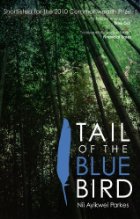
Book Review: Tail of the Blue Bird by Nii Ayikwei Parkes (Ghanaian Lit Week)
 Summary:
When the girlfriend of the minister for roads and highways spots a disgusting red lump of flesh in a hut in the village Sonokrom, what normally would have been ignored and left to the villagers suddenly becomes a matter of national importance. Inspector Donkor wants a promotion, and he believes that one of the only forensics specialists in Ghana–Kayo–can get it for him.
What Kayo finds in the village is a people still steeped in the culture of the countryside, in touch with Onyame and the ancestors, drinkers of palm wine mixed with aphrodisiacs. Although he arrives with the mind of a scientist, soon his perceptions begin to change.
Review:
Kinna is one of the international bloggers I discovered through Amy, and she is awesome! She lives and works in Ghana and is interested in spreading literacy and love of reading in her own country, as well as interest in African lit everywhere. So when she announced that she was hosting a week in hour of Ghanaian lit, I knew I wanted to participate. Using the wonderful resource of tags in LibraryThing, I hunted down a book that LibraryThing was “mostly sure” I would like and ordered it from my library. Yet again, the book blogging world has brought me to a book I never would have read otherwise, but am glad I did.
This book reminds me a lot of The Summoner, only with the distinct bonus that it is a crime mystery set in Africa written by an African instead of a westerner who has visited. This means our detective hero is distinctly Ghanaian. Like all detectives, he drinks, but his drink of choice is palm wine enhanced by the village medicine man. Just typing out that sentence gave me the shivers of delight I got when I was reading the scenes of drinking and eating in the hut, which is the village pub managed by a woman and her adult daughter. It felt simultaneously familiar and new, which is one of the thrills of reading literature not written by one of your own countrymen.
Unlike western detective stories though, Parkes does not seem to feel a need to give a scientific explanation for every mysterious event that occurs. In fact, it is actually easier to believe the magical explanation than to wonder about the scientific explanation. For that reason I would definitely categorize this as “magical realism.” It is almost as if Sonokrom is a world unto itself, existing in some sort of parallel universe where magic is just an ordinary part of life.
The characters are all richly drawn and well-rounded. I had no trouble telling them apart in my mind. The method of switching perspectives from Kayo to the old man in the village works well. It allows the reader to see both the scientific and traditional perspectives and make up her own mind.
Some people may be bothered by the ambiguous/open-ended ending, but personally I feel that this is what the story needs. It leaves the reader to ponder upon the values of both tradition and modernity. Perhaps that is the point of the whole story.
Now, the book does throw in some Twi words here and there, but those are easily decipherable by context. The more difficult aspect as a non-African reader is the presence of Pidgin. Since whole sentences are written in Pidgin they were much more challenging for me. I must admit this small book took me quite a while to finish, compared to my usual reading rate. The Pidgin is not impossible, though, particularly if you have read widely among the various American dialects. An English dialect is an English dialect, after all.
Overall, I recommend this to those who enjoy both mystery and magical realism and don’t mind exploring a new dialect.
4 out of 5 stars
Length: 200 pages – average but on the shorter side
Source: Public Library
Buy It (Amazon or Bookshop.org)
If you found this review helpful, please consider tipping me on ko-fi, checking out my digital items available in my ko-fi shop, buying one of my publications, or using one of my referral/coupon codes. Thank you for your support!
Book Review: Lucky Stiff by Tonia Brown
 Summary:
Peter’s just a young 18 on his first spring break to New Orleans with his friends when he accidentally takes ecstasy instead of sleeping pills and dies. His friends, terrified, drag his corpse off to a local voodoo priestess who raises him with her special kind of magic–tantric magic. Somehow this method of raising Peter combined with the time of year makes Peter into a very special kind of zombie. One who can feed off of female orgasms instead of human flesh if he so chooses.
Review:
In case it’s not abundantly clear from the summary, this is an erotica novel. A zombie erotica novel. Frankly if you’re not grossed out by vampire undead sex, then this book shouldn’t bother you at all. It’s not like Peter decays (don’t worry, Brown takes care of that part logically). So it’s less sex with a decaying corpse and more sex with an undead dude.
Brown’s concept is hilarious and well-executed. Peter is a zombie with a permanent hard-on who can’t come but needs female orgasms to feed off of to keep him from going all cold-blooded killer. Um possibly the best female-friendly set-up for a paranormal erotica ever? Since he died a virgin, he starts off with the Madam learning how to pleasure a lady for five years, then he gets booted out to go find his own way and become a pick-up artist. He’s completely focused on and fascinated with the female orgasm. You might even call it a fetish. ;-)
It doesn’t matter if I can’t come as long as I can be a part of it when you do. (page 15)
On top of the fun and varied sex scenes though there’s lots of well-conceived plot. Peter has issues he has to deal with. He basically has to grow the fuck up enough to be able to handle a monogamous relationship and recognize real love for what it is. For instance, at first he thinks he’s in love with the Madam, but she tells him:
Sex is just sex. Sometimes it’s really good, true, but it’s nothing in da grand scheme a’ things. We may have fucked, but we never made love. (page 87)
In other words, he only thinks he loves her because he lost his virginity to her. He needs to go out and learn what real love is. That combined with navigating morality and your faith (he becomes a voodoo convert loyal to La Croix) are at the center of the plot.
Brown also drops in various witticisms that exhibit wisdom but are simultaneously hilariously dripping in paranormality:
The trick to being undead, much like being monogamous, is keeping everything fresh. (page 33)
Bits like that kept me laughing out loud whenever I wasn’t caught up in the erotica.
Alas, sometimes the dialogue is a bit stiff (haha, sorry, couldn’t resist). Ahem, in all seriousness, sometimes the dialogue felt a bit forced and unnatural. Similarly, I was bothered that, although Peter clearly is bisexual (he makes multiple comments about wanting to try things out with men in addition to women), for some reason male orgasms are too violent or pointed or whatever for him to be able to feed off of them. Um, I’m sorry, but this isn’t logical. At the very least it would make that if Peter gave head to a guy it would feed him, yes? It felt like Brown wanted to be edgy by making Peter almost bi, but refused to really go all the way. A great example of this is that Peter tries sex with a dude once, but only in the context of a threesome, and it’s the only sex scene not written as erotica. It’s simply briefly mentioned in past tense. I really wish Brown had gone all the way and made Peter bi. It’d be interesting to see that here. Alternatively, to just make Peter totally straight would’ve been fine too. This fine walking of the line rubs me the wrong way though.
Overall this is a fun erotica with a unique storyline that manages to make zombies sexy with a heavy dash of voodoo. I recommend it to those who love zombies and erotica fairly equally. I’m betting, knowing the people that I know, that this is not as small a portion of the population as some may think.
If you found this review helpful, please consider tipping me on ko-fi, checking out my digital items available in my ko-fi shop, buying one of my publications, or using one of my referral/coupon codes. Thank you for your support
4 out of 5 stars
Length: 248 pages – average but on the shorter side
Source: purchased
Buy It (Amazon. Not available on Bookshop.org.)
Book Review: White Fang by Jack London
 Summary:
White Fang is born in the wild 1/4 dog and 3/4 wolf. He soon finds himself back in the realm of man when his mother returns to the Indian camp she had left. Thus begins the struggle between White Fang’s desire for the companionship of the human gods and the call of the wild inside him.
Review:
This companion novel to The Call of the Wild flips the original story on its head. Instead of it being a dog feeling the call of the wild, we have a wolf feeling the call of the companionship of man, in spite of mistreatment. The story doesn’t quite work as well when reversed in that way, though.
Both White Fang and Buck suffer mistreatment at the hands of men that is incredibly painful for an animal lover to read about. Whereas this served to make it understandable why Buck leaves for the wild, though, it makes it difficult to understand why White Fang doesn’t do the same. Yes, eventually he meets a master who loves him and cares for him, but for years prior that is not the case. Perhaps London is attempting to demonstrate the intense loyalty of dogs to their masters whether or not they deserve it. It is true that animal rights workers see this sort of situation over and over again, yet White Fang is mostly wolf. It is difficult to believe his wild nature would not take over at some point, particularly when being mistreated. If this story was told of a dog and not a wolf, it would make more sense.
That said, London’s strength at delving into the animal world without personifying them to be more human than they are is still incredibly strong here. The animals are not personified but they are humanized. By that I mean, their personalities and instincts are clear and understandable. It is difficult to imagine anyone reading this book then proceeding to abuse an animal. They are truly remarkable creatures, London excels at demonstrating this.
Overall, this book is not as amazing as The Call of the Wild but it is well-worth the read for more time spent seeing animals through Jack London’s eyes. Recommended.
4 out of 5 stars
Length: 208 pages – average but on the shorter side
Source: Purchased

Buy It (Amazon or Bookshop.org)
Companion Book:
The Call of the Wild, review
If you found this review helpful, please consider tipping me on ko-fi, checking out my digital items available in my ko-fi shop, buying one of my publications, or using one of my referral/coupon codes. Thank you for your support!
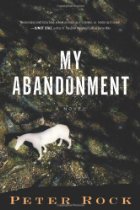
Book Review: My Abandonment by Peter Rock
 Summary:
Thirteen-year-old Caroline lives in Forest Park with her father. They have to be very quiet and careful because regular folk don’t understand why they want to live like they do. They even have to keep away from the other men that live in the park too. Caroline doesn’t mind this way of life. In fact, she prefers it. She likes being out in nature and learning everything she can from her father and from encyclopedias and library books. She even doesn’t mind fasting on Fridays. You get used to it. One day though, she makes a mistake. Will it change her and her father’s way of life forever?
Review:
What makes this book is the surprise, which I refuse to give away in my review. At first, I admit, I was a bit bored with the story. It felt like a less-interesting version of Room, only with a boy instead of a girl and the pair living set off from society willfully. When the twist came I was frankly shocked, and it set my mind reeling about the whole story. To this moment I cannot stop thinking and re-thinking about Caroline’s life. How her raising affected her and whether or not this is a bad thing.
I do think that Rock takes a bit too long to reveal the twist. I was losing patience for a solid while before it came around. Perhaps more clues should have been dropped earlier on or something to keep the reader guessing that perhaps not everything is as it seems in Caroline’s life. Additionally, the writing style in the first few chapters is an odd mix of intelligent and irritatingly simple. It is Caroline speaking, but she’s also an intelligent 13. This whole facade is dropped within a few chapters, so I see no reason to start the book out in that manner. It was a bit off-putting.
Overall, however, it does turn out to be a unique story. More importantly, it leaves the reader questioning what she thinks she knows about the world and alternative ways of living. I recommend it to fans of contemporary literature featuring a twist.
3.5 out of 5 stars
Length: 225 pages – average but on the shorter side
Source: Purchased
Buy It (Amazon or Bookshop.org)
If you found this review helpful, please consider tipping me on ko-fi, checking out my digital items available in my ko-fi shop, buying one of my publications, or using one of my referral/coupon codes. Thank you for your support!
Book Review: God Bless You, Mr. Rosewater by Kurt Vonnegut

Summary:
A satire on free enterprise, money, and capitalism in America told by examining the fictional Rosewaters–an uber-wealthy American family whose ancestor acquired his wealth by essentially profiteering during the Civil War. The current Rosewater fights in WWII and returns with two crazy ideas. First, that everyone deserves to be equally happy. Second, that people who inherited wealth did nothing to deserve it. He responds to this conundrum of conscience by returning to his ancestor’s hometown and using the Rosewater Foundation to help the “useless poor.” In the meantime, a lawyer by the name of Mushari decides to attempt to prove that Mr. Rosewater is insane, and the foundation money should be handed off to his cousin, currently a suicidal, middle-class insurance man.
Review:
How to review Vonnegut? Upheld as the epitome of 20th century American writing. He is certainly prolific, and some of his books absolutely deserve the high praise (Slaughterhouse-Five
I think part of the problem stems from the fact that the first third of the book is focused on Eliot Rosewater, the next on his cousin, and the last on Eliot again. Just as I was getting into Eliot’s story, it switched to his cousin. Then when I was getting into his cousin’s story, it switched back to Eliot. To top it all off, the ending left me with little to no resolution on either one. Maybe Vonnegut’s point is that capitalism either makes you crazy or depressed with no way out? I’m not sure.
That’s not to say that this wasn’t a fun read, though. Vonnegut crafts the mid-western town Eliot lives in and the Rhodes Island seacoast town his cousin lives in with delicious detail. What is interesting about both are of course the people in the towns surrounding the main characters, and not the main characters themselves. In particular the Rhodes Island town is full of surprisingly well-rounded secondary characters from the cousin’s wife who’s experimenting in a lesbian relationship, to the local fisherman and his sons, to the local restaurant owner who is intensely fabulous (yes, the gay kind of fabulous. There’s quite a bit of LGBTQIA+ in this book). I was so interested in this town. This was a town that actually demonstrated the problems innate in some people having too much money while others don’t have enough. This was so much more interesting than Rosewater’s sojourn in Indiana. But then! Just when I was really getting into it and thinking this book might approach Slaughterhouse-Five
Much more interesting than the heavy-handed money message was the much more subtle one on the impact of war. Mr. Rosewater’s sanity issues go back to WWII. I won’t tell you what happened, because the reveal is quite powerful. Suffice to say, Vonnegut clearly understood the impact WWII had on an entire generation and clearly thought about the impact of war on humanity in general. In this way, this book is quite like Slaughterhouse-Five
Overall, if you’re a Vonnegut enthusiast, enjoy reading for setting and character studies, and don’t mind a message that’s a bit heavy-handed, you will enjoy this book. Folks just looking for a feel of what makes Vonnegut held in such high esteem should stick to Slaughterhouse-Five
If you found this review helpful, please consider tipping me on ko-fi, checking out my digital items available in my ko-fi shop, buying one of my publications, or using one of my referral/coupon codes. Thank you for your support!
3.5 out of 5
Length: 190 pages – average but on the shorter side
Source: PaperBackSwap
Buy It (Amazon or Bookshop.org)
 Support my work with a tip or browse my shop for curated book club guides, how to guides, cross-stitch patterns, and more!


This work by Amanda Nevius is licensed under a Creative Commons Attribution-Noncommercial-No Derivative Works 3.0 United States License.
 Opinions of a Wolf