
Archive
Book Review and Giveaway: A Harvest of Ripe Figs by Shira Glassman (Series, #3)
 Summary:
Esther of the Singing Hands is Perach’s Sweetheart, a young and beautiful musician with a Girl Next Door image. When her violin is stolen after a concert in the capital city, she doesn’t expect the queen herself to show up, intent upon solving the mystery. But Queen Shulamit — lesbian, intellectual, and mother of the six-month-old crown princess — loves to play detective. With the help of her legendary bodyguard Rivka and her dragon, and with the support of her partner Aviva the Chef, Shulamit turns her mind toward the solution — which she quickly begins to suspect involves the use of illegal magic that could threaten the safety of her citizens.
Review:
When this was submitted to me as a possible review copy for 2016, I was immediately intrigued by a queer fantasy cozy. Often LGBTQ books can land too much in the “issues” genre or the romance genre. This is a place where indie books excel. Traditional publishing can be a bit hesitant to offer up any other genre with queer people at the center, but indie books know that there is a demand for this. LGBTQ people read all genres, why shouldn’t our books represent that? After I read this book I wanted to advertise it from the rooftops for precisely that audience — LGBTQ people who just want to see themselves represented in their favorite genre of literature.
If you’ve ever wanted a cozy fantasy series where the main characters just so happen to be queer, this is the series for you. And don’t worry about reading out of order if you happen to start with this one. In traditional cozy fashion, each tale is perfectly capable of standing on its own, and you can read them in whatever order you like.
The one thing I would say for cozy readers is while most of this book is traditionally cozy (not too violent of a mystery, a lovely town you’d love to visit) the sex in it is more explicit than what is traditionally found in a cozy. Rather than fading to black we get some light (very light) sex scenes. I enjoyed these scenes but readers who don’t expect that in a cozy should be aware.
In addition to there being multiple queer characters, not to just one, (lesbian, bisexual, gender nonconforming, trans), feminism is also a natural part of the read. Women are in positions of power without giving up their femininity or other life choices, such as having a baby. Sometimes Shulamit, the queen, can verge into a bit preachy, but I felt that was acceptable since she is a queen, after all, and rulers have a tendency to be preachy.
In addition to the diverse cast with a strong female presence, this fantasy land is centered around Judaism and what I believe to be a Middle Eastern inspired area. It’s a non-medieval Europe fantasy, and we all know how hard those are to find. While I am not Jewish myself, I have close friends who are, and I know how hard it can be for them at times to feel that their culture isn’t represented in fictional universes. I think having a kingdom that is undoubtedly Jewish would be something many of them would enjoy. A fantasy world where shops need to close up by sunset on Friday, for instance.
The mystery was probably my favorite part of the book. I truly wasn’t 100% certain who’d done it throughout the book, and I thought that it was both a crime of serious nature with an important time frame for solving it without being bloody.
While I enjoyed visiting the world Glassman has imagined what I thought most while reading this was how much I wanted to help get it out to the audience whose hearts would thrill to see themselves represented in the genres they enjoy most. If you’re a queer and/or Jewish reader who wants representation in fantasy and/or cozies, you must try out this series.
If you found this review helpful, please consider tipping me on ko-fi, checking out my digital items available in my ko-fi shop, buying one of my publications, or using one of my referral/coupon codes. Thank you for your support!
4 out of 5 stars
Source: Kindle copy from author in exchange for my honest review
Length: 228 pages – average but on the shorter side
Giveaway!
This giveaway is now over. Congrats to our winner!
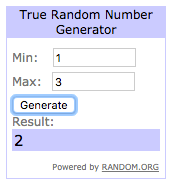
There were 3 entries, 1 via twitter and 2 via comments. Twitter entries were collected into the sheet first, followed by blog comments, in order. Random.org selected entry 2 as the winner, and the second entry on the sheet was dialmformara. Congrats!
Thanks to the generosity of the author, one lucky Opinions of a Wolf reader can win a copy of this ebook.
How to Enter:
- Leave a comment on this post stating what genre you would like to see more representation in of LGBTQ or other minority groups.
- Copy/paste the following and tweet it from your public twitter. Retweets do not count:
Enter to win A HARVEST OF RIPE FIGS by @ShiraGlassman, hosted by @McNeilAuthor http://buff.ly/2g09G9V #ff #cozy #giveaway #fantasy - Repost the Instagram giveaway announcement and tag my Instagram.
- Tag three of your friends on the Instagram giveaway announcement.
Each options gets you one entry. Multiple tweets/Instagram posts do not count as multiple entries.
Who Can Enter: International
Contest Ends: December 11th at midnight
Disclaimer: The winner will have their book sent to them by the author. The blogger is not responsible for sending the book. Void where prohibited by law.
Book Review: Three to Get Lei’d by Jill Marie Landis (Series, #3)
 Summary:
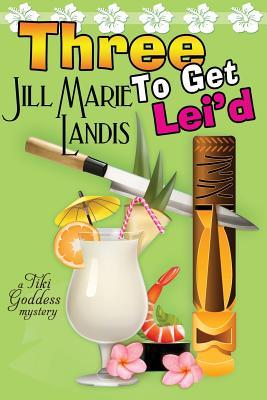
A jigger of tranquility is all Em Johnson wants, but now that her beloved Tiki Goddess Bar has been chosen as the location for Trouble in Paradise, TV’s hot new reality show, life is anything but tranquil. When a member of the camera crew is found dead in her kitchen-stabbed to death with Chef Kimo’s sashimi knife-the scene on the sleepy North Shore of Kauai goes from eccentrically crazy to downright dangerous. Suspects lurk behind every paper drink umbrella.
Review:
This book brought back all the strengths from the first book with the added delight of everyone at the Tiki Goddess Bar being featured on a reality tv show. As a (not-so-secret) lover of reality tv for the over-the-top ridiculousness and a lover of cozies for their delightful tongue-in-cheek puns and ability to not take themselves too seriously, the marriage of the two in this book was sheer delight.
A couple of scenes in particular struck me as the type of mad-cap tom-foolery seen in older 1920s romps, only with the added twist of reality tv cameras following the moves. I honestly would love to see a “The Office” style take on this series…a fake reality tv show version of the Tiki Godess Bar. That’d be a hoot! Anyway, one scene I really enjoyed involves the Hula Maidens in hula costume sneaking around on a golf course. Delightful.
I also like that the plot, although a bit predictable, weaves in a few different elements of various characters’ lives and stories. Em’s life moves forward, as does her uncle’s. Nothing is stagnant, just because murder is happening. I also thought grief and concern for loved ones’ safety were depicted well and realistically without slowing the plot down or removing the joy from the narrative.
All-in-all, a fun entry in the series that left me eager for the next one….and hoping the reality show will be back!
If you found this review helpful, please consider tipping me on ko-fi, checking out my digital items available in my ko-fi shop, buying one of my publications, or using one of my referral/coupon codes. Thank you for your support!
4 out of 5 stars
Length: 248 pages – average but on the shorter side
Source: Gift
Previous Books in Series:
Mai Tai One On, review
Two to Mango, review
Book Review: Into the Wild by Jon Krakauer
 Summary:
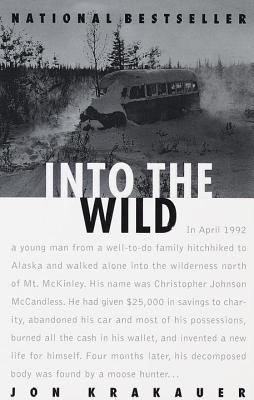
In April 1992 a young man from a well-to-do family hitchhiked to Alaska and walked alone into the wilderness north of Mt. McKinley. His name was Christopher Johnson McCandless. He had given $25,000 in savings to charity, abandoned his car and most of his possessions, burned all the cash in his wallet, and invented a new life for himself. Four months later, his decomposed body was found by a party of moose hunters. Krakauer found himself fascinated by this young man and set out to tell his story.
Review:
I read this in print, which meant everyone could see what book I was reading (at work, on the bus), and I must say I was surprised at how polarizing McCandless (who primarily called himself Alex) is. Some people find his obsession with living off-grid admirable, while others found it wasteful and irresponsible. Regardless of what you think of Alex, Krakauer presents his story in an engaging way, starting with the bare facts of how he was discovered and then taking the reader through his own investigation into who Alex was.
I feel like a lot of us know a person who is some flavor of Alex. Someone who grew up with the world his oyster but pushed it away in pursuit of simpler things. Some people take this to a reasonable level. For instance, they might refuse the $25,000 in savings from their parents but also not give it away to charity. Or they might give that money away but keep enough to get started on, not actually burn money. It’s very interesting to me how many people react with such utter disdain for Alex burning the money. I think it’s a clear example of an act of youthful passion. He really believed in this way of life. He really wanted to distance himself from his family. So he destroyed something. I wonder, when people react so strongly to this, whether they, in their youth, were never moved to destroy something in a symbolic manner? Perhaps some people are just not so possessed by the passion of youth.
In any case, while Krakauer’s own opinion of Alex is pretty clear by the end of the book, he does a good job holding it off for quite a while, letting the reader make up their own mind. I also think he might not realize he does this but he draws some interesting parallels to Walden and Thoreau that might make people who dislike Alex realize the privilege Walden and Thoreau were exercising in choosing to “go into the woods” but a woods they could leave at any time.
As a person who grew up in a very rural area with a father who hunted and fished and a family who grew our own garden of food and learned to shoot a rifle at a young age, I understand many Alaskans’ disdain for Alex. There’s something insulting about someone who has studied and learned nothing or next to nothing about surviving off the land just waltzing in and claiming they can do it. And often these people put the locals who live there in danger, whether by needing rescuing or causing wildfires or what have you. I get that. But I also get the impulse those who were raised far from the land with too much handed to them on a platter have to go out and prove they can do it on their own. For a long time I myself couldn’t understand the downsides of coming from money but I have come to learn them from observing others who come from money. There is a certain freedom in family and money not going hand-in-hand and in being pushed into adulthood and making it on your own early.
If this clash of those living on the land and those desiring to abandon it all and live on the land intrigues you, you’ll enjoy this book. It’s well-written, even-handed, and demonstrates the value in taking a moment to consider other perspectives and not jump to heated conclusions.
If you found this review helpful, please consider tipping me on ko-fi, checking out my digital items available in my ko-fi shop, buying one of my publications, or using one of my referral/coupon codes. Thank you for your support!
4 out of 5 stars
Length: 203 pages – average but on the shorter side
Source: Borrowed
Book Review: Berried Secrets by Peg Cochran (Series, #1)
 Summary:
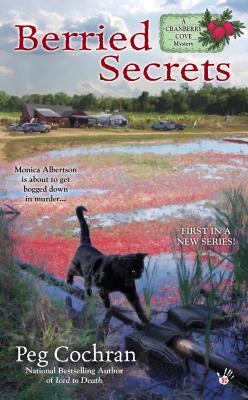
When Monica Albertson comes to Cranberry Cove—a charming town on the eastern shore of Lake Michigan—to help her half-brother Jeff on his cranberry farm, the last thing she expects to harvest is a dead body.
It seems that Sam Culbert, who ran the farm while Jeff was deployed overseas, had some juicy secrets that soon prove fatal, and Jeff is ripe for the picking as a prime suspect. Forming an uneasy alliance with her high-maintenance stepmother, Monica has her hands full trying to save the farm while searching for a killer. Culbert made plenty of enemies in the quaint small town…but which one was desperate enough to kill?
Review:
So I just had to pick this up for three reasons:
1) I love me a punny title.
2) I had just harvested cranberries with my husband, friend, and my friend’s wife on a farm in MA.
3) It’s set in Michigan where my husband is from.
That’s a lot going for it, and I don’t have too high of a bar with cozies (I just want to be entertained, for the resolution to the mystery to not be painfully obvious, and for the main character to be likeable OR someone you love to hate). This one didn’t meet the bar, though, which was a bit disappointing.
The plot itself was good. I didn’t fully guess it before the end, and I liked the small town secrets aspect of it. But the main character. Yeesh. What a judgmental woman. Sometimes it seemed like all she did was judge people who had never done anything to her. And not even just the people in the small town who she judges and then comes to love by the end of the book. No, no. She’s judgey of everyone. Even people she’s known for years. The one repeated instance of her being judgey that really rubbed me the wrong way was the main character loathes her stepmother, and the only reason I can decipher is because she doesn’t like the way she dresses. And she makes snarky asides about that a lot. The stepmother is actually a very kind woman who goes out of her way to help the main character, which makes the behavior even more inexcusable. This may not bother some readers, but the main character struck me as an uptight “I know what’s best for everyone” snob, and I didn’t get the impression that readers were supposed to feel that way about her. She felt very much like a character we were supposed to admire and identify with. So. That really spoiled the rest of it for me.
I didn’t regret the read, but I won’t be going back for the rest of the series. Honestly, there’s enough other cozies out there that I wouldn’t recommend going out of your way to read this one, but if you’re hurting for one currently and just love any and all cozies then you’ll probably find a way to enjoy this one, in spite of the main character.
If you found this review helpful, please consider tipping me on ko-fi, checking out my digital items available in my ko-fi shop, buying one of my publications, or using one of my referral/coupon codes. Thank you for your support!
3 out of 5 stars
Length: 292 pages – average but on the shorter side
Source: Amazon
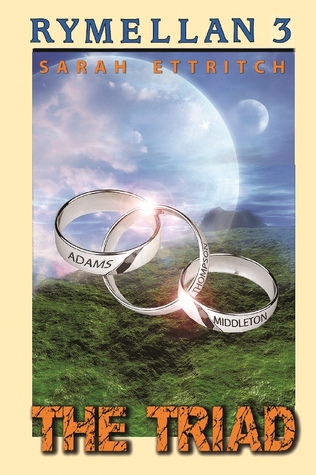
Book Review: Rymellan 3: The Triad by Sarah Ettritch (Series, #3)
 Summary:
Lesley and Mo’s relationship is tested when Mo develops feelings for Jayne and the arrangement the triad struck in Rymellan 2 comes to an end. The three women know they must adapt to the inevitable changes for the triad to thrive, but the triad’s shifting dynamics would challenge the strongest of Rymellans—and does.
Review:
The second book in this series ended on such a cliffhanger that I picked up the third right away. At the time, I wasn’t sure if there would be more in the series or if this would be it. Since then, I discovered another book that has published but I don’t think I’ll be picking it up. The third book left me feeling a bit strung along with questions and no answers for too long for me to keep going.
So Lesley and Mo who we the readers presumed to be soul mates from book one find out in book two that the all-powerful government matchmakers have determined that they actually have a third soul mate and will be formed into a triad. This whole book strikes me as very similar to a real world monogamous couple where one of them falls in love with a third and them trying to make the move into polyamory. Say what you will about the government matchmaking them but their arrangement was to essentially be a couple with a live-in friend and roommate who they consult on household things. The plan was never for anyone to fall in love. But of course (because they’re Chosens) first one then eventually the other does fall in love with Jane. Thus, in spite of the government aspect, it still is essentially the same as a real world couple making the move to polyamory.
Why am I bothering to explain this? Because a lot of the book is dealing with the angst of a couple deciding to become poly. That is a plot point that will either work or not work for a lot of readers. I’m not sure how I feel about a series that starts out as being so strongly a romance between two moving into a poly romance. I’m sure many poly readers would say that’s how they themselves discovered polyamory and enjoyed it. But for me I was expecting one style of story which I really enjoy (lovers having to overcome many things to be together) and instead I got another that I feel very meh about personally (a couple choosing to open things up to polyamory). I guess what I’m saying is I think it might be difficult for the audience for this series to find it because the poly aspect is a surprising plot twist.
The other big change in this book over the others in the series was that the sinisterness of where the society they live in really hangs over this book, and what makes it extra eerie is they don’t seem to realize just how sinister it is. In a book with romance at the center, it’s an odd feeling to have.
While I’m glad to have seen where Lesley and Mo end up, this read to me as a bit of a lukewarm tragedy that didn’t realize it is one. I’d have preferred an obvious happy ever after or a truly dramatic tragedy. However, readers simply looking for a couple that turns into a romantic trio in a scifi backdrop that’s not explained will eat up this series, and I do recommend it to those readers.
If you found this review helpful, please consider tipping me on ko-fi, checking out my digital items available in my ko-fi shop, buying one of my publications, or using one of my referral/coupon codes. Thank you for your support!
3 out of 5 stars
Length: 278 pages – average but on the shorter side
Source: Amazon
Previous Books in Series:
Rymellan 1: Disobedience Means Death, review
Rymellan 2: Shattered Lives, review
Book Review: Bellwether by Connie Willis
 Summary:
Sandra Foster studies fads and their meanings for the HiTek corporation. Bennet O’Reilly works with monkey group behavior and chaos theory for the same company. When the two are thrust together due to a misdelivered package and a run of seemingly bad luck, they find a joint project in a flock of sheep.
Review:
This was given to me eons ago because of how much I love To Say Nothing of the Dog (review) by Connie Willis. This book has a similar sense of humor that definitely kept me entertained but the plot and backstory that ties it all together didn’t hit quite the same loved it nerve with me.
I loved seeing a book set in the mountain range area of the country (Colorado to be precise). I feel like this doesn’t happen often enough in books. I also found there was a real nostalgia quality to the book because it was first published in 1996 and set in its own time-period, so the whole thing just screamed 90s nostalgia to me. This played in well to Sandra’s fad studies. It gave the book a good reason to notice and talk about the fads, and this held up well over time. What originally was a “oh look at this silly thing people are doing right now” became “hey remember when West Coast coffee was first a thing?” I also really appreciated that a social science was featured at the core of a scifi book. Not just that but a scientist of a science deemed more important and sciencey (chaos theory) ends up working with her and respecting her research and its methods. Super cool.
While I thought the research study was cool, I wasn’t as huge of a fan of the competition to receive the grant of a lifetime plot. I appreciated Sandra working to save her job, but the big grant loomed overhead from the very beginning like a deus ex machina. Sandra’s disdain for her coworkers wanting to ban smoking from the building as a fad really didn’t translate well over time. This wasn’t a fad; it was a public health policy, and it rubbed me wrong every time Sandra implied it was like the whole are eggs good or bad for you debate. Second-hand smoke is just bad for you, and unlike a coworker eating an egg, it can actually impact your health if you’re around it. I’m sure it was funnier in the 90s but it didn’t work so well now, and it honestly made me dislike Sandra a bit.
Overall, scifi fans looking for a humorous plot with a female lead, an unusual focus on the social sciences with a dash of 1990s nostalgia will enjoy this book.
If you found this review helpful, please consider tipping me on ko-fi, checking out my digital items available in my ko-fi shop, buying one of my publications, or using one of my referral/coupon codes. Thank you for your support!
4 out of 5 stars
Length: 248 pages – average but on the shorter side
Source: Gift
Counts For:
Bottom of TBR Pile Challenge
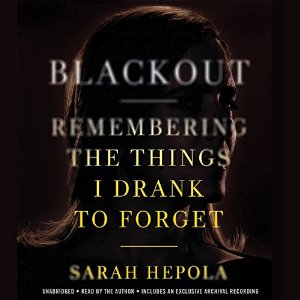
Book Review: Blackout: Remembering the Things I Drank to Forget by Sarah Hepola (Audiobook narrated by Sarah Hepola)
 Summary:
“It’s such a savage thing to lose your memory, but the crazy thing is, it doesn’t hurt one bit. A blackout doesn’t sting, or stab, or leave a scar when it robs you. Close your eyes and open them again. That’s what a blackout feels like.”
For years Sarah Hepola ignored her blackouts. She was a young woman with a successful writing career living in New York City. She was empowered, and part of embracing equality was drinking like one of the guys. But while littering her writing with references to drinking and laughing off her drunken escapades, she actually spent her daytimes cleaning up after her blackouts. Figuring out how she scraped up her knees or tracking down her purse. Eventually, she realized that drinking wasn’t making her the life of the party and one of the guys. It was stealing who she was, and it was time to get herself back.
Review:
I have a thing for addiction memoirs (and addiction documentaries….movies…tv shows…). But I have often found myself puzzled by the female drinking memoir. Often presented as a woman (usually a wife and mother) who appears to have it all and hides all of her drinking because women don’t drink. I’m sorry, but as a Millennial, that’s not the kind of drinking I’ve seen women in my generation partake in. Drinking was considered unladylike by generations even as recent as the one right before ours (that my brother is in). But in mine? What I often saw was women proving their coolness by keeping up with the guys. These women would never hide wine. They’d take shots and get praised for it. So when I saw this memoir talking about the impact on women of drinking like one of the guys; of how this equality of substance abuse is really impacting women, I had a sense it was going to be something good and insightful, and I was right.
Sarah Hepola shows the reader through a clear lens exactly how the different perceptions of women and alcohol impacted her drinking, and thus how they might impact other women. The book starts with some context of how young women are both encouraged by their peers to binge drink but then are also blamed by them when bad things happen to them when they are drunk. She then moves on to talking about her own childhood when she would steal sips of beer from open cans in the fridge, and how her parents never suspected she was sneaking beer because little girls wouldn’t do that. She then gradually brings us up through time and shows us how with drinking she was subconsciously trying to pursue both fitting in and equality. She drank to fit in and be cool in college. She drank with co-workers on her male-dominated first job to be one of the guys and get the same networking opportunities they got after work by going out for beers. She liked that it wasn’t necessarily feminine. She liked feeling strong and empowered.
By embracing something that is perceived of by the culture as hyper-masculine, like binge drinking, women are seeking to be taken seriously and viewed as equals. Women do this in other areas too. Just look at power suits or the short haircuts preferred by women in positions of power. Our culture devalues what is perceived of as feminine and elevates what is perceived of as masculine. There are many issues with this, which I can’t go into in a short book review, but what matters about this for women and alcohol is that women’s bodies just don’t biologically process alcohol the same way men’s bodies do. Sarah Hepola goes into this in quite some detail, but essentially, women get drunker faster on less alcohol than men do, which means women black out more easily, and blackouts are dangerous. They make anyone vulnerable, but they make women particularly vulnerable to things like date rape.
Sarah Hepola does a much more eloquent job in the book than I am doing here in the review of illuminating how gender and alcohol mix to make the modern alcoholic young woman. And the book doesn’t just detail the dramatics of her youthful drinking. She also goes into great detail about what it was like to stop. To find the empowerment of being completely in control again and not losing parts of herself and her life to blackouts. She talks about her sober life and how exciting it is, and she even talks about finding some spirituality. Most importantly to me, she discusses how women in western culture today are often told we are equal but are able to sense that things that are feminine are just not taken seriously. So they pursue the masculine to be taken more seriously and in some cases the masculine is simply not helpful. It is harmful. Sometimes, in cases like with binge drinking, it’s even more dangerous for women than for men. I believe the book offers some hope when Hepola talks about finding strength in her sober living and in her accomplishments at facing life as a single woman.
Those listening to the audiobook will be entranced by Hepola’s own voice telling the story. I couldn’t stop listening and listened every second I could. One of the more haunting moments of the audiobook is when toward the end Hepola introduces a tape recording she made as a teenager discussing a sexual encounter she had while drunk with a much older boy. Hearing the incredibly young voice of a woman already being drawn into the harmful world of addiction was heartbreaking to listen to and made me want to fix things, even though I wasn’t totally sure how.
This book left me realizing that the reality of women and alcohol has changed, and the cultural narrative needs to catch up with it. Women aren’t drinking in closets to dull their feminine mystique pain anymore. They’re drinking loud and proud because they want to be empowered and taken seriously and yes, even perceived of as cool. While we can talk about finding more positive ways of empowerment, I think it’s also important that we as a culture strive to stop putting innate positive value on the masculine and negative on the feminine. Things should be valued based on their impact on the world and not on the gender norm of who does it. And young women will stop feeling pressured to act like a man when men and women are equally valued. All of these things I am saying play into male drinking as well. If you think zero young men are binge drinking to be seen of as more of a man, you’re very wrong. We just see less of the immediate negative impact of male binge drinking because women black out so much more easily.
Hepola wrote a brave book that illuminates the issue of binge drinking among young women today. It’s both personal and with an eye to the culture as a whole, thinking beyond just the author herself. Readers will be haunted both by the voice of the young Sarah and by the thought of young women seeking to empower themselves actually making themselves more vulnerable. A key read for anyone who works with or cares about these younger generations of women.
If you found this review helpful, please consider tipping me on ko-fi, checking out my digital items available in my ko-fi shop, buying one of my publications, or using one of my referral/coupon codes. Thank you for your support!
5 out of 5 stars
Length: 230 pages – average but on the longer side
Source: Audible

Counts For:

Illness(es) featured: Addictive Disorders
Book Review: On Grief and Grieving: Finding the Meaning of Grief Through the Five Stages of Loss by Dr. Elisabeth Kübler-Ross and David Kessler
 Summary:
This book presents the science of grief and grieving, based largely upon the lifetime work of renowned psychologist Dr. Kübler-Ross.
Review:
How to review the first book you picked up after losing your 58-year-old father suddenly and unexpectedly to a heart attack? Normally I take a very academic approach to my book reviews (or at least I try to). I can’t review this one that way. I certainly wasn’t in an academic frame of mind when I was reading it. I wasn’t anywhere near my normal frame of mind. So instead, I’ll tell you about my experience reading it.
I found out my father was dead at 7am on a Thursday. I knew my father had been taken to the hospital the night before. My brother, who lives near where my father did, called me to let me know. But he also called me with an update that my father was stabilized. Neither of us was very worried, because my dad suffered from heart disease for eleven years and had been hospitalized periodically. He had a pacemaker. He was on medication. He had a specialist who did his long-term care. The ER was confident in his stability. They sent my brother home. My brother called me and told me to go to sleep. I did. He called me again about an hour later and left a voicemail telling me to call him back. I knew from the voicemail what he was going to tell me. I just knew it. I think I knew it the night before when I went to bed too. Because in spite of being told repeatedly that my dad was going to be fine, I cried myself to sleep that night. My brother, when I called him back, told me that my father had gone into cardiac arrest when they were moving him from the ER to a more specialized heart hospital. In spite of being in an ambulance surrounded by health care workers, the heart attack won.
In any case, the instant I heard the voicemail, I went numb. I woke my husband and told him. I called my workplace. I sent off certain work emails to pass off tasks to others to cover. I texted my friends. Then I sat on our bed and I felt….nothing. I was in a complete and total state of shock, I know now. Largely thanks to this book.
Late that night, when I found it was utterly impossible for me to sleep and was certain I would never sleep again, I reached out to the same thing I’ve always reached out to my entire life: books. I opened my laptop and logged in to the Boston Public Library’s ebooks search. I did not have the ability to go off looking for a print book at a branch. I needed help now. In the middle of the night.
I searched the catalog for “grief,” and got a list of…I dunno, a few books. This one was the most scientific. The rest were quite religious, and while that’s fine for other people, that’s not what comforts me. So I downloaded this, and I started to read it. And I instantly started to feel less like there was something wrong with me.
I learned that it’s entirely normal to go into shock at first. To not feel much of anything. It’s your body protecting you, letting the emotions in a little at a time, as you can handle them, so you will stay safe. And indeed, that night, after the first 12 hours of knowing, I sobbed in my husband’s arms. Thanks to this book, I knew that the numbness could come and go. In fact, the most helpful thing I learned in this book was that the 5 stages of grief (denial, anger, bargaining, depression, acceptance) don’t come in order necessarily, and they’re not neat. You don’t move through them in an orderly fashion. You may be angry one day, depressed the next, in denial another, and feel ok and accepting for a bit, then right back to depression. And that’s normal and ok.
I also learned, which was really important for me to know, that the stage of anger can sometimes express itself as guilt, which is just anger turned inward. Some people are more likely to turn their anger inward, and I am definitely one of them. Knowing this was where my (irrational) guilt was coming from (god knows I couldn’t possibly have saved my father from a heart attack from hundreds of miles away) made it much easier for me to cope with the feelings when they did come up.
There were other particular things that the book predicted might happen that kept me from getting freaked out when they did. For instance, I periodically was certain my phone had buzzed with a text message from my father. So certain, in fact, that I picked it up to check. Twice I thought I saw my dad on the street. Both of these I may have been concerned were abnormal, but the book reassured me these “ghost sightings” are totally normal. It’s your body and brain readjusting to your new reality.
The book also gave me warnings about things to come. Things like how the first holidays without the person or the person’s birthday would be difficult. So I knew to expect that and prepared myself for it. It also talked about being patient with yourself in things like dealing with the loved one’s possessions. Not to rush yourself, that it’s ok to take a little bit of time. There were also warnings about how quickly the person’s scent will fade that meant I took the time to really smell a couple of my dad’s tshirts, because I knew the scent would be one of the first things to go.
There is a “specific circumstances” section that talks about things like multiple losses simultaneously or suicide. I wish this section had a bit more on various other special circumstances. For instance, I had just gotten married 7 weeks before, and then my father died. I would have loved a section talking about the juxtaposition of such happiness with such sadness, and how to handle the emotions of things like your first married Thanksgiving (so happy!) also being your first Thanksgiving without your father.
Overall, this book gave me guidance of what to expect from my grief in the immediate time after the loss, as well as in the first year. It mostly contains universal information that will be helpful to anyone going through a loss. If you are a person who finds comfort in books or science, you will find comfort in this read. If you love someone who has recently lost a loved one, reading this will help you to know what behavior from them is normal and guide you in supporting them and validating them through the experience.
If you found this review helpful, please consider tipping me on ko-fi, checking out my digital items available in my ko-fi shop, buying one of my publications, or using one of my referral/coupon codes. Thank you for your support!
4 out of 5 stars
Length: 270 pages – average but on the shorter side
Source: Library
Book Review: If You Could Be Mine by Sara Farizan (Audiobook narrated by Negin Farsad)
 Summary:
Seventeen-year-old Sahar wants three things in life: 1) to become a doctor 2) for her widowed father to come out of his depression and be the Baba she once knew 3) to marry her best friend Nasrin. The problem is, she lives in Iran, and she and Nasrin could be imprisoned and beaten for just their stolen kisses in private, let alone if they tried to marry each other. When Nasrin’s parents announce that they’ve arranged a marriage for her to a well-to-do doctor, Sahar is heartbroken. Nasrin thinks they can continue on as they have been, but Sahar wants to love her exclusively, and she is determined to find a way.
Review:
This book was all the rage on GLBTQ book blogs a couple of years ago, and it’s been on my tbr pile ever since. When I saw it on Audible and heard a clip of the narration, I knew it was time to read it. I found an interesting, unique piece of YA.
First, let me say, if you at all enjoy audiobooks and have the chance to listen to this rather than read it in print, please do so. Farsad’s narration adds so much to the book. From her light Persian accent to her unique voice for each character to her perfect pronunciation of Persian words and Iranian place names, her narration made the reading of the book much more immersive than it would have been if I had read it in print. Plus, at just over 5 hours, you can read it very quickly. I finished my copy in under a week, thanks to commutes and runs.
Let’s start with the things in this book that really worked well for me. First, I really appreciated seeing a teenage girl’s relationship with her single father at the forefront. It’s difficult to find a YA book talking much about a girl’s relationship with her father, let alone a single father. The book pushes beyond even this though and addresses how a parent’s depression affects a teen. Part of why Sahar is so desperate and attached to Nasrin (bare in mind, they are only 17), is that her mother died and her father fell into a depression. He is there every day but it doesn’t feel like he is. At one point, Sahar skips school and says that her baba will not even notice. And he doesn’t. Until the school calls him directly. Her father’s depression is situational, not genetic or chemical, but it still affects him and their relationship, and I thought this and its resolution was well depicted.
The depiction of a non-western culture and issue in a book marketed to western teens is well-handled. Iran is not demonized. The good and bad sides of the country are depicted (and of course there are good and bad sides of every country). Teens who may not personally know someone from the Middle East will benefit greatly from seeing things like the fact that even Sahar’s mild father will sneak a bootleg copy of a DVD to watch but also will be intrigued by and appreciate elements of Iranian culture such as the well-protected oasis-like back yards. Farizan also does a good job establishing things like recent wars in Iran, how the current political situation came to be, etc… without infodumping.
While I sometimes found myself rolling my eyes at the level of emotion Sahar was showing, it was to the appropriate level for a teenager. Also, other people in Sahar’s life clearly see that she is acting like a teenager and attempt to lovingly and understandingly speak with her about what is going on.
Before I move into speaking about what didn’t work for me, I’d like to talk about the trans content. It’s no plot spoiler that Sahar seeks to keep Nasrin to herself by pursuing a sex reassignment (I am not calling it a gender confirming surgery because for her it is not). This is in the official book blurb, just not mine. Essentially, in Iran (and this is still true), having same-sex attractions is haram/forbidden but being transgender is not. The state will even pay for having the treatment and is known for pushing people with same-sex attraction to get a sex reassignment. Sahar meets Parveen, a transwoman, at her cousin’s party, and this plants the idea in her head that she could marry Nasrin if she gets the surgery. Now, I’m not a transperson, but I do think that the author does a good job depicting real trans people and contrasting that with Sahar’s rather adolescent idea to get to be with Nasrin. Sahar tells Parveen she thinks she’s trans, and Parveen brings her to a support group where most of the people are actually trans, except one woman, who we later find out was forced to get the sex change. Thus, both the genuine trans experience and the forced sex change experience are depicted in the book. Iran is lauded for its support of trans people (there is even one passage talking about how trans people have to pay for their own surgeries in the US unlike in Iran) but also it is clearly shown how harmful it is for the state to demonize same-sex attractions. Additionally, the trans characters do talk about how while the surgery is supported by the state, culturally they still face discrimination from some of their families, when dating, and when looking for jobs.
So what didn’t work for me? I get it that Sahar and Nasrin are adolescents, but I just could not get the appeal of Nasrin to Sahar. I felt I would have been much more empathetic to the whole situation if Nasrin hadn’t been so selfish and annoying. To be fair, multiple characters point out Nasrin’s selfishness to Sahar, and Sahar even at one point questions why she’s willing to risk so much for Nasrin. There is one scene that I believe is supposed to redeem Nasrin of her bad behavior, but I still struggled to like her or feel empathy for her. It bothers me that Sahar never tells her father about her sexual orientation, in spite of him being depicted as quite modern and understanding. I also felt that the ending didn’t push things far enough, compared to beginning of the book. I wanted more from and for Sahar. Perhaps the ending is more realistic, but it did disappoint me.
Overall, this is a unique piece of YA showing the GLBTQ experience in a non-western culture that will elicit both an understanding of a non-western culture and empathy for other life situations and experiences from YA readers. Readers will identify with Sahar’s genuine adolescent voice, which will draw them into the perhaps quite foreign-feeling situation.
If you found this review helpful, please consider tipping me on ko-fi, checking out my digital items available in my ko-fi shop, buying one of my publications, or using one of my referral/coupon codes. Thank you for your support!
4 out of 5 stars
Length: 256 pages – average but on the shorter side
Source: Audible
Book Review: Sharp Objects by Gillian Flynn (Audiobook narrated by Ann Marie Lee)
 Summary:
Camille Preaker, journalist to a small Chicago newspaper, recently out of a mental institution after an in-patient stay to address her long-standing inclination to cut words into her body, has been asked by her boss to go to her hometown. Two little girls have been found murdered–with their teeth pulled out. Camille is not inclined to go home. She’s barely spoken to her distant, southern belle mother since moving out years ago and hardly knows her half-sister, 13-year-old Amma. But home she goes, staying with her mother, step-father, and half-sister to save money, drinking to cope as her demons haunt her, and investigating the murders that have shaken the small town of Wind Gap, Missouri.
Review:
This book hit my radar around the time there were all those articles judging Gillian Flynn for writing female characters who are bad/evil. I immediately was supportive of Gillian Flynn (bad women exist, hello) and interested in more of her writing. I started with Gone Girl so I could read it before seeing the movie, but Sharp Objects has been in my sightlines for a long time. The mere idea of an adult self-injurer going to her hometown and facing her demons was something I would want to read even without knowing how much I enjoy Gillian Flynn’s work. What I found was a tightly-written, fast-paced mystery with multiple complex characters and simultaneously breath-taking and heart-breaking lead.
I thought through most of the book that I knew the solution to the mystery. Whodunit. That didn’t bother me. I liked everything leading up to what I thought was going to be the ultimate reveal. The plot twists, though, surprising myself and characters in the book. While part of me likes the twist, part of me felt it was more cliche than the original ending that I thought I was getting. Ultimately, while I didn’t necessarily find the resolution satisfying, I did find it surprising and something to chew on. It will stick with me in a I’m thinking about it way like eating something unusual you’re not sure if you liked, rather than in an I remember feeling so pleasantly satisfied way, like how you might look back on Thanksgiving dinner.
The pacing in the book is superb. I read it in audiobook format, and I found myself using time to listen to it as rewards for accomplishing other things. I listened to it every chance I had because the pacing was so spot on. It never felt too quick-moving or too slow. Every scene felt like it had a reason for being there and kept me on the edge of my seat.
There is a lot of mental illness represented in this book, and that is wrapped up in the characters. I’ll talk first about the spoiler-free mental illnesses.
Camille is a self-injurer who has had a stay in a mental hospital where her roommate managed to commit suicide. Camille never names more of a diagnosis the doctors gave her than self-injurer. However, much of her behavior, including her self-injury, points to PTSD from her childhood. This includes the foreboding feeling she gets when returning to her hometown. How she feels driven to drink herself numb for dealing with certain triggering situations. Her impulse to inflict hurt on herself, etc… All of that said, the representation of Camille as a cutter is superb. This is an adult woman who still struggles with the impulse to cut. Who talks about how most people think of it as an adolescent problem. Camille manages to describe her urges to cut, what drives her to cut, without ever actually definitively saying what causes it. And this is great because we don’t actually know. Camille is nuanced. She is a woman who used to (still wants to) cut herself but that is not, not by a long-shot, all she is.
The book also secondarily depicts alcoholism and drunkenness as a self-medication technique. Camille drinks as a lesser evil compared to cutting when she needs to relieve her stress and discomfort from dealing with terrible situations. It shows how alcohol and cutting both can end up being used as coping mechanisms when no healthier ones are learned or taught. It also shows how stressors can impact sobriety and health.
Despite being both a self-injurer in recovery and a woman who abuses alcohol, Camille is depicted as a heroine. Her investigative journalism helps break the case open. She exhibits care and concern for her half-sister and loyalty to her boss and career. She is ultimately depicted as resilient in spite of her struggles, and I loved seeing that.
If you are interested in reading about other depictions of mental illness in the book, they are in the spoiler section below.
*spoilers*
It is ultimately revealed that Adora, Camille’s mother, suffers from Munchausen by Proxy (MBP). This MBP is what ultimately killed Camille’s other little sister, Marion. Camille escaped this same fate because her mother didn’t love her and thus also didn’t really enjoy caring for her or garnering attention through her in this way. What Adora does is unforgivable and certainly causes a visceral reaction in the reader. However, there are scenes that discuss things such as how Adora’s mother didn’t love her. The implication is that some of the mental illness in the family is learned or a reaction to poor environment. It manages to keep Adora human rather than monstrous.
Similarly, it is ultimately learned that Amma is a sociopath. Camille seems to be uncertain if this is just Amma’s nature or a reaction to Adora’s “mothering” or some combination of the two. I feel that not enough time is given to analyzing Amma, once Camille learns her true nature. This depiction, compared to the others in the book, is just much flatter due to the lesser amount of time Camille and other characters spend pondering Amma.
The book ends with Camille wondering if she is able to love in a healthy way or if she’s doomed to repeat her mother’s unhealthy, hurtful mothering. Essentially, she wonders if MBP is inherited or if she can escape that. Some time is spent discussing what made Camille more resilient than either of her sisters. I think this is some of the more valuable portion of the book, as it really highlights the nuances of some of the things we still just don’t have a solid answer to about mental illness. What makes some people more resilient, more able to overcome bad childhoods and genetic tendencies than others? What makes some people better able to cope with a mental illness than others? They are important questions, and I like that they are addressed.
*end spoilers*
There are some scenes that will bother some readers. While rape is never depicted, it is discussed, as well as the idea of what counts as rape, with one female character arguing that a woman who is intoxicated is still responsible for any sexual activity that occurs. The character saying this was a victim of rape while intoxicated herself, so readers should bare in mind that this reframing of a rape as not a rape is very normal for rape victims who have not fully addressed the rape yet. Additionally, at one point one character has consensual sex with a character who has just barely turned 18. Also an adult partakes of illegal drugs and alcohol with characters who are extremely underage. All of these scenes work within the book and are necessary for the plot, however.
Overall, this is a fast-paced mystery with a strong yet flawed female lead and an engaging and thought-provoking plot that presents many different nuances of mental illness. Recommended to those looking for a fast-moving book with a unique depiction of self-injury who do not mind the violence or gray moral areas innate in a mystery revolving around serial killing.
If you found this review helpful, please consider tipping me on ko-fi, checking out my digital items available in my ko-fi shop, buying one of my publications, or using one of my referral/coupon codes. Thank you for your support!
4 out of 5 stars
Length: 254 pages – average but on the shorter side
Source: Audible

Counts For:

 Support my work with a tip or browse my shop for curated book club guides, how to guides, cross-stitch patterns, and more!


This work by Amanda Nevius is licensed under a Creative Commons Attribution-Noncommercial-No Derivative Works 3.0 United States License.
 Opinions of a Wolf