
Archive
Book Review: Soulless by Gail Carriger (Series, #1) (Bottom of TBR Pile Challenge)
 Summary:
Alexia Tarabotti isn’t just suffering from being half-Italian in Victorian England, she also is soulless. Unlike vampires, werewolves, and other supernaturals who successfully changed thanks to an excess of soul, or even having just enough soul like day dwellers, she simply has none. Plus as a preternatural she turns the supernaturals human when she touches them. Obviously they aren’t a fan of that. Except for one particularly persnickety werewolf, Lord Maccon, who is Scottish to boot. And to top it all off a mysterious wax-faced man suddenly seems very interested in kidnapping her. None of this seems particularly civilized.
Review:
The Parasol Protectorate series was all the rage when this book made it onto my tbr pile back in 2010. That was kind of the beginning of the steampunk craze, before you could find gears on everything in the costume shop. I can see why this series is popular, but it’s just not my cup of tea.
The world building is wonderful and is what kept me reading. A good steampunk blends history, science, and fashion to make for a semi-familiar but deliciously unique world that’s delightful for history and science geeks alike to play around in. Carriger pulls this off beautifully. The fashion is Victorian with a steampunk edge. The politics are recognizable but with the supernatural and steampowered sciences taking a role. A great example of how well this world works is that in England the supernatural came out and became part of society, whereas America was the result of the Puritans condemning the acceptance of the supernatural who they believe sold their souls to the devil. This is a great blend of reality and alternate history.
The plot wasn’t a huge mystery, which is kind of sad given the complexity of the world building. What really bothered me though was the romantic plot, which suffered badly from a case of instalove. Although we hear of delightful prior encounters between Alexia and Lord Maccon, we didn’t see them. We mostly see him going from hating her to loving her and demanding her hand in marriage. It just felt lazy compared to the other elements of the book. I get it that Carriger could be poking fun at Victorian era romances, but I think that would have worked better if it didn’t have such a Victorian ending. Plus, I didn’t pick up this book to read a romance. I wanted a steampunk mystery with a strong female lead. I didn’t like how quickly the romance took over the whole plot.
Potential readers should take a glance at the first chapter and see if Carriger’s humor works for them. I can see how if I was laughing through the whole book I’d have enjoyed it more, but the…decidedly British humor just did not work for me. It didn’t bother me; I just didn’t find it funny. I mostly sat there going, “Oh, she thinks she’s being funny…..” Humor is highly personal, so I’m not saying it’s bad. It just isn’t my style. It might be yours.
Overall this is a creatively complex steampunk world with an unfortunately average plot overtaken by instaromance and seeped in dry, British humor. It is recommended to steampunk fans who find that style of humor amusing and don’t mind some instalove all up in their story. That does not describe this reader, so I won’t be continuing on with the series.
3.5 out of 5 stars
Source: PaperBackSwap

Book Review: The Chicken Thief by Fiona Leonard
 Summary:
Alois used to work for the Ministry, but he felt stifled and quit. Now he steals chickens. One night the white owner of one of the large, walled-in houses he steals from stops him. He wants him to get a letter for him. A letter from Gabriel, a revolutionary leader who has been long-thought to be dead. Alois accepts for the money, but soon finds his whole world changing around him.
Review:
This book was a gift from a one-time friend who also enjoys African lit. She enjoyed it and thought I would, but remember that problem I mentioned in my last review where I don’t seem to like books other people recommend to me? Yeah. Still a problem. I do enjoy African lit, and I thought when I saw the cover and heard the title that this book would be more of a social justicey kind of plot. But it’s actually quite a bit of a political thriller, and I personally don’t like those. Putting that element aside, though, I am still able to review the quality of the book.
The plot takes the less common method of looking at political upheavals and developments through the eyes of an average person dragged into the situation. There are a few chapters that show us the president’s perspective, but primarily things are seen through Alois’s eyes. I think this is what made it readable to me, because honestly who cares about politicians? It’s the everyman that is interesting. The plot is also interesting in that it looks at both a past revolution and a present-day coup. That makes it more unique in the world of political thrillers.
The writing can only be described as flowery. For example:
In truth he saw her everywhere, but you couldn’t say to a woman, not one who was meant to be just your friend, “Here, I have brought you this tree because its branches moved as you do” or “see here this bucket, when the water falls from it I hear your voice. (page 104)
Pretty much the entire book has that kind of meandering, highly descriptive cadence. I know that works for lots of readers. It’s just not personally something I enjoy, and I did find it odd in a political thriller.
One thing that bothered me is that it’s never entirely clear what country in Africa this is. I think it might be a fictional country in the southern region of Africa. The author herself lived in Ghana for a time so perhaps the idea was inspired by Ghanaian culture, but not based on anything factual in Ghana. In a book like this, a political thriller, I prefer real countries. Or at least a clearly defined country. That might bother other readers less though.
Overall then, there are some aspects of this political thriller that make it unique in the genre. It examines both a past revolution and a current coup through the eyes of a non-political youth who was not alive for the previous revolution. The writing is surprisingly flowery for the genre, so fans should be aware of that difference going in. Recommended to fans of political thrillers looking for something different.
3 out of 5 stars
Source: Gift
Counts For:
Specific country? Uncertain. Southern region of Africa. Australian author who has lived in Ghana.

Book Review: Germline by T. C. McCarthy (Series, #1) (Audiobook narrated by Donald Corren)
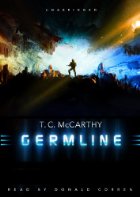 Summary:
Oscar is a reporter and lands an assignment with Stars and Stripes to go over to Kazakhstan and report on the new war between the US and Russia over resources needed for technology. This is a new kind of warfare. One fought mostly underground, and with the soldiers permanently wearing suits. Plus they’re fighting side-by-side with Genetics–human-looking robots who are all female and all look alike. Oscar started out just wanting a Pulitzer in between his drug addiction, which is easily fueled in Kaz. But Kaz changes people.
Review:
It’s been a while since I ventured in military scifi. I usually stick with the more sociological/psych experiment or cyberpunk areas of the genre, but this one just stuck out to me. I think its combination of aspects is just intriguing–a drug addicted journalist, a future war on earth, underground warfare, and robots. It certainly held my attention and flamed my interest in military scifi, plus it wound up counting for the MIA Reading Challenge, which was an added bonus.
Oscar is a well-rounded character. At first he seems flat and frankly like a total douchebag, but that’s because he’s a depressed drug addict. We learn gradually what landed him there and how he grows out of it with time. It’s an interesting character development arc because although many arcs show how war leads to alcoholism or drug addiction, in Oscar’s case although it at first makes his addiction worse, it ultimately helps him beat it. Because he ultimately snaps and realizes that the drugs are not helping the problems. They’re just making them worse. This is so key for anyone struggling with an addiction to realize. Pain in the present to feel better in the future. And McCarthy does an excellent job showing this progression without getting preachy. Sometimes you want to throttle Oscar, but you ultimately come to at least respect him if not like him. I wasn’t expecting such strong characterization in a military scifi, and I really enjoyed it.
The world McCarthy has built is interesting. The war itself is fairly typical–first world countries butting heads over resources in third world countries. But the content of the battles and the fighting methods are futuristic enough to maintain the scifi feel. There are the Genetics of course, and they are used by both sides. It’s interesting that the Americans use only female Genetics, and that is explained later on. There are also different vehicles and weapons that are scary but still seem plausible. Of course there’s also the suits the soldiers permanently wear, the front-line tunnels (the “subterrene”). It all adds up to a plausible future war.
Now, I will say, some of the battle scenes and near misses that Oscar has seem a bit of a stretch. I know odd things happen in war, and anyone can get lucky, but. Everyone’s luck runs out eventually. It seemed sometimes as if McCarthy wrote himself into a corner then had to figure out a way to make his main character survive. Escaping danger is fine, and necessary for the book to continue. But it should seem like a plausible escape. And if you have one that seems miraculous, it seems a bit excessive to me to have more than one.
The audiobook narrator did a fine job, in my opinion. He didn’t add anything to the story but he also didn’t detract from my enjoyment. I will note, however, that he pronounced “corpsman” wrong, saying the “s,” which is supposed to be silent. This only came up a few times and didn’t really bother me, but some readers, particularly ones who have been in the military themselves, might be bothered. Nothing else was mispronounced, and the voices used fit the characters nicely.
Overall, this piece of futuristic military scifi showcases both war and addiction in an engaging manner. Some readers may be off-put by Oscar at first, but stick it out. It takes many interesting turns. Recommended to scifi fans, whether they generally like military scifi or not.
4 out of 5 stars
Source: Audible

Counts For:
Book Review: January First: A Child’s Descent into Madness and Her Father’s Struggle to Save Her by Michael Schofield

Edit, April 22, 2021:
In light of the recent news about the Schofield family, I have made the decision to remove my usual purchase links from this page. I am leaving the review up as it accurately reflects how I understood the memoir at the time it came out. It is not entirely clear what is going on in this family, but what is clear is that DCFS removed January and her brother from their home with their mother. Their father was no longer living with them but rather with his new wife and baby in the midwest (the baby was being born the night the children were removed). January has recently turned 18. Whether she chooses to tell her story one day or find privacy with her adulthood, I hope she finds peace.
End of Edit.
Summary:
Michael and Susan thought their daughter, January’s, high energy levels and vivid imagination were the result of her high IQ, but when she turned five her imaginary friends started to tell her to do bad things like hit her baby brother or throw herself out of windows. Soon it became apparent that her imaginary friends were actually hallucinations. What followed was a harrowing struggle to get their daughter diagnosed and treated.
Review:
It’s rare to see a memoir by a father. There are a ton of memoirs by mothers but not a lot by fathers, particularly not by fathers of daughters. Put this together with the fact that Jani (her parents’ nickname for her) has childhood-onset schizophrenia, and you have one unique book.
This is an excellently told memoir. It opens with Michael speaking about having his daughter’s diagnosis now and struggling with all the barriers toward a normal life presented not just by her illness but by the world we live in. He talks about how some people argue that it’s impossible to diagnose a child with a mental illness, let alone schizophrenia, and of course some people even suggest that Jani is possessed by demons. He gets the denial. It’s scary to see a child consumed by an illness that is completely arbitrary in choosing its victims. But he says,
Denial is not going to help Jani or any of the other mentally ill and schizophrenic children I have come to know. What they need is acceptance. What they need is for us to be telling them “your illness does not define you.” We cannot go inside their minds and “fix” them. But we can fix the world so they can live in it. (location 90)
That speaks very strongly toward the whole reason I created the Mental Illness Advocacy Reading Challenge, and I knew then that this was going to be not just a unique read, but a challenging and good one.
After the introduction, Michael tells the story in a linear fashion. He does a good job remembering how he felt in the early days. His immense pride at his daughter’s high IQ and creative mind coupled with a determination to help her succeed and be herself. It’s fascinating to see, as an outsider, how early there were warning signs that something was not quite right with Jani but that Michael and Susan (her mother) attributed to a positive cause. I think that’s typical of parents and indeed of anyone who loves someone. They were looking for the best. Believing in the best for their daughter. They may be that moderately annoying couple on the play date who just insist their daughter with inappropriate behavior is gifted, but seeing it from Michael’s perspective makes that make sense. Most people (with the exception of parents with Munchausen by Proxy Syndrome) don’t want to believe that their child is sick. So of course you exhaust every other option first.
This of course makes Jani’s move toward violent behavior at the age of five that much more heart-breaking to read. I’ve heard and read stories and documentaries of how difficult it is for parents of young adults who become schizophrenic but at least they are adults. To have this happening to your five year old is completely terrifying. How do you control a child for whom no punishments seem to work? Who is more concerned with appeasing her hallucinations than with obeying her parents?
I certainly don’t agree with all the parenting choices the Schofields made in the first five years of her life (and for the record, neither do all of the psychiatrists), but none of their choices would create schizophrenia. Being overly lenient with your kids won’t make them hallucinate and become this violent at the age of five. This is one of those occasions where you don’t always agree with the choices the memoirist made, but you’re also not right in the heat of the battle. It’s far easier to say, “oh, you should have done this,” when it’s not your child who’s being lost to a mental illness right before your eyes.
That’s the thing about this memoir. Michael is so obviously completely honest. He tells things that happened that don’t present him in the best light. He is completely forthcoming in his own shortcomings, but he reiterates over and over how much he loves his daughter and wants to keep his family together. This combination does for this memoir what a lot of memoirs don’t have: it lends a complete sense of validity to the story as a whole. Michael is so honest about the emotional struggle of it all that even though you may not like him as a person, you respect him as a father.
This level of honesty combined with his writing ability make this memoir a strong call. A call to parents of children who are other-abled (whether mentally or physically) that they are not alone. It’s also a call to the rest of us who are not one of these parents to take a moment to think how difficult it must be and go easier on the parents and the child. I know I for one might think the next time I see a kid throwing an epic tantrum, “Maybe that child has an illness” instead of “Sheesh, do a better job, parents.”
Overall, this is a well-written memoir presenting the unique perspective of a father caring for a daughter with a mental illness. It also provides one of the few accounts of childhood-onset schizophrenia. Highly recommended to parents with special needs children, as well as to anyone who enjoys memoirs and the different perspectives reading them can bring.
4 out of 5 stars
Source: Netgalley
Buy ItSee note above.

Counts For:
Book Review: The Last Hunger Season: A Year in an African Farm Community on the Brink of Change by Roger Thurow
 Summary:
Smallholder farmers make up the majority of Kenya’s food production and yet they face multiple challenges from inefficient planting techniques to bad seed markets that lead to an annual wanjala–hunger season. One Acre Fund, an ngo, saw the gap and came in with a vision. Sell farmers high quality seeds and fertilizers on credit, delivered to their villages, on the condition they attend local farming classes. Roger Thurow follows four families as they try out becoming One Acre farmers.
Review:
Every once in a while there’s a book that you know will impact your entire life. I know this is one of those books.
Thurow strikes the perfect balance between narrating the farmers’ lives and knowledgeably discussing the global politics and environmental problems that also impact the hunger. The information he hands out would be riveting in any case, but how he narrates it kicks it up to another level.
Central to the book is this question:
Why were people still dying of hunger at the beginning of the twenty-first century when the world was producing—and wasting—more food than ever before? (location 202)
I know we all know there is hunger in the world, but it can be easy to ignore when it doesn’t have a face like David or Dorcas, two of the children featured whose mothers flat out do not have food to give them. During the wanjala, since it is most of the families’ first years using One Acre Fund, they do not have enough maize (their staple crop) from the year before. Thus while watching their fields grow, they don’t have enough food to feed their families. During the height of the wanjala the families routinely have tea for breakfast and lunch and maybe some boiled vegetables or bananas for dinner. And they still must farm and go to school. I can’t recall the last time I’ve been so humbled.
Don’t get me wrong. The families profiled in this book aren’t put on a pedestal or romanticized or distanced. They are very real. But their strength and wisdom in the face of so many challenges has no other option but to be inspirational. Because it is so real.
You don’t focus on the afflictions you have, on your poverty; you focus on where you are going. (location 1469)
Makes you feel bad for complaining about morning commutes, doesn’t it?
Beyond talking about the disgusting fact that there is still hunger in a world with so much plenty and demonstrating the resilience of the families, the book also discusses One Acre Fund’s poverty fighting ideas. Basically they operate on the teach a man to fish principle. Thurow talks about how Youn, the founder, believes that bringing in food aid to feed farmers is absurd. We should instead be helping them to farm better. Beyond it not being sustainable to feed everyone year after year, it robs the farmers of their dignity. This was the point I liked best. These people are not dumb or lazy. They are victims of a system that is not working. Helping them help themselves lets them retain their humanity and dignity. I think that’s something that is often missing in charity work and ngos, but it’s vital to truly changing the game.
Overall, if you want a book that will challenge your perceptions, humble you, broaden your horizons, and help you see how to truly fight global poverty, this is the book for you. In other words, this is recommended for everyone.
5 out of 5 stars
Source: Netgalley

Counts For:
Specific country? Kenya

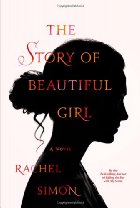
Book Review: The Story of Beautiful Girl by Rachel Simon
 Summary:
Martha, a retired, widowed schoolteacher, thought her life was pretty much over until one night when a young intellectually disabled white woman and a deaf black man show up on her doorstop in the rain holding a newborn baby. Soon people from a nearby mental institution show up to take them back away. The young woman, Linny, seems terrified and asks Martha to hide the baby. The man, Homan, escapes. Martha goes on the lam to keep the baby girl out of the institution, and Linny and Homan fight against all odds attempting to reunite their family.
Review:
I received the audiobook version of this as a gift for one of the holiday swaps I participated in in December. It was my first time reading the audiobook version of a modern story, as I’m a cheapskate and usually just get ones for free that are out of copyright. It was thus an entirely different experience to be forced to slow down when reading this piece of historic fiction about a very dark secret in American history–mental institutions. The amount of time that Linny and Homan are forced to spend simply waiting for their lives to get better. Waiting for people to recognize their humanity. It hit me much harder than if I had been able to read this in a couple of hours. (Each disc is about 1 hour long, and there are 10 discs). The wrongness of it all. The amount of time and lives wasted simply because the able-minded and able-bodied didn’t seek to understand or to grant these people the basic human right of self-direction.
The story itself is told from multiple viewpoints–Linny, Homan, Martha, Kate (a caregiver at the institution), and later Julia (the baby daughter when she grows up). Mostly Simon does a great job switching among the different voices, particularly representing Linny. She does not overinflate her internal dialogue to be that of a person with an average IQ, but she still clearly represents Linny’s humanity. I am a bit skeptical of the voice given to Homan though, mostly his tendency to give people bizarre nicknames like “roof giver.” I know that neither
Simon nor I know a deaf person who is unable to communicate with those around him, so really it is all guess-work as to what his internal dialogue would be like. But I can’t help but feel like it’s not quite there. On the other hand, his confusion and frustration at people talking around him, over him, and treating him like he’s stupid just because he’s deaf is very well done.
In retrospect, I’m not quite sure why so much time was devoted to Martha and Julia when Julia was a baby. Her story doesn’t end up being nearly as important as the Homan/Linny romance, so this focus feels a bit like a red herring. I would definitely shorten those chapters.
The use of artwork and items of visual significance to the characters is gorgeous though. Lighthouses are a central feature, and I don’t even like lighthouses myself, but I still found myself moved by how important the visual arts can be to people. This is a book that, surprisingly, winds up being almost a battle cry for the arts. For their value in helping us connect with each other and hold on to our humanity. I think any artist or someone who is a fan of the arts would appreciate this book for that reason.
On the other hand, Simon is clearly a person of some sort of faith, with a belief in god and the tendency for things to all work out right in the end. I’m…not that type of person. So when characters wax eloquent about god or an overall plan or the ability of evil people to repent and turn good, well, it all feels a bit more like fantasy than historic fiction to me. I probably would have been irritated by this less if I had had the ability to skim over those parts though.
In the end, though, I came away from this book appreciating its uniqueness and all the good qualities it had to offer. It demonstrates through a beautiful story why it’s so important not to institutionalize the mentally ill or mentally challenged. It shows the power of love to overcome race and disabilities. It is the story of the power and beauty of resiliency.
Overall, I recommend this work of historic fiction to fans of historic and contemporary fiction, advocates of the mentally ill or mentally challenged, and those just simply looking for a unique love story.
4 out of 5 stars
Source: Gift

Counts For:
Africa Reading Challenge! (Hosted by Kinna Reads)
 I’m super-excited to get to participate in a reading challenge this year that I heard rumblings about and was announced this week. The Africa Reading Challenge! Hosted by Kinna Reads.
According to Kinna, the rules are:
Challenge Period
January 1, 2012 to December 31, 2012Region
The entire African continent, including its island-states, which are often overlooked. Please refer to this Wikipedia “list of sovereign states and dependent territories in Africa”. Pre-colonial empires and regions are also included.Reading Goal
5 books. That’s it. There will be no other levels. Of course, participants are encouraged to read more than 5 books. Eligible books include those which are written by African writers, or take place in Africa, or are concerned with Africans and with historical and contemporary African issues. Note that at least 3 books must be written by African writers.
Why this challenge?
Getting to know Kinna and Amy in 2011 connected me to African lit and showed me the uniqueness of it. I enjoyed reading it, so of course I want to read more! Plus, participating in this challenge will hopefully call attention to this whole other world of books that is so frequently ignored in the book blogging world. Also, reading is how I travel, and I just love visiting Africa through a writer’s eyes.
My (tentative) reading list:
- Music and Dance Traditions of Ghana: History, Performance and Teaching
by Paschal Yao Younge (current tbr pile) Ghana
- Yellow-Yellow
by Kaine Agary (current tbr pile) Nigeria
- The Chicken Thief
by Fiona Leonard (current tbr pile) Ghana
- The Rabbi’s Cat 2
by Joann Sfar (current tbr pile) Algeria
- His Treasure (Men of Valor)
by Kiru Taye (current tbr pile) Nigeria
- The Memory of Love
by Aminatta Forna (wishlist) Sierra Leone
- Twenty Chickens for a Saddle: The Story of an African Childhood
by Robyn Scott (wishlist) South Africa and Zimbabwe
- Death of the Mantis: A Detective Kubu Mystery
by Michael Stanley (wishlist) Botswana
- Woman at Point Zero
by Nawal El Saadawi (wishlist) Egypt
- The African American Odyssey of John Kizell: The Life and Times of a South Carolina Slave Who Returned to Fight the Slave Trade in His African Homeland
by Kevin G. Lowther (wishlist) Sierra Leone
- Half of a Yellow Sun
by Chimamanda Ngozi Adichie (wishlist) Nigeria
- King Peggy: An American Secretary, Her Royal Destiny, and the Inspiring Story of How She Changed an African Village
by Peggielene Bartels (wishlist) Ghana
I’m hoping to read all of these, but obviously the only ones set in stone are the ones I own. Suggestions, both from my list and not, are welcome! I’m excited by the new variety this challenge will bring to my blog and also for the camaraderie innate in reading challenges. It’s gonna be a fun year. :-)
Announcement: Mental Illness Advocacy Reading Challenge 2012!
 I am pleased to announce that I will again by hosting the Mental Illness Advocacy (MIA) Reading Challenge for 2012! Just what is the MIA Reading Challenge? I’m glad you asked!
I started the MIA Reading Challenge in December 2010 in an effort to raise awareness, knowledge, and acceptance of mental illness. Reading, both fiction and nonfiction, is an excellent way to broaden one’s horizons and expose one to new ideas and ways of thinking and being. Many reading challenges already exist in the book blogging community to address racism, sexism, and homophobia, but I could not find any to address the stigma faced by those suffering from mental illness. In spite of mental illnesses being recognized by the scientific community as diseases just like physical ones, many still think those suffering from one are at fault for their own suffering. I hope reading and reviewing books featuring characters struggling to deal with mental illness, whether their own or another person’s, will help remove the stigma faced on a daily basis by those with a mental illness. They already have to struggle with an illness; they shouldn’t have to face a stigma too.
Challenge Levels:
Acquainted–4 books
Aware–8 books
Advocate–12 books
I think in the world of book blog reading challenges this is a fairly unique one for a good cause, and I hope you will consider signing up for it!
Just head on over to the challenge’s main page to sign up by commenting with a link to your announcement of participation and feel free to grab the 2012 button for your blog. The challenge page also contains a list of suggested books sorted by illness that 2011’s participants found to be very helpful.
Rock on, advocates!
Book Review: Emotional Geology by Linda Gillard
 Summary:
Rose is a textile artist with bipolar disorder who for years found her medication dulled her ability to work. After a stunning betrayal that landed her in a mental hospital, she has moved to a quiet, extraordinarily rural island in Scotland in an attempt to control her illness with as little medication as possible so she may still create her art. Her life isn’t quite as quiet as she imagined it would be, though, with a warm neighbor, Shona, who introduces her to her brother, a teacher and poet.
Review:
A rural island setting combined with art, romance, and mental illness–I knew this book and I would be fast friends before I even started reading it. What I discovered was a book that addresses multiple universal issues–grief, betrayal, loss, family ties–in a glorious setting that left me dying to visit Scotland, if only to discover what peat smoke smells like.
The style of this book is unique. Gillard easily transitions between perspectives, points in the time-line of Rose’s life, and even poetry versus prose. I was astounded to discover that I enjoyed the poetry portions creeping up in the book. They tend to happen at points of high emotion and exquisitely express the high highs and low lows someone with bipolar disorder goes through. The changing of perspectives and time-lines could sometimes feel a bit jarring; that could have been smoother done, but I appreciate the style and vibe Gillard is going for. It almost mimics the jarring highs and lows of bipolar disorder.
More importantly, though, the book exquisitely, gently shows that people with mental illness are just people like everyone else. They may feel things slightly more strongly or need to work harder to stay balanced, but the mentally healthy have emotions too. The mentally healthy can be thrown just as badly by life’s experiences. If I could sum up the book’s point, it would be that we all have scars.
So you see, Rose, if you would just step outside your own fucking head for a few moments, you’d see you’re not the only one with scars. In any case the worst ones, the most disfiguring are never visible to the naked eye.” He zips up his fly. “I can probably live with yours. Can you live with mine?” (location 3816)
This is an emotional, challenging, touching book to read. I recommend it to fans of contemporary fiction with a heart.
4 out of 5 stars
Source: Kindle copy from author in exchange for my honest review

Counts For:
Book Review: The Sum of My Parts: A Survivor’s Story of Dissociative Identity Disorder by Olga Trujillo, JD
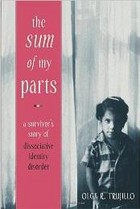 Summary:
Olga was a young, successful lawyer in DC when she suddenly started having inexplicable panic attacks and episodes of blank stares or rapidly moving eyes. She sees a psychiatrist and is diagnosed with a moderate case on DID. On the spectrum, she has multiple parts but not exclusive personalities and still has a central core. These parts have kept the memories of her extraordinarily violent, abusive childhood from her consciousness thereby allowing her to function, but just barely. In her memoir, Olga tells what she has now remembered of her childhood and how she has now discovered she managed to function and be surprisingly resilient. She then delves into her long-term therapy and how she has come together into mostly one part and usually no longer dissociates.
Review:
I always find memoirs by those with DID or dissociation completely fascinating. Even just the ability to write the book and explain the disorder from the insider’s perspective is a remarkable achievement. I previously read When Rabbit Howls
Olga offers up a very precise trigger warning of which chapters could be dangerous for fellow trauma survivors. That said, I found her reporting of what occurred to her to be respectful of herself as a person. She never shirks from what happened to her, but is sure to couch it in concise, clinical language. I respect this decision on her part, and again believe it will make her book more accessible to a wider audience. People can see the results of the trauma without finding themselves witnesses to the trauma itself.
The book right up through about halfway through her therapy is clear and detailed, but then starts to feel rushed and more vague. Perhaps this is out of respect for the people currently in her life, but personally I wanted to know more. For instance, how was she able to make a drastic move from DC to the middle of the country without upsetting her healing process? How do the phone sessions with her therapist work? I think many advocates of those with mental illness would appreciate more detail on how she is able to have a healthy, happy relationship now, especially since we witness the dissolution of her first marriage. Similarly, I wanted to know more about her coming out process. She states that she knew at 12 she was a lesbian, but pretty much leaves it at that. I’m sure it was easier to embrace her sexuality the more integrated her parts became, but I am still interested in the process. She was so brave recounting her early life that I wonder at the exclusion of these details.
Overall this is a well-written memoir of both childhood abuse, therapy for DID, and living with DID. Olga is an inspirational person, overcoming so much to achieve both acclaim in her career and a happy home life. I recommend it to a wide range of people from those interested in the immigrant experience to those interested in living with a mental illness.
4 out of 5 stars
Length: 258 pages – average but on the shorter side
Source: NetGalley
Buy It (Amazon or Bookshop.org)
If you found this review helpful, please consider tipping me on ko-fi, checking out my digital items available in my ko-fi shop, buying one of my publications, or using one of my referral/coupon codes. Thank you for your support!
 Support my work with a tip or browse my shop for curated book club guides, how to guides, cross-stitch patterns, and more!


This work by Amanda Nevius is licensed under a Creative Commons Attribution-Noncommercial-No Derivative Works 3.0 United States License.
 Opinions of a Wolf