
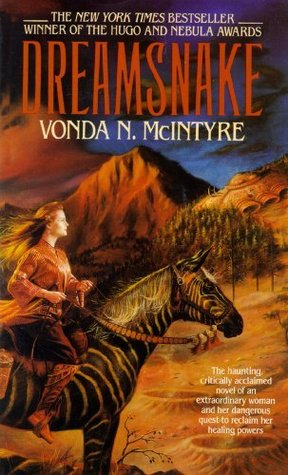
Book Review: Dreamsnake by Vonda N. McIntyre (Audiobook narrated by Anna Fields)
 Summary:
On a far future Earth destroyed by nuclear warfare, most people have reverted to tribal living on the desert. These people rely on roaming healers armed with three snakes whose venom help provide healing relief. Snake is on her first year of bringing roving healing, but when a misunderstanding ends in the death of her dreamsnake, she is determined not to return home to the healers until she finds a way to replace him. It is almost impossible to breed dreamsnakes, but maybe the city will be able to help. The city that keeps the tribes mostly locked out and communicates with the people who live in outer space.
Review:
This book made it onto my tbr for three reasons. It’s 1970s scifi by a woman author, known for being feminist, and is supposed to be able to change your mind about snakes. I was surprised to find it on Audible but elated, especially when I heard the sample of the narrator’s voice. She speaks at the perfect speed and tone for my listening taste. What I found, upon listening, was a book that brought everything I had been promised in a unique plot that I still find myself thinking about periodically. It is just so different, and different is good in my scifi.
You can’t talk about this book without talking about the snakes. I have a gut negative reaction to snakes; one that most likely was learned before I have memories, I’m sure. Both my husband and a close friend think snakes are super cute, so I was hoping this book might change my perception to at least be less negative. Interestingly, a key part of the plot revolves around a person minsinterpreting a snake as dangerous and reacting violently to it. Snakes are not seen as not dangerous, just that only certain snakes have truly dangerous venom, and people are encouraged to get immunized against this venom and to be cautious in areas where they might frighten a snake into striking. I came to care about Snake’s snakes and by the end of the book, where there is a scene that normally would have haunted my dreams (it involves someone in a pit full of snakes), I actually was able to react rationally to the situation and be more concerned about the evil of the person who threw the person in the pit and whether the person would be able to get out of the pit eventually than really be concerned about the snakes themselves. The book presents snakes much like other animals. They’re a living creature that can be dangerous or harmless or some mixture of both, and it’s about building your own knowledge so you know how to handle them more so than just being gut afraid of them. If that was all this book gave me, I would have been impressed, but it gave me so much more.
The plot leads through multiple different tribes and cultures, and all are imagined creatively and differently from each other. Cultural understanding is valued but only to the point where the culture is not actively harming innocents. As mentioned earlier, the whole book centers around a cultural misunderstading, and everyone on both sides of it takes responsibility for the situation. There’s a love interest for Snake who seeks to help her but she also helps herself (along with others). There’s a positive representation of adoption, as well as multiple sexualities and women and men both being responsible for birth control. Without giving anything away, the ultimate conclusion is about how changing your viewpoint can bring a solution, which is kind of the other side of the coin of the original cultural misunderstanding. It’s a smart book, largely about how different people interact and how humility and willingness to listen can move everyone forward.
Overall, this is a unique piece of scifi with an engaging plot that will change your mind about snakes. It left me wishing there was a sequel so I could revisit this world.
If you found this review helpful, please consider tipping me on ko-fi, checking out my digital items available in my ko-fi shop, buying one of my publications, or using one of my referral/coupon codes. Thank you for your support!
5 out of 5 stars
Length: 312 pages – average but on the longer side
Source: Audible

Trigger Warning:
Readers who are sensitive to discussions of rape of a child should be aware it is discussed as something that occurred in the past to a character, although not depicted, and the victim is ultimately empowered.
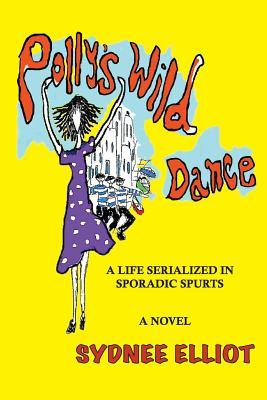
Book Review: Polly’s Wild Dance: A Life Serialized in Sporadic Spurts by Sydnee Elliot
 Summary:
Now that Polly’s daughter has left home, she finally decides to follow her long-time dream of living on the Greek islands and moves there. But she finds even moving to another country can’t help her escape the memories of her ex-lovers (or, in the case of her daughter’s father, their actual presence). As she ruminates on her life and deals with the difficulties of aging, she wonders if her life has brought her the fulfillment she was after.
Review:
I picked this up during one of Smashwords’ annual summer/winter sales because the premise vaguely reminded me of Under the Tuscan Sun, a movie I’ve always enjoyed. What I got was an older heroine with a more honest mouth and a dirtier past. It wasn’t exactly what I was expecting and I wouldn’t choose to live my life the way the main character lived hers, but I certainly enjoyed it.
The author clearly has either lived in Boston or has done a lot of research. Polly grows up in New England and then lives in either Cambridge or Boston for the early parts of her life. Everything written about Cambridge/Boston is quite accurate, although definitely not always flattering. Since this is the case for the setting of Cambridge/Boston, I came to trust the narrator regarding her experiences in California, Las Vegas, and finally the Greek islands.
Polly is unapologetically crass. Given that this is a fiction book written in the style of an older person’s memoir, I can see how this may be jarring to some readers anticipating a more…grandmotherly style story. Personally, I enjoy the brutal honesty Polly brings to everything. She paints neither herself nor her family nor her lovers in a positive light. She verges on the side of pessimism. But there’s something I like about that level of honesty.
The edge of his tallis, the prayer shawl worn by Jewish men [Polly is Jewish and raised in a religious home], was folded back over his shoulder, so it wouldn’t touch me. Women aren’t allowed to touch this sacred garment because we’re considered unclean. The folded eight inches of fabric reminded me of one of the reasons why I couldn’t believe in this religion, or any religion. I wanted to crush the tallis with my hands, rub it over my face, arms, along my naked body and against my genitals. (loc 970)
If that passage offends you, the book will most likely offend you. If you enjoy the visceral passion Polly shows in rejecting the religion of her childhood, you will most likely enjoy the book.
The plot mainly revolves around Polly adapting to life in Greece and being haunted by visions of her ex-lovers. Basically, she will think she sees one of her ex-lovers and then tell the story of her time with him. The overarching plot is she is wondering if seeing these hauntings means her life is almost over. Also scattered throughout this plot is Polly coming to terms with being older, her body failing her, the fact that she doesn’t have a constant true love, and accepting that she is nearing the end of her life. Polly has many lovers throughout her life, and it’s clear that sometimes she was seeking one out to use him. Similarly, she is the other woman at least once and not in an accidental way. In a I hope you’ll leave your wife for me way. Polly admits she was bad at love but is also unapologetic about it. She seems lost as to how she could have done better, even right up to choosing her most recent lover.
I wanted to love Andreas. I needed to love him; I needed to love someone, anyone, and he happened to be available. (loc 5985)
While I appreciated Polly’s voice and passion, I also felt extremely sad for her. She never seems to have figured out how to be both passionate about her beliefs and also willing to listen to others. She never seems to have grown beyond the first rebellion stage into self-actualization. In a way, then, while the book has amusing scenes, overall, I found it to be a sad, cautionary tale about how failing to work on yourself, simply letting yourself muddle along, can lead to a wasted life.
Overall, this is an interesting book that features a plot I haven’t seen before. Readers interested in reading something featuring an older person who failed to actualize or even really realize their mistakes late in life should definitely pick this up. It is well-done.
If you found this review helpful, please consider tipping me on ko-fi, checking out my digital items available in my ko-fi shop, buying one of my publications, or using one of my referral/coupon codes. Thank you for your support!
4 out of 5 stars
Length: 334 pages – average but on the longer side
Source: Smashwords
Women and the Vietnam War – 5 Nonfiction Reads
 To celebrate Women’s History Month, I thought it’d be fun to assemble a reading list looking specifically at the women’s history aspect of a particular historical event. When I thought about it, I couldn’t easily think off the top of my head of any books about women and the Vietnam War, so I decided to build my list on that. It taught me something while I was assembling the list for you.
I tried to cover both women part of the War, as well as women protesting the War or part of the counterculture. All book blurbs come from either GoodReads or Amazon.
 Daughters of Aquarius: Women of the Sixties Counterculture
by: Gretchen Lemke-Santangelo
Publication Date: 1997
Blurb:
“Hippie women” have alternately been seen as earth mothers or love goddesses, virgins or vamps-images that have obscured the real complexity of their lives. Gretchen Lemke-Santangelo now takes readers back to Haight Ashbury and country communes to reveal how they experienced and shaped the counterculture. She draws on the personal recollections of women who were there–including such pivotal figures as Lenore Kendall, Diane DiPrima, and Carolyn Adams–to gain insight into what made counterculture women tick, how they lived their days, and how they envisioned their lives.
This is the first book to focus specifically on women of the counterculture. It describes how gender was perceived within the movement, with women taking on much of the responsibility for sustaining communes. It also examines the lives of younger runaways and daughters who shared the lifestyle. And while it explores the search for self enlightenment at the core of the counterculture experience, it also recounts the problems faced by those who resisted the expectations of “free love” and discusses the sexism experienced by women in the arts.
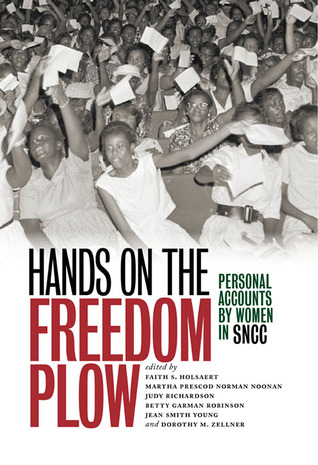 Hands on the Freedom Plow: Personal Accounts by Women in SNCC
by: Faith S. Holsaert, et al
Publication Date: 2010
Blurb:
Fifty-two women–northern and southern, young and old, urban and rural, black, white, and Latina–share their courageous personal stories of working for the Student Nonviolent Coordinating Committee (SNCC) on the front lines of the Civil Rights Movement.
The testimonies gathered here present a sweeping personal history of SNCC: early sit-ins, voter registration campaigns, and freedom rides; the 1963 March on Washington, the Mississippi Freedom Summer, and the movements in Alabama and Maryland; and Black Power and antiwar activism.
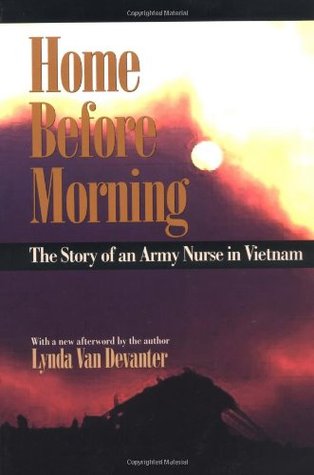 Home Before Morning: The Story of an Army Nurse in Vietnam
By: Lynda Van Devanter
Publication Date: 1983
Blurb:
On June 8, 1969, a patriotic, happy-go-lucky young nurse fresh out of basic training arrived in Vietnam to serve a year’s tour of duty as a second lieutenant in the Army. It was a year that was to rob Lynda Van Devanter of her youth, her patriotism, her innocence – and her future.
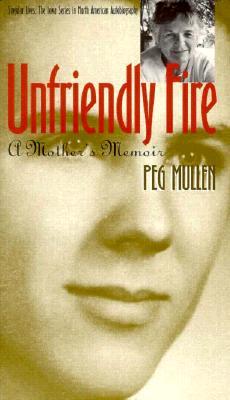 Unfriendly Fire: A Mother’s Memoir
By: Peg Mullen
Publication Date: 1995
Blurb:
Outspoken, fearless, and wickedly humorous, Peg Mullen tells the story of her transformation from an ordinary farm woman into a nationally recognized peace activist following the death of her oldest son, who was killed by artillery misfire in the Vietnam War.
 The Valiant Women of the Vietnam War
By: Karen Zeinert
Publication Date: 2000
Blurb:
From journalists and nurses to those who mobilized to protest or support the war effort on the home front, women of all ages took advantage of the changing social climate of the 1960s to break free of their traditional roles. A discussion of Vietnamese women’s roles in the conflict is included.
Audiobook Review: The 5th Wave by Rick Yancey (Series, #1) (Audiobook narrated by Brandon Espinoza and Phoebe Strole)
 Summary:
When a giant spaceship showed up above Earth that wasn’t ours, Cassie and everyone else expected contact. What they didn’t expect was waves of attacks, everything from EMP to disease. Now, she’s at a refugee camp with her father and little brother wondering what the 5th wave of the attack might be. When it comes, will they even know?
Review:
I really enjoyed Rick Yancey’s other series (The Monstrumologist, series review). I must admit to being surprised that this is the series that got picked up into a movie. I didn’t find the blurb nearly as intriguing as that of The Monstrumologist. But since I liked the other series so much, I figured I’d give it a shot. While I can see why it’s taken off, I don’t find it to be as well-constructed or nearly as unique as Yancey’s other series.
The beginning of the book is very slow-paced. Cassie is off hiding in the woods on her own and through her diary where she tries to deal with what has happened the reader learns about the waves of the alien invasion. I like a diary book, but the slow pacing just really didn’t work for a book about an alien invasion.
At a certain point, this narration switches for one chapter to that of the perspective of an alien. Then it switches to the perspective of a boy from Cassie’s high school she had a crush on and his experiences with the alien invasion. Later it flips back to Cassie, only it’s now no longer her diary. Her diary just sort of gets dropped. While I can enjoy multiple narrators, I don’t think these are handled as well as they could have been. The chapter from the alien’s perspective ruins any tension or mystery that had been building around a certain event, in particular. Often switching between Cassie and Ben just feels like it’s convenient for world building and not adding very much to the plot. That said, I do like that the “star” position of this YA action is shared between a boy and a girl fairly equally.
The plot, although slow-moving, starts out strong. There is a plot twist that made me roll my eyes and that I think makes this less unique in YA literature than it started out.
Initially it appears that there will be no love triangle but there ends up being one. I can’t go into the details without some big spoilers but I will say that you make it through most of the book without a love triangle, and then there ends up being one in the last bit. It was disappointing, as I thought something more unique was being done (something akin to a crush turning into a real friendship…but that’s not what happens).
Ultimately the book ends up feeling less about aliens and more about the horrors of child soldiers and war stealing childhood. I definitely think scifi can bring a current issue such as this to people’s attention, but I also think the narration and various irritating and/or confusing plot points ultimately weakens the point. I doubt when I was a teen that such a book would have made me think about child soldiers. Instead I would have felt misled by the title and blurb and been irritated about that, distracting from the point.
All of that said, if a YA reader is looking for an apocalyptic setting featuring dual leads instead of one hero, this is a book that will fit that bill. Just be sure the reader is ok with some surprisingly slow-moving portions for a book with an action-packed blurb. However, I would suggest that a YA reader looking for something truly different check out Yancey’s other YA series: The Monstrumologist.
If you found this review helpful, please consider tipping me on ko-fi, checking out my digital items available in my ko-fi shop, buying one of my publications, or using one of my referral/coupon codes. Thank you for your support!
3 out of 5 stars
Length: 457 pages – chunkster
Source: Audible

Book Review: On Grief and Grieving: Finding the Meaning of Grief Through the Five Stages of Loss by Dr. Elisabeth Kübler-Ross and David Kessler
 Summary:
This book presents the science of grief and grieving, based largely upon the lifetime work of renowned psychologist Dr. Kübler-Ross.
Review:
How to review the first book you picked up after losing your 58-year-old father suddenly and unexpectedly to a heart attack? Normally I take a very academic approach to my book reviews (or at least I try to). I can’t review this one that way. I certainly wasn’t in an academic frame of mind when I was reading it. I wasn’t anywhere near my normal frame of mind. So instead, I’ll tell you about my experience reading it.
I found out my father was dead at 7am on a Thursday. I knew my father had been taken to the hospital the night before. My brother, who lives near where my father did, called me to let me know. But he also called me with an update that my father was stabilized. Neither of us was very worried, because my dad suffered from heart disease for eleven years and had been hospitalized periodically. He had a pacemaker. He was on medication. He had a specialist who did his long-term care. The ER was confident in his stability. They sent my brother home. My brother called me and told me to go to sleep. I did. He called me again about an hour later and left a voicemail telling me to call him back. I knew from the voicemail what he was going to tell me. I just knew it. I think I knew it the night before when I went to bed too. Because in spite of being told repeatedly that my dad was going to be fine, I cried myself to sleep that night. My brother, when I called him back, told me that my father had gone into cardiac arrest when they were moving him from the ER to a more specialized heart hospital. In spite of being in an ambulance surrounded by health care workers, the heart attack won.
In any case, the instant I heard the voicemail, I went numb. I woke my husband and told him. I called my workplace. I sent off certain work emails to pass off tasks to others to cover. I texted my friends. Then I sat on our bed and I felt….nothing. I was in a complete and total state of shock, I know now. Largely thanks to this book.
Late that night, when I found it was utterly impossible for me to sleep and was certain I would never sleep again, I reached out to the same thing I’ve always reached out to my entire life: books. I opened my laptop and logged in to the Boston Public Library’s ebooks search. I did not have the ability to go off looking for a print book at a branch. I needed help now. In the middle of the night.
I searched the catalog for “grief,” and got a list of…I dunno, a few books. This one was the most scientific. The rest were quite religious, and while that’s fine for other people, that’s not what comforts me. So I downloaded this, and I started to read it. And I instantly started to feel less like there was something wrong with me.
I learned that it’s entirely normal to go into shock at first. To not feel much of anything. It’s your body protecting you, letting the emotions in a little at a time, as you can handle them, so you will stay safe. And indeed, that night, after the first 12 hours of knowing, I sobbed in my husband’s arms. Thanks to this book, I knew that the numbness could come and go. In fact, the most helpful thing I learned in this book was that the 5 stages of grief (denial, anger, bargaining, depression, acceptance) don’t come in order necessarily, and they’re not neat. You don’t move through them in an orderly fashion. You may be angry one day, depressed the next, in denial another, and feel ok and accepting for a bit, then right back to depression. And that’s normal and ok.
I also learned, which was really important for me to know, that the stage of anger can sometimes express itself as guilt, which is just anger turned inward. Some people are more likely to turn their anger inward, and I am definitely one of them. Knowing this was where my (irrational) guilt was coming from (god knows I couldn’t possibly have saved my father from a heart attack from hundreds of miles away) made it much easier for me to cope with the feelings when they did come up.
There were other particular things that the book predicted might happen that kept me from getting freaked out when they did. For instance, I periodically was certain my phone had buzzed with a text message from my father. So certain, in fact, that I picked it up to check. Twice I thought I saw my dad on the street. Both of these I may have been concerned were abnormal, but the book reassured me these “ghost sightings” are totally normal. It’s your body and brain readjusting to your new reality.
The book also gave me warnings about things to come. Things like how the first holidays without the person or the person’s birthday would be difficult. So I knew to expect that and prepared myself for it. It also talked about being patient with yourself in things like dealing with the loved one’s possessions. Not to rush yourself, that it’s ok to take a little bit of time. There were also warnings about how quickly the person’s scent will fade that meant I took the time to really smell a couple of my dad’s tshirts, because I knew the scent would be one of the first things to go.
There is a “specific circumstances” section that talks about things like multiple losses simultaneously or suicide. I wish this section had a bit more on various other special circumstances. For instance, I had just gotten married 7 weeks before, and then my father died. I would have loved a section talking about the juxtaposition of such happiness with such sadness, and how to handle the emotions of things like your first married Thanksgiving (so happy!) also being your first Thanksgiving without your father.
Overall, this book gave me guidance of what to expect from my grief in the immediate time after the loss, as well as in the first year. It mostly contains universal information that will be helpful to anyone going through a loss. If you are a person who finds comfort in books or science, you will find comfort in this read. If you love someone who has recently lost a loved one, reading this will help you to know what behavior from them is normal and guide you in supporting them and validating them through the experience.
If you found this review helpful, please consider tipping me on ko-fi, checking out my digital items available in my ko-fi shop, buying one of my publications, or using one of my referral/coupon codes. Thank you for your support!
4 out of 5 stars
Length: 270 pages – average but on the shorter side
Source: Library
Wolfy’s Favorites – Episode 1
Hello my lovely readers!
I had a few things from the month of February that I wanted to tell you all about, but all of them were kind of short for their own posts. I got to thinking how a lot of bloggers have a favorites post they do once a month, and I thought that’s such a great idea! It’ll be a monthly feature that will showcase a range of things I’ve enjoyed in the last month.
We’ll start off with the two biggest things.

Screenshot of a quick video I took about a new book I received on PaperBackSwap. That little wolf is my periodic “Wolfy” representative for myself in videos or pics (although you *do* get to see the real life non-Wolfy me sometimes too!)
Snapchat (username: opinionsofawolf)
I finally got on the Snapchat train! After hearing so much about it, I just had to download the app and see what all the fuss is about. I have to admit, I love it. For those who don’t know, Snapchat lets you post photos or videos (and annotate on top of them) that last a maximum of 24 hours before they disappear. It’s very stream-of-consciousness, and I love having a new format to talk about books, writing, and life in. (And there are definitely some videos of my cat). If you have (or get) Snapchat, friend me! My username is opinionsofawolf.
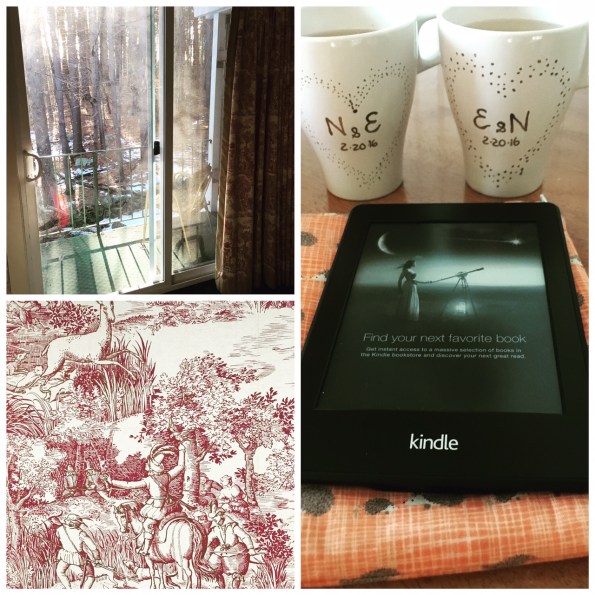
Instagram collage of my reading location one weekend when I attended my friend’s wedding. The lower left is the wallpaper in the hotel room, the upper left is the view, and on the right is my kindle with the two mugs that were our wedding favors.
Instagram lets you easily manage multiple accounts. Finally!
I’ve had a personal Instagram account for years (sorry, you can’t have that username!), but I found trying to manage a personal and a professional/hobby one to be frustrating, because the app forced you to log out entirely of one account before logging into the next one. There was no simple tapping back and forth between accounts. Well, this month Instagram finally fixed that! So I get to join my fellow book bloggers in the virtual world of #bookstagram. Please do check it out for shots of reading locations, real time mini-reviews and pictures of books as I finish them, and quotes from books as I read them, among other things! Username: opinionsofawolf.
Next up, two smaller, but still exciting to me, things this month.

I actually have another book blogger to thank for this discovery. The awesome Running ‘N’ Reading posted a few times about the recovery drink Nuun. Replenishing electrolytes and rehydrating are very important after working out. It helps with muscle recovery and just general hydration. I’ve struggled because I’m not really a fan of Powerade and Gatorade, especially for the calorie content. (The ones with zero calories don’t taste good to me). I love coconut water, but it’s full of calories and expensive to buy. Nuun comes in tubes that each contain 12 tablets. You drop the tablet into water, and in two minutes it dissolves into a drink. Each tablet contains 8 calories. The tablets make it easy to order online and stockpile into your home, as well as convenient to take with you on longer fitness excursions. My husband and I are both pretty addicted to them now! And we’ve both noticed less DOMS (delayed-onset muscle soreness) after hard workout days. Our favorite flavors are lemon-lime and tri-berry.

Bunnies at HomeGoods!
I love bunnies, and this month HomeGoods stocked up their spring holdings. I was hard-pressed to select only a few items (I’ll find almost anything with a bunny on it adorable), but I did my best to stick to what we need. My husband and I each have our own bowl for mealtimes (they do not match) but mine was a bit small for meals like soup or stew. So I picked up one that is about the same size as his. We also had large plates and small plates but no medium-sized ones, so I picked up two of those. Finally, I can always use more kitchen towels, so I got a set of two with this cute bunny on them.
Finally, a book!
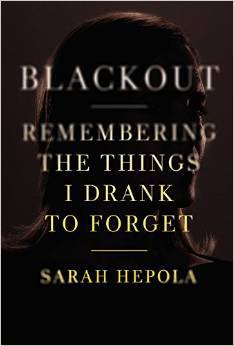
Blackout: Remembering the Things I Drank to Forget by Sarah Hepola
I want to wrap up these monthly favorites posts with a quick comment about my favorite read of the month. I devoured Blackout in a mere two days in audiobook format. I basically was searching for any task I could do as an excuse to listen to it. It’s that good. First five star read of the year! Review to come.
So that’s it for February. Be sure to tune in next month for episode 2 of Wolfy’s Favorites!
What were some of your favorite things in the month of February? Have you tried out any of the things I’ve mentioned? Tell us about your experience in the comments! (Especially feel free to let me know your Snapchat or Instagram usernames).
Play Review: 1984 at the American Repertory Theater
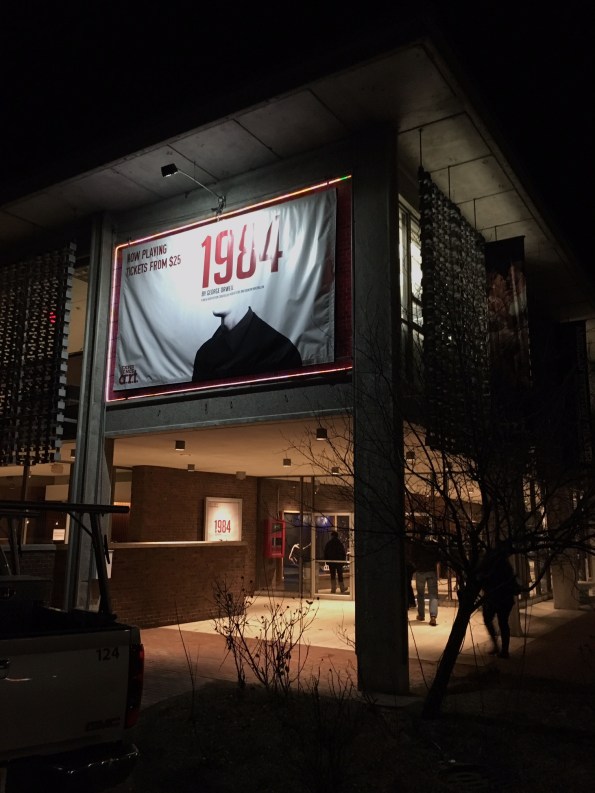 It’s impossible to talk about a theatrical adaptation of a book without discussing spoilers, so if you haven’t ever read 1984, you might want to go pick up a copy and read it and come back to this review later.
(And by might want to I mean my god, reader, how have you not? Get thee to it!)
The American Repertory Theater (ART) is a really cool theater in Cambridge, MA (right in Harvard Square) that brings a lot of brand-new and often experimental theater to the area. Previously I’ve seen The Heart of Robin Hood (before it was a Broadway play, so when it was still in its developmental phase) and another adaptation of a book–Wild Swans (review). I keep an eye out for plays coming to the ART that might appeal to my husband and I. When I got the email about the new adaptation of 1984, I forwarded it to him, and he immediately confirmed yes, let’s get tickets.
We’ve both read 1984 but not in around 10 years. My husband immediately noted the precisely 101 minute running time. I had forgotten the torture room is room 101 in 1984. I’m glad he noticed this. There were other send-ups to it throughout the play.
When you arrive for 1984, the ushers notify you that there are strobes, gunshot noises, and also no intermission or readmittance. We were expecting the first two but were a bit thrown by the last. Since we both just had a nasty bout of food poisoning, we were a bit anxious about no intermission or readmittance. We joined literal throngs of people at the bathrooms, who were all also anxious about the whole thing and then found our seats.
I would be amiss not to mention that about 2 weeks before the show, the ART called us and told us that during pre-production they discovered that one of the (cheap in the back) seats we’d originally bought was going to be obstructed by some tech needed for the show. They gave us new better seats, in the center and only a few rows back. A great upgrade, for free. In any case, let’s get down to the actual show.
1984 is a production that truly embraces the futuristic, tech-heavy dystopia depicted in 1984 the book. It incorporates technology from the instant it starts, and from the moment patrons walk into the building, there is a sense of ominous foreboding. The entire 101 minutes is done on one stage with a single incorporated set change (which was amazing, and I will get to in a minute) and with 9 actors.
The set originally consists of a room with a table and some chairs. There is paneling at the back of the room. Half of this is see-through glass, so you can see characters coming to the door in the middle. On one side of the room is the ominous telescreen, which you can actually see glowing periodically. There is another door near the telescreen. Over all of this is a giant screen that is used to incorporate really cool tech. At first I thought it was pre-recorded film being shown on this screen, but later it becomes evident that at least some of it is being shot live via CCTV on various areas of the stage. As an example of how this screen is incorporated, at the beginning of the show, when Winston starts writing in his journal, the screen shows the words being written upon the page.
This single set is used to show Winston (the main character) at home, at work, and later in the countryside. I particularly enjoyed how the show just goes for it with the countryside. They declare they are in the country, there are sound-effects of birds, and then it’s really easy to believe they are in the country. My husband enjoyed the glowing yellow lights and sound-effects of a train chugging the show uses to transition here.
Those who have read the book will realize that the earlier scenes of Winston at home, work, and in the countryside end up being recollections and thoughts while he is in prison with the Ministry of Love being tortured periodically in room 101. We weren’t sure how they were going to handle this transition without an intermission, but it was awesome.
Throughout the beginning of the play, Winston and Julia go through a door on the side of the stage to the room of safety that they rent out that supposedly has no telescreens in it. When they are in the room, the audience views what is occurring via the screen on top of the stage through what appears to be CCTV. When it is revealed that they are caught (which is super spooky how it is done in the play), pieces of the set either lift up or slide to the side (I can’t remember which) to reveal behind the wall at the back is the actual bedroom set. So this is where they have been going to actually act out the bedroom scenes. The secret police who come in to arrest them also change the set. It is violent, brutal, and awesome. They ultimately change the set to be what appears to be an empty stage but then when Winston is brought into room 101, bright lights reveal white everywhere. It’s a glowing white room, which is perfect for the eeriness of the torture.
What about the acting? The acting was so good throughout the various set changes and tech that I didn’t really notice it, which I personally think is one of the best complements you can pay an actor. If you get so sucked into the world that you forget acting is even going on, then it’s good acting. I will add that multiple characters play various roles, and I didn’t notice, which is also a complement.
So let’s get to the most…memorable/impactful part of the show. The torture scene towards the end. I thought this was splendidly done. I am not one who ever really forgets that I’m watching a play, so I didn’t have the visceral horror I would have if I was seeing pictures or videos from actual real live torture, but the combination of the set and the costumes of the torture assistants (they’re wrapped in white suits that remind me of the yellow suits in Breaking Bad, if you’ve seen that), and the interrogator’s entire presence generated a real feeling of dread and horror.
If you are concerned about the “torture,” basically the interrogator gives an order (ie “fingers”), the people in white grab their instruments and come up to Winston. There’s a big sonic boom while the lights flash out, then the lights turn on and the results of torture appear, in the case of fingers, it’s blood on Winston’s fingertips. It was good, but it was obviously theater.
That said (bare in mind there was no readmittance) right around the first torture (there are three), people in the audience started bailing out. I heard later that around 20 people bailed out. I personally saw about 7. But, I will say, this was about 10 minutes from the end of the play, so it’s also possible at least some of them just really needed to use the restroom (this is a play without intermission right after most of us went to dinner). I heard later that one woman in the audience actually threw up in her purse, but to be fair, she could have been sensitive to strobes, and there are a lot of strobes in the show. My husband and I were generally flummoxed by the number of people bailing. Did they somehow know nothing about the plot of 1984 before they went? Were they that easily disturbed? It’s torture, but again, it’s theatrical torture. I know there’s nothing the ART can do about people walking out, but it did irritate me some just because it was distracting. However, it is also a hilarious story to tell people, and most people I’ve mentioned it to just think it makes the play sound more bad-ass (which it totally is).
We really only had a few points of feedback after the show. First, we wished that the scene when Julia and Winston are in the countryside and start to undress to have sex for fun and fight Big Brother that way had taken the undressing further. Given the violence, big booms, and large tech in the show, as well as the general point in the scene about Big Brother being afraid of orgasms, we felt that leaving shirts on just didn’t take things far enough. Additionally, we were both a bit disappointed that there were no actual rats in the show. We get how difficult it can be to wrangle animals, but I did think there’d be at least some video or disturbing images of rats, and there is not. To be fair, our ability to be freaked out by rats is really mitigated by living in Boston. I see at least one rat a week when I’m commuting. And they’re big ones. Finally, we thought that the clock in the room reading 1:01 was a bit too cute.
Overall, this is really cool experimental theater. Attending it won’t be like any other play you’ve attended. Come prepared to be a bit anxious for 101 minutes and maybe dehydrate yourself a bit ahead of time so you can last the full time without intermission. Personally, I think this is a beautiful adaptation of 1984 that really lives up to the spirit and intent of the book, while using modern tech and trends to keep it relevant.
Book Review: Stuff: Compulsive Hoarding and the Meaning of Things by Randy O. Frost and Gail Steketee
 Summary:
It may be difficult to describe a hoard, but you know one when you see one. Maybe you have a neighbor who keeps their shades drawn but when you enter their home you see piles and piles of stuff that either they keep for a project they’ll do one day or because every scrap of it contains important information (according to them). Maybe you’ve only encountered hoarding through reality tv shows focused around the forced clean-up of homes that immediately appear unlivable to you but yet that the person on the show insists is full of treasures. Or maybe you grew up in a home where the hoard slowly encroached on your own room
Between 2 and 5 percent of the population suffers from Hoarding Disorder. Frost and Steketee were the first to begin scientifically studying it. Here, couched in tales of real interactions with and homes of clients (who granted their permission to be featured in an anonymized fashion) Frost and Steketee present both what we know and what we don’t know about hoarding, as well as best practices for helping someone with the disorder.
Review:
As an outside observer of a hoard, it can often be difficult to imagine what leads a person to believe trash is treasure. But of course it’s more complicated than someone just being unable to recognize trash. After all…one man’s trash is another man’s treasure. The authors attack this head-on by first giving a true definition to what counts as hoarding and then talking about various causes and possible presentations of the disorder. So what counts as hoarding?
It hardly matters how much stuff anyone owns as long as it doesn’t interfere with his or her health or happiness or that of others….Hoarding is not defined by the number of possessions, but by how the acquisition and management of those possessions affects their owner. (page 58)
So basically, it counts as hoarding if the collection of items interferes with the person’s health or happiness or the health or happiness of others nearby. The complicated gray area of course is that the sufferer may not realize that the hoard is interfering with their happiness and health. That is the point of conflict for many loved ones of people who hoard.
After establishing and defining what hoarding disorder is and is not, the authors continue on to analyze the behavior and mind of someone suffering from hoarding. Fascinatingly, hoarding shares commonalities with many other mental illnesses, seeming to a certain extent to defy categorization, although the DSM 5 currently lists it among “Obsessive Compulsive and Related Disorders.” Are you shocked? Did you think that OCD always means cleanliness? The fact is that is often not what OCD means. It’s a misunderstanding spurred on by popular culture. OCD is an obsession. It can be with cleaning and germs but it can also be with anything. It also often features repetitive behaviors. If you think about it, you can see what hoarding has in common with this. People who hoard become obsessed with the idea of not losing something important, of collecting everything relevant to a certain idea, of not wasting things. They also can come to establish repetitive behaviors such as maybe always buying a newspaper from a certain store on the way home from work. Another similarity with OCD is that hoarders often are perfectionists. Part of why their homes become cluttered is they are obsessed with only doing a perfect job of cleaning up or of fixing something or using some item for a project, and they become paralyzed with the fear that they can’t do it good enough, so they never start.
The authors also talk about how hoarding has commonalities with Impulse-Control Disorders, such as gambling and compulsive buying. Many people who hoard also struggle with both of these ICDs, and it’s easy to see the relationship here. Similarly, many hoarders show symptoms of ADD. They often do much better cleaning up if there is simply someone there to help them maintain focus, rather than being easily distracted.
Hoarding is also often a result of trauma. People suffer a trauma and essentially attempt to build a protective space around themselves by hoarding.
Compared to people who do not suffer from hoarding problems, clutterers report a greater variety of traumatic events (an average of six versus three), as well as a greater frequency (an average of fourteen versus five) of such events. The type of trauma most often experienced by hoarders include having had something taken by threat or force, being forced into sexual activity, and being physically assaulted. (page 87)
Interestingly, there’s a comparatively low incidence of PTSD among hoarders, in spite of such a high incidence of trauma. (A 2006 study found only 6% of hoarders had PTSD, page 91). It is possible that hoarding prevents the development of PTSD. Many hoarders also report a childhood devoid of warmth and support, so even if they were not traumatized, it is still likely that they had a cold, distant childhood. In contrast to PTSD, the majority of hoarders (nearly 60%) meet the criteria for major depression, and it is posited that this depression could be in response to the hoarding itself.
People draw conclusions about their worth and competence based on their inability to control their living space, and not being able to entertain people in their homes isolates them and limits their social lives. (loc 532)
The authors then talk about what may be going on in the heads of people who hoard. People don’t do things completely irrationally. There are reasons for it. There are multiple possibilities for hoarding of what may be going on. No single aspect has been determined yet. However, in general, hoarders suffer from a different type of threat signal. They fear something being removed, rather than the presence of something. It has also been posited that they have the opposite of claustrophobia. They feel safer in small, tight spaces, so they artificially create them. Hoarders also frequently struggle with identity. Rather than knowing who they are, they often are defined by the question “Who am I?” and collect items to try to show who they are. In addition to the aforementioned perfectionism, hoarders also seem to view items differently from the rest of us. They are generally very optimistic about future usefulness and can be quite creative as to reusing things. It has been posited that hoarding may be creativity run amok. However, many hoarders also gamble compulsively and the relationship between a hoarder’s positive thinking and a gambler’s is interesting.
“Seeing the scratch tickets over the counter at the convenience store leads me to think, One of those tickets is surely a winner, maybe a million-dollar winner. How can I walk away when the opportunity is there?” Our hoarders have said similar things about items they’ve wanted to acquire. (loc 202)
Distress avoidance is also often a common feature. Distress avoidance is when a person seeks to avoid a situation that they think will cause them distress. They then build up that situation in their heads to be more of a stressor than it actually would be. Continual avoidance of these types of situations also weakens a person’s ability to deal with them (due to lack of practice), so it’s a bit of a self-fulfilling prophecy.
Animal hoarding is its own special subcategory, and it seems that in addition to all of the other possible hoarding issues, animal hoarders may suffer from a form of an attachment disorder where their bonds with other humans are frayed and easily broken and replaced by bonds with animals.
So, essentially, hoarders are often people who are perfectionists who tend to perform rituals and struggle with impulse control. They may compulsively shop and/or gamble in addition to hoarding. They often had cold, distant childhoods and/or suffered a trauma (or traumas). They tend to come at life from a basis of fear and feel safer in tight, closed spaces, and their fear is heightened by removal of things, rather than appearance of new things. At some point, they started avoiding distress, and this distress avoidance became a self-fulfilling cycle. They also frequently struggle with knowing who they are internally, rather looking outward to possessions for identity signals. In addition to these compulsions and fears, hoarders also often see things differently or in more detail than non-hoarders, and they also struggle to focus or concentrate, making cleaning up even more difficult for them.
The authors conclude by discussing both how to treat hoarding and effects on family members and loved ones (as well as on communities). The authors stress repeatedly that forced clean-ups are the absolute worst possible solution or treatment option. A forced clean-up just fulfills the person’s fear that people are out to get them, and simply makes them cling on to their possessions even more aggressively. It also can make them more depressed. Since their identity is wrapped up in their possessions, getting rid of them by force can cause emotional trauma akin to someone chopping off your hair by force. I was stunned to learn that there have been cases of people who hoard committing suicide after a forced clean-up. The authors strongly advocate for the much slower, but with more long-term positive results, method of going through the hoard with the person slowly and basically teaching them new ways to think about both their possessions and their identity. They also state that it’s easier to treat compulsive buying and gambling than hoarding, so when possible treat that first to prevent the arrival of new items into the hoard. It is a long, difficult treatment plan to go through a hoard slowly, and sometimes it may be necessary to remove the person from the home for safety but then to return with them repeatedly to work on cleaning out the hoard.
The fact that forced clean-ups are the worst possible solution for the sufferer and the fact that hoards get worse over time leads me to believe that early interventions are absolutely critical to render the most help to those suffering from hoarding. But this is a complex thing. Since many cases of hoarding start due to a cold home environment or from trauma, it may be difficult to get parents behind addressing the situation early. Many people who hoard interviewed in the book talk about their hoarding beginning to get out of control by late in their freshman year of college. Perhaps this is something colleges should be keeping an eye out and offering help for. Additionally, shame is often mentioned as a factor in keeping the problem hidden. Perhaps PSAs and other public service campaigns could both lessen the stigma and offer help to people early on in the development of a hoard.
So much of hoarding is stigmatized. To a certain extent this is understandable. It often isn’t seen by the public until it has reached a public health crisis level or in situations where animal hoarders are keeping their hoards in deplorable conditions. Often loved ones of those who hoard feel trapped and frustrated by the hoarding. They feel as if the loved one loves their stuff more than them. These are complex issues and professional help is required to address them. I honestly don’t think this is a situation that is easily handled one family at a time. A family member must be well-informed and patient and empathetic enough to wait through the long treatment process. Often that family member is the child of the hoarder and therefore a minor with no power, which makes the issue even more complex. This is definitely a situation in which public health education campaigns on things like early warning signs of hoarding tendencies and ways to seek help could be extremely helpful long-term. I do believe the authors could have taken things one step further at the end of the book to this connection to public health, rather than mostly focusing on individual therapy. They do mention less consumerism would be helpful, but that simply is not much of an observation. It is a small complaint, but I do feel that this interdisciplinary leap is important.
Overall, this was a fascinating, enlightening book. The authors have conducted extensive scientific research for years, and they do an awesome job of writing this information at the consumer level, as well as humanizing it by bringing in real cases with clients who they render in a three-dimensional fashion. I know I for one will never be able to stomach watching forced clean-ups on the tv show “Hoarders” again. Recommended to really everyone. Anyone could potentially know someone who struggles with hoarding, whether now or in the future, and the book is very readable.
If you found this review helpful, please consider tipping me on ko-fi, checking out my digital items available in my ko-fi shop, buying one of my publications, or using one of my referral/coupon codes. Thank you for your support!
4 out of 5 stars
Length: 309 pages – average but on the longer side
Source: Library
Counts For:

Illness(es) featured: Hoarding Disorder
Book Review: A Spell of Winter by Helen Dunmore
 Summary:
Cathy and her brother Rob live with their emotionally distant grandfather on family land in England because her mother left, and her father died in a mental institution. Cathy and Rob seek refuge with each other against the world, but World War I won’t let them keep the world at bay forever.
Review:
I generally enjoy controversial books, and I heard that this historical fiction included the always controversial plot point of incest. The short version of my review is: it’s amazing how boring a book about incest and WWI can actually be. For the longer version, read on.
The book is told non-linearly in what appears to be an attempt to build suspense. The constant jumping with very few reveals for quite some time, though, just led to my own frustration.
I was similarly frustrated by the fact that Cathy’s childish interpretation of her father’s mental illness never progresses. She never moves from a child’s understanding to an adult’s understanding. This lack of progress gave a similar stagnant feeling to the book.
Of course, what the book is best-known for is the incest between Cathy and Rob. I found the scenes of incest neither shocking nor eliciting of any emotion. There are scenes where Cathy and Rob discuss how “unfair” it is that they cannot have children and society will judge them. But then again there are scenes that imply that Rob took advantage of Cathy. Well, which is it? It’s not that I demand no gray areas, but the existence of gray areas in such a topic would best be supported by a main character with insight. Cathy remains childlike throughout the book. Indeed, I think the characterization of Cathy is what holds the whole book back. Because the book is Cathy’s perspective, this lack in her characterization impacts the whole thing. What could be either a horrifying or a thought-provoking book instead ends up being simply meh. A lot of time is spent saying essentially nothing.
That said, I did enjoy how the author elicits the setting. I truly felt as if I was there in that cold and often starving rural England. I felt as if I could feel the cold in my bones. That beauty of setting is something that many writers struggle with.
Overall, this book read as gray and dull to me as the early 20th century English countryside it is set in. Readers with a vested interest in all varieties of WWI historic fiction and those who enjoy a main character with a childlike inability to provide insight are the most likely to enjoy this book. Those looking for a shocking, horrifying, or thought-provoking read should look elsewhere.
If you found this review helpful, please consider tipping me on ko-fi, checking out my digital items available in my ko-fi shop, buying one of my publications, or using one of my referral/coupon codes. Thank you for your support!
3 out of 5 stars
Length: 320 pages – average but on the longer side
Source: PaperBackSwap
Counts For:
Bottom of TBR Pile Challenge
Book Review: Moonlight in Odessa by Janet Skeslien Charles
 Summary:
Daria loves the city of Odessa in her home country of the Ukraine. The history of the city, the architecture, and the food. But she’s a highly educated engineer unable to find a job in her field, so she’s stuck working as a secretary for an Israeli import business, dodging the advances of both her own boss and the boss of the local mob. She takes on a second job translating for an online dating agency that matches Ukrainian women with American men. Soon she gets swept up in the idea of escaping to America, where she could actually work as an engineer and get treated like a queen by a man who won’t drink too much or keep mistresses or leave her. But will the reality of America match her dreams? And will living there ever be able to compare to her life in Odessa?
Review:
Confession. I have a thing for mail order bride / arranged marriage stories. I also have a thing for watching reality tv shows about marriages that will inevitably be trainwrecks (I’m looking at you, 90 Day Fiance). I was expecting this book to basically be the equivalent of 90 Day Fiance only on paper. Delightful, yet trashy. What I found was a book that was indeed truly delightful, but that also brought a realistic, humanizing face to modern day marriages that are not for love.
The book lingers in Odessa much longer than I was initially expecting, and I’m so glad it did. This gives a firm basis for who Daria is before she comes to America and really puts the reader in her shoes. The author clearly has a love for and strong knowledge of Odessa, Ukrainian culture, and the Russian language. Within just a few pages, it immediately becomes clear that Daria is whip-smart. Her understanding of the ins and outs of both English and Russian are amazing. She is witty, and it’s easy to see how she would have succeeded in any life circumstance. But it also quickly becomes apparent that although she loves Odessa, it doesn’t let her truly grow into who she wants to be. Every life experience she has had has taught her that Odessan/Ukrainian men will only use her and leave her, and she wants a lifetime partner and commitment. Similarly, she can’t use her engineering degree in Odessa, due to the economy, and she wants to live someplace where she can. The clear and slow unveiling of these conjoining life situations helps the reader to come to understand why she is willing to have a business-style marriage, rather than a love marriage. The American man she meets needs a wife, and she needs a life partner and a ticket to a better life.
Of course, not all is as it seems with the American man. The second half of the book dives into life in America for Daria and depicts the harsh realities of using a business-style marriage to immigrate. Even if her marriage had been perfect (which wow it isn’t), Daria still suffers culture-shock and the realization that America is definitely not perfect. There are pros and cons to living anywhere in the world.
Although her marriage is on the worse side of the arranged marriage bell curve, the author still shows the variety of marriages that can result from this type of arrangement by having Daria naturally seek out other women who came to America in similar ways. She thus meets women in both better and worse marriages than her own, and so the reader sees how, although it can possibly work out, the whole situation is ripe for abuse. For instance, if a marriage that included a K1 visa (bringing a non-US citizen into the US) is dissolved within 3 years then the spouse who was brought over on the K1 visa loses their citizenship. This means that women in these types of marriages are afraid to leave abusive situations because they believe that they will automatically be deported. There are exceptions for cases of abuse, but the women often do not know that, and the men in these situations often threaten the women with deportation. This information is all given within the book with subtlety and within the context of what will Daria do now, which lends a human face to the situation.
Given how interesting and realistic most of the book was, I must admit that I felt the end of the book went a bit soap opera, and the ending in general left me wanting. I can’t put my finger on what exactly about it left me feeling as if the story was incomplete, but it did. I don’t have any regrets about reading the book, though, because I so enjoyed seeing the world through Daria’s eyes.
Overall, anyone who enjoys contemporary fiction and is interested in either the Ukraine or the modern day “mail order bride” as done through online agencies will enjoy this book. The main character is rich and well-rounded and brings a human face to the often underrepresented immigrant side of the K1 visa story.
If you found this review helpful, please consider tipping me on ko-fi, checking out my digital items available in my ko-fi shop, buying one of my publications, or using one of my referral/coupon codes. Thank you for your support!
4 out of 5 stars
Length: 352 pages – average but on the longer side
Source: PaperBackSwap
Counts For:
Bottom of TBR Pile Challenge
 Support my work with a tip or browse my shop for curated book club guides, how to guides, cross-stitch patterns, and more!


This work by Amanda Nevius is licensed under a Creative Commons Attribution-Noncommercial-No Derivative Works 3.0 United States License.
 Opinions of a Wolf