
Book Review: Two To Mango by Jill Marie Landis (Series, #2)
 Summary:
Em Johnson, manager of the Tiki Goddess Bar on Kauai, never intended to get involved in one murder investigation, let alone two. But when the hunky fire dancing detective Roland Sharpe asks for her help looking into some suspicious deaths in a high-profile, competitive halau (hula group), she just can’t say no. Before she knows it, she’s entering the geriatric Hula Maidens halau into the biggest hula competition on the island to help her get in where she can snoop.
Review:
I’ve dipped my toe in a few cozy series, but this is the first one that’s managed to call me back for a second helping. They’re all entertaining in their own way, but this series is also unique and engaging enough to keep me coming back for more, and thankfully those unique elements stayed strong in the second entry.
Em is a good cozy mystery heroine. She’s smart and willing to help but isn’t running amok destroying the police department’s days. She only helps when asked and even then, she’s a bit reluctant to disrupt her life. On the other hand, when she does help, she’s good at it. She lends insight that it makes sense only she would have, such as being able to infiltrate the halau competition. This lets both her and the inevitably hunky police detective she’s helping seem smart and efficient. She also has that every woman quality that lets the reader insert herself into the story.
The setting is perfect escapism. A Hawaiian seaside tiki bar that feels like Hawaii’s answer to Cheers. If Cheers had a set of geriatric hula dancers who started “rehearsing” aka drinking before noon. Not to mention an aging hippie who thinks he’s engaged to a dolphin. The setting represents both the beauty of Hawaii and the diversity of Hawaiians and Hawaiian culture. I certainly learned a few words of Hawaiian along the way in addition to thinking fondly of how nice it would be to live in a place with such tropical beauty.
The plot was multifaceted and engaging. Every character really has their own life and they manage to intertwine just the right amount. The murders (and attempted murders) happened at the right frequency and managed to be a surprise at least part of the time. The murder weapons are creative and well-thought-out. The plot is not predictable but it’s also not entirely off the wall. I felt surprised but also to a certain level knew that I could have figured it out if I’d thought a bit more. That’s the perfect amount of mystery in my book.
This would have been five stars, but there is one part of the book that I thought was in very poor taste at best. This is not a plot spoiler, as it is not necessary to the mystery at all. At one point, Little Estelle (the eldest of the Hula Maidens), climbs into a man’s car and basically throws herself at him. If the genders were reversed, this would definitely be read as a creepy old man assaulting a pleasant young woman. But since it’s an old woman it’s written for laughs. I get it that Little Estelle is presented as a horny, senile old woman, but there’s a way to write that that doesn’t verge into sexual assault territory. I just don’t find that sort of thing funny, and even though I get it that the intention was oh that silly old woman, it didn’t sit well to me. If this was my first Landis book, I probably would have stopped reading. I didn’t, and I’m glad I didn’t, because the rest of the book is 1,000 times more humorous and creative than those few pages. But I am disappointed that Landis chose to write Little Estelle that way. Others might find it more humorous than I did. I just don’t see such things as a laughing matter.
Most cozy books come with an arts and crafts do at home type project. This series includes drink recipes. I’m pleased to say that this book has even more drink recipes at the end than the first one, although I have yet to try mixing any myself. They are creative and fun-looking, though, and let the reader feel a bit like the Tiki Goddess could really exist.
Overall, this is an engaging, humorous cozy mystery. Readers of the first book will enjoy their return to the world of the Tiki Goddess. I am anticipating the next entry in the series, although I do hope that Landis will improve the characterization of Little Estelle.
4 out of 5 stars
Source: Gift

Previous Books in Series:
Mai Tai One On
Book Review: The Wanting Seed by Anthony Burgess (Bottom of TBR Pile Challenge)
 Summary:
In the near future world with no war and totalitarian governments there’s an ever-looming threat of starvation thanks to overpopulation and diseases attacking the crops. The governments have responded with worldwide one child policies and psa campaigns to encourage homosexual relationships. Englishman, Tristram Foxe, lives in a skyscraper with his wife, Beatrice-Joanna and works as a social studies teacher. But his advancement suffers both from his status as a person with siblings and as a married man with a child. When he discovers that his wife is cheating on him with his passing as gay brother who works for the Infertility Bureau, his world falls apart just as the world around him tilts from totalitarian regime to cannibalism and pagan fertility rituals.
Review:
When I picked up this book, the summaries I’d seen were nowhere near as clear or straightforward as the one I just wrote for you. I’m not sure I would have ever picked it up if I’d had an inkling of an idea as to what I was getting myself into. All I saw was a dystopian overpopulated future by the same author as A Clockwork Orange
The first half of the book reads like a treatise by a Quiverfull (Evangelical Christians who believe in having as many children as possible, more info) with some terror of a hyper-liberal future where people are denied their right to choose to have children (funny how they fear that but don’t get that pro-choice is all about protecting a woman’s right to choose what to do with her own reproductive organs but that’s another rant for another day), and people are forced into being gay/lesbian. I know this sounds like it could be an interesting flip-flop of current times, but it didn’t read that way for me. It read as a lot of homophobia and yelling about how population control goes against god’s plan and going against god’s plan sends the plagues. Seriously. That’s how it reads. But, I traveled on because this is Anthony Burgess, and characters don’t have to be likeable. They could be used to show the opposite point. But that’s not really what happens. What happens is that this set-up gets ditched for a mad-cap dash through sociology.
The last half of the book is kind of an interesting sociological exploration of how the world moves through the liberal/conservative/military cycle. It is mad-cap and bizarre, and as a person with a BA in History, I really enjoyed seeing a country move through those cycles at rapid-fire in a slapstick humor style. This part of the book felt like an entirely different book in fact. But I also think only a certain type of person would enjoy it. (Like, oh, Political Science and History majors).
As for character development, there is none. Everyone ends up pretty much where they started after having lived through the cycles of political change. It really reminds me a lot of playing Civ or SimCity where you move artificial people around to illustrate greater points. I enjoyed this alright, but I would have preferred stronger characterizations or at least some growth.
So, is the book a phobic conservative dream of what a liberal society would look like? I don’t think so. I think Burgess actually presented each part of the political cycle as awful, including the fall into tribal-feeling paganism. It sort of felt like the book was saying that someone somewhere will always be unhappy no matter what the political/sociological situation is. Depressing, huh? And yes I know it’s dystopian and lot of people think dystopias are innately depressing, but personally I think they can frequently offer a lot of insight and hope for the future. This just felt a bit defeatist. With some Quiverfull and homophobic characters to boot.
Overall I’m left feeling decidedly no reaction either way to this book, which is not what I was expecting from Burgess. I was neither offended nor enlightened and mildly entertained but I could have had the same entertainment from playing Civ on my computer. I think this book best appeals to readers who also enjoy studying political science or the history of societies, but even they should proceed with the caution that this is decidedly a mad-cap, non character-driven look at those topics.
3 out of 5 stars
Source: PaperBackSwap

Book Review: Dagon by Fred Chappell (Bottom of TBR Pile Challenge)
 Summary:
Peter doesn’t know much about his father’s side of the family as his mother left him when he was little. Now, a married pastor, he returns to his father’s parents’ house, a recent inheritance. Slowly he discovers the cultist history of his family and begins his descent into madness.
Review:
There aren’t that many books in the Lovecraft mythos, so when I spot one, I almost always add it to my wishlist and pick it up if I spot it. (I’m a big fan of the mythos, and my current work in progress is set in it). I spotted this one during one of Better World Books’ periodic sales and got it for just a couple of dollars. The problem with the world of Lovecraftian horror is this. The mythos is great, but a lot of the books/movies set in it are a swing and a miss. Which is sad for me as a reader, because I know that this is an author with the same funky interest as me, so I want it to work. I want it to work very much. It just doesn’t always. This, unfortunately, falls solidly in the swing and a miss category for me.
The germ of the story is a great idea. An ostensibly mainstream “good” man following his roots and falling into a dark god worshiping cult. Brilliant. The execution is weak, however. The cover of my copy of the book claims that it is a “novel of blinding terror.” This is just not the case. In some ways I feel that Chappell just tried too hard. The entire first chapter is meant to set the scene with extremely heavy-handed gothic language, but it is just painful to read. The first chapter describes one room of the house. Excessive energy is spent trying to make even the throw pillows seem malicious. It is too over-the-top and becomes laughable. Thankfully, the next chapter abandons the excessive language, but it is still never scary. It is titillating at a couple of points. Engaging as well. But never terrifying.
Part of the problem is that the book fails to build suspense from beginning to end. It builds up in part one to a singular event, but then immediately crashes back down to a period in part two in which Peter lies around in a depressed funk. While this might be realistic, it does nothing to build the suspense. The suspense thus must start all over again. This may be acceptable in a long work (and even then I’m dubious), but in such a short book it’s just jarring and ruins the suspense.
I also found the ultimate payoff to be a bit disappointing. While we find out one or two things about Peter’s family, we don’t get enough details to truly experience shock or horror. Similarly, the ultimate final descent of Peter was a bit disappointing. He doesn’t engage in any agency or become a committed cultist. A lot of cult things are done to him, but he doesn’t really have the descent into madness promised. He is tortured and made into a slave and has the mental and emotional breakdown such experiences could make someone experience, but he himself doesn’t turn into a raving Dagonite, for instance.
That said, there are some things that worked in the book. As stated previously, the germ of the idea is great. Peter’s nemesis/mentor, the tenant farmer family’s daughter, is delightfully powerful and sinister. A couple of scenes were a great mix of titillation and horror, and the final climax was definitely a surprise.
Overall, then, it’s a book that tries to be a terrifying, gothic horror, but instead is a titillating grotesque bit of southern literature. Fans of the Lovecraftian mythos will appreciate it for this, although the Lovecraftian elements themselves are sparse and a bit disappointing. Recommended for big fans of grotesque, fantastical horror who don’t mind it leaning a bit more toward the grotesque than the scary side of horror.
3 out of 5 stars
Source: Better World Books

600 Follower Freebie Celebration!!
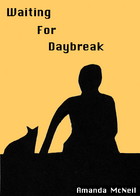 Hello my lovely readers!
To celebrate my blog reaching 600 followers, I’m offering up ebook copies of my novel, Waiting for Daybreak, for FREE for three days! And that’s an unlimited number to everyone who wants one!!
What is normal?
Frieda has never felt normal. She feels every emotion too strongly and lashes out at herself in punishment. But one day when she stays home from work too depressed to get out of bed, a virus breaks out turning her neighbors into flesh-eating, brain-hungry zombies. As her survival instinct kicks in keeping her safe from the zombies, Frieda can’t help but wonder if she now counts as healthy and normal, or is she still abnormal compared to every other human being who is craving brains?
Still not sure if you want this bad-ass free book? Check out the reviews from the blog tour, on Amazon
In order to get your FREE ebook, go to this page, add it to your cart, then put in the coupon code at checkout for 100% off. You may choose a version compatible with any ereader, computer, and many phones. That’s right, read it for free on your kindle, iPhone, Kobo, and more!
I’m so excited to have so many followers, and you all definitely deserve some special access to my work. So are you ready to grab the coupon code and check it out?
Your coupon code is……
LC57W
Again, just go to this site, add the book to your cart, then enter the coupon code at checkout for 100% off!
Feel free to share the coupon code with your friends. It will expire on Sunday. And thank you to one and all for being my followers!
<3
Series Review: The John Cleaver Series by Dan Wells
Introduction:
I post series reviews after completing reading an entire series of books. It gives me a chance to reflect on and analyze the series as a whole. These series reviews are designed to also be useful for people who: A) have read the series too and would like to read other thoughts on it or discuss it with others OR B) have not read the series yet but would like a full idea of what the series is like, including possible spoilers, prior to reading it themselves or buying it for another. Please be aware that series reviews necessarily contain some spoilers.
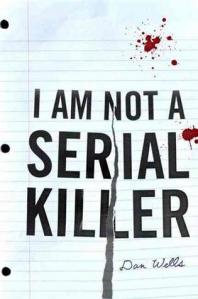 Summary:
Fifteen-year-old John Wayne Cleaver is not a serial killer. At least not yet. John’s therapist believes he has Antisocial Personality Disorder, commonly known as sociopathy, although he can’t legally deliver the official diagnosis until he’s 18 years old. But both his therapist and himself hope John can learn to control his illness in the meantime. An illness John refers to as Mr. Monster. This becomes more difficult as a serial killer shows up in his town. John starts to wonder if he can harness Mr. Monster to find and kill the killer. A killer he soon learns is supernatural and ultimately faces. The demons continue coming to his town, and John feels his grasp on control and an ability to function in average society slipping. Are there really more and more demons coming to his town? Or is it just his sociopathy getting the better of him?
Review:
This trilogy starts with an incredible bang, but makes a slow trajectory downward to end on a whimper.
The first book is incredible. It bashes ableism on its head by featuring a main character who is a teenager struggling with a mental illness, and not an easy one to identify with either. People with APD lack empathy, which can make it difficult to empathize with them in return. Wells carefully crafts a realistic yet sympathetic teenager with APD. His struggles to defeat his mental illness and be a functioning member of society are great to see in a novel period, let alone in a YA one. On top of this, we have a single mother running a business with the help of her just graduated high school daughter and part-time help of her teenage son. It’s the perfect mix of non-traditional and yet not off the wall family to have as a backdrop for John. We have all this, then, with a thriller plot that starts with the hint of a serial killer then deliciously builds to the revelation that the killer is a demon. This fantasy element fits perfectly in with what is hot in YA right now, giving an interesting, unique main character an appealing wrapping.
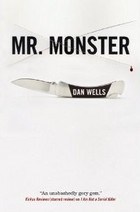 I was stoked after reading this and had high hopes for the trilogy. The middle book maintains some of the elements that made the first book amazing but missed on others. On the plus side, John is still who he was in the first book, although with more confidence. He tries to date, and his family has their own struggles. Although the thriller pacing is less deftly done, it still works in the context of this book, particularly since the middle book of a trilogy is traditionally setting things up for the last hurrah of the final book. Plus this book manages to accomplish two things. It has John learning more about himself and his mental illness and it shows him learning more about demons. It ends on a powerful note with him inviting one of the demon’s friends to Clayton County to face off with him. He’s tired of waiting for things to come to him and is ready to go on the offensive. Thus, although this book wasn’t as strong as the first, I had high hopes that it was setting us up for a powerful final book in the trilogy.
Things really fall apart in the final book, which is what makes the trilogy taken as a whole disappointing. Everything is building toward the final book. Toward what John ultimately learns and what he ultimately becomes. Unfortunately the answers to both of those questions are a major let-down after the unique and albeism-smashing features of the first two books. In the climactic scene, John’s mother sacrifices herself to save her son. When he loses her, he realizes that he is feeling feelings. He’s feeling the pain of losing her. When he realizes this, the lightbulb goes off in his head that he stopped feeling feelings when his father abandoned them. It was just him trying to deal with his broken family. I shit you not. And then he decides he has been healed by his mother’s death. His mother’s sacrifice opens him up to letting himself feel things again. What. The Fuck.
 First of all, going numb after being badly emotionally hurt is a real thing. But it’s not a real thing that would be mistaken by a therapist as Antisocial Personality Disorder. And being numb doesn’t mean a person starts daydreaming about killing everyone around him and the girls he has crushes on in particular. Numb is not the same as lacking empathy, and it honestly doesn’t even take a therapist to see that. Numb looks and feels different from sociopathy. They are not the same thing and simply could not be mistaken for each other. If we decide that perhaps Wells didn’t mean to imply that John was simply numb and didn’t have sociopathy, then we can only read this as saying that John’s father abandoning the family *caused* his son’s sociopathy and that his mother’s sacrifice cured it. I’m sorry, but your dad running off does not give people Antisocial Personality Disorder, and it certainly isn’t cured in the span of 10 minutes by someone sacrificing their life for yours. (By the way, does anyone see the heavy-handed religious symbolism in that? Because it is definitely there). The cause, as with many mental illnesses, is officially unknown but is believed to be a combination of genetics and severe environmental factors such as child abuse (source). Since John is not abused, then we can only assume that in his case his APD is genetic. It is utterly ridiculous to present the matter as his APD being caused by something as simple as a parent leaving. Similarly, there is no cure for APD. People do not get magically better overnight. It can be managed so a person may have a healthy, normal life, but it does not just disappear. The symptoms do sometimes become less severe on their own in a person’s 40s (according to the DSM-IV-TR), but John is not 40, and he doesn’t suddenly get better thanks to aging. The whole climax of the series turns the series from being about a person with a mental illness learning to function and do positive things into a story about how a father abandoning his family destroyed them and almost ruined his son for life. The former is unique and powerful. The latter is heavy-handed and preachy. Plus that whole dynamic belittles mental illness and makes it out to be just overcoming a bad part of your life, rather than the very real illness that people deal with every day.
So what we have here is a trilogy that starts as one thing and ends as another. It starts as a thriller with a unique main character demonstrating dealing with mental illness in an engaging, realistic manner. It ends with a thriller that quickly goes from spine-tingling to heavy-handed and preachy. It is unfortunate that this preachiness also gets the facts about a mental illness wrong and presents these false ideas to a YA audience in such an attractive, fantastical thriller wrapping. Ultimately the writing is good but the last book in the trilogy takes a nose-dive when it comes to facts and the realities of having and living with a mental illness. Thankfully, one can read the first or first two books in the trilogy without reading it all. There are not major cliffhangers that compel the reader to continue on, and the first two books stand on their own well enough. I’m disappointed that the series as a whole is not something I can recommend whole-heartedly. I’m disappointed that after starting out so strong, Wells went so far astray. That doesn’t change the quality of the first two books, though, so I still recommend them. But only if you’re capable of leaving a series partly unread.
3 out of 5 stars
Source: PaperBackSwap, Audible
Books in Series:
I Am Not A Serial Killer
Mr. Monster 
I Don’t Want to Kill You
Book Review: I Don’t Want to Kill You by Dan Wells (Audiobook narrated by Kirby Heyborne) (Series, #3)
Summary:
Teenaged John Cleaver had his sociopathy under control but when his town was plagued with two different demons, he had to let it loose a bit to fight them. He invited the demon Nobody to come face off with him, but he and those around him are left wondering if Nobody is real or if John’s sociopathy has just gone out of control. Meanwhile the teenage girls of the town are committing suicide left and right, and John can’t help but wonder why he’s ever tried to save anybody.
Review:
This is one of only a few YA series that I’ve enjoyed reading. The paranormal/youth aspect are almost like a Dexter lite, which is enjoyable. I must say, though, that I was disappointed by the ultimate ending to the series. However, since I write up series review posts every time I finish a series, I’ll leave my analysis of the series as a whole to that post, which will be coming up next. For right now, let’s look at the final book on its own merit.
The plot this time around was disappointingly full of obvious red herrings. I knew within the first chapter where Nobody was hiding, and it was kind of ridiculous that talented, intelligent John was missing it. Similarly, I found the serial killer who John identified as who he could end up being if he made the wrong choices to be a bit heavy-handed. John was already well aware of the risks of his sociopathy from the very first book. It felt a bit unnecessary to make this such a strong plot point. It came across as preachy, which is something that this series had avoided so far. Similarly, John goes to see a priest at one point in his investigations, and his conversations with him felt a bit too heavy-handed, almost like the (known religious) Wells was preaching at the readers through the priest. Authors are allowed their opinions and perspectives, but preachiness is never good writing. Perspective and opinion should be shown eloquently through the plot and characters.
Speaking of characterization, John was still strongly written, but his mother and sister were another story. They felt less like they were doing what was logical and more like they were doing what needed to be done to move the plot forward. On the other hand, I really enjoyed John’s new girlfriend. She was well-rounded and realistic. Plus she was fit while being curvy, which I think is a great thing to see in a book.
In spite of the slightly obvious plot, I still was engaged to get to the end. Even though I knew whether or not there was a demon and who the killer was, I still deeply wanted to see how John would handle it. The audiobook narrator, Kirby Heyborne, helped with this momentum. His narration was just the right amount of tension while still remaining in a teenager’s voice. Be warned, though, that there is some yelling in the book, so the volume does spike considerably at a few points in the narration. You may want to keep the volume a bit lower than usual to accommodate this.
Unfortunately, where the plot ultimately ended up was deeply disappointing to me. It was not at all a satisfying ending, and from a mental illness advocacy perspective, I actually found it distressing. Whereas John’s sociopathy previously was handled with a lot of scientific understanding, I found the ending of this book to be completely out of touch with real sociopathy. While it wasn’t offensive per se, it drastically oversimplifies sociopathy, both its treatment and its causes, which is just as bad as demonizing it. I will address this issue more fully in the series review, but suffice to say that I found the ending to this book’s individual mystery and the series as a whole to be disappointing, particularly given the potential of the book.
Overall, then, this is an average book that wraps up an above average series. If you are someone who is fine with stopping things partway through, I’d recommend just stopping with the previous book in the series, Mr. Monster. But if you are interested in the overall perspective, this book is still an engaging read that doesn’t drag. It just might disappoint you.
3.5 out of 5 stars
Source: Audible
Previous Books in Series
I Am Not A Serial Killer
Mr. Monster
Counts For:

Book Review: Blonde Bombshell by Tom Holt (Bottom of TBR Pile Challenge)
 Summary:
A sentient bomb is hurtling through outer space toward Earth, better known to the bomb creators as Dirt. You see, Dirt’s music is making the inhabitants of Ostar (a canine species) completely loony. But the bomb stops in its tracks and orbits around Dirt to try to figure out whatever happened to the *first* bomb that the Ostars sent out. Dirt doesn’t seem to have any sophisticated defense system to speak of, so what gives? Meanwhile, Lucy Pavlov, the creator of new computer programming protocols that led to a leap in technology, is seeing unicorns in her forest. Also a bank security executive is trying to figure out just how, exactly, money is teleporting out of banks. In between getting very drunk and trying to forget about that one time aliens stole his dog.
Review:
This made it onto my TBR pile thanks to multiple comparisons to Douglas Adams’ Hitchhiker’s Guide to the Galaxy
The plot is complex without being confusing. It revolves around three people (well, one is a bomb) who are connected in mysterious ways they just don’t know yet. It kept me guessing, managed to surprise me a few times, and had some delightfully creative elements, such as the fact that the bomb can create probes to send down to Earth that appear to humans like organic matter. Or even the fact that the bomb can sit there and slowly decide whether or not to go off. Clever.
I also appreciated an imagined future where people have handheld devices that are given a simple name rather than compounding a bunch of words together. The former makes more sense since in reality that is what companies do. (For instance, Google Glass or iPad as opposed to handheldpersonaldevice. Don’t laugh. I’ve seen something very similar to that in scifi). In this book the iPhone device is the Warthog. With no further explanation given. This is scifi done well. The reader can tell what a Warthog is from how the characters use it. Holt never over-explains.
The characters were rather two-dimensional, but that works well for the humor, not to mention for the fact that one of them is a bomb. If a character has a good heart but is a lazy drunk because aliens stole his dog, well that’s enough for the reader to know in a book like this. Motivation enough is present for the characters to be recognizable as people and to move the plot forward.
As for the humor, I found it quite witty, although not quite as gut-wrenching as Hitchhiker’s Guide to the Galaxy
Now, I was a bit let-down by the ending. I didn’t really like the final plot twist. It kind of….creeped me out a bit and left me on a bit of a down note instead of the delightful upswing I felt throughout the rest of the book. I think other people might enjoy it more than me. It really depends on your feelings about people and pets and having pets. It’s not enough of a let-down to keep me from recommending or enjoying the book. It was just enough to keep it from 5 stars.
Overall, this is a delightfully witty piece of scifi with a unique plot. Recommended to scifi humor fans, particularly those who enjoy Douglas Adams.
4 out of 5 stars
Source: PaperBackSwap

Book Review: Half of a Yellow Sun by Chimamanda Ngozi Adichie (Audiobook narrated by Robin Miles)
 Summary:
The Nigerian-Biafran War (or the Nigerian Civil War, as it is also known) is seen through the intertwining lives of four different people. The daughter of a wealthy Igbo couple, Kainene, with a fierce business sense. Her fraternal twin sister, who is also the beautiful one, Olanna, an academic in love with a revolutionary-minded man named Odenigbo. Kainene’s boyfriend then fiancee, the white English writer Richard. And Ugwu. Olanna’s houseboy who came to them from a rural village. Their lives are irreparably impacted, and in some cases destroyed, by the war for a cause they all believe in, but that the world largely ignores.
Review:
I originally intended this Nigerian book to be my final read for the Africa Reading Challenge 2012, but even though I started it in November, the audiobook took over three months to get through, so it ultimately missed counting for the challenge. I thought it was much longer than my usual audiobook fare, but a quick check of the listen length shows that it is 18 hours and 56 minutes long, which is only about 7 hours longer than my norm. So why did it take me so long to finish? Well, I just didn’t enjoy it that much.
I believe I was expecting something else from Adichie, since I had previously read her book Purple Hibiscus
As far as the plot goes, it was interesting but it was a bit confusing. Part of my confusion could have been because I listened to it, but from my understanding when I was listening, first there was an affair, then we jumped back to before the affair, then we jumped forward, then we jumped back to a different affair that came before the first affair. It was profoundly confusing. Particularly with a child referred to only as Baby (with no explanation about this for quite some time) who also randomly shows up and disappears. There was already so much going on with four different main characters and the war that this non-linear plot felt unnecessarily extraneous and confusing. However, it is possible that this plot is more clear when reading the print version, as opposed to the audio version.
The language of the writing itself is pretty, and I found periodic astute insights that I’ve come to expect and enjoy from Adichie. For instance,
Why do I love him? I don’t think love has a reason. I think love comes first, and the reasons come later.
Passages like these are what helped me enjoy the book to the extent that I did.
There is one plot point in the book that truly distressed me, so I feel I must discuss it. It is a spoiler though, so consider yourself spoiler warned for this paragraph. Throughout the book, the narration style is third person limited, which means that it is told in third person, but the reader knows what is going on in the main character’s head and is generally limited to that character’s perspective. The point of view is switched around among the four main characters, one of whom is Ugwu, the houseboy. We thus get to know him as the houseboy, he gradually grows up, and then later he is conscripted into the Biafran army. At this point, he participates in a gang rape on a waitress in a bar. I read a lot of gritty things. I routinely read books offering up the point of view of sociopaths or serial killers. I’m not averse to seeing the world through a bad person’s eyes, or through the eyes of a person who does bad things. But it has to be handled in the appropriate manner. I felt that there was entirely too much empathy toward Ugwu in the case of the gang rape. Adichie sets it up so that he walks in on his fellow soldiers gang raping this woman, and he says he doesn’t want to participate, they question his manhood, he admits in his head that he is turned on by the view of her pinned to the ground crying with her legs held apart having just been raped by a different soldier, and he participates. I think what disturbed me the most about this passage was how the narration makes it seem so ordinary. Like it’s something any man would do in that situation. Like it’s only natural he’d be turned on and get a hard-on from seeing a woman forcibly pinned to the ground so she can be gang raped by a bunch of men including himself. I think it’s awful to treat men like that. To act like they clearly are incapable of standing up for what’s right or that they’ll get a hard-on any time they see an orifice they can physically bang. Men are human beings and are entirely capable of thinking with more than their penis. Now, obviously there are men who rape, but there has got to be more going on there then I have a hard on and there’s a woman who I can stick it into. To treat rape that simply is a disservice to men and women’s humanity alike. Part of the reason why this reads this way is that we don’t know Ugwu well but we know him well enough to think that he’s an at least moderately decent young man. We don’t see a gradual downfall. No one holds a gun to his head or even implicitly threatens him with death if he doesn’t participate. It makes it seem like war makes men, even moderately good men, rape, as opposed to war simply providing more opportunities for rapists to rape. That is a perspective that I do not endorse, that I do not enjoy having sprung upon me in my literature, and that I found triggering as well. I was shocked to see it in a book by Adichie. Shocked and disappointed. It left me wishing I could scrub my brain of the book. Wishing for those hours of my life that I spent listening to it back.
Now, let me take a moment to speak about the narrator, Robin Miles. Miles is an astounding narrator. Her audiobook narration is truly voice acting. She is capable of a broad spectrum of accents, including Nigerian, British, and American, and slips in and out of them seamlessly. She easily creates a different voice for many different characters. I absolutely adored listening to her, in spite of not enjoying the book itself. Her performance of this book is easily a 5 star one.
Overall, though, the high quality narration simply could not make up for a story that failed to hit the mark with me on so many levels. It covers an important time period in Nigeria, and the highly important human rights issue of the genocide of the Igbo, but the style in which it does simply misses the mark for me. If this was all, I would still recommend the book to others who are more fond of a more impersonal, sweeping narration style. However, I also found the treatment of rape in the book to be simultaneously offensive and triggering. For this reason, I cannot recommend this book, although I do recommend the audiobook narrator, Robin Miles.
2 out of 5 stars
Source: Audible

Book Review: The Long Quiche Goodbye by Avery Aames (Series, #1) (Bottom of TBR Pile Challenge)
 Summary:
Charlotte Bessette is ecstatic that her slightly eccentric French grandfather and grandmother have handed over the running of their small town cheese shop to her and her cousin, Matt. She and Matt have redecorated the place for the 21st century and have added a wine annex. Everyone is excited for the grand re-opening but when their landlord turns up dead on their doorstep stabbed with one of their cheese knives and Charlotte’s grandmother standing over him, both the shop and the family are at risk.
Review:
Cozies are, by their very nature, absolutely ridiculous and difficult to explain. I generally default to an explanation like, “It’s murder! With arts and crafts and cooking! But not too much blood and no sex! And the titles are puns!” At this point the person I’m talking to generally looks at me like I’m nuts and wanders off. But even though the cozy genre is ridiculous and tough to explain, there are things that work for it and things that don’t. This book is definitely a cozy but it combines the cozy elements oddly, making it fall short of awesome into the decidedly meh category.
Most cozies have a moderately ridiculous plot involving a dead body being found and a woman ultimately amateur investigating the crime. The crime in this one was odd. A landlord who nobody likes is stabbed directly in front of the cheese shop on grand reopening night. Oh, and he’s stabbed with a cheese knife. Sometimes I think authors just don’t research and realize how hard it actually is to stab someone in the chest. A cheese knife wouldn’t cut it. (See what I did there?) So that had me rolling my eyes from the start. The ultimate whodunit was also a bit bizarre and had me scratching my head. It made some sense but it also sort of felt a bit like the author just chose whoever would be the most surprising as the killer, instead of really thinking through the logic and motivation. It’s also a bit problematic to have the murder victim be some sleaze everybody in town hates. This felt like a choice to give the mystery more easy suspects rather than, again, based on thinking through logic, motivation, and real crimes.
Then there’s the issue of the main character, Charlotte, who ultimately investigates. She doesn’t really have the get up and go gumption necessary for someone to start investigating something on her own. She’s….kind of snooty and prissy. A good cozy main character should be into her arts and crafts but also possess a lot of independent spirit and gumption. Charlotte is surrounded by people like that–her grandmother, her shop employee–but she herself isn’t like that at all. Yes, her grandmother is accused of a crime she didn’t commit and that’s a big impetus to do something, but it just feels out of character for Charlotte to do investigation. Similarly, Charlotte’s romantic interest felt forced and fake, which was awkward. In a genre where we get no sex scenes, the romance should be very well done, which it was there, but it wasn’t truly engaging.
The quirky characters in the town, besides Charlotte and her love interest, were interesting and just the right blend of quirks and reality to suit a cozy. Similarly, I was glad to see some cheese-heavy recipes in the back. I also thought the pun title was great and played in well to the mystery without giving too much away.
Personally, I think there are better, more engaging and funny cozy series out there to invest my time in. However, if you are a huge cozy fan and don’t mind the oddly snooty, timid main character and a slightly silly mystery plot, then you should give it a go. The cheese angle is certainly unique.
3 out of 5 stars
Source: PaperBackSwap

Book Review: Braided by Elora Bishop (Series)
 Summary:
A lesbian retelling of Rapunzel. Gray, a witch’s daughter, visits Zelda every day. The witch switched Gray’s fate into Zelda, so now Zelda is the one entwined with the spirit of the tree that the people worship. She must live on the platform and every day lower her hair for people to tie ribbons and prayers into. Gray feels horrible guilt over their switched fates, but she’s also falling in love with Zelda.
Review:
I’m a sucker for fairy tale retellings, although I can be fairly picky about whether or not I like them. But Rapunzel is a tale that is not redone often enough, in my opinion, and the fact that it was a lesbian version made me jump at this novella.
It’s nice that the retelling doesn’t just change the genders of the main romantic pairing and leave it at that. In the original version, a married couple steal from a witch’s garden and in payment they must give her their unborn child who she then locks up into a tower. She would let her long hair down for her witch/mother to use as a ladder to get into the tower. A prince years later hears her singing in the tower and helps her escape. In this retelling, the people worship a tree. When the tree starts to die they tie its spirit into a person. That person lives on a platform in the tree and the people pray to him/her. When the person dies, the fate to be tied to the tree randomly chooses a baby by putting a tree pattern on their chest. This fate is supposed to be Gray’s, but her mother somehow acquires another baby, Zelda, and with magic cuts the fate out and ties it to her instead. Gray knows this and at first visits Zelda out of guilt but eventually falls in love with her. This version, surprisingly, is actually a lot more fantastical and magical. There is even a quest within an alternate dimension/dream world. I enjoyed the increase in the otherworldly feel, and I liked that it lent the twist of a parent trying to protect her child rather than a mother smothering her child.
The writing has an earthy, magical quality to it. It’s definitely language that is looking to be pretty, and it mostly succeeds. The romance between Zelda and Gray is sweet and very YA. Their passion revolves entirely around kissing and holding. I like that it gives a soul and connection to the romance without ignoring the physical aspect. It’s the perfect balance for this type of story.
While I enjoyed reading the story, I must admit it wasn’t my ideal retelling of Rapunzel. I didn’t like the religious aspect that was drawn into it, and I did feel that Zelda falling for Gray was a bit fast, particularly given the fate switching aspect of the story. I was also disappointed to see that in spite of all the other changes in the story, the Rapunzel character is still blonde. I’m not sure why no one ever seems to change this when retelling Rapunzel.
Overall, this is a fun retelling of Rapunzel, particularly if you’re looking for a non-heteronormative slant or enjoy a more magical feel. Note that this is part of a series entitled Sappho’s Fables
4 out of 5 stars
Source: Amazon

 Support my work with a tip or browse my shop for curated book club guides, how to guides, cross-stitch patterns, and more!


This work by Amanda Nevius is licensed under a Creative Commons Attribution-Noncommercial-No Derivative Works 3.0 United States License.
 Opinions of a Wolf