
Archive
Book Review: Fourth Degree Freedom by Libby Heily
 Summary:
A collection of five widely varied short stories.
“Thank You For Calling”–A day in the life of a woman working for a call center during the Recession.
“The Event”–A dystopian future where once a year male teens and young adults go out and shoot the elderly.
“Fourth Degree Freedom”–A post nuclear war future where some children are born as different degrees of “monsters.”
“The Last Six Miles”–A woman gets over her divorce by becoming a runner.
“She Floats”–A woman wakes up in a tank with limited oxygen left and a man observing.
Review:
It’s difficult to talk about this collection as a whole, since the stories range so vastly, not only over different genres, but also in quality of writing. Thus, I must address them individually.
“Thank You For Calling”
I don’t usually do contemporary literary, but this one made me smile and sad almost simultaneously. The main character is struggling during the recession, but she also must listen to other people’s problems all day. A bit of a typical storyline? Yes. But still relatable and well-written. 3 stars
“The Event”
The best story in the collection. I recommend to Heily that she turn this one into a novel. A future with no violence and thus overpopulation is typical is dystopian fiction, but Heily takes it in a fun direction. The final scene leaves the reader doubting that the main character knows the truth about his own society. There were also no obvious flaws in the writing itself. 5 stars
“Fourth Degree Freedom”
This personally didn’t hit any of my own hot buttons, but it is well written. The idea of chemicals from war affecting different pregnancies in different ways is an interesting one. Having a sibling see the humanity in the monster child where others do not is rather typical, but still touching. 4 stars
“The Last Six Miles”
Being the fitness nut that I am, I really enjoyed seeing the main character go from a depressed over-eater to a marathon runner. The content of this story is uplifting, even if the ending is a bit predictable. 4 stars
“She Floats”
I was so incredibly disappointed in this one. I had the feeling from the first few sentences that this was basically going to be a Saw rip-off, and it was. There’s nothing wrong with having a psycho kidnap a person and put them in a trap to get out of, but it must have something else in it that makes it different from the well-known series. 1 star
Overall, this collection starts out average, strengthens, then crashes at the end. I also believe Heily may have trouble finding an audience due to the variance from literary to dystopian and then to horror. I would advise her to take the two strong dystopian stories and either make them into novels or write more scifi short stories and repackage them together. Similarly, the literary fiction I believe would strongly appeal to many modern women during this current recession. If she adds more literary stories to these two and packages it as a type of collection for the modern woman, she could have great success with them. The last story must be re-done or trashed, however. It sours the rest.
Essentially, if any of the short stories above appeals to you, I would encourage you to get this book. It is only 99cents, and a good short story is definitely worth that.
3 out of 5 stars
Source: Kindle copy from the author in exchange for my honest review

Book Review: The Walking Dead, Book Four by Robert Kirkman (Series, #4) (Graphic Novel)
 Summary:
After escaping the horrors of Woodbury with two new additions to the group in tow, Rick, Michonne, and Glenn high-tail it back to the prison where they warn the other survivors and start prepping to defend their turf. Meanwhile daily life goes on, including a birth, more missing limbs, and a wedding.
Review:
This entry in the series is mind-blowingly awesome. Kirkman demonstrates that he not only is full of surprises, but also pulls no punches. Our group of survivors have their world torn completely apart. And it’s delicious.
First, we have the return of The Governor, and not as a zombie as I’m sure I wasn’t the only one suspecting. He is back missing an arm, an eye, and (I think it’s safe to assume) a dick. This all just makes him even more ferocious and terrifying than before, although that comes as no surprise considering that he is now the man with no penis. But yes, the full-page shot of him arriving at the prison in top of a tank? Fucking. Awesome.
There’s also a lot more zombie action this time around, although I do wonder why it is in pretty much every post-apocalyptic zombie books, no one calls them what they are? The prison folks say roamers, and the Woodbury folks say biters. Um, hello? They are zombies. Be realistic, people. Distancing yourself from your fears won’t help any. In any case, those of us who are huge fans of zombies are pleasantly greeted with many more and varied drawings of them, as well as attacks on people. Zombie gnawing on a dude’s leg? Yes, please.
On a more serious note, the theme of this entry is war. It’s war on a small scale, but it is still war. This is actually quite cool, because it allows Kirkman to show the dangers of war and truthiness on an easier to understand, up-close-and-personal level. The Governor is smart. He manipulates his people (except those closest to him) into believing that those at the prison are the type of evil that he, in fact, is. They thus go in hell-bent on murdering innocent people, who then have to shoot back to defend themselves. The most powerful moment of this, of course, is when a woman from Woodbury realizes she has killed a baby and essentially loses her mind from the instantaneous guilt. It’s a powerful lesson (or reminder) to readers presented in a unique package. The distancing of the situation from reality by the presence of zombies only allows the clarity of the concept of an unjust war to really sink in.
This is absolutely the best entry in the series so far. I cannot wait to find out what happens to the demolished survivors next. Fans of the earlier books should pick this one up asap.
5 out of 5 stars
Source: Public Library

Previous Books in Series:
The Walking Dead, Book One
The Walking Dead, Book Two
The Walking Dead, Book Three
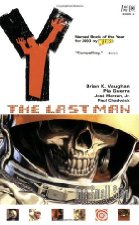
Book Review: Y: The Last Man: One Small Step by Brian K. Vaughan (Series, #3) (Graphic Novel)
 Summary:
Our trio of the doctor, Yorick, and 355 have resumed their attempt to reach the west coast, but get side-tracked when they stumble across the Russian woman looking for the spacemen. Upon learning of the imminent arrival of the astronauts, they decide to join her in journeying to the landing location, which just happens to be nearby. Meantime, the Israeli soldiers, unbeknownst to them, are hot on their tails.
Review:
Many different plot lines collide in this entry in the post-apocalyptic series. We finally find out why the Israelis are following Yorick and meet the astronauts. We get to know the Russian lady, as well as a couple of new scientists at the secret government location.
Most interesting in this book is Yorick’s growth as a character. Although he, to a certain extent, has that slacker mentality that can be so difficult to change, it appears an apocalypse just might succeed in doing so. He takes more assertive action and starts to doubt maintaining his loyalty to his girlfriend/fiancee on the other side of a world full of just women. In a way the story feels like a coming of age one. Yorick going from a boy to a man. Which is kind of hilarious given the setting, but it also works.
The Israeli soldiers storyline question a lot of gender norms thinking. I watched a lot of war movies in my childhood, and here we have soldiers doing basically the exact same thing, only they’re women. Just seeing that impacts gender norm preconceptions of the reader.
Finally, we have the astronauts who have developed an interesting relationship in their extended time away from earth. Their presence and the surprises they bring are the final kick that makes this the best entry in the series so far.
The art continues to be colorful and easy to decipher, plus the last chapter is a bit of a meta romp featuring primarily Yorick’s monkey that ends the book on a light note, but also moves the plot forward in a key way.
Overall, this is a well-drawn, creatively plotted entry in the series that manages to amuse and cause thought-provoking responses simultaneously. Readers of the series will be instantly begging for more.
5 out of 5 stars
Source: Public Library

Previous Books in Series
Y: The Last Man: Unmanned
Y: The Last Man: Cycles
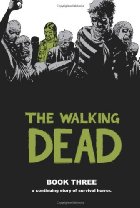
Book Review: The Walking Dead, Book Three by Robert Kirkman (Series, #3) (Graphic Novel)
 Summary:
The rag-tag band of survivors have adjusted to living in the prison. One day they spot a helicopter go down in flames. Rick, Michonne, and Glenn head out to check on it and end up finding another group of survivors whose leader is known as The Governor. Unfortunately for them, not everyone has maintained their humanity amid the walking dead.
Review:
This entry in the series puts the graphic in graphic novel. We’re talking mutilation, torture, and rape. Also the usual murders and zombies. It is not a book for those disturbed by those things or who find them gratuitous. However, for those of us who love violence all up in our literature, it’s a squee-inducing violence fest. Although you may not want to read it in public just in case someone glances over your shoulder during the rape and/or torture scenes.
The addition of another group of survivors where everything is not hunky dory and evil has arisen was exactly what this series needed. It shows the very dark possibilities that the group we’ve been following have thus far managed to avoid. It puts things like Tyreese and Rick’s fight in the previous book into perspective. Woodbury and The Governor also demonstrate how key Rick has been to the group’s survival and maintenance of a healthy community. All it takes is one bad apple wanting the power for a bad culture to spring up. It’s a good lesson that’s taught here in a subtle way.
I thought long and hard about how I feel about Michonne’s rape. At first I was angry about it with reactions ranging from, “she’s so strong; it doesn’t make sense” to “oh sure, rape the only black woman *eye-roll*.” But the more I thought about it I realized I was being unfair. In a world gone to hell and full of evil rape is going to happen. Rape happens every day now let alone in a post-apocalyptic world, and Kirkman manages to show it in a graphic novel in a way that is respectful to the victim, which I am sure was not easy to do. The concept of what is happening is clear, but at the same time, the drawings focus in on the victim’s emotions and reactions. Similarly, Michonne is the logical choice because she is the most adventurous of the women. She does not stay at home with the kids while the men run out and do things. She’s a strong woman, yes, but being strong doesn’t stop bad things from happening to you. That said, if you are a person who finds rape scene triggering, you should definitely skip this entry in the series and get someone to sum it up for you.
Overall, this is a strong entry that keeps the series fresh and introduces more drama into the post-apocalyptic world. Fans of the first two books will not be disappointed by this one. Highly recommended.
4 out of 5 stars
Source: Public Library
Previous Books in Series:
The Walking Dead, Book One
The Walking Dead, Book Two
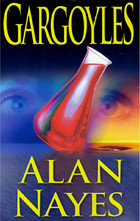
Book Review: Gargoyles by Alan Nayes (Series, #1)
 Summary:
Amoreena is determined to be a doctor and help people. She’s a hard-working, scholarship student on the pre-med track in her third year of college. Unfortunately, her single mother just got diagnosed with metastatic cancer and lost her health insurance. With no time for a job and no money for the bills, Amoreena is grateful when she is approached by a surrogacy clinic to be a surrogate for $50,000 with payments upon successful insemination and each trimester. But after she’s successfully inseminated, Amoreena becomes increasingly concerned that something is not quite right with her baby.
Review:
This book is best summed up as the scientific Rosemary’s Baby, which also means it kicks serious ass. Even people who find pregnancy to be a miracle (people who I completely do not understand) are creeped out by a pregnancy gone awry. This basic storyline then is ideal for a modern update aka switch out the demons and Satanism for science.
Nayes successfully sets up a realistic and compelling reason behind Amoreena’s surrogate motherhood, which is key to the whole story. Readers need to be able to believe that this intelligent woman made a not so intelligent choice with good reason. A loving relative dying with no health insurance is something so relatable to most Americans that it gives the whole story a more realistic tone than it might otherwise have. Also, the amount of stress Amoreena is under gives a plausible other reason for her difficult pregnancy to add to the mystery.
The secondary characters are well-rounded and believable. Nayes handles the largely Hispanic array of them with deft and avoidance of stereotyping. There is no othering of the company or those in control of it. The answers to the problems are not so black and white as a lot of international intrigue tends to make it, and I appreciated that. The gray areas of science and scientific research are clearly depicted while also accurately showing the full range of humanity present in Mexico and Guatemala.
So with all these positives, why am I not totally in love with it? The ending and big reveal are a bit anti-climactic. The suspense is built up so well that the relatively average ending couldn’t quite live up to it. I think the choice to make the main character sick during the climax was not a wise one. The book does redeem itself though with the somewhat cliffhanger ending that will lead into the next book in the series, and I am excited for it to come out.
Overall this horror suspense is a great addition to the genre of evil pregnancies. I recommend it and am looking forward to the next entry in the series.
4 out of 5 stars
Source: Kindle copy from the author in exchange for my honest review

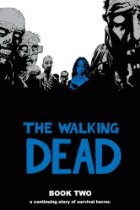
Book Review: The Walking Dead, Book 2 by Robert Kirkman (Series, #2) (Graphic Novel)
 Summary:
The rag-tag group of survivors of the zombie apocalypse stumble upon a prison with two circles of fences just in time. With the warm weather more zombies are active now that they’re no longer frozen. Of course they also discover locked in the cafeteria three surviving inmates. Attempts to make the odd mix of original survivors, inmates, and the farmers into one group might be a task too huge to overcome. Especially when you add in a mysterious woman who arrives with two pet zombies she leads by chains.
Review:
Now that Kirkman has the post-apocalyptic zombie world firmly established, he is more free to move his characters around within it, seeing how different personalities and mores react to an entirely reordered society. This leads to some interesting storylines, such as the May/December romance, suicide pacts, and the idea of a fresh start for the living inmates. It does, however, also lead to some….overly dramatic speeches, let’s say. One in particular reminded me of the infamous “Live together, die alone” speech from Lost, only this one goes, “You kill; you die!” I had to stop reading for a minute to giggle. The close-up of the sheriff’s overly dramatic face had me in stitches, and I”m pretty sure that wasn’t the intended reaction, lol.
That said, though, all of the drama and death and zombies is exactly what one is looking for in a zombie graphic novel. If anything gives a writer an excuse to be overly dramatic, it’s a rag-tag bunch of survivors of the zombie apocalypse. Death and chaos are what we’re looking for here, while also addressing survival issues like farming and people having nervous break-downs. There’s also a creative zombie lore twist that I won’t spoil for you, but that is highly enjoyable.
Overall, Kirkman finds more stable footing in this second entry in the series. It’s chaotic, high-speed disasters, violence, and sex. If that’s what you look for in your graphic novels, I highly recommend this one.
4 out of 5 stars
Source: Public Library
Previous Books in Series:
The Walking Dead, Book 1
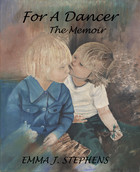
Book Review: For a Dancer: The Memoir by Emma J. Stephens
 Summary:
Emma recounts her childhood growing up with an outgoing older sister, a permissive father, and an addict stepfather in rural America. She then relates attending college as a single mother, her failed marriage, and studying abroad in Paris.
Review:
Imagine the most whiny, entitled, immature person you know. Now imagine that person perceives herself as simultaneously awesome, intelligent, and put-upon. Now imagine that person wrote a memoir and couldn’t even maintain the same tense throughout. That’s Stephens’ memoir. To a T.
Yes, a few things in Emma’s childhood weren’t perfect, but most people don’t have life handed to them on a silver platter. Her sister overshadowed her a bit. Her stepfather was an addict who had to go to rehab. Interestingly, though, Emma and her sister were unaware of his addiction until her mother and stepfather sat them down to explain why he was going into rehab. It seemed to me that they actually handled the situation quite well. When Emma’s stepfather returns from rehab, he and her sister clash a bit in the typical teenage angst style, but since the girls also have a father, Emma’s sister moves in with him and their stepmother. It is at this point that Emma starts making the series of dumb decisions that really mess up her life for….well for forever.
Emma ditches her mother and stepfather who had just made over her room for her and goes to live with her absentee father and stepmother who really aren’t behaving like parents at all. Emma proceeds to whine about this situation, when she did it to herself. She whines about everything about living there, when all she had to do was go back to the healthy household with her mom and stepfather. Why didn’t she? Dare I to suggest that she actually liked the freedom, no responsibilities, slacking off in school, getting drunk, having sex, etc…? Why, yes I do. She then proceeds to run away from home multiple times, scaring the crap out of her mother, who appears to be the only one who goes looking for her. It’s the typical what do we do with this horrible out of control teenager story only told from the teenager’s perspective. Aka, it’s terrible. It’s horrible to read about. There is no remorse, no chagrin. Everyone else is always at fault but Emma.
Perhaps teenage angst can be forgivable, but what occurs later was simply horrifying to read about, partially because at first it seems that Emma is straightening her life out. She gets pregnant, keeps the baby, and still completes her pre-med courses and graduates with her BS. This is admirable. I’m sure it was difficult, and she seems to be focused on providing a good life for her son. That all quickly ceases though when she gives up on becoming a doctor, gets married, moves to LA, gets a boob job, and then starts shopping herself and her son around for movie roles. You claim you want to give your son a better life, so you throw him to the wolves in Hollywood? Really?
Naturally, the marriage doesn’t work out, and we then see a series of men coming into and out of her son, Gabriel’s, life. He is routinely left with friends or family so Emma can gallyvant around with these various men, oh, not to mention go do a semester abroad in France without her son when he’s only 11 years old. All she can seem to think about or focus on is money. Not creating satisfying relationships. Not broadening her horizons. Not anything but money. Think I’m exaggerating? She ends up ditching her son for weekends so she can fly across the country to be a high-class hooker. Meanwhile, her mother has settled in the mountains and become an addiction specialist. If you’ve ever needed proof goodness isn’t genetic, there it is. In fact, I’d love to read her mother’s memoir. I bet she has a lot more valuable things to say.
Perhaps all of that could be bearable if she simply wrote well, but she doesn’t. She talks in circles and constantly changes tenses to the point where following the story is incredibly difficult.
Overall, this is a badly written memoir by a person who is a bad daughter and irresponsible mother who has seemingly learned nothing from her mistakes. I cannot in good faith recommend it to anyone.
1 out of 5 stars
Source: Print copy via LibraryThing’s EarlyReviewers

Book Review: Buddha Volume Three Devadatta by Osamu Tezuka (Series, #3) (Graphic Novel)
 Summary:
Siddhartha is now a young monk pursuing knowledge and education. He runs into a one-eyed monk who attempts to educate him on the concept of ordeals–essentially punishments for the body designed to help attain enlightenment. The childhood of Devadatta is also depicted. He is bullied and becomes a killer at a young age, thrown out to the wolves who then raise him. Thus his hatred of humanity is explored.
Review:
I am consistently finding this series to be decidedly meh, yet I persist in reading it. I think the art is a large piece of why. It’s almost immediately relaxing to look at, so much so that it doesn’t really matter too much to me what the story is that’s going along with it.
I was intrigued to see a “raised by wolves” myth in another culture. It’s interesting that instead of turning Devadatta into a great warrior, though, it makes him hate humans. A great section is where the wolf mother tells Devadatta that humans are the only animals who kill when they are not hungry. The kindness of and lessons to be learned from the animal world is a persistent theme throughout the series that I enjoy.
Siddhartha’s journey here though does not read at all the way I read it in Siddhartha in college. I appreciate that we’re seeing how no one seems to have answers that ring true for him. For instance, he does not agree with choosing physical punishment purely to suffer an ordeal for no apparent reason. It’s interesting to see his nature depicted as one that just happens to be able to sniff out falseness. It’s a different perspective on the Buddha that I value seeing.
It is odd though for a graphic novel series on an important topic like the Buddha’s life to feel as if it is best read by those already educated on the Buddha. I assumed it would read like an easy introduction, but instead it is so subtle and leaves out so many key details that it is actually best read by those already well educated on Buddhism and the Buddha’s life.
3 out of 5 stars
Source: Public Library

Previous Books in Series:
Buddha, Volume 1: Kapilavastu
Buddha, Volume 2: The Four Encounters
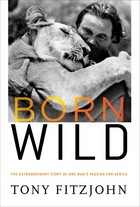
Book Review: Born Wild by Tony Fitzjohn
 Summary:
Tony Fitzjohn never quite fit in in England or the middle class existence he was adopted into at a young age. By his early 20s, he was roaming around Africa, and eventually found a job with George–the elderly Englishman famous for his belief in reintroducing lions into the wild whose efforts were chronicled in Born Free. In his biography, Tony accounts the steps in his life that led up to his assistantship with George, the two decades he spent learning from him in Kenya, and the efforts he himself has made in Tanzania’s parks.
Review:
This autobiography (memoir?) is an example of how you can not particularly like a person but still admire and respect the work they do. I know I would never in a million years get along with Tony. He’s hard-headed, stubborn, a womanizer (prior to getting married in his 40s), matured very late in his life, and can be remarkably short-sighted in how his actions affect others. And yet.
And yet he has an incredible passion for animals and the environment. He’s faced down poachers, corrupt government employees, and charging rhinos with frankly, balls of iron. All for the love of not just the big cats like lions and leopards, but rhinos and wild dogs as well. I find it fascinating how his love of adventure gradually showed him that animals are not ours to use and abuse. I wish I had had the time to copy the quote exactly from the book before I had to return it to the library, but essentially he says that we are meant to be stewards of the land that all the rest of the non-human animals need to survive and do what they’re meant to do. He talks at length about how rhinos often don’t get as much attention because they don’t form a bond, really, with their caretakers the way orphaned big cats do, but that’s not who they are! Rhinos are aggressive, love fighting each other. They fight and they mate and that’s what they do and that’s beautiful because that’s who they are. Letting animals be who they are and do what they do–that’s our real role as humans.
Of course, the animal rights message doesn’t really come out until the end of the memoir. The beginning is Tony reflecting on his childhood and early years in Africa. He traveled all over the continent a lot, never really sticking to one country until he met George and stayed put in Kenya for quite a while at the Kora reserve. At times the writing when he’s recounting his life can be a bit dull. He seems more focused on naming everyone he ever came across than in telling a story. This holds true up until the trust sends him to AA and after that he meets his now-wife Lucy. From then on it is as if a haze is lifted and his passion for everyone around him, the animals, and his family comes through. I have no doubt that this is at least in part due to his no longer drinking. It is clear that there are swaths of the prior years that he does not recall. He even recounts one story that a friend told him when staging his intervention of him getting into a bar fight that he doesn’t even remember happening. All this is to say, the first half or so of the book is fun bits of lions mixed in between rather dull sections of him just getting the information through to the reader that will be important later.
But the elements with the lions that hold us over in the meantime are absolutely worth it. It is evident that through all of Tony’s flaws, he has a natural ability to work with big cats and an innate understanding and love of them. He does not doubt their ability to feel emotions or communicate with people.
Sheba [lioness] had been so fond of her brother that when he died, she had led George to the spot, watched him bury Suleiman [her brother], and then sat on the grave for days, refusing to leave him alone. (page 112)
He also has an understanding of human society and mores and how they affect the animal world that comes through abundantly clearly:
By pushing up the price of oil, Sheikh Yamani and his cohorts had multiplied the Yemeni GDP sevenfold. A rhino-horn dagger is a symbol of manhood in Yemen, so an entire species was all but wiped out in order that a load of newly oil-rich Yemenis could have fancy dagger handles. (page 76)
When he writes of the poachers and big game hunters fighting with the environmentalists for control of the land, I was aghast at the methods both groups used. They often would kill a big cat, cut off its head and paws, then skin it and leave it right in the environmentalists’ path. This level of cold-heartedness and cruelty baffles me. Although one could possibly argue that the poachers saw this atrocity as the only way out of poverty, there is zero excuse for the wealthy, white big game hunters who just callously view it as sport.
I suppose some people may see Tony’s and other western people’s work in Africa for the animals as neocolonialist. I don’t see it that way at all. Tony by nature of his upbringing had the wealthy connections needed to fund projects working with the animals. When Kenya and Tanzania were caught up in civil wars and reestablishing their nations, even wealthy Africans would most likely donate that money toward people, not animals. Plus, Tony’s work has provided stable employment to Tanzanians and Kenyans for over 20 years, as well as bringing in more tourism. Tony himself points out that a lot of the big animals were gone due to colonial big game hunters, and he views his work as a sort of retribution for the colonial period. I perhaps wouldn’t take it that far, but I do see his point.
One thing I will say, though, is I do view it very hypocritical that Tony sends his own children away to a wealthy boarding school in Kenya rather then sending them to the school located in the park in Tanzania that his trust set up and runs. If it’s good enough for the Tanzanian kids, why isn’t it good enough for his own? That stung of elitism to me.
Although the book can be slow-moving at times, the good bits make up for it. Tony and his work for animal rights are inspirational. His life shows how much one person can accomplish by taking it one step at a time.
I pulled myself together and thought about what George would do. Of course I knew already. George would put his head down and keep going, one step at a time. It was the way he approached everything. (page 184)
Overall, I recommend this memoir to nonfiction lovers with a passion for Africa, environmentalism, or animal rights.
4 out of 5 stars
Source: Public Library

Book Review: Y: The Last Man: Cycles by Brian K. Vaughan (Series, #2) (Graphic Novel)
 Summary:
Yorick and his monkey, Ampersand, (the last males on Earth) continue their reluctant quest to help the government find a way to fix the disease that killed all the other men or at least to clone new men. Their train trip from Boston to California is caught up in Ohio, though, where they stumble upon an oddly utopian town of women. Meanwhile, Yorick’s sister, Hero, and the Amazons continue their quest to rid the Earth of the last man. Plus there’s a mysterious Russian woman who keeps insisting a spaceship with men on it is going to land.
Review:
Now that the premise of the post-apocalyptic world is set up, Vaughan’s story really picks up speed. There is much less explaining and far more action this time around. There are now multiple plot lines and mysteries beyond Yorick’s main one going as well, which helped, because let’s be honest, Yorick isn’t that likeable.
About 1/3 of this entry is set in Boston, primarily around Fenway and the train station. I think having the Amazons duke it out in front of Fenway Park was a pretty nice touch too.
I don’t recall laughing with the first entry, but this one had me laughing out loud on the bus then having to explain to my companions around me what was so funny. The line?
Killing’s easy. Like….like doing laundry!
It is a random, quirky sense of humor that I really enjoy, although I do expect that it might not strike some people as humorous.
The artwork continues to be bright and easy to follow. I really appreciated the preliminary sketches featured in the back of the book. It was most surprising to see that agent 355 originally was white and gradually was changed to black. I’m glad Vaughan made the move, but I do wonder what brought it on!
Overall, if you like a post-apocalyptic graphic world with biting wit and gender commentary, you’re going to enjoy this book.
5 out of 5 stars
Source: Public Library

Previous Books in Series:
Y: The Last Man: Unmanned
 Support my work with a tip or browse my shop for curated book club guides, how to guides, cross-stitch patterns, and more!


This work by Amanda Nevius is licensed under a Creative Commons Attribution-Noncommercial-No Derivative Works 3.0 United States License.
 Opinions of a Wolf