
Archive
Book Review: Bird Box by Josh Malerman
 Summary:
Malorie thought the hardest thing she was going to have to face was dealing with her pregnancy and impending single motherhood. She thought the warnings about seeing something that makes you go crazy and become violent was just the news blowing things out of proportion, or at least just hysteria. Her sister believed in it, but not herself.
But that was all years ago, and now Malorie is alone in a house with her two children. Children who have never been outside without blindfolds on. She only leaves the house blindfolded, tapping the ground with a stick to find the well. But now it is time for her to be brave and to take a boat on the river, just she and her two children, blindfolded, in the hopes of finding salvation.
Review:
I was drawn to this book for two reasons. First, the mere thought of a mother and two young children boating down a river blindfolded had me intrigued. Second, it’s set in Michigan, which is where my husband is from, and honestly I can’t recall the last time I saw a book set in Michigan. These two elements came together to tell me this book is probably unique. So when I saw the kindle version on sale on Amazon, I snatched it up. What I found was a chilling tale that could easily fit within the Lovecraft mythos.
The order the story is told in helps build the suspense and keeps it from being a same old apocalypse and survivors’ tale. The book opens with Malorie and her two children living alone in the house. It opens post-apocalyptic. Through flashbacks we learn various things such as who used to live in the house with Malorie, why there are certain parts of the house she doesn’t like to go to, and why neither she nor the children leave the house without blindfolds on. From here, the reader is then taken forward into Malorie’s action onto the river, going down it trying to find a safe haven of other survivors that she knows used to be there years ago. It’s a nice combination of flashback and plot progression forward that keeps the suspense interesting.
It is no spoiler to say that what caused the apocalypse is something that causes people to go stark raving mad when they see it. This is included in the official book blurb. What was interesting to me was how Malerman kept this from being purely straight-forward. Some characters believe in the mysterious creatures right away, others don’t. Some think that merely believing it will cause you to go crazy makes you go crazy. Some think that some are affected and others aren’t. Some wonder if animals are affected too, and no one knows where the creatures came from or, if you don’t believe in the creatures, how the phenomenon started. The lack of clear-cut answers reflects reality. In general, with large-scale catastrophes, it’s hard to know exactly what happened or what is going on. This lack of knowing made the situation read as real, even if the exact situation is an absurd sounding one at first.
I was also struck by how well Malerman wrote a female version of experiencing the apocalypse. Malorie is both focused on surviving for herself and her baby but also distracted from the apocalypse because she is having normal hormonal reactions to pregnancy. Similarly, while some characters embrace her as a symbol of hope, others see her as a burden. Malorie was a refreshing change from the young, virile, kick-ass heroine often seen in post-apocalyptic books. She is strong, yes, but not in a kick-ass way. She is strong in a she’s doing her best to be a good mom and still survive type way. And that’s a nice thing to see in post-apocalyptic horror fiction.
The book naturally ends up pondering “madness” a lot. The creatures drive any who see them into near-caricature depictions of madness. Sometimes the person becomes violent against others. Sometimes the person turns on themselves, killing themselves or self-injuring to the extent that they die. There are a lot of questions about what the human mind can handle. There is a lot of argument in the book for agency against all odds.
It’s better to face madness with a plan than to sit still and let it take you in pieces. (loc 4034)
On the one hand, I appreciate the argument for agency and fighting for your sanity and humanity. On the other hand, I’m not sure how I feel about a metaphor where madness happens to people who just aren’t careful enough or don’t have enough of a plan. While it’s valid that a mental illness must be fought every day and some have more natural resiliency than others, there’s a tone of blame to the theme that strikes me the wrong way.
*small spoiler*
At one point, it is postulated that perhaps the only ones immune to being driven mad by the creatures are those who are already mentally ill because they are already mad. There is no science behind this thought. There is simply a character who appears to have paranoid schizophrenia who firmly believes the creatures are not actually dangerous because he has seen them and is fine. Yet he is a character who ends up instigating an incredibly violent scene. While it is true that there are violent extremes of mental illness, there are also those that are not. The book fails to bring out the subtleties and varieties of mental illness. Imagine the power that could have been from a character who had, for instance, OCD and was able to see the creatures and interact with them without harming anyone and able to understand that others cannot see them safely. Imagine if it was simply that seeing the world differently already, being abnormal, protected one from being driven truly mad by the creatures. What an interesting direction that could have taken the story.
*end spoilers*
Thus, in general, while I appreciate the more unique and interesting things the book did, such as focusing on a pregnant woman and then a young mother as the main character and telling the plot in a non-linear way, ultimately the book did not push the boundaries or the ideas far enough to truly enrapture me. Recommended to horror, Lovecraft, and post-apocalyptic fans looking for a read with a young mother as the focus.
If you found this review helpful, please consider tipping me on ko-fi, checking out my digital items available in my ko-fi shop, buying one of my publications, or using one of my referral/coupon codes. Thank you for your support!
4 out of 5 stars
Length: 305 pages – average but on the longer side
Source: Amazon

2015’s 5 Star Reads!
Since 2011, I’ve been dedicating a separate post from my annual reading stats post to the 5 star reads of the year. I not only thoroughly enjoy assembling the 5 star reads posts, but I also go back to them for reference periodically. It’s just useful and fun simultaneously! Plus it has the added bonus of giving an extra signal boost to the five star reads of the year. You may view the 5 star reads for 2011, 2012, 2013 , and 2014 by clicking on the years.
With no further ado, presenting Opinions of a Wolf’s 5 Star Reads for 2015!

Dreamsnake
By: Vonda N. McIntyre
Publication Date: 1978
Publisher: Houghton Mifflin
Genre: Scifi, Post-apocalyptic
Themes: Healing, Prejudices, Adoption, Hubris
Summary:
In a far-future, post-apocalyptic Earth, all medical aid is brought by healers. The healers use a trio of snakes to bring this healing. One newly-minted healer first visits the desert people, but mistakes lead to the loss of her dreamsnake, the only snake that can bring pain relief to the dying. She enters a journey to attempt to find a new dreamsnake.
Current Thoughts:
My full review of this book has yet to come, so I’ll keep my current thoughts short. A 1970s work of scifi by a woman that intrigued me due to many reviews mentioning the positive depiction of snakes. It wowed me. I read it via my Audible subscription, and I really am going to have to get a vintage paper copy for my female scifi collection.
Full review still to come.

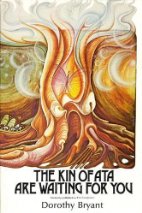
The Kin of Ata Are Waiting For You
By: Dorothy Bryant
Publication Date: 1971
Publisher: Evan Press
Genre: Scifi
Themes: Redemption, Self-Actualization, Healing, Mindfulness, Community
Summary:
Running from his demons, a man crashes his car and wakes up being assisted by a deceptively primitive people–the kin of Ata. He discovers that he’s been mysteriously brought to an island inhabited only by these people. As time passes, he comes to learn there is much more to them than first appears.
Current Thoughts:
This is a book I know I will revisit. The parable for self-actualization and the journey of mindfulness is something that rang so strongly with me. When I think about it, I remember it as a beautiful, touching book.
Full review

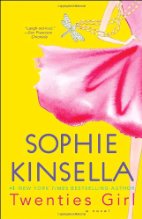
Twenties Girl
By: Sophie Kinsella
Publication Date: 2009
Publisher: Bantam Press
Genre: Chick Lit
Themes: Living Fully, Living Authentically
Summary:
Lara Lington has always had an overactive imagination, but suddenly that imagination seems to be in overdrive. Normal professional twenty-something young women don’t get visited by ghosts. Or do they?

When the spirit of Lara’s great-aunt Sadie–a feisty, demanding girl with firm ideas about fashion, love, and the right way to dance–mysteriously appears, she has one last request: Lara must find a missing necklace that had been in Sadie’s possession for more than seventy-five years, and Sadie cannot rest without it. Lara, on the other hand, has a number of ongoing distractions. Her best friend and business partner has run off to Goa, her start-up company is floundering, and she’s just been dumped by the “perfect” man. Sadie isn’t having any of it. And soon the question winds up being, who is really helping who?
Current Thoughts:
A book that really shows how great chick lit can be. What starts out light and ridiculous eventually hands over some real thought-provoking lessons about a life lived versus a life lived well. It was just the light, humorous take on life and death I needed when I picked it up. Also, I actually laughed out loud while reading it. A real complement.
Full review still to come.
Book Review: Porcelain: A Novelette by William Hage
 Summary:
Out near the Pine Barrens in New Jersey sits the Whateley Bed & Breakfast, home of a wide collection of knick-knacks and antiques for its guests to view, including a beautifully ornate porcelain doll. However, after the Whateley’s latest guest purchases the doll as a gift, a horrifying series of nightmarish events begins to unfold.
Review:
This is the final review for the 2015 ARCs I accepted (6 total). Woo! This 8,000 word novelette was the perfect way to wrap up my year of ARCs. Bite sized, it kept me entertained for almost precisely the duration of the public transit portion of my commute.
This short horror involves a father buying a doll for his daughter, only to have the doll wind up to be evil. I don’t consider that a spoiler, because I think it’s pretty clear from the cover and the description that is what is about to go down. While some of the evil doll aspects were about what I was expecting, others were not. The scenes happened at just the right pace to hold interest, and I did find myself hoping I’d have time to finish the novelette without having to stop. I think the story is helped by reading it in one sitting, so I would advise picking it up when you know you have enough time to finish it in one go.
All of this said, while I enjoyed it and it is well-written, it just didn’t linger with me. I wound up feeling quite neutral about it. Perhaps because the novelette is so short that there’s no time to establish an emotional connection with the main character. It’s also possible that the ending just failed to wow me. That said, other readers who are more generally into short fiction than I am will probably enjoy it more than I did.
Overall, this is a well-written piece of short fiction that should be read in one sitting. Recommended to fans of short horror.
If you found this review helpful, please consider tipping me on ko-fi, checking out my digital items available in my ko-fi shop, buying one of my publications, or using one of my referral/coupon codes. Thank you for your support!
3 out of 5 stars
Length: 23 pages – novella
Source: Kindle copy from author in exchange for my honest review

Book Review: The Three Stigmata of Palmer Eldritch by Philip K. Dick
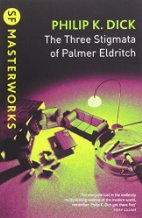 Summary:
Earth is overcrowded and overheated but people still don’t want to become colonists to other planets. The colonies on the other planets are so boring and depressing that the colonists spend all of their money on Can-D — a drug that lets them imagine themselves living in an idealistic version of Earth. The only trick is they have to set up dioramas of Earth first. The drug is illegal on Earth but the diorama parts are still created by a company there. When the famous Palmer Eldritch returns from the far-flung reaches of space, he brings with him a new drug, Chew-Z, that doesn’t require the dioramas. What the people don’t know, but one of the manager of the Can-D company soon finds out, is that Chew-Z sends those who take it into an alternate illusion controlled by Palmer Eldritch.
Review:
I love Philip K. Dick, and I have since first reading Do Androids Dream of Electric Sheep? So whenever I see his books come up on sale in ebook format, I snatch them up. I picked this up a while ago for this reason, and then randomly selected it as my airplane read on my honeymoon. Like many Dick novels the world of this book is insane, difficult to explain, and yet fun to visit and thought-provoking.
The world Dick has imagined is hilarious, although I’m not sure it was intended to be. Presciently, Dick sets up a future suffering from overpopulation and global warming, given that this was published in 1965, I find it particularly interesting that his mind went to a planet that gets too hot. Even though the planet is unbearably warm (people can only go outside at night and dusk/dawn), they still don’t want to colonize other planets. Colonizing the other planets is just that bad. So there’s a selective service by the UN, only instead of soldiers, those randomly selected are sent to be colonists. The wealthy can generally get out of it by faking mental illness, as the mentally ill can’t be sent away. This particular aspect of the book definitely reflects its era, as the 1960s was when the Vietnam War draft was so controversially going on.
I don’t think it’s going out on much a limb to say that drugs had a heavy influence on this book. Much of the plot centers around two warring drugs, and how altered perceptions of reality impact our real lives. One of the main characters starts out on Earth hearing about how the poor colonists have such a depressing environment that they have to turn to drugs to keep from committing suicide. But when he later is sent to Mars himself as a colonists, his impression is that in fact the colony is this downtrodden because no one tries very hard because they’re so much more focused on getting their next hit of Can-D. The Can-D has caused the lack of success on the planet, not the other way around. Whether or not he is accurate in this impression is left up to the reader.
Then of course there’s the much more major plot revolving around the new drug, Chew-Z. Without giving too much away, people think Chew-Z is a much better alternative to Can-D, but it turns out chewing it puts you under the control of Palmer Eldritch for the duration of your high, and if you overdose, you lose the ability to tell the difference between illusion and reality. The main character (and others who help him) thus must try to convince the humans that Chew-Z is bad for them before they ever even chew it. The main character has another side mission of getting people off of Can-D.
It sounds like a very anti-drugs book when summarized this way, but it felt like much more than that. People chewing Chew-Z can come to have an experience that sounds religious – seeing the three stigmata of Palmer Eldritch (a stigmata in Christian tradition is when God shows his favor on someone by giving them the marks of Jesus’ crucifixion. In this book, the three stigmata are three bodily aspects of Palmer that are unique to him). However, the experience of seeing the stigmata is in fact terrifying, not enlightening. The drugs thus represent more than drugs. They represent the idea that we could possibly know exactly what a higher power is thinking, and perhaps that it might be better to just go along as best we can, guessing, rather than asserting certainty.
All of this said, a few weaknesses of the 1960s are seen. I can’t recall a non-white character off the top of my head. Women characters exist, thank goodness, but they’re all secondary to the male ones, and they are divided pretty clearly into the virgin/whore dichotomy. They are either self-centered, back-stabbing career women, or a demure missionary, or a stay-at-home wife who makes pots and does whatever her husband asks. For the 1960s, this isn’t too bad. Women in the future are at least acknowledged and most of them work, but characterizations like this still do interfere with my ability to be able to 100% enjoy the read. Also, let’s not forget the Nazi-like German scientist conducting experiments he probably shouldn’t. For a book so forward-thinking on things like colonizing Mars and the weather, these remnants of its own time period were a bit disappointing.
Overall, though, this is a complex book that deals with human perception and ability. Are we alone in space? Can we ever really be certain that what we are seeing is in fact reality? How do we live a good life? Is escapism ever justified? Is there a higher power and if there is how can we ever really know what they want from us? A lot of big questions are asked but in the context of a mad-cap, drug-fueled dash around a scifi future full of an overheated planet and downtrodden Mars colonies. It’s fun and thought-provoking in the best way possible.
If you found this review helpful, please consider tipping me on ko-fi, checking out my digital items available in my ko-fi shop, buying one of my publications, or using one of my referral/coupon codes. Thank you for your support!
4 out of 5 stars
Length: 243 pages – average but on the shorter side
Source: Amazon

Book Review: The Kin of Ata Are Waiting for You by Dorothy Bryant
 Summary:
Running from his demons, a man crashes his car and wakes up being assisted by a deceptively primitive people–the kin of Ata. He discovers that he’s been mysteriously brought to an island inhabited only by these people. As time passes, he comes to learn there is much more to them than first appears.
Review:
I can’t recall exactly how this ended up in my tbr but I am certain it had something to do with it being older feminist scifi/fantasy, which I collect and read as much as possible. What I was expecting, particularly from a book from the 1970s, was a wishful book about an impossible utopia. What I got instead was a spiritual parable that left me breathless, surprised, and craving more–not out of the book but out of life.
The book starts slowly. The entire first chapter has the main character driving angrily down a road just after committing a murder during a fit of rage. He is not a character with which you can particularly empathize at this point, and it is confusing as to just when the titular Kin of Ata will show up. I admit that the first chapter moved so slowly and was so difficult to relate to that I was expecting the book to be a slog, but I persevered on, and in retrospect I appreciate the first chapter quite a bit. I’ll discuss why at the end of my review.
The man wakes up to people getting him out of the car and bringing him to a cave. They then bring him out of the cave to their hut-like homes. He perceives of them as primitive and judges them harshly. Gradually over time he comes to better understand them and their ways and to understand that he is not with primitive people hidden in the woods near his home. He is on an island, and he somehow was spirited there. I won’t discuss much more of the plot, because it could ruin it, but essentially the man is a stand-in for the reader. The Kin of Ata have spiritual lessons and teach them to the man, and in turn to the reader. It comes across much like a parable.
The Kin believe that humans need to remember and respect their dreams (actual dreams we have at night). They view our sleeping lives as just as important, if not more so, than our waking ones. They thus design their waking lives to be lived in the right manner so as to elicit the most powerful dreams. This means things like working but not too hard. Thus making yourself tired enough to sleep but not so tired that you sleep the sleep of the dead. It also means discussing your dreams every morning upon awaking. It means listening to your dreams and choosing daytime activities that suit what they are telling you. Put another way, the Kin choose daytime activities that fit the callings of their deepest souls. They essentially live a very mindful life that helps them achieve happiness and a peaceful community.
The main character starts out as a deep blight on the community. He keeps trying to force his ways upon them. He comes across as an angry cloud. In addition to being a murderer he also rapes one of the female Kin early on in the book. I found the depiction of this rape fascinating. The man sees people having sex with each other in what appears to him to be whenever one person demands it. In actuality, the people are choosing each other and subtlely letting each other know whether they want to have sex or not. The man decides he wants to participate and goes after one of the women. She indicates to him through cultural body language (these people do not speak much) that it is the wrong time. He does it anyway and she does not resist but she also does not participate. The whole community judges him as it being a wrong and a rape in spite of the fact that the woman never said no. The whole community views sex as only consensual if joyous consent is given, not just if the word “no” is not said. The man is startled and yet also immediately understands their point. He felt dirty and wrong after the sex and wasn’t sure why but now he understands and doesn’t know why he never thought of it this way before. He is utterly ashamed of himself.
Longtime readers of this blog know that I struggle with plots that ask us to empathize with a rapist. It honestly surprised me that this scene didn’t turn me off the book entirely. Yet this is also a huge turning point for the main character. He realizes that his way of doing things leads to him feeling bad and wrong and negatively impacts others. The woman spends several days in a cavelike place, which is basically where the Kin go to meditate. When she comes out, she forgives the man, because harboring a grudge against him would hurt her own ability to live the right path. I found the whole event of how the community confronts the man about his wrongdoing, how he responds to this confrontation, and how the woman handles it to be incredibly thought-provoking. It made me think about how much culture impacts people’s ability to even recognize when they’ve done something wrong. Also, much as I had heard many times growing up how harboring hate in your own heart poisons yourself and not the one who harmed you, seeing a character fully embrace this after a traumatic experience made it sink in much more for me than just hearing the saying ever did.
This scene also served another purpose. It reminded me that we’ve all done things we’re ashamed of and showed a path of redemption. The man starts to pursue living the right way. He has set-backs and stumbles. It sometimes takes years for him to see the results of certain actions that he starts doing the right way. It takes perseverance, unlike living the easy way, like he used to. It’s a powerful parable for practices such as meditation, for which you often don’t see results right away.
Similarly, again, I don’t want to spoil it, but the book demonstrates how it takes a community living right for a truly peaceful and happy community to exist. It also demonstrates, though, how one person who is very strong in their commitment to this right path can impact a whole community that is lost.
I promised to touch back on why I came to appreciate the first chapter. I appreciate it because it shows us the main character living his life following the wrong path within his own original community. It shows us where he came from before showing us how he develops into a life so much better through his work with the Kin. It also makes for a powerful bookend with the final chapter, whose surprise I will not reveal.
This is a powerful parable that demonstrates how much impact living mindfully can have, and also how important developing healthy communities is for the happiness and peace of all. It shows how wrong cultural ideals can lead people astray and hurt even the perpetrators of violence. Some may struggle with parts of the book, but that is part of the process of learning the lessons in the parable. I highly recommend this short book to all seeking a thought-provoking read.
If you found this review helpful, please consider tipping me on ko-fi, checking out my digital items available in my ko-fi shop, buying one of my publications, or using one of my referral/coupon codes. Thank you for your support!
5 out of 5 stars
Length: 228 pages – average but on the shorter side
Source: PaperBackSwap
Buy It (Amazon or Bookshop.org)
Book Review: UnWholly by Neal Shusterman (Series, #2) (Audiobook narrated by Luke Daniels)
 Summary:
Picking up where Unwind left off, UnWholly finds Risa and Connor managing the Graveyard full of unwinds themselves with no adults in site, and Lev struggling to find a purpose now that he’s both free of clapper chemicals and under the watchful eye of the government. Into the mix comes Cam, the first ever “rewind.” He’s been assembled completely from the parts of unwinds of every race and religion. And his creator intends to meddle with the runaway unwinds too.
Review:
I picked this up right after finishing the first on audiobook, because finding a fast-paced story with a good narrator can be harder than it sounds. So once I found that with the first book in the series and I saw the rest of it had the same narrator, I figured I may as well continue along with it. While I found the first book engaging and thought-provoking, I found myself periodically bored with the plot in this one, and also found it more difficult to suspend my disbelief than before.
The basic premise is that Connor is all torn up over having the arm of his once-rival (who also just so happened to threaten to rape his girlfriend, Risa). He thus holds Risa at arm’s-length (pun intended) because he’s afraid of what his own arm will do. While I appreciate the fact that it must be truly atrocious for your boyfriend to now have your attempted rapist’s arm, I think the fact that Connor lends the arm so much agency is a symptom of one particular idea in this world-building that just doesn’t work for me. The idea that body parts have their own spark of soul or agency or thought. It’s rife in this entry in the series, and it’s just plain weird to me. I can understand a character not bonding with a transplant that was forced upon him. I can understand it being weird for loved ones. I don’t, however, find myself able to suspend my disbelief enough to believe that someone’s arm has their personality in it so much that the person who it was transplanted onto would be afraid of it. It’s an arm, not a piece of brain or even a heart. The author does provide links to sources about transplant recipients feeling connected to the person whose body part they received or having memories or what have you. I appreciate that. But for me personally this plot point just does not work. Other readers may be able to suspend their disbelief better than I was able to. I for once can’t imagine not going near my own girlfriend because I was afraid of my arm. I also just disliked how much agency Connor removes from himself for his own temper. If he hits the wall when he’s angry it’s not him hitting the wall, it’s the arm hitting the wall. The arm got mad. The arm got out of control. There’s just a ridiculous lack of agency there, and I’m not super comfortable with that level of lack of agency being in a book marketed toward teenagers, who are at the best point in life for learning agency and responsibility.
I similarly have a hard time believing, from a neurological perspective, that the rewind boy, Cam, could exist. His brain is dozens’ of peoples all wound together. I could believe replacing a brain piece here or there with transplant technology, I couldn’t believe mish-mashing many together and having them actually function. Let alone with the only issue being that Cam struggles to learn to speak in words instead of metaphors. While Cam did strike me as grotesque, he mostly just struck me as an impossibility that I was then supposed to have sympathy for because he’s a person with his own feelings…but are they really? The whole thing was just a bit too bizarre for me.
On a related note, I found the scenes where Cam wakes up and learns to talk and slowly realizes what he is to be very tedious to read. They move slowly, and there is an attempt at building of suspense, but it is clear nearly immediately that Cam is a Frankenstein’s creature like experiment, even without Cam himself knowing it right away.
The other big new character is Starkey, a boy who was storked who is brought into the Graveyard. He’s basically exactly the same as Connor (he’s even still a white boy), the only difference being that was a stork and that he has no Risa to ease down his temper. I found his characterization to be uncreative, even if the building up of strife between the storks and the rest of the unwinds was a good plot point. It would have been better if the leader of the storks was more creative. Similarly, Starkey’s two main assistants are a black girl and an Indian-American boy. Just as with the first book, non-white people exist, but only as seconds to the white people. Why couldn’t either of them have been the leader of the storks?
All of these things said, there was still a lot of plot to keep the interest. I’ve barely touched on a couple of them. The world is still engaging, even if it’s hard to suspend the disbelief for it. I doubt I’d keep reading if I was reading this in print, but the audiobook narration makes it feel like listening to a movie, and it’s the perfect match for my commutes and doing dishes and such. Plus, now I’m curious as to where else the plot will go. I’m betting it will end up going in a direction I find it even harder to suspend my disbelief for, but it’ll be a fun ride seeing where that is.
Overall, fans of the first book may be disappointed by the slightly more meandering plot in this one. The addition of two new characters to follow will be distracting to some readers while others will find it adds to the interest and suspense. Some readers may be turned off by the continued lack of diversity in such a large cast of protagonists. The plot is engaging and the world is unique, though, so fans of YA dystopian scifi will probably still enjoy it.
If you found this review helpful, please consider tipping me on ko-fi, checking out my digital items available in my ko-fi shop, buying one of my publications, or using one of my referral/coupon codes. Thank you for your support!
3 out of 5 stars
Length: 416 pages – average but on the longer side
Source: Audible

 ,
, Book Review: Unwind by Neal Shusterman (Series, #1) (Audiobook narrated by Luke Daniels)
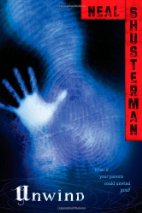 Summary:
In the near future, the Pro-Choice and Pro-Life debate explodes into a war called the Heartland War. The only way the war could reach a peace was to come to an agreement. There would be no abortion but when children are between the ages of 13 and 17 their parents can sign an order to have them unwound. New scientific technology allows doctors to transplant all of a person’s body parts. They will then “live on” in a “divided state.” Teens whose parents choose to sign an unwind order for them are rounded up by juvie cops and brought to Harvest Camps to await their fate. Some families, particularly from fundamentalist branches of all faiths, believe in tithing 10% of their children, and will have a child simply to raise them to be a tithe. Additionally, many children end up unwanted and living in State Homes, where they are all given the last name of Ward–for ward of the state.
Connor is a light-hearted bad boy who just accidentally found his own unwind orders in his parents’ desk and immediately goes on the run. Lev is a tithe who is on his way to Harvest Camp. Risa is a ward of the state, and she is on a bus to be unwound, because she isn’t deemed exceptional enough to justify her upkeep. A series of events throws them into each other’s lives and leaves whether or not they will be unwound in question.
Review:
This was recommended to me years ago, but when I first read the description I was skeptical that the book was anything but Pro-Life propaganda. Years later I decided to check it out again, and most reviews mentioned how neutral the book was. Additionally, I read some interviews with the author where he stated he genuinely was trying to present a neutral story that analyzes some tough questions, so I thought I would give it a shot. (I also found this fun short video interview where he talks about how he came up with the idea of the dystopian world.) Ultimately, the author has succeeded at creating a future world that is fascinating to visit and that also analyzes medical ethics in a creative way. I would honestly say the book is much more about medical ethics, particularly in regards to transplants, than it really is about abortion rights.
The basic plot is that three very different teenagers are supposed to be unwound but then find themselves on the run instead of actually at Harvest Camp. The book is in the third person but from the limited perspective of one character, and that one character switches around. It is predominantly Connor, Risa, or Lev, but it is also sometimes someone like a juvie cop or a parent. Sometimes this narrative structure works really well, providing many different perspectives on the same event or issue. Other times it feels too contrived. The perspective switches at just the right moment to keep the reader in the dark, or to reveal something we wouldn’t otherwise know. Sometimes this structure builds suspense and other times it kind of ruins it. Overall, though, I enjoyed the structure and found that the multiple perspectives really added to the world and the story.
This narrative structure is enhanced by clippings from real, modern-day newspaper articles and blogs, as well as fake advertisements and news from the future the book is set in. Partially due to the Audible narrator, who did a fantastic job at the ads, I really enjoyed these snippets of media from the future. They are very tongue-in-cheek and adult, but will still appeal to teens reading the book for their over-the-topness. I found the modern day news articles to be less interesting, and mostly felt a bit like scare mongering. They read as a bit heavy-handed in pushing the “this could really happen!” angle.
I did find it a bit frustrating that all three of the main characters are white and straight. While it is acknowledged that a few people (primarily adults) could be GLBTQ, the assumed norm is straight and cis, no matter what social organization is in control. Whether it’s mainstream society, rebels, or anyone in-between. The norm is always straight cis. Similarly, while the author does include non-white people to a much greater degree than non-straight/non-cis people (there are a wide variety of ethnicities and religions represented in the society), they are all secondary characters. One thing that really stuck out to me was that at one point in the book we meet a Chinese-American girl who is being unwound because her parents wanted a son, and they just kept trying until they got one and then picked a daughter to unwind, because they couldn’t afford all the kids. She’s also got an interesting punk aesthetic to her. What an interesting main character she would have been! Can you imagine her in the role of Connor? They are both running away from being unwound, and she could easily have taken that main character role. It just bothers me when a book has three main characters who are all in a similar situation due to society-wide problems, and yet they are so non-diverse, with just a nod at gender by having one female character.
With regards to the female character, Risa, I must say I was very disappointed to have one plot point be an attempted rape of her, and her then being saved by a male character. First, we only get one female main character and then she naturally is almost raped. Then naturally she must be saved by someone else. The whole scene sickened me, especially when I thought about teen girls reading it. It was just a completely unnecessary plot point. I once read an article that talked about how often rape scenes (or attempted rape scenes) are a sign of lack of creativity. I don’t think all of them are, but this one certainly came across that way. Unnecessary and a convenient plot point without thought to how it would affect the readers.
In spite of these characterization and style complaints though, the plot is very good, and the world is fascinating. Characters in a natural manner talk about and explore the ethics of life, when life begins, and who has the right to life, as well as who has the right to end it. The plot is fast-paced, and I read as quickly as I could to find out what happened. There are also a couple of twists at the end that rocked my socks off and left me immediately downloading the next book in the series.
All of that said, I have a few questions about the world that were never addressed. First, if everyone who is unwound is between the ages of 13 and 17, how does that work out with transplantation? People have not yet finished growing at 17, especially their minds. Does this mean a 67 year old woman would have a 15 year old’s arm if she needed a transplant? If so, that sounds very grotesque to me, and I wonder how society has learned to deal with something so mis-matched. This isn’t particularly addressed, except to say that sometimes it’s weird to look at someone with two eyes that don’t match. Similarly, the world at large isn’t really talked about at all. The kids who are trying to escape being unwound don’t even consider running into another country but they never explain why. How has the world at large reacted to the United States’ new law? Is there any country that would be a safe-haven for unwinds? Are there other countries following suit? The international impact is woefully underaddressed.
In spite of these various shortcomings, the plot and the world still sucked me in. It was a quick read that left me wanting more.
Overall, fans of dystopian ya looking for another series to whet their appetite will definitely enjoy this one. It’s a completely different dystopia from most of the ones that are already big, and I am sure YA readers who are currently teens themselves will find the idea of their parents being able to sign an unwind order on them chilling. Dystopian YA fans should definitely give this one a go.
If you found this review helpful, please consider tipping me on ko-fi, checking out my digital items available in my ko-fi shop, buying one of my publications, or using one of my referral/coupon codes. Thank you for your support!
4 out of 5 stars
Length: 337 pages – average but on the longer side
Source: Audible
Book Review: The Mediator Pattern by J.D. Lee
 Summary:
In an alternate history, the personal fax machine, not computers, became the quintessential technology, and one company, BelisCo, is running much of the United States. San Jose is now run entirely by BelisCo, and it boasts all the best of modern planned living: adult-only zones, smoking and non-smoking zones, clean and reliable transportation, and legal weed. Marcus Metiline is a PI in San Jose, and his whole world gets turned upside down when he agrees to take a job for BelisCo itself.
Review:
This is one of my accepted ARCs for 2015, and I went for it due to its interesting slight twist on the noir genre. I was intrigued at the idea of a PI in an alternate world where fax machines were the status quo instead of PCs. It felt almost like a steampunk. Techpunk? There should be a world for this when the old tech isn’t steam-power. In any case, although I found the world very interesting and I enjoyed visiting it, the plot left me dissatisfied.
This book is an enjoyable read even when the plot is doing weird things. The sentences flow smoothly, and the settings and characters are clearly rendered. I really enjoyed this alternate world. I liked it so much that I was disappointed by how little time we spend in it. Marcus is quickly scooped out and plopped into another world, and I didn’t like that one nearly as much or find it as interesting. The first world Marcus inhabits is creative and new. The other worlds are more dull and are things I’ve seen before.
It’s difficult to review this book without giving much away, but suffice to say that there is physics in the book, and while I appreciate the fact that science of it is good and well-explained, it also is a physics I’ve seen in scifi many times before, and I don’t think this particular rendering brought anything fresh to the table.
There are three really important characters in the book: Marcus, the owner of BelisCo, and a doctor. All three of them are male. This makes the book read a bit like a boys’ club, and it bugged me. The book would have instantly been more unique and interesting if, say, Marcus had been a hard-boiled woman PI. When every main character is basically the same (an intelligent white male), it’s just dull.
So, the non-spoiler reason of why I wasn’t into the plot is that I felt it took things just one twist too far, rendering things a bit ridiculous. If you want more explanation, see the spoiler-filled paragraph below.
*spoilers*
Basically, Marcus finds out that San Jose is some sort of Matrix-like simulation aka not the real world, and he is encouraged to break out of it. When he does, the buildings of San Jose start falling apart and people are mad at him. We discover that the reason for this is that the simulation was being done on a bunch of cancer patients. The science here didn’t make much sense to me at the time, but basically they would live longer if they were in the simulation, giving them more of a chance to beat the cancer. Everyone entered the simulation through Marcus, and they had to keep him believing it to keep the experiment going. This whole experiment is highly illegal, and they blow up the building to get rid of the evidence. There are then hints that there are more worlds and simulations than these. First, I found the whole we’re in a simulation and this isn’t real life thing to be a very been there done that plot. It took us out of the much more interesting simulation world and into a computer simulation that I’ve seen before. The second twist of it actually being cancer treatment and them needing Marcus to stay in the world just sent the whole thing off into left field for me. Particularly since I found the science of the cancer treatment to be weak compared to the physics earlier. While I appreciate to others it may read more like a cool idea, to me it just took things on a path from super interesting to I’ve seen this before to wtf was that. It just really didn’t work for me.
*end spoilers*
Overall, readers who are intrigued by the world in the summary and who don’t mind multiple plot twists and a predominantly male cast will enjoy this read. It is well-written and interesting, but readers expecting to linger in the fax machine world of the plot summary should know that this world is soon left behind.
If you found this review helpful, please consider tipping me on ko-fi, checking out my digital items available in my ko-fi shop, buying one of my publications, or using one of my referral/coupon codes. Thank you for your support!
3 out of 5 stars
Length: 114 pages – novella
Source: Kindle copy in exchange for my honest review

Book Review: Garlic, an Edible Biography: The History, Politics, and Mythology Behind the World’s Most Pungent Food — With Over 100 Recipes by Robin Cherry
 Summary:
A history of the world and medicine as seen through the eyes of garlic, plus a lesson on the many varieties of garlic, how to grow it, and where to find other garlic lovers. Topped off with a collection of over 100 recipes from all over the world featuring garlic, both historic and new.
Review:
When I saw this book on NetGalley, I knew I needed a review copy. I’m a passionate home chef with a love of garlic and a never-ending interest on the history of food. This book’s title indicated it would hit all three of those interests, and its content did not let me down.
The book is divided into two parts. Part One focuses on everything but the recipes. Part Two is the recipes. Part One’s chapters cover the history of using garlic for health and for food, garlic in legends and lore, and how to grow your own. This is the section that most entertained my friends and fiancé, as they found themselves the recipients of random facts about garlic. One friend received an email of all of the types of garlic that originated in the country of Georgia; another a tip that growing some near her fruit tree might be beneficial for the tree. Here are a few of my favorite facts that I learned in Part One:
- The world’s first-known medical text also mentions medical uses of garlic (loc 129)
- Garlic is designated as a drug in Japan (loc 222)
- Spanish immigrants were the most likely to survive during the colonization of the Western hemisphere, thanks to their consumption of garlic. Carrying the cloves protected them from disease-carrying mosquitoes. (loc 309-313)
- Garlic vodka is used as an antiflu remedy in Russia (Bonus: the book has the recipe for making this for yourself). (loc 392)
- “In addition to preventing colds, garlic is effective in killing viral meningitis, viral pneumonia, influenza, and herpes.” (loc 423)
- “Garlic also kills bacteria directly, by invading its cells and causing them to explode, thus bacteria has not opportunity to develop a resistance to it.” (loc 427)
- “Green-colored garlic is stronger than white garlic because it contains more of the aromatic sulfuric compounds.” (loc 922)
- The earliest bridal bouquets incorporated garlic to ward off the evil spirits. (loc 1067)
- There are over 200 varieties of garlic. (loc 1203)
Part One ends with tips on how to cultivate garlic and a selection of the various types of garlic, including notes on where they grow best, how they look, and how they taste. Garlic may be broadly divided into hardnecks and softnecks, but there are subvarieties within these two main ones. (Softnecks are the ones that you can braid). My one criticism of Part One is that I wish it had gone more in-depth into the history of garlic all over the world. It left me wanting more. Perhaps there isn’t more, but I certainly wish there was. I would additionally note that, although I personally enjoyed reading about the many varieties of garlic and took copious notes, some readers might find the listing of the types a bit tedious to read and may not be expecting it in a book of this nature.
Part Two is the recipes. It starts with notes on how to handle and prepare garlic. The recipes are then divided into: dips, sauces, and condiments; bread, pizza, and pasta; soups; salads and salad dressings; appetizers; poultry; lamb; beef; seafood; vegetarian; side dishes; dessert; and historical recipes. I marked off a total of 19 recipes that I definitely want to try, which is quite a lot for me. Often I’ll read a cookbook and only be interested in one or two of the recipes. The recipes cover a nice variety of cuisines, and the historic recipes are fascinating, although most readers will probably not try them as they require things such as fresh blood. Besides the historic recipes, the dessert ones are probably the most surprising. I actually did mark one off as one I’d like to try–Roasted Garlic Creme Brulee.
I have managed to make one of the recipes so far: Garlic Scape Pesto (loc 1649). For those who don’t know, garlic scapes are the green stalks that grow out of the bulbs. They must be trimmed (on most varieties). They taste a bit like a cross between garlic and leeks. Our local produce box happened to give us a bunch of them right around when I read the book, and I’m a big pesto fan, so I decided to try the recipe.
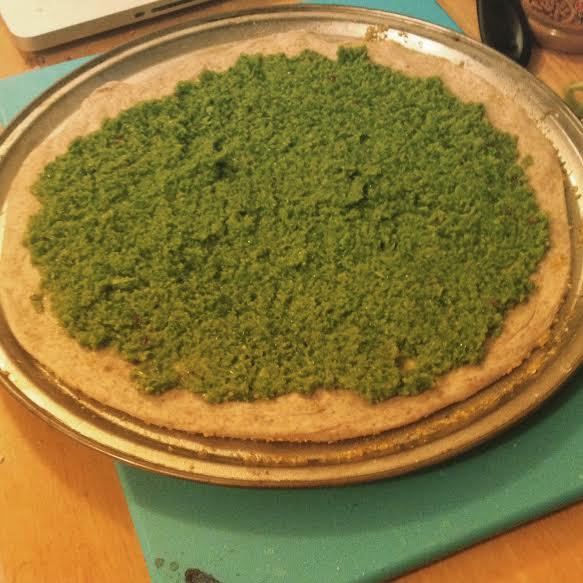
Garlic Scape Pesto on top of my pizza crust, before the rest of the toppings were added.
The recipe is supposed to make 2 cups. I halved it, and somehow still wound up with 2 cups of pesto. The recipe suggests storing the leftovers under a layer of olive oil. I found that unnecessary. My extra kept in the fridge in a tupperware container for a week without adding a layer of protective oil. The pesto was truly delicious though. I partially chose it since I have made garlic scape pesto before, and I must say I found this one much more delicious than the other recipe that I tried. I am looking forward to trying the others I am interested in, although I will probably continue to halve the recipes, as I am only cooking for two.
Overall, foodies with a love of garlic will find this book both fascinating and a source of new recipes to try. Some readers may wish for more information, while others may find themselves a bit more informed on the varieties of garlic than they were really looking for. All will find themselves chock full of new information and eager to try new ways to use garlic…and perhaps even to start growing some heirloom varieties for themselves.
If you found this review helpful, please consider tipping me on ko-fi, checking out my digital items available in my ko-fi shop, buying one of my publications, or using one of my referral/coupon codes. Thank you for your support!
4 out of 5 stars
Length: 240 pages – average but on the shorter side
Source: NetGalley

Book Review: Remember Me? by Sophie Kinsella
 Summary:
The last thing Lexi remembers she’s a 24 year old in the year 2004 with bad teeth, a bad boyfriend, and at the bottom of the totem pole in a new job where she hasn’t been working long enough to be able to get the annual bonus. When she wakes up in hospital, though, she’s told that the year is 2007, she’s 28, the boss of her department, and married to a millionaire! She’s told she was in a car accident that gave her amnesia, and now she has to piece together just how she got to this place in her life, especially when not everything is as rosy as it seems at first. Her millionaire husband is controlling, her once best friends give her the cold shoulder, and everyone at work seems to think that she’s a bitch.
Review:
True story. I spotted this sitting on top of a neighbor’s recycling bin and snatched it up as soon as I recognized the author’s name. I was a big fan of Sophie Kinsella’s in high school, and I just couldn’t bear to see a perfectly nice condition hardcover of one of her books get recycled. I wondered if I would enjoy her contemporary romance as much now as a late 20-something as I did as a teen. I’m happy to say I certainly enjoyed this one just as much, although in a slightly different way than I used to.
I wonder how much I would have appreciated this book a few years ago. As a late-20 something myself, I laughed out loud at how the 24 year old version of me would react if she was plunked into my current life. A lot really does change in 4 years in your 20s, especially with regards to your career and your love life. The plot kind of reminded me a bit of the plot of one of my favorite romcoms 13 Going On 30. Someone who is (or perceives of themselves as) much younger and less experienced than the person whose life they are now living. How that affects them and how they react to it is really interesting. Both stories show how important actually going through the growing pains really are. You can’t just suddenly handle a more adult life; you have to grow into it.
I also appreciated that, although Lexi’s husband is drop-dead gorgeous, both she and he believe she should not sleep with him until she is comfortable with him again. She may be married to him, but she doesn’t remember who he is, and she shouldn’t do anything until she’s ready. If she ever is. Her husband is definitely controlling of her when it comes to how their household is run and how they spend money, but he is very respectful of her sexually. He doesn’t touch her unless invited to, and he stops when she says to. I was really happy to see this focus on positive, enthusiastic consent portrayed in the book.
The exploration of Lexi’s career path from lower level to high-powered boss is fascinating. Lexi is torn up that now that she’s a boss those under her think she’s a bitch. There’s a nuanced exploration of how women in power are often perceived of as bitches, even if they’re just being assertive. However, there’s also a nice exploration of how to still be true to yourself when in power. You don’t necessarily have to lead in the traditional “masculine” way if you don’t want to. This combined with the exploration of aging gave a depth to the romance that kicked it up a notch for me.
It says a lot for how much the book made me like Lexi that I was able to get past one plot point that usually spoils romances for me. However, that plot point did knock the book down from 5 to 4 stars for me.
*spoilers*
It turns out that 28 year old Lexi is cheating on her husband. 24 year old Lexi is just as horrified by this as I always am by cheating. The exploration of how she wound up cheating on him didn’t make it ok to me, but I did appreciate that 24 year old Lexi took agency and addressed the situation, rather than lingering in married but cheating land. I appreciated that Lexi was able to acknowledge her mistakes, forgive herself for them, and grow and change.
*end spoilers*
Overall, fans of contemporary romance will enjoy this fun take on the amnesia plot. The plot doesn’t just cover a romance, it also covers the growing pains of being in your 20s, the challenges women face when they become the boss, and how to learn from your mistakes.
If you found this review helpful, please consider tipping me on ko-fi, checking out my digital items available in my ko-fi shop, buying one of my publications, or using one of my referral/coupon codes. Thank you for your support!
4 out of 5 stars
Length: 389 pages – average but on the longer side
Source: Rescued from a recycling bin
Buy It (Amazon or Bookshop.org)
Counts For:
Bottom of TBR Pile Challenge
 Support my work with a tip or browse my shop for curated book club guides, how to guides, cross-stitch patterns, and more!


This work by Amanda Nevius is licensed under a Creative Commons Attribution-Noncommercial-No Derivative Works 3.0 United States License.
 Opinions of a Wolf