
Archive
Book Review: Toms River: A Story of Science and Salvation by Dan Fagin
 Summary:
The residents of Toms River, New Jersey didn’t mind when a CIBA chemical plant opened up in their backyard in the 1950s. It brought jobs to their small town that mostly depended upon tourism. But slowly the river started to look funny. There were plumes of funny-smelling smoke coming from the building, at first during the day, then only late at night when they were asleep. And a nurse at a hospital specializing in children’s cancer notices an awful lot of cases coming from Toms River. What follows is a multi-year public health investigation and lawsuit, only the second of its kind in the United States (the first being the Woburn, Massachusetts toxic water case).
Review:
I picked this book up for a couple of reasons. I work in an academic library that serves a Public Health program (among others), and I thought reading about a landmark case would be helpful. I also was just personally curious about how bad the pollution actually is in New Jersey. (For my non-American readers, there’s a running joke that New Jersey is the “stinky armpit” of the United States, due to the pollution).
The short version of what I got out of it is that I researched and bought the best reasonably priced water filtration pitcher for my household and will scold my husband if he drinks water directly from the sink instead of from the pitcher. The more academic version is that I learned that epidemiology is not as straight-forward as it seems, and things we can know just by looking at the situation are not easily proved. Additionally, what a woman puts into her body during pregnancy is much more important than what a young child eats or drinks.
The book is written in an investigative journalism style. If you’re comfortable reading the science section of the New York Times or something similar, you will be fine reading this book. Some of the science was new to me, but it was well-explained. On the negative end, the writing can sometimes be a bit sensationalistic. For instance, at one point the author assumes to know the reason why some people leave a meeting, jumping to the most sensational reason–that they were “repulsed” (loc 5441). (If he knows for sure why they left because he interviewed them, he does not make that clear). Most statements that are clearly factual are well-cited, however. Although the book is well-written and interesting, it simply reads as dense. I often found myself wondering if he could have maybe sped up the delivery a bit. It periodically felt like a slog, even though I was quite interested in the topic.
The book starts with introducing one of the children who was born with neuroblastoma, a particularly nasty form of childhood cancer. Then it flashes back to the arrival of CIBA in the 1950s. This clearly establishes the reader’s empathy with the children with cancer from the get-go. That’s not a bad thing, per se, but it’s not exactly unbiased.
So let’s get to what I learned. Here are the unequivocally bad things that CIBA did:
- They claimed to residents that only “the purified effluent, clear, neutral and harmless to fish life, is discharged into the Toms River” (loc 671)
- When residents complained about pollution, instead of taking pollution-minimizing measures, they just re-adjusted their schedule so that most of the discharge happened at night when residents couldn’t see it. (loc 1071)
- CIBA came to Toms River after being kicked out of Europe and the Midwest for their pollution but didn’t change their practices at all. They simply pursued the location with the least oversight. (For non-American readers, at the time, there were not the national pollution laws in place in the US that there are now. It was more overseen on a state-by-state level).
- CIBA hid the cancer rate of employees from employees
- The CIBA water fountains were too toxic for their employees to drink from–they actually stank.
- The various governmental protection agencies repeatedly found violations at CIBA, for instance, their toxic waste pits were inappropriately lined.
Here’s what I learned about cancer:
- “Cancer is not one disease but many–more than 150, by most definitions. their only common characteristic is supercharged cell division, growth run amok.” (loc 1842)
- A swollen lymph node over the left collarbone is an early warning sign of cancer. (loc 1873)
- “Between ages 5 and 69, the likelihood of getting cancer in any particular year rises with each year of life, and it does so in increasingly large intervals: from about one in nine thousand in the fifth year of life to about one in fifty-seven in the sixty-ninth year.” (loc 1882)
- “Childhood cancer incidence jumped by more than one-third between 1975 and 2005–more than twice as much as overall cancer incidence.” (loc 1889)
- The second largest cause of lung cancer in the US after cigarette smoking is radon. (loc 2343)
- Pregnant women’s consumption of polluted tap water was much more correlated with later childhood cancer than children’s consumption of it themselves (60% more likely vs 8% more likely). (loc 6757)
What I learned about Public Health epidemiology can’t be summed up easily in a bullet-pointed list. Basically, epidemiological studies are incredibly difficult, particularly when the toxic event has already passed. Study methods rely on things like patient recall of what they did day-to-day and massively complicated retroactive restructurings of how the water supply worked and which person got which well-water. The groups of people effected seem large to consumers but in the matter of actual epidemiological numbers are in fact quite small. Too small to easily prove something. As little as one extra child having cancer can be enough for the percent to appear to skyrocket but that could easily be explained as one of the normal abnormalities. A glitch, basically, that is normal when you look at a large population as a whole. Thus, even though people can look at a group and say, “Hey they seem to have a lot of cancer,” it could just be a chance cluster. Or appear like a large number but isn’t actually when you look at the charts over time. Or it could appear like a large number but actually be difficult to prove, numerically, that it is. David Ozonoff, a professor of environmental health, is quoted in the book as saying, “A good working definition of a public health catastrophe is a health effect so large even an epidemiological study can detect it.” (loc 7495) The government is reluctant to investigate these types of cases, because they take a long time, are expensive (Toms River cost over $10 million), are embarrassing, and often work out without anything being able to be proven anyway. In the United States, cancer registries may only be looked at by government agencies, due to privacy laws, so this means that if the government doesn’t look into it, no one can. The book ends on the horrifying note:
Clusters of rare cancers like the one in Toms River may actually be much more common than we can discern with the crude statistical tools of small-number epidemiology. In other words, many more pollution-induced cancer clusters may be out there, but we don’t see them and we rarely even bother to look. (loc 7535)
In the end, the book was interesting, yet a bit of a struggle to get through, as it was quite densely-written. I learned a lot about how epidemiology and public health actually work in the United States, and I was terrified of basically everything (my own tap water, weird smells in the air) the whole time I was reading it and for a few weeks afterwards. I’m still pretty freaked out by my tap water, honestly.
Overall, I would recommend this book to readers with a vested interest in better understanding epidemiology and public health, particularly in the United States, regardless of how uncomfortable knowing these facts might make them. To those who might not be up to the intensive read I would say: be vocal about environmental protection where you live, be careful what you put into your body especially if you are or will be pregnant, and seriously consider filtering your water no matter where you live or how good it tastes. Chemicals we think now are safe we may end up finding out later are not. That is certainly what the mid-20th century taught us.
If you found this review helpful, please consider tipping me on ko-fi, checking out my digital items available in my ko-fi shop, buying one of my publications, or using one of my referral/coupon codes. Thank you for your support!
4 out of 5 stars
Length: 562 pages – chunkster
Source: Netgalley
Book Review: Children of God by Mary Doria Russell (Series, #2)
 Summary:
Father Sandoz, the only person from the humanity’s first mission to Rakhat to return to Earth, has barely begun to recover from his ordeal when the Jesuits ask him to assist in preparing the second team. Reticent to assist anyone to go to Rakhat but enjoying the use of the languages again, he agrees.
Meanwhile, one survivor of the mission joins forces with the Runa and a rogue Jana’ata to bring about justice. What world will the second mission find when they return? It certainly won’t be the one previously held in a tenuous working balance between predator and prey.
Review:
The Sparrow really touched me, and I was eager to return to Rakhat, not to mention to see how Sandoz handled his recovery. What I found was a mixed bag. A creative expansion on the world of Rakhat but a message and character development that moved in directions that left me feeling very little.
The presence of humans upset the delicate balance between the Jana’ata and the Runa. The humans demonstrated to the Runa that they didn’t need the Jana’ata, and thus a revolution was born. The thing is though this culture is just so truly alien that it’s hard to root for the Runa or the Jana’ata.
The Jana’ata have a depraved world, yes, but they are also truly predators who evolved from predators. It’s hard to hate on them when they’re basically cats walking around in medieval clothes. Well, of course they’re acting barbaric. They’re cats! And the thing is, they’re not just cruel to the Runa, they’re cruel to each other as well.
The one real disjointed bit of the narrative is that this culture reads as a developing one, as if they are from the 1200s or 1300s on Earth. Yet they somehow have enough technology that they could broadcast music to Earth? It makes no sense that they would be so backwards and yet simultaneously so advanced in science.
Similarly, the Runa are a people with a culture but they also are a prey species. They reproduce like mad when they have enough food, and they act like herd animals. Yakking constantly and with no real art or science developing. It is easy to see how these two cultures came to co-exist, as well as the fact that they need each other. Put another way, everyone thinks deer are cute, and they are. But if they exist in a world with no natural predators, they soon over-run the place until they have too much population for the land to support, and they start to starve. Yes, the co-existence between the Jana’ata and the Runa could be handled better (certainly with more clarity and more maturity) but the Runa and Jana’ata need each other. They co-evolved.My perspective on the Runa and Jana’ata impacts how I feel about the rest of the book.
Russell presents the idea that it’s ok for the Runa to become the dominant culture so long as they “allow” the “good” Jana’ata (the ones who have sworn off eating Runa and struggle along eating the eggs of some other creature that can barely sustain them. Truly barely. One character has multiple problem pregnancies due to malnutrition). Positing the idea that the Jana’ata are bad because they are predators, and the Runa are good because they are herbivores (with some outliers in both groups of course) is just hard to swallow. Bad and good is much more nuanced than that. Is a shark bad because it eats a seal because it’s hungry? No. But if a shark kills a seal because it’s fun to kill a seal and then swims off without eating it? Then one could argue that’s a bad shark with a bad nature. This level of nuance is just something I felt was missing from the book and the world.
I also found Sandoz’s path back to god to be a bit irritating, as well as the repeatedly presented idea that we can all have different interpretations of the one god, but there is definitely one. A whole alien planet with two sentient species, and no one can even entertain the idea that there might be more than one god? People are allowed to think there’s not one at all, although the book does present this as a shortcoming of those people’s natures. Basically, if they were a bit more willing to open they could at least be agnostic about the idea. The ultimate “proof” of the existence of god in the book is something that made me laugh. I won’t reveal what is found but suffice to say that if you’ve heard the argument about a watch proving there’s a watchmaker, it’s very similar to that one. After the insight and the gray areas allowed in the first book with regards to faith, I was disappointed.
If my review seems a bit mixed and all over the place that’s because that’s how this book read to me. There were chapters of beauty and then others that made me sigh and still others that made me scratch my head. It’s a mixed bag of content set in a complicated world with an ending that some readers would definitely find satisfying but I do not. I still enjoyed the read overall simply because I love visiting the world of Rakhat. But would I want to visit it again? Given the direction it was going, probably not. Although I would gladly visit the future Earth that gets to meet a Jana’ata or a Runa on our own turf.
Overall, readers of the first book who enjoyed it for Rakhat will enjoy getting to know more about both the Runa and the Jana’ata culture will enjoy the sequel, whereas those who appreciated it for its nuance and exploration of gray areas and difficult topics will be less satisfied.
If you found this review helpful, please consider tipping me on ko-fi, checking out my digital items available in my ko-fi shop, buying one of my publications, or using one of my referral/coupon codes. Thank you for your support!
4 out of 5 stars
Length: 451 pages – chunkster
Source: Library
Previous Books in Series:
The Sparrow, review
Counts For:

Illness(es) featured: Autism Spectrum Disorder
Book Review: If You Could Be Mine by Sara Farizan (Audiobook narrated by Negin Farsad)
 Summary:
Seventeen-year-old Sahar wants three things in life: 1) to become a doctor 2) for her widowed father to come out of his depression and be the Baba she once knew 3) to marry her best friend Nasrin. The problem is, she lives in Iran, and she and Nasrin could be imprisoned and beaten for just their stolen kisses in private, let alone if they tried to marry each other. When Nasrin’s parents announce that they’ve arranged a marriage for her to a well-to-do doctor, Sahar is heartbroken. Nasrin thinks they can continue on as they have been, but Sahar wants to love her exclusively, and she is determined to find a way.
Review:
This book was all the rage on GLBTQ book blogs a couple of years ago, and it’s been on my tbr pile ever since. When I saw it on Audible and heard a clip of the narration, I knew it was time to read it. I found an interesting, unique piece of YA.
First, let me say, if you at all enjoy audiobooks and have the chance to listen to this rather than read it in print, please do so. Farsad’s narration adds so much to the book. From her light Persian accent to her unique voice for each character to her perfect pronunciation of Persian words and Iranian place names, her narration made the reading of the book much more immersive than it would have been if I had read it in print. Plus, at just over 5 hours, you can read it very quickly. I finished my copy in under a week, thanks to commutes and runs.
Let’s start with the things in this book that really worked well for me. First, I really appreciated seeing a teenage girl’s relationship with her single father at the forefront. It’s difficult to find a YA book talking much about a girl’s relationship with her father, let alone a single father. The book pushes beyond even this though and addresses how a parent’s depression affects a teen. Part of why Sahar is so desperate and attached to Nasrin (bare in mind, they are only 17), is that her mother died and her father fell into a depression. He is there every day but it doesn’t feel like he is. At one point, Sahar skips school and says that her baba will not even notice. And he doesn’t. Until the school calls him directly. Her father’s depression is situational, not genetic or chemical, but it still affects him and their relationship, and I thought this and its resolution was well depicted.
The depiction of a non-western culture and issue in a book marketed to western teens is well-handled. Iran is not demonized. The good and bad sides of the country are depicted (and of course there are good and bad sides of every country). Teens who may not personally know someone from the Middle East will benefit greatly from seeing things like the fact that even Sahar’s mild father will sneak a bootleg copy of a DVD to watch but also will be intrigued by and appreciate elements of Iranian culture such as the well-protected oasis-like back yards. Farizan also does a good job establishing things like recent wars in Iran, how the current political situation came to be, etc… without infodumping.
While I sometimes found myself rolling my eyes at the level of emotion Sahar was showing, it was to the appropriate level for a teenager. Also, other people in Sahar’s life clearly see that she is acting like a teenager and attempt to lovingly and understandingly speak with her about what is going on.
Before I move into speaking about what didn’t work for me, I’d like to talk about the trans content. It’s no plot spoiler that Sahar seeks to keep Nasrin to herself by pursuing a sex reassignment (I am not calling it a gender confirming surgery because for her it is not). This is in the official book blurb, just not mine. Essentially, in Iran (and this is still true), having same-sex attractions is haram/forbidden but being transgender is not. The state will even pay for having the treatment and is known for pushing people with same-sex attraction to get a sex reassignment. Sahar meets Parveen, a transwoman, at her cousin’s party, and this plants the idea in her head that she could marry Nasrin if she gets the surgery. Now, I’m not a transperson, but I do think that the author does a good job depicting real trans people and contrasting that with Sahar’s rather adolescent idea to get to be with Nasrin. Sahar tells Parveen she thinks she’s trans, and Parveen brings her to a support group where most of the people are actually trans, except one woman, who we later find out was forced to get the sex change. Thus, both the genuine trans experience and the forced sex change experience are depicted in the book. Iran is lauded for its support of trans people (there is even one passage talking about how trans people have to pay for their own surgeries in the US unlike in Iran) but also it is clearly shown how harmful it is for the state to demonize same-sex attractions. Additionally, the trans characters do talk about how while the surgery is supported by the state, culturally they still face discrimination from some of their families, when dating, and when looking for jobs.
So what didn’t work for me? I get it that Sahar and Nasrin are adolescents, but I just could not get the appeal of Nasrin to Sahar. I felt I would have been much more empathetic to the whole situation if Nasrin hadn’t been so selfish and annoying. To be fair, multiple characters point out Nasrin’s selfishness to Sahar, and Sahar even at one point questions why she’s willing to risk so much for Nasrin. There is one scene that I believe is supposed to redeem Nasrin of her bad behavior, but I still struggled to like her or feel empathy for her. It bothers me that Sahar never tells her father about her sexual orientation, in spite of him being depicted as quite modern and understanding. I also felt that the ending didn’t push things far enough, compared to beginning of the book. I wanted more from and for Sahar. Perhaps the ending is more realistic, but it did disappoint me.
Overall, this is a unique piece of YA showing the GLBTQ experience in a non-western culture that will elicit both an understanding of a non-western culture and empathy for other life situations and experiences from YA readers. Readers will identify with Sahar’s genuine adolescent voice, which will draw them into the perhaps quite foreign-feeling situation.
If you found this review helpful, please consider tipping me on ko-fi, checking out my digital items available in my ko-fi shop, buying one of my publications, or using one of my referral/coupon codes. Thank you for your support!
4 out of 5 stars
Length: 256 pages – average but on the shorter side
Source: Audible
Book Review: Sharp Objects by Gillian Flynn (Audiobook narrated by Ann Marie Lee)
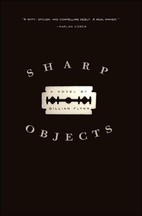 Summary:
Camille Preaker, journalist to a small Chicago newspaper, recently out of a mental institution after an in-patient stay to address her long-standing inclination to cut words into her body, has been asked by her boss to go to her hometown. Two little girls have been found murdered–with their teeth pulled out. Camille is not inclined to go home. She’s barely spoken to her distant, southern belle mother since moving out years ago and hardly knows her half-sister, 13-year-old Amma. But home she goes, staying with her mother, step-father, and half-sister to save money, drinking to cope as her demons haunt her, and investigating the murders that have shaken the small town of Wind Gap, Missouri.
Review:
This book hit my radar around the time there were all those articles judging Gillian Flynn for writing female characters who are bad/evil. I immediately was supportive of Gillian Flynn (bad women exist, hello) and interested in more of her writing. I started with Gone Girl so I could read it before seeing the movie, but Sharp Objects has been in my sightlines for a long time. The mere idea of an adult self-injurer going to her hometown and facing her demons was something I would want to read even without knowing how much I enjoy Gillian Flynn’s work. What I found was a tightly-written, fast-paced mystery with multiple complex characters and simultaneously breath-taking and heart-breaking lead.
I thought through most of the book that I knew the solution to the mystery. Whodunit. That didn’t bother me. I liked everything leading up to what I thought was going to be the ultimate reveal. The plot twists, though, surprising myself and characters in the book. While part of me likes the twist, part of me felt it was more cliche than the original ending that I thought I was getting. Ultimately, while I didn’t necessarily find the resolution satisfying, I did find it surprising and something to chew on. It will stick with me in a I’m thinking about it way like eating something unusual you’re not sure if you liked, rather than in an I remember feeling so pleasantly satisfied way, like how you might look back on Thanksgiving dinner.
The pacing in the book is superb. I read it in audiobook format, and I found myself using time to listen to it as rewards for accomplishing other things. I listened to it every chance I had because the pacing was so spot on. It never felt too quick-moving or too slow. Every scene felt like it had a reason for being there and kept me on the edge of my seat.
There is a lot of mental illness represented in this book, and that is wrapped up in the characters. I’ll talk first about the spoiler-free mental illnesses.
Camille is a self-injurer who has had a stay in a mental hospital where her roommate managed to commit suicide. Camille never names more of a diagnosis the doctors gave her than self-injurer. However, much of her behavior, including her self-injury, points to PTSD from her childhood. This includes the foreboding feeling she gets when returning to her hometown. How she feels driven to drink herself numb for dealing with certain triggering situations. Her impulse to inflict hurt on herself, etc… All of that said, the representation of Camille as a cutter is superb. This is an adult woman who still struggles with the impulse to cut. Who talks about how most people think of it as an adolescent problem. Camille manages to describe her urges to cut, what drives her to cut, without ever actually definitively saying what causes it. And this is great because we don’t actually know. Camille is nuanced. She is a woman who used to (still wants to) cut herself but that is not, not by a long-shot, all she is.
The book also secondarily depicts alcoholism and drunkenness as a self-medication technique. Camille drinks as a lesser evil compared to cutting when she needs to relieve her stress and discomfort from dealing with terrible situations. It shows how alcohol and cutting both can end up being used as coping mechanisms when no healthier ones are learned or taught. It also shows how stressors can impact sobriety and health.
Despite being both a self-injurer in recovery and a woman who abuses alcohol, Camille is depicted as a heroine. Her investigative journalism helps break the case open. She exhibits care and concern for her half-sister and loyalty to her boss and career. She is ultimately depicted as resilient in spite of her struggles, and I loved seeing that.
If you are interested in reading about other depictions of mental illness in the book, they are in the spoiler section below.
*spoilers*
It is ultimately revealed that Adora, Camille’s mother, suffers from Munchausen by Proxy (MBP). This MBP is what ultimately killed Camille’s other little sister, Marion. Camille escaped this same fate because her mother didn’t love her and thus also didn’t really enjoy caring for her or garnering attention through her in this way. What Adora does is unforgivable and certainly causes a visceral reaction in the reader. However, there are scenes that discuss things such as how Adora’s mother didn’t love her. The implication is that some of the mental illness in the family is learned or a reaction to poor environment. It manages to keep Adora human rather than monstrous.
Similarly, it is ultimately learned that Amma is a sociopath. Camille seems to be uncertain if this is just Amma’s nature or a reaction to Adora’s “mothering” or some combination of the two. I feel that not enough time is given to analyzing Amma, once Camille learns her true nature. This depiction, compared to the others in the book, is just much flatter due to the lesser amount of time Camille and other characters spend pondering Amma.
The book ends with Camille wondering if she is able to love in a healthy way or if she’s doomed to repeat her mother’s unhealthy, hurtful mothering. Essentially, she wonders if MBP is inherited or if she can escape that. Some time is spent discussing what made Camille more resilient than either of her sisters. I think this is some of the more valuable portion of the book, as it really highlights the nuances of some of the things we still just don’t have a solid answer to about mental illness. What makes some people more resilient, more able to overcome bad childhoods and genetic tendencies than others? What makes some people better able to cope with a mental illness than others? They are important questions, and I like that they are addressed.
*end spoilers*
There are some scenes that will bother some readers. While rape is never depicted, it is discussed, as well as the idea of what counts as rape, with one female character arguing that a woman who is intoxicated is still responsible for any sexual activity that occurs. The character saying this was a victim of rape while intoxicated herself, so readers should bare in mind that this reframing of a rape as not a rape is very normal for rape victims who have not fully addressed the rape yet. Additionally, at one point one character has consensual sex with a character who has just barely turned 18. Also an adult partakes of illegal drugs and alcohol with characters who are extremely underage. All of these scenes work within the book and are necessary for the plot, however.
Overall, this is a fast-paced mystery with a strong yet flawed female lead and an engaging and thought-provoking plot that presents many different nuances of mental illness. Recommended to those looking for a fast-moving book with a unique depiction of self-injury who do not mind the violence or gray moral areas innate in a mystery revolving around serial killing.
If you found this review helpful, please consider tipping me on ko-fi, checking out my digital items available in my ko-fi shop, buying one of my publications, or using one of my referral/coupon codes. Thank you for your support!
4 out of 5 stars
Length: 254 pages – average but on the shorter side
Source: Audible

Counts For:

Book Review: Bird Box by Josh Malerman
 Summary:
Malorie thought the hardest thing she was going to have to face was dealing with her pregnancy and impending single motherhood. She thought the warnings about seeing something that makes you go crazy and become violent was just the news blowing things out of proportion, or at least just hysteria. Her sister believed in it, but not herself.
But that was all years ago, and now Malorie is alone in a house with her two children. Children who have never been outside without blindfolds on. She only leaves the house blindfolded, tapping the ground with a stick to find the well. But now it is time for her to be brave and to take a boat on the river, just she and her two children, blindfolded, in the hopes of finding salvation.
Review:
I was drawn to this book for two reasons. First, the mere thought of a mother and two young children boating down a river blindfolded had me intrigued. Second, it’s set in Michigan, which is where my husband is from, and honestly I can’t recall the last time I saw a book set in Michigan. These two elements came together to tell me this book is probably unique. So when I saw the kindle version on sale on Amazon, I snatched it up. What I found was a chilling tale that could easily fit within the Lovecraft mythos.
The order the story is told in helps build the suspense and keeps it from being a same old apocalypse and survivors’ tale. The book opens with Malorie and her two children living alone in the house. It opens post-apocalyptic. Through flashbacks we learn various things such as who used to live in the house with Malorie, why there are certain parts of the house she doesn’t like to go to, and why neither she nor the children leave the house without blindfolds on. From here, the reader is then taken forward into Malorie’s action onto the river, going down it trying to find a safe haven of other survivors that she knows used to be there years ago. It’s a nice combination of flashback and plot progression forward that keeps the suspense interesting.
It is no spoiler to say that what caused the apocalypse is something that causes people to go stark raving mad when they see it. This is included in the official book blurb. What was interesting to me was how Malerman kept this from being purely straight-forward. Some characters believe in the mysterious creatures right away, others don’t. Some think that merely believing it will cause you to go crazy makes you go crazy. Some think that some are affected and others aren’t. Some wonder if animals are affected too, and no one knows where the creatures came from or, if you don’t believe in the creatures, how the phenomenon started. The lack of clear-cut answers reflects reality. In general, with large-scale catastrophes, it’s hard to know exactly what happened or what is going on. This lack of knowing made the situation read as real, even if the exact situation is an absurd sounding one at first.
I was also struck by how well Malerman wrote a female version of experiencing the apocalypse. Malorie is both focused on surviving for herself and her baby but also distracted from the apocalypse because she is having normal hormonal reactions to pregnancy. Similarly, while some characters embrace her as a symbol of hope, others see her as a burden. Malorie was a refreshing change from the young, virile, kick-ass heroine often seen in post-apocalyptic books. She is strong, yes, but not in a kick-ass way. She is strong in a she’s doing her best to be a good mom and still survive type way. And that’s a nice thing to see in post-apocalyptic horror fiction.
The book naturally ends up pondering “madness” a lot. The creatures drive any who see them into near-caricature depictions of madness. Sometimes the person becomes violent against others. Sometimes the person turns on themselves, killing themselves or self-injuring to the extent that they die. There are a lot of questions about what the human mind can handle. There is a lot of argument in the book for agency against all odds.
It’s better to face madness with a plan than to sit still and let it take you in pieces. (loc 4034)
On the one hand, I appreciate the argument for agency and fighting for your sanity and humanity. On the other hand, I’m not sure how I feel about a metaphor where madness happens to people who just aren’t careful enough or don’t have enough of a plan. While it’s valid that a mental illness must be fought every day and some have more natural resiliency than others, there’s a tone of blame to the theme that strikes me the wrong way.
*small spoiler*
At one point, it is postulated that perhaps the only ones immune to being driven mad by the creatures are those who are already mentally ill because they are already mad. There is no science behind this thought. There is simply a character who appears to have paranoid schizophrenia who firmly believes the creatures are not actually dangerous because he has seen them and is fine. Yet he is a character who ends up instigating an incredibly violent scene. While it is true that there are violent extremes of mental illness, there are also those that are not. The book fails to bring out the subtleties and varieties of mental illness. Imagine the power that could have been from a character who had, for instance, OCD and was able to see the creatures and interact with them without harming anyone and able to understand that others cannot see them safely. Imagine if it was simply that seeing the world differently already, being abnormal, protected one from being driven truly mad by the creatures. What an interesting direction that could have taken the story.
*end spoilers*
Thus, in general, while I appreciate the more unique and interesting things the book did, such as focusing on a pregnant woman and then a young mother as the main character and telling the plot in a non-linear way, ultimately the book did not push the boundaries or the ideas far enough to truly enrapture me. Recommended to horror, Lovecraft, and post-apocalyptic fans looking for a read with a young mother as the focus.
If you found this review helpful, please consider tipping me on ko-fi, checking out my digital items available in my ko-fi shop, buying one of my publications, or using one of my referral/coupon codes. Thank you for your support!
4 out of 5 stars
Length: 305 pages – average but on the longer side
Source: Amazon

2015’s 5 Star Reads!
Since 2011, I’ve been dedicating a separate post from my annual reading stats post to the 5 star reads of the year. I not only thoroughly enjoy assembling the 5 star reads posts, but I also go back to them for reference periodically. It’s just useful and fun simultaneously! Plus it has the added bonus of giving an extra signal boost to the five star reads of the year. You may view the 5 star reads for 2011, 2012, 2013 , and 2014 by clicking on the years.
With no further ado, presenting Opinions of a Wolf’s 5 Star Reads for 2015!

Dreamsnake
By: Vonda N. McIntyre
Publication Date: 1978
Publisher: Houghton Mifflin
Genre: Scifi, Post-apocalyptic
Themes: Healing, Prejudices, Adoption, Hubris
Summary:
In a far-future, post-apocalyptic Earth, all medical aid is brought by healers. The healers use a trio of snakes to bring this healing. One newly-minted healer first visits the desert people, but mistakes lead to the loss of her dreamsnake, the only snake that can bring pain relief to the dying. She enters a journey to attempt to find a new dreamsnake.
Current Thoughts:
My full review of this book has yet to come, so I’ll keep my current thoughts short. A 1970s work of scifi by a woman that intrigued me due to many reviews mentioning the positive depiction of snakes. It wowed me. I read it via my Audible subscription, and I really am going to have to get a vintage paper copy for my female scifi collection.
Full review still to come.

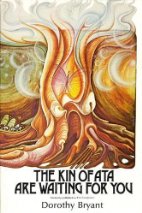
The Kin of Ata Are Waiting For You
By: Dorothy Bryant
Publication Date: 1971
Publisher: Evan Press
Genre: Scifi
Themes: Redemption, Self-Actualization, Healing, Mindfulness, Community
Summary:
Running from his demons, a man crashes his car and wakes up being assisted by a deceptively primitive people–the kin of Ata. He discovers that he’s been mysteriously brought to an island inhabited only by these people. As time passes, he comes to learn there is much more to them than first appears.
Current Thoughts:
This is a book I know I will revisit. The parable for self-actualization and the journey of mindfulness is something that rang so strongly with me. When I think about it, I remember it as a beautiful, touching book.
Full review

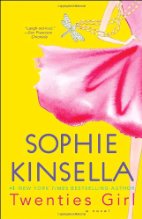
Twenties Girl
By: Sophie Kinsella
Publication Date: 2009
Publisher: Bantam Press
Genre: Chick Lit
Themes: Living Fully, Living Authentically
Summary:
Lara Lington has always had an overactive imagination, but suddenly that imagination seems to be in overdrive. Normal professional twenty-something young women don’t get visited by ghosts. Or do they?

When the spirit of Lara’s great-aunt Sadie–a feisty, demanding girl with firm ideas about fashion, love, and the right way to dance–mysteriously appears, she has one last request: Lara must find a missing necklace that had been in Sadie’s possession for more than seventy-five years, and Sadie cannot rest without it. Lara, on the other hand, has a number of ongoing distractions. Her best friend and business partner has run off to Goa, her start-up company is floundering, and she’s just been dumped by the “perfect” man. Sadie isn’t having any of it. And soon the question winds up being, who is really helping who?
Current Thoughts:
A book that really shows how great chick lit can be. What starts out light and ridiculous eventually hands over some real thought-provoking lessons about a life lived versus a life lived well. It was just the light, humorous take on life and death I needed when I picked it up. Also, I actually laughed out loud while reading it. A real complement.
Full review still to come.
2015 Reading Stats!
Every year, I wrap up the old year and start the new one here on the blog with a look back at my reading stats. You can see my stats for the years 2009, 2010, 2011, 2012, 2013, and 2014 by clicking on the years.
Total books read: 52
Average books read per month: 4.33
Month most read: July with 7
Month least read: September with 2. This is no big surprise, since that’s the month I got married!
Longest book read: The Years of Rice and Salt by Kim Stanley Robinson with 763 pages
Fiction: 46 (88.5%)
Nonfiction: 6 (11.5%) (I read slightly less nonfiction this year.)
Series: 26 (50%)
Standalone: 26 (50%)
(I’m fascinated that this wound up exactly 50/50!)
Formats:
–print: 13 (25%) (Almost the same as last year.)
–ebook: 27 (51.9%)
–graphic novel: 2 (3.8%) (I successfully read 2 of the graphic novels I already own. I believe I have 2 left.)
–audiobook: 10 (19.2%)
New Categories
I decided to track a few new categories this year. The author’s gender, whether the book is indie or traditional, the publication year of the book, and the target age-range. Snazzy graphs for all of these!
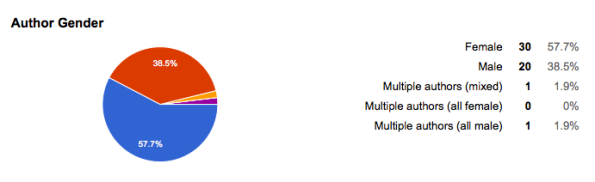
I read more female than male authors. This isn’t a surprise, since I actively seek out scifi and fantasy by female authors.
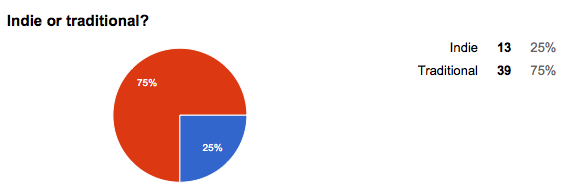
You will definitely hear about some indie books if you follow this book blog! ;-) Note that I only accepted 6 ARCs to read this year, so that means I read 7 indie books I sought out myself.
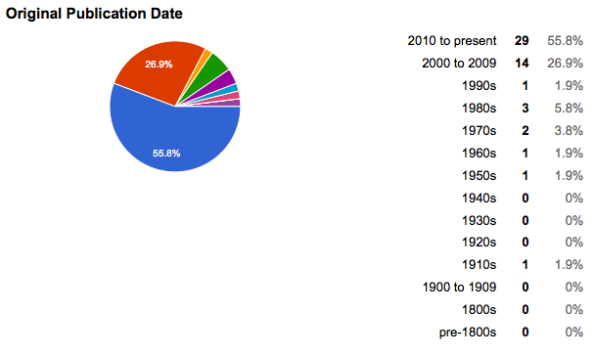
I mostly read books from the 2000s. I did solidly touch upon the 1970s and 1980s. I’d like to read a bit more from older books next year. Maybe up to more like 20% to 25% of my total.
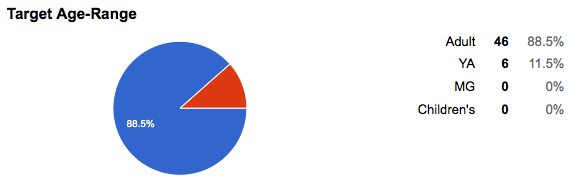
I mostly read adult books.
Genres:
–Scifi: 14 (26.9%)
The subgenre I read the most of in scifi was dystopian (28.6%).
–Fantasy: 13 (25%)
The subgenre I read the most of in fantasy was urban fantasy (46.2%)
–Historic Fiction: 5
–Horror: 5
–Contemporary: 4
–Nonfiction history: 4
–Romance: 4
–GLBTQ: 3
–Mystery: 3
–Nonfiction science: 3
–Chick lit: 2
–Alternate history: 1
–Erotica: 1
–Nonfiction cookbook: 1
–Nonfiction self-help / psych: 1
Number of stars:
–5 star reads: 3 (6%)
–4 star reads: 26 (50%)
–3 star reads: 20 (38%)
–2 star reads: 3 (6%)
–1 star reads: 0 (0%)
This was a slower reading year than last year, but given everything that happened (my wedding and the loss of my father), I’m happy I was able to make my goal of one book a week. Honestly, next year I intend to keep the same goal and focus my energy on writing more. I think a book a week is a good amount for a writer to read.
My new stats I tracked this year show with hard data what I already know. I mostly read adult books and read more female than male authors, although I do still read a strong minority of male authors. I also read a strong minority of indie books. I’m interested to see how this changes with time, and with some of my new reading goals, which are such a big deal I’m going to be making a whole separate post about them.
I’m disappointed I only had three 5 star reads this year. Where were the heart-gripping life-changing books?
The other thing of note is that half of my reads were scifi or fantasy. This blog is half scifi/fantasy and half eclectic, lol. I noticed throughout the year I wasn’t wanting to read thrillers, but I didn’t realize I’d read none. I’ve definitely changed from a thriller reader to a mystery reader.
Normally I would talk a bit more about my future goals, but as I mentioned earlier, those are significant enough this year that they deserve their own future post. So keep an eye out for that!
I hope you all had a good reading year and found my reviews helpful in your pursuit of good books. Sending best wishes for everyone’s 2016!
Book Review: Porcelain: A Novelette by William Hage
 Summary:
Out near the Pine Barrens in New Jersey sits the Whateley Bed & Breakfast, home of a wide collection of knick-knacks and antiques for its guests to view, including a beautifully ornate porcelain doll. However, after the Whateley’s latest guest purchases the doll as a gift, a horrifying series of nightmarish events begins to unfold.
Review:
This is the final review for the 2015 ARCs I accepted (6 total). Woo! This 8,000 word novelette was the perfect way to wrap up my year of ARCs. Bite sized, it kept me entertained for almost precisely the duration of the public transit portion of my commute.
This short horror involves a father buying a doll for his daughter, only to have the doll wind up to be evil. I don’t consider that a spoiler, because I think it’s pretty clear from the cover and the description that is what is about to go down. While some of the evil doll aspects were about what I was expecting, others were not. The scenes happened at just the right pace to hold interest, and I did find myself hoping I’d have time to finish the novelette without having to stop. I think the story is helped by reading it in one sitting, so I would advise picking it up when you know you have enough time to finish it in one go.
All of this said, while I enjoyed it and it is well-written, it just didn’t linger with me. I wound up feeling quite neutral about it. Perhaps because the novelette is so short that there’s no time to establish an emotional connection with the main character. It’s also possible that the ending just failed to wow me. That said, other readers who are more generally into short fiction than I am will probably enjoy it more than I did.
Overall, this is a well-written piece of short fiction that should be read in one sitting. Recommended to fans of short horror.
If you found this review helpful, please consider tipping me on ko-fi, checking out my digital items available in my ko-fi shop, buying one of my publications, or using one of my referral/coupon codes. Thank you for your support!
3 out of 5 stars
Length: 23 pages – novella
Source: Kindle copy from author in exchange for my honest review

Book Review: The Three Stigmata of Palmer Eldritch by Philip K. Dick
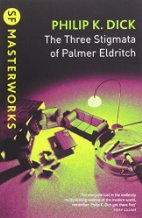 Summary:
Earth is overcrowded and overheated but people still don’t want to become colonists to other planets. The colonies on the other planets are so boring and depressing that the colonists spend all of their money on Can-D — a drug that lets them imagine themselves living in an idealistic version of Earth. The only trick is they have to set up dioramas of Earth first. The drug is illegal on Earth but the diorama parts are still created by a company there. When the famous Palmer Eldritch returns from the far-flung reaches of space, he brings with him a new drug, Chew-Z, that doesn’t require the dioramas. What the people don’t know, but one of the manager of the Can-D company soon finds out, is that Chew-Z sends those who take it into an alternate illusion controlled by Palmer Eldritch.
Review:
I love Philip K. Dick, and I have since first reading Do Androids Dream of Electric Sheep? So whenever I see his books come up on sale in ebook format, I snatch them up. I picked this up a while ago for this reason, and then randomly selected it as my airplane read on my honeymoon. Like many Dick novels the world of this book is insane, difficult to explain, and yet fun to visit and thought-provoking.
The world Dick has imagined is hilarious, although I’m not sure it was intended to be. Presciently, Dick sets up a future suffering from overpopulation and global warming, given that this was published in 1965, I find it particularly interesting that his mind went to a planet that gets too hot. Even though the planet is unbearably warm (people can only go outside at night and dusk/dawn), they still don’t want to colonize other planets. Colonizing the other planets is just that bad. So there’s a selective service by the UN, only instead of soldiers, those randomly selected are sent to be colonists. The wealthy can generally get out of it by faking mental illness, as the mentally ill can’t be sent away. This particular aspect of the book definitely reflects its era, as the 1960s was when the Vietnam War draft was so controversially going on.
I don’t think it’s going out on much a limb to say that drugs had a heavy influence on this book. Much of the plot centers around two warring drugs, and how altered perceptions of reality impact our real lives. One of the main characters starts out on Earth hearing about how the poor colonists have such a depressing environment that they have to turn to drugs to keep from committing suicide. But when he later is sent to Mars himself as a colonists, his impression is that in fact the colony is this downtrodden because no one tries very hard because they’re so much more focused on getting their next hit of Can-D. The Can-D has caused the lack of success on the planet, not the other way around. Whether or not he is accurate in this impression is left up to the reader.
Then of course there’s the much more major plot revolving around the new drug, Chew-Z. Without giving too much away, people think Chew-Z is a much better alternative to Can-D, but it turns out chewing it puts you under the control of Palmer Eldritch for the duration of your high, and if you overdose, you lose the ability to tell the difference between illusion and reality. The main character (and others who help him) thus must try to convince the humans that Chew-Z is bad for them before they ever even chew it. The main character has another side mission of getting people off of Can-D.
It sounds like a very anti-drugs book when summarized this way, but it felt like much more than that. People chewing Chew-Z can come to have an experience that sounds religious – seeing the three stigmata of Palmer Eldritch (a stigmata in Christian tradition is when God shows his favor on someone by giving them the marks of Jesus’ crucifixion. In this book, the three stigmata are three bodily aspects of Palmer that are unique to him). However, the experience of seeing the stigmata is in fact terrifying, not enlightening. The drugs thus represent more than drugs. They represent the idea that we could possibly know exactly what a higher power is thinking, and perhaps that it might be better to just go along as best we can, guessing, rather than asserting certainty.
All of this said, a few weaknesses of the 1960s are seen. I can’t recall a non-white character off the top of my head. Women characters exist, thank goodness, but they’re all secondary to the male ones, and they are divided pretty clearly into the virgin/whore dichotomy. They are either self-centered, back-stabbing career women, or a demure missionary, or a stay-at-home wife who makes pots and does whatever her husband asks. For the 1960s, this isn’t too bad. Women in the future are at least acknowledged and most of them work, but characterizations like this still do interfere with my ability to be able to 100% enjoy the read. Also, let’s not forget the Nazi-like German scientist conducting experiments he probably shouldn’t. For a book so forward-thinking on things like colonizing Mars and the weather, these remnants of its own time period were a bit disappointing.
Overall, though, this is a complex book that deals with human perception and ability. Are we alone in space? Can we ever really be certain that what we are seeing is in fact reality? How do we live a good life? Is escapism ever justified? Is there a higher power and if there is how can we ever really know what they want from us? A lot of big questions are asked but in the context of a mad-cap, drug-fueled dash around a scifi future full of an overheated planet and downtrodden Mars colonies. It’s fun and thought-provoking in the best way possible.
If you found this review helpful, please consider tipping me on ko-fi, checking out my digital items available in my ko-fi shop, buying one of my publications, or using one of my referral/coupon codes. Thank you for your support!
4 out of 5 stars
Length: 243 pages – average but on the shorter side
Source: Amazon

Book Review: The Kin of Ata Are Waiting for You by Dorothy Bryant
 Summary:
Running from his demons, a man crashes his car and wakes up being assisted by a deceptively primitive people–the kin of Ata. He discovers that he’s been mysteriously brought to an island inhabited only by these people. As time passes, he comes to learn there is much more to them than first appears.
Review:
I can’t recall exactly how this ended up in my tbr but I am certain it had something to do with it being older feminist scifi/fantasy, which I collect and read as much as possible. What I was expecting, particularly from a book from the 1970s, was a wishful book about an impossible utopia. What I got instead was a spiritual parable that left me breathless, surprised, and craving more–not out of the book but out of life.
The book starts slowly. The entire first chapter has the main character driving angrily down a road just after committing a murder during a fit of rage. He is not a character with which you can particularly empathize at this point, and it is confusing as to just when the titular Kin of Ata will show up. I admit that the first chapter moved so slowly and was so difficult to relate to that I was expecting the book to be a slog, but I persevered on, and in retrospect I appreciate the first chapter quite a bit. I’ll discuss why at the end of my review.
The man wakes up to people getting him out of the car and bringing him to a cave. They then bring him out of the cave to their hut-like homes. He perceives of them as primitive and judges them harshly. Gradually over time he comes to better understand them and their ways and to understand that he is not with primitive people hidden in the woods near his home. He is on an island, and he somehow was spirited there. I won’t discuss much more of the plot, because it could ruin it, but essentially the man is a stand-in for the reader. The Kin of Ata have spiritual lessons and teach them to the man, and in turn to the reader. It comes across much like a parable.
The Kin believe that humans need to remember and respect their dreams (actual dreams we have at night). They view our sleeping lives as just as important, if not more so, than our waking ones. They thus design their waking lives to be lived in the right manner so as to elicit the most powerful dreams. This means things like working but not too hard. Thus making yourself tired enough to sleep but not so tired that you sleep the sleep of the dead. It also means discussing your dreams every morning upon awaking. It means listening to your dreams and choosing daytime activities that suit what they are telling you. Put another way, the Kin choose daytime activities that fit the callings of their deepest souls. They essentially live a very mindful life that helps them achieve happiness and a peaceful community.
The main character starts out as a deep blight on the community. He keeps trying to force his ways upon them. He comes across as an angry cloud. In addition to being a murderer he also rapes one of the female Kin early on in the book. I found the depiction of this rape fascinating. The man sees people having sex with each other in what appears to him to be whenever one person demands it. In actuality, the people are choosing each other and subtlely letting each other know whether they want to have sex or not. The man decides he wants to participate and goes after one of the women. She indicates to him through cultural body language (these people do not speak much) that it is the wrong time. He does it anyway and she does not resist but she also does not participate. The whole community judges him as it being a wrong and a rape in spite of the fact that the woman never said no. The whole community views sex as only consensual if joyous consent is given, not just if the word “no” is not said. The man is startled and yet also immediately understands their point. He felt dirty and wrong after the sex and wasn’t sure why but now he understands and doesn’t know why he never thought of it this way before. He is utterly ashamed of himself.
Longtime readers of this blog know that I struggle with plots that ask us to empathize with a rapist. It honestly surprised me that this scene didn’t turn me off the book entirely. Yet this is also a huge turning point for the main character. He realizes that his way of doing things leads to him feeling bad and wrong and negatively impacts others. The woman spends several days in a cavelike place, which is basically where the Kin go to meditate. When she comes out, she forgives the man, because harboring a grudge against him would hurt her own ability to live the right path. I found the whole event of how the community confronts the man about his wrongdoing, how he responds to this confrontation, and how the woman handles it to be incredibly thought-provoking. It made me think about how much culture impacts people’s ability to even recognize when they’ve done something wrong. Also, much as I had heard many times growing up how harboring hate in your own heart poisons yourself and not the one who harmed you, seeing a character fully embrace this after a traumatic experience made it sink in much more for me than just hearing the saying ever did.
This scene also served another purpose. It reminded me that we’ve all done things we’re ashamed of and showed a path of redemption. The man starts to pursue living the right way. He has set-backs and stumbles. It sometimes takes years for him to see the results of certain actions that he starts doing the right way. It takes perseverance, unlike living the easy way, like he used to. It’s a powerful parable for practices such as meditation, for which you often don’t see results right away.
Similarly, again, I don’t want to spoil it, but the book demonstrates how it takes a community living right for a truly peaceful and happy community to exist. It also demonstrates, though, how one person who is very strong in their commitment to this right path can impact a whole community that is lost.
I promised to touch back on why I came to appreciate the first chapter. I appreciate it because it shows us the main character living his life following the wrong path within his own original community. It shows us where he came from before showing us how he develops into a life so much better through his work with the Kin. It also makes for a powerful bookend with the final chapter, whose surprise I will not reveal.
This is a powerful parable that demonstrates how much impact living mindfully can have, and also how important developing healthy communities is for the happiness and peace of all. It shows how wrong cultural ideals can lead people astray and hurt even the perpetrators of violence. Some may struggle with parts of the book, but that is part of the process of learning the lessons in the parable. I highly recommend this short book to all seeking a thought-provoking read.
If you found this review helpful, please consider tipping me on ko-fi, checking out my digital items available in my ko-fi shop, buying one of my publications, or using one of my referral/coupon codes. Thank you for your support!
5 out of 5 stars
Length: 228 pages – average but on the shorter side
Source: PaperBackSwap
Buy It (Amazon or Bookshop.org)
 Support my work with a tip or browse my shop for curated book club guides, how to guides, cross-stitch patterns, and more!


This work by Amanda Nevius is licensed under a Creative Commons Attribution-Noncommercial-No Derivative Works 3.0 United States License.
 Opinions of a Wolf