
Archive
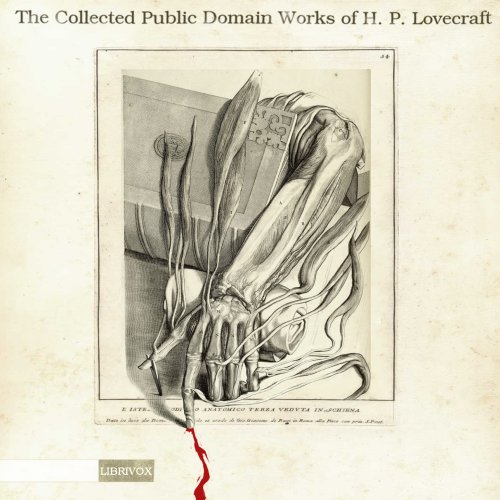
Book Review: The Collected Public Domain Works of H. P. Lovecraft
 Summary:
Lovecraft was an American author of horror living during the late 19th and early 20th centuries. He has a bit of a cult following, largely due to a creature featured in some of his stories known as Cthulu. (I’d link, but your experience will be much more amusing if you google “cthulu”). Some common themes in his horror include eerie things coming from ocean depths, scientific reanimation of corpses, human-like apes, the dreamworld, and ancient myths being fact. This collection includes 24 short stories–The Alchemist, The Beast in the Cave, Beyond the Wall of Sleep, The Cats of Ulthar, Celephais, The Crawling Chaos, Dagon, The Doom that Came to Sarnath, Ex Oblivione, Facts Concerning the Late Arthur Jermyn and His Family, Herbert West: Reanimator, Memory, The Music of Erich Zann, The Nameless City, Nyarlathotep, The Picture in the House, Polaris, A Reminiscence of Dr. Samuel Jackson, The Statement of Randolph Carter, The Street, The Terrible Old Man, The Tomb, The Tree, and The White Ship.
Review:
I decided I needed to actually read some Lovecraft after getting swept up in the Cthulu subculture last December through Cthulumas hosted on Tor.com. So I searched Librivox via the Audible app and found this collection. Unfortunately, there was no Cthulu in it. Also unfortunately, I wasn’t too impressed by most of the stories.
I think the main issue is that a lot of the horror just didn’t age well. Lovecraft’s stories depend largely on the unknown, only a lot of what was unknown in his time is known now. For instance one of his stories focuses around the mystery of the North Star, which isn’t so mysterious anymore. They also depend on unexplored territories on the continents, whereas now it’s space that is unexplored. I can’t get into the character’s mindset of fear when he reads simply as naive and uneducated.
His stories that center around the hypothetical reanimation of the dead are some of the best ones. They read like a mix of zombie and Frankenstein, and it works because we still don’t know what happens after death. Herbert West: Reanimator was one of the only stories to give me the actual chills.
I would be amiss not to mention the racism evident in his stories. Any that feature Africa talk of a pervasive fear of what lies in the depths of the continent and repeatedly mention apes mixing with men. Even if he was unaware that he was harboring racism, these read at the very least as being anti-miscegenation. It’s hard to listen to stories whose horror centers around fear of what people look like as opposed to what they may be capable of doing.
Similarly, he read as being anti-science. Any scientists in his short stories are portrayed as sticking their noses where they don’t belong. Apparently, we can never fathom the universe, so we better not. It’ll hurt us if we try. I found myself rolling my eyes at the sleep stories. They were all so ridiculous when I know doctors and researchers studying sleep. It’s really not this dangerous other-world he presents it to be.
Where Lovecraft is at his strongest is when he veers from his typical themes. My loyal readers probably won’t be surprised at all that one of the most pleasurable reads to me was The Cats of Ulthar, which basically presents animals as sentient and capable as humans.
I can only hope that the Cthulu stories fall more in the category of Herbert West: Reanimator and The Cats of Ulthar. The rest wrought a decided “meh” reaction from me. I’d recommend them only if you have no issue reading horror centering around unknowns that are now known.
2 out of 5 stars
Source: Librivox recording via Audible app for the iTouch and iPhone
Book Review: Scott Pilgrim By Bryan Lee O’Malley (Graphic Novel) (Series, #1-5)
 Summary:
Canadian Scott Pilgrim is 23 years old and has a case of what to do with myself quarter life crisis. He’s living in a studio apartment with Wallace (who is very gay), dating a 17 year old, and doesn’t have a job, but at least he’s got his band. Then he meets American Ramona Flowers and falls for her. Dating her comes with a catch, though. He’s got to defeat her 7 evil exes who really seem to enjoy jumping him when he least expects it.
Review:
Scott Pilgrim takes typical 20-something ennui and spices it up with a heavy dose of ninja fighting and videogame references, hitting its target audience dead-on. It’s the perfect mix of connection over real life issues and over generational references. It’s more than just a day in the life of Scott mixed with fighting evil exes, though. There’s a mystery to the whole situation. Why is Scott such a good fighter? Why does he fall so quickly for Ramona when nothing seems that special about her? What is up with Ramona anyway? It had me wishing that the sixth volume was out already so I could find out. (It comes out this summer).
The art is relatively average. Some of the characters and scenes are really well-drawn, but some of the minor characters blend together, particularly the women. I was left really confused about some of the women until later in the series where O’Malley put together a listing of all the characters. Even then, I thought they looked a bit too much alike. On the other hand, the art handles delicate scenes like sex and fighting really well, so it all balances out.
What really makes the series, though, is the creativity of the exes and the battles. They range from skateboarding to evil robots at concerts to races through value warehouse stores to (my absolute favorite) vegans with superpowers. Seriously, they have superpowers because they’re vegans. It’s the most awesome idea! Plus, there is a recipe for vegan shepherd’s pie given in the context of the story that I absolutely must try.
I definitely recommend this series to all 20-somethings, videogamers, and ninja-lovers. Plus, the movie version starring Michael Cera is coming out this summer, so you may as well whet your appetite for it by reading the books first.
4 out of 5 stars
Source: Borrowed
Books in Series:
Volume 1: Scott Pilgrim’s Precious Little Life
Volume 2: Scott Pilgrim vs. the World
Volume 3: Scott Pilgrim and the Infinite Sadness
Volume 4: Scott Pilgrim Gets It Together
Volume 5: Scott Pilgrim vs. the Universe
Volume 6: Scott Pilgrim’s Finest Hour (release date: July 20, 2010)

Book Review: So Long, and Thanks for All the Fish by Douglas Adams (Series, #4)
 Summary:
Although the planet Earth definitely blew up, Arthur Dent has found himself back on it again, and not in the prehistoric past like before. Everything seems about the same, except that the dolphins all have disappeared and apparently there was a mass hallucination of the planet blowing up caused by a CIA experiment. You’d think this would require all of Arthur’s attention, but instead he’s rather highly focused on a woman named Fenchurch who claims the Earth really did blow up and insists something has felt off ever since.
Review:
It’s no secret that one of my favorite comedic books is The Restaurant at the End of the Universe, the second book in this series. While I felt that the third book suffered a bit, it was still pretty damn funny in my opinion. I really wish I could say the same about this.
I still enjoy Adams’ writing style. It’s tongue in cheek, snarky, and self-referencing. It is a pure pleasure to read. This still holds true here, but the problem is that it’s just not laugh out loud funny. Oh, there are bemusing moments, but mostly it’s a case of jokes falling flat. I think the reason for this is that what makes the books funny is Arthur Dent–average British dude–stuck into the bizarre situations that are the rest of the universe with only the equally bizarre Ford Prefect as a true companion. Indeed, my favorite bit of this book is when Arthur and Ford are reunited. Without that Arthur stuck in outerspace element, you wind up with a rather run-of-the-mill, “huh, something odd is going on on planet Earth” book. It’s cute, but it’s not surprising, and the element of surprise is what makes the rest of the series so funny.
I also wasn’t fond of Adams’ obvious response to the fan question, “Does Arthur ever have sex?!” with the addition of the love interest, Fenchurch. He may think it is witty to reference this and answer it, but I was disappointed. I enjoyed wondering if poor Arthur spent 8 years devoid of sex. It added a certain element of mystery to him. This whole part felt kind of like a cop-out.
I don’t want to sound like I hated the book, because I didn’t. When compared to books not written by Adams, it actually holds up quite well. It’s enjoyable and has some unique scenes. It’s just, in comparison to the rest of the series, I was left a bit disappointed. I still plan on finishing reading the series, though.
3 out of 5 stars
Source: PaperBackSwap
Previous Books in Series:
The Hitchhiker’s Guide to the Galaxy
The Restaurant at the End of the Universe
Life, the Universe, and Everything

Guest Book Review: Chalice by Robin McKinley
Please give a warm welcome to my first guest book review participant, Chellie!
Meet the Guest!
My name is Michelle Oleson, and I’m currently the Web/Digital Services Librarian at an academic library. During a normal day, I coax printers into working properly, manage the library’s website content, help students find articles/books/staplers, and read a lot of blogs/tweetage. Outside work, I travel near and far, and enjoy keeping up my mediocre skills at playing flute, Latin, and online gaming.
 Summary:
Robin McKinley’s short novel Chalice follows McKinley’s other novels on the Beauty and the Beast theme. Mirasol, a solitary twenty-something, bee-keeping enthusiast, finds herself out her depth as the newly appointed Chalice of her demesne (feudal styled village). The previous Master and Chalice both died under tragic and mysterious circumstances leaving the Willowlands demesne in both political and spiritual chaos. Mirasol must find a balance in her old and new life, in addition to solving the mystery of the Old Master and Chalice’s demise if she’s to successfully serve the new Master: an enigma in and of himself.
Review:
Much of this short novel is devoted to describing an overly complex feudal system with a Druid-esque relationship to land. The story itself could have been concluded inside of 30 pages.
Mirasol leads the narration and all of the movement within the story. While she represents a strong female character (like any Belle), she also lets herself be caught up in forces deemed beyond her control. Fans of Hermione Granger will love her proclivity to spend most days holed away in the library trying to teach herself all the laws and mysticism of being the Chalice.
Mirasol spends most of her internal dialogue puzzling over the new Master. Like any good feudal system, the old Master died leaving an elder son and a younger son. The elder son, being a spoiled brat drunk with power, sends his brother off never to be heard from again. Lucky for the demesne, the older brother manages to get himself killed before completely destroying his people. The leaders of the village have a tough choice to make: bring in an outsider to rule or try to restore the younger brother.
The younger brother has been living his life as a monk in service to Fire Elementals. He returns to lead his people as something of a Fire Element himself. His first act as Master is to burn Chalice/Mirasol to the bone by barely touching her.
Then nothing happens for a long time while Mirasol goes to the library, thinks about how awesome her bees and honey are, how neat being a Chalice is, and wouldn’t the new Master be just dreamy if he was anything at all resembling human. She has two or three conversations with the Master concerning how the land is holding up under all the strain of political upheaval. Neither of them thinks they’re doing a very good job, but hey, at least we’re not getting drunk and dying horribly in a fire…
At some point the higher ups of the realm decide having a Fire Elemental as Master of a demesne is a Bad Plan. These interlopers are only Bad Guys for the sake of moving the story forward. Mirasol, however, comes up with a pretty spectacular plan. The interlopers want to put their own guy on the throne and remove the current Master so he can go back to being a Fire Elemental. Mirasol is already showing signs of being completely smitten with the new Master and feels that the land/people couldn’t survive another change.
McKinley takes Mirasol on a tour of the village blessing every inch and corner of Willowlands with her cup o’ honey. Having successfully done this, she returns to watch the Fire Elemental Master duel it out with swords with the would-be Master. The new guy is obviously a puppet, and wouldn’t even be a threat if the current Master was more corporeal. Cue Fairy Tale Ending: Mirasol has her awesome bees attack the interloper in the middle of the duel. Somehow this is not seen as cheating. All of her bees die; it’s very sad. But from the bodies of thousands of bees, arises the Master returned in the flesh of his enemy. The fallen man lies on the ground burnt to a crisp.
Quick resolution: Mirasol and the Master wed, as it’s obviously the only sensical thing to do.
I loved the fairy tale elements of this story. I think the world could have been more simply explained, but maybe it’s just McKinley’s style to announce something significant, spend pages explicating the history of these circumstances, to return to the conversation once you’re ready to scream Get On With the Story Already.
I’m looking forward to reading McKinley’s Sunshine book, as I’ve heard it’s highly recommended. I would recommend Chalice to fans of overly complex high fantasy, such as Marion Zimmer Bradley’s books.
3 out of 5 stars
Source:
This book was a gift.
Book Review: The Thing from the Lake By Eleanor M. Ingram
 Summary:
In the 1920s Roger Locke is a composer living in New York City. He buys a house by a lake in Connecticut as a country retreat and appoints his cousin, Phyllida, and her husband, Ethan Veer, as caretakers of the property. His first night on the property, he meets a woman–whether spirit or alive, he can’t tell–and is promptly intrigued by her. His visits quickly turn sinister, though, as a dark force based in the lake comes at night to threaten Roger away from the woman. What is the thing in the lake? Who is this woman? Can Roger defeat the dark force thereby returning himself and his cousins to their idyllic lifestyle?
Review:
I had a feeling I was going to like The Thing from the Lake when I discovered that every chapter started with a relevant quote pulled from the classics of the western canon, and I was right. Ingram weaves a complex tale, filled with surprising twists and turns. Just when you think you know what the overarching point is, or where the story is going to go next, you find out that you were wrong.
Ingram artfully goes back and forth between the daytime where the story is more period piece and the nighttime, which is all horror. It is a very New England tale, featuring small farmers, big city dreams, references to the Puritans, and quirky, drawling neighbors. While Phyllida and Ethan are believable and infinitely likeable, Roger’s immediate infatuation with the woman is a bit suspect. It seems shallow how infatuated with her hair and her scent he is, but I think he later proves himself. Sometimes people just know when they meet, so I’m willing to give Roger the benefit of the doubt.
Ingram leaves it up to the reader whether to believe the scientific or the supernatural explanation for the goings on at the lake. It reminded me of my class on the Salem Witch Trials a bit, and I’d be willing to bet that Ingram was at least partially inspired by them. It’s not easy to make both answers to a mystery equally plausible, but she pulls it off wonderfully.
The only thing holding me back from completely raving about the book is that there are parts that smack of historic misogyny. I’m not blaming Ingram. For her time period, many of her thoughts were quite progressive, and I’m sure Roger is an accurate representation of many men of that time period. However, when he speaks about how his “plain cousin” Phyllida is so much more comely when she’s doing “womanly” household chores, it makes me cringe, and not in the good horror way. Thankfully, these instances are not that frequent, so they’re easy enough to glide over.
The Thing from the Lake is a surprisingly thought-provoking book. I highly recommend it to everyone, but particularly to those who enjoy New England literature or light horror.
4 out of 5 stars
Source: Librivox recording by Roger Melin via the Audiobooks app for the iTouch

Book Review: Wolves of the Calla by Stephen King (Series, #5)
 Summary:
The gunslinger’s katet have a lot more on their plate than just continuing along the path of the beam. Susannah is pregnant and has developed another personality, Mia, to deal with the pregnancy as it is most likely demonic. The Rose is in danger in then when of 1977 New York City. The man who owns the empty lot it grows in is under pressure from the mob to sell it to an unseen man. So the last thing the katet needs is to run into a town desperately in need of the help of gunslingers.
The Calla, a town made up of rice growers and ranchers who mostly give birth to twins, has been facing a plague once every generation. Creatures referred to as Wolves come and take one child out of every set of twins between the ages of about 4 and puberty. The child is later returned mentally retarded. Their local robot messenger, Andy, has warned them that the Wolves are coming in about a month, and their holy man believes gunslingers are on their way.
Unable to turn down their duty as gunslingers or give up on their quest for the Dark Tower, can the gunslingers pull it all off or is it just more than any katet, even one as strong as theirs, can handle?
Review:
Toward the beginning of the book, Roland says something like, “Being a gunslinger means weeks of planning, preparation, and hard work for 5 minutes of battle.” That’s really a good description of this book. It’s a lot of exposition, albeit very interesting exposition, followed by a rather anticlimactic battle that is really the exposition for the next leg of the katet’s journey. This could have gone really badly, but thankfully there’s a lot of information King needs to tell us, and most of it is interesting and relevant to the gunslingers’ world, so it works.
King is good at creating a culture. The Calla and its people possess a very distinctive speech pattern and colloquialisms that are simultaneously easy enough for the reader to learn and to follow. He hints that he just took the Maine accent and exaggerated it. Maybe that’s why a New England gal like myself found it so easy to follow. In any case, the town of twins, ranchers, and rice is rich with local legends, folklore, and traditions. It is enjoyable to read about, and the town also manages to provide information about the katet’s greater quest for the Dark Tower.
It is well-known that King’s Dark Tower series brings in elements and characters from his other works, as he sees all of his stories happening in the same world and being connected. To that end, the holy man of the Calla is the priest from Salem’s Lot, and a part of Wolves of the Calla is him relating his backstory to the katet. Something that irritated me about all of the tales told in the “Telling of Tales” section of Wolves of the Calla is that it would switch from the character speaking to an italicized third person narrative. I don’t know if all of the italicized portions were previously written for other books or if King felt that he needed to be an omnipotent narrator in order to properly tell everything that had happened, but I found it disjointing and jarring. It was only my unanswered questions about the Wolves and the Dark Tower that kept me reading through that section.
I enjoyed the growth in the relationship between Roland and Jake. Roland is gradually growing into a father figure/adviser, while Jake is gradually becoming a man and an equal with the other gunslingers. King handles this transition well, and it is believable. Meanwhile, Eddie and Susannah’s relationship doesn’t change per se, but Eddie does realize that he will always love Susannah more than she loves him. It is evident that both of them are uncomfortable with her multiple personalities. This is an issue that clearly has not yet been resolved.
I do have three gripes with King. The first is that he persists in calling Susannah’s multiple personalities schizophrenia, which is just wrong. Schizophrenics hear voices, at worst, they do not have multiple personalities. What Susannah has is Dissociative Identity Disorder, and it is just inexcusable that he would get this wrong.
Second, although previously in the series the reader isn’t allowed to know or see something Roland knows, the reader always gets to know what the other gunslingers know. Here, information is pointedly held back from the reader. I can only assume this was an attempt to maintain suspense about the Wolves, which I found to be a cop-out. Either come up with an idea creative enough that we’ll be surprised anyway or have the characters be surprised as well as us. Also, I already had the wolves figured out long before they are revealed anyway. The suspense came in wondering how the final battle would play out, not in wondering who the Wolves were.
Third, I don’t like the fact that Susannah’s main storyline is a pregnancy. I don’t like that one of her key roles so far as a gunslinger was to fuck the shit out of a demon so that Jake could be pulled through (The Wastelands). I also really don’t like that something as simple as her being pregnant causes her to abandon her husband and her katet in the form of another personality, Mia. It almost seems that King uses the multiple personalities just so that he can have a sweet woman around when he needs one but then can instantaneously turn her back into all of the negative images of women out there. I need to see where Susannah’s storyline winds up before I can offer a final analysis of the character and its implications, but at the moment, it reads as a very negative view of women.
The overarching storyline of the quest for the Dark Tower, however, is still going strong in this book. We learn a bunch of new, important information about the Tower, the beams, and the worlds, and new questions pop up. With each book it becomes more evident that saving the Tower is important to the well-being of all worlds. I am pleased to report that this was a marked improvement over the previous book, although not quite up to the intensity of The Waste Lands or pure readability of The Gunslinger. It still manages to suck you in and gets the story back on the path of the beam.
3 out of 5 stars
Source: Borrowed
Previous Books in Series:
The Gunslinger, review
The Drawing of the Three, review
The Waste Lands, review
Wizard and Glass, review

PaperBackSwap
A while back I told you guys about a book swapping website I’ve been using called Swaptree. In the interim I started using PaperBackSwap, so I thought I should let you guys know about it too.
PaperBackSwap is slightly different from Swaptree. You acquire books using credits. (You are given some free ones when you start. I believe it’s 3) You can get credits either from sending someone else a book or you can buy them. The credits are $3.45 a piece, but if you buy larger batches of them they cost less. So even if you buy your credits instead of only using credits earned by sending books, you’re still getting books for $3.45 or less, which is wicked cheap.
Since PaperBackSwap doesn’t use a direct swapping method, you wishlist books you want. When a copy of the book becomes available, it is first offered whoever first wishlisted it. This sounds like a long wait, but I haven’t had to wait too terribly long for anything yet. Also if you put in a large wishlist, you tend to get a pretty steady flow of books being offered to you. Another cool feature of PaperBackSwap is PBS Market, which is basically an overstock shop of books. You can get these for super-low price either paying just money or just credits or a combination of money and credits. When a book you’ve wishlisted becomes available in PBS Market, they notify you but your position is also maintained in the wishlist unless you choose to buy the PBS Market book.
You should be aware though that PaperBackSwap leaves it up to the requester to set the specific condition requirements for books. The website generally requests that the book be in “good condition” with “no markings,” but anything beyond that is up to the requester. Say that you don’t want books that have been in a smoker’s home. You would say in your settings “No books from homes with smoke please.” This message would be visible to the giver when you request the book. They can then reject it for the “doesn’t meet requester’s requirements” reason. However, I found that you should put some sort of requirement in because it makes givers think twice about sending you an iffy copy. For mine I just reiterated PaperBackSwap’s “no excessive highlighting or writing.” Since then I’ve been receiving better quality books.
I like using both websites, because if there’s a book I really want, I can get it quicker for cheap on PaperBackSwap, but if I’m a bit more patient Swaptree ensures that I’m doing a 1 to 1 trade. Whereas on PaperBackSwap I’ve sent out 2 books but received 10. Oops, lol.
If you do choose to join PaperBackSwap, please let them know that I referred you as it will get me free credits. My username is tapcat16. Also, please check out the books I have available and see if you want any. You’ll know for sure that you’re getting your copy from a reliable giver and a super-speedy shipper, if I do say so myself. :-) I also frequently add books, possibly even ones I’ve reviewed here, so check back often. I’ve added a widget on the right-hand side of my blog that will link you directly to my profile for future reference. I like my books to find new homes. It makes me all happy inside.
So there’s the inside scoop on PaperBackSwap. Cheers!
Book Review: The Sweet Smell of Success and Other Stories by Ernest Lehman
 Summary:
A collection of Ernest Lehman’s noir style short fiction, including The Comedian and The Sweet Smell of Success, which was turned into a film in the 1950s. Varying in length from flash to many pages, most of the stories address the damage caused to individuals by the overly hungry theater, movie, and television industries. Some of the stories also look at individuals suffering from discontent in marriage.
Review:
My first entry in my reading challenge to read books I bought for university but never got around to reading. This was assigned for my Film Noir class in conjunction with watching The Sweet Smell of Success. I loved that class and at least enjoyed the assigned books that I read at the time. Unfortunately, I can’t say the same for these short stories.
Lehman’s writing doesn’t just evoke the past of the 1950s, it evokes an alternate, incredibly depressing universe. I have the feeling that was his point in writing these stories. The entertainment industry is evil and will slowly rob you of your soul. There’s definitely merit in that, but it can get a bit depressing and redundant to read the same theme over and over again.
I also found the dialogue jarring. The characters do things like call other men “baby,” and I can’t help but wonder if people actually talked like that back then. It made the stories ring a bit more fake to me than I think they should have.
Three of the stories revolve around press agent Sidney Falco and columnist J. J. Hunsecker. While I enjoyed these short stories it felt as if someone had ripped out three chapters from a back and handed them to me out of order. I wish Lehman had written this as a book or novella. He clearly had an affinity for these characters, as he repeatedly came back to them to explore them, so I wonder why he never just wrote a long piece about them.
The Comedian though is where Lehman hits his stride in this style and theme. He takes just the right amount of time to tell the story. He subtly lets us know the background information vital to feeling something for these characters on this crucial day, and the overarching them of the story is deeper than “the entertainment industry is evil.” Oh, it is still represented as bad, but that is not the main point of the story, which makes it stronger. I recommend reading this short story if you can get your hands on it.
Overall, if you’re in the mood for a marathon session of dark noir, you’ll enjoy this book. Otherwise, I’d recommend finding one of the short stories to get a taste of the 1950s version of the genre.
2.5 out of 5 stars
Source: University bookstore

Book Review: Woman on the Edge of Time by Marge Piercy
 Summary:
Connie, a 30-something Chicana of the 1970s who has led a rough life, enjoys the time she spends in 2137 at Mattapoisett with Luciente. She believes she is a catcher and Luciente a receiver, which allows her to time travel in her mind. Luciente tells her there are two possible futures, and they need her and all the downtrodden to fight and not give up or the utopian future of Mattapoisett will be lost. Connie’s family and friends, however, believe she is schizophrenic and in need of their help. Who is right?
Review:
I almost gave up on this in the first chapter when we discover that Connie’s daughter has been taken away from her due to child abuse. Connie blames everything bad in her life on other people–the police, social workers, white people, her brother, etc… She takes no responsibility for anything. I was concerned that Connie’s opinions were the author’s opinions as well–blame society for everything and take no individual responsibility. I was wrong about that, though, and I am very glad I didn’t stop reading.
Marge Piercy’s writing is astounding. She sets up a complex social situation and leaves it open-ended for the reader to decide who is right, what the problems really are, who is to blame, how things can be fixed. Unlike most books regarding time travel or mental illness, it is not obvious that Connie is actually time traveling or that she is schizophrenic. This fact makes this a book that actually makes you think and ponder big questions.
The future world of Mattapoisett is of course the reason this book is considered a classic of feminist literature. In this society it has been decided that all of the bad dualities of have and have not originate from the original division of male and female, so they have done everything they can to make gender a moot point. The pronouns he and she are not used, replaced with “per,” which is short for “person.” Women no longer bear children, instead they are scientifically made in a “breeder,” and then assigned three people to mother it. These people can be men or women; they are all called mother. In the future of Mattapoisett, women are allowed to be strong; men to be gentle, and that is just the tip of the iceberg of the interesting, thought-provoking elements of Mattapoisett.
At first I was concerned that this book is anti-psychiatry, but really it is just pro-compassion. The reader is forced to observe the world from multiple atypical perspectives that force a questioning of world view. More importantly though it helps the reader to put herself into another person’s perspective, which is something that it is easy to forget to do. To me the key scene in the book (which doesn’t give away any spoilers) is when two people in Mattapoisett dislike each other and are not getting along. The township gets them together and holds a council attempting to help each person see the situation from the other’s perspective, as well as to see the good in the other person.
What I’ve said barely touches the surface of the wonderful elements of this book. I absolutely loved it, and it is a book I will keep and re-read multiple times. I highly recommend it to all.
5 out of 5 stars
Source: PaperBackSwap

On Writing in Books
Growing up, I was taught that books are precious objects that we do not make any marks in. Of course, most of our books were borrowed from the library, so this made perfect sense.
Then university came, along with my two very text-heavy majors–American History and English and American Literature. I was encouraged to mark up my books, both the primary texts of my history courses and the literature of my English courses. At first I was hesitant, using post-it notes stuck to the pages to mark my ideas. After the course was over, I’d remove the post-it notes, leaving just a few highlighted passages.
Along came the year when I took two courses in a row that taught Paradise Lost. The first course was about heresy in history and literature (freaking amazing class, dudes). The second was on the Western Canon. I opened my copy of Paradise Lost in Western Canon and found myself devastated that all of my heresy observations were gone. Gone and never to return. To this day I wish I had the notations I made during the exquisite heresy lectures. Nothing taught me the vast possibilities in good literature like approaching Paradise Lost in these two different manners did. And nothing showed me better the value of writing in a book.
My experience reading isn’t just for shits and giggles, as the saying goes. I learn things about myself, about the world. My perceptions and ideas flux and change. There are the books that I read as a teen that I’ve re-read in my 20s, and I’ve wished that I could see on the page my reaction to the writing as a teenager.
The experience of reading a word or a phrase and having it strike you. Of wanting to underline it. Of wanting to note what it means to you right then. Expand this to include notations of things you’ve learned in relation to this word or phrase, such as the fact that you googled it and discovered it was dangerous for the author to write such a thing at the time. Or even just the definition of a word you didn’t know.
I know many people think it sullies a book to write in it, but I think it expands the book. I know people who are disgusted if they check out a book from the library and it’s written in, but I find that to be a wonderful treasure. I love seeing how someone else reacted to the same book. Someone who I will never know beyond the fact that they were so moved by a passage that they felt the need to write “omg!!” alongside it or that they knew so much about Greek mythology that they noted which goddess a passage is referring to.
Reading should be interactive, and books are necessarily a part of that. When I die and people clean out my personal library, I want the copies of my books to show the wear and tear that comes from truly interacting with the books you love. I want them to be worn from multiple readings and covered with notations and highlighting made in different colors throughout the course of my life. I want my books to reflect the impact that they’ve had on me, so I’ll continue to write in them. Even if it means that when I decide in my minimalist way to let a book go that I have a more difficult time finding someone to swap with.
 Support my work with a tip or browse my shop for curated book club guides, how to guides, cross-stitch patterns, and more!


This work by Amanda Nevius is licensed under a Creative Commons Attribution-Noncommercial-No Derivative Works 3.0 United States License.
 Opinions of a Wolf