
Archive
Book Review: Soul Surfer: A True Story of Faith, Family, and Fighting to Get Back on the Board by Bethany Hamilton
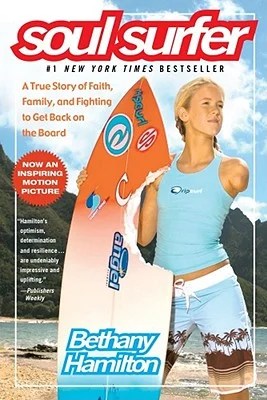
A powerful disability memoir about faith, resilience, and healing after a shark attack.
Summary:
They say Bethany Hamilton has saltwater in her veins. How else could one explain the passion that drives her to surf? How else could one explain that nothing—not even the loss of her arm—could come between her and the waves? That Halloween morning in Kauai, Hawaii, Bethany responded to the shark’s stealth attack with the calm of a girl with God on her side. Pushing pain and panic aside, she began to paddle with one arm, focusing on a single thought: “Get to the beach….” And when the first thing Bethany wanted to know after surgery was “When can I surf again?” it became clear that her spirit and determination were part of a greater story—a tale of courage and faith that this soft-spoken girl would come to share with the world.
Soul Surfer is a moving account of Bethany’s life as a young surfer, her recovery after the attack, the adjustments she’s made to her unique surfing style, her unprecedented bid for a top showing in the World Surfing Championships, and, most fundamentally, her belief in God. It is a story of girl power and spiritual grit that shows the body is no more essential to surfing—perhaps even less so—than the soul.
Review:
In many of the circles I’m in, “recovery” means recovery from addiction. But it can also mean recovery from trauma—and for many of us (studies suggest around 75%), those things are intertwined. That’s part of why memoirs about recovering from trauma resonate so deeply with me. I’m especially drawn to the ones that focus not on the traumatic event itself, but on the response to it—the healing, the resilience, the rebuilding. This is that kind of memoir.
I remember when the news broke in 2003: a teenage surfer in Hawaii had lost her arm to a shark attack. I was in high school myself, and even though I lived in Vermont (far from any waves), I immediately felt heartbroken for her, losing not just a limb, but the ability to pursue something she loved. Years later, when I learned Bethany was not only surfing again but competing professionally, I was stunned—and moved.
Bethany knows that readers will come to her story expecting to read about the shark attack, and she doesn’t shy away from it. But she also doesn’t sensationalize it. It’s described early in the book with striking clarity and calm. There’s no melodrama—just presence, perspective, and truth. It’s a credit to both her and her editorial team that this tone is preserved. Her calm focus in the water (“Get to the beach…”) is echoed in how she writes.
What carries Bethany through, more than anything, is her deep faith. She was a girl of faith before the attack, during recovery, and continues to lean on her faith throughout her life. Her story isn’t preachy, but it is grounded in that spiritual strength. Her family, too—supportive parents and brothers—play a major role, along with a strong friend group that surrounds her in the aftermath.
One of my favorite moments in the book is her description of working with a blind therapist during her recovery. That peer connection—being guided by someone who also lives with a disability—felt powerful and familiar. Coming from the world of recovery, I saw that moment as a type of peer support. Rather than being told how to heal by someone without shared experience, Bethany was supported by someone who understood. It’s a powerful reminder of why peer-based healing matters.
Bethany also takes care to honor Hawaiian culture. As a white surfer growing up in Hawaii, she shares what she’s learned about the Indigenous roots of surfing, respectfully credits Hawaiian words and traditions, and speaks with admiration about her Hawaiian coach. This kind of cultural awareness—especially in faith-based memoirs—is both rare and welcome.
Later in the memoir, she explores what it was like to become famous almost overnight. From media appearances to a Hollywood movie adaptation, Bethany shares the highs and lows with honesty—including awkward encounters with strangers and challenging public questions.
I listened to the audiobook, which includes a charming guitar riff at the end of each chapter—a small touch that added to the overall tone and kept me engaged.
Overall, this is an uplifting, engaging memoir of trauma, recovery, and spiritual grit. It doesn’t just tell the story of a shark attack. It tells how we can recover. If you’re interested in memoirs, faith-based stories of resilience, or narratives about disability and healing, this one’s worth the read.
If you found this review helpful, please consider tipping me on ko-fi, checking out my digital items in my ko-fi shop, buying one of my publications, using one of my referral or coupon codes, signing up for my free microfiction monthly newsletter, or tuning into my podcast. Thank you for your support!
4 out of 5 stars
Length: 222 pages – average but on the shorter side
Source: Library
Buy It (Amazon or Bookshop.org)
Book Review: Pink Slime by Fernanda Trías translated by Heather Cleary
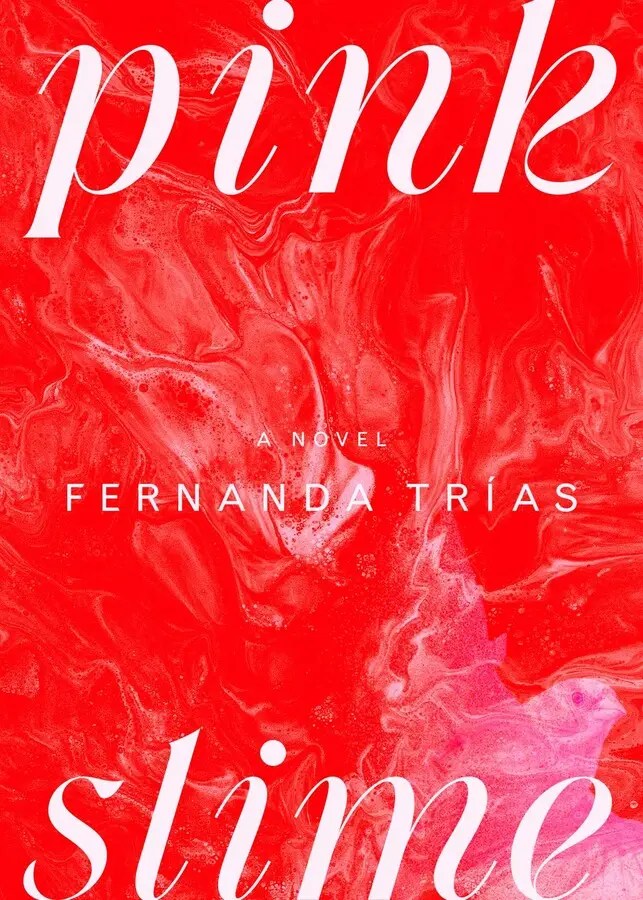
A quiet dystopian novel from a Uruguayan author about a woman navigating love, caregiving, and survival as a mysterious plague and environmental collapse unravel the world around her.
Summary:
In a city ravaged by a mysterious plague, a woman tries to understand why her world is falling apart. An algae bloom has poisoned the previously pristine air that blows in from the sea. Inland, a secretive corporation churns out the only food anyone can afford—a revolting pink paste, made of an unknown substance. In the short, desperate breaks between deadly windstorms, our narrator stubbornly tends to her few remaining with her difficult but vulnerable mother; with the ex-husband for whom she still harbors feelings; with the boy she nannies, whose parents sent him away even as terrible threats loomed. Yet as conditions outside deteriorate further, her commitment to remaining in place only grows—even if staying means being left behind.
Review:
You might be asking, “What possessed you to pick up a book about a plague, Amanda? Haven’t you seen enough of that in the last five years?” Fair question. When I saw Pink Slime on NetGalley, the description there led me to believe the focus wasn’t so much on the plague, but rather on the pink slime—something in the vein of Soylent Green. If you’re not familiar, the horror in Soylent Green centers on a disturbing twist about what people are unknowingly consuming. That’s the kind of dystopian horror I could be in the mood for.
Alas, Pink Slime isn’t really about the pink slime at all. It’s more about environmental collapse and the slow unraveling of society due to a strange, algae-driven plague.
I appreciated the way the main character’s life is quiet but emotionally complex. She still feels responsible for her recently ex-husband, who’s now in a clinic suffering from a chronic form of the plague that usually kills its victims. She visits him, possibly because she still loves him, at least a little. Her mother lives nearby in the same unnamed coastal South American city and demands occasional visits. And most pressingly, she periodically cares for a young boy with Prader-Willi Syndrome, whose wealthy parents provide food allotments but largely leave him in her care.
Her relationships with all three are emotionally layered—she provides meals, bathes, and protects them, yet often feels completely alone. It’s a quiet reminder of how caregiving can be both deeply intimate and deeply isolating. (If you’re interested in another take on post-apocalyptic isolation—this time with zombies—check out my own novel, Waiting for Daybreak, where a woman navigates survival and mental health in the midst of a very different kind of plague.)
I also found the plague itself intriguing. While the government claims it’s contagious, most cases appear to stem from exposure to toxic algae blooms, blown in by ocean winds. Residents are alerted by alarms to rush indoors and seal their windows. This unique concept allowed me to read the story from a dystopian distance rather than sending me back into pandemic fatigue.
That said, the novel’s language and structure make it a challenging read. Each chapter begins with a poem. The prose is often flowery and nonlinear, with frequent shifts in time and tense. While this might feel beautifully disorienting for some, for me it made the already slow, quiet apocalypse feel even slower. I suspect the translation was a difficult task. Though well-crafted, I imagine this book reads more naturally in its original Spanish. And while I’d love to do a comparison, my Spanish isn’t up to the task—so I’ll have to leave it to bilingual readers to weigh in. Readers more familiar with Uruguayan culture or more comfortable with poetic, nonlinear narratives may connect more deeply with the text than I did.
Diversity in the book is limited. No characters’ races are clearly described, and there are no overt LGBTQIA+ identities represented. The child with Prader-Willi Syndrome adds some disability representation, which I found compelling. It’s rare to see this condition, in which children lack a full signal and thus feel hungry all the time, represented in fiction. The narrator clearly loves and cares for the child, even while grappling with the challenges of caregiving. Readers should be aware, however, that some descriptions veer into fatphobic or ableist territory. Still, the overall portrayal felt realistic in terms of how society often responds to visible disabilities.
Overall, this is a quiet dystopian novel that offers a unique perspective on care, collapse, and isolation. It’s a challenging read on multiple levels: structurally, linguistically, and emotionally. But for readers curious about contemporary Latin American literature, especially from Uruguay, it offers insight into a distinct literary voice. Just don’t go into it expecting Soylent Green.
If you found this review helpful, please consider tipping me on ko-fi, checking out my digital items in my ko-fi shop, buying one of my publications, using one of my referral or coupon codes, signing up for my free microfiction monthly newsletter, or tuning into my podcast. Thank you for your support!
3 out of 5 stars
Length: 240 pages – average but on the shorter side
Source: NetGalley
Buy It (Amazon or Bookshop.org)
Book Review: My Body Is Not a Prayer Request: Disability Justice in the Church by Amy Kenny

A disabled Christian woman shares her experiences with ableism in the church and offers solutions and actionable steps for fostering disability justice and inclusion.
Summary:
Much of the church has forgotten that we worship a disabled God whose wounds survived resurrection, says Amy Kenny. It is time for the church to start treating disabled people as full members of the body of Christ who have much more to offer than a miraculous cure narrative and to learn from their embodied experiences. Written by a disabled Christian, this book shows that the church is missing out on the prophetic witness and blessing of disability. Kenny reflects on her experiences inside the church to expose unintentional ableism and cast a new vision for Christian communities to engage disability justice. She shows that until we cultivate church spaces where people with disabilities can fully belong, flourish, and lead, we are not valuing the diverse members of the body of Christ. Offering a unique blend of personal storytelling, fresh and compelling writing, biblical exegesis, and practical application, this book invites listeners to participate in disability justice and create a more inclusive community in church and parachurch spaces. Engaging content such as reflection questions and top-ten lists are included.
Review:
Intertwining memoir, Biblical commentary, and disability justice scholarship, the author explores disability within the US American Christian church.I picked this book up as research for the second book in my closed-door paranormal romance series, which uses werewolfism as a metaphor for disability (look for it this year!). You can grab the first book on Amazon, Bookshop.org, or other retailers, or request an advanced copy of the sequel.
The book is organized into ten chapters—seven of which start with the title “disability” and three with “disabled.” Each chapter begins with a memoir vignette and delves into the theme of the chapter. One chapter I particularly resonated with is “Disability Blessings.” It opens with the author singing a pop song during a medical procedure, before discussing the societal pressure to “fix” disabled bodies rather than support them. She then brings the conversation to the Bible, exploring the story of Jacob, who becomes disabled after wrestling with God. This disability, Kenny argues, is a sign of blessing, not something to be eradicated.
Faith, then looks like wrestling–all night long–and emerging with a healing limp….I treasure this image, because it allows me to envision my limp as part of my healing instead of something that must be cured or killed off in hopes of inspiring nondisabled people. (page 51)
She ends each chapter with bullet-point listed calls to action for disability justice. For example, in this chapter, the reader is invited to re-explore disability narratives in the Bible and view them through a lens of celebrating disabled people. After this, she features a “top ten” list of things people have actually said to her as a disabled person with each chapter on a theme. The theme of this chapter is “I know how you feel,” with the message being, of course, no one really knows how anyone else actually feels to live in their body.
The themes of the rest of the chapters are curatives, discrimination, doubters, justice, mosquitoes, lessons, disabled foundations, disabled God, and disabled church. The most controversial seems to be that of disabled God, but I found it rather inspiring. For example, the resurrected Christ, God incarnate, has the marks of the nails on his hands and a hole in his side. He invites Thomas to touch these places. Jesus was not resurrected with a “perfect” body, so why is there so much pressure on disabled Christians to “faith their way” to one?
Sometimes the author’s writing challenged me, but I viewed it as an invitation to sit with the discomfort. Why was what the author was saying making me uncomfortable? Was it really how she was saying it or was it just an entirely new perspective being brought to me? For example, I didn’t like that she didn’t disclose exactly what condition she has. But I sat with that and wondered why I felt the right to know?
As someone who is writing about disability through metaphor myself, this book encouraged me to consider my character viewing his werewolfism as a blessing, not a curse. Of course, there is nuance to this. For example, Kenny points out that of course she would prefer to not be in pain. But it’s possible to both dislike the negatives of a disability while also seeing the blessings that come with it. This is a perspective I’m striving to bring to my own book.
Overall, this is an interesting mix of memoir, Christian exegesis, and disability justice. Recommended to Christian readers looking to become better disability justice advocates and disability justice advocates looking to understand the Christian perspective.
If you found this review helpful, please consider tipping me on ko-fi, checking out my digital items available in my ko-fi shop, buying one of my publications, using one of my referral/coupon codes, or signing up for my free microfiction monthly newsletter. Thank you for your support!
4 out of 5 stars
Length: 208 pages – average but on the shorter side
Source: Library
Buy It (Amazon or Bookshop.org)
Book Review: Run by Kody Keplinger
 Summary:
Bo Dickinson is a girl with a wild reputation, a deadbeat dad, and a mama who’s not exactly sober most of the time. Everyone in town knows the Dickinsons are a bad lot, but Bo doesn’t care what anyone thinks.
Agnes Atwood has never gone on a date, never even stayed out past ten, and never broken any of her parents’ overbearing rules. Rules that are meant to protect their legally blind daughter—protect her from what, Agnes isn’t quite sure.
Despite everything, Bo and Agnes become best friends. And it’s the sort of friendship that runs truer and deeper than anything else.
So when Bo shows up in the middle of the night, with police sirens wailing in the distance, desperate to get out of town, Agnes doesn’t hesitate to take off with her. But running away and not getting caught will require stealing a car, tracking down Bo’s dad, staying ahead of the authorities, and—worst of all—confronting some ugly secrets.
Review:
This book would have wound up as a Disappointing Reads Haiku except that I actually didn’t have high expectations for it going in. The description didn’t appeal to me that much, and I had a feeling I might feel lukewarm about it. So why did I read it? I heard one of the two girls was bisexual, and hurting as I am for bisexual literature (it’s hard to find just from book descriptions), I’m willing to give most of it a shot if it sounds even moderately appealing. I do like stories of unlikely friendships and representation of less than ideal parenting situations (the realistic kind, not the fantasy kind of conveniently dead parents). I also liked the representation of not just bisexuality but also someone who is legally blind. I found the writing to be clunky, though, and the ultimate plotline to be a bit puzzling, rather than moving.
Agnes is written better than Bo. The depictions of her over-protective parents, what it is to be legally blind but not 100% blind, how others treat her, particularly in her church as an angel and not as a regular person, these were all great. The author is herself legally blind, and you can really tell. I’ve read many books about blind characters by people who were not themselves blind and the depiction was nowhere near as realistic as in this book. I think it speaks a lot to why own voices literature matters.
This realism doesn’t come through in Bo though. Bo reads like a two-dimensional caricature with the quick correction that oh hey I know I’ll make her bisexual but not a slut and that makes her seem sensitively written. Bo whose family is known in the small town as the trouble-makers, the no-goods. Bo with rumors spread about her and no-good drug-addict mom. Bo who, unlike Agnes, doesn’t speak mainstream English but mostly just in the sense that she says “ain’t” a lot. Bo who’s terrified of foster care so runs when her mom is arrested again. What bothers me the most about Bo (this may be a minor spoiler) is the book seems to think it gives her a happy ending. Like everything is ok now. But it’s clearly not. Speaking as a bisexual woman who had a less than ideal living situation in rural America in her teens, nothing about Bo strikes me as realistic. She reads as fake. She sounds fake. Some of her actions themselves are realistic but there’s no soul behind them. It might not have stuck out so badly if Agnes hadn’t been so well-written or perhaps if I wasn’t able to relate to well to who Bo was supposed to be.
One of the lines that I think demonstrates this problem that I couldn’t stop re-reading is below. It should have made me happy because Bo actually says the word “bisexual.” (Very rare in literature). But I was just irritated at how fake it all sounded.
“So … you’re all right with it, then? Me being … bisexual, I guess? I ain’t never used that word before, but … you’re all right with it?” (loc 2359)
It bothers me on two levels. First, rural people don’t just decorate their sentences with ain’t’s and double negatives. There’s more nuance to the accent than that and also Agnes and her average blue collar parents would have the same accent as Bo (they don’t). Second, I’ve never in my life heard a bisexual person speak about themselves this way, and I certainly never have. The number of times Bo asks Agnes if she’s “ok with it” (this is not the first time) is unrealistic. You know as soon as you come out if someone is “ok with it” or not and you deal and react to that. You don’t just keep wondering. You know. No amount of inexperience coming out would make you not know.
If Bo had been written as powerfully as Agnes, this would be a very different review, but since that’s not the case I have to say my dislike of the representation of Bo paired with my like of the representation of Agnes left this an average read for me, and it certainly won’t be a piece of bi literature I’ll go around recommending.
If you found this review helpful, please consider tipping me on ko-fi, checking out my digital items available in my ko-fi shop, buying one of my publications, or using one of my referral/coupon codes. Thank you for your support!
3 out of 5 stars
Length: 288 pages – average but on the shorter side
Source: Library
Book Review: A Dog Named Slugger by Leigh Brill
 Summary:
Leigh Brill recounts in her memoir her life before, during, and after her first service dog, Slugger, a golden retriever with a heart just as golden. Leigh had no idea her cerebral palsy could even possibly qualify her for a service dog until a similarly disabled fellow graduate student gave her some information. Her touching memoir tracks her journey, as well as the life of Slugger.
Review:
This was my first book borrowed from the kindle lending library, and it was such a great experience! I know people were skeptical that maybe only low-quality books would be available, but this one is absolutely stunning. I sort of wish I had bought it, just to support Leigh’s service dog efforts.
It’s difficult for me to describe what a pleasure this book was to read. It covers three areas that are a passion of mine–animals as beings worthy of rights, the experience of any type of disability and the extra difficulties that come with that, and the need for universal rights. Top this off with the fact that this is a memoir, a beautifully written one, and I was left nearly speechless. Leigh’s descriptions of learning to communicate with Slugger, Slugger’s unconditional love healing her heart, and the discrimination she faced in public areas with a service dog, they all left me feeling so connected to her. It’s impossible not to be touched by a story of how an animal changes a person’s life. But how an animal changes a disabled person’s life, a person with a disability that is less obvious than others, a person who other people have laughed at and neglected to help. It’s just yet another example of how powerful the human/animal connection can be when we let it.
Of course, this gorgeous experience wouldn’t be possible without talented writing on the part of Leigh. She manages clear, chronological story-telling without missing the opportunity to reflect on how various experiences affected and changed her. She strikes an eloquent balance between reflecting on her relationship with Slugger and talking about her experiences as a disabled person.
Overall, this is a beautiful memoir that eloquently discusses the companionship of animals, as well as the experiences of a woman with cerebral palsy. I highly recommend it to all, but especially to those with an interest in memoirs and disability studies.
5 out of 5 stars
Source: Kindle Lending Library

 Support my work with a tip or browse my shop for curated book club guides, how to guides, cross-stitch patterns, and more!


This work by Amanda Nevius is licensed under a Creative Commons Attribution-Noncommercial-No Derivative Works 3.0 United States License.
 Opinions of a Wolf