
Archive
Book Review: My Abandonment by Peter Rock
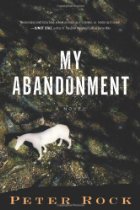 Summary:
Thirteen-year-old Caroline lives in Forest Park with her father. They have to be very quiet and careful because regular folk don’t understand why they want to live like they do. They even have to keep away from the other men that live in the park too. Caroline doesn’t mind this way of life. In fact, she prefers it. She likes being out in nature and learning everything she can from her father and from encyclopedias and library books. She even doesn’t mind fasting on Fridays. You get used to it. One day though, she makes a mistake. Will it change her and her father’s way of life forever?
Review:
What makes this book is the surprise, which I refuse to give away in my review. At first, I admit, I was a bit bored with the story. It felt like a less-interesting version of Room, only with a boy instead of a girl and the pair living set off from society willfully. When the twist came I was frankly shocked, and it set my mind reeling about the whole story. To this moment I cannot stop thinking and re-thinking about Caroline’s life. How her raising affected her and whether or not this is a bad thing.
I do think that Rock takes a bit too long to reveal the twist. I was losing patience for a solid while before it came around. Perhaps more clues should have been dropped earlier on or something to keep the reader guessing that perhaps not everything is as it seems in Caroline’s life. Additionally, the writing style in the first few chapters is an odd mix of intelligent and irritatingly simple. It is Caroline speaking, but she’s also an intelligent 13. This whole facade is dropped within a few chapters, so I see no reason to start the book out in that manner. It was a bit off-putting.
Overall, however, it does turn out to be a unique story. More importantly, it leaves the reader questioning what she thinks she knows about the world and alternative ways of living. I recommend it to fans of contemporary literature featuring a twist.
3.5 out of 5 stars
Length: 225 pages – average but on the shorter side
Source: Purchased
Buy It (Amazon or Bookshop.org)
If you found this review helpful, please consider tipping me on ko-fi, checking out my digital items available in my ko-fi shop, buying one of my publications, or using one of my referral/coupon codes. Thank you for your support!
Book Review: Hunger by Jackie Morse Kessler (Series, #1)
 Summary:
Lisabeth Lewis thought it was just a nightmare. Death coming to her when she tried to commit suicide with her mom’s antidepressants and offering to make her Famine–one of the four horsemen of the apocalypse–instead of letting her die. It’s just all way too ironic, her as Famine. After all, she’s fat. She has to watch what she eats very carefully. The Thin voice tells her all the time exactly how many calories each bit of food is and how much exercise it’ll take to burn it off. Yes. Lisabeth Lewis is fat. So why would Death assign Famine to her anyway?
Review:
When I heard the concept of this new YA series–each horseman of the apocalypse representing and dealing with a mental health issue relevant to teens–I was incredibly skeptical. Writing about mental illness in a way that teens can relate to without talking down to them as well as in a responsible manner is difficult enough without having a fantasy element present. Toss in the fantasy and I was worried this would either read like one of those old 1950s cautionary films shown in highschools or would miss dealing with the mental illness entirely. Boy was I wrong. Kessler has found such a unique, creative way to address a mental illness yet cushions it in the fantasy so that it isn’t too in your face. It’s the ideal scenario for teens reading about it, but it’s also enjoyable for adults.
The fantasy element is very tongue-in-cheek. It strongly reminds me of Buffy the Vampire Slayer in style. For instance, Death resembles a heroin-chic dead rock star, and he speaks in a mix of classic English and mocking teen speak to Lisa.
“Thou art Famine, yo,” Death said. “Time to make with the starvation.” (Location 661)
It quickly becomes apparent that Death and the Horsemen aren’t entirely what they initially seem to be. Indeed, they seem to function to get Lisa out of her own head and problems and to look at the greater world around her. She literally travels the world on her horse and sees real hunger, and it affects her. It doesn’t make her feel guilty for being anorexic, but it makes her want to be better so she will be strong enough to help others. That’s a key element of any mental illness treatment. Getting the person to see outside of themselves, and Kessler has personified it through the Four Horsemen.
She, Lisabeth Lewis, seventeen and anorexic and suicidal and uncertain of her own path–she’d done something that mattered. She’d ignored her own pain and had helped others. Maybe she wanted to live after all. (Location 2007)
Of course the non-fantastical passages dealing with Lisa’s anorexia and her friend’s bulimia are incredibly realistic. If they weren’t, the book would immediately fail as the whole thing would ring false to the teens reading it. Her anorexia is dealt with as a very real thing even as the Four Horsemen are presented as either truth or hallucinations of her starved mind. This is key. The anorexia cannot be presented as an element of fantasy.
I was concerned the ending would be too clean-cut. I won’t give any spoilers, but suffice it to say, Kessler handles the ending in a realistic, responsible manner. There are no easy solutions, but there are solutions to strive for.
Overall, Hunger takes the incredibly real problem of anorexia and presents it with a touch of fantasy to help bring the reader not only into the mind of the anorexic but also outside of herself to look at the bigger picture. It is an inspiring, fresh take on YA lit dealing with mental illness, and I highly recommend it to fans of YA lit as well as those interested in literature dealing with mental illnesses.
5 out of 5 stars
Source: Amazon

Counts For:

Book Review: Touched by an Alien by Gini Koch (Series, #1)
 Summary:
Katherine “Kitty” Katt manages to get released early from a dull day of jury duty only to find herself confronted with an angry man who sprouts wings and starts flinging knives from their tips toward everyone in the vicinity. Kitty attacks and stops him and quickly finds herself sucked into a world she was unaware existed. A world of alien refugees defending Earth and themselves from a bunch of fugly alien parasites. She soon discovers her ordinary parents are more involved in this secret world than she would ever have dreamed. On top of that, she’s increasingly finding herself falling for one of the alien hunks who announced his intentions to marry her almost immediately upon meeting her.
Review:
I received a free Kindle edition of the second book in the series, Alien Tango, last year and read it without realizing at first that it was part of a series. I immediately fell in love with the world and Kitty and decided I needed to go back and read the first entry in the series. This reverse approach definitely gave me a different perspective on the story, but it certainly didn’t make me love it any less.
What makes this series epically entertaining is well-established in this first entry. First, the paranormal element is aliens in lieu of something more widely used. Everything has the clean, secret government agency tinge to it instead of the dirty mafia feel many other paranormals elicit. The aliens are aliens, yes, but they’re also a secret government agency. Imagine Men in Black only the men in black are all aliens.
Second, Kitty Katt is a heroine who clearly epitomizes the modern woman. She can take care of herself, but that doesn’t mean she doesn’t like having a man around too. She’s smart, witty, sassy, and sexy, but she has her flaws and weak spots too. She has sex on the day she meets a man, but she’s still aware enough of social norms that she takes care to attempt to hide that fact from the majority of people around her. On the other hand, she herself doesn’t regret that act in the slightest. She so clearly reflects what it is to be a modern American woman that I can’t help but applaud Gini Koch. I hope to see more heroines like Kitty Katt in the near future.
The action itself is vastly entertaining, particularly if you enjoy scifi. The fugly parasites are imaginative, disgusting, and frightening simultaneously. The Big Bad is scary and crafty. The solution to the Big Bad is seriously entertaining. I honestly cannot say enough good things about the scifi in this book.
Overall, Gini Koch’s Kitty Katt series has not failed to leave me glued to my iPod screen yet. It’s sharp, modern, unique, and vastly entertaining. I practically throw copies at lovers of paranormal romance to read, but also highly recommend it to fans of scifi and modern heroines as well.
5 out of 5 stars
Source: Amazon

Book Review: Zoo City by Lauren Beukes
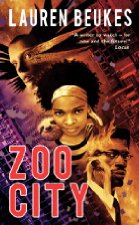 Summary:
In the near future those who’ve committed a serious wrong for which most would feel guilty are given an animal by the spiritual world. They are known as Zoos, and the animals attempt to guide them back to the straight and narrow as well as keeping the Undertow at bay. Separation is painful and almost impossible. If the animal dies, the Zoo dies. Zinzi December of Johannesburg is one of these Zoos. Her animal is a sloth, and her magical power is finding lost things. Normally she sticks to everyday objects such as keys in the sewer, but when a music producer approaches her via his assistants for help in finding a missing teen Afropop star, she bends the rules. She just may come to regret that decision.
Review:
Beukes excels at world-building, setting a vivid example of how to use showing not telling to its best, fullest extent. I was instantly swept into this fantastical version of a nation I’ve never been to, yet somehow was able to quickly decipher which elements were pure fantasy and which based on the realities of modern South Africa. The reader comes to understand how Zoos first showed up and why they exist without even really realizing she is acquiring this information.
Similarly, the character of Zinzi was a refreshing change from the typical urban fantasy female lead. While she is clever and fairly fit, she is neither abnormally strong not incapable of making bad decisions. She is a three-dimensional character with both positive and negative qualities. She is not simply the put-upon dark heroine. Her struggles are real and current, not simply in the past. At first it appears that Beukes is going to fall into the completely redeemed heroine trope, but instead Zinzi still has demons to face. She must repeatedly fall and get back up, something that rings as far more real than one epic fall followed by heroine perfection.
The one draw-back is that the plot is a bit confusing. I had to re-read the climax to fully understand exactly what had been revealed as the big secret Zinzi was discovering. Part of that was due to a couple of elements of the plot that seemed not to mesh well with the rest of it. Some of the important fantasy parts of the plot should have, perhaps, had a bit more explanation. There is a lot going on in this novel and sometimes it can be a bit overwhelming for the reader who is new not only to the fantastical elements of the tale, but to the South African cultural elements as well. Although the plot is ultimately decipherable, it is not immediately easy to follow.
Overall this is a creative, unique piece of urban fantasy that simultaneously presents a truly flawed heroine and takes the genre into a city many modern readers are not familiar with. I recommend it to fans of urban fantasy as well as fans of African literature.
4 out of 5 stars
Source: Gift

Book Review: The Knife of Never Letting Go by Patrick Ness (Series, #1)
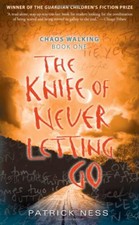 Summary:
Todd grew up on New World knowing only the constant Noise of other men’s thoughts all around him. He’s never known a world where a boy couldn’t hear his dog talk or where women weren’t all killed off by a horrible plague. Now, mere days before his 13th birthday when he will become a man, his world is turned upside down when his adoptive parents, Ben and Cillian, tell him to run. Run past the swamp. Run and find another settlement. A settlement he never knew existed on New World. He runs with his dog, Manchee, and on the way, they find a creature. A creature whose thoughts they cannot hear.
Review:
This book came recommended to me by three different friends, and I can see based on the summary why they would do so. It’s a dystopia on another planet with talking animals and a narrator who speaks in a mix of rural Americana and British English. The fact is though, I wound up not enjoying this book, and it probably would have been a “did not finish” if I’d had a print copy I could re-sell instead of an ebook I couldn’t. So what’s wrong with it?
Not the world-building. That was truly excellent. The wordle-like clouds of Noise that Todd can hear really bring that aspect of New World to life. Similarly, what the animals say are appropriate to their various evolutionary levels, from Manchee’s partial toddler-like sentences to the herd of elephants who simply say “here” over and over to keep the herd together. Every single scene on New World is easily imaginable in spite of it being quite a foreign location from the buildings to the presence of Noise.
The plot itself isn’t bad but also isn’t amazing. There’s a secret in Todd’s village that we discover at the end of the book that, frankly, did not live up to the build-up. However, that in and of itself doesn’t make me dislike a book. The plot was enough to keep me intrigued, which is the important part, even if in the end it is a bit disappointing.
After much thought I’ve realized that it’s the characters that kept me from enjoying the book, particularly Todd who is also the narrator. I just cannot relate to him at all. I’ve managed to relate to first person narrators ranging from lunatics to serial killers to girly girls to devout Catholics, but Todd is utterly unrelatable to me. He is just so incredibly fucking stupid. Not stupid in the mentally handicapped way. Stupid in the willfully ignorant way that makes me just want to slap him upside the head. For instance, he has this book the whole journey that Ben tells him will explain everything, yet he never sits down to read it. He takes forever to admit he struggles with reading and ask someone else to read it. This is information he needs, and yet he persists in willfully ignoring it. He reminds me of the kids in highschool who wouldn’t do their homework because it wasn’t “cool.” Similarly, I’m sorry, but he’s kind of a pussy, and that irks me. He is fighting not just for himself but for the safety of his dog and another person, but he refuses to man up. I found myself siding with the villains in this regard, and I’m sure that’s not what the author wanted. Similarly, I do not understand why it takes him so long to come around to appreciating Manchee even though he can hear his thoughts from day one and knows that Manchee loves him unconditionally. What the hell, Todd? How are you such an unfeeling idiot, eh? In the end, I simply could not enjoy the book, because although I felt appropriate loathing for the villains, I also loathed the hero and just could not bring myself to care about his plight. The only character I was rooting for at all was Manchee, and that’s not enough to carry a dystopian adventure.
I’m sure there are people out there who can either identify with Todd or empathize with him. For those people who can do so and also enjoy a dystopian adventure, I recommend this book. Anyone who thinks they’ll be even remotely irritated by Todd should stay far away though.
3 out of 5 stars
Source: Amazon

Movie Review: The Nightmare Never Ends (1980)
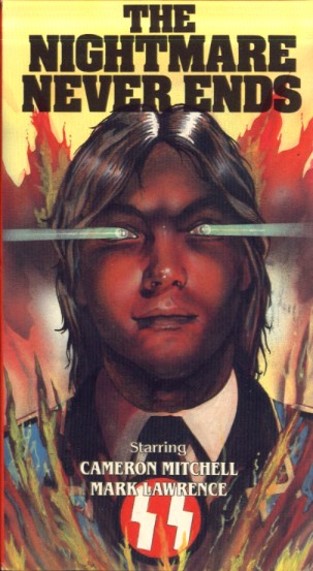 Summary:
A devout Catholic woman married to an atheist professor who has just published a book called God is Dead starts having nightmares about Nazis and dead people in the water. Meanwhile, a Jewish hunter of Nazi war criminals shows up mysteriously murdered with his face ripped off and the numbers “666” tattooed on his chest. The tenuous connections between these two soon reveal a dark presence on the planet.
Review:
This movie can best be summed up in the phrase: Satan at the Disco. Satan is not just alive and beautiful (not handsome, beautiful) but is a disco-going playboy complete with a harem of hypnotized women who actively participated in Nazi atrocities back in the day. In spite of Satan’s presence at the disco, I found myself wanting to go there. I have to say, it certainly seemed more appealing than Tequila Rain on Lansdowne Street.
This film is an odd mix of things done well and things done horribly badly. The special effects are surprisingly good for the time with certain scenes managing to surprise and/or gross out my friend and myself. Of note is one particular scene where a character’s eyeball pops out from his head. Quite gruesome for the special effects of the time. On the other hand, the actress playing the Catholic woman cannot act to save her life. She can, however, scream quite well, which is apparently what she was hired for. The plot is creative and features a fun twist at the end, but it wanders around a bit too much and is confusing for about the first 40 minutes of the film. It needed some serious editing before being filmed. Similarly, the set designers clearly had no comprehension of Jewish culture at all as they decided to show that the Jewish man’s ethnicity by randomly having a fully-loaded menorah ever-present on his nightstand. *face-palm*
In spite of these shortcomings though, the story is still unique enough that the film is enjoyable, particularly if you enjoy bad horror with a touch of classic 1970s disco. I therefore recommend it to the tiny percentage of the population for which both of those statements holds true.
3.5 out of 5 stars
Source: Gift

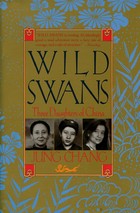
Book Review: Wild Swans: Three Daughters of China by Jung Chang
Summary:
In this memoir, Jung Chang recounts the lives of herself, her mother, and her grandmother growing up in pre-communist, revolutionary, and communist China. Mixing extensive historical facts with intensely personal remembrances, Jung Chang presents a vivid portrait of real life in China.
Review:
As an American, I was raised being told communism is bad, but not particularly taught much about it. So when Meghan blogged about this memoir, I was immediately intrigued. My history BA taught me to favor first-person accounts over academic ramblings, so a memoir of communist China from a woman’s perspective was frankly ideal.
It has been a very long time since I’ve learned so much from a memoir. Chang was extremely careful to verify the facts of the historical events surrounding her family’s various issues. Starting with her grandmother who had bound feet and was essentially sold by her family as a concubine, Change moves up through the drastic changes in China. From her mother who was part of the communist revolution to herself who ended up an ex-patriot in Britain.
My preconceived notions of communism were frankly tromped upon by this memoir. As a liberal person, I never quite understood what was so bad about communist China. Chang makes it clear throughout the book that the governing body of China never actually lived up to the communist ideals of her revolutionary parents. The passage where Chang best explains the warped version of communism enacted by Mao states:
The Cultural Revolution not only did nothing to modernize the medieval elements in China’s culture, it actually gave them political respectability. ‘Modern’ dictatorship and ancient intolerance fed on each other. Anyone who fell foul of the age-old conservative attitudes could now become a political victim. (page 413)
Thus, communism in China was and is not at all what many hippie Westerners believe and/or believed it to be.
Beyond opening up understanding of communist China, this memoir also distinctly demonstrates the human spirit under pressure. From Chang’s father who stood by his ideals at all costs to her grandmother who simply wanted everyone in her family to be comfortable and happy to neighbors with their own agendas, Chang demonstrates how an oppressive regime s bring out both the best and the worst in human nature.
This is a fascinating book both for its insider’s view of communist China as well as its female perspective on said regime. Similarly, it offers an intriguing commentary on human nature. I recommend it to anyone interested in the history of China as well as those with an interest in women’s studies or political science history.
5 out of 5 stars
Source: SwapTree (now defunct)

Book Review: Cthulhurotica an anthology published by Dagan Books
 Summary:
This collection of short stories, art, and poetry pay homage to H. P. Lovecraft’s Cthulu mythos by adding an erotic twist. Lovecraft was notoriously up-tight about sex, yet his mythos inspires erotica. Stories, poetry, and art draw inspiration from everything from Nyarlathotep, to the Old Ones, to Cthulu himself. These works of art promise spine tingles of both horror and pleasure.
Review:
I knew the instant I saw the gorgeous cover and read the title of this book that I had to read it. I am completely taken with the Cthulu mythos and always felt the only thing it was missing was some raunchy sex. This collection definitely tastefully delivers on both. You won’t find pages and pages of sex, rather the sexual encounters occur as a key plot point to the various stories, rather like well-written sex scenes in romance novels. Only with tentacles. And gore.
Naturally as with any short story collection there are tales deliciously pulled off and others less so. Thankfully, most of the short stories fall into the previous category. Three in particular–“The Fishwives of Sean Brolly”, “The Assistant from Innsmouth”, and “The Summoned”–really rocked my world as they are not only deliciously entertaining, but also offer thoughtful commentary on gender roles and relationships. In fact this is what moves the collection from just a bit of fun to thought-provoking territory, and that is always the sign of a good story.
Further, I am quite pleased to point out that the collection is very GLBTQ friendly. Multiple stories feature non-heteronormative relationships, and the GLBTQ characters are as well-rounded as the straight ones. I offer my applause to Dagan Books for its choices of stories to include.
As far as the artwork, it is all beautiful and impressive. Enough so that I’m seriously considering acquiring a paper copy to keep kicking around my apartment. The pictures suck the viewer in in the tradition of the classic piece of tentacle erotic art “The Fisherman’s Wife.”
Overall, this is a highly entertaining read. Although some of the stories fall short of others in the collection, most of them offer up chills and delights in addition to social commentary. I highly recommend it to those fond of the Lovecraft universe as well as those with an interest in gender/sexuality.
4 out of 5 stars
Source: Amazon

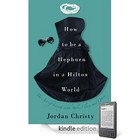
Book Review: How to Be a Hepburn in a Hilton World: The Art of Living with Style, Class, and Grace by Jordan Christy
 Summary:
This book is a call to action for intelligent American women to start addressing our current image problem. Increasingly, women are willing to give away all the self-respect our suffragette fore-mothers fought for in return for their quick 15 minutes of fame or even 15 minutes of attention from that one dude. Christy calls on women to appreciate the relatively recent freedom we now have as a gender by pursuing knowledge, class, and dignity in lieu of late-night dancing on stripper poles at clubs. The book serves not only as a call to action, but also as a how to guide, featuring chapters on classy dress for every personality, good friends, dating, body image, and more.
Review:
I admit that I largely bought this book because the women of classic cinema–from Audrey Hepburn to Katherine Hepburn–are my heroes. They exuded femininity and strength simultaneously. What’s more attractive than that? Overall, though, I think this book is a bit behind where I am in my personal growth as a woman, although that doesn’t make the message any less important.
For instance, I really didn’t need Christy to tell me to love and accept my body and eat healthily. I already do both those things. On the other hand, I know some women who would really need that chapter, so I certainly didn’t mind it being in the book. Similarly, I’m a nerd. I don’t need to be told not to be a Stupid Girl (as those hoo-ha flashing reality tv stars are often called). I suppose if I was a bit younger or raised a bit differently though I might be intrigued by this book if for no other reason than the idea that class and intelligence are actually more attractive than that kind of behavior.
The two chapters on style were actually quite useful. Fashion sense that’s practical and attractive simultaneously while reflecting my personality is something I struggle with. I found the quizzes to help you determine your style and colors that work best for you to be truly enlightening. Christy offers up sample core items for the various personality types, and I immediately wanted to acquire the ones that suited my own. It was worth reading the book for the fashion sense alone.
Overall, I appreciate a book calling on women to respect themselves and behave like intelligent human beings. To pursue the goals and passions or fore-mothers fought so hard for. I definitely think those who would benefit the most from this book might be the ones least likely to read it–like oh think of the Jersey Shore female cast members. On the other hand, everyone has moments when they get tired of the partying lifestyle. Having a book like this out there for them to grasp onto with such an attractive cover to boot is definitely a good thing. I’d recommend giving it a go if you’re an intelligent woman seeking for encouragement in your pursuit of class and goals or if you’re a partier thinking about changing your lifestyle.
3.5 out of 5 stars
Source: Amazon

Book Review: A Doll’s House by Henrik Ibsen

Summary:
It’s Christmas time and Nora is eagerly getting ready for the holidays with her husband, Torvald, their children, and their friend Dr. Rank when her old friend, Christine, shows up in town. Christine is recently widowed and is looking for work. Nora, who appears flighty and silly at first, informs Christine that she saved her husband’s life when they were first married by taking a loan from, essentially, a loan shark to pay for them to take a trip to Italy. He remains unaware of both the loan she is working on repaying and the fact that his life was ever in danger. Unfortunately, things come to a head when the man who loaned her the money, Krogstad, threatens to reveal all to her husband.
Review:
This three-act dramatic play was first performed in 1879. It explores the nature of domestic relationships in a way that still holds relatability and power today. The play accomplishes this using the same set design of the Helmer family’s living room throughout all three acts. I found myself impressed by the different feelings evoked by the identical set in each act.
Get the full text of this review by clicking here! (It is 7 paragraphs total with 604 words).
4 out of 5 stars
Length: 88 pages – novella/short nonfiction
Source: Audiobooks app for the iTouch, iPhone, and iPad.
Buy It (Amazon or Bookshop.org)
 Support my work with a tip or browse my shop for curated book club guides, how to guides, cross-stitch patterns, and more!


This work by Amanda Nevius is licensed under a Creative Commons Attribution-Noncommercial-No Derivative Works 3.0 United States License.
 Opinions of a Wolf