
Archive
Book Review: Cat Sense: How the New Feline Science Can Make You a Better Friend to Your Pet by John W.S. Bradshaw
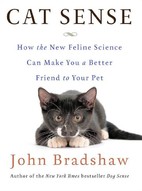 Summary:
John W.S. Bradshaw, PhD, has been studying the behavior of cats and dogs and their people for over 25 years. In this book, he seeks to present the biology behind the modern domestic cat in the hopes of helping their humans understand them better. He also presents theories about the possible future of cats and suggestions as to how to direct that the best way possible for better human/cat relationships.
Review:
I picked this book up because I wanted to understand my adorable talkative tortie fluffball, Ayla, better. I certainly learned a few things about cats that I found useful in relating to my own, but I also learned a lot about the genetics of cats (not sure I really wanted to learn that), the history of human treatment of them, and theories on their future evolution.
The book is divided into 11 chapters, which could be casually grouped into the following general themes:
- the genetic and biological history of the cat or just how did we end up with a domesticated tiger anyway
- how the domestic cat thinks and feels or yes scientists are now proving that cats actually have feelings although maybe not quite to the extent that their most loving owners believe
- how cats relate to each other or cats hate other cats except for random kittens that are dropped into their nest or possibly other females from their own family
- how cats relate to people or cats think you are a giant mother cat who is possibly superior (possibly)
- how cats relate to wildlife or no cats aren’t destroying your precious birds you overly upset cat-haters (um except for possibly the wildlife on small islands but the invasive rats are actually worse and cats hunt them so there)
- the potential future of the cat or for the love of god stop spaying and neutering the bestest most loving kitties in the world and only allowing the anti-social ferals to breed.
Obviously this is a lot of ground, so I’m only going to touch on each one briefly. First though, just let me mention that the author is both a renowned expert in this science (the science of cats), and his book also features extensive references. This is thus a trustworthy source, however, potential readers should be aware that the author (just as every author) has biases, and Bradshaw’s are fairly clear in the book. The man clearly adores cats, and thus sometimes may sway a bit to the side of positive representations of cats and optimistic beliefs about the extent of their feelings and internal lives. Now, I love cats too, so that didn’t bother me in the least, but a reader just looking at the science should note this bias. Additionally, some of the studies he cites for his findings were quite small (under 100 participants, in one case, only 8 cats were tested). Studies this small show definite room for further research. Additionally, all of the cat studies he himself has conducted were in Great Britain, so cultural biases and differences in how cats and people interact should be considered when thinking about how he analyzes cat/human interaction and behavior.
The section about the history of the domestication of the cat and the genetics of the cat is, honestly, a bit of a heavy place to start for the average person just looking to get along with their cat better. There are sentences that go far more in-depth into the genetics of a cat than I really ever cared to know. Given that this book is marketed toward the average cat owner, it may have been better to dial down the genetic information just a bit to make it easier and also speedier to read in the lead-in into the more modernly relevant information. The most interesting things I learned in this section were that domestication of the cat happened in multiple different times and places, meaning multiple cultures saw the potential of the cat and domesticated them (loc 267). There is Egyptian temple art of cats sitting in baskets (loc 634), something I found to be pretty adorable. The genetics of just how we wind up with torties, which I admit to only being interested in because my own cat is a tortie:
If a cat carries one orange and one brown version of the gene, then both appear in the coat, in random patches: in one part of the skin, the chromosome with the orange version has been switched on, and in another it is it eh brown-black pattern that “wins,” producing a tortoiseshell-tabby (or “torbie”) cat. (loc 772)
If you found that quote a bit tedious to read, just bare in mind that that is the most interesting to me of the genetics information in this section. The cat is a “hypercarnivore” (loc 1176), meaning that unlike the dog, it has lost the ability to live on plants. Cats, unlike dogs, must eat meat. I also finally learned why I shouldn’t worry too much if my cat doesn’t drink very much water:
Cats do have two notable nutritional advantages over humans. First, their kidneys are very efficient, as expected for an animal whose ancestors lived on the edge of deserts, and many cats drink little water, getting all the moisture they need from the meat they eat. Second, cats do not require vitamin C. Taken together, these make cats well suited to shipboard life: they don’t compete with sailors for precious drinking water, getting all they need from the mice they catch, and they are not afflicted by scurvy. (loc 1192)
The next four sections often blurred together, since how a cat thinks and feels directly relates to how cats relate to each other, humans, and wildlife.
Cats can develop a cat form of PTSD if they are abandoned by their mothers early in life:
Kittens that are abandoned by their mothers and are then hand-raised can become excessively attention seeking toward their first owners, though some subsequently seem to “grow out of” this. Based on what we know about other mammals in similar situations, we can assume that after the mother’s departure, the kittens’ brains endure high levels of stress hormones. These consistently high levels cause permanent changes in their developing brains and stress hormone systems, such that they may overreact to unsettling events later in life. (loc 1371)
I found this particularly interesting, since I know my cat was abandoned by her first owners in their apartment when they moved away, and it took weeks for anyone to find her. I’ve often suspected my cat has some form of kitty PTSD, and I think this scientific information would support that, although the specific type of abandonment was different.
Cats can’t focus on anything closer than a foot from their nose. Your cat is not being stupid when it can’t spot a piece of food on the floor, she really can’t see it. It helps to move it around or tap the floor next to it, to get the cat to sniff that area. (loc 1644)
This section also addresses why cats are harder to train than dogs:
Cats are much more difficult to train than dogs are for at least three reasons. First, their behavior shows less intrinsic variety than that of dogs, so there is less raw material with which to work….Second, and perhaps most important, cats are less naturally attentive toward people than dogs are….Third, although dogs are powerfully rewarded by simple physical contact from their owner, few cats are. (loc 2086)
It goes on to explain how to do basic training with your cat, adapted to cats’ specific needs, primarily using a clicker (a device that makes a noise).
Feral cats have shown us that cat society is a matriarchy, with the females of the family sticking together and the toms getting booted out to go roam and make more kittens, although there are certain scenarios in which toms are tolerated living in close proximity, generally in a situation where the tom is valuable for protection of the kittens if the space is at a premium. (loc 2426)
In spite of the ability of feral cats to live in matriarchies, cats are not well-suited for a bunch of unrelated and gender-mixed cats living in one small space. Cats generally don’t like most other cats, and Bradshaw talks some about how forcing cats to live with other cats they are not related to or don’t particularly like can put undue stress on the cats.
Cats appear to be incapable of sustaining a large number of friendly relationships, even when all their neighbors are close relatives. (loc 2438)
However, the bond the cat feels with its immediate family is strong, and scientists believe they extend that bond to their owners, who they perceive of as being a sort of mother cat. (loc 3080) This section also offers potential reasons for why a cat may purr or lick their owner, but there is no definitive scientific answer yet. It is also noted that cat personalities are the result of a mix of nature and nurture, and affectionate owners tend to have affectionate cats but whether they pick out affectionate cats or cats become affectionate in response to the owner is uncertain.
Bradshaw then addresses the concern some groups have that domestic cats are hurting native wildlife populations, particularly birds. It’s clear that Bradshaw believes that this is mostly a bunch of hokum created by cat-haters as a way to get rid of cats. This is potentially true, and Bradshaw does cite some good studies about the actual impact cats have on wildlife (very small, and in some cases, helpful since they eat the invasive predator of a native species). However, it is difficult to believe everything he cites, since his bias in favor of cats is so clear, and I am saying this as a cat-lover myself. I would find it more useful for his evidence to be presented in a more balanced fashion, as I would then feel more confident citing it to people who are concerned about cat impact on wildlife.
Finally, Bradshaw looks at the potential future of the cat. He is clearly quite concerned that our current method of neutering pet cats will hurt future cats.
Because neutering inevitably targets those cats that are being best cared for, it must logically hand the reproductive advantage to those cats that are least attached to people, many of which are genetically predisposed to remain unsocialized. We must consider the long-term effects of neutering carefully: for example, it might be better for the cats of the future as a whole if neutering programs were targeted more at ferals, which are both the unfriendliest cats and also those most likely to damage wildlife populations. (loc 4039)
I found this argument to be quite moving and logical. Bradshaw suggests both that owners might let their pet cats breed once before neutering/spaying them and also that breeders could begin to work at breeding pet cats with an eye on personality rather than looks. He also suggests focusing spay/neuter programs on feral populations. This is definitely food for thought, and I certainly will consider letting a future pet cat have a litter of kittens.
Bradshaw ends his book with this statement:
Cats need our understanding–both as individual animals that need our help to adjust to our ever-increasing demands, and also as a species that is still in transition between the wild and the truly domestic. If we can agree to support them in both these ways, cats will be assured a future in which they are not only popular and populous, but are also more relaxed, and affectionate, than they are today. (loc 4072)
A good summary of the overall themes of the book.
Overall, this book will definitely teach cat owners and lovers some new things both about the science of cats and cat behaviors. Sometimes the science can veer a bit too in-depth for the audience of the book, and also sometimes the author’s love of cats can make him seem a bit biased in favor of them. However, readers who are willing to skim over the science that they are not so into will still be able to gleam lots of information from this book that will be directly helpful to them with their pet cats. Also, this audience probably won’t mind the love of cats bias in the science. ;-)
If you found this review helpful, please consider tipping me on ko-fi, checking out my digital items available in my ko-fi shop, buying one of my publications, or using one of my referral/coupon codes. Thank you for your support!
4 out of 5 stars
Length: 307 pages – average but on the longer side
Source: NetGalley

Book Review: Cycle of the Werewolf by Stephen King
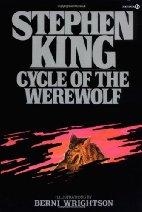 Summary:
Something evil is haunting the small town of Tarker Mills, Maine. Every month another person is found dead, brutally ripped apart. Can they solve what is haunting their town before the terror consumes them all?
Review:
I picked this up in a used book basement because I’m generally trying to read most everything Stephen King has written, and this particular print book was beautifully illustrated. Each chapter (or month…or murder) had at least one full-color illustration, and that just spoke to me. The story itself wound up being rather ho-hum to me, but part of that may be due to the fact that I’m rather hard to shock these days.
My favorite part of the book is that it opens with a note from King stating that astute readers will notice that the full moon couldn’t possibly have fallen on all of the big holidays he has it fall on, but that he’s taken artistic license to make it do so. The passage reads like it has a wink at the end, and I like that King assertively addresses what could bother some readers or be a controversy and acknowledges that his facts are wrong, but he did it for artistic reasons. Personally, I’m not a fan of books that take artistic licenses, but if you’re going to, this is the way to do it. Acknowledge it (don’t hide from it) and move on.
This feels like an early Stephen King book. The usual small town New England stock characters are there, but they’re not fully fleshed-out. There’s even a spunky kid in a wheelchair who reminds me of an earlier version of Susannah from The Dark Tower series (the book about Susannah was first published in 2004). The stock, rather two-dimensional characters work in this book, since the storytelling approach is basically one of folklore. We don’t need to know much more about these characters than we see on the surface, and that’s fine.
Each chapter is a different month in the year, and they sort of feel like connected short stories. By the last half of the year, the reader starts to know what’s going on, and the “short stories” become even more connected.
Fans of an underdog hero will enjoy who ends up battling the werewolf plaguing the town, as will those who enjoy seeing the trope of a trusted citizen being someone who should not be trusted. (That’s as much as I can say without being too spoilery).
This all sounds rather positive, so why did I feel ho-hum about it? The tension building didn’t work for me. Nothing that happened really scared me. The character in the wheelchair feels like a less bad-ass version of Susannah, and what I would want would be Susannah. This is perhaps unfair of me to say, since Susannah came about further down the line, but I do think it points to how King’s writing improved with time (as does everyone’s). I also just found the villain to be rather expected and cliche, although I’m sure it wasn’t when the book first came out. In general, this book just doesn’t feel like it aged particularly well, especially when compared to other older King books.
Overall, if a reader is looking for a quick, beautifully illustrated folklore style retelling of a werewolf story, they will enjoy this book. Those looking for high levels of tension or gore or in-depth character development will want to give it a pass.
If you found this review helpful, please consider tipping me on ko-fi, checking out my digital items available in my ko-fi shop, buying one of my publications, or using one of my referral/coupon codes. Thank you for your support!
3 out of 5 stars
Length: 128 pages – novella
Source: Brookline Booksmith, used books basement

Book Review: Altered Carbon by Richard K. Morgan (Series, #1) (Audiobook narrated by Todd McLaren)
 Summary:
In the future, people’s memories are backed up on sticks like external hard-drives, and when someone dies, they can just be put into a new body or resleeved. Criminals are put into the brain bank for a set period of time to serve their “prison” sentence before being resleeved. Kovacs is an ex-UN envoy but he’s also a criminal, and he wakes up one day in a new sleeve on Earth, not his home planet, before his sentence is up. A rich myth–someone who has been alive for centuries in the same body, due to their wealth–has been killed. After being resleeved, the local police told him it was suicide, but he doesn’t believe them. So he’s hired Kovacs to figure it out for him. If he solves the mystery, he’ll get sent back to his home planet and get a sleeve of his choice without serving any further sentence. If he doesn’t, he’ll serve out the rest of his sentence and get resleeved on Earth, far from home. Kovacs has no choice but to try to figure out who would waste their time killing a man who has endless sleeves to burn?
Review:
I love a good noir, and I liked the futuristic scifi sound of this one (the most famous futuristic scifi noir is Blade Runner/Do Androids Dream of Electric Sheep, in case you were wondering). Unfortunately, in spite of the very cool resleeving concept, I was left quite bored by the plot.
The setting and ideas for this future scifi world are fantastic. Earth has colonized various planets, and each planet was colonized by different mixes of cultures. Kovacs’ planet was colonized by the Japanese and Nordic cultures. When he was a UN envoy he fought on one colonized by Middle East cultures. So each planet has its own distinct culture, and, Kovacs at least, clearly feels that Earth is quite backwards. For instance, Earth has a cadre of people who believe that resleeving is unethical and sign documents saying they are ethically opposed to being resleeved. It sounds as if no other planets have that faction. Similarly, it sounds as if only Earth has people wealthy enough to become myths–people who can afford to be resleeved in new clones of their own bodies they grow and keep safe, as well as back up their brains at frequent intervals into a cloud. So Kovacs has some immediate culture shock, which is interesting to see.
Also, obviously, the idea of people’s brains being kept on usb sticks (basically) that you can just stick into the brain stem of another body and what implications that would have is just brilliant. It’s cool to read about, and it’s an interesting take on longevity. I also particularly appreciated that people *can* still die in various ways. For instance, if you shoot someone where this brain stick goes in, you ruin their stick and they therefore can’t be downloaded into a new body. This whole setting gives both a cool futuristic vibe and a complex environment for solving murders in. It’s hard to solve for murders when people can just be rebooted, basically.
There is a lot of realistic diversity in the book. The lead cop on the assignment is a Latina woman. Takeshi Kovacs is clearly intended to be biracial (white and Japanese). There is a big bad (who I won’t reveal) who is an Asian woman. The only other major characters are the myth and his wife, both of whom are white. However, the surrounding and minor characters all demonstrate a clear melting pot of race and creed. I appreciate it when futuristic scifi is realistic about the fact that all races and cultures and creeds would most likely be present.
One thing I do want to note, although I do think the book tries to address the obvious issue of what if a person gets resleeved into a race or gender different from their own, I’m not sure it was successful. Takeshi immediately notes that he is in a Caucasian sleeve, and that irritates him some. He continues to act like his own culture and exhibits a preference for the food of his home world but he doesn’t seem to be too bothered by being in someone else’s body. (Criminals get resleeved into other criminals at random. That is part of the punishment…not getting your own body back and knowing yours is out there being used by someone else). It is explained that Takeshi is able to deal with the dysphoria because he was trained for it in the UN Envoy but I do wish a bit more explanation was given to this issue. For instance, is being resleeved into a different race usually ok for the person? Or is it difficult just like every aspect of being resleeved into a new body is difficult? Does it vary person to person? This was unclear, largely because Takeshi’s Envoy training makes it a bit of a non-issue.
Similary, at one point a male character is resleeved into a female body, specifically because sleeving across genders is perceived of as an act of torture in this world (it is a bit unclear to me if this actually happened or if it’s virtual reality, but it is made very clear that virtual reality feels exactly the same as reality to the person in question, so the fact remains). I thought this was interesting and a nice send-up to trans issues. However, in the next breath, the character mentions that he can tell he’s in a woman’s body because he FEELS THINGS MORE EMOTIONALLY. *sighs* (I would provide you with a direct quote, but I don’t always manage to successfully bookmark passages in audiobooks, and this was one of those times). I get it that this passage is supposed to be a complement to women. The man in question talks at length about how women feel things so much more and isn’t that nice and what a burden it must be and men should understand it more. Yes, ok, fine, the character is being nice about it, but it’s still sexist. The character could have had the same experience and limited to just this sleeve without making it about all women, but no. He mentions that he’s been sleeved in women’s bodies before and this is how it always is.
On a related note, I just want to mention for anyone who might be triggered by such things that there is a rather graphic scene in which the same character inside a woman’s body is raped by torturers with a rod of hot iron. Just once I would like to get through a noir book without someone being raped, just saying. (If you appreciate warnings for this type of content, see my dedicated page here).
So the characters are interesting and diverse, and the scifi world is creative, but the plot is a bit ho-hum. Part of the problem is that I just honestly cannot make myself care about the rich myth and his problem. The second issue comes up though when Takeshi ends up having a problem that intertwines with the myth’s, and I just can’t care about his either, largely because it revolves around protecting someone who the reader meets for about two minutes of audiobook, so I’m imagining that’s only a few pages of the book. It’s basically big money all coming up against each other, and that’s a plot I personally struggle to really be interested in unless there’s at least one character I can really root for, and I just couldn’t root for any of these. I also think that it didn’t help that compared to how creative the world-building was, the plot is very average. So I was given high expectations with the world-building in the first few pages only to have a been there, seen that, reaction to the plot.
What lifted the book up from 3 stars to 4 for me was actually the audiobook narration. Todd McLaren does an awesome job of producing many different voices and accents for all the different characters, helping to keep complex scenes straight. He also has a great noir detective vibe to his voice when he speaks for Takeshi. I will note, though, that I did have to speed the audiobook up to 1.25x to match my listening speed. But I tend to listen fast, so other readers would probably prefer the slower speed.
Overall, scifi readers who also enjoy noir will most likely still enjoy the read, in spite of a seen it before plot, because the world-building is unique and creative. I would recommend that readers who enjoy both print and audiobook check out the audiobook, as I feel it elevates the story.
If you found this review helpful, please consider tipping me on ko-fi, checking out my digital items available in my ko-fi shop, buying one of my publications, or using one of my referral/coupon codes. Thank you for your support!
4 out of 5 stars
Length: 526 pages – chunkster
Source: Audible

Book Review: The Years of Rice and Salt by Kim Stanley Robinson
 Summary:
Imagine a world where the Black Death of the 14th century wiped out the majority of the European population, rather than one-third of it. This is the world Robinson imagines, one where Buddhism and Islam rise as the two major religions of the world (with no religion a close third). See the history of the world through the eyes of two souls who keep reincarnating in different cultures, struggling to better both themselves and their world that could easily have been ours.
Review:
I originally picked this book up because I have long held a fascination with the various religions of the world (I was actually a Religious Studies minor in undergrad). The “what if” at the center of the book seemed like a great starting place to me. Indeed, what if most of the followers of currently largest faith (Christianity, source) had died off? What things would change and what would have stayed the same? Robinson chooses to tell this tale through reincarnating souls, which sometimes gives us a lot of access to these changes but other times leaves the reader feeling like they got just a passing breath of a culture and a century.
I didn’t realize going into this that Robinson had chosen to tell this story through the eyes of the same souls reincarnating over and over again. It’s an interesting choice that I am uncertain about as it lends a sort of “this much we know” to the spiritual side of the story. We, the readers, know that the souls of people in this world definitely exist, they go to the bardo to await judgment and reincarnation. The bardo they go to appears to reflect whatever faith they had (Muslims have their own, Buddhists have their own, etc…) The idea is also put out there that each of the faiths is a different path to the same end (enlightenment). Much as I may personally believe this idea, I’m not sure how I feel about this particular story being so mythology heavy. The History BA in me very much wanted to see a more analytical power-structure play-out, which we do get some of, but not as much as we get of the how to better our souls question. I suppose what I am trying to say is that, although I was anticipating a book that was scholarly with a dash of spiritual, what I got instead was the reverse. That’s not a bad thing, and I still enjoyed it, but it definitely wasn’t what I was expecting, and I do wonder how the story may have played out differently if Robinson wasn’t so tied to the same souls over and over again.
One aspect of the same souls reincarnating that niggled at me a bit was that throughout history, no matter where they were born (or what gender or species), their names always started with the same letters. So a character whose first name in the first incarnation started with the letter K always had a name that started with the letter K. It got so I could predict who was who and, to a certain extent, how they would act in each incarnation. On the one hand, it was a cool idea, although highly unlikely someone’s name would start with the same letter throughout time and cultures and languages. On the other hand, it distracted me from the more interesting story of the different world developing with the rise of different cultures than actually appeared in our own history.
Similarly, I think there is far too much story and richness in this idea and timeline to limit it to one book. There were multiple incarnations that I really wanted to know more of. I wanted to know the whole story of these lives and this place. Instead, the reader gets a quick glimpse into one time in their lives, and then we are left jumping ahead to the bardo to find out how they died and oh here comes the next incarnation. Perhaps the point was to make the reader feel as if each life is only a blink, but the scholar in me was left wanting to know so much more about every area and life the book briefly visited. It was like getting only a small morsel of each chocolate in a box of delicious chocolates, instead of getting to savor them all over a long period of time.
All of this said, let me now discuss the parts of the book I really enjoyed (and would have liked to have seen more of). My favorite is how Robinson reimagined the Americas. The same essential problem of real history still exists for the Native Americans even with the change of the Christians mostly dying off. Mainly, they lacked easily sourced heavy metals to make higher-tech weapons and they were susceptible to all of the germs European explorers brought with them. (I learned about this in my classes in US History for my BA, but my professors told me this whole idea is also presented in the book Guns, Germs, and Steel
Robinson does a much better job painting Islam and Buddhism with a nuanced brush. Since their cultures dominate the book, this means most of the book is much more gray area, rather than presenting everything as black and white. One element that demonstrates this, is how Robinson handles Islam and women. All sides of the arguments about Islam and women are presented here. There are incarnations of the souls that are Muslim women who argue strongly that the men are misinterpreting the Quran, what Mohammed said, etc… There are of course other incarnations that say no, the extreme fundamentalism is the right interpretation. Through showing Islam through many different lenses in a world that is different from our own, Robinson demonstrates how religion is so incredibly open to interpretation, and good and bad people can shape it to their own agendas. One passage that I think demonstrates how well Robinson walks this line is a conversation some characters have about the women wearing the veil or not:
The veil has a kind of power, in certain situations. All such signs stand for other things; they are sentences spoken in matter. The hijab can say to strangers, ‘I am Islamic and in solidarity with my men, against you and all the world.’ To Islamic men it can say, ‘I will play this foolish game, this fantasy of yours, but only if in return you do everything I tell you to.’ For some men this trade, this capitulation to love, is a kind of release from the craziness of being a man. So the veil can be like putting on a magician queen’s cape…. Or it can be like putting on a slave’s collar, certainly. (page 592)
If this passage appeals to you in how it presents the various nuances and gray areas of religion and culture, then a lot of this book will appeal to you.
One final issue with the book I will note that may turn off some readers is that out of all the many incarnations, only two are in Native American bodies (and then, they are both Native Americans in North America. South America is completely left out for incarnations, although incarnations visit there). Similarly, there are no incarnations to Australia, New Zealand, Central America, or any island nation anywhere (Caribbean, Pacific Islands, United Kingdom, Iceland). There is only one incarnation where one of the souls is in an African, and that African is a slave on a Chinese slave ship who then goes to China (we thus spend very little time in Africa, just at the beginning on the slave ship). One character in an incarnation mentions that in the past she went to Africa but the reader does not see her time there. I definitely think that it’s a weakness that so many areas of the world are left out. For instance, I have zero idea what happened in Australia now that it clearly was never a penal colony of the UK (since the UK never existed). Similarly, it seems Africa would be very different with all the changes in global power, and yet the only passing mention we get of modern Africa in the later incarnations is that one of the characters visits there to fight against Female Genital Mutliation (FGM). If so much else changed, why not in Africa?
I know it may seem like I listed out a lot of issues, but it is a very long book that tackles a huge task. My review is almost as if I was reviewing an entire series in one fell swoop. Each individual part had issues, as did some of the overarching ideas, but I mostly really did enjoy reading it. It’s a fascinating thought experiment that wasn’t as well executed as it could have been, but parts of it were brilliant. I also enjoyed the feminist themes throughout. Men and women are both just souls, reincarnating into a woman is not a punishment. In fact, neither gender nor race is a punishment for previous incarnations, just species. Similarly, the more a society advances the more equal their genders and races are. There is a lot of thought given to what it means to be a woman in various areas of the world, which could easily have been passed over or not handled well.
Overall, this is a book that tackles a huge philosophical question in a fantastical way. It is a large task that probably would have been better suited to a series to fully flesh-out the world, the lives, and the nuances in both. Readers interested in spiritual questions with a tendency to view all religions as different paths to the same enlightenment and a curiosity about how the world might be different with different religions in the lead will be most suited to the book. Readers interested in a more thorough exploration of an alternate history will most likely be disappointed by the reincarnation aspect and the brief time spent in each time period and culture.
If you found this review helpful, please consider tipping me on ko-fi, checking out my digital items available in my ko-fi shop, buying one of my publications, or using one of my referral/coupon codes. Thank you for your support!
4 out of 5 stars
Length: 763 pages – chunkster
Source: PaperBackSwap

Counts For:
Bottom of TBR Pile Challenge
and

Book Review: An Artificial Night by Seanan McGuire (Series, #3)
 Summary:
When two of Toby’s good friends’ children go missing from their own bedroom and another won’t wake up from being asleep, they call Toby in immediately to look for them. Soon the King of Cats reports that some of his kingdom’s children are missing too, and Quentin’s human girlfriend disappears as well. It quickly becomes clear that it’s time for the 100 year cycle of Blind Michael’s Hunt. Blind Michael, the Luidaeg’s brother, is incredibly powerful, and only three roads lead to his realm. Toby can only take each road once. That means she has only three chances to save the children and stop the Hunt.
Review:
I picked this book up immediately after finishing the second in the series and, oh man, it did not disappoint. This book presents an old school Brothers Grimm style blood-curdling, toes-curling fairy tale, peppered with characters we’ve already come to know and love.
Blind Michael is scary. What he does to the children is really scary. He turns the fae children into “Riders” monstrous twists on real fae features. He turns the human children into their horses for them to ride. Everything about Blind Michael and his twisted land scared the crap out of me, and I don’t scare easily. It was exactly the sort of scare I used to seek out as a child from the original Grimm Fairy Tales (the ones that are not cleaned up). This book goes a lot darker than the first two, which were already dark, and it went there in such a different way from the first two plots. The first two plots were entirely about murder, here we have someone stealing children from their beds. It’s a completely different type of scare and different sort of mystery for Toby to have to figure out.
The plot tells more than just this one mystery, though, it also brings out some information that is key to the overarching plot of the series. I really enjoyed how smoothly this was worked together, and I also must say I didn’t predict at all where it was going.
There are basically two themes in the book, one I appreciated and the other I didn’t particularly agree with. Let’s start with the one I didn’t agree with.
There’s a theme in the book that children on some level must deal with and be held responsible for the choices of their parents. Toby tries to pretend otherwise, but that doesn’t work out so well for her.
Blood will tell. I tried to pretend it wouldn’t that we could change, but blood always tells. We carry the burdens of our parents. (loc 312)
It basically reads as the idea that you can’t run away from your family or from your blood, your nature. Personally, I don’t like that frame of thought. You can leave your family of birth and not have to be held responsible for them. You are not your parents. You are your own person. You are not responsible for what your parents do after you leave home. So this theme didn’t sit well with me. Other readers who agree with this theme will obviously enjoy it more.
The other theme was one I was quite happy to see so directly addressed in an urban fantasy and that is of suicidal ideation. There are many different ways that suicidal ideation can manifest, but with Toby her symptoms are that she firmly believes her death is imminent and is planning for it, and she repeatedly throws herself into risk situations because she doesn’t care if she dies. Suicidal ideation essentially means that a person is lacking self-preservation instincts and is ok with dying. They won’t actually commit suicide but they will put themselves into dangerous situations because part of them does want to die. So they might run across a street without looking, go walking alone at 2am in a dangerous neighborhood, etc… Toby’s depression from the first two books has grown so much that she is now at this point, and people have started calling her out on it. Seeing her realize that she’s, in layman’s terms, got a death wish, is interesting and well-done. What I appreciate most about it is how directly it is addressed.
Because, dear October, you’re the most passively suicidal person I’ve ever met, and that’s saying something. You’ll never open your wrists, but you’ll run head-first into hell. You’ll have good reasons. You’ll have great reasons, even. And part of you will be praying that you won’t come out again. (loc 3876)
Overall, this entry in the series brings back the characters readers have come to love and puts them into a new mystery much more terrifying than the first two. Two strong themes in the book include nature/nurture/ties to parents and dealing with suicidal ideation. Fans of the series won’t be disappointed. This is a roller coaster ride of emotions and peril.
If you found this review helpful, please consider tipping me on ko-fi, checking out my digital items available in my ko-fi shop, buying one of my publications, or using one of my referral/coupon codes. Thank you for your support!
4 out of 5 stars
Length: 368 pages – average but on the longer side
Source: Library

Previous Books in Series:
Rosemary and Rue, review
A Local Habitation, review
Counts For:
Book Review: A Local Habitation by Seanan McGuire (Series, #2)
 Summary:
Toby Daye, changeling, private detective, and knight to the knowe of the powerful Sylvester, feels like she has her feet back under her after returning to human form after 14 years as a fish and also solving the murder of a powerful fae. When her liege requests she go investigate why he hasn’t heard from his niece in a while, she expects it to be a quick visit, although possibly a bit irritating since she has to bring along young Quentin, a teenaged full-blooded Daoine Sidhe fae. Sylvester’s niece just so happens to own the only fae tech company, and she claims that she has indeed been calling her uncle. But when an employee turns up dead and Toby finds out there have been two mysterious deaths previously, she realizes there’s more here than immediately meets the eye, particularly since she can’t read anything from the blood of the dead.
Review:
I enjoyed the first book in this urban fantasy series about a changeling investigator so much that I immediately checked out the second ebook from the Boston Public Library on my kindle. (If you have an ereader, definitely check out if your local public library will let you do this. It saves me so much money!) This book brought me right back into the wonderfully built world of Toby and offered up a new murder mystery even more mysterious than the first.
Readers of the first book know that Toby’s special fae power is the ability to read a person’s memories from tasting their blood. I found it startling and intriguing that McGuire immediately took this power away from Toby in the second book. There’s nothing to read in the victims’ blood. Why is that? It’s a plot I may have expected in the fourth or fifth book, but not so soon. From a writing perspective, it’s bold to take away your hero’s superpower in only the second book in the series. And it works. There’s ultimately a logical explanation for why the blood is telling Toby nothing (and no, it’s not Toby’s fault), so it never feels like a gimmick. I think that is what I like most about this series. The author utilizes techniques that could easily turn into a gimmick but she always keeps it from actually being a gimmick so it instead is utterly engaging and enthralling.
The fae world is also clearly much larger than we originally saw in the first book. The fae have a tech company so that they can rework modern technology to work in the fae knowes. On top of that, we also meet many more races of fae, as well as ways for the races we already know to exist and appear. For instance, Sylvester’s niece, January, has a daughter. But her daughter is in fact a tree fairy. Tree fairies are normally tied to a tree or a forest, so how is she in this tech building? January tied her branch to the computer server after her forest was destroyed, and she was able to keep living after adapting into the server and treating the server as a forest. Very cool idea, and it works beautifully in the story.
Even though I was basically able to predict whodunnit, I couldn’t figure out why or how, so the plot still satisfied me as I waited for Toby to figure all of that out.
One thing that kind of disappointed me in the book is that Toby meets a type of fae who can emit a magical scent that makes the person smelling it think they are massively attracted to him and thus sleep with him. They then become obsessed with this type of fairy, and the fae feeds off of the obsession. I was glad to see the book treat this as rape (basically drugging someone into sleeping with you) but I was also disappointed to see our heroine have to face off against an attempted rape. As I said in my review of the previous book, I get really tired of urban fantasy heroines being threatened constantly by rape. My hope is that this was a one-off type thing to introduce the concept of this type of fae rather than the new normal for the series.
Toby herself and the worldbuilding continue to be my two favorite aspects of the series. The plots are good, but I’d read almost anything plot-wise to visit Toby and her world again.
The essence of Toby and why I love her is evident in this quote:
Long dresses weren’t designed for walking in the woods. My mother could’ve made the walk without stumbling; she fits into the world that well, even insane. That’s what it means to be a pureblood. I stumble and fall, and I always get up and keep going. That’s what it means to be a changeling. (page 371)
Picking a quote to show why I love the worldbuilding so much is a bit harder, but here’s a particular favorite that really punched a visual of what this world is like home for me. In this passage, Toby is explaining that she and her mother are Daoine Sidhe and can see memories through blood:
My mother was so strong she could taste the death of plants. She could never stomach maple syrup; she said it tasted like trees screaming. (page 91)
As a born and raised Vermonter who grew up harvesting maple syrup, that line was a bit of a gut punch. An eloquent one.
Overall, readers of the first entry in the series will be pleased with this second outing. Toby continues to be a strong character set in a fascinating world. The mystery plot is another murder, but it is a series of murders and has a very different solving pattern and outcome than the first. Recommended to fans of the first book to continue on to the second as soon as they can.
If you found this review helpful, please consider tipping me on ko-fi, checking out my digital items available in my ko-fi shop, buying one of my publications, or using one of my referral/coupon codes. Thank you for your support!
4 out of 5 stars
Length: 390 pages – average but on the longer side
Source: Library

Previous Books in Series:
Rosemary and Rue, review
Counts For:
Book Review: Rewinder by Brett Battles (Audiobook narrated by Vikas Adam)
 Summary:
It’s 2015, and Denny Younger of New Cardiff, California, is a caste of 8. He loves reading and studying but he knows he will probably end up working in the shops just like his father. But when he takes his placement test, he’s offered a position that he is promised is better, but he can’t know anything about it until he starts working, and he must leave his family behind. Denny’s family life is in pieces, so he eagerly agrees. Before he knows it, he is re-caste as a 5 and soon discovers that he will be traveling through time as an observer, recording family histories for the elite. Even the smallest error in time-travel can have far-reaching consequences, and before he knows it, Denny finds himself racing against time (and other time-travelers) to fix everything. But what does fixing everything actually mean?
Review:
I love a good time-travel book, so when Audible offered this one up to me for review, I eagerly agreed. This is an action-packed book but with far less time-travel than it originally appears and much more parallel universes.
The basic premise of the book is that this is the year 2015 in a wold where the American Revolution never occurred. Without the American Revolution, the British Empire ended up taking over most of the world (except East Asia). Everyone is sorted into extremely strict castes, and family history is everything. These people haven’t made it to the moon yet, but they have managed to discover time-travel. And they use this discovery solely to send people called “rewinders” back in time to verify people’s ancestry to solidify their ranking in this world. Now, this was my first major problem with the book, and it’s a plot point I just never was able to let go of. This society acknowledges the risk of the butterfly effect and yet they brazenly send people willy-nilly through time risking everything for what? Geneaology. And this has been going on for decades with no ill effects. Perhaps other readers can get past the idea that a federally (er, royally) backed agency would do this, but I simply could not.
Naturally, when our brave hero goes back in time, he is the first to woops his way into a butterfly effect. He knows he’s probably done it (he causes someone to leave a location 12 seconds late), but he still pops back up into the present to check on things. Once there, it takes him days to figure out that he’s changed history. Daaaaays. It should really not take him this long to figure this thing out. Denny causes a change. Denny pops up to the present. Denny has troubling connecting to his companion (a person in the present who grounds the person time-traveling), so he gets sick for a few days. Denny then wanders through our universe’s New York City and can’t figure out what’s going on. It takes traveling to California’s New Cardiff (in our world, Los Angeles) and seeing that his family home is gone to figure out what’s happened. Really? A person who has been trained in time-travel takes this long to figure out this very basic time-travel problem? It’s hard to believe, especially after we’ve been told repeatedly how smart Denny is, that he could be that stupid.
Denny then starts living in Los Angeles to investigate this parallel universe. He naturally meets a girl and falls for her. He then has trouble deciding whether to put everything back or not. And of course there are other rewinders out there he must contend with.
The basic plot idea is interesting. What would have happened if there had been no American Revolution and how would a person from that society react if they discovered a different option for their lives? But how the author gets there isn’t fully thought-out or fleshed-out enough. There are too many logical fallacies, such as the ones I’ve laid out above. That said, it was a fun read with a different plot than what has been coming from a lot of YA recently. I was glad to see a scifi that contains some history for YA readers. I also appreciated how many women characters are present in the book, including Denny’s trainer and his nemesis. Similarly, Denny’s world is extremely lacking in diversity due to the success of the British empire and its traditionalism. When he travels to our world, he immediately encounters greater diversity, both of race and of sexuality, and he seems to appreciate that, which is a nice touch.
The narrator does a good job both keeping a good pace and setting the tone for the book. While I understand why the narrator uses a British accent for the British characters from the 1700s, the history geek in me was frustrated, since the stereotypical modern “British accent” didn’t exist back then. (I knew this from my History BA, but here’s an article that explains what I’m talking about).
Overall, this book has an interesting premise and fast-moving plot. It has some romance, but is thankfully free of any love triangles. Time-travel fans may be frustrated by how easily characters brush off the real presence of time-travel issues. The science of time-travel is simply not explored enough, nor is history. However, YA readers looking for a quick read and something different in the genre will most likely enjoy it.
If you found this review helpful, please consider tipping me on ko-fi, checking out my digital items available in my ko-fi shop, buying one of my publications, or using one of my referral/coupon codes. Thank you for your support!
3 out of 5 stars
Length: 300 pages – average but on the shorter side
Source: Free download from Audible in exchange for my honest review

Book Review: Storm Born by Richelle Mead (Series, #1) (Audiobook narrated by Jennifer Van Dyck)
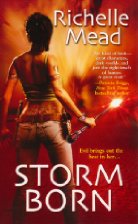 Summary:
Eugenia Markham is a shaman who spends her time sending the fae back to their own world. She hates the fae both for trespassing into our world and for kidnapping women into their own. When fae start referring to her by her given name, rather than her working name, she becomes concerned something is awry. What she discovers is a prophecy that will change everything.
Review:
I picked this up because I love Richelle Mead’s Georgina Kincaid series (review) so much. I wish any of the summaries I read of the book had even hinted at one of the big plot points, as I think how a reader responds to that plot point will dictate how much they enjoy the series overall.
Without revealing too much, early on in the book, fae start showing up and attempting to rape Eugenie. She finds out that there is a prophecy that her child will be the one to bring about large changes in the land of the fae. (This is not particularly a spoiler, it is revealed early on and there are even more plot twists later on to complicate this). What this means for the reader is that our main character must repeatedly physically fight off would-be rapists. If I had realized this was such a key plot point, I would not have personally picked up this book, and I think there are probably quite a few other readers who would be similarly bothered by this repeated scene of our heroine trying to fight off rapists. To be clear, this is not one single solitary incident. It is one of the main repeated problems for this character. Fae keep trying to rape her.
Another plot line is that the fae are known for kidnapping and raping young (this is specified, young, as in early to mid teens) human women. Because the fae have fertility problems. In fact, the case that Eugenie takes on early in the book is trying to save a teenaged girl who has been kidnapped by the fae. Eugenie normally doesn’t go into the land of the fae in a corporeal form (she does send her spirit via astral projection), but she agrees to in this case because she is so bothered by the knowledge that this teenage girl is facing a lifetime of rape.
These are just two non-spoiler examples of the rape plots, and there is at least one more that I won’t reveal as it’s a big spoiler. Readers who for whatever reason do not want to read either about rapes occurring off-screen or about the threat of rape or about a woman repeatedly having to physically fight off rapists should not pick this book up. These are key and frequent plot points in this book.
Having said this, I do not judge the book for including these plot points. Rape is a part of some fae mythology, and the author has every right to include it in an urban fantasy book based in fae mythology. I also think the author handles the inclusion of the rape and threatened rape well. Rape is never excused, rapists are denounced, and there are some fae characters who state they would never have sex with a human female who hasn’t consented. The author has a valid reason for including the rape plots, and she handles them well. I simply wish that it was clearer from the official book blurb what a large role rape plays in this book, and thus, in my review, I am being certain to be clear for potential readers the extent of rape plot points in this book.
So what about the rest of the book? Eugenie is mostly what one expects from an urban fantasy heroine. She is strong, talented, wears her hair short and hates dresses. She has a questionable roommate and a cover story of being some sort of private investigator. What makes Eugenie unique in urban fantasy is that she is a shaman trained by her step-father, and the only really supernatural humanoids in her world are the fae and some mythological shapeshifters from other cultures (think of Japanese myth’s shifters). Don’t come to this series looking for vampires and werewolves. You won’t find them. The fantastical world of this book is simply that there is another world of fae, and sometimes they cross over into ours.
The prophecy at the center of the book has more to it than it originally seems, and the plot twists are surprising and exciting. Yes, many urban fantasy books revolve around a prophecy that has our heroine at the center, but this is the first one I’ve seen in a while that’s more about the heroine’s child than the heroine herself.
As is to be expected, Eugenie has two potential love interests, a half kitsune (shape shifting fox) half human man and a fae. Personally, I didn’t like either of her love interests. One is too bourgeois/royal, and the other is too macho for my taste. But I can see how other readers would enjoy one or the other or both of them and appreciate Eugenie’s difficulty in deciding who has her heart.
The audiobook narration by Jennifer Van Dyck starts out a bit awkward and gets better with time. For the first half or so of the book, her narration can sometimes be a bit stilted. She almost sounds like she’s reading lists. She pauses at odd times. Also, her voice sometimes comes across as elderly, which doesn’t suit the tone of the book. For the most part, though, the narration doesn’t detract too much from the book, it simply doesn’t elevate it either.
Overall, this is an entry in the urban fantasy genre that sticks closely to the well-loved trope of a strong, non-girly woman battling supernatural forces while also adding on some unique elements, such as a prophecy about her future child and sticking to the fae of mythology. Readers should be aware that attempted rape and rapes occurring off-screen feature frequently in the book. The plot itself is twisting and exciting, with enough unique elements to keep regular readers of urban fantasy engaged. Recommended to urban fantasy fans looking for a universe that sticks more closely to the traditional mythical depiction of the fae world and who don’t mind the inclusion of rape and attempted rape in the plot of the book.
If you found this review helpful, please consider tipping me on ko-fi, checking out my digital items available in my ko-fi shop, buying one of my publications, or using one of my referral/coupon codes. Thank you for your support!
3 out of 5 stars
Length: 361 pages – average but on the longer side
Source: Audible

Short Story: The Tale of Leroy of the Backwoods of Vermont by Amanda McNeil
Note: This short story, which is humorous horror, was originally published in 2011 in the online horror magazine 69 Flavors of Paranoia (volume 3, menu 13). I recently discovered that 69 Flavors of Paranoia is now defunct. Their website and Facebook page are completely gone. An investigation of their twitter finds that they did not delete their twitter but they have not tweeted since evidently announcing on January 13, 2015, that they are now out of commission (view the tweet here). They did not give advance notice to any of the authors who had been published so that we could archive our stories from their zine, nor did they create an archive themselves. They, in fact, completely deleted their entire website; they did not even move it to a free host. It appears that the Internet Archive primarily archived their issue table of contents and not the stories themselves. You can view the table of contents for the issue that contained my story here. Since I never gave up my copyright nor can the story be read in their publication anymore, I have decided to re-publish it here myself. I don’t feel the need to resubmit it to other magazines right now, as I have other projects I am working on. I do hope you all enjoy it. You can view links to the rest of my publications on my Publications page.
“The Tale of Leroy of the Backwoods of Vermont”
By:
Amanda McNeil
Leroy never saw no need to leave these here backwoods of Vermont, kinda like m’self. His mama birthed him here when she was only fifteen years old in the family log cabin right up on this here hill. Her mama done whupped her good when she found out she had a bun in the oven, but her daddy put a stop to it. Every babe is a gift from God. Ayuh. That’s what he’d said. So he was birthed, and his mama done named him Leroy.
Leroy’s folks; they didn’t trust the gubmint none. No sir. The gubmint’s the one that’s been slowly takin Vermont from the good, rignal born, old-timers and handin it over hook line and sinkah to them dammed librals. Leroy’s pappy–he alwuz insisted he married Leroy’s mama on purpose, but Leroy alwuz suspected that it was more of a shot gun affair–anyhow. He alwuz tole Leroy, “Boy! Don’t you take nothin from nobody. We’s bettah than that. We’s take care of ourselves n our own. Don’t you be like them dammed useless welfare folk.”
So his mama done taught him right there at home while his pappy went to work in the mill down the road n Gram cooked n kep house. Sometimes, Grandpappy’d take him out n teach him all’s’bout huntin and fishin and survivin without the food you kin get in a grocery store. Ayuh. Course, ventually, the gubmint done made him go to school, but it was only down at the gubmint school close by, and well Leroy, he warn’t never near the top of his class, if you know what I’m sayin.
I was friends with good ole Leroy back in the day. Ayuh. You might say that. I’d scaped from that gubmint school soon’s they let you. Been out a few years. Leroy, he was gettin close to it. Anyway, Leroy’s folks n mine, they was all on us to do our share fer the families. I’d done took to collectin fiddleheads n beer cans an sech on the side of the road when I warn’t workin in the mill with the rest of the fellers. That sorta thing’s alwuz more fun with a buddy along, so I done asked Leroy to join me on one sech excursion on a…..well durn. It musta been a Sat’day afternoon, cuz I don’t recollect havin gone to church in the mornin.
So, we was out on one of them thar back roads. Y’know, the ones that alwuz have big ole ruts in em n sometimes a farmer or a backwoodsman’ll come puttin along in his ole truck with the sharp edges, nothin like them new trucks with them pussy-ass rounded edges. An the forest, well it just come right on up near the side of the road with just them thar drainage ditches betwixt the two. Makes fer more interestin collectin that way. Sometimes you see a critter or some sech. Well, it was late spring-like. I recollect that, cuz I was collectin me some fiddleheads. They make a durn good supper if you cook em up right good with a big ole dollop of butter, y’know.
Anyway, so I was toolin my way along in one of them drainage ditches that run along the side of them old-fashioned dirt roads. It was real muddy-like. Course I didn’t care cuz you gotta wursh the fiddleheads anyway, an I had me some real good boots. Leroy, he was pokin his way along on the other side of the road. He done got a bit further down than me when he call out to me. “Hey, Bobby!” He done shout it just like that. “Hey, Bobby!”
“Yeah, what?” I done called back to him.
“Lookee here. Lookit what I found.”
I sighed n looked up expectin a whole bunch of nothin. Leroy, he warn’t exactly strong in the head department, if you know what I’m sayin. Well, thar stood Leroy. He was a scrawny kid, Leroy was. Ayuh. Scrawny n tall topped off with a shock of red hair, but not the tempmint to match. Anyhow, thar stood Leroy holdin up a squirrel by the tail. This squirrel, he wuz the deadest durn thing you ever done saw. I mean his middle was squirshed flat. His head and hind end looked like two hills with a valley in-between, an little bits of guts all full of road dirt was stuck to the poor thing’s middle. I done shook my head, cuz, y’know, guts ain’t never a fun thing to see, an I said, “Leroy! Whatchoo doin pickin up the road kill?”
“Road kill?” He let out a he-haw kinda laugh an bent forward. “This ain’t no road kill. This here’s supper!”
“Leroy, you damn fool!” I went back to my bizness, searchin fer the good fiddleheads. “T’ain’t right to eat roadkill. Them critters done suffered enough gettin squirshed to death without you hackin em up and makin one of yer god-awful stews out of em. Sides. Poor critter’s covered in dirt!”
“Bobby, you know better than to waste perfectly good food that you don’t got to pay good money fer.”
I done fixed my gaze back up at him. He was standin there with his feet planted a good couple feet apart lookin the most stubborn I ever done seen him. “I don’t believe you will. Even you ain’t that stupid.”
“It ain’t stupid to eat food God done left in the middle of the road fer ya,” his forehead had got all wrinkled and sech.
I dropped the fiddlehead I’d done plucked into my paper bag. “Aw, now you’re just joshin me. You know better than to eat it now. I can see you thinkin about it.”
Leroy done stomped over from down the road so’s he was leanin down an lookin in my face real close-like. “I’ll go eat it right now, an you kin watch me.”
Well, it ain’t easy to get good entertainment up in these here hills, so I said I’d come watch. Leroy figured he’d just tell his mama he done got hungry and et early. My place was the closest to whar we were, y’see. Ayuh. This place rightchere. He done cooked it up right thar on that same stove. My mama was out in the garden, an my pappy was over visitin his pappy. I called out to my mama that we was hungry and was gonna fix us up some of the food we done found on the road. She just sorta grunted at me. Mama warn’t never much on words. I got myself around and warshed and done cooked my fiddleheads up in that butter like I done tole you before right good while Leroy, he went out back to skin and prep that durn squirrel. He come back in, an he started fricasseein it with some gravy mah mama had left over in the fridge whilst I set myself down and ate me some of them nice buttery fiddleheads.
You warnt to learn how to cook it? I can teach you later. Right, right, first Leroy.
So Leroy he done make himself this fricassee. I was gettin all ready to be mad at him for wastin my mama’s gravy when he done set himself down with a bowl and a spoon, and he just started spoonin that squirrel into his mouth like it was the best dish at the church potluck. The whole time he was starin at me with this…..weird grin. Like he was some coyote who knew the farmer left the chicken coop open, n he was about to get himself an easy all you can eat buffet. I got all froze like watchin that smile in that gaunt face of his. Watchin him eat that thar fricassee.
His spoon, it clanked at the bottom of the bowl, an he done lifted the bowl up and licked it clean. He put that bowl down, n he said, he said, “See? I done tole you. Ain’t nothin wrong with eatin a critter, no sir no way.”
I shook my head. “I still say. T’ain’t right,” an I got up and started to warsh the dishes when Leroy, he made this funny sound. Kinda like he got himself stuck in a zipper. I turned around, n thar’s Leroy, standin next to the table, holdin his bowl with a funny look on his face. I mean, his face was all twisted up. One eyebrow up here, another down there, his mouth in a weird twisty line, his nose wrinkled up.
“Leroy!” I snapped. “What’s wrong with you? If you gonna puke up that damn fricassee, you better get out the back door and out of my mama’s kitchen!”
An that. That’s when he sorta half-pointed at his stomach. It was wigglin. All on its own. Kinda like how a lady with a bun in the oven, her tummy will wiggle when the babe moves around? Well that’s what his was doin, only his belly was flat.
Then Leroy, he done scream and double over. He started screamin out, “Help me! Help me, Bobby! Oh it hurts; it hurts!”
I dropped the dishrag, right there on the floor, right next to the sink. I done grabbed him an tried to help him stand up. “I gotcher,” I told him. “I gotcher.”
His eyes, they got all wide like a little kid’s do when he done first see a scary movie. I dunno why, but I looked down. Inside his stomach, thar was a shape of a squirrel. I mean you could see the outline of his head all’s the way down to his fluffy little tail. Seein that, well, I done lost my grip on Leroy, and he fell down on the floor, writhin in pain. He looked just like a snake. Ayuh. He let out the biggest durn yell I ever heard. I think the only time I ever heard one close was that time Frank down the road done got his foot stuck in a bear trap. My mama, she must’ve started to yell an come runnin then, but I didn’t notice. No way, no how. Cuz right then a squirrel covered with blood an mucous an bile an whatever all else was in Leroy’s stomach done come bustin out of his gut. Bits o’ Leroy hung from his teeth, an his beady black eyes done give me the once-over. I ain’t never seen nothin so frightenin in all my born days then nor since. No way. That squirrel, well then that squirrel, it shot me a look. That look said, it said, “Tit for tat. Tit for tat.” Then it skedaddled on out the door.
Leroy, he was writhin on the floor, graspin at that hole in his stomach with one hand an reachin out to me with the other. Well, I didn’t know what to do. Just then, my mama, she come runnin in an see the blood an guts all over her nice, clean floor. Then she sees Leroy with his guts pourin out of him, n she starts screamin. “What done this? What happened, Bobby? Tell me what happened!”
“It was a squirrel, mama. A squirrel et its way out of him!”
Leroy, he was slowin down with the movin an the writhin, n he let out a gasp n collapsed back on the floor. His eyes hangin open.
My mama. She believed me that a squirrel done it, but we knew them thar cops from down the hill wouldn’t, so we just tole them that Leroy done gutted himself like them Japanese soldier fellers do sometimes. I dunno if they believed us or not. Truth be tole, no one from down off the hill missed Leroy that much.
But us? Us good ole-fashioned Vermont folk up on the hill? Oh we remember Leroy. Ayuh. And that, that’s why not even the mangiest, strangest lady or feller up on this hill, no matter how hungry, no matter how skeered of the gubmint, they won’t never eat no roadkill.
© Amanda McNeil 2011
Book Review: Ticker by Lisa Mantchev
 Summary:
Penny Farthing, member of the wealthy elite, is full of tons of energy she mostly uses to ride her motorized high wheel bicycle and collect robotic butterflies. Unfortunately, her clockwork heart doesn’t always entirely keep up with her. Plus she has to wind it. Much more troubling to her, though, is the fact that the creator of her clockwork heart, Calvin Warwick, is now on trial for murdering dozens of people he abducted from the street to practice on before giving her her new heart. When there is an explosion at her family’s factory and Warwick escapes prison immediately after being found guilty of murder (oh, and her parents disappear), Penny and her twin brother and two of their closest friends embark on a journey of intrigue to bring her parents home and Warwick to justice.
Review:
I rarely am actually interested in anything in the Kindle First email (a once-monthly email that informs Kindle owners as to four books they can access ahead of publication for free). I am also not often into most steampunk books. It’s an idea I love, but I often find isn’t executed as well as it should be. When this one popped up, though, I was intrigued for its transhumanist explorations. The book definitely explores the concept of transhumanism via the steampunk idea of augmentation, but it mostly is a story about a young girl’s first love and a bit of a mystery/thriller search for a murderer.
The basic premise that a teenager finds out that the medical device that saved her life was the result of the brutal torture and murder of dozens of people is awesome. This is a more extreme version of the types of realizations that young adults often have. (For instance, I will never forget the first time I realized that sometimes scientists must experiment on innocent animals in the pursuit of cures and the ethical quandary that resulted for me). It works quite well because it is set in an alternate universe. This allows the reader to have some distance to view the ethical issue through but the alternate universe is still similar enough to our own that it is relatable. Penny is always firmly against any unwilling human experimentation (as she should be) but she is left wondering how much responsibility and guilt she should feel for the tortures and murders when she herself was indirectly responsible. She is so grateful to be not only alive but able to function better than she could before. But she is also traumatized at the thought of how she got there. This is the book’s real strength, and I am glad it is out there for the YA audience to read. That said, there are other elements of the book that just don’t quite work for me.
First, the level of steampunk is sometimes a bit ridiculous and isn’t explained well enough. For instance, the world seems to have only robotic butterflies and horses. Why is that? For that matter, it’s deeply confusing to me why this culture would develop a robotic horse and carriage, particularly when they also have motorized bicycles (I won’t call them motorcycles, because they definitely are not nearly so eloquent nor sexy as motorcycles). It’s not a far leap to car from there. The reasons behind the steampunk features are simply never explored. They just are. This may be fine to some readers, but I found it dissatisfying. I particularly really needed to know why the animals are robots.
Second, the society Penny lives in is clearly meant to be a parallel to the British Empire in its heyday. It is highly stratified, classist, regal, and feels oppressive (except for Penny and her family of course *eye-roll*). I have no problem with a book containing this type of society but it is not only never questioned it seems to be held up as an excellent way of living. It’s great that the military just jumps right on in and solves everyone’s problems (including abducting civilians up to their sky fort). It’s oh so wonderful that Penny’s family has all this wealth. It’s tragic for Penny’s family that they lose some product in the factory explosion but the workers and their injuries and lives are barely touched upon. It ends up feeling like whenever any of the elite people in the book (and most of the main and secondary characters are elite, with the exception of one young girl who is saved from her poor destitute life by the military) discusses anything bad about being the lower class, they do so in a “See, I’m a good person because I care about them” tone but not out of any sincerity. None of them have any desire to actually change or fix anything. Indeed, one of the main characters excitedly jumps right in when they are asked to become an honorary member of the military. The book has the tone that the only thing wrong with this alternate universe is the fact that Warwick is a very bad man who experiments on people he snatched from the street. Everything else is fine! When it clearly is not.
Finally, I just don’t particularly care for the main character, Penny Farthing. First there’s her name, which is exactly the same as the name of the style of bicycle she rides (only motorized) (info on the penny farthing). That’s just a bit too cutesy for me. Second, she is a person who is oblivious to her privilege of wealth and access to medical care, even when it is smacking her in the face. She never learns, changes, or grows (beyond falling in love). She briefly realizes “hey, maybe things have been rough on my twin brother too,” but she glosses over that quite quickly. She also eats incessantly in a way that reminds me very much of The Gilmore Girls (here is a great article that talks about why this trope is annoying as hell). Basically, she eats whatever she wants, whenever she wants, primarily junk food, and everyone finds it “oh so adorable” that she is constantly hungry. Oh that Penny Farthing! And she does this all while staying the classic western media ideal of what is attractive! Without working out! So basically she never does that annoying thing women can sometimes do which is to eat a salad and never eat a burger because she’s watching her figure (which men find annoying) but she also is definitely not fat (which men also find annoying). She is the best of both worlds. In Penny’s case, this mystery is explained as the fact that she needs to eat to keep her clockwork heart going. The “science” of that drives me absolutely batty, by the way. My best guess is that the author was possibly going for the idea of how some people, such as people with diabetes, need to eat at evenly spaced times to keep their blood sugar even. However, no one would tell a person with diabetes to eat primarily sugary baked goods at those intervals, which is what Penny mostly eats. Also, diabetes does not equal heart disease so…..the “science” of this makes very little sense. It reads as an excuse to use the Gilmore Girls junk food trope. Finally, it really bothers me that she collects the robotic butterflies. Yes, I know people do this in the real world with real butterflies, but it has always struck me as cruel, and I think it says a lot about her character that she seems so cool with trapping what in her world are perceived of as essentially living creatures for her own amusement and collection.
All of that said, the plot and mystery of Warwick, his escape, and finding Penny’s parents is fast-paced and unpredictable without ever verging into the land of plots that make no sense. It’s an interesting world with an engaging plot built around a cool premise. Where it is weak is primarily in the elements that were either not sufficiently well thought-out, explored, or explained, such as the robotic animals, the functioning of Penny’s heart, etc…
Overall, this has an interesting premise and an engaging plot. It unfortunately doesn’t explore the workings of the society or the steampunk it has created enough, and the main character can be a bit annoying and hard to root for at times. However, those who love steampunk with a dash of mystery and romance will likely enjoy adding it to their repertoire, provided they are ok with the issues outlined above.
If you found this review helpful, please consider tipping me on ko-fi, checking out my digital items available in my ko-fi shop, buying one of my publications, or using one of my referral/coupon codes. Thank you for your support!
3 out of 5 stars
Length: 276 pages – average but on the shorter side
Source: Amazon Kindle First (Free copy of the book provided by Amazon to those with kindles who request it. Requesters are under no obligation to provide a review).

 Support my work with a tip or browse my shop for curated book club guides, how to guides, cross-stitch patterns, and more!


This work by Amanda Nevius is licensed under a Creative Commons Attribution-Noncommercial-No Derivative Works 3.0 United States License.
 Opinions of a Wolf