
Archive
Book Review: Beautiful Ugly by Alice Feeney
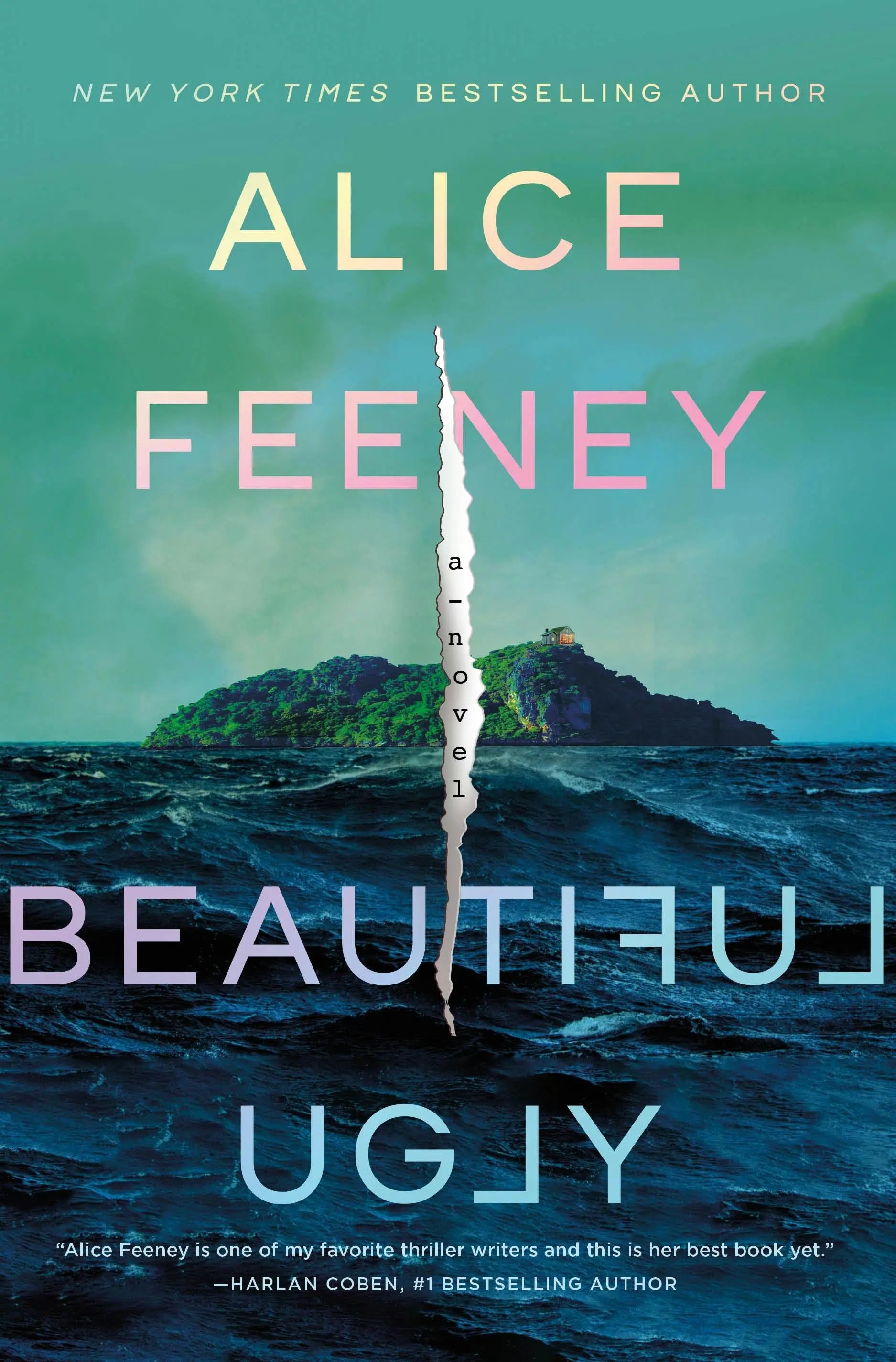
A psychological thriller about a grieving husband who sees his missing wife’s double on a remote Scottish island.
Summary:
Author Grady Green is having the worst best day of his life.
Grady calls his wife to share some exciting news as she is driving home. He hears Abby slam on the brakes, get out of the car, then nothing. When he eventually finds her car by the cliff edge the headlights are on, the driver door is open, her phone is still there. . . but his wife has disappeared.
A year later, Grady is still overcome with grief and desperate to know what happened to Abby. He can’t sleep, and he can’t write, so he travels to a tiny Scottish island to try to get his life back on track. Then he sees the impossible — a woman who looks exactly like his missing wife.
Wives think their husbands will change but they don’t.
Husbands think their wives won’t change but they do.
Review:
My memory told me I loved Alice Feeney’s thrillers—but after reading Beautiful Ugly and looking back at my past reviews, it turns out I only truly loved one (Rock Paper Scissors) and was lukewarm on another (Daisy Darker). With this latest being a miss, I probably won’t be rushing to pick up her next.
Right away, I was thrown a bit off course by the main character. When I reach for a thriller by a woman author, I typically expect a woman protagonist. Here, we follow Grady, a grieving husband and struggling novelist. We do get flashbacks to his wife before her disappearance, but Grady’s perspective never quite worked for me. I also rarely enjoy main characters who are writers—it often feels too navel-gazey (with the notable exception of Misery). That worked against Grady, too.
When Grady travels to a remote Scottish island—sent there by his agent-slash-his-wife’s-godmother—it should have been an atmospheric pivot. But while the setting is strange, it didn’t strike me as compelling. The book leans heavily on Grady’s alcoholism to make him an unreliable narrator, a device that can be effective (as in The Girl on the Train), but here felt more like a trope than an integral part of the story.
And unfortunately, it wasn’t just Grady. I didn’t connect with any of the characters—not the wife, the godmother, the ferrywoman, or the shopkeeper. That can still work if it’s a “love to hate them” type of book, but this wasn’t that. And when a book doesn’t give you characters to root for, you need a satisfying plot to carry the weight. Instead, I felt let down.
The book hinges on two major twists, and both left me feeling frustrated. One relies on the main character deliberately withholding information from the reader, which feels like a cheat—especially when we’re in his head for much of the book. The second twist is more straightforward, but felt over-the-top and unearned.
That said, there are a few bright spots. I appreciated the inclusion of a woman pastor and a same-sex couple among the tiny island’s population. The cast also includes a bit of racial and ethnic diversity. Also Grady’s dog is a breath of fresh air in every scene he’s in. However, the second twist somewhat undercut those thoughtful touches in a way that felt disappointing.
Content notes: CSA, death of children, infertility treatment, and murder.
Despite my frustrations, I’ll give the book credit for being readable and engaging. I wanted to know what happened, and I did enjoy the shifting points of view and timelines.
Overall, this is a thriller for readers who don’t mind a twist that plays unfairly with what the narrator reveals, and who enjoy mysterious settings and shifting perspectives—even if there’s no one to root for.
If you found this review helpful, please consider tipping me on ko-fi, checking out my digital items in my ko-fi shop, buying one of my publications, using one of my referral or coupon codes, signing up for my free microfiction monthly newsletter, or tuning into my podcast. Thank you for your support!
3 out of 5 stars
Length: 306 pages – average but on the longer side
Source: Library
Buy It (Amazon or Bookshop.org)
Book Review: My Husband by Maud Ventura

The view of one week in a French woman’s marriage gradually demonstrates the obsession she displays for her husband.
Summary:
At forty years old, she has an enviable life: a successful career, stunning looks, a beautiful house in the suburbs, two healthy children, and most importantly, an ideal husband. After fifteen years together, she is still besotted with him. But she’s never quite sure that her passion is reciprocated. After all, would a truly infatuated man ever let go of his wife’s hand when they’re sitting on the couch together?
Determined to keep their relationship perfect, she meticulously prepares for every encounter they have, always taking care to make her actions seem effortless. She watches him attentively, charting every mistake and punishing him accordingly to help him improve. And she tests him–setting traps to make sure that he still loves her just as much as he did when they first met.
Until one day she realizes she may have gone too far . . .
Review:
This was listed as a “readers also enjoyed” book for Rouge by Mona Awad. The title drew me in right away, and the description had me intrigued. From the first chapter, I was drawn in by the narrator.
It is immediately apparent that not all is right with either the marriage or the wife narrator. She acts like she is young in love. In other words, she’s obsessed with him. She’s uncertain about his love for her. In spite of the fact that they’ve been together many years and have two children together. It’s exhausting just reading about how she overthinks every little move he makes. This also begs the question. Is she really in love with him? Or is it an obsession?
As time progresses, the reader becomes increasingly uncomfortable with the narrator’s behavior and starts to worry about the husband. This all comes to a head at the end of the book. The twist didn’t shock me per se. I suspected it might be where it was going. Unlike some readers, though, I wasn’t disappointed by it. I felt it made for a richer overall picture of the marriage. This review sums up the issues others have with the ending. (Be warned it does disclose the twist.)
This is a book in translation. It was originally written in French. It also won France’s First Novel Prize in 2021. While I don’t know much about translation, I thought that the translator, Emma Ramadan, did a phenomenal job. The narrator of the book is a translator herself and teaches English in a high school. There are a few passages all about the differences between French and English. I can only imagine what a challenge that was when you can’t deliver the original lines in French! It still worked, though, and I was able to get the narrator’s point.
In spite of this book being relatively short, it did take me a while to read. It wasn’t quite as engaging or forward-moving as a thriller typically is for me. That could be down to it being translated. It could have something to do with the scenes of infidelity. (Not a spoiler, this happens early.) I don’t enjoy reading about infidelity. It can sometimes even make me put a book down entirely. In this case, it slowed me down a bit.
Overall, this is a different thriller. A mix of an analysis of a relationship with what one might expect from a psychological thriller. It is decidedly French. The translation hold up well. Recommended to those with an interest in different psychological thrillers and/or in modern French literature.
If you found this review helpful, please consider tipping me on ko-fi, checking out my digital items available in my ko-fi shop, buying one of my publications, using one of my referral/coupon codes, or signing up for my free microfiction monthly newsletter. Thank you for your support!
4 out of 5 stars
Length: 272 pages – average but on the shorter side
Source: Library
Buy It (Amazon or Bookshop.org)
Book Review: Death Valley by Melissa Broder

A woman dealing (or not dealing) with her husband’s and father’s medical conditions arrives in the desert to research her newest novel and has a fantastical experience.
Summary:
A woman arrives alone at a Best Western seeking respite from an emptiness that plagues her. She has fled to the California high desert to escape a cloud of sorrow—for both her father in the ICU and a husband whose illness is worsening. What the motel provides, however, is not peace but a path, thanks to a receptionist who recommends a nearby hike.
Out on the sun-scorched trail, the woman encounters a towering cactus whose size and shape mean it should not exist in California. Yet the cactus is there, with a gash through its side that beckons like a familiar door. So she enters it. What awaits her inside this mystical succulent sets her on a journey at once desolate and rich, hilarious and poignant.
Review:
I didn’t expect this to be a book that kept me up late at night because I needed to know how the plot resolved. I have not personally tended to experience much forward momentum in magical realism. But this was such a perfect mix of adventure plot and emotional magical realism that I simply couldn’t stop reading.
I love a cactus. This is a fact I don’t usually admit to because they’re so popular in design nowadays, and I’d rather support an underdog.
location 206
The main character was easy to bond with initially, which is critical to a plot that relies on the reader believing her experiences in the desert – even when they become fantastical. She’s a bisexual woman in long-term recovery from drugs and alcohol. She’s trying to finish her novel. Her husband has had a mysterious chronic illness for several years, and her father has been in the hospital for a long time after a car accident. The hospital keeps telling them that he’s dying, and then he wakes up and improves (only to have something else go wrong.) It’s a lot for anyone to handle. She has a dry wit that we hear inside her head but that rarely makes it outside. We can see how she’s barely keeping it together, and yet she continues to try because of how much she loves her loved ones.
Since my husband got sick, my words don’t mean what they are supposed to mean.
location 289
It’s interesting what a beautiful depiction of a marriage this book is when so little in it features the spouses together. Yet through the main character we see how her marriage and loving her husband, as she would say, isn’t just a feeling. It’s a choice. Perhaps some people would find it gauche to have a whole book focusing in on the impact of a chronic illness on the spouse who doesn’t have it. But that’s the rub of a marriage. What happens to one person is happening to both.
The setting of the book is also gorgeous. I’m not sure I’d have appreciate it as much as I did if I had never been to the desert. The beauty and danger and overwhelmingness of the desert is all encapsulated so beautifully from the coolness of her room in the Best Western to the magical cactus and everything in between. (Plus there’s both desert bunnies and multiple types of cactus from saguaro to teddy-bear cholla.)
If I was reading a review of this book, my main question would be – ok, ok, but how about the magical realism? Does it work? Yes, it works really well. By the time I finished the book, I couldn’t imagine the main character’s arc happening any other way. It makes sense in the context of that trip and that world, and that’s all that really matters. I wasn’t questioning it. I was on board from the first magical moment partway into the book.
Overall, this is an engaging story of one woman’s trip into the desert intertwined with her inner journey of continuing to choose to love her husband every day. It’s beautiful representation of the complexities of in sickness and in health. Recommended to readers interested in that journey with an open mind to magical realism.
If you found this review helpful, please consider tipping me on ko-fi, checking out my digital items available in my ko-fi shop, buying one of my publications, using one of my referral/coupon codes, or signing up for my free microfiction monthly newsletter. Thank you for your support!
5 out of 5 stars
Length: 240 pages – average but on the shorter side
Source: NetGalley
Buy It (Amazon or Bookshop.org)
Book Review: The Golden Couple by Greer Hendricks and Sarah Pekkanen

Avery may have lost her professional therapist license, but her career is much better as a consultant who isn’t held to any of the pesky rules like “don’t tell a client what to do” and “don’t spy on clients.” At least until a couple going through what seems to be a classic case of infidelity walks through her door…
Summary:
Wealthy Washington suburbanites Marissa and Matthew Bishop seem to have it all—until Marissa is unfaithful. She wants to repair things for the sake of their eight-year-old son and because she loves her husband. Enter Avery Chambers.
Avery is a therapist who lost her professional license. Still, it doesn’t stop her from counseling those in crisis, though they have to adhere to her 10 sessions full of unorthodox methods. And the Bishops are desperate.
When they glide through Avery’s door and Marissa reveals her infidelity, all three are set on a collision course. Because the biggest secrets in the room are still hidden, and it’s no longer simply a marriage that’s in danger.
Review:
I was on the waitlist for the digital copy of this forever at the library but then I stumbled upon it on the physical “Lucky Day” shelf. At my library, a few limited copies of popular books become “Lucky Day” books, They can’t be put on hold, and they only check out for two weeks. The theory is you “get lucky” by coming across them on the “Lucky Day” shelf. This just tells you how popular a Hendricks/Pekkanen thriller is.
I didn’t read the summary before reading the book. I’m such a fan, I knew I wanted to read it regardless of what it was about. Personally, I’m usually not about a book that shows much empathy at all for infidelity. Although it certainly is an expected trope in thrillers, I personally am less ok with it when presented as something to overcome together in a marriage.. While I’m still not on Marissa’s side – I feel like this is a case of two terrible people with a sweet kid – I loved Avery. She held the book together for me.
The story is told in chapters alternating between Avery and Marissa. Interestingly, Avery is first person point of view, and Marissa is third person. This helped because Marissa isn’t super likeable so the distance was good. It also helped keep some secrets hidden. There’s also a fun subplot involving someone coming after Avery for doing an honorable thing. So while some readers might feel she overstepped with her clients in the situation that led to her losing her license, she’s redeemed by this other subplot.
There are just enough twists. I had my suspicions about just what the something extra going on with the married couple was, but I didn’t figure out the final twist until just before it happened. So there were enough clues but also sufficient red herrings to make it enjoyable.
While this wasn’t my favorite Hendricks/Pekkanen read (that honor goes to The Wife Between Us, review, which I found to be incredibly imaginative), it was still a fun thriller that I was motivated to get to the end of. Other readers more able to relate to Marissa might find it more immersive than I did.
If you found this review helpful, please consider tipping me on ko-fi, checking out my digital items available in my ko-fi shop, buying one of my publications, or using one of my referral/coupon codes. Thank you for your support!
4 out of 5 stars
Length: 329 pages – average but on the longer side
Source: Library
Buy It (Amazon or Bookshop.org)
Book Review: Rock Paper Scissors by Alice Feeney

Summary:
Things have been wrong with Mr and Mrs Wright for a long time. When Adam and Amelia win a weekend away to Scotland, it might be just what their marriage needs. Self-confessed workaholic and screenwriter Adam Wright has lived with face blindness his whole life. He can’t recognize friends or family, or even his own wife.
Every anniversary the couple exchange traditional gifts – paper, cotton, pottery, tin – and each year Adam’s wife writes him a letter that she never lets him read. Until now. They both know this weekend will make or break their marriage, but they didn’t randomly win this trip. One of them is lying, and someone doesn’t want them to live happily ever after.
Ten years of marriage. Ten years of secrets. And an anniversary they will never forget.
Review:
I have a thing for the themes for each anniversary year of marriage. I also have a thing for thrillers about marriages. So when I saw this one incorporating both, I knew I just had to read it. I can’t be the only one this appealed to because I waited for a few months for it at the library. This was definitely a unique and fun take on the thriller about a marriage theme.
The telling alternates between the anniversary letters Mrs. Wright writes to her husband and the present day Mrs. Wright going on the trip with Mr. Wright to Scotland. They are seeing a marriage counselor who suggest a trip away, and Mrs. Wright wins a weekend trip to a converted chapel in Scotland. One of the stronger scenes in the book is the late-night arrival at this Air BNB style home. If you have ever arrived late at night at an Air BNB or other vacation rental where you have to let yourself in and hope it lives up to your expectations, this scene will really set your spine to tingling!
Much as I was enjoying the present day explorations of the spooky getaway, I also really enjoyed the anniversary letters from Mrs. Wright. They were the perfect interlude because very quickly it becomes clear she is keeping something from him. So you end up with two different mysteries. What is going on at the weekend stay? And what is Mrs. Wright keeping from Mr. Wright?
I wasn’t sure at first how I’d feel about the face blindness aspect. But it is a real condition, and I like how the perspective sometimes shifts to Mr. Wright’s. We see how he sees his wife, and how he recognizes her anyway. I also really enjoy how important the title is to the book and how often it comes into play.
Now, this is a thriller so of course there is a twist. It is a major one, and I really wasn’t seeing it coming. I was a bit miffed because it was one of those situations where the only reason I didn’t see it coming was some information was withheld from the reader. But I so enjoyed the process of getting to that point that I ultimately didn’t care.
Overall, this was a fun entry into the thriller category. It delightfully combines a marriage on the rocks with a creepy vacation rental for a new feeling plot.
4 out of 5 stars
Length: 297 pages – average but on the shorter side
Source: Library
Buy It (Amazon or Bookshop.org)
If you found this review helpful, please consider tipping me on ko-fi, checking out my digital items available in my ko-fi shop, buying one of my publications, or using one of my referral/coupon codes. Thank you for your support!
Thoughts on Marriage on Our First Wedding Anniversary
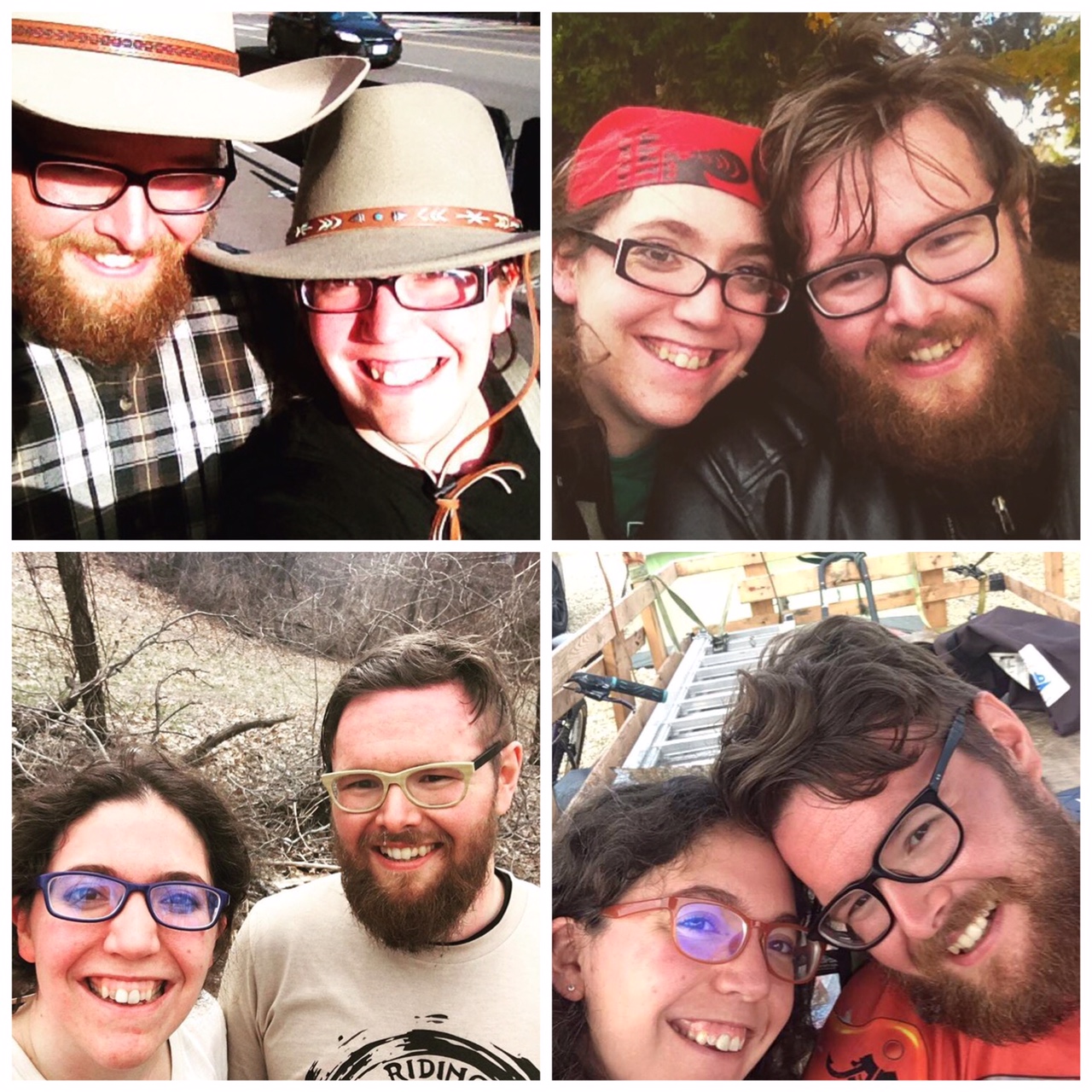
A collection of selfies from our first year of marriage.
It may perhaps seem odd to some given that my parents divorced when I was 15 (messily) and I’m not religious, but I actually view marriage with a real serious near-reverence. I think it’s important, and I don’t think it’s something to be entered into lightly. I think it’s something to be entered into with a clear mind of a fully-formed adult, and I view the commitment it entails very seriously. If your life is a wheel then your marriage is at the center of it with everything else flowing from it. Your decisions are no longer what is best for me but rather what is best for us and our marriage.
I know I’ve only been married for a year so it’s not like I’m some giant sage of wisdom. But I do think a year out I can answer some questions people who have never been married have about marriage and what it’s really like. And I think too that as the recipient of much (unasked for and asked for) marital advice that I can offer up the one that I’ve thought about the most over the year.
So first, to answer the questions: Yes, it does feel different. Being married is far different from being in a long-term relationship or living together. You are a family unit, one that is recognized by society. And there’s (for me anyway) a certain level of certainty. I can (and should) make decisions taking my spouse into account because he’s my spouse. I can 100% know that making this decision by taking into consideration his needs and desires is the right thing to do because he’s always going to be there.
And on the other side of the coin, I know if I have a bad day or if something awful happens that I can depend on him to be there for me because that’s what being a spouse is. It’s being there in the good times and the bad, and I can rest assured that he will be. It’s a sad fact that my father passed away in the first year of our marriage, and my husband was there for me. In the middle of his own grief, he put mine first. He held me. He brought me food and got me to eat. He helped clean out my father’s trailer, taking charge and much of the weight off of my brother and myself. And he gave me space to be angry about it too, and let me know that was ok and valid.
Another question people ask is: how hard is it really to change your name? Damn hard. In fact, I’m only halfway through it because it’s all awful annoying time-consuming paperwork and honestly I got a bit derailed when I was grieving. But I wouldn’t change changing my name for the world. So, I’ll tell you this: if you’re considering changing your name for any reason besides it’s what you want don’t do it. The only thing that makes all the hassle something I’m able to deal with is because of how very much I love being Amanda Nevius.
So what’s the piece of advice I’ve meditated on the most? It was from an article that a college friend posted, actually, and I can’t remember the name of it, but the gist was: don’t lose your marriage over a wet towel on the floor. What does that mean? The petty things can build up over time and make you start to resent each other. So if your spouse perpetually leaves a wet towel on the floor, choose how you react. Don’t let it annoy the crap out of you. Consider: is losing my marriage worth the fight over this towel? And if it’s not (and it shouldn’t be) then just pick it up and put it in the hamper yourself and choose not to be annoyed.
On the flipside of that, if you’re the spouse leaving a wet towel on the floor and you know it bothers your spouse even though you can’t for the life of you understand why (it’s the bathroom floor after all) consider: is losing my marriage worth the convenience of dropping this towel on the bathroom floor rather than putting it in the hamper? If it’s not (and it shouldn’t be) then just start putting the damn towel in the hamper because it’ll make your spouse happy and choose not to be annoyed about it. Obviously this extends to other things, and it makes a real difference on the whole tone of the relationship. It’s not “stop doing X annoying thing” it’s instead “I love you, so I’ll modify this small part of my behavior for you,” whether that’s picking up the towel for them or remembering to put it in the hamper in the first place.
I think it also an excellent reminder that there’s things that aren’t right or wrong; they’re preferences. And being aware of your spouse’s preferences and being sensitive to them is an act of love. I view it as an active meditation on love.
A year out, I feel closer to my husband now than I did on the day of our wedding, and that’s good and right and how it should be. I look forward to growing closer to him every day.
Book Review: Anarchism and Other Essays by Emma Goldman
 Summary:
Emma Goldman was a Russian immigrant to the United States who embraced Anarchism and became an impassioned orator and pioneer in the movement for birth control. She was deported in 1919 for her antiwar activities and spent the remainder of her life moving among multiple countries. This book is a collection of a variety of her essays and includes a contemporaneous biographical sketch and preface. You may read more about Emma Goldman and her life here.
Review:
I picked up this essay collection due to my interest in both US and women’s history. It then languished on my TBR pile for years until I heard about how the Emma Goldman Archive at UC Berkeley was going to lose its funding (source). The archive is currently still running thanks to charitable donations, (source) but I still wanted to invest some time in learning more about this important female historical figure, and what better way than by reading her own papers.
The essays in this collection are: Anarchism: What It Really Stands For, Minorities Versus Majorities, The Psychology of Political Violence, Prisons: A Social Crime and Failure, Patriotism: A Menace to Liberty, Francisco Ferrer and the Modern School, The Hypocrisy of Puritanism, The Traffic in Women, Woman Suffrage, The Tragedy of Woman’s Emancipation, Marriage and Love, and The Modern Drama: A Powerful Dissenter of Radical Thought.
The thing to understand about Anarchism (the historic early 20th century kind anyway, I won’t venture to talk about modern Anarchism as I have not studied it at all) is that the basis of Anarchist belief is that there should be no government and no religion.
Anarchism is the only philosophy which brings to man the consciousness of himself; which maintains that God, the State, and society are non-existent, that their promises are null and void, since they can be fulfilled only through man’s subordination. (page 38)
Emma took this to the conclusion that fighting for rights within the governmental power structure was pointless since the government shouldn’t be involved anyway. Modern readers may thus be surprised at how against women getting the right to vote she was. The reasoning behind it, though was that she thought it was a pointless fight. Like putting frosting on a shit cake. It won’t make the cake any less shitty. It’s interesting reading these papers how much faith Emma had in human nature to do good. It’s the power structures she considered evil.
My lack of faith in the majority is dictated by my faith in the potentialities of the individual. (page 34)
What I found most interesting in reading these essays, beyond getting a firmer understanding of Anarchism, is how most of them are still highly relatable today. They have not been particularly dated. Only “Francisco Ferrer and the Modern School” and “The Modern Drama: A Powerful Dissenter of Radical Thought” came across as dated and a bit difficult to read to me. The rest could have been pulled straight from a social justice Tumblr account, with just a few names and places changed. The three essays on women were the most interesting to me, particularly for the rather prophetic predictions that Emma made about the direction women’s rights were heading. In particular, one section discusses that women winning the right to work will just make everything more difficult because women are still seen as the primary caregivers and homemakers. They will just end up working just as much at home and out and about. Emma also pointed out that society would come to expect two incomes, making it impossible for women to not work even if they want to. This has certainly come to pass. Emma’s solution to this is more individual freedom, and her passage of advice to women still rings true today:
Her development, her freedom, her independence, must come from and through herself. First, by asserting herself as a personality, and not as a sex commodity. Second, by refusing the right to anyone over her body; by refusing to bear children, unless she wants them; by refusing to be a servant to God, the State, society, the husband, the family, etc.; by making her life simpler, but deeper and richer. That is, by trying to learn the meaning and substance of life in all its complexities, by freeing herself from the fear of public opinion and public condemnation. (page 132)
Sections that would probably stir up the strongest feelings among modern readers include frequent rants against the Catholic church, hatred of all patriotism or nationalism, very strong anti-military positions, and a strong negative view of marriage. However, if the modern reader keeps in mind that Emma was for 100% individual freedom and individuality, it’s easier to see that it’s not an individual institution she had something against, but rather institutions in general. Think of her as an extreme libertarian, and it’s easier to understand. In the case of marriage, for instance, it’s not that Emma was against love or being part of a couple, but rather against the state being involved in that love.
One aspect I think was missing from these essays was more from Emma on what she thought the ideal world would really look like. How would things work once total individual freedom was won? This is not touched upon very much, beyond Emma’s belief that crime would disappear without crooked institutions and there would be no more war. I found her belief in innate human goodness to be overly optimistic, verging on naive. But I also found it to be endearing that she had so much faith in humanity.
Overall, the modern reader will still find most of these essays highly readable and may be surprised by how modern many of them feel. Readers will realize how little some things change through time and also will come away with a better understanding of the stance of the often feared and misunderstood Anarchists.
If you found this review helpful, please consider tipping me on ko-fi, checking out my digital items available in my ko-fi shop, buying one of my publications, or using one of my referral/coupon codes. Thank you for your support!
4 out of 5 stars
Length: 291 pages – average but on the shorter side
Source: Purchased
Buy It (Amazon or Bookshop.org)
Book Review: Gone Girl by Gillian Flynn
 Summary:
On Nick and Amy Dunne’s fifth wedding anniversary, Nick comes home from working at the bar he co-owns with his sister to find his wife gone. The door is wide open, furniture is overturned, and the police say there is evidence that blood was cleaned up from the floor of the kitchen. Eyes slowly start to turn toward Nick as the cause of her disappearance, while Nick slowly starts to wonder just how well he really knows his wife.
Review:
I’d been wanting to read this since it first came out, but when the previews for the movie came out, I knew I also wanted to see the movie, and I just had to read the book first. Because one should always read the book first. A friend head me talking about it and offered to loan me her copy, and I flew through the book in just a couple of days. Even though I had guessed whodunit before I even started to read it, I was still swept up in a heart-racing read.
There have been many reviews of Gone Girl, so I am going to try to focus my review in on why I personally loved it, and also address a couple of the controversies about the book. Any spoilers will be marked and covered toward the end of the review. Please note that this review is entirely about the book and does not address the movie at all.
The tone of the book sucked me in from the beginning. How the book alternates between Nick’s current life and Amy’s diary of the early years of their relationship clearly showed that the relationship started out strong and fell apart, and I wanted to see how something so romantic could have gone so awry. Amy’s diary entries simultaneously sound feminine and realistic. She swears to the same extent that my friends and I do, and I loved seeing that in romantic, feminine diary entries. Nick’s portions, in contrast, perfectly demonstrated the measured response to a disappearance that could easily happen if a relationship was on the rocks a bit at the time. Nick’s reactions felt very realistic to me, and I appreciated it.
Even though I predicted the whodunit, I still found the end of the book to be thrilling, as exactly how it happened was not something I was able to predict.
If you don’t want any spoilers and just want to know why you should read the book, let me just say that anyone who has been in a long-term relationship will find the complex relationship between Nick and Amy frightening and chilling and will be left giving their partner side-eye periodically throughout the book. If you like the idea of a book that makes you freaked out at the thought of how truly awry a relationship can go, then you will enjoy this thriller.
On to the spoilers.
*spoilers*
This book has been accused of misogyny for three reasons. Nick’s internal dialogue, the character of Amy, and the fact that Amy falsely accuses an ex-boyfriend of rape. I did not find this book to be misogynistic at all, and I will now address each of these points.
Nick clearly struggles with how he relates to women due to the fact that his dad is a misogynistic bastard. It is realistic for a good person to struggle with bad internal dialogue due to hearing such dialogue from a parent. This is a very real thing that happens, and that people go to therapy for. The very fact that Nick fights against this internal dialogue shows that he knows that it’s wrong and is trying to win out over it. Just because one character has misogynistic internal dialogue does not make an entire book misogynistic nor does it make that character misogynistic. It just makes the book realistic. In fact, I find the fact that Nick ultimately defeats his internal misogynistic dialogue by realizing that it’s ok to hate women who are actually horrible but not all women to be really progressive. Some women are horrible people. Nick learns to turn his internal “women are bitches” dialogue into “Amy is a bitch,” and I think that’s awesome. Now, this point is related to the next point, the character of Amy.
There is at least one strain of feminism that thinks that it’s anti-woman to ever portray any women as bad or evil. There is also the strain of feminism that just says men and women are equal and should be treated equally. I am a member of the latter portion. It is equally harmful to never want to admit to women’s capability for evil as it is to say all women are bad or all women are childlike or etc… There are bad women in the world. There are evil women in the world. Women are not automatically nurturing, women are not automatically good at mothering, women are not automatically goddesses. Women are capable of the entire spectrum of evil to good, just like men are. It is unrealistic to act like women are incapable of evil, when we in fact are. This is why I find the portrayal of Amy as a narcissistic sociopath to be awesome. Because there are women just like her out there in the world. I was continually reminded of one I have known personally while I was reading the depiction of Amy. The patriarchy hurts men and women, and one way that it does so is with the assumption that women are incapable of evil. Nick and Amy’s other victims are unable to get people to believe them about Amy because Amy is able to externally project the virginal good girl image that the patriarchy expects of her. They don’t expect her to be evil. She appears to be a card-carrying, patriarchy-approved cool girl, therefore she is not evil and Nick and the others are delusional. It’s an eloquent depiction of how the patriarchy can hurt men, and I think that a lot of people are misinterpreting that a misogynistic slant.
Finally, the false rape accusation. Yes, it is extremely unlikely to happen. (An analysis in 2010 of 10 years of rape allegations found that 5.9% were able to proven to be false and 35.3% were proven to be true. The remaining 58.8% fell into a gray area of not being proven either way. Source) However, this means that false allegations of rape do indeed happen. 5.9% is not zero, and this isn’t even taking into account the gray cases that couldn’t be proven either way. Just because we have a problem with rape in this country and with rape culture does not mean that every accusation of rape is actually true. Just as not all men are rapists, not all women are truth-tellers. And let’s not forget that men can be raped, and women can be falsely accused of rape as well. Amy’s false rape accusation also fits well within her character development. As a teenager, she falsely accused a friend of stalking her. Then she accuses this man she dated in her 20s of raping her. Then she frames her husband for her murder. It’s a clear downward spiral, and the false rape accusation, complete with faking restraint marks on her arm, is a realistic warm-up to her insane attempt at framing her husband for her own murder. It fits within the character. It is not a malicious, useless, throwaway plot point. It fits who Amy is, and real life statistics support that it could indeed happen.
All of these aspects of Amy and Nick and Amy’s relationship are part of what made me love the book. I am tired in thrillers of so often seeing only men as the sociopathic evil. I have known women to be sociopaths in real life and in the news, and I like seeing that represented in a thriller. I also appreciate the fact that Nick is by no stretch of the imagination an innocent golden boy. He has some nasty internal thoughts, and he was cheating on Amy. And yet I was still able to feel sympathy for the cheating bastard because he gets so twisted up in Amy’s web. It takes some really talented writing to get me to sympathize with a cheater at all, so well done, Gillian Flynn.
Finally, some people really don’t like the end of the book. They wanted Amy to get caught or someone to die or something. I thought the ending of the book was the most chilling of all. Nick is unable to find out a way to escape Amy, so he rationalizes out their relationship to himself (she makes me try harder to be a better person or face her wrath), and ultimately chooses to stay in the incredibly abusive relationship for the sake of their child when he finds out she was pregnant. It is realistic that Nick is concerned that if he divorces her he won’t be able to prove anything, she may falsely accuse him of things, and he won’t end up able to see his child. This is something people on both ends of divorced worry about, and Nick has proof that Amy is unafraid to fake major crimes just to get even with him. It is so much more chilling to think of Nick being trapped in this toxic relationship, justifying it to himself along the way, in an attempt to protect their child. Bone. Chilling. Because it could, can, and does happen.
Overall, the book is an excellent depiction of how the patriarchy hurts men as well as women, depicts a chilling female sociopath, and manages to be thrilling even if you are able to predict the twist.
*end spoilers*
Recommended to thriller fans looking for something different but don’t be surprised if you end up giving your significant other funny looks or asking them reassurance seeking questions for a few days.
If you found this review helpful, please consider tipping me on ko-fi, checking out my digital items available in my ko-fi shop, buying one of my publications, or using one of my referral/coupon codes. Thank you for your support!
5 out of 5 stars
Length: 415 pages – average but on the longer side
Source: Borrowed

Counts For:

Book Review: The Edible Woman by Margaret Atwood (Bottom of the TBR Pile Challenge)
 Summary:
It’s the 1960s in Canada, and Marian McAlpin is working writing and analyzing surveys for a marketing research firm. She has a feminist roommate she doesn’t quite understand, and hangs out with the three office virgins for lunch. Her boyfriend is comfortable and familiar. When he proposes to her, the office virgins think she’s hit the jackpot, her roommate questions why she’s following the norm, and her married and very pregnant friend seems hesitant about her fiancee. None of this really bothers Marian, though. What does bother her is that, ever since her engagement, there are more and more things she simply can’t eat. First meat then eggs then even vegetables! She thinks of herself causing them suffering, and she just can’t stomach them. What will happen to her if there’s eventually nothing left for her to eat?
Review:
I’m a fan of a few Margaret Atwood books, and the concept of this book intrigued me. Since I run the Mental Illness Advocacy Reading Challenge, I was also wondering if this might actually be a new take on anorexia. Unfortunately, Marian is not really anorexic, it’s more of an elaborate, overdone metaphor. Perhaps the plot is simply dated, but the interesting concept, when fleshed-out, comes out rather ho-hum.
The novel is divided into three parts, with Marian using first-person narration for the first and third parts, with third person narration taking over for the second. This is meant to demonstrate how Marian is losing herself and not feeling her own identity. It’s an interesting writing device, and one of the things I enjoyed more in the book. It certainly is jarring to suddenly go from first to third person when talking about the main character, and it sets the tone quite well.
It’s impossible to read this book and not feel the 1960s in it. Marian is in a culture where women work but only until marriage, where women attending college is still seen as a waste by some, and where there is a small counter-cultural movement that seems odd to the mainstream characters and feels a bit like a caricature to the modern reader. However, the fact that Marian feels so trapped in her engagement, which could certainly still be the case in the 1960s, doesn’t ring as true, given the people surrounding Marian. Her roommate is counter-cultural, her three office friends claim to want a man but clearly aren’t afraid of aging alone and won’t settle. Her married friend shares household and child rearing with her husband, at least 50/50. It’s hard to empathize with Marian, when it seems that her trap is all of her own making in her own mind. She kind of careens around like aimless, violent, driftwood, refusing to take any agency for herself, her situation, or how she lets her fiancee treat her. It’s all puzzling and difficult to relate to.
The Marian-cannot-eat-plot is definitely not developed as anorexia. Marian at first stops eating certain meats because she empathizes with the animals the meat came from. As a vegetarian, I had trouble seeing this as a real problem and fully understood where Marian was coming from. Eventually, she starts to perceive herself as causing pain when eating a dead plant, bread, etc… The book presents both empathizing with animals and plants as equally pathologic, which is certainly not true. Marian’s affliction actually reminded me a bit of orthorexia nervosa (becoming unhealthily obsessed with healthy eating, source) but the book itself presents eliminating any food from your diet as pathologic. Either Marian eats like everyone else or she is going off the deep-end. There is no moderate in-between.
What the Marian-cannot-eat-plot is actually used for is as a metaphor for how Marian’s fiancee (or her relationship with him) is supposedly consuming her. The more entwined with her fiancee she becomes in society’s eyes, the closer the wedding comes, the less Marian is able to consume, because she herself is being consumed. This would be quite eloquent if Marian’s fiancee or her relationship with him was actually harmful or consuming, but it certainly does not come across that way in what we see of it in the book.
Marian presents herself to her boyfriend then fiancee as a mainstream person, and he treats her that way. He does one thing that’s kind of off-the-rocker (crashes his car into a hedge) but so does she on the same night (runs away in the middle of dinner, across people’s backyards, for no apparent reason and hides under a bed while having drinks with three other people at a friend’s house). The only thing that he does that could possibly be read as a bit cruel is when she dresses up for a party he states that he wishes she would dress that way more often. It’s not a partner’s place to tell the other how they should dress, but it’s also ok to express when you like something your partner is wearing. Personally I thought the fiancee really meant the latter but just struggled with appropriately expressing it, and Marian herself never expresses any wants or desires directly to him on how they interact, what they wear, what they eat, how they decorate, etc…, so how could he possibly know? In addition to never expressing herself to her fiancee, Marian also cheats on him, so how exactly the fiancee ends up the one being demonized in the conclusion of the book is a bit beyond me. He’s bad because he wanted to marry her? Okay…… The whole thing reads as a bit heavy-handed second-wave feminism to me, honestly. Marriage seems to be presented in the book as something that consumes women, no matter if they choose it or are forced into it by society. It is not presented as a valid choice if a woman is able, within her society and culture, to make her own choices.
In spite of these plot and character issues, the book is still an engaging read with an interesting writing style. I was caught up in the story, even if I didn’t really like the ideas within it.
Overall, this is a well-written book with some interesting narrative voice choices that did not age well. It is definitely a work of the 1960s with some second-wave feminism ideas that might not sit well with modern readers. Recommended to those interested in in a literary take on second-wave feminism’s perception of marriage.
3 out of 5 stars
Source: Better World Books

Book Review: Galapagos by Kurt Vonnegut
 Summary:
In the future when humans have evolved to have much smaller brains and the ability to swim like penguins, a long-lasting ghost from the prior stage of human evolution tells us the tale of how it all went down. How overpopulation of the old-fashioned, big-brained humans, a very bad economy, and a series of unfortunate (fortunate?) events led to an odd group of humans being marooned in the Galapagos, surviving the worldwide fallout, and evolving into the smaller-brained, fish-eating, natural swimmers we have today.
Review:
I picked this up during a kindle sale for incredibly cheap purely for the author. I’d read three other Vonnegut works previously: Cat’s Cradle


There is an incredibly unique writing style to this particular scifi book. So much so that my boyfriend and I wound up researching to find out if, perhaps, Vonnegut wrote this toward the end of his life when he was perchance senile. (It was not, although it was published in the 80s, unlike my three prior Vonnegut reads, which were published in the 60s). Then we wondered if maybe Vonnegut had Asperger’s, although we didn’t bother checking up on that. Why these wonderings? Well, Galapagos
Beyond the whole odd scenario, there’s the fact that if a character will be dead by the end of the chapter, an asterisk appears next to their name. And the names appear a lot. Vonnegut is incredibly fond of naming everyone and everything by their full name every time they appear. He also loves lists. (This is the part that had us wondering about Asperger’s). At first this is grating on the nerves, but with time it comes to feel like the vibe of the world you’re visiting when you open the book.
Similar to the lists and constant naming, there are philosophical asides. Some of these are worked smoothly into the story thanks to a handheld computer device (similar to a smartphone) that pulls up relevant quotes to read to the survivors. Other times, though, they are truly random asides that go so far off the path of the story you’re left wandering around in a cave in the woods instead of on the nice paved road. But then everything comes right back around to the story, and you can’t really be upset about spending some time listening to an old ghost ramble. For example:
What made marriage so difficult back then was yet again that instigator of so many other sorts of heartbreak: the oversize brain. That cumbersome computer could hold so many contradictory opinions on so many different subjects all at once, and switch from one opinion or subject to another one so quickly, that a discussion between a husband and wife under stress could end up like a fight between blindfolded people wearing roller skates. (page 67)
Off-topic? Yes. Quirky? Absolutely. Interesting and fun nonetheless? Totally.
The plot, in spite of being deeply meandering, does develop and actually tell a story. We learn how overpopulation caused disaster and then how a few humans managed to survive on the Galapagos Islands and evolve into the futuristic penguin-like folk. Along the way we have some fun side-trips like an Argentinian military man appearing on a talk show and trying to explain that Argentina really does have submarines, it’s just that once they go underwater they never show up again.
Although I did ultimately appreciate the absurdity and the quirkiness, I must admit that I think it was perhaps a bit overdone. At the very beginning of the book when the list-making and other elements like that were much more prevalent, I was more annoyed and might have stopped reading the book if it wasn’t for the fact that my boyfriend and I wanted to finish the first book we started reading together. It took until about 60% of the way in for the list-making to ease off a bit and the style of the book to really start to work for me. I could easily see a reader being totally lost by some of the more annoying elements of the book, and I wonder what the effect would be if the order was reversed. If the quirks built throughout the book instead of starting that way. Or even if they were just dialed back a bit. I think just that tiny bit of editing would have made me love the book.
Overall, this is a fun piece of absurdist scifi that examines evolution from an over-the-top hypothetical situation. Potential readers should be aware that this book is even more absurdist than Slaughterhouse-Five
4 out of 5 stars
Source: Amazon
 Support my work with a tip or browse my shop for curated book club guides, how to guides, cross-stitch patterns, and more!


This work by Amanda Nevius is licensed under a Creative Commons Attribution-Noncommercial-No Derivative Works 3.0 United States License.
 Opinions of a Wolf