
Archive
Announcement: Mental Illness Advocacy Reading Challenge 2014
 I am pleased to announce that I will again by hosting the Mental Illness Advocacy (MIA) Reading Challenge for 2014!
History and Goal of the Challenge:
I started the MIA Reading Challenge in December 2010 in an effort to raise awareness, knowledge, and acceptance of mental illness. Reading, both fiction and nonfiction, is an excellent way to broaden one’s horizons and expose one to new ideas and ways of thinking and being. Many reading challenges already exist in the book blogging community to address racism, sexism, and homophobia, but I could not find any to address the stigma faced by those suffering from mental illness. In spite of mental illnesses being recognized by the scientific community as diseases just like physical ones, many still think those suffering from one are at fault for their own suffering. I hope reading and reviewing books featuring characters struggling to deal with mental illness, whether their own or another person’s, will help remove the stigma faced on a daily basis by those with a mental illness. They already have to struggle with an illness; they shouldn’t have to face a stigma too.
What books count?
Any book, fiction or nonfiction, that is either about mental illness or features characters or real people with a mental illness counts for the challenge. However, the book must not demonize people with mental illnesses.
So, for example, the movie Fatal Attraction, which features a character with Borderline Personality Disorder, would not count since she is demonized in the movie. However, Girl Interrupted, which also features a character with Borderline Personality Disorder, would count since that character is presented as a three-dimensional person with good and bad traits.
If you’re having trouble coming up with books to read for the challenge, check out the list of recommended reads that I maintain on the challenge’s main page.
Challenge Levels:
Acquainted–4 books
Aware–8 books
Advocate–12 books
How do I participate?
Sign up by filling out the sign up form! I will post a list of all 2014’s participants on the challenge’s main page.
Feel free to grab the badge on this announcement to feature on your blogs. You can also join the GoodReads Group if you want.
Please make an announcement post on your blog about your participation to help spread the word.
Leave links to your reviews throughout 2014 by commenting with them on the challenge’s main page.
And that’s it!
Thanks, and I hope you’ll consider participating!
Book Review: Will I Ever Be Good Enough?: Healing the Daughters of Narcissistic Mothers by Karyl McBride
 Summary:
A guidebook for adult women raised by a mother with Narcissistic Personality Disorder (NPD). Dr. McBride is a therapist with many years of experience treating daughters of NPD mothers and also with treating people with NPD. Additionally, she herself is the daughter of a woman with NPD. The book is divided into three sections to help the daughters of mothers with NPD to heal and take charge of their lives. The first section “Recognizing the Problem,” explains what maternal NPD looks like. The second section, “How Narcissistic Mothering Affects Your Entire Life,” explains the impact NPD mothers have on their daughters, both as children and as adults. The third section, “Ending the Legacy” is all about healing from the NPD mothering and breaking the cycle of Narcissism. Dr. McBride offers clinical examples from her practice as well as detailed, clearly explained exercises to aid with healing.
Review:
It’s not easy to find a book addressing healing from abuse that manages to walk the fine line of understanding for all involved and absolute condemnation of the abusive actions and that simultaneously encourages agency and healing without making the survivor become stuck in a victim’s mentality. Dr. McBride strikes this balance eloquently.
The three sections of the book work perfectly for guiding the reader through understanding precisely what happened in her childhood, how it impacts her adulthood, and how to regain agency of herself and her life. NPD is not a mental illness that is well-understood or recognized. The first section thus must explain NPD and how NPD leads to abusive mothering without demonizing the mother suffering from NPD. It is incredibly difficult not to demonize people with NPD. People with NPD tend to be self-centered, manipulative, and resistant to treatment. McBride manages to simultaneously describe the person with NPD in a sympathetic light and condemn their behavior. This section also serves to provide an aha moment for the reader. It will immediately be clear if your mother has/had NPD or not, and if she does/did, it will shine a light on the daughter’s childhood, proving she is not crazy or ungrateful. Some of the signs of a mother with NPD include: the mother demanding praise for everything she’s ever done for the daughter, a lack of compassion or empathy for the daughter, approval for who the mother wants the daughter to be instead of who she is, the mother perceives of the daughter as a threat, the mother is jealous of the daughter for various reasons, the mother is overly critical or judgmental, the mother uses the daughter as a scapegoat for her bad feelings, the mother treats the daughter like a friend, no boundaries or privacy, the mother involves the daughter prematurely in the adult world, and more.
This section also explains why the book is only about daughters of mothers with NPD and not for her sons as well.
A mother, however, is her daughter’s primary role model for developing as an individual, lover, wife, mother, and friend, and aspects of maternal narcissism tend to damage daughters in particularly insidious ways. Because the mother-daughter dynamic is distinctive, the daughter of a narcissistic mother faces unique struggles that her brothers don’t share….A narcissistic mother sees her daughter, more than her son, as a reflection and extension of herself rather than as a separate person with her own identity. She puts pressure on her daughter to act and react to the world and her surroundings in the exact manner that Mom would, rather than in a way that feels right for the daughter. (6-7)
The next section looks at what impact being raised by a mother with NPD has on the daughter’s adult life. McBride factually explains where some of the daughter’s less healthy behaviors and thought processes may come from without falling into the trap many childhood healing books fall into of repeatedly directing negative energy toward the parent. Some of the issues that may be present in an adult daughter raised by a mother with NPD include: high-achieving or self-sabotaging or waffling between the two, difficulty understanding and processing feelings, inappropriate love relationships that are dependent or codependent or giving up on relationships entirely, fear of becoming a mother herself, unconsciously mimicking her mother’s parenting with her own children or doing the exact opposite of what her mother did.
The final section is all about the daughter healing, overcoming, and taking agency for herself. McBride encourages therapy, but also offers at-home tips and exercises for those who cannot afford it. An example of one of these is the “internal mother” exercise. This exercise involves many steps, but it essentially seeks to replace the internal negative messages the daughter has from her own mother with more positive messages that are the type the daughter wanted from her real mother. The daughter grieves the mother she never got to have and learns to parent herself. Much of the work in this section involves grieving the mother and childhood the daughter never got to have, accepting it for what it is, giving herself the encouragement and mothering she needs, learning to set boundaries, and the daughter coming to be in charge of her own life. The exercises are not simple and may seem a bit overwhelming to the reader at first, but they do serve to mimic the real therapy process, encouraging introspection, journaling, grieving, and behavioral changes.
One thing I really appreciate about McBride’s approach is how she handles the adult relationship between daughter and mother. She 100% encourages the daughter to make the choice that is right for her own emotional health and that simultaneously does not expect miracles from her mother. Since most people with NPD don’t receive successful treatment, McBride carefully admonishes the daughter to base her decision based on her mother’s proven behavior. She encourages setting clear boundaries, and individuating oneself from mother. But she also acknowledges that having a relationship at all with a mother with severe NPD might not be possible.
We have to acknowledge that a narcissistic mother may be too toxic to be around. In many situations, daughters have to make the choice to disconnect completely from their mothers because the toxicity damages their emotional well-being. While others around you may not understand it, this is a decision that you get to make for your own mental health. (184)
Refusing to give one-size-fits-all advice on the relationship between a narcissistic mother and her adult daughter is just one example of the many positives of this book. McBride offers insight, advice, and isn’t afraid to say what might be painful to hear. She has done an excellent job putting the therapy process into book format, as much as possible.
Overall, this book tackles an incredibly difficult topic in an even-handed, clear manner. Its focus on just daughters of mothers with NPD allows Dr. McBride to give targeted examples and advice to the reader. It never excuses the mother’s behavior, firmly condemning it, but still exhibits compassion for the mother suffering from NPD. Any woman who thinks she may have been raised by a woman with NPD should read this book and see if any of it rings true for her. Additionally recommended to anyone interested in how NPD impacts parenting and the next generation.
5 out of 5 stars
Source: Amazon

Counts For:

Book Review: A Queer and Pleasant Danger: The True Story of a Nice Jewish Boy Who Joins the Church of Scientology and Leaves Twelve Years Later to Become the Lovely Lady She is Today by Kate Bornstein (Audiobook narrated by Alice Rosengard)
 Summary:
Kate Bornstein is a playwright, gender theorist, and queer activist. She chose to write a memoir as a way to reach out to her daughter, Jessica, who is still in the Church of Scientology, and thus, must not speak to her. Her memoir talks about growing up Jewish in the 1950s, feeling like a girl inside a boy’s body. It then talks about why and how she joined Scientology (still identifying as a man, Al), climbing Scientology’s ladder, marrying, fathering Jessica, and finally getting kicked out of Scientology and becoming disillusioned. From there the memoir explains to Jessica how and why Al decided to become Kate and talks about the person behind the queer theory, trying to explain who the incredibly unique parent she has truly is.
Review:
I was feeling bad about how far behind I’ve fallen in writing up reviews for the books I’ve finished reading, but with the historic DOMA ruling in the US yesterday (giving official federal support to marriage equality), I’m really glad I had a LGBTQIA+ book in the queue ready to be reviewed. And not just any LGBTQIA+ book. An amazing one! You can’t read that title and not be intrigued. It’s impossible. I spotted it on tumblr and instantly knew I had to read it. A memoir about a transwoman who was a member of Scientology?! It’s the intersection of three topics I find fascinating.
Kate is unabashedly honest about the fact that this book exists as a letter to her daughter, Jessica. The prologue explains that this memoir came about as a way for Kate to reach out to Jessica and her children, even after Kate has passed away. This lends a tone to the book of an elderly neighbor sitting down to tell you their life story, and you finding out gradually that your elderly neighbor is, in fact, a bad ass, and age has nothing to do with how cool a person still is to this day. And Kate doesn’t hold back because of this perspective. If anything, she is more brutally honest than she might otherwise be. She wants Jessica to have a whole, clear picture of who she is. Flaws and all. One technique that I thought was brilliant for a memoir and helped establish trust in truth between the reader and the author was the fact that Kate would tell a family story she heard growing up and then say, well, that was a lie. I thought it was true, but it turns out what people told me was a lie. Given that, how can we ever know what really is true? Just because we think something is true doesn’t mean it is. It’s an excellent grain of salt to be given in a memoir.
After the prologue, Kate tells her story chronologically. Her story can be roughly summarized as the following sections: growing up a gender queer person, joining Scientology, break-down after getting kicked out of Scientology and coming to terms with her queerness, transitioning, life as a lesbian trans activist, finding BDSM, and overcoming depression and suicidal thoughts. It’s an emotional rollercoaster ride, and one cannot help but feel empathy for this person just struggling to find a place in the world. Personally, I think Kate’s life story is an excellent argument for breaking down the binary gender divide. A lot of Kate’s struggles come from the rigid gender norms and expectations placed upon her by others. It would have been much simpler for people to have let her be gender fluid, and indeed, Kate in more recent years has come to be an activist for gender fluidity and queerness (as is evidenced by her book Gender Outlaw: On Men, Women and the Rest of Us
The Scientology section was surprisingly mundane compared to what I thought actually happens in Scientology. Yes, there was abuse and lies and many other things going on that demonstrate the fallacies of L. Ron Hubbard, but honestly none of it was that much worse than religious extremists of any religion. Scientology expects its followers to cut themselves off from people deemed poisonous and to proselytize non-stop. It takes over the lives of the people in the upper-echelons, controlling every aspect of their lives. We can see all of this in Kate’s years in Scientology, and while it was interesting, none of it is shocking to anyone moderately informed on Scientology. I actually was more interested in how Kate wound up joining Scientology. Scientology teaches the the soul is genderless, and you also reincarnate. Everyone has been in both male and female bodies. Kate (then Al) found this incredibly comforting. It’s possible that his soul was just more frequently in female bodies, and so that’s why he felt like a girl inside. What an appealing concept to a confused, unsupported trans or gender queer young adult. I think this part of the book demonstrates clearly why it’s important for families and loved ones to be supportive of their LGBTQIA+ teens and young people. You don’t want a harmful group of people snapping them up with promises of understanding and caring and information that sounds more supportive than the people they live with.
Interestingly, the much more shocking section was the one in which Kate discusses discovering BDSM and getting pleasure from pain. Kate was part of a BDSM triad for quite some time, and this is addressed. It does, however, come with a warning for Jessica and readers who might not want to hear the details so they can easily skip over it and still get the most important information without getting all the details. I thought that was a nice touch from Kate, showing her maturity and openness. Of course, I read that section, and I will say that Kate had a more intense BDSM relationship than you tend to see in literature, and it was interesting to read about.
It’s also interesting to note that from the prologue Kate is honest with the reader about being diagnosed with Borderline Personality Disorder years ago. This is not something I knew coming into the book, and I don’t think Kate’s mental illness played very much into the book. I certainly think she would have had a better time coping with her mental health issues if she had had a supportive environment for her queerness. Even within the LGBTQIA+ community, she was ostracized for some of her less mainstream beliefs within that community. It’s sad that even a community of people ostracized by the larger society, people can still be unaccepting and unloving. In spite of the fact that the book talks a lot about depression, self-injury, and other mental health issues, I am hesitant to label it as counting for my Mental Illness Advocacy Reading Challenge. I don’t want the casual reader to think that I’m equating being queer with having a mental illness. However, the fact remains that Kate herself states she was diagnosed with BPD, and trans and queer people certainly can have mental illnesses. One does not cause the other, although certainly I think lack of acceptance and loving increases symptoms of mental illnesses. In any case, for this reason, I am counting this read for the challenge, but I want to be crystal clear that this is due to Kate’s BPD and NOT her queer/trans orientation.
The narration of the audiobook was perfect. Thankfully, they chose to use a female narrator throughout, which fits perfectly with the image of an older Kate Bornstein telling her life story to her daughter. Alice Rosengard was a perfect narrator. She became Kate in my mind, and there’s not a better complement you can pay a narrator than that.
I feel like I’ve rambled a lot about this book. It’s hard to succinctly discuss a memoir as unique as this one, let alone a book you love as much as I loved this one. It’s amazing. It’s unique. It does exactly what a memoir should do. It tells a unique life story in an engaging way that forces the reader to put herself into someone else’s shoes and feel empathy and maybe even come out of it with a changed worldview, however slightly. I strongly recommend this book to everyone, really, but especially anyone with an interest in LGBTQIA+ history/theory/studies or an interest in the first few decades of Scientology. I will definitely be reading more of Kate’s works, myself, and want to thank her for being a pioneer, in spite of everything.
5 out of 5 stars
Source: Audible

Counts For:

Book Review: I Don’t Want to Kill You by Dan Wells (Audiobook narrated by Kirby Heyborne) (Series, #3)
 Summary:
Teenaged John Cleaver had his sociopathy under control but when his town was plagued with two different demons, he had to let it loose a bit to fight them. He invited the demon Nobody to come face off with him, but he and those around him are left wondering if Nobody is real or if John’s sociopathy has just gone out of control. Meanwhile the teenage girls of the town are committing suicide left and right, and John can’t help but wonder why he’s ever tried to save anybody.
Review:
This is one of only a few YA series that I’ve enjoyed reading. The paranormal/youth aspect are almost like a Dexter lite, which is enjoyable. I must say, though, that I was disappointed by the ultimate ending to the series. However, since I write up series review posts every time I finish a series, I’ll leave my analysis of the series as a whole to that post, which will be coming up next. For right now, let’s look at the final book on its own merit.
The plot this time around was disappointingly full of obvious red herrings. I knew within the first chapter where Nobody was hiding, and it was kind of ridiculous that talented, intelligent John was missing it. Similarly, I found the serial killer who John identified as who he could end up being if he made the wrong choices to be a bit heavy-handed. John was already well aware of the risks of his sociopathy from the very first book. It felt a bit unnecessary to make this such a strong plot point. It came across as preachy, which is something that this series had avoided so far. Similarly, John goes to see a priest at one point in his investigations, and his conversations with him felt a bit too heavy-handed, almost like the (known religious) Wells was preaching at the readers through the priest. Authors are allowed their opinions and perspectives, but preachiness is never good writing. Perspective and opinion should be shown eloquently through the plot and characters.
Speaking of characterization, John was still strongly written, but his mother and sister were another story. They felt less like they were doing what was logical and more like they were doing what needed to be done to move the plot forward. On the other hand, I really enjoyed John’s new girlfriend. She was well-rounded and realistic. Plus she was fit while being curvy, which I think is a great thing to see in a book.
In spite of the slightly obvious plot, I still was engaged to get to the end. Even though I knew whether or not there was a demon and who the killer was, I still deeply wanted to see how John would handle it. The audiobook narrator, Kirby Heyborne, helped with this momentum. His narration was just the right amount of tension while still remaining in a teenager’s voice. Be warned, though, that there is some yelling in the book, so the volume does spike considerably at a few points in the narration. You may want to keep the volume a bit lower than usual to accommodate this.
Unfortunately, where the plot ultimately ended up was deeply disappointing to me. It was not at all a satisfying ending, and from a mental illness advocacy perspective, I actually found it distressing. Whereas John’s sociopathy previously was handled with a lot of scientific understanding, I found the ending of this book to be completely out of touch with real sociopathy. While it wasn’t offensive per se, it drastically oversimplifies sociopathy, both its treatment and its causes, which is just as bad as demonizing it. I will address this issue more fully in the series review, but suffice to say that I found the ending to this book’s individual mystery and the series as a whole to be disappointing, particularly given the potential of the book.
Overall, then, this is an average book that wraps up an above average series. If you are someone who is fine with stopping things partway through, I’d recommend just stopping with the previous book in the series, Mr. Monster. But if you are interested in the overall perspective, this book is still an engaging read that doesn’t drag. It just might disappoint you.
3.5 out of 5 stars
Source: Audible

Previous Books in Series
I Am Not A Serial Killer
Mr. Monster
Counts For:
Reading Challenge Wrap-up: Mental Illness Advocacy Reading Challenge 2012
 As you all know, the one reading challenge I host is the Mental Illlness Advocacy (MIA) Reading Challenge. Since we’re into the last week of the year, I’d like to post the 2012 wrap-up.
This year, I read 8 books that count for the challenge, successfully achieving the Aware level.
The books I read and reviewed for the challenge, along with what mental illness they covered, in 2012 were:
- The Sparrow
by Mary Doria Russell
PTSD
4 out of 5 stars - The Story of Beautiful Girl
by Rachel Simon
Mental Retardation
4 out of 5 stars - Barefoot Season
by Susan Mallery
PTSD
4 out of 5 stars - Abject Relations: Everyday Worlds of Anorexia
by Megan Warin
Anorexia
4 out of 5 stars - A Long Way Down
by Nick Hornby
Depression
4 out of 5 stars - Haunted
by Glen Cadigan
PTSD
3 out of 5 stars - January First: A Child’s Descent into Madness and Her Father’s Struggle to Save Her
by Michael Schofield
Schizophrenia
4 out of 5 stars - Germline
by T. C. McCarthy
Addictive Disorders
4 out of 5 stars
The books I read covered genres from scifi to thriller to memoir to academic nonfiction to historic fiction. I’m also a bit surprised to note in retrospect that all but one of these books received four stars from me. Clearly the books I chose to read for the challenge were almost entirely a good match for me. It’s no surprise to me that I enjoy running this challenge so much then. :-)
The most unique book for the challenge was The Sparrow
If you participated in the challenge this year, please feel free to either comment with your list of reads or a link to a wrap-up post. I’d love to see what we all successfully read this year!
And if the MIA Reading Challenge sounds like a good match for you, head on over to the challenge’s main page to sign up for the 2013 iteration!
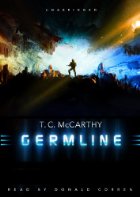
Book Review: Germline by T. C. McCarthy (Series, #1) (Audiobook narrated by Donald Corren)
 Summary:
Oscar is a reporter and lands an assignment with Stars and Stripes to go over to Kazakhstan and report on the new war between the US and Russia over resources needed for technology. This is a new kind of warfare. One fought mostly underground, and with the soldiers permanently wearing suits. Plus they’re fighting side-by-side with Genetics–human-looking robots who are all female and all look alike. Oscar started out just wanting a Pulitzer in between his drug addiction, which is easily fueled in Kaz. But Kaz changes people.
Review:
It’s been a while since I ventured in military scifi. I usually stick with the more sociological/psych experiment or cyberpunk areas of the genre, but this one just stuck out to me. I think its combination of aspects is just intriguing–a drug addicted journalist, a future war on earth, underground warfare, and robots. It certainly held my attention and flamed my interest in military scifi, plus it wound up counting for the MIA Reading Challenge, which was an added bonus.
Oscar is a well-rounded character. At first he seems flat and frankly like a total douchebag, but that’s because he’s a depressed drug addict. We learn gradually what landed him there and how he grows out of it with time. It’s an interesting character development arc because although many arcs show how war leads to alcoholism or drug addiction, in Oscar’s case although it at first makes his addiction worse, it ultimately helps him beat it. Because he ultimately snaps and realizes that the drugs are not helping the problems. They’re just making them worse. This is so key for anyone struggling with an addiction to realize. Pain in the present to feel better in the future. And McCarthy does an excellent job showing this progression without getting preachy. Sometimes you want to throttle Oscar, but you ultimately come to at least respect him if not like him. I wasn’t expecting such strong characterization in a military scifi, and I really enjoyed it.
The world McCarthy has built is interesting. The war itself is fairly typical–first world countries butting heads over resources in third world countries. But the content of the battles and the fighting methods are futuristic enough to maintain the scifi feel. There are the Genetics of course, and they are used by both sides. It’s interesting that the Americans use only female Genetics, and that is explained later on. There are also different vehicles and weapons that are scary but still seem plausible. Of course there’s also the suits the soldiers permanently wear, the front-line tunnels (the “subterrene”). It all adds up to a plausible future war.
Now, I will say, some of the battle scenes and near misses that Oscar has seem a bit of a stretch. I know odd things happen in war, and anyone can get lucky, but. Everyone’s luck runs out eventually. It seemed sometimes as if McCarthy wrote himself into a corner then had to figure out a way to make his main character survive. Escaping danger is fine, and necessary for the book to continue. But it should seem like a plausible escape. And if you have one that seems miraculous, it seems a bit excessive to me to have more than one.
The audiobook narrator did a fine job, in my opinion. He didn’t add anything to the story but he also didn’t detract from my enjoyment. I will note, however, that he pronounced “corpsman” wrong, saying the “s,” which is supposed to be silent. This only came up a few times and didn’t really bother me, but some readers, particularly ones who have been in the military themselves, might be bothered. Nothing else was mispronounced, and the voices used fit the characters nicely.
Overall, this piece of futuristic military scifi showcases both war and addiction in an engaging manner. Some readers may be off-put by Oscar at first, but stick it out. It takes many interesting turns. Recommended to scifi fans, whether they generally like military scifi or not.
4 out of 5 stars
Source: Audible
Counts For:
Book Review: January First: A Child’s Descent into Madness and Her Father’s Struggle to Save Her by Michael Schofield

Edit, April 22, 2021:
In light of the recent news about the Schofield family, I have made the decision to remove my usual purchase links from this page. I am leaving the review up as it accurately reflects how I understood the memoir at the time it came out. It is not entirely clear what is going on in this family, but what is clear is that DCFS removed January and her brother from their home with their mother. Their father was no longer living with them but rather with his new wife and baby in the midwest (the baby was being born the night the children were removed). January has recently turned 18. Whether she chooses to tell her story one day or find privacy with her adulthood, I hope she finds peace.
End of Edit.
Summary:
Michael and Susan thought their daughter, January’s, high energy levels and vivid imagination were the result of her high IQ, but when she turned five her imaginary friends started to tell her to do bad things like hit her baby brother or throw herself out of windows. Soon it became apparent that her imaginary friends were actually hallucinations. What followed was a harrowing struggle to get their daughter diagnosed and treated.
Review:
It’s rare to see a memoir by a father. There are a ton of memoirs by mothers but not a lot by fathers, particularly not by fathers of daughters. Put this together with the fact that Jani (her parents’ nickname for her) has childhood-onset schizophrenia, and you have one unique book.
This is an excellently told memoir. It opens with Michael speaking about having his daughter’s diagnosis now and struggling with all the barriers toward a normal life presented not just by her illness but by the world we live in. He talks about how some people argue that it’s impossible to diagnose a child with a mental illness, let alone schizophrenia, and of course some people even suggest that Jani is possessed by demons. He gets the denial. It’s scary to see a child consumed by an illness that is completely arbitrary in choosing its victims. But he says,
Denial is not going to help Jani or any of the other mentally ill and schizophrenic children I have come to know. What they need is acceptance. What they need is for us to be telling them “your illness does not define you.” We cannot go inside their minds and “fix” them. But we can fix the world so they can live in it. (location 90)
That speaks very strongly toward the whole reason I created the Mental Illness Advocacy Reading Challenge, and I knew then that this was going to be not just a unique read, but a challenging and good one.
After the introduction, Michael tells the story in a linear fashion. He does a good job remembering how he felt in the early days. His immense pride at his daughter’s high IQ and creative mind coupled with a determination to help her succeed and be herself. It’s fascinating to see, as an outsider, how early there were warning signs that something was not quite right with Jani but that Michael and Susan (her mother) attributed to a positive cause. I think that’s typical of parents and indeed of anyone who loves someone. They were looking for the best. Believing in the best for their daughter. They may be that moderately annoying couple on the play date who just insist their daughter with inappropriate behavior is gifted, but seeing it from Michael’s perspective makes that make sense. Most people (with the exception of parents with Munchausen by Proxy Syndrome) don’t want to believe that their child is sick. So of course you exhaust every other option first.
This of course makes Jani’s move toward violent behavior at the age of five that much more heart-breaking to read. I’ve heard and read stories and documentaries of how difficult it is for parents of young adults who become schizophrenic but at least they are adults. To have this happening to your five year old is completely terrifying. How do you control a child for whom no punishments seem to work? Who is more concerned with appeasing her hallucinations than with obeying her parents?
I certainly don’t agree with all the parenting choices the Schofields made in the first five years of her life (and for the record, neither do all of the psychiatrists), but none of their choices would create schizophrenia. Being overly lenient with your kids won’t make them hallucinate and become this violent at the age of five. This is one of those occasions where you don’t always agree with the choices the memoirist made, but you’re also not right in the heat of the battle. It’s far easier to say, “oh, you should have done this,” when it’s not your child who’s being lost to a mental illness right before your eyes.
That’s the thing about this memoir. Michael is so obviously completely honest. He tells things that happened that don’t present him in the best light. He is completely forthcoming in his own shortcomings, but he reiterates over and over how much he loves his daughter and wants to keep his family together. This combination does for this memoir what a lot of memoirs don’t have: it lends a complete sense of validity to the story as a whole. Michael is so honest about the emotional struggle of it all that even though you may not like him as a person, you respect him as a father.
This level of honesty combined with his writing ability make this memoir a strong call. A call to parents of children who are other-abled (whether mentally or physically) that they are not alone. It’s also a call to the rest of us who are not one of these parents to take a moment to think how difficult it must be and go easier on the parents and the child. I know I for one might think the next time I see a kid throwing an epic tantrum, “Maybe that child has an illness” instead of “Sheesh, do a better job, parents.”
Overall, this is a well-written memoir presenting the unique perspective of a father caring for a daughter with a mental illness. It also provides one of the few accounts of childhood-onset schizophrenia. Highly recommended to parents with special needs children, as well as to anyone who enjoys memoirs and the different perspectives reading them can bring.
4 out of 5 stars
Source: Netgalley
Buy ItSee note above.

Counts For:
Book Review: The Story of Beautiful Girl by Rachel Simon
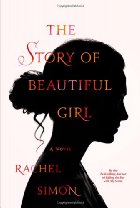 Summary:
Martha, a retired, widowed schoolteacher, thought her life was pretty much over until one night when a young intellectually disabled white woman and a deaf black man show up on her doorstop in the rain holding a newborn baby. Soon people from a nearby mental institution show up to take them back away. The young woman, Linny, seems terrified and asks Martha to hide the baby. The man, Homan, escapes. Martha goes on the lam to keep the baby girl out of the institution, and Linny and Homan fight against all odds attempting to reunite their family.
Review:
I received the audiobook version of this as a gift for one of the holiday swaps I participated in in December. It was my first time reading the audiobook version of a modern story, as I’m a cheapskate and usually just get ones for free that are out of copyright. It was thus an entirely different experience to be forced to slow down when reading this piece of historic fiction about a very dark secret in American history–mental institutions. The amount of time that Linny and Homan are forced to spend simply waiting for their lives to get better. Waiting for people to recognize their humanity. It hit me much harder than if I had been able to read this in a couple of hours. (Each disc is about 1 hour long, and there are 10 discs). The wrongness of it all. The amount of time and lives wasted simply because the able-minded and able-bodied didn’t seek to understand or to grant these people the basic human right of self-direction.
The story itself is told from multiple viewpoints–Linny, Homan, Martha, Kate (a caregiver at the institution), and later Julia (the baby daughter when she grows up). Mostly Simon does a great job switching among the different voices, particularly representing Linny. She does not overinflate her internal dialogue to be that of a person with an average IQ, but she still clearly represents Linny’s humanity. I am a bit skeptical of the voice given to Homan though, mostly his tendency to give people bizarre nicknames like “roof giver.” I know that neither
Simon nor I know a deaf person who is unable to communicate with those around him, so really it is all guess-work as to what his internal dialogue would be like. But I can’t help but feel like it’s not quite there. On the other hand, his confusion and frustration at people talking around him, over him, and treating him like he’s stupid just because he’s deaf is very well done.
In retrospect, I’m not quite sure why so much time was devoted to Martha and Julia when Julia was a baby. Her story doesn’t end up being nearly as important as the Homan/Linny romance, so this focus feels a bit like a red herring. I would definitely shorten those chapters.
The use of artwork and items of visual significance to the characters is gorgeous though. Lighthouses are a central feature, and I don’t even like lighthouses myself, but I still found myself moved by how important the visual arts can be to people. This is a book that, surprisingly, winds up being almost a battle cry for the arts. For their value in helping us connect with each other and hold on to our humanity. I think any artist or someone who is a fan of the arts would appreciate this book for that reason.
On the other hand, Simon is clearly a person of some sort of faith, with a belief in god and the tendency for things to all work out right in the end. I’m…not that type of person. So when characters wax eloquent about god or an overall plan or the ability of evil people to repent and turn good, well, it all feels a bit more like fantasy than historic fiction to me. I probably would have been irritated by this less if I had had the ability to skim over those parts though.
In the end, though, I came away from this book appreciating its uniqueness and all the good qualities it had to offer. It demonstrates through a beautiful story why it’s so important not to institutionalize the mentally ill or mentally challenged. It shows the power of love to overcome race and disabilities. It is the story of the power and beauty of resiliency.
Overall, I recommend this work of historic fiction to fans of historic and contemporary fiction, advocates of the mentally ill or mentally challenged, and those just simply looking for a unique love story.
4 out of 5 stars
Source: Gift

Counts For:
Announcement: Mental Illness Advocacy Reading Challenge 2012!
 I am pleased to announce that I will again by hosting the Mental Illness Advocacy (MIA) Reading Challenge for 2012! Just what is the MIA Reading Challenge? I’m glad you asked!
I started the MIA Reading Challenge in December 2010 in an effort to raise awareness, knowledge, and acceptance of mental illness. Reading, both fiction and nonfiction, is an excellent way to broaden one’s horizons and expose one to new ideas and ways of thinking and being. Many reading challenges already exist in the book blogging community to address racism, sexism, and homophobia, but I could not find any to address the stigma faced by those suffering from mental illness. In spite of mental illnesses being recognized by the scientific community as diseases just like physical ones, many still think those suffering from one are at fault for their own suffering. I hope reading and reviewing books featuring characters struggling to deal with mental illness, whether their own or another person’s, will help remove the stigma faced on a daily basis by those with a mental illness. They already have to struggle with an illness; they shouldn’t have to face a stigma too.
Challenge Levels:
Acquainted–4 books
Aware–8 books
Advocate–12 books
I think in the world of book blog reading challenges this is a fairly unique one for a good cause, and I hope you will consider signing up for it!
Just head on over to the challenge’s main page to sign up by commenting with a link to your announcement of participation and feel free to grab the 2012 button for your blog. The challenge page also contains a list of suggested books sorted by illness that 2011’s participants found to be very helpful.
Rock on, advocates!
Book Review: Mr. Monster by Dan Wells (Series, #2)
 Summary:
John Wayne Cleaver, diagnosed sociopath and assistant in his family’s morgue, is trying to recover from the aftermath of the demonic serial killer that was haunting Clayton County until a few months ago. A few months ago when he let loose his own inner sociopath, otherwise known as Mr. Monster, and killed the demon. For the sake of the town. Now he is struggling to get Mr. Monster back under control as well as deal with new feelings for his neighbor, Brooke, both of which would be easier if the demon hadn’t killed his therapist. In spite of all this, things seem to be slowly calming down–until new dead bodies start showing up.
Review:
In a series such as this, the second book is rather crucial. In the first book, we see John trying to deal with his mental illness in the normal ways, only to be confronted with an abnormal solution. He takes it. The next book must then show not only if John continues down this path, but also why, not to mention set up the structure so that he may continue down this path indefinitely for most of the rest of the series. Wells definitely accomplishes this tough task, although not quite as smoothly or uniquely as he set up the initial plot and character of John in the first book.
One thing that this book suffers from is uneven pacing. Whereas the first book used the classic thriller scenario of gradually amping up the tension, here the tension rises and falls so frequently and to such different levels that it’s a bit off-putting. It provides too many moments where it’s not too distressing to put the book down and go do something else. It is only the last few chapters of the book that hold the same tension as in the first entry in the series. This is problematic when this is supposed to be a thriller, but understandable given all of the set-up and developments that Wells must pull off.
The new demon is definitely well-done and scary in his own way, although I must say I guessed who he was pretty much the instant he showed up in the book. Thus, what was shocking was not who the demon is, but what he does to his victims, why, and how he pulls it off. This part is creative and thankfully it is evident that the demons in the series will be variable and non-formulaic. This is essential if the elements of surprise, disgust, horror, and delight are to remain.
Yet the focus is not just on the demons, thankfully. Wells skillfully still includes the issues John faces as someone struggling with a rather non-sympathetic mental illness, making him alternately relatable and grotesque. John struggles. He is sometimes unlikable, but he tries so damn hard. Similarly, Wells continues to develop the messed-up family structure John has to deal with, an issue that is absolutely relatable to most readers of YA lit. There is much more going on here than demon fighting. Indeed, even John’s first romantic interest is addressed.
I feel the need to say to animal lovers, particularly ones who love the wonderful kitties among us, that there is a very distressing scene in this book involving a cat that almost made me stop reading it. I do think Wells handles it well, including the aftermath, but if you find animal cruelty incredibly upsetting, um, either skip this book or skim that section. You’ll know when it’s coming.
Overall, this entry in the series does well for all the tasks it had to do to smoothly connect the set-up in the first book to the running themes of the rest of the series. Although the pacing struggles a bit, characterization is still strong, as are surprising plot points. I’m interested to see what Wells does with the next book in the series, and I recommend this one to fans of psychological and paranormal thrillers alike.
4 out of 5 stars
Source: PaperBackSwap

Previous Books in Series:
I Am Not a Serial Killer, review
Counts For:
 Support my work with a tip or browse my shop for curated book club guides, how to guides, cross-stitch patterns, and more!


This work by Amanda Nevius is licensed under a Creative Commons Attribution-Noncommercial-No Derivative Works 3.0 United States License.
 Opinions of a Wolf