
Archive
Book Review: Everlasting: Da Eb’Bulastin by Rasheedah Prioleau
 Summary:
Aiyana Gamelle has been sleepwalking, waking up on the beach of the half Gullah, half Native American Sa’Fyre Island off the coast of South Carolina. But she knows she’ll soon be transitioning to being Queen of the Gullah half of the island, due to being directly descended from both the founders and a mysterious African goddess, so she brushes it off and focuses on the festival she’s organized on the island to bring in more revenue. But when an important island guest is murdered and her grandmother passes away before the official crowning ceremony, an unwanted family curse is slowly revealed.
Review:
This is one of the six indie books I accepted for review on this blog in 2015. Everything about it from the title to the description stuck out to me both as something that I hadn’t seen a mainstream publisher get around to trying in many years and also as something that piqued my interest. An island that’s half Gullah and half Native American? (Never heard of the Gullah? Check out this informative article about them). A woman inheriting a position of power from another woman? A family curse? Yes please! I am happy to say that the book more than lived up to my expectations, it also had some unexpected elements that I was delightfully surprised by.
The known history of the island and the Gamelle family is well told early in the book. It comes through in bits and pieces at just the right times. There is never an info dump. Similarly, Aiyana and her siblings are slowly revealed, going from how you may first perceive them to more well-rounded characters throughout the book. The island and the people on it are incredibly well described. I had no trouble imagining what this island may be like, despite having never been to the Carolinas myself.
One thing that caught me by surprise in the book and that I think should be promoted more in its promotional materials, as it’s something that is often sought after, is the romance between Aiyana (who is half-Native American and half-Gullah, since her mother dated her Native American father against the wishes of both sides) and one of the Native American men on the island. It’s an inter-racial relationship….with no white people. I can’t remember the last time I saw that in a book, frankly, and I was happy to see it.
This is primarily a mystery/horror book though, so let’s talk about the mystery plot. It takes many twists and turns, none of which I expected but all of which ultimately made sense. I found it at times grotesque and at other times it kept me on the edge of my seat. All the time I was always rooting for Aiyana, which is exactly what I generally want out of a mystery.
One negative I would say is that it’s a bit unclear if the book is the first in a series or a standalone. Amazon mentions it being the first in a series, but neither the GoodReads record nor the page about it on the author’s website mention it being the start of a series. If it is the start of a series, the book’s slightly abrupt ending works. If it’s a standalone, then I would want a bit more closure at the end. If it is the start of a series, then I’d say perhaps a quick “Look for more Sa’Fyre Island adventures coming soon!” at the end would be an excellent addition to help the reader know to expect more and to keep them coming back.
Overall, this is both a fun and a quite different entry into the mystery genre. A Gullah woman takes the center stage of the mystery, rather than being a prop. The mystery is well crafted and told, and there’s even the bonus of a bit of romance in the book. Recommended for readers looking for a completely different mystery from what they may be used to reading and who don’t mind a bit of the fantastical showing up in the plot.
If you found this review helpful, please consider tipping me on ko-fi, checking out my digital items available in my ko-fi shop, buying one of my publications, or using one of my referral/coupon codes. Thank you for your support!
4 out of 5 stars
Length: 206 pages – average but on the shorter side
Source: Kindle copy from author in exchange for my honest review

Book Review: Cat Sense: How the New Feline Science Can Make You a Better Friend to Your Pet by John W.S. Bradshaw
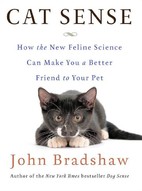 Summary:
John W.S. Bradshaw, PhD, has been studying the behavior of cats and dogs and their people for over 25 years. In this book, he seeks to present the biology behind the modern domestic cat in the hopes of helping their humans understand them better. He also presents theories about the possible future of cats and suggestions as to how to direct that the best way possible for better human/cat relationships.
Review:
I picked this book up because I wanted to understand my adorable talkative tortie fluffball, Ayla, better. I certainly learned a few things about cats that I found useful in relating to my own, but I also learned a lot about the genetics of cats (not sure I really wanted to learn that), the history of human treatment of them, and theories on their future evolution.
The book is divided into 11 chapters, which could be casually grouped into the following general themes:
- the genetic and biological history of the cat or just how did we end up with a domesticated tiger anyway
- how the domestic cat thinks and feels or yes scientists are now proving that cats actually have feelings although maybe not quite to the extent that their most loving owners believe
- how cats relate to each other or cats hate other cats except for random kittens that are dropped into their nest or possibly other females from their own family
- how cats relate to people or cats think you are a giant mother cat who is possibly superior (possibly)
- how cats relate to wildlife or no cats aren’t destroying your precious birds you overly upset cat-haters (um except for possibly the wildlife on small islands but the invasive rats are actually worse and cats hunt them so there)
- the potential future of the cat or for the love of god stop spaying and neutering the bestest most loving kitties in the world and only allowing the anti-social ferals to breed.
Obviously this is a lot of ground, so I’m only going to touch on each one briefly. First though, just let me mention that the author is both a renowned expert in this science (the science of cats), and his book also features extensive references. This is thus a trustworthy source, however, potential readers should be aware that the author (just as every author) has biases, and Bradshaw’s are fairly clear in the book. The man clearly adores cats, and thus sometimes may sway a bit to the side of positive representations of cats and optimistic beliefs about the extent of their feelings and internal lives. Now, I love cats too, so that didn’t bother me in the least, but a reader just looking at the science should note this bias. Additionally, some of the studies he cites for his findings were quite small (under 100 participants, in one case, only 8 cats were tested). Studies this small show definite room for further research. Additionally, all of the cat studies he himself has conducted were in Great Britain, so cultural biases and differences in how cats and people interact should be considered when thinking about how he analyzes cat/human interaction and behavior.
The section about the history of the domestication of the cat and the genetics of the cat is, honestly, a bit of a heavy place to start for the average person just looking to get along with their cat better. There are sentences that go far more in-depth into the genetics of a cat than I really ever cared to know. Given that this book is marketed toward the average cat owner, it may have been better to dial down the genetic information just a bit to make it easier and also speedier to read in the lead-in into the more modernly relevant information. The most interesting things I learned in this section were that domestication of the cat happened in multiple different times and places, meaning multiple cultures saw the potential of the cat and domesticated them (loc 267). There is Egyptian temple art of cats sitting in baskets (loc 634), something I found to be pretty adorable. The genetics of just how we wind up with torties, which I admit to only being interested in because my own cat is a tortie:
If a cat carries one orange and one brown version of the gene, then both appear in the coat, in random patches: in one part of the skin, the chromosome with the orange version has been switched on, and in another it is it eh brown-black pattern that “wins,” producing a tortoiseshell-tabby (or “torbie”) cat. (loc 772)
If you found that quote a bit tedious to read, just bare in mind that that is the most interesting to me of the genetics information in this section. The cat is a “hypercarnivore” (loc 1176), meaning that unlike the dog, it has lost the ability to live on plants. Cats, unlike dogs, must eat meat. I also finally learned why I shouldn’t worry too much if my cat doesn’t drink very much water:
Cats do have two notable nutritional advantages over humans. First, their kidneys are very efficient, as expected for an animal whose ancestors lived on the edge of deserts, and many cats drink little water, getting all the moisture they need from the meat they eat. Second, cats do not require vitamin C. Taken together, these make cats well suited to shipboard life: they don’t compete with sailors for precious drinking water, getting all they need from the mice they catch, and they are not afflicted by scurvy. (loc 1192)
The next four sections often blurred together, since how a cat thinks and feels directly relates to how cats relate to each other, humans, and wildlife.
Cats can develop a cat form of PTSD if they are abandoned by their mothers early in life:
Kittens that are abandoned by their mothers and are then hand-raised can become excessively attention seeking toward their first owners, though some subsequently seem to “grow out of” this. Based on what we know about other mammals in similar situations, we can assume that after the mother’s departure, the kittens’ brains endure high levels of stress hormones. These consistently high levels cause permanent changes in their developing brains and stress hormone systems, such that they may overreact to unsettling events later in life. (loc 1371)
I found this particularly interesting, since I know my cat was abandoned by her first owners in their apartment when they moved away, and it took weeks for anyone to find her. I’ve often suspected my cat has some form of kitty PTSD, and I think this scientific information would support that, although the specific type of abandonment was different.
Cats can’t focus on anything closer than a foot from their nose. Your cat is not being stupid when it can’t spot a piece of food on the floor, she really can’t see it. It helps to move it around or tap the floor next to it, to get the cat to sniff that area. (loc 1644)
This section also addresses why cats are harder to train than dogs:
Cats are much more difficult to train than dogs are for at least three reasons. First, their behavior shows less intrinsic variety than that of dogs, so there is less raw material with which to work….Second, and perhaps most important, cats are less naturally attentive toward people than dogs are….Third, although dogs are powerfully rewarded by simple physical contact from their owner, few cats are. (loc 2086)
It goes on to explain how to do basic training with your cat, adapted to cats’ specific needs, primarily using a clicker (a device that makes a noise).
Feral cats have shown us that cat society is a matriarchy, with the females of the family sticking together and the toms getting booted out to go roam and make more kittens, although there are certain scenarios in which toms are tolerated living in close proximity, generally in a situation where the tom is valuable for protection of the kittens if the space is at a premium. (loc 2426)
In spite of the ability of feral cats to live in matriarchies, cats are not well-suited for a bunch of unrelated and gender-mixed cats living in one small space. Cats generally don’t like most other cats, and Bradshaw talks some about how forcing cats to live with other cats they are not related to or don’t particularly like can put undue stress on the cats.
Cats appear to be incapable of sustaining a large number of friendly relationships, even when all their neighbors are close relatives. (loc 2438)
However, the bond the cat feels with its immediate family is strong, and scientists believe they extend that bond to their owners, who they perceive of as being a sort of mother cat. (loc 3080) This section also offers potential reasons for why a cat may purr or lick their owner, but there is no definitive scientific answer yet. It is also noted that cat personalities are the result of a mix of nature and nurture, and affectionate owners tend to have affectionate cats but whether they pick out affectionate cats or cats become affectionate in response to the owner is uncertain.
Bradshaw then addresses the concern some groups have that domestic cats are hurting native wildlife populations, particularly birds. It’s clear that Bradshaw believes that this is mostly a bunch of hokum created by cat-haters as a way to get rid of cats. This is potentially true, and Bradshaw does cite some good studies about the actual impact cats have on wildlife (very small, and in some cases, helpful since they eat the invasive predator of a native species). However, it is difficult to believe everything he cites, since his bias in favor of cats is so clear, and I am saying this as a cat-lover myself. I would find it more useful for his evidence to be presented in a more balanced fashion, as I would then feel more confident citing it to people who are concerned about cat impact on wildlife.
Finally, Bradshaw looks at the potential future of the cat. He is clearly quite concerned that our current method of neutering pet cats will hurt future cats.
Because neutering inevitably targets those cats that are being best cared for, it must logically hand the reproductive advantage to those cats that are least attached to people, many of which are genetically predisposed to remain unsocialized. We must consider the long-term effects of neutering carefully: for example, it might be better for the cats of the future as a whole if neutering programs were targeted more at ferals, which are both the unfriendliest cats and also those most likely to damage wildlife populations. (loc 4039)
I found this argument to be quite moving and logical. Bradshaw suggests both that owners might let their pet cats breed once before neutering/spaying them and also that breeders could begin to work at breeding pet cats with an eye on personality rather than looks. He also suggests focusing spay/neuter programs on feral populations. This is definitely food for thought, and I certainly will consider letting a future pet cat have a litter of kittens.
Bradshaw ends his book with this statement:
Cats need our understanding–both as individual animals that need our help to adjust to our ever-increasing demands, and also as a species that is still in transition between the wild and the truly domestic. If we can agree to support them in both these ways, cats will be assured a future in which they are not only popular and populous, but are also more relaxed, and affectionate, than they are today. (loc 4072)
A good summary of the overall themes of the book.
Overall, this book will definitely teach cat owners and lovers some new things both about the science of cats and cat behaviors. Sometimes the science can veer a bit too in-depth for the audience of the book, and also sometimes the author’s love of cats can make him seem a bit biased in favor of them. However, readers who are willing to skim over the science that they are not so into will still be able to gleam lots of information from this book that will be directly helpful to them with their pet cats. Also, this audience probably won’t mind the love of cats bias in the science. ;-)
If you found this review helpful, please consider tipping me on ko-fi, checking out my digital items available in my ko-fi shop, buying one of my publications, or using one of my referral/coupon codes. Thank you for your support!
4 out of 5 stars
Length: 307 pages – average but on the longer side
Source: NetGalley

Book Review: Cycle of the Werewolf by Stephen King
 Summary:
Something evil is haunting the small town of Tarker Mills, Maine. Every month another person is found dead, brutally ripped apart. Can they solve what is haunting their town before the terror consumes them all?
Review:
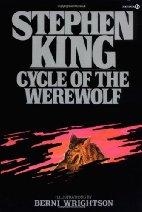
I picked this up in a used book basement because I’m generally trying to read most everything Stephen King has written, and this particular print book was beautifully illustrated. Each chapter (or month…or murder) had at least one full-color illustration, and that just spoke to me. The story itself wound up being rather ho-hum to me, but part of that may be due to the fact that I’m rather hard to shock these days.
My favorite part of the book is that it opens with a note from King stating that astute readers will notice that the full moon couldn’t possibly have fallen on all of the big holidays he has it fall on, but that he’s taken artistic license to make it do so. The passage reads like it has a wink at the end, and I like that King assertively addresses what could bother some readers or be a controversy and acknowledges that his facts are wrong, but he did it for artistic reasons. Personally, I’m not a fan of books that take artistic licenses, but if you’re going to, this is the way to do it. Acknowledge it (don’t hide from it) and move on.
This feels like an early Stephen King book. The usual small town New England stock characters are there, but they’re not fully fleshed-out. There’s even a spunky kid in a wheelchair who reminds me of an earlier version of Susannah from The Dark Tower series (the book about Susannah was first published in 2004). The stock, rather two-dimensional characters work in this book, since the storytelling approach is basically one of folklore. We don’t need to know much more about these characters than we see on the surface, and that’s fine.
Each chapter is a different month in the year, and they sort of feel like connected short stories. By the last half of the year, the reader starts to know what’s going on, and the “short stories” become even more connected.
Fans of an underdog hero will enjoy who ends up battling the werewolf plaguing the town, as will those who enjoy seeing the trope of a trusted citizen being someone who should not be trusted. (That’s as much as I can say without being too spoilery).
This all sounds rather positive, so why did I feel ho-hum about it? The tension building didn’t work for me. Nothing that happened really scared me. The character in the wheelchair feels like a less bad-ass version of Susannah, and what I would want would be Susannah. This is perhaps unfair of me to say, since Susannah came about further down the line, but I do think it points to how King’s writing improved with time (as does everyone’s). I also just found the villain to be rather expected and cliche, although I’m sure it wasn’t when the book first came out. In general, this book just doesn’t feel like it aged particularly well, especially when compared to other older King books.
Overall, if a reader is looking for a quick, beautifully illustrated folklore style retelling of a werewolf story, they will enjoy this book. Those looking for high levels of tension or gore or in-depth character development will want to give it a pass.
If you found this review helpful, please consider tipping me on ko-fi, checking out my digital items available in my ko-fi shop, buying one of my publications, or using one of my referral/coupon codes. Thank you for your support!
3 out of 5 stars
Length: 128 pages – novella
Source: Brookline Booksmith, used books basement

Book Review: Fables, Vol. 1: Legends in Exile by Bill Willingham et al. (Series, #1) (Graphic Novel)
 Summary:
All the characters from the fairy tales we know actually lived in that folklore world but were forced out into exile in modern-day New York thanks to an enemy known only as The Adversary. Snow White, right-hand to the ruler of Fabletown, seeks to keep everyone in line. But that gets more difficult when her own sister, Rose Red, is murdered. A reformed Big Bad Wolf, now their sheriff, promises to help her track down his killer.
Review:
Being a long-time fan of The 10th Kingdom, a story about the characters of folklore existing in a parallel universe to our own that some modern-day Americans accidentally visit, I was intrigued by this idea of a similar story in reverse. Instead of being engaging and a fun escape, though, my experience with it is best summed-up as meh. It’s a cool idea that is saddled to a ho-hum plot and flat characters, thereby rendering it a mediocre read.
The basic idea is some unseen Adversary has driven the fairy tale folk out of their land and into exile in our own. In our land, they’ve all agreed to give everyone a clean slate to start over. So far so good. From here though things go from interesting and semi-unique to basically a noir plot we’ve all read before wrapped up in 2-dimensional fairy tale characters. Big Bad Wolf is the hard-boiled detective. Snow White is his lady assistant. A noir version of a fairy tale could have been good, but instead the flattest elements of both genres are mashed together, rather than the best of each. What you end up with is a wolf without his fangs or a hard-boiled detective without his cigarettes and womanizing ways. The grit is just removed leaving an overly-sanitized world.
I do enjoy a mystery plot but I also expect them to keep me guessing. I knew the solution long before the end, and I’m guessing most other readers would too.
The art is mostly good, although the depiction of the talking pig gave me goosebumps in a bad way. He doesn’t really fit in to the feel of the rest of the art. However, the art is colorful and easy to follow, and made reading the story go quickly.
Overall, if a reader loves fairy tales and graphic novels and likes the idea of seeing fairy tale characters in modern-day New York, they will probably enjoy this book. Readers looking for an in-depth exploration of a fairy tale character or to see them more well-rounded in a non-fairy tale setting will be disappointed. Similarly, readers looking for a tough mystery to solve will want to look elsewhere.
If you found this review helpful, please consider tipping me on ko-fi, checking out my digital items available in my ko-fi shop, buying one of my publications, or using one of my referral/coupon codes. Thank you for your support!
3 out of 5 stars
Length: 128 pages – novella
Source: I remember I bought it at a comic book store, but I don’t remember which one.

Counts For:

Book Review: Maplecroft by Cherie Priest (Series, #1)
 Summary:
“Lizzie Borden took an axe; gave her mother forty whacks….”
Any New Englander knows the nursery rhyme based on the true crime story of Mr. and Mrs. Borden who were murdered with an axe in 1892. In spite of being tried and acquitted for the murders, their daughter (in the case of Mrs. Borden, step-daughter), was widely believed to actually be responsible for the murders. In this book, she definitely was, but maybe not for the reasons you might think.
A darkness is trying to take over Fall River, Massachusetts, and Lizzie and her ailing sister Emma are all that might stand between the town and oblivion, with Lizzie’s parents being the first casualties in the battle.
Review:
I grew up chanting the nursery rhyme about Lizzie Borden the first half of which is quoted above (this perhaps says an awful lot about New Englanders, but I digress), and I also love tales from the Lovecraft universe, which also originated in New England. When I heard about this book that mashed up the two, I put it on my wishlist. Lo and behold, my future sister-in-law, who had never even seen my wishlist, bought it for me for Christmas last year. I thought this would be the perfect read for the fantasy challenge, and although it was a bit different than what I was expecting, I still enjoyed the mix of Lovecraft and women’s history that Priest has woven and am eagerly anticipating reading the sequel.
The story is told through a combination of first person accounts from Lizzie, Emma, and Nance, diary-style entries by their neighbor doctor, letters, police and fire reports, and first person ramblings of a professor from Miskatonic University (another Lovecraft element). Some readers may be put off by the combination of first person perspectives, but I’ve always enjoyed this style, particularly when it includes things like letters and police reports. I felt that it was one of the strengths of the book, and I also particularly enjoyed getting to see both Emma’s and Lizzie’s perspectives, as well as that of Lizzie’s lover, Nance.
The Lovecraft mash-up basically is that some sort of Dark One in the deep is out to turn everyone on the seacoast either into worshippers or victims or literally turn them into monstrous ones who live in the deep. Emma and Lizzie’s parents were among the first to begin succumbing to this infection and that is why Lizzie had to kill them. Lizzie and Emma now are conducting research, trying to figure out how to prevent the Dark One from actually rising up. This is all extremely Lovecraftian, including the fact that some of these developments don’t make a ton of sense, but things just don’t make sense in the dark fantasy world of Lovecraft, so I was ok with that. Readers new to the world of Lovecraft might be a bit more frustrated by how inexplicable most things to do with the Dark Ones and the deep are, however.
I particularly enjoyed how Priest explores how societal and cultural norms of 1890s New England affects women’s lives. Emma could be a scientist now that women are being accepted into colleges, but she chooses to instead write her scientific papers under a male pseudonym because she believes she would never garner respect otherwise. Lizzie and Nance are in love and must hide it, although Lizzie often feels why should she bother when she is already disgraced after the trial. The clashes between Lizzie and Emma regarding both her affair with Nance and the fact that Lizzie believes in trying out magical and fantastical defenses against the Dark One whereas Emma believes purely in science are interesting reading. They are two very different people who are thrust together both by virtue of being siblings and by the fact that as women in the 1890s their lives are limited.
On the other hand, in spite of liking the characters of the neighbor doctor and the Miskatonic professor and enjoying the exploration of Lizzie’s and Emma’s relationship and getting to see some of Emma’s character, I couldn’t help but feel that Lizzie didn’t get a chance to be enough in this book. Lizzie Borden is such a looming large figure in local history, even on the book cover she presents as a bad-ass in a period skirt holding a bloody axe. In contrast in the book she spends a lot of time dealing with her annoying sister. Similarly, I’m not a fan of the fact that Lizzie does very little of rescuing herself in this book, which is, I believe, if the historic Lizzie really did kill her parents, what she actually did in real life. To me Lizzie has always been a woman who said fucking enough and took an axe and dealt violently and finally with her problems. Whereas in the book, she starts off off-screen that way (we don’t actually see her kill her parents) and she sort of tapers off. Much as I enjoyed seeing her messed up relationship with Emma, I couldn’t help but feel it would have ended more powerfully if she’d said fucking enough and whacked Emma through the skull for being such an insufferable bitch and in the way all the time. This was my main issue with the book.
My second, more minor, issue is that I felt the plot takes too long to build up to actual horrifying events and/or murders. The first murders, as I mentioned before, happened off-screen. The beginning of the book then is a build-up of a lot of tension with not much actual gore or murder occurring. I should mention that I was watching “The Lizzie Borden Chronicles” on tv at the same time as I was reading this book. In that show, Lizzie kills at least one person an episode. Now, some of that gets over the top, but it does get the idea of the pacing one would expect from this type of story right. More mayhem. More murder. More danger. More often.
On a positive note, the scenes between Lizzie and Nance are beautifully done, and while I was frustrated to see Lizzie turn a bit into a lovesick fool, I was very glad it was happening with Nance. Their relationship and dynamic jumped off the page and really brightened up the book for me.
The set-up at the end of the book for the sequel is well-done, although I’m uncertain how the series can proceed forward so far removed from the actual historical event, I am excited to read it and see what happens.
Overall, this Lovecraft fantastical take on the Lizzie Borden of history and what led to the murders of her parents hits just the right note for Lovecraft fans. Readers who are new to the dark fantasy world of Lovecraft may be a bit surprised by the slow burn of the horror and how much of it winds up not making much sense, but those readers who can embrace this style of dark fantasy will enjoy it. Those looking for a bad-ass Lizzie should be aware that this Lizzie only acts when absolutely necessary and then with restraint, and they should perhaps tune into the made for tv movie Lizzie Borden Took An Ax instead. Recommended to fans of Lovecraft who are interested in getting some local history woven in to the New England settings they are familiar with from the Lovecraft universe.
If you found this review helpful, please consider tipping me on ko-fi, checking out my digital items available in my ko-fi shop, buying one of my publications, or using one of my referral/coupon codes. Thank you for your support!
4 out of 5 stars
Length: 435 pages – average but on the longer side
Source: Gift

Counts For:
Book Review: Drugs For Life: How Pharmaceutical Companies Define Our Health by Joseph Dumit
 Summary:
Written by a professor of Anthropology, this book explores the interaction of the cultures of medicine, pharmaceuticals, and public health and how they have impacted the modern Western perception of what constitutes health and what makes a person count as healthy.
Review:
I was immediately drawn to this anthropological exploration of what has impacted the modern perception of health and requested it on NetGalley. Although the book can sometimes feel a bit long and repetitive, the information it contains is an even-handed look at the reasons behind so many people in the West being put on preventive prescription medication.
Since this is written by an Anthropologist, not a journalist or a doctor or pharmaceutical representative, it has neither an expose feeling to it nor a particular slant. It’s clear that the author originally was just looking at the culture surrounding healthcare, and the evidence led him down this path. Anyone who is familiar with Anthropology knows that Anthropologists are trained to attempt to avoid biases and just report what they see. Of course, everyone is human, and I definitely think that by the time Dumit finished his research he has formed an opinion that the reader can observe, however he does quite a good job of just presenting the facts.
The book is divided into six chapters, plus an introduction and conclusion. The six chapters are: responding to facts, pharmaceutical witnessing and direct-to-consumer advertising, having to grow medicine, mass health: illness is a line you cross, moving the lines: deciding on thresholds, and knowing your numbers: pharmaceutical lifestyles. The book thus moves from the culture of facts and how we respond to them, to the business of pharmaceuticals, to how public health has impacted how we treat individual health, to how the individual health care consumer responds to the information they hear from all sides. Again, all of this is presented from an anthropological perspective. If a reader has not read an anthropology-research based book before, the way in which Dumit looks at the information may be a bit confusing or surprising at first, since it is more about culture, which may not be expected at first, given the title. However, the second chapter helps this perspective make sense, so even a reader new to this perspective will most likely be able to get into it.
What inspired Dumit to conduct this cultural investigation is the sheer number of drugs the average American is prescribed.
The average American is prescribed and purchases somewhere between nine and thirteen prescription-only drugs per year, totaling over 4 billion prescriptions in 2011 and growing. The range is wide, however, and many people are prescribed few or no drugs each year. (loc 100)
What Dumit’s investigations revealed was a cultural shift from treating an illness after it negatively impacts a person’s life to attempting to prevent illness. Whereas individual doctors may prefer prescribing lifestyle changes (work out more, eat differently, stress reduction), some doctors prefer being able to simply prescribe a drug and some groups of patients may prefer to keep their lifestyle and take a preventative drug. Similarly, the pharmaceutical industry sees preventative drugs that are taken by large groups of people with risk factors as a more monetarily sound investment than generating drugs for an illness that would be taken one-time or simply for the duration of the illness or just from the time of diagnosis to the end of the person’s life. Preventative drugs are prescribed to people who have risk factors for developing an illness, and they then must be taken every day. At the same time as these situations have developed, public health, since the 1970s, has started looking at groups of people at risk for developing a disease that would have a negative public health impact and advising that people with these risk factors be treated to prevent the disease from ever occurring. All of these factors have created the environment in which we now live in the United States where people who are not yet sick are still taking multiple prescription drugs to prevent their getting sick, often in spite of dealing with side effects.
I will now discuss the elements of this overarching concept that I found most interesting. The book contains many more facts and information than this, and if you find any of this at all intriguing, I highly recommend you pick up and read the whole book.
First, there’s the fact that clinical trials are extremely expensive to produce. Pharmaceutical companies thus are most invested in clinical trials whose results would indicate treating the largest number of people for the longest amount of time and, perhaps most importantly, only for those people who are able and willing to pay for these drugs. (loc 145) What this means is that illnesses that only a small percentage of people have are not getting clinical trials for drugs. Similarly, illnesses that a lot of people have but most of those people cannot afford to pay for the drugs, such as tropical diseases prevalent in African countries, also are not getting clinical trials for drugs to treat them. The pharmaceutical companies are businesses that are interested in making money, not in improving the quality of life for everyone on the planet.
Marketers want to maximize the number of prescriptions in order to maximize profits. They see clinical trials as investments whose purpose is to increase sales of medicines. (loc 1415)
I also found the question of what constitutes health and how that has changed over the years fascinating. Originally, people generally only came to the doctor if they felt sick or as if something was off. We are now encouraged to engage in preventative care. How this impacts how we perceive of health is summed up well here:
We have a new mass health model in which you often have no experience of being ill and no symptoms your doctor can detect, but you or your doctor often discover that you are at risk via a screening test based on clinical trials that show some efficacy of a treatment in reducing that risk; you may therefore be prescribed a drug for life that will have no discernible effect on you, and by taking it you neither return to health nor are officially ill, only at risk. (loc 195)
Tied into this idea of risk factors being treated as illnesses and thus healthy people being treated as not healthy is the idea that outliers, variations, and things that are simply socially undesirable can often be reclassified as illness, particularly if doing so means that the pharmaceutical companies will make more money. (loc 1079)
Third, I was intrigued by the discussion on the public health model. Public health seeks to reduce illness in the population as a whole by treating those with risk factors, but also by treating however many it takes to reduce the occurrence of illness. An example of a community-wide public health intervention is adding fluoride to the public drinking water. This is done to everyone in the hopes that it will help prevent cavities, regardless of the actual individual risk factor for developing cavities. A public health intervention that is done only to those with a risk factor is taking statins to lower cholesterol. This is recommended for individuals whose cholesterol falls in a certain range, but there is no exact science in creating that range. In fact, the cholesterol range is frequently lowered, putting more and more people on statins, even if only a small percent (less than 10%) of people are actually helped by being on these statins. The question Dumit raises in this discussion is:
At what point are public health officials justified in intervening on a community-wide basis to protect a group of people who are not all equally at risk and who might not want to be protected? The push and pull of paternalism versus autonomy is a constant refrain in the field. (loc 1667)
Of course, the pharmaceutical companies want more and more people included in the risk factor, they even would probably be fine with everyone being on statins as a community-wide public health intervention, since this increases their sales.
Finally, I was also interested in how the book examines how the average patient population responds to all of this information about risk factors and preventative drugs and medicine and constant flow of health information. Dumit divides the response to this into three general groups: “expert patienthood, fearful subject of duties, and better living through chemistry.” (loc 2842) The expert patient is like the teacher’s pet. They know all their health numbers and risk factors, listen to their doctors, take anything prescribed, and advise others to do the same. These guys are the health seekers. The second category, fearful subject of duties, is motivated by avoiding illness, not by seeking health. The final category of patient is the one I alluded to earlier. These folks won’t change their lifestyle in response to risk factors, but will instead request a pill so that they can continue living how they prefer. Which category do you think you fall into?
I think the book in general could be a bit better organized. My notes, although taken linearly, read as a bit disjointed, with some jumping around among different ideas. The overarching concepts are not laid out as clearly and succinctly in the book as they are in my review. Similarly, some concepts can be repeated a bit too often, leaving the reader feeling like they’ve read this before. Also, sometimes the book delves a bit too deeply into anthropological concepts and methods, given the fact that it is presented as a book for a layman. Finally, I feel the title of the book is a bit too click-baity. It reads as if it was written to sound much more controversial and attacking of the pharmaceutical industry than the book itself actually is. The title reads like the book will be a heavy-hitting expose, when really it is an even-handed piece of anthropology work.
Overall, this book will appeal to anyone interested in how the United States health care culture has evolved to the point it is currently at in regards to prescribing so many drugs. The reader does not have to be a scientist or involved in medicine to understand the book, although portions of it may feel a bit repetitive or overly technical at times. Although the book could be a bit better organized, overall it presents a clear look into the culture of drug prescription in the United States, and I recommend it to anyone interested in that topic.
If you found this review helpful, please consider tipping me on ko-fi, checking out my digital items available in my ko-fi shop, buying one of my publications, or using one of my referral/coupon codes. Thank you for your support!
4 out of 5 stars
Length: 280 pages – average but on the shorter side
Source: NetGalley

Book Review: Altered Carbon by Richard K. Morgan (Series, #1) (Audiobook narrated by Todd McLaren)
 Summary:
In the future, people’s memories are backed up on sticks like external hard-drives, and when someone dies, they can just be put into a new body or resleeved. Criminals are put into the brain bank for a set period of time to serve their “prison” sentence before being resleeved. Kovacs is an ex-UN envoy but he’s also a criminal, and he wakes up one day in a new sleeve on Earth, not his home planet, before his sentence is up. A rich myth–someone who has been alive for centuries in the same body, due to their wealth–has been killed. After being resleeved, the local police told him it was suicide, but he doesn’t believe them. So he’s hired Kovacs to figure it out for him. If he solves the mystery, he’ll get sent back to his home planet and get a sleeve of his choice without serving any further sentence. If he doesn’t, he’ll serve out the rest of his sentence and get resleeved on Earth, far from home. Kovacs has no choice but to try to figure out who would waste their time killing a man who has endless sleeves to burn?
Review:
I love a good noir, and I liked the futuristic scifi sound of this one (the most famous futuristic scifi noir is Blade Runner/Do Androids Dream of Electric Sheep, in case you were wondering). Unfortunately, in spite of the very cool resleeving concept, I was left quite bored by the plot.
The setting and ideas for this future scifi world are fantastic. Earth has colonized various planets, and each planet was colonized by different mixes of cultures. Kovacs’ planet was colonized by the Japanese and Nordic cultures. When he was a UN envoy he fought on one colonized by Middle East cultures. So each planet has its own distinct culture, and, Kovacs at least, clearly feels that Earth is quite backwards. For instance, Earth has a cadre of people who believe that resleeving is unethical and sign documents saying they are ethically opposed to being resleeved. It sounds as if no other planets have that faction. Similarly, it sounds as if only Earth has people wealthy enough to become myths–people who can afford to be resleeved in new clones of their own bodies they grow and keep safe, as well as back up their brains at frequent intervals into a cloud. So Kovacs has some immediate culture shock, which is interesting to see.
Also, obviously, the idea of people’s brains being kept on usb sticks (basically) that you can just stick into the brain stem of another body and what implications that would have is just brilliant. It’s cool to read about, and it’s an interesting take on longevity. I also particularly appreciated that people *can* still die in various ways. For instance, if you shoot someone where this brain stick goes in, you ruin their stick and they therefore can’t be downloaded into a new body. This whole setting gives both a cool futuristic vibe and a complex environment for solving murders in. It’s hard to solve for murders when people can just be rebooted, basically.
There is a lot of realistic diversity in the book. The lead cop on the assignment is a Latina woman. Takeshi Kovacs is clearly intended to be biracial (white and Japanese). There is a big bad (who I won’t reveal) who is an Asian woman. The only other major characters are the myth and his wife, both of whom are white. However, the surrounding and minor characters all demonstrate a clear melting pot of race and creed. I appreciate it when futuristic scifi is realistic about the fact that all races and cultures and creeds would most likely be present.
One thing I do want to note, although I do think the book tries to address the obvious issue of what if a person gets resleeved into a race or gender different from their own, I’m not sure it was successful. Takeshi immediately notes that he is in a Caucasian sleeve, and that irritates him some. He continues to act like his own culture and exhibits a preference for the food of his home world but he doesn’t seem to be too bothered by being in someone else’s body. (Criminals get resleeved into other criminals at random. That is part of the punishment…not getting your own body back and knowing yours is out there being used by someone else). It is explained that Takeshi is able to deal with the dysphoria because he was trained for it in the UN Envoy but I do wish a bit more explanation was given to this issue. For instance, is being resleeved into a different race usually ok for the person? Or is it difficult just like every aspect of being resleeved into a new body is difficult? Does it vary person to person? This was unclear, largely because Takeshi’s Envoy training makes it a bit of a non-issue.
Similary, at one point a male character is resleeved into a female body, specifically because sleeving across genders is perceived of as an act of torture in this world (it is a bit unclear to me if this actually happened or if it’s virtual reality, but it is made very clear that virtual reality feels exactly the same as reality to the person in question, so the fact remains). I thought this was interesting and a nice send-up to trans issues. However, in the next breath, the character mentions that he can tell he’s in a woman’s body because he FEELS THINGS MORE EMOTIONALLY. *sighs* (I would provide you with a direct quote, but I don’t always manage to successfully bookmark passages in audiobooks, and this was one of those times). I get it that this passage is supposed to be a complement to women. The man in question talks at length about how women feel things so much more and isn’t that nice and what a burden it must be and men should understand it more. Yes, ok, fine, the character is being nice about it, but it’s still sexist. The character could have had the same experience and limited to just this sleeve without making it about all women, but no. He mentions that he’s been sleeved in women’s bodies before and this is how it always is.
On a related note, I just want to mention for anyone who might be triggered by such things that there is a rather graphic scene in which the same character inside a woman’s body is raped by torturers with a rod of hot iron. Just once I would like to get through a noir book without someone being raped, just saying. (If you appreciate warnings for this type of content, see my dedicated page here).
So the characters are interesting and diverse, and the scifi world is creative, but the plot is a bit ho-hum. Part of the problem is that I just honestly cannot make myself care about the rich myth and his problem. The second issue comes up though when Takeshi ends up having a problem that intertwines with the myth’s, and I just can’t care about his either, largely because it revolves around protecting someone who the reader meets for about two minutes of audiobook, so I’m imagining that’s only a few pages of the book. It’s basically big money all coming up against each other, and that’s a plot I personally struggle to really be interested in unless there’s at least one character I can really root for, and I just couldn’t root for any of these. I also think that it didn’t help that compared to how creative the world-building was, the plot is very average. So I was given high expectations with the world-building in the first few pages only to have a been there, seen that, reaction to the plot.
What lifted the book up from 3 stars to 4 for me was actually the audiobook narration. Todd McLaren does an awesome job of producing many different voices and accents for all the different characters, helping to keep complex scenes straight. He also has a great noir detective vibe to his voice when he speaks for Takeshi. I will note, though, that I did have to speed the audiobook up to 1.25x to match my listening speed. But I tend to listen fast, so other readers would probably prefer the slower speed.
Overall, scifi readers who also enjoy noir will most likely still enjoy the read, in spite of a seen it before plot, because the world-building is unique and creative. I would recommend that readers who enjoy both print and audiobook check out the audiobook, as I feel it elevates the story.
If you found this review helpful, please consider tipping me on ko-fi, checking out my digital items available in my ko-fi shop, buying one of my publications, or using one of my referral/coupon codes. Thank you for your support!
4 out of 5 stars
Length: 526 pages – chunkster
Source: Audible

Book Review: The Years of Rice and Salt by Kim Stanley Robinson
 Summary:
Imagine a world where the Black Death of the 14th century wiped out the majority of the European population, rather than one-third of it. This is the world Robinson imagines, one where Buddhism and Islam rise as the two major religions of the world (with no religion a close third). See the history of the world through the eyes of two souls who keep reincarnating in different cultures, struggling to better both themselves and their world that could easily have been ours.
Review:
I originally picked this book up because I have long held a fascination with the various religions of the world (I was actually a Religious Studies minor in undergrad). The “what if” at the center of the book seemed like a great starting place to me. Indeed, what if most of the followers of currently largest faith (Christianity, source) had died off? What things would change and what would have stayed the same? Robinson chooses to tell this tale through reincarnating souls, which sometimes gives us a lot of access to these changes but other times leaves the reader feeling like they got just a passing breath of a culture and a century.
I didn’t realize going into this that Robinson had chosen to tell this story through the eyes of the same souls reincarnating over and over again. It’s an interesting choice that I am uncertain about as it lends a sort of “this much we know” to the spiritual side of the story. We, the readers, know that the souls of people in this world definitely exist, they go to the bardo to await judgment and reincarnation. The bardo they go to appears to reflect whatever faith they had (Muslims have their own, Buddhists have their own, etc…) The idea is also put out there that each of the faiths is a different path to the same end (enlightenment). Much as I may personally believe this idea, I’m not sure how I feel about this particular story being so mythology heavy. The History BA in me very much wanted to see a more analytical power-structure play-out, which we do get some of, but not as much as we get of the how to better our souls question. I suppose what I am trying to say is that, although I was anticipating a book that was scholarly with a dash of spiritual, what I got instead was the reverse. That’s not a bad thing, and I still enjoyed it, but it definitely wasn’t what I was expecting, and I do wonder how the story may have played out differently if Robinson wasn’t so tied to the same souls over and over again.
One aspect of the same souls reincarnating that niggled at me a bit was that throughout history, no matter where they were born (or what gender or species), their names always started with the same letters. So a character whose first name in the first incarnation started with the letter K always had a name that started with the letter K. It got so I could predict who was who and, to a certain extent, how they would act in each incarnation. On the one hand, it was a cool idea, although highly unlikely someone’s name would start with the same letter throughout time and cultures and languages. On the other hand, it distracted me from the more interesting story of the different world developing with the rise of different cultures than actually appeared in our own history.
Similarly, I think there is far too much story and richness in this idea and timeline to limit it to one book. There were multiple incarnations that I really wanted to know more of. I wanted to know the whole story of these lives and this place. Instead, the reader gets a quick glimpse into one time in their lives, and then we are left jumping ahead to the bardo to find out how they died and oh here comes the next incarnation. Perhaps the point was to make the reader feel as if each life is only a blink, but the scholar in me was left wanting to know so much more about every area and life the book briefly visited. It was like getting only a small morsel of each chocolate in a box of delicious chocolates, instead of getting to savor them all over a long period of time.
All of this said, let me now discuss the parts of the book I really enjoyed (and would have liked to have seen more of). My favorite is how Robinson reimagined the Americas. The same essential problem of real history still exists for the Native Americans even with the change of the Christians mostly dying off. Mainly, they lacked easily sourced heavy metals to make higher-tech weapons and they were susceptible to all of the germs European explorers brought with them. (I learned about this in my classes in US History for my BA, but my professors told me this whole idea is also presented in the book Guns, Germs, and Steel
Robinson does a much better job painting Islam and Buddhism with a nuanced brush. Since their cultures dominate the book, this means most of the book is much more gray area, rather than presenting everything as black and white. One element that demonstrates this, is how Robinson handles Islam and women. All sides of the arguments about Islam and women are presented here. There are incarnations of the souls that are Muslim women who argue strongly that the men are misinterpreting the Quran, what Mohammed said, etc… There are of course other incarnations that say no, the extreme fundamentalism is the right interpretation. Through showing Islam through many different lenses in a world that is different from our own, Robinson demonstrates how religion is so incredibly open to interpretation, and good and bad people can shape it to their own agendas. One passage that I think demonstrates how well Robinson walks this line is a conversation some characters have about the women wearing the veil or not:
The veil has a kind of power, in certain situations. All such signs stand for other things; they are sentences spoken in matter. The hijab can say to strangers, ‘I am Islamic and in solidarity with my men, against you and all the world.’ To Islamic men it can say, ‘I will play this foolish game, this fantasy of yours, but only if in return you do everything I tell you to.’ For some men this trade, this capitulation to love, is a kind of release from the craziness of being a man. So the veil can be like putting on a magician queen’s cape…. Or it can be like putting on a slave’s collar, certainly. (page 592)
If this passage appeals to you in how it presents the various nuances and gray areas of religion and culture, then a lot of this book will appeal to you.
One final issue with the book I will note that may turn off some readers is that out of all the many incarnations, only two are in Native American bodies (and then, they are both Native Americans in North America. South America is completely left out for incarnations, although incarnations visit there). Similarly, there are no incarnations to Australia, New Zealand, Central America, or any island nation anywhere (Caribbean, Pacific Islands, United Kingdom, Iceland). There is only one incarnation where one of the souls is in an African, and that African is a slave on a Chinese slave ship who then goes to China (we thus spend very little time in Africa, just at the beginning on the slave ship). One character in an incarnation mentions that in the past she went to Africa but the reader does not see her time there. I definitely think that it’s a weakness that so many areas of the world are left out. For instance, I have zero idea what happened in Australia now that it clearly was never a penal colony of the UK (since the UK never existed). Similarly, it seems Africa would be very different with all the changes in global power, and yet the only passing mention we get of modern Africa in the later incarnations is that one of the characters visits there to fight against Female Genital Mutliation (FGM). If so much else changed, why not in Africa?
I know it may seem like I listed out a lot of issues, but it is a very long book that tackles a huge task. My review is almost as if I was reviewing an entire series in one fell swoop. Each individual part had issues, as did some of the overarching ideas, but I mostly really did enjoy reading it. It’s a fascinating thought experiment that wasn’t as well executed as it could have been, but parts of it were brilliant. I also enjoyed the feminist themes throughout. Men and women are both just souls, reincarnating into a woman is not a punishment. In fact, neither gender nor race is a punishment for previous incarnations, just species. Similarly, the more a society advances the more equal their genders and races are. There is a lot of thought given to what it means to be a woman in various areas of the world, which could easily have been passed over or not handled well.
Overall, this is a book that tackles a huge philosophical question in a fantastical way. It is a large task that probably would have been better suited to a series to fully flesh-out the world, the lives, and the nuances in both. Readers interested in spiritual questions with a tendency to view all religions as different paths to the same enlightenment and a curiosity about how the world might be different with different religions in the lead will be most suited to the book. Readers interested in a more thorough exploration of an alternate history will most likely be disappointed by the reincarnation aspect and the brief time spent in each time period and culture.
If you found this review helpful, please consider tipping me on ko-fi, checking out my digital items available in my ko-fi shop, buying one of my publications, or using one of my referral/coupon codes. Thank you for your support!
4 out of 5 stars
Length: 763 pages – chunkster
Source: PaperBackSwap

Counts For:
Bottom of TBR Pile Challenge
and
Book Review: Bits of Bliss – Volume 1 by Andrea Trask (Series, #1)
 Summary:
A collection of nine erotica short stories, mostly featuring elements of fantasy. Covering everything from fairy tale retellings to vampires to a bit of scifi.
Review:
This erotica short story collection was quite hit or miss for me. The stories that excelled were creative and unique, but the stories that did not featured some problematic elements that prevented me from enjoying the erotica.
When I read a short story collection, I always individually rate the stories. My rating of the collection as a whole is just the average of those ratings. The highest rating any story in this collection received from me was four stars. There were three stories I gave four stars, and two of them were the first two stories in the collection, so it definitely started out strong for me. One is a F/F story featuring a woman who is also a flower (or a flower who is also a woman). It is poetic and heart-quickening. The second story features a sentient house that has missed its owner and demands attention. This made me laugh, and I enjoyed the oddity. It read like a lighter-hearted, erotica version of dark fantasies where there is an evil house–this one is just horny. The third four star read was enjoyable for a different reason. It’s a scifi erotica where two lovers are in a spaceship that is running out of air. They decide to make love, even though they will die quicker. It was so heart-breaking and beautiful that I wished it was a whole book.
Four of the stories received three stars. In each case I felt the story either didn’t take an idea far enough or the story wasn’t long enough to tell the story. Take it farther, and these all could be just as good as the first three I discussed.
Unfortunately, there were two stories that were big clunkers for me, with each receiving only one star, and they both had almost the same problem. “Hunting Hound” has a woman mating with a werewolf. She meets him when she is out riding, and they start making out against a tree, with her a willing participant. Then this happens.
“Stop” she said, and his face darted in toward her own with a low growl. “Too late to stop.” (loc 1650)
He proceeds to penetrate her. There is nothing sexy about a woman asking a man to stop and him claiming it’s too late and proceeding to rape her. It is never too late to stop, and it’s never too late for a partner to change their mind. It really bothers me that this type of scene is still being presented as sexy. I know everyone gets off to their own thing, but this is such a clear scene of consent being removed and then ignored that I just cannot say to each their own in this case. I also want to mention that the book blurb claims that this story features “consensual sexual violence” but it definitely did not read that way to me.
“Summer Nights,” which also received one star, has a similar problem. This story features a woman who keeps seeing the same mysterious man at parties. She goes out to the woods behind the house at one of these parties, and he follows her. She finds out he’s a vampire. She stands in the woods talking to him, holding a wineglass, when this happens:
“he struck like a train, his swinging backhand sending the wineglass flying toward the treeline, and I faintly registered the tinkling shatter of it, perhaps hitting a rock, or a fallen log.” (loc 5654)
She finds the fact that he just hit a glass out of her hand to be massively sexy and proceeds to bang him. This is, again, something I feel like I shouldn’t need to say, but there is nothing sexy about a partner violently hitting something out of your hand. Nothing. Sexy. This is not a sign that oh man she should totally bang this vampire. It is a sign she should run because she is alone in the woods with a violent motherfucker. This could have so easily been foreplay if, instead of hitting a glass out of her hand, he said something like, “I want you now,” and he gently took the glass from her hand and tossed it away. Or if she said, “I want you so much,” and tossed the glass over her shoulder. It would be so easy to have the same erotica about a powerful vampire alone in the woods with a woman without it turning into problematic territory.
I truly wish these last two stories were not in the collection. The rest of the collection is creative, features some fun queer content (the F/F story and a gender-swapping story), and in the case of the best three stories, has some unique ideas. Where the collection flounders is, interestingly enough, with the two most mainstream stories that take the agency out of the hands of the women in them and instead retreats to the tired idea of violent men being sexy.
Overall, if a reader is looking for some quick fantasy erotica, most of the stories in this book will satisfy this need, although I would recommend skipping over “Hunting Hound” and “Summer Nights.” The reader who enjoys the other stories for their uniqueness will most likely be disappointed by the “sexy violence” in these two.
If you found this review helpful, please consider tipping me on ko-fi, checking out my digital items available in my ko-fi shop, buying one of my publications, or using one of my referral/coupon codes. Thank you for your support!
3 out of 5 stars
Length: 53 pages – novella
Source: Kindle copy from author in exchange for my honest review

Book Review: An Artificial Night by Seanan McGuire (Series, #3)
 Summary:
When two of Toby’s good friends’ children go missing from their own bedroom and another won’t wake up from being asleep, they call Toby in immediately to look for them. Soon the King of Cats reports that some of his kingdom’s children are missing too, and Quentin’s human girlfriend disappears as well. It quickly becomes clear that it’s time for the 100 year cycle of Blind Michael’s Hunt. Blind Michael, the Luidaeg’s brother, is incredibly powerful, and only three roads lead to his realm. Toby can only take each road once. That means she has only three chances to save the children and stop the Hunt.
Review:
I picked this book up immediately after finishing the second in the series and, oh man, it did not disappoint. This book presents an old school Brothers Grimm style blood-curdling, toes-curling fairy tale, peppered with characters we’ve already come to know and love.
Blind Michael is scary. What he does to the children is really scary. He turns the fae children into “Riders” monstrous twists on real fae features. He turns the human children into their horses for them to ride. Everything about Blind Michael and his twisted land scared the crap out of me, and I don’t scare easily. It was exactly the sort of scare I used to seek out as a child from the original Grimm Fairy Tales (the ones that are not cleaned up). This book goes a lot darker than the first two, which were already dark, and it went there in such a different way from the first two plots. The first two plots were entirely about murder, here we have someone stealing children from their beds. It’s a completely different type of scare and different sort of mystery for Toby to have to figure out.
The plot tells more than just this one mystery, though, it also brings out some information that is key to the overarching plot of the series. I really enjoyed how smoothly this was worked together, and I also must say I didn’t predict at all where it was going.
There are basically two themes in the book, one I appreciated and the other I didn’t particularly agree with. Let’s start with the one I didn’t agree with.
There’s a theme in the book that children on some level must deal with and be held responsible for the choices of their parents. Toby tries to pretend otherwise, but that doesn’t work out so well for her.
Blood will tell. I tried to pretend it wouldn’t that we could change, but blood always tells. We carry the burdens of our parents. (loc 312)
It basically reads as the idea that you can’t run away from your family or from your blood, your nature. Personally, I don’t like that frame of thought. You can leave your family of birth and not have to be held responsible for them. You are not your parents. You are your own person. You are not responsible for what your parents do after you leave home. So this theme didn’t sit well with me. Other readers who agree with this theme will obviously enjoy it more.
The other theme was one I was quite happy to see so directly addressed in an urban fantasy and that is of suicidal ideation. There are many different ways that suicidal ideation can manifest, but with Toby her symptoms are that she firmly believes her death is imminent and is planning for it, and she repeatedly throws herself into risk situations because she doesn’t care if she dies. Suicidal ideation essentially means that a person is lacking self-preservation instincts and is ok with dying. They won’t actually commit suicide but they will put themselves into dangerous situations because part of them does want to die. So they might run across a street without looking, go walking alone at 2am in a dangerous neighborhood, etc… Toby’s depression from the first two books has grown so much that she is now at this point, and people have started calling her out on it. Seeing her realize that she’s, in layman’s terms, got a death wish, is interesting and well-done. What I appreciate most about it is how directly it is addressed.
Because, dear October, you’re the most passively suicidal person I’ve ever met, and that’s saying something. You’ll never open your wrists, but you’ll run head-first into hell. You’ll have good reasons. You’ll have great reasons, even. And part of you will be praying that you won’t come out again. (loc 3876)
Overall, this entry in the series brings back the characters readers have come to love and puts them into a new mystery much more terrifying than the first two. Two strong themes in the book include nature/nurture/ties to parents and dealing with suicidal ideation. Fans of the series won’t be disappointed. This is a roller coaster ride of emotions and peril.
If you found this review helpful, please consider tipping me on ko-fi, checking out my digital items available in my ko-fi shop, buying one of my publications, or using one of my referral/coupon codes. Thank you for your support!
4 out of 5 stars
Length: 368 pages – average but on the longer side
Source: Library

Previous Books in Series:
Rosemary and Rue, review
A Local Habitation, review
Counts For:
 Support my work with a tip or browse my shop for curated book club guides, how to guides, cross-stitch patterns, and more!


This work by Amanda Nevius is licensed under a Creative Commons Attribution-Noncommercial-No Derivative Works 3.0 United States License.
 Opinions of a Wolf