
Archive
Book Review: My Life as a White Trash Zombie by Diana Rowland
Summary:
Angel wakes up in the hospital to discover she was found naked and overdosed on drugs on the the side of the road in her small town after a fight with her boyfriend, Randy. Someone mysteriously drops off medicinal energy drinks along with a note that she must work loyally for at least a month at a job newly acquired for her at the city morgue. A high school drop-out living with her alcoholic and periodically abusive father, Angel decides that she should seize this opportunity. It certainly helps that pills and alcohol no longer seem to do anything for her. As her oddly gloppy energy drinks start to run out, though, Angel finds herself having cravings for something found in the morgue–brains.
Review:
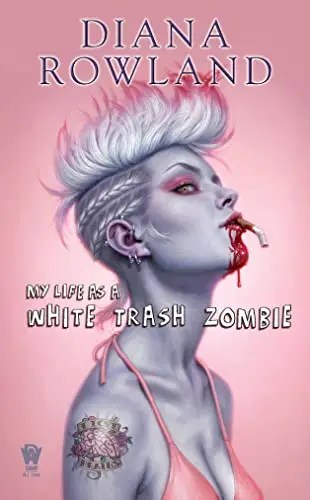
I bought the kindle edition of this book the instant it came out as a birthday present to myself for two reasons. First, the title is amazing. Second, look at that cover! Yeah, the whole thing just screamed my named. My instincts were right, too.
It’s been a long time since I read a book that hits all the elements I love in literature like this one–urban fantasy style horror, a setting that rings familiar to me, a completely relatable main character, and a fun love interest. It’s a world that’s simultaneously familiar and special, which is what makes urban fantasy fun. Angel’s world of trailers, beer cans, and nothing to do reminds me a lot of my childhood growing up in Vermont. On the other hand, Angel has cravings for brains. And she somehow manages to keep this a secret in a small town, certainly a monumental task.
Angel’s problems are a combination or fantastical ones (must find brains to survive) and completely real world ones (a history of an abusive mother and a father with alcoholism). Angel has a lot to overcome even before she gets zombified, but the zombification adds an element of distance that allows tough things to be talked about without that dragging down dullness often found in literary fiction.
Rowland reworks the zombie trope without completely removing the essentials of a zombie. Angel can function in day to day life as long as she has brains once every two days or so. If she doesn’t have them though, her senses slowly dull and she gradually turns into the lurching monster simply desiring brains that we all know from the classic zombie movies. This really works, because it allows Angel to be a part of society, yet still be the monster we’ve all grown to know and love.
That said, I will say that I am getting a bit tired of the monsters surviving by working in a morgue trope. I wish Rowland had come up with something a bit more creative for how Angel gets her hands on brains than that. It’s starting to seem like the staff of the morgues in all of urban fantasy consist entirely of monsters and sociopaths. Thinking more outside the box would have made me love the book instead of really liking it.
Overall, this zombie book gave me thrills, chills, and laughs galore, but it also brought me close to tears. It’s genre fiction with a heart, and I highly recommend it to anyone willing to see zombies (or white trash) in a whole new light.
If you found this review helpful, please consider tipping me on ko-fi, checking out my digital items available in my ko-fi shop, buying one of my publications, or using one of my referral/coupon codes. Thank you for your support!
4 out of 5 stars
Length: 320 pages – average but on the longer side
Source: Purchased

Buy It (Amazon or Bookshop.org)

Counts For:

Book Review: Purple Hibiscus by Chimamanda Ngozi Adichie (Nigerian Independence Day Reading/Reviewing Project)
 Summary:
Kambili’s father, Eugene, is a wealthy businessman and newspaperman focused on telling the truth of the upheaval in Nigeria, but even more focused on his fanatical version of Catholicism. Kambili, her brother Jaja, and their mother all live on edge, walking on eggshells, never knowing when he might snap. In contrast, Eugene’s sister, Kambili’s Aunty Ifeoma, is a university professor and a widow, cheerfully raising her children to be independent. One winter vacation Aunty Ifeoma convinces Eugene to allow Kambili and Jaja to visit. A visit that will change their worlds forever.
Review:
You all know by now that I’m good friends with Amy, so when she asked me to participate in her one-shot project, I couldn’t say no. Although, I was completely at a loss as to what to read. I’ve never read a Nigerian book before. So I asked Amy to help me figure out a book to get my hands on, and she recommended this title to me.
Adichie instantly swept me into a world that is starkly different from, yet surprisingly similar to, my own. The excessive religion and fear of god was something I was raised with myself, so I found myself instantly connecting to Kambili. Indeed, it’s nearly impossible not to connect to her. She is intelligent yet vulnerable. Strong yet terrified. Wise yet naive. She is an ideal main character, because she is so essentially human yet impossible not to root for.
Kambili’s father is an abuser; there is zero doubt about that, yet the perspective of the abused is so eloquently depicted by Adichie. Kambili truly loves her father. She is afraid of him and hurt by him, yet she knows there are good things too. She wants nothing more than to please him. She lives for his kind words. Indeed, even the reader sees that there are good aspects to Eugene in spite of the fact that he’s a horrible abuser. He routinely donates money to the needy in Nigeria, for instance. This is what makes it so powerful and realistic. Abusers aren’t monsters from a fairy tale. They are deeply flawed people who hurt those closest to them.
In contrast to Eugene is Aunty Ifeoma. Aunty Ifeoma is the kind of woman that I believe most modern, strong, educated women want to be. She tries so damn hard to help her kids be strong, to be a good mom, to help save her sister-in-law and niece and nephew from an abusive situation. She tries hard at everything, yet sometimes the civil unrest at the university and the constant struggle to feed her family gets to her, and she snaps a bit. Aunty Ifeoma is the perfect comparison to Eugene. She sometimes snaps at her kids a bit when she’s tired or frustrated from the extreme situations going on around her Nigeria, but she never harms them. Since stress is one of the excuses many abusers use, it is excellent to see this comparison within the story.
Adichie eloquently describes Nigeria as well. I’ve never been to any part of Africa, but I felt myself swept into the hot, dry air. I could almost smell the food they ate and the cashews and oranges on the ground outside. Although Adichie shows the political unrest and civil strife, she also clearly displays the beauty of Nigeria, which is something I’ve never encountered before.
With all this beauty and realism, then, I must say I was a bit thrown by the ending. It almost felt as if it was from a different story. Whereas most of the book was reserved and eloquent in its simple depictions, the ending felt larger than life. I think I was hoping for something more from the ending. Some type of realistic understanding of a tough situation instead of a….deus ex machina style ending.
That said, I am incredibly glad I read this book. I’m glad Amy helped me broaden my horizons to reading from a style of lit outside of my normal comfort zone. This book is incredibly accessible, and I highly recommend it to anyone who is a fan of contemporary, literary stories.
4 out of 5 stars
Source: Public Library
Buy It

Book Review: The Lady in the Lake by Raymond Chandler
 Summary:
Everyone’s favorite hard-boiled private eye Marlowe is back, and this time he’s been hired to track down a respectable entrepreneur’s wild wife. She sent a telegram weeks ago stating she was going to marry her boy toy, Lavery, but Lavery was spotted in Hollywood and claims to have no idea where Mrs. Kingsley is. The last place she was known to be was at the Kingsleys’ lake-side country cottage, so that small town is where Marlowe starts his investigation.
Review:
I first encountered Chandler in a film noir class I took in undergrad. Ok, so that class was my first encounter with noir too, but it introduced a whole new genre to me to fall in love with. So whenever I stumble upon a Chandler book in a used bookstore, I absolutely must buy it. There’s simply no question. This will probably continue until I have collected them all.
The entries are always narrated by Marlowe, and The Lady in the Lake does not fail to smoothly represent everything there is to love about him. He’s darkly cynical yet possesses a striking wit even in the face of getting a beat-down from the cops (which happens in pretty much every book. Lots of dirty cops in Marlowe’s world). Without Marlowe’s voice and ever-present intelligence, the books would not be what they are. Thankfully, his presence is just as perfect here as in the other Chandler books.
So what about the story? Well, this time the story is not set entirely in LA. A solid half of it is in the countryside. While I enjoyed those scenes, I must admit I did miss the LA grittiness a bit. Although the scene where the grieving husband drags his wife’s corpse out of the lake on his back was every bit as gritty as any city scene.
The mystery made so much sense in the end that I was kicking myself for not figuring it out. I still can’t believe I didn’t figure it out! How Chandler came up with these twists and turns and managed to write them without giving it away is beyond me. I doubt anyone will be disappointed with the mystery. I literally had no idea what was going on into Marlowe explained everything in the classic film noir wrap-up scene.
The femme fatale was a weak point in this entry, however. I think this is why I really liked it but didn’t love it. She just didn’t seem sexy enough. Violent, yes. Brutal, yes. But sexy? Ehhhh. Personally I always perceive the femme fatale as a gorgeous black widow spider, and well this one just failed a bit on the gorgeous glamor aspect. She was still a femme fatale, but perhaps a bit disappointing.
Overall, I truly enjoyed my time in Marlowe’s world with this entry. Marlowe is someone whose presence it is always worth being in, regardless of whether his surroundings are perfect or not. I recommend this to noir fans, highly. Those new to the genre, I recommend start with The Big Sleep.
4 out of 5 stars
Source: Harvard Books used book cellar
Buy It

Counts For:

Book Review: Labor of Love, Labor of Sorrow by Jacqueline Jones (The Real Help Reading Project)
 Summary:
Professor Jacqueline Jones presents the extensively researched history of the dual working worlds of black American women–at home and in the workforce–from slavery to present. She highlights the ways in which the unique cultural history of slavery as well as being subject to both sexism and racism have impacted black American women’s lives.
Discussion:
This is the second book for the Real Help reading project I’m co-hosting with Amy. I specifically requested that she host the discussion for this book for a special reason. Jacqueline Jones was my professor for one of my classes required for my history major at Brandeis University (she now teaches at University of Texas), and suffice to say, she and I did not get along very well. I was concerned that this history might make it difficult for me to discuss this book, so I asked Amy to host. She obliged. I am going to do my best to discuss this book without bias, but my personal experiences with Jackie Jones (as the Brandeisians called her) definitely gave me my own perspective in reading the book.
I was completely engrossed in the slavery and Jim Crow sections of the book. They taught me a lot I was previously unaware of, as I always kind of avoided the Civil War in my American history classes. (I focused on colonization, Revolutionary War, westward expansion, and WWII). For instance, it was interesting to see how the matriarchy slave owners forced upon slaves affected and impacted black culture even to this day. It was also the first time I saw sharecropping explained and spelled out. It is easy to see how black women, particularly ones widowed or single mothers, would choose to move to a city and become domestic help to escape the back-breaking work of share-cropping.
The book also demonstrates how black American culture has come to depend upon the iconic image of the strong black woman to help them through horrible racism and working conditions. Yet, by the end of the book, we can see that this means a lack of support for black women that is reflected in long-term illnesses and mental illness. Although black women are to be respected and lauded for their role in helping their communities, it is time that less is laid upon them. One obvious thing? Less time spent serving whites.
Since this was read largely to combat The Help, which takes place specifically in a domestic environment during the Civil Rights movement, I want to take a moment to discuss what I learned about that specific era in this book, because the book as a whole obviously covers a very large period of time. The book clearly demonstrates that the Civil Rights movement was BLACK women fighting for BLACK people and sympathetic whites came down from the north to help with things like voter registration, and they were then housed by BLACK women who would literally sit on their porch with a gun to protect the workers. This is in stark contrast to the image laid out in The Help where a WHITE woman comes and convinces the black workers to talk to her for their rights.
Additionally, the book repeatedly demonstrates how black women constantly throughout American history have sought to get out of white homes for any other kind of labor (except in the case of sharecropping). The role of domestic simply rings too close to slavery, and can you blame them? It certainly is apparent that many, if not the majority, of white employers sought to use black domestics as as close an approximation to slave labor as possible. One issue I don’t think the book addressed well enough is that any situation where one is working as a servant in another person’s home serves to antagonize relationships between the two groups. There is no friendliness there. One person is doing a menial chore in the home of another that the other is wealthy enough to not have to do. How could that possibly bring about anything but negative feelings?
Now, ok, here’s my criticism of the book. I feel that in Prof Jones’ passion for the plight of minorities in the US, she can sometimes over-compensate the opposite direction. By that I mean, she sometimes presents minorities as super-human or at no fault for their own actions or she’ll ignore negatives entirely. For instance, we only got two paragraphs out of 480 pages on black women working in prostitution. Personally, I wanted to know more about this, as it is a type of work black women have engaged in (as have every color/race of women ever), and I wanted to know the specific roles sexism, racism, and a hostile culture played in that for them. Specifically, I was interested about how the idea of lighter colored black women being more desirable to white men that we saw in the first book of our challenge might have carried over to prostitution in the 1920s and 1930s. But Jones doesn’t talk about this, and from my own personal experience with her, I speculate this is partly a blinders on her eyes issue.
Similarly, one thing that really irritated me was every time Jones tells a story of a woman working herself to the bone trying to provide for her children only to have her husband abandon her, Jones excuses the man by saying….”Well…..racism,” and moves on. Certainly, I am sure that some of these men were simply stressed out and thus abandoned their families, but I’m also certain that some of them were just assholes and would have done so in a completely non-racist society. To wit, I believe Jones falls too hardly on the nurture side of nature/nurture, when psychiatry has repeatedly demonstrated that it actually is a combination of the two that determines an individual’s behavior. By this I mean, I am certain that a non-racist society would lead to a larger percentage of happy, healthy families, but it by no means would wipe out all questionable behavior by all members of that race. To suggest that all members of a race would be “good” minus racism is just as racist as to suggest that all members of a race are “bad.”
That said, while I enjoyed the earlier portions of the book, as well as the sections on domestic labor in the 1950s and 1960s, I do think the book tries to tackle a bit too much in one entry. The sweep is almost overwhelming at times when reading it. I’d recommend getting a print copy so you can skim for the chapters of most interest to you or so that you can read various sections as questions arise.
Source: Amazon

Please head over to Amy’s post to discuss this book!
Book Review: Hunt Beyond the Frozen Fire by Gabriel Hunt (series, #4)
 Summary:
Gabriel Hunt is independently wealthy and runs around the world saving artifacts, people, etc… Think Indiana Jones in book form. In this entry, a hot lady named Velda shows up at his office asking him to help look for her father who’s gone missing in Antarctica. His last transmission mentions trees, and his colleagues believe he was hallucinating, but Velda wants to save what could be her father’s greatest discovery. Hunt decides to take the case and assembles a team including his best friend, southern charmer Maximilian, and his ex-girlfriend, a mechanic, which is a bit awkward since he’s now banging Velda. When the team gets out to the portion of ice Velda’s father was lost around, they fall into a fission in the ice and discover red ice and a tunnel that just may prove Velda’s father wasn’t hallucinating after all.
Review:
This is what pulp fiction should be all about. This is the kind of book that I finished and immediately contacted multiple friends to tell them the full plot, and then they all wanted to read it for themselves in spite of knowing how it ends. In fact, knowing the ending made them want to read it more. This is the kind of book where I hit one particular scene, and my jaw dropped open and I started laughing hysterically and everyone in my work cafeteria turned to look at me. Basically: this kind of book is why I love pulp fiction and thumb my nose at literary fiction snobs.
Basically, ridiculous things build up and keep happening until suddenly you’re just accepting something in the plot that is INSANELY out there, but in the world the author has created it works. We go from a murderous knife-throwing gypsy who also sells munitions to a mysterious message from a father who survived the Holocaust to falling into a fission in the ice and not dying to leap-frogging across deadly cold water on ice islands to finding an Amazon style jungle under the ice to being attacked by a giant chicken to being taken hostage by a tribe of Amazon Nazi women.
Yes, you read that right. Amazon Nazi women. Most of whom are naturally late teens to early 20s, blond haired, blue eyed, and completely gorgeous. NATURALLY.
Now, I know what you’re thinking. “What, Amanda? You’re doing The Real Help project. You host the MIA Reading Challenge. What the what?” But the thing is, this sort of fiction is just about FUN, and the plot is so ridiculous it’s not like I’m going to go out there and say obviously there are murderous Amazon Nazis in the ice under Antarctica. Just….no. It’s overly ridiculous on purpose. Kind of like old school MTV shows like Room Raiders and Next. It’s escapist literature. It knows it’s ridiculous, and that’s ok. Most of it is not offensive if you have a modicum of a sense of humor.
Of course, just because it’s hilarious and ridiculous doesn’t mean it’ll be everyone’s cup of tea. It is quite violent. It probably presses the boundaries of what some people would be ok with reading about sex and violence. You guys know me and know I don’t really have boundaries for those things though. To me this would be the perfect read to give a reluctant male reader. It’s action-packed, fast-paced, and basically a male wet dream. Obviously that won’t be everyone’s cup of tea.
Essentially if you think that a book version of 007 complete with a village of Amazon Nazis under the ice sounds like one of the best things ever, you’re going to love this book. If you read that sentence and rolled your eyes or cringed, then yeah, avoid it. It’s not meant for you.
4 out of 5 stars
Source: I think this was Paperbackswap, but I’m not positive.
Buy It

Counts For:

Book Review: The Meowmorphosis by Franz Kafka and Coleridge Cook
 Summary:
Gregor Samsa goes to bed and wakes up as an adorable snuggly kitten! He has trouble making up his mind about anything, though, and is easily distracted by things like dust and canned fish. Plus, his family clearly are not cat people.
Review:
This is the first Quirk Classic that I’ve read, mainly because all the others were based on classics I don’t like to start with (Jane Austen and Anna Karenina). However, “The Metamorphosis” is one of my faaaavorite short stories. Although, I will always insist that Gregor woke up as a grasshopper, not a cockroach. (I was the only one in my AP English class who thought this. Whatever). In spite of its (epically awesome win) name, this actually also incorporates another Kafka story “The Trial,” which I have not read. Anyway, when this came up as an EarlyReviewer I obviously needed to have a copy.
The main problem with reworking “The Metamorphosis” to be a cat is that, well, cats are adorable and playful and perfectly normal household cats whereas a giant insect is not. A lot of the depression, ennui, and conflict in the original story comes from Gregor being an insect. While Cook does a good job showing the internal workings of a cat brain to go with their adorably quirky behavior, the actions of the family are less understandable. What is up with this family hating on their adorable son? Why do they lock him away in a room? What is up with that? Of course this gets addressed later when Gregor grows to a disturbingly large size and can barely move around. I couldn’t help but think of that obese cat that was on the news last year. However, at that point he was sort of just becoming the monster they were treating him as. Ok, I just read what I wrote, and quite possibly that is the point of the story. However, while reading it, it certainly bogged me down.
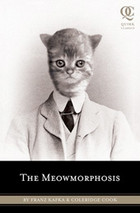
I also have to say that I didn’t like the illustrations that went with the story. Somehow, the illustrator actually managed to make pictures of cats that I didn’t squee over. There’s something wrong with that picture.
Overall I’d say that I don’t feel like I wasted my time reading this, per se, but I also sort of wish I’d just re-read “The Metamorphosis” and hunted down a copy of “The Trial.” As someone who can be a bit of an emo reader at times, nothing beats Kafka’s brand of ennui and depression. Why brighten it up with a kitty? Just…..why?
I’d recommend this book to that odd juxtaposition of reader who loves depressing European lit and doesn’t mind it being brightened up by an adorable kitty. I think only you will know if that describes you.
3 out of 5 stars
Source: Free copy from the publisher via LibraryThing’s EarlyReviewers in exchange for my honest review
Buy It

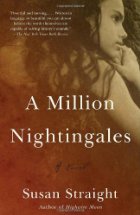
Book Review: A Million Nightingales by Susan Straight (The Real Help Reading Project)
 Summary:
Moinette is born south of New Orleans to a slave mother as a mulatresse–she is half white and half black. Since her mother’s slave labor consists largely of laundry and also due to her looks, Moinette spends her life serving predominantly within the white homes instead of the fields, which is a dangerous location. She also spends her life striving to be free and to save her family.
Discussion:
This is the first book for the The Real Help reading project I’m co-hosting with Amy (intro post). I do apologize for the late time in the day that my hosting post is arriving. It was raining this week, so I was afraid to bring my kindle with me most places. Anyway. On to discussing Moinette’s life as The Real Help.
The two things that stuck out the most to me were how desperate Moinette was to love no one but her mother (not even her son at first) and also the mental impact being treated as less than human had on her. Moinette repeatedly degrades herself in her mind because of how others treat her. This is what I want to discuss first.
There’s the fact that Moinette is half-white and half-black. She is evidence of the fact that the white males find the black slaves desirable, and that is offensive to everyone involved. For this reason, Moinette faces racism from both black and white people. Early on she is informed that she is different, but not in a human way.
He said he was a horse, at least pure in blood and a useful animal. He said I was a mule, half-breed, and even a mule worked hard. He said I was nothing more than a foolish peacock. (page 5)
Moinette’s identity is always in peril throughout her whole life, because no one wants to admit that sex between the races really happens, even though Moinette’s own existence is evidence of that fact. Additionally, she constantly struggles to feel that she is worth more than an animal. She sees that elderly slaves are literally valued as less than a dish. Imagine what that would do to the self-esteem? We talk a lot in classes in the US about how bad it would be to be owned by someone, but we never talk about the reality of being treated as an animal, as an object. It feels abstract to say, “Oh, imagine what it would feel to be owned by someone.” It is far less abstract to see the mental and emotional strife Moinette goes through in attempting to hold on to her sense of humanity.
Moinette also constantly struggles with the concept of love and who to love and when to love. Something that stuck out to me was how at first she did not love her son. She did not even want her son. This is understandable given that he was the result of rape. Later, though, much of her life focus comes to be on freeing him and saving him. She loves him, yes, but personally I can’t help but notice that her focus on him only comes when she discovers that her mother is missing/gone. It is almost as if she transfers her love for her mother to Jean-Paul and then to the little girls she buys in order to free them at 21. Moinette’s experience with this demonstrates how slavery and inequality is so dehumanizing because it rips apart one of the key aspects that makes for humanity–the ability to make families, whether by blood or by choice. Moinette knows the danger of loving someone. She quite simply states:
I knew my heart was only meat for another animal. (page 107)
Moinette spends the first half of her life striving to be back with her mother where she feels safe and loved. She spends the second half of her life striving to save younger slaves and give them a place where they feel save and loved. In Maslow’s Hierarchy of Needs (link) safety is almost at the very bottom. Only the very luckiest slaves even had the first level of physiological needs met. Most never truly felt safe as there was no security of family, which is key to psychiatric stability and sense of self. Even if we ignore the tragedy of Moinette being born a slave, her life is still tragic because she was never given the chance to self-actualize and become the truly amazing person that is clearly inside her throughout the novel because she must spend all her time struggling for the basic needs.
Obviously we also should discuss Moinette’s relationships with white women as we are reading this project to answer to The Help. Moinette has an interesting relationship with white women. She does not love the ones she serves, but she also does not hate them. Moinette is clearly confused as to how to react to these women. The first white woman she served was Cephaline, who was nearly her age and died young. After she dies, Moinette says:
I missed her voice. Her words like embroidery in the air. She didn’t love me. But I had heard her voice all my life. (page 98)
How odd to spend so much of your time near someone, in often intimate situations, to know them truly thoroughly, but to feel no sense of love or camaraderie. Moinette can see some similarities between herself and the white women she serves. Their bodies are somewhat different, yet they both have two breasts and a vagina. Although Moinette recognizes that white women have a bit more freedom, she still sees them as essentially used and hunted by men.
The Men hunted money and sex. The women were hunted and captured, even the white women. (page 230)
Truly with the marriage contracts of the time, a married white woman was not exactly free. Moinette recognizes this, and I believe it adds to her despair. What chance is there for women of any color in this society?
Another theme in the book is how dangerous working in the house is. Working in the cane, no one notices the slave women, but working in the house, suddenly the women get noticed by the men and get used for their bodies sexually. Even if a woman managed to escape being raped, she still felt inferior since she was living in the house and working in the house as a wife, but was not a wife.
Sophia said, “Safer in the cane. Do your work, nobody look. Dangerous in the house.” (page 235)
In close quarters, such as serving in a white household, another whole level of fear and intimidation comes in to play. Although the work is technically easier, the women actually had less control over what happened to their bodies.
Overall I think this book gives an excellent look into the sheer despair of being born a slave in the American south, particularly as a female. Although Moinette strives constantly throughout her life, the things about herself she cannot change–that she was born a slave and biracial–truly largely determine her life path. Although she helps improve the lives of some of those around her, she never truly finds happiness for herself, even when freed. This is something that revisionist narratives of the time often overlook. Simply because someone was freed did not mean that the prejudices and injustices of the society they lived within ceased to exist. Moinette did her best within her world, but even her best and most determined acts were not enough to save her from a life of pain.

Discussion Questions:
- Compare Moinette’s relationship with Cephaline to her relationship with Pelagie. What were the similarities and differences?
- How do you perceive Cephaline and Pelagie? Although they were technically free, do you think they were truly free?
- Why do you believe Moinette had such a close bond with her mother but her son, Jean-Paul, seems to have only had a close bond with Francine?
- How much different do you think Moinette’s life would have been if she’d been born 100% black instead of biracial?
- Do you think Moinette’s life would have been better if she’d managed to stay in the fields instead of working within the house?
- Why do you think the Native Americans were willing to participate in the return of fellow minorities to the ownership of white men?
- Why do you think Moinette never pursued a real relationship with a man?
- How do you see the slave/master relationship within the household reflected in modern households that pay for a live-in maid?
- What do you think the title of the book means/alludes to?
Book Review: Point by Thomas Blackthorne (series, #2)
 Summary:
Mysterious cutter circles are showing up in the Britain of the future. Thirteen teenagers gather in a circle, then slice the wrist of the person next to them all the way around the circle. The MI5 recruits a neuroscientist to help figure out the circles before they reach epidemic proportions. Meanwhile, her boyfriend, Josh Cumberland, finds himself sucked back into his old special forces unit when a civilian job reaches a mysterious end. Are the two events connected?
Review:
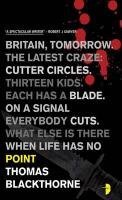
I received an ARC of this book through the Angry Robot Army, and I sort of wish I’d noticed it was the second in a series. I just dislike reading books out of order. Also, I think perhaps if I’d read the first book in the series, I wouldn’t have been so misled by the cover.
In case you can’t see the cover, it says, “Britain, tomorrow. The latest craze: cutter circles. Thirteen kids. Each has a blade. On a signal everybody cuts. What else is there when life has no point.” This makes it seem like this will be a book about depression and suicide in a post-apocalyptic world, right? In fact the people committing suicide have been brainwashed by music in an emotiphone to further a political power move. Which has…..nothing to do with real suicide or depression.
There’s nothing wrong with being a political intrigue book, but I am a bit disturbed at how Blackthorne utilizes psychology, psychiatry, and neuroscience in the book. He makes it look like in the future we’ll be able to just….program people out of it or to do whatever we want them to do. The brain is much more complex than that, and I just don’t like the message that such a plot device sends.
When looking at the book as the political espionage it actually is, as opposed to a book about mental illness in a dystopian world, it’s not a bad book. I have the feeling that those who enjoy political intrigue books will enjoy it. Josh is your typical wounded hero, and I did enjoy the scenes of him training. Blackthorne creatively incorporates reality tv into the plot-line that many readers will enjoy. The characters aren’t flat, but also aren’t particularly well-rounded. That’s ok, though, because the focus of the book is the action and political intrigue.
Overall, the book seems to be an average future political intrigue action flick…in written form. I recommend it to fans of that genre, but others will probably be bored.
3 out of 5 stars
Source: ARC from publisher

Book Review: The Last Werewolf by Glen Duncan
 Summary:
Jacob Marlowe finds out he’s the last werewolf living and has just been informed by the WOCOP that they plan to kill him during the next full moon. That’s just fine with him. He’s been living for almost 200 years and is just plain tired of it. So he plans to let the WOCOP’s tails follow him and just let the death happen. The fates don’t quite see it that way, though, and nothing quite goes according to Jake’s plans.
Review:
Think of this as what would have happened if Anne Rice chose to write about werewolves instead of vampires. The Last Werewolf reads very much like Interview with a Vampire only with the characteristics of werewolves instead of vampires of course. By this I mean that the sentences and story structure are incredibly literary while addressing the highly genre topic of werewolves.
Unlike vampires, werewolves must eat a human during each full moon or they become ill. Animals are no substitute. They cannot take a bite and leave the victim alive. No, they must completely ravish the victim. This is no weak True Blood style werepanther or werewolf that can simply shift at will and avoid killing people. Jake is affected by The Hunger and must eat and kill to stay alive. The rest of the month when he’s not in wolf form he has to come to terms with his actions. The crux and root of the dilemma at the heart of the story is this:
We’re the worst thing because for us the worst thing is the best thing. And it’s only the best thing for us if it’s the worst thing for someone else. (page 197)
It’s quite the moral conundrum and is addressed eloquently in the story.
There is also of course Jake’s suicidal mentality. He wants to die, but he doesn’t want to be the one to do it. He’s completely over life. Life is boring and pointless. There are absolutely some beautifully depressing passages about the emptiness of life that both perfectly depict depression and remind me a bit of the Romantic period of poetry. Think of Lord Byron. That type of thing. Beautifully suicidal. That may bother some readers. To me, it’s often a part of great literature. This overwhelming sadness and feelings of helplessness. They’re common human emotions and lend a great force to the narrative.
Now, I was sent this for review due to how much I enjoyed American Psycho in January, so I was expecting it to be graphically violent and sexual and have the two mixed-up. It is all of those things but–dare I say it–it wasn’t quite violent enough for me. I was expecting something shocking, due to the American Psycho connection, but I can see a lot of people reading this and not being put-off by the amount of violence. Compared to your average R rated action flick, it’s really not that bad. On the other hand, a lot of people are profoundly disturbed by the violence in American Psycho. There’s absolutely nothing wrong with the level of violence in this book, and I think Duncan was probably smart in that, since it will have a wider appeal. What can I say. I was looking forward to something incredibly gross and twisted and instead got a lot of beautiful prose with the occasional murder. It was a happy surprise, absolutely. I just want to make it abundantly clear to potential readers that if you can handle an R rated horror movie, you can definitely handle the violence in this book, so don’t be turned off!
So the prose is beautiful and the topics addressed and discussed are important or at least interesting, so why am I not raving? The ending left me disappointed. It felt rather cliche and expected, and I didn’t like what became the focus in the end. There are so many other ways the ending could have gone that would have been amazing and powerful, but instead I finished this book and basically said, “AGH not this shit again.” *mini-spoiler* It includes pregnancy and babies, and ya’ll know how I feel about that. *end mini-spoiler*
Overall this is a literary take on a genre theme. It is violent and sexual, but not disturbingly so. Recommended to fans of Anne Rice.
4 out of 5 stars
Source: ARC from the publisher in exchange for my honest review

Book Review: The Last of the Demon Slayers by Angie Fox (series, #4)
 Summary:
Lizzie is back from Greece with her hunky griffin boyfriend, Dimitri, and the geriatric witch biker gang (not to mention her talking dog Pirate and Pirate’s pet adolescent dragon Flappy) with plans to help the witches finally set up a real home at a New Jersey biker bar after years on the run. Of course nothing has ever gone according to Lizzie’s plans since the day she turned 30 and inherited her demon slayer powers. Naturally, her birth father shows up in a pillar of fire begging her to help free him from a bad situation with an even badder demon in California. Thus, Lizzie and the gang wind up following fairy trails across the country in an attempt to stop the demon, who just so happens to be out to kill demon slayers too.
Review:
Ah, this series. I have such a love/hate relationship with this series! That’s mainly because I love everyone except Lizzie and Dimitri. Why why is everyone else in this world so hilarious and relaxed, whereas Lizzie and Dimitri are basically THAT couple. You know THAT couple. They’re the ones who met each other during freshman orientation week and proceeded to have the perfect dream relationship throughout all four years of college and promptly moved in together and got engaged after. They’re the ones where the girl whines and bitches to you about some minor fight she had with her dude during your junior year when you’ve barely slept in three days and haven’t had a date in months. THAT COUPLE. It’s hard to root for that couple.
On the other hand, though, there’s everyone else. The geriatric biker witches are amazeballs. I would pay good money to have a bunch of older women like that in my life. They’re strong, empowered, and bound and determined to live their life to the fullest no matter what society says they should be doing. Interestingly, grandma gets a boyfriend this entry, and Lizzie is none too happy about it. Grandma tells her unequivocally that old people have sex. Yes! What? Lizzie is the only one who should be making everyone eye-roll with her sexy antics? I think not.
Then of course there’s Pirate and Flappy. Hilarious animal characters hit my heart *right here*. I would put up with almost anything just to see Pirate trying to train Flappy to sit. Seriously. Fox has a real talent for writing animal dialogue that is believable without being too sophisticated. It’s clear she has some critters in her life. For instance, Pirate runs up to Lizzie excited to see her yelling “Lizzie! Lizzie! Lizzie!” and then proceeds to beg for food. Typical doggy.
The plot definitely thickens in this entry. I’m not sure I’m totally happy with how it has. Essentially, it turns out there are actually more demon slayers, and as a Buffy fan, this just irritated me. I don’t like being told there’s only one only to have more show up. Either there are a lot of slayers or there aren’t. Plus, did we really have to make the new slayer so feminine? Lizzie is already a pretty extraordinarily feminine slayer. It’d be nice to have some variety. On the other hand, the rest of the plot of the supernatural world is interesting. There’s Lizzie’s father plus a visit to purgatory. I’m betting that the next entry will start to confront the presence of “good” supernatural creatures, since we’ve now visited hell and purgatory. If Dante taught me anything, it’s that that leaves only one place to go.
It’s interesting how I can’t stop reading this series even though I can’t seem to make up my mind how much I like it. I’ve rated entries everywhere from 3.5 to 5 stars. I think in general the experience of the hilarious side-kicks and minor characters off-sets the annoying main couple enough that I can kinda sorta mostly ignore them. There’s also always the hope that they’ll break up, which I root for in every book.
Overall, if you’ve stuck with the series this far, you’ll enjoy this entry. It takes the focus off the griffins and puts it back on Lizzie and her biological family. The ever-expanding cast of characters all fit together smoothly and hilariously.
3.5 out of 5 stars
Source: Amazon

Previous Books in Series:
The Accidental Demon Slayer, review
The Dangerous Book for Demon Slayers, review
A Tale of Two Demon Slayers, review
 Support my work with a tip or browse my shop for curated book club guides, how to guides, cross-stitch patterns, and more!


This work by Amanda Nevius is licensed under a Creative Commons Attribution-Noncommercial-No Derivative Works 3.0 United States License.
 Opinions of a Wolf