
Archive
Book Review: Viola in Reel Life by Adriana Trigiani
 Summary:
Viola loves her life in Brooklyn with her quirky filmmaker parents. Unfortunately, they need to go to Afghanistan to make a documentary and have dumped her in an Indiana boarding school for a year. Can Viola see past her homesickness and embrace what Prefect Academy has to offer or will she be Queen Snark for a year?
Review:
I came at this book simultaneously expecting to like it and not like it. I expected to like it, because when I was in the YA age group, I loved boarding school books, and I’ve read Trigiani’s Big Stone Gap trilogy and really liked her writing. On the other hand, reviews online stated they disliked it due to a negative portrayal of Indiana and what they felt was a lack of understanding of teenagers. Well, I liked Viola in Reel Life, and I would like to offer up rebuttals to both opinions.
First, the book is written from Viola’s perspective. She’s a fourteen year old who has spent her entire life in Brooklyn, and she didn’t want to go to boarding school. Her negative comments about Indiana are to be expected in this case. She’s a New Yorker in the country for the first time. Of course she’s going to think the fashion stinks. Of course she’s going to miss the noise of the city. Personally, I found Indiana and the folks in it to be portrayed in a positive light, because despite her anger and snark, they persist at comforting her homesickness and winning her over. She comes to like aspects of Indiana just as much as she likes aspects of Brooklyn. That is a key part of her growing up that is the main storyline. She has to learn to make home wherever she is and be independent. That point would not have come across strongly if she loved everything about Indiana from the moment she arrived.
Now to those who felt it was too young for teenagers, I think you’re starting to fall for the media’s portrayal of all teens as growing up very fast. They’re not all having sex, doing drugs, and drinking. I wasn’t that type of teen, and even teens who are can appreciate that not everyone is living a Gossip Girl life. It is a clean book, and I liked that because it left room for me to focus on Viola growing as a person. The kids are kind of innocent, and Viola acknowledges that she’s led a protected life so far. On the other hand, Viola and her friends have to deal with step-parents, new siblings, serious family illness, money problems, and more. Their problems are middle class type problems, but what’s wrong with that? Not everyone grows up abused or poor or filthy rich or debaucherous. The overall messages are excellent ones for teen girls to hear–be loyal to your friends, grow up and help your parents, don’t choose a boy over yourself, do your best and be gracious. Plus the storyline supporting these messages is fun and interesting to read.
My only complaint with the book is the minor sub-plot of a ghost. I don’t think it really fit in very well with the overall world and feel of the book. I would have much preferred that Viola find an old diary or something that made her come to understand Prefect Academy better. However, it wasn’t in the book enough to make me dislike the story.
Overall, it’s a fun read, and I recommend it if you enjoy YA lit or stories set in boarding schools.
4 out of 5 stars
Source: Won on Reading Sarah’s blog. Thanks!

Book Review: Ethan: Site 39 by Otis V. Goodwin
 Summary:
In the near future Earth is destroyed by an asteroid. Luckily for humanity, a group of people had already departed for Alpha Centauri to colonize the two stars found there. After losing contact with the few survivors, the Centaurians believed Earth to be uninhabited. Five thousand years later, their descendants return to an Earth that has recovered from the chaos caused by the asteroid to begin the work of reinhabiting it. When Ethan, one of the colonists, stumbles upon a residence dug into a mesa made of granite, everything the Centaurians believe about what occurred on Earth in relation to the asteroid is challenged.
Review:
I really wanted this to be a good book. First I’m a big supporter of indie and self-publishing, as I often find the stories more creative and thought-provoking than those published by big publishing houses. (See my review of Vow of Silence for evidence of that). I also thought it was an intriguing scifi storyline. Unfortunately, Goodwin can’t write.
Oh, he can come up with a great idea for a story, but his writing is terrible. First, he tells us instead of showing us. For instance, he’ll say things like “Ethan was thinking how worried he was,” instead of, you know, letting us see Ethan’s worried thoughts. Whole parts of the story that would have been fun to read in addition to making the book longer he sums up by telling us about it in a couple of sentences, such as “They talked about their planned future together” instead of letting us read the conversation.
Not that I would have wanted to read the conversation anyway, because the dialogue is atrocious. Every character sounds like an automaton. They never use a contraction or a simile or anything really that makes a human sound human. Goodwin tries to explain this as language changing, but even when we flash back to see characters from the time of the asteroid, they speak in exactly the same robotic manner.
The book blurb says that Goodwin is retired from the military, and it frankly shows. In some ways, this is good. The military portions in the asteroid flashback are clearly written by someone who knows the military. However, mostly it’s just a rabid conservatism showing. We’re talking a world in which the small population of humans rebuilding all automatically fall in love with someone of the opposite gender and that love is automatically, wholeheartedly returned. It’s like the man never got past the fairy tales told to little girls to realize that that doesn’t happen perfectly for everybody in real life. Real life just doesn’t work out that perfectly for everyone. It makes all of the characters unbelievable, whereas having one true love situation would be believable.
Of course, there is no saving the wretched female characters. Goodwin seems to be only capable of writing the completely helpless sobbing woman or a woman who is essentially a dude with boobs. God forbid a woman be strong and feminine simultaneously.
I feel kind of bad saying all of this, because his overall storyline really is good and creative. It’s what kept me reading the book in spite of cringing and rolling my eyes. What Goodwin should have done is acquired a writing partner who could write his storyline on the sentence level well. Then he would have had a great book. Unfortunately, he didn’t do that.
2 out of 5 stars
Source: Free copy from book promotion agent via LibraryThing‘s EarlyReviewers Member Giveaway program.

Book Review: Battle Royale Ultimate Edition Volume 1 by Koushun Takami (Manga) (Series, #1)
A Note on Me and Graphic Novels:
This, believe it or not, was my first foray into the world of graphic novels. I was spurred into this new territory by my intense love of the movie Battle Royale. I know that there’s also a traditional book out there, but I’d heard the manga is what the author feels really fulfills his vision of the story. I received the first volume of the ultimate edition, which contains the first three mangas in the series, for Chrismukkah. I wasn’t sure if I’d enjoy reading a graphic novel. I tend to associate them with superheroes, and I’m not generally a fan of superhero stories (except Ironman. Robert Downey Jr., *swoon*). But this. This was a story I already knew I liked, so I came at the genre with a much more open mind than the once or twice I flipped through a superhero graphic novel. You guys, I absolutely love the feeling of reading a graphic novel. I could literally feel different parts of my brain working at it than that work when reading a regular book, playing videogames, writing, or watching a movie. It’s like a portion of my brain was like “Oh hai. You finally remembered I exist!” I love that I’m only reading dialogue, because I hate extensive descriptions in books. I love that the drawings are art that I actually enjoy looking at the fine details of. I love it that when I flip back to show scenes to other people, I notice things in the drawings I didn’t see the first time around. I’m officially a convert to the genre, but you still won’t see me reading about superheroes anytime soon.
 Summary:
In an alternate history of Japan, Japan comes under the rule of a totalitarian, isolationist government after WWII. The government rules through terror, and part of that terror is selecting, supposedly via lottery, one 9th grade class every year to compete in a televised game where it is kill or be killed. Shuuya never expected to win this lottery, but when his class goes on a field trip, upon arrival they discover that they are this year’s participants on an island location. They discover collars on their necks that will detonate if more than one is left alive at a certain point and also if they wander into the randomly assigned and changing forbidden zones. As the teens attempt to survive the game through various methods, flashbacks tell the story of the 9th grade class members.
Review:
I absolutely love this story. I love violent, gory stories, and there are creative deaths galore here. For instance, the weapons include a scythe, and that scythe gets used. In one particularly memorable scene, a girl desperately attempts to stuff a boy’s brains back into his skull. It’s freaking amazing. There’s also graphic sex, ranging from rape to love. I don’t like my books to pretend like sex doesn’t happen in the real world, because um, it does. The fact that sex can be wonderful and about emotions or horrible and about power is wonderfully depicted.
The manner of introducing these characters tossed together in a horrible situation then expanding on who they are via flashbacks is very reminiscent of Lost. Of course, here the characters knew each other, at least somewhat, before the game. The flashbacks fit in perfectly with the action of the game, and they reveal just enough about the characters without revealing too much. From a cooking class that solidified a friendship to crimes committed to lessons learned from an activist uncle, the flashbacks are endlessly fascinating.
Seeing these characters in what most certainly feels like a hopeless situation orchestrated by a powerful government far bigger than they are is truly powerful reading. It leaves the reader wondering not only what makes people do bad things, but also how to define what is good and bad given various situations. Is it actually good to team up and attempt to buck the system or will that just cause more pain in the end? Is suicide a bad thing when it’s kill yourself or kill others?
If you enjoy Lost, The Hunger Games, violence, psychology, or even just graphic novels, you will enjoy this book. I highly recommend it and can’t wait to read the next volume!
5 out of 5 stars
Source: Gift

Movie Review: Matilda (1996)
 Summary:
Matilda has the unfortunate luck of being a smart kid born to not only stupid, but annoying and neglectful, parents. They leave her alone for extended periods of time at a young age, time she fills by reading books from the public library. When she’s six and a half, her father finally sends her to a private school with a bully of a principal. However, her sweet teacher tells her she’s special, and Matilda’s mind stretches to be even more powerful than she ever thought it could.
Review:
This movie sounds serious, but it’s actually quite funny. Danny DeVito directs and acts–both as the narrator and Matilda’s father. Rhea Perlman, known like DeVito for comedic roles, plays Matilda’s mother. Matilda’s telekinetic abilities are played mainly for laughs, and she tends to use them in a child-like manner.
Matilda’s parents aren’t mean to their daughter on purpose; they just don’t understand her. They think it’s fun to watch terrible game shows on tv and are offended when she says she’d rather read Moby Dick. Matilda doesn’t hate them, but she also knows she doesn’t belong.
The message of the movie really is that family is what you make of it, not what you’re born into. Matilda could have dumbed herself down to fit in with her family, but she doesn’t. Her parents could have insisted that she belongs with them, but they don’t. Sometimes people are born into the right family; sometimes they’re not, and there’s nothing wrong with fixing that.
If you want some giggles and a heartwarming message that doesn’t have a love interest for once, give Matilda a shot.
If you found this review helpful, please consider tipping me on ko-fi, checking out my digital items available in my ko-fi shop, buying one of my publications, or using one of my referral/coupon codes. Thank you for your support!
4 out of 5 stars
Source: Netflix

Book Review: Wizard and Glass By Stephen King (Series, #4)
 Summary:
Roland and his ka-tet escape Blaine the Train, but they accidentally wind up off the path of the beam and in yet another alternate version of Jake, Eddie, and Susannah’s world. They start following an interstate, heading for a palace and hoping therein lies the solution for returning to the path of the beam. One night while traveling, Roland finally tells them what has been haunting him all this time with the story of the summer he was 14 years old and his first love.
Review:
As with The Waste Lands, this book reads like multiple books in one. I was expecting that, since The Waste Lands ended abruptly without solving the problem of Blaine the Train. This book takes care of that storyline, then jumps into a flashback that lasts almost the entire book then jumps back to the present and attempts to solve a big problem. It’s a lot for one book to handle, and it would have worked better if Lud and Blaine the Train were one book taking place after The Waste Lands but before Wizard and Glass. If after doing this, King had shortened the flashback, The Wizard and Glass would be an excellent book. Of course, he didn’t do it that way.
Now that I am this far into the series, I’m seeing that King, whether intentionally or not, is writing different bits of the series as different genres. This could be why it holds wide appeal–if someone doesn’t like the genre the story is currently being told in, it will change soon enough. The first book is mainly a travelogue. The second a horror story. The third is a mix of scifi with the time paradox and horror again with Lud and Blaine the Train. Here, we get partly fantasy with the current issues for Roland’s ka-tet, but mostly a medieval romance–the story of Roland and Susan.
That medieval romance starts out well. King sets up three dialects–High Speech, In-World Speech, and Mejis accent–very well. All three are easy to differentiate, and yet are easy to read. Roland’s world is a wonderful mix of the knights of Arthur and the fabeled American west. It’s fun to read, but only when something’s really happening. That’s the problem with the flashback. It feels too long, because very little happens in large portions of it. Roland, Cuthbert, and Alain must spend most of their summer in Mejis waiting, and instead of telling the reader “wow, they waited a long time,” King makes the reader wait too, and it’s fucking boring and annoying. I seriously wanted to give up, and right when I was about to, the action started again. Finally. The action makes excellent use of this mix of fantastical and wild west, but it really takes too long to come about.
As far as the characters go, I know I’m supposed to feel for Susan, but I honestly found her annoying and dull, which is problematic since she’s Roland’s first love. Also, after all this time of Roland stating how Eddie is almost as funny as Cuthbert, I was expecting Cuthbert to be, y’know, funny. He’s not. He acts like that boy in school who used to pull your braids and think it was funny. He’s just juvenile, not witty. On the other hand, the character of the witch Rhea is excellently done. She’s simultaneously disgusting and intriguing, and she’s one of the few who manages to out-wit Roland, partly because he underestimates her since she is an old, disgusting woman. If only Cuthbert and Alain had been so vividly drawn instead of wandering shells of people for Roland to talk at.
The book is a necessary read if you plan on finishing the series. It gives important insight into why Roland is the man he is today, not to mention explains how the ka-tet escapes Blain the Train and gets back on the path of the beam. I think this is the almost inevitable dull book in an overall good series. Just take my advice and skim over the dull part of Mejis until the action picks up again.
2.5 out of 5 stars
Source: Borrowed
Previous Books in Series:
The Gunslinger, review
The Drawing of the Three, review
The Waste Lands, review

Movie Review: Evil Dead 2 Dead by Dawn (1987) (series, #2)
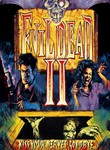 Summary:
Ash either inexplicably completely forgot about the first evil dead incident or is having some sort of alternate version of his life presented. Either way, he returns to the same cabin from Evil Dead with his girlfriend, oblivious of any evil occurrences. Within about 5 minutes, he plays the tape that raises the demons. It immediately possesses his girlfriend. The professor’s daughter and some hillbillies stop by, adding to the possible body count. Can they survive until dawn?
Review:
I kind of love the fact that this is a sequel that isn’t so much a sequel as a reimagining of the first Evil Dead. What if Ash arrived with just one other person? What if the main problem wasn’t being infected by wood but instead a possessed dismembered hand running around?
Evil Dead 2 doesn’t mess around. It gets right to the gore, and it does so completely tongue-in-cheek. As opposed to the early tree porn in Evil Dead, Evil Dead 2 has chainsaw dismemberment within the first 10 minutes.
However, don’t get me wrong. This movie is a delicious combination of horror and humor, mainly due to Ash’s dismembered hand. It becomes possessed and the man chops it off with a chainsaw, and then it becomes a nemesis throughout the movie. A nemesis he partly fights with the chainsaw he tied to his arm to replace said hand. Yeah, that’s right. You get a chainsaw for a limb in this movie. Really truly badass! The humor also is derived from the hillbilly couple who show up with the professor’s daughter and her boyfriend, as well as great sight gags. The movie knows it’s B horror, and it thrives on it.
For once I can say, this is a sequel that is just as worth watching as the original.
5 out of 5 stars
Source: Netflix
Previous Movies in Series:
The Evil Dead (1981), review

Movie Review: The Evil Dead (1981)
 Summary:
A group of five 20-somethings head for a long weekend in a cabin in the woods. In the basement, they find an old tape recorded by the previous resident–a professor. This professor reads passages from The Book of the Dead that he’s been studying. Playing the tape accidentally raises demons, and the group are left fighting against possession and for survival throughout the night.
Review:
This low-budget B movie is the quintessential cabin in the woods horror movie. Written and directed by Sam Raimi who went on to direct the Spider-man movies and more recently Drag Me To Hell, it pits these 20-somethings against an evil force that infects them as opposed to a serial killer.
You guys, I absolutely loved this movie. I already have a weakness for low-budget horror movies, as I love a good chuckle with my jumps, but there is so much more awesome to this movie than the summaries out there tell you. They tell you this is a zombie movie. Zombie movie is so not the right definition. This is an evil trees movie.
In the first half an hour, there is motherfucking tree porn. What’s tree porn, you ask? It’s tentacle porn, only with tree branches. The girl who gets raped by the tree is now infected, and the infection gets spread via wood. The infection makes them mindless attacking machines, but they do not eat flesh. They just chant “JOIN US!” Even more awesome is the fact that when their limbs etc… get cut off not only blood but tree semen comes out of them.
Adding to the awesomeness that is the tree venereal disease is the stop-motion special effects. They give such a different vibe than cgi and are truly well-done.
There are also your typical B-movie, chuckle-worthy lines. Plus if there’s nothing too horrifying going on on the screen, you can always watch Bruce Campbell’s chin. I dubbed him “Cro-Magnon Man.” His face is just that awesome. Plus he has a faint unibrow.
If you want a creative twist on a typical horror set-up, definitely check out The Evil Dead. I mean, you’ve at last gotta watch the first half hour for the tree porn.
5 out of 5 stars
Source: Netflix

Book Review: The Creation of Psychopharmacology By David Healy
 Summary:
A historical look at the emergence and development of psychopharmacology (psychiatric drugs) from the earliest time of psychiatry to the end of the 20th century. Particular attention is paid to the impact psychiatric societies, economic systems, cultures, and drug companies have had on psychopharmacology. Psychiatric drugs explored in-depth include chlorpromazine and SSRIs (Selective Serotonin Reuptake Inhibitors aka antidepressants).
Review:
I was quite excited to learn about the topic of this book, as psychopharmacology is one of the key aspects of psychiatric treatment. It is therefore unfortunate that the author, Healy, allows his own biases to get in the way of presenting factual information.
The first portion of the book that discusses asylums and the original drugs discovered by scientists to work on psychoses does present the facts in an unbiased manner. Unfortunately, Healy could not possibly write in a much more boring manner. I have never in my life read a text that is so stale, and I do read scientific nonfiction for work on a fairly steady basis, so this is not a bias of my own against scientific writing. The man just drones on and on.
The larger problem arises in the second half of the book when Healy arrives in the 20th century. Healy’s obvious anti-drug and anti-psychiatry bias emerges. He flat-out gets facts wrong and displays paranoia, ranging from the typical conspiracy theory that the mental health community is in league with the drug companies to the more extreme idea that depression shouldn’t be treated because then there would be no more art or spirituality. He also claims that personality disorders should not be treated, comparing such treatment to cosmetic surgery. This claim is offensive and harmful to people who wish to become higher functioning, happier individuals.
Healy goes on to offer predictions as to the direction psychology and psychiatry will take in the 21st century. Now that we are a decade in to that century, I can definitively tell you his predictions are wrong. He argues that an increasing number of drugs will be used to remove most individuality and that therapy will continue to fall by the wayside. In fact, the first decade of the 21st century saw a new movement toward CBT (Cognitive Behavioral Therapy) and DBT (Dialectical Behavioral Therapy), which are all about helping an individual change their harmful behaviors, thoughts, and tendencies purely through therapeutic techniques. Healy is attempting to fear-monger his readers into believing psychiatry and psychology wish to drug us all up, when in fact the mental health community wants to use what works best in each situation. Contrary to his claims, there are in fact biological bases for some mental health issues.
Although his facts are accurate in the earlier history of psychopharmacology, the second half of the book presents false facts and harmful ideas. Due to this fact, I cannot recommend this book. For an educated look at mental health and drugs, take a look at the DSMIV and the PDR.
1 out of 5 stars
Source: Library

Movie Review: Breakfast at Tiffany’s (1961)
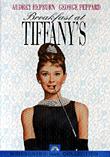 Summary:
Aspiring writer and kept man Paul moves into a new apartment building where he meets quirky Holly Golightly. Holly pays her bills by going on dates with wealthy men and sneaking off with the $50 they give her for the power room. The two start to entwine into each other’s lives, and Paul discovers there’s more to Holly than meets the eye.
Review:
As I was watching, I thought this was a meh movie, but then in the last five minutes I suddenly came to love it. That’s what classic movies can do that modern movies often don’t. They set up a world that just seems average, but then blow your mind in the end with what you’ve actually seen and learned about the characters. You’re being touched while watching the movie without even realizing it.
The film moves at a meandering pace that allows you to truly get a glimpse of NYC in the 1960s. The outfits, the decor, the drinks, the smoking….. It truly is a period piece. There was one large sour note in the film that is reflective of when it came out though in the form of Holly’s upstairs neighbor, who is the definition of a racist caricature of Asians, and he wasn’t even played by an Asian or Asian-American actor. I wish he wasn’t in the movie, but it is reflective of the times.
Holly Golightly is such a well-written character. You alternate between identifying with her, loathing her, and feeling sorry for her, and that is what makes her seem like such a real person. By the ending, I really wasn’t sure if I hated or cared for her, but either way, I understood her. That’s a wonderful thing to come to understand someone who has the issues Holly does.
If you enjoy classic films or films built around careful character building, give Breakfast at Tiffany’s a shot. I doubt you’ll be disappointed.
4 out of 5 stars
Source: Netflix

Movie Review: Being John Malkovich (1999)
 Summary:
There aren’t many job openings in Craig Schwartz’s chosen career–puppeteering. His animal-loving wife suggests he get a job in the meantime, so he finds one filing for an office on the 7 1/2 floor of a building. There he finds a small door that allows whoever goes inside it to be inside actor John Malkovich’s mind, seeing through his eyes, for 15 minutes before being spit out on the roadside. He and a woman he works with start selling trips for $200 a visit, but there’s more to being John Malkovich than meets the eye.
Review:
What a trippy movie. It’s a little bit of a character study of loser Craig and his equally loser wife, and what it does there is excellent. Plus you get to see Cameron Diaz being frumpy, which is worth the watch in and of itself.
The puppet scenes are simultaneously disturbing and funny, but mostly it’s just amazing that people can make puppets move so intricately. Although the other characters laugh at Craig for “playing with dolls,” the viewer comes away with a greater respect for it as valid theater.
The plot though is what makes the movie. It twists and turns taking the characters to unexpected places. Everything that made me like the movie from a plot stand-point is a spoiler, so I can’t say much beyond that it surprised me, and that takes a lot.
If you enjoy head-trip movies with a touch of gentle social commentary, definitely check this one out.
4 out of 5 stars
Source: Netflix

 Support my work with a tip or browse my shop for curated book club guides, how to guides, cross-stitch patterns, and more!


This work by Amanda Nevius is licensed under a Creative Commons Attribution-Noncommercial-No Derivative Works 3.0 United States License.
 Opinions of a Wolf