
Archive
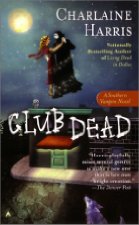
Book Review: Club Dead by Charlaine Harris (Series, #3)
 Summary:
Bill has been acting oddly distant with Sookie lately, so she isn’t exactly pleased when he announces he’s going to Seattle on a mission for the vampire queen of Louisiana. She soon finds out from Pam and Eric, though, that Bill lied to her. He’s actually been in Jackson, Mississippi with his one-time vampire lover, Lorena. He’s also been kidnapped. Something he’s been secretly up to has put them all in danger, so Sookie must put aside her anger for now and try to help the vampires free Bill and prevent a vampire war between the kingdoms of Mississippi and Louisiana. Along the way, Sookie gets to know a whole lot more about the werewolves–not to mention about Eric.
Review:
I have to hand it to Harris, I expected there to be trouble in paradise for Bill and Sookie, but I didn’t expect it this soon or this serious. Reading Club Dead made me realize this series isn’t about Sookie’s relationship with Bill, but about Sookie’s gradual entry into the supernatural world. Bill just kind of served as a door. I tend to be a bit of a romantic, but I’ve never really liked Bill nearly as much as the other supernatural guys, so let me just say–woohoo!
The plot is complex. There are multiple mysteries for Sookie to figure out on top of dealing with her emotions about Bill’s betrayal and her odd popularity among the supernatural guys. I enjoy the fact that she was never desired by human guys, but is among the the supernaturals. It’s akin to the awkward growing up girl finding her niche in her 20s. At first Sookie thought it was just Bill who has the major hots for her, but it turns out she’s a hot commodity with lots of the supernatural guys, but it isn’t just about her looks. They like Sookie for her personality. Something it seemed to me Bill never seemed to appreciate much.
Harris does a good job writing a unique werewolf world. Whereas the vampires are notoriously cold emotionally, the werewolves are hot-blooded. They’re passionate, strong, and animalistic. Harris has them mostly working blue collar jobs, but excelling at it. Sookie’s escort, Alcide, runs a highly profitable family general contracting business.
My only complaint is that Harris doesn’t seem to trust her readers to remember the rules of the world she’s created. We get told yet again that silver chains can hold a vampire down, shifters aren’t out yet, Sookie had a hard time in school, the Japanese created synthetic blood, etc… It’s annoying, and it makes it feel like Harris thinks she needs to dumb down the story for her readers. I understand a quick rehash at the beginning of the book to remind us where we left off, but as for everything else, I think the reader can be trusted to remember that silver chain nets are dangerous to vampires. Those parts are easily skimmed over though, and the res of the book makes up for it.
I originally was uncertain that Harris could keep Sookie Stackhouse’s world interesting for seven books. I envisioned repeated “Bill and Sookie solve yet another mystery” outings, but I am glad to say I was mistaken. As the books continue, more of the world is revealed, and Sookie’s life becomes more complicated. I’m looking forward to what she’s going to reveal next.
If you enjoy the gradual building of a world around a strong female character, you will enjoy the direction this series is headed.
4 out of 5 stars
Source: Bought on Amazon

Previous Books in Series:
Dead Until Dark
Living Dead in Dallas
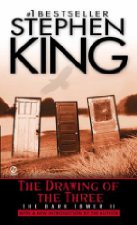
Book Review: The Drawing of the Three by Stephen King (Series, #2)
 Summary:
After finishing the first stage in a long series toward finding The Dark Tower, Roland knows he must now “draw the three.” He will recruit three people to assist him in his quest. Now past the desert and mountains, he has reached an ocean beach where dangerous creatures lurk. As he walks up this beach he gradually finds doors to other realities where his three assistants reside, completely unaware they are about to be drawn into a quest in another world.
Review:
The Drawing of the Three makes it abundantly clear that The Dark Tower series is all about plot and not about character development. The characters do things that work for the plot, but make zero sense from a character stand-point. I’m not talking about mistakes here. I know in the real world people do stupid things. It’s more akin to say a Nazi suddenly deciding he loves a Jew. (That doesn’t happen in the book, but similar things do). I personally find this jarring, but if you’re more of a plot person than a character person, it won’t bother you.
My other issue, and bare in mind that I’ve now read three Stephen King books, is that his writing tends to be misogynistic. Sometimes it’s subtle. An example in this book is when a pharmacist who hates his job is on the phone with a complaining female client. Instead of thinking that he hates these people who complain, he thinks that he hates all these bitches who complain. I, as someone who works with the public, am certain that he has had men and women complain, so why did King specify only women? It seems whenever there’s an opportunity for a character to slur against women, they do. I’m not saying no character should be misogynistic. That’d be like saying no character should ever be racist. I am saying that King shouldn’t take every opportunity to be misogynistic and run with it.
*spoiler warning*
An even better example of this is the only female character in this book, the second assistant, Odetta. She has Dissociative Identity Disorder. (King wrongfully calls this Schizophrenia, which is an entirely different illness). Stereotypically, one personality is “good,” and the other is “bad.” The good personality is grateful to the men for helping her. She is quiet, submissive, intelligent, and strong inside. Naturally one of the men instantaneously falls in love with her. *rolls eyes* The bad personality attempts to defend herself, is physically strong, and vehemently protects herself against suspected rape. She actually tells these men that she will kill them with her cunt. The only women I know who use that word are raging feminists attempting to reclaim the word, and that is not the context here. She is also described as an ugly hag. Granted later these two personalities merge into one, but the implications are there. Men love women who act appropriately feminine. If you behave in any unfeminine manner, you are an ugly hag they naturally want to kill.
*end spoiler*
In spite of that, though, I do still like King’s stories. I’m mostly willing to overlook the bouts of misogyny, because the man can certainly write plot-driven horror. The plot here is excellent. We have doors that lead into people’s brains, horrifying creatures called “lobstrosities,” drugs, shoot-outs, infections, murderers, and more. There is literally horror on almost every page. I couldn’t put it down.
If you like plot-driven horror and don’t mind overlooking character development weakness, then you will enjoy this entry into the Dark Tower series.
3 out of 5 stars
Source: Borrowed
Previous Books in Series:
The Gunslinger, review

Movie Review: Kamikaze Girls (2004) Japan Shimotsuma Monogatari
Netflix recommended this to me after I gave Battle Royale a 5 star rating. I’m starting to have a thing for Japanese movies, and after reading the description I knew I had to get it.
 Summary:
Highschooler Momoko may live in the countryside, but she’s big city fashion at heart. Her babydoll, Rococo style frilly dresses, parasols, and bonnets make her stick out like a sore thumb at her school. Ichigo is a member of a rough, tough girl biker gang. Their paths cross when Momoko sells some of her dad’s Versace knock-offs to acquire money for more dresses. A tentative friendship develops, affecting both girls forever.
Review:
The box for Kamikaze Girls claims it’s a Japanese comedy. Although live-action, it definitely employs some of the zaniness seen in comic Anime films, so if that’s not your style, consider yourself warned. I enjoy zany humor though, so I appreciated it here.
The acting is great. The actresses playing Momoko and Ichigo play perfectly off of each other. Ichigo walks tough and speaks gruff, while Momoko gently reprimands.
Japanese fashion is highlited here, making for excellent eye candy throughout the film. Ichigo’s clothes are Easternized versions of Western punk fashion. Momoko’s richly styled frilly dresses definitely hearken back to the 18th century France inspiration.
What really makes the film though is the plot. This is a movie about friendship between young women, and their friendship doesn’t revolve around talking about men. They support each other, instead, in making decisions about who they will be. Instead of it seeming forced that they weren’t talking about men or sex or drugs, it felt completely natural. They just had more important things in their life right now. Should Ichigo stay in her growing gang or strike out on her own? Should Momoko try to break into fashion design? Can a Rococo girl also ride a scooter?
If you like quirky foreign films and want a solid friendship movie, look no further than Kamikaze Girls. You won’t be disappointed.
4 out of 5 stars
Source: Netflix

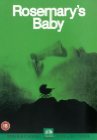
Movie Review: Rosemary’s Baby (1968)
I love horror films, and I’d been meaning to watch this classic for quite some time. Netflix is so good for making you finally get around to seeing movies you’ve always meant to see.
 Summary:
Rosemary and her actor husband move into a new apartment despite protestations from a friend that the building has a bit of a history of odd things happening. Their new neighbors are a friendly, elderly couple. In fact, Rosemary finds them to be a bit too friendly, but her husband likes them and insists the friendship be kept up. Soon Rosemary is pregnant, but there is something odd about her pregnancy she can’t quite put her finger on until it is too late.
Review:
This is the type of horror story I love. Something sinister lurking in the background of the main character’s life. Everyone around her telling her she’s the crazy one or that she’s paranoid with only the main character and the viewer seeing what’s really going on. This gives such a different scared vibe than the more typical, oh we’re in a scary hotel room for one night ahhh.
The cinematography has that classic 1960s feel that I personally love. Maybe there’s a technical term for it, I don’t know, but it’s that awkward shot. Instead of every shot being perfectly clean cut like in modern films, the actors aren’t always in center and focused. People are off to the side. It gives almost a mockumentary film feeling without any of those staged interviews.
Mia Farrow’s acting is truly excellent. Her facial expressions show the wheels turning in her head even when other characters are in the room with Rosemary. You can see how Rosemary senses something is wrong, yet she isn’t sure what exactly.
Ruth Gordon, playing the elderly neighbor woman, also offers up an excellent acting job. She plays to perfection that horribly annoying elderly woman who everyone else finds delightful but you just want to stop touching your throw pillows. It may seem like an easy part to play, but it is a fine line to walk, and she executes it perfectly.
I think what kept me from loving the movie as opposed to just really liking it were the odd dream sequences. These too have a classic 1960s feel, but not in a good way. They feel fake, and jerked me out of the world I had been sucked into. I think most of the dream sequences could have been done without.
There is no way to discuss the social commentary this movie makes without giving away a massive spoiler, so let me just say that women’s agency is central to the plot of this film and is one of the main reasons I liked it.
If you enjoy horror, 1960s cinematography, or subtle social commentary, you will enjoy this film.
4 out of 5 stars
Source: Netflix

Book Review: The Gunslinger By Stephen King
 Summary:
The first in King’s epic, Tolkien-like Dark Tower series, The Gunslinger introduces Roland who lives in a world similar to, yet different from our own. He is the last gunslinger, a kind of wild west type warrior. As he pursues the Man in Black across a desert in the first of many steps toward his goal of the Dark Tower, some elements of his dark past are revealed, as are some secrets of the many parallel, yet somehow linked, universes.
Review:
I admit it. I’m not normally a Stephen King fan, but after two people I know started devouring this series, I decided I had to know just what was so exciting.
I’m shocked to discover, I like a Stephen King book. I’m not so shocked to discover that this is an incredibly male book. Roland’s life centers around violence, guns, a quest, the women he beds, and taking care of a boy. It isn’t just the plot line that’s masculine though. The writing style is decidedly male. Roland is abrupt and to the point. Instead of talking about his heart fluttering, he gets hard-ons. Instead of his palms sweating with nerves, his balls retract up tightly against him. It’s gritty, dark, and male. And I liked it.
It reminds me a lot of watching old westerns with my father. This shouldn’t be surprising, since in the introduction King essentially says that he set out to write the American version of an epic in the style of Tolkien. What’s more American and epic than the wild west? Oh, I know, a parallel universe version of the wild west. With mutants.
It is a bit slow-moving at first. That’s not surprising, though, given that it’s the first in a series of seven. Think of it as the introduction chapter, only prolonged through two-thirds of the book. It’s not a boring introduction by any means; it just takes a while to get attached to the characters and thoroughly engrossed in the over-arching story. That’s ok though, because King provides plenty of nightmarish scenes in the mean-time to keep you reading.
I’ve always had a bit of a tendency to thoroughly enjoy more masculine stories just as much, if not more than more feminine stories. (I was the little girl who was excited to watch the war movie marathon on Veteran’s Day.) If you know that you enjoy this type of gritty story, definitely give The Gunslinger a shot. You won’t be disappointed.
4 out of 5 stars
Source: Borrowed

Movie Review: Choke (2008)
I promised you guys more than just book reviews, but what can I say, I read more books than I finish movies and definitely videogames. I play them a lot, but it takes me forever to finish. Anyway, I’m finally keeping that by-line promise. Here be my first movie review! (They will be much shorter than the book reviews).
 Summary:
Vincent had to drop out of medical school to get a full-time job as a colonial reenactor in order to pay the bills to keep his Alzheimer’s mother in a good home for people with mental illness. To help boost the bank account, he sometimes pretends to choke in fancy restaurants, then sues his rescuers. Of course, that’s what he goes to meetings for. He goes to meetings because he’s a sex addict. When he meets his mother’s new doctor, he starts to question who he really is when he discovers that he might sort of actually like her.
Review:
I admit it. I have a weakness for movies about legitimately crazy people finding their way through life. Particularly when finding their way involves falling in love. Although the title implies that Vincent’s scam is the focus of the movie, in fact it is about how his random childhood with his mother and foster families made him who he is today.
For a movie based on a Chuck Palahniuk book, this isn’t very graphic. Clearly since Vincent’s a sex addict, there are some moderately graphic sex scenes, but there is little violence and the sex is pretty normal. I’ve seen more disturbing scenes on Entourage.
The acting is good. It’s nothing mind-blowing, but it’s not bad either. Setting of the scenes is done quite well. It feels like the everyday world cranked up a notch.
What makes Choke interesting isn’t the violence shock factor that Fight Club had going for it. Choke modestly proposes that it’s ok to be a bit crazy–in moderation. It also dares to suggest that we can be who we decide to be instead of what society says we are as long as we’re aware enough to make that conscious decision.
If you want gratuitous sex from the author who brought us the violence of Fight Club, don’t bother with Choke. However, if you enjoy movies about the mind and what makes us who we are, give Choke a shot.
3.5 out of 5 stars
Source: Netflix

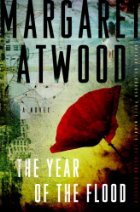
Book Review: The Year of the Flood By Margaret Atwood
 Summary:
Toby, a spa-worker, and Ren, an exotic dancer and prostitute, have both survived the waterless flood–a global pandemic that has killed almost all of humanity. They also both used to live with The Gardeners, a vegetarian cult that constantly warned of the impending apocalypse. A series of flashbacks tells how they survived the pandemic while the question of what to do now that the pandemic is mostly over looms large in their lives.
Review:
Margaret Atwood is one of my favorite authors. I love dystopian books, and she has an incredible talent for taking the current worries and news items and turning them into a near-future dystopia. Toby’s and Ren’s world prior to the waterless flood isn’t anything to be happy about. Slums dominate. Gangs run rampant. The world is now run by a giant evil corporation (which is somehow worse than a giant evil government? *shrugs*). It’s really the little things that makes this future world believable. Kids wear bracelets that have live mini jellyfish in them. Species have been spliced together to make new, more usable ones, such as the Mo’Hair–a sheep whose wool makes perfect fake hair for women. The people who don’t live in slums live in corporation-run compounds where everything they do is monitored. What makes this dystopia wonderful is how plausible it all seems.
Really, though, all of these dystopian features are just a back-drop for the real stories. Toby spends years hiding with The Gardeners and running because one man, Blanco, decided he owned her upon having slept with her. When Toby defied him, he vowed to kill her. He haunts her life for years on end. Similarly, Ren falls in love with a boy in highschool who breaks her heart yet somehow keeps coming back into her life and repeating the damage.
This is a book about mistakes. About how thinking we own the Earth and its creatures could cause our own demise. About how sleeping with the wrong man just once can haunt you for years. About how loving the wrong man can hurt you for years.
This is what I love about Atwood. She has such wonderful insight into what it is to be a woman. Insight into what haunts women’s dreams. When women talk about what scares them, it isn’t nuclear war–it’s the man in the dark alley who will grab her and rape her and never leave her alone. Toby’s Blanco is the embodiment of this fear. She sees him around every corner. She’s afraid to go visit a neighbor because he might find her on the street walking there. Setting this fear in an other world makes it easier for female readers to take a step back and really see the situation for what it is. Yes, he’s a strong, frightening man, but Toby let him disempower her by simply fearing him for years. This is what Atwood does well.
The pandemic, however, is not done so well. Too many questions are left. Where did the pandemic come from? Does it work quickly or slowly? Some characters seem to explode blood immediately upon infection, whereas others wander around with just a fever infecting others.
Similarly, the reader is left with no clear idea as to how long it has been since the pandemic started. On the one hand it seems like a month or two. On the other hand, the stockpiles of food The Gardeners made run out quite early, and that just doesn’t mesh given how much attention they gave to them prior to the pandemic.
I also found the end of the book extremely dissatisfying. It leaves the reader with way too many unanswered questions. In fact, it feels completely abrupt. Almost like Atwood was running out of time for her book deadline so just decided “ok, we’ll end there.” I know dystopian novels like to leave a few unanswered questions, but I don’t think it’s appropriate to leave this many unanswered.
The Year of the Flood sets up a believable dystopia that sucks the reader in and has her reconsidering all of her life perceptions. Unfortunately, the ending lets the reader down. I think it’s still worth the read, because it is enjoyable for the majority of the book, and I am still pondering issues it raised days later. If you’re into the environmental movement or women’s issues, you will enjoy this book–just don’t say I didn’t warn you when the ending leaves you throwing the book across the room. ;-)
4 out of 5 stars
Source: Library

Book Review: Leviathan By Scott Westerfeld
Thanks to my friend Margaret for lending me her ARC of Leviathan! I’ve enjoyed Scott Westerfeld’s other YA books, and my recent surge in curiosity about steampunk (due to love of the fashion) made me extra-curious about this new YA steampunk book.
 Summary:
World War I takes on a whole new look when the Allied powers function utilizing machine-like, genetically engineered animals, and the Axis powers use tanks that walk using steam power. In this alternate history reside Deryn and Alek. Deryn is a teenaged Scottish girl who pretends to be a boy so she can join the air service working aboard the Leviathan–an ecosystem that resembles a zeppelin. Alek as the son of the assassinated Austrian archduke must go into hiding in Switzerland, escaping with a few loyal servants and a walker–one of the walking tanks. Their worlds end up colliding, as worlds tend to do in a world war.
Review:
This book should come with a warning. “By YA we mean for middle schoolers younger than the characters, not late teens like Westerfeld’s other books.” Although this is technically YA, it reads like a children’s book. Some would say the lovely illustrations throughout made it feel that way, but I don’t think that’s the case. Some adult books are full of wonderful illustrations, yet we still know they are meant for adults. I really think it’s the storyline and the writing that came off so young this time. Maybe Westerfeld wanted to write younger, but his publisher should have notified his fans that this is a book meant for younger people.
Westerfeld does an excellent job of explaining the Darwinist world in a subtle way to the reader. I have difficulty even explaining the flying ecosystems to people, yet I understood them perfectly in the book. Similarly, I had no issue picturing the walkers, even though I couldn’t fathom why anyone would want to build such a thing. I also liked Deryn. She is a well-rounded character–with flaws, but still someone a young audience can look up to. Similarly, the most intelligent person on the airship is a woman, which is a feature I highly appreciated.
On the other hand, I found Alek to be a completely confusing and unsympathetic character. At first I thought he was about nine years old, then overnight he seems to be fifteen. Yes, I know his parents died, but I don’t think a fifteen year old would be playing with toy soldiers the night prior, regardless. Similarly, Alek repeatedly makes stupid decisions. I know characters sometimes make them, but he makes them so often that I just want to slap him upside the head. There is very little that is redeemable about Alek. By the time he makes a wise decision, I was so sick of him that it failed to raise my opinion of him at all.
Similarly, I’m bothered that all of the servants loyal to Alek are men. Why couldn’t a single woman be loyal to him? Deryn’s world consists of both powerful men and women, yet Alek’s is entirely male except for his low-born mother. I know this is early 20th century, but if you’re going alternate history, why not empower a few more women along the way?
Even though there is steam power and Victorian clothing in an alternate history, Leviathan didn’t feel very steampunky to me because, well, the setting is Victorian! Maybe I’m too into steampunk fashion, but I would have been far more impressed if all these things were true in an alternate history of the Vietnam War, for instance, or even World War II. I think World War I is just far too close to the actual Victorian age to truly feel like an alternate, steampunk world. I get enjoying books written in the Victorian era from a steampunk viewpoint, but current authors could be far more creative when utilizing this genre.
Finally, I have to say, I hate the ending! I know Westerfeld is a huge fan of writing trilogies, but this ending is far too abrupt. I was left going “what the hell?” instead of feeling pleasantly teased about the second book in the series.
Leviathan isn’t a bad book. It isn’t painful to read, and the storyline is enjoyable. It’s kind of like a mash-up of Jurassic Park, 20,000 Leagues Under the Sea, and your typical 21st century YA novel. Only minus all the blood, guts, and gore. Middle schoolers with a taste for the whacky will enjoy it. Older teens and adults should choose more sophisticated steampunk–perhaps even the classic 20,000 Leagues Under the Sea.
3 out of 5 stars
Source: Borrowed ARC from a friend

Book Review: The Tenant of Wildfell Hall By Anne Bronte
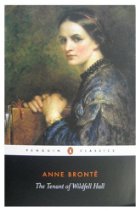 Summary:
Cited as the feminist antithesis to her contemporary Austen’s romantic 19th century ramblings, Anne Bronte’s best-known novel presents the much more dire image of the very real risk of marriage in a time where the wife loses all her human rights to her husband. Gilbert Markham becomes infatuated with the widow Helen Graham who has moved into his neighborhood with her son, but rumors soon start to spark up around her. When he confronts her about her conduct, she shows him her diary. There he learns her travails and sufferings at the hands of her still very much alive husband.
Review:
I came to this book with high expectations. I heard of it simply as the one of the earlier feminist novels written in response to such works as Austen’s. I felt this opened the door to many possibilities, but perhaps I was thinking about this with too much of a 21st century brain. What held The Tenant of Wildfell Hall back was the relentless presentation of Helen as the picture of Christian piety. Given the fact that Helen behaves quite willfully and controversially for the time period by leaving her husband’s home to live separately from him, this was probably quite necessary for Bronte’s contemporaries to find Helen a sympathetic character. For me though her severeness sometimes had me siding with her tyrant of a husband in my mind. He calls her cold and calculating. Well all she ever talks about is living piously now to be joyous in heaven after death. I would find that cold and calculating as well.
This book does hold value for the modern feminist though if we re-position ourselves to look at it through the lens of how society at the time has messed up both Helen and her husband, Arthur. Society tells Helen that it is her job as a woman to be the pious one. Although single men may go cavorting about she must sit respectably at home or go out to supervised dances. Men may behave however they desire as long as they settle down after marriage. This belief leads Helen to make her foolish, egotistical mistake of thinking that marrying Arthur is alright for she can change him after they are married. To a certain extent Arthur makes the same mistake. He has been told the ideal wife is a highly pious one, so he marries Helen thinking she will save him when, in fact, they are the most mis-matched couple ever.
Arthur enjoys cavorting, playing cards, and drinking. Helen refuses to do these things out of piety and nags Arthur not to do them. They both come to realize they are mis-matched, but in their society divorce is a painful embarrassment to both parties. Helen doesn’t even consider it for Christian reasons; Arthur in order to save face. This leads to their gradual loss of caring for each other, although Arthur’s comes much faster and more brutally when he carries out an affair with the wife of a visiting friend.
Arthur no longer wants Helen, but she is his wife and he would be a laughing-stock if he couldn’t control her, so he starts abusing her emotionally–repeatedly telling her it disgusts him to see her pale skin, for instance. He also carries out the afore-mentioned affairs with her full knowledge and at first forbids her from having any of her own. I am not condoning Arthur’s ill-treatment of Helen. He made the situation far more worse than society alone would have had them make it. He could, for instance, have allowed them to set up separate households, which was sometimes done. He at least could have shown her the respect she deserved as a human being, but instead he came to view her almost as a hated prison guard. This would not have been the case if they could have parted ways amicably.
I must admit what struck me far more than the restrictive society was Helen’s restrictive religion. She almost constantly lives only thinking of her reward after death in Heaven. She possesses nearly no joy for her beliefs require that she squander her life away serving a man who hates her. The only reason she even leaves him for a time, relieving some of her pain, is because she believes her duty to raise a pious son outweighs her duty as a wife, so she is justified to remove her son from the soul-risking influence of his father. Helen’s faith seems to bring her no joy, but instead demand she behave as a judging marble statue.
Although The Tenant of Wildfell Hall is not an obvious feminist manifesto, it as an excellent rendition of the oppression of 19th century society on both men and women. Reading of their struggles and realizing as a 21st century observer that there is essentially no way out for either of them beautifully demonstrates how far we’ve come. Bronte’s writing style is complex enough that what could be a bit of a boring, straight-forward tale remains interesting throughout. She changes perspectives a few times via diaries and letters. She does suffer from the 19th century literature trap of overly extensive descriptions of settings, but these are easily skimmed. An excellent example of 19th century literature, I wish Bronte’s realistic work was assigned more often in literature classes than Austen’s fluffy, unrealistic drivel.
3.5 out of 5 stars
Source: Library

Book Review: The Glass Castle By Jeannette Walls
 Summary:
Jeannette Walls, a successful writer for MSNBC, hid the real story of her childhood for years. In her memoir she finally lets the world know the truth. She was raised by an alcoholic father and an incredibly selfish artist mother, both of whom were brilliant. Yet their personal demons and quirks meant Jeannette was raised in near constant neglect and also suffered emotional and some physical abuse. The memoir chronicles her changing perception of her parents from brilliant counter-culturalists to an embarassment she wanted to escape.
Review:
Jeannette’s memoir is incredibly well-written. She manges to recapture her young perceptions at each point in the story from her idolization of her father at the age of five to her disgust at her mother at the age of fifteen. Often memoirs about bad childhoods are entirely caught up in the writer’s knowledge as an adult that this was all wrong. While this is most certainly true, it makes for a better experience for the reader to almost feel what it is like for a child to become disillusioned of her parents. Children naturally love their parents, and abused and/or neglected children are no different. It is just for them instead of just realizing their parents are human like children from normal families do, they also realize that their parents screwed them over. Jeannette subtly and brilliantly presents this realization and all the pain that comes with it. She doesn’t want to believe her father would endanger her when he’s drunk. She doesn’t want to believe that her mother makes her children eat popcorn for three days straight while she herself pigs out on all the king-sized chocolate bars she can eat. Yet Jeannette cannot escape the facts.
This memoir is also different from other bad childhood memoirs in that Jeannette never loses compassion for her parents. As her awareness grows throughout the book, she also struggles to understand how her parents ended up the way they did. [Spoiler Warning] A particularly moving scene is when the family goes to visit Jeannette’s father’s mother in spite of his protests. Jeannette walks in on her grandmother claiming to be mending her brother’s pants while they are still on him, but actually groping him. Jeannette’s reaction, after saving her brother from the groping, is to wonder if maybe this is why her father drinks so much. Maybe her grandmother did the same thing to her father, and there was no one to save him. Maybe these are really the demons he is fighting. To realize this, to even care about it after everything her father has put her through is truly remarkable. [End Spoiler]
Jeannette is an excellent writer and an incredible human being. Readers will be astounded not only at her unique, messed-up childhood but also at how she overcame it and simultaneously maintained sympathy for her parents who so wronged her. Jeannette is an inspiration in multiple ways, and her memoir is definitely worth the read.
4 out of 5 stars
Source: Library

 Support my work with a tip or browse my shop for curated book club guides, how to guides, cross-stitch patterns, and more!


This work by Amanda Nevius is licensed under a Creative Commons Attribution-Noncommercial-No Derivative Works 3.0 United States License.
 Opinions of a Wolf