
Archive
Book Review: Blackbirds by Chuck Wendig (Series, #1)
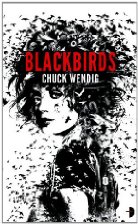 Summary:
Miriam Black is an early 20-something drifter with bleach blonde hair and a surprising ability to hold her own in a fight. She also knows when and precisely how you’re going to die. Only if you touch her skin-on-skin though. And it’s because of this skill that Miriam became a drifter. You try dealing with seeing that every time you touch someone. But when a kind trucker gives her a lift and in her vision of his death she hears him speak her name, her entire crazy life takes an even crazier turn.
Review:
This is one of those books that is very difficult to categorize. I want to call it urban fantasy, but it doesn’t have much supernatural about it, except for the ability to see deaths. The world isn’t swimming in vampires or werewolves of goblins. I also want to call it a thriller what with the whole try to stop the trucker from dying bit but it’s so much more than chills and whodunit (or in this case, who will do it). Its dark, gritty style reminds me of Palahniuk, so I suppose what might come the closest would be a Palahniuk-esque urban fantasy lite thriller. What I think sums it up best, though, is a quote from Miriam herself:
It starts with my mother….Boys get fucked up by their fathers, right? That’s why so many tales are really Daddy Issue stories at their core, because men run the world, and men get to tell their stories first. If women told most of the stories, though, then all the best stories would be about Mommy Problems. (location 1656)
So, yes, it is all of those things, but it’s also a Mommy Problems story, and that is just a really nice change of pace. Mommy Problems wrapped in violence and questioning of fate.
The tone of the entire book is spot on for the type of story it’s telling. Dark and raw with a definite dead-pan, tongue-in-cheek style sense of humor. For instance, each chapter has an actual title, and these give you a hint of what is to come within that chapter, yet you will still somehow manage to be surprised. The story is broken up by an interview with Miriam at some other point in time, and how this comes into play with the rest of the storyline is incredibly well-handled. It’s some of the best story structuring I’ve seen in a while, and it’s also a breath of fresh air.
Miriam is also delightful because she is unapologetically ribald and violent. This is so rare to find in heroines.
We’re not talking zombie sex; he didn’t come lurching out of the grave dirt to fill my living body with his undead baby batter. (location 2195)
As a female reader who loves this style, it was just delightful to read something featuring a character of this style who is also a woman. It’s hard to find them, and I like that Wendig went there.
While I enjoyed the plot structure, tone, and characters, the extreme focus on fate was a bit iffy to me. There were passages discussing fate that just fell flat for me. I’m also not sure of how I feel about the resolution. However, I’m also well aware that this is the beginning of a series, so perhaps it’s just that the overarching world rules are still a bit too unclear for me to really appreciate precisely what it is that Miriam is dealing with. This is definitely the first book in the series in that while some plot lines are resolved, the main one is not. If I’d had the second book to jump right into I would have. I certainly hope that the series ultimately addresses the fate question in a satisfactory way, but at this point it is still unclear if it will.
Overall, this is a dark, gritty tale that literally takes urban fantasy on a hitchhiking trip down the American highway. Readers who enjoy a ribald sense of humor and violence will quickly latch on to this new series. Particularly recommended to readers looking for strong, realistic female leads.
4 out of 5 stars
Source: Netgalley

Book Review: Soulless by Gail Carriger (Series, #1) (Bottom of TBR Pile Challenge)
 Summary:
Alexia Tarabotti isn’t just suffering from being half-Italian in Victorian England, she also is soulless. Unlike vampires, werewolves, and other supernaturals who successfully changed thanks to an excess of soul, or even having just enough soul like day dwellers, she simply has none. Plus as a preternatural she turns the supernaturals human when she touches them. Obviously they aren’t a fan of that. Except for one particularly persnickety werewolf, Lord Maccon, who is Scottish to boot. And to top it all off a mysterious wax-faced man suddenly seems very interested in kidnapping her. None of this seems particularly civilized.
Review:
The Parasol Protectorate series was all the rage when this book made it onto my tbr pile back in 2010. That was kind of the beginning of the steampunk craze, before you could find gears on everything in the costume shop. I can see why this series is popular, but it’s just not my cup of tea.
The world building is wonderful and is what kept me reading. A good steampunk blends history, science, and fashion to make for a semi-familiar but deliciously unique world that’s delightful for history and science geeks alike to play around in. Carriger pulls this off beautifully. The fashion is Victorian with a steampunk edge. The politics are recognizable but with the supernatural and steampowered sciences taking a role. A great example of how well this world works is that in England the supernatural came out and became part of society, whereas America was the result of the Puritans condemning the acceptance of the supernatural who they believe sold their souls to the devil. This is a great blend of reality and alternate history.
The plot wasn’t a huge mystery, which is kind of sad given the complexity of the world building. What really bothered me though was the romantic plot, which suffered badly from a case of instalove. Although we hear of delightful prior encounters between Alexia and Lord Maccon, we didn’t see them. We mostly see him going from hating her to loving her and demanding her hand in marriage. It just felt lazy compared to the other elements of the book. I get it that Carriger could be poking fun at Victorian era romances, but I think that would have worked better if it didn’t have such a Victorian ending. Plus, I didn’t pick up this book to read a romance. I wanted a steampunk mystery with a strong female lead. I didn’t like how quickly the romance took over the whole plot.
Potential readers should take a glance at the first chapter and see if Carriger’s humor works for them. I can see how if I was laughing through the whole book I’d have enjoyed it more, but the…decidedly British humor just did not work for me. It didn’t bother me; I just didn’t find it funny. I mostly sat there going, “Oh, she thinks she’s being funny…..” Humor is highly personal, so I’m not saying it’s bad. It just isn’t my style. It might be yours.
Overall this is a creatively complex steampunk world with an unfortunately average plot overtaken by instaromance and seeped in dry, British humor. It is recommended to steampunk fans who find that style of humor amusing and don’t mind some instalove all up in their story. That does not describe this reader, so I won’t be continuing on with the series.
3.5 out of 5 stars
Source: PaperBackSwap

Book Review: Poison Study by Maria V. Snyder (Series, #1) (Bottom of TBR Pile Challenge)
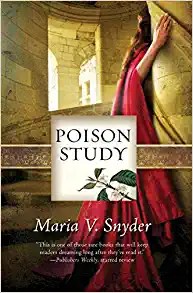
Summary:
Yelena is on death row for killing a man in the military state of Ixia but on the day of her execution she faces a choice. Become the Commander’s food taster and face possible death by poison every day or be hanged as planned. Being a smart person, Yelena chooses the former. Now that she has admittance to the inner circle of the military state, she quickly comes to see that not everything is quite as it seems….not even her own personal history or her heart.
Review:
*sighs* You guys. I have got to stop letting people convince me to pick up books using the phrase, “I know you don’t like [blank] but!” That is how this book wound up on my tbr pile. “I know you don’t like fantasy, but!” and also “I know you don’t like YA, but!” oh and “I know you don’t like romance in YA, but!” A reader knows her own taste. And I don’t like any of those. I still came at it with hope, though, since I did like one fantasy book I read this year (Acacia). There’s a big difference in how they wound up on my pile though. I chose Acacia myself because its reviews intrigued me. Poison Study was foisted upon me by well-meaning friends. So, don’t get my review wrong. This book isn’t bad. It’s just what I would call average YA fantasy. Nothing made it stand-out to me, and it felt very predictable.
The world of Ixia felt similar to basically every other fantasy world I’ve seen drawn out, including ones friends and I wrote up in highschool. Everyone has to wear a color-coded uniform that makes them easily identifiable. There are vague similarities to the middle ages (like Rennaisance-style fairs). There are people in absolute control. There is magic and magicians who are either revered or loathed. There are all the things that are moderately similar to our world but are called something slightly different like how fall is “the cooling season.” Some readers really like this stuff. I just never have. I need something really unique in the fantasy world to grab me, like how in the Fairies of Dreamdark series the characters are tinkerbell-sized sprites in the woods who ride crows. That is fun and unique. This is just….average.
Yelena’s history, I’m sorry, is totally predictable. I knew why she had killed Reyad long before we ever find out. I suspected early on how she truly came to be at General Brazell’s castle. I didn’t know the exact reason he had for collecting these people, but I got the gist.
And now I’m going to say something that I think might piss some readers off, but it’s just true. What the hell is it with YA romance and exploitative, abusive douchebags? This may be a bit of a spoiler, but I think any astute reader can predict it from the first chapter who the love interest is, but consider yourself warned that it’s about to be discussed. Yelena’s love interest is Valek, the dude who is the Commander’s right-hand man and also who offers her the poison taster position and trains her for it. He manipulates her throughout the book, something that Yelena herself is completely aware of. There are three things that he does that are just flat-out abusive. First, he tricks her into thinking that she must come to see him every two days for an antidote or die a horrible death of poisoning. (Controlling much?) Second, he sets her up in a false situation that she thinks is entirely real to test her loyalty to him. (Manipulative and obsessive much?) Finally, and this is a bit of a spoiler, even after professing his love for her, he asserts that he would kill her if the Commander verbally ordered it because his first loyalty is to him. What the WHAT?! Even the scene wherein he professes his love for Yelena he does it in such a way that even she states that he makes her sound like a poison. There’s a healthy start to a relationship. *eye-roll* All of this would be ok if Yelena ultimately rejects him, asserting she deserves better. But she doesn’t. No. She instead has happy fun sex times with him in the woods when she’s in the midst of having to run away because Valek’s Commander has an order out to kill her. This is not the right message to be sending YA readers, and yet it’s the message YA authors persist in writing. I could go into a whole diatribe on the ethics of positively depicting abusive relationships in literature, especially in YA literature, but that should be its own post. Suffice to say, whereas the rest of the book just felt average to me, the romance soured the whole book. It is disappointing.
Ultimately then, the book is an average piece of YA fantasy that I am sure will appeal to fantasy fans. I would recommend it to them, but I feel that I cannot given the positively depicted unhealthy romantic relationship the main character engages in.
2 out of 5 stars
Source: PaperBackSwap

Book Review: Fire Baptized by Kenya Wright (Series, #1)
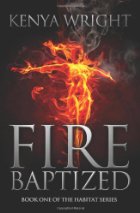 Summary:
The humans won the supe-human war, and now all supernaturals are confined to caged cities whose bars are made up of every metal that is harmful to supes. They also all have a brand on their forehead letting everyone now immediately what type of supernatural they are–crescent moon for shifter, full moon for vampire, wings for fairy, X for mixbreed, which is what Lanore just happens to be. Lanore is hoping to be the first mixie to graduate from the caged city’s university, and she also works on the side with another mixie, Zulu, to run a mixie civil rights group. The purebloods by and large hate mixies. As if her life wasn’t already complicated enough, one night Lanore witnesses a murder, and the murderer turns out to be a serial killer. Now Lanore is on his list.
Review:
I am so glad I accepted this review copy. The branding of supes and caged cities was enough to show me that this is a unique urban fantasy series, but I wasn’t aware that it’s also a heavily African-American culture influenced series, and that just makes it even more unique and fun.
It’s not new to parallel supe civil rights issues with those of minorities, but they often flounder. Wright’s book depicts the complexities eloquently. Making a group within the supes that the supes hate makes it more closely parallel the real world. The addition of the brands on the foreheads also makes the supernatural race immediately identifiable just as race is in the real world by skin color. The caged cities are also a great analogy of inner city life and how much of a trap it can feel like. The fact that Lanore accidentally witnesses a murder on her way home from school is something that can and does happen in the real world.
The other element that I really enjoyed is how Wright brings the African-American religion of Santeria into the mix. She provides multiple perspectives on the religion naturally through the different characters. Lanore doesn’t believe in any religion. MeShack, her ex-boyfriend and roommate, does, and it helps him in his life. And of course the serial killer also believes in Santeria but is going about it the wrong way, as Lanore eventually learns. The book naturally teaches the reader a few things about Santeria, which is often maligned and misunderstood in America. But it does it within the course of the story without ever feeling preachy.
The sex scenes (we all know we partially read urban fantasy for those) were hot and incorporated shifter abilities without ever tipping too far into creepy beastiality land. They were so well-written, I actually found myself blushing a bit to be reading them on the bus (and hoped no one would peak over my shoulder at that moment).
The plot itself is strong through most of the book. The serial killer is genuinely scary, and Lanore doesn’t suddenly morph into some superhero overnight. She maintains her everywoman quality throughout. I wasn’t totally happy with the climax. I didn’t dislike it, but I also think the rest of the book was so well-done that I was expecting something a bit more earth-shattering.
There are two things in the book that knocked it down from loved it to really liked it for me. They both have to do with Zulu. Zulu is a white guy, but his beast form is a black dude with silver wings. I am really not sure what Wright is trying to say with this characterization and plot point. It wasn’t clear when it first happens, and I was still baffled by the choice by the end of the book. In a book that so clearly talks about race, with an author so attuned to the issues innate in race relations, it is clear that this was a conscious choice on her part. But I am still unclear as to why. Hopefully the rest of the books in the series will clear this up for me. My other issue is with how possessive Zulu is of Lanore. He essentially tells her that she’s his whether she likes it or not, and she goes along with it. Why must this theme come up over and over again in urban fantasy and paranormal romance? A man can have supernatural powers and not use them as an excuse to be an abusive douche. I’m just saying. But. This is part of a series, so perhaps these two issues will be addressed in the next book. But for right now, I’m kinda sad that Lanore chose Zulu.
Overall, this is a unique piece of urban fantasy. The tables are turned on the supes with them in caged cities, and the creative use of forehead brands and the existence of mixed-breed supernaturals are used intelligently as a commentary on race relations in the United States. I highly recommend it to urban fantasy fans and am eagerly anticipating reading the next entry in the series myself.
4 out of 5 stars
Source: Kindle copy from author in exchange for my honest review

Book Review: Acacia: The War With the Mein by David Anthony Durham (Series, #1) (Bottom of TBR Pile Challenge)
 Summary:
The Akarans have ruled the Known World for twenty-two generations, but the wrongfully exiled Meins have a bit of a problem with that. They enact a take-over plot whose first action is assassinating the king. Suddenly his four children are flung to different parts of the Known World in exile where they will need to come to terms with who they are, who the Mein are, and the wrongs past generations of Akarans committed in order to help the Known World make a change for the better.
Review:
I have a big announcement to make. Huge even. THIS IS THE FIRST HIGH FANTASY BOOK I HAVE LOVED. There. I said it! And it’s true.
I wish I had some vague idea of how this ended up on my TBR pile. The only clue I have is that I acquired it via PaperBackSwap, so I know I got it very intentionally after reading a review or something somewhere. But where? And why? Who knows! It was entirely out of my comfort zone, took me much longer than my norm to read (over two weeks according to GoodReads), and yet. I loved every moment of it.
A momentous occasion such as this obviously leaves me asking why. Why when I generally am irritated by most high fantasy did this one not just not bug me but worm its way into my heart? This is a key question, because it’s something that helps stories cross genres. I do have an answer, but of course it has many elements.
First, although this primarily depicts a war, no side is depicted as pure evil or good. Both sides have good points and flaws. Good people work for both. Bad people work for both. The Akaran king isn’t a bad guy per se, but he’s allowing things to happen under his rule that are bad. The Meins have a just cause, but they do horrible things in the process of achieving that cause. This realistic complexity is something that I have found to be sorely missing in other fantasy. The Known World is its own fantastical place with its own cultures and history, but it is realistic in the fact that everything is complex and nothing is clear-cut.
Second, the female characters are incredibly well-written. They are well-rounded, strong and yet vulnerable. Beautiful and yet terrifying. They are innately a part of the world depicted, not just princesses in a tall tower or the girl at the side of the field whose beauty inspires the men. Women are historically a part of the Akaran army, and the two Akaran princesses have strengths and flaws of PEOPLE. They are not “female flaws.” They are people who happen to have vaginas. It is some of the best writing of women I’ve seen from a male writer in a while.
Third, the Known World is complex and eloquently imagined, yet clear and easy to understand. It is its own thing, but it is similar enough to our own real world that I wasn’t left grasping for straws trying to understand things. People in cold climates are pale, and people in deserts are dark. The animals range from recognizable horses and monkeys to fantastical creatures that are a mix of rhinoceroses and pigs. It is creative yet fathomable.
Finally, the storyline is complex. I could not predict what was going to happen next at any moment, really. The ending caught me completely by surprise, and I am baffled as to what Durham will be doing with the middle book of the trilogy. Baffled and impatient.
My god. I love a fantasy story.
Overall, this is now the book I will hold up when people ask me what is good fantasy. It is what leaves me with hope for the genre that it can be more than pasty white men wishing for a patriarchal past of quivering ladies in waiting and knights fighting dragons. Fantasy can imagine a world where some things are better than ours, and yet other things are worse. It can be a reflection of our own world through a carnival mirror. Something that makes us think hard while getting lost. I highly recommend it to anyone looking for those things in their reading.
5 out of 5 stars
Source: PaperBackSwap

Book Review: Barefoot Season by Susan Mallery (Series, #1)
 Summary:
Michelle ran away from mistakes made at home to the army, and now she’s coming home from three tours of duty to Blackberry Island in the Pacific Northwest. Her father abandoned the family when she was a teenager, but left his historic inn in trust to her. Her mother was running it until she died, and now Michelle is back to reclaim her inheritance. Only it seems that her mother may have not so much been running the inn as running it into the ground. Meanwhile, Michelle’s once best friend, Carly, thought she was working toward owning part of the inn only to be side-swiped by the fact that Michelle’s mother lied to her….not to mention the bad blood between her and Michelle. It’s a lot for anyone to deal with, but toss in Michelle’s PTSD and Carly’s single motherhood, and it seems impossible for either of them to ever truly get their lives in order.
Review:
I am not usually a chick lit person, but this one slipped in under my radar thanks to Harlequin’s new MIRA line (which is chick lit with some sex scenes). I’m glad it did, because I found the story relatable, heart-warming, and a welcome escape.
The plot is complex, which I think is evident from my plot summary. There is a lot going on. But it never feels forced or like too much. It simply feels like real life. Michelle and Carly both have a *lot* of shit to deal with and watching them deal with it imperfectly but understandably is an enjoyable experience.
Although both Michelle and Carly have their own romance plot lines, the story is really about healing their broken friendship, as well as their wounds from their individual painful pasts. I enjoyed this because the story shows healing happening alongside real life. Too often books either ignore the tough things or focus on them to the exclusion of real life.
Of course, being the mental illness advocate that I am, I was incredibly pleased to see Michelle’s PTSD come up and be dealt with in such a true to life manner. Michelle at first is mentally wounded and won’t truly admit it.
While she wasn’t a big believer in PTSD, she’d been told she suffered from it. So she’d listened to the counselors when they’d talked about avoiding stress and staying rested and eating well. (location 207)
Perhaps the most true-to-life part of the whole book is that Michelle takes a while to admit that she is not ok, even while those around her who love her are expressing their concerns to her. A lot of people have difficulty acknowledging a problem, particularly if they view themselves as strong and independent. Seeing Michelle realize that reaching out for help is stronger than suffering alone is honestly the best part of the whole book.
Although we do have a couple of sex scenes, I did feel that the romance was a bit….quick and forced for both women. However, this is the first book in a series, so perhaps their romantic relationships will be explored more in future books.
I also have to say that the title makes zero sense to me. It brings to mind summer, but that’s about all the relation I can see between it and the story.
Overall, this is a piece of chick lit with an intelligent perspective on PTSD in female soldiers and a dash of romance. Recommended to fans of the genre as well as those who enjoy a contemporary tale and want to dip their toe into the chick lit world.
4 out of 5 stars
Source: NetGalley

Counts For:
Book Review: The Walking Dead: Rise of the Governor by Robert Kirkman and Jay Bonansinga (Series, #1)
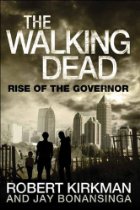 Summary:
The first in a prequel trilogy that relates how the baddest villain of The Walking Dead’s zombie apocalypse came to be–not just how he came to rule Woodbury, but how he became an evil sociopath.
Review:
Wow. Just wow. If I could be a good book blogger and just say that I would, but I can’t so I suppose I must attempt to put my love for this book into words.
First of all, it’s important to know that this is sort of a prequel to The Walking Dead graphic novels. It’s the origin story of The Governor (aka one of the most evil comic book villains ever). Only instead of sticking to his graphic novel format, Kirkman, with the assistance of Bonansinga, went with the written word. Now, I was offered this book as an audiobook, and I have to say this really affected my reading of it. The reader, Fred Berman, does an absolutely amazing job. He has a natural standard American accent, but seamlessly slips into a Southern drawl when the characters speak. Beyond this though he is able to bring the anguish and tensity to the survival scenes that is necessary without seeming melodramatic. It reminded me of being read to by my own father when I was a little girl. I found myself choosing to curl up with the audiobook over many other activities. So. I’m not sure if the experience is the same reading it yourself. I do know that listening to the audiobook is a remarkable experience.
Now, this is a zombie apocalypse horror novel about an evil man. It gets uncomfortable. Kirkman and Bonansinga bring us inside the minds of men warped by situations and psychiatric problems alike. It’s not pretty. It makes you squirm. But it’s supposed to. Some reviewers have accused this book of being misogynistic because bad things seem to happen an awful lot to the female characters. I have a couple of things to say about that. First of all, hello, do you live in this world? Because women have to survive a lot of bad shit. Second, this is an apocalypse. Think of it as a war zone. Do women get molested, raped, murdered, treated as less strong and unequal? Absolutely. The book isn’t misogynistic. It’s realistic about how a south torn apart by zombies would treat women. The way to determine if a book in this sort of situation is misogynistic is to look at how the author treats the women. Does he present them as hysterical, over-reacting? Do they refuse to stand up for themselves? I can unequivocally say that although horrible things happen to the women in this book, they fight for themselves. It is therefore not misogynistic, but realistic.
Now one thing that probably a lot of people wonder is is the story predictable? We already know who The Governor is and that he keeps his zombie daughter as a pet. That would seem to remove the ability for the authors to surprise us at all. I am happy to say that in spite of knowing the end result, this story kept me on the edge of my seat. Some readers didn’t like all of the surprises and twists. Personally, I feel that they brought the novel up a notch in both talent and enjoyability.
Overall, this is a wonderful addition to The Walking Dead canon. Fans of the graphic novel series will not be disappointed, although fans of the tv show seem to be taken aback by it. All I can say is that the books don’t pull any punches and are not for the squeamish. If you don’t want to be challenged, stick to tv. Everyone else should scoop this up as soon as possible.
5 out of 5 stars
Source: Copy from the publisher in exchange for my honest review and a giveaway

Book Review: Dead Harvest by Chris F. Holm (Series, #1)
 Summary:
Sam sold his soul to the devil in the 1940s and ever since then he’s been hopping from body to body, possessing and utilizing them to perform his task–collect the souls of the dammed. Although he can possess anyone, he prefers the recently dead. His new assignment stops him dead in his tracks though when he touches the 17 year old girl’s soul, a girl who supposedly killed her mother, father, and brother in cold blood, and finds it untainted. His refusal to collect her sends both angels and demons after him, eager to restore the balance, but Sam insists that collecting her soul will only bring about the Apocalypse.
Review:
I’m not sure why, but somewhere between my email from Angry Robot about this then upcoming book and actually reading it, I forgot what it was about and assumed from the title that it’s about zombies. Um, not so much? Haha. Actually, it is an urban fantasy film noir. Instead of a detective we have a collector, who, a friend pointed out to me, is basically the same as Sam the Reaper on the tv show Reaper. Our femme fatale is Lilith (you know, the first woman god made but she refused to be subservient to man so she got kicked out of the garden and went and hung out with demons. I always liked her). It all sounds super-cool, but I was left feeling very luke-warm about the whole thing.
First, there’s how Sam talks, which I get is supposed to come across as witty banter, but I myself didn’t find that amusing. Perhaps I’m way too familiar with the classic works of film noir and to me this just didn’t measure up. Perhaps I’m just a mismatch for it. I feel like people with a slightly different sense of humor would enjoy it more, though. Personally it just read as Sam trying too hard to sound suave, which I always find annoying.
My other big issue with the story is a couple of really unbelievable action sequences. Ok, I get it that this is urban fantasy, but even within that we still need believability. What do I mean by this? Well, if something huge happens that affects the mortals, there should be discussion of how the immortals cover it up or deal with the fall-out. This doesn’t really happen in this book. One sequence in particular that bugged me involved Sam and the 17 year old hijacking a helicopter, flying it all over NYC, then crashing it in a park AND THEY GET AWAY. Does anyone believe this could actually happen in a post 9/11 world unless some sort of otherworldly shielding was going on? I don’t think so. It was at this point that I knew the book was just not gonna work for me.
Does this mean that I think it’s a badly written book? No. It’s an interesting twist on urban fantasy and film noir simultaneously. The characters are interesting, and the plot wraps-up fairly well. I personally found it difficult to get into and found some sequences simply too ridiculous to believe. However, I do think other people might enjoy it more, perhaps someone who has an intense love for urban fantasy and doesn’t mind ridiculous situations.
3 out of 5 stars
Source: Kindle copy from publisher in exchange for my honest review

Book Review: Hellsbane by Paige Cuccaro (Series, #1)
 Summary:
Emma Jane Hellsbane has always had the ability to sense other people’s emotions, and she turned that into a comfortable career as a “psychic.” All that changes when the cute jock from highschool who mysteriously disappeared halfway through senior year lands on her doorstep with a clawed stomach. She swiftly finds out that he’s a nephilim–half human, half fallen angel–and so is she. Without intending to, Emma Jane finds herself swept into the war between the angels and the fallen, as well as attempting to pay off the debt for her father’s sin.
Review:
This was a classic case of not a bad book but I’m not the right audience for it. I definitely don’t think the summary of the book that I read was quite as clear about the book’s Christian leanings as the one I just wrote for ya’ll. If it was, I wouldn’t have picked it up.
What we have here is what I’m thinking is probably a new category of Christian fiction I was completely unaware of –Christian paranormal clean romance. Now, I know at least two of my followers who would absolutely LOVE this book for exactly those reasons. Alas, that’s exactly why I didn’t like it.
The Christian mores and doctrines have a strong presence. We even go so far as to have Emma Jane come from a Catholic family but be an agnostic herself until hell and heaven literally show up on her doorstep. As an agnostic myself, I found it rather patronizing to have an agnostic character proven wrong by flesh and blood angels and demons. Y’know, like that would ever actually happen in real life? The whole scene just felt smug. On the other hand, I could totally see as a Christian enjoying seeing someone convert from agnostic back to Catholic. And yes, this book is heavily Catholic. There is a lot of talk of saints and levels of sin and etc… This of course means that there are things that I just don’t agree with (like the whole Emma Jane being held responsible for her father’s sin), but that’s only natural considering that this book is geared toward people who believe in those sorts of things. Kind of like how I can’t stand The Chronicles of Narnia for similar reasons.
The fact that this is a Christian romance also means that there is ZERO SEX. There is one pretty tame kiss. If you want clean romance, this is your book, but if you’re like me it, um, is not.
The only thing that bothered me that I can’t chalk up to not being the target audience is the surprising lack of racial diversity in a book set in Pittsburgh. Seriously, woman, I know there are black people in Pittsburgh! And we’re not just talking oh the characters are white. They all seem to be blonde-haired, blue-eyed white people. This would make sense maybe in um….Wisconsin perhaps. Not Pittsburgh. Cuccaro really should focus on more diversity in her future books.
These things said, Cuccaro is generally a good writer. The plot is complex, the characters well-rounded, and the sentences are well-written.
Overall, this book is well-written for its target audience–Christian, probably Catholic readers looking for some clean paranormal romance. If this sounds like you, you should check it out.
3 out of 5 stars
Source: Netgalley

Book Review: The Sparrow by Mary Doria Russell (Series, #1) (Bottom of TBR Pile Challenge)
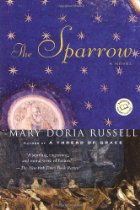 Summary:
It is the year 2060, and the Jesuit priest Emilio Endoz has been found on the planet Rakhat by the second Earth ship to travel there. Found in a whorehouse and killing a native inhabitant in front the UN members’ eyes, they nonetheless strap him into his original spaceship and send him back to the Jesuits. There he is treated for his horrifying wounds and through a series of flashbacks and current conversations with the various Jesuit committee members assigned to his case, we slowly see how everything that started out so right went so horribly wrong on Rakhat.
Review:
It may have been a while since it made it onto my tbr shelf, but I still have a crystal clear memory of why I acquired this book. I entirely blame Little Red Reviewer, who just so happens to be the only other female scifi fan who book blogs that I’m aware of. (Feel free to enlighten me to more in the comments). Her review that religion is there but in a questioning way that honors the tradition of scifi made me give this book with a Jesuit priest and mission at its core a chance. I’m glad I did.
This is a first contact story that takes the all-too-infrequent route of Earth finding the inhabited planet first and sending a mission to them. There’s so much more than that that makes this book unique, though. The future Earth just barely has the technology to make it to Alpha Centauri, and only the most tech-savvy are aware of it. Thus, we’re not an incredibly advanced civilization making first contact, just one slightly more so than Rakhat. I’d say a fair comparison might be late 19th to early 20th century earth to early to late 21st century Earth. It’s a short span of difference. Additionally, Russell made the intriguing choice of the first contact being run by missionaries, instead of a political unit. When you think about it, it makes perfect sense. Who tended to be first to the New World? Religious groups. Who can organize themselves quickly and have vast finances? Religious groups. Having first contact be missionaries makes so much sense that I’m shocked I didn’t think of it first.
That said, thankfully this book is not a love letter to organized religion or mission work. It is instead a complex, scientific, and anthropological study of the human condition, the difficulties of vastly different cultures meeting, linguistics, and much more. At its core it is all about why does god (if there is a god) let evil happen, especially to good people who are serving him? These issues are more easily addressed and made further complex by having agnostics, non-practicing Catholics, and a Jewish woman members of the mission team. The non-believers are about at even numbers with the priests. In fact, the deeper into the book I got, the more it tore at my heart-strings. Varying types of questioners are represented, and of course it’s possible to identify with many of them, particularly for a reader who once was religious but is not anymore. There’s the priest who is secretly gay, the Jewish woman who was wounded terribly by war but comes to learn to love again, the Father Superior who thinks he may be seeing the formation of a real live saint, the priest questioning the very existence of god, and the agnostic who wants to have the beautiful aspect of faith that she sees in those around her.
This book reads, it sounds a bit odd to say, almost like an agnostic’s prayer. Of course agnostics don’t pray, but if they did pray, the pain and wondering and intelligence found in this book would all be there.
We are, after all, only very clever tailless primates, doing the best we can, but limited. Perhaps we must all own up to being agnostic, unable to know the unknowable. (page 201)
The problem with atheism, I find, under these circumstances…is that I have no one to despise but myself. If, however, I choose to believe that God is vicious, then at least I have the solace of hating God. (page 394)
People more into science than the questioning human spirit will find plenty for themselves as well. The science of linguistics is astoundingly well presented. The way the two “sentient” species on Rakhat have evolved is also incredibly well thought-out and realistically drawn. The problems of poverty and war on earth are briefly explored too.
All of these things said, I do feel it took a bit too long to get things set up and moving. Granted, I tend to be a bit of an action-focused reader, so others may not have a problem with that. It was still a draw-back of the book for me though.
I sort of feel like I’m not doing the experience of reading this book justice. Suffice to say if you’ve ever questioned whether or not to have faith and love your big questions to be wrapped in well-thought-out scifi, this is the book for you.
4 out of 5 stars
Source: Better World Books

Counts For:
 Support my work with a tip or browse my shop for curated book club guides, how to guides, cross-stitch patterns, and more!


This work by Amanda Nevius is licensed under a Creative Commons Attribution-Noncommercial-No Derivative Works 3.0 United States License.
 Opinions of a Wolf