
Archive
Book Review: A Bánh Mì for Two by Trinity Nguyen
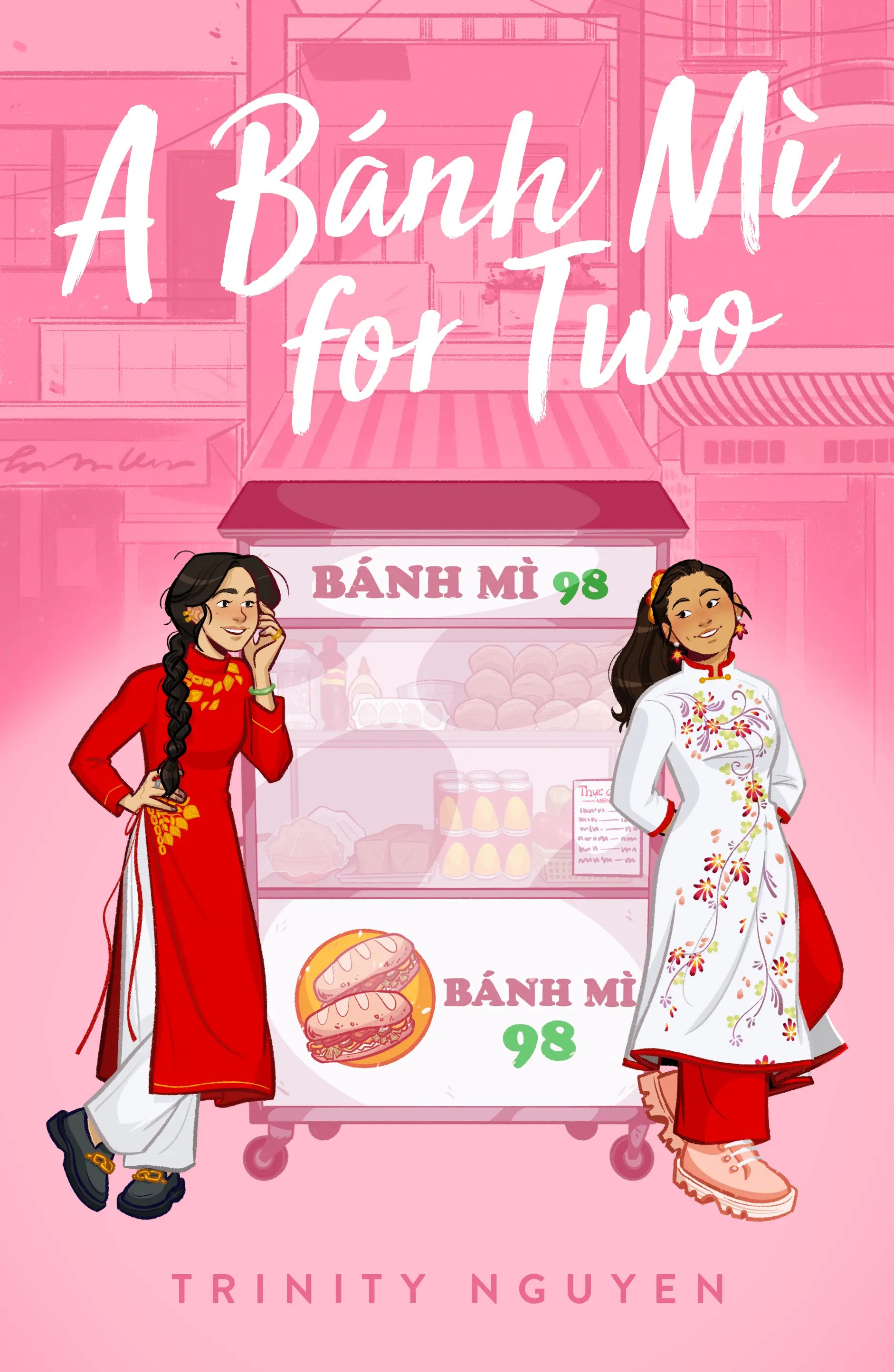
A sweet, closed-door sapphic romance set in Sài Gòn, where two foodie 18-year-olds fall for each other while uncovering family secrets and rekindling a love of food writing.
Summary:
In Sài Gòn, Lan is always trying to be the perfect daughter, dependable and willing to care for her widowed mother and their bánh mì stall. Her secret passion, however, is A Bánh Mì for Two, the food blog she started with her father but has stopped updating since his passing.
Meanwhile, Vietnamese American Vivi Huynh, has never been to Việt Nam. Her parents rarely talk about the homeland that clearly haunts them. So Vivi secretly goes to Vietnam for a study abroad program her freshman year of college. She’s determined to figure out why her parents left, and to try everything she’s seen on her favorite food blog, A Bánh Mì for Two.
When Vivi and Lan meet in Sài Gòn, they strike a deal. Lan will show Vivi around the city, helping her piece together her mother’s story through crumbling photographs and old memories. Vivi will help Lan start writing again so she can enter a food blogging contest. And slowly, as they explore the city and their pasts, Vivi and Lan fall in love.
Review:
I love a sweet, closed-door sapphic romance (see my review of Hani and Ishu’s Guide to Fake Dating), so when I heard about A Bánh Mì for Two, it was an easy add to my wishlist. The focus on food blogging and Vietnamese street food—both eating it and running a street food cart—was just the icing on the cake. This story strikes a delicate yet exquisite balance between lighthearted sweetness and the very real multigenerational trauma caused by the Vietnam War (referred to in Vietnam as The War Against the Americans to Save the Nation).
Told in alternating first-person perspectives between Lan and Vivi, the book avoids the common pitfall of muddled voices. While both characters are kind and thoughtful, they each have distinct ways of seeing the world, which keeps their narration clear and engaging. The romance is a sweet, slow burn, beginning with Vivi’s admiration of Lan’s food blog and blossoming into real-world chemistry after a chance encounter in Sài Gòn.
I especially appreciated the queer representation. There’s no on-page angst about being queer. Vivi does talk briefly with her friend Cindy (a Mexican American character) about how coming out can be complicated with conservative parents, but by the time the story begins, both girls’ families are accepting. It was also refreshing to see Vivi clearly identify as bisexual—representation that could’ve been easily overlooked since her only relationship in the book is with Lan. It’s affirming and intentional, which I loved.
The food descriptions are vivid but never overdone. They strike just the right balance between informing the reader (especially for dishes that might be unfamiliar) and keeping the flow natural. (I’ve eaten many a bánh mì in my life, and still found the food writing delightful!) I also really appreciated that this is a story about two 18-year-olds, and college isn’t presented as the only post–high school option. Lan’s mom encourages her to pursue school if she wants to, but also supports her jumping right into a career—a rare and welcome take in YA-adjacent fiction.
Vivi’s experience as a Vietnamese American studying abroad in Vietnam adds a beautiful emotional layer. She’s not a tourist—she’s searching for a kind of homecoming. She’s exploring why her mother kept so many details about Vietnam and their family a secret. This process is a powerful lens for the reader to learn about the war’s impact on Vietnamese families without the book ever feeling preachy. The historical context emerges naturally—through conversations, shared meals, and street encounters. It’s excellent writing.
The romantic progression between Lan and Vivi is tender and believable. One of my favorite parts was the motorbike rides around Sài Gòn—evocative, cinematic, and intimate. Even the third-act conflict felt justified. It wasn’t a contrived misunderstanding but a believable clash of cultural differences and personal pain. No one is villainized, and the resolution feels earned.
That said, a few elements pulled me out of the story. For example, Vivi’s study abroad program is mentioned as her reason for being in Vietnam, but we never actually see her attend class or study. This absence feels like a missed opportunity—readers might expect the study abroad setting to include some academic context. Similarly, while the book opens with several references to Vivi lying to her mom about her location—including photoshopping photos—the tension fades away later in the book. I found it a bit hard to believe that her mom wouldn’t catch on sooner.
The book is richly diverse, featuring Vietnamese and Vietnamese American characters, a Mexican American side character, and a sapphic romance at the center. Lan’s mother has a chronic illness, and her father passed away young from a stroke. The book also explores difficult family dynamics, grief, and healing across generations.
Overall, this is a fun, sweet sapphic romance featuring the beloved tropes of slow burn and study abroad, while offering thoughtful reflections on Vietnamese culture, family history, and the legacy of war. It’s beautifully steeped in food, healing, and love. Recommended for anyone looking for a sweet, queer romance with emotional depth, cross-cultural exploration, and heartwarming food moments.
If you found this review helpful, please consider tipping me on ko-fi, checking out my digital items in my ko-fi shop, buying one of my publications, using one of my referral or coupon codes, signing up for my free microfiction monthly newsletter, or tuning into my podcast. Thank you for your support!
4 out of 5 stars
Length: 224 pages – average but on the shorter side
Source: Library
Buy It (Amazon or Bookshop.org)
Women and the Vietnam War – 5 Nonfiction Reads
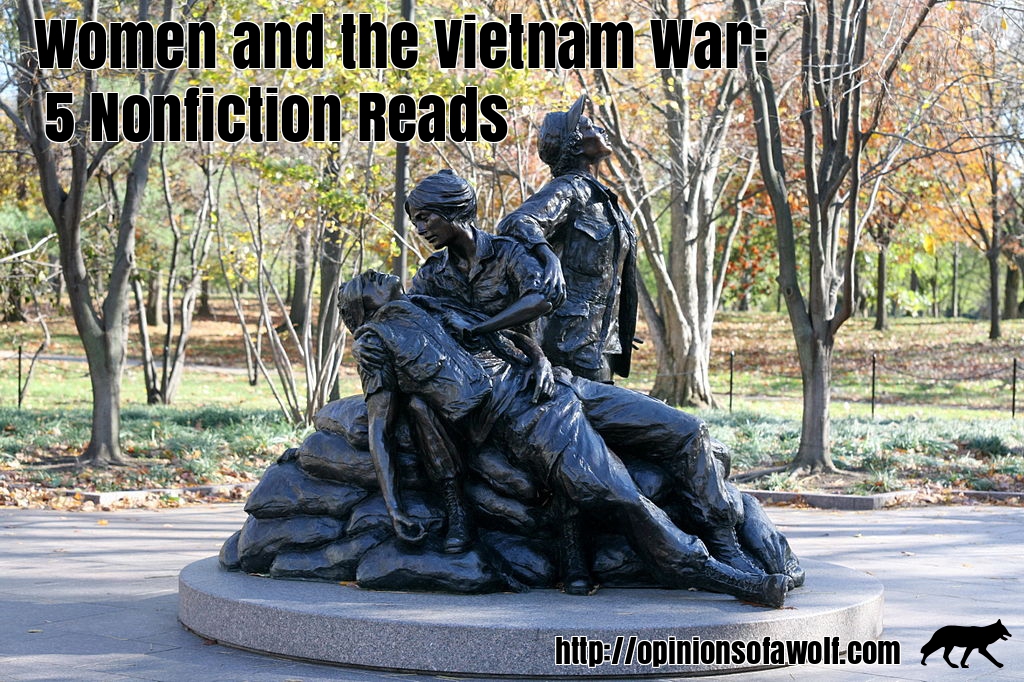 To celebrate Women’s History Month, I thought it’d be fun to assemble a reading list looking specifically at the women’s history aspect of a particular historical event. When I thought about it, I couldn’t easily think off the top of my head of any books about women and the Vietnam War, so I decided to build my list on that. It taught me something while I was assembling the list for you.
I tried to cover both women part of the War, as well as women protesting the War or part of the counterculture. All book blurbs come from either GoodReads or Amazon.
 Daughters of Aquarius: Women of the Sixties Counterculture
by: Gretchen Lemke-Santangelo
Publication Date: 1997
Blurb:
“Hippie women” have alternately been seen as earth mothers or love goddesses, virgins or vamps-images that have obscured the real complexity of their lives. Gretchen Lemke-Santangelo now takes readers back to Haight Ashbury and country communes to reveal how they experienced and shaped the counterculture. She draws on the personal recollections of women who were there–including such pivotal figures as Lenore Kendall, Diane DiPrima, and Carolyn Adams–to gain insight into what made counterculture women tick, how they lived their days, and how they envisioned their lives.
This is the first book to focus specifically on women of the counterculture. It describes how gender was perceived within the movement, with women taking on much of the responsibility for sustaining communes. It also examines the lives of younger runaways and daughters who shared the lifestyle. And while it explores the search for self enlightenment at the core of the counterculture experience, it also recounts the problems faced by those who resisted the expectations of “free love” and discusses the sexism experienced by women in the arts.
 Hands on the Freedom Plow: Personal Accounts by Women in SNCC
by: Faith S. Holsaert, et al
Publication Date: 2010
Blurb:
Fifty-two women–northern and southern, young and old, urban and rural, black, white, and Latina–share their courageous personal stories of working for the Student Nonviolent Coordinating Committee (SNCC) on the front lines of the Civil Rights Movement.
The testimonies gathered here present a sweeping personal history of SNCC: early sit-ins, voter registration campaigns, and freedom rides; the 1963 March on Washington, the Mississippi Freedom Summer, and the movements in Alabama and Maryland; and Black Power and antiwar activism.
 Home Before Morning: The Story of an Army Nurse in Vietnam
By: Lynda Van Devanter
Publication Date: 1983
Blurb:
On June 8, 1969, a patriotic, happy-go-lucky young nurse fresh out of basic training arrived in Vietnam to serve a year’s tour of duty as a second lieutenant in the Army. It was a year that was to rob Lynda Van Devanter of her youth, her patriotism, her innocence – and her future.
 Unfriendly Fire: A Mother’s Memoir
By: Peg Mullen
Publication Date: 1995
Blurb:
Outspoken, fearless, and wickedly humorous, Peg Mullen tells the story of her transformation from an ordinary farm woman into a nationally recognized peace activist following the death of her oldest son, who was killed by artillery misfire in the Vietnam War.
 The Valiant Women of the Vietnam War
By: Karen Zeinert
Publication Date: 2000
Blurb:
From journalists and nurses to those who mobilized to protest or support the war effort on the home front, women of all ages took advantage of the changing social climate of the 1960s to break free of their traditional roles. A discussion of Vietnamese women’s roles in the conflict is included.
Book Review: The Baker’s Daughter by Sarah McCoy
 Summary:
It’s 2007, and Reba is a journalist living in El Paso, Texas, with her fiance, border patrol guard, Riki. She hasn’t been able to bring herself to be fully honest with him about her dark childhood overshadowed by her Vietnam Vet father’s struggle with depression and PTSD. Christmas is coming up, and she is interviewing Elsie, the owner of the local German bakery. Elsie has some intense secrets of her own that show it’s not always easy to know what’s right when your country and family go wrong.
Review:
I have an intense love for WWII stories, and I immediately was drawn to the idea of intergenerational similarities and learning from an older generation innate in this book’s plot. It is a complex tale that McCoy expertly weaves, managing to show how people are the same, yet different, across race, time, and gender.
Reba’s and Elsie’s tales are about two very different kinds of bravery. Reba has a wounded soul that she must be brave enough to reveal to the man she loves. She lives in fear of turning into her father or losing herself entirely in the love for another, the way her mother did. She faces a struggle that I have heard voiced by many in my generation–do I risk myself and my career for love or do I continue on alone? To this end, then, the most memorable parts of Reba’s story, for me, are when Elsie advises her on love in real life, as opposed to the love you see in movies and fairy tales.
I’ve never been fooled by the romantic, grand gestures. Love is all about the little things, the everyday considerations, kindnesses, and pardons. (location 482)
The truth is, everyone has a dark side. If you can see and forgive his dark side and he can see and forgive yours, then you have something. (location 844)
One issue I had with the book, though, is that although we see Elsie’s two relationships before her husband in stark clarity and reality, we never really see what it is that made her ultimately choose her own husband. We see their meeting and first “date,” yes, but that’s kind of it. I felt the book was building up to what ultimately made Elsie choose her American husband and move to Texas, but we only see snippets of this, whereas we see a lot of Elsie’s interactions with her prior two boyfriends. That was a big disappointment to me, because I wanted to know how Elsie knew he was the one, and how she herself was brave enough to take the leap she encourages Reba to make.
I am sure most people will most intensely react to the story of Elsie’s actions to attempt to save a Jewish boy during WWII and may even wish that was the only real story told. Elsie’s life during wartime Germany. It is definitely the stronger of the two stories, but I so enjoyed the lesson in valuing and listening to those older than you that we see through Reba meeting and learning from Elsie that I must say I like the book just the way it is. Is it different? Yes. But that’s part of what makes it stand out in a slew of WWII fiction. Elsie did this brave thing, and her whole life she never knew if it really made much of a difference. She just lived her life, married, had a daughter, was kind to a journalist. In a sense, it makes her story seem more realistic. Less like something from “The Greatest Generation” and more like something possible to accomplish for anyone with a strong will and willingness to make up her own mind.
One critique I have that slowed the book down for me and made it less enjoyable are the insertion of letters between Elsie and her sister, Hazel, who is in the Lebensborn program. Compared to the rest of the book, the letters were slow-moving and only moderately interesting. I can’t help but feel shorter letters would have gotten the same message across without slowing down the story quite so much. Yes, the inclusion of the sister was necessary to the story, but I feel like she got too much stage time, as it were.
I also have to say that I really hate the cover. It reflects none of the spirit or warmth of the book itself. The story is wrapped in warm ovens, scents of cinnamon, and bravery, and yet we get the back of a woman’s head with an inexplicable gingham strip at the bottom? Yeesh.
Overall, this is a life-affirming story that teaches the value of connecting with the older generations and cautions against thoughtless nationalism. I highly recommend it to fans of literary and WWII fiction alike.
4 out of 5 stars
Source: NetGalley

 Support my work with a tip or browse my shop for curated book club guides, how to guides, cross-stitch patterns, and more!


This work by Amanda Nevius is licensed under a Creative Commons Attribution-Noncommercial-No Derivative Works 3.0 United States License.
 Opinions of a Wolf