
Archive
Book Review: Unreal City by A.R. Meyering
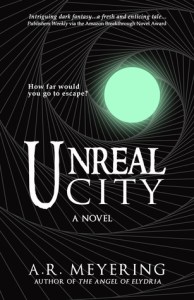 Summary:
Sarah Wilkes can hardly believe she’s going away to freshman year of college without her twin sister Lea–who was discovered dead from drowning far away from any water. She moves through life in a haze until a cat-like creature shows up on one of her walks through campus. He claims to be a familiar spirit who can bring her to Unreal City, a place where she can make her dreams come true. There’s only one catch. The price of permanent admission is drinking her blood. Unable to resist, Sarah journeys to Unreal City but the dream world soon takes on a sinister tone.
Review:
This book piqued my curiosity when it was submitted to me as a possibility for review last year. I knew when I read the summary that a plot such as this could only go either well-rendered and touching or flat and ridiculous. I took a chance, and I’m glad I did. The book offers a look at grief in the young, but wrapped in a fantastical setting that makes encountering such a big topic more palatable.
The fantastical plot at first seems simple. A familiar spirit who reads as sinister comes to Sarah and offers her a bargain. Feed him (preferably with her blood, but her hair will do in the meantime), and he will bring her to a world where she can escape her grief. It seems that he is targeting her for sinister reasons, but slowly over the course of the plot the reader realizes there is more to it than this. This is one of my favorite types of fantasy. One that reads initially as simple but becomes increasingly complex over the course of the book. The fantastical plot slowly takes the reader first deep into Sarah’s grief then into her trying to solve her sister’s death and finally into forgiveness and healing. It perhaps sounds heavy-handed when I put it that way, but the book makes it so it is not at all. The reader realizes initially they are encountering a young person’s grief, but then gets pulled into the fantastical world of Unreal City. Sarah’s grief process then becomes part of that fantasy, so it is more subtle.
The fantasy world is interesting. It takes the basic concept of a familiar spirit (traditionally, a spirit that a witch would allow to suckle from her in exchange for its magical service) and expands upon it. There are a set number of familiars in Unreal city, each of whom is correlated with a certain sector of the city. They each must find a person from our world to feed them and even give them an identity and appearance. That person can control their own sector, and I do mean control. They dictate its appearance and are able to defy all scientific laws. But they can’t control what happens in other people’s sectors, and that’s where Unreal City becomes more complex. It’s a mix of parallel universes and familiar spirits.
The mystery of Lea’s death kept me guessing, and its resolution is eloquent. The only thing holding me back from five stars is that for me, personally, at the time I read this, I did not have the level of experience with the book that is necessary for me to consider a book a five star read. It needs to be something life-changing or that I know I will think of over and over again. I am sure I would have felt differently though if I was either younger when I read it or had recently experienced a close loss. (Interestingly, I read this only a couple of weeks before my father passed. I am certain I would have had a more powerful experience with it if the order had been reversed).
Overall, this is a relatable rendering of grief and loss in the young, particularly in the late teen years, wrapped in a fantastical world that is engaging and keeps the plot from becoming too heavy-handed. Recommended to readers suffering from recent loss or looking for a unique fantastical world. Especially those who are interested in a new adult setting.
If you found this review helpful, please consider tipping me on ko-fi, checking out my digital items available in my ko-fi shop, buying one of my publications, or using one of my referral/coupon codes. Thank you for your support!
4 out of 5 stars
Length: 218 pages – average but on the shorter side
Source: Kindle copy from author in exchange for my honest review

Book Review: Remember Me? by Sophie Kinsella
 Summary:
The last thing Lexi remembers she’s a 24 year old in the year 2004 with bad teeth, a bad boyfriend, and at the bottom of the totem pole in a new job where she hasn’t been working long enough to be able to get the annual bonus. When she wakes up in hospital, though, she’s told that the year is 2007, she’s 28, the boss of her department, and married to a millionaire! She’s told she was in a car accident that gave her amnesia, and now she has to piece together just how she got to this place in her life, especially when not everything is as rosy as it seems at first. Her millionaire husband is controlling, her once best friends give her the cold shoulder, and everyone at work seems to think that she’s a bitch.
Review:
True story. I spotted this sitting on top of a neighbor’s recycling bin and snatched it up as soon as I recognized the author’s name. I was a big fan of Sophie Kinsella’s in high school, and I just couldn’t bear to see a perfectly nice condition hardcover of one of her books get recycled. I wondered if I would enjoy her contemporary romance as much now as a late 20-something as I did as a teen. I’m happy to say I certainly enjoyed this one just as much, although in a slightly different way than I used to.
I wonder how much I would have appreciated this book a few years ago. As a late-20 something myself, I laughed out loud at how the 24 year old version of me would react if she was plunked into my current life. A lot really does change in 4 years in your 20s, especially with regards to your career and your love life. The plot kind of reminded me a bit of the plot of one of my favorite romcoms 13 Going On 30. Someone who is (or perceives of themselves as) much younger and less experienced than the person whose life they are now living. How that affects them and how they react to it is really interesting. Both stories show how important actually going through the growing pains really are. You can’t just suddenly handle a more adult life; you have to grow into it.
I also appreciated that, although Lexi’s husband is drop-dead gorgeous, both she and he believe she should not sleep with him until she is comfortable with him again. She may be married to him, but she doesn’t remember who he is, and she shouldn’t do anything until she’s ready. If she ever is. Her husband is definitely controlling of her when it comes to how their household is run and how they spend money, but he is very respectful of her sexually. He doesn’t touch her unless invited to, and he stops when she says to. I was really happy to see this focus on positive, enthusiastic consent portrayed in the book.
The exploration of Lexi’s career path from lower level to high-powered boss is fascinating. Lexi is torn up that now that she’s a boss those under her think she’s a bitch. There’s a nuanced exploration of how women in power are often perceived of as bitches, even if they’re just being assertive. However, there’s also a nice exploration of how to still be true to yourself when in power. You don’t necessarily have to lead in the traditional “masculine” way if you don’t want to. This combined with the exploration of aging gave a depth to the romance that kicked it up a notch for me.
It says a lot for how much the book made me like Lexi that I was able to get past one plot point that usually spoils romances for me. However, that plot point did knock the book down from 5 to 4 stars for me.
*spoilers*
It turns out that 28 year old Lexi is cheating on her husband. 24 year old Lexi is just as horrified by this as I always am by cheating. The exploration of how she wound up cheating on him didn’t make it ok to me, but I did appreciate that 24 year old Lexi took agency and addressed the situation, rather than lingering in married but cheating land. I appreciated that Lexi was able to acknowledge her mistakes, forgive herself for them, and grow and change.
*end spoilers*
Overall, fans of contemporary romance will enjoy this fun take on the amnesia plot. The plot doesn’t just cover a romance, it also covers the growing pains of being in your 20s, the challenges women face when they become the boss, and how to learn from your mistakes.
If you found this review helpful, please consider tipping me on ko-fi, checking out my digital items available in my ko-fi shop, buying one of my publications, or using one of my referral/coupon codes. Thank you for your support!
4 out of 5 stars
Length: 389 pages – average but on the longer side
Source: Rescued from a recycling bin
Buy It (Amazon or Bookshop.org)
Counts For:
Bottom of TBR Pile Challenge
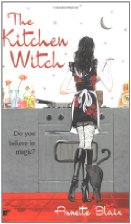
Book Review: The Kitchen Witch by Annette Blair (Series, #1)
 Summary:
Logan finds himself a single dad after his young son’s mother abandons him on his doorstep, so he moves back to his hometown of Salem, Massachusetts, looking to provide his young son with some stability. He has a bad rep from his teen years in Salem to get over, though, and he hopes his new job as a television producer at the local tv station will help. He wasn’t expecting his downstairs neighbor Melody Seabright, however.
Melody, who seems incapable of holding onto a job for any length of time, gets him to get her a meeting with the owner of the tv station and somehow convinces him to give her her own tv show, The Kitchen Witch. The only problem is she can’t cook, and whether or not she’s really a witch is up for debate.
Can Melody learn how to cook and hold onto the job? Or are both of their jobs now in jeopardy? And why does Logan keep thinking about such an unpredictable woman when he knows he needs to provide stability for his son?
Review:
I picked this up on a free book cart at a local library because the cover and title were cute, and I definitely am periodically in the mood for some lighthearted paranormal romance. I was a bit disappointed to find this isn’t really a paranormal romance, but I still enjoyed the contemporary tale it told, primarily due to its featuring a good-hearted single dad.
Logan is a contemporary romance character who will make many readers’ hearts beat a bit faster. He’s cute, young, has a high-powered job, lives in the quirky town of Salem and enjoys it, and is an awesome single dad to his young son. Having him be a bad boy who overcame it for his son is the perfect last touch for a contemporary romance. I can see many readers enjoying fantasizing about him.
Melody may be a bit more hit and miss with readers. The delightfully clumsy bit has been used a lot in romance recently and may feel a bit been there done that. Her apartment is divinely adorable, though, and she has some curves that are always looked upon as a good thing. Her difficult relationship with her own father adds some depth to the character, but some readers might have trouble sympathizing with a poor little rich girl, although I do think that Blair handled this particular aspect well.
Blair also writes children characters beautifully. The son sounds like a child, and yet still has the proper astuteness and vocabulary for his age. The only negative I can say about him is that I honestly already forgot his name. However, I enjoyed his presence every time he popped up into the story.
The plot is where things get a bit shaky. The book is definitely marketed as a paranormal romance, and there are hints at the beginning of the book that Melody might be a witch, but that never comes to fruition. The best I can tell is that she’s learned how to act and sound like a witch by virtue of living and working in Salem. There’s nothing wrong with this, but it was disappointing given that I thought I was getting a paranormal story. I also thought that if the book is going to have Logan suspicious Melody is a witch, at some point he should definitely find out once and for all whether she is one. I think perhaps the book was trying to say she’s just a regular girl with some knowledge of Wicca (which isn’t the same thing as being a paranormal romance witch, since Wicca is a religion and doesn’t actually involve paranormal romance style magic but it’s still a reveal I would have been happier with). However, that also is never firmly revealed. Just what type of witch, if any, Melody is is just a plot idea that is dropped and never fully dealt with, which is a bit frustrating.
A bigger plot issue to me though is that this book falls into the romance trope of everyone can see the couple should be together but the couple makes up fake obstacles to stand in their way and they just have to come to their senses and deal with their own stupidity to get over it. (I really wish there was a shorter way to describe that particular trope…..) It is just a trope that really bugs me. I don’t mind real obstacles in the way of a couple, but the couple just being idiotic and making up their own obstacles feels to me like the author stirring up fake drama to make the book longer. Also, I am 100% a-ok with a couple meeting, working out some realistic difficulties, and then being together. Things that are overly dramatic for the sake of drama just rub me the wrong way. Some readers may be ok with this trope, but for those who aren’t, be aware that this is where the plot eventually goes.
Having been to Salem multiple times, I can say that the author clearly did her research, as she depicts the culture and feel of Salem quite well. She also understands the layout of the town and even gives a realistic vague-ish location for Logan and Melody’s house. (In the few blocks nearish the House of the Seven Gables, in case you’re wondering).
The sex scenes were good, not ridiculous. They weren’t mind-blowingly hot, but they were fun to read and well-written.
Overall, this is a good contemporary romance featuring a lovable single dad love interest that is mismarketed as a paranormal romance. Those looking for paranormal romance should be aware that this fits in much better with the contemporary romance crowd. Additionally, those who are frustrated by couples keeping themselves apart for no reason should be aware that this is the romance trope found in this particular book. Recommended to those looking for a steamy contemporary read featuring a heartthrob single dad and a realistically quirky New England town.
If you found this review helpful, please consider tipping me on ko-fi, checking out my digital items available in my ko-fi shop, buying one of my publications, or using one of my referral/coupon codes. Thank you for your support!
3 out of 5 stars
Length: 320 pages – average but on the longer side
Source: Library free book cart

Book Review: The Drowning Girl by Caitlin R. Kiernan (Audiobook narrated by Suzy Jackson)
 Summary:
India Morgan Phelps, Imp to her friends, is sure that there were two different Eva Cannings who came into her life and changed her world. And one of them was a mermaid (or perhaps a siren?) and the other was a werewolf. But Imp’s ex-girlfriend, Abalyn, insists that no, there was only ever one Eva Canning, and she definitely wasn’t a mermaid or a werewolf. Dr. Ogilvy wants Imp to figure out for herself what actually happened. But that’s awfully hard when you have schizophrenia.
Review:
I’d heard that this book was a chilling mystery featuring queer characters and mental illness. When I discovered it on Audible with an appealing-sounding narrator, I knew what I was listening to next. This book is an engaging mystery that also eloquently captures the experience of having a mental illness that makes you question yourself and what you know while simultaneously giving a realistic glance into the queer community.
Imp is an unreliable first person narrator, and she fully admits this from the beginning. She calls herself a madwoman who was the daughter of a madwoman who was a daughter of a madwoman too. Mental illness runs in her family. She states that she will try not to lie, but it’s hard to know for sure when she’s lying. This is due to her schizophrenia. Imp is writing down the story of what she remembers happening in journal style on her typewriter because she is trying to figure out the mystery of what exactly happened for herself. The reader is just along for this ride. And it’s a haunting, terrifying ride. Not because of what Imp remembers happening with Eva Canning but because of being inside the mind of a person suffering from such a difficult mental illness. Experiencing what it is to not be able to trust your own memories, to not be sure what is real and is not real, is simultaneously terrifying and heart-breaking.
Imp’s schizophrenia, plus some comorbid anxiety and OCD, and how she experiences and deals with them, lead to some stunningly beautiful passages. This is particularly well seen in one portion of the book where she is more symptomatic than usual (for reasons which are spoilers, so I will leave them out):
All our thoughts are mustard seeds. Oh many days now. Many days. Many days of mustard seeds, India Phelps, daughter of madwomen, granddaughter, who doesn’t want to say a word and ergo can’t stop talking. Here is a sad sad tale, woebegone story of the girl who stopped for the two strangers who would not could not could not would not stop for me. She. She who is me. And I creep around the edges of my own life. Afraid to screw off the mayonnaise lid and spill the mustard seeds. (Part 2, loc 55:35)
The thing that’s great about the writing in the book is that it shows both the beauty and pain of mental illness. Imp’s brain is simultaneously beautiful for its artistic abilities and insight and a horrible burden in the ways that her mental illness tortures her and makes it difficult for her to live a “normal” life. This is something many people with mental illness experience but find it hard to express. It’s why many people with mental illness struggle with drug adherence. They like the ability to function in day-to-day society and pass as normal but they miss being who they are in their own minds. Kiernan eloquently demonstrates this struggle and shows the beauty and pain of mental illness.
Dr. Ogilvy and the pills she prescribes are my beeswax and the ropes that hold me fast to the main mast, just as my insanity has always been my siren. (Part 1, loc 4:08:48)
There is a lot of queer representation in the book, largely because Kiernan is clearly not just writing in a token queer character. Imp is a lesbian, and her world is the world of a real-to-life lesbian. She is not the only lesbian surrounded by straight people. People who are part of the queer community, in multiple different aspects, are a part of Imp’s life. Her girlfriend for part of the book is Abalyn, who is transwoman and has slept with both men and women both before and after her transition. She never identifies her sexuality in the book, but she states she now prefers women because the men tend to not be as interested in her now that she has had bottom surgery. The conversation where she talks about this with Imp is so realistic that I was stunned. I’m not sure I’ve ever seen a conversation about both transitioning and the complicated aspects of dating for trans people that was this realistic outside of a memoir. Eva Canning is bisexual. It’s difficult to talk about Eva Canning in-depth without spoilers, so, suffice to say, Eva is out as bisexual and she is also promiscuous. However, her promiscuity is not presented in a biphobic way. Bisexual people exist on the full spectrum from abstinent to monogamous to poly to promiscuous. What makes writing a bisexual character as promiscuous biphobic is whether the promiscuity is presented as the direct result of being bi, and Kiernan definitely does not write Eva this way. Kiernan handles all of the queer characters in a realistic way that supports their three-dimensionality, as well as prevents any queerphobia.
The plot is a difficult one to follow, largely due to Imp’s schizophrenia and her attempts at figuring out exactly what happened. The convoluted plot works to both develop Imp’s character and bring out the mystery in the first two-thirds of the book. The final third, though, takes an odd turn. Imp is trying to figure out what she herself believes actually happened, and it becomes clear that what she ultimately believes happened will be a mix of reality and her schizophrenic visions. That’s not just acceptable, it’s beautiful. However, it’s hard to follow what exactly Imp chooses to believe. I started to lose the thread of what Imp believes happens right around the chapter where multiple long siren songs are recounted. It doesn’t feel like Imp is slowly figuring things out for herself and has made a story that gives her some stability in her life. Instead it feels like she is still too symptomatic to truly function. I never expected clear answers to the mystery but I did at least expect that it would be clear what Imp herself believes happened. The lack of this removed the gut-wrenching power found in the first two-thirds of the book.
The audiobook narration by Suzy Jackson is truly stellar. There are parts of Imp’s journal that must truly have been exceedingly difficult to turn into audio form, but Jackson makes them easy to understand in audio form and also keeps the flow of the story going. Her voice is perfect for Imp. She is not infantilized nor aged beyond her years. She sounds like the 20-something woman she is. I’m honestly not sure the story would have the same power reading it in print. Hearing Imp’s voice through Jackson was so incredibly moving.
Overall, this book takes the traditional mystery and changes it from something external to something internal. The mystery of what really happened exists due to Imp’s schizophrenia, which makes it a unique read for any mystery fan. Further, Imp’s mental illness is presented eloquently through her beautiful first-person narration, and multiple queer characters are present and written realistically. Recommended to mystery fans looking for something different, those seeking to understand what it is like to have a mental illness, and those looking to read a powerful book featuring queer characters whose queerness is just an aspect of who they are and not the entire point of the story.
If you found this review helpful, please consider tipping me on ko-fi, checking out my digital items available in my ko-fi shop, buying one of my publications, or using one of my referral/coupon codes. Thank you for your support!
4 out of 5 stars
Length: 332 pages – average but on the longer side
Source: Audible

Counts For:

Book Review: Commencement by J. Courtney Sullivan (Bottom of TBR Pile Challenge)
 Summary:
Celia, Bree, Sally, and April wound up on the same small hall their first year at Smith College. Celia is from a traditional Irish Catholic Massachusetts family, although she doesn’t consider herself to be Catholic. Bree arrives at college from the south with an engagement ring on her hand. Sally arrives full of mourning and despair over the recent loss of her mother to breast cancer, and April arrives as the only work-study student on their floor. Paying her own way through school and with a whole slew of issues and causes to fight for. Their friendship is traced from the first weeks at Smith through their late 20s.
Review:
I picked this book up because it was compared favorably to Mary McCarthy’s The Group

What the book does well is evoking the feeling of both being in undergrad and the years immediately after graduation. Sullivan tells the story non-linearly, having the women getting back together for a wedding a few years after college. This lets them reminisce to early years of college and also present current life situations and hopes for the future. After the wedding, the story moves forward to cover the next year. The plot structure was good and kept the story moving at a good pace. It feels homey and familiar to read a book about four women going through the early stages of adulthood. It was hard to put down, and the storytelling and dialogue, particularly for the first half of the book, read like a fun beach read. However, there are a few issues that prevent the book from being the intelligent women’s literature it set out to be.
First, given that the premise of the book is that four very different women become unlikely friends thanks to being on the same hall of a progressive women’s college, the group of women isn’t actually that diverse. They are all white, three of the four are from wealthy or upper-middle-class backgrounds (only one must take out loans and work to pay for school), none are differently abled (no physical disabilities or mental illnesses), and not a single one is a happy GLBTQ person. Given that The Group
The book has a real GLBTQ problem. One of the characters has two relationships. One is with a man and one with a woman. She is happy in both and attracted to both. She takes issue with being called a lesbian, since she states she definitely fantasizes about men and enjoys thinking about them as well. Yet, in spite of the character clearly having both physical and romantic attractions to both men and women, the word bisexual is not used once in the entire book. The character herself never ventures to think she might be bi, and no one else suggests it to her. She struggles with “being a lesbian” and “being out as a lesbian” because she doesn’t think she is a lesbian. The other characters either say she’s in denial in the closet due to homophobia or that she really is straight and she needs to leave her girlfriend. It is clear reading the book that the character struggles with having the label of lesbian forced upon her when she is clearly actually bisexual. This is why she is uncomfortable with the label. But this huge GLBTQ issue is never properly addressed, swept under the rug under the idea that she’s “really a lesbian” and is just suffering from internalized homophobia. The bi erasure in this book is huge and feels purposeful since the character’s bisexual feelings are routinely discussed but the option of being non-monosexual never is. It’s disappointing in a book that is supposed to be progressive and talking about modern young women’s issues to have the opportunity to discuss the issues of being bisexual and instead have the character’s bisexuality erased.
The second half of the book makes some really odd plot choices, showing a highly abusive relationship between one of the characters and her boss. It probably is meant to show the clash between second and third wave feminism, but it feels awkward and a bit unrealistic. Similarly, the book ends abruptly, leaving the reader hanging and wondering what is going to happen to these characters and their friendship. Abrupt endings are good when they are appropriate to the book and mean something, but this ending feels out of place in the book, jarring, and like a disservice to the reader.
Overall, this is a fast-paced book that is a quick, candy-like read. However, it is held back by having the group of women in the core friendship be too similar. Opportunities to explore diverse, interesting characters are missed and bisexual erasure is a steady presence in the book. The ending’s abruptness and lack of closure may disappoint some readers. Recommended to those looking for a quick beach read who won’t mind a lack of depth or abrupt ending. For those looking for the stronger, original story of a group of friends from a women’s college, pick up The Group
3 out of 5 stars
Source: PaperBackSwap
Book Review: Listening To Dust by Brandon Shire
 Summary:
A chance meeting between orphaned British writer, Stephen, and American soldier, Dustin, leads to a passionate love affair in England. But when Dustin chooses to go back home to his small Southern town to care for his mentally challenged brother, Stephen is left behind, sending letters that are never answered. He finally decides to follow Dustin home and arrives only to discover that Dustin is no more.
Review:
This is my second read by Brandon Shire. The first, The Value Of Rain
There are some commonalities in the stories. Both feature a gay man who grew up in an unaccepting family and show the impact that has on their lives. But that’s where the similarities cease. Listening To Dust
The writing is again gorgeous. Even now I can feel the hot dustiness of Dustin’s hometown and also the comforting cool greenery of Stephen’s grandmother’s French cottage. Shire elicits both place and emotions so powerfully that it is impossible not to be moved by the story.
I also really enjoyed the various commentary throughout the book on love, words, and actions. What love is, what it does, and whether words or actions are worth more.
So I guess we were both right, and both wrong about actions and words. Like the two of us, one is empty without the other. (location 1014)
The sex scenes manage to be steamy and emotional. What I might call literary sex scenes. When I read them, I felt them in my knees.
Even now I can feel the heat from your palm as you cupped the back of my head and pulled my lips those last few inches, how you opened your body and begged me with your soul. (location 1726)
Damn.
So what held me back from 5 stars? As previously stated, I wasn’t a huge fan of Stephen’s voice, although I respected his experiences. He sometimes grated on me a bit. I’m not sure if it was his slight Britishisms or how much he got hung up in his own head but he sometimes irritated me in a way that kept me from getting completely engrossed in the story. But this is a small thing, really, when compared to the story as a whole and the beautiful writing.
Overall, this is a book that sweeps the reader away to multiple, disparate places to explore both love and the far-reaching affects of a harsh family life. It should appeal to any who enjoy a heart-breaking contemporary LGBTQIA+ romance.
4 out of 5 stars
Source: Kindle copy from author in exchange for my honest review
Note: 10% of all proceeds donated to LGBT Youth Charities combating homelessness.
Mini Movie Reviews #1
I feel like I generally don’t have quite as much to say about movies as I do about books. Perhaps that’s because they only take an hour or two of my time, whereas books you live with for several hours, even days or weeks. In any case, although I really don’t watch much tv (and when I do, it tends to be nonfiction like cooking shows), I do periodically watch movies. Some of them popular, some of them older or documentaries you might not know about. After having seen mini reviews on other folks’ pages, I decided this format would be ideal for my movie reviews. A movie will periodically get a fully fleshed-out review if I have a lot to say about it.
So here we go, in the order in which I watched them.
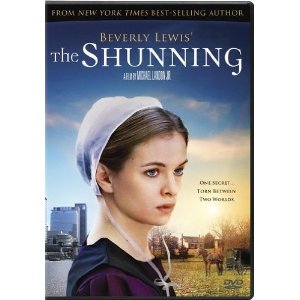 The Shunning
USA
2011
Not Rated
Contemporary Drama
4 out of 5 stars

I read the original bonnet books back when I was in middle school, which started with The Shunning. I was happy to see it pop up on my Netflix. (I believe it was a made for tv movie, possibly for the Hallmark channel?) This isn’t your typical bonnet romance. Katie Lapp is struggling with the idea of her marriage to a man she doesn’t love after the death of her first love. She also likes playing guitar and singing, which is frowned upon in the Amish community. When she learns that she is adopted, her whole world is rocked. It’s a great film both to see Amish life and to consider issues of identity and adoption. I can think of quite a few of my friends and followers who would enjoy it
Unspeakable Acts
USA
1990
Not Rated
Docudrama
3 out of 5 stars
It’s odd, I generally don’t go for courtroom drama books, but the movies sometimes work for me. This one from 1990 is about the daycare child abuse scare that happened in the 1980s and looks at the groundbreaking case that made certain aspects of children testifying easier in court. One fun thing, one of the mothers is Bebe Neuwirth (Lilith from Frasier), and it was pretty….odd seeing her in a loving mother role. This docudrama addresses the controversial methods of questioning toddlers about situations at daycares. The movie falls solidly on the pro-questioning side. I enjoyed it. It was a bit slow-moving and sometimes the acting was a bit over-the-top, but it does a good job encouraging parents to be communicative with each other and to actually bother to ask their kids questions like they are real people (which indeed they are). Some viewers might be disturbed by the graphic descriptions of child abuse.
 Creature From the Black Lagoon
USA
1954
Not Rated
Horror
4 out of 5 stars

I’ve been working my way through the 100 Horror Movies to See Before You Die, starting with the ones available on Netflix. This one is about a group of scientists who think they’ve discovered an artifact of the missing link in human evolution deep in the Amazon. They get there and of course discover that the missing link is actually a living creature. Let me just say upfront, yes it is abundantly obvious that this is one of those movies about white guys being scared of non-white guys stealing their women. Bare that in mind when watching this, and you will come away with a totally different viewing than those who don’t. It’s easy to see why it became a classic. The underwater shots are absolutely incredible. There are in particular these scenes wherein the woman is swimming in a gorgeous pure white swimsuit (I know, I know), and the creature is swimming underneath her in tandem. How they pulled that off in the 1950s, I don’t know. It is a highly watchable film and a great way to start a discussion of the racism in the 1950s. Perhaps even to try to convince those who would say otherwise that the good old days weren’t really so good. Side-note: there is a great scene where the woman scientist and the dude she’s dating are asked when they are gonna get married. It’s been a while. Only to find out they’ve been dating 6 months. o_O
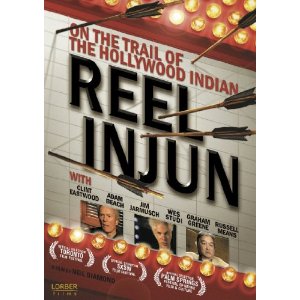 Reel Injun
USA
2009
Not Rated
Documentary
5 out of 5 stars

This documentary looks at the stereotypes and use of Native Americans in American cinema as a lens for considering Native identity and the American Indian Movement (AIM, the name for the Native American civil rights movement). The documentary eloquently moves decade by decade, presenting clips and interviewing actors, directors, and AIM activists. It completely blew my mind. For instance, I didn’t know that during the silent movie era there was a strong group of Native filmmakers who made their own, powerful movies. It was when the talkies came that the cowboy and Indian trope came about and also when every Native everywhere was re-written as a Plains Indian. For ease. Then in the 1970s and 1980s after the civil rights era, we started to get the ass-kicking Natives as a reflection of the anger in the movement. It’s impossible to come even close to telling you all everything I learned or how powerful the movie was for me. I will say, though, that I found the part about how Marlon Brando turned down his Oscar due to the treatment of Natives in cinema by sending Sacheen Littlefeather up in full Apache clothing to turn it down for him completely shocking. I had no idea that such a movement exists in Hollywood, but it does, as is also evidenced by Clint Eastwood’s involvement in this documentary. It’s encouraging to hear that not everyone in Hollywood sits by while this shit goes down. In any case, a powerful documentary and a great starting point for getting your feet wet in the Native American civil rights movement.
 The Invisible Man
USA
1933
Not Rated
Horror
2 out of 5 stars

Another entry in the 100 Horror Movies to See Before You Die. A scientist manages to make himself invisible but doesn’t have an antidote ready. Also he goes crazy. Allow me to say, yes I realize this is super-old and they still managed to do the slowly revealing the invisible dude scenes, which is an amazing achievement in cinema. Watch clips of those parts on youtube. The storyline itself is super boring and not well structured, and the science is rather shoddily done. It was good for a few laughs. For the first 55 minutes. The rest was suffering and wanting to rip my hair out. I think one of my live tweets from watching it sums it up best, “The best part of this movie is the knowledge that this dude is running around nekkid.” Because his clothes are visible, you see.
That’s about a month’s worth of movies. Stay tuned for more quick thoughts next month!
Source: Unless otherwise noted, all movies watched via Netflix.
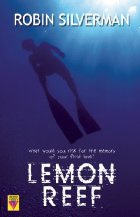
Book Review: Lemon Reef by Robin Silverman
 Summary:
Jenna is a high-powered, newly appointed commissioner in San Francisco where she lives with her wife and their dog. Life is good, and Jenna tries not to think too much about her rough childhood and teen years growing up in Florida. But a phone call comes in. Her first love, Del, has died diving at lemon reef at the young age of 30. The mutual friend invites Jenna to the funeral, but when she arrives in Florida, she discovers that there’s more to it than that. Del’s mother, Pascale, wants her help in getting custody of Del’s daughter, Khila, instead of her father, Talon, who Pascale insists must have murdered Del.
Review:
This book was a bit of an emotional roller-coaster to read, which of course is a sign of a good book.
The plot structure is incredibly complex and engaging without ever being confusing. There is the mystery of Del’s death, but also (for the reader) the mystery of why and how Del and Jenna’s romance ended tragically, as it is evident it did. In addition there is the powerful emotions of a first love and first romance for a pair of teens who must grow up too fast thanks to the rough circumstances they find themselves in. Silverman handles the past reminisces intermingled with the current mystery and discoveries quite eloquently. I found myself admiring her talent in plot structuring throughout.
There are no easy answers in this book, and no one is easily demonized, including Talon. Every single character has flaws and good qualities. Del stands up for her siblings but won’t stand up for her love of Jenna. Jenna loves people but can sometimes get too caught up in her own world and her own needs. Pascale was an alcoholic when Del was in highschool but successfully quits in order to be able to spend time with her granddaughter. Del’s sister Nicole breaks a lot of laws (including breaking and entering and prostitution), but she is fiercely loyal and stands up for those she loves. The complexity of the characters and the situation is part of what makes it such an emotional read. There’s no one to easily blame for the problems these women find themselves in. I think this complexity points to Silverman’s experience both as a counselor and a lawyer. She clearly understands human psychology and how problems are not always black and white but can be very gray.
The writing is lovely and fills in the framing of the plot and the characters. There are lines that just totally grab you.
Because minds do blow and hearts do break. Those are not just sayings. And wolves and roaches are not the only creatures that chew off their legs to get out of traps—human beings do that, too. (location 3058)
I also really enjoyed that while Jenna’s coming out story (told in flash-backs and reminiscing) is rather typical, Del’s is much more complex. She is bi but is uncomfortable with the fact that she likes women too. She doesn’t want people to know, doesn’t say a thing about it to her sisters, denies it even. But we find out later that there were other ways in which it was clear she did identify as bi and part of the community. I won’t say how, because I don’t want to spoil the surprise. But I found this complexity interesting. It shows how for Jenna she had to push and come out because there was no other option. Del could sometimes pass but not always and clearly it was a struggle for her throughout her whole life. This shows an understanding of what it is to be bi that I honestly was not expecting, as it is hard to find that in novels.
There were, unfortunately, a couple of things that didn’t quite live up to the rest of the book. There were a few passages that weren’t as well-written or well-edited that detracted from the overall beauty of the book. For instance, there is a scene in which a character points a flashlight at a floor but the narrator calls it the ground. Things like that that are periodically clunky. I’m sure this will improve with time, though, as this is Silverman’s first work of fiction.
I also was disappointed that we didn’t get to see very much at all in regards to how this whole drama of the first love’s mysterious death impacted Jenna’s relationship with her wife. I was hoping this would be at least touched upon in the last chapter, but instead we just see Madison show up with Jenna for the funeral. Since I had come to care for Jenna, I wanted to know how such a dramatic, emotional event would affect her new life and marriage with Madison. It seems obvious to me that such an incident would at least lead to a few discussions and maybe difficult moments between a married couple. I wanted to see that and not seeing it made Madison and Jenna’s marriage to her feel more like a prop than an actual element of Jenna’s life.
Overall, though, this is a unique work of GLBTQ lit. Its themes of reconciling with your past, coming out, being queer, and first love are all beautifully told within a plot that keeps the reader invested and interested. I highly recommend it to GLBTQ readers, but also to anyone with an interest in stories addressing the complexity of human relationships and the long-reaching impact of first loves.
4 out of 5 stars
Source: Netgalley

Book Review: Sisterhood Everlasting by Ann Brashares (Series, #5)
 Summary:
The Septembers are all 29 years old now and spread out all over the globe. Bee is expending her energy biking up and down the hills of San Francisco while Eric works as a lawyer. Carmen has a recurring role on a tv show filming in NYC and is engaged to Jones, an ABC producer. Lena teaches art at RISD and lives a quiet life in her studio apartment, except for the one day a week she practices Greek with an elderly woman. Tibby took off to Australia with Brian months ago, and everyone else is in limbo waiting for her to get back. They all feel a bit disconnected until Tibby sends Bee, Carmen, and Lena tickets to come to Greece for a reunion. What they find when they arrive is not what anyone expected.
Review:
You guys. You guys. This book shattered me. I am not a crier, and I actually had tears fall while reading this book. I read it in one day. I could not put it down. As someone who grew up with The Sisterhood of the Traveling Pants, I found the sudden jump forward in age (we used to be about the same age, and now they are older than me) a bit disconcerting and unexpected, but nowhere near as unexpected as the rest of the book.
I complained to anyone who would listen at the beginning that I hated it. That I hated what Brashares was doing, and omg why would she do this. But as the story progressed, she swept me along, and suddenly I realized that yes this is tougher by far than the earlier books. It’s not the light girl power read the first or even the second one was. But it shouldn’t be. They’re 29. They’re older. Their problems should be bigger and more adult, and the lessons here hurt more to read because they’re tougher ones to learn. It’s precisely the direction the books should have taken. The girls change and, dare I say it, actually grow the fuck up unlike a certain other foursome that have a tv show.
I won’t tell you what made the book so powerful, because that’d spoil it. But I will tell you, my fellow fans, to push past the first quarter of the book where you’re angry and want to throw it across the room in a Carmen-like rage. Give Brashares the chance she earned with the first three to gradually show you what she’s doing. It’s an emotional journey that’s well worth taken. Fans might be frustrated at first, but those who stick it out and love the series for what it really is will love this entry. I don’t doubt it at all. Plus, Brashares hinted that there might be still more to come.
5 out of 5 stars
Source: Netgalley

Previous Books in Series
Sisterhood of the Traveling Pants
The Second Summer of the Sisterhood
Girls in Pants: The Third Summer of the Sisterhood
Forever in Blue: The Fourth Summer of the Sisterhood


Book Review: A Cold Night for Alligators by Nick Crowe
 Summary:
One day on his way home from work, a homeless man shoves Jasper in front of a subway train. Waking up months later from a coma with medical leave from his job, his (now ex) girlfriend living in his house with her new boyfriend, religious Donny, Jasper decides to join Donny and his best friend Duane on a trip south from Canada to Florida. Donny and Duane are going fishing, but Jasper is on a hunt for his brother who disappeared ten years ago at the age of seventeen. He has a hunch he may have returned to what was previously a happy family vacation spot.
Review:
This is one of those situations where I recognize that the book is well-written, but personally I just didn’t like it. The combination of the plot and characters struck a sour note for me, although I can see other people enjoying it.
I struggled because I simply did not find a single character to like. I didn’t like Jasper, his ex Kim, her new boyfriend Donny, the best friend Duane, the long lost Aunt Val, well, you get the picture. None of them were people I could relate to or sympathize with. Not a single one! That is rare in a book for me. I can relate to characters from all over the world and all over time itself, but here. Yeesh. I mean, it’s bad when you’re agreeing with the villain (who you also don’t like) that the main character is a pussy. That’s just generally a bad sign.
I also found myself struggling some with the flow of the plot. It’s rather unevenly structured with random side stories such as an entire chapter devoted to Duane taking a bar bet to eat 19 pickled eggs. So much time devoted to this point (that was gross to read about) and it never turned out to be relevant. It felt at certain points like Crowe was writing just to write, and it’s not that they’re badly done scenes, they’re just not relevant to the book.
Similarly, and consider this your spoiler alert, characters escape alligators just a few too many times. Having one character who is a gator whisperer is fine, but having other characters repeatedly escaping gators is just insanity and unbelievable. It left me wondering if Crowe has ever actually watched the Discovery Channel.
Overall, this is a book that left me decidedly lukewarm. The characters are so average as to be dull, and the way they look on the rest of the world left me feeling a bit sour. I would recommend this book to people who enjoy literary fiction that moves at a slow pace, as well as those interested in a Canadian’s view of Florida.
3 out of 5 stars
Source: Netgalley

 Support my work with a tip or browse my shop for curated book club guides, how to guides, cross-stitch patterns, and more!


This work by Amanda Nevius is licensed under a Creative Commons Attribution-Noncommercial-No Derivative Works 3.0 United States License.
 Opinions of a Wolf