
Archive
Book Review: Anarchism and Other Essays by Emma Goldman
 Summary:
Emma Goldman was a Russian immigrant to the United States who embraced Anarchism and became an impassioned orator and pioneer in the movement for birth control. She was deported in 1919 for her antiwar activities and spent the remainder of her life moving among multiple countries. This book is a collection of a variety of her essays and includes a contemporaneous biographical sketch and preface. You may read more about Emma Goldman and her life here.
Review:
I picked up this essay collection due to my interest in both US and women’s history. It then languished on my TBR pile for years until I heard about how the Emma Goldman Archive at UC Berkeley was going to lose its funding (source). The archive is currently still running thanks to charitable donations, (source) but I still wanted to invest some time in learning more about this important female historical figure, and what better way than by reading her own papers.
The essays in this collection are: Anarchism: What It Really Stands For, Minorities Versus Majorities, The Psychology of Political Violence, Prisons: A Social Crime and Failure, Patriotism: A Menace to Liberty, Francisco Ferrer and the Modern School, The Hypocrisy of Puritanism, The Traffic in Women, Woman Suffrage, The Tragedy of Woman’s Emancipation, Marriage and Love, and The Modern Drama: A Powerful Dissenter of Radical Thought.
The thing to understand about Anarchism (the historic early 20th century kind anyway, I won’t venture to talk about modern Anarchism as I have not studied it at all) is that the basis of Anarchist belief is that there should be no government and no religion.
Anarchism is the only philosophy which brings to man the consciousness of himself; which maintains that God, the State, and society are non-existent, that their promises are null and void, since they can be fulfilled only through man’s subordination. (page 38)
Emma took this to the conclusion that fighting for rights within the governmental power structure was pointless since the government shouldn’t be involved anyway. Modern readers may thus be surprised at how against women getting the right to vote she was. The reasoning behind it, though was that she thought it was a pointless fight. Like putting frosting on a shit cake. It won’t make the cake any less shitty. It’s interesting reading these papers how much faith Emma had in human nature to do good. It’s the power structures she considered evil.
My lack of faith in the majority is dictated by my faith in the potentialities of the individual. (page 34)
What I found most interesting in reading these essays, beyond getting a firmer understanding of Anarchism, is how most of them are still highly relatable today. They have not been particularly dated. Only “Francisco Ferrer and the Modern School” and “The Modern Drama: A Powerful Dissenter of Radical Thought” came across as dated and a bit difficult to read to me. The rest could have been pulled straight from a social justice Tumblr account, with just a few names and places changed. The three essays on women were the most interesting to me, particularly for the rather prophetic predictions that Emma made about the direction women’s rights were heading. In particular, one section discusses that women winning the right to work will just make everything more difficult because women are still seen as the primary caregivers and homemakers. They will just end up working just as much at home and out and about. Emma also pointed out that society would come to expect two incomes, making it impossible for women to not work even if they want to. This has certainly come to pass. Emma’s solution to this is more individual freedom, and her passage of advice to women still rings true today:
Her development, her freedom, her independence, must come from and through herself. First, by asserting herself as a personality, and not as a sex commodity. Second, by refusing the right to anyone over her body; by refusing to bear children, unless she wants them; by refusing to be a servant to God, the State, society, the husband, the family, etc.; by making her life simpler, but deeper and richer. That is, by trying to learn the meaning and substance of life in all its complexities, by freeing herself from the fear of public opinion and public condemnation. (page 132)
Sections that would probably stir up the strongest feelings among modern readers include frequent rants against the Catholic church, hatred of all patriotism or nationalism, very strong anti-military positions, and a strong negative view of marriage. However, if the modern reader keeps in mind that Emma was for 100% individual freedom and individuality, it’s easier to see that it’s not an individual institution she had something against, but rather institutions in general. Think of her as an extreme libertarian, and it’s easier to understand. In the case of marriage, for instance, it’s not that Emma was against love or being part of a couple, but rather against the state being involved in that love.
One aspect I think was missing from these essays was more from Emma on what she thought the ideal world would really look like. How would things work once total individual freedom was won? This is not touched upon very much, beyond Emma’s belief that crime would disappear without crooked institutions and there would be no more war. I found her belief in innate human goodness to be overly optimistic, verging on naive. But I also found it to be endearing that she had so much faith in humanity.
Overall, the modern reader will still find most of these essays highly readable and may be surprised by how modern many of them feel. Readers will realize how little some things change through time and also will come away with a better understanding of the stance of the often feared and misunderstood Anarchists.
If you found this review helpful, please consider tipping me on ko-fi, checking out my digital items available in my ko-fi shop, buying one of my publications, or using one of my referral/coupon codes. Thank you for your support!
4 out of 5 stars
Length: 291 pages – average but on the shorter side
Source: Purchased
Buy It (Amazon or Bookshop.org)
Book Review: Cat Sense: How the New Feline Science Can Make You a Better Friend to Your Pet by John W.S. Bradshaw
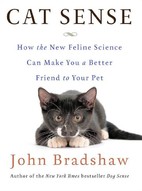 Summary:
John W.S. Bradshaw, PhD, has been studying the behavior of cats and dogs and their people for over 25 years. In this book, he seeks to present the biology behind the modern domestic cat in the hopes of helping their humans understand them better. He also presents theories about the possible future of cats and suggestions as to how to direct that the best way possible for better human/cat relationships.
Review:
I picked this book up because I wanted to understand my adorable talkative tortie fluffball, Ayla, better. I certainly learned a few things about cats that I found useful in relating to my own, but I also learned a lot about the genetics of cats (not sure I really wanted to learn that), the history of human treatment of them, and theories on their future evolution.
The book is divided into 11 chapters, which could be casually grouped into the following general themes:
- the genetic and biological history of the cat or just how did we end up with a domesticated tiger anyway
- how the domestic cat thinks and feels or yes scientists are now proving that cats actually have feelings although maybe not quite to the extent that their most loving owners believe
- how cats relate to each other or cats hate other cats except for random kittens that are dropped into their nest or possibly other females from their own family
- how cats relate to people or cats think you are a giant mother cat who is possibly superior (possibly)
- how cats relate to wildlife or no cats aren’t destroying your precious birds you overly upset cat-haters (um except for possibly the wildlife on small islands but the invasive rats are actually worse and cats hunt them so there)
- the potential future of the cat or for the love of god stop spaying and neutering the bestest most loving kitties in the world and only allowing the anti-social ferals to breed.
Obviously this is a lot of ground, so I’m only going to touch on each one briefly. First though, just let me mention that the author is both a renowned expert in this science (the science of cats), and his book also features extensive references. This is thus a trustworthy source, however, potential readers should be aware that the author (just as every author) has biases, and Bradshaw’s are fairly clear in the book. The man clearly adores cats, and thus sometimes may sway a bit to the side of positive representations of cats and optimistic beliefs about the extent of their feelings and internal lives. Now, I love cats too, so that didn’t bother me in the least, but a reader just looking at the science should note this bias. Additionally, some of the studies he cites for his findings were quite small (under 100 participants, in one case, only 8 cats were tested). Studies this small show definite room for further research. Additionally, all of the cat studies he himself has conducted were in Great Britain, so cultural biases and differences in how cats and people interact should be considered when thinking about how he analyzes cat/human interaction and behavior.
The section about the history of the domestication of the cat and the genetics of the cat is, honestly, a bit of a heavy place to start for the average person just looking to get along with their cat better. There are sentences that go far more in-depth into the genetics of a cat than I really ever cared to know. Given that this book is marketed toward the average cat owner, it may have been better to dial down the genetic information just a bit to make it easier and also speedier to read in the lead-in into the more modernly relevant information. The most interesting things I learned in this section were that domestication of the cat happened in multiple different times and places, meaning multiple cultures saw the potential of the cat and domesticated them (loc 267). There is Egyptian temple art of cats sitting in baskets (loc 634), something I found to be pretty adorable. The genetics of just how we wind up with torties, which I admit to only being interested in because my own cat is a tortie:
If a cat carries one orange and one brown version of the gene, then both appear in the coat, in random patches: in one part of the skin, the chromosome with the orange version has been switched on, and in another it is it eh brown-black pattern that “wins,” producing a tortoiseshell-tabby (or “torbie”) cat. (loc 772)
If you found that quote a bit tedious to read, just bare in mind that that is the most interesting to me of the genetics information in this section. The cat is a “hypercarnivore” (loc 1176), meaning that unlike the dog, it has lost the ability to live on plants. Cats, unlike dogs, must eat meat. I also finally learned why I shouldn’t worry too much if my cat doesn’t drink very much water:
Cats do have two notable nutritional advantages over humans. First, their kidneys are very efficient, as expected for an animal whose ancestors lived on the edge of deserts, and many cats drink little water, getting all the moisture they need from the meat they eat. Second, cats do not require vitamin C. Taken together, these make cats well suited to shipboard life: they don’t compete with sailors for precious drinking water, getting all they need from the mice they catch, and they are not afflicted by scurvy. (loc 1192)
The next four sections often blurred together, since how a cat thinks and feels directly relates to how cats relate to each other, humans, and wildlife.
Cats can develop a cat form of PTSD if they are abandoned by their mothers early in life:
Kittens that are abandoned by their mothers and are then hand-raised can become excessively attention seeking toward their first owners, though some subsequently seem to “grow out of” this. Based on what we know about other mammals in similar situations, we can assume that after the mother’s departure, the kittens’ brains endure high levels of stress hormones. These consistently high levels cause permanent changes in their developing brains and stress hormone systems, such that they may overreact to unsettling events later in life. (loc 1371)
I found this particularly interesting, since I know my cat was abandoned by her first owners in their apartment when they moved away, and it took weeks for anyone to find her. I’ve often suspected my cat has some form of kitty PTSD, and I think this scientific information would support that, although the specific type of abandonment was different.
Cats can’t focus on anything closer than a foot from their nose. Your cat is not being stupid when it can’t spot a piece of food on the floor, she really can’t see it. It helps to move it around or tap the floor next to it, to get the cat to sniff that area. (loc 1644)
This section also addresses why cats are harder to train than dogs:
Cats are much more difficult to train than dogs are for at least three reasons. First, their behavior shows less intrinsic variety than that of dogs, so there is less raw material with which to work….Second, and perhaps most important, cats are less naturally attentive toward people than dogs are….Third, although dogs are powerfully rewarded by simple physical contact from their owner, few cats are. (loc 2086)
It goes on to explain how to do basic training with your cat, adapted to cats’ specific needs, primarily using a clicker (a device that makes a noise).
Feral cats have shown us that cat society is a matriarchy, with the females of the family sticking together and the toms getting booted out to go roam and make more kittens, although there are certain scenarios in which toms are tolerated living in close proximity, generally in a situation where the tom is valuable for protection of the kittens if the space is at a premium. (loc 2426)
In spite of the ability of feral cats to live in matriarchies, cats are not well-suited for a bunch of unrelated and gender-mixed cats living in one small space. Cats generally don’t like most other cats, and Bradshaw talks some about how forcing cats to live with other cats they are not related to or don’t particularly like can put undue stress on the cats.
Cats appear to be incapable of sustaining a large number of friendly relationships, even when all their neighbors are close relatives. (loc 2438)
However, the bond the cat feels with its immediate family is strong, and scientists believe they extend that bond to their owners, who they perceive of as being a sort of mother cat. (loc 3080) This section also offers potential reasons for why a cat may purr or lick their owner, but there is no definitive scientific answer yet. It is also noted that cat personalities are the result of a mix of nature and nurture, and affectionate owners tend to have affectionate cats but whether they pick out affectionate cats or cats become affectionate in response to the owner is uncertain.
Bradshaw then addresses the concern some groups have that domestic cats are hurting native wildlife populations, particularly birds. It’s clear that Bradshaw believes that this is mostly a bunch of hokum created by cat-haters as a way to get rid of cats. This is potentially true, and Bradshaw does cite some good studies about the actual impact cats have on wildlife (very small, and in some cases, helpful since they eat the invasive predator of a native species). However, it is difficult to believe everything he cites, since his bias in favor of cats is so clear, and I am saying this as a cat-lover myself. I would find it more useful for his evidence to be presented in a more balanced fashion, as I would then feel more confident citing it to people who are concerned about cat impact on wildlife.
Finally, Bradshaw looks at the potential future of the cat. He is clearly quite concerned that our current method of neutering pet cats will hurt future cats.
Because neutering inevitably targets those cats that are being best cared for, it must logically hand the reproductive advantage to those cats that are least attached to people, many of which are genetically predisposed to remain unsocialized. We must consider the long-term effects of neutering carefully: for example, it might be better for the cats of the future as a whole if neutering programs were targeted more at ferals, which are both the unfriendliest cats and also those most likely to damage wildlife populations. (loc 4039)
I found this argument to be quite moving and logical. Bradshaw suggests both that owners might let their pet cats breed once before neutering/spaying them and also that breeders could begin to work at breeding pet cats with an eye on personality rather than looks. He also suggests focusing spay/neuter programs on feral populations. This is definitely food for thought, and I certainly will consider letting a future pet cat have a litter of kittens.
Bradshaw ends his book with this statement:
Cats need our understanding–both as individual animals that need our help to adjust to our ever-increasing demands, and also as a species that is still in transition between the wild and the truly domestic. If we can agree to support them in both these ways, cats will be assured a future in which they are not only popular and populous, but are also more relaxed, and affectionate, than they are today. (loc 4072)
A good summary of the overall themes of the book.
Overall, this book will definitely teach cat owners and lovers some new things both about the science of cats and cat behaviors. Sometimes the science can veer a bit too in-depth for the audience of the book, and also sometimes the author’s love of cats can make him seem a bit biased in favor of them. However, readers who are willing to skim over the science that they are not so into will still be able to gleam lots of information from this book that will be directly helpful to them with their pet cats. Also, this audience probably won’t mind the love of cats bias in the science. ;-)
If you found this review helpful, please consider tipping me on ko-fi, checking out my digital items available in my ko-fi shop, buying one of my publications, or using one of my referral/coupon codes. Thank you for your support!
4 out of 5 stars
Length: 307 pages – average but on the longer side
Source: NetGalley

Book Review: Drugs For Life: How Pharmaceutical Companies Define Our Health by Joseph Dumit
 Summary:
Written by a professor of Anthropology, this book explores the interaction of the cultures of medicine, pharmaceuticals, and public health and how they have impacted the modern Western perception of what constitutes health and what makes a person count as healthy.
Review:
I was immediately drawn to this anthropological exploration of what has impacted the modern perception of health and requested it on NetGalley. Although the book can sometimes feel a bit long and repetitive, the information it contains is an even-handed look at the reasons behind so many people in the West being put on preventive prescription medication.
Since this is written by an Anthropologist, not a journalist or a doctor or pharmaceutical representative, it has neither an expose feeling to it nor a particular slant. It’s clear that the author originally was just looking at the culture surrounding healthcare, and the evidence led him down this path. Anyone who is familiar with Anthropology knows that Anthropologists are trained to attempt to avoid biases and just report what they see. Of course, everyone is human, and I definitely think that by the time Dumit finished his research he has formed an opinion that the reader can observe, however he does quite a good job of just presenting the facts.
The book is divided into six chapters, plus an introduction and conclusion. The six chapters are: responding to facts, pharmaceutical witnessing and direct-to-consumer advertising, having to grow medicine, mass health: illness is a line you cross, moving the lines: deciding on thresholds, and knowing your numbers: pharmaceutical lifestyles. The book thus moves from the culture of facts and how we respond to them, to the business of pharmaceuticals, to how public health has impacted how we treat individual health, to how the individual health care consumer responds to the information they hear from all sides. Again, all of this is presented from an anthropological perspective. If a reader has not read an anthropology-research based book before, the way in which Dumit looks at the information may be a bit confusing or surprising at first, since it is more about culture, which may not be expected at first, given the title. However, the second chapter helps this perspective make sense, so even a reader new to this perspective will most likely be able to get into it.
What inspired Dumit to conduct this cultural investigation is the sheer number of drugs the average American is prescribed.
The average American is prescribed and purchases somewhere between nine and thirteen prescription-only drugs per year, totaling over 4 billion prescriptions in 2011 and growing. The range is wide, however, and many people are prescribed few or no drugs each year. (loc 100)
What Dumit’s investigations revealed was a cultural shift from treating an illness after it negatively impacts a person’s life to attempting to prevent illness. Whereas individual doctors may prefer prescribing lifestyle changes (work out more, eat differently, stress reduction), some doctors prefer being able to simply prescribe a drug and some groups of patients may prefer to keep their lifestyle and take a preventative drug. Similarly, the pharmaceutical industry sees preventative drugs that are taken by large groups of people with risk factors as a more monetarily sound investment than generating drugs for an illness that would be taken one-time or simply for the duration of the illness or just from the time of diagnosis to the end of the person’s life. Preventative drugs are prescribed to people who have risk factors for developing an illness, and they then must be taken every day. At the same time as these situations have developed, public health, since the 1970s, has started looking at groups of people at risk for developing a disease that would have a negative public health impact and advising that people with these risk factors be treated to prevent the disease from ever occurring. All of these factors have created the environment in which we now live in the United States where people who are not yet sick are still taking multiple prescription drugs to prevent their getting sick, often in spite of dealing with side effects.
I will now discuss the elements of this overarching concept that I found most interesting. The book contains many more facts and information than this, and if you find any of this at all intriguing, I highly recommend you pick up and read the whole book.
First, there’s the fact that clinical trials are extremely expensive to produce. Pharmaceutical companies thus are most invested in clinical trials whose results would indicate treating the largest number of people for the longest amount of time and, perhaps most importantly, only for those people who are able and willing to pay for these drugs. (loc 145) What this means is that illnesses that only a small percentage of people have are not getting clinical trials for drugs. Similarly, illnesses that a lot of people have but most of those people cannot afford to pay for the drugs, such as tropical diseases prevalent in African countries, also are not getting clinical trials for drugs to treat them. The pharmaceutical companies are businesses that are interested in making money, not in improving the quality of life for everyone on the planet.
Marketers want to maximize the number of prescriptions in order to maximize profits. They see clinical trials as investments whose purpose is to increase sales of medicines. (loc 1415)
I also found the question of what constitutes health and how that has changed over the years fascinating. Originally, people generally only came to the doctor if they felt sick or as if something was off. We are now encouraged to engage in preventative care. How this impacts how we perceive of health is summed up well here:
We have a new mass health model in which you often have no experience of being ill and no symptoms your doctor can detect, but you or your doctor often discover that you are at risk via a screening test based on clinical trials that show some efficacy of a treatment in reducing that risk; you may therefore be prescribed a drug for life that will have no discernible effect on you, and by taking it you neither return to health nor are officially ill, only at risk. (loc 195)
Tied into this idea of risk factors being treated as illnesses and thus healthy people being treated as not healthy is the idea that outliers, variations, and things that are simply socially undesirable can often be reclassified as illness, particularly if doing so means that the pharmaceutical companies will make more money. (loc 1079)
Third, I was intrigued by the discussion on the public health model. Public health seeks to reduce illness in the population as a whole by treating those with risk factors, but also by treating however many it takes to reduce the occurrence of illness. An example of a community-wide public health intervention is adding fluoride to the public drinking water. This is done to everyone in the hopes that it will help prevent cavities, regardless of the actual individual risk factor for developing cavities. A public health intervention that is done only to those with a risk factor is taking statins to lower cholesterol. This is recommended for individuals whose cholesterol falls in a certain range, but there is no exact science in creating that range. In fact, the cholesterol range is frequently lowered, putting more and more people on statins, even if only a small percent (less than 10%) of people are actually helped by being on these statins. The question Dumit raises in this discussion is:
At what point are public health officials justified in intervening on a community-wide basis to protect a group of people who are not all equally at risk and who might not want to be protected? The push and pull of paternalism versus autonomy is a constant refrain in the field. (loc 1667)
Of course, the pharmaceutical companies want more and more people included in the risk factor, they even would probably be fine with everyone being on statins as a community-wide public health intervention, since this increases their sales.
Finally, I was also interested in how the book examines how the average patient population responds to all of this information about risk factors and preventative drugs and medicine and constant flow of health information. Dumit divides the response to this into three general groups: “expert patienthood, fearful subject of duties, and better living through chemistry.” (loc 2842) The expert patient is like the teacher’s pet. They know all their health numbers and risk factors, listen to their doctors, take anything prescribed, and advise others to do the same. These guys are the health seekers. The second category, fearful subject of duties, is motivated by avoiding illness, not by seeking health. The final category of patient is the one I alluded to earlier. These folks won’t change their lifestyle in response to risk factors, but will instead request a pill so that they can continue living how they prefer. Which category do you think you fall into?
I think the book in general could be a bit better organized. My notes, although taken linearly, read as a bit disjointed, with some jumping around among different ideas. The overarching concepts are not laid out as clearly and succinctly in the book as they are in my review. Similarly, some concepts can be repeated a bit too often, leaving the reader feeling like they’ve read this before. Also, sometimes the book delves a bit too deeply into anthropological concepts and methods, given the fact that it is presented as a book for a layman. Finally, I feel the title of the book is a bit too click-baity. It reads as if it was written to sound much more controversial and attacking of the pharmaceutical industry than the book itself actually is. The title reads like the book will be a heavy-hitting expose, when really it is an even-handed piece of anthropology work.
Overall, this book will appeal to anyone interested in how the United States health care culture has evolved to the point it is currently at in regards to prescribing so many drugs. The reader does not have to be a scientist or involved in medicine to understand the book, although portions of it may feel a bit repetitive or overly technical at times. Although the book could be a bit better organized, overall it presents a clear look into the culture of drug prescription in the United States, and I recommend it to anyone interested in that topic.
If you found this review helpful, please consider tipping me on ko-fi, checking out my digital items available in my ko-fi shop, buying one of my publications, or using one of my referral/coupon codes. Thank you for your support!
4 out of 5 stars
Length: 280 pages – average but on the shorter side
Source: NetGalley

Book Review: Liar, Temptress, Soldier, Spy: Women Undercover in the Civil War by Karen Abbott
 Summary:
Abbott looks at the little discussed role of women in the Civil War by highlighting the lives of four different women spies, two with loyalties to the South and two to the North. By following their lives through the Civil War, Abbott demonstrates the critical role women played in the Civil War that is too often silenced.
Review:
Doing Dewey’s review of this book landed it on my wishlist, and I was really pleased to receive it for Christmas. It was everything I’d expected it to be. A look at the Civil War through a women’s history perspective and told in an easy to follow style with lots of respect for the historical source material.
Abbott notes at the beginning of the book that she only uses quotation marks around information she is directly quoting from source material. I knew from that second forward I was going to enjoy this work of nonfiction, because too often authors stray either too far toward hearsay and imagining how people felt or too far toward distancing themselves from anything other than the driest facts. Abbott beautifully switches among the four different women, following the timeline of the Civil War and telling their stories simultaneously. This lends a clearer perspective on the Civil War than I had before. It puts a humanizing eye on real events.
So who are the four women highlighted in this book? On the side of the North, there’s Emma Edmonds, who had already been living as a man to escape a marriage being forced upon her by her family. Emma enlisted as a Union soldier and soon wound up spying for them — pretending to be a man pretending to be a woman to cross the lines. There’s also Elizabeth Van Lew and her freed slave Mary Bowser in Richmond who worked together to spy on the Confederate president. On the side of the South there’s Rose O’Neale Greenhow, a socialite in DC who used her affairs with Northern politicians to spy. There is also Belle Boyd, a boisterous woman at first more interested in notoriety than in helping any cause but whose loyalty to the South became ever more strong.
This book makes it clear that women made ideal spies thanks to sexism. The men of the North and South both viewed women as the “delicate sex” that would never actually participate in anything so soiled as war, so when they attempted to cross the lines, they would be let through without being searched. The more high class a woman, the more protection she was afforded, so even though women were under suspicion, they were always treated better than men under the same suspicion. For instance, Belle Boyd was caught red-handed as a spy once. The penalty for a man would be death, but she was sent to prison and then later paroled and sent back to the South, basically with a slap on the wrist and demand she not do that again. Another example, in the case of Elizabeth Van Lew,
For now, at least, her social position and gender served as her most convincing disguise. No one would believe that a frail, pampered spinster was capable of plotting treasonous acts, let alone carrying them out right under the government’s nose. (page 47)
Abbott does a good job of presenting the reality of these women’s lives and their politics matter-of-factly with little judgment from the future. The women are allowed to basically speak for themselves, and the reader can ultimately decide how they feel about them. Abbott maintains the historic feel by referring to African-Americans as “Negroes.” This may bother some readers, and they should be aware to expect it.
The only element of the book that disappointed me was how the author handled Mary Bowser. First, this woman is not one of the four featured in the book description or the title, and yet she served as a spy inside the Confederacy presidential household. Mary Bowser was freed from slavery at a young age by Van Lew’s family. The Van Lew’s sent her North to be educated and kept her on in the household as a free servant. When Elizabeth heard that Confederate President Davis’s household needed more servants, she talked to Mary about her serving there. This educated and highly intelligent woman (she was rumored to have a photographic memory) proceeded to pretend to be the stupid, subservient person the Davises were expecting through their racism, and thus was able to do things like dust President Davis’s desk and memorize upcoming troop movements to report later. It was thanks to her work in conjunction with Elizabeth, who organized how to get the information out of the South to the North, that the Union was able to know so many of the Confederacy moves ahead of time. Yet, she is not featured as one of the four main women in the book. She is not listed as one of the women spies. The end of her life after the Civil War is not mentioned, not even to say whether or not Abbott was able to find any information about her. For a book highlighting the lives of those often erased from history, writing Mary as Elizabeth’s sidekick was quite disappointing.
The book ends by telling the reader what ultimately happened in these women’s lives after the Civil War. It’s a bit of a sad note, particularly for the Union women who fought for freedom and yet wound up with little of it themselves.
At last Elizabeth retreated, withdrawing entirely from public life. She had no target for her ferocious will. Her one political act was to attach a note of “solemn protest” to her annual tax payment, declaring it unjust to tax someone who was denied the vote. (page 426)
Overall, this book covers the history of the Civil War from the unique women’s history perspective of women spies. Those looking for an engaging alternate way to learn about Civil War history will enjoy this book and learning about the women who had an impact on history.
If you found this review helpful, please consider tipping me on ko-fi, checking out my digital items available in my ko-fi shop, buying one of my publications, or using one of my referral/coupon codes. Thank you for your support!
4 out of 5 stars
Length: 533 pages – chunkster
Source: Gift

Book Review: Master Your Metabolism: The 3 Diet Secrets to Naturally Balancing Your Hormones for a Hot and Healthy Body! by Jillian Michaels and Mariska Van Aalst
 Summary:
Jillian Michaels became famous for being a personal trainer on The Biggest Loser, a show she has since left. In addition to being a personal trainer, she is also a woman with PCOS (Polycystic Ovary Syndrome), an illness that messes with hormones and often makes the sufferer gain weight due to these hormonal problems. Jillian, with the help of her doctor, takes her years of experience both dealing with her own hormonal issues and training others with them and offers up advice on how to adjust your diet and lifestyle to optimize your hormonal balance for easier health and weight loss.
Review:
Despite its title, this book primarily focuses on achieving health through making permanent changes to your lifestyle, advocating a gradual overhaul with the focus on improving health, with weight loss as a side bonus.
The book opens with an introduction from Dr. Christine Darwin. It then moves to Jillian giving a brief introduction to her own health journey. It was fascinating to learn about how she became a trainer in her late teens, got her job on The Biggest Loser, and was diagnosed with PCOS. This lends a personal touch to the entire book. Jillian isn’t “naturally fit.” She works hard at it and has an illness that actually makes it more difficult to maintain a healthy weight. This book is honest about the fact that achieving fitness is varying levels of difficult for people, but also takes a no-nonsense, if you want health you’ll fight for it, attitude. That attitude may rub some readers the wrong way, but I appreciate it.
The book next tackles explaining how your biochemistry impacts your health and weight and why it’s therefore important to keep them balanced. Readers who enjoy knowing the why’s behind certain bits of health advice (such as keeping your stress levels low, getting enough sleep, not eating after 9pm) will particularly enjoy this section, as it explains the biochemistry behind this advice. Readers who prefer to just get the advice without knowing the why’s can easily skip this bit and just partake of the advice if they so choose. My favorite part of this section is how kind Jillian is about how people may have beat up their bodies so far in life. She’s very encouraging that what’s in the past is in the past, and every body can be improved.
No matter how you’ve abused your body up until now–and I’m willing to bet you have, even if you didn’t mean to–you can make it better. (loc 583)
The next section talks about how various chemicals and hormones in our environments contribute to messed up hormones. Jillian is quite passionate about how things like BPA in cans and hormones in non-organic dairy can pile up to mess up human hormones. Jillian makes a point of saying that even changing one of these things (for instance, buying organic dairy) can help your body, because every little bit helps. However, she is also so passionate about these hormonal and chemical pollutants that it can sometimes seem as if she is telling the reader to change everything all at once, and that can be a bit overwhelming.
Next the recommended diet is tackled, and it’s actually fairly straight-forward. Limit processed foods (and all the HFCS and artificial sweeteners and preservatives that come with it). Focus on eating only things that grew in the ground or had a mother. Limit starchy root vegetables (less than 2 servings a day), alcohol (1 drink per day), caffeine (stick to green tea), soy (2 servings per week), full fat dairy and fatty meats, and canned food (to avoid BPA). She encourages including power nutrients, such as: legumes, alliums, berries, meat and eggs, colorful and cruciferous fruits and vegetables, dark leafy greens, nuts and seeds, organic dairy, and whole grains. Perhaps the most difficult part of the diet, besides cutting out processed food, is the timing of eating she recommends. Eat within an hour of waking up. Eat three more times in the day, once every four hours. Eat until you’re full but not stuffed. Don’t eat after 9pm. The explanation for the timing issue is to help balance your hormones. She also states that you must have fat, protein, and carbs at every meal, but to aim for higher protein, particularly in the evening meal and as you age. The reasoning behind this is you feel more satisfied with all three macros and also are more likely to not lack in any particular nutrient. Two other reasons are that protein increases your metabolism and as people age they need more protein to retain muscles. This is not a particularly challenging diet, nor is it far off from what is generally recommended by doctors and nutritionists as a healthy diet. Again, the most challenging part is the timing issue. Not everyone’s life lets them perfectly space out their meals.
For those readers who are new to eating a whole foods, unprocessed diet, the book includes a sample menu (I believe it covers two weeks, but can’t double-check as it was a library copy). The recipes are perfect for beginner cooks with nothing too complex and not too much time required. Jillian teamed up with a professional for the recipes, and is straight-forward about that.
The book next tackles the six most common hormonal disorders, including PMS, hypothyroid, metabolic syndrome, and PCOS. These hormonal issues require special recommendations and guidelines, and Jillian explains them quickly and clearly.
Finally the book ends with some tips on how to live out the recommended lifestyle, including how to afford and/or find organic food, how to clean your house without chemicals, etc… Just as earlier, Jillian is so passionate about this that it’s possible for the reader to feel overwhelmed at the thought of doing everything, even though Jillian does make a point to state that changing even one thing, or one thing at a time, will help. Perhaps it would help if the book ended with a checklist of the most important changes or how to adapt gradually or something like that to make it feel less overwhelming for the reader.
Besides the fact that sometimes the book can make the lifestyle feel a bit overwhelming, my only other issue with the book was when Jillian recommends that women stop taking hormonal birth control pills and use condoms instead. Condoms are nowhere near as good a form of birth control as hormonal methods, and randomly recommending everyone stop using hormonal birth control is more than just a bit irresponsible. It would have been far more responsible to do something such as suggest that if the reader is concerned about the level of hormones in her birth control to speak to her doctor about lower level hormone options, such as the mini-pill or the IUD, and see if those may work for her. Just flat-out saying everyone use condoms is not helpful. Plus, there is a risk/reward calculation that every individual must make for themselves.
Overall, this book mostly recommends diet and lifestyle changes that would also be recommended by most doctors and nutritionists. The timing of eating is something that is up for debate, but it certainly wouldn’t hurt the reader to try it. Jillian sometimes gets so passionate about all of the lifestyle and diet changes that it can feel overwhelming to the reader. Recommended to those interested in the science behind generally recommended lifestyle changes. Just remember that you don’t have to do everything at once and take the advice with a piece of salt. Do your own research and talk to your doctor before dropping medication/birth control.
If you found this review helpful, please consider tipping me on ko-fi, checking out my digital items available in my ko-fi shop, buying one of my publications, or using one of my referral/coupon codes. Thank you for your support!
4 out of 5 stars
Length: 288 pages – average but on the shorter side
Source: Library

Book Review: The Alkaline Cure: Lose Weight, Gain Energy, Feel Young and Stay Healthy for the Rest of Your Life by Stephan Domenig
 Summary:
This book offers an introduction to the Alkaline Diet, as well as a 14 day meal plan and lifestyle guide to jump-start the reader into the Alkaline way.
Review:
The introduction to the Alkaline Diet in the first half of the book is wonderfully written and easy to understand. The 14 day meal plan and lifestyle guide falters, however, with dull, complex to make meals and a shortage of exercise tips.
For those who don’t know, the Alkaline Diet basically is the idea that our bodies function best with a pH balance between 7.3 and 7.5, but modern lifestyles wreak havoc with this balance, making us too acidic. What impacts our pH balance is our food and lifestyle. Each food can be either acidic or alkaline. Stress is acidic. Meditation is alkaline. Etc… Whether or not this idea that the body should be at a certain pH balance is valid is rather irrelevant, honestly. The tips offered for creating this balance are all good, healthy ones. The book never veers into extremism, indeed cautioning that acidic foods, such as meat and processed items, do not need to be cut out of the diet entirely in order for the reader to be healthy. It encourages a 2:1 ratio. Two parts alkaline food and activities for every one part acidic food and activities. Essentially, the idea that health is not all or nothing. It is a balancing act. Indeed, balance is a theme of the book.
Your body doesn’t want extremes–it wants balance. (loc 480)
The two parts alkaline it encourages are basically fresh produce, time for self-care, and low-stress exercise. So basically, eat whole foods, stress less, and move more. Fairly common fitness and health advice. The acidic parts include processed food, meat, dairy, stress, and high-stress exercise. Again, the reader is not told to stop enjoying any of these things, but simply to find a balance. The only thing I really disagree with is I think the book underemphasizes the importance of exercise for health. In fact, the book seems a bit concerned with not doing too much “high-stress” cardio or weight lifting. It seems to be more inclined toward the lower-impact, more moderate exercises. I don’t think this is an idea that could claim to have much science behind it. Indeed, high-intensity interval training (HIIT) is written about in over 200 articles on PubMed (a free biomedical database), and most of these articles are talking about the positive effects of HIIT on abilities and cardiovascular health. (List of articles) So essentially the food and lifestyle advice is mostly good but take the exercise advice with a grain of salt. Advising moderate walking and stretching every other day or so is really only appropriate for the most beginner levels of fitness.
After introducing these ideas, the book next offers a 14 day meal plan and lifestyle plan for the person new to Alkaline. The first week is basically a cleanse, and the second week is supposed to be a model of what the non-cleanse Alkaline lifestyle is like. This is the part where I became disappointed. The recipes, including the ones for the non-cleanse week, come across as bland, dull, and labor-intensive, and this is coming from a person who does an awful lot of cooking to minimize the amount of processed foods in her diet. I usually spend at least two hours prepping food for the workweek and cook a minimum of 4 meals at home a week. This plan seemed like an overwhelming amount of work to me. I can only imagine how it might seem to a reader who normally cooks processed meals or picks up fast food most days of the week. Many of the recipes were also not particularly simple. For both of these reasons, I feel the meal plan isn’t particularly appropriate for a beginner, which is odd given that the rest of the book is toned as for a beginner. I would expect an easier, more approachable meal plan from this book.
Each day also has beauty, exercise, and lifestyle suggestions. I particularly enjoyed the beauty suggestions, as they were mostly things that are easy to do at home and seemed enjoyable, such as an alkalizing foot bath or a hair mask. The lifestyle suggestions were good for beginners who maybe are new to the ideas of meditation and stress relief. The exercise sections suffered from the same issue I went into in-depth earlier.
What the book lacks is a clear idea of who its audience is. Is it a person completely new to fitness and healthy eating who is currently a beginner in every way? Is it meant for every person wherever they are on their journey to health? Is it meant for intermediates, looking to amp up their fitness and health regime? Because it lacks a focus, the content veers around between these three options, suggesting extremely beginner level exercises but rather advanced cooking and preparation ideas. For this reason, it would probably frustrate a beginner who finds the first half of the book do-able and understandable but then finds an overwhelming amount to do for an introductory 14 day plan. It would also frustrate someone who is not new to fitness and health who wants more details on how to amp up their regime and who may be a bit insulted at the idea that they will be fine if they just go for walks every few days. Recommended to those interested in a quick introduction to the ideas behind the Alkaline Diet to tweak their diet on their own but who is not so invested in using a 14 day introductory plan.
If you found this review helpful, please consider tipping me on ko-fi, checking out my digital items available in my ko-fi shop, buying one of my publications, or using one of my referral/coupon codes. Thank you for your support!
3 out of 5 stars
Length: 304 pages – average but on the longer side
Source: Netgalley

Book Review: Eighty Days: Nellie Bly and Elizabeth Bisland’s History-Making Race Around the World by Matthew Goodman
 Summary:
In 1889, the world was obsessed with Jules Verne’s fictional work Around the World in 80 Days
Review:
With my interest in women’s history, I was surprised when I saw this title on Netgalley that I had never heard of this race around the world, although I had heard of Nellie Bly, due to her investigative report into Bellevue Hospital (a mental institution). I knew I had to request it, and I’m quite glad I got a review copy. Goodman tells not just the story of these two women but also immerses the reader into the newly global world of the late 1890s, both the good and the bad.
Goodman starts the book by introducing us to the two women who will race around the world. He does an excellent job using primary source materials to give us both how others saw these women and how they saw themselves. For instance, in describing Elizabeth Bisland, Goodman writes:
One of her admirers, the writer Lafcadio Hearn, whom she had befriended in New Orleans, called her “a sort of goddess” and likened her conversation to hashish, leaving him disoriented for hours afterward. Another said, about talking with her, that he felt as if he were playing with “a beautiful dangerous leopard,” which he loved for not biting him. (loc 241)
While introducing the women, Goodman also talks at length about the role of women in journalism in the late 1800s and how hard it was for them to break into real reporting. Jumping off from Bisland and Bly, describes how women were blocked from many journalism positions with excuses such as that the newsroom needed to be free to swear and not worry about a lady’s sensibilities. Women were often barred to what was deemed the ladylike journalism of the society pages. The hardest part of being a hardhitting female journalist at the time wasn’t the actual reporting but instead the reception of women in the newsroom.
The successful female journalist, McDonald suggested, should be composed of “one part nerve and two parts India rubber.” (loc 465)
Bisland and Bly and their race came at the beginning of having women journalists do some form of stunt journalism, which is how they started to break into hardhitting journalism. Editors and owners discovered that readers enjoyed reading about women in stunt situations, such as learning how to stunt ride a horse, so this was their way in. Thus, even if the reader dislikes the personalities of either or both of the racers, they come away with some level of respect for them both breaking into the business.
From here, Goodman starts following the women on their race around the world. He takes the different legs of their journeys as a jumping-off point to discuss something historically relevant to that portion of the journey. For instance, during Bly’s trip on the ocean liner to Europe, he discusses how the steamships worked, from the technical aspects of the steam to the class aspects of first class down to steerage. During Bisland’s railroad trip across the United States, he discusses the railroad barons and the building of the transcontinental railroad. Thus, the reader is getting both the story of the race and historical context. It’s a wonderful way to learn, as the historical explanations flesh out the settings around and expectations of the women, and the women lend a sense of realness to the historical situations and settings being described.
After the completion of the trip (and, no, I won’t tell you who won), Goodman explores the impact of the trip on the women’s lives and follows the rest of their lives to their deaths. This part may feel a bit long and irrelevant to some readers, however often when people become famous for doing something, no one talks about the long-lasting impact of that fame or what the rest of their lives are like. Seeing how both women reacted to the trip, their careers, and others puts them in a more complete light, giving the reader a complete picture of what the race did in their lives. This complete picture of both of their lives is something I really appreciated and that also demonstrated that one shouldn’t judge people too fast. They and their lives may turn out differently than you expect at first.
What would have made me love the book is if I had come away feeling like I could respect or look up to either woman. Unfortunately, by the time I heard the full story of both of their lives, I found them both to be so deeply flawed that I couldn’t do that. I respect them for breaking into the newspaper business, and perhaps if I was a journalist myself that would be enough to make me look up to them. But each had a fatal flaw that made this not be a book about two role models but instead a book about two women. There’s nothing wrong with that, but it does keep it from being a book I would return to over and over again.
Overall, Goodman does an excellent job using the true story of two female journalists’ race around the world in 1889 to 1890 to build a solid picture of the increasingly global world of that time. The reader will come away both with having learned an incredible true story and details about the 1800s they might not have known before, told in a delightfully compelling manner. Some readers might be a bit bothered by how flawed the two women journalists are or by the fact that the book goes on past the race to tell about the end of their lives in detail. However, these are minor things that do not distract too much from the literary qualities of this historical nonfiction. Recommended to those interested in an easy-to-read, engaging historical nonfiction book focusing in on women’s history. Particularly recommended to modern, women journalists.
If you found this review helpful, please consider tipping me on ko-fi, checking out my digital items available in my ko-fi shop, buying one of my publications, or using one of my referral/coupon codes. Thank you for your support!
4 out of 5 stars
Length: 480 pages – chunkster
Source: Netgalley

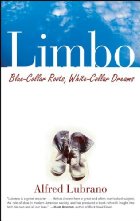
Book Review: Limbo: Blue-Collar Roots, White-Collar Dreams by Alfred Lubrano
 Summary:
What do you call the approximately 1 out of 5 working class American kids who go to college and move into the white collar world? Journalist Alfred Lubrano calls them Straddlers, and the world they live in Limbo. Through interviewing experts on social mobility and class, therapists, and Straddlers themselves, Lubrano seeks to establish the unique challenges and triumphs of moving up the social ladder from blue to white in America.
Review:
I picked this up because I happen to be one of the Straddlers Lubrano is talking about, and I was curious to know both what about my experiences are common among all Straddlers and pieces of advice on navigating the interesting experience of being a Straddler. The book brings to light the often overlooked issue of how changing classes impacts a person’s life, as well as real cultural differences among the blue-collar and white-collar classes in America.
Lubrano begins his book by defining blue and white collar. A blue collar person can make more money than a white collar person (think of a successful plumber versus a struggling journalist). Blue versus white collar isn’t about how much income a person generates, according to Lubrano. What really makes the difference is 1) education level and 2) type of work. The blue collar person may have an associate’s degree or a trade degree or certification. The white collar person will have, at minimum, a bachelor’s degree. The blue collar person generally works with their hands or in service industries. The white collar person works in an office or on a computer. Thus, what generally begins the change from blue to white collar is attending a four-year college.
The book next establishes the blue collar background the Straddler comes from, as well as establishing statistics on class mobility and class differences. By establishing firmly the blue collar background the Straddler comes from and how that affects their thought patterns and approaches, Lubrano lays the groundwork for highlighting the unique struggles Straddlers go through in college and later at their white collar jobs and in their white collar surroundings. The blue collar class elements Lubrano highlights include: being taught that working hard will get you what you want (the ideal of a meritocracy at all levels of society), distrust of the boss/upper-levels of management, intense loyalty to community and fellow workers, high value on obedience and conformity to community, patriotism, straight talking, and emotions being close to the surface and easily erupting.
The next section deals with the blue collar kid starting college. Both blue collar families that push college and those that degrade it are discussed, as well as the reasons for both reactions by blue collar parents to college. On the one hand, there are the parents who view college as a straight-shot meritocracy to a better job, better life, and better ability to live your dreams. On the other hand, there are the parents who are afraid that they will lose standing in their own home if their child outsmarts or outshines them. By and large, however, most blue collar parents fall in the former category. Lubrano points out that blue collar parents don’t intimately know or understand the white collar world they are sending their children into, and thus unknowingly often give them bad information or false hopes. To the blue collar parent, a college degree is a golden ticket, and so the blue collar child is pushed into a culture they are unprepared for.
Straddlers’ parents have such plans for their kids. With strong hopes but scant information, many push their progeny toward the vague realm of Something Better–the glorious middle class. Imbued with these dreams, Straddlers lurch awkwardly out of sheltering enclaves into unknown realms. On their sometimes troubled way, they become educated and awaken to class differences between the past and their would-be future. Priorities shift. Some values change, while some remain constant. Unlike many they meet in the new, white-collar world, these people are hybrids. That duality is their strength and their struggle, and will comfort and vex them throughout their days. (loc 611)
Next, the book tackles the blue collar / white collar culture clash that begins to occur when a blue collar person attends college and will continue throughout their life as a Straddler. Lubrano does an eloquent job of addressing both how the Straddler struggles to understand the white collar world she now inhabits, as well as how the Straddler starts to change and no longer fits in among her family and blue collar people she grew up with. The changes that often make a Straddler no longer fit in among her family include: language, leaving religion, and dietary choices. College makes the blue collar kids change, and often their families are not expecting that. Suddenly, the child speaks like a stranger, eats like a stranger, and no longer feels attached to the family religion. The culture clash between the working class college student and her new peers is perhaps a bit more obvious. The monetary differences are clear immediately. Peers often don’t understand the need to work or the high value of a dollar to their blue collar classmate. More subtle and far-reaching than the different approaches to money, though, are the different approaches to life. White collar kids are raised with self-esteem and feelings of entitlement that blue collar kids never knew existed. They navigate campus with a sureness of belonging, and that surety will aid them throughout their careers.
The book next tackles how these class differences affect the Straddler’s career. This is the most fascinating part of the book. Most people probably expect that a blue collar kid going to college will experience some culture clashes and struggles with the family, but the idea that these struggles will continue past college is not obvious. College is supposed to prep everyone for a career, but the fact is, oftentimes colleges leave the Straddler student floundering on their own. There are generally no classes on how to be white collar, you’re just supposed to know. And it’s not always easy for the Straddler to just pick this up on their own. Lubrano highlights the key areas in which the blue collar culture the Straddler was raised with clashes with the expectations of a white collar job and can hurt a career.
If you come from the working class, you haven’t got a clue how to conduct yourself when you first land in an office. You’re lost if you can’t navigate the landscape–if you follow blue-collar mores and speak your mind, directly challenging authority. Without tact and subtlety, without the ability to practice politics amongst the cubicles, an executive with a blue-collar background will not rise. (loc 2473)
Among the issues Lubrano highlights as frequently arising for Straddlers are a tendency to be lacking in tact, an innate disgust for and inability to handle the inauthenticity demanded by office politics, and a lack of understanding of the manner of dress expected in white collar jobs. Additionally, blue collar homes often denigrate the boss or the man, demanding only loyalty to fellow workers. White collar culture, on the other hand, demands loyalty to firm, not your coworkers, as well as an expectation that you will automatically desire to rise up the ladder and become the man. Perhaps the most difficult skill for Straddlers to learn and appreciate is networking. Blue collar homes teach you to leave work at work. Family time is a sacred space. White collar jobs expect extraneous socializing in the form of networking, additionally they expect the white collar workers’ whole family to participate in their career, when needed. (Think of a networking dinner in the worker’s home). This entire concept rubs the Straddler the wrong way. Networking feels inauthentic and wrong, and the family space feels violated. Additionally, the Straddler was raised believing hard work advances you, not who you know. The idea that you advance farther by networking than by working hard can often sicken a Straddler.
I didn’t realize that doing a job well is no guarantee of advancement and opportunity. There are ways to get ahead that have nothing to do with hard work. But blue-collar people are taught that that’s a person’s only currency–you sell your labor and give the boss an honest eight hours….Along with blatant kissing up, networking and socializing with bosses and colleagues also are dirty words to some Straddlers. It all smacks of phoniness and is antithetical to their blue-collar backgrounds, which emphasize honesty in human relations–”real” relationships. (loc 2735)
The book next discusses Straddler’s romantic lives and experiences parenting their own white collar children. Unless a Straddler dates another Straddler, they will end up dating someone who does not communicate the same way they do. If they date a blue collar person, the same issues they have with their own family arise. If they date a white collar (born and raised) person, then issues in communication similar to the ones they experience at work come up. If the Straddler marries a blue collar person, that person will often feel threatened by their academic interests. If the Straddler marries a white collar person, communication is often an issue. White collar people are taught to manage their emotions and shut down when upset. The Straddler was raised with emotions at the surface in a passionate manner. This can freak out the white collar person, and in turn, the relative calm of the white collar partner can drive the Straddler crazy.
When it comes to kids, most Straddlers talk a lot about trying to keep their kids from having a sense of entitlement. They want them to connect to their blue collar roots, to appreciate blue collar work, and to have blue collar values. The Straddler wants their child to have to struggle, because they value the personal growth they themselves got out of it.
The book closes out with a discussion of what makes a successful Straddler. Ideally, the Straddler will become bicultural. Able to navigate both blue and white collar worlds, and appreciate the positive in both. Unashamed of where they came from and unashamed of where they ended up.
The more successful Straddlers–and by this I mean people who are comfortable with their lives–embrace their middle-class reality while honoring their blue-collar roots. Though they live in limbo, they choose to concentrate on the upside and what makes them unique. (loc 4175)
The book addresses a topic that badly needs to be addressed. If one in five working class kids becomes a Straddler, that’s a huge sociological group that is often not discussed. However, there are some weak points in the book. Although Lubrano acknowledges that Straddlers can come from the city or rural areas, since he grew up in Brooklyn, he tends to focus in on those who come from the city. He could have sought out more Straddlers to interview who grew up rural poor to get a firmer grasp on what their life experiences are like. There are some subtle differences between city and rural blue collar. Similarly, Lubrano mostly interviews people of the same generation as himself. He conducts one series of interviews with three people from a younger generation, but primarily he interviews people from the same age-range. Although it’s obvious these issues are consistent across generations, it would be a stronger book with multiple generation’s voices. Similarly, the book came out in 2005, and an updated edition would be nice.
Overall, this is an engaging read that addresses the sociological issue of moving from blue collar to white collar class. Interviews with both Straddlers and experts brighten and enlighten the text, although the book would benefit from a bit more variety in the Straddlers interviewed. Recommended to anyone who is a Straddler themselves, as well as those who may educate or work with Straddlers and those with an interest in class differences.
4 out of 5 stars
Length: 256 pages – average but on the shorter side
Source: Amazon
Buy It (Amazon or Bookshop.org)
If you found this review helpful, please consider tipping me on ko-fi, checking out my digital items available in my ko-fi shop, buying one of my publications, or using one of my referral/coupon codes. Thank you for your support!
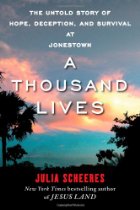
Book Review: A Thousand Lives: The Untold Story of Hope, Deception, and Survival at Jonestown by Julia Scheeres (Audiobook narrated by Robin Miles)
 Summary:
On November 18, 1978, 918 people, mostly Americans, died on a commune named Jonestown and on a nearby airstrip in Guyana. The world came to know this event as that time that crazy cult committed mass suicide by drinking poisoned Kool-Aid. However, that belief is full of inaccuracies. Scheeres traces the origins of Jonestown, starting with its leader, Jim Jones, and his Christian church in Indiana, tracing its development into the People’s Temple in California, and then into Jonestown in Guyana. Multiple members’ life stories are traced as well, including information from their family members who, perplexed, watched their families give everything over to Jones.
Review:
I have a fascination with cults and groupthink. In spite of not being born until the 1980s, I definitely was always vaguely aware of this cult that committed suicide in the 70s, always commentated on with great disdain. I had previously read Julia Scheeres’ memoir, Jesus Land
Scheeres possesses a great talent at presenting people and events as they are with understanding for common humanity but also disdain for atrocious acts. Scheeres excels at never turning a person into a monster, but rather exposing monstrous acts and asking how things became so messed up that something like that could happen. Scheeres clearly did painstaking research for this book, reading through the FBI’s extensive archives on the People’s Temple and Jim Jones, interviewing survivors, and interviewing family members of the deceased, not to mention reading members’ journals. The facts are presented in an engaging, storytelling, slightly non-linear way, which works excellently at drawing the reader in. The book starts on the boat to Guyana, then flashes back to the origins of Jim Jones. The members of People’s Temple are carefully presented as the well-rounded people they truly were with hopes and dreams and who made some mistakes. They are not ever presented as just a bunch of crazies. Even Jones is allowed a time as a preacher passionate for social justice before he turned into the control freak, whose paranoid delusions were exacerbated by drug addiction. Scheeres takes an event that it is far too easy to put the stamp of crazy on, and humanizes it, drawing out the gray areas. And this is all done while telling an engaging, well-written, factual story.
There are an incredible number of facts in this book, and the reader learns them while hardly even realizing it, since this work of nonfiction is so readable. Among the things I never knew, I found out that the People’s Temple originally was a Christian church that was heavily socialist and then slowly turned into its own religion as Jones pulled away from the Bible, eventually declaring himself god. When Jones was in California, he was heavily involved in politics, sponsoring people such as Harvey Milk for office, and breaking voting laws by sending his church en masse to vote in districts they didn’t live in. Jones enacted weekly corporate punishment of individual members in front of all the other members. He was bisexual, having sex with both male and female members of the People’s Temple. He became obsessed with the idea of suicide to make a statement and routinely badgered the higher members of the People’s Temple into accepting suicide if he ordered it. He even tricked them multiple times into thinking that he had given them poisoned drinks, just to see who would obey and drink it. The members came to Jonestown in Guyana expecting a utopia, since Jones had lied to them, and instead got a struggling farm on the brink of disaster, being run by a man increasingly paranoid and delusional and ever more addicted to drugs. Once members were in Jonestown, they were not allowed to leave. And many wanted to. Last, but most important, the mass suicide was not a mass suicide. It was a murder-suicide. Some of the members committed suicide willingly, but others, including over 300 children, were force-fed or injected with the poison. Those who drank it drank it mixed with Flavor-Aid, a generic knock-off brand of Kool-Aid. It astounds me how much the facts of these events from as recent as 1978 are now misremembered in the collective consciousness, especially considering the fact that documentation such as the Jonestown death tape are available for free in the public archive.
Overall, this book takes a misremembered event in recent history and exposes the facts in an incredibly readable work of nonfiction. Scheeres presents the people who died in Jonestown with empathy and understanding, seeking to tell their whole life story, rather than one moment. A fascinating look at a horrible event, and a moving reminder to never give too much power or faith to one person, and how very easy it is for groupthink to take over. Highly recommended.
5 out of 5 stars
Source: Audible

Book Review: The Emerald Diamond: How the Irish Transformed America’s Greatest Pastime by Charley Rosen
 Summary:
Did you know baseball has been entwined with Irish-Americans from the very beginning of the sport? Rosen goes through the history of baseball, focusing in on how Irish-American players, managers, and owners impacted the game.
Review:
I picked this up from my pile of older review copies to read in honor of St. Patrick’s Day. I’m part Irish myself and was a US History major in undergrad, so the concept of the book definitely appealed to me. The book addresses the interesting topic of Irish-Americans in baseball but unfortunately presents the history in an only sometimes interesting way and utilizes sloppy research.
The book starts in the 1800s and works its way up through time, ending many chapters with a modern day interview to reflect upon the ideas presented in the chapter. The earliest chapters are the most interesting. They take the events and use them to tell the story of how Irish-Americans broke into baseball partly because many careers were closed off to them due to anti-Irish discrimination in America (No Irish Need Apply). Originally, the game was much less regulated, and the Irish-American players brought with them a willingness to be sly and rough that added an element of excitement to the game that brought out more viewers. Reading about how the rules slowly changed and how Irish-Americans impacted those changes was definitely fascinating. It was also disturbing to discover how many players in the early years had serious addiction problems, not to mention the presence of multiple suicides. Unfortunately, the opportunity to analyze this phenomenon and discuss it in depth is passed by, as is most true historical analysis.
Starting in the early 20th century, the formatting of the book changes so that instead of telling a story, the heading of a year is given and bullet-points of events for that year are listed. Some of these bullet-points break out to be actual stories, instead of just pure listing of facts, and that is what kept me reading. But mostly about half the book is just lists of baseball facts. It reminded me of reading Chronicles in the Bible (so-and-so begat so-and-so). There are some interesting tidbits in there, but they are few and far between.
I was truly appalled when I flipped back to check the references in the back that almost all of them are secondary sources, and a significant number are Wikipedia. It’s one thing to start your research at Wikipedia to familiarize yourself with the topic and then broaden out to more scholarly work and primary sources. It’s another thing entirely to publish an entire book that basically just sums up Wikipedia. A work of historic nonfiction should seek out as many primary sources as possible, read secondary analyses, and provide analysis both of the primary and secondary sources. What Rosen has done is mostly to regurgitate what Wikipedia and other secondary sources have already said. The exception to this is the modern day interviews Rosen conducted, but they make up a small portion of the book. Perhaps 15%. If the book had consisted of interviews with modern Irish-American players and descendants of Irish-American players and managers, complete with analysis and investigation using primary and secondary materials, that would have been a fantastic book. Instead we get a relisting of information already gathered (and better sourced) in secondary sources spiced up with a few interviews. If I had bought this book, I would have returned it.
Overall, there are some interesting tidbits about how Irish-Americans impacted the game of baseball. Unfortunately, large parts of the book are lists of facts, with no analysis or storytelling, Additionally, Rosen relied primarily on secondary source materials, mostly Wikipedia, to research his book. The reader could get similar information from Wikipedia themself and have the ability to click through to the source materials. I would suggest doing that over buying this book. For those seeking a book on the topic, I recommend The Irish in Baseball: An Early History
2 out of 5 stars
Source: Print copy from publisher in exchange for my honest review

 Support my work with a tip or browse my shop for curated book club guides, how to guides, cross-stitch patterns, and more!


This work by Amanda Nevius is licensed under a Creative Commons Attribution-Noncommercial-No Derivative Works 3.0 United States License.
 Opinions of a Wolf