
Archive
Book Review: The Only One Left by Riley Sager

A Gothic chiller about a young caregiver assigned to work for a woman accused of a Lizzie Borden-like massacre decades earlier.
Summary:
Now reduced to a schoolyard chant, the Hope family murders shocked the Maine coast one bloody night in 1929. While most people assume seventeen-year-old Lenora was responsible, the police were never able to prove it. Other than her denial after the killings, she has never spoken publicly about that night, nor has she set foot outside Hope’s End, the cliffside mansion where the massacre occurred.
It’s now 1983, and home-health aide Kit McDeere arrives at a decaying Hope’s End to care for Lenora after her previous nurse fled in the middle of the night. In her seventies and confined to a wheelchair, Lenora was rendered mute by a series of strokes and can only communicate with Kit by tapping out sentences on an old typewriter. One night, Lenora uses it to make a tantalizing offer—I want to tell you everything.
As Kit helps Lenora write about the events leading to the Hope family massacre, it becomes clear there’s more to the tale than people know. But when new details about her predecessor’s departure come to light, Kit starts to suspect Lenora might not be telling the complete truth—and that the seemingly harmless woman in her care could be far more dangerous than she first thought.
Review:
I’m from New England so grew up with the Lizzie Borden jump-rope rhyme, and I’m a long-time fan of Riley Sager’s works. So I put myself on the hold list for this at my library as soon as the title was announced. Sager’s works play with thriller tropes. This one is more of a loose play. Ever since the original murders people have debated whether or not she was actually the murderer. So that’s what is at play here – how we treat others when the evidence points toward them but not conclusively enough for a sentencing.
For the majority of the book, I thought I had the murderer figured out, and not too many twists happened. the majority of the twists come in a giant pile right at the end. That said, I was partially right about what I thought from the beginning. I wasn’t 100% there, but I was partially there. I wanted to be slightly more surprised than I was. Although the pile of twists at the end did increase my satisfaction regardless.
The 1983 setting was a little weakly done. It felt more like a plot device to avoid the inconvenience of cell phones and characters texting each other than a true love letter to the 1980s. The 1980s was like sprinkles on top instead of what the story was built upon. I also personally didn’t understand why Kit was so afraid of a bed-bound elderly woman. Even assuming she had committed three murders decades ago. A murderer who has been bed-bound for decades and is now elderly is nothing to be afraid of. So the fear factor was lower for me.
One thing that annoyed me was the murder jump-rope rhyme in the book. The cadence was off, making it impossible to actually chant properly for a jump-rope game. This is easily seen in the first two lines. The Lizzie Borden one is this:
Lizzie Borden took an axe
Gave her mother forty whacks
Each line is precisely 7 syllables long, plus the accents come every other syllable and in both lines the strong syllable comes first.
LIZzie BORden TOOK an AXE
GAVE her MOTHer FORty WHACKS
In contrast, this is the first two lines of the jump-rope rhyme written for this book:
At seventeen Lenora Hope
Hung her sister with a rope
The first line is 8 syllables, and the second one is 7. The second one’s accents work, but the first line’s don’t.
at SEVenTEEN leNORa HOPE
HUNG her SISter WITH a ROPE
It just simply doesn’t work as a jump-rope rhyme because jump-rope rhymes start with a strong syllable, and the lines are the same length as each other. They’re meant for keeping rhythm for the jumpers and the turners. Children on a schoolyard would have changed it to make it work, even if it meant changing a detail to be inaccurate. For example:
SIXteen OLD leNORa HOPE
HUNG her SISter WITH a ROPE
This makes it even more like the Lizzie Borden rhyme, in fact, because that one is slightly inaccurate for the sake of the rhyme scheme. It was Lizzie’s stepmother who was killed, not her mother.
In any case, the rhyme is repeated a lot in the book, and always at least the first line, and it made me cringe every time it came up.
The thriller itself was still quite enjoyable anyway but it would have jumped up to remarkable with this issue fixed and a more thoroughly shocking twist. A fun new read from a popular thriller author.
If you found this review helpful, please consider tipping me on ko-fi, checking out my digital items available in my ko-fi shop, buying one of my publications, or using one of my referral/coupon codes. Thank you for your support!
4 out of 5 stars
Length: 385 pages – average but on the longer side
Source: Library
Buy It (Amazon or Bookshop.org)
Book Review: Elvis and Me by Priscilla Beaulieu Presley and Sandra Harmon

The King of Rock and Roll’s first (and only) wife’s controversial memoir of their time together.
Summary:
Decades after his death, millions of fans continue to worship Elvis the legend. But very few knew him as Elvis the man. Here in her own words, Priscilla Presley tells the story of their love, revealing the details of their first meeting, their marriage, their affairs, their divorce, and the unbreakable bond that has remained long after his tragic death.
Review:
I picked up my library system’s only copy of this book in preparation for the A24 movie coming out this fall directed by Sofia Coppola. I am absolutely dying to see the movie, and I thought I should have read the memoir first. Now, this memoir is pretty controversial, especially in the Elvis fan crowd (who I count myself among.) So my review will be in three parts. First looking at the book as a memoir compared to other memoirs. Second, my thoughts on certain aspects of Elvis and Priscilla as she presents them in the book. Third, looking at the controversies.
As a memoir, this starts out very strong with Priscilla finding out about Elvis’s death, then we immediately get a flashback to when she met him in Germany. The first two-thirds of the book are engaging and engrossing. I could barely put it down. It was an easy read that made me want to know more. I also felt in this portion of the book that Priscilla was giving a fairly even hand to both herself and to Elvis. She was being relatively straightforward about everyone’s strengths and shortcomings. Unlike modern memoirs, which often eschew using dialogue with direct quotes, this is written more like a story with snippets of dialogue sprinkled throughout. This made it more readable but also less believable, because who really remembers exactly what people said decades ago? And I don’t believe that something being a pinnacle moment in your life makes it more likely for you to remember the exact words. I don’t remember my wedding vows I wrote without going to reread them.
The strengths present in the first two-thirds of the memoir are lacking in the last third. Priscilla glosses over big moments in the marriage without much reflection or insight. For example, the first time she has an affair, she essentially just says…then I had an affair. I don’t need the details of the sexual aspect of the affair, but some reflection as to what was the first touch that crossed the line, what made her willing to take the risk to have an affair (especially given how whole-heartedly she’d committed herself to the quest to be Mrs. Presley), etc… There are large swathes of time also that are communicated in just a few sentences. Perhaps distance and time was needed to be able to fully process everything that had happened. Perhaps she should have waited until more time had passed to allow for more meaningful reflection on these years. In any case, the last third of the book almost reads like a different book than the first two-thirds. Or like a different pair of authors wrote it.
Second, here are some things that were newly revealed to me in this read as an Elvis fan that I didn’t know before and that some research confirms seem to be accepted as true. Elvis talked a form of baby talk in his intimate relationships. (This has been confirmed by other women he was romantically involved with). Priscilla says this was similar to how Elvis spoke with his mother Gladys. I’m sure a lot of people speak in a special way with their significant other (look at how “bae” has entered the lexicon). I guess I’m just surprised that these women were willing to talk about it. I also learned that Priscilla suggested that Elvis burn his philosophy books after the Colonel ordered him to back off on it. Elvis acquiesced and did so. Earlier, he had told Priscilla that his soul mate would be interested in the things that interested him, even though she had no interest in the philosophy books at all. Both of these situations show how emotionally immature the two of them were in dealing with each other. Instead of building a healthy relationship built on two separate individuals who mutually respect each other, they each had strong expectations of how the other would behave. Priscilla didn’t want Elvis the spiritual guru. She wanted Elvis the rock star. Elvis didn’t want Priscilla to have a life of her own in addition to her life with him. He wanted her to be a side-kick at his beck-and-call.
Of course, the relationship started off on the wrong foot. Which leads me right into the controversies. I knew going into this that Priscilla was 14 and Elvis 24 when they met and began their relationship. Some fans think this is no big deal. Others think Elvis groomed Priscilla. Certainly passages in the book sound very much like grooming.
When we met, I had just turned fourteen. The first six months I spent with him were filled with tenderness and affection. Blinded by love, I saw none of his faults or weaknesses. He was to become the passion of my life. He taught me everything: how to dress, how to walk, how to apply makeup and wear my hair, how to behave, how to return love–his way. Over the years he became my father, husband, and very nearly God.
page 15
I find the folks who defend Elvis by talking about how they think Priscilla manipulated her way into being Mrs. Presley to be honestly abhorrent. She was ten years his junior and just 14 years old when they met. Even if we imagine that Priscilla was a super-fan hoping to be Mrs. Presley, as the adult in the situation who was also mega-famous and rich, he had all the power. Did Elvis really feel a true connection with Priscilla (that he should have ignored as she wasn’t an adult yet), or did he just identify a teenager he could partially raise into being exactly the type of wife he wanted? No one will ever know that for sure. Only Elvis knows. But I think it’s absolutely clear that the way in which the relationship started made it impossible for them to have a healthy marriage.
Some people say that Priscilla lies throughout the book. The main source of these accusations seems to be from Suzanne Finstad’s book Child Bride. She says she has recordings of interviews with Priscilla in which she admits to exaggerating in her memoir, but these tapes have not been released so no one can verify this. Priscilla won a defamation lawsuit against Currie Grant for his claims in this book but, interestingly, never sued Suzanne Finstad or the publisher. I haven’t read this book but I do think if the author has interviews with Priscilla backing up what the book says it would be interesting for her to release them.
At the end of the day, this memoir is an engaging read that further highlights aspects of Elvis that other biographies and memoirs I’ve read agree on. He kept a completely flipped schedule (up at night and asleep in the day) facilitated by downers and uppers. He had a short temper and yet was a consummate professional and a gentleman when he was working. He was almost always surrounded by his entourage. He never got over the death of his mother. The Colonel controlled his career in such a way that he didn’t get to pursue the artistic work he wanted to, and yet, he also allowed the Colonel to control these things because he was afraid of what would happen if he lost the fame and the ability to make the money. All in all an interesting entry in the mosaic that makes up outsider perspectives on what Elvis was like, a man who left behind no journals and very few letters.
If you found this review helpful, please consider tipping me on ko-fi, checking out my digital items available in my ko-fi shop, buying one of my publications, or using one of my referral/coupon codes. Thank you for your support!
4 out of 5 stars
Length: 320 pages – average but on the longer side
Source: Library
Buy It (Amazon or Bookshop.org)
Why I Love Bridget Jones’s Diary & A Review of the 25th Anniversary Edition

A Delightful Start
My first encounter with Bridget Jones’s Diary was the 2001 movie starring Renee Zellweger, Hugh Grant, and Colin Firth. I remember stumbling onto it on my dad’s satellite tv when I was in high school. I’d long loved epistolary novels, but especially anything diary based. (The Dear America series was an early obsession.) Even in high school, I loved New Year’s Resolutions, and the idea of reinventing and improving myself. So those two incredible opening scenes of the movie when Bridget goes to a diastrous New Year’s Day turkey curry buffet and then subsequently decides to reinvent herself with New Year’s Resolutions and a diary to keep herself accountable drew me in immediately. From that point on, rewatching the movie became a holiday season/January tradition for me.
What’s This Diary About Anyway?
For those of you who don’t know, Bridget Jones’s Diary is a romcom told through Bridget’s diary entries for one full year. She’s a woman in her early 30s living in London and working in publishing. She spends the year initially falling for her boss at work, Daniel Cleaver, and later for Mark Darcy, a human rights barrister her mother tried to set her up with. Other key plot elements include the hang outs, trials, and travails of her friends (both singletons and marrieds), her mother and father’s late in life marriage troubles, and her ongoing quest for self-improvement, including struggles with alcohol, cigarettes, instants (the lottery), and delightful asides like why it takes her 3 hours to get ready in the morning.
Discovering the Book
A few years later, I finally picked up the book, and I was blown away. How could a movie I loved so much be even better in book form?! I could scarcely believe it. The audiobook version as read by Imogen Church is my go-to when I’m having trouble sleeping or am under a lot of stress and need to just relax for a bit. Her reading of Bridget is simply perfection.
Why Do I Love Bridget So Much, Exactly?
1. how each entry starts
At the start of each diary entry are some things that Bridget tracks. What exactly she’s tracking changes throughout the book. The key items are her weight, calories consume, alcohol drunk, cigarettes smoked, and instants (lottery tickets) bought. But there are other trackings that pop in like number of smoothies consumed or number of times called 1471 (like American *69 only it tells you what number called you rather than ringing them back). I love data and statistics and tracking the mundane things in my life. The lists at the start of each entry make me laugh because they remind me of myself, and they provide a different type of insight into Bridget. I also love how she self-comments on each item, especially how she will say “v.g.” for “very good.” This is one of those pop cultureisms that has made it into my own daily life.
2. depiction of diet culture
Sometimes I hear people talking about Bridget Jones (especially those who’ve only seen the movie), and they complain specifically about Bridget’s obsession with her weight when she is, in fact, a healthy weight. To them I say, that’s the point! This book is an amazing take-down of 1990s diet culture. Bridget is a healthy weight. But she doesn’t think she is. And anytime she’s having problems, she thinks they might be magically solved if she was “no longer fat.” In fact, in diary entries when Bridget is feeling particularly down are when she is most likely to berate herself for her size.
There are two episodes in the book that really drive home the fact that this is a critique of diet culture. The first is that Bridget does get down to her goal weight. She goes to a party with her friends and is ecstatic for them to see her. But they express concern. They don’t think she looks well. Her friend Tom tells her she looked better before. She has a bit of a breakthrough and wonders if her calorie counting is unhealthy and stops tracking them for a while. But then something stressful happens and she begins again. The second episode is when the same friend Tom wonders about how many calories are in something, and Bridget recites the precise number off to him. He’s shocked she knows this then proceeds to quiz her on the number of calories in various things, all of which she knows off the top of her head. She asks doesn’t everyone know this? To which Tom emphatically tells her know. Bridget briefly wonders what other information she could have stored in her head if it wasn’t so busy with calories. Amazing! Just because Bridget never breaks free of her disordered eating doesn’t mean the book itself isn’t criticizing the culture that inflicted it upon her to begin with.
3. Bridget is gloriously imperfect
At the beginning of the book Bridget drinks too much alcohol and smokes cigarettes. She struggles to get to anything on-time. One could say her doing things is always a series of unfortunate calamities. None of this really changes by the end of the year. One could argue that she kind of fails at the majority of her New Year’s Resolutions. But the thing that does change is that Bridget has started to like the core of who she is, and that in turn has made it possible for her to open up to a kind man, instead of, as she would say, the fuckwits she’s been dating previously. She’s become a bit kinder to herself about the flaws that aren’t really flaws per se but just personality quirks (like her complete inability to do anything efficiently). But she’s also very willing to keep trying on the things she probably should still be improving on (like the number of cigarettes she smokes). She simply feels real.
4. it’s hysterically funny
Part of what makes the book funny is, due to its diary entry nature, not every single scene necessarily contributes to the main plot, although each one does help with character development. As such, we get some scenes that are just simply bananas hysterical that a book with a different structure might have left out. One of my favorites is when Bridget decides to study herself to see why it takes her so long to get out the door in the morning. We then get time-stamped entries of each activity she does. It’s gloriously inefficient (including imagining her taking the time to actually write all of this down when she’s already running late to work…but she does it anyway.) Even secondary characters are richly imagined, which I think is probably partially due to the fact that Helen Fielding based many of them on people in her real life (she discusses this in the special 25th anniversary edition). Everyone in Bridget’s world, even her over-the-top batshit mother, feels real. And that’s part of what makes it so funny. It’s easy to imagine all of this really happening.
Review of the 25th Anniversary Edition
For my birthday this year, my husband gifted me the 25th anniversary edition of Bridget Jones. It’s a beautiful hardcover with a foil embossing of Bridget’s famous granny panties on the cover. Even more exciting, it has over 100 pages of new and unpublished material from Helen Fielding.
The first section is “Life Before Bridget” which gives a selection of some of Helen’s journalism articles from before Bridget took off. (Bridget was originally a newspaper column before becoming a book). I loved seeing Helen’s development as a writer and especially the context she gave. My favorite was a restaurant review in which she explains she went with her two best friends who were the inspiration for Jude and Shazzer in the book. I could hear echoes of those two in the restaurant review and absolutely loved it.
The second section is “The Diary of Bridget Jones” in which she explains how the idea for Bridget came to be, and we get selections from some of the initial Bridget newspaper articles.
Next is “Bridget Becomes a Thing,” which includes her interview with Colin Firth in character as Bridget, comics from the time period that reference Bridget, and Helen’s reflections on how it felt to realize she had written a cultural touchstone.
The next section is “Bridget in the 21st Century,” which are Bridget diary entries from 2018 on that Helen wrote for a variety of reasons from inclusion in a feminism book to addressing Brexit to the whole…2020 thing.
There is also an Introduction and a Conclusion written in Helen’s voice but int he style of a Bridget diary entry.
I had to stop saying “I loved it” after the end of each section explanation. It was getting ridiculously repetitive. It’s so rare for me to get to know an author better and enjoy their work more as a result. In all honesty I usually try to avoid getting to know an author because I don’t want things ruined for me. This had the opposite effect on me. I could see being friends with Helen. She’s witty and down-to-earth. I especially liked one section where she talked about people asking her about why she wrote something so silly and why she didn’t write more serious things and how her response was her first book was very serious (set in a war zone or something, I don’t remember), and no one wanted to read it. But they did want to read this. And that’s just the sort of smart commentary that’s throughout the book too. Posh people can try to judge Bridget for how she is, but how she is is, in fact, at least partially a survival response to how the world is. She’s doing her best in a good-natured sort of way in a world that seems to constantly harshly critique her no matter what.
It’s probably obvious by now this is 5 out of 5 stars from me.
Buy the 25th Anniversary Edition (Amazon not available on Bookshop.org)
Buy the Audiobook Read by Imogen Church (Amazon not available on Bookshop.org)
Buy the Movie (Amazon or Bookshop.org)
Length: 464 pages (25th anniversary edition) – chunkster
310 pages (original content) – average but on the longer side
If you found this review helpful, please consider tipping me on ko-fi, checking out my digital items available in my ko-fi shop, buying one of my publications, or using one of my referral/coupon codes. Thank you for your support!
Book Review: Pixels of You by Ananth Hirsh, Yuko Ota, J.R. Doyle

Two interns, one human and one AI, dislike each other so naturally they’re forced to work together on a new project.
Summary:
In a near future, augmentation and AI changed everything and nothing. Indira is a human girl who has been cybernetically augmented after a tragic accident, and Fawn is one of the first human-presenting AI. They have the same internship at a gallery, but neither thinks much of the other’s photography. But after a huge public blowout, their mentor gives them an ultimatum. Work together on a project or leave her gallery forever. Grudgingly, the two begin to collaborate, and what comes out of it is astounding and revealing for both of them.
Review:
This forced proximity sapphic romance idea featuring a human and an AI is such a good one. The near-future world it is set in is fascinating. But both the relationship and the world weren’t explored enough for me.
AI in art is a really big issue right now. While it is also beginning to show up in written art, it has become a large issue much more quickly in graphic arts. So I was of course intrigued by a graphic novel exploring AI in a near future where a human artist is an intern side-by-side with an AI artist. But the book doesn’t really dig into the nitty gritty of whether what the AI produces can count as art or not. Even though the summary says that human-presenting AI like Fawn is new, no one seems particularly taken aback by Fawn. The most controversy she faces is other AI being jealous of her human-like skin. Given that Fawn is a photographer using solely her AI eye, there is a huge opportunity for exploration of what makes art, art. Yet this isn’t really explored at all. Similarly, Indira has a robotic eye to replace one she lost in an accident. It causes her chronic pain, but how having a robotic eye impacts her art as a photographer also isn’t really explored.
While I easily believed the forced proximity romance plot of Fawn and Indira if they were both human, I struggled to believe its rapidity given that Fawn is AI and Indira’s own background to her accident. (Which is a spoiler, but suffice to say one would imagine it would predispose her to negative feelings about AI.) I’m not saying these feelings couldn’t be overcome and the romance couldn’t happen, but it needed more time to develop. With regards to the spice of the romance, there’s some kissing and nothing more explicit than that.
The art in this graphic novel is beautiful. It has nice contrast that makes it easy to follow and suits the storyline.
Overall this is a pretty read and a fun world to visit, although it may leave you wishing for more.
If you found this review helpful, please consider tipping me on ko-fi, checking out my digital items available in my ko-fi shop, buying one of my publications, or using one of my referral/coupon codes. Thank you for your support!
3 out of 5 stars
Length: 172 pages – average but on the shorter side
Source: Library
Buy It (Amazon or Bookshop.org)
Book Review: Jaws by Peter Benchley
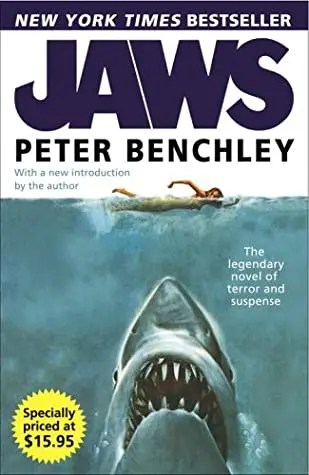
Get ready for shark week with this 1970s classic!
Summary:
A great white shark starts terrorizing a coastal town just as the money-making summer season begins. The classic, blockbuster thriller of man-eating terror that inspired the Steven Spielberg movie and made millions of beachgoers afraid to go into the water. Experience the thrill of helpless horror again—or for the first time!
Review:
As a New England girl born and raised, I can’t tell you how many times I’ve watched Jaws the movie. Everything about it is just so *chef’s kiss* perfectly small New England beach town. (The movie is set on Long Island, New York, but was filmed on Martha’s Vineyard, Massachusetts, and, let me tell you, everything about it reads New England to me.) Plus, my cat absolutely adores watching Jaws. She’s obsessed with that shark. With summer rolling around once again, I decided it was high time I read the book. The book is almost always better than the movie, right? Well, in this case, that almost really comes into play. (Spoilers ahead for both the movie and the book. If you haven’t seen this classic yet, please go watch it then come back to the book review.)
The book starts off strong with a close omniscient perspective of the shark getting ready to eat the drunk lady swimming in the ocean. The book could easily sway into anthropomorphizing territory, imagining the viciousness of the shark. But it consistently describes a creature whose instinct is to feed. What, exactly, made it come in to Amity and stick around is a mystery that is never solved. This first scene is one of the strongest in the book. But I have to admit I was hearing the absolutely classic movie soundtrack in my head while I was reading it, and we all know how essential that is at building suspense. So I’m not sure it’s safe to say I felt engaged purely because of the book.
But it didn’t take too long for the book to showcase itself as…worse than the movie. When we meet Sheriff Brody, he mentions a problem they had the previous summer where a Black gardener sexually assaulted six white women, none of whom would press charges. The only point of this from a narrative perspective is to demonstrate how the police department will keep things under wraps in order to protect the summer season. But it’s a hatefully racist way to establish this, narratively. Even if I charitably imagine that this is supposed to be pointing out the racial divide in Amity that is later even clearer in the book, there are better ways to do that than to play into this horribly racist myth of the serial Black assaulter of white women.
There are two other plot points in the book that weren’t in the movie at all. First, there’s that Brody’s wife cheats on him with Hooper because she feels some weird Feminine Mystique style ennui about her life as a housewife at a lower social class than she was before she got married. (We only see the sex in flashbacks she has about it and how strange and scary Hooper was). There is a large scene where she has lunch with Hooper first and talks about her sexual fantasies. Kind of slows down the pace of the suspense from the shark attacks.
The other additional plot point is that the mayor of the town is mixed up with the mafia because he had to take out a loan from a loan shark (har har) to pay his wife’s cancer treatment medical bills. (What on earth do other countries with nationalized health care do to justify characters taking out unwise loans? This is such a common plot device…but I digress.) The mafia wants the beaches to be kept open. This is a big motivator for why the mayor keeps insisting on it. But I don’t think this motivator is necessary. The economic pressure and need of a tourist town to keep their main tourist attraction open is more than enough motivation. Anyone who has any familiarity with a town that depends on seasonal tourism gets that. Spielberg was right to cut this from the movie. This also brings about a scene I found much more disturbing than any shark attack, which is that the mafia kills Brody’s son’s cat in front of his son, and then Brody takes the dead cat and throws it in the mayor’s face.
The final act where Quint, the old-time fisherman, takes Brody and Hooper out on his boat to hunt the shark is overall pretty good. There’s some nice tension between the three of them, and Quint really has to eat his words about the shark not being intelligent. It does not end with the 70s style bang of the movie. But I kind of liked the simplicity of the ending, leaving Brody to swim to shore and deal with the aftermath on his own without any reader audience.
I’ve seen some lists of the differences between the book and the movie with mistakes and inaccuracies on them, so I do want to clear up a couple of things. Brody is afraid of the water in the book. This is well-established; I’m not sure how people missed that. Mrs. Kintner does slap Brody in the book when she confronts him about the shark killing her son.
The version of the book I read also had an introduction by the author where we find out that he was, basically, a “summer person” himself – from a wealthy family and a legacy graduate of Harvard (his father also went to Harvard). His father was a novelist, and because of that connection, Benchley got an agent before he even had a book written. By Benchley’s own recollection, he sold the idea for Jaws and then they told him he needed to write the book, and the screenplay was sold before the book was even written. He took a first shot at the script, and Spielberg told him to throw out a lot of the stuff that I mentioned in my review as things I didn’t like. Moral of the story being privileged dude sold an admittedly solid idea based on the idea alone to someone else who directed it into it being a classic.
Overall, it was interesting to read the book behind the movie, but I also now have the perfect answer for the next time someone asks me, “When is the movie ever better than the book?”
If you found this review helpful, please consider tipping me on ko-fi, checking out my digital items available in my ko-fi shop, buying one of my publications, or using one of my referral/coupon codes. Thank you for your support!
3 out of 5 stars
Length: 320 pages – average but on the longer side
Source: Library
Buy It (Amazon or Bookshop.org)
Get the Book Club Discussion Guide
A beautifully graphic designed 2 page PDF that contains: 1 icebreaker, 9 discussion questions arranged from least to most challenging, 1 wrap-up question, and 3 read-a-like book suggestions
View a list of all my Book Club Guides.
Book Review: Zero Days by Ruth Ware
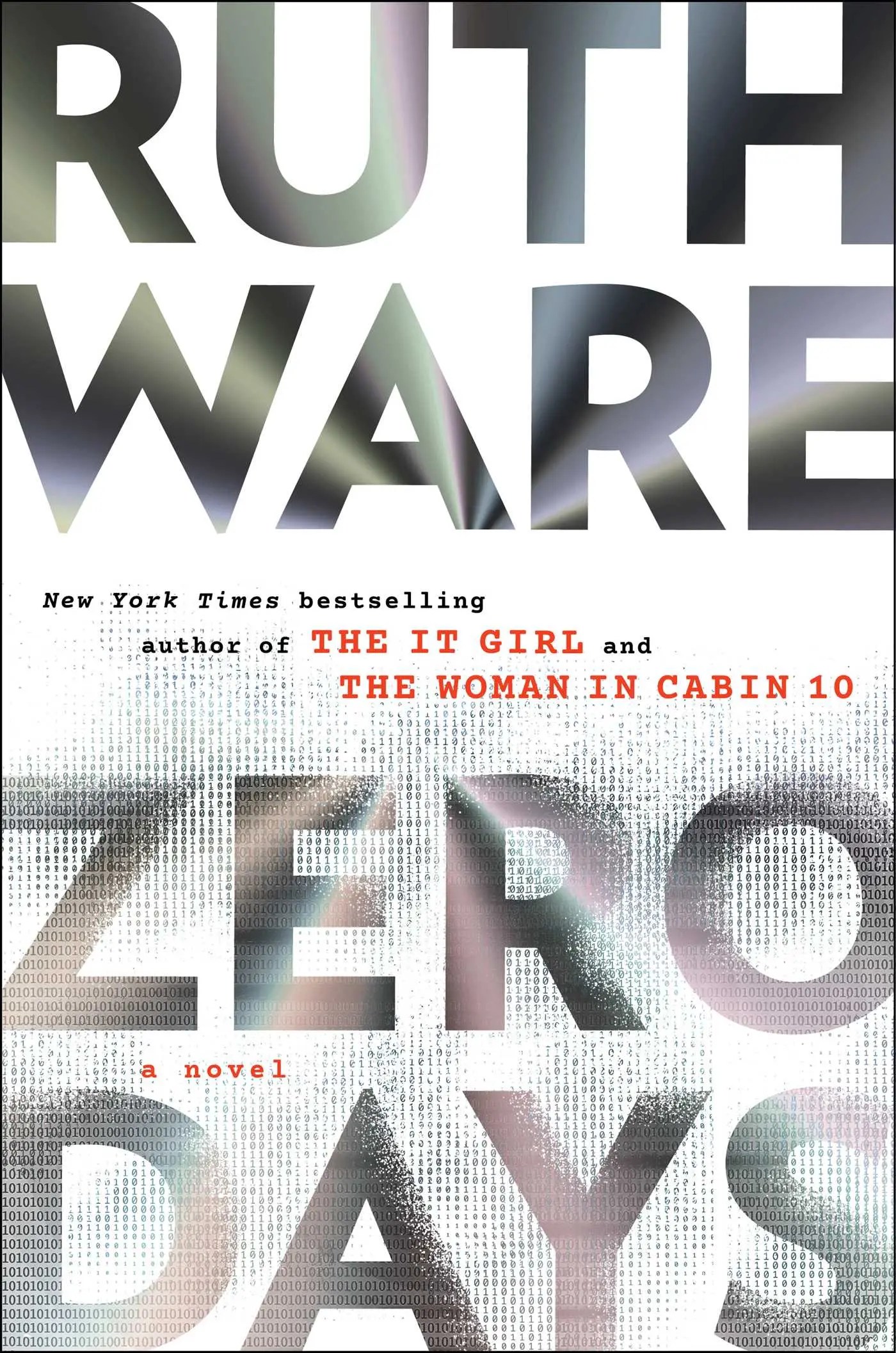
A new widow puts her professional penetration testing skills to work to discover who really killed her husband when she realizes she’s being framed for the crime.
Summary:
Hired by companies to break into buildings and hack security systems, Jack and her husband, Gabe, are the best penetration specialists in the business. But after a routine assignment goes horribly wrong, Jack arrives home to find her husband dead. To add to her horror, the police are closing in on their suspect—her.
Suddenly on the run and quickly running out of options, Jack must decide who she can trust as she circles closer to the real killer in this unputdownable and heart-pounding mystery.
Review:
Ruth Ware, often called the modern day Agatha Christie, drops a new thriller just in time for summer. This one features the fascinating world of penetration testers. What is a penetration tester, you ask? Someone companies hire to test their security. You may have heard of an “ethical hacker.” This is the same thing. Although, in the case of the book, the testing of security systems includes their physical systems. The title even alludes to a cybersecurity thing.
Jack, a talented reformed pickpocket, does the physical security testing, and Gabe, her husband, does the ethical hacking. The book opens with them working on a job, which provides delightful action sequences before the inciting incident of his murder. When she comes home and finds him dead, she gets sucked into a wave of grief that makes her oblivious to the warning signs she’s being framed. These are clear to the reader, and to her sister as well, which was a nice touch. Soon, Jack is on the run, with the dual goal of clearing her name and identifying her husband’s killer to bring him/them to justice.
The pacing of this thriller is solid. I was engrossed and wanted to find out what happened. Making Jack a penetration tester gives valid reasons for her skills at evading the police while also investigating the murder. She’s also easy to like and root for. The scenes of her evading the pervasive panopticon in London reminded me of a favorite book of mine, The Traveler (review). Those were among my favorite.
Two plot choices annoyed me. They’re spoilers, so consider yourself warned.
Gabe’s best friend kissing Jack felt out of character for both of them. I think it was supposed to be a clue to the reader not to trust him, but I already didn’t trust him. It was obvious from Jack saying that her sister didn’t use emojis like that on the phone that he set up for the two of them that this meant it was him on the phone. It was unnecessary and made it difficult for me to get over and like Jack again. I know sometimes grieving widows reach out in this way, and it’s not my place to judge, but it felt like a plot device more than a character choice. The other thing I disliked was that Jack is surprise pregnant at the end. Jack was suicidally depressed before she found out she was pregnant as she felt totally alone without her husband. (Even though her sister was very much involved the whole time, even getting arrested to help her.) In any case, the pregnancy being what it takes to snap Jack out of depression because now she has someone to live for really rubbed me the wrong way. Why couldn’t Jack have figured out that she should live and live well because that’s what we’re meant to do to the best of our abilities? Also, children don’t replace the spouse who passed away. That person is still gone. I get it that people feel like a legacy lives on in children, but to just snap out of suicidally depressed grief over a pregnancy doesn’t mean she properly processed her grief in any way, shape, or form. She’s now just living for the child in the way that she, apparently, was just living for Gabe before.
Overall, this is a fun, quick thriller perfect for a summer read.
If you found this review helpful, please consider tipping me on ko-fi, checking out my digital items available in my ko-fi shop, buying one of my publications, or using one of my referral/coupon codes. Thank you for your support!
4 out of 5 stars
Length: 368 pages – average but on the longer side
Source: NetGalley
Buy It (Amazon or Bookshop.org)
Book Review: Killing Me by Michelle Gagnon
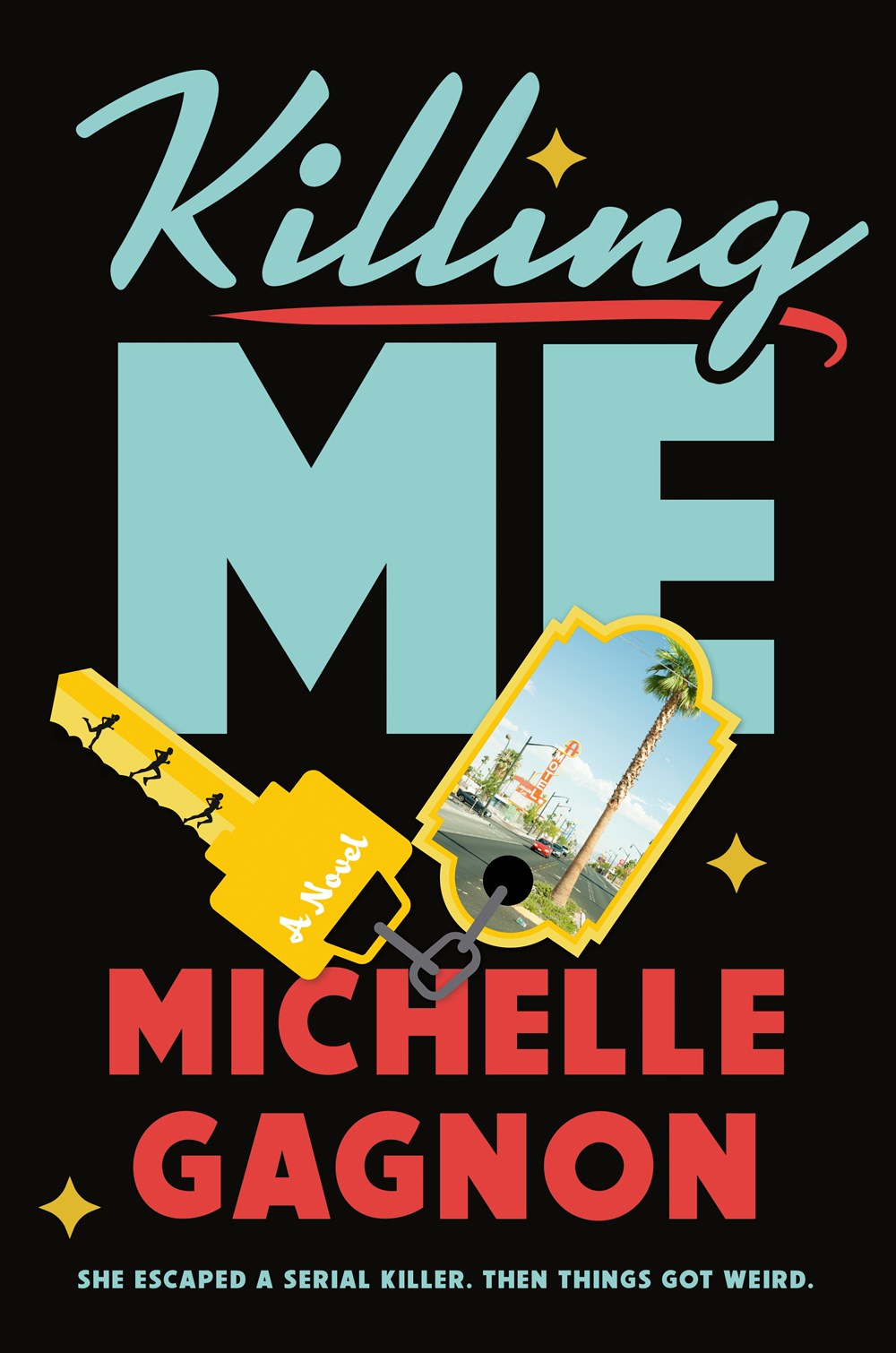
A laugh out loud thriller about women out-smarting a serial killer.
Summary:
Amber Jamison cannot believe she’s about to become the latest victim of a serial killer-she’s savvy and street smart, so when she gets pushed into, of all things, a white windowless van, she’s more angry than afraid. Things get even weirder when she’s miraculously saved by a mysterious woman…who promptly disappears. Who was she? And why is she hunting serial killers?
Review:
When I saw this on NetGalley, I was intrigued by the Final Girls-esque vibe – the women who would be the killer’s victims turning on him. I was skeptical I would find it humorous because, honestly, my funny bone is a little particular. But I actually found myself chortling on page one.
If you’re the type of person with an internal dialogue of self-deprecating humor about bizarre situations you find yourself in, then you’ll probably enjoy the sense of humor in this book. Regardless, you’ll be able to tell quickly if it’s for you or not, because the humor comes so quickly in the book, and that style is what’s present throughout the rest.
This is primarily told in the first person from Amber’s perspective, and she’s dry, acerbic, self-deprecating, but also whip-smart. (There are a few third person chapters that let us see things Amber doesn’t know about.) Amber is simultaneously problematic (she’s a con artist) and easy to root for. She’s richly three-dimensional. The main secondary characters are also rich and well-imagined. It would have been so easy to see a caricature of a sex worker, seedy motel owner, an Evangelical roommate, etc… yet they all are allowed to be more than what they might seem to be at first.
The Las Vegas setting rang very true to me. It depicted both the tourist bits and the seedier local areas quite well. I especially loved the run-down yet beloved film noir stylized motel as compared to the one recently made over to appeal to Gen Z and Millennials. That had me chortling.
I also really appreciated that this is a book whose main character is a lesbian but the plot has absolutely nothing to do with her being a lesbian. You could have almost the exact same book with a heterosexual main character. It’s just Amber so happens to like women. I like having this type of representation. It doesn’t always have to be about the difficulties of coming out or a romance to feature queer people.
The mystery itself was decent. The plot was certainly unique compared to other thrillers I’ve read, and I did not guess the ending. There was one twist that annoyed me only because it was solely a twist because Amber held something back from the reader. But I was willing to forgive it because she sort of breaks the fourth wall and acknowledges that she did it…which was funny.
I hope there’s a sequel, because I think there’s a lot left to explore with Amber, and she has a very interesting set-up at the end of the book.
Overall, I really recommend this to thriller lovers looking for something different. The humor and the plot really deliver.
If you found this review helpful, please consider tipping me on ko-fi, checking out my digital items available in my ko-fi shop, buying one of my publications, or using one of my referral/coupon codes. Thank you for your support!
4 out of 5 stars
Length: 336 pages – average but on the longer side
Source: NetGalley
Buy It (Amazon or Bookshop.org)
Book Review: Hani and Ishu’s Guide to Fake Dating by Adiba Jaigirdar

In this Bangladeshi-Irish YA romance, Hani needs to convince her two best friends that she’s really bisexual. She lies and tells them she’s dating academically focused and acerbic Ishu who agrees to fake date in exchange for help being elected Head Girl.
Summary:
Everyone likes Humaira “Hani” Khan—she’s easy going and one of the most popular girls at school. But when she comes out to her friends as bisexual, they invalidate her identity, saying she can’t be bi if she’s only dated guys. Panicked, Hani blurts out that she’s in a relationship…with a girl her friends absolutely hate—Ishita “Ishu” Dey. Ishu is the complete opposite of Hani. She’s an academic overachiever who hopes that becoming head girl will set her on the right track for college. But Ishita agrees to help Hani, if Hani will help her become more popular so that she stands a chance of being elected head girl.
Despite their mutually beneficial pact, they start developing real feelings for each other. But relationships are complicated, and some people will do anything to stop two Bengali girls from achieving happily ever after.
Review:
I have a soft spot for Irish literature, and when I heard about this book by a Bangladeshi-Irish queer Muslim author with a bisexual main character, it landed on my tbr list very quickly. This was a quick read with an easy to follow story and a sweet, very low spice romance.
I enjoyed Hani and Ishu each separately as character. They take turns narrating in the first person, and I never lost track of who was speaking. This book uses the grumpy/sweet trope quite well. Ishu is only grumpy because she’s focused and willing to speak her mind. Hani quickly sees through that. Hani and Ishu’s cultures are intertwined beautifully in the book. I like it when a book doesn’t feel the need to stop and explain cultural things to the reader. It’s on us to look it up if we want to, and that’s when I really learn things. (Like when Hani makes Ishu porota for breakfast. I looked that up right away. Yum!)
As a bisexual person, I appreciated how the story highlights the specific issues for Hani in coming out as bisexual. It’s clear that her friends would have fairly rapidly accepted her as a lesbian, but they view bisexual as being either confused or attention-seeking. They also don’t believe her because they’ve never seen her date a girl. This is a very realistic depiction of biphobia. Hani is quite confident about who she is and what labels she chooses. In contrast, Ishu is uninterested in labels, although she’s definitely attracted to Hani. It’s not clear if she’s only ever been interested in girls or more or if it’s just that Hani is the first person she’s ever been interested in. But that doesn’t matter to Ishu, and it doesn’t matter to Hani either.
When this book first came out, it was praised for depicting a queer Muslim character. (This article goes into depth about representation for South Asian queer women and interviews the author as well.) There is a perception that you cannot be both queer and Muslim. Both Muslims and non-Muslims hold this viewpoint. Yet people like Jaigirdar are both and depicting this in her books is important to Jaigirdar. Thus, we see Hani engaging with her faith. She goes to the Mosque. She reads the Quran. She eats halal. There is also a perception among many non-Muslims that if someone is serious about Islam and a woman then they will wear the hijab. But it is possible for someone to be devoutly engaging with her faith and also not wearing hijab. The author depicts this in Hani, as well as how she must struggle against the perception that she must not be a “serious” Muslim because she doesn’t wear hijab.
So this book covers a lot of seriously important representation well, and the romance is sweet and believable. What didn’t work for me was the secondary characters. Whereas Hani and Ishu felt well-rounded and interesting, everyone else felt flat and two-dimensional. There also were some kind of big issues that Hani and Ishu seemed to just gloss over. Now, they’re teenagers, so maybe that’s realistic. But Ishu having to hide the relationship from her parents long-term was concerning to me. Also, we never see the characters talk about being in an interfaith relationship. We do hear that Ishu appreciates Hani’s devotion to her faith as part of her. But Ishu is atheist, and we never really hear Hani’s thoughts on that.
Overall, this was a fun read with a lot of important representation. Recommended to readers who enjoy the fake dating and/or grumpy/sweet tropes.
If you found this review helpful, please consider tipping me on ko-fi, checking out my digital items available in my ko-fi shop, buying one of my publications, or using one of my referral/coupon codes. Thank you for your support!
3 out of 5 stars
Length: 352 pages – average but on the longer side
Source: Library
Buy It (Amazon or Bookshop.org)
Get the Reading Group / Book Club Discussion Guide
A beautifully graphic designed 2 page PDF that contains: 1 icebreaker, 9 discussion questions arranged from least to most challenging, 1 wrap-up question, and 3 read-a-like book suggestions
View a list of all my Discussion Guides.
Book Review: In the Lives of Puppets by T.J. Klune
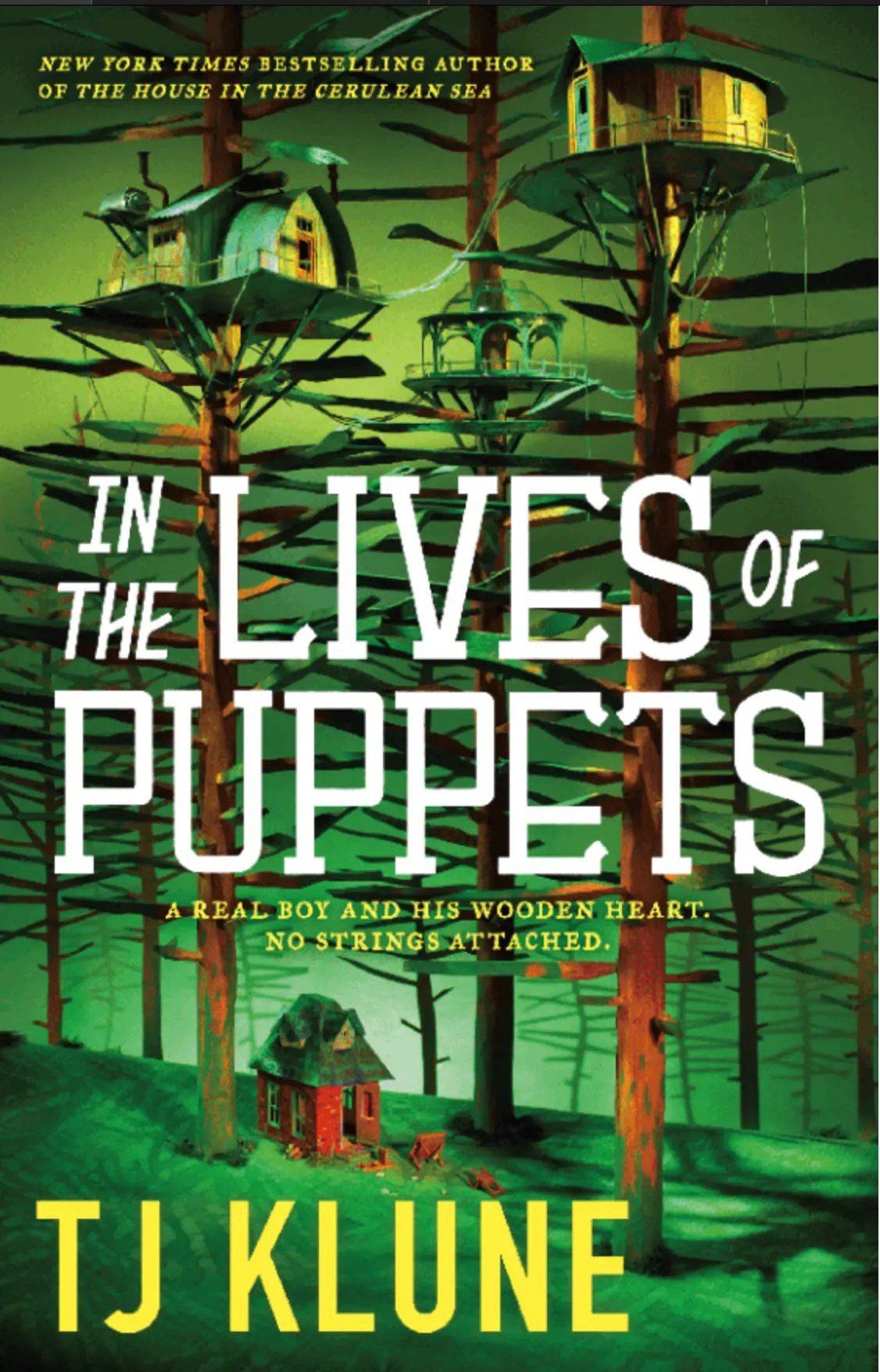
A science fantasy reimagining of Pinocchio where Pinocchio is a “real boy” surrounded by robots (puppets) with a m/m (or, rather, male, male robot) romance added in.
Summary:
In a strange little home built into the branches of a grove of trees, live three robots–fatherly inventor android Giovanni Lawson, a pleasantly sadistic nurse machine, and a small vacuum desperate for love and attention. Victor Lawson, a human, lives there too. They’re a family, hidden and safe.
The day Vic salvages and repairs an unfamiliar android labelled “HAP,” he learns of a shared dark past between Hap and Gio-a past spent hunting humans.
When Hap unwittingly alerts robots from Gio’s former life to their whereabouts, the family is no longer hidden and safe. Gio is captured and taken back to his old laboratory in the City of Electric Dreams. So together, the rest of Vic’s assembled family must journey across an unforgiving and otherworldly country to rescue Gio from decommission, or worse, reprogramming.
Along the way to save Gio, amid conflicted feelings of betrayal and affection for Hap, Vic must decide for himself: Can he accept love with strings attached?
Review:
This is a loving and detailed send-up to Pinocchio. I hadn’t seen the movie in years, and it still stirred up memories for me. When I went to look up the original book version’s plot to compare to this retelling, I found even more details I hadn’t realized or remembered. It’s obvious the author loves Pinocchio, and if you do too, I’m expecting you’ll likely love this retelling. For me, the problem is, I was so excited about a new T.J. Klune book that I sort of…forgot I don’t like Pinocchio. (“Don’t like” is a gentle remembrance. In fact, the movie absolutely terrified me as a child.) Even so, I found myself able to appreciate this loving rendition of the story.
I absolutely adored the character of Rambo – the tiny robot vacuum who’s clearly supposed to be a later generation of roombas. As always, I liked the narrative style the author uses – it reads as sing-songy in my head and feels like someone telling me a fairy tale, which is perfect for this book. I liked the wide variety of robots inhabiting the world, and I really enjoyed the robot substitute for the traveling circus character. I also appreciated that this isn’t an exact retelling of Pinocchio. The story is sometimes restrained, with simple allusions to the original. For example, Victor is never turned into a donkey, but he does stay the night in a hotel like room that is decorated with donkeys at about the right point in the story.
I appreciated the flipping of Pinocchio (Victor in this telling) as being human with his father being a “puppet” (a robot). But I felt like the ending really lets that inversion down, not taking it to its full and complete conclusion. I think there’s supposed to be humor in this book, but it wasn’t funny to me. You will know within the first few chapters if it’s tickling your funny bone or not.
I also found myself unable to root for anyone in this book, save for the small, innocent Rambo. Everyone else has something so wrong with them that it soured me to like them. The one I can talk about without spoilers, as the episode happens in the first chapter, is Nurse Ratched. She is a robot companion of Victor’s who was designed to nurse humans. She’s described as sociopathic, in a way that I think is supposed to read as comedic. As in, she acts like she enjoys inflicting pain but doesn’t really. Yet in the first chapter she chases down a squirrel (off-screen) and kills it by rolling over it again and again. I almost stopped reading the book, I was so horrified. But it was an advanced copy, so I decided to give it another chance. She never does anything like this ever again, but it is actually not uncommon for characters in this book to have something they have done in the past that is truly horrific that is brushed off as their programming. I’m all for plots where characters have to overcome their own tendency toward being bad, and redemption and forgiveness are both very important. But I need for that not to be the plot for almost every single character. It, at the very least, is distressing to read about.
The romance did not move me, which was surprising given what strong feelings I had for the couple in The House in the Cerulean Sea! I also have complicated feelings about how the book depicts what freedom means, how robots pursue freedom, the offerings of the “freedom fighter” character, etc… This, in fact, is a reflection of how I feel the overarching messages tended to get muddled. The only message that I felt was clear and consistent was “be brave!” but no clear reason as to why was ever given. To borrow from an American fairy tale – the overarching story needed a heart. I think, perhaps, the romance was supposed to be the heart, but it didn’t work as one for me.
This is also an incredibly sad book. It’s not uplifting in the slightest. There’s nothing wrong with sad books, but it is a departure from the author’s other books, and so I think the warning is warranted.
Overall, this is an imaginative and loving retelling of Pinocchio that should appeal to fans of that fairy tale. Readers should be aware that the darkness of the original story remains in this retelling.
If you found this review helpful, please consider tipping me on ko-fi, checking out my digital items available in my ko-fi shop, buying one of my publications, or using one of my referral/coupon codes. Thank you for your support!
3 out of 5 stars
Length: 432 pages – average but on the longer side
Source: NetGalley
Buy It (Amazon or Bookshop.org)
Book Review: Love on the Menu by Mimi Deb

A London romcom whose meet-cute is a get your life together list accidentally dropped in a take-out bag leading to notes being passed back and forth.
Summary:
Gia thrives on risks. Ben plays it safe.
She crossed continents to chase her London dream; he works the same job in the same restaurant, night after night.
Then fate steps in. When Gia’s takeout is delivered, her embarrassing list of New Year’s resolutions accidentally makes its way to Ben’s restaurant, stuck to the bottom of a delivery backpack.
With each delivery Gia orders, Ben slips in a note of his own and eagerly awaits her reply. One by one, these notes transform their lives in unexpected ways, and an unlikely love story is written.
Review:
The only thing I can say without spoilers was I loved the meet-cute idea but ultimately disliked both halves of the pairing. The rest of this review will contain spoilers.
I didn’t know when I requested this book that Ben, the love interest, is in long-term recovery (5 years plus) from alcohol. As a sober person myself, when I realized this about the love interest, I was ecstatic to see that representation. It’s what kept me hanging on after a shaky opening that I’ll talk about in a moment. But ultimately the representation left me disappointed. Plus I wound up not liking Ben. So let’s get into it.
First, the opening chapter. Gia gets drunk at a work event and accidentally kisses her boss while dancing. How, you ask? I’m still confused by it. She was doing the Single Ladies dance, they were dancing back-to-back, and when she jumped to turn 180 degrees, her lips landed on her boss’s. I do not think this would actually be possible to do without either bonking noses or hitting teeth together.
Now I need to explain a bit about the plot to talk about what didn’t work for me. So, after this, she convinces herself she’s about to lose her job and writes the get your life together list Ben ultimately finds. When she returns to work after the holidays, she becomes convinced that her boss is out to get her, thanks partially to her work-friend, Jay’s warnings. They are both immigrants. She immigrated from India, and he from China. He explains that the boss can’t legally fire her for such a thing in Britain but she can set her up to fail by giving her too much responsibility then a warning then a firing. When she does suddenly get more responsibility at work, she becomes convinced this is what is happening. Meanwhile she keeps ordering delivery from a local Indian takeaway that reminds her of home, plus she’s getting to exchange cute notes with one of the employees, Ben, through them. He coaches youth football on the weekends and has a large and loving family. Ben becomes enamored with Gia. Eventually they get a chance to meet when she needs a caterer for a big important work event.
Gia repeatedly drinks too much throughout the book. I was ok with this at first because I thought maybe she would have an ah-hah moment and cut back (or stop entirely). But she doesn’t. She thinks maybe she should. She puts it on her list. (Heartbreakingly the list at the ends says: “Don’t Drink. Drink less. Drink responsibly.”) But then she doesn’t actually do it. She even continues binging up through her marathon run. Her mother at one point in the last chapter says to her boss that Gia drinks too much. The boss agrees. And Gia blows it off. In the last chapter! There’s nothing I can root for with a person in long-term recovery getting together with someone with an active alcohol problem that’s bad enough that their family and boss have noticed and yet they won’t acknowledge it.
There is a giant reason I don’t think Ben is right for Gia either. Essentially, when Ben was in the throes of his addiction, he made some choices that led to an immigrant getting fired from his brother’s company. Instead of standing up for the guy and taking responsibility for what happened that night, Ben let him be fired and then took his job (only to quit it a few weeks later). Everyone makes mistakes, and I’m ok with a hero being imperfect. But later – five years later – when this comes up, he says, “Why didn’t he just get another job?” and “Why do you make looking for a job sound like a marathon?” This was a very heartless thing to say. It’s even more heartless given that Ben knows that Gia is also an immigrant whose ability to stay in London is tied to her employment which she at that moment feels is precarious. Ben never actually apologizes for this. He reads Gia a letter in which he talks about how wonderful she is, but he never apologizes for how flippantly he regarded the immigrant work situation.
These two people don’t belong together, and that is what left me feeling sour at the end. I don’t see a HEA or even a HFN but the first few seconds of a train wreck.
So, while the meet-cute was adorable, and I loved seeing diversity both in race and mental health in this book, I ultimately felt that the two leads did not belong together, although with some different plot directions, they could have been. Ben could have made a real apology and done something to try to make up for his lack of compassion for immigrants. Gia could have realized she had a problem with alcohol and taken Ben up on the offer to hook her up with a sponsor. If these two conditions were met, there could have been a very cute one year later they get together with a new meet-cute epilogue. But instead the book just swept the important issues under the rug with a Beyonce song at the end.
If you found this review helpful, please consider tipping me on ko-fi, checking out my digital items available in my ko-fi shop, buying one of my publications, or using one of my referral/coupon codes. Thank you for your support!
3 out of 5 stars
Length: 416 pages – average but on the longer side
Source: NetGalley
Buy It (Amazon or Bookshop.org)
 Support my work with a tip or browse my shop for curated book club guides, how to guides, cross-stitch patterns, and more!


This work by Amanda Nevius is licensed under a Creative Commons Attribution-Noncommercial-No Derivative Works 3.0 United States License.
 Opinions of a Wolf