
Archive
Book Review: The Andromeda Strain by Michael Crichton
 Summary:
The US government is searching for new biological weapons by sending satellites into the edges of the atmosphere to collect bacteria strains that may exist there but not on earth. Due to concerns of contamination on reentry, an emergency team called Wildfire is created as a contingency plan. When a satellite crashes in the Arizona desert, grotesquely killing all but two residents of a small town, the team of scientists is put to the test in a race to protect humanity.
Review:
An up-front confession: Michael Crichton is one of my favorite authors. I love how realistic his science is, and he writes suspense quite well. I was therefore excited to read his first book. Unfortunately, Andromeda Strain did not live up to these expectations.
The suspense is killed right off the bat with the narration style. The story is told as if it is a report being written up by someone after the event. This means that we not only know that some of humanity survives this impending doom, but that society is still held together enough to want a report. If I’m sure that everything is going to turn out hunky dory in the end, I’m just not going to be all that concerned throughout the book. Similarly, the characters aren’t fleshed out as well as in later books. They are basically their careers. Here’s the bacteriologist. Here’s the professor. here’s the surgeon. They don’t come across as real, rounded people, so I completely failed to care about them at all. This isn’t good for suspense, because if I don’t care about the characters, I’m not going to worry about them too much.
Crichton’s ability to set a scene shines through well in this book, however. Wildfire’s underground station is vividly imagined, as is the scene at the small town in Arizona. It was simultaneously gruesome and exciting. Similarly, his ability to weave real science into a fake scenario is carried off flawlessly here. The glimmers of the writing that would later appear in Jurassic Park and Prey is clear.
Speaking of the science, Andromeda Strain doesn’t age well. An entire page is devoted to explaining binary like it’s this huge complicated thing, which it isn’t to anyone who grew up with computers. Indeed, a lot of the book is devoted to explaining the huge computer in Wildfire’s base. Unlike biological science, in which the basics stay the same, technology changes rapidly. I don’t think it’s a wise choice to focus on in a scientific thriller, unless you are projecting plausible possibilities in technology in the future. Or super awesome possible technology the government may already have. Crichton does this really well in Prey, which is all about nanotechnology. Science horror needs to take me into a world that is a bit more awesome than my own, not lamer. Thankfully, Crichton figured this out in his later books.
If you’re a Michael Crichton fan, The Andromeda Strain is worth the read to see where he started. If you’re new to him though, I’d recommend starting with some of his later books such as Jurassic Park or Prey.
2.5 out of 5 stars
Source: Bought at Violet’s Book Exchange

Book Review: Ethan: Site 39 by Otis V. Goodwin
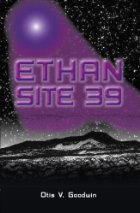 Summary:
In the near future Earth is destroyed by an asteroid. Luckily for humanity, a group of people had already departed for Alpha Centauri to colonize the two stars found there. After losing contact with the few survivors, the Centaurians believed Earth to be uninhabited. Five thousand years later, their descendants return to an Earth that has recovered from the chaos caused by the asteroid to begin the work of reinhabiting it. When Ethan, one of the colonists, stumbles upon a residence dug into a mesa made of granite, everything the Centaurians believe about what occurred on Earth in relation to the asteroid is challenged.
Review:
I really wanted this to be a good book. First I’m a big supporter of indie and self-publishing, as I often find the stories more creative and thought-provoking than those published by big publishing houses. (See my review of Vow of Silence for evidence of that). I also thought it was an intriguing scifi storyline. Unfortunately, Goodwin can’t write.
Oh, he can come up with a great idea for a story, but his writing is terrible. First, he tells us instead of showing us. For instance, he’ll say things like “Ethan was thinking how worried he was,” instead of, you know, letting us see Ethan’s worried thoughts. Whole parts of the story that would have been fun to read in addition to making the book longer he sums up by telling us about it in a couple of sentences, such as “They talked about their planned future together” instead of letting us read the conversation.
Not that I would have wanted to read the conversation anyway, because the dialogue is atrocious. Every character sounds like an automaton. They never use a contraction or a simile or anything really that makes a human sound human. Goodwin tries to explain this as language changing, but even when we flash back to see characters from the time of the asteroid, they speak in exactly the same robotic manner.
The book blurb says that Goodwin is retired from the military, and it frankly shows. In some ways, this is good. The military portions in the asteroid flashback are clearly written by someone who knows the military. However, mostly it’s just a rabid conservatism showing. We’re talking a world in which the small population of humans rebuilding all automatically fall in love with someone of the opposite gender and that love is automatically, wholeheartedly returned. It’s like the man never got past the fairy tales told to little girls to realize that that doesn’t happen perfectly for everybody in real life. Real life just doesn’t work out that perfectly for everyone. It makes all of the characters unbelievable, whereas having one true love situation would be believable.
Of course, there is no saving the wretched female characters. Goodwin seems to be only capable of writing the completely helpless sobbing woman or a woman who is essentially a dude with boobs. God forbid a woman be strong and feminine simultaneously.
I feel kind of bad saying all of this, because his overall storyline really is good and creative. It’s what kept me reading the book in spite of cringing and rolling my eyes. What Goodwin should have done is acquired a writing partner who could write his storyline on the sentence level well. Then he would have had a great book. Unfortunately, he didn’t do that.
2 out of 5 stars
Source: Free copy from book promotion agent via LibraryThing‘s EarlyReviewers Member Giveaway program.

Book Review: Wizard and Glass By Stephen King (Series, #4)
 Summary:
Roland and his ka-tet escape Blaine the Train, but they accidentally wind up off the path of the beam and in yet another alternate version of Jake, Eddie, and Susannah’s world. They start following an interstate, heading for a palace and hoping therein lies the solution for returning to the path of the beam. One night while traveling, Roland finally tells them what has been haunting him all this time with the story of the summer he was 14 years old and his first love.
Review:
As with The Waste Lands, this book reads like multiple books in one. I was expecting that, since The Waste Lands ended abruptly without solving the problem of Blaine the Train. This book takes care of that storyline, then jumps into a flashback that lasts almost the entire book then jumps back to the present and attempts to solve a big problem. It’s a lot for one book to handle, and it would have worked better if Lud and Blaine the Train were one book taking place after The Waste Lands but before Wizard and Glass. If after doing this, King had shortened the flashback, The Wizard and Glass would be an excellent book. Of course, he didn’t do it that way.
Now that I am this far into the series, I’m seeing that King, whether intentionally or not, is writing different bits of the series as different genres. This could be why it holds wide appeal–if someone doesn’t like the genre the story is currently being told in, it will change soon enough. The first book is mainly a travelogue. The second a horror story. The third is a mix of scifi with the time paradox and horror again with Lud and Blaine the Train. Here, we get partly fantasy with the current issues for Roland’s ka-tet, but mostly a medieval romance–the story of Roland and Susan.
That medieval romance starts out well. King sets up three dialects–High Speech, In-World Speech, and Mejis accent–very well. All three are easy to differentiate, and yet are easy to read. Roland’s world is a wonderful mix of the knights of Arthur and the fabeled American west. It’s fun to read, but only when something’s really happening. That’s the problem with the flashback. It feels too long, because very little happens in large portions of it. Roland, Cuthbert, and Alain must spend most of their summer in Mejis waiting, and instead of telling the reader “wow, they waited a long time,” King makes the reader wait too, and it’s fucking boring and annoying. I seriously wanted to give up, and right when I was about to, the action started again. Finally. The action makes excellent use of this mix of fantastical and wild west, but it really takes too long to come about.
As far as the characters go, I know I’m supposed to feel for Susan, but I honestly found her annoying and dull, which is problematic since she’s Roland’s first love. Also, after all this time of Roland stating how Eddie is almost as funny as Cuthbert, I was expecting Cuthbert to be, y’know, funny. He’s not. He acts like that boy in school who used to pull your braids and think it was funny. He’s just juvenile, not witty. On the other hand, the character of the witch Rhea is excellently done. She’s simultaneously disgusting and intriguing, and she’s one of the few who manages to out-wit Roland, partly because he underestimates her since she is an old, disgusting woman. If only Cuthbert and Alain had been so vividly drawn instead of wandering shells of people for Roland to talk at.
The book is a necessary read if you plan on finishing the series. It gives important insight into why Roland is the man he is today, not to mention explains how the ka-tet escapes Blain the Train and gets back on the path of the beam. I think this is the almost inevitable dull book in an overall good series. Just take my advice and skim over the dull part of Mejis until the action picks up again.
2.5 out of 5 stars
Source: Borrowed
Previous Books in Series:
The Gunslinger, review
The Drawing of the Three, review
The Waste Lands, review

Book Review: The Waste Lands By Stephen King (Series, #3)
 Summary:
This entry in the Dark Tower series opens with Eddie, Susannah, Roland, and Jake dealing with the paradox created when Roland saves Jake from being killed in his own world. Now Jake and Roland are both living with the knowledge of two different ways a time period of about three weeks went down, and it is driving them both mad. They must solve the paradox before it is too late. After working out the paradox the ka-tet faces a post-apocalyptic city stuck in an age-based civil war. Can the ka-tet who fit into neither side survive? More importantly, can they hitch a ride on a long-forgotten train to speed up their quest for the tower?
Review:
This book opens with a bang. I thought King was going to gloss over the obvious paradox caused by Roland saving Jake in The Drawing of the Three, but a significant portion of this book is spent dealing with just that paradox. I think King is at his best when he writes about psychological horrors, and he gets to really exercise his hand at this with this plot point. That’s not to say there aren’t physical horrors here as well. Of course there are. They mainly show up as the guardians of the ends of the beams that function like spokes around the tower. Decaying beasts and demons haunt the ka-tet’s every move. I actually had serious issues putting the book down during its first half.
The problem arises in the second half. First of all, this book really should have been divided into two. The plots are almost entirely different between the first and second halves, and this was more jolting than if the second storyline was started knowing that it was the next entry in the series. Even King acknowledges in an Afterword that the second storyline stops extremely abruptly. I believe this is because of the sheer length the book was getting to. This wouldn’t have been a problem if this storyline was its own book entirely.
I also personally don’t like plots revolving around kidnappers out to hurt children, which is essentially what this plot is, only in a more fantastical world and with a side-mission for Eddie and Susannah. I’m sure some people enjoy this plot idea, but I personally am far too disturbed at the thought to become thoroughly sucked into the story.
I could forgive these things, mainly due to the addition of a lovable critter to the ka-tet, if it wasn’t for an event toward the end of the book that I felt was too over-top, unbelievable, and done purely for shock value. I won’t tell you what it is here, because that’d be a major plot spoiler, but suffice to say you’ll know it when you see it, and it’ll probably upset you too. It read like lazy writing, and that made me feel like I was being talked down to as a reader.
In spite of the disjointed ending that was also a bit uncomfortable for me, the beginning was truly excellent. I’m hoping the next entry in the series reads entirely like the beginning of this one, but this book is still worth the read for the first half alone.
3.5 out of 5 stars
Source: Borrowed
Previous Books in Series:
The Gunslinger, review
The Drawing of the Three, review

Book Review: The Drawing of the Three by Stephen King (Series, #2)
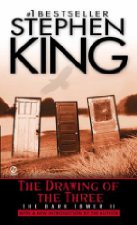 Summary:
After finishing the first stage in a long series toward finding The Dark Tower, Roland knows he must now “draw the three.” He will recruit three people to assist him in his quest. Now past the desert and mountains, he has reached an ocean beach where dangerous creatures lurk. As he walks up this beach he gradually finds doors to other realities where his three assistants reside, completely unaware they are about to be drawn into a quest in another world.
Review:
The Drawing of the Three makes it abundantly clear that The Dark Tower series is all about plot and not about character development. The characters do things that work for the plot, but make zero sense from a character stand-point. I’m not talking about mistakes here. I know in the real world people do stupid things. It’s more akin to say a Nazi suddenly deciding he loves a Jew. (That doesn’t happen in the book, but similar things do). I personally find this jarring, but if you’re more of a plot person than a character person, it won’t bother you.
My other issue, and bare in mind that I’ve now read three Stephen King books, is that his writing tends to be misogynistic. Sometimes it’s subtle. An example in this book is when a pharmacist who hates his job is on the phone with a complaining female client. Instead of thinking that he hates these people who complain, he thinks that he hates all these bitches who complain. I, as someone who works with the public, am certain that he has had men and women complain, so why did King specify only women? It seems whenever there’s an opportunity for a character to slur against women, they do. I’m not saying no character should be misogynistic. That’d be like saying no character should ever be racist. I am saying that King shouldn’t take every opportunity to be misogynistic and run with it.
*spoiler warning*
An even better example of this is the only female character in this book, the second assistant, Odetta. She has Dissociative Identity Disorder. (King wrongfully calls this Schizophrenia, which is an entirely different illness). Stereotypically, one personality is “good,” and the other is “bad.” The good personality is grateful to the men for helping her. She is quiet, submissive, intelligent, and strong inside. Naturally one of the men instantaneously falls in love with her. *rolls eyes* The bad personality attempts to defend herself, is physically strong, and vehemently protects herself against suspected rape. She actually tells these men that she will kill them with her cunt. The only women I know who use that word are raging feminists attempting to reclaim the word, and that is not the context here. She is also described as an ugly hag. Granted later these two personalities merge into one, but the implications are there. Men love women who act appropriately feminine. If you behave in any unfeminine manner, you are an ugly hag they naturally want to kill.
*end spoiler*
In spite of that, though, I do still like King’s stories. I’m mostly willing to overlook the bouts of misogyny, because the man can certainly write plot-driven horror. The plot here is excellent. We have doors that lead into people’s brains, horrifying creatures called “lobstrosities,” drugs, shoot-outs, infections, murderers, and more. There is literally horror on almost every page. I couldn’t put it down.
If you like plot-driven horror and don’t mind overlooking character development weakness, then you will enjoy this entry into the Dark Tower series.
3 out of 5 stars
Source: Borrowed
Previous Books in Series:
The Gunslinger, review

Book Review: The Gunslinger By Stephen King
 Summary:
The first in King’s epic, Tolkien-like Dark Tower series, The Gunslinger introduces Roland who lives in a world similar to, yet different from our own. He is the last gunslinger, a kind of wild west type warrior. As he pursues the Man in Black across a desert in the first of many steps toward his goal of the Dark Tower, some elements of his dark past are revealed, as are some secrets of the many parallel, yet somehow linked, universes.
Review:
I admit it. I’m not normally a Stephen King fan, but after two people I know started devouring this series, I decided I had to know just what was so exciting.
I’m shocked to discover, I like a Stephen King book. I’m not so shocked to discover that this is an incredibly male book. Roland’s life centers around violence, guns, a quest, the women he beds, and taking care of a boy. It isn’t just the plot line that’s masculine though. The writing style is decidedly male. Roland is abrupt and to the point. Instead of talking about his heart fluttering, he gets hard-ons. Instead of his palms sweating with nerves, his balls retract up tightly against him. It’s gritty, dark, and male. And I liked it.
It reminds me a lot of watching old westerns with my father. This shouldn’t be surprising, since in the introduction King essentially says that he set out to write the American version of an epic in the style of Tolkien. What’s more American and epic than the wild west? Oh, I know, a parallel universe version of the wild west. With mutants.
It is a bit slow-moving at first. That’s not surprising, though, given that it’s the first in a series of seven. Think of it as the introduction chapter, only prolonged through two-thirds of the book. It’s not a boring introduction by any means; it just takes a while to get attached to the characters and thoroughly engrossed in the over-arching story. That’s ok though, because King provides plenty of nightmarish scenes in the mean-time to keep you reading.
I’ve always had a bit of a tendency to thoroughly enjoy more masculine stories just as much, if not more than more feminine stories. (I was the little girl who was excited to watch the war movie marathon on Veteran’s Day.) If you know that you enjoy this type of gritty story, definitely give The Gunslinger a shot. You won’t be disappointed.
4 out of 5 stars
Source: Borrowed

Book Review: The Year of the Flood By Margaret Atwood
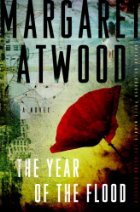 Summary:
Toby, a spa-worker, and Ren, an exotic dancer and prostitute, have both survived the waterless flood–a global pandemic that has killed almost all of humanity. They also both used to live with The Gardeners, a vegetarian cult that constantly warned of the impending apocalypse. A series of flashbacks tells how they survived the pandemic while the question of what to do now that the pandemic is mostly over looms large in their lives.
Review:
Margaret Atwood is one of my favorite authors. I love dystopian books, and she has an incredible talent for taking the current worries and news items and turning them into a near-future dystopia. Toby’s and Ren’s world prior to the waterless flood isn’t anything to be happy about. Slums dominate. Gangs run rampant. The world is now run by a giant evil corporation (which is somehow worse than a giant evil government? *shrugs*). It’s really the little things that makes this future world believable. Kids wear bracelets that have live mini jellyfish in them. Species have been spliced together to make new, more usable ones, such as the Mo’Hair–a sheep whose wool makes perfect fake hair for women. The people who don’t live in slums live in corporation-run compounds where everything they do is monitored. What makes this dystopia wonderful is how plausible it all seems.
Really, though, all of these dystopian features are just a back-drop for the real stories. Toby spends years hiding with The Gardeners and running because one man, Blanco, decided he owned her upon having slept with her. When Toby defied him, he vowed to kill her. He haunts her life for years on end. Similarly, Ren falls in love with a boy in highschool who breaks her heart yet somehow keeps coming back into her life and repeating the damage.
This is a book about mistakes. About how thinking we own the Earth and its creatures could cause our own demise. About how sleeping with the wrong man just once can haunt you for years. About how loving the wrong man can hurt you for years.
This is what I love about Atwood. She has such wonderful insight into what it is to be a woman. Insight into what haunts women’s dreams. When women talk about what scares them, it isn’t nuclear war–it’s the man in the dark alley who will grab her and rape her and never leave her alone. Toby’s Blanco is the embodiment of this fear. She sees him around every corner. She’s afraid to go visit a neighbor because he might find her on the street walking there. Setting this fear in an other world makes it easier for female readers to take a step back and really see the situation for what it is. Yes, he’s a strong, frightening man, but Toby let him disempower her by simply fearing him for years. This is what Atwood does well.
The pandemic, however, is not done so well. Too many questions are left. Where did the pandemic come from? Does it work quickly or slowly? Some characters seem to explode blood immediately upon infection, whereas others wander around with just a fever infecting others.
Similarly, the reader is left with no clear idea as to how long it has been since the pandemic started. On the one hand it seems like a month or two. On the other hand, the stockpiles of food The Gardeners made run out quite early, and that just doesn’t mesh given how much attention they gave to them prior to the pandemic.
I also found the end of the book extremely dissatisfying. It leaves the reader with way too many unanswered questions. In fact, it feels completely abrupt. Almost like Atwood was running out of time for her book deadline so just decided “ok, we’ll end there.” I know dystopian novels like to leave a few unanswered questions, but I don’t think it’s appropriate to leave this many unanswered.
The Year of the Flood sets up a believable dystopia that sucks the reader in and has her reconsidering all of her life perceptions. Unfortunately, the ending lets the reader down. I think it’s still worth the read, because it is enjoyable for the majority of the book, and I am still pondering issues it raised days later. If you’re into the environmental movement or women’s issues, you will enjoy this book–just don’t say I didn’t warn you when the ending leaves you throwing the book across the room. ;-)
4 out of 5 stars
Source: Library

Book Review: Fourth Realm Trilogy By John Twelve Hawks


Summary:
John Twelve Hawks presents us with a near-future dystopia in the Fourth Realm Trilogy—The Traveler, The Dark River, and The Golden City. In this vision of the world Earth as we know it is actually just one of six realms of parallel universes. Travelers are the only ones who can move between these parallel universes. Saints with visions of heaven and hell and motivating, compassionate people such as Buddha are examples of past travelers. They seek to keep people aware of their “Light” aka soul. An evil organization called The Brotherhood has been seeking for generations to wipe out travelers, as they believe they cause dissent. Working against The Brotherhood are Harlequins–people raised from birth to defend travelers at all costs. The Brotherhood thought they had succeeded and have started building a panopticon–a virtual prison in which everyone is constantly under surveillance for “their own protection.” However, two brothers–Michael and Gabriel–are actually travelers. Michael sides with The Brotherhood in an effort to ensnare humanity, while Gabriel teams up with Maya, a Harlequin. The two brothers thus are pit against each other in an effort to enslave or save humanity.
Review:
The Fourth Realm Trilogy is decidedly a series with a message and an agenda. “John Twelve Hawks” is actually a pen-name, and the publisher claims that he does try to live off the grid out of a concern about loss of freedom via invasion of privacy with new technology. There is skepticism as to whether this is true or a marketing hype. Regardless, whoever the author is, his main concern is definitely loss of privacy to technology, and this is abundantly evident in the trilogy.
This is a plot-driven trilogy. It reads like an action film in the feel of The Matrix. Further it is exciting because the world the characters live in looks exactly like our own, right down to the surveillance cameras in London. The only difference is these parallel universes, which is a feature I enjoyed a lot. Dystopian novels are usually either completely bound in our world or take place in an entirely different one. This trilogy utilizes both approaches, and this kept it from feeling like an updated version of 1984.
There are many characters. Thankfully, they are distinct enough that keeping track of them is relatively easy, but sometimes Twelve Hawks does not pay enough attention to character development. Particularly toward the end of the trilogy, characters will suddenly make a decision or behave in a manner that comes out of nowhere and is completely out of character. These moments are jarring and distract from the plot.
The plot itself is a good, complex one. It takes place all over this world and journeys to every single realm. Two plot sequences I particularly enjoyed were one in an off-the-grid commune in the south-west US and another in Japan. Twelve Hawks must have travelled extensively, because the descriptions scream “I’ve been there. I know what it’s really like.” There was one plot hole in The Dark River that still bothers me. I think what probably happened is there’s an explanation for the action, but Twelve Hawks neglected to write it in. However, the ending makes up for the plot hole as I was unable to predict it. I absolutely love unpredictable endings that keep me page-turning right up until the end.
Another enjoyable element of the trilogy is the violence. It is chock-full of creative deaths, and even characters who don’t die get beat up a lot–in all realms. An example of the level of violence is a scene where three characters’ limbs are simultaneously wripped off in front of an audience. However, most of the violence is more of the ninja type, due to the presence of the sword and martial-arts trained Harlequins. Twelve Hawks’s strength is writing action sequences, so these are great fun to read.
A mark against the trilogy is periodic character speeches that are obviously Twelve Hawks voicing his opinion. This a typical short-coming of dystopian novels though. Authors with a dark vision of the future can’t seem to help proselytizing in an attempt to save it. I don’t hold this against the novels, but other readers might find it more annoying. There’s essentially one speech a book.
If you enjoy Quentin Tarantino movies or want a more grown-up, spiritual version of The Hunger Games, definitely give the Fourth Realm Trilogy a chance. I doubt you’ll be disappointed.
4 out of 5 stars
Source: Bought The Traveller, borrowed The Dark River and The Golden City from the library


 Support my work with a tip or browse my shop for curated book club guides, how to guides, cross-stitch patterns, and more!


This work by Amanda Nevius is licensed under a Creative Commons Attribution-Noncommercial-No Derivative Works 3.0 United States License.
 Opinions of a Wolf