
Archive
Book Review: Breed by Chase Novak (Series, #1) (Audiobook narrated by Peter Ganim)
 Summary:
When Leslie married Alex, she knew they both agreed on wanting children. What she didn’t realize, though, was how fiercely Alex, the last son in a long line of wealthy and powerful New Yorkers, would want only their own biological children. He’s willing to try anything to get them biological children, and she feels she can’t deny him one last-ditch effort with a doctor in Slovenia that a couple from their infertility support group swears worked for them. And the woman has the baby bump to prove it. So they fly off to Slovenia, and from the first instant in the doctor’s office, Leslie feels that something just isn’t right….
Review:
I’m a real sucker for evil pregnancy/children stories. Rosemary’s Baby

Essentially, the parents’ genetics were so messed up by the treatments performed by the doctor that they start turning into something different from human. Something a bit more animalistic. The children, of course, also have some of this animalistic genetics, but most of the differences don’t show up until puberty. This allows the children to be innocents for most of the book while their parents have gone off the rails from their very first treatment. My favorite part of this book is how it offers a smart critique of pushing our bodies to do something they don’t want to do. Where is that line? How far should we push things with science and at what point will using science make us something different from human? And is that something different going to necessarily be better? Leslie clearly feels that her children were ultimately worth everything she, her husband, and their bodies went through, but the book itself leaves the answer to that question up to the reader.
Beyond this concept, though, the actual execution of the characterizations and the plot get a bit messy. The writing can sometimes wander off onto tangents or become repetitive. Some aspects of the plot are explored too much whereas others are glossed over too quickly. The book starts out tightly written and fast-paced but toward the end of the book the plot gets disjointed and goes a bit off the rails. Part of the issue is a bit of a lack of continuity regarding just how messed up Leslie and Alex actually are by the treatments. Are they still at all human or are they completely untrustworthy? Is there any possibility of redemption for them? At first both seem equally far gone but then Leslie seems to pull back from the edge a bit, thanks to a MacGuffin. It’s hard to be frightened of the situation if the frightening aspect of the parents comes and goes at will.
Similarly, in spite of the book wanting us to root for Alice and Adam (the twins Leslie and Alex have), it’s hard to really feel for them when they come across as extraordinarily two-dimensional, particularly Alice. Children characters can be written in a well-rounded way, and when it’s well-done, it’s incredible. Here, though, Alice and Adam seem to mostly be fulfilling the role of children and not of fully fleshed characters.
Most of these issues are more prevalent in the second half of the book, so it’s no surprise the ending is a bit odd and feels like it leaves the reader hanging. I was surprised to find out there’s a sequel, as I thought this was a standalone book. On the one hand I’m glad there’s another one, because the story isn’t finished. On the other, I’m not a fan of such total cliffhanger endings.
Overall, the first half of the book offers up a thrilling and horrifying critique of just how far people should be willing to go to get pregnant. The second half, however, is not as tightly plotted and drops the well-rounded characterization found in the first half of the book. Recommended to pregnancy and/or genetic modification horror enthusiasts who may be interested in a different twist but won’t be disappointed by a cliffhanger ending.
If you found this review helpful, please consider tipping me on ko-fi, checking out my digital items available in my ko-fi shop, buying one of my publications, or using one of my referral/coupon codes. Thank you for your support!
3 out of 5 stars
Length: 310 pages – average but on the longer side
Source: Audible

Counts For:

Book Review: Beverly Hills Demon Slayer by Angie Fox (Series, #6)
 Summary:
Lizzie and Dimitri are back from their honeymoon and are all moved in to their new California oceanfront home. Lizzie is loving married life, even if she has to deal with keeping her talking dog Pirate’s pet dragon out of trouble. But one night someone dumps a purgatory creature on their beach, and their search for who did it and why leads Lizzie right back to two of her worst nemeses: a big bad demon and her birth father.
Review:
I was really excited to be able to get an advanced reading copy of this book, since I’ve been a fan of the series from book one. I also was happy to see that Fox wasn’t going to stop the series just because Lizzie got married. I think more urban fantasy needs to acknowledge that you don’t have to be single or have a dramatic love life in order to be bad-ass. This book demonstrates quite well that just because Lizzie got married doesn’t mean that the series will stagnate.
The book’s strength is its opening sequences demonstrating Lizzie’s married life, as well as the first time we see the biker witches’ new permanent digs. Both show that while everyone is still the characters we first met and fell for, they are also progressing and changing as their life situations change. The scenes of Lizzie and Dimitri’s new married life are a pleasure to read, seeing them settled into being a partnership and Pirate accepting of the fact that he is now banned from the bedroom. It’s also pretty hilarious to see them trying to hide the supernatural from their homeowner’s association. Similarly, the biker witches are still quirky and funny but now they have made a real home out of a motel, including a surprisingly beautiful magical courtyard out back. These are the characters we love in new situations, and it’s quite well done.
The plot is a bit meh this time around. We’ve seen this big bad demon multiple times before, as well as the problems with Lizzie’s birth family. It feels a bit like a recycled plot, in spite of some of the finer details being different. I think it’s high time Lizzie gets a new big bad to fight. Additionally, I think a lot of readers will have a problem with the direction the plot goes at the end of the book. Fox pulls up this thing that is earth-shattering to readers, and should be to the characters, but they kind of just brush it off and don’t really deal with the consequences. I’m hoping that they will in the next book, but even if they do, it’s still a rough plot for this book. It starts out ho-hum as something we’ve seen before then in the final third goes suddenly off the rails in a direction a lot of readers won’t like. Kind of a difficult plot to deal with when it’s wrapped in such cute characters, scenes, and overarching series developments.
*spoilers*
For those who’ve read it, I seriously question the plot having Lizzie kill Pirate with such vehemence when she’s possessed, only to have him brought right back to life. Now, don’t get me wrong, I appreciate the idea of having Lizzie possessed after all of her loved ones were possessed by the same demon in the prior book. That’s an interesting direction to go. But having Lizzie actually kill Pirate? Gut-wrenching to read. And then she faces no consequences because he is just brought back to life, and everyone instantly forgives her? It felt like Fox ripped my heart out for no reason, and then I didn’t forgive Lizzie as fast as her family and friends seemed to. It was a tough ending to the book.
*end spoilers*
The sex scenes are the perfect level of sexy and romantic. They feel just right for newlyweds but also don’t overwhelm the plot. One character from a prior book is explored more in-depth, and a new character is added. I wasn’t a fan of the latter, but I enjoyed the former.
Overall, this book handles its urban fantasy heroine’s new married life quite well, balancing the romance with the fighting, dangers, and sexiness readers expect. Some readers may be bothered by the fact that the plot starts out feeling like a do-over of previous plots, and some may be bothered by the ending of the book. However, fans of the series should definitely pick this one up to see where Lizzie and the gang are heading, and they will be left wanting to pick up the next one as quickly as possible.
If you found this review helpful, please consider tipping me on ko-fi, checking out my digital items available in my ko-fi shop, buying one of my publications, or using one of my referral/coupon codes. Thank you for your support!
4 out of 5 stars
Length: 308 pages – average but on the longer side
Source: Netgalley

Previous Books in Series:
The Accidental Demon Slayer, review
The Dangerous Book for Demon Slayers, review
A Tale of Two Demon Slayers, review
The Last of the Demon Slayers, review
My Big Fat Demon Slayer Wedding
Counts For:
Book Review: Still Missing by Chevy Stevens
 Summary:
Annie O’Sullivan extremely forcefully declares in her first therapy session that she doesn’t want her therapist to talk back to her; she just wants her to listen. And so, through multiple sessions, she slowly finds a safe space to recount her horrible abduction from an open house she was running as an up-and-rising realtor, her year spent as the prisoner of her abductor, and of her struggles both to deal with her PTSD now that she’s free again and to deal with the investigation into her abduction.
Review:
I was intrigued by the concept of this book. Yes, it’s another abduction story, but wrapping it in the therapy sessions after she escapes was an idea I had not seen before. So when I saw this on sale for the kindle, I snatched it up. I’m glad I did, because this is a surprisingly edge-of-your-seat thriller.
Stevens deals with the potential issue of back-and-forth with the therapist by having Annie say in her first session that in order to feel safe talking about what happened to her, she needs the therapist to say very little back to her. It is acknowledged that the therapist says some things to Annie, but it appears that she waits to talk until the end of the session when Annie is done talking. What the therapist says isn’t recorded but Annie does sometimes respond to what she suggested in later sessions. This set-up has the potential to be clunky, but Stevens handled it quite eloquently. It always reads smoothly.
The plot itself starts out as a basic abducted/escaped one, with most of the thriller aspects of the first half of the book coming from slowly finding out everything that happened to Annie when she was abducted. The second half is where the plot really blew me away, though. The investigation into her kidnapping turns extremely exciting and terrifying. I don’t want to give too much away. Suffice to say that I wasn’t expecting most of the thrills to come from the investigation after the kidnapping and yet they did.
Annie is well-developed. Her PTSD is written with a deep understanding of it. For instance, she both needs human connection and is (understandably) terrified of it, so she pushes people away. Stevens shows Annie’s PTSD in every way, from how she talks to her therapist to how she behaves now to subtle comparisons to how she used to be before she was traumatized.
Other characters are well-rounded enough to seem like real people, including her abductor, yet it also never seems like Annie is describing them with more information than she would logically have.
I do want to take just a moment to let potential readers know that there are graphic, realistic descriptions of rape. Similarly, the end of the book may be triggering for some. I cannot say why without revealing what happens but suffice to say that if triggers are an issue for you in your recovery from trauma, you may want to wait until you are further along in your recovery and feel strong enough to handle potentially upsetting realistic descriptions of trauma.
Overall, this is a strong thriller with a creative story-telling structure. Those who enjoy abduction themed thrillers will find this one unique enough to keep them on the edge of their seat. Those with an interest in PTSD depicted in literature will find this one quite realistic and appreciate the inclusion of therapy sessions in the presentation.
If you found this review helpful, please consider tipping me on ko-fi, checking out my digital items available in my ko-fi shop, buying one of my publications, or using one of my referral/coupon codes. Thank you for your support!
5 out of 5 stars
Length: 411 pages – average but on the longer side
Source: Amazon

Counts For:

Book Review: I’ll Sleep When You’re Dead by E. A. Aymar (Series, #1)
 Summary:
Tom Starks has not been the same since his wife, Renee, was brutally murdered with a baseball bat in a parking lot. He’s been struggling for the last three years to raise her daughter, who he adopted when he married Renee. When Renee’s killer is released after a retrial finds insufficient evidence to hold him, Tom becomes obsessed with dealing out justice himself.
Review:
I was so excited that two of my 2014 accepted review copies fit into the RIP IX reading challenge! This book’s title jumped out at me immediately when it was submitted, and I had been saving it up specifically to read in the fall. I’m glad to say that this thriller does not disappoint, although it goes in a bit of a different direction than I originally anticipated. And that’s a good thing.
The main character is not who you usually see from a thriller with a person seeking violent justice. He’s bookish. Rather weak and simpering. Afraid of his own brother-in-law, who used to be a boxer. But he was madly in love with Renee, and so when her supposed killer is released, he becomes obsessed with making him dead. The catch is, Tom quickly figures out that maybe he’s not cut out to do the killing himself, and that’s where the book gets unique and interesting. I was expecting from the title and description to see a typical bad-ass main character chase down a killer around the country (or the world) and ultimately get his revenge. That is not at all the story we get, and yet, it is still thrilling. There is still violence and chase scenes, it’s just they aren’t the ones you usually see in a book like this. And that helps it. That helps keep the thrill level up, since it’s so much harder to predict what’s going to come next. Tom, with his weakness and inability to parent well, is almost an anti-hero, and yet we keep rooting for him because his grief for his wife is so powerful and relatable. It’s strong characterization and plotting mixed into one.
The scenes where Tom is seen teaching The Count of Monte Cristo at the community college where he works slow the thrill down. They feel a bit too aware of themselves, with comparison between The Count of Monte Cristo and the plot in this book. Plus scenes of classroom literary analysis simply slow the thrilling plot of the book down. The one scene where it really works is one scene in which Tom is freaking out about his own life so much that he fails at teaching well. This establishes that Tom’s life is starting to get out of control. Overall, though, there are just too many scenes of him teaching for a thriller.
The setting of Baltimore is interesting, and I was glad to see that it wasn’t set in the more stereotypical Washington D.C. Aymar writes Baltimore beautifully. I’ve never been there, but I truly felt as if I was there, seeing both the run-down aspects, as well as the beauty. I often end up skimming over setting descriptions, but Aymar’s drew me in.
The plot has just enough twists and turns to keep the reader guessing, but not so many that the reader feels jerked around. Also, the plot twists stay rooted in reality. I could truly see this happening in the real world, and that makes a thriller more thrilling.
Overall, this is a unique thriller, with its choice to cast the opposite of a bad-ass in the role of the main character. This grounds the typical revenge plot into reality, lends itself to more interesting, unique plot twists, and has the interesting aspect of a flawed, nearly anti-hero main character that the reader still roots for. Recommended to thriller fans looking for something different and those interested in first dipping their toe into the thriller genre.
If you found this review helpful, please consider tipping me on ko-fi, checking out my digital items available in my ko-fi shop, buying one of my publications, or using one of my referral/coupon codes. Thank you for your support!
4 out of 5 stars
Length: 318 pages – average but on the longer side
Source: Kindle copy from author in exchange for my honest review

Counts For:
Book Review: Old Man’s War by John Scalzi (Series, #1)
 Summary:
John Perry joined the Colonial Defense Force on his 75th birthday. Americans aren’t allowed to be colonists in outer space, but they can defend the colonies in the outer space army. Old folks join for many reasons from boredom to having always wanted to see outer space, even though details of what goes on out there are kept secret from Earth. In spite of all the secrecy, the rumor is that those who join the CDF get to be young again, and who wouldn’t want a second chance at life?
Review:
Multiple friends have read this book and loved it, and of course I found the idea intriguing, who wouldn’t? So when a friend offered to loan me his copy, I took him up on it right away. I was not disappointed in the world Scalzi has created, it is endlessly fascinating, but the main character’s arc failed to be quite so interesting to me.
I can’t imagine how anyone would not find the basic premise of this book interesting. Outer space colonies that are kept a mystery from Earth. Only certain countries allowed to colonize (primarily those suffering from population overload). Top it off with a colonial army made entirely up of old people who supposedly get to be young again? Completely. Fascinating. And Scalzi really comes through on the science of all of this, the politics, and manages to have some surprises in there, in spite of the what seems to be very straight-forward book summary. And the world beyond the soldiers and the colonists is utterly fascinating as well. The aliens are incredibly creatively imagined, not just in their looks but in their cultures. They feel real. And that extends to the battles and spaceships as well. The worldbuilding here is phenomenal. It is an example of how scifi worlds should be built.
The main character, though, as well as his character development arc, fail to live up to the incredible worldbuilding. John Perry, from early on, is talented at war, in spite of having only been an advertising slogan writer for his whole life. He has no real life experience that would make one think he would be good at war. Additionally, even when he is doing battle, he’s kind of flat on the page. He doesn’t jump off as the leader he supposedly is supposed to naturally be. Other characters feel that way, but not John. In fact, I frequently found myself far more interested in the secondary characters around John than in John himself. I was willing to give this a bit of a pass since, well, the character has to live for us to continue to see the wars he’s fighting, and maybe Scalzi has a thing for unlikely heroes. But his character arc takes an odd turn at the end that really bothered me.
*spoiler warning*
John meets a special forces woman who is in his dead wife’s body. Basically, his dead wife’s DNA was used as a base to build a genetically enhanced body. Ok, I’m fine with that, even if it seems unnecessary. But then John becomes obsessed with her, and she with him, even though she is very clearly NOT his wife. Then at the end, he asks her to move to a colonial farm with him when they retire. And she says yes. Whaaaaat?! This isn’t romance; this is gross! The special forces woman has as much in common with John’s wife as her sister would at this point, since they have messed with the DNA so much. This is like John pursuing his dead wife’s sister, who is emotionally only 6, since she was put into a fully adult body 6 years ago and had no life prior to that. It’s gross. It is not romantic. And I really think the reader is supposed to see it as romantic, when instead it squicked me out far more than any of the aliens in the book, including the ones with slimy appendages or the ones who eat humans.
*end spoilers*
Overall, this is an utterly fascinating scifi world with a bit of a ho-hum main character. The ending may disappoint some readers, and Scalzi’s politics can come through a bit obviously sometimes. However, those at all intrigued by the plot summary or interested in high quality scifi world building should check it out.
If you found this review helpful, please consider tipping me on ko-fi, checking out my digital items available in my ko-fi shop, buying one of my publications, or using one of my referral/coupon codes. Thank you for your support!
4 out of 5 stars
Length: 355 pages – average but on the longer side
Source: Borrowed

Book Review: Fudoki by Kij Johnson (Bottom of TBR Pile Challenge)
 Summary:
An aging empress decides to fill her empty notebooks before she must get rid of them along with all of her belongings to retire to the convent, as is expected of her. She ends up telling the story of Kagaya-hime, a tortoiseshell cat who loses her cat family in a fire and is turned into a woman by the kami, the god of the road.
Review:
I’m not usually big into fantasy, particularly not ones involving court life, but I am a real sucker for any story involving cats, especially if that cat is a tortoiseshell, since I’m the proud kitty mommy of a talkative tortie. This book didn’t just not disappoint me, it blew me away with two side-by-side, related by different, thoughtful tales.
I had no idea when I picked up the book that the empress would figure into the story quite so much. At first I was a bit irritated that she was a) getting 40% to 50% of the storytime and b) rambling off from one thought to another like elderly people tend to do. But I stayed patient, and I learned that there was more to the empress than met the eye and also that the two stories were actually informing each other. Kagaya-hime’s story shows everything the empress had secretly wished for her whole life, and the empress’s life translated into how Kagaya-hime felt trapped in her human body. It’s artfully done in a subtle way, which is part of what makes it so beautiful.
Kagaya-hime goes from a sad lost kitty with burned paws to a warrior woman, allowed along on a quest for revenge by a moderately elite rural family. She is able to earn respect from the men as a warrior because as a cat she sees no reason not to hunt or defend herself. She is a woman but no one ever took her claws away (though they may be arrows and knives now, instead of claws). Thinking of her is empowering to the empress, who always had an interest in war and politics but was forced to remain literally behind screens in gorgeous gowns that are hard to move in. It’s interesting to note that while the empress may be jealous of Kagaya-hime’s ability to do what she wants and defend herself, Kagaya-hime herself is unhappy because she simply wishes to be a cat again. It is the conclusion to Kagaya-hime’s story that allows the empress to see a conclusion to her own story (her life) that will ultimately make her feel fulfilled.
The details of ancient Japan were clearly meticulously researched. Johnson smoothly writes about the outfits, land, and battles as if she was there for them herself. The information never comes through as an info dump but instead is something that simply is, that the reader learns about naturally just by venturing into Kagaya-hime and the empress’ world. This is what knowing your history inside and out before starting writing does for historic fiction. It makes history come to life.
Overall, this is a stunning piece of historic fiction the reading of which feels like slowly sipping a well-made matcha latte. Fans of historic fiction of all sorts will be engaged, those that love cats will be enthralled, and those with an interest in women’s history will be enamored and touched by how much things change and yet still stay the same for women. Recommended to all who think they might even possibly be interested in a piece of historic fiction set in Japan featuring an aging empress and a shape-changing cat.
If you found this review helpful, please consider tipping me on ko-fi, checking out my digital items available in my ko-fi shop, buying one of my publications, or using one of my referral/coupon codes. Thank you for your support!
5 out of 5 stars
Length: 316 pages – average but on the longer side
Source: Better World Books

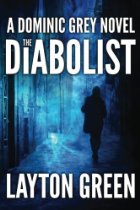
Book Review: The Diabolist by Layton Green (Series, #3)
 Summary:
Dominic Gray, ex-government worker, ex-military, and once professional jiu-jitsu fighter, is seeing a lull in his work as assistant to Professor Viktor Radek on private detective cases involving religious mysteries and the occult. He’s set up shop in New York City, teaching jiu-jitsu to inner-city youth. But when a high-ranking Satanist is murdered in front of his entire congregation by a mysterious figure who sets him on fire at a distance and then disappears himself, Dominic is quickly pulled into a new case with Viktor. High-ranking Satanists worldwide keep dying in the same, or similar, mysterious ways, and the odd thing is, it’s not the Christians doing it.
Review:
I’ve enjoyed this series from the very beginning. The combination of religious studies, private detectives, and international intrigue suck me in every time. This latest entry in the series does not fail to deliver, bringing once again the perfect combination of religious philosophy, mystery, and private detective intrigue.
This entry brings us back to the more mystical origins of the series. Rather than biomedicine as in the second book, what’s involved here is ancient occultism and what may or may not be magic tricks. I was happy to see this occult mysticism represented in the developed world this time, pointing out that it’s not just surviving in developing countries in modern times. The actual religion of Satanism is well explained and given room for both good-hearted followers and evil fanatics, just as may be seen in every religion. Green keeps an even hand when writing about religion, even when writing about Satanism, and that’s to be commended. A drop of mysticism is provided, and it’s left up to the reader to decide if it was science or magic ultimately responsible for the mysterious occurrences, which is ideal for this type of book.
The entwining of Viktor’s backstory with the mystery was well-done, and it was certainly time for the reader to learn more about Viktor. Unfortunately, I must say that Viktor’s backstory made me dislike him more than I had previously, but it certainly also helps form him into a more well-rounded character. There’s a delightful femme fatale, enshrouded in both beauty and mystery. Her ending, however, did feel a bit abrupt. Dominic goes very quickly from one opinion of her to another, and not enough known, factual information is provided for the reader to keep up with this. On the other hand, the ending was surprising and also made logical sense, and it also put the main characters in a frightful level of mortal danger. Exactly the kind of ending one looks for in this type of book.
Overall, the third entry in the series continues to deliver the private detective exploration of moral and mystical gray areas. Those who enjoyed the first entry in the series more than the second will be happy to see the return to the mysticism found in the first book. Those who enjoyed the science of the second will be glad to see the science of magic covered extensively in this entry. Recommended to fans of the series to pick it up as soon as possible.
If you found this review helpful, please consider tipping me on ko-fi, checking out my digital items available in my ko-fi shop, buying one of my publications, or using one of my referral/coupon codes. Thank you for your support!
4 out of 5 stars
Length: 375 pages – average but on the longer side
Source: Netgalley

Previous Books in Series:
The Summoner
The Egyptian
Book Review: The Postmortal by Drew Magary (Bottom of TBR Pile Challenge)
 Summary:
John Farrell got The Cure before it was legal. Three painful shots, and now he’ll never age, although he can still be killed by accidents, murder, and disease. It doesn’t take long before public pressure forces governments to legalize The Cure, in spite of the concerns, sometimes expressed in the form of terrorist acts, of those who believe in natural aging. Of course, nobody listens, because who wants to age? But slowly the world starts to change in more ways than becoming increasingly overpopulated. We’ve reassembled what happened when The Cure was legal through combining John’s blog entries with news articles from his time period, as a cautionary tale.
Review:
I actually bought this when it was released because it sounded so intriguing to me. A futuristic epistolary novel looking at overpopulation is right up my alley. Unfortunately, I got so busy that I didn’t have time to read it right away. I was happy to be able to finally pick it up. The book presents an interesting dystopia but the storytelling struggles increasingly throughout the book, falling flat at the end.
The book starts out incredibly strong. Magary strikes the right balance of realistic personal blog entries with snippets of news, twitter/facebook feeds, etc… to tell the early story of The Cure. The world building doesn’t suffer at all, with a clear near-future established, and John’s character is immediately easy to understand. The years immediately after The Cure is legalized are similarly well-told, with Magary choosing interesting and realistic consequences to The Cure, including violent anti-Cure extremists, peaceful anti-Cure moderates, bohemian everlasting youth, those who build fortresses around themselves and their families, and even internet trolls who take their trolling out into real life.
The world slowly establishes to the point where it’s clearly too overpopulated, and various governments make various choices about how they’re going to deal with that, and John gets caught up in the control side of the US government’s choices. It is here, midway through the book, where things stop being so well-written and thought out and stop working quite so well.
First, the parameters of The Cure seem clear early on in the book. It appears that it cures not just aging but any illness that could be correlated to being the result of aging, such as heart disease. It is clearly listed out that The Cure protects you from many things but not extreme things like AIDS or being smashed by a safe. Later on in the book, though, those who have The Cure but have a real age of elderly start having diseases that tend to show up late in life, such as cancer and heart disease. This shakiness of exactly what The Cure does is a real problem in the book’s world building. The reader expects one set of parameters but then gets a different one.
Second, although early in the book Magary strikes a great balance of realistic blog entries, news articles, and twitter/facebook feeds, as the book continues on, this balance drops off, and the book reads more and more like a straight-forward first-person narration, with only the occasional news article. This makes it harder to believe these are real blog entries, particularly as they get more and more unrealistically long as John becomes busier and does more dangerous tasks.
Similarly, as the world becomes more complex, some of the world building choices make less and less sense. For instance, a certain country chooses to periodically blow up its cities with nuclear bombs in order to control its population. It’s hard to imagine any country dumping nuclear waste into itself just to control population. Surely even just bombs with less environmental impact would be chosen. Similarly, a certain type of violent gang becomes rampant across the US but their motivations or reasons for turning so violent and bloody are never examined. Are they striving to be the only people left? Do they just enjoy causing chaos? Dehumanizing them makes it easy to other them, which in turn makes the dystopic future less frightening, as it’s only the crazy, monstrous people who form into violent gangs. Some of these limits come from the fact that our main character, whose blog entries we’re reading, isn’t a particularly inquisitive person. He tumbles along and doesn’t seem to care much about anything, particularly in the final portions of the book. Yes, he is probably depressed, but even early on he never seems that interested in other viewpoints. The rare two occasions where we get glimpses into something besides his day-to-day life are once at the behest of his job, and once because his son implores him to come to his church. In other words, it takes extraordinary circumstances for John, our narrator, to investigate anything other than what is right in front of his face, which makes for a story that’s missing a lot of information about this dystopic future, particularly when we only get John’s perspective for hundreds of years. The story would probably have been better served by analyzing multiple different people’s blogs. Perhaps John’s, his son’s mother’s, his son’s, his partner’s at work, a troll’s, etc…. This would have given the same epistolary feel but also more information about the dystopic world and more depth.
Finally, the ending takes a sharp turn into manic pixie dream girl land, that I found incredibly frustrating. John makes a sudden, completely inexplicable, unrealistic change in personality thanks to a manic pixie dream girl showing up (a female character who exists only to show up and show a depressed male character the meaning of life. Full exploration of this trope). Given the whole rest of the book, the ending was completely out of left field, and frankly felt lazy. A much richer, deeper ending could have been written that went right into the depth and darkness of John’s soul, giving him no miraculous last-minute redemption. Instead his character does a complete 180 and gives the reader an unexpected, and unearned, ending.
Given all of these complaints, why am I still giving the book three stars? The world it sets up is awesome. It’s a dystopia I want to visit again and again. The first third of the book handles the futuristic, tech-savvy epistolary novel really well, and that’s hard to do. Finally, most of my complaints have to do with the author not giving me enough, not taking things deep enough, dark enough, not living up to the writing in the first third of his own book. It’s a sign of a good book to leave me wanting more, and that’s why I’m still happy I read it. It’s a creative vision of a dystopic future that I hadn’t seen before, and I would love to see more books set in it. Recommended to fans of dystopias who won’t mind a frustrating ending.
If you found this review helpful, please consider tipping me on ko-fi, checking out my digital items available in my ko-fi shop, buying one of my publications, or using one of my referral/coupon codes. Thank you for your support!
3 out of 5 stars
Length: 369 pages – average but on the longer side
Source: Amazon

Book Review: Lana’i of the Tiger by JoAnn Bassett (Series, #3)
 Summary:
Maui wedding planner, Pali Moon, wound up as a key witness against a drug ring, and now she’s been whisked into witness protection, sent to the small boring island of Lana’i, and right at the holidays no less! The feds seem to be taking their sweet time getting the case to court, and Pali is bored out of her mind, used to the hustle and bustle of wedding planning. When a small local bed and breakfast advertises looking for temporary help while they go to the main island to have their baby, it seems like the ideal situation. But when a famous guest’s fiancee turns up dead, Pali finds herself right in the thick of things again.
Review:
I picked this mystery up when I saw it on sale (for free) in the kindle store, in spite of it being midseries. The punny title made me think it was probably a cozy, and I know those series are totally fine to read out of order. I was right in that I never felt lost in the story due to starting mid-series, but I wasn’t right about it being a cozy. Pun-filled title aside, this is an easy-going mystery, ideal for a beach read, but missing the appendixes of add-ons such as recipes or patterns found in cozy mysteries
Pali is a three-dimensional character who jumps off the page, and the supporting characters, while not necessarily three-dimensional, each have enough different quirks and personalities that they are memorable. That said, Pali may be three-dimensional but she’s sure not likable. One example, she kisses someone on Lana’i, and then later finds out that her boyfriend may be cheating on her and flips out. But wasn’t she just cheating by kissing someone else? The hypocrisy left a really sour taste in my mouth for Pali. Characters don’t have to be likable, but in light-hearted mysteries where we’re supposed to be rooting for the non-professional PI, it really helps for them to be.
The mystery was fairly good. I certainly didn’t figure it out until right before the reveal, and the ultimate solution made sense. This is all I really look for in a mystery.
The setting was probably the best part. Bassett evokes (what I can only imagine is) the real feel of Hawaii. Each island visited has its own feel, Hawaiian culture is solidly represented with things like islanders calling all the elderly women “aunty” and locals being able to talk their way onto a ferry for free. What kept me reading the book was my desire to spend time in Hawaii, combined with a mystery I was interested in the solution to.
Overall, the rich Hawaiian setting and actually mysterious mystery make this a fun beach read. The main character is three-dimensional but could rub some readers the wrong way. Those looking for a traditional cozy should be forewarned that this book doesn’t come with any traditional cozy extras. Recommended to those looking for a light mystery set in Hawaii.
If you found this review helpful, please consider tipping me on ko-fi, checking out my digital items available in my ko-fi shop, buying one of my publications, or using one of my referral/coupon codes. Thank you for your support!
3 out of 5 stars
Length: 306 pages – average but on the longer side
Source: Amazon

Previous Books in Series:
Maui Widow Waltz
Livin’ Lahaina Loca
Book Review: The Cormorant by Chuck Wendig (Series, #3)
 Summary:
Miriam Black is on her own once again after sending her truck driver boyfriend to the curb. She’s taken to periodically messing with fate by killing the killers she sees in her visions of the deaths of the people she touches. When she gets an offer on Craigslist to read someone’s future death in Florida, it comes at a time when she can’t pass it up, as a recently homeless person. She heads to Florida figuring she might also tackle the demon of her relationship with her mother. Two birds, one stone. But Florida ends up being much more than a quick job and a quick visit.
Review:
I snatch up a new Miriam Black book the first chance I get because I so love the prose style of the books (I’m uncertain if Wendig’s other books read similarly, as I haven’t read any), and I also love Miriam as a character very much (I would definitely run the other way if I spotted her on the street at night). This third entry in the series didn’t disappoint, although I periodically wondered if Miriam’s bad-assness would be sacrificed for character growth.
The urban fantasy world of Miriam Black continues to be slowly fleshed out in this book. We meet a couple more characters with supernatural abilities, not exactly Miriam’s but similar in that they function in the mind. We also start to understand what might cause such a thing to happen. And how Wendig presents this information is beautifully crafted. It is a part of the story, a wonderful example of showing not telling.
Miriam doesn’t just cause chaos and get away with it, and this book fairly clearly exists to show us that Miriam is not invincible, even if she may sometimes seem it in earlier books. She’s a tough broad with a mental gift brutally acquired, and she’s trying to figure out how to function and do the right thing in this incredibly fucked up situation where she is battling unknown forces, particularly fate.
The plot forces Miriam to confront two bad specters from her past: an ex lover and her mother. I was fine with confronting the ex lover, and how it went down made sense. I was incredibly wary of her confrontations with her mother. Her mother was established as a fundamentalist abusive ball of shit in the previous books, and I was deeply concerned that Wendig was going to try to either make it seem like it was all in Miriam’s head or offer redemption for her. And the plot does sometimes dance on the edge of doing one or the other of these. But the way Miriam reacts to her mother in their confrontations help keep it grounded and realistic that not all mothers are great people. In one confrontation she tells her mother,
Don’t act surprised that I have this cyanide cocktail in my heart. Like they say on that old dumb-ass drug commercial: I learned it by watching you. (loc 1824)
On the other hand, an awful lot of the plot revolves around Miriam saving her mother from her untimely death at the hands of a kidnapper. I just have a hard time believing, especially given the vitriol Miriam has felt for her mother this entire time, that she would actually care that much if her mother dies. I get it that Miriam might very much not want the kidnapper to get away with it, because she hates him and he’s fucking with her, but I don’t think Miriam would actually get misty-eyed at the thought of her mother’s untimely demise. It felt forced instead of being Miriam. That said, the plot does manage to stick to its guns enough that Miriam comes out of the situation still seeming like her cyanide-filled self, so I can’t fault it too much for veering that close to the edge.
I would be amiss not to mention the fact that his book establishes the fact that Miriam is bisexual. Of course, she refuses to use the term herself, and I’m fairly certain no one actually ever calls her bi. Normally a bi character refusing to call herself bi would drive me batty, but Miriam refusing labels fits 100% into her character. She doesn’t see the need to label who she fucks and other characters’ attempts to figure her out are met with disgust on her part but that’s how she feels about everything about herself. Yes, I wish more functional non-cyanide cocktail hearted characters were bi, but I also am pretty darn happy that a character I enjoy so much is bi. Plus, scenes of Miriam banging a woman were an unexpected utter delight.
The plot does a great job of being both a single book conflict and something that ultimately propels the overarching plot forward, which is exactly what one hopes for from a series book.
The writing style maintains its gritty sharpness that the series has enjoyed from the beginning. Both the narration and the conversations are a pleasure to read. Passages like those listed below are peppered throughout the book, accosting the reader with the knowledge that we are in Miriam’s world now.
Meetings are like black holes: they eat up the hours, they suck in the light, they gorge on his productivity. (loc 92)
I’m a certified bad-ass indestructible bitch. The sun tries to burn me, I’ll kick him in his fiery balls. I don’t need no stinking suntan lotion. (loc 2787)
Overall, this book brings most things readers have come to expect from a Miriam Black book. A gritty female main character with hard-hitting prose and a plot with a touch of the fantastic and grotesque. Some fans might be a bit disappointed by the direction Miriam’s relationship with her mother goes, but all readers will be pumped by the ending and eagerly anticipating the next entry. Recommended that fans of the first two books pick this one asap.
If you found this review helpful, please consider tipping me on ko-fi, checking out my digital items available in my ko-fi shop, buying one of my publications, or using one of my referral/coupon codes. Thank you for your support!
4 out of 5 stars
Length: 384 pages – average but on the longer side
Source: Gift

Previous Books in Series:
Blackbirds, review
Mockingbird
 Support my work with a tip or browse my shop for curated book club guides, how to guides, cross-stitch patterns, and more!


This work by Amanda Nevius is licensed under a Creative Commons Attribution-Noncommercial-No Derivative Works 3.0 United States License.
 Opinions of a Wolf