
Archive
Book Review: Race Across Alaska: The First Woman to Win the Iditarod Tells Her Story by Libby Riddles and Tim Jones

Summary:
Libby Riddles wanted an adventure. At the age of 16 she left home for the snowy frontiers of Alaska, the Last Frontier. There, her love of animals drew her to the sport of sled dog racing. When she entered the Iditarod in 1985, the famous marathon from Anchorage to Nome, she was just another Iditarod Nobody. Twelve hundred miles later, having conquered blizzards, extreme cold, and exhaustion, she and her dogs crossed the final stretch of sea ice, miles ahead of the nearest competitor… and suddenly she realized: I will be the first woman to win the Iditarod. This is the story of a courageous woman and her heroic dogs. This is the story of Libby Riddles’s adventure.
Review:
First published in 1988, this book drips with the freshness of an event recently lived. Both in the assumption that everyone reading this knows at least some things about Libby and in the clarity with which she remembers the events. In fact, Libby was actually featured in Vogue magazine after winning the Iditarod, so the novelty of being the first woman to win meant it reached out further to the general population than it might have otherwise. Reading it in 2022 without previously having given much thought to women in the Iditarod made it feel like a fun, time-travel adventure.
Each chapter is one day of the Iditarod, and the book jumps right in with day 1. There’s no prologue or introduction to Libby. It’s just day one of the race. Each chapter also shows which part of the trail Libby completed that day, gives a note on the weather (highs, lows, and wind speed), and a brief summary of what that day was like for her. Throughout the book there are asides explaining various aspects of the Iditarod and mushing, everything from what clothes mushers wear and why to the history of the event. I found these very helpful. I just wish there’d been one introducing me to Libby too.
I expected the Iditarod to be a story of loneliness and individual perseverance. Instead, I learned that the race involves a lot of people, includes seeing people more than you might think, and is a meaningful event to various towns and villages along the trail. In retrospect I should have realized this. But the Iditarod is discussed as such a survivalist event that it never crossed my mind. Especially at the beginning of the race, the mushers are quite close to each other, and even sometimes travel in groups if they have a similar pace. Villages, towns, and even just individual homes are checkpoints throughout that the mushers must check in to. The locals open up their homes to the mushers, even giving over their beds for them to get an hour or two of shut-eye. At one point, Libby sleeps in a bed with two other mushers briefly. It’s really not the individual experience I was expecting! This sort of help is allowed only if it’s offered to all mushers equally, so when a person chooses to open up their home and feed and clothe people, they’re really offering it up.
Each checkpoint also has at least one veterinarian available to check in on the dogs. Dogsled racing is largely about the dog teams, after all. Many mushers actually breed their own sled dogs. Libby’s dogs were half hers and half her partner Joe’s. Throughout the book, we get to know her dogs a bit and see how much care she gives to them. Libby also won the award given by the vets to the musher who took best care of their dogs, an interesting accomplishment for the person who also won the whole thing that year.
This isn’t to say that mushers are never alone or reliant only on themselves and their dogs. As the race goes on, they get more spread out from each other. At one point, Libby must camp out on her sled in the middle of a blizzard completely alone. Also the further in front you are, the less clear the trail is, and the easier it is to get lost. So winning is also about having the fortitude to go ahead of everyone else.
I enjoyed how I learned about the Iditarod without ever feeling like it was a textbook. The learning happened naturally as I followed Libby on her route and rooted for her inevitable win I knew was coming. You can see some footage of Libby in the 1985 Iditarod and her induction moment into the Alaska Sports Hall of Fame here. If you have little ones in your life, you might like to get Libby’s children’s book about her historic Iditarod win. The adult memoir is a fun and educational read for anyone interested in the tale.
4 out of 5 stars
Length: 244 pages – average but on the shorter side
Source: PaperBackSwap
Buy It (Amazon or Bookshop.org)
If you found this review helpful, please consider tipping me on ko-fi, checking out my digital items available in my ko-fi shop, buying one of my publications, or using one of my referral/coupon codes. Thank you for your support!
Book Review: Rock Paper Scissors by Alice Feeney

Summary:
Things have been wrong with Mr and Mrs Wright for a long time. When Adam and Amelia win a weekend away to Scotland, it might be just what their marriage needs. Self-confessed workaholic and screenwriter Adam Wright has lived with face blindness his whole life. He can’t recognize friends or family, or even his own wife.
Every anniversary the couple exchange traditional gifts – paper, cotton, pottery, tin – and each year Adam’s wife writes him a letter that she never lets him read. Until now. They both know this weekend will make or break their marriage, but they didn’t randomly win this trip. One of them is lying, and someone doesn’t want them to live happily ever after.
Ten years of marriage. Ten years of secrets. And an anniversary they will never forget.
Review:
I have a thing for the themes for each anniversary year of marriage. I also have a thing for thrillers about marriages. So when I saw this one incorporating both, I knew I just had to read it. I can’t be the only one this appealed to because I waited for a few months for it at the library. This was definitely a unique and fun take on the thriller about a marriage theme.
The telling alternates between the anniversary letters Mrs. Wright writes to her husband and the present day Mrs. Wright going on the trip with Mr. Wright to Scotland. They are seeing a marriage counselor who suggest a trip away, and Mrs. Wright wins a weekend trip to a converted chapel in Scotland. One of the stronger scenes in the book is the late-night arrival at this Air BNB style home. If you have ever arrived late at night at an Air BNB or other vacation rental where you have to let yourself in and hope it lives up to your expectations, this scene will really set your spine to tingling!
Much as I was enjoying the present day explorations of the spooky getaway, I also really enjoyed the anniversary letters from Mrs. Wright. They were the perfect interlude because very quickly it becomes clear she is keeping something from him. So you end up with two different mysteries. What is going on at the weekend stay? And what is Mrs. Wright keeping from Mr. Wright?
I wasn’t sure at first how I’d feel about the face blindness aspect. But it is a real condition, and I like how the perspective sometimes shifts to Mr. Wright’s. We see how he sees his wife, and how he recognizes her anyway. I also really enjoy how important the title is to the book and how often it comes into play.
Now, this is a thriller so of course there is a twist. It is a major one, and I really wasn’t seeing it coming. I was a bit miffed because it was one of those situations where the only reason I didn’t see it coming was some information was withheld from the reader. But I so enjoyed the process of getting to that point that I ultimately didn’t care.
Overall, this was a fun entry into the thriller category. It delightfully combines a marriage on the rocks with a creepy vacation rental for a new feeling plot.
4 out of 5 stars
Length: 297 pages – average but on the shorter side
Source: Library
Buy It (Amazon or Bookshop.org)
If you found this review helpful, please consider tipping me on ko-fi, checking out my digital items available in my ko-fi shop, buying one of my publications, or using one of my referral/coupon codes. Thank you for your support!
Book Review: The Good House by Ann Leary

Summary:
Hildy Good is a successful realtor in her small town on the North Shore of Massachusetts. She’s also a grandmother, dog owner, and divorced. She’s also recently back from rehab for alcoholism from an intervention her two daughters staged for her. Hildy is not an alcoholic, but she went along with the whole thing to ensure access to her grandbaby. Inconveniently now, she must continue to pretend to abstain in public and suffer through parties sober until she can get home to a glass of wine or two in the evening. She also begins to befriend a newcomer to town she sold a very expensive home to – Rebecca. She is obsessed with horses and her one-time psychiatrist. When a cluster of secrets become dangerously entwined, the reckless behavior of one threatens to expose the other, with devastating consequences.
Review:
The North Shore of Massachusetts is a really fun and unique place, and this book artfully and realistically depicts both that location and the unfortunate realities of alcoholism, especially as it is seen in the older generation. I particularly like that alcoholism in an older woman is featured.
Hildy clearly thinks the story is about her own ability to be a successful businesswoman in the face of encroaching real estate chains and her daughters’ “ridiculous” belief that she’s an alcoholic putting a damper on her socializing. She also likes her new friend Rebecca but can’t understand why Rebecca and her psychiatrist care that Hildy knows they’re seeing each other. The thing is, the reader can clearly see that the real story is about Hildy, alcohol, and the havoc she’s wreaking across her own and other people’s lives. But the story isn’t heavy-handed about this. It comes across as this is the day to day life of this woman in this North Shore community. It’s just her day-to-day life is impeded by alcohol. Occasionally at first, but ever increasingly as the story progresses. It’s a slow burn of moderation quantifiably not working.
My absolute favorite scene in the book is when Hildy has a bottom moment and goes out to walk her dogs the next morning. She’s uncharacteristically angry at them and berates them verbally. Normally she loves these dogs to pieces. She gets to the shore, sees a heron, has an ah-hah moment, and breaks down crying. What was so gorgeous about this to me was how real this moment is. Being hungover and doing something ordinary yet suddenly connecting to something higher than yourself and realizing you’ve really messed up. But it was bittersweet because I just knew this wasn’t Hildy’s bottom yet. (Even a person with no addiction experience would realize this as it does not occur anywhere near the end of the book). But Hildy doesn’t realize it. You think all it will take is one powerful moment but in fact it takes so much more than that.
The book does not shy away from the worse features of late-stage alcoholism, and these come to a head alongside other issues in the town at the end of the book. I really appreciate that it goes there.
What kept me from loving the book is how Hildy treats her love interest. Not when she’s drunk. But when she’s sober. I know no one is perfect, but it really saddened me to see how she treats this lovable old New England man. Is it accurate to how I’ve seen men like that treated here? Yes. But I wanted a bit more escapism in that regard in my read. For me that held me back from complete love.
Recommended to readers looking to visit the North Shore or see the trajectory of alcoholism in an older main female character.
4 out of 5 stars
Length: 292 pages – average but on the shorter side
Source: Audible
Buy It (Amazon or Bookshop.org)
If you found this review helpful, please consider tipping me on ko-fi, checking out my digital items available in my ko-fi shop, buying one of my publications, or using one of my referral/coupon codes. Thank you for your support!
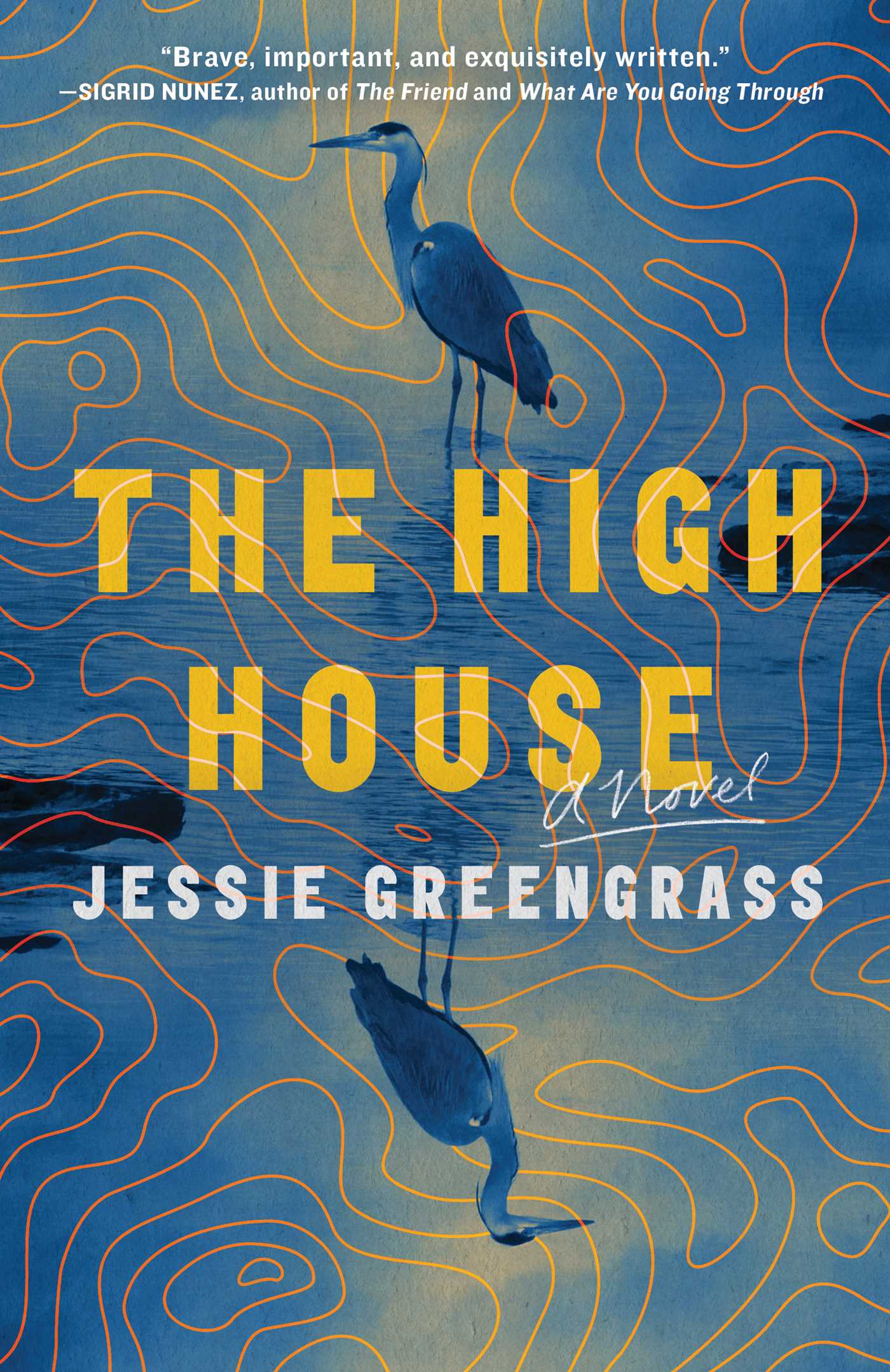
Book Review: The High House by Jessie Greengrass
Summary:
Perched on a sloping hill, set away from a small town by the sea, the High House has a tide pool and a mill, a vegetable garden, and, most importantly, a barn full of supplies. Caro, Pauly, Sally, and Grandy are safe, so far, from the rising water that threatens to destroy the town and that has, perhaps, already destroyed everything else. But for how long?
Review:
I haven’t really been in the mood for dystopian literature since March of 2020, preferring a bit more escapism in my reading. But the cover of this book featuring that gorgeous egret really drew me in when I was browsing NetGalley. And I thought that maybe a book about a dystopia brought on just by climate change would be different enough to still work for me. Plus I had my fingers crossed it would involve birds after featuring one so strongly on the cover. What I found was a book about trials different enough from our own that it gave me distance and yet with meaningful moments that took my breath away with their relevance. It was like eating a very delicious chocolate cake and then sometimes getting mouthfuls that are even more delicious because they have surprising ooey gooey pockets of liquid chocolate.
“All I can think is that what’s different now is that no one can claim this is progress.”
(loc 1308)
The High House is a coastal summer home inherited by an environmental academic named Francesca. In spite of being coastal, it is, as the name implies, on high ground. She can see what’s coming, even though others won’t listen to her. So, while she keeps trying to bring about change to prevent it, she also secretly sets up the high house for her stepdaughter Caro and her son Pauly (who is 14 years younger than Caro). She also hires on the local elderly groundskeeper who is very wise in the old ways, Grandy, and by extension his university-aged granddaughter, Sally. I thought the book was going to be mostly set in the now of these folks living together after the flooding. But really it was largely these characters looking backward at the years just before the event, and through the event. How they came to be the way they are now. Sally, Caro, and Pauly all take turns narrating.
It’s difficult to explain how beautiful this book is without spoiling it. It’s no like the ending is a surprise or a twist but rather it takes reading the book in its entirely to get what the book is saying. And what it is saying is just simply gorgeous. In a sad way. I suppose what I can say is that this book depicts complex grief without ever really saying that’s what it’s doing. And it’s exquisite.
And the birds. Pauly loves birds, and it’s his knowledge and genuine love of them that lets everyone else know a bit of what they’re talking about when they talk about the birds. The heron on the cover is a bit of a flaw in cover design, because the birds that are actually important to the story are a pair of egrets. is They have a very important role that, again, was devastatingly exquisite. (We don’t see any harm come to the birds, and it’s a bit up in the air if any does).
This was a gorgeous book that I found comforting the way a sad movie can sometimes be. I stayed up far too late to finish it, because I just simply couldn’t look away. If you love nature and question what can remain for humans after large changes, pick this one up and let yourself get swept away.
5 out of 5 stars
Length: 272 pages – average but on the shorter side
Source: NetGalley
Buy It (Amazon or Bookshop.org)
If you found this review helpful, please consider tipping me on ko-fi, checking out my digital items available in my ko-fi shop, buying one of my publications, or using one of my referral/coupon codes. Thank you for your support!
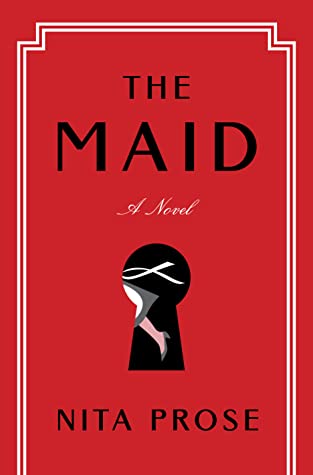
Book Review: The Maid by Nita Prose
Summary:
Twenty-five-year old Molly Gray struggles with social skills and misinterprets the intentions of others. Her gran used to interpret the world for her, codifying it into simple rules that Molly could live by. But since Gran died a few months ago, Molly has had to navigate life’s complexities all by herself. No matter—she throws herself with gusto into her work as a hotel maid. Her love of cleaning and proper etiquette, make her an ideal fit for the job. She delights in donning her crisp uniform each morning, stocking her cart with miniature soaps and bottles, and returning guest rooms at the Regency Grand Hotel to a state of perfection.
But Molly’s orderly life is turned on its head the day she enters the suite of the infamous and wealthy Charles Black, only to find it in a state of disarray and Mr. Black himself very dead in his bed. Before she knows what’s happening, Molly’s unusual demeanor has the police targeting her as their lead suspect. She quickly finds herself caught in a web of deception, one she has no idea how to untangle. Fortunately for Molly, friends she never knew she had unite with her in a search for clues to what really happened to Mr. Black—but will they be able to find the real killer before it’s too late?
Review:
This book has a nice overall message. That we need to band together in kindness with those who are different. But the story itself left me feeling lukewarm.
Molly’s difference is never named although neurodivergence and Autism are certainly hinted at. To me, her voice and behavior simply didn’t read as authentic. Neurodivergence is of course a wide spectrum so it might read authentic to others. But it felt to me like someone guessing at neurodivergence. It just rang false.
It is unclear if the author Nita Prose is herself neurodivergent. She has never said so in any interviews, and the book is not marketed that way. In one interview, she says explicitly that Molly was inspired by her work with special needs high school students.
Before I was an editor, I worked for a time teaching high school kids with special needs….I witnessed how cruelly they were sometimes treated by so-called “normal people.” But what I also saw were kids who responded with incredible resilience and human dignity in the face of prejudice. In some ways, I think Molly is a tribute to those kids that I taught so many years ago.
source
This does not read to me as an author who self-identifies as neurodiverse, so this is not an own voices perspective. Nor, I think it’s fair to say, is it from someone with in-depth knowledge about it. Teaching such students “for a time” is not the same thing as, for example, being a life-long special needs teacher or having a loved one living in your home with a special need. In my opinion, this lack of intimate knowledge comes through in how Molly comes across.
The mystery itself wasn’t all that mysterious. I must admit I didn’t guess the killer but that was only because the narrator withheld information from the reader until the last chapter. Not my favorite method in a mystery book. I always feel duped and end up disliking the main character for withholding. So while I was motivated to find out who did it and to see Molly free, I was annoyed at the end. I can generally forgive this in a mystery, though, if my experience with the mystery itself was pleasurable up to that point.
The problem for me in this book wasn’t the set-up or the mystery. It was that every character in the book rubbed me the wrong way – including the ones I was supposed to like. Literally everyone. Even Molly’s “sweet old gran.” I just didn’t like anyone. Even if I mentally wanted everything to work out from a sense of common decency, I couldn’t root for anyone because I didn’t like anyone. The dialogue (everyone’s) especially rubbed me the wrong way. I’m not sure why; it just did.
So, I liked the idea of this. It was different. It just wasn’t for me. Maybe it will be for you.
3 out of 5 stars
Length: 280 pages – average but on the shorter side
Source: NetGalley
Buy It (Amazon or Bookshop.org)
If you found this review helpful, please consider tipping me on ko-fi, checking out my digital items available in my ko-fi shop, buying one of my publications, or using one of my referral/coupon codes. Thank you for your support!
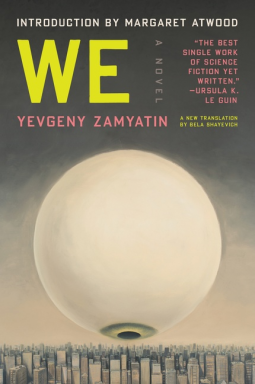
Book Review: We by Yevgeny Zamyatin
Summary:
In a glass-enclosed city of perfectly straight lines, ruled over by an all-powerful “Benefactor,” the citizens of the totalitarian society of OneState are regulated by spies and secret police; wear identical clothing; and are distinguished only by a number assigned to them at birth. That is, until D-503, a mathematician who dreams in numbers, makes a discovery: he has an individual soul. He can feel things. He can fall in love. And, in doing so, he begins to dangerously veer from the norms of his society, becoming embroiled in a plot to destroy OneState and liberate the city.
Set in the twenty-sixth century AD, We was the forerunner of canonical works from George Orwell and Alduous Huxley, among others. It was suppressed for more than sixty years in Russia and remains a resounding cry for individual freedom, as well as a powerful, exciting, and vivid work of science fiction that still feels relevant today. Bela Shayevich’s bold new translation breathes new life into Yevgeny Zamyatin’s seminal work and refreshes it for our current era.
Review:
The history of this book is fascinating. Smuggled out of Soviet Russia and only ever published in translation in exile from Russia. Published before 1984 and Brave New World and said to have been at least some level of influence on both. So it’s absolutely an important read from the perspective of scifi history.
A what-if version of automation and industrialization. These successes have led to a society where humans no longer have mothers, fathers, or even real names. Instead they have numbers. D-503 is our narrator. He’s designing a rocket ship for the space program. He falls in with I-330, a woman working with a kind of back to nature resistance.
I’m not sure I liked either society depicted. It kind of reminded me of one of the societies depicted in The Time Machine that I didn’t like all that much either. But I was definitely moved and engaged and wanted to find out what happened. (The ending is bleak. I’m not sure why I hoped for anything else!)
One thing that made this a challenging read is that D-503 refers to I-330 as I. This made some sentences confusing since it’s also narrated in the first person from his point of view. It was not unusual for me to have to re-start a sentence after realizing it was actually about I-330 and not D-503 or vice versa. It’s unclear to me how much of this is a translation choice and how much of it is authentic to the book as originally written in Russian.
Another thing that rubbed me the wrong way is how the Black character is described. There’s a large, recurring focus on the size of his lips. On the one hand, the depiction of this character is very open-minded and equal. He and D-503 are both sort of married to the same woman, know it, and all consider themselves friends. But, on the other hand, the focus on his lips repeatedly was jarring. I’m again, not sure if this was in the original Russian or an awkward translation.
A creative world building element that I enjoyed is how this totalitarian regime keeps watch on its citizens. This was written before much technology, and so the citizens all live in glass homes. They have to get a special ticket to be able to pull the blinds. These are only issued for sanctioned sexual encounters. Thus to have private meetings, you must get tickets to have sexual relations with the person you want to meet with.
Recommended to those with an interest in the trajectory of scifi dystopias over time or with an interest in Russian literature.
3 out of 5 stars
Length: 256 pages – average but on the shorter side
Source: NetGalley
Buy It (Amazon or Bookshop.org)
If you found this review helpful, please consider tipping me on ko-fi, checking out my digital items available in my ko-fi shop, buying one of my publications, or using one of my referral/coupon codes. Thank you for your support!
Book Review: Bear by Marian Engel

Summary:
A librarian named Lou is called to a remote Canadian island to inventory the estate of a secretive Colonel whose most surprising secret is a bear who keeps her company–shocking company.
Review:
I don’t recall anymore how I heard about this book, but this is what I heard about it:
There’s this book that’s considered a Canadian classic where a librarian has sex with a bear.
Ok. I was left with questions. First, this sounds like erotica – how is it a classic? Second, as a trained librarian I immediately wondered if the librarian part was essential to the story. Third, does she really have sex with a bear? Then I became even more intrigued when I discovered I couldn’t get this book digitally but only in print AND it’s out of print in the US so it’s far cheaper to purchase it abroad and have it sent here. So, now that I got this book from the UK and read it (in one weekend), let me answer these questions for you.
First, I wouldn’t call this erotica. The point, in spite of the murmurings about it, is absolutely not about sex with a bear, whereas in erotica, the point is the sex. I in all honesty would say this is a book about burnout. Lou is an archivist who is in a rut. When the nameless Institute she works for sends her to this estate that has been left to them to inventory their materials, her time in nature and her experiences with the locals (yes, including Bear), reveals her massive burnout to her.
She wondered by what right she was there, and why she did what she did for a living. And who she was.
(pg 93)
Second, I would definitely say the librarian part is essential to the story. Librarianship is a feminized profession. This book was first published in 1976. It is an exploration of what it means to be a working woman and how the world views working women, even when our work is performed outside of the public’s eye (perhaps especially when our work is performed outside of the public’s eye). I also thought this book does an excellent job of showing how even though librarianship is a feminized profession, those in the positions of greatest power within libraries and archives are men. Lou’s boss is a man, and this is relevant to her negative work experience.
Third, does she actually have sex with a bear? Ok, slight spoiler warning here. There is no penetration. She tricks the bear to go down on her. That’s it. I didn’t find it particularly shocking, but I’m a millennial from the internet generation that grew up with the internet urban legend about the woman with the dog and the peanut butter so. I viewed the transgressive act with Bear as serving two purposes. First, Lou has a tendency toward self-sabotage, self-loathing, and self-punishment. I think transgressing in this way makes her see how she’s transgressing against herself and her own soul in other ways and makes her refind her own sense of self. Second, I think it’s important to note that at the beginning of the book an Indigenous woman named Lucy kind of hands off the caretaking of Bear to Lou. At the end of the book, she hands the caretaking back to Lucy. I view this as an acknowledgement that just because you can do something doesn’t mean you should. It doesn’t mean it’s your life calling. There are other interesting takes on this as a commentary on colonialism, which I also think are valid.
So do I see why this is a Canadian classic? Yes, absolutely. The whole story oozes Canada from the juxtaposition of the wilderness with the city to the entwining of European and local history to the acknowledgment of the realness and relevance of local Indigenous peoples. (These peoples are not of the past but are of the present, something I think Canadian literature often does a better job with than US literature).
I thought I was going to read this book and laugh at it, kind of like how folks on book-tok are laughing about the ice planet barbarians right now. Instead, I found a unique story about a woman’s time in the semi-wilderness and how it makes her confront her burnout and how her career is a poor fit for her. How her life setup is causing her to transgress and how that needs to change. A shocking way to get the point across? Perhaps. But an important point nonetheless.
4 out of 5 stars
Length: 167 pages – average but on the shorter side
Source: Purchased
Buy It (Amazon or Bookshop.org)
Get the Reading Group / Book Club Discussion Guide
A beautifully graphic designed 2 page PDF that contains: 1 icebreaker, 9 discussion questions arranged from least to most challenging, 1 wrap-up question, 3 read-a-like book suggestions
View a list of all my Discussion Guides.
If you found this review helpful, please consider tipping me on ko-fi, checking out my digital items available in my ko-fi shop, buying one of my publications, or using one of my referral/coupon codes. Thank you for your support!
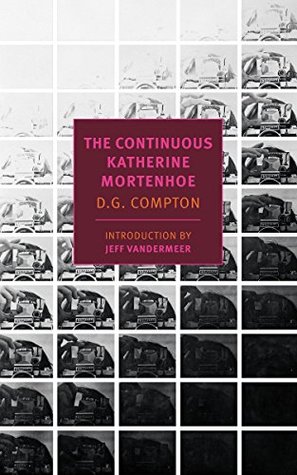
Book Review: The Continuous Katherine Mortenhoe by D.G. Compton
Summary:
Katherine Mortenhoe’s world looks very similar to our own, except that in this near future medical science has found the cure for death—or eliminated nearly every cause for it other than old age. So when Katherine is diagnosed with a terminal brain disease caused by an inability to process an ever-increasing volume of sensory input, she immediately becomes a celebrity to the “pain-starved public.” But Katherine will not agree to be the star of the reality TV show Human Destiny, her last days will not be recorded by any cameras. She doesn’t realize that from the moment of her diagnosis, she’s been watched, not only by television producers but by a new kind of reporter, one with no visible camera, who is always recording behind his never-blinking eye.
Review:
This book was first published in 1973 under the title The Unsleeping Eye. It was then published in the UK in 1974 under this title. It was made as a film in 1980 under the title Death Watch with the books published after that under that title. Then in 2016 it was republished as The Continuous Katherine Mortenhoe along with a new introduction by Jeff Vandermeer. All of which is to say, although you may see it listed as published in 2016, this is actually a 1970s vision of the future. This makes its take on reality tv all the more impressive to me.
The story is told in two perspectives from Katherine’s and from the reporter’s. They both live in the near future UK. Katherine is in her 40s on her second husband, childfree (there is no discussion of fertility issues or a desire for children), and works for Computabook’s romance department. Computabook appears to be essentially an AI largely writing Harlequin style romance novels. The consensus seems to be that she could write a great novel and is wasting her time at Computabook. She goes to the doctor quite a bit, which is presented as odd for a time when most illnesses are cured. The gentle opinion seems to be that she has a mental problem skewing toward perhaps hypochondria. But then she gets a terminal diagnosis. The reality tv show Human Destiny is so sure that they will get her to sign on to live out her last days filmed that they secretly film her receiving the diagnosis news, figuring they will get her permission via contract later.
The reporter has just consented to have tv cameras implanted in his eyes, allowing them to film without the presence of any cameras, only him. He cannot be in full darkness for a period of time after the surgery and takes pills to stay awake. He has an ex-wife and son. The ex-wife very much dislikes his work for the producer who does Human Destiny. She does not like this producer.
There are a lot of ex-spouses in this society because they do 5 year handfastings, essentially, and at that point they decide whether or not to recommit for another 5 years. It’s supposed to not be a big deal if folks don’t recommit, but it’s clear from both the reporter’s relationships and Katherine’s that it actually is to the folks involved. While not a focus of the book, I found this interesting.
The book then ultimately explores the ethics of why Katherine might or might not sign on for the show, whether or not the reality tv show is in and of itself ethical, and what the limits of cameras in a person’s eyes are to truly telling the truth. I would also say it explores the impact of your job on your life and your sense of fulfillment. Another theme is how different people’s lives look depending on how much they have “bought in” to the way of life depicted to them as the main choice by the government. There’s also a question of what’s a good death and who gets to choose what that means.
I most enjoyed the exploration of the alternative societies outside of the mainstream. I also found the depiction of near future reality tv very well-imagined. I am happy to report that there is no rape or sexual violence in this 1970s scifi book. There is an instance where it seems a possibility, but it does not ultimately happen. There is medical trauma and some minor violence seen in robberies.
This book ultimately left me pondering if it was trying to say something larger about the male gaze or if that was coincidental. Regardless, it left me thinking about women and our lives and how others view them. A valuable issue to ponder. Plus it was fun to explore this imagined future society.
4 out of 5 stars
Length: 264 pages – average but on the shorter side
Source: Purchased
Buy It (Amazon or Bookshop.org)
If you found this review helpful, please consider tipping me on ko-fi, checking out my digital items available in my ko-fi shop, buying one of my publications, or using one of my referral/coupon codes. Thank you for your support!
Book Review: Laziness Does Not Exist by Devon Price, PhD

Summary:
Explores the psychological underpinnings of the “laziness lie,” including its origins from the Puritans and how it has continued to proliferate as digital work tools have blurred the boundaries between work and life. Using in-depth research, Price explains that people today do far more work than nearly any other humans in history yet most of us often still feel we are not doing enough. Filled with practical and accessible advice for overcoming society’s pressure to do more, and featuring interviews with researchers, consultants, and experiences from real people drowning in too much work.
Review:
I was raised with a strict, Protestant work ethic. I mean, I grew up in New England. The epicenter of Puritanism. “Lazy” was one of the worst insults to hurl at someone else or to internally scream at myself to keep myself pulling all-nighters etc… So why did I pick up a book with such a title? I follow Devon on Instagram, and I found myself helped and relating so much to what they said about dealing with burnout in academic labor that I decided to see past the title and try out the book.
Devon starts the book by sharing their own burnout/overwork story. The thing that makes this so compelling is we know that Devon still accomplished things – just look at this book! – in spit of embracing what some might call “laziness.” So how did Devon go from burnt out and overworked to fighting back and successful? Devon intertwines their story with psycho-social explorations and stories from others encountering burnout and overwork.
A few things really stuck out to me when reading this book. The first is that there’s no science behind the length of the average workday or workweek as it stands in the US (8 hours a day, 40 hours a week). What science there is indicates it’s “still probably too long and demanding for most people” (loc 15%). A statistic to back this up that really blew my mind:
Researchers consistently find that in office jobs, people are capable of being productive for only about three hours per day, on average.
loc 24%
The point being that if you’re finding it hard to concentrate or get things done it’s not that you’re lazy, it’s that you’re being asked to think and work for longer periods of time than people are actually capable of naturally. Devon then goes into how more breaks and less time working actually leads to better quality of labor and greater satisfaction in workers. They also talk about the dangers of work performed by overtired people, and these aren’t just the obvious like falling asleep at the wheel. People also, for example, get more negative and judgmental when overtired.
Devon then goes into the perils of information overload. How access to so much information so easily can and does overwhelm us. How this has changed dramatically in the last decades.
The volume of unique information the average person encounters in a day is approximately five times what the average person encountered in 1986.
loc 39%
They also speak about how it’s not always possible to just “disconnect,” giving the example of how we might need to check the news to see if there’s currently a lockdown in place.
This all leads nicely into a part of the book that talks about the importance of downtime – not just from physical labor but from brain work and accessing information. This essentially boils down to a need for quiet contemplation that is often demonized as laziness. But this is essential for us to be able to engage with our world in a meaningful way.
In the interest of not going into information overload here, I will say the final thing that stuck out to me in this book. Devon calls on us to be kinder to both ourselves and others. To not jump to the accusation of lazy but rather to ask are we in service to the system asking too much of ourselves? Of others? How can we be kinder and ask less? Keeping in mind that with less the quality often improves as well. So instead of, for example, berating yourself for feeling tired mid-afternoon and struggling to finish your to do list, look at what you have done. How many hours have you worked? Is your to do list reasonable? Can you reduce it at all? Do you still have time for downtime? Maybe your body just needs rest. Maybe your mind does too. We’re all only human, and we’re asking an inhuman amount from people.
Recommended if you’re interested in a deeper dive into these concepts with more real world examples.
4 out of 5 stars
Length: 256 pages – average but on the shorter side
Source: Library
Buy It (Amazon or Bookshop.org)
If you found this review helpful, please consider tipping me on ko-fi, checking out my digital items available in my ko-fi shop, buying one of my publications, or using one of my referral/coupon codes. Thank you for your support!
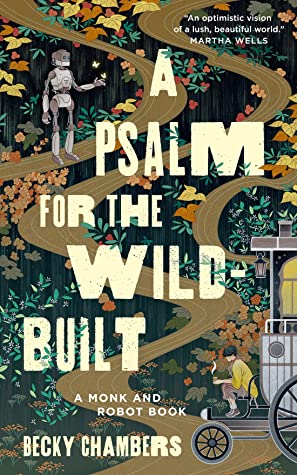
Book Review: A Psalm for the Wild-Built by Becky Chambers (Series, #1)
Summary:
Dex is a tea monk on a planet that lives an eco-friendly lifestyle on a minimal share of the planet with a large portion left wild. The robots found sentience years ago and left for the wild themselves. When Dex diverges suddenly from their usual traveling path, a robot makes contact for the first time in generations.
Review:
This book just oozes coziness and relaxation. Things happen but reading it feels sort of like visiting a 1990s era fantasy/scifi tv show where nothing truly dangerous happens and everything gets wrapped up nicely within 60 minutes. If that tv show was progressive enough to have a non-binary main character that is.
Sibling Dex’s planet is a lot like Earth but definitely is not Earth. The most notable clear indicator that this is not Earth is the universal religion, which Dex is a monk in service of. That said, this religion seems like kind of a mash-up of Buddhism and Hinduism to me. It’s got a lot of Buddhist traditions but tied to a set of 6 gods/goddesses. Dex is in particular service to Allalae, who is tied to bears somehow. I enjoyed the tie to bears. It means there are cute carvings and things of bears everywhere.
The book follows Dex’s journey from an urban monk to a traveling tea monk who roams around the countryside on a bicycle/tiny house extravaganza. Tea monks basically show up, listen to people’s feelings, and then make the perfect cup of tea for whatever their current needs are. They eventually feel what struck me as a bit of a quarter-life (or mid-life?) crisis and veers off-course to visit an old monastery. It’s at this point that Mosscap the wild-build robot reaches out to make contact.
When the robots gained sentience, it was agreed that humans would not contact robots but robots could contact humans. Mosscap is on a mission to see how humans are doing, and of course Dex and Mosscap pair up and help each other on their quests. This is when the fun conversations take place between Dex, who is clearly a bit overly tied to his emotions, and Mosscap, an externally observant logical being. I enjoyed these conversations, even though I found them to be rather expected.
Here’s the thing. I would have loved this book if it had gone on longer. I felt like we were just really starting to get into the meat of things when the book ended. I get it this is the start to a series. But it’s quite short (almost novella length), and I was enjoying the world. I also, from a story structure perspective, feel that essentially things just got set up. I supposed one could chose to write a trilogy that splits the basic story structure out across three books but that will inevitably feel to some people like a bit of a let-down because we expect a complete story. I wish someone had said, “Hey! Just finish telling Dex and Mosscap’s story! No need to stop yet.” I’d probably be less annoyed by this if the next book was out already.
I didn’t find anything in this to be incredibly deep, although I suspect I may have if I had read it before I had studied a lot of philosophical and religious literature. I did however find it to be cozy and relaxing, and I loved the juxtaposition of a cottage core tiny house monk with a 1950s style robot with sentience. Yes. I was also pleased to see Dex as non-binary, and how smoothly their culture just clearly had it set up to say Sibling Dex instead of Brother or Sister. The representation worked and never felt forced.
Recommended to anyone looking for a short, cozy, scifi read and/or to those looking for non-binary representation in scifi.
4 out of 5 stars
Length: 160 pages – average but on the shorter side
Source: Library
Buy It (Amazon or Bookshop.org)
If you found this review helpful, please consider tipping me on ko-fi, checking out my digital items available in my ko-fi shop, buying one of my publications, or using one of my referral/coupon codes. Thank you for your support!
 Support my work with a tip or browse my shop for curated book club guides, how to guides, cross-stitch patterns, and more!

This work by Amanda Nevius is licensed under a Creative Commons Attribution-Noncommercial-No Derivative Works 3.0 United States License.

