
Archive
Book Review: The Cross and the Lynching Tree by James H. Cone
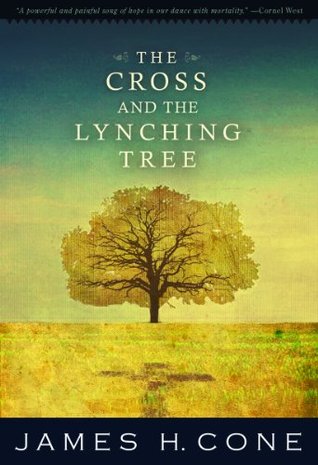
Summary:
Dr. Cone is respected as the founder of Black liberation theology. In this book first published in 2011 he explores the connections between the Jesus’s crucifixion and the lynchings committed by white Americans against Black Americans. He also explores in a forthright manner how Christianity is experienced and expressed in Black American churches and directly addresses the seeming contradiction of Black Americans embracing the faith they encountered initially through white enslavers.
Review:
I think it’s important before giving my thoughts on this book to establish for those who may web search their way here who I am. I’m a white, US American woman with the privilege of a Masters degree. While I don’t hazard to guess who Dr. Cone intended to write for, I will say I found both a greater understanding of the Black Christian church in the US and simultaneously called out as a white US American – a couple of times as a white woman specifically. If you are a white US American and not a Christian, this is still a relevant read for you. 79% of Black US Americans consider themselves to be Christian (Pew Research Center) – a greater percent than either US Americans overall or when compared to white US Americans alone. If we are to be good allies, it’s important to understand how this faith intertwines with the atrocious history and (Dr. Cone argues, and I agree with him, continued presence of) lynching in the US.
Dr. Cone gives context for how Black US Americans, especially those who are descendants of enslaved people, came to find and embrace the Christian faith. He also discusses some prominent white and Black theologians, highlighting the differences in how they addressed or, in the case of white theologians, failed to address systemic racism in the US.
I could not find one sermon or theological essay, not to mention a book, opposing lynching by a prominent liberal white preacher.
(loc 79%)
I was particularly moved by the section that discussed how these theologians reacted to the 1963 Birmingham Baptist Church bombing, which resulted in the deaths of four Black girls – Addie Mae Collins (14), Cynthia Wesley (14), Carole Robertson (14) and Carol Denise McNair (11). Dr. Cone’s justified palpable frustration at the general lack of response even in the face of such clear evil was important to hear.
The title of the book alludes to the answer to a couple of questions I’ve heard people ask before – how is the Black Christian experience different from that of white Christians and how did the descendants of enslaved people come to embrace the faith of those who enslaved their ancestors? According to Dr. Cone, Black US Americans saw a fellow sufferer in Jesus and a clear connection between how he was crucified and how Black US Americans are unjustly treated. He also draws attention to how Black churches pay attention to different aspects of the Bible than what you might hear in white churches.
One cannot correctly understand the black religious experience without an affirmation of deep faith informed by profound doubt. Suffering naturally gives rise to doubt. How can one believe in God in the face of such horrendous suffering as slavery, segregation, and the lynching tree? Under these circumstances, doubt is not a denial but an integral part of faith. It keeps faith from being sure of itself. But doubt does not have the final word. The final word is faith giving rise to hope.
(loc 64%)
Dr. Cone directly addresses the frustration of the white people who enforce segregation and lynching and Black people suffering from these things both laying claim to the same faith and how painful that is. My takeaway was that, rather than ask how white supremacists and Black US Americans can lay claim to the same faith, acknowledge that white supremacy is twisting the faith of white US Americans.
Hate and white supremacy lead to violence and alienation, while love and the cross lead to nonviolence and reconciliation.
(loc 46%)
White supremacy tears faith to pieces and turns the heart away from God.
(loc 94%)
Dr. Cone also dedicates space to Black women’s voices, and I was particularly moved by this part as it features Black women directly calling out white women as having the ability to bring change to white supremacy. I have so often heard the opposite, disempowering message that our options of action as white women are limited due to the patriarchy, but that is an overly limited viewpoint. While it is true the patriarchy limits us, we do have the ears of other white folks in a way that Black people often do not, and white women may have more influence over the men in our lives than we may realize. (When I say men in our lives I mean this in the most inclusive way possible – family members, sons, friends, colleagues, etc…) Black women in this book see and call out the power that we white women clearly have with specific examples of how white supremacy responds to perceived affronts on white women. If we have the power to cause harm to Black folks in this way, then we have the power to, at the very least disengage from it by not allowing our experiences to be used as the spark to start off the firestorm, but perhaps we can also use it to quench the violence to begin with. I think it’s important for those reading this not to mistake this as a call for white saviors but rather as a call for white women to cease (knowingly or unknowingly) inciting violence and to work against it. I think of it as the Bible says – take the log out of our own eyes first.
This book also includes some very meaningful explorations of the blues and Gospel music, as well as Dr. Martin Luther King’s theology. It ends with a call to address continued issues, especially as seen through the prison system. As a white woman who grew up rural poor with a large local issue when I was in high school being whether or not to bring in a prison as a source of jobs to an economically depressed area, I viewed this as yet another reason to address efforts toward our incredibly problematic private prison industrial complex in the US.
Through private prisons and the “war against drugs,” whites have turned the brutality of their racist legal system into a profit-making venture for dying white towns and cities throughout America.
(loc 97%)
This clearly was a meaningful read for me, and I can easily see what an important read it is for my fellow white US Americans. It does not give easy answers for what to do, but it demonstrates how white supremacy hurts everyone and leaves one with an urge to be part of the change for good.
4 out of 5 stars
Length: 226 pages – average but on the shorter side
Source: purchased
Buy It (Amazon or Bookshop.org)
If you found this review helpful, please consider tipping me on ko-fi, checking out my digital items available in my ko-fi shop, buying one of my publications, or using one of my referral/coupon codes. Thank you for your support!
Book Review: The Hiding Place by Corrie Ten Boom
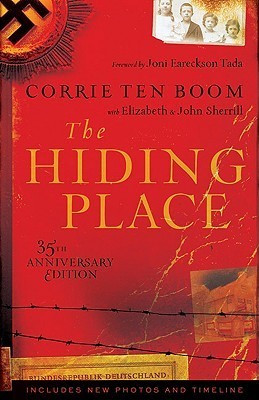 Summary:
Corrie Ten Boom and her family of watchmakers (she was the first licensed woman watchmaker in the Netherlands) are known for their work in the Dutch underground, both hiding Jewish people and doing organizing work for the underground. She and her sister Betsie did this work with their father. She and Betsie were in their 50s during this work. All three of them were ultimately arrested, and Corrie and Betsie were ultimately sent to the infamous Ravensbrück concentration camp. Corrie survived and started a home to help people refind their footing after the War.
Review:
This was one of my favorite books as a little girl. I had a fascination with WWII (still do) and was utterly enamored with Corrie. I distinctly remember that the paperback book I read was borrowed, but am uncertain if I borrowed it from my grandmother or from the church library. In any case, I decided it was high time I re-read this favored book as an adult and see if it withstood my now adult sensibilities. It certainly did.
The Ten Boom’s family commitment to not only do what is right but also to discern what that right thing might be is incredible. Corrie’s ability to be peaceful and not embittered after the War and everything she went through is also amazing. She is honest about who it was more difficult to forgive than others, and how she found the ability to. I believe any reader will be fascinated by the beginning of the book, which details how her family lived as watchmakers in Amsterdam, how they began hiding Jewish people, and how they came to largely run parts of the underground in Amsterdam. The sections about her capture and imprisonment are remarkable for their combination of honesty about the suffering combined with clear forgiveness and lack of bitterness for her captors.
When He [God] tells us to love our enemies, He gives, along with the command, the love itself. (86% into the digital edition”
Corrie also demonstrates a viewpoint of both the body and soul needing to be cared for in order for the human being to be completely well and whole. She notes both when a German captor is clearly well cared-for but wanting in soul care and when a prisoner is happy in the soul but wretched in the body, noting neither is as God intended.
Corrie’s commitment to peace is also seen following the war when she establishes and runs a home to help all people (no matter which side they were on) find their way again after the war. Truly an inspiration in peace work. It’s also inspiring that she didn’t find this labor until she was in her 50s. An indicator that our calling may not fully come until later in life.
5 out of 5 stars
Length: 273 pages – average but on the shorter side
Source: Library
Buy It (Amazon or Bookshop.org)
If you found this review helpful, please consider tipping me on ko-fi, checking out my digital items available in my ko-fi shop, buying one of my publications, or using one of my referral/coupon codes. Thank you for your support!
Book Review: The Color Purple by Alice Walker
 Summary:
Alice Walker’s classic about Celie and her life in the deep American South between WWI and WWII. The simplest plot summary is the survivor of both rape by her father and a forced loveless marriage who then finds love with her husband’s mistress, Shug Avery. But it’s so much more than that.
Review:
For Black History Month in February I thought it was high time I got around to reading The Color Purple, which is also hailed by many of my friends and fellow members of the LGBTQ+ community as a classic for us as well. When I saw Audible had the audiobook version read by Alice Walker herself, well, it was a sign, and it was time.
I had always hesitated to read it because the plot summary made me not sure the book would work for me. Rape and incest are plots that I struggle with as is cheating in a marriage. But this book surprised me. It told what needed to be told about Celie’s childhood without dwelling on it too much or in a sensational way. And by the time Celie and Shug were getting together, I was rooting for them. Because how much of a real marriage is it when neither partner wants it?
There are many strengths to The Color Purple, but three things really stood out to me. First, it helped me to see the gray areas of people’s lives and experiences and how not everything is as clearcut as it might at first seem.
Second, the way Celie’s voice in the writing grows and changes as she grows and changes and then how the letters from her sister come in midway making it partially an epistolary novel – it’s incredible.
Finally how it explored the American “justice” system and its real impact on people’s lives and how often responses to crimes are racially motivated. It wasn’t preachy but it was very moving.
The only reason I’m not rating it at 5 stars is because, for me, it was not a life-changing book. I enjoyed it, and I respect it. However, I know for many others it is a life-changing book, and if you have been on the fence about reading it, I encourage you to do so.
4 out of 5 stars
Length: 295 pages – average but on the shorter side
Source: Audible
Buy It (Amazon or Bookshop.org)
If you found this review helpful, please consider tipping me on ko-fi, checking out my digital items available in my ko-fi shop, buying one of my publications, or using one of my referral/coupon codes. Thank you for your support!
Book Review: The Shape of Night by Tess Gerritsen
First, a note….
I hope all of my readers are as safe and well as possible in these difficult times we are living in. A few people have asked me what I recommend reading to get through things. My advice is what my advice always is – read what most entertains you. Read what distracts you. Feel no guilt for what you enjoy reading. Read whatever it is you most enjoy. I think now more than ever it’s important for all of us to get a respite from the world around us and visit another world, whether that’s fiction or nonfiction, romance or thrills. In the spirit of this, I’m just going to keep reviewing the books I’ve most enjoyed recently.
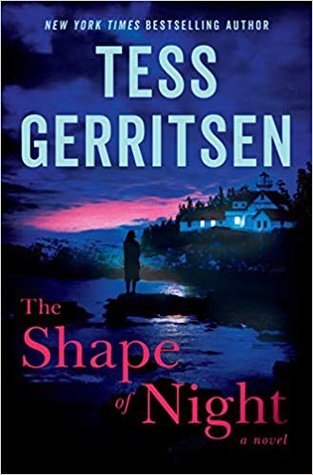 Summary:
Ava is writing a cookbook of what Maine fisherman communities ate during the 1800s. She’s hit a bit of a writer’s block, so she rents a summer home on the coast of Maine for inspiration – and maybe to run away from the tragedy that is haunting her. But when she arrives at the home in Maine she starts to think it might actually be haunted. She also discovers the previous renter mysteriously disappeared.
Review:
I love house-sitting or house-renting thrillers. There is something decidedly spooky about short-term rentals, and I love how this type of thriller just goes there. It reminded me of the Victoria Holt books I would borrow from my grandmother in middle school only set in modern day Maine.
What I wasn’t expecting from this book or its summary was its deft handling of alcohol addiction. Ava’s alcohol addiction isn’t her entire personality – far from it. She is very well-rounded. We get to know her incredible talent at both cooking and researching then recreating historic recipes. She is intelligent and caring. She loves her sister. But she has definitely made a giant mistake that is haunting her, and I would argue it’s a mistake that was rooted in her alcohol problem although before it became as serious as it is in Maine.
There are no easy answers in this book – not for the “ghost” of Captain Brodie. Not for the disappearances. Not for how small towns handle things. Not for Ava straightening her life back up. The lack of neat ends makes it all feel more real which really works for a book with a creepy ghost.
There were many aspects of this book that kept me staying up too late reading it: the mystery, Ava’s addiction, the ambience, is there really a ghost, what happened in Ava’s past. I also just liked visiting the house and waterfront, which was well described and realistic. It had just the right amount of twists and turns and well-rounded characters.
5 out of 5 stars
Length: 288 pages – average but on the shorter side
Source: Library
Buy It (Amazon or Bookshop.org)
If you found this review helpful, please consider tipping me on ko-fi, checking out my digital items available in my ko-fi shop, buying one of my publications, or using one of my referral/coupon codes. Thank you for your support!
March 2018 Book Review – Steel Drivin’ Man: John Henry, the Untold Story of an American Legend (#nonfiction)

For more shots, check out my bookstagram
Hello my lovely readers! Notice how that says book review and not books reviews? Well that’s because I somehow managed to only finish one book in the entire month of March. :-O
I know the reason for this. It’s because my print book I was reading was a real chunkster. So while I read religiously throughout the month, I just didn’t quite finish the print book within the month of March. But I’m actually ok with this book getting to take center stage, because it’s a cool one.
John Henry is an American folk song that I thought was famous until I was reading this book and had to keep explaining it to people. (I couldn’t find the version I grew up listening to on YouTube but here it is on Spotify – John Henry as sung by Wee Sing on the album America). Essentially the lyrics tell the story of John Henry, a black man who worked on the railroad and beat the steam drill at going through a mountain but died doing so. There are many different versions of the lyrics, but this is the closest to the version I grew up listening to. What’s the point of singing this song to and with children? Well, that depends on who you ask and what version you sang. The gospel version focuses on John Henry’s rewards in Heaven. The blues version focuses on the unfairness of the job and the fear (warranted or not) of machines replacing blue collar labor.
(I did find it comforting that the book indicates that this is an extremely popular folk song in the United States – with the librarians at the Library of Congress telling the author it’s the most researched folk song in the US.)
In Steel Drivin Man, Scott Reynolds Nelson seeks to find the origins of this folk tale and see if there was a real man behind it. Fascinatingly, he successfully found who most likely was the real John Henry. Perhaps not surprisingly, John Henry was a free black man who in the immediately post Civil War era (Reconstruction) Virgina was arrested on what may have been fair charges of shoplifting (no one can really say if a crime actually occurred or not) that was then escalated to a higher charge (most likely falsely). In spite of the North attempts at forcing the South to treat black men and women equally to white, some districts in the South pulled off the Jim Crow laws, which led to unequal punishment for equal crimes, which meant John Henry got put away in prison for a very long time for a very small crime. Unfortunately for him, this was about the time that people got it into their heads that they could use prison labor in the form of chain gangs much like they used to use slave labor. John Henry was sent out to work on the railroad and died there, as working on the railroad was essentially a death sentence.
Some prisoners escaped, and some were killed by guards for what the railroad labeled “mutiny,” but the remainder entered tunnels where tiny bits of microscopic rock floated in the air, entered their lungs, and over a period of six months to three years, strangled them. These prisoners died gasping for air. (location 34%)
I for one after reading that passage couldn’t help but think of Eric Garner and was saddened by how little some things have changed.
Many American folk songs, including this one, were actually originally work songs. I learned through this book that rock and roll refers to these work songs, as the two man crew who drilled had one man to shake the stake and another to hit it, which was called rocking and rolling. Songs were sung to a particular beat both to pass the time and to help ensure no one’s fingers got smashed.
The original blues version of John Henry as opposed to praising his work ethic actually was memorializing his strength and the unfair situation. His status as a prisoner wasn’t so much rewritten as not mentioned (because it didn’t matter), and his strength of character was symbolized by being a man of large stature, even though the real John Henry was actually quite short (under 5’4″). The gospel version focuses more on his strong Protestant work ethic and the rewards he’ll see in Heaven.
The author speaks some about the song and the groups that attached themselves to it over time. I found it interesting that Communist groups in America liked it because of its demonstration of an unfair use of labor. Also interesting was that he found that schools in historically black neighborhoods would devote entire music classes to the song and its history. He also traces John Henry in everything from comic books to Disney shows. I admit that I found the beginning of the book about the real John Henry and the early versions of the song to be the most interesting.
I would have given this book 5 stars but the ending let me down, particularly when the author postulates what message John Henry’s bones might tell us, and I thought that message was very far off the mark, speaking about working less when in fact John Henry was mistreated due to racism, not out of any workaholicism of his own!
Overall, though, I’m not sad this was the only book I read in the month of March. I learned so much, and I really did enjoy it.
(4 out of 5 stars, buy it)
(source: Amazon)
(Length: 224 pages – average but on the shorter side)
My total for the month of March 2018:
- 1 book
- 0 fiction; 1 nonfiction
- 0 female authors; 1 male author
- 1 ebooks; 0 print books; 0 audiobooks
If you found this review helpful, please consider tipping me on ko-fi, checking out my digital items available in my ko-fi shop, buying one of my publications, or using one of my referral/coupon codes. Thank you for your support!
Book Review: Brain on Fire: My Month of Madness by Susannah Cahalan
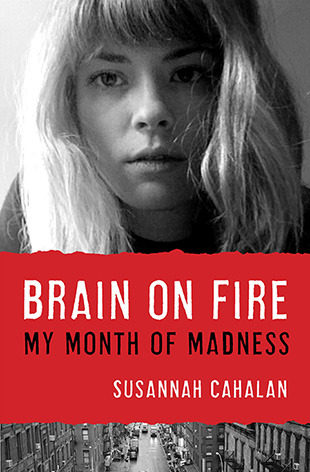 Summary:
When twenty-four-year-old Susannah Cahalan woke up alone in a hospital room, strapped to her bed and unable to move or speak, she had no memory of how she’d gotten there. Days earlier, she had been on the threshold of a new, adult life: at the beginning of her first serious relationship and a promising career at a major New York newspaper. Now she was labeled violent, psychotic, a flight risk. What happened?
Review:
Written by a journalist, the reader soon discovers this memoir is a survivor’s tale of brain encephalitis. Divided into three parts, the first establishes Susannah’s life when she came down with the illness and the first appearance of symptoms. The second covers the time period of her illness that she actually can’t remember, and features her own investigative journalism into what happened during that time. The third part covers the first part of her recovery time in the first year or so after she recovers her memory.
The first two thirds of the book are quite strong for different reasons. In the first third, Susannah recalls with such clarity the feeling of is this really happening or am I losing my mind? Specifically, the first thing that happens is she’s sure she has bed bugs but other people (including the exterminator) see no evidence of them. To this day, no one knows if Susannah really had bed bugs or if hallucinating them was a first symptom of her illness.
The second third of the book highlights her skills as an investigative journalist. Since she herself doesn’t remember the worst of her sickness immediately prior to or during her hospitalization, she is able to take an impartial distance to the whole situation and report on how her divorced parents put aside their differences to care for her together, as well as look at how the medical system both cared for her but also almost missed her critical diagnosis. Susannah recognizes how lucky she was to have people on her side advocating with the hospital for her, as well as to be in a city with such high-quality and cutting edge medical care.
The last third where she talks about her years of recovery and her life now was the weakest. The level of insight and analysis found in the first two parts was absent. While Susannah clearly empathizes with those with mental illness, there’s a clear sense that she thinks that all mental illness is just an illness making you look mental and not actually maybe a different way of interacting with the world. A different kind of normal you’re just born with. I think Susannah fails to take into consideration what if she was just born seeing colors more brightly and seeing the walls breathe? What if that was just always her normal? That’s the reality for many with a mental illness, and she kind of just glosses over that and comes down on the it’s all just a physical illness side. I’m more of a believer that it’s ok for there to be different ways to be “normal” and maybe society should stop shoving us all into the same shaped peghole. While it’s true that situations like Susannah’s where your whole personality changes overnight are devastating, that’s not how all mental illness presents, and I think she misses that in her quest to find and diagnose those with a brain inflammation misdiagnosed.
Overall, this is an intensely readable book that leaves you questioning what is truly madness and what is just abnormality? And what makes us who we are? If a person is unable to remember what they are doing, does that mean they’re behaving as themselves authentically or as quite the opposite?
If you found this review helpful, please consider tipping me on ko-fi, checking out my digital items available in my ko-fi shop, buying one of my publications, or using one of my referral/coupon codes. Thank you for your support!
4 out of 5 stars
Length: 250 pages – average but on the shorter side
Source: ARC from publisher in exchange for my honest review
Book Review and Giveaway: Life First by R.J. Crayton (Series, #1)
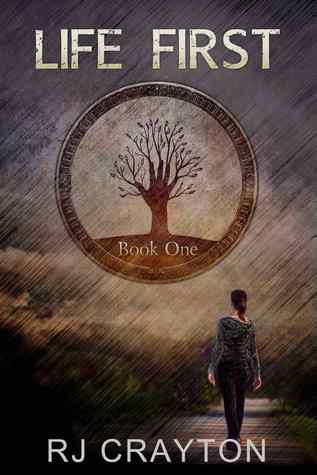 Summary:
Strong-willed Kelsey Reed must escape tonight or tomorrow her government will take her kidney and give it to someone else.
In this future forged by survivors of pandemics that wiped out 80 percent of the world’s population, life is valued above all else. The government of “Life First” requires the mentally ill to be sterilized, outlaws abortions and sentences to death those who refuse to donate an organ when told.
Determined not to give up her kidney, Kelsey enlists the help of her boyfriend Luke and a dodgy doctor to escape. The trio must disable the tracking chip in her arm for her to flee undetected. If they fail, Kelsey will be stripped of everything.
Review:
I have a confession to make. I was supposed to review this in 2016 but somehow my review copy never made it onto my Kindle or my 2016 ARCs folder. It was only when I was cross-posting to last year’s Accepted ARCs post that I saw it listed and wondered what had happened to it. Apparently it got hung up somehow in the cloud instead of ever delivering to my kindle. My apologies to the author for the delay but I must say the timing of reading it was rather impeccable. With new threats to the bodily autonomy of women coming in 2017 I found the dystopian future to be even more haunting than I might have in 2016.
Set in a near-future where the population was decimated by plagues and environmental issues leading to starvation, the title alludes to a new movement and indeed, rule of law, in the United States. In a landmark case, a woman who after the population decimation chose to have an abortion is prosecuted in court. Her defense is that you wouldn’t force someone to donate blood or a body part to save another person’s life so why should you force a woman to bring a fetus to term? The court agrees that it is a logical fallacy but instead of protecting abortion chooses to make it the law to donate body parts and blood when needed. (There are other impacts too, such as everyone must take statistics classes and decide whether or not to risk their life to save another’s based on the statistical likelihood of success). Everyone is given a life monitoring chip and is registered in a database and bodily matches found so they may be called in when needed. The main character is called in as a kidney donor, but she’s afraid to donate since one of her best friends became paralyzed as a result of her donor surgery.
Those who disagree with this policy have seceded to their own country in what used to be Florida. Kelsey and her boyfriend Luke plan her escape there but of course, not everything goes as planned. There are a lot of twists and turns that bring forth more moral issues that I can’t really get into without spoiling the book for others. Suffice to say, I work as a medical librarian, and I found the medical ethics issues raised on top of the bodily autonomy ones to be quite well-put and thought-provoking.
I must give a quick trigger warning that there is a graphic attempted rape in the book, which was definitely disturbing and not possible to simply skip over, as it was a key plot point and lasted for a while. However, I do think that it suited the book and the issues being raised and was not out-of-place. Essentially, if you’re disturbed by the attempted rape and not by the rest of the book then I have some questions for you about your ethical lines.
Overall, this was an engaging read that left me immediately curious about the next entry in the series. Twists and turns took it places I wasn’t anticipating it going and I encountered more medical ethics issues than I thought I would in the read. Highly recommended, particularly to those who have enjoyed other women’s issues dystopian futures such as The Handmaid’s Tale.
4 out of 5 stars
Length: 262 pages – average but on the shorter side
Source: kindle copy from author in exchange for honest review
Giveaway!
This giveaway is now over. Congrats to our winner!
There was 1 entry via blog comment, so she is our winner. Congrats to Amanda McNeill!
Thanks to the generosity of the author, one lucky Opinions of a Wolf reader can win a copy of this ebook.
How to Enter:
- Leave a comment on this post stating why bodily autonomy matters to you.
- Copy/paste the following and tweet it from your public twitter. Retweets do not count:
Enter to win LIFE FIRST by @RJCrayton, hosted by @McNeilAuthor http://buff.ly/2kgFf4F #scifi #womenauthors #giveaway - Repost the Instagram giveaway announcement and tag my Instagram.
- Tag one of your friends on the Instagram giveaway announcement.
Each option gets you one entry. Multiple tweets/Instagram posts do not count as multiple entries.
Who Can Enter: International
Contest Ends: February 23rd at midnight
Disclaimer: The winner will have their book sent to them by the author. The blogger is not responsible for sending the book. Void where prohibited by law.
Book Review: Run by Kody Keplinger
 Summary:
Bo Dickinson is a girl with a wild reputation, a deadbeat dad, and a mama who’s not exactly sober most of the time. Everyone in town knows the Dickinsons are a bad lot, but Bo doesn’t care what anyone thinks.
Agnes Atwood has never gone on a date, never even stayed out past ten, and never broken any of her parents’ overbearing rules. Rules that are meant to protect their legally blind daughter—protect her from what, Agnes isn’t quite sure.
Despite everything, Bo and Agnes become best friends. And it’s the sort of friendship that runs truer and deeper than anything else.
So when Bo shows up in the middle of the night, with police sirens wailing in the distance, desperate to get out of town, Agnes doesn’t hesitate to take off with her. But running away and not getting caught will require stealing a car, tracking down Bo’s dad, staying ahead of the authorities, and—worst of all—confronting some ugly secrets.
Review:
This book would have wound up as a Disappointing Reads Haiku except that I actually didn’t have high expectations for it going in. The description didn’t appeal to me that much, and I had a feeling I might feel lukewarm about it. So why did I read it? I heard one of the two girls was bisexual, and hurting as I am for bisexual literature (it’s hard to find just from book descriptions), I’m willing to give most of it a shot if it sounds even moderately appealing. I do like stories of unlikely friendships and representation of less than ideal parenting situations (the realistic kind, not the fantasy kind of conveniently dead parents). I also liked the representation of not just bisexuality but also someone who is legally blind. I found the writing to be clunky, though, and the ultimate plotline to be a bit puzzling, rather than moving.
Agnes is written better than Bo. The depictions of her over-protective parents, what it is to be legally blind but not 100% blind, how others treat her, particularly in her church as an angel and not as a regular person, these were all great. The author is herself legally blind, and you can really tell. I’ve read many books about blind characters by people who were not themselves blind and the depiction was nowhere near as realistic as in this book. I think it speaks a lot to why own voices literature matters.
This realism doesn’t come through in Bo though. Bo reads like a two-dimensional caricature with the quick correction that oh hey I know I’ll make her bisexual but not a slut and that makes her seem sensitively written. Bo whose family is known in the small town as the trouble-makers, the no-goods. Bo with rumors spread about her and no-good drug-addict mom. Bo who, unlike Agnes, doesn’t speak mainstream English but mostly just in the sense that she says “ain’t” a lot. Bo who’s terrified of foster care so runs when her mom is arrested again. What bothers me the most about Bo (this may be a minor spoiler) is the book seems to think it gives her a happy ending. Like everything is ok now. But it’s clearly not. Speaking as a bisexual woman who had a less than ideal living situation in rural America in her teens, nothing about Bo strikes me as realistic. She reads as fake. She sounds fake. Some of her actions themselves are realistic but there’s no soul behind them. It might not have stuck out so badly if Agnes hadn’t been so well-written or perhaps if I wasn’t able to relate to well to who Bo was supposed to be.
One of the lines that I think demonstrates this problem that I couldn’t stop re-reading is below. It should have made me happy because Bo actually says the word “bisexual.” (Very rare in literature). But I was just irritated at how fake it all sounded.
“So … you’re all right with it, then? Me being … bisexual, I guess? I ain’t never used that word before, but … you’re all right with it?” (loc 2359)
It bothers me on two levels. First, rural people don’t just decorate their sentences with ain’t’s and double negatives. There’s more nuance to the accent than that and also Agnes and her average blue collar parents would have the same accent as Bo (they don’t). Second, I’ve never in my life heard a bisexual person speak about themselves this way, and I certainly never have. The number of times Bo asks Agnes if she’s “ok with it” (this is not the first time) is unrealistic. You know as soon as you come out if someone is “ok with it” or not and you deal and react to that. You don’t just keep wondering. You know. No amount of inexperience coming out would make you not know.
If Bo had been written as powerfully as Agnes, this would be a very different review, but since that’s not the case I have to say my dislike of the representation of Bo paired with my like of the representation of Agnes left this an average read for me, and it certainly won’t be a piece of bi literature I’ll go around recommending.
If you found this review helpful, please consider tipping me on ko-fi, checking out my digital items available in my ko-fi shop, buying one of my publications, or using one of my referral/coupon codes. Thank you for your support!
3 out of 5 stars
Length: 288 pages – average but on the shorter side
Source: Library
Book Review: The Girl from the Well (Series, #1)
 Summary:
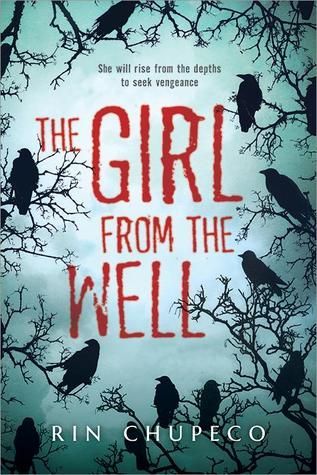
A dead girl walks the streets.
She hunts murderers. Child killers, much like the man who threw her body down a well three hundred years ago.
And when a strange boy bearing stranger tattoos moves into the neighborhood so, she discovers, does something else. And soon both will be drawn into the world of eerie doll rituals and dark Shinto exorcisms that will take them from American suburbia to the remote valleys and shrines of Aomori, Japan.
Because the boy has a terrifying secret – one that would just killto get out.
Review:
The official pitch on this one is that it’s Dexter meets The Grudge but what I heard about it was it’s another version of the Japanese myth that The Ring is based on. (After reading it, I can tell you that this is true). I was absolutely batshit terrified of The Ring when I first watched it. I must admit that I read this description and expected the book to me meh compared to the movie based on the same myth. This low expectation is what kept the book from being a disappointing read for me.
I found the writing to be overwrought and trying too hard for the actual genre and plot. Like when the small town seamstress thinks she’s a haute couture fashion designer. For instance:
His mind tastes like sour wine, a dram of sake left out in the dark for too long. (location 63)
Bear in mind that this passage is about a ghost girl who murders child killers/rapists. It’s a pretty passage; it just doesn’t fit.
As far as the plot goes, while I really liked the ghost, the tattooed boy’s plot rubbed me the wrong way. His mother is deemed mentally ill, partially for trying to kill him and tattooing him when he was a child. We later find out that rather than being mentally ill she was battling literal evil spirits, one in particular who wanted to go out and wreak havoc on the world. To try to bind the spirit, she decides to sacrifice her own child to the evil spirit by using him as an anchor, basically, to bind him. So after a bunch of the book basically saying hey the kid should forgive his mother because she’s ill we find out she did this act. I feel like the book wants me to think it’s heroic, but I thought it was sick. The way I felt the book wanted me to feel and the way I actually felt about the situation made me uncomfortable with the rest of the book and struggling with who to root for. Others may feel less conflicted than me over this part of the plot.
Overall, it’s a unique plot that other readers may enjoy more than myself.
If you found this review helpful, please consider tipping me on ko-fi, checking out my digital items available in my ko-fi shop, buying one of my publications, or using one of my referral/coupon codes. Thank you for your support!
3 out of 5 stars
Length: 267 pages – average but on the shorter side
Source: Library
Book Review: Loud is How I Love You by Mercy Brown (Series, #1)
 Summary:
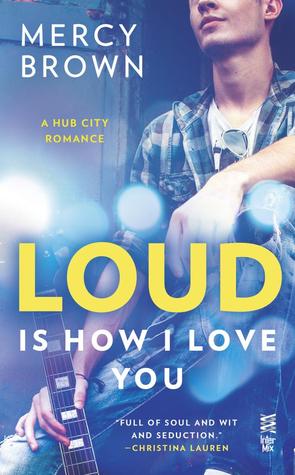
Twenty-one-year-old front girl Emmylou knows that getting her band noticed in the ‘90s indie rock scene will be no easy task. She definitely knows better than to break the number one rule of the band: Don’t sleep with your bandmates! But after she ends up having the best sex of her life with her guitarist, Travis, she finds following that rule is a lot harder than it sounds.
When the band gets the gig of their dreams, making it big seems just within reach. But Emmy’s inability to keep her hands off Travis threatens everything they’ve worked for. Can Emmy find a way to break the rules and not blow the chance of a lifetime?
Review:
It took me a moment to get past the fact that 90s now count as historic fiction. *pours one out for the 90s* But then again Fresh Off the Boat is set entirely in the 90s, much like That 70s Show, so it appears the time has come. I was not a “new adult” (refers to those post high school but pre having your shit together) in the 90s (I was solidly a kid coveting a tamagotchi) but I vaguely knew about all the fads the older kids were into like….flannel and grunge. This book oozes that, and the characters get to have the problems that arise from not having a cell phone or YouTube to promo your band. That was fun.
For those who don’t know, New Adult means to expect more sex. And oh man. The sex scenes in this book. There are a lot of them. They are explicit. I like that sort of thing, and even though I rolled my eyes occasionally at some of their more interesting bedroom pursuits (like “tattooing” with permanent marker), I still thought they were hot, well-written, within character, and, most importantly, made sense within the plot.
What I think could make people love or hate this book is the main character, Emmy. She narrates it in the first person and she is, well, she’s a 21-year-old. She makes problems where there shouldn’t be any problems. She gets all up in her head. She thinks in black and white. She is, basically, young and acts and talks like a young person. Yeah, sometimes it’s infuriating to see her fucking her own life up, but that’s realistic, especially for a character who’s supposed to be a passionate artistic type in a band. I was able to appreciate her for who she is and have faith that she’d grow and get past her issues, but I do think that not everyone would be able to see past that and enjoy it in the same way.
The series will follow other people involved in the indie rock scene, and so we’ve already met them in this book as secondary characters. I’m excited to see what hot shenanigans they get up to and hear a new voice’s take on everything going on for the various bands.
Recommended to those who want to take a visit to the 90s through the eyes of a passionate new adult.
If you found this review helpful, please consider tipping me on ko-fi, checking out my digital items available in my ko-fi shop, buying one of my publications, or using one of my referral/coupon codes. Thank you for your support!
4 out of 5 stars
Length: 227 pages – average but on the shorter side
Source: Library
 Support my work with a tip or browse my shop for curated book club guides, how to guides, cross-stitch patterns, and more!


This work by Amanda Nevius is licensed under a Creative Commons Attribution-Noncommercial-No Derivative Works 3.0 United States License.
 Opinions of a Wolf