
Archive
Book Review: Witchcraft for Wayward Girls by Grady Hendrix
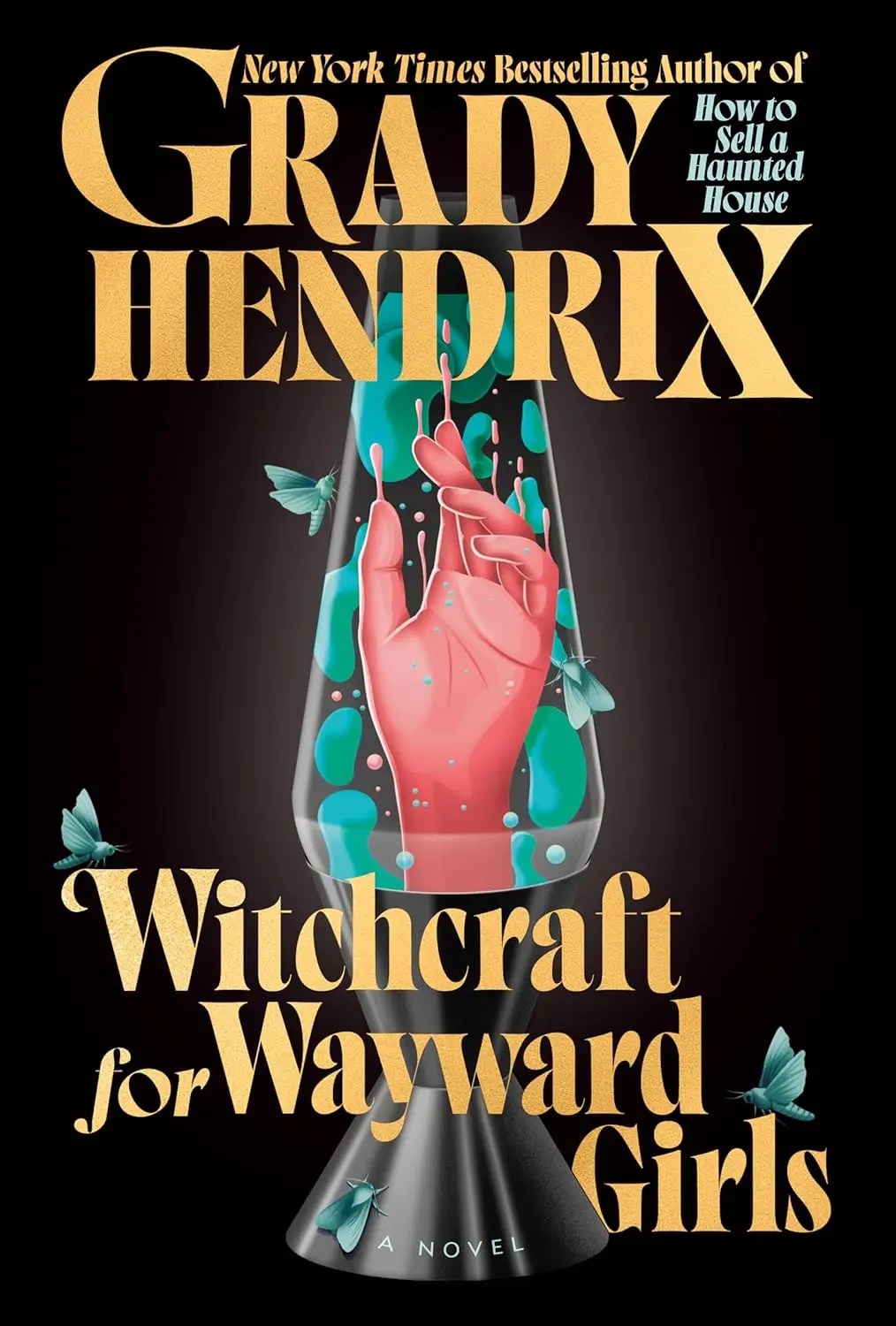
A chilling blend of historical fiction and supernatural horror, this novel explores what happens when pregnant teenage girls—hidden away in a 1970s home for wayward girls—discover the dark power of witchcraft.
Summary:
They call them wayward girls. Loose girls. Girls who grew up too fast. And they’re sent to the Wellwood Home in St. Augustine, Florida, where unwed mothers are hidden by their families to have their babies in secret, give them up for adoption, and most important of all, to forget any of it ever happened.
Fifteen-year-old Fern arrives at the home in the sweltering summer of 1970, pregnant, terrified and alone. Under the watchful eye of the stern Miss Wellwood, she meets a dozen other girls in the same predicament. There’s Rose, a hippie who insists she’s going to find a way to keep her baby and escape to a commune. And Zinnia, a budding musician who knows she’s going to go home and marry her baby’s father. And Holly, a wisp of a girl, barely fourteen, mute and pregnant by no-one-knows-who.
Everything the girls eat, every moment of their waking day, and everything they’re allowed to talk about is strictly controlled by adults who claim they know what’s best for them. Then Fern meets a librarian who gives her an occult book about witchcraft, and power is in the hands of the girls for the first time in their lives. But power can destroy as easily as it creates, and it’s never given freely. There’s always a price to be paid…and it’s usually paid in blood.
Review:
I had previously read Grady Hendrix’s My Best Friend’s Exorcism and remembered liking it more than I actually did. When I revisited my review, I realized I had enjoyed the concept far more than the execution—and unfortunately, that’s exactly how I feel about this book as well.
One thing I didn’t realize before picking this up is that Hendrix is a male author. I read My Best Friend’s Exorcism digitally, so it wasn’t until I saw the author photo on my library copy that it became obvious. Now, that’s not to say men can’t or shouldn’t write about women’s issues—but in my experience, if a book is expressly about women’s experiences (such as pregnancy and abortion), I tend to dislike it when it’s written by a man. Hendrix acknowledges this in a note, explaining that his inspiration came from a family member’s experience as a wayward girl, and I appreciate the personal connection as well as the research he put in. That said, I still struggled with the execution. In retrospect, this also explains issues I had with My Best Friend’s Exorcism—especially the queer-baiting between the two best friends. The way their relationship was written didn’t quite reflect how best girlfriends interact. I now wonder if Hendrix was inserting subtext without realizing it. But I digress—back to this book.
This is a long book, and it takes quite a while before the supernatural horror elements appear. When they do, they feel sporadic—as if the book can’t quite decide whether it wants to be historical fiction or horror. According to the author’s note, an earlier version was pure historical fiction, and it shows. The witchcraft elements feel both tacked-on and underwhelming, lacking the impact they seem to be aiming for. The spellcasting scenes, in particular, drag on too long—the book repeatedly emphasizes how rituals are tedious, repetitive, and boring, and then actually makes the reader sit through them in full dialogue.
The novel also struggles with whether the witches are heroes or villains. At first, they seem to empower the girls in a feminist, girl-power way, but later, they’re positioned as the main threat. I can see the poetic logic in showing that these girls had no real options, but at the same time, a novel like this needs a stronger thematic core—a sense of hope, justice, or at least a clear vision for a better future. On the plus side, I never knew what would happen next or how it would wrap up. Even when I felt frustrated, I kept reading simply because I needed to know how it all ended.
While the book does include a Black teen girl at the home, the handling of race and racism felt superficial at best. The only acknowledgment of racism in 1970s Florida is a scene where the home’s director initially wants to separate the Black girl from the others, only for a hippie character to protest and swap rooms with her. That’s it. This felt wildly unrealistic for the time period.
Beyond this, there are three other Black characters: the cook, the maid (her sister), and a driver. While these are historically accurate roles, the cook is a blatant magical negro trope, complete with a sassy personality and a role that exists entirely to serve and clean up after the white girls. I cringed. A lot. The white characters take advantage of her kindness without any acknowledgment of how their actions impact her life. I also disliked how Black characters’ skin tones were described.
Readers should be aware that this book includes:
- Graphic descriptions of self-injury related to spellcasting.
- Traumatic childbirth.
- Forced institutionalization & adoption.
- Emotional abuse.
- Mentions of CSA & child abuse (off-page).
- A spellcasting scene with explicit Christian blasphemy. (Expected for witches, but I do think it could have achieved the same effect without spelling out the blasphemy.)
Ultimately, this is historical fiction with horror elements rather than a true horror novel. It would have benefited from stronger thematic direction and a more nuanced approach to diversity, avoiding the Magical Negro trope. The book understands that these wayward homes were a problem, but it doesn’t seem to take a stance on what should have been done differently. It sends mixed messages about abortion, single teen motherhood, and autonomy—leaving it feeling murky rather than impactful. Recommended for readers who enjoy historical fiction with a touch of horror—and who don’t mind waiting for the horror to arrive. For those interested in the real history behind these homes, The Girls Who Went Away is a must-read.
If you found this review helpful, please consider tipping me on ko-fi, checking out my digital items available in my ko-fi shop, buying one of my publications, using one of my referral/coupon codes, or signing up for my free microfiction monthly newsletter. Thank you for your support!
3 out of 5 stars
Length: 482 pages – chunkster
Source: Library
Buy It (Amazon or Bookshop.org)
Book Review: Wildwood Chronicles Trilogy by Colin Meloy

When crows steal Prue’s little brother, she and her friend Curtis find that the Impassable Wilderness bordering Portland, Oregon, isn’t quite so Impassable after all.
Summary:
Prue and her friend Curtis uncover a secret world in the midst of violent upheaval—a world full of warring creatures, peaceable mystics, and powerful figures with the darkest intentions. And what begins as a rescue mission becomes something much greater as the two friends find themselves entwined in a struggle for the very freedom of this wilderness. A wilderness the locals call Wildwood.
Review:
A middle grade fantasy trilogy by the lead singer of my favorite band, The Decemberists. Gorgeously illustrated by his wife, Carson Ellis. If you’ve ever read The Chronicles of Narnia, this is like that except replace the Christianity with environmentalism and new age spirituality.
My favorite part of this trilogy was the various talking birds. All the animals in the Impassable Wilderness can talk, but Meloy’s love of birds really comes through. (As a fan of his songs, this didn’t surprise me at all.) The dapper outfits all the animals wear are also just too cute. It’s a trilogy with maps, and I do always love a good map to go with a story. I appreciate very much that the hero of the story is a girl with Curtis playing the sidekick.
There are really two enemies in the plot. A civil war style conflict inside the Impassable Wilderness, and the looming threat of capitalism from outside the Impassable Wilderness. I liked the idea of the latter more than the former, but the execution felt a bit too silly to me. For example, the big bad capitalists are all named the Titans of Industry (capitalized like that). One of them uses child labor in the form of orphans collected directly from Portland. It felt quite Victorian for something where the rest of the world outside of the Impassable Wilderness is quite modern.
The books are incredibly long, hitting chunkster length even for adult books. Each is over 500 pages (the last clocking in at 580.) I certainly read some long books when I was a kid, so I don’t begrudge them that per se. I do think it’s a tough sell when even the first book is super long. Regardless, I don’t think that the length is justified by the plot. While the first book is just about paced right, the latter two are not. There’s a lot of pages spent on not a lot going on. The middle book especially suffers horribly from middle book syndrome.
I liked the world, the Impassable Wilderness residents, and the illustrations. I felt the plot lacked depth, and the pacing was too slow for my taste, especially for such long books. I also found the ending to be a let-down.
Overall, this could be a good match for a reader who has a hankering for a through a secret door fantasy. Especially for the reader who loves talking animals and doesn’t mind a slower pace.
If you found this review helpful, please consider tipping me on ko-fi, checking out my digital items available in my ko-fi shop, buying one of my publications, using one of my referral/coupon codes, or signing up for my free microfiction monthly newsletter. Thank you for your support!
3 out of 5 stars
Books in Series:
Wildwood, 4 stars, length 541 pages – chunkster
Under Wildwood, 3 stars, length 559 pages – chunkster
Wildwood Imperium, 3 stars, length 580 pages – chunkster
Source: Gift
Buy It (Amazon or Bookshop.org)
Why I Love Bridget Jones’s Diary & A Review of the 25th Anniversary Edition

A Delightful Start
My first encounter with Bridget Jones’s Diary was the 2001 movie starring Renee Zellweger, Hugh Grant, and Colin Firth. I remember stumbling onto it on my dad’s satellite tv when I was in high school. I’d long loved epistolary novels, but especially anything diary based. (The Dear America series was an early obsession.) Even in high school, I loved New Year’s Resolutions, and the idea of reinventing and improving myself. So those two incredible opening scenes of the movie when Bridget goes to a diastrous New Year’s Day turkey curry buffet and then subsequently decides to reinvent herself with New Year’s Resolutions and a diary to keep herself accountable drew me in immediately. From that point on, rewatching the movie became a holiday season/January tradition for me.
What’s This Diary About Anyway?
For those of you who don’t know, Bridget Jones’s Diary is a romcom told through Bridget’s diary entries for one full year. She’s a woman in her early 30s living in London and working in publishing. She spends the year initially falling for her boss at work, Daniel Cleaver, and later for Mark Darcy, a human rights barrister her mother tried to set her up with. Other key plot elements include the hang outs, trials, and travails of her friends (both singletons and marrieds), her mother and father’s late in life marriage troubles, and her ongoing quest for self-improvement, including struggles with alcohol, cigarettes, instants (the lottery), and delightful asides like why it takes her 3 hours to get ready in the morning.
Discovering the Book
A few years later, I finally picked up the book, and I was blown away. How could a movie I loved so much be even better in book form?! I could scarcely believe it. The audiobook version as read by Imogen Church is my go-to when I’m having trouble sleeping or am under a lot of stress and need to just relax for a bit. Her reading of Bridget is simply perfection.
Why Do I Love Bridget So Much, Exactly?
1. how each entry starts
At the start of each diary entry are some things that Bridget tracks. What exactly she’s tracking changes throughout the book. The key items are her weight, calories consume, alcohol drunk, cigarettes smoked, and instants (lottery tickets) bought. But there are other trackings that pop in like number of smoothies consumed or number of times called 1471 (like American *69 only it tells you what number called you rather than ringing them back). I love data and statistics and tracking the mundane things in my life. The lists at the start of each entry make me laugh because they remind me of myself, and they provide a different type of insight into Bridget. I also love how she self-comments on each item, especially how she will say “v.g.” for “very good.” This is one of those pop cultureisms that has made it into my own daily life.
2. depiction of diet culture
Sometimes I hear people talking about Bridget Jones (especially those who’ve only seen the movie), and they complain specifically about Bridget’s obsession with her weight when she is, in fact, a healthy weight. To them I say, that’s the point! This book is an amazing take-down of 1990s diet culture. Bridget is a healthy weight. But she doesn’t think she is. And anytime she’s having problems, she thinks they might be magically solved if she was “no longer fat.” In fact, in diary entries when Bridget is feeling particularly down are when she is most likely to berate herself for her size.
There are two episodes in the book that really drive home the fact that this is a critique of diet culture. The first is that Bridget does get down to her goal weight. She goes to a party with her friends and is ecstatic for them to see her. But they express concern. They don’t think she looks well. Her friend Tom tells her she looked better before. She has a bit of a breakthrough and wonders if her calorie counting is unhealthy and stops tracking them for a while. But then something stressful happens and she begins again. The second episode is when the same friend Tom wonders about how many calories are in something, and Bridget recites the precise number off to him. He’s shocked she knows this then proceeds to quiz her on the number of calories in various things, all of which she knows off the top of her head. She asks doesn’t everyone know this? To which Tom emphatically tells her know. Bridget briefly wonders what other information she could have stored in her head if it wasn’t so busy with calories. Amazing! Just because Bridget never breaks free of her disordered eating doesn’t mean the book itself isn’t criticizing the culture that inflicted it upon her to begin with.
3. Bridget is gloriously imperfect
At the beginning of the book Bridget drinks too much alcohol and smokes cigarettes. She struggles to get to anything on-time. One could say her doing things is always a series of unfortunate calamities. None of this really changes by the end of the year. One could argue that she kind of fails at the majority of her New Year’s Resolutions. But the thing that does change is that Bridget has started to like the core of who she is, and that in turn has made it possible for her to open up to a kind man, instead of, as she would say, the fuckwits she’s been dating previously. She’s become a bit kinder to herself about the flaws that aren’t really flaws per se but just personality quirks (like her complete inability to do anything efficiently). But she’s also very willing to keep trying on the things she probably should still be improving on (like the number of cigarettes she smokes). She simply feels real.
4. it’s hysterically funny
Part of what makes the book funny is, due to its diary entry nature, not every single scene necessarily contributes to the main plot, although each one does help with character development. As such, we get some scenes that are just simply bananas hysterical that a book with a different structure might have left out. One of my favorites is when Bridget decides to study herself to see why it takes her so long to get out the door in the morning. We then get time-stamped entries of each activity she does. It’s gloriously inefficient (including imagining her taking the time to actually write all of this down when she’s already running late to work…but she does it anyway.) Even secondary characters are richly imagined, which I think is probably partially due to the fact that Helen Fielding based many of them on people in her real life (she discusses this in the special 25th anniversary edition). Everyone in Bridget’s world, even her over-the-top batshit mother, feels real. And that’s part of what makes it so funny. It’s easy to imagine all of this really happening.
Review of the 25th Anniversary Edition
For my birthday this year, my husband gifted me the 25th anniversary edition of Bridget Jones. It’s a beautiful hardcover with a foil embossing of Bridget’s famous granny panties on the cover. Even more exciting, it has over 100 pages of new and unpublished material from Helen Fielding.
The first section is “Life Before Bridget” which gives a selection of some of Helen’s journalism articles from before Bridget took off. (Bridget was originally a newspaper column before becoming a book). I loved seeing Helen’s development as a writer and especially the context she gave. My favorite was a restaurant review in which she explains she went with her two best friends who were the inspiration for Jude and Shazzer in the book. I could hear echoes of those two in the restaurant review and absolutely loved it.
The second section is “The Diary of Bridget Jones” in which she explains how the idea for Bridget came to be, and we get selections from some of the initial Bridget newspaper articles.
Next is “Bridget Becomes a Thing,” which includes her interview with Colin Firth in character as Bridget, comics from the time period that reference Bridget, and Helen’s reflections on how it felt to realize she had written a cultural touchstone.
The next section is “Bridget in the 21st Century,” which are Bridget diary entries from 2018 on that Helen wrote for a variety of reasons from inclusion in a feminism book to addressing Brexit to the whole…2020 thing.
There is also an Introduction and a Conclusion written in Helen’s voice but int he style of a Bridget diary entry.
I had to stop saying “I loved it” after the end of each section explanation. It was getting ridiculously repetitive. It’s so rare for me to get to know an author better and enjoy their work more as a result. In all honesty I usually try to avoid getting to know an author because I don’t want things ruined for me. This had the opposite effect on me. I could see being friends with Helen. She’s witty and down-to-earth. I especially liked one section where she talked about people asking her about why she wrote something so silly and why she didn’t write more serious things and how her response was her first book was very serious (set in a war zone or something, I don’t remember), and no one wanted to read it. But they did want to read this. And that’s just the sort of smart commentary that’s throughout the book too. Posh people can try to judge Bridget for how she is, but how she is is, in fact, at least partially a survival response to how the world is. She’s doing her best in a good-natured sort of way in a world that seems to constantly harshly critique her no matter what.
It’s probably obvious by now this is 5 out of 5 stars from me.
Buy the 25th Anniversary Edition (Amazon not available on Bookshop.org)
Buy the Audiobook Read by Imogen Church (Amazon not available on Bookshop.org)
Buy the Movie (Amazon or Bookshop.org)
Length: 464 pages (25th anniversary edition) – chunkster
310 pages (original content) – average but on the longer side
If you found this review helpful, please consider tipping me on ko-fi, checking out my digital items available in my ko-fi shop, buying one of my publications, or using one of my referral/coupon codes. Thank you for your support!
Book Review: Last Train to Memphis: The Rise of Elvis Presley by Peter Guralnick

Considered by many to be book one of the quintessential Elvis biography duology.
Summary:
Based on hundreds of interviews and nearly a decade of research, it traces the evolution not just of the man but of the music and of the culture he left utterly transformed, creating a completely fresh portrait of Elvis and his world.
This volume tracks the first twenty-four years of Elvis’ life, covering his childhood, the stunning first recordings at Sun Records (“That’s All Right,” “Mystery Train”), and the early RCA hits (“Heartbreak Hotel,” “Hound Dog,” “Don’t Be Cruel”). These were the years of his improbable self-invention and unprecedented triumphs, when it seemed that everything that Elvis tried succeeded wildly. There was scarcely a cloud in sight through this period until, in 1958, he was drafted into the army and his mother died shortly thereafter. The book closes on that somber and poignant note.
Review:
If you know you’d be into an in-depth Elvis biography, I can tell you that this one is widely acknowledged as the best starting place for its depth of research and attempt to present a neutral viewpoint – neither one of a fan nor one of a naysayer. It’s out to find the middle-ground, and the the truth does often lie somewhere in the middle.
If you think you wouldn’t be into an Elvis biography, there’s more to this book than Elvis. It’s also the story of the American music industry in the 1950s. I learned so much about how music was made and marketed at that time, and how rock n roll changed it. It wasn’t just about the sound but about how the music was actually sold. For example, I didn’t realize how at the tie going on near-constant tour to small music venues was considered the best way to market yourself. The chapters about how Elvis’s manager, the Colonel, got him onto television and how television really started to change the music industry were fascinating. It was like an echo of TikTok in some ways. I also really enjoyed learning about Sun Records – the small, independent label that gave both Elvis and Johnny Cash their starts.
I’d previously heard a lot of the very bad things about the Colonel. It made me wonder how Elvis fell for using him as his manager to begin with. This book really brought to light the why. The Colonel may have taken a much larger percent (25%) than was usual (10%), but he also had a great business mind and really got things done. It was the Colonel who got Elvis on television and in the movies. I’d always thought the Colonel pushed Elvis into the movies but this book showed from its extensive interviews that Elvis himself was quite interested in being like James Dean. The relationship, at least at the beginning, was a lot more give and take than I’d thought. Another example is that it’s clear from the interviews that Elvis was ok with letting the Colonel be “the bad guy.” He didn’t protest or get in the way when the Colonel did something that those around him thought was squidgy. In fact, it seems like he was kind of ok with letting the Colonel be the scapegoat.
I knew from previously reading The Gospel Side of Elvis that Elvis loved gospel music and considered it his first music love. I hadn’t realized, though, how almost indifferent he felt about the music he did play. He was professional about it, but he didn’t love it the way he loved gospel. From my understanding of the book he seemed to pursue the music he thought would be the most likely to lead to success, not the one he was passionate about. It always makes me a little sad to hear of someone making a choice based on potential success than passion, although I do understand why people do that. How different things would have been if he’d pursued gospel though, huh?
This book was a little slow-going for me because I kept stopping to listen to the songs mentioned or watch the television appearances as they came up. I think that enhanced the book, and if you have the chance to read the digital book with the audio/video enhancements, I would.
Overall, this book delivers what it promises – an in-depth look at Elvis based on extensive research and interviews. But it also goes further, illuminating America’s music scene in the 1950s, and how it changed, putting us on the trajectory to the modern music scene.
If you found this review helpful, please consider tipping me on ko-fi, checking out my digital items available in my ko-fi shop, buying one of my publications, or using one of my referral/coupon codes. Thank you for your support!
4 out of 5 stars
Length: 560 pages – chunkster
Source: Library
Buy It (Amazon or Bookshop.org)
Book Review: The Unbroken by C.L. Clark (series, #1)

Summary:
Touraine is a soldier. Stolen as a child and raised to kill and die for the empire, her only loyalty is to her fellow conscripts. But now, her company has been sent back to her homeland to stop a rebellion, and the ties of blood may be stronger than she thought.
Luca needs a turncoat. Someone desperate enough to tiptoe the bayonet’s edge between treason and orders. Someone who can sway the rebels toward peace, while Luca focuses on what really matters: getting her uncle off her throne.
Through assassinations and massacres, in bedrooms and war rooms, Touraine and Luca will haggle over the price of a nation. But some things aren’t for sale.
Review:
I don’t read high fantasy very often, but when I do, I need it to be different and unique. When I heard about a military high fantasy with a Black woman lead, a sapphic subplot, and based roughly on North Africa, I knew I needed to read it.
This book took a little while to get up to speed. There’s a lot to introduce, and. it is a chunkster to be fair. By about the 25% mark, I felt like the plot was really moving, and I was glad I hung in there. The basic plot is that Balladaire colonized Qazāl. Balladaire forbids religion. Qazāl is religious. Balladaire abducted children from Qazāl and trained them to be soldiers. They fought on behalf of Balladaire in other regions they were colonizing, and now they’ve been sent back to Qazāl to put down the rebellion. These soldiers are called the Sands. Touraine is a Sand. Luca is in her 20s and is supposed to be the queen, but her uncle is holding onto the throne until he deems her ready to take it on. Luca has a permanent injury to her leg that necessitates her walking with a cane (that has a secret sword in it). Luca is determined to prove her ability to rule via her overseeing of Qazāl.
I think for a lot of readers Touraine will be the big appeal of the book. She’s a muscular, badass soldier who is unapologetically lesbian. And she’s not the only wlw in the book. There’s a rebel couple who are married women. There’s also a minor Balladairan teenager who has a romance with a Qazāli girl. Then there’s Luca, who’s bisexual. There’s also a character partway through who is very cool and is nonbinary. My only question about this character was how, exactly, when Touraine met them, she knew their pronouns without being told. Just because I thought that would be interesting world building.
The Qazāli are varying shades of Brown and Black. The Balladairans are mostly pasty white except for a few who grew up in Qazāl and manage to have tans. The Balladairans speak a language that’s basically French, and the Qazāl’s language, names, and food all seem to be drawn from Arabic culture. The author has stated North Africa as inspiration for this tale of colonization and rebellion. I think it does a good job of exploring colonization and race without ever verging into preachy or beating you over the head with it.
So the big romance (if you can call it that?) of the book is Luca and Touraine. The author describes it as enemies-to-still-enemeis-but-horny-about-it. That said, don’t go into this book expecting on-screen sexy times. For any characters. There’s a lot of longing but nothing on-screen.
This is a violent book. It has to be as it’s military high fantasy. Please keep that in mind. There are scenes including torture, battle, and various types of warfare.
Speaking of battles, this brings me to the other interesting aspect of the book. A key part of the Qazāli religion is the use of magic. And the magic is real. Everyone acknowledges this, even the Balladairans. Luca wants to use magic without being religious. She thinks it will help her take her throne. I myself was quite fascinated by this aspect of the plot, especially when a third and a fourth culture are brought into the mix later in the book. If you like some magic in your fantasy, you’ll get it here.
The one last thing I’ll say is I think this author is quite talented at metaphor and simile descriptors. I highlighted quite a few throughout the book. I was inspired by them. Like this one:
her eyes glittered with life, sharp as a dagger beneath the ribs.
page 206
Swoon!
Overall, if you’re looking for a fresh take on high fantasy with some military mixed in and almost entirely woman leads, this read won’t disappoint.
If you found this review helpful, please consider tipping me on ko-fi, checking out my digital items available in my ko-fi shop, buying one of my publications, or using one of my referral/coupon codes. Thank you for your support!
4 out of 5 stars
Length: 528 pages – chunkster
Source: Library
Buy It (Amazon or Bookshop.org)
Get the Reading Group / Book Club Discussion Guide
A beautifully graphic designed 2 page PDF that contains: 1 icebreaker, 9 discussion questions arranged from least to most challenging, 1 wrap-up question, and 3 read-a-like book suggestions
View a list of all my Discussion Guides.
Book Review: An Accident of Stars by Foz Meadows (Series, #1)
 Summary:
When Saffron Coulter stumbles through a hole in reality, she finds herself trapped in Kena, a magical realm on the brink of civil war.
There, her fate becomes intertwined with that of three very different women: Zech, the fast-thinking acolyte of a cunning, powerful exile; Viya, the spoiled, runaway consort of the empire-building ruler, Vex Leoden; and Gwen, an Earth-born worldwalker whose greatest regret is putting Leoden on the throne. But Leoden has allies, too, chief among them the Vex’Mara Kadeja, a dangerous ex-priestess who shares his dreams of conquest.
Pursued by Leoden and aided by the Shavaktiin, a secretive order of storytellers and mystics, the rebels flee to Veksh, a neighboring matriarchy ruled by the fearsome Council of Queens. Saffron is out of her world and out of her depth, but the further she travels, the more she finds herself bound to her friends with ties of blood and magic.
Can one girl – an accidental worldwalker – really be the key to saving Kena? Or will she just die trying?
Review:
A fantasy written from a queer, female perspective that explores race and social justice featuring the common trope of multiple parallel worlds.
The basic plot is an intertwining of two common to fantasy: 1) there’s multiple parallel worlds 2) political intrigue warring societies etc… These are both done to a level I appreciate. They make sense without overwhelming me with world building and pages of explanations of how a society that doesn’t really exist works.
Both of these basic plots are used to explore queer viewpoints, feminism, and race, all through the lens of social justice. How much you’ll enjoy this lens depends upon the reader. I think the queer part is fairly well-done with a broad representation including: bisexual (by name!), lesbian, trans*, and polyamory. I’m not big on polyamory plots but I thought its inclusion in a parallel world made sense and was clearly not written from a perspective intended to purely titillate, rather, the emotional aspects of these relationships was explored. I do think the explorations of race lacked some of the subtlety present in the explorations of queerness. The white Australian girl being thrust into a parallel world where the majority race is black who is guided by another “worldwalker” who similarly fell through but decided to stay because she’s black and this world is better than Thatcher’s England struck me as a bit heavy-handed and overly simplistic. I’m also not sure how I felt about the black character being put into a secondary role as guide. I kept finding myself thinking how I would have preferred to have read her story. (You quickly find out she stayed in the world, gained some power, joined a polyamorous marriage, had a child, and more! What an interesting life!)
All of that said, I don’t often enjoy traditional style non-urban fantasy, and this one did keep me reading and interested. It’s fun to read a book about political intrigue and multiple worlds dominated by women, touched by dragons, and with no male gaze. I doubt I will seek out the second entry in the series, though, because I feel I’ve already got everything out of the story I’m going to get.
If you found this review helpful, please consider tipping me on ko-fi, checking out my digital items available in my ko-fi shop, buying one of my publications, or using one of my referral/coupon codes. Thank you for your support!
4 out of 5 stars
Length: 494 pages – chunkster
Source: NetGalley
Book Review: Grass by Sheri S. Tepper (Series, #1) (Audiobook narrated by Dina Pearlman)
 Summary:
Generations ago, humans fled to the cosmic anomaly known as Grass. But before humanity arrived, another species had already claimed Grass for its own. It too had developed a culture……
Now a deadly plague is spreading across the stars, leaving no planet untouched, save for Grass. But the secret of the planet’s immunity hides a truth so shattering it could mean the end of life itself.
Review:
I wanted to say “I’m sure this was super progressive when it was first published” but actually it was first published in 1989 so….actually not so much. I think if I read this in print I might have flown through it faster and not noticed how kind of all-over-the-place it was but actually…it’s kind of all-over-the-place.
First there’s the weird backwards planet that for some reason has decided to revert to medieval European ways of being in spite of being settled at some point in the future when people figured out how to travel through space and colonize planets. Then we jump back to planet Earth which has been taken over by both Catholicism and some weird new religion that I still haven’t figured out but that seems to believe in saving the soul to computers? But also has forced monk servitude?
So some Catholics go to Grass (the medieval planet) because some evil flesh-eating plague is spreading all over the galaxy and Grass is the only place that doesn’t have it. Somehow Grass is blissfully unaware of the impending plague. The Catholic family consists of the mom who used to work helping people who didn’t obey the two child mandate, the father and his mistress, and their two teenagers (one boy and one girl and the girl is of course super sullen).
Then we have a long diatribe about this weird Fox Hunt the Grassians do using entirely alien species. Riding the aliens gives the women orgasms, and this is dangerous. I couldn’t help but feel like the author had some huge problem with horseback riding, and what is with that in scifi? HORSES ARE GREAT, SCIFI WRITERS. STOP WRITING THIS PLOT. Anyway so then somehow this plot of maybe the alien Fox Hunt is saving the Grassians from the plague takes a super weird religious turn involving morals and ethics and what are the aliens actually and the Catholic lady has some weird religious dream after she whacks her head and the aliens start attacking the humans and somehow they find a scientist/doctor person in the midst of all this who can help them with the cure yadda yadda. See? All over the place.
Ultimately it’s realized that this whole thing was basically Catholic lady’s mid-life crisis, and she finally comes into her own as a result of the whole thing and wow. I just kept thinking….who is so out-of-touch with themselves that it takes this whole huge interplanetary incident to sort your shit out? In the end I sort of felt like this is the book version of that random old lady you meet on the bus who talks to you through your headphones to tell you her “tragic” life story and you sit there nodding because you think she might be just a bit coo-coo and well her story is all-over-the-place but at least it’s moderately interesting and then at the end you realize her life has been awful because she is awful.
So…..if you’re a person who didn’t sort your shit out until mid-life and you have a lot of empathy for people who claim to be trapped by their own damn choices then you’ll probably enjoy this book. Also if you have some weird problem with horseback riding you’ll probably enjoy this book.
Why three stars? Because while I found it annoying and disappointing the plot was at least interesting, it was well-written on the readability level, and it was an audiobook but I read the whole thing, so I think that’s saying something.
If you found this review helpful, please consider tipping me on ko-fi, checking out my digital items available in my ko-fi shop, buying one of my publications, or using one of my referral/coupon codes. Thank you for your support!
3 out of 5 stars
Length: 544 pages – chunkster
Source: Audible
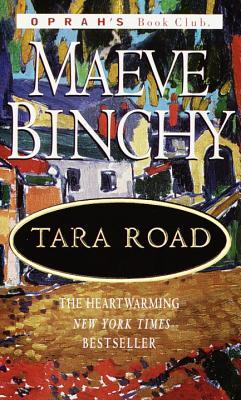
Book Review: Tara Road by Maeve Binchy
 Summary:
Ria lived on Tara Road in Dublin with her dashing husband, Danny, and their two children. She fully believed she was happily married, right up until the day Danny told her he was leaving her to be with his young, pregnant girlfriend. By a chance phone call, Ria meets Marilyn, a woman from New England unable to come to terms with her only son’s death and now separated from her husband. The two women exchange houses for the summer with extraordinary consequences, each learning that the other has a deep secret that can never be revealed.
Review:
Is “two women swap houses and their lives change” a subgenre of women’s fiction? Because I feel like it should be. I have a real soft spot for house swap stories, starting back when The Holiday came out (one of my favorite romcoms). I was excited to see one featuring both Ireland and New England (Connecticut, specifically), and I sensed that the drama would be pretty high in this story. I wasn’t disappointed.
I learned a lot about recent Irish history from this book. For instance, I had no idea that divorce wasn’t legal in Ireland until 1995! The whole culture, too, wasn’t just that divorce wasn’t legal but that young marriage was expected. This directly impacts Ria’s life and her decisions. Learning this recent Irish history through Ria’s eyes helped make it more real and reminds the reader that these cultural norms and laws have a real impact on real people.
The settings were beautifully rendered. From Tara Road to the home in Connecticut, I felt completely present in each. I could hear the noises and smell the cooking at Tara Road and feel the cool pool water in Connecticut. The rich settings helped me take the perhaps at times ridiculous plot with the grain of salt such a story warrants.
Many issues are covered without ever feeling like the book was written just to talk about them. Rather, the issues exist because they just happen to in real life so why wouldn’t they in this book. Among the issues: alcoholism, domestic violence, grief, infertility, and more that I can’t mention without being plot spoilery.
Still, though, in spite of the strong setting and interesting plot, I did feel that it ended a bit too abruptly. I felt as if I was left hanging, wondering what ultimately was going to happen with these women. Being left wanting more isn’t necessarily a bad thing but after investing so much into these two women, I would have enjoyed at least an epilogue.
Overall, a strong entry in women’s fiction. It’s a house swap story that stays unique with the house swap not being about romance but rather about dealing with personal issues and where you want your life to go.
If you found this review helpful, please consider tipping me on ko-fi, checking out my digital items available in my ko-fi shop, buying one of my publications, or using one of my referral/coupon codes. Thank you for your support!
4 out of 5 stars
Length: 648 pages – chunkster
Source: Library
Book Review: It Ain’t Me, Babe by Tillie Cole (Series, #1)
 Summary:
River “Styx” Nash was born into the Hades Hangmen motorcycle club. He always knew he was set to inherit running it, in spite of his speech impediment, but he never expected to be running it at the young age of twenty-six. When a young woman shows up at their doorstep, bleeding and unconscious, he’s reminded of a girl he met at a fence in the woods when he was a boy….a girl who has haunted him ever since.
Salome grew up under Prophet David’s rule in the commune that’s the only home she’s ever known. When her sister dies, she finds the strength to run and somehow ends up in the arms of the man who was once a boy she met at the fence of the commune.
Review:
I’m being a bit charitable with my rating of this read because the juxtaposition of commune and motorcycle club (gang) is one I haven’t seen before, and I do think it’s interesting. Additionally, I do realize that these types of romances are basically fantasy so I try to cut them some leeway. That said, this book is not executed as well as it could have been for its genre. There are some jarring elements that take the reader out of the read, thus leading it to be less enjoyable.
First, it’s poorly edited. There are many clear mistakes such as saying things like “gotta to.” It reads like a first copy, not a final draft. Better editing would have really helped this book.
Second, you have to imagine that the reader who might pick up a romance featuring motorcycles might know a thing or two about them. While everything else surrounding the motorcycles can be pure fantasy, the motorcycles themselves should function like the real world (unless it’s scifi). Motorcycles, though, are treated in the book as basically cars with two wheels, and anyone who’s ridden one can tell you that’s not so, and a motorcycle gang definitely would know better than to treat them that way. One glaring instance of being unrealistic about bikes is when Salome first rides on one. The book sets it up that she has no idea what a motorcycle is. She’s never seen one before, she has zero idea how they work. In spite of this, the only riding instruction she’s given is to “hold on.” Even someone giving the most bare of instructions to a new passenger will tell them to follow the lead of the rider — to lean when they lean and not to counter-lean against the rider. This is basic safety and even a motorcycle gang would give those basic instructions because a passenger who is startled could easily cause the bike to crash and riders love their bikes. Similarly, in spite of Salome not knowing anything about motorcycles, she puts on the helmet with zero instructions. I have never seen anyone who’s never worn a motorcycle helmet before be able to put it on with zero instructions. The strap is complicated and almost always takes guidance. Additionally, we are to believe Salome is riding with someone who cares about her, yet he doesn’t check on her helmet at all. This is not something a rider who cares about his passenger would ever do.
The final thing I found jarring was descriptions of the abuse in the cult. I fully expected there to be cult abuse, but there are repeated flashbacks to the rape of 8 year olds whose legs are being held apart by bear traps. I personally find it extremely difficult to get into a romance that repeatedly flashes back to the graphic underage and violent rape of the main character. It made the book feel like it was at war with itself. Did it want to be a contemporary book about the horrors of cults or did it want to be a romance? You can be both, but that is a difficult book to write, and it’s important to either put all of the abuse in one area of the book (usually where the heroine informs the hero about it) or to make the abuse more minimal (ie maybe the heroine grew up in a cult that restricted her knowledge and movement but that didn’t rape her physically).
Ultimately, while I appreciate the interesting combination of main characters (leader of a motorcycle club and escapee from a cult), I found the execution to not live up to the unique premise. Primarily recommended to those interested in the fantasy of motorcycles with little personal knowledge of them. They will be more able to get fully into the fantasy.
If you found this review helpful, please consider tipping me on ko-fi, checking out my digital items available in my ko-fi shop, buying one of my publications, or using one of my referral/coupon codes. Thank you for your support!
3 out of 5 stars
Length: 466 pages – chunkster
Source: Library

Book Review: Watership Down by Douglas Adams
 Summary:
When a rabbit low on the totem pole has a bad premonition, he and some friends run from their warren just before man intrudes wreaking havoc on their once-home. What follows is an adventure of evading predators and foes and looking for a new home.
Review:
Let me preface my review by saying that I know a lot of people either: A) love this book or B) find this book to be very traumatic. My experience was neither of these. The fact that this was not my experience does not negate yours. But neither does your love or traumatizing by this book mean that I felt the same way about it.
One of the risks of reading a book that is widely-known and loved (or remembered as traumatic) is that you have a pre-existing notion of just what that experience might mean for you. I came at this book with some trepidation and excitement because I absolutely love bunnies and I also love semi-realistic depictions of wild animals. Those that are accurate about scientific information but also personify them somewhat. I wound up being greatly disappointed because it gave me neither a world of bunnies to get lost in nor an experience of great trauma and drama. What I wanted was a highly emotional experience, and instead I got a bit of boredom and my main emotion being disappointment.
Let me start with what I think was well done. Adams clearly paid a lot of attention to the real science of how wild bunnies live and function, and I appreciated that. I also like the allusions to mythology. But there’s lots of reviews that talk about why they love this book, so let’s get down to why I didn’t.
1) I found it to be way too wordy.
I want cuteness and bunnies and plot not overly long descriptions of fields. This is a really thick book (my copy was 479 pages) and just…not that much actually happens. I don’t like to feel like a book is wasting my time, and I felt that a lot with this one. You could argue that it just felt long because I didn’t emotionally connect to it, but I think part of my lack of emotional connection was because of the lengthy descriptive passages.
2) I was expecting a great mythos of a story, and what I got was WWII with bunnies.
I love WWII. Do not get me wrong. I did an entire course for my History BA in just WWII. But I don’t think bunnies particularly pair well with WWII. A large overarching mythos? Sure. Basically the Battle of the Bulge with rabbits? Not so much. I don’t want my bunnies acting like British colonels and their optimistic soldiers, and I certainly don’t want an evil bunny who is basically Hitler coming into the story. (I mean…who makes the enemy another bunny who is basically Hitler? ? What? Why??)
3)It just isn’t all that tragic (sorry guys).
*spoiler warning*
I thought that basically the bunnies fight to survive all book and then all die at the end. Of the core group of rabbits, only ONE dies. There are many epic battles but just no true peril except for the warren that the rabbits leave at the beginning of the book. They are, true, pretty brutally killed by the farmer, but the problem is we never had a chance to get to know them, and we hear the story of the killing from someone who saw it. We don’t see it first-hand. It’s all very distanced and just not that tragic. This would obviously bother me less if I wasn’t expecting a tragedy from everyone saying how sad Watership Down is. But honestly to this day I don’t get why everyone is so sad. The rabbits get a new warren. They successfully find female bunnies and make more bunnies. One main character dies. That is it. I just. What. Why does this traumatize you people?
*end spoilers*
So, if you are a person who doesn’t mind WWII told through rabbits, quite long passages of description, and will welcome a tale lacking in great tragedies, you might have a better experience with the book than I did. Lord knows many people the world-over have loved it. But for those who come to it expecting to find a great tragedy or a fast-moving tale or warm and cuddly rabbits be warned that it’s not what you’ve heard about it.
If you found this review helpful, please consider tipping me on ko-fi, checking out my digital items available in my ko-fi shop, buying one of my publications, or using one of my referral/coupon codes. Thank you for your support!
3 out of 5 stars
Length: 479 pages – chunkster
Source: PaperBackSwap
Counts For:
Bottom of TBR Pile Challenge
 Support my work with a tip or browse my shop for curated book club guides, how to guides, cross-stitch patterns, and more!


This work by Amanda Nevius is licensed under a Creative Commons Attribution-Noncommercial-No Derivative Works 3.0 United States License.
 Opinions of a Wolf