
Archive
Book Review: Something Spectacular: The True Story of One Rockette’s Battle with Bulimia by Greta Gleissner (Audiobook narrated by Dina Pearlman)
 Summary:
Greta Gleissner finally achieved her lifelong dream of making a living just from her professional dancing. She landed the prestigious job of being a Rockette in the New York City show. She hoped that this newfound stability and prestige would cure her of her bulimia. What was there to binge and purge about when she was living her dream? But her eating disorder she’d had since a young age won’t just disappear because of her newfound success. Soon, her bulimia is putting her job–and her life–at risk.
Review:
I was immediately intrigued by the elements of this eating disorder memoir that make it different from the, sadly, so many others that exist. Greta’s eating disorder peaks in her 20s, not her teens. She was a Rockette, and she’s a lesbian. An eating disorder memoir about someone in their 20s in the dance industry who is also queer was very appealing to me. What I found was a memoir that gives insight to having an eating disorder, the impact of homophobia, and an inside look at the professional dance world told in a non-linear, honest, and engaging manner.
Greta tells her memoir in the framework of a play. There are scenes, acts, overtures, etc… This lets her address the story in a non-linear way that still makes sense. The overture, for instance, shows a dramatic moment when her eating disorder was at full tilt and destroying her life. Then she backs up to the few months before she became a Rockette. The time of auditioning then being a Rockette is interspersed with flashbacks to help us better understand her life. Finally, she enters an inpatient clinic, where we get flashbacks in the context of her therapy. It’s a creative storytelling technique that brings a freshness to her memoir.
Honesty without cruelty to herself or others is a key part of her narrative voice. Greta is straightforward, sometimes grotesquely so, about her bulimia and what it does to her. The eating disorder is not glamorized. Greta takes us down into the nitty-gritty of the illness. In fact, it’s the first bulimia memoir I’ve read that was so vivid and straightforward in its depictions of what the illness is and what it does. In some ways, it made me see bulimia as a bit of a mix between an addiction and body image issues. Greta was able to show both how something that was helping you cope can spiral out of control, as well as how poor self-esteem and body image led her to purging her food.
Greta also is unafraid to tell us about what goes on inside her own mind, and where she sees herself as having mistreated people in the past. I never doubted her honesty. Similarly, although Greta’s parents definitely did some things wrong in how they raised her, Greta strives to both acknowledge the wounds and accept her parents as flawed and wounded in their own ways. You can hear her recovery in how she talks about both them and her childhood. She has clearly done the work to heal past wounds.
The memoir honestly made me grateful the dancing I did as a child never went the professional route. It’s disturbing how pervasive body policing and addictions in general are in the dance world, at least as depicted by Greta. Similarly, it eloquently demonstrates how parents’ issues get passed down to the children, and sometimes even exacerbated. Greta’s mother was a non-professional dancer who was constantly dieting. Greta also loved dancing but her mother’s body image issues got passed down to her as well. Food was never just food in her household.
One shortcoming of the memoir is that Greta never fully addresses her internalized homophobia or how she ultimately overcomes it and marries her wife. The book stops rather abruptly when Greta is leaving the halfway house she lived in right after her time in the inpatient clinic. There is an epilogue where she briefly touches on the time after the halfway house, mentions relapse, and states that she ultimately overcame her internalized homophobia and met her now wife. However, for the duration of her time in the clinic and the halfway house, she herself admits she wasn’t yet ready to address her sexuality or deal with her internalized homophobia. It was clear to me reading the book that at least part of her self-hatred that led to her bulimia was due to her issues with her sexuality. Leaving out how she dealt with that and healed felt like leaving out a huge chunk of the story I was very interested in. Perhaps it’s just too painful of a topic for her to discuss, but it did feel as if the memoir gave glimpses and teasers of it, discussing how she would only make out with women when very drunk for instance, but then the issue is never fully addressed in the memoir.
Similarly, leaving out the time after the halfway house was disappointing. I wanted to see her finish overcoming and succeeding. I wanted to hear the honesty of her relapses that she admits she had and how she overcome that. I wanted to hear about her dating and meeting her wife and embracing her sexuality. Hearing about the growth and strength past the initial part in the clinic and halfway house is just as interesting and engaging as and more inspiring than her darker times. I wish she had told that part of the story too.
The audiobook narrator, Dina Pearlman, was a great choice for the memoir. Her voice reads as gritty feminine, which is perfect for the story. She also handles some of the asides and internal diatribes present in mental illness memoirs with great finesse.
Overall, this is a unique entry in the eating disorder memoir canon. It gives the nitty gritty details of bulimia from the perspective of a lesbian suffering from homophobia within the framework of the dance world. Those who might be triggered should be aware that specific height and weight numbers are given, as well as details on binge foods and purging episodes. It also, unfortunately, doesn’t fully address how the author healed from the wounds of homophobia. However, her voice as a queer person is definitely present in the memoir. Recommended to those with an interest in bulimia in adults, in the dance world, or among GLBTQ people.
4 out of 5 stars
Source: Audible

Counts For:

Book Review: Sleepless by Charlie Huston (Audiobook narrated by Ray Porter and Mark Bramhall)
 Summary:
In an alternate 2010, the world is slowly falling into disarray, partially due to terrorism, but mostly due to a new deadly illness. SLP makes the sufferer an insomniac, unable to sleep for years, until they fall into a state of insanity known as the suffering. The sleepless, as those with the illness are known, change the structure of society. Movie theaters are now open 24/7, there’s an increase in sales of odd and illicit things, as the sleepless get bored. Most importantly, the sleepless have moved much of their energy into online MMORPGs. Some spending countless hours gold farming there, making a good buck with all their hours of alertness.
Park, an old-fashioned cop, is determined to save the structure of society, one bust at a time. He’s committed to his work, in spite of his wife being sleepless and being increasingly unable to care for their infant daughter. So when his boss asks him to go undercover to look for people illegally selling the one drug that can ease the pain of the sleepless–dreamer–he agrees.
Jasper is an elderly ex-military private investigator without much of an eye for sticking to the rule of the law who is asked by a client to hunt down and return to her a thumb drive that was stolen. He slowly discovers that that thumb drive ended up in the middle of much more than some art thieves and finds himself sucked into the world of illicit dreamer.
Review:
My partner and I both enjoy a good noir story, so when we saw this summary on Audible, we thought it would make an entertaining listen for our 12 hour holiday road trip. The story was so bad, we could only take it for about an hour at a time and eventually just turned it off so I could read out loud to him from a different book. I eventually soldiered on, though, because I honestly just had to finish it so I could review it. In what should be a fast-paced noir, there is instead an overwrought amount of description of unimportant things that slow what could have been an interesting plot down to a crawl.
Noir as a genre is a thriller that generally features a hard-boiled detective (sometimes a hard-boiled criminal). It’s fast-paced and usually short featuring a lot of grit and mean streets. One thing Huston does that puts an interesting twist on the noir is he incorporates both a cop who is being forced to turn detective and a criminal-style private investigator. He features both sorts of main character. This intrigued me from the beginning. However, the writing includes far too much description of unimportant things for a crime thriller. For instance, there is an at least 5 minutes long description of a computer keyboard. I could literally space out for a few minutes and come back to the audiobook that was playing the entire time and miss literally nothing. It would still be describing the same chair. This really slows the plot down.
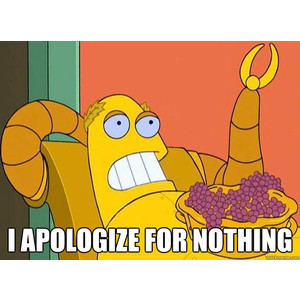
 On top of the overly descriptive writing, the narration is overwrought, like a stage actor trying too hard. The best explanation I can make for the narration is, if you have ever seen Futurama, the narration switches back and forth between being Calculon and being Hedonbot. Now, I admit, the audiobook narrators played these parts perfectly. In fact, I had to check to see if they’re the same voice actors as Calculon and Hedonbot (they’re not). I really think the audiobook narrators are what saved the story enough to keep me reading. I kept laughing at the visual of Calculon and Hedonbot doing this overwrought noir. But that is clearly not what makes for a good noir. The tone and writing style were all wrong for the plot.
In addition to the writing style, there’s the plot. In this world that Huston has imagined, gamers have become all-important. When people go sleepless, they become intense gamers. If they don’t do this then they become zombie-like criminals. I don’t think this is a realistic imagining of what would actually happen if a huge portion of the population became permanent insomniacs. Not everyone is a gamer or a criminal. There’s a lot more options in the world than that. Additionally, in this alternate 2010, the art world now revolves around MMORPGs as well. The art work that is now sold is thumb drives of the characters that people make in the games. There is a long speech in the book about how making a character in an MMORPG is art. Yes, somepeople might think that. But it is incredibly doubtful that the entire world would suddenly overnight start viewing character building in an MMORPG as an art form. I won’t explain how, because it’s a spoiler, but the gamers also come into play in the seedy underworld of illegal drugs. At the expense of a plot that follows the logic of the world the author has created, gamers are made to be inexplicably all-important.
 I also must point out that the science in this book is really shaky. SLP was originally a genetic disease that suddenly becomes communicable. That’s not how diseases work. Communicable and genetic diseases are different, they don’t suddenly morph into one or the other. Additionally, in the real world, there’s no way an illness would be given a scientific name that is an abbreviation for the common name (SLP for sleepless). Think about swine flu. The common name is swine flu, the scientific name is H1N1. Similarly, the drug to treat SLP’s official name is DR33M3R, which is just the street name, dreamer, in leetspeak. This isn’t fiction based in true science.
One thing I did appreciate in the book is that the semi-criminal private investigator, Jasper, is gay. He’s extremely macho, ex-military, and he bangs his also macho helicopter pilot. I like the stereotype-breaking characterization of Jasper. It’s nice to see a gay man given such a strong role in a thriller.
Overall, this alternate 2010 noir gets too caught up in overly long descriptions of mundane things and an overwrought narrative style to keep the plot moving at a thriller pace. The plot features an unrealistic level of importance for MMORPGs and the gamers who play, as well as unsound “science.” One of the hardboiled main characters is a stereotype-breaking gay man, however, which is nice to see. Recommended to those who enjoy an overly descriptive, overacting narration style with gamers featured unrealistically at center stage who don’t mind some shaky science in the plot.
2 out of 5 stars
Source: Audible
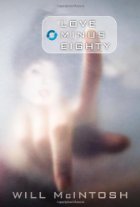
Book Review: Love Minus Eighty by Will McIntosh (Audiobook narrated by Kevin T. Collins, Eileen Stevens, and Ali Ahn)
 Summary:
In the future, you can live forever. But only if you can afford to pay to be medically resurrected and any injuries sustained fixed. The rest put everything they have into freezing insurance, getting cryogenically frozen in the hopes that one day, someday, they might get resurrected. At the very least, they wont’ die. But beautiful women who die too young (and too not filthy rich) get a different sort of a second chance. They get awoken and given the choice of going into the cryogenic dating facility. Men will come through and pay to wake them up and talk to them, and if they fall for them, they’ll pay to have them resurrected and their injuries healed.
In this world, three different, yet intertwined stories are told. There’s Rob. A once-musician who accidentally struck and killed a jogger in the middle of his break-up with his reality star-esque wealthy girlfriend. He proceeds to take out a loan to visit the jogger to apologize but slowly the guilt turns into something more. Then there’s Veronika, a dating coach with a bad case of unrequited love and a need to feel like she’s doing some good in the world. And finally, Mira. A lesbian who was placed into the heterosexual cryogenic dating pool back at the beginning before they bothered to wake the women and ask them if they wanted to be there.
Review:
I was immediately intrigued by this book’s premise and then realized I’d already read another scifi book by Will McIntosh and enjoyed it. That book, Soft Apocalypse

The future is a near dystopic mess of most of the wealth being in the hands of the few. While some people have foregone civilization to live off the land, the rest of the have-nots spend their time in body suits, called systems, that are basically like a full-bodied smartphone. They reminded me a bit of Google Glass. Their systems filter out all the unsightly aspects of where they live, including garbage, and they also block pop-up ads that otherwise accost you on the street. Everyone pours their little bit of money into their systems because without one you fall entirely off the social stratum. This is already creative enough to be intriguing, but then McIntosh tosses in this idea that cryogenics and resurrection has been figured out but only the wealthy can afford to be resurrected and everyone else pours all the rest of their money into freezing insurance. Then we get the cryogenic dating program aka bridesicles, and oh wow. Any scifi reader can see what an interesting setting this is.
On top of this setting, McIntosh weaves three different, yet ultimately intertwined narrators. It’s a narrative structure I enjoy but only when done well, and McIntosh mostly pulls it off. Some things sometimes felt a bit like too much of a coincidence, but for the most part the intertwining made sense. All three narrators have unique voices and perspectives. They are well-rounded with flaws, even Mira, who is frozen a lot of the time, but they also are still likable.
The plot is complex and truly had me on the edge of my seat for the last third of the book. I was rooting for the characters and did not know what would happen. An unpredictable, yet satisfying, ending plays in perfectly with the plot.
I am of two minds about the presence of Mira in the story. On the one hand, I appreciate that McIntosh took the time to think about how the heteronormativity of the bridesicle program could affect a lesbian. On the other hand, it frustrates me that she and her girlfriend have their agency removed and spend most of the story frozen and at the whim of the heterosexual people around them. Having lesbians rescued by the straight folks just kind of rubbed me the wrong way. I sort of wish there had been some modern day queer person who helped them out in some way. That was the other thing that bothered me. The only queer presence was from the past in the form of Mira and her frozen girlfriend. In such a sweeping narrative with so many characters that is also set in a city, it seems odd to me we never encountered another queer character. Particularly when one of the main characters is a dating coach.
The narration of the audiobook was wonderful. Having a different voice for each narrator really helped keep the stories straight, and each of the narrators did a wonderful job bringing their characters to life.
Overall, this book presents a richly imagined near-dystopian scifi future that gets the reader to think about if living afraid of death is truly living. The three-narrator structure lends a complexity to the plot that keeps it engaging and consistently moving forward. One of the plot choices might rub some readers the wrong way, but if the world building and narrative structure appeal, it shouldn’t be much of an issue. Recommended to scifi fans who enjoy a city setting and some romance.
4 out of 5 stars
Source: Audible
Book Review: Succubus Revealed by Richelle Mead (Series, #6) (Audiobook narrated by Elisabeth Rodgers)
 Summary:
Seattle’s succubus, Georgina Kincaid, is incredibly happy to be back together with her previously ex boyfriend, Seth Mortensen. But getting back together with him came at the price of hurting his once-fiancee and having to leave her previously loved position managing the bookstore. It’s all worth it to be with Seth, though. But then a transfer notice comes in, sending her to her dream job in Las Vegas. It’d be a dream come true, except Seth can’t come with her because his sister-in-law has cancer. Georgina starts to wonder just why so many elements seem to keep coming together to try to drive her and Seth apart.
Review:
A breathtaking conclusion to the series that reveals not just Georgina’s entire life story but also that the series itself is more than originally meets the eye.
It was obvious in the prior book that a much larger overarching plot was going to be revealed in the final entry in the series. Mead reveals this plot through an artful combination of the characters investigating, flashbacks, and a court case. Normally, I’m not a fan of courtroom drama, but Mead pulls it off beautifully, really playing up the supernatural elements and keeping it moving along at a rapid pace. While I had pretty much already figured out what the big reveal would be, how it was revealed and how the characters reacted was unexpected and complex.
A running theme in the series has been that the characters are not perfect and life doesn’t hand out easy answers or resolutions. The resolutions to the various problems and questions in the plot and in Georgina’s life follow these guidelines as well. It is not a simple reveal that places perfection into Georgina’s life. She has to address her issues, how she has dealt with herself and other people, and she must face the supernatural community as well. It was refreshing to see characters in an urban fantasy have to work toward resolution instead of having it handed to them by virtue of just being lucky or having the right powers.
The romance is in full-swing in this book. Georgina is much more focused on her love life than on being on a succubus. Thus, most of the sex scenes we get are hot in an entirely romantic way. Once again, though, I was more focused on the quality of the plot and characters than on the quality of the sex scenes. The story of Georgina overpowered the juicy bits, and that’s a sign of a great urban fantasy.
The book brings to light the questions of good versus evil, love and what it takes to make a relationship work, soul mates, and the qualities of humanity. And it does it with humor, brightly written characters, sexy sex scenes, and creative settings. An ending to the series as satisfying as a rich dessert that will leave the reader wanting to re-read the series as soon as possible.
5 out of 5 stars
Source: Audible

Previous Books in Series:
Succubus Blues
Succubus On Top
Succubus Dreams
Succubus Heat
Succubus Shadows
Book Review: Succubus Shadows by Richelle Mead (Series, #5) (Audiobook narrated by Elisabeth Rodgers)
 Summary:
Seattle’s succubus, Georgina Kincaid, cannot believe she has been roped into helping plan her ex-boyfriend’s wedding. It’s enough to make anyone depressed. But she can’t afford to be depressed, because every time she starts to feel down, a mysterious force tries to lure her away to what must be a dangerous place. Georgina is fed up with all of these mysterious attacks on Seattle. It just doesn’t make sense. What is making them target Seattle? And seem to be maybe targeting her?
Review:
An excellent penultimate series book that both reveals more of the main character’s past and drives the plot forward.
At first it seems that this book is returning to familiar territory. Weird, dreamy things are happening to Georgina. She and Seth are broken up. Her demon boss is irritated at her. But then Georgina gets kidnapped and forced to relive her past and spy on the present in a dreamlike state, and everything changes. We learn tons more about Georgina’s long succubus life. We also see what happens when Georgina is the one who needs saving for once. It’s an unexpected plot change that plays perfectly in this penultimate book in the series.
In spite of Georgina being kidnapped, there are still plenty of sex scenes via reliving her succubus past. They are well-written and titillating but sex is really not the focus of the book. It says a lot for the plot and how much I came to care for the characters that I barely noticed the relative lack of exciting sex in this entry.
The characters continue to grow and change in a well-rounded, three-dimensional way. Mead handles the multiple characters adeptly and with soul. Similarly, the audiobook narrator continues to read Georgina perfectly.
This entry in the series moves the series firmly from urban fantasy about a sexy succubus to a romance spanning multiple centuries and a greater battle of good versus evil and humans versus the supernatural. It is stunningly satisfying and all-engrossing. I immediately reached for the final book in the series. Fans will not be disappointed.
5 out of 5 stars
Source: Audible
Previous Books in Series:
Succubus Blues
Succubus On Top
Succubus Dreams
Succubus Heat
Book Review: The Curse of the Wendigo by Rick Yancey (Audiobook narrated by Steven Boyer) (Series, #2)
 Summary:
Will Henry, 12 year old orphan and assistant to renowned Monstrumologist, Pellinore Warthrop, is shocked to find a refined woman on Warthrop’s doorstep. She is the wife of Warthrop’s best friend who has now gone missing in rural Canada while looking for the elusive wendigo (aka werewolf). Warthrop insists that there is no such thing as a wendigo, but he agrees to go looking for his missing friend anyway, even if he believes his mission was ridiculous and an affront to monstrumology’s reputation.
Review:
I can’t believe it took me this long to get to the sequel of one of my rare 5 star reads, The Monstrumologist
Yancey does something brave for a second book in the series. Instead of following the formula that worked so well in the first book and basically doing a monster-of-the-week-in-our-town method like Buffy and so many other urban fantasies, he changes things up. There is a monster, yes, but it is entirely different from the first one. This is a monster that might not even exist, unlike the anthropophagi in the first book who are almost immediately clearly real. Additionally, Warthrop and Will must travel away from New England to go looking for the trouble. It does not come to them. Another good plot twist is that the story does not entirely take place in Canada. It moves to New York City. Thus we get both the dangers of the wilderness and the dangers of the city in one book. These plot choices mean that what makes this series a series is the characters, not the fantastical nature of their world. By the end of the book I was thinking of the series in terms of the relationship between Will and Warthrop, not in the context of what nasty beast we might meet next. It thus does what great genre fiction should do. It looks at a real life issue and dresses it up with some genre fun. And the issues addressed here are big ones. What is love and what should we be willing to sacrifice for it? Is it more loving to stay with someone at all costs or to let them go to protect them? At what point do you give up on someone?
The horror certainly felt more grotesque this time around, although it’s possible I just wasn’t remembering the anthropophagi that well. This is a bloody book full of horrible things. Precisely what I expect out of my genre. There’s not much more to say about the horror than keep it up, Yancey. Also that this might not be for you if blood and guts and profanity are not your thing. But they *are* mine and, oh, how well they are done here.
Just as with the first book, the language Yancey uses is beautiful. It’s rich, eloquent, visual, and decadent. It’s a word-lover’s book. An example:
But love has more than one face. And the yellow eye is not the only eye. There can be no desolation without abundance. And the voice of the beast is not the only voice that rides upon the high wind….It is always there. Like the hunger that can’t be satisfied, though the tiniest sip is more satisfying than the most sumptuous of feasts.
Stunning.
The characterization here remains strong for Will and grows much stronger for Warthrop. Will grows and changes as a 12 year old in this time period in his particular situation would be expected to. With Warthrop, though, we get a much clearer backstory and motivations for his actions. In the first book we came to know Will. In this one we come to know Warthrop, although Will is not left without any development. It’s a good balance. I also enjoyed the addition of two female characters, who I thought were well-written, particularly Lily, the budding young feminist determined to be the world’s first female monstrumologist. She is truly three-dimensional in spite of her rather limited screen-time compared to Will.
The pacing doesn’t build steadily from beginning to end. It rather builds to a first climax, comes back down and builds again to a second climax. This makes sense, particularly in a werewolf book, but I must admit it felt a bit odd in the moment. It almost felt like reading two books in one until it all came together in the end. In fact, this is one of those books that gets better the more you look back on the story as a whole. Be prepared to enjoy it more in retrospect that in the first reading.
The audiobook narrator, Boyer, has a tough book to work with. There are a wide range of characters of multiple nationalities to act out (Canadian, German, French, New York, Massachusetts, etc…). Additionally, at least three different languages are spoken (English, French, and German). I’m not fluent in anything but English, but I did take German in university, and I can say that his German accent is at least passable. He also does an excellent job creating a unique voice for each character. I only rarely got lost, and that was generally due to rapid-fire conversation where each character only had a word or two. I must say, though, that he does mispronounce a few words, which detracts from Yancey’s gorgeous writing. I blame the audiobook director for this, though. S/he should have realized and corrected this. Overall, though, the mispronounced words are only in a couple of locations and do not deeply affect the reading of the book.
Overall this is an excellent follow-up to a remarkable first book in the series. It brings to the table that which made the first so powerful: YA horror with rich language set in a historic time period. But it also changes things up enough to avoid falling into the monster-of-the-week trap. The entries in the series are part of a larger story, and that can be seen. Fans of the first book should pick up the second book asap.
5 out of 5 stars
Source: Audible

Previous Books in Series
The Monstrumologist
Book Review: Half of a Yellow Sun by Chimamanda Ngozi Adichie (Audiobook narrated by Robin Miles)
 Summary:
The Nigerian-Biafran War (or the Nigerian Civil War, as it is also known) is seen through the intertwining lives of four different people. The daughter of a wealthy Igbo couple, Kainene, with a fierce business sense. Her fraternal twin sister, who is also the beautiful one, Olanna, an academic in love with a revolutionary-minded man named Odenigbo. Kainene’s boyfriend then fiancee, the white English writer Richard. And Ugwu. Olanna’s houseboy who came to them from a rural village. Their lives are irreparably impacted, and in some cases destroyed, by the war for a cause they all believe in, but that the world largely ignores.
Review:
I originally intended this Nigerian book to be my final read for the Africa Reading Challenge 2012, but even though I started it in November, the audiobook took over three months to get through, so it ultimately missed counting for the challenge. I thought it was much longer than my usual audiobook fare, but a quick check of the listen length shows that it is 18 hours and 56 minutes long, which is only about 7 hours longer than my norm. So why did it take me so long to finish? Well, I just didn’t enjoy it that much.
I believe I was expecting something else from Adichie, since I had previously read her book Purple Hibiscus
As far as the plot goes, it was interesting but it was a bit confusing. Part of my confusion could have been because I listened to it, but from my understanding when I was listening, first there was an affair, then we jumped back to before the affair, then we jumped forward, then we jumped back to a different affair that came before the first affair. It was profoundly confusing. Particularly with a child referred to only as Baby (with no explanation about this for quite some time) who also randomly shows up and disappears. There was already so much going on with four different main characters and the war that this non-linear plot felt unnecessarily extraneous and confusing. However, it is possible that this plot is more clear when reading the print version, as opposed to the audio version.
The language of the writing itself is pretty, and I found periodic astute insights that I’ve come to expect and enjoy from Adichie. For instance,
Why do I love him? I don’t think love has a reason. I think love comes first, and the reasons come later.
Passages like these are what helped me enjoy the book to the extent that I did.
There is one plot point in the book that truly distressed me, so I feel I must discuss it. It is a spoiler though, so consider yourself spoiler warned for this paragraph. Throughout the book, the narration style is third person limited, which means that it is told in third person, but the reader knows what is going on in the main character’s head and is generally limited to that character’s perspective. The point of view is switched around among the four main characters, one of whom is Ugwu, the houseboy. We thus get to know him as the houseboy, he gradually grows up, and then later he is conscripted into the Biafran army. At this point, he participates in a gang rape on a waitress in a bar. I read a lot of gritty things. I routinely read books offering up the point of view of sociopaths or serial killers. I’m not averse to seeing the world through a bad person’s eyes, or through the eyes of a person who does bad things. But it has to be handled in the appropriate manner. I felt that there was entirely too much empathy toward Ugwu in the case of the gang rape. Adichie sets it up so that he walks in on his fellow soldiers gang raping this woman, and he says he doesn’t want to participate, they question his manhood, he admits in his head that he is turned on by the view of her pinned to the ground crying with her legs held apart having just been raped by a different soldier, and he participates. I think what disturbed me the most about this passage was how the narration makes it seem so ordinary. Like it’s something any man would do in that situation. Like it’s only natural he’d be turned on and get a hard-on from seeing a woman forcibly pinned to the ground so she can be gang raped by a bunch of men including himself. I think it’s awful to treat men like that. To act like they clearly are incapable of standing up for what’s right or that they’ll get a hard-on any time they see an orifice they can physically bang. Men are human beings and are entirely capable of thinking with more than their penis. Now, obviously there are men who rape, but there has got to be more going on there then I have a hard on and there’s a woman who I can stick it into. To treat rape that simply is a disservice to men and women’s humanity alike. Part of the reason why this reads this way is that we don’t know Ugwu well but we know him well enough to think that he’s an at least moderately decent young man. We don’t see a gradual downfall. No one holds a gun to his head or even implicitly threatens him with death if he doesn’t participate. It makes it seem like war makes men, even moderately good men, rape, as opposed to war simply providing more opportunities for rapists to rape. That is a perspective that I do not endorse, that I do not enjoy having sprung upon me in my literature, and that I found triggering as well. I was shocked to see it in a book by Adichie. Shocked and disappointed. It left me wishing I could scrub my brain of the book. Wishing for those hours of my life that I spent listening to it back.
Now, let me take a moment to speak about the narrator, Robin Miles. Miles is an astounding narrator. Her audiobook narration is truly voice acting. She is capable of a broad spectrum of accents, including Nigerian, British, and American, and slips in and out of them seamlessly. She easily creates a different voice for many different characters. I absolutely adored listening to her, in spite of not enjoying the book itself. Her performance of this book is easily a 5 star one.
Overall, though, the high quality narration simply could not make up for a story that failed to hit the mark with me on so many levels. It covers an important time period in Nigeria, and the highly important human rights issue of the genocide of the Igbo, but the style in which it does simply misses the mark for me. If this was all, I would still recommend the book to others who are more fond of a more impersonal, sweeping narration style. However, I also found the treatment of rape in the book to be simultaneously offensive and triggering. For this reason, I cannot recommend this book, although I do recommend the audiobook narrator, Robin Miles.
2 out of 5 stars
Source: Audible

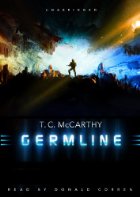
Book Review: Germline by T. C. McCarthy (Series, #1) (Audiobook narrated by Donald Corren)
 Summary:
Oscar is a reporter and lands an assignment with Stars and Stripes to go over to Kazakhstan and report on the new war between the US and Russia over resources needed for technology. This is a new kind of warfare. One fought mostly underground, and with the soldiers permanently wearing suits. Plus they’re fighting side-by-side with Genetics–human-looking robots who are all female and all look alike. Oscar started out just wanting a Pulitzer in between his drug addiction, which is easily fueled in Kaz. But Kaz changes people.
Review:
It’s been a while since I ventured in military scifi. I usually stick with the more sociological/psych experiment or cyberpunk areas of the genre, but this one just stuck out to me. I think its combination of aspects is just intriguing–a drug addicted journalist, a future war on earth, underground warfare, and robots. It certainly held my attention and flamed my interest in military scifi, plus it wound up counting for the MIA Reading Challenge, which was an added bonus.
Oscar is a well-rounded character. At first he seems flat and frankly like a total douchebag, but that’s because he’s a depressed drug addict. We learn gradually what landed him there and how he grows out of it with time. It’s an interesting character development arc because although many arcs show how war leads to alcoholism or drug addiction, in Oscar’s case although it at first makes his addiction worse, it ultimately helps him beat it. Because he ultimately snaps and realizes that the drugs are not helping the problems. They’re just making them worse. This is so key for anyone struggling with an addiction to realize. Pain in the present to feel better in the future. And McCarthy does an excellent job showing this progression without getting preachy. Sometimes you want to throttle Oscar, but you ultimately come to at least respect him if not like him. I wasn’t expecting such strong characterization in a military scifi, and I really enjoyed it.
The world McCarthy has built is interesting. The war itself is fairly typical–first world countries butting heads over resources in third world countries. But the content of the battles and the fighting methods are futuristic enough to maintain the scifi feel. There are the Genetics of course, and they are used by both sides. It’s interesting that the Americans use only female Genetics, and that is explained later on. There are also different vehicles and weapons that are scary but still seem plausible. Of course there’s also the suits the soldiers permanently wear, the front-line tunnels (the “subterrene”). It all adds up to a plausible future war.
Now, I will say, some of the battle scenes and near misses that Oscar has seem a bit of a stretch. I know odd things happen in war, and anyone can get lucky, but. Everyone’s luck runs out eventually. It seemed sometimes as if McCarthy wrote himself into a corner then had to figure out a way to make his main character survive. Escaping danger is fine, and necessary for the book to continue. But it should seem like a plausible escape. And if you have one that seems miraculous, it seems a bit excessive to me to have more than one.
The audiobook narrator did a fine job, in my opinion. He didn’t add anything to the story but he also didn’t detract from my enjoyment. I will note, however, that he pronounced “corpsman” wrong, saying the “s,” which is supposed to be silent. This only came up a few times and didn’t really bother me, but some readers, particularly ones who have been in the military themselves, might be bothered. Nothing else was mispronounced, and the voices used fit the characters nicely.
Overall, this piece of futuristic military scifi showcases both war and addiction in an engaging manner. Some readers may be off-put by Oscar at first, but stick it out. It takes many interesting turns. Recommended to scifi fans, whether they generally like military scifi or not.
4 out of 5 stars
Source: Audible

Counts For:
Book Review: Chasing the Moon by A. Lee Martinez (Audiobook narrated by Khristine Hvam)
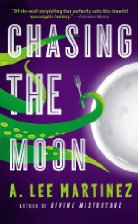 Summary:
Diana doesn’t have much going for her–a bad job and perpetual unwanted singledom, plus she’s been sleeping on friend’s couches since losing her apartment. So when a room in a building with a quirky landlord shows up, she grabs it instantly. Only to discover that a monster called Vom the Hungry is in her closet waiting for her to let him out, at which point he will probably eat her. In fact, the whole building is oddly connected to other dimensions full of monsters, creatures, mayhem, and madness….not to mention tentacles.
Review:
I obviously had to read this book. The cover has tentacles on it, and it’s clearly a Lovecraftverse story. These are both basically automatic must reads in Amanda-land.
The storyline is fairly straight-forward as far as the Lovecraftverse goes. There’s a place where the lines between dimensions and reality fade and threaten mere humans with madness. The monsters that Diana meets within her own apartment are fairly creative. There’s Vom the Hungry who is pretty endearing, there’s the hedgehog looking guy (whose name I can’t remember and can’t look up because: audiobook) who spawns copies of himself when he’s upset, and of course there’s the giant floating eye with tentacles who tries very hard to be prim and proper. They’re creative and funny.
The foes–the cult of the moon god–are not so creative. They’re your typical moon-loving shapeshifters, and the moon god even has three forms just like a certain other god of a religion we’re all familiar with. Compared to the creativity of the apartment and the apartment’s monsters, it just doesn’t feel like a worthy foe.
Similarly, although I liked Diana and the world she’s living in, she has basically no backstory. I have a hard time believing she’d have such an easy time mostly abandoning her friends and family from her time prior to the apartment. I can believe she’s not afraid and can handle the horrors, but it’d be nice if we got at least a toss-up to the concept of her having a family or even a mention of estrangement from them, if that’s the case. That doesn’t happen, so I was left feeling that Diana is very two-dimensional.
Given these elements, I’m sure I would have skimmed through it very quickly in print and probably missed the humor that it does contain, except that I read the audiobook. The audiobook narrated by Khristine Hvam. And she is an incredibly talented voice actor.
Every single character had their own entirely unique voice, and the voices perfectly matched the character, even an eyeless faceless omnivorous Vom the Hungry. Hvam is just….just so amazing to listen to! I kept listening more to just hear her perform than due to a true vested interest in the story. In fact, I looked up her voice actor page on Audible after just to maybe get another one of her books. She mostly narrates scifi/fantasy, unfortunately mostly YA, which we all know I don’t like. But I will be keeping my eye out for more of her adult work. She is just so amazingly talented.
So, overall then, the story itself rates 3 stars, but the narration rates 5, so my rating must average those two out. Be aware, though, that I recommend Khristine Hvam over the book, but if you are intrigued by the book and don’t mind a lack of backstory or average villains, then I recommend picking the audiobook for twice the fun.
4 out of 5 stars
Source: Audible

Book Review: Where Late the Sweet Birds Sang by Kate Wilhelm (Audiobook narrated by Anna Fields)
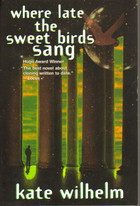 Summary:
When the world goes through an apocalypse consisting of virulent strains of the flu, lack of food, and nuclear warfare, one wealthy family manages to survive because they saw it coming. Made up of highly intelligent and highly educated people, such as doctors and scientists, the family creates a 200 bed hospital and uses this as their home base. But there is a serious fertility problem, and how they address it just might change the core of humanity.
Review:
I love reading classics of scifi. It’s endlessly fascinating how different people in different times imagine a future (or an apocalypse). This award-winning book had the bonus of being written by a woman, which isn’t always easy to find in older scifi. I also was intrigued by the cloning theme. How would someone in 1977 view something that was, as yet, nowhere near as close to a reality as it is now, with our cloned sheep?
The book starts out incredibly strongly. So strongly, in fact, that I actually had nightmares from it, which never happens to me ever. I am basically a rock of horror and scifi, but this one creeped the bejesus out of me. It’s that creepy combination of incest and cloning. The family are really not people you would want retooling the world. They’re everything that can be (and usually is) bad about the 1%. They’re selfish, self-centered, snobby, and routinely employ nepotism. I found the incest in the first third of the book talking about the first generation of the family to be an interesting metaphor for how the elite can become so backwards and grotesque from sheer isolation. It’s powerful and moving, and a scenario that will remain in my mind.
The second third of the book focuses in on a woman, Molly, from the first generation of clones. This is disturbing in its own way, because they don’t just clone everyone once and have done with it, no. They clone everyone multiple times until there are clusters of the same person at different ages wandering around. They call these clusters “brothers” and “sisters” with the name of the original person as the name of the group, even though the individual ones have their own names. It is profoundly disturbing. This second third looks at the society of clones that the original family unintentionally made. It’s fascinating in its own way and an interesting different way of telling a post-apocalypse story. Often we get only the first generation, but here we get multiple generations.
The last third, unfortunately, didn’t live up to the first two-thirds of the book. Without giving too much away, it looks at a boy who came about by natural methods who gets integrated into the clone society at the age of five. They decide not to clone him and give him brothers for unclear reasons. This last third then looks at his impact on the clone society. I didn’t feel that this worked as well for multiple reasons. For one, it’s almost as if Wilhelm freaked herself out and backed off from the profoundly disturbing story she was telling and went a more conventional direction. That was disappointing. For another, I found it disappointing that she chose to make this game-changer a boy. I expect women scifi authors to be at least a bit cognizant of the need in scifi for more female main characters. In this one, the first third is a man, the second third a woman, and the last third a boy. That is not the best stats from a woman author. I also found certain parts of this to be very boring and slow-moving compared to the first two-thirds. That makes for odd pacing in a book.
Of course, my complaints about the last third backing off, being more conventional, and being rather dull don’t take away from the first two thirds at all. They bring about so many interesting societal questions. For instance, is the incestuous nature of the elite necessarily bad or will it one day save humanity? Will cloning remove something that makes us human, even if they look right? Is it better to cling on to technology at all costs or release it and go back to simpler times? And what about sex? Is monogamy natural and polyamory unnatural? Or is polyamory more welcoming and loving than potentially possessive monogamy? The questions go on and on, which is what is great about scifi.
As for the science itself, it is quite well-done. Wilhelm clearly thought through both keeping a closed-off community alive and cloning and bringing to term embryos. She also put thought into the scientific basis for why clusters of clones would be different from individual humans, touching on psychology and twin studies. I was a bit irritated that she bases the survival of these people on cloning farm animals, when that is not a good use of their limited land resources. Studies have shown many many times that a combination of farming vitamin-rich plants and hunting/gathering are the best use of limited land resources, so this particular element rang a bit of bad science. However, I am not certain how much land usage had been studied in the 1970s, so that could possibly just be a sign of the times.
Now, I did read the audiobook, so I should touch on the narration. Overall, Anna Fields does a very good job. I really enjoyed that they chose a female narrator for a book written by a female author. It let me almost imagine that Kate Wilhelm herself was reading it to me. Fields mostly strikes a good balance of changing voices for different characters without going over the top. The one exception to this is when she narrates children. The voice for that made me cringe, but they mercifully speak only a few times. Mostly, Fields reads smoothly and is easy to follow. She narrates without accidentally putting her own interpretation onto the work, which is ideal for an audiobook.
Overall, then, this is a fascinating classic of scifi. It examines the apocalypse through the lens of the elite, thereby analyzing and critiquing them, but it also looks at possible consequences of cloning and ponders what ultimately makes us human. Although the last third of the book is a bit less creative and more conventional than the first two, it is still a fascinating read. Recommended to scifi fans, particularly those with an interest in group dynamics.
4 out of 5 stars
Source: Audible

 Support my work with a tip or browse my shop for curated book club guides, how to guides, cross-stitch patterns, and more!


This work by Amanda Nevius is licensed under a Creative Commons Attribution-Noncommercial-No Derivative Works 3.0 United States License.
 Opinions of a Wolf