
Archive
Book Review: Death Valley by Melissa Broder

A woman dealing (or not dealing) with her husband’s and father’s medical conditions arrives in the desert to research her newest novel and has a fantastical experience.
Summary:
A woman arrives alone at a Best Western seeking respite from an emptiness that plagues her. She has fled to the California high desert to escape a cloud of sorrow—for both her father in the ICU and a husband whose illness is worsening. What the motel provides, however, is not peace but a path, thanks to a receptionist who recommends a nearby hike.
Out on the sun-scorched trail, the woman encounters a towering cactus whose size and shape mean it should not exist in California. Yet the cactus is there, with a gash through its side that beckons like a familiar door. So she enters it. What awaits her inside this mystical succulent sets her on a journey at once desolate and rich, hilarious and poignant.
Review:
I didn’t expect this to be a book that kept me up late at night because I needed to know how the plot resolved. I have not personally tended to experience much forward momentum in magical realism. But this was such a perfect mix of adventure plot and emotional magical realism that I simply couldn’t stop reading.
I love a cactus. This is a fact I don’t usually admit to because they’re so popular in design nowadays, and I’d rather support an underdog.
location 206
The main character was easy to bond with initially, which is critical to a plot that relies on the reader believing her experiences in the desert – even when they become fantastical. She’s a bisexual woman in long-term recovery from drugs and alcohol. She’s trying to finish her novel. Her husband has had a mysterious chronic illness for several years, and her father has been in the hospital for a long time after a car accident. The hospital keeps telling them that he’s dying, and then he wakes up and improves (only to have something else go wrong.) It’s a lot for anyone to handle. She has a dry wit that we hear inside her head but that rarely makes it outside. We can see how she’s barely keeping it together, and yet she continues to try because of how much she loves her loved ones.
Since my husband got sick, my words don’t mean what they are supposed to mean.
location 289
It’s interesting what a beautiful depiction of a marriage this book is when so little in it features the spouses together. Yet through the main character we see how her marriage and loving her husband, as she would say, isn’t just a feeling. It’s a choice. Perhaps some people would find it gauche to have a whole book focusing in on the impact of a chronic illness on the spouse who doesn’t have it. But that’s the rub of a marriage. What happens to one person is happening to both.
The setting of the book is also gorgeous. I’m not sure I’d have appreciate it as much as I did if I had never been to the desert. The beauty and danger and overwhelmingness of the desert is all encapsulated so beautifully from the coolness of her room in the Best Western to the magical cactus and everything in between. (Plus there’s both desert bunnies and multiple types of cactus from saguaro to teddy-bear cholla.)
If I was reading a review of this book, my main question would be – ok, ok, but how about the magical realism? Does it work? Yes, it works really well. By the time I finished the book, I couldn’t imagine the main character’s arc happening any other way. It makes sense in the context of that trip and that world, and that’s all that really matters. I wasn’t questioning it. I was on board from the first magical moment partway into the book.
Overall, this is an engaging story of one woman’s trip into the desert intertwined with her inner journey of continuing to choose to love her husband every day. It’s beautiful representation of the complexities of in sickness and in health. Recommended to readers interested in that journey with an open mind to magical realism.
If you found this review helpful, please consider tipping me on ko-fi, checking out my digital items available in my ko-fi shop, buying one of my publications, using one of my referral/coupon codes, or signing up for my free microfiction monthly newsletter. Thank you for your support!
5 out of 5 stars
Length: 240 pages – average but on the shorter side
Source: NetGalley
Buy It (Amazon or Bookshop.org)
Book Review: Amen Maxine by Faith Gardner

You move cross-country with your brand-new husband and newborn to start a new life only for your digital assistant to inform you that your husband is going to try to kill you.
Summary:
Welcome to Silicon Valley, where the weather is perfect, the income is high … and Rowena Snyder is miserable. A transplant from New York, Rowena moved into her husband Jacob’s idyllic childhood home with their new baby. But suburbia isn’t Rowena’s cup of Starbucks. And she’s got serious anxiety and depression to boot.
Jacob, worried about their marriage, scores a new product currently in beta testing from his tech job: Maxine, a “digital friend” that bonds with an individual by continually gathering their personal data. Along with functioning like an upscale digital assistant, Maxine has “advice” and “prediction” modes that have shown promise for patients with mental health issues. To Rowena’s shock, the device turns out to be not just helpful, but eerily accurate, predicting events before they occur.
It’s a godsend until Maxine offers a series of increasingly bone-chilling predictions that will change Rowena’s life forever.
This domestic suspense novel asks, who do you trust more—your mind, your man, or your machine?
Review:
This book had me nodding my head in understanding while also absolutely cackling. The main character, Rowena, has some flavor of anxiety disorder. How she feels about the world and the reassurance she seeks was quite relatable to me. But she’s also really droll and fun to see interact with her world. When her husband brings home a digital assistant from his job that’s in beta testing for helping people with depression or anxiety, she’s skeptical and reticent to use it. Until she needs directions on the least anxiety-provoking way to go for an errand. Then she’s sold. But just when she’s getting comfortable with using Maxine and getting out into the world more, it tells her that her husband is planning to kill her.
The first 50% of the book was the perfect blend of suspense and humor. I loved that the way Rowena has to confirm changes to the digital assistant is to say “Amen Maxine.” It lends itself to some pretty funny dialogue. I also liked how the book explores in a not banging you over the head with it way the risks of using technology to treat mental health. Is it really working or is it making things worse? This part of the book was a solid five stars to me.
The last half of the book lost the sense of humor and became somehow both darker and less unique than the beginning. I feel like I would have enjoyed it more if it wasn’t in such contrast to the beginning. But the ending twist was still a surprise, and I was left feeling like I’d read a unique story. I received the print book as a gift, and I didn’t even realize it was indie published. I thought it was a small press. It’s quite professionally done.
I would be remiss not to mention that the main character is bisexual. She’s wonderful representation with her bisexuality being a part of her and her life, but not something she dwells upon. I also liked how she naturally seeks out other queer people after her move for friendship.
One thing that surprised me when I finished it and added it to my GoodReads is that the title has now changed. The author recently changed the title to The Prediction. Personally I like Amen Maxine better but I hope that the change for presumably marketing reasons is beneficial to her. But if you are interested in the book – look for The Prediction by Faith Gardner or use my direct link provided.
Overall, this was a fun psychological thriller with an interesting main character and a unique plot. If you’re a usual reader of thrillers, you’ll likely enjoy it. If you don’t usually read thrillers but are intrigued by the idea of a maybe evil digital assistant, give it a try.
If you found this review helpful, please consider tipping me on ko-fi, checking out my digital items available in my ko-fi shop, buying one of my publications, using one of my referral/coupon codes, or signing up for my free microfiction monthly newsletter. Thank you for your support!
4 out of 5 stars
Length: 262 pages – average but on the shorter side
Source: gift
Buy It (Amazon, not available on Bookshop.org)
Book Review: The Stranger Upstairs by Lisa M. Matlin
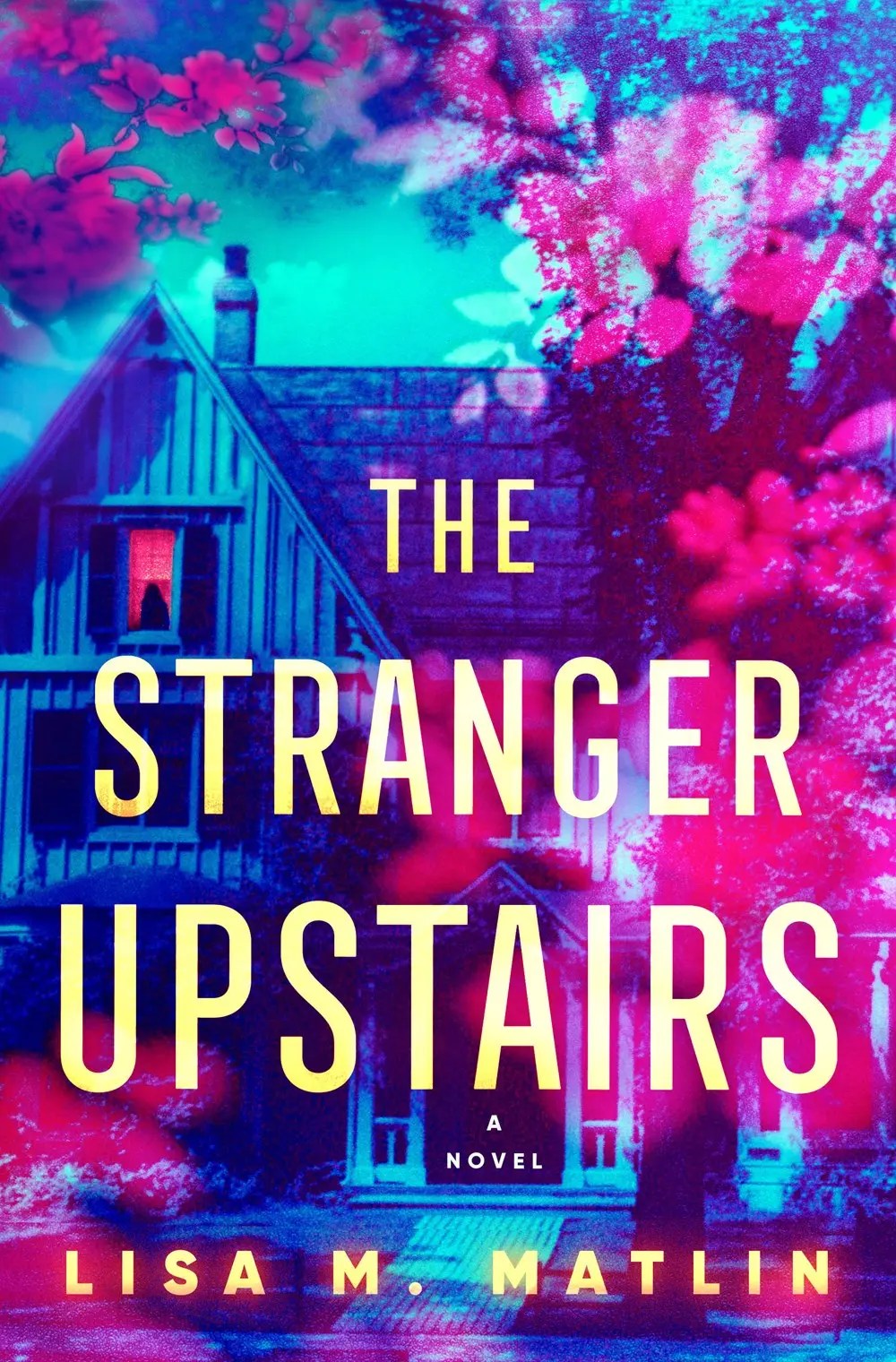
Sarah Slade’s a self-help influencer who’s trying to make content out of her attempt to flip the infamous Black Wood murder house. But of course not everything goes to plan.
Summary:
Sarah Slade is starting over. As the new owner of the infamous Black Wood House—the scene of a grisly murder-suicide—she’s determined that the fixer-upper will help reach a new audience on her successful lifestyle blog, and distract her from her failing marriage.
But as Sarah paints over the house’s horrifying past, she knows better than anyone that a new façade can’t conceal every secret. Then the builders start acting erratically and experiencing bizarre accidents—and Sarah knows there’s only so long she can continue to sleep in the bedroom with the bloodstained floor and suffer the mysterious footsteps she hears from the attic.
When menacing notes start appearing everywhere, Sarah becomes convinced that someone or something is out to kill her—her husband, her neighbors, maybe even the house itself. The more she remodels Black Wood House, the angrier it seems to become.
With every passing moment, Sarah’s life spirals further out of control—and with it, her sense of reality. Though she desperately clings to the lies she’s crafted to conceal her own secrets, Sarah Slade must wonder . . . was it all worth it? Or will this house be her final unraveling?
Review:
I have a weak spot for psychological thrillers by women Australian authors so when I saw a new author on the scene, I hit that request button over on NetGalley. This was a breath of something different in that genre, and I really enjoyed it.
What stood out to me was how the setting was in the more rural part of Australia. That means the scene setting includes more Australian wildlife and trees. Also this main character was neither a mother nor pregnant nor trying to become pregnant. Her focus is her social media career.
I liked how the book used the starting point of Sarah trying to keep her moment in the sun going. She had an article she wrote for a website take off and managed to spin that into a self-help book deal that did well. But now she’s struggling to write her second book and keep the interest up on her. She decides to feed two birds with one scone. She’ll fulfill a dream of hers to live in a town that she normally could never afford. She’ll also spin it as something to keep interest in her social media account while she struggles to write her second book.
The mystery of is the house evil or not is accompanied by some mystery about Sarah herself. The is the house evil or not mystery really kept me guessing right up until the end, and the twist surprised me. I didn’t so much enjoy the mystery about Sarah for a couple of reasons. First, it’s solely mysterious due to information being withheld from the reader that the main character knows. I think the book would have just as thrilling (perhaps even more so) if we had known what Sarah knew earlier. Second, it leans heavily on psychological issues. I don’t know enough about the specific issue being used to know if it was represented accurately. But I am a little concerned it might have been overly dramatized for the sake of the plot.
The main character drinks too much and is also presented in the narrative as having an alcohol problem. But this plot point gets dropped at the end and not resolved.
Readers sensitive to plots involving animals in pain should be aware that a pet becomes sick for mystery reasons partway through the book. The pet does survive, however.
Overall, this was a different plot in the women’s Australian psychological thriller genre. Recommended to fans of the genre looking for some variety or those who have yet to try it out for whom the maybe evil house plot appeals.
If you found this review helpful, please consider tipping me on ko-fi, checking out my digital items available in my ko-fi shop, buying one of my publications, using one of my referral/coupon codes, or signing up for my free microfiction monthly newsletter. Thank you for your support!
4 out of 5 stars
Length: 288 pages – average but on the shorter side
Source: NetGalley
Buy It (Amazon or Bookshop.org)
Book Review: Good Girls Don’t Die by Christina Henry

Three different women find themselves living out scenarios that seem weirdly like the plots of popular books – only real people start being murdered.
Summary:
Celia wakes up in a house that’s supposed to be hers. There’s a little girl who claims to be her daughter and a man who claims to be her husband, but Celia knows this family—and this life—is not hers…
Allie is supposed to be on a fun weekend trip—but then her friend’s boyfriend unexpectedly invites the group to a remote cabin in the woods. No one else believes Allie, but she is sure that something about this trip is very, very wrong…
Maggie just wants to be home with her daughter, but she’s in a dangerous situation and she doesn’t know who put her there or why. She’ll have to fight with everything she has to survive…
Three women. Three stories. Only one way out. This captivating novel will keep readers guessing until the very end.
Review:
I loved the idea for this book. Waking up and finding yourself living in the plot of your favorite type of story but then it turns all too real and sinister? Amazing! But the execution of the idea didn’t work out for me.
Each of the three women’s plots shows a real understanding of each genre they’re representing – cozy mystery, horror, and YA dystopia. There is some diversity in the book, although it doesn’t show up until the third scenario. Celia is white, and the cozy mystery town she’s in seems to be entirely other white people. Allie is white and so are the other four college students she goes to the cabin with. Maggie is Latina, and she allies herself with a Black woman. It does make sense for the cozy mystery town to be lacking in diversity, especially if Celia had commented on it. This also would have allowed for some meta commenting on lack of diversity in cozies (although that has been improving in recent years.) Allie’s story felt the most cookie-cutter to me – right down to Allie having large breasts and hating them because men like them. There is such a surge of interest right now in Black horror and Indigenous horror stories, that this would have been a wonderful opportunity to explore that genre and bring some more diversity into the overall story.
Although the cover promised twists and surprises, I wasn’t surprised once by the plot in the book. I knew exactly where it was going from the first chapter. The only thing I didn’t know was how it was going to wrap everything up and, honestly, the ending was the most disappointing part of the book to me. While I’m sure some readers will enjoy it and find it cathartic, I found it to be too simple and little heavy-handed. (Speaking of heavy-handed, while I’m totally fine with a book having a message and even characters speaking that message out loud, the same message happens multiple times in this book in a way that I found to be a bit much.)
As someone who works in addiction and recovery, I found the depiction of a character’s ex who is addicted to cocaine to be very two-dimensional and insensitive to those who struggle with addiction. It is of course very difficult to be the family member of someone who struggles with addiction. But even a passing mention of “I know not everyone who uses cocaine ends up abusing their wife” or “I wish he would get clean so his daughter could know the real him” or “drugs didn’t make him an asshole – he just was one all along” would have been nice.
In a nutshell, this was an absolutely wonderful idea for a book with engagingly written scenes. But it fell apart for me in the overarching plot. Also, given the overall messaging of the book, it was a bit glaring that it didn’t have a more diverse set of three stories within the story. Recommended for genre readers who like the idea of seeing someone forced to live out a genre plot.
If you found this review helpful, please consider tipping me on ko-fi, checking out my digital items available in my ko-fi shop, buying one of my publications, using one of my referral/coupon codes, or signing up for my free microfiction monthly newsletter. Thank you for your support!
3 out of 5 stars
Length: 320 pages – average but on the longer side
Source: Library
Buy It (Amazon or Bookshop.org)
Book Review: Maame by Jessica George

When Maddie’s mother returns from Ghana to London, she encourages her to take a break from caregiving for her father with Parkinson’s by moving out. She does, but things don’t go according to plan.
Summary:
It’s fair to say that Maddie’s life in London is far from rewarding. With a mother who spends most of her time in Ghana (yet still somehow manages to be overbearing), Maddie is the primary caretaker for her father, who suffers from advanced stage Parkinson’s. At work, her boss is a nightmare and Maddie is tired of always being the only Black person in every meeting.
When her mum returns from her latest trip to Ghana, Maddie leaps at the chance to get out of the family home and finally start living. A self-acknowledged late bloomer, she’s ready to experience some important “firsts”: She finds a flat share, says yes to after-work drinks, pushes for more recognition in her career, and throws herself into the bewildering world of internet dating. But it’s not long before tragedy strikes, forcing Maddie to face the true nature of her unconventional family, and the perils—and rewards—of putting her heart on the line.
Review:
I picked this book up because I heard it compared to Bridget Jones’s Diary (one of my all-time favorite reads). While I don’t think that comparison is fair, I did enjoy Maddie’s much more raw story.
The comparison seems to largely exist because Maddie is a woman in London navigating her life. But, unlike Bridget Jones, which is a romcom, this is a story largely about grief, mental health, and navigating work, dating, and roommates as a Black woman.
Be warned this is a slight spoiler but important to discussing this book. The tragedy is that Maddie’s father dies from Parkinson’s complications shortly after she moves out. The book largely explores grief, and how Maddie moves through it as a twenty-something who was the primary caregiver for her father for years. As someone who also lost my father in my twenties, I found the explorations of her grief to be raw and beautiful. I read this as an audiobook, so I can’t find the exact quote, but at one point someone says that we can’t ever really understand someone else’s grief even when we’ve been through it ourselves because it’s a unique experience for each person. How true that is.
The book also explores the specific struggles Maddie faces as a Black woman. Some of these it does directly, such as how Maddie feels as the only Black woman in her workplace. But others are seen just in passing. Maddie doesn’t linger on them (this is narrated in first person) but it’s still impactful to the reader. For example, Maddie moves in with two white roommates. One of them touches her hair when it’s half-done on wash day. The other roommate immediately scolds her and tells her to never touch a Black woman’s hair without asking. The first roommate pushes back that it’s ok because they’re roommates. Maddie doesn’t say anything, but we see how she then proceeds to finish her wash day in such a way that the reader knows she’s not enjoying it anymore like she was.
Something I wasn’t expecting in this book was the three sex scenes. They’re not written in a particularly spicy manner. But they are detailed. Closed door is a personal preference to me, and I think we could have still understood the emotional impact of the sex scenes without seeing them fully. I also think two of the three are clearly not written for reader enjoyment (because Maddie herself doesn’t enjoy them), so I’m not sure what benefit there is to having them there for the reader either. Some readers may feel that one of these scenes veers in SA, in spite of the fact that Maddie herself doesn’t feel that way. I’m happy to go into more details in the comments if a reader needs to know before reading.
One thing that surprised me in a good way in this book was how Maddie’s relationship with her mother evolves over the course of the book. I was honestly expecting the relationship to fall apart. Instead, they both work to better understand and relate to each other. That was very nice to see. I also like that her mother is religious, and Maddie never mocks her mother for this. Maddie herself goes to church sometimes, even when she struggles to know exactly how she feels about her faith. It’s not the focus of the book but it’s a part of who she is, and I like that the characters are allowed to have that in a mainstream book.
Overall, this is an emotional read featuring some heavy topics. While it’s not a twenty-something romcom, it is a realistic depiction of what life can be like in your twenties for many women around the world. Recommended for readers looking to get a bit deeper in their reading, as well as those looking for own voices representation. The audiobook format is particularly well narrated.
If you found this review helpful, please consider tipping me on ko-fi, checking out my digital items available in my ko-fi shop, buying one of my publications, using one of my referral/coupon codes, or signing up for my free microfiction monthly newsletter. Thank you for your support!
4 out of 5 stars
Length: 320 pages – average but on the longer side
Source: Library
Buy It (Amazon or Bookshop.org)
Book Review: How to Say Babylon: A Memoir by Safiya Sinclair
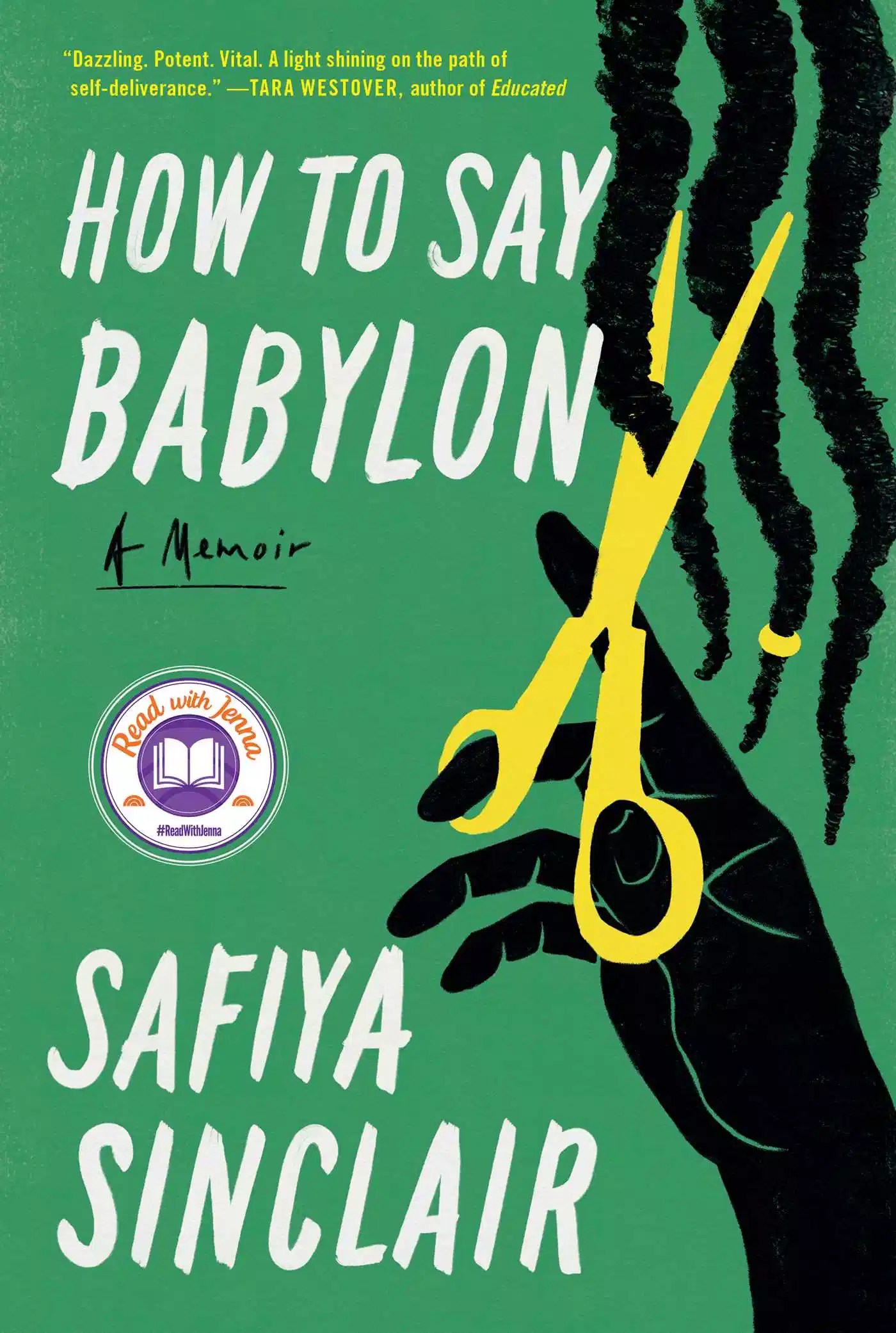
A poet recalls her childhood growing up as a minoritized Rastafarian in Jamaica with an abusive father.
Summary:
Throughout her childhood, Safiya Sinclair’s father, a volatile reggae musician and militant adherent to a strict sect of Rastafari, became obsessed with her purity, in particular, with the threat of what Rastas call Babylon, the immoral and corrupting influences of the Western world outside their home. He worried that womanhood would make Safiya and her sisters morally weak and impure, and believed a woman’s highest virtue was her obedience.
In an effort to keep Babylon outside the gate, he forbade almost everything. In place of pants, the women in her family were made to wear long skirts and dresses to cover their arms and legs, head wraps to cover their hair, no make-up, no jewelry, no opinions, no friends. Safiya’s mother, while loyal to her father, nonetheless gave Safiya and her siblings the gift of books, including poetry, to which Safiya latched on for dear life. And as Safiya watched her mother struggle voicelessly for years under housework and the rigidity of her father’s beliefs, she increasingly used her education as a sharp tool with which to find her voice and break free. Inevitably, with her rebellion comes clashes with her father, whose rage and paranoia explodes in increasing violence. As Safiya’s voice grows, lyrically and poetically, a collision course is set between them.
Review:
I picked this memoir up because I was interested in learning more about Rastafarianism. I was a religious studies minor in university, but Rastafarianism wasn’t something we’d touched on. The beginning of this book really delivered on educating me about the faith.
The memoir starts with a little introduction to Rastafarianism along with a brief history of Safiya’s father’s childhood and her mother’s childhood and what led each of them to convert to Rastafarianism. The religion sprang up in the 1930s as a faith of the most oppressed peoples in Jamaica. There is some disagreement as to whether Rastafarianism is a sect of Christianity or a separate faith entirely. Most Rastas believe that the Ethiopian Emperor Ras Tafari was the second coming of Christ. (In spite of him directly telling Rastas when he visited Jamaica that he was not Christ. Rastas felt that’s something Christ would say.) Just as with all faiths, there is a spectrum of beliefs and observances among Rastas. But there are three that are common.
First that the hair should not be cut, instead left in its natural state, leading them to dreadlocking it. Second, reggae as spiritual music. Third, smoking marijuana for spiritual experiences. Many Rastas are vegetarian, some are strict vegans. (Read more.) Something I found really beautiful was how Rastas adjust their speech, specifically how they will say “the I-and-I” as a reminder that God is indwelling in them. Safiya’s father will sometimes say “the I-man” to clarify when it was something limited to just him, and not him and God. The only thing I knew about Rastafarianism before I read this book was that it was common in Jamaica, so I learned a lot in an easy, beautiful way. The author didn’t just rely on her own childhood understanding of the faith but also interviewed Rasta elders and did some additional reading for the book. And it shows. To me, this was the strongest part of the book.
I thought when I picked this up it was a memoir of religion, but I think after reading it would be more accurate to say it was a memoir about an abusive father/daughter relationship that was at least a bit entwined with religion. So the focus was the abuse, not the religion. But it was necessary to understand the religion in order to understand some of where her father was coming from. Safiya’s father was on the more conservative end of the spectrum with regards to Rastafarianism. (He was also a reggae musician who kept running up against bad luck.) The family were strict vegans. He was more patriarchal and quite concerned about keeping his daughters safe from “Babylon” (the outside influence and dangers) in a way he wasn’t so much about his son.
But there are things that surprised me given the clear conservative lean of the family. The children all go to school. The daughters are encouraged to excel just as much as the son is. (The author even gets into an elite private school on scholarship, something that makes her parents very proud.) The children are allowed to continue living at home, even when they do things that go against the Rastafarian way. For example, the author models and cuts off her dreadlocks. I also was surprised to learn that Rastas were treated poorly in Jamaica while the author was growing up. She’s ridiculed due to being Rasta, and it wasn’t possible for her to pass as no one else seemed to have dreadlocks.
The abuse, though, is quite brutal. I was expecting from the book’s description emotional/spiritual abuse. Those do exist. But serious physical abuse does as well. One chapter titled “The Red Belt” made my chest ache to read. Any reader going into the book should be aware of this. I think some readers will relate to how Safiya deals with her father, and others will struggle to understand it.
The author is primarily a poet. Her work in poetry is what helped her achieve her goal of emigrating from Jamaica. Her poetic skills are evident in this book. I’m sure a reader who loves poetry will connect with this more than I did. I struggle to connect with poetry and so, even though I saw the beauty in the words, I struggled for them to move me. Similarly, while I always love to hear people talk about what they love doing, I didn’t connect with the author’s connection to poetry the way I would if I loved it similarly.
Overall, this is a book that will mean a lot to a reader who loves poetry and is able to read passages about physical and emotional abuse. Readers who like to root for someone to pivot into a life entirely different from how they grew up.
If you found this review helpful, please consider tipping me on ko-fi, checking out my digital items available in my ko-fi shop, buying one of my publications, using one of my referral/coupon codes, or signing up for my free microfiction monthly newsletter. Thank you for your support!
3 out of 5 stars
Length: 352 pages – average but on the longer side
Source: Library
Buy It (Amazon or Bookshop.org)
Book Review: The Woman in Me by Britney Spears

Two years after her conservatorship ended, pop star Britney Spears tells her story.
Summary:
In June 2021, the whole world was listening as Britney Spears spoke in open court. The impact of sharing her voice—her truth—was undeniable, and it changed the course of her life and the lives of countless others. The Woman in Me reveals for the first time her incredible journey—and the strength at the core of one of the greatest performers in pop music history.
Written with remarkable candor and humor, Spears’s groundbreaking book illuminates the enduring power of music and love—and the importance of a woman telling her own story, on her own terms, at last.
Review:
I think it’s important you know what sort of perspective you’re getting in my review. So let me be clear: I am a Britney Spears fan. From the moment I heard the first four notes of …Baby One More Time’s mp3 playing through the tinny speakers on my family’s pc when I was 13 years old, I was enamored – and I hadn’t even seen the music video yet! (And I didn’t for a while.) When I did finally start seeing Britney and not just hearing her, it got even better. Her fashion sense was, to me, spot on. I wanted nothing more than to wear those jeans and bare my midriff like her. (Although, I did not have the body confidence to do so.) Her eyeliner, her music videos, her sound.
Britney’s music was a perpetual backdrop to my rough teens and twenties. I laughed when Oops! I Did It Again mentioned the necklace in The Titanic. I got teary-eyed singing Lucky in my bedroom. I played I’m a Slave 4 U both because I liked it and because it drove my mother insane. I was terrified of snakes, and Britney DANCED with one while performing. I was a closeted bisexual, and when she kissed Madonna, I lost my mind. When she had kids, I was in college. I didn’t understand why she was so excited to be a mom, but I loved that she knew what she wanted so much. Blackout dropped my senior year, and I belted out Piece of Me on study breaks. I listened to Womanizer to make myself feel better when I was lonely in grad school Circus is still on my #GirlBoss playlist I listen to to help hype myself up when I’m doing something that feels scary in my various careers. (I’m on my second.)
When her conservatorship started, I didn’t understand what it meant. I thought she had trouble with her finances, and someone was helping her out. My husband took me to see her at her Vegas residency. I was so excited I threw up in our hotel room right before the show. I feel badly now knowing what she was going through (I did not know then), but I am here to tell you she still put on a phenomenal show for us fans in spite of all that.
When the #FreeBritney movement really started to take off, and I came to understand what a conservatorship actually meant, I joined in calling for her to be freed. I explained to anyone who would listen what was wrong with a conservatorship. And I believe this for anyone, not just for Britney. No one deserves to have their adult agency taken away, regardless of their mental abilities and/or mental health. Anything else is just ableist.
Anyway, that is who is reviewing this memoir for you. A fan who loves Britney for who she is.
The ghostwriters did a very good job of leaving Britney’s voice clearly in-tact throughout the book. It sounds like her. The story is told mostly chronologically from her childhood forward, although there is sometimes some jumping back and forth in some places. If you have read Britney’s Instagram captions, then you have some idea of the general tone of the book. But it has been edited so it is clearer than those. (And with less run-on sentences, and no emojis except in the Afterword.)
What stood out to me the most about the book was these things. First, Britney expresses that being put in the conservatorship caused her to regress sometimes. Essentially, treating her like a child made her act like a child. This is excellent insight, and a reason to not inflict conservatorships on people of any ability level. Everyone deserves to be treated with respect and like an adult. (I’d argue children deserve to be treated with more agency than they are, but that’s another topic for another blog post.) Second, Britney is of the opinion that what happened to her would never happen to a male pop star. How she was infantilized and not allowed space to be weird and creative was largely because she was a woman. Third, Britney feels part of why what happened to her did was because she tries so hard to be a “nice girl” that people end up walking all over her. She talks a bit about Madonna and how, “she demanded power, and so she got power.” (page 101) But that’s not part of Britney’s nature.
Fourth, Justin Timberlake broke up with her via text message then used the break-up to make her into the bad guy and spur on his solo career. Reminder to those who maybe weren’t around at that time – cell phones at that time didn’t let you write long messages. A break-up in a text message would have been necessarily character-limited. It makes it even worse. It seems that Britney was well and truly heart-broken and betrayed and society really piled on her on top of it. I didn’t realize that the paparazzi laws have changed since the early 2000s. I obviously wasn’t a celebrity but I remember how it was. You could see the paparazzi swarming celebrities constantly even in their own photos and videos. I used to wonder how they could stand it. (The answer is: a lot of them couldn’t.) The media was also incredibly cruel. I still have the internalized messages from just being a young woman at that time – and I wasn’t their target.
The magazines seemed to love nothing more than a photo they could run with the headline “Britney Spears got HUGE! Look, she’s not wearing makeup!” As if those two things were some kind of a sin–as if gaining weight was something unkind I’d done to them personally, a betrayal.”
The book makes it abundantly clear that the instigators of the conservatorship were her family. They swept in, claiming to be worried about her but actually wanting to control her. At the beginning of the book, she talks about her family history. How her father’s dad was abusive to him. This same grandfather also locked away her grandmother as “crazy” and left to rot there. The same thing her father tried to do to her. The intergenerational trauma gave me chills.
Ok, so why four stars instead of five? There were a few places where I wanted more. Not about any of her traumas. She has every right to only tell as much as she wants to tell. But some of the business stuff. I wanted to know more. I loved how she told us about what it was like to shoot her first music video and to dance with the snake at the awards show. I wanted more of that. What was it like to kiss Madonna? Why did she? (She says it was her idea, that they didn’t rehearse that way, but not much else.) I wish the ghost writers had nudged her a bit more to put more of those types of anecdotes in the book. Or when they came up to say more. (She says she threw a party with Natalie Portman but essentially nothing about what the party was like.) I wanted to know more about this part of Britney. Her successes, not just her traumas.
A question I was asked when I was seen reading the book was if I think Britney is really mentally unwell. My answer is this: this is a book written by a traumatized person. Britney was traumatized by her family, by the media, by various romantic partners, by the conservatorship. I don’t want to diagnose anyone. But I will say that trauma often leads to C-PTSD. And C-PTSD can often be misdiagnosed as other mental health conditions. So I hope people will keep these things in mind when looking at Britney and give her some grace. I do also think Britney is a simple, trusting person. Those type of people often end up being taken advantage of.
I’m assuming most fans have either already read the book or are (im)patiently waiting for their copy. If you’re on the fence, to you I say, this book is worth the read to explore intergenerational trauma and to dive down into late 90s/early 2000s culture. To be reminded (or learn) how misogynistic it was, even to women who were succeeding by its own rules.
If you found this review helpful, please consider tipping me on ko-fi, checking out my digital items available in my ko-fi shop, buying one of my publications, using one of my referral/coupon codes, or signing up for my free microfiction monthly newsletter. Thank you for your support!
4 out of 5 stars
Length: 288 pages – average but on the shorter side
Source: Library
Buy It (Amazon or Bookshop.org)
Two 1980s Horse Girl Books Face Off
Will The Horse that Came to Breakfast or Maggies Wish win?
I’m doing something a little bit different this week. I’ve been going through my bookshelves to determine what to keep and get rid of. If it’s a book I don’t really remember very well, I’m re-reading it to help decide. As a person born in the 1980s, I just so happened to have two middle grade horse girl books first published in the 1980s on the shelf. I didn’t remember anything about them. So I re-read both of them. Each re-read took about an hour. Let’s get into it.

First up we have The Horse that Came to Breakfast by Marilyn D. Anderson, first published in 1987. I picked this one up first because how could I not with that title? I was intrigued! The first sentence didn’t exactly draw me in because it referred to their home as a “house trailer.” I grew up with friends who lived in trailer parks, and my dad lived in one in the last few years of his life. I’ve never heard anyone call them a “house trailer.” The only thing I can think, based on the strong horse presence in the rest of the book, was the author mainly thought of horse trailers when she heard the word trailer and so thought she needed to differentiate. But really it’s the other way around. Trailer (where people live) and horse trailer (what you use to move horses).
Anyway, the basic plot of this book is that this little girl really wants a horse but her parents just got divorced, her dad is now completely out of the picture, her mom had to move them to a trailer, and money is very tight. But one day (in literally the first page of the book) a horse shows up in their yard. It’s a miracle! But her mom points out this horse must have an owner and makes her look for it. It turns out the horse is from a struggling horse riding instruction place. The little girl ends up collecting cans on the side of the road to pay for lessons on the horse. There’s a mean girl who shouldn’t get to ride the horse. The horse’s life is in danger. The little girl has to save him. Etc…
While I was skeptical of this book at first, it really did draw me in. In spite of certain aspects being dated (like how often this little girl was completely unsupervised and doing things like collecting cans along the side of the road or performing chores for random strangers she just met), the overall plot was thoughtful and heartwarming. There was no judgment of her mother for the divorce or the current financial situation, but it also empathically depicted how difficult it can be for kids to adjust to new life situations. It also highlighted caring for your neighbors and building a sense of community. Plus, there’s a happy ending for the girl and the horse. What more can you ask for?

Next up is Maggie’s Wish, first published in 1984. I’ll be honest. I didn’t notice until right now that the author is the same as for The Horse that Came to Breakfast! It felt like two totally different people wrote these books.
The basic plot of this one is that Maggie lives on a working farm with her mom and dad. She’s been asking for a pony to no avail. But one day her dad says the farm is getting something she’s going to really enjoy. She thinks it’s going to be a pony but it turns out to be two large draft horses for working the farm. The dad thinks this will be more fun than tractors. Maggie is disappointed but grows to love the draft horses only for her dad to sell them and ultimately buy her a pony.
The overall message of this book was bizarre. I’m still not sure what it was. Only when you learn to love the disappointing thing will you get what you really wanted? Don’t worry, when your father makes one poor financial decision he’ll continue to make them meaning you’ll ultimately get your pony one day? The family in this have a not great dynamic. The mother is kind of constantly making fun of the father. Of course, it’s a little hard to blame her for being frustrated when he really is making poor financial decisions with the family business without consulting her (his business partner) at all first. But those conversations should be had away from the daughter and not through passive-aggressive comments. I’m also having a hard time understanding how a farmer in 1984 could possibly think using two draft horses would be better than using a tractor. There’s also a scene where the dad spanks his daughter and her cousins (not his own kids) for running off unsupervised and almost getting hurt when he sends the dog to find them who then spooks a cow who almost runs them over. If you know you have a farm with cows who are spooked by dogs and you’re not sure where the children are, why would you send a dog after them? I understand spanking had a different cultural understanding in the 1980s but it’s hard to sympathize with the dad here when he was at least partially responsible for the whole near death experience.
The winner is…..
The Horse that Came to Breakfast! This is the one I decided to keep. Maggie’s Wish went to the local Little Free Library.
This is a great example of how one author can grow and change over time. Anderson’s characters acted with much more logic, even when making mistakes, in her later book. The overall plot was also more complex with elements I didn’t get into for the sake of space here. The message was clear and sound, backed up by memorable characters and intertwining plots. Maybe if the first book you pick up by an author is from early in their career, consider picking up one of the later books just to see.
Somewhat infuriatingly, I will note when I went to get the purchase links, Maggie’s Wish is available both digitally and as new printings. But The Horse that Came to Breakfast is only available as used vintage copies. Why? Why?
If you found this review helpful, please consider tipping me on ko-fi, checking out my digital items available in my ko-fi shop, buying one of my publications, using one of my referral/coupon codes, or signing up for my free microfiction monthly newsletter. Thank you for your support!
Length The Horse that Came to Breakfast: 96 pages – novella/short nonfiction
Length Maggie’s Wish: 96 pages – novella/short nonfiction
Buy The Horse that Came to Breakfast (Amazon, not available on Bookshop.org)
Buy Maggie’s Wish (Amazon or Bookshop.org)
Source: I’ve owned both books since childhood.
Book Review: The Burnout by Sophie Kinsella

Sasha’s GP prescribed three weeks off for her burnout leads her to return to the seaside resort she loved as a child in the off-season.
Summary:
Sasha has had it. She cannot bring herself to respond to another inane, “urgent” (but obviously not at all urgent) email or participate in the corporate employee joyfulness program. She hasn’t seen her friends in months. Sex? Seems like a lot of effort. Even cooking dinner takes far too much planning. Sasha has hit a wall.
Armed with good intentions to drink kale smoothies, try yoga, and find peace, she heads to the seaside resort she loved as a child. But it’s the off season, the hotel is in a dilapidated shambles, and she has to share the beach with the only other a grumpy guy named Finn, who seems as stressed as Sasha. How can she commune with nature when he’s sitting on her favorite rock, watching her? Nor can they agree on how best to alleviate their burnout ( manifesting, wild swimming; drinking whisky, getting pizza delivered to the beach).
When curious messages, seemingly addressed to Sasha and Finn, begin to appear on the beach, the two are forced to talk—about everything. How did they get so burned out? Can either of them remember something they used to love? (Answer: surfing!) And the question they try and fail to ignore: what does the energy between them—flaring even in the face of their bone-deep exhaustion—signify?
Review:
I love Sophie Kinsella’s romcoms and have read most of them (haven’t made it through the whole Shopaholic series yet). So when I saw she had a new book coming out this summer, I put it on my holds list at the library. This was a witty one with more surfing than I would have expected for a British book.
As usual for me in a Kinsella book, I was pulled in right away by the description of one of Sasha’s average days with her looming burnout. Her actual burnout breakdown scene was hysterical, but I must admit I was drawn a bit out of the world when I saw everyone’s reaction to it. She sees her GP who says she needs three weeks off of work, and he workplace just gives it. I know logically that the UK has a better work culture than here in the US, but seeing it spelled out like that was a bit jarring. I have suffered from burnout myself in the past, and there was no nice GP telling work “oh, she needs three weeks off” with work just saying “okedoke!” So the, there’s no other way to say it, jealousy, about Sasha’s culture’s way of handling her burnout kind of dampened the lightheartedness of the book for me. It’s like how sometimes people joke Breaking Bad could only happen in the US because of our healthcare system. Only it’s not actually a joke.
The setting at the seaside resort that’s kind of falling apart and poorly run was delightful. Each character was well-written, even minor ones. I especially enjoyed the Gen Z concierge who embroiders her side-business while at the desk and who reminded me of a particular Gen Z-er I know in real life. Sasha’s mother pretending to be her PA and calling in silly requests to help her meet the demands of a self-help app she installed on Sasha’s phone was hysterical, and the perfect set-up for the miscommunication trope between Sasha and the love interest, Finn. It’s easy to see how Finn dislikes Sasha at first, because she’s so bad at asking for what she actually wants that she lets herself look like a semi-demanding health nut.
The mystery at the seaside wasn’t too hard to solve, but it was just the right amount of mystery for Sasha and Finn to work on together. It gave them something to do and the book a nice subplot without detracting from either the romance or the will Sasha sort out her life plots going on.
One thing that I didn’t like is that Sasha of course makes a mistake. That’s fine. She eventually needs to own up about this to Finn. But she only discusses the issue that bubbled up as a result of it. She doesn’t confess to what she did. That soured the relationship for me, because I really felt she should have confessed fully. I love a good solid confession in a romance novel, where the other character forgives easily and it ends up not being the big deal the other character worried it would. This book had the set-up for that but then not the full follow-through. Other readers might feel differently and think Sasha has nothing she needs to confess, though.
Overall, this was an enjoyable romcom with a fun setting that was a light-hearted read.
If you found this review helpful, please consider tipping me on ko-fi, checking out my digital items available in my ko-fi shop, buying one of my publications, using one of my referral/coupon codes, or signing up for my free microfiction monthly newsletter. Thank you for your support!
4 out of 5 stars
Length: 416 pages – average but on the longer side
Source: Library
Buy It (Amazon or Bookshop.org)
 Support my work with a tip or browse my shop for curated book club guides, how to guides, cross-stitch patterns, and more!


This work by Amanda Nevius is licensed under a Creative Commons Attribution-Noncommercial-No Derivative Works 3.0 United States License.
 Opinions of a Wolf
Book Review: Looking Glass Sound by Catriona Ward
Just how much can real life -your own and others’ – inspire your fiction?
Summary:
In a lonely cottage overlooking the windswept Maine coast, Wilder Harlow begins the last book he will ever write. It is the story of his childhood summer companions and the killer that stalked the small New England town. Of the body they found, and the horror of that discovery echoing down the decades. And of Sky, Wilder’s one-time best friend, who stole his unfinished memoir and turned it into a lurid bestselling novel, Looking Glass Sound.
But as Wilder writes, the lines between memory and fiction blur. He fears he’s losing his grip on reality when he finds notes hidden around the cottage written in Sky’s signature green ink.
Catriona Ward delivers another mind-bending and cleverly crafted tale about one man’s struggle to come to terms with the terrors of his past… before it’s too late.
Review:
Based on my previous experience reading a Catriona Ward book, I came into this knowing as little as possible. I was concerned knowing too much would ruin the experience. Unlike her previous books, though, I think knowing something about what it’s about will actually help this book find the right audience. So let me tell you.
This book uses magical realism to explore how writers pull elements of the real world into their “fictional” stories. It explores just how acceptable that is. It also looks at how much a writer ends up living inside their own stories. All of this is wrapped up in a mystery story.
Here’s the thing. A lot of readers might go into this book expecting a mystery about a killer in a New England town with a shocking twist. That is not the trajectory of this book. It’s a very meta book about writing. It’s a book inside another book inside another book. It’s a little difficult to untwist and figure out what’s really going on and what’s fiction in this world.
I really respect the amount of work and plot development that went into this. The author had to write in multiple different styles as convincingly different authors. (Although I preferred The Villa by Rachel Hawkins for how it did a book inside another book – my review.) The meta commentary on writing is a literary exploration in navel-gazing that a lot of readers might enjoy. Except those who wanted the New England beach killer story with a twist. So this book might be struggling a bit to find its audience.
One thing that did bother me that should have been caught in editing is that these New England characters sometimes speak with a British affect. (There is one British character who, of course, should speak like a Brit.) I don’t mean they’re written with an accent but rather they sometimes say words or speak in a certain manner that I’ve only ever heard British people speak. (I was born in New England and have lived here all my life…so I know how we talk.)
The mystery was kind of mysterious but also not really the point of the book. The resolution left me scratching my head a bit, largely because of the magical realism aspects. I also felt like the message was a little garbled and unclear. It was a little bit of a letdown after the time investment, although I did appreciate it for its craft and structure.
Recommended to readers interested in a magical realism commentary on the writing process.
If you found this review helpful, please consider tipping me on ko-fi, checking out my digital items available in my ko-fi shop, buying one of my publications, using one of my referral/coupon codes, or signing up for my free microfiction monthly newsletter. Thank you for your support!
3 out of 5 stars
Length: 342 pages – average but on the longer side
Source: NetGalley
Buy It (Amazon or Bookshop.org)