
Archive
A Trio of Disappointing Reads Reviewed in Haiku

A feature for the disappointing reads: I spent enough time reading them. The reviews shouldn’t waste more time. See all haiku reviews here.

Winter’s Bone
By: Daniel Woodrell
Summary:
The sheriff’s deputy at the front door brings hard news to Ree Dolly. Her father has skipped bail on charges that he ran a crystal meth lab, and the Dollys will lose their house if he doesn’t show up for his next court date. Ree knows she has to bring her father back, dead or alive.
Haiku Review:
How could a book with
Meth and gangs and a strong lead
Be very boring?
2 out of 5 stars
Source: Library
Buy It

Little Lady Agency
By: Hester Browne
Summary:
Melissa Romney-Jones can bake a perfect sponge cake, type her little heart out, and plan a party blindfolded. But none of that has helped her get far in life or in love. When she gets fired — again — she decides to market her impeccable social skills to single men. To avoid embarrassing her father, a Member of Parliament, Melissa dons a blond wig and becomes “Honey,” a no-nonsense bombshell who helps clueless bachelors shop, entertain, and navigate social minefields.
Haiku Review:
Everything that makes
Browne’s other books good is just
Missing. Try again.
3 out of 5 stars
Source: Library
Buy It
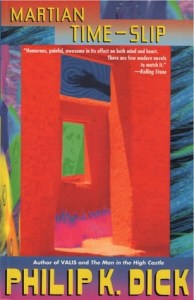
Martian Time-Slip
By: Philip K. Dick
Summary:
On the arid colony of Mars the only thing more precious than water may be a ten-year-old schizophrenic boy named Manfred Steiner. For although the UN has slated “anomalous” children for deportation and destruction, other people–especially Supreme Goodmember Arnie Kott of the Water Worker’s union–suspect that Manfred’s disorder may be a window into the future.
Haiku Review:
Using the n-word
For Martians. Fear of mental
Illness. Doesn’t age well.
2 out of 5 stars
Source: Audible
Buy It
Book Review: Meternity by Meghann Foye
 Summary:
Like everyone in New York media, editor Liz Buckley runs on cupcakes, caffeine and cocktails. But at thirty-one, she’s plateaued at Paddy Cakes, a glossy baby magazine that flogs thousand-dollar strollers to entitled, hypercompetitive spawn-havers.
Liz has spent years working a gazillion hours a week picking up the slack for coworkers with kids, and she’s tired of it. So one day when her stress-related nausea is mistaken for morning sickness by her bosses—boom! Liz is promoted to the mommy track. She decides to run with it and plans to use her paid time off to figure out her life: work, love and otherwise. It’ll be her “meternity” leave.
By day, Liz rocks a foam-rubber belly under fab maternity outfits. By night, she dumps the bump for karaoke nights and boozy dinners out. But how long can she keep up her charade…and hide it from the guy who might just be The One?
As her “due date” approaches, Liz is exhausted—and exhilarated—by the ruse, the guilt and the feelings brought on by a totally fictional belly-tenant…about happiness, success, family and the nature of love.
Review:
This book is more controversial than it probably should be. It’s a silly chick lit book in the vein of Shopaholic (if you haven’t read that series, the main character is addicted to shopping and does a lot of terrible things in a funny way). But it is a book that involves parenting, pregnancy, and women in the workplace, which are hot button issues for a lot of people. So I can see how it wound up being controversial. I do think most people are taking it too seriously though.
For the first solid half of the book I was fairly certain a lot of people were misunderstanding satire for seriousness. While some of Liz’s complaints about her particular workplace are valid (she has all the worked shoved off on her, repeatedly staying until midnight, while the other team members who are parents leave early; the expectation and pressure on women in their 30s to naturally want to have a baby, etc…) the way she reacts to these particular situations is childlike and pretty terrible. That said, a lot of chick lit has a tradition of the main character reacting in an over-the-top way no one in real life would ever do. It’s where the humor come from. From “what if” followed by utter ridiculousness. That said, halfway through the book I became less certain it’s satire and wondering more and more whether the author really looks at the world in this black-and-white way. If the author does actually think this way, it’s a sign of immaturity but one I’m able to laugh at. Not all readers might feel that way.
That said, I do think the author tried to provide a nod to women who feel differently. One of Liz’s good friends is having difficulty getting pregnant, and she supportively goes with her to a fertility doctor. There’s a character who is a working mother who calls Liz out by pointing out how very little time she actually gets to see her daughter and that she works just as hard as Liz then goes home and works more. (It’s true that this character is probably the only parent in the company who does, but the fact remains that she exists and calls Liz out). There is another character who is a parent who bemoans the pressure on women to return to the perfect body immediately after pregnancy, and Liz sympathizes with her. I do think by the end of the book Liz learns to have more empathy for women who’ve made different life choices from herself and sees it’s not all sunshine and roses onthe other side of the fence.
With regards to the writing, I didn’t like either of the love interests, and I did actually like (flawed) Liz enough that I was rooting for her to not end up with either of them. I will also say that I predicted the ending far far in advance but I’m also not sure how else the book could have ended and still lived up to the chick lit happy ever after mandate.
Overall, if you want a retake on Shopaholic featuring fake pregnancy rather than addiction to shopping, albeit one that doesn’t quite live up to Shopaholic, you’ll enjoy this book. You just need to be able to not take the subject matter too seriously.
If you found this review helpful, please consider tipping me on ko-fi, checking out my digital items available in my ko-fi shop, buying one of my publications, or using one of my referral/coupon codes. Thank you for your support!
3 out of 5 stars
Length: 368 pages – average but on the longer side
Source: Library
Buy It
Book Review: Swept off Her Feet by Hester Browne
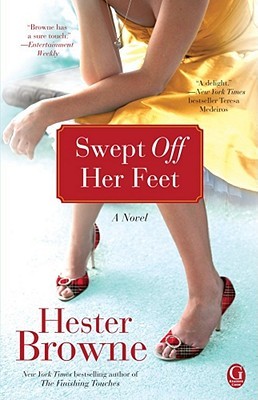 Summary:
Evie Nicholson is in love . . . with the past. An antiques appraiser in a London shop, Evie spins fanciful attachments to Victorian picture frames, French champagne glasses, satin evening gloves, and tattered teddy bears—regardless of their monetary value.
As a favor to friends of Fraser’s family, Evie jumps at the chance to appraise a Scottish castle full of artifacts and heirlooms. What could be more thrilling than roaming the halls of Kettlesheer and uncovering the McAndrews’ family treasures—and dusty secrets?
But crossing paths with moody heir Robert McAndrew has Evie assessing what she wants the most . . . and at an upcoming candlelight gala, a traditional dance will set her heart reeling.
Review:
I thought what better Christmas gift to give my readers than a review of a 5 star read! This is one of those books that was so exactly what I look for in the genre that there’s very little to say beyond well done. But I’ll try.
In chick lit I look for a few things. Romance I can root for (no rooting for a marriage to break up, for instance), a smart sense of humor, a realistic setting with a touch of magic, no hating on women in general or other women in particular, and writing that makes me feel as if I am there. This book hits all of those marks.
I was worried at first that I’d be getting a squicky story of Evie trying to steal her sister’s boyfriend, but that’s not what happens at all. Evie’s crush on her sister’s boyfriend is indicative of her tendency to crush on men she knows she can’t have, and it being her sister’s boyfriend is what it takes for her to realize that’s what’s happening. It was the thing that worried me the most but ended up working out the best.
The book is full of wit and smart humor that made me feel like I was relaxing in a warm tub with gentle music. It’s the kind of wit that made me at ease and entertained.
I love the fact that the plot revolves around a woman going somewhere for her career, and romance coming out of that. Evie has her own life, and a significant amount of the plot is actually about her career.
Another part of the plot is the Scottish reel that is danced at the special ball the family that owns the castle hosts. I was expecting to find reading the passages about the dancing to be either glossed over too much or boring, but in fact those passages were so well-written that I actually went and looked up the specific reels on YouTube because I felt like I just had to see them. I was pleasantly surprised to find that they looked precisely like I’d imagined them based on the author’s descriptions. It was the icing on the cake of the book.
Overall, if you’re looking for a modern chick lit whose plot revolves around far more than the romance and that features well-rounded women helping each other out rather than tearing each other down, I highly recommend this read. Maybe it’s something to pick up if Santa gave you a gift card that’s burning a hole in your pocket.
If you found this review helpful, please consider tipping me on ko-fi, checking out my digital items available in my ko-fi shop, buying one of my publications, or using one of my referral/coupon codes. Thank you for your support!
5 out of 5 stars
Length: 330 pages – average but on the longer side
Source: Library
Book Review: Tara Road by Maeve Binchy
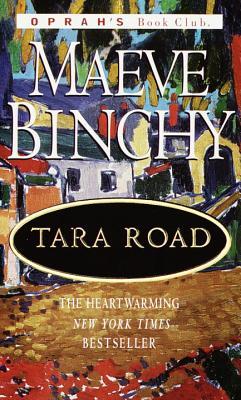 Summary:
Ria lived on Tara Road in Dublin with her dashing husband, Danny, and their two children. She fully believed she was happily married, right up until the day Danny told her he was leaving her to be with his young, pregnant girlfriend. By a chance phone call, Ria meets Marilyn, a woman from New England unable to come to terms with her only son’s death and now separated from her husband. The two women exchange houses for the summer with extraordinary consequences, each learning that the other has a deep secret that can never be revealed.
Review:
Is “two women swap houses and their lives change” a subgenre of women’s fiction? Because I feel like it should be. I have a real soft spot for house swap stories, starting back when The Holiday came out (one of my favorite romcoms). I was excited to see one featuring both Ireland and New England (Connecticut, specifically), and I sensed that the drama would be pretty high in this story. I wasn’t disappointed.
I learned a lot about recent Irish history from this book. For instance, I had no idea that divorce wasn’t legal in Ireland until 1995! The whole culture, too, wasn’t just that divorce wasn’t legal but that young marriage was expected. This directly impacts Ria’s life and her decisions. Learning this recent Irish history through Ria’s eyes helped make it more real and reminds the reader that these cultural norms and laws have a real impact on real people.
The settings were beautifully rendered. From Tara Road to the home in Connecticut, I felt completely present in each. I could hear the noises and smell the cooking at Tara Road and feel the cool pool water in Connecticut. The rich settings helped me take the perhaps at times ridiculous plot with the grain of salt such a story warrants.
Many issues are covered without ever feeling like the book was written just to talk about them. Rather, the issues exist because they just happen to in real life so why wouldn’t they in this book. Among the issues: alcoholism, domestic violence, grief, infertility, and more that I can’t mention without being plot spoilery.
Still, though, in spite of the strong setting and interesting plot, I did feel that it ended a bit too abruptly. I felt as if I was left hanging, wondering what ultimately was going to happen with these women. Being left wanting more isn’t necessarily a bad thing but after investing so much into these two women, I would have enjoyed at least an epilogue.
Overall, a strong entry in women’s fiction. It’s a house swap story that stays unique with the house swap not being about romance but rather about dealing with personal issues and where you want your life to go.
If you found this review helpful, please consider tipping me on ko-fi, checking out my digital items available in my ko-fi shop, buying one of my publications, or using one of my referral/coupon codes. Thank you for your support!
4 out of 5 stars
Length: 648 pages – chunkster
Source: Library
Book Review: The Undomestic Goddess by Sophie Kinsella
 Summary:
Workaholic attorney Samantha Sweeting has just done the unthinkable. She’s made a mistake so huge, it’ll wreck any chance of a partnership.
Going into utter meltdown, she walks out of her London office, gets on a train, and ends up in the middle of nowhere. Asking for directions at a big, beautiful house, she’s mistaken for an interviewee and finds herself being offered a job as housekeeper. Her employers have no idea they’ve hired a lawyer–and Samantha has no idea how to work the oven. She can’t sew on a button, bake a potato, or get the #@%# ironing board to open. How she takes a deep breath and begins to cope–and finds love–is a story as delicious as the bread she learns to bake.
But will her old life ever catch up with her? And if it does…will she want it back?
Review:
Long-time readers of this blog will know that I’m a Sophie Kinsella fan, so it should come as no surprise that I liked this book. But let me say I love love loved this book. It’s my favorite Kinsella book I’ve read so far. It was funny but also a beautiful love story and also great commentary on life and priorities. It gave me the warm fuzzies, you guys.
I think one of the things I like best about Kinsella books is how they present all of women’s life options as totally valid ones, even if the heroine herself doesn’t realize that at first. What matters most is the heroine doing what makes her happy, and often the drama comes from the heroine forcing herself to be something she’s not or align herself with life values she doesn’t have. In any case, this book walks a great line of neither demonizing career women nor women who stay at home. It also doesn’t present doing a high-powered, high-education track as better than doing a traditionally blue collar job like housekeeping or cooking. Yes, at first Samantha thinks one of them is better and looks down on the other, but ultimately she realizes the pluses and minuses of both types of jobs, and I really like seeing that in chick lit. A lot. I also really enjoyed seeing the struggle Samantha has between part of herself wanting the high-powered career and part wanting the quiet life at home. I think that’s a feeling many modern women can relate to.
The romance is also quite sweet. The early on playing between Samantha and her man and how that progresses made me feel like I was cozied up in a just the right temperature bath. But I also really liked that the book shows that compromise in a relationship is necessary. Both of them have to adjust their perceptions to fit the new reality of each other and both are willing to make compromises and meet in the middle.
Of course it’s also funny. What’s not funny about a lawyer trying to keep house when she doesn’t know anything about cleaning or cooking? At some point though the humor transitions into scenes that I can only describe as warm and glowing. That focus in on what really matters in life.
I was entertained. My life goals and ambitions were strengthened and validated. And I (maybe) (ok, definitely) cried happy-ever-after tears at the end of the book. I suppose if you’re a reader who doesn’t understand people who want to work a job they at least moderately enjoy and live life at a reasonable pace with lots of time with those they love then you might not enjoy this book. But I’d also say you need to read it and take a hard look at Samantha’s life before and after her lessons.
If you found this review helpful, please consider tipping me on ko-fi, checking out my digital items available in my ko-fi shop, buying one of my publications, or using one of my referral/coupon codes. Thank you for your support!
5 out of 5 stars
Length: 404 pages – average but on the longer side
Source: Library
Book Review: Twenties Girl by Sophie Kinsella
 Summary:
Lara Lington’s boyfriend – the one she’s sure is The One – just broke up with her. But that’s ok. She’ll soldier on. He’ll realize his mistake soon enough. And her business partner (in her small business of three people – the two of them plus one secretary) ran off on holiday and just isn’t coming back, but she just needs to keep the place afloat until she gets back. Everything is going to be just fine. That is…it would be if the ghost of her great-aunt Sadie hadn’t decided to start haunting her at her funeral. Now she just won’t leave her alone until Lara finds her precious dragonfly necklace. How exactly is she supposed to do that, keep her business going, win back her boyfriend, and not let anyone think she’s lost her mind?
Review:
I know this may seem like it was an odd read to pick up in the month following my father’s passing. (Yes, I read this eons ago…in December). I was in the mood for a light-hearted chick lit. Something to cheer me up. I knew I liked Sophie Kinsella, and honestly the thought of a loved one haunting you in ghost form sounded kind of nice to me for once. So I picked it up, and I’m glad I did. I think this might be my new favorite Sophie Kinsella.
There’s a lot here that makes this different among chick lit. First there’s the focus on a relationship with the member of a far-flung previous generation of your family. Chick lit often focuses on the heroine’s children, parents, or friends, but a great-aunt is a new one. (For me anyway). Things start out awkward and funny. Lara feels weird being at the funeral for a great-aunt she didn’t really know, and when Sadie shows up, it’s as herself in her 20s in the 1920s…how she continued to imagine herself even in her old age. Since Lara hadn’t previously had a relationship with her, she gets to know her basically as just another 20-something in ghost form. But she also has to inform her of how she’s passed on, and Sadie has to start to come to terms with what her life was.
The ghost looking for her missing necklace plot very quickly turns into a romcom mystery. There’s more to Lara’s family than meets the eye! And while I had my suspicions, how things ultimately work out was still enough of a surprise that I enjoyed seeing how we got there.
There of course also is a love interest and a love triangle that for one didn’t drive me batty (probably because it’s hard to be a real love triangle when one of the sides is a ghost). The book was humorous, the romance fun, and the plot engaging. But what shot it up to 5 stars for me was two themes.
First there’s Sadie coming to terms with what her life was, and Lara realizing that there’s more to the elderly than originally meets the eye. The book says a lot of good stuff about both how we treat the elderly in Western cultures and the process of aging and living your life to its fullest. It also touches upon taking the time to listen to your elders and learn from their success and mistakes. Lara’s life improves once she treats Sadie as a person, rather than just an elderly relic. And Sadie learns to let go once she comes to terms with how she lived her life.
The book also fights against the trope of a heroine being certain that someone is The One and then being proved she is right when she wins him back. Sadie teaches Lara a lot about being brave enough to be on your own. About the value of learning to be alone before finding someone. About how important it is to know who you are before you can find the right match for yourself. It’s only when Lara grows as a person (and a career woman) and actualizes more into who she really is that she’s able to find true romance, and I really liked seeing that theme in a chick lit.
Overall, if you want some gut laughs watching a 1920s-era ghost with her great-grand-niece cavorting around England, you won’t be disappointed in this book. But be prepared to find yourself fighting back tears to as you watch the inter-generational relationship blossom and everyone learn a little more about being true to themselves.
If you found this review helpful, please consider tipping me on ko-fi, checking out my digital items available in my ko-fi shop, buying one of my publications, or using one of my referral/coupon codes. Thank you for your support!
5 out of 5 stars
Length: 448 pages – average but on the longer side
Source: Library
Book Review: The Last to Know by Melissa Hill
 Summary:
Eve has been patient with Liam. They’ve been together nine years and have two children but he has yet to marry her and gets defensive anytime the topic comes up. Her sister, Sam, has never liked Liam and has become suspicious about all his business trips outside of Ireland, particularly the ones to Australia.
On the other side of the world in Australia, Brook is dating an Irishman who’s frustratingly periodically unavailable, in spite of what she thinks are their strong feelings for each other. She tries to distract herself reading a new manuscript that’s been left for her, but the manuscript might be less about a book deal and more about making sure she’s not the last to know something….
Review:
If you have ever seen Futurama, you’ll be aware of the utterly campy and ridiculous robot soap opera named “All My Circuits.” It’s known within the world of Futurama in particular for its over-the-top plot twists and yet somehow still being something entertaining that you can’t stop watching. When I read a book that goes a bit off the rails, I refer to it as being very All My Circuits. That is this book. If you love campy soap opera plots and ridiculous situations and twists that make you audibly gasp, you’re going to love this book.
I was suspicious of at least one upcoming twist from the very beginning from the description and set-up alone. The narration alternates between Brook’s life and the manuscript that’s been submitted to her for a while. At a certain point, it moves to include some thoughts from the person (or people) who wrote the manuscript. Brook is likeable. Eve and Sam are likeable. They’re all three well-rounded women with very different goals in life and life situations. Any reader of chick lit will be able to relate to one of them. I think that’s really all that a potential reader who doesn’t want spoilers needs to know about the book. If you are intrigued and don’t want spoilers, go on and pick it up! Those interested in the delicious ridiculousness of the twists should read further.
*spoilers*
It completely seems in both the description and the beginning of the book that the twist is going to be that Brook’s boyfriend is Eve’s baby daddy, and Eve’s author sister Sam is revealing this as gently as possible to Brook via the manuscript. HOLD UP THOUGH. Partway through the book, you find out that Liam has a thing for Eve’s best friend who is in a relationship with Liam’s best friend. I can’t for the life of me remember these characters’ names, so I’m going to call them EBF (Eve’s Best Friend) and LBF (Liam’s Best Friend). EBF is considering leaving LBF but then she finds out she’s pregnant and decides to stay and have a family with him. They have a baby girl. Then Liam DIES IN A CAR ACCIDENT ALONG WITH BOTH OF EVE’S CHILDREN. At this point the reader is like hold the fucking phone, Brook’s boyfriend isn’t dead so wtf. Wtf is the connection with Brook?
Eve finds out about the feels between EBF and Liam and in her grief becomes convinced that EBF’s baby is actually fathered by Liam and not LBF. For some unearthly reason, LBF and EBF ask her to babysit while they go to a wedding, and when they get back she and the baby are gone. Eve decided in her grief that she deserved this baby, so she absconds to Australia. So Brook is EBF’s baby. And she was raised by Eve. If you’re wondering how they pulled this off, the explanation is that the manuscript has been taking place decades ago so it was easier to run off with a baby then. Especially around the world.
Guys, I gasped audibly when I figured out where this story was going. Seriously. whoa I just really did not see those plot twists coming! Really did not. I was irritated at myself for never figuring out that the Ireland in the manuscript was from decades ago and not present-day. (I did keep wondering why it was such a big deal for women not to be single moms and why no one seemed to have a cell phone but I brushed over it). I thought that Brook dating an Irish guy was a bit too cute for the red herring, but I’m willing to let it slide. I wasn’t looking for great literature here. I was looking for All My Circuits. And oh man did I get it!
*end spoilers*
Overall, if you’re looking for a light-hearted yet drama-llama read full of plot twists that just might make you gasp out loud, this is the read for you. A few plot devices are a bit convenient and might make the reader eye-roll but not enough to detract from the enjoyment.
If you found this review helpful, please consider tipping me on ko-fi, checking out my digital items available in my ko-fi shop, buying one of my publications, or using one of my referral/coupon codes. Thank you for your support!
4 out of 5 stars
Length: 392 pages – average but on the longer side
Source: Won in a giveaway
Book Review: Remember Me? by Sophie Kinsella
 Summary:
The last thing Lexi remembers she’s a 24 year old in the year 2004 with bad teeth, a bad boyfriend, and at the bottom of the totem pole in a new job where she hasn’t been working long enough to be able to get the annual bonus. When she wakes up in hospital, though, she’s told that the year is 2007, she’s 28, the boss of her department, and married to a millionaire! She’s told she was in a car accident that gave her amnesia, and now she has to piece together just how she got to this place in her life, especially when not everything is as rosy as it seems at first. Her millionaire husband is controlling, her once best friends give her the cold shoulder, and everyone at work seems to think that she’s a bitch.
Review:
True story. I spotted this sitting on top of a neighbor’s recycling bin and snatched it up as soon as I recognized the author’s name. I was a big fan of Sophie Kinsella’s in high school, and I just couldn’t bear to see a perfectly nice condition hardcover of one of her books get recycled. I wondered if I would enjoy her contemporary romance as much now as a late 20-something as I did as a teen. I’m happy to say I certainly enjoyed this one just as much, although in a slightly different way than I used to.
I wonder how much I would have appreciated this book a few years ago. As a late-20 something myself, I laughed out loud at how the 24 year old version of me would react if she was plunked into my current life. A lot really does change in 4 years in your 20s, especially with regards to your career and your love life. The plot kind of reminded me a bit of the plot of one of my favorite romcoms 13 Going On 30. Someone who is (or perceives of themselves as) much younger and less experienced than the person whose life they are now living. How that affects them and how they react to it is really interesting. Both stories show how important actually going through the growing pains really are. You can’t just suddenly handle a more adult life; you have to grow into it.
I also appreciated that, although Lexi’s husband is drop-dead gorgeous, both she and he believe she should not sleep with him until she is comfortable with him again. She may be married to him, but she doesn’t remember who he is, and she shouldn’t do anything until she’s ready. If she ever is. Her husband is definitely controlling of her when it comes to how their household is run and how they spend money, but he is very respectful of her sexually. He doesn’t touch her unless invited to, and he stops when she says to. I was really happy to see this focus on positive, enthusiastic consent portrayed in the book.
The exploration of Lexi’s career path from lower level to high-powered boss is fascinating. Lexi is torn up that now that she’s a boss those under her think she’s a bitch. There’s a nuanced exploration of how women in power are often perceived of as bitches, even if they’re just being assertive. However, there’s also a nice exploration of how to still be true to yourself when in power. You don’t necessarily have to lead in the traditional “masculine” way if you don’t want to. This combined with the exploration of aging gave a depth to the romance that kicked it up a notch for me.
It says a lot for how much the book made me like Lexi that I was able to get past one plot point that usually spoils romances for me. However, that plot point did knock the book down from 5 to 4 stars for me.
*spoilers*
It turns out that 28 year old Lexi is cheating on her husband. 24 year old Lexi is just as horrified by this as I always am by cheating. The exploration of how she wound up cheating on him didn’t make it ok to me, but I did appreciate that 24 year old Lexi took agency and addressed the situation, rather than lingering in married but cheating land. I appreciated that Lexi was able to acknowledge her mistakes, forgive herself for them, and grow and change.
*end spoilers*
Overall, fans of contemporary romance will enjoy this fun take on the amnesia plot. The plot doesn’t just cover a romance, it also covers the growing pains of being in your 20s, the challenges women face when they become the boss, and how to learn from your mistakes.
If you found this review helpful, please consider tipping me on ko-fi, checking out my digital items available in my ko-fi shop, buying one of my publications, or using one of my referral/coupon codes. Thank you for your support!
4 out of 5 stars
Length: 389 pages – average but on the longer side
Source: Rescued from a recycling bin
Buy It (Amazon or Bookshop.org)
Counts For:
Bottom of TBR Pile Challenge
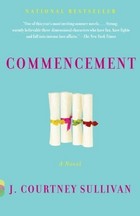
Book Review: Commencement by J. Courtney Sullivan (Bottom of TBR Pile Challenge)
 Summary:
Celia, Bree, Sally, and April wound up on the same small hall their first year at Smith College. Celia is from a traditional Irish Catholic Massachusetts family, although she doesn’t consider herself to be Catholic. Bree arrives at college from the south with an engagement ring on her hand. Sally arrives full of mourning and despair over the recent loss of her mother to breast cancer, and April arrives as the only work-study student on their floor. Paying her own way through school and with a whole slew of issues and causes to fight for. Their friendship is traced from the first weeks at Smith through their late 20s.
Review:
I picked this book up because it was compared favorably to Mary McCarthy’s The Group

What the book does well is evoking the feeling of both being in undergrad and the years immediately after graduation. Sullivan tells the story non-linearly, having the women getting back together for a wedding a few years after college. This lets them reminisce to early years of college and also present current life situations and hopes for the future. After the wedding, the story moves forward to cover the next year. The plot structure was good and kept the story moving at a good pace. It feels homey and familiar to read a book about four women going through the early stages of adulthood. It was hard to put down, and the storytelling and dialogue, particularly for the first half of the book, read like a fun beach read. However, there are a few issues that prevent the book from being the intelligent women’s literature it set out to be.
First, given that the premise of the book is that four very different women become unlikely friends thanks to being on the same hall of a progressive women’s college, the group of women isn’t actually that diverse. They are all white, three of the four are from wealthy or upper-middle-class backgrounds (only one must take out loans and work to pay for school), none are differently abled (no physical disabilities or mental illnesses), and not a single one is a happy GLBTQ person. Given that The Group
The book has a real GLBTQ problem. One of the characters has two relationships. One is with a man and one with a woman. She is happy in both and attracted to both. She takes issue with being called a lesbian, since she states she definitely fantasizes about men and enjoys thinking about them as well. Yet, in spite of the character clearly having both physical and romantic attractions to both men and women, the word bisexual is not used once in the entire book. The character herself never ventures to think she might be bi, and no one else suggests it to her. She struggles with “being a lesbian” and “being out as a lesbian” because she doesn’t think she is a lesbian. The other characters either say she’s in denial in the closet due to homophobia or that she really is straight and she needs to leave her girlfriend. It is clear reading the book that the character struggles with having the label of lesbian forced upon her when she is clearly actually bisexual. This is why she is uncomfortable with the label. But this huge GLBTQ issue is never properly addressed, swept under the rug under the idea that she’s “really a lesbian” and is just suffering from internalized homophobia. The bi erasure in this book is huge and feels purposeful since the character’s bisexual feelings are routinely discussed but the option of being non-monosexual never is. It’s disappointing in a book that is supposed to be progressive and talking about modern young women’s issues to have the opportunity to discuss the issues of being bisexual and instead have the character’s bisexuality erased.
The second half of the book makes some really odd plot choices, showing a highly abusive relationship between one of the characters and her boss. It probably is meant to show the clash between second and third wave feminism, but it feels awkward and a bit unrealistic. Similarly, the book ends abruptly, leaving the reader hanging and wondering what is going to happen to these characters and their friendship. Abrupt endings are good when they are appropriate to the book and mean something, but this ending feels out of place in the book, jarring, and like a disservice to the reader.
Overall, this is a fast-paced book that is a quick, candy-like read. However, it is held back by having the group of women in the core friendship be too similar. Opportunities to explore diverse, interesting characters are missed and bisexual erasure is a steady presence in the book. The ending’s abruptness and lack of closure may disappoint some readers. Recommended to those looking for a quick beach read who won’t mind a lack of depth or abrupt ending. For those looking for the stronger, original story of a group of friends from a women’s college, pick up The Group
3 out of 5 stars
Source: PaperBackSwap
Book Review: Barefoot Season by Susan Mallery (Series, #1)
 Summary:
Michelle ran away from mistakes made at home to the army, and now she’s coming home from three tours of duty to Blackberry Island in the Pacific Northwest. Her father abandoned the family when she was a teenager, but left his historic inn in trust to her. Her mother was running it until she died, and now Michelle is back to reclaim her inheritance. Only it seems that her mother may have not so much been running the inn as running it into the ground. Meanwhile, Michelle’s once best friend, Carly, thought she was working toward owning part of the inn only to be side-swiped by the fact that Michelle’s mother lied to her….not to mention the bad blood between her and Michelle. It’s a lot for anyone to deal with, but toss in Michelle’s PTSD and Carly’s single motherhood, and it seems impossible for either of them to ever truly get their lives in order.
Review:
I am not usually a chick lit person, but this one slipped in under my radar thanks to Harlequin’s new MIRA line (which is chick lit with some sex scenes). I’m glad it did, because I found the story relatable, heart-warming, and a welcome escape.
The plot is complex, which I think is evident from my plot summary. There is a lot going on. But it never feels forced or like too much. It simply feels like real life. Michelle and Carly both have a *lot* of shit to deal with and watching them deal with it imperfectly but understandably is an enjoyable experience.
Although both Michelle and Carly have their own romance plot lines, the story is really about healing their broken friendship, as well as their wounds from their individual painful pasts. I enjoyed this because the story shows healing happening alongside real life. Too often books either ignore the tough things or focus on them to the exclusion of real life.
Of course, being the mental illness advocate that I am, I was incredibly pleased to see Michelle’s PTSD come up and be dealt with in such a true to life manner. Michelle at first is mentally wounded and won’t truly admit it.
While she wasn’t a big believer in PTSD, she’d been told she suffered from it. So she’d listened to the counselors when they’d talked about avoiding stress and staying rested and eating well. (location 207)
Perhaps the most true-to-life part of the whole book is that Michelle takes a while to admit that she is not ok, even while those around her who love her are expressing their concerns to her. A lot of people have difficulty acknowledging a problem, particularly if they view themselves as strong and independent. Seeing Michelle realize that reaching out for help is stronger than suffering alone is honestly the best part of the whole book.
Although we do have a couple of sex scenes, I did feel that the romance was a bit….quick and forced for both women. However, this is the first book in a series, so perhaps their romantic relationships will be explored more in future books.
I also have to say that the title makes zero sense to me. It brings to mind summer, but that’s about all the relation I can see between it and the story.
Overall, this is a piece of chick lit with an intelligent perspective on PTSD in female soldiers and a dash of romance. Recommended to fans of the genre as well as those who enjoy a contemporary tale and want to dip their toe into the chick lit world.
4 out of 5 stars
Source: NetGalley

Counts For:
 Support my work with a tip or browse my shop for curated book club guides, how to guides, cross-stitch patterns, and more!


This work by Amanda Nevius is licensed under a Creative Commons Attribution-Noncommercial-No Derivative Works 3.0 United States License.
 Opinions of a Wolf