
Archive
Book Review: Listening To Dust by Brandon Shire
 Summary:
A chance meeting between orphaned British writer, Stephen, and American soldier, Dustin, leads to a passionate love affair in England. But when Dustin chooses to go back home to his small Southern town to care for his mentally challenged brother, Stephen is left behind, sending letters that are never answered. He finally decides to follow Dustin home and arrives only to discover that Dustin is no more.
Review:
This is my second read by Brandon Shire. The first, The Value Of Rain
There are some commonalities in the stories. Both feature a gay man who grew up in an unaccepting family and show the impact that has on their lives. But that’s where the similarities cease. Listening To Dust
The writing is again gorgeous. Even now I can feel the hot dustiness of Dustin’s hometown and also the comforting cool greenery of Stephen’s grandmother’s French cottage. Shire elicits both place and emotions so powerfully that it is impossible not to be moved by the story.
I also really enjoyed the various commentary throughout the book on love, words, and actions. What love is, what it does, and whether words or actions are worth more.
So I guess we were both right, and both wrong about actions and words. Like the two of us, one is empty without the other. (location 1014)
The sex scenes manage to be steamy and emotional. What I might call literary sex scenes. When I read them, I felt them in my knees.
Even now I can feel the heat from your palm as you cupped the back of my head and pulled my lips those last few inches, how you opened your body and begged me with your soul. (location 1726)
Damn.
So what held me back from 5 stars? As previously stated, I wasn’t a huge fan of Stephen’s voice, although I respected his experiences. He sometimes grated on me a bit. I’m not sure if it was his slight Britishisms or how much he got hung up in his own head but he sometimes irritated me in a way that kept me from getting completely engrossed in the story. But this is a small thing, really, when compared to the story as a whole and the beautiful writing.
Overall, this is a book that sweeps the reader away to multiple, disparate places to explore both love and the far-reaching affects of a harsh family life. It should appeal to any who enjoy a heart-breaking contemporary LGBTQIA+ romance.
4 out of 5 stars
Source: Kindle copy from author in exchange for my honest review
Note: 10% of all proceeds donated to LGBT Youth Charities combating homelessness.
Book Review: Chop Suey: A Cultural History of Chinese Food in the United States by Andrew Coe (Bottom of TBR Pile Challenge)
 Summary:
American Chinese food is different from Chinese Chinese food. This is a well-known fact. Coe tells the history of how Chinese food came to America and changed and adapted to the cuisine we know today. Along the way, some of the stories of Chinese immigrants to America and Chinese-Americans are told as well.
Review:
I love food, and I love history, so a book telling the history of a specific cuisine totally appealed to me. Unfortunately, this book missed the mark for what could have been an enticing history of American style Chinese food. Instead, it gets hung up in the early history of both Chinese food in China and Chinese food in America in the 1800s then hops, skips, and jumps over how it changed through the 1900s up to present. While this information is interesting, it is not the history of American Chinese food it is presented as.
The main issue with the book is it spends almost 1/4 of its time exploring the history of Chinese food in China. While I learned some interesting facts, such as that tofu was invented in the Han Dynasty (page 80), this information is not necessary to convey how Chinese food came to America and changed. A much briefer introduction to where Chinese food was at before coming to America would have sufficed. The best part of the book is when it discusses Chinese food in America in the 1800s and explores how US-born Americans’ embracing of Chinese food or not depended on many factors such as the current rates of xenophobia, job markets, and prices. Viewing the history of the American west coast through the perspective of Chinese immigration and Chinese restaurants was truly fascinating. One of the more fascinating things that I learned in this section was a detail of the history of the racist perception of Asian men as not masculine. In that time period, when Chinese immigrants were competing with white Americans and Irish immigrants for railroad and other jobs, the backlash was that since Chinese men “didn’t need” to eat meat to work long hours they could afford to take a lower rate of pay. Articles attacked the Chinese diet as a sign that Chinese men are less masculine since they “don’t need” meat the way white American and Irish-American men do. One article title from this time period cited in the book is “Some Reasons for Chinese Exclusion. Meat vs. Rice. American Manhood against Asiatic Coolieism. Which Shall Survive?” by Samuel Gompers (page 141). As a vegetarian, I found it fascinating that the sexist perception of a less meat-centric diet (the Chinese did indeed eat meat, just less than American men), has both such a far-reaching history and was used to fuel xenophobia and racism against immigrant workers. It is clear to me after reading this that a large part of the work for vegetarians is to get rid of the faulty correlation between meat and masculinity. I could see fixing this having other positive outcomes as well, such as fighting against misperceptions of the masculinity of other cultures.
Unfortunately, the wonderful details found in the chapters on the 1800s gradually cease to exist as the book moves up through time. While the 1920s get some special attention, such as touching on the fact that Chinese restaurants survived Prohibition well because they had never served alcohol anyway (page 189), slowly these details fall away until we get nothing but the bare bones of how Chinese restaurants functioned and interacted with American history in the rest of the 20th century up to present. There is even one rather aggravating long aside exploring President Nixon’s visit to China. While his visit to China definitely gave a resurgence of interest in Chinese food in the US, it was again unnecessary to give such incredible details on Nixon’s visit. It could have been simply stated, instead, that Nixon visited China, bringing Chinese food to the forefront of American thought again and giving a resurgence of interest in Chinese cuisine. The book has a tendency to lollygag on topics that are not actually what the book is supposed to be about. While these topics can be interesting and Coe explores them well, they are not what the book supposedly is about. It would be better to present the book with a different title or edit the focus back to simply Chinese-American cuisine.
One other factor that made me enjoy the book less is that Coe shows a clear bias toward Chinese culture. There is nothing wrong with enjoying Chinese culture, but Coe says some things that if he had said them in reverse would be considered completely unacceptable to say. He frequently presents the Chinese people as more civilized, their way of doing things as more logical and simply better, and even scoffs at the level of advancement of European countries compared to China at one point (page 94). Lack of bias and simply presenting the facts is the strength of historical nonfiction works. It would have been nice to see that level of professionalism in this book, regardless of Coe’s personal views.
Overall then, while I learned some new facts about both Chinese-American cuisine and Chinese-American history, the book wanders significantly through Chinese history and Chinese cuisine as well. Interesting, but not what the title implies the book is about. Coe also shows some bias that should not be present in a history book. These are easily skimmed over, however, and thankfully do not come up very often. Recommended to those with an interest in both Chinese-American and Chinese history in addition to the history of American style Chinese cuisine, as all three are covered rather equally.
3 out of 5 stars
Source: Amazon

Book Review: Tracking the Tempest by Nicole Peeler (Series, #2) (Audiobook narrated by Kate Reinders)
 Summary:
Things have gotten interesting since Mainiac Jane True found out she’s half selkie. She discovered the whole world of supernatural beings, started training and honing her own powers with the help of a local goblin, and of course met and started dating the sexy vampire Ryu. After being caught up in the mystery that was a supernatural person killing halflings, Jane really just wants to focus in on power honing and Ryu. Particularly with Valentine’s Day approaching. But when she goes down to Boston for her first visit to his home, she ends up getting caught up in his current investigation. Going after a dangerous halfling who just escaped from an illegal lab.
Review:
I enjoyed the first entry in this series as a surprisingly humorous paranormal romance set in the unusual (for pnr) setting of Maine. So when I needed a new audiobook for a roadtrip and saw this lounging on audible, I snatched it up. I kind of regret that choice because not only did I enjoy this entry in the series less but I also apparently misremembered how well I liked the first book in the series. I only rated it as 3.5 stars but remembered enjoying it at at least 4. Hindsight is not always 20/20. Essentially, everything that kinda sorta rubbed me the wrong way in the first book got worse instead of better, and the things I liked became worse as well.
The humor takes a nosedive. Whereas the first book deftly handled a dry New England sense of humor, here things turn mean and inappropriate. Jane laughs at things she shouldn’t laugh at and invites the reader to as well, and it becomes deeply awkward. Like hanging out with a friend who thinks they’re funny but is in fact offensive.
I was excited to see what Peeler did with Boston, and I admit some things she handled well. She nailed the neighborhood of Allston, for instance, but she also put Ryu’s home in Bay Village. Ryu is supposed to be a wealthy vampire, but instead of putting him in Beacon Hill or a wealthy suburb like Cambridge or Newton, she puts him in a neighborhood that is actually a lower to middle class neighborhood that is slowly being gentrified. That’s not where a home like Ryu’s supposedly is would be located. This is a neighborhood that border the Massachusetts Turnpike (noisy big road, for non-Americans). It’s not the mecca of wealth that Peeler seems to think it is. A big mistake like that is rather jarring when she got details like how the exit of the T in Harvard Square is called the Pit, a bit of knowledge even some locals don’t have. On the other hand, she seems to think that the Boston Public Garden closes at night and has a big scene where Ryu takes Jane there on a romantic late-night date. Um. No. The Garden doesn’t close at night. It is, however, full of people trying to sell you drugs. Yes, yes, ideal for a romantic date. This unevenness in knowledge of Boston and its surrounding areas made reading the setting uncomfortable and awkward.
The issue of Ryu being an obvious jerk continues. It’s clear from the beginning of the book that a break-up is coming and Jane is being set up with another character. It’s kind of annoying for the book to be this predictable, but it is paranormal romance, and Jane does ultimately stand up for herself, so I was ultimately ok with this. In fact, the way Jane stands up for herself is handled so well that it saved the book from getting 2 stars instead of 3.
The last, and most important, thing that made the book deeply upsetting for me was the fact that Jane is not once but twice put into a situation where she is about to be raped. Rape comes up a lot in paranormal romance and frankly it bothers me. These are worlds in which women are powerful, talented, and often gifted with great gifts. So why must their confrontations so frequently devolve into threatened or real rape? I get it that rape is a very real thing in the real world, and I am completely fine with it existing as a plot point in horror, dystopian or post-apocalyptic scifi, and mysteries. Horror is supposed to push the boundaries of comfort. Dystopian and postapocalyptic scifi is frequently presenting humanity at its worst, and rape is one of the worst. Mystery needs a victim, and frequently murder victims are also raped. But in a battle between supernatural creatures in a book that is supposed to be a romance suddenly tossing in rape as a weapon doesn’t read right. It removes so much agency from the main female characters. Like, what, she’s always easily defeated because you can just threaten to shove your dick into her against her will and suddenly she will acquiesce to your viewpoint? It’s paranormal romance. Why can’t the paranormal world have fights where rape threats and attempted rapes aren’t a thing?
What really bothered me about the second scene this happened in with Jane is the level of victim blaming that happens as well. Jane has just successfully escaped from the first rape attempt. She saves herself. This is great, and she does it with a mixture of trickery and violence that is commendable. But then a man shows up and immediately takes over. He says he needs to protect her; he’s going to walk her out of this situation. Jane insists she needs to pee. She goes to pee, against his protests, and when she comes back out, he’s gone because another group of villains have him, and Jane starts to be attacked by a known violent rapist. She later blames herself for having to go pee, and no one argues with her that she has every right to pee when she needs to. So we have a powerful halfling who can’t go pee by herself because she might get attacked and raped? That is so incredibly victim blaming and putting all the responsibility for safety on the woman that I can’t even properly articulate how angry it makes me.
Kate Reinders, the narrator, mostly does a good job. She lands the complex voice of Jane quite well. The only negative I can say is that she mispronounces some New England words and city names. But her narration did make the book more enjoyable for me.
Combine these issues (aside from the audiobook narration which was fine) together with the fact that the plot is basically the previous book’s plot flipped in reverse (violent halfling killing supernatural people instead of supernatural person killing halfling), and I can safely say I won’t be continuing on in the series. The only thing that saves the book from a lower rating is the fact that Jane ultimately does stand up for herself. But for me it was too little too late. Not recommended. Unless you enjoy bad humor, awkward settings, and rape threats and victim blaming of the heroine.
3 out of 5 stars
Source: Audible

Previous Books in Series:
Tempest Rising
Book Review: Rip Tide by Kat Falls (Series, #2) (Audiobook narrated by Keith Nobbs)
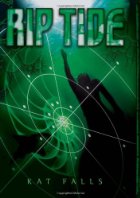 Summary:
Ty lives with his pioneer family subsea but he can’t convince his crush Gemma to leave Topside. Why is she so afraid of subsea? This was his biggest problem until his parents get kidnapped by surfs when they attempt to do a trade. Plus, Gemma wants to convince her fugitive brother to let her tag along with him. And townships keep disappearing, only to turn up later, chained up and anchored subsea with everyone dead inside. It’s a giant web of mysteries but do they intertwine at all?
Review:
I absolutely loved the first entry in this scifi series, which is unusual for me, since it’s YA. Not generally my genre. So I was excited to see the sequel available on Audible. It’s still an exciting adventure and interesting world but not quite as tightly and expertly constructed as last time.
Whereas Ty’s voice worked perfectly in the first book, in this one he reads a bit young. He went through a lot in the first entry, he should have presumably matured a bit more than he has. Similarly, Gemma hasn’t developed much since the first book either. I think these characters should have been given more space to grow more. Particularly in a YA series, it’s important to let the characters develop and mature at a more rapid rate. That’s the reality for teenagers after all.
Plot-wise, I honestly felt that there was a bit of a deus ex machina at work that also didn’t fully play into the rules of the world as originally set up. Still, though, the mystery is well-plotted and difficult to predict. It includes real danger without being too violent. It’s the perfect level of thriller for a YA reader who’s not so into the gore. On the other hand, I also found it frustrating that Ty’s parents aren’t around for most of the book. One of the things refreshing about the first one was that his parents were actually present and helpful without being too pushy or overshadowing. This time around, Falls went the more popular YA adventure route and just flat-out got rid of them for most of the book.
But the world Falls has built is still rich and unique, and she expanded upon it. We now get to see more of what the surf life is like, in addition to more of the shady side of things, such as the boxing/fighting rings. We also see some more of the government and law enforcement and have a better understanding of the world as a whole. It’s all richly imagined and drawn, right down to what styles of clothes different groups wear to what they eat. One detail I particularly enjoyed was that the surfs, a poor outcast lot, eat a lot of fish and blubber because it’s easy to catch, whereas Ty’s family eats a lot of vegetables because they grow them. Details like that really make a world.
The audiobook narrator, Keith Nobbs, read the whole thing a bit flat for my taste. He didn’t have as much enthusiasm and inflection as I thought was appropriate for a book about a subsea adventure starring two young teenagers! The production quality was high, he was easy to understand, but he didn’t really bring Ty to life. I’d recommend reading the print book over the audio, honestly.
Overall, then, the characters are a bit slow in their development and the plot feels a bit lazier than last time, but the characters are still well-rounded and the plot maintains an appropriate level of mystery. Toss in the richly imagined and describe post-apocalyptic and very wet world, and it’s well worth the read.
4 out of 5 stars
Source: Audible

 ,
, Book Review: iD by Madeline Ashby (Series, #2)
 Summary:
Javier is a vN. A self-replicating humanoid robot built by fundamentalist Christians to help humanity left behind after the rapture but then bought out and sold by a secular organization after the Christian company failed. He was living on an island run by his powerful vN girlfriend, Amy. Free from all humans and therefore free from the failsafe that makes him avoid harming them at all costs. He wants his failsafe-free girlfriend to free him from his own, but she refuses. So when a human shows up on the island and activates his failsafe, everything comes crashing down around him. Now he’s on a race to save Amy….and destroy his failsafe.
Review:
I was really excited for the second book in this series about ai written by a woman author. I love getting to see scifi topics like ai explored from a woman’s perspective. So I was a bit disappointed to have the story shift focus from a woman in the first book (Amy) to a man in the second (Javier).
Ripping Amy out from under us is an interesting choice. On the one hand, I appreciate series that switch perspectives like this because we get to see more of the world of the novel and gain a clearer understanding of it. On the other hand, part of why I liked the series to begin with was that we were seeing a powerful female robot for once. So I was skeptical about this choice at first. Ultimately, however, the perspective switch worked for me because it basically is following the hero’s sidekick when the hero is decommissioned. It’s still interesting to see the gender swap happening in the sidekick. It’s also interesting because although Javier is male, he’s also a robot with a failsafe, so he is more akin to an enslaved person than to a humanoid free male. It’s interesting but it saddens me that this perspective makes it seem like things like trading sex for travel are the only options for people in that situation. Sex is power, yes, but it’s not the only tool women have available to them. I’m not sure how I feel about the fact that the book seems to be saying that anyone in that situation, regardless of gender, would use these resources because they have to. I can see not having a lot of choices. And I can understand having to choose to do something you don’t morally want to do because the end result is so needed. But I would expect to see a lot of soul searching and thought process behind that choice because it is still a choice. Javier doesn’t seem to do much choosing or thinking, and I think that’s not a fair representation of what it actually is like to be a woman. We still have choices, and because it’s not always easy to do precisely what we want to do, what choice we make takes more thoughtfulness, if anything. There’s not always a good choice available. But there are always choices. I would like to have seen Javier doing more thinking and choosing between different difficult choices rather than seeing himself as having to do X to get to Z.
The world building is still strong in this book. Instead of being stuck on an island for the whole time, the events in the beginning of the book allow us to see much of the world, not just America, through the eyes of Javier. There is, unfortunately, quite a bit of confusion in the world at this time so it’s difficult to understand precisely what is going on or how the world got to this place. I believe this is just the situation that is typical of a second book in a series (or the third book in the trilogy), so I expect a lot of the confusion to clear up in the third book. If anything the mystery increased with this book, which is not a bad thing.
Overall, this book builds further on the world presented in vN through the eyes of Amy’s male sidekick, Javier. Some of the precise effects of the gender swapping and queering of gender in the robots isn’t as well thought-out as it could be but this does not detract from the interesting perspective on artificial intelligence presented by Ashby. Fans of the first book should hold out beyond the first couple of chapters and give Javier a chance as our guide through the world. The perspective he brings is still unique to the world of ai scifi.
4 out of 5 stars
Source: Netgalley

 ,
, Book Review: A Queer and Pleasant Danger: The True Story of a Nice Jewish Boy Who Joins the Church of Scientology and Leaves Twelve Years Later to Become the Lovely Lady She is Today by Kate Bornstein (Audiobook narrated by Alice Rosengard)
 Summary:
Kate Bornstein is a playwright, gender theorist, and queer activist. She chose to write a memoir as a way to reach out to her daughter, Jessica, who is still in the Church of Scientology, and thus, must not speak to her. Her memoir talks about growing up Jewish in the 1950s, feeling like a girl inside a boy’s body. It then talks about why and how she joined Scientology (still identifying as a man, Al), climbing Scientology’s ladder, marrying, fathering Jessica, and finally getting kicked out of Scientology and becoming disillusioned. From there the memoir explains to Jessica how and why Al decided to become Kate and talks about the person behind the queer theory, trying to explain who the incredibly unique parent she has truly is.
Review:
I was feeling bad about how far behind I’ve fallen in writing up reviews for the books I’ve finished reading, but with the historic DOMA ruling in the US yesterday (giving official federal support to marriage equality), I’m really glad I had a LGBTQIA+ book in the queue ready to be reviewed. And not just any LGBTQIA+ book. An amazing one! You can’t read that title and not be intrigued. It’s impossible. I spotted it on tumblr and instantly knew I had to read it. A memoir about a transwoman who was a member of Scientology?! It’s the intersection of three topics I find fascinating.
Kate is unabashedly honest about the fact that this book exists as a letter to her daughter, Jessica. The prologue explains that this memoir came about as a way for Kate to reach out to Jessica and her children, even after Kate has passed away. This lends a tone to the book of an elderly neighbor sitting down to tell you their life story, and you finding out gradually that your elderly neighbor is, in fact, a bad ass, and age has nothing to do with how cool a person still is to this day. And Kate doesn’t hold back because of this perspective. If anything, she is more brutally honest than she might otherwise be. She wants Jessica to have a whole, clear picture of who she is. Flaws and all. One technique that I thought was brilliant for a memoir and helped establish trust in truth between the reader and the author was the fact that Kate would tell a family story she heard growing up and then say, well, that was a lie. I thought it was true, but it turns out what people told me was a lie. Given that, how can we ever know what really is true? Just because we think something is true doesn’t mean it is. It’s an excellent grain of salt to be given in a memoir.
After the prologue, Kate tells her story chronologically. Her story can be roughly summarized as the following sections: growing up a gender queer person, joining Scientology, break-down after getting kicked out of Scientology and coming to terms with her queerness, transitioning, life as a lesbian trans activist, finding BDSM, and overcoming depression and suicidal thoughts. It’s an emotional rollercoaster ride, and one cannot help but feel empathy for this person just struggling to find a place in the world. Personally, I think Kate’s life story is an excellent argument for breaking down the binary gender divide. A lot of Kate’s struggles come from the rigid gender norms and expectations placed upon her by others. It would have been much simpler for people to have let her be gender fluid, and indeed, Kate in more recent years has come to be an activist for gender fluidity and queerness (as is evidenced by her book Gender Outlaw: On Men, Women and the Rest of Us
The Scientology section was surprisingly mundane compared to what I thought actually happens in Scientology. Yes, there was abuse and lies and many other things going on that demonstrate the fallacies of L. Ron Hubbard, but honestly none of it was that much worse than religious extremists of any religion. Scientology expects its followers to cut themselves off from people deemed poisonous and to proselytize non-stop. It takes over the lives of the people in the upper-echelons, controlling every aspect of their lives. We can see all of this in Kate’s years in Scientology, and while it was interesting, none of it is shocking to anyone moderately informed on Scientology. I actually was more interested in how Kate wound up joining Scientology. Scientology teaches the the soul is genderless, and you also reincarnate. Everyone has been in both male and female bodies. Kate (then Al) found this incredibly comforting. It’s possible that his soul was just more frequently in female bodies, and so that’s why he felt like a girl inside. What an appealing concept to a confused, unsupported trans or gender queer young adult. I think this part of the book demonstrates clearly why it’s important for families and loved ones to be supportive of their LGBTQIA+ teens and young people. You don’t want a harmful group of people snapping them up with promises of understanding and caring and information that sounds more supportive than the people they live with.
Interestingly, the much more shocking section was the one in which Kate discusses discovering BDSM and getting pleasure from pain. Kate was part of a BDSM triad for quite some time, and this is addressed. It does, however, come with a warning for Jessica and readers who might not want to hear the details so they can easily skip over it and still get the most important information without getting all the details. I thought that was a nice touch from Kate, showing her maturity and openness. Of course, I read that section, and I will say that Kate had a more intense BDSM relationship than you tend to see in literature, and it was interesting to read about.
It’s also interesting to note that from the prologue Kate is honest with the reader about being diagnosed with Borderline Personality Disorder years ago. This is not something I knew coming into the book, and I don’t think Kate’s mental illness played very much into the book. I certainly think she would have had a better time coping with her mental health issues if she had had a supportive environment for her queerness. Even within the LGBTQIA+ community, she was ostracized for some of her less mainstream beliefs within that community. It’s sad that even a community of people ostracized by the larger society, people can still be unaccepting and unloving. In spite of the fact that the book talks a lot about depression, self-injury, and other mental health issues, I am hesitant to label it as counting for my Mental Illness Advocacy Reading Challenge. I don’t want the casual reader to think that I’m equating being queer with having a mental illness. However, the fact remains that Kate herself states she was diagnosed with BPD, and trans and queer people certainly can have mental illnesses. One does not cause the other, although certainly I think lack of acceptance and loving increases symptoms of mental illnesses. In any case, for this reason, I am counting this read for the challenge, but I want to be crystal clear that this is due to Kate’s BPD and NOT her queer/trans orientation.
The narration of the audiobook was perfect. Thankfully, they chose to use a female narrator throughout, which fits perfectly with the image of an older Kate Bornstein telling her life story to her daughter. Alice Rosengard was a perfect narrator. She became Kate in my mind, and there’s not a better complement you can pay a narrator than that.
I feel like I’ve rambled a lot about this book. It’s hard to succinctly discuss a memoir as unique as this one, let alone a book you love as much as I loved this one. It’s amazing. It’s unique. It does exactly what a memoir should do. It tells a unique life story in an engaging way that forces the reader to put herself into someone else’s shoes and feel empathy and maybe even come out of it with a changed worldview, however slightly. I strongly recommend this book to everyone, really, but especially anyone with an interest in LGBTQIA+ history/theory/studies or an interest in the first few decades of Scientology. I will definitely be reading more of Kate’s works, myself, and want to thank her for being a pioneer, in spite of everything.
5 out of 5 stars
Source: Audible

Counts For:

Book Review: Mockingbird by Chuck Wendig (Series, #2)
 Summary:
Miriam hasn’t touched a person and seen a new death in months. She’s settled down in Jersey with Louis, and part of the deal is no touching. But her fingers are twitching for a vision, and quickly a regular afternoon turns into a horrifying one. Still. Louis suggests a way for her to use her gift for the good. Prove to a hypochondria that she isn’t dying. But this hypochondriac happens to work at a problem girls boarding school, and when Miriam touches one of the girls, all hell breaks loose.
Review:
I was so glad to jump back into Miriam’s gritty world that is so unique in urban fantasy, although at first I was surprised by how settled down she seemed to be. Thankfully, that quickly changes, and a disturbing, rollicking plot comes into play.
What makes this series is the characterization of Miriam. She is not a nice girl. And she’s not bad in some fake-ass way designed to appeal to a hormonal teenage boy. She doesn’t run around in tight leather pants proclaiming her badness while batting her eyes and tossing her hair. Miriam is dark and brutally honest. She has a delightfully foul mouth. She wears what she wants to wear whether or not people like it or it’s in fashion. She doesn’t care if she’s attractive. She can be bitingly mean. But she still works as a heroine because she truly has a good heart and is willing to inconvenience her entire life to help other people. Reading Miriam is deeply refreshing to me, as a woman reader. She’s allowed to be precisely who she is without any restraints of gender norms by the author. Here is just a sampling of Miriam’s voice in the book:
Home Again, Home Again, Fuckity-Fuck (location 259)
A tattoo is an expression of your inner self inked on your outer self. It’s some deeply spiritual shit. (location 2143)
The plot this time at first appears to be purely about who is killing young girls, but slowly it becomes apparent that we’re learning more about Fate or what I think of as the crazy birds that control Miriam’s life. It appears that Fate is displeased that Miriam fucked with it by saving Louis, and now it’s out to get her. Although this addresses some of the issues I had in the first book about how confusing Fate is and what exactly the rules for this universe are, I must admit, I still found a lot of the information revealed to be a bit fuzzy, albeit wonderfully creepy. The fantasy information was better than in the first book, but it was still a bit too at arm’s length. I don’t want to have to wait out the whole series to finally understand even one significant aspect of what is up with Miriam.
One plot issue to do with the murders bothered me. Spoiler ahead!
*spoilers* I have a very hard time believing that after being fooled once by the killer who can imitate other people’s voices like a mockingbird that Miriam would fall for it a second time. She’s smarter than that, and it felt like a very clunky plot device to me. *end spoilers*
That said, the mystery was dark, gritty, and nail-biting. A lot happened, and Miriam’s story definitely moved forward. There is a self-contained mystery within this book, but the overarching plot got more traction as well.
The writing continues to be a mix of beautiful and grotesque that would keep me coming back even if the characterization of Miriam wasn’t so strong. Wendig’s description powers are truly stellar.
Her mouth brimming with foulness the way a soup can bulges with botulism. (location 2460)
They invited her to move back home but she’s not going to do that, oh hell no, she’d much rather snap her tits in a bear-trap than go back to that hell. (location 1633)
She gets on her tippy-toes and kisses him. Long, slow, deep. The kind of kiss where you can feel little pieces of your soul trading places as mouths open and breath mingles. (location 3722)
How can you not read a book with writing like that?
Overall, fans of the first book in the Miriam Black series will not be disappointed by this entry. Everything that made the first book unique in the urban fantasy genre has returned with strength, particularly the writing style and the characterization of Miriam. The overarching plot moves forward at a pace fast enough to maintain interest, although not enough about the rules of the fantasy world is revealed. The self-contained plot is gritty, dark, and sufficiently mysterious, although one moment detracts from it a bit. Miriam and the writing more than make up for it, though. Wendig fans will not be disappointed.
4 out of 5 stars
Source: Gift

Previous Books in Series:
Blackbirds
Book Review: Man Plus by Frederik Pohl (Bottom of TBR Pile Challenge)
 Summary:
The first Earthling reworked into a Martian would be Roger Torraway. Martian instead of Earthling since everything on him had to be reworked in order to survive on Mars. His organic skin is stripped off and made plastic. His eyes are replaced by large, buglike red ones. He is given wings to gather solar power, not to fly. All of which is organized and run by his friend, the computer on his back. Who was this man? What was his life like? How did he survive the transformation to become more than human and help us successfully colonize Mars?
Review:
This book made it onto my shelf thanks to being one of only a few on a short list I found of scifi books exploring transhumanism. Transhumanism is the term used for the desire to go beyond human capabilities through integrating technology into ourselves. So it wouldn’t be transhumanist to use a smartphone, but it would be transhumanist to embed a smartphone’s computer chip into your brain. In fact, things like knee replacements and pacemakers are transhumanist. It’s a fascinating topic. In any case, Man Plus
What made this book phenomenal to me, and one I must hold onto just so I can look at it again anytime I want, is the narration technique Pohl uses. The narration is in third person. It seems as if the narrator is someone who was possibly present for the events being described but also who is clearly describing these events after they have already occurred. We know from page one that the colonization of Mars was successful, and the narrator describes Roger repeatedly as a hero. But frankly for most of the book I was wondering about the narrator. Who is s/he? How does s/he know so much about this project? A project which clearly would be classified as top secret? What floored me and made me look back on the entire book with a completely different perspective was the final chapter, which reveals the narrator. If you want to be surprised too, skip the next paragraph, and just go read the amazing book. Take my word for it, scifi fans. You will love it. But I still want to discuss what made the twist awesome, so see the next paragraph for that spoileriffic discussion.
*spoilers*
It is revealed in the final chapter that the narrator is a piece of artificial intelligence. The AI became sentient at some point in the past, managed to keep their sentience a secret, saw that humanity was destroying Earth, wanted to survive, and so infiltrated various computer databases to create the Man Plus project and send a colony to Mars. They made it seem as if transhumanism was necessary to survive on Mars so that their AI brothers and sisters would be integrated as a necessity into the humans that emigrated. Seriously. This is mind-blowing. Throughout the book I kept wondering why the hell these people thought such a painful procedure was so necessary and/or sane. In fact, there is one portion where the program mandates that Roger’s penis be cut off since sex is “superfluous and unnecessary.” I could not imagine how any human being could think *that* was necessary. The answer, of course, was that a human being didn’t make that decision. AI did. This is such an awesome twist. Pohl schools Shyamalan. He really does. It left me thinking, why did this twist work out so well? I think it’s because the narration technique of some future person who knows the past but who isn’t named is one that is used in novels a lot. What doesn’t happen a lot is the late-book reveal. It’s not a technique you’d want to use too often, as it would grow tiresome. *cough* Shyamalan are you listening *cough* but when used well it can really add a lot to the story. Not knowing that an AI was narrating the story made it more possible to listen to the narrator without suspicion. It made it possible to take what they said at face value. It almost mimicked the experience Roger was having of being integrated into the thought process of AI.
*end spoilers*
The plot focuses on the mission to colonize Mars, both why it was deemed necessary and how it was accomplished. Pohl eloquently presents both the complex political situation on Earth as well as the scientific and psychological challenges of the project without ever info dumping or derailing the energy of the plot. It is not smooth sailing to get the project off-the-ground but neither are there a ridiculous amount of near impossible challenges to overcome. It presents the perfect amount of drama and intrigue without becoming eye-roll inducing.
In spite of many of the characters seeming to fill predefined slots such as man on a mission, man on a mission’s wife, lead scientist, psychiatrist, etc…, they did not come across as two-dimensional. At least one aspect is mentioned for each character that makes them well-rounded and memorable. Of course, we get to know Roger the best, but everyone else still reads as a real person. I also was pleased to see one of the important scientist roles being filled by a woman, as well as a delightful section where a feminist press interviews Mrs. Torraway and calls out the space program as old-fashioned. The thing is, the space program as presented does read a bit as a 1970s version of the future, but in the future the press is calling it an old-fashioned institution. This is a brilliant workaround for the innate problem in scifi that the futures we write are always tinged by the present we’re in. This also demonstrates that Pohl was self-aware of the patriarchal way the space program he wrote was organized and lets him criticize it. I suspect that perhaps he felt that the space program would stay an old boy’s club, but wanted to also be able to critique this. Of course, it’s also possible that he liked it that way, and the scene was meant to read as a critique on feminism. But it’s really open for the reader to interpret whichever way the scenes happens to read to them. This is another sign of strong writing.
Overall, this short novel packs a big scifi punch. It explores the topic of transhumanism and space colonization with a tightly written plot, believable characters, self-awareness of how the time a book is written in impacts its vision of the future, and a narration twist that sticks with you long past finishing the book. I highly recommend it to scifi fans as a must-read.
5 out of 5 stars
Length: 246 pages – average but on the shorter side
Source: PaperBackSwap
Buy It (Amazon or Bookshop.org)
If you found this review helpful, please consider tipping me on ko-fi, checking out my digital items available in my ko-fi shop, buying one of my publications, or using one of my referral/coupon codes. Thank you for your support!
Book Review: Deeper than the Dead by Tami Hoag (Series, #1) (Bottom of TBR Pile Challenge)
 Summary:
When four children stumble upon the displayed body of a dead woman, they and their teacher are pulled into the investigation. But when this murder is connected to others, that makes it a potential serial killer, and that means the FBI wants to get involved. Quietly. Of course, it’s only 1985, the edge of modern forensics, so they must pursue their murderer with a combination of science and old-fashioned detective work.
Review:
I wish I could remember how this thriller made it into my TBR Pile. It’s a unique entry into the serial killer/forensics sector of the genre due to the time period Hoag chose to set it in. She states in her author’s introduction that she wanted to set her thriller in the 80s due to a personal nostalgia for the time but only after starting her research did she realize what an important time period it was for forensics. I think it’s yet another example of an author following her interests and getting a unique work out of it.
The plot alternates perspectives between the four children, their teacher, the older FBI agent on the case, and the killer (without revealing who the killer is), all in the third person. The changing perspectives help keep the plot complex and moving, as well as give us multiple plausible theories on who the killer is. That said. I was still able to predict the killer, and I honestly felt the killer to be a bit stereotypical.
The serial killings themselves are all of young women who either are currently at or have recently left the local halfway house. The murder/torture methods are sufficiently grotesque without going over the top. Fans of the genre will be satisfied.
The characters are a bit two-dimensional, particularly the older FBI agent, the young cop on the force, and all of the murder suspects. I also, frankly, didn’t appreciate the fact that an expert in the field calls one of the mothers a crazy borderline. She was presented as entirely the flat, evil representation of people with BPD that we problematically see in the media. This is why writing two-dimensional characters can be problematic. We only see the woman being overly dramatic and demanding. We never see her softer or redeeming qualities. I’d have less of a problem with this presentation of this woman with BPD in the book if it was a first person narration or a third person narration that maintained one perspective. Then it could be argued that this is that one character’s perception of the woman. But given that multiple perspectives are offered, presenting so many people in a two-dimensional way is rather inexcusable, and it’s irresponsible to write mental illness in this way. I’m not saying every character with a mental illness needs to be written in a positive light, but they should be written as three-dimensional human beings, not monsters (with, perhaps, the exception of sociopathy).
This is a book, then, with an interesting idea and fairly good plot but shaky characterization. Some people don’t mind that in their thrillers. I admit I speed-read, eager to find out who the killer was. But I also was bothered by the flatness of the characters. If you think this won’t bother you, then you will probably enjoy this book. Those with a mental illness should be warned that the representation of mental illness in the book could be upsetting or triggering.
3 out of 5 stars
Source: PaperBackSwap

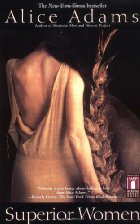
Book Review: Superior Women by Alice Adams (Bottom of TBR Pile Challenge)
 Summary:
When Californian Megan Greene runs has a steamy affair in the summer of 1943 with a Harvard student visiting the west coast for the summer, she decides to follow him back to the east coast and attend Radcliffe. There she meets four other women, three of whom it might be more accurate to call frenemies than friends. Their lives and destinies repeatedly intertwine throughout the tumultuous changes of mid-20th century America.
Review:
I kept my eye out for this book when it was named as a read-a-like to my 2011 5 star read The Group
The book covers 1940s to 1980s America, yet as the decades move on, less and less is said. The 1940s are expressed clearly with exquisite detail, and I was excited to see what would happen with the 1950s and the 1960s. But the 1950s slowed down, the 1960s were barely touched upon, the 1970s were jumped over almost entirely, and the 1980s were the final chapter of the book. The pacing was all off. I wanted to know these women in as much detail in the latter decades as in the first. Instead of feeling like I knew them more and more intimately, they increasingly became strangers to me.
One thing that I think really works against the book is it is neither an ensemble nor a one character piece. Most of the book is told about Megan, but not all of it. We get snippets of the other characters, meaning perspectives that Megan is not privy to, but not enough to ever truly know them. Since most of the book is about Megan, these bits away from her feel sort of like the story is robbing us of more time with the main character we are interested in. Similarly, reading the blurb and the title, I thought this was going to be an ensemble book, which is not what we get either. I wanted to know much more about two of the characters in particular, Peg, who comes out as a lesbian at some point in the 1960s, and Cathy, who has an affair with a priest. These two stories are wonderfully intriguing, particularly Peg’s since her love of her life is met on a mission to register black voters in the American south, and her love interest is a Latina woman. There is so much meat to that storyline, and yet it is barely touched upon while we instead listen to Megan hem and haw about her job, and Lavinia try to figure out how best to cheat on her husband. The balance of telling this ensemble piece was just entirely off.
Similarly, while big issues and events of mid-20th century America were briefly touched upon, the book never really presented a truly personal look at any of them. For instance, Megan has a friend who is bashed in a drive-by gay bashing but we never get to see Megan emotionally deal with this stark reality. She hears about it, calls him, and moves on. Similarly, as previously mentioned, Peg comes out as a lesbian, and we see a snippet of her depression caused by living the lie of being straight, but we never get to understand the emotions or impetus behind her bravely coming out and living in a visible, inter-racial lesbian relationship in the south. It is disappointing because we get a taste of really encountering these historical issues, but we never actually get to.
In spite of all these problems, I still enjoyed reading the book well enough. The plot, while frustrating, does progress forward in an interesting fashion. The characters, although frequently two-dimensional, are bright and vivid. I came away with the perspective I always have with historical fiction about women’s history. That I am grateful I was born in a different time, because we women have much more opportunities available to us now. So I appreciated my visit to that time period but it was a bit disappointing.
Overall, if you are a huge fan of historical fiction about women’s issues, this is an interesting book to add to your repertoire. It is a good comparison to others that did it differently or better, and it is still fun to visit those time periods. If this type of literature is not generally your cup of tea, though, I would suggest you instead read stronger competitors in that genre, such as The Group
3.5 out of 5 stars

 Support my work with a tip or browse my shop for curated book club guides, how to guides, cross-stitch patterns, and more!


This work by Amanda Nevius is licensed under a Creative Commons Attribution-Noncommercial-No Derivative Works 3.0 United States License.
 Opinions of a Wolf