
Archive
Book Review: Oranges Are Not the Only Fruit by Jeanette Winterson
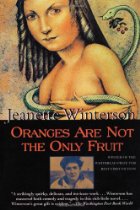 Summary:
Jeanette has the dubious distinction of being raised by one of the most vocal women in the fire-brand style Evangelical church in a small British town. Although she at first is different among her school chums for her beliefs, soon she becomes marked as different in her church for her homosexuality. Her journey from differently religious to outcast young adult is chronicled here.
Review:
I picked this up when I heard that it’s a lesbian classic that simultaneously addresses being raised fundy. Having been raised fundy myself (and left), I tend to find these leaving the faith stories highly relatable, and I knew the added queer element would just make it all the more interesting of a read for me.
One interesting thing to note about this book is that no one can quite agree if it’s a novel or a memoir. Winterson herself says that while this was inspired by her own childhood, it is the lite version. Hers was much worse. Given this statement, I choose to respect the author and view this as a novel, but potential readers may want to be aware of this element of the book.
Jeanette (the character) is immediately immensely likeable. Whereas her mother is overbearing and negative, Jeanette is highly intelligent and witty. Her observations on the Bible and religion in the early parts of the book before she realizes she is gay are hilarious, particularly to anyone raised in a fundamentalist faith.
I didn’t know quite what fornicating was, but I had read about it in Deuteronomy, and I knew it was a sin. But why was it so noisy? Most sins you did quietly so as not to get caught. (location 533)
As the book moves from Jeanette’s early life to her adolescence the writing style changes a bit. Winterson inserts various fantastical fancies of Jeanette’s that are clearly her way of trying to discover who she is and explore her options. Some readers might be thrown by these, but I found them delightful. It’s a coping mechanism that I think many people use but few authors put down on paper.
Through these periodic fantastical tales combined with the more traditional narrative, we slowly see Jeanette fall in love with another girl at her church. We then see the fall-out. The two girls torn apart. The attempts at exorcisms. Jeanette is left bereft and confused because, unlike myself, she still wanted her faith. She wanted to believe in God the way she was raised to and to be allowed to love women. She can’t figure out why she can’t have both and thus is left wandering lost and confused.
The novel never makes it clear if Jeanette comes to terms with her lesbianism by letting go of her religion or by finding a more accepting one. It kind of ends on an uncertain, agnostic if you will, note. But that’s really irrelevant. What matters is how beautifully the novel shows the pain that adolescents are needlessly put through when those around them won’t love them for who they are.
At last she put on her gloves and beret and very lightly kissed me goodbye. I felt nothing. But when she’d gone, I pulled up my knees under my chin, and begged the Lord to set me free. (location 1180)
It’s not a book with a clear ending or easy answers, but neither is life really, is it? What it does possess though is a great ability to show a reader the life of a child raised Evangelical who later just cannot fit the mold demanded of her. And that’s a powerful story that needs to be told over and over again until people get it that we can’t do that to children.
Recommended to those with an interest in unique story-telling techniques and coming out stories.
4 out of 5 stars
Source: Amazon

Book Review: Soulless by Gail Carriger (Series, #1) (Bottom of TBR Pile Challenge)
 Summary:
Alexia Tarabotti isn’t just suffering from being half-Italian in Victorian England, she also is soulless. Unlike vampires, werewolves, and other supernaturals who successfully changed thanks to an excess of soul, or even having just enough soul like day dwellers, she simply has none. Plus as a preternatural she turns the supernaturals human when she touches them. Obviously they aren’t a fan of that. Except for one particularly persnickety werewolf, Lord Maccon, who is Scottish to boot. And to top it all off a mysterious wax-faced man suddenly seems very interested in kidnapping her. None of this seems particularly civilized.
Review:
The Parasol Protectorate series was all the rage when this book made it onto my tbr pile back in 2010. That was kind of the beginning of the steampunk craze, before you could find gears on everything in the costume shop. I can see why this series is popular, but it’s just not my cup of tea.
The world building is wonderful and is what kept me reading. A good steampunk blends history, science, and fashion to make for a semi-familiar but deliciously unique world that’s delightful for history and science geeks alike to play around in. Carriger pulls this off beautifully. The fashion is Victorian with a steampunk edge. The politics are recognizable but with the supernatural and steampowered sciences taking a role. A great example of how well this world works is that in England the supernatural came out and became part of society, whereas America was the result of the Puritans condemning the acceptance of the supernatural who they believe sold their souls to the devil. This is a great blend of reality and alternate history.
The plot wasn’t a huge mystery, which is kind of sad given the complexity of the world building. What really bothered me though was the romantic plot, which suffered badly from a case of instalove. Although we hear of delightful prior encounters between Alexia and Lord Maccon, we didn’t see them. We mostly see him going from hating her to loving her and demanding her hand in marriage. It just felt lazy compared to the other elements of the book. I get it that Carriger could be poking fun at Victorian era romances, but I think that would have worked better if it didn’t have such a Victorian ending. Plus, I didn’t pick up this book to read a romance. I wanted a steampunk mystery with a strong female lead. I didn’t like how quickly the romance took over the whole plot.
Potential readers should take a glance at the first chapter and see if Carriger’s humor works for them. I can see how if I was laughing through the whole book I’d have enjoyed it more, but the…decidedly British humor just did not work for me. It didn’t bother me; I just didn’t find it funny. I mostly sat there going, “Oh, she thinks she’s being funny…..” Humor is highly personal, so I’m not saying it’s bad. It just isn’t my style. It might be yours.
Overall this is a creatively complex steampunk world with an unfortunately average plot overtaken by instaromance and seeped in dry, British humor. It is recommended to steampunk fans who find that style of humor amusing and don’t mind some instalove all up in their story. That does not describe this reader, so I won’t be continuing on with the series.
3.5 out of 5 stars
Source: PaperBackSwap

Book Review: Bad Glass by Richard E. Gropp
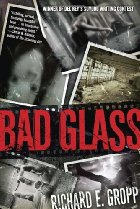 Summary:
Something strange is happening in Spokane, and the US military has taken control of the city, closing it and its happenings to the press. Dean sees this as the perfect opportunity to break into photography before he graduates from college and is forced into giving up on his artistic dreams to work a regular 9 to 5 job. So he sneaks into Spokane, where he meets an intriguing young woman and her rag-tag household of survivors, and quickly starts to see the inexplicable things that are going on inside the city.
Review:
Dark fantasy is one of my favored genres, but unfortunately not a ton comes out in it in any given year. So when I saw this title available on NetGalley, I just had to snatch it up. I’m glad I did, because it’s a truly enjoyable read.
The basic plot uses a trope of dark fantasy–a creative outsider comes to a town where bizarre things supposedly happen then starts to document them happening. The twist here is that the creative type is a photographer, so the art form being used is photography. This was an incredibly refreshing way to approach the topic. Each chapter opens with a description of a shot that Dean will get at some point in that chapter. It’s fascinating foreshadowing, and also Gropp shows real talent in describing photographs of both the fantastical and more ordinary varieties. The descriptions also talk about more technical aspects of photography, and these show up within the story too (such as lighting and shutter speed). Describing instead of showing the photographs was a choice that I at first was not certain of but I ultimately appreciated. By not reproducing the photographs, Gropp leaves quite a bit of the mystery up to the reader and doesn’t spoil whatever images the reader has already established within her own mind. But the descriptions are also so well-done that the impact of seeing one brief moment in this surreal world is still rendered. It’s a unique and well-done choice, and I’d recommend this read to people based on that creative storytelling aspect alone.
It’s also great to see a story centering primarily around 20-somethings. Often literature tends to stick to YA (teens) or jump right over those of us who are in that truly young adult phase of our lives and into 30-somethings. Although the primary focus of the story is what precisely is happening in Spokane, conflicts frequently faced by 20-somethings come up within this framework–what to do for a career, do you give up on your dreams and settle down into a cubicle or not, when and with whom should you settle down, should you settle down at all, when should you respect your parents and their experience and when should you stand up to them, etc… Long-time followers know that one reason I enjoy genre literature is it addresses these real life issues within the context of the fantastic, and the good ones do it integrated and in a thought-provoking manner. This book achieves that.
The main character also is bisexual, while being primarily interested in a woman. It was so awesome to get to see a bi male main character and have it be presented as just a part of who he is and not a big deal at all. Although there is certainly a need and a place for the coming out tales and stories where the character’s sexuality is a central issue, it is also nice to see queer characters where that is just one aspect of who they are and is not dwelled upon much. It is just a part of who Dean is.
As for the central plot–what is happening in Spokane–I admit that I hoped for slightly more answers than we ultimately get. Readers looking for nicely tied up endings or even a hint at an answer will be left wanting. I enjoy an ambiguous ending, but I also felt that perhaps the plot could have been a bit clearer. In particular, without giving anything away, I felt that the scenes revolving around the hospital while powerful left me feeling a bit like perhaps even the author doesn’t really know what’s going on in Spokane. Perhaps that is the point, but it did leave me feeling that the plot was not as up to par as the world building and characterization.
Overall, this is a wonderful addition to the dark fantasy genre. Gropp gives us a unique main character and also utilizes writing about photography in a creative manner. I highly recommend it to fans of dark fantasy, particularly 20-somethings and those with an interest in photography.
4 out of 5 stars
Source: NetGalley

Book Review: Finding Bluefield by Elan Barnehama
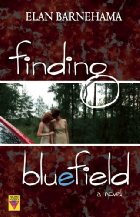 Summary:
It’s the 1960s, and Barbara thinks she has enough on her hands handling medical residency as a woman. She doesn’t need the complications of dating women on top of that…or the risk to her profession of rumors that she’s a lesbian. But when she meets local cook, Nicky, all these cautions go out the window. Soon they’re a couple, and Nicky is determined to have a baby for them to raise together.
Review:
I read this book because my previous read from this indie publisher (Bold Strokes Books) was such a unique, well-written piece of LGBTQIA+ lit, and I was excited to get more. Unfortunately, the quality of this book does not come close to that of Lemon Reef
The plot is moderately common in lesbian fiction. Girl meets girl. Couple wants a baby. Girl gets pregnant. Can they raise the baby and keep the relationship going. With the added backdrop of prejudice and changing rights from the 1960s through the 1980s, it had the potential to be more unique and add an interesting twist, particularly since Nicky is supposed to be involved in the Civil Rights movement. Unfortunately, none of this really pans out. There are tantalizing teases of something more or something unique such as when Nicky gives a ride to a black man trying to escape from mob “justice” in the small town or when Barbara cheats on Nicky in New York City, but none of these ideas are brought to fruition. In fact, the whole book feels more like a moderately fleshed-out plot outline for a future book. Like, here are the key points, and I’ll flesh them out later. Only this is the finished book. There will be no more fleshing out of the plot. It’s frustrating to read because just when you think something is about to happen, the idea gets dropped and you skip ahead a few years.
Similarly, the characters are never fully realized. They are extremely two-dimensional, even the two main characters. I actually found myself mixing Barbara and Nicky up repeatedly, which is intensely problematic. They are two separate people, and their relationship is the focus of the novel, yet even after the entire book they are mostly unclear to me, except that Nicky has green eyes. They simply don’t feel like real people to the reader at all, which is a problem in general but even more so when the book is trying to both be character-driven and address rights issues.
A book needs at least a compelling plot or engaging characters to be readable and both to be great. This book has neither. I can see potential in the plot and sentence structures for good writing, but the author needs to work on both expanding into greater plot detail as well as on improving characterization.
2 out of 5 stars
Source: Netgalley

Book Review: Lemon Reef by Robin Silverman
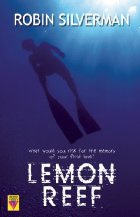 Summary:
Jenna is a high-powered, newly appointed commissioner in San Francisco where she lives with her wife and their dog. Life is good, and Jenna tries not to think too much about her rough childhood and teen years growing up in Florida. But a phone call comes in. Her first love, Del, has died diving at lemon reef at the young age of 30. The mutual friend invites Jenna to the funeral, but when she arrives in Florida, she discovers that there’s more to it than that. Del’s mother, Pascale, wants her help in getting custody of Del’s daughter, Khila, instead of her father, Talon, who Pascale insists must have murdered Del.
Review:
This book was a bit of an emotional roller-coaster to read, which of course is a sign of a good book.
The plot structure is incredibly complex and engaging without ever being confusing. There is the mystery of Del’s death, but also (for the reader) the mystery of why and how Del and Jenna’s romance ended tragically, as it is evident it did. In addition there is the powerful emotions of a first love and first romance for a pair of teens who must grow up too fast thanks to the rough circumstances they find themselves in. Silverman handles the past reminisces intermingled with the current mystery and discoveries quite eloquently. I found myself admiring her talent in plot structuring throughout.
There are no easy answers in this book, and no one is easily demonized, including Talon. Every single character has flaws and good qualities. Del stands up for her siblings but won’t stand up for her love of Jenna. Jenna loves people but can sometimes get too caught up in her own world and her own needs. Pascale was an alcoholic when Del was in highschool but successfully quits in order to be able to spend time with her granddaughter. Del’s sister Nicole breaks a lot of laws (including breaking and entering and prostitution), but she is fiercely loyal and stands up for those she loves. The complexity of the characters and the situation is part of what makes it such an emotional read. There’s no one to easily blame for the problems these women find themselves in. I think this complexity points to Silverman’s experience both as a counselor and a lawyer. She clearly understands human psychology and how problems are not always black and white but can be very gray.
The writing is lovely and fills in the framing of the plot and the characters. There are lines that just totally grab you.
Because minds do blow and hearts do break. Those are not just sayings. And wolves and roaches are not the only creatures that chew off their legs to get out of traps—human beings do that, too. (location 3058)
I also really enjoyed that while Jenna’s coming out story (told in flash-backs and reminiscing) is rather typical, Del’s is much more complex. She is bi but is uncomfortable with the fact that she likes women too. She doesn’t want people to know, doesn’t say a thing about it to her sisters, denies it even. But we find out later that there were other ways in which it was clear she did identify as bi and part of the community. I won’t say how, because I don’t want to spoil the surprise. But I found this complexity interesting. It shows how for Jenna she had to push and come out because there was no other option. Del could sometimes pass but not always and clearly it was a struggle for her throughout her whole life. This shows an understanding of what it is to be bi that I honestly was not expecting, as it is hard to find that in novels.
There were, unfortunately, a couple of things that didn’t quite live up to the rest of the book. There were a few passages that weren’t as well-written or well-edited that detracted from the overall beauty of the book. For instance, there is a scene in which a character points a flashlight at a floor but the narrator calls it the ground. Things like that that are periodically clunky. I’m sure this will improve with time, though, as this is Silverman’s first work of fiction.
I also was disappointed that we didn’t get to see very much at all in regards to how this whole drama of the first love’s mysterious death impacted Jenna’s relationship with her wife. I was hoping this would be at least touched upon in the last chapter, but instead we just see Madison show up with Jenna for the funeral. Since I had come to care for Jenna, I wanted to know how such a dramatic, emotional event would affect her new life and marriage with Madison. It seems obvious to me that such an incident would at least lead to a few discussions and maybe difficult moments between a married couple. I wanted to see that and not seeing it made Madison and Jenna’s marriage to her feel more like a prop than an actual element of Jenna’s life.
Overall, though, this is a unique work of GLBTQ lit. Its themes of reconciling with your past, coming out, being queer, and first love are all beautifully told within a plot that keeps the reader invested and interested. I highly recommend it to GLBTQ readers, but also to anyone with an interest in stories addressing the complexity of human relationships and the long-reaching impact of first loves.
4 out of 5 stars
Source: Netgalley
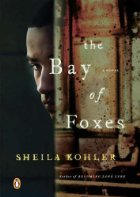
Book Review: The Bay of Foxes by Sheila Kohler
 Summary:
Dawit is a twenty year old Ethiopian refugee hiding out illegally in Paris and barely surviving. One day he runs into the elderly, famous French writer, M., in a cafe. Utterly charmed by him and how he reminds her of her long-lost lover she had growing up in Africa, she invites him to come live with her. But Dawit is unable to give M. what she wants, leading to dangerous conflict between them.
Review:
This starts out with an interesting chance meeting in a cafe but proceeds to meander through horror without much of a point.
Although in the third person, we only get Dawit’s perspective, and although he is a sympathetic character, he sometimes seems not entirely well-rounded. Through flashbacks we learn that he grew up as some sort of nobility (like a duke, as he explains to the Romans). His family is killed and imprisoned, and he is eventually helped to escape by an ex-lover and makes it to Paris. This is clearly a painful story, but something about Dawit in his current state keeps the reader from entirely empathizing with him. He was raised noble and privileged, including boarding schools and learning many languages, but he looks down his nose at the French bourgeois, who, let’s be honest, are basically the equivalent of nobility. He judges M. for spending all her money on him instead of sending it to Ethiopia to feed people, but he also accepts the lavish gifts and money himself. Admittedly, he sends some to his friends, but he just seems a bit hypocritical throughout the whole thing. He never really reflects on the toppling of the Emperor in Ethiopia or precisely how society should be ordered to be better. He just essentially says, “Oh, the Emperor wasn’t all that bad, crazy rebels, by the way, M., why aren’t you donating this money to charity instead of spending it on me? But I will tooootally take that cashmere scarf.” Ugh.
That said, Dawit is still more sympathetic than M., who besides being a stuck-up, lazy, self-centered hack also repeatedly rapes Dawit. Yeah. That happened. Quite a few times. And while I get the point that Kohler is making (evil old colonialists raping Ethiopians), well, I suppose I just don’t think it was a very clever allegory. I’d rather read about that actually happening.
In spite of being thoroughly disturbed and squicked out by everyone in the story, I kept reading because Kohler’s prose is so pretty, and I honestly couldn’t figure out how she’d manage to wrap everything up. What point was she going to make? Well, I got to the ending, and honestly the ending didn’t do it for me. I found it a bit convenient and simplistic after the rest of the novel, and it left me kind of wondering what the heck I just spent my time reading.
So, clearly this book rubbed me the wrong way, except for the fact that certain passages are beautifully written. Will it work for other readers? Maybe. Although the readers I know with a vested interest in the effects of colonialism would probably find the allegory as simplistic as I did.
2 out of 5 stars
Source: Netgalley
Counts For:
Specific country? Ethiopia. South African author.

Book Review: The Value of Rain by Brandon Shire
 Summary:
Charles hasn’t been home since his mother and uncle sent him away to an insane asylum at the age of fourteen after he was found in the embrace of his first love–Robert. Now, ten years later, his mother, Charlotte, is dying, and he comes back to take his revenge.
Review:
This is one of those genre-defying books. Although classified as LGBTQIA+, it is so much more than a genre. Shire explores the devastating effects of prejudice, hate, secrets, and lies throughout family generations, and that is something that is simultaneously universal and tragic.
The book constantly takes the reader by surprise. At first it seems an expected my-family-didn’t-love-me-because-I’m-gay story, but Charles does *not* get a free pass simply because he is hurt by his family. He is given chances at new life and redemption from a hate-enshrouded existence, but he doesn’t choose that path. It is painful to watch, and yet simultaneously understandable. I applaud Shire for not taking the easy way and by making Charles an easy hero.
The writing is particularly eloquent and strong in description, especially when describing painful topics. For instance:
She had lived in the maze of Charlotte’s thumbprint and she had not survived. (location 1349)
On the other hand, the dialogue sometimes struggles in comparison to the lyrical descriptions. For instance, characters often say people’s names more frequently than is natural. This is a kink that I am sure will be ironed out with time and experience.
I also loved and was totally shocked by the ending. That is not an easy thing to do to this reader.
Overall this book represents all that can be great about indie publishing. It is a deep, dark story with a minority, tragic hero that most likely would not be told at a traditional publishing house due to the fact that it does not easily fit into any one genre or marketing scheme. Of course, that is also why I love it.
Recommended to those with an interest in LGBTQIA+ main characters and multi-generational family dramas.
4 out of 5 stars
Source: Kindle copy from author in exchange for my honest review

Note: Half of all proceeds donated to LGBT Youth Charities.
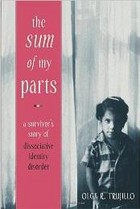
Book Review: The Sum of My Parts: A Survivor’s Story of Dissociative Identity Disorder by Olga Trujillo, JD
 Summary:
Olga was a young, successful lawyer in DC when she suddenly started having inexplicable panic attacks and episodes of blank stares or rapidly moving eyes. She sees a psychiatrist and is diagnosed with a moderate case on DID. On the spectrum, she has multiple parts but not exclusive personalities and still has a central core. These parts have kept the memories of her extraordinarily violent, abusive childhood from her consciousness thereby allowing her to function, but just barely. In her memoir, Olga tells what she has now remembered of her childhood and how she has now discovered she managed to function and be surprisingly resilient. She then delves into her long-term therapy and how she has come together into mostly one part and usually no longer dissociates.
Review:
I always find memoirs by those with DID or dissociation completely fascinating. Even just the ability to write the book and explain the disorder from the insider’s perspective is a remarkable achievement. I previously read When Rabbit Howls
Olga offers up a very precise trigger warning of which chapters could be dangerous for fellow trauma survivors. That said, I found her reporting of what occurred to her to be respectful of herself as a person. She never shirks from what happened to her, but is sure to couch it in concise, clinical language. I respect this decision on her part, and again believe it will make her book more accessible to a wider audience. People can see the results of the trauma without finding themselves witnesses to the trauma itself.
The book right up through about halfway through her therapy is clear and detailed, but then starts to feel rushed and more vague. Perhaps this is out of respect for the people currently in her life, but personally I wanted to know more. For instance, how was she able to make a drastic move from DC to the middle of the country without upsetting her healing process? How do the phone sessions with her therapist work? I think many advocates of those with mental illness would appreciate more detail on how she is able to have a healthy, happy relationship now, especially since we witness the dissolution of her first marriage. Similarly, I wanted to know more about her coming out process. She states that she knew at 12 she was a lesbian, but pretty much leaves it at that. I’m sure it was easier to embrace her sexuality the more integrated her parts became, but I am still interested in the process. She was so brave recounting her early life that I wonder at the exclusion of these details.
Overall this is a well-written memoir of both childhood abuse, therapy for DID, and living with DID. Olga is an inspirational person, overcoming so much to achieve both acclaim in her career and a happy home life. I recommend it to a wide range of people from those interested in the immigrant experience to those interested in living with a mental illness.
4 out of 5 stars
Length: 258 pages – average but on the shorter side
Source: NetGalley
Buy It (Amazon or Bookshop.org)
If you found this review helpful, please consider tipping me on ko-fi, checking out my digital items available in my ko-fi shop, buying one of my publications, or using one of my referral/coupon codes. Thank you for your support!
Book Review: Mai Tai One On by Jill Marie Landis (series, #1)
 Summary:
Newly-divorced Em jumps at the chance to move to Kauai, Hawaii to assist her aging uncle in running his tiki bar. She hires a young, punk-style waitress who seems to be running from bad choices, and she gets to know the aging hula dance group that performs for free (it’s not like anyone would willingly pay them). Em is managing to increase business for the tiki bar and is starting to feel refreshed from her new life when the tiki bar’s neighbor shows up dead in their barbeque pit–with a machete slash through his skull. The gorgeous fire knife spinning detective Roland sees Em, the waitress, and her Uncle Louie as the prime suspects, so clearly Em and the hula group must work together to find the real culprit.
Review:
This was my first foray into the fairly newish cozy mystery genre. A cozy mystery is one involving something violent, but the violence is never particularly shown in a gruesome way, and the characters handle the situation in a humorous fashion. It’s kind of like a modern version of Agatha Christie. They also are really well-known for having puns in the titles. (Another one that springs to mind is The Long Quiche Goodbye
So what about this particular cozy? Well, the pun in the title is cute but doesn’t really have anything to do with the story. I can’t quite figure out what, exactly, is supposedly being tied on or tied up or what have you. No one is killed by ties. Basically, the title is a bit witty, but confusing.
The humor is excellent. I found myself laughing out loud multiple times while reading. In fact, this is the strong point of the book. Think of the wittiest, snarkiest person you know, then imagine that everyone around you has that same sense of humor. It’s delightfully funny and relaxing.
The characterization ranges from really well-done to painfully one-dimensional or lacking in vividness. For instance, all of the Hula Maidens are richly drawn elderly women who still have a lot of spunk and life left in them. Yet the main character, Em, is so dull that I kept mixing her up with the waitress. Similarly, some characters are so over-the-top as to be a bit offensive. For instance, a new addition to the island are Fernando and his boyfriend Wally who are both quite possibly the most flamboyant characters I’ve ever seen in a novel. Now, given the extremes of the Hula Maidens, that’s fine, but Wally is never given another element to his character. Whereas it is later revealed that a lot of Fernando’s flamboyance is an act for his career, Wally is such a gay stereotype he even repeatedly faints and is never given any other realm of possibility besides fabulous gay boyfriend. This is odd because the situation certainly arose to make him more compelling and well-rounded without diverting from the main storyline. Although I appreciate the inclusion of gay characters in the book that the other characters simply accept, I do wish Landis had been a bit more careful with her characterization of them.
The mystery itself isn’t too mysterious. Landis’s one attempt at misleading the reader into believing someone else is the murderer is so obvious as to be painful. I actually cringed on her behalf when reading the passage. The characters and humor are allowed to be obvious, but the mystery shouldn’t be.
I can give a pass to both of those issues considering that this is a cozy, and from what I’ve heard from friends who are fans, these sort of things are common in them. The one big problem though is that this book sorely, direly needed better editing. There were mistakes everywhere, which is baffling considering it comes from a publishing house (who supposedly are better because of the “professional” way they handle things….but that’s an issue for a different post). There were multiple sentences with verbs in the wrong location or written twice. Spelling errors and typos were present throughout. This really distracted me from my enjoyment of the story, because the flow would be interrupted while I double-checked that I read the sentence correctly. There is simply no excuse for such shoddy editing, although it is obviously the fault of the publishing house and editor, not the author.
These things said, though, looking at the book overall, it is still an enjoyable read. Ignoring the editing issues, it is an enjoyable cozy, but not an amazing one. The setting and rambunctious characters of the Hula Maidens hold much promise for future entries in the series. Hopefully it will go uphill from here. I recommend it to people who already know they are fans of cozies, but those who are uncertain should probably give it a pass.
3 out of 5 stars
Source: Amazon

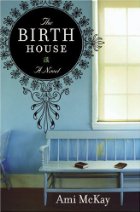
Book Review: The Birth House by Ami McKay
 Summary:
Dora Rare is rare indeed. She is the first female born to the Rare family Scots Bay, Canada in generations. Her dark hair and brownish skin reflecting the family’s Micmac heritage make her stick out like a sore thumb in the area. However, Scots Bay’s midwife, Miss B., has always taken a shining to Dorrie, and she trains her in the ways of midwifery. The early 1900s are a tough time for midwives and women, though. Soon the area is threatened by World War I and male obstetricians, not to mention all the obstacles rural women have always had to face from violent, drunk husbands to too many children.
Review:
This book was quite honestly painful to read, for it lays out so clearly what it is that makes being a woman difficult in society. Although some things in modern day have improved, for instance we western women have the right to birth control, in other ways things have remained painfully the same. There are still areas of the world where men have more control over women’s bodies than they do. It is often still expected for women to be pure when men are not. Women often feel that they must put up with the wrongdoings of their husband simply to keep the home and family life that they so desperately desire, and on and on.
The book itself is told as a mix of third person narrative and Dora’s journal with clippings from the various newspapers. This style suits the story well, as we are allowed to see Dora from both outside and inside her own head. The characters are fairly well-rounded, although the motivations of those who are not Dora are not always the clearest or the most sympathetic, but as most things are from her perspective, that is understandable.
Of particular interest to me, especially with my knowledge of psychology, was the portions of the book dealing with how women are often accused of being insane simply for reacting to the injustices foisted upon them. I discussed this topic at length in multiple women’s studies and feminism classes. The idea that the just rage of the trodden upon is often depicted by the rulers as insanity. This is beautifully depicted in this book for Dora, struggling against many injustices and feeling rightfully irritated and angry, is informed by a male doctor that she is suffering from hysteria–a peculiarly female ailment resulting from female organs. Her anger and fighting back is thus tagged with a name that let’s others dismiss it as an illness, rather than a just reaction. McKay eloquently depicts this entire issue without being too heavy-handed.
I was also surprised and delighted to see a portion of the story take place in Boston during the women’s suffrage movement in the United States. I’m assuming McKay must have visited my city, for she perfectly describes the North End from the buildings to the atmosphere of walking those streets. This accuracy allowed me to travel back in time to a period of injustices in my own city, not to mention the molasses flood. It was indeed a delight to read of Boston from a women’s rights perspective for once instead of always reading of the Irish mafia.
The main point of the book comes across throughout it in a gentle way. The idea that we must continue to struggle and give but not give up or the oppressors will win.
Never let someone take what’s rightfully yours. You can give all you want in life, but don’t give up. (page 337)
It is simultaneously encouraging, uplifting, and depressing to realize that women throughout time have struggled with similar issues. Yet things are gradually improving, and thus we must not give up for the sake of future generations of women.
This book beautifully depicts the history of women’s rights in the early 1900s. It is a painfully beautiful read that I recommend all women, as well as men sympathetic to the cause, read.
4 out of 5 stars
Source: PaperBackSwap


 Support my work with a tip or browse my shop for curated book club guides, how to guides, cross-stitch patterns, and more!


This work by Amanda Nevius is licensed under a Creative Commons Attribution-Noncommercial-No Derivative Works 3.0 United States License.
 Opinions of a Wolf