
Archive
Book Review: Yesteryear by Caro Claire Burke
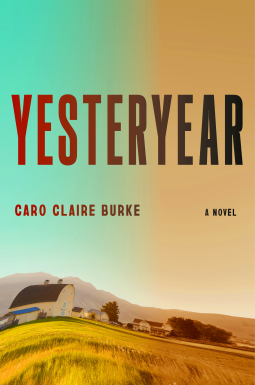
Yesteryear by Caro Claire Burke is an attempted satirical takedown of tradwife influencer culture that ultimately reflects a shallow understanding of fundamentalist Christianity and collapses under the weight of its third act.
This review contains major spoilers and discusses themes of religious fundamentalism, mental illness, and queerness.
Summary:
My name was Natalie Heller Mills, and I was perfect at being alive.
Natalie lives a traditional lifestyle. Her charming farmhouse is rustic, her husband a handsome cowboy, her six children each more delightful than the last. So what if there are nannies and producers behind the scenes, her kitchen hiding industrial-grade fridges and ovens, her husband the heir to a political dynasty? What Natalie’s followers—all 8 million of them—don’t know won’t hurt them. And The Angry Women? The privileged, Ivy League, coastal elite haters who call her an antifeminist iconoclast? They’re sick with jealousy. Because Natalie isn’t simply living the good life, she’s living the ideal—and just so happens to be building an empire from it.
Until one morning she wakes up in a life that isn’t hers. Her home, her husband, her children—they’re all familiar, but something’s off. Her kitchen is warmed by a sputtering fire rather than electricity, her children are dirty and strange, and her soft-handed husband is suddenly a competent farmer. Just yesterday Natalie was curating photos of homemade jam for her Instagram, and now she’s expected to haul firewood and handwash clothes until her fingers bleed. Has she become the unwitting star of a ruthless reality show? Could it really be time travel? Is she being tested by God? By Satan? When Natalie suffers a brutal injury in the woods, she realizes two things: This is not her beautiful life, and she must escape by any means possible.
Review:
What it does well
I love the set-up of this book. A tradwife influencer wakes up in the 1800s she was pretending to want to live back in and has to face the stark reality of that. Told in the tradwife “present,” flashbacks to her life before her influencer status, and flash forwards to her 1800s time travel. I was hooked. I needed to know how the time travel happened. The set-up reminded me of Kindred by Octavia Butler only with a hateable main character.
A note on my perspective:
I was raised a closeted bisexual cis girl in a fundamentalist Evangelical family. I, in modern terms, deconstructed and have become a progressive queer Christian adult. Nattie’s culture is the one I was raised in and am deeply familiar with. I was literally a rurally raised homeschooled girl who wasn’t allowed to wear pants. The author gets a lot wrong.
Religious inaccuracy and cultural flattening:
It is deeply unclear precisely what religion Nattie is. This should be clear, as a twisting of a specific faith into something for the far-right to weaponize is at the core of tradwife influencer culture. She goes to church every Sunday growing up with her mother and sister. She and her young, rich husband share a religion. But she only ever says “Christian.” If we are to assume that it is a fundamentalist version of US American Christianity, then it could broadly be Evangelical, traditional Catholic, or Latter-Day Saint. And that’s not even getting picky about denomination (Non-denominational? Baptist?). Here’s what we do know. She goes to church, not temple, so probably not LDS, even though she’s very clearly inspired by Ballerina Farm who is LDS. She gets full-immersion baptized as a teenager, so not Catholic. However, the book says a PRIEST baptizes her. The only denominations that refer to their leaders as priests do not perform full-immersion baptism. It’s a factual error that made me cringe. A lot.
Later in the book, Nattie crosses herself. She also has a hallucination that is clearly based on confession. Both of these are only done, again, by denominations with priests (Anglicans, Catholics). But she does none of the other things those denominations might do like observe a liturgical calendar or acknowledge saints. Despite this confusion, Nattie is portrayed as truly devout. We see inside her head. She prays a lot. She desires to be close to God. Yet, she never studies her Bible. She never brings her children to church, in spite of going every Sunday herself growing up. And church isn’t replaced by home church with her husband.
Another issue is AFTER she deconstructs, Nattie’s mother tells her she’s simply never been nice enough. The demand to “keep sweet” is a very common demand made of evangelical girls and women. We saw it in the Duggar family, and I lived it myself. Girls and women are supposed to be nice all the time. It makes no sense to me that her deconstructed mother’s main argument against her tradwife influencer daughter is she isn’t nice enough. A deconstructed person would be much more likely to say, “you’re lashing out because you’ve been asked to be something you’re not for so long. I want to know who you really are.” Not “why can’t you be nice?!”
All of these details point to an author writing from outside this culture who did not do the work required to understand it, resulting in a shallow, flattened portrayal of fundamentalist Christianity that borrows its aesthetics without engaging its lived realities. It’s this weird mash-up of things tradwife influencers mention without any understanding that tradwives come from different denominations with different ways of doing things and different belief systems.
Queer representation:
As a queer person myself, I’m deeply bothered by the way Nattie’s assault on her employee, Shannon, is presented. First of all, her first person account seems to be that she attempted to strangle her. But later Shannon says she sexually assaulted her. Which is the truth? The end of the book takes Shannon’s statement as face value. Nattie assaulted her because she’s a closeted lesbian. Nattie never admits to this, but she doesn’t deny it either. Does she think this is less bad than attempting to strangle her? Given her entire family’s response (and my own lived experience of fundamentalist opinions of queer people), it seems unlikely. If it is the case that we’re supposed to read this as Nattie has always been a closeted lesbian, then this is horrible representation. Not that LGBTQ folks can’t ever be the villain, but closeted people don’t automatically abuse their children and assault their employees.
Mental health representation:
Then there is the mental health representation. It is clear that Nattie first starts to fall apart after the birth of her first child when she develops very clear post-partum depression that a nurse expresses concern over and wants to get her help for but her mother intervenes and says she just needs to start running again. Her post-partum depression never gets better, she doesn’t actually enjoy mothering, but she keeps having children both because it’s what God wants and because it’s what her father-in-law demands in exchange for funding their hobby farm.
Ok, so here we get to the full mess. The big twist is that Nattie hasn’t time traveled to the 1800s. She hasn’t been kidnapped. After the big PR disaster of Shannon revealing the assault, her husband tells her that his father wants her to be killed. She suggests instead that what her husband really has always wanted is just to be left alone and they can do that. They can cut themselves off from the world and live like it’s the 1800s. They do just that, with the older children running away, and they are left with just the toddler and the children born after her. She thinks it’s literally the 1800s when she wakes up one day because she has periodic psychotic breaks. She thinks she might be being filmed for a reality tv show because, again, she’s lost her mind.
When her oldest daughter finally shows up years later with a court order for the children (there is no way on earth that would have taken that long, but that’s another tangent for another day), she expresses some sympathy for her mother but the court system prosecutes her and puts her in prison for 30 years for child abuse. Of course she did abuse her children but she is also very clearly very mentally unwell, and many other people boosted up this scheme of hers (her husband, other family that brought food to the edge of the property for the husband to pick up, the husband was escaping to a cabin with electricity and tv every day to watch football while she was actually living like the 1800s). The novel wants to have it both ways: to explain her behavior through mental illness while denying her any meaningful context, care, or accountability framework.
Final verdict:
I saw another review that said this book feels like it was written by one of the “Angry Women” Nattie talks about. The liberal women who are angry at her for existing. You can have a problem with far right culture and tradwife influencers and write a book about it. But you also need to actually understand the culture and not stomp on people with mental illnesses and necessarily closeted LGBTQ folks in the process.
Ultimately, while the satire of influencer culture is sharp, the novel’s handling of fundamentalism, queerness, and mental illness is reductive and stigmatizing. Additionally. its explanation for how Natalie ends up “in the 1800s” is far less imaginative and less effective than a true speculative or magical realist turn would have been.
If you found this review helpful, please consider tipping me on ko-fi, checking out my digital items in my ko-fi shop, buying one of my publications, using one of my referral or coupon codes, signing up for my free microfiction monthly newsletter, or tuning into my podcast. Thank you for your support!
2 out of 5 stars
Length: 400 pages – average but on the longer side
Source: NetGalley
Buy It (Amazon or Bookshop.org)
Book Review: The Stranger Upstairs by Lisa M. Matlin
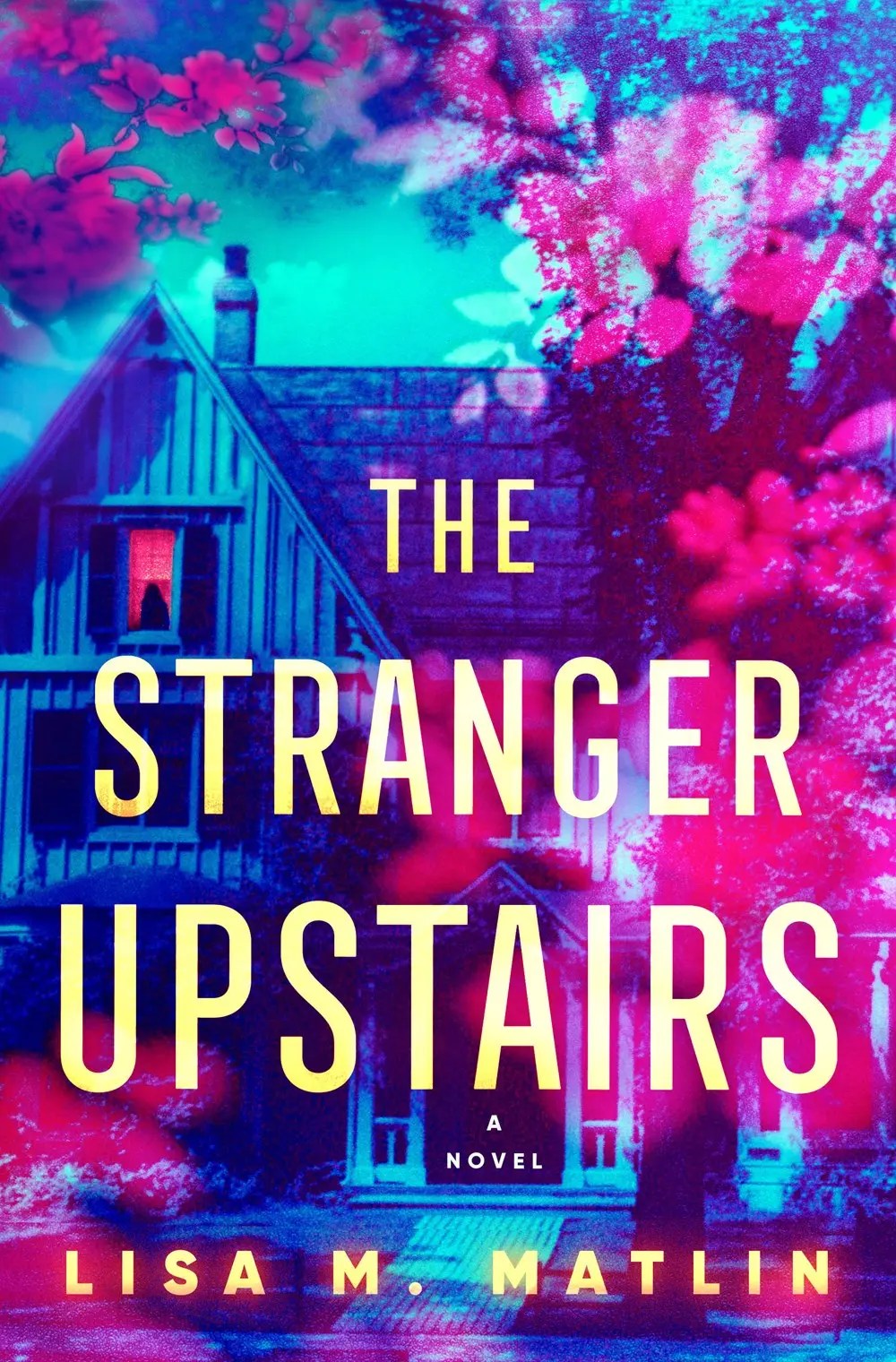
Sarah Slade’s a self-help influencer who’s trying to make content out of her attempt to flip the infamous Black Wood murder house. But of course not everything goes to plan.
Summary:
Sarah Slade is starting over. As the new owner of the infamous Black Wood House—the scene of a grisly murder-suicide—she’s determined that the fixer-upper will help reach a new audience on her successful lifestyle blog, and distract her from her failing marriage.
But as Sarah paints over the house’s horrifying past, she knows better than anyone that a new façade can’t conceal every secret. Then the builders start acting erratically and experiencing bizarre accidents—and Sarah knows there’s only so long she can continue to sleep in the bedroom with the bloodstained floor and suffer the mysterious footsteps she hears from the attic.
When menacing notes start appearing everywhere, Sarah becomes convinced that someone or something is out to kill her—her husband, her neighbors, maybe even the house itself. The more she remodels Black Wood House, the angrier it seems to become.
With every passing moment, Sarah’s life spirals further out of control—and with it, her sense of reality. Though she desperately clings to the lies she’s crafted to conceal her own secrets, Sarah Slade must wonder . . . was it all worth it? Or will this house be her final unraveling?
Review:
I have a weak spot for psychological thrillers by women Australian authors so when I saw a new author on the scene, I hit that request button over on NetGalley. This was a breath of something different in that genre, and I really enjoyed it.
What stood out to me was how the setting was in the more rural part of Australia. That means the scene setting includes more Australian wildlife and trees. Also this main character was neither a mother nor pregnant nor trying to become pregnant. Her focus is her social media career.
I liked how the book used the starting point of Sarah trying to keep her moment in the sun going. She had an article she wrote for a website take off and managed to spin that into a self-help book deal that did well. But now she’s struggling to write her second book and keep the interest up on her. She decides to feed two birds with one scone. She’ll fulfill a dream of hers to live in a town that she normally could never afford. She’ll also spin it as something to keep interest in her social media account while she struggles to write her second book.
The mystery of is the house evil or not is accompanied by some mystery about Sarah herself. The is the house evil or not mystery really kept me guessing right up until the end, and the twist surprised me. I didn’t so much enjoy the mystery about Sarah for a couple of reasons. First, it’s solely mysterious due to information being withheld from the reader that the main character knows. I think the book would have just as thrilling (perhaps even more so) if we had known what Sarah knew earlier. Second, it leans heavily on psychological issues. I don’t know enough about the specific issue being used to know if it was represented accurately. But I am a little concerned it might have been overly dramatized for the sake of the plot.
The main character drinks too much and is also presented in the narrative as having an alcohol problem. But this plot point gets dropped at the end and not resolved.
Readers sensitive to plots involving animals in pain should be aware that a pet becomes sick for mystery reasons partway through the book. The pet does survive, however.
Overall, this was a different plot in the women’s Australian psychological thriller genre. Recommended to fans of the genre looking for some variety or those who have yet to try it out for whom the maybe evil house plot appeals.
If you found this review helpful, please consider tipping me on ko-fi, checking out my digital items available in my ko-fi shop, buying one of my publications, using one of my referral/coupon codes, or signing up for my free microfiction monthly newsletter. Thank you for your support!
4 out of 5 stars
Length: 288 pages – average but on the shorter side
Source: NetGalley
Buy It (Amazon or Bookshop.org)
 Support my work with a tip or browse my shop for curated book club guides, how to guides, cross-stitch patterns, and more!


This work by Amanda Nevius is licensed under a Creative Commons Attribution-Noncommercial-No Derivative Works 3.0 United States License.
 Opinions of a Wolf