
Archive
Book Review: The Woman in Me by Britney Spears

Two years after her conservatorship ended, pop star Britney Spears tells her story.
Summary:
In June 2021, the whole world was listening as Britney Spears spoke in open court. The impact of sharing her voice—her truth—was undeniable, and it changed the course of her life and the lives of countless others. The Woman in Me reveals for the first time her incredible journey—and the strength at the core of one of the greatest performers in pop music history.
Written with remarkable candor and humor, Spears’s groundbreaking book illuminates the enduring power of music and love—and the importance of a woman telling her own story, on her own terms, at last.
Review:
I think it’s important you know what sort of perspective you’re getting in my review. So let me be clear: I am a Britney Spears fan. From the moment I heard the first four notes of …Baby One More Time’s mp3 playing through the tinny speakers on my family’s pc when I was 13 years old, I was enamored – and I hadn’t even seen the music video yet! (And I didn’t for a while.) When I did finally start seeing Britney and not just hearing her, it got even better. Her fashion sense was, to me, spot on. I wanted nothing more than to wear those jeans and bare my midriff like her. (Although, I did not have the body confidence to do so.) Her eyeliner, her music videos, her sound.
Britney’s music was a perpetual backdrop to my rough teens and twenties. I laughed when Oops! I Did It Again mentioned the necklace in The Titanic. I got teary-eyed singing Lucky in my bedroom. I played I’m a Slave 4 U both because I liked it and because it drove my mother insane. I was terrified of snakes, and Britney DANCED with one while performing. I was a closeted bisexual, and when she kissed Madonna, I lost my mind. When she had kids, I was in college. I didn’t understand why she was so excited to be a mom, but I loved that she knew what she wanted so much. Blackout dropped my senior year, and I belted out Piece of Me on study breaks. I listened to Womanizer to make myself feel better when I was lonely in grad school Circus is still on my #GirlBoss playlist I listen to to help hype myself up when I’m doing something that feels scary in my various careers. (I’m on my second.)
When her conservatorship started, I didn’t understand what it meant. I thought she had trouble with her finances, and someone was helping her out. My husband took me to see her at her Vegas residency. I was so excited I threw up in our hotel room right before the show. I feel badly now knowing what she was going through (I did not know then), but I am here to tell you she still put on a phenomenal show for us fans in spite of all that.
When the #FreeBritney movement really started to take off, and I came to understand what a conservatorship actually meant, I joined in calling for her to be freed. I explained to anyone who would listen what was wrong with a conservatorship. And I believe this for anyone, not just for Britney. No one deserves to have their adult agency taken away, regardless of their mental abilities and/or mental health. Anything else is just ableist.
Anyway, that is who is reviewing this memoir for you. A fan who loves Britney for who she is.
The ghostwriters did a very good job of leaving Britney’s voice clearly in-tact throughout the book. It sounds like her. The story is told mostly chronologically from her childhood forward, although there is sometimes some jumping back and forth in some places. If you have read Britney’s Instagram captions, then you have some idea of the general tone of the book. But it has been edited so it is clearer than those. (And with less run-on sentences, and no emojis except in the Afterword.)
What stood out to me the most about the book was these things. First, Britney expresses that being put in the conservatorship caused her to regress sometimes. Essentially, treating her like a child made her act like a child. This is excellent insight, and a reason to not inflict conservatorships on people of any ability level. Everyone deserves to be treated with respect and like an adult. (I’d argue children deserve to be treated with more agency than they are, but that’s another topic for another blog post.) Second, Britney is of the opinion that what happened to her would never happen to a male pop star. How she was infantilized and not allowed space to be weird and creative was largely because she was a woman. Third, Britney feels part of why what happened to her did was because she tries so hard to be a “nice girl” that people end up walking all over her. She talks a bit about Madonna and how, “she demanded power, and so she got power.” (page 101) But that’s not part of Britney’s nature.
Fourth, Justin Timberlake broke up with her via text message then used the break-up to make her into the bad guy and spur on his solo career. Reminder to those who maybe weren’t around at that time – cell phones at that time didn’t let you write long messages. A break-up in a text message would have been necessarily character-limited. It makes it even worse. It seems that Britney was well and truly heart-broken and betrayed and society really piled on her on top of it. I didn’t realize that the paparazzi laws have changed since the early 2000s. I obviously wasn’t a celebrity but I remember how it was. You could see the paparazzi swarming celebrities constantly even in their own photos and videos. I used to wonder how they could stand it. (The answer is: a lot of them couldn’t.) The media was also incredibly cruel. I still have the internalized messages from just being a young woman at that time – and I wasn’t their target.
The magazines seemed to love nothing more than a photo they could run with the headline “Britney Spears got HUGE! Look, she’s not wearing makeup!” As if those two things were some kind of a sin–as if gaining weight was something unkind I’d done to them personally, a betrayal.”
The book makes it abundantly clear that the instigators of the conservatorship were her family. They swept in, claiming to be worried about her but actually wanting to control her. At the beginning of the book, she talks about her family history. How her father’s dad was abusive to him. This same grandfather also locked away her grandmother as “crazy” and left to rot there. The same thing her father tried to do to her. The intergenerational trauma gave me chills.
Ok, so why four stars instead of five? There were a few places where I wanted more. Not about any of her traumas. She has every right to only tell as much as she wants to tell. But some of the business stuff. I wanted to know more. I loved how she told us about what it was like to shoot her first music video and to dance with the snake at the awards show. I wanted more of that. What was it like to kiss Madonna? Why did she? (She says it was her idea, that they didn’t rehearse that way, but not much else.) I wish the ghost writers had nudged her a bit more to put more of those types of anecdotes in the book. Or when they came up to say more. (She says she threw a party with Natalie Portman but essentially nothing about what the party was like.) I wanted to know more about this part of Britney. Her successes, not just her traumas.
A question I was asked when I was seen reading the book was if I think Britney is really mentally unwell. My answer is this: this is a book written by a traumatized person. Britney was traumatized by her family, by the media, by various romantic partners, by the conservatorship. I don’t want to diagnose anyone. But I will say that trauma often leads to C-PTSD. And C-PTSD can often be misdiagnosed as other mental health conditions. So I hope people will keep these things in mind when looking at Britney and give her some grace. I do also think Britney is a simple, trusting person. Those type of people often end up being taken advantage of.
I’m assuming most fans have either already read the book or are (im)patiently waiting for their copy. If you’re on the fence, to you I say, this book is worth the read to explore intergenerational trauma and to dive down into late 90s/early 2000s culture. To be reminded (or learn) how misogynistic it was, even to women who were succeeding by its own rules.
If you found this review helpful, please consider tipping me on ko-fi, checking out my digital items available in my ko-fi shop, buying one of my publications, using one of my referral/coupon codes, or signing up for my free microfiction monthly newsletter. Thank you for your support!
4 out of 5 stars
Length: 288 pages – average but on the shorter side
Source: Library
Buy It (Amazon or Bookshop.org)
Book Review: The Haunting of Alejandra by V. Castro

Alejandra, deep in the throes of postpartum depression, starts to see the specter of the Mexican folk demon La Llorona.
Summary:
Alejandra no longer knows who she is. To her husband, she is a wife, and to her children, a mother. To her own adoptive mother, she is a daughter. But they cannot see who Alejandra has become: a woman struggling with a darkness that threatens to consume her.
Nor can they see what Alejandra sees. In times of despair, a ghostly vision appears to her, the apparition of a crying woman in a ragged white gown.
When Alejandra visits a therapist, she begins exploring her family’s history, starting with the biological mother she never knew. As she goes deeper into the lives of the women in her family, she learns that heartbreak and tragedy are not the only things she has in common with her ancestors.
Because the crying woman was with them, too. She is La Llorona, the vengeful and murderous mother of Mexican legend. And she will not leave until Alejandra follows her mother, her grandmother, and all the women who came before her into the darkness.
But Alejandra has inherited more than just pain. She has inherited the strength and the courage of her foremothers—and she will have to summon everything they have given her to banish La Llorona forever.
Review:
The concept for this book is super original. A family with a genetic predisposition to postpartum depression is also haunted by an interdimensional being who takes advantage of that among the first-born daughters. It tackles both intergenerational trauma (especially of the colonized) and postpartum depression through a speculative lens. This speculative horror book also shows the main character going on a healing journey.
I particularly appreciated that the postpartum depression wasn’t a mere symptom of the haunting. Alejandra has postpartum depression. The being essentially targets the negative things Alejandra’s brain is already telling her. An example from the very beginning of the book is Alejandra is crying in the shower because she is so sad, and the being shows up and starts suggesting her family would be better off without her. An idea Alejandra has probably already had, but now she’s hearing it from this being that she thinks only she can see. This strategy becomes clearer when we see the flashbacks to Alejandra’s ancestors. The being also sometimes takes advantage of physical ailments but it primarily targets mental ones. I appreciated how this meant the story still took the reality of postpartum depression seriously while also tackling the issue of the multi-generational haunting. The story is told both in the present and through extended flashback chapters to previous generations.
The main character is Chicana married to a white man. In the flashbacks to the previous generations we see the racism her grandmother endured in the 1950s, and we also learn some about Mexican history (both recent and in immediate colonization by the Spanish) through two ancestors further back. The main character is bisexual, and there is a significantly important trans side character in a historic time period flashback. I particularly appreciated seeing a trans person represented in a historical time period.
The writing was at times a little clunky, especially towards the end. It just felt like I was reading a book, as opposed to getting lost in it, and it felt like different characters sounded the same. Again, this wasn’t throughout the book but limited to occasional scenes especially toward the end of the book. I also found it an odd choice to inform the reader the present-day was 2020 and then never acknowledge any of the 2020 issues. (For example, expected the mother with postpartum depression to end up dealing with distance learning for her two school-age children. But nothing ever came up.) Everything else could have stayed the same and been in 2019, so I’m not sure why it wasn’t 2019. I also felt that the husband character was treated in a two-dimensional way, as was the marriage. Marriage is very complex and yet complexity was only allowed to the postpartum depression and not the marriage. While I enjoyed this read, I did prefer the author’s previous book, The Queen of the Cicadas / La Reina de las Chicarras (review). One reason that is also evident in the title, was that book had more Spanish in it, which let me practice my Spanish more.
Overall this is a really unique read that explores postpartum depression and intergenerational trauma through a speculative lens. It’s a plot that will keep you guessing and intrigued.
If you found this review helpful, please consider tipping me on ko-fi, checking out my digital items available in my ko-fi shop, buying one of my publications, using one of my referral/coupon codes, or signing up for my free microfiction monthly newsletter. Thank you for your support!
4 out of 5 stars
Length: 272 pages – average but on the shorter side
Source: NetGalley
Buy It (Amazon or Bookshop.org)
Book Review: Corregidora by Gayl Jones
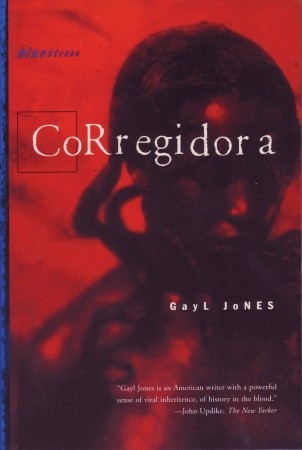
Summary:
First published in 1975, this explores the adult life of Ursa Corregidora, a Black woman blues singer haunted by trauma – both intergenerational and the violent loss of her fertility. Her great-grandmother and grandmother both were enslaved by Corregidora – a Portuguese enslaver in Brazil. He raped both of them, meaning he was the father to all the Corregidora women until Ursa herself. Her female ancestors constantly told her the importance of keeping the truth of their suffering alive through telling the story down through the family. So what will happen to the story now that Ursa, an only child, can no longer have children of her own?
Review:
This made it to my to be read pile before the current surge in interest in the history of the blues, partially coming from the newly released movie The US vs. Billie Holiday. This book demonstrates how clearly the blues and the trauma inflicted on Black folks in the US are intertwined, with the blues granting an outlet for speaking on at least some of the suffering but also a source of Black joy.
I have seen some reviews talk about how this book is about Ursa’s anger. I strongly disagree. This book is about Ursa’s intergenerational and current trauma, but she is absolutely not, as the GoodReads summary states, “consumed by her hatred of the nineteenth-century slavemaster [Corregidora].” Ursa suffers from trauma and struggles to deal with this trauma, but she is not consumed by hatred. I dislike how this summary seems to place the blame for her suffering upon Ursa. Ursa is doing the best she can with a whole pile of trauma. She’s not perfect, but, in my opinion, this isn’t some cautionary tale about being consumed by hatred. It’s an eloquent depiction of the intergenerational trauma of slavery and racism.
It is so immediately understandable why Ursa’s whole world is rocked when she loses her fertility due to abuse at the hands of her husband. (This happens very early in the book and is not a spoiler). Not only does she have a drive to have children that many women have, but she also has the lifelong expectation that she will fight injustice and white supremacy by passing the true story of what happened to the women in her family down along to the next generation. How can she manage her life when it becomes impossible for her to fulfill that expectation?
This book is not just about fertility/infertility and intergenerational trauma but also about the blues. Why Ursa is so drawn to the blues and what she is willing to give up and fight for in order to continue to sing them. The balance of moving among these themes is handled very well.
There are also some difficult moments where we see that Ursa is homophobic. She has a female friend who engages in relationships with other women and Ursa is, at the very least, uncomfortable with this. However, I do not think the book is necessarily in agreement with Ursa. Time is spent discussing why two Black women might be empowered by loving each other. However, time is also dedicated to discussing how white women have also raped enslaved (and servant) Black women, and that memory is part of what makes Ursa so uncomfortable. It is not an easy topic, and there is also the additional layer that Ursa finds this out right after she’s lost her fertility and others are questioning whether she counts as a woman anymore due to this. I think this section is handled honestly but readers who are more sensitive to negative reactions to queerness should be aware of its presence in this book.
This book is an engaging, powerful, and in many ways, unexpected, read. While I think everyone could get something out of this, I specifically want to mention that if you’ve read the white women’s feminist classics of the 1960s and 1970s, you definitely need to pick this one up and diversify your perspective.
4 out of 5 stars
Length: 192 pages – average but on the shorter side
Source: Library
Buy It (Amazon or Bookshop.org)
If you found this review helpful, please consider tipping me on ko-fi, checking out my digital items available in my ko-fi shop, buying one of my publications, or using one of my referral/coupon codes. Thank you for your support!
 Support my work with a tip or browse my shop for curated book club guides, how to guides, cross-stitch patterns, and more!


This work by Amanda Nevius is licensed under a Creative Commons Attribution-Noncommercial-No Derivative Works 3.0 United States License.
 Opinions of a Wolf