
Archive
Book Review: Into the Wild by Jon Krakauer
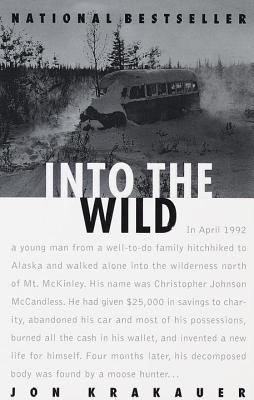 Summary:
In April 1992 a young man from a well-to-do family hitchhiked to Alaska and walked alone into the wilderness north of Mt. McKinley. His name was Christopher Johnson McCandless. He had given $25,000 in savings to charity, abandoned his car and most of his possessions, burned all the cash in his wallet, and invented a new life for himself. Four months later, his decomposed body was found by a party of moose hunters. Krakauer found himself fascinated by this young man and set out to tell his story.
Review:
I read this in print, which meant everyone could see what book I was reading (at work, on the bus), and I must say I was surprised at how polarizing McCandless (who primarily called himself Alex) is. Some people find his obsession with living off-grid admirable, while others found it wasteful and irresponsible. Regardless of what you think of Alex, Krakauer presents his story in an engaging way, starting with the bare facts of how he was discovered and then taking the reader through his own investigation into who Alex was.
I feel like a lot of us know a person who is some flavor of Alex. Someone who grew up with the world his oyster but pushed it away in pursuit of simpler things. Some people take this to a reasonable level. For instance, they might refuse the $25,000 in savings from their parents but also not give it away to charity. Or they might give that money away but keep enough to get started on, not actually burn money. It’s very interesting to me how many people react with such utter disdain for Alex burning the money. I think it’s a clear example of an act of youthful passion. He really believed in this way of life. He really wanted to distance himself from his family. So he destroyed something. I wonder, when people react so strongly to this, whether they, in their youth, were never moved to destroy something in a symbolic manner? Perhaps some people are just not so possessed by the passion of youth.
In any case, while Krakauer’s own opinion of Alex is pretty clear by the end of the book, he does a good job holding it off for quite a while, letting the reader make up their own mind. I also think he might not realize he does this but he draws some interesting parallels to Walden and Thoreau that might make people who dislike Alex realize the privilege Walden and Thoreau were exercising in choosing to “go into the woods” but a woods they could leave at any time.
As a person who grew up in a very rural area with a father who hunted and fished and a family who grew our own garden of food and learned to shoot a rifle at a young age, I understand many Alaskans’ disdain for Alex. There’s something insulting about someone who has studied and learned nothing or next to nothing about surviving off the land just waltzing in and claiming they can do it. And often these people put the locals who live there in danger, whether by needing rescuing or causing wildfires or what have you. I get that. But I also get the impulse those who were raised far from the land with too much handed to them on a platter have to go out and prove they can do it on their own. For a long time I myself couldn’t understand the downsides of coming from money but I have come to learn them from observing others who come from money. There is a certain freedom in family and money not going hand-in-hand and in being pushed into adulthood and making it on your own early.
If this clash of those living on the land and those desiring to abandon it all and live on the land intrigues you, you’ll enjoy this book. It’s well-written, even-handed, and demonstrates the value in taking a moment to consider other perspectives and not jump to heated conclusions.
If you found this review helpful, please consider tipping me on ko-fi, checking out my digital items available in my ko-fi shop, buying one of my publications, or using one of my referral/coupon codes. Thank you for your support!
4 out of 5 stars
Length: 203 pages – average but on the shorter side
Source: Borrowed
Book Review: The Reason I Jump: The Inner Voice of a Thirteen-Year-Old Boy with Autism by Naoki Higashada
 Summary:
Born in 1992 and diagnosed with Autism at the age of 5, Naoki uses an alphabet board to painstakingly write. In this book, he addresses answers to common questions neurotypicals have about people with Autism, such as “Why do you line up your toy cars and blocks?” and “Why don’t you make eye contact when you’re talking?” Mixed in with answers to these questions are short stories that Naoki has written, squashing the myth that those with Autism lack imagination.
Review:
I read this for Katie of Doing Dewey’s Nonfiction Book Club back in April, which was also Autism Awareness Month. I don’t often have the time to do group reads, but this book appealed to me and was short, would count for the Mental Illness Advocacy Reading Challenge I host, and I was able to get a digital copy from the Boston Public Library. I read this in one day in just my morning and evening commutes. It’s a short but mind-opening work.
For those who don’t know, Autism is a spectrum disorder. This basically means that Autism can severely or minorly impact how a person with it functions with the world (and everything in-between). Someone who is high functioning may mostly just strike others as a bit odd, whereas those most severely impacted are unable to communicate at all. You may read more about Autism here.
Naoki’s Autism is more severe. He is mostly unable to speak but he has learned how to communicate by pointing to an alphabet board with an assistant who writes down what he points at. Since Autism is so individualized, bare in mind when reading this book that his answers might not necessarily apply to everyone with Autism. That said, Naoki generally answers the questions with the word we, not I. My suspicion is this may be due to cultural reasons. Naoki is Japanese, which is generally a less individualized culture than our own. Additionally, his words have been filtered through a translator. It’s important, I believe, for a reader to keep all of these things in mind when reading this book.
This is a short book and an easy read, so I won’t say too much beyond the two biggest takeaways I had. First, I think in general people often wonder if people with Autism are similar to neurotypicals inside or are completely foreign. I think Naoki’s book smashes that question with a sledgehammer. It left me with the distinct impression that people with Autism are extremely similar to neurotypicals, but their signals from their bodies interfere with their ability to interact with the world. But Naoki puts this better than me.
It’s as if we’re remote-controlling a faulty robot. (page 16)
My second takeaway was that we should never make assumptions about anyone with Autism. The biggest example of this is that it is generally assumed people with Autism do not have an imagination. (I’ve even seen having an imagination being used as a way to rule out some people as having high functioning Autism). But Naoki, who very clearly has Autism, also very clearly has a bright imagination. His own short stories are inter-mixed throughout the book. They struck me as things any 13-year-old might write. That may sound simple, but that’s a big deal for a person who others might assume is “abnormal” for 13 with “no imagination.”
I do wish that the person interviewing Naoki had asked a wider variety of questions. Some of the questions can get a bit repetitive, and I wondered why they didn’t ask something deeper. Instead of continually asking things like why do you do this or why do you do that ask more about what he enjoys. What his hopes and dreams are. Does he think there’s a god. Things like that.
Overall, though, I highly recommend this book to anyone who is curious about what it’s like to have Autism, as well as to those who do or may come into contact with someone with Autism.
If you found this review helpful, please consider tipping me on ko-fi, checking out my digital items available in my ko-fi shop, buying one of my publications, or using one of my referral/coupon codes. Thank you for your support!
4 out of 5 stars
Length: 135 pages – short nonfiction
Source: Library
Counts For:
Mental Illness Advocacy Reading Challenge
Book Review: American Jezebel: The Uncommon Life of Anne Hutchinson, the Woman Who Defied the Puritans by Eve LaPlante
 Summary:
Anne Hutchinson, a forty-six- year-old midwife who was pregnant with her sixteenth child, stood before forty male judges of the Massachusetts General Court, charged with heresy and sedition. In a time when women could not vote, hold public office, or teach outside the home, the charismatic Hutchinson wielded remarkable political power. Her unconventional ideas had attracted a following of prominent citizens eager for social reform. Hutchinson defended herself brilliantly, but the judges, faced with a perceived threat to public order, banished her for behaving in a manner “not comely for [her] sex.”
Review:
I love US History. I have a degree in it, and I particularly enjoy reading about women in US History. I remembered studying a bit about Anne Hutchinson in some of my coursework, so when I saw this book going more in-depth into her life in a used book basement, I picked it up. I ultimately was disappointed to find a book that somehow managed to make reading about a woman with such an interesting life boring.
Anne Hutchinson was what I like to think of as a quiet rebel. She did things like hide the birth of a grotesquely malformed stillborn so that the mother wouldn’t be judged by the community as somehow entangled with Satan or being punished by God. She led Bible studies/prayer meetings in her home, and these groups she led didn’t consist of just women. Men sought her out for advice and knowledge in these groups in a culture where women were only supposed to advise other women. Most fascinating to me was the dynamic between her and her husband. He clearly loved her and gave her basically the reins over their lives. He was known as a quiet person and happily stepped back and let her make the noise. When she was banished, instead of complaining, he just packed up and moved with her to Rhode Island. It’s not that I think that’s the ideal marriage but I do think it went directly against the gender norms of the time, and they were both brave for being true to themselves and what worked best for their own relationship.
However, the writing in this book somehow managed to take such an interesting woman and bore me to tears. I dreaded picking up this book. I eagerly anticipated when the author would quote primary texts because they were exponentially more interesting than her own. The other issue I had with the book was that the author is a descendant of Hutchinson and clearly lets this bias her own perception of Hutchinson the historic situation. On top of this, there’s a lot of talk about genealogy (far too much for my taste), and sections read like someone writing a family history for their own family, not for public consumption. I understand being interested in someone you are descended from, but who you are descended from doesn’t automatically make you a cooler person. People who are proud of themselves because of who they happen to be descended from infuriate me to no end. Do something worthy of being proud of yourself. Don’t rest on your ancestor’s laurels.
Overall, while the historic facts are accurate and Anne Hutchinson herself is an interesting historical figure who deserves to be talked about, the writing of this book is boring and it is colored by the author’s obsession with being descended from Hutchinson. Readers interested in Hutchinson should consider looking elsewhere, perhaps starting with Unafraid: A Life of Anne Hutchinson, which is available in its entirety thanks to Hathi Trust Digital Library.
If you found this review helpful, please consider tipping me on ko-fi, checking out my digital items available in my ko-fi shop, buying one of my publications, or using one of my referral/coupon codes. Thank you for your support!
3 out of 5 stars
Length: 312 pages – average but on the longer side
Source: Brookline Booksmith
Buy It (Amazon or Bookshop.org)
Counts For:
Bottom of TBR Pile Challenge
Book Review: American Gun: A History of the U.S. in Ten Firearms by Chris Kyle and William Doyle (Audiobook narrated by John Pruden)
 Summary:
Chris Kyle, the Navy SEAL responsible for the book American Sniper, was working on a labor of love at the time of his death–this book. His wife and co-author worked together to complete the book (his wife providing an introduction of context). Kyle loved America and guns, and here he combines the two together to present the history of the US through the lens of guns.
Review:
The idea of this book is nothing new. I certainly studied a lot of guns/weapons and their impact while working on my History BA (concentration in US History). But as both a US History and gun lover, I was excited by the idea of a short book that would let me revisit both topics. I do wish I had paid more attention to the fact that this book is a co-authorship between a Navy SEAL and a Fulbright Scholar though, since I personally tend to find books written from this type of partnership to be a bit frustrating. I certainly found that this book lands in that category.
The book starts with an introduction by Chris Kyle’s wife, Taya, providing context of why he wanted to write this book and how far along he was on it. I wound up pausing to look up his death, because I honestly didn’t realize the American Sniper had died. I wish this book had mentioned, at least simply, how he died.
The guns covered in the book are: American Long Rifle, Spencer Repeater, Colt Single-Action Army Revolver, Winchester 1873 Rifle, M1903 Springfield, M1911 Pistol, Thompson Submachine Gun, M1 Garand, .38 Special Police Revolver, and M16 Rifle. Kyle clearly knows and understands how guns work. I found the descriptions of these guns to be the best-written portions of the books. In particular his explanation of shotguns (single-action or repeating) was the first I’ve heard that had me really grasping how they work.
The quality of the history writing comes and goes, though, and I think that’s evidence of places Doyle had a stronger hand on the writing. Some of the historical episodes are presented clearly, factually, and without obvious bias. Others, though, beg for an editing pass either for removal or acknowledgement of bias or to tighten up the focus or provide a better story arc. Historical nonfiction can still have a story arc, something that Kyle clearly understands, but he tends to go off on rants about certain parts of the story that he finds most interesting leaving the reader a bit lost or frustrated. The passage that I found most frustrating was when Kyle chose to focus on a soldier in the Revolutionary War era because he descended from him. Sure, that soldier used the gun being focused upon, but so did practically everyone else at the time. It read a bit like your uncle doing the family genealogy, rather than a serious historical nonfiction. What I found most jarring though was the rapid switching between this style of writing and more typical mainstream serious historical nonfiction.
I felt the audiobook narrator did a good job embodying Kyle’s voice, and was easy to listen to.
Overall, readers looking for greater quick knowledge of the guns used at pivotal points in US History would be the most likely to benefit from this read. Those looking for more serious historical analysis or typical historical writing should look elsewhere.
If you found this review helpful, please consider tipping me on ko-fi, checking out my digital items available in my ko-fi shop, buying one of my publications, or using one of my referral/coupon codes. Thank you for your support!
3 out of 5 stars
Length: 302 pages – average but on the longer side
Source: Audible
Book Review: Blackout: Remembering the Things I Drank to Forget by Sarah Hepola (Audiobook narrated by Sarah Hepola)
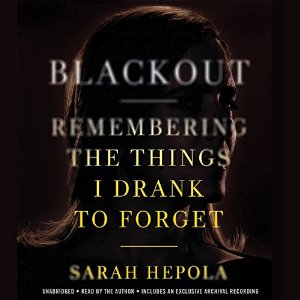 Summary:
“It’s such a savage thing to lose your memory, but the crazy thing is, it doesn’t hurt one bit. A blackout doesn’t sting, or stab, or leave a scar when it robs you. Close your eyes and open them again. That’s what a blackout feels like.”
For years Sarah Hepola ignored her blackouts. She was a young woman with a successful writing career living in New York City. She was empowered, and part of embracing equality was drinking like one of the guys. But while littering her writing with references to drinking and laughing off her drunken escapades, she actually spent her daytimes cleaning up after her blackouts. Figuring out how she scraped up her knees or tracking down her purse. Eventually, she realized that drinking wasn’t making her the life of the party and one of the guys. It was stealing who she was, and it was time to get herself back.
Review:
I have a thing for addiction memoirs (and addiction documentaries….movies…tv shows…). But I have often found myself puzzled by the female drinking memoir. Often presented as a woman (usually a wife and mother) who appears to have it all and hides all of her drinking because women don’t drink. I’m sorry, but as a Millennial, that’s not the kind of drinking I’ve seen women in my generation partake in. Drinking was considered unladylike by generations even as recent as the one right before ours (that my brother is in). But in mine? What I often saw was women proving their coolness by keeping up with the guys. These women would never hide wine. They’d take shots and get praised for it. So when I saw this memoir talking about the impact on women of drinking like one of the guys; of how this equality of substance abuse is really impacting women, I had a sense it was going to be something good and insightful, and I was right.
Sarah Hepola shows the reader through a clear lens exactly how the different perceptions of women and alcohol impacted her drinking, and thus how they might impact other women. The book starts with some context of how young women are both encouraged by their peers to binge drink but then are also blamed by them when bad things happen to them when they are drunk. She then moves on to talking about her own childhood when she would steal sips of beer from open cans in the fridge, and how her parents never suspected she was sneaking beer because little girls wouldn’t do that. She then gradually brings us up through time and shows us how with drinking she was subconsciously trying to pursue both fitting in and equality. She drank to fit in and be cool in college. She drank with co-workers on her male-dominated first job to be one of the guys and get the same networking opportunities they got after work by going out for beers. She liked that it wasn’t necessarily feminine. She liked feeling strong and empowered.
By embracing something that is perceived of by the culture as hyper-masculine, like binge drinking, women are seeking to be taken seriously and viewed as equals. Women do this in other areas too. Just look at power suits or the short haircuts preferred by women in positions of power. Our culture devalues what is perceived of as feminine and elevates what is perceived of as masculine. There are many issues with this, which I can’t go into in a short book review, but what matters about this for women and alcohol is that women’s bodies just don’t biologically process alcohol the same way men’s bodies do. Sarah Hepola goes into this in quite some detail, but essentially, women get drunker faster on less alcohol than men do, which means women black out more easily, and blackouts are dangerous. They make anyone vulnerable, but they make women particularly vulnerable to things like date rape.
Sarah Hepola does a much more eloquent job in the book than I am doing here in the review of illuminating how gender and alcohol mix to make the modern alcoholic young woman. And the book doesn’t just detail the dramatics of her youthful drinking. She also goes into great detail about what it was like to stop. To find the empowerment of being completely in control again and not losing parts of herself and her life to blackouts. She talks about her sober life and how exciting it is, and she even talks about finding some spirituality. Most importantly to me, she discusses how women in western culture today are often told we are equal but are able to sense that things that are feminine are just not taken seriously. So they pursue the masculine to be taken more seriously and in some cases the masculine is simply not helpful. It is harmful. Sometimes, in cases like with binge drinking, it’s even more dangerous for women than for men. I believe the book offers some hope when Hepola talks about finding strength in her sober living and in her accomplishments at facing life as a single woman.
Those listening to the audiobook will be entranced by Hepola’s own voice telling the story. I couldn’t stop listening and listened every second I could. One of the more haunting moments of the audiobook is when toward the end Hepola introduces a tape recording she made as a teenager discussing a sexual encounter she had while drunk with a much older boy. Hearing the incredibly young voice of a woman already being drawn into the harmful world of addiction was heartbreaking to listen to and made me want to fix things, even though I wasn’t totally sure how.
This book left me realizing that the reality of women and alcohol has changed, and the cultural narrative needs to catch up with it. Women aren’t drinking in closets to dull their feminine mystique pain anymore. They’re drinking loud and proud because they want to be empowered and taken seriously and yes, even perceived of as cool. While we can talk about finding more positive ways of empowerment, I think it’s also important that we as a culture strive to stop putting innate positive value on the masculine and negative on the feminine. Things should be valued based on their impact on the world and not on the gender norm of who does it. And young women will stop feeling pressured to act like a man when men and women are equally valued. All of these things I am saying play into male drinking as well. If you think zero young men are binge drinking to be seen of as more of a man, you’re very wrong. We just see less of the immediate negative impact of male binge drinking because women black out so much more easily.
Hepola wrote a brave book that illuminates the issue of binge drinking among young women today. It’s both personal and with an eye to the culture as a whole, thinking beyond just the author herself. Readers will be haunted both by the voice of the young Sarah and by the thought of young women seeking to empower themselves actually making themselves more vulnerable. A key read for anyone who works with or cares about these younger generations of women.
If you found this review helpful, please consider tipping me on ko-fi, checking out my digital items available in my ko-fi shop, buying one of my publications, or using one of my referral/coupon codes. Thank you for your support!
5 out of 5 stars
Length: 230 pages – average but on the longer side
Source: Audible

Counts For:

Illness(es) featured: Addictive Disorders
Women and the Vietnam War – 5 Nonfiction Reads
 To celebrate Women’s History Month, I thought it’d be fun to assemble a reading list looking specifically at the women’s history aspect of a particular historical event. When I thought about it, I couldn’t easily think off the top of my head of any books about women and the Vietnam War, so I decided to build my list on that. It taught me something while I was assembling the list for you.
I tried to cover both women part of the War, as well as women protesting the War or part of the counterculture. All book blurbs come from either GoodReads or Amazon.
 Daughters of Aquarius: Women of the Sixties Counterculture
by: Gretchen Lemke-Santangelo
Publication Date: 1997
Blurb:
“Hippie women” have alternately been seen as earth mothers or love goddesses, virgins or vamps-images that have obscured the real complexity of their lives. Gretchen Lemke-Santangelo now takes readers back to Haight Ashbury and country communes to reveal how they experienced and shaped the counterculture. She draws on the personal recollections of women who were there–including such pivotal figures as Lenore Kendall, Diane DiPrima, and Carolyn Adams–to gain insight into what made counterculture women tick, how they lived their days, and how they envisioned their lives.
This is the first book to focus specifically on women of the counterculture. It describes how gender was perceived within the movement, with women taking on much of the responsibility for sustaining communes. It also examines the lives of younger runaways and daughters who shared the lifestyle. And while it explores the search for self enlightenment at the core of the counterculture experience, it also recounts the problems faced by those who resisted the expectations of “free love” and discusses the sexism experienced by women in the arts.
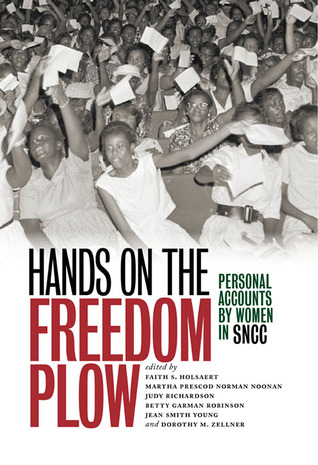 Hands on the Freedom Plow: Personal Accounts by Women in SNCC
by: Faith S. Holsaert, et al
Publication Date: 2010
Blurb:
Fifty-two women–northern and southern, young and old, urban and rural, black, white, and Latina–share their courageous personal stories of working for the Student Nonviolent Coordinating Committee (SNCC) on the front lines of the Civil Rights Movement.
The testimonies gathered here present a sweeping personal history of SNCC: early sit-ins, voter registration campaigns, and freedom rides; the 1963 March on Washington, the Mississippi Freedom Summer, and the movements in Alabama and Maryland; and Black Power and antiwar activism.
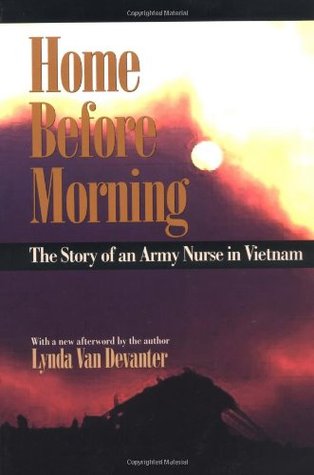 Home Before Morning: The Story of an Army Nurse in Vietnam
By: Lynda Van Devanter
Publication Date: 1983
Blurb:
On June 8, 1969, a patriotic, happy-go-lucky young nurse fresh out of basic training arrived in Vietnam to serve a year’s tour of duty as a second lieutenant in the Army. It was a year that was to rob Lynda Van Devanter of her youth, her patriotism, her innocence – and her future.
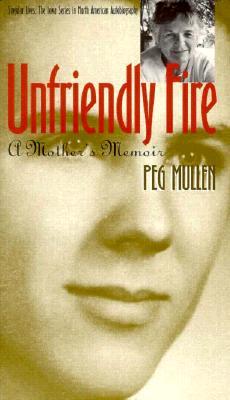 Unfriendly Fire: A Mother’s Memoir
By: Peg Mullen
Publication Date: 1995
Blurb:
Outspoken, fearless, and wickedly humorous, Peg Mullen tells the story of her transformation from an ordinary farm woman into a nationally recognized peace activist following the death of her oldest son, who was killed by artillery misfire in the Vietnam War.
 The Valiant Women of the Vietnam War
By: Karen Zeinert
Publication Date: 2000
Blurb:
From journalists and nurses to those who mobilized to protest or support the war effort on the home front, women of all ages took advantage of the changing social climate of the 1960s to break free of their traditional roles. A discussion of Vietnamese women’s roles in the conflict is included.
Book Review: On Grief and Grieving: Finding the Meaning of Grief Through the Five Stages of Loss by Dr. Elisabeth Kübler-Ross and David Kessler
 Summary:
This book presents the science of grief and grieving, based largely upon the lifetime work of renowned psychologist Dr. Kübler-Ross.
Review:
How to review the first book you picked up after losing your 58-year-old father suddenly and unexpectedly to a heart attack? Normally I take a very academic approach to my book reviews (or at least I try to). I can’t review this one that way. I certainly wasn’t in an academic frame of mind when I was reading it. I wasn’t anywhere near my normal frame of mind. So instead, I’ll tell you about my experience reading it.
I found out my father was dead at 7am on a Thursday. I knew my father had been taken to the hospital the night before. My brother, who lives near where my father did, called me to let me know. But he also called me with an update that my father was stabilized. Neither of us was very worried, because my dad suffered from heart disease for eleven years and had been hospitalized periodically. He had a pacemaker. He was on medication. He had a specialist who did his long-term care. The ER was confident in his stability. They sent my brother home. My brother called me and told me to go to sleep. I did. He called me again about an hour later and left a voicemail telling me to call him back. I knew from the voicemail what he was going to tell me. I just knew it. I think I knew it the night before when I went to bed too. Because in spite of being told repeatedly that my dad was going to be fine, I cried myself to sleep that night. My brother, when I called him back, told me that my father had gone into cardiac arrest when they were moving him from the ER to a more specialized heart hospital. In spite of being in an ambulance surrounded by health care workers, the heart attack won.
In any case, the instant I heard the voicemail, I went numb. I woke my husband and told him. I called my workplace. I sent off certain work emails to pass off tasks to others to cover. I texted my friends. Then I sat on our bed and I felt….nothing. I was in a complete and total state of shock, I know now. Largely thanks to this book.
Late that night, when I found it was utterly impossible for me to sleep and was certain I would never sleep again, I reached out to the same thing I’ve always reached out to my entire life: books. I opened my laptop and logged in to the Boston Public Library’s ebooks search. I did not have the ability to go off looking for a print book at a branch. I needed help now. In the middle of the night.
I searched the catalog for “grief,” and got a list of…I dunno, a few books. This one was the most scientific. The rest were quite religious, and while that’s fine for other people, that’s not what comforts me. So I downloaded this, and I started to read it. And I instantly started to feel less like there was something wrong with me.
I learned that it’s entirely normal to go into shock at first. To not feel much of anything. It’s your body protecting you, letting the emotions in a little at a time, as you can handle them, so you will stay safe. And indeed, that night, after the first 12 hours of knowing, I sobbed in my husband’s arms. Thanks to this book, I knew that the numbness could come and go. In fact, the most helpful thing I learned in this book was that the 5 stages of grief (denial, anger, bargaining, depression, acceptance) don’t come in order necessarily, and they’re not neat. You don’t move through them in an orderly fashion. You may be angry one day, depressed the next, in denial another, and feel ok and accepting for a bit, then right back to depression. And that’s normal and ok.
I also learned, which was really important for me to know, that the stage of anger can sometimes express itself as guilt, which is just anger turned inward. Some people are more likely to turn their anger inward, and I am definitely one of them. Knowing this was where my (irrational) guilt was coming from (god knows I couldn’t possibly have saved my father from a heart attack from hundreds of miles away) made it much easier for me to cope with the feelings when they did come up.
There were other particular things that the book predicted might happen that kept me from getting freaked out when they did. For instance, I periodically was certain my phone had buzzed with a text message from my father. So certain, in fact, that I picked it up to check. Twice I thought I saw my dad on the street. Both of these I may have been concerned were abnormal, but the book reassured me these “ghost sightings” are totally normal. It’s your body and brain readjusting to your new reality.
The book also gave me warnings about things to come. Things like how the first holidays without the person or the person’s birthday would be difficult. So I knew to expect that and prepared myself for it. It also talked about being patient with yourself in things like dealing with the loved one’s possessions. Not to rush yourself, that it’s ok to take a little bit of time. There were also warnings about how quickly the person’s scent will fade that meant I took the time to really smell a couple of my dad’s tshirts, because I knew the scent would be one of the first things to go.
There is a “specific circumstances” section that talks about things like multiple losses simultaneously or suicide. I wish this section had a bit more on various other special circumstances. For instance, I had just gotten married 7 weeks before, and then my father died. I would have loved a section talking about the juxtaposition of such happiness with such sadness, and how to handle the emotions of things like your first married Thanksgiving (so happy!) also being your first Thanksgiving without your father.
Overall, this book gave me guidance of what to expect from my grief in the immediate time after the loss, as well as in the first year. It mostly contains universal information that will be helpful to anyone going through a loss. If you are a person who finds comfort in books or science, you will find comfort in this read. If you love someone who has recently lost a loved one, reading this will help you to know what behavior from them is normal and guide you in supporting them and validating them through the experience.
If you found this review helpful, please consider tipping me on ko-fi, checking out my digital items available in my ko-fi shop, buying one of my publications, or using one of my referral/coupon codes. Thank you for your support!
4 out of 5 stars
Length: 270 pages – average but on the shorter side
Source: Library
Book Review: Stuff: Compulsive Hoarding and the Meaning of Things by Randy O. Frost and Gail Steketee
 Summary:
It may be difficult to describe a hoard, but you know one when you see one. Maybe you have a neighbor who keeps their shades drawn but when you enter their home you see piles and piles of stuff that either they keep for a project they’ll do one day or because every scrap of it contains important information (according to them). Maybe you’ve only encountered hoarding through reality tv shows focused around the forced clean-up of homes that immediately appear unlivable to you but yet that the person on the show insists is full of treasures. Or maybe you grew up in a home where the hoard slowly encroached on your own room
Between 2 and 5 percent of the population suffers from Hoarding Disorder. Frost and Steketee were the first to begin scientifically studying it. Here, couched in tales of real interactions with and homes of clients (who granted their permission to be featured in an anonymized fashion) Frost and Steketee present both what we know and what we don’t know about hoarding, as well as best practices for helping someone with the disorder.
Review:
As an outside observer of a hoard, it can often be difficult to imagine what leads a person to believe trash is treasure. But of course it’s more complicated than someone just being unable to recognize trash. After all…one man’s trash is another man’s treasure. The authors attack this head-on by first giving a true definition to what counts as hoarding and then talking about various causes and possible presentations of the disorder. So what counts as hoarding?
It hardly matters how much stuff anyone owns as long as it doesn’t interfere with his or her health or happiness or that of others….Hoarding is not defined by the number of possessions, but by how the acquisition and management of those possessions affects their owner. (page 58)
So basically, it counts as hoarding if the collection of items interferes with the person’s health or happiness or the health or happiness of others nearby. The complicated gray area of course is that the sufferer may not realize that the hoard is interfering with their happiness and health. That is the point of conflict for many loved ones of people who hoard.
After establishing and defining what hoarding disorder is and is not, the authors continue on to analyze the behavior and mind of someone suffering from hoarding. Fascinatingly, hoarding shares commonalities with many other mental illnesses, seeming to a certain extent to defy categorization, although the DSM 5 currently lists it among “Obsessive Compulsive and Related Disorders.” Are you shocked? Did you think that OCD always means cleanliness? The fact is that is often not what OCD means. It’s a misunderstanding spurred on by popular culture. OCD is an obsession. It can be with cleaning and germs but it can also be with anything. It also often features repetitive behaviors. If you think about it, you can see what hoarding has in common with this. People who hoard become obsessed with the idea of not losing something important, of collecting everything relevant to a certain idea, of not wasting things. They also can come to establish repetitive behaviors such as maybe always buying a newspaper from a certain store on the way home from work. Another similarity with OCD is that hoarders often are perfectionists. Part of why their homes become cluttered is they are obsessed with only doing a perfect job of cleaning up or of fixing something or using some item for a project, and they become paralyzed with the fear that they can’t do it good enough, so they never start.
The authors also talk about how hoarding has commonalities with Impulse-Control Disorders, such as gambling and compulsive buying. Many people who hoard also struggle with both of these ICDs, and it’s easy to see the relationship here. Similarly, many hoarders show symptoms of ADD. They often do much better cleaning up if there is simply someone there to help them maintain focus, rather than being easily distracted.
Hoarding is also often a result of trauma. People suffer a trauma and essentially attempt to build a protective space around themselves by hoarding.
Compared to people who do not suffer from hoarding problems, clutterers report a greater variety of traumatic events (an average of six versus three), as well as a greater frequency (an average of fourteen versus five) of such events. The type of trauma most often experienced by hoarders include having had something taken by threat or force, being forced into sexual activity, and being physically assaulted. (page 87)
Interestingly, there’s a comparatively low incidence of PTSD among hoarders, in spite of such a high incidence of trauma. (A 2006 study found only 6% of hoarders had PTSD, page 91). It is possible that hoarding prevents the development of PTSD. Many hoarders also report a childhood devoid of warmth and support, so even if they were not traumatized, it is still likely that they had a cold, distant childhood. In contrast to PTSD, the majority of hoarders (nearly 60%) meet the criteria for major depression, and it is posited that this depression could be in response to the hoarding itself.
People draw conclusions about their worth and competence based on their inability to control their living space, and not being able to entertain people in their homes isolates them and limits their social lives. (loc 532)
The authors then talk about what may be going on in the heads of people who hoard. People don’t do things completely irrationally. There are reasons for it. There are multiple possibilities for hoarding of what may be going on. No single aspect has been determined yet. However, in general, hoarders suffer from a different type of threat signal. They fear something being removed, rather than the presence of something. It has also been posited that they have the opposite of claustrophobia. They feel safer in small, tight spaces, so they artificially create them. Hoarders also frequently struggle with identity. Rather than knowing who they are, they often are defined by the question “Who am I?” and collect items to try to show who they are. In addition to the aforementioned perfectionism, hoarders also seem to view items differently from the rest of us. They are generally very optimistic about future usefulness and can be quite creative as to reusing things. It has been posited that hoarding may be creativity run amok. However, many hoarders also gamble compulsively and the relationship between a hoarder’s positive thinking and a gambler’s is interesting.
“Seeing the scratch tickets over the counter at the convenience store leads me to think, One of those tickets is surely a winner, maybe a million-dollar winner. How can I walk away when the opportunity is there?” Our hoarders have said similar things about items they’ve wanted to acquire. (loc 202)
Distress avoidance is also often a common feature. Distress avoidance is when a person seeks to avoid a situation that they think will cause them distress. They then build up that situation in their heads to be more of a stressor than it actually would be. Continual avoidance of these types of situations also weakens a person’s ability to deal with them (due to lack of practice), so it’s a bit of a self-fulfilling prophecy.
Animal hoarding is its own special subcategory, and it seems that in addition to all of the other possible hoarding issues, animal hoarders may suffer from a form of an attachment disorder where their bonds with other humans are frayed and easily broken and replaced by bonds with animals.
So, essentially, hoarders are often people who are perfectionists who tend to perform rituals and struggle with impulse control. They may compulsively shop and/or gamble in addition to hoarding. They often had cold, distant childhoods and/or suffered a trauma (or traumas). They tend to come at life from a basis of fear and feel safer in tight, closed spaces, and their fear is heightened by removal of things, rather than appearance of new things. At some point, they started avoiding distress, and this distress avoidance became a self-fulfilling cycle. They also frequently struggle with knowing who they are internally, rather looking outward to possessions for identity signals. In addition to these compulsions and fears, hoarders also often see things differently or in more detail than non-hoarders, and they also struggle to focus or concentrate, making cleaning up even more difficult for them.
The authors conclude by discussing both how to treat hoarding and effects on family members and loved ones (as well as on communities). The authors stress repeatedly that forced clean-ups are the absolute worst possible solution or treatment option. A forced clean-up just fulfills the person’s fear that people are out to get them, and simply makes them cling on to their possessions even more aggressively. It also can make them more depressed. Since their identity is wrapped up in their possessions, getting rid of them by force can cause emotional trauma akin to someone chopping off your hair by force. I was stunned to learn that there have been cases of people who hoard committing suicide after a forced clean-up. The authors strongly advocate for the much slower, but with more long-term positive results, method of going through the hoard with the person slowly and basically teaching them new ways to think about both their possessions and their identity. They also state that it’s easier to treat compulsive buying and gambling than hoarding, so when possible treat that first to prevent the arrival of new items into the hoard. It is a long, difficult treatment plan to go through a hoard slowly, and sometimes it may be necessary to remove the person from the home for safety but then to return with them repeatedly to work on cleaning out the hoard.
The fact that forced clean-ups are the worst possible solution for the sufferer and the fact that hoards get worse over time leads me to believe that early interventions are absolutely critical to render the most help to those suffering from hoarding. But this is a complex thing. Since many cases of hoarding start due to a cold home environment or from trauma, it may be difficult to get parents behind addressing the situation early. Many people who hoard interviewed in the book talk about their hoarding beginning to get out of control by late in their freshman year of college. Perhaps this is something colleges should be keeping an eye out and offering help for. Additionally, shame is often mentioned as a factor in keeping the problem hidden. Perhaps PSAs and other public service campaigns could both lessen the stigma and offer help to people early on in the development of a hoard.
So much of hoarding is stigmatized. To a certain extent this is understandable. It often isn’t seen by the public until it has reached a public health crisis level or in situations where animal hoarders are keeping their hoards in deplorable conditions. Often loved ones of those who hoard feel trapped and frustrated by the hoarding. They feel as if the loved one loves their stuff more than them. These are complex issues and professional help is required to address them. I honestly don’t think this is a situation that is easily handled one family at a time. A family member must be well-informed and patient and empathetic enough to wait through the long treatment process. Often that family member is the child of the hoarder and therefore a minor with no power, which makes the issue even more complex. This is definitely a situation in which public health education campaigns on things like early warning signs of hoarding tendencies and ways to seek help could be extremely helpful long-term. I do believe the authors could have taken things one step further at the end of the book to this connection to public health, rather than mostly focusing on individual therapy. They do mention less consumerism would be helpful, but that simply is not much of an observation. It is a small complaint, but I do feel that this interdisciplinary leap is important.
Overall, this was a fascinating, enlightening book. The authors have conducted extensive scientific research for years, and they do an awesome job of writing this information at the consumer level, as well as humanizing it by bringing in real cases with clients who they render in a three-dimensional fashion. I know I for one will never be able to stomach watching forced clean-ups on the tv show “Hoarders” again. Recommended to really everyone. Anyone could potentially know someone who struggles with hoarding, whether now or in the future, and the book is very readable.
If you found this review helpful, please consider tipping me on ko-fi, checking out my digital items available in my ko-fi shop, buying one of my publications, or using one of my referral/coupon codes. Thank you for your support!
4 out of 5 stars
Length: 309 pages – average but on the longer side
Source: Library
Counts For:

Illness(es) featured: Hoarding Disorder
Book Review: Toms River: A Story of Science and Salvation by Dan Fagin
 Summary:
The residents of Toms River, New Jersey didn’t mind when a CIBA chemical plant opened up in their backyard in the 1950s. It brought jobs to their small town that mostly depended upon tourism. But slowly the river started to look funny. There were plumes of funny-smelling smoke coming from the building, at first during the day, then only late at night when they were asleep. And a nurse at a hospital specializing in children’s cancer notices an awful lot of cases coming from Toms River. What follows is a multi-year public health investigation and lawsuit, only the second of its kind in the United States (the first being the Woburn, Massachusetts toxic water case).
Review:
I picked this book up for a couple of reasons. I work in an academic library that serves a Public Health program (among others), and I thought reading about a landmark case would be helpful. I also was just personally curious about how bad the pollution actually is in New Jersey. (For my non-American readers, there’s a running joke that New Jersey is the “stinky armpit” of the United States, due to the pollution).
The short version of what I got out of it is that I researched and bought the best reasonably priced water filtration pitcher for my household and will scold my husband if he drinks water directly from the sink instead of from the pitcher. The more academic version is that I learned that epidemiology is not as straight-forward as it seems, and things we can know just by looking at the situation are not easily proved. Additionally, what a woman puts into her body during pregnancy is much more important than what a young child eats or drinks.
The book is written in an investigative journalism style. If you’re comfortable reading the science section of the New York Times or something similar, you will be fine reading this book. Some of the science was new to me, but it was well-explained. On the negative end, the writing can sometimes be a bit sensationalistic. For instance, at one point the author assumes to know the reason why some people leave a meeting, jumping to the most sensational reason–that they were “repulsed” (loc 5441). (If he knows for sure why they left because he interviewed them, he does not make that clear). Most statements that are clearly factual are well-cited, however. Although the book is well-written and interesting, it simply reads as dense. I often found myself wondering if he could have maybe sped up the delivery a bit. It periodically felt like a slog, even though I was quite interested in the topic.
The book starts with introducing one of the children who was born with neuroblastoma, a particularly nasty form of childhood cancer. Then it flashes back to the arrival of CIBA in the 1950s. This clearly establishes the reader’s empathy with the children with cancer from the get-go. That’s not a bad thing, per se, but it’s not exactly unbiased.
So let’s get to what I learned. Here are the unequivocally bad things that CIBA did:
- They claimed to residents that only “the purified effluent, clear, neutral and harmless to fish life, is discharged into the Toms River” (loc 671)
- When residents complained about pollution, instead of taking pollution-minimizing measures, they just re-adjusted their schedule so that most of the discharge happened at night when residents couldn’t see it. (loc 1071)
- CIBA came to Toms River after being kicked out of Europe and the Midwest for their pollution but didn’t change their practices at all. They simply pursued the location with the least oversight. (For non-American readers, at the time, there were not the national pollution laws in place in the US that there are now. It was more overseen on a state-by-state level).
- CIBA hid the cancer rate of employees from employees
- The CIBA water fountains were too toxic for their employees to drink from–they actually stank.
- The various governmental protection agencies repeatedly found violations at CIBA, for instance, their toxic waste pits were inappropriately lined.
Here’s what I learned about cancer:
- “Cancer is not one disease but many–more than 150, by most definitions. their only common characteristic is supercharged cell division, growth run amok.” (loc 1842)
- A swollen lymph node over the left collarbone is an early warning sign of cancer. (loc 1873)
- “Between ages 5 and 69, the likelihood of getting cancer in any particular year rises with each year of life, and it does so in increasingly large intervals: from about one in nine thousand in the fifth year of life to about one in fifty-seven in the sixty-ninth year.” (loc 1882)
- “Childhood cancer incidence jumped by more than one-third between 1975 and 2005–more than twice as much as overall cancer incidence.” (loc 1889)
- The second largest cause of lung cancer in the US after cigarette smoking is radon. (loc 2343)
- Pregnant women’s consumption of polluted tap water was much more correlated with later childhood cancer than children’s consumption of it themselves (60% more likely vs 8% more likely). (loc 6757)
What I learned about Public Health epidemiology can’t be summed up easily in a bullet-pointed list. Basically, epidemiological studies are incredibly difficult, particularly when the toxic event has already passed. Study methods rely on things like patient recall of what they did day-to-day and massively complicated retroactive restructurings of how the water supply worked and which person got which well-water. The groups of people effected seem large to consumers but in the matter of actual epidemiological numbers are in fact quite small. Too small to easily prove something. As little as one extra child having cancer can be enough for the percent to appear to skyrocket but that could easily be explained as one of the normal abnormalities. A glitch, basically, that is normal when you look at a large population as a whole. Thus, even though people can look at a group and say, “Hey they seem to have a lot of cancer,” it could just be a chance cluster. Or appear like a large number but isn’t actually when you look at the charts over time. Or it could appear like a large number but actually be difficult to prove, numerically, that it is. David Ozonoff, a professor of environmental health, is quoted in the book as saying, “A good working definition of a public health catastrophe is a health effect so large even an epidemiological study can detect it.” (loc 7495) The government is reluctant to investigate these types of cases, because they take a long time, are expensive (Toms River cost over $10 million), are embarrassing, and often work out without anything being able to be proven anyway. In the United States, cancer registries may only be looked at by government agencies, due to privacy laws, so this means that if the government doesn’t look into it, no one can. The book ends on the horrifying note:
Clusters of rare cancers like the one in Toms River may actually be much more common than we can discern with the crude statistical tools of small-number epidemiology. In other words, many more pollution-induced cancer clusters may be out there, but we don’t see them and we rarely even bother to look. (loc 7535)
In the end, the book was interesting, yet a bit of a struggle to get through, as it was quite densely-written. I learned a lot about how epidemiology and public health actually work in the United States, and I was terrified of basically everything (my own tap water, weird smells in the air) the whole time I was reading it and for a few weeks afterwards. I’m still pretty freaked out by my tap water, honestly.
Overall, I would recommend this book to readers with a vested interest in better understanding epidemiology and public health, particularly in the United States, regardless of how uncomfortable knowing these facts might make them. To those who might not be up to the intensive read I would say: be vocal about environmental protection where you live, be careful what you put into your body especially if you are or will be pregnant, and seriously consider filtering your water no matter where you live or how good it tastes. Chemicals we think now are safe we may end up finding out later are not. That is certainly what the mid-20th century taught us.
If you found this review helpful, please consider tipping me on ko-fi, checking out my digital items available in my ko-fi shop, buying one of my publications, or using one of my referral/coupon codes. Thank you for your support!
4 out of 5 stars
Length: 562 pages – chunkster
Source: Netgalley
Nonfiction November: Fiction and Nonfiction Book Pairings
I was looking forward to this week’s theme of Nonfiction November the most, because one of my favorite parts of being a librarian is “reader’s advisory.” Reader’s advisory is when you chat to a person about what they enjoy reading, what they’re interested in, what they’re looking for, and recommend a few books to them as books they might enjoy reading. (I don’t get to do this a ton as an academic medical librarian, but it does still come up sometimes). I view this as a book blogger version of that.
For this, I thought I would select out a few of my favorite fiction books and seek out nonfiction books that would pair well with them. If you read and enjoyed the fiction, consider checking out the nonfiction. Of course it will also work the other way around! If you’ve read the nonfiction book and enjoyed it, consider checking out the fiction.
First Pairing: Sled Dogs
 The Call of the Wild
by:
Jack London
Fiction
Blurb:
Buck is a spoiled southern dog enjoying a posh life when one of the family’s servants steals him and sells him away to be a sled dog for the Alaska gold rush. Buck soon goes from an easy life to one of trials and tribulations as the result of humans fawning over a golden metal, but it might not be all bad for him in the wild Alaskan north.

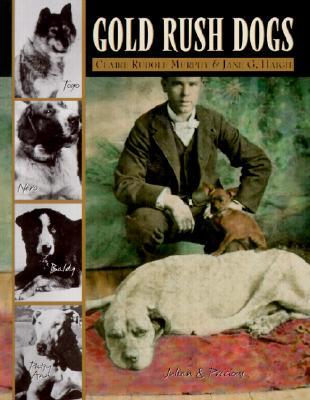 Gold Rush Dogs
By:
Jane G. Haigh
Nonfiction
Blurb:
Dog lovers and history buffs will delight in this collection celebrating the beloved canines that offered companionship, protection, and hard work to their masters in the Far North.
Why pair it?
Buck, the main character (and dog) in The Call of the Wild is trained to be a sled dog for the gold rush (not the Iditarod). This nonfiction book is about the gold rush dogs.

Second Pairing: Women in Ancient Japanese Court Life
 Fudoki
By:
Kij Johnson
Fiction
Blurb:
An aging empress decides to fill her empty notebooks before she must get rid of them along with all of her belongings to retire to the convent, as is expected of her. She ends up telling the story of Kagaya-hime, a tortoiseshell cat who loses her cat family in a fire and is turned into a woman by the kami, the god of the road.

 Diary of Lady Murasaki
By:
Murasaki Shikibu
Nonfiction
Blurb:
The Diary recorded by Lady Murasaki (c. 973 c. 1020), author of The Tale of Genji, is an intimate picture of her life as tutor and companion to the young Empress Shoshi. Told in a series of vignettes, it offers revealing glimpses of the Japanese imperial palace the auspicious birth of a prince, rivalries between the Emperor’s consorts, with sharp criticism of Murasaki’s fellow ladies-in-waiting and drunken courtiers, and telling remarks about the timid Empress and her powerful father, Michinaga. The Diary is also a work of great subtlety and intense personal reflection, as Murasaki makes penetrating insights into human psychology her pragmatic observations always balanced by an exquisite and pensive melancholy.
Why pair it?
Fudoki features tales being told by an aging empress that illuminate women’s lives in ancient Japan. This nonfiction period piece is a diary by a real woman with an insider’s view of the same court life. Although not written by an empress, she was an empress’s companion.

Third Pairing: We’re Living in the Future the 1800s Scifi Imagined
 The Time Machine
By:
H.G. Wells
Fiction
Blurb:
Nobody is quite sure whether to believe their eccentric scientist friend when he claims to have invented the ability to travel through time. But when he shows up late to a dinner party with a tale of traveling to the year 802,700 and meeting the human race, now divided into the child-like Eloi and the pale ape-like ground-dwelling Morlocks, they find themselves wanting to believe him.

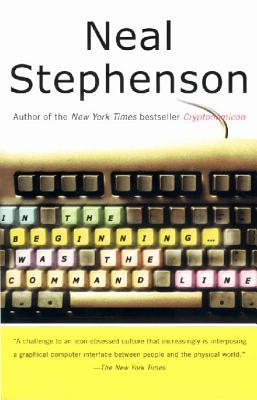 In the Beginning…Was the Command Line
By:
Neal Stephenson
Nonfiction
Blurb:
This is “the Word” — one man’s word, certainly — about the art (and artifice) of the state of our computer-centric existence. And considering that the “one man” is Neal Stephenson, “the hacker Hemingway” (Newsweek) — acclaimed novelist, pragmatist, seer, nerd-friendly philosopher, and nationally bestselling author of groundbreaking literary works (Snow Crash, Cryptonomicon, etc., etc.) — the word is well worth hearing. Mostly well-reasoned examination and partial rant, Stephenson’s In the Beginning… was the Command Line is a thoughtful, irreverent, hilarious treatise on the cyber-culture past and present; on operating system tyrannies and downloaded popular revolutions; on the Internet, Disney World, Big Bangs, not to mention the meaning of life itself.
Why this pairing?
Wells and Stephenson are both considered masters of the scifi genre. In this nonfiction piece, Stephenson explicitly draws comparisons between modern culture and the one envisioned by Wells in The Time Machine.

Fourth Pairing: Scandinavia Is Perfect….Or Is It?!
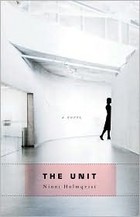 The Unit
By:
Ninni Holmqvist
Fiction
Blurb:
In the Sweden of the near future women who reach the age of 50 and men who reach the age of 60 without having successfully acquired a partner or had children are deemed “dispensable” and sent to live in “a unit.” These units appear at first glance to be like a high-class retirement home, and indeed they have all the amenities. The residents, however, are required both to participate in medical experiments and to donate various organs and body parts up until their “final donation” of their heart anywhere from a year or a few years after their arrival in the unit. Dorrit arrives at the unit depressed, but accepting of her fate as the result of her independent nature, but when she falls in love, she starts to question everything.

 The Almost Nearly Perfect People: Behind the Myth of the Scandinavian Utopia
By:
Michael Booth
Nonfiction
Blurb:
The whole world wants to learn the secrets of Nordic exceptionalism: why are the Danes the happiest people in the world, despite having the highest taxes? If the Finns really have the best education system, how come they still think all Swedish men are gay? Are the Icelanders really feral? How are the Norwegians spending their fantastical oil wealth? And why do all of them hate the Swedes?
Michael Booth has lived among the Scandinavians, on and off, for over ten years, perplexed by their many strange paradoxes and character traits and equally bemused by the unquestioning enthusiasm for all things Nordic that has engulfed the rest of the world, whether it be for their food, television, social systems or chunky knitwear.
In this timely book he leaves his adopted home of Denmark and embarks on a journey through all five of the Nordic countries to discover who these curious tribes are, the secrets of their success and, most intriguing of all, what they think of each other. Along the way a more nuanced, often darker picture emerges of a region plagued by taboos, characterised by suffocating parochialism and populated by extremists of various shades.
They may very well be almost nearly perfect, but it isn’t easy being Scandinavian.
Why this pairing?
The Unit is a unique dystopia in that it is set in Sweden and takes various aspects of Swedish culture to their dystopic extremes. Since Scandinavia often comes across as idealistic, it was interesting to see a dystopia set there. This nonfiction work takes a long tough look at Scandinavia and exposes the minuses (in addition to the pluses) of living there.

That’s it for my pairings! I hope you all enjoyed them. I know that I certainly found a few new books for my wishlist!
 Support my work with a tip or browse my shop for curated book club guides, how to guides, cross-stitch patterns, and more!


This work by Amanda Nevius is licensed under a Creative Commons Attribution-Noncommercial-No Derivative Works 3.0 United States License.
 Opinions of a Wolf